Podcast
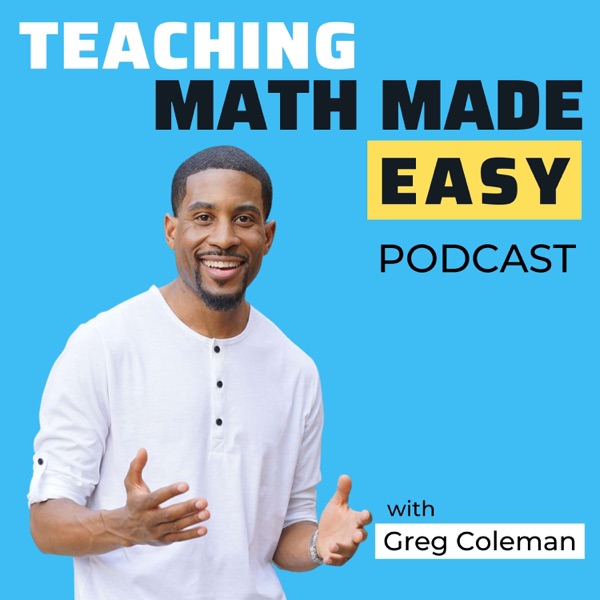
Teaching Math Made Easy
Teaching elementary math doesn't have to feel overwhelming. Each week, the Teaching Math Made Easy podcast brings you practical ideas and teaching tips to help your students understand math more deeply, while helping you feel more confident walking into math class.
Hosted by Greg, a former classroom teacher, math coach, and school administrator with over 20 years in education, every episode is built for 2nd through 5th grade teachers who want practical ideas. Expect short, focused episodes you can listen to between planning periods or on your commute, covering everything from teaching strategies to differentiation to the everyday challenges of running your math block.
If you're ready for even more support, visit elementarymathfam.com/join for tools and resources designed specifically for third-grade math teachers.
- Episodes
- 13
- Releases
- Weekly
- Typical length
- 11 min
- On air since
- 2026
- Latest episode
- 22 hours ago
Episodes
13 episodes, newest first
-
16 min
Unclear, Unfocused, or Unchecked? How to Keep Your Students on Task
Episode 12
Show notes
You’re finally working with your small group, and from across the room you hear a full conversation about video games. Do you get up, or stay with the kids in front of you?
Kids lose focus during small groups for a reason, and once you know the reason, the fix gets a lot simpler, no extra set of eyes required. In this episode, we look at what’s really going on at those center tables, with a quick way to figure out what’s causing it so you know exactly where to start.
In this episode, you’ll explore:
• Three reasons kids get off task when you’re not available
• Six simple fixes to keep kids accountable without you hovering over them
• How meaningful activities and strong routines work togetherIf you’ve ever stopped running teacher-led small groups because managing the rest of the room felt impossible, this episode will help you build routines that keep kids on task so you can stay at your table.
Resources Mentioned in this Episode:
• Free Resource: 5 Day Math Center Kit
• Episode 11:Keep the Pumpkin, Change the Task: What Makes a Math Activity MeaningfulWant more support differentiating math instruction and running small groups with confidence? Check out my membership for third-grade teachers. →Elementary Math Fam
If you liked this, follow the show so you never miss an episode and come visit me on Instagram @mrelementarymath.
-
19 min
Keep the Pumpkin, Change the Task: What Makes a Math Activity Meaningful
Episode 11
Show notes
Your kids are quiet, scissors are snipping, and everyone is busy with the pumpkin activity. But what are they actually busy doing?
Rather than asking whether seasonal activities belong in math class, the better question is whether kids are engaged with the activity or engaged with the math. In this episode, we look at the difference between busy hands and busy minds, and how to keep the fun while making sure the thinking happens too.
In this episode, you’ll explore:
• Why a happy, busy classroom isn’t always a thinking classroom
• Five questions to ask about any math activity before you hit print
• A favorite fall activity that checks every box, and what makes it workIf you’ve ever wondered how to level up your math activities, this episode will give you a quick way to choose activities that are both fun and meaningful.
Resources Mentioned in this Episode:
• Blog Post: Pumpkin Math Investigations
Want more support differentiating math instruction and running small groups with confidence? Check out my membership for third-grade teachers. → Elementary Math Fam
If you liked this, follow the show so you never miss an episode and come visit me on Instagram @mrelementarymath.
-
11 min
Your Students Don't Have a Rounding Problem...They Have a Place Value Problem
Episode 10
Show notes
A student rounds 847 to the nearest hundred as 850 and explains it by saying the 7 turns the 4 into a 5. That might not be a rounding problem.
Rather than assuming a student just needs more practice, you should probably look at their place value understanding and number sense. This episode connects rounding struggles back to their root cause and walks through a visual way to help students reason about numbers instead of memorizing a rhyme.
In this episode, you'll explore:
• Why place value and number sense both matter when teaching rounding
• Why using rounding rhymes and tricks can cause misconceptions
• A visual tool that replaces rounding rhymes with real reasoningIf your students are only leaning on a rounding rhyme or a memorized procedure instead of using what they know about place value and distance, this episode will help you see exactly where to focus your instruction instead.
Resources mentioned in this episode:
• Color-Coded Number Path
• Free Resource: The Rounding Cheat Sheet
• Episode 09: Your Place Value Chart Might Be Teaching the Wrong ThingWant more support differentiating math instruction and running small groups with confidence? Check out my membership for third-grade teachers. → Elementary Math Fam
If you liked this, follow the show so you never miss an episode and come visit me on Instagram @mrelementarymath.
-
9 min
Your Place Value Chart Might Be Teaching the Wrong Thing
Episode 9
Show notes
A student can fill in a place value chart perfectly, every digit in the right column, and still have no idea what those digits actually mean.
Rather than asking whether students filled in the chart correctly, the better question is whether they understand what each digit represents. This episode walks through how a place value chart can quietly become a labeling tool instead of a reasoning tool, and what to do differently so students build understanding instead of just following a routine.
In this episode, you'll explore:
• Why a perfectly filled-in place value chart doesn't guarantee real understanding
• An instructional move that gets students thinking with the chart, not just filling it in
• A question worksheets rarely ask that pushes place value understanding deeperIf your students can fill in a place value chart but struggle to justify their thinking, this episode will show you how to get them explaining their thinking, not just filling in boxes.
Resources mentioned in this episode:
• Free Resource: The Place Value Cheatsheet
Want more support differentiating math instruction and running small groups with confidence? Check out my membership for third-grade teachers. → Elementary Math Fam
If you liked this, follow the show so you never miss an episode and come visit me on Instagram @mrelementarymath.
-
10 min
What Tier 2 Math Intervention Actually Means (And What It Doesn't)
Episode 8
Show notes
If five different people in your building explained Tier 2, would you get five different answers?
Some people think it means small group instruction. Others think it's a curriculum activity, a program, or just more practice, when it's really none of those things on their own. This episode clears up what Tier 2 really means, what it doesn’t, and ways to shift your mindset about providing support.
In this episode, you'll explore:
• What Tier 2 requires beyond just working with a small group
• How the language we use can shape how we teach students
• 3 questions to ask when considering the need for Tier 2 interventionIf terms like 'low group' or 'red group' sound familiar, this episode will help you rethink how you talk about and plan for Tier 2.
Resources mentioned in this episode:
• Episode 07:What Tier 1 Math Instruction Actually Means (And What It Doesn't)
Want more support differentiating math instruction and running small groups with confidence? Check out my membership for third-grade teachers. → Elementary Math Fam
If you liked this, follow the show so you never miss an episode and come visit me on Instagram @mrelementarymath.
-
13 min
What Tier 1 Math Instruction Actually Means (And What it Doesn't)
Episode 7
Show notes
When you hear "Tier 1 instruction," do you picture your whole-group lesson and nothing else?
You’re not alone. It's one of the most common misconceptions in the tiered support model. Let’s bust that myth. Tier 1 isn't a one-size-fits-all lesson. This episode breaks down why it's easy to confuse Tier 1 as a whole-group curriculum, what Tier 1 is, and what it isn’t.
In this episode, you'll explore:
• How differentiation lives inside your core Tier 1 instruction
• Why small groups can still be Tier 1 instruction
• Simple questions to help you respond to students’ needsIf you've ever wondered what Tier 1 instruction looks like during your math block, this episode provides several concrete examples.
Resources mentioned in this episode:
• Free Training: Making Smart Small Group Decisions
Want more support differentiating math instruction and running small groups with confidence? Check out my membership for third-grade teachers. → Elementary Math Fam
If you liked this, follow the show so you never miss an episode and come visit me on Instagram @mrelementarymath.
-
9 min
The One Multiplication Fact You're Accidentally Teaching Twice
Episode 6
Show notes
A student solves 3 x 4 without hesitation. Hand them 4 x 3 a minute later, and they treat it like a brand-new fact they've never seen.
Rather than treating every multiplication fact as its own separate thing to memorize, what if your students already know more facts than they think they do? This episode walks through a simple way to build that connection using a hands-on model students can see and touch.
In this episode, you'll explore:
• Why defining a property and actually using it as a strategy are two different things
• A simple instructional move that helps students see facts as related, not brand new
• Questions that help students make connections between factsIf you're re-teaching the same multiplication facts twice without realizing it, this episode will show you how to help your students see relationships instead.
Resources mentioned in this episode:
• Free Training: Why Your 3rd Graders STILL Don't Know Their Multiplication Facts
• Multiplication Facts BlueprintWant more support differentiating math instruction and running small groups with confidence? Check out my membership for third-grade teachers. → Elementary Math Fam
If you liked this, follow the show so you never miss an episode and come visit me on Instagram @mrelementarymath.
-
8 min
5 Places Fact Fluency Practice Can Live in Your Day
Episode 5
Show notes
Your math block is already packed, and fact fluency practice still needs a place to live, so where's it supposed to go?
Rather than searching for one more big chunk of time, the better question is: “Where you already have small pockets of the day fact fluency practice could quietly live?”
This episode walks through several natural spots already you already have in your teaching day, plus what the research says about why shorter, spread-out practice sessions build more fluency than one long sitting.
In this episode, you'll explore:
• Why "finding more time" isn't actually the problem to solve
• Five simple places already in your day for fact fluency practice
• What the research reveals about shorter, spaced-out fluency practiceIf you've been searching for one more big chunk of time for fact fluency and coming up empty, this episode will show you a simpler way to fit it in without changing your schedule.
Resources mentioned in this episode:
Free Training: Why Your 3rd Graders STILL Don't Know Their Multiplication Facts
Want more support differentiating math instruction and running small groups with confidence? Check out my membership for third-grade teachers. → Elementary Math Fam
If you liked this, follow the show so you never miss an episode and come visit me on Instagram @mrelementarymath.
-
12 min
Timed Tests...What They Actually Measure (And What They Don't)
Episode 4
Show notes
What tools do you reach for to check multiplication fact fluency? If a timed test is the first thing that comes to mind, you're not alone, but that number on the page might be telling you less than you think.
In this episode, we take an honest look at what a timed test actually measures, what it leaves out entirely, and why the tool most of us were handed might not be built for the job we're asking it to do.
In this episode, you'll explore:
• What a timed test score can and can't actually tell you about a student
• Why a low score doesn't tell you what to do next, and a high score might be hiding something
• A better question to ask yourself before you reach for a timed testIf you've ever looked at a timed test score and wondered what to actually do with it, this episode will help you rethink what to look for instead.
Resources mentioned in this episode:
• Free Training: Why Your 3rd Graders Still Don't Know Their Multiplication Facts
• Episode 3: What It Actually Means for a Student to Be Fluent in Multiplication FactsWant more support differentiating math instruction and running small groups with confidence? Check out my membership for third-grade teachers. → The Elementary Math Fam
If you liked this, follow the show so you never miss an episode and come visit me on Instagram @mrelementarymath.
-
11 min
What It Actually Means for a Student to Be Fluent in Multiplication Facts
Episode 3
Show notes
When you picture a fluent student, is speed the first thing that comes to mind? That instinct might be leading you to miss the bigger picture of what fluency actually is.
In this episode, we break down a common misconception about multiplication fact fluency and what it actually takes for a student to be truly fluent.
In this episode, you'll explore:
• The most common misconception about fluency
• Why speed alone isn't the whole picture
• The three characteristics that define true fluencyIf you've ever equated "fast" with "fluent," this episode will help you see the bigger picture.
Resources mentioned in this episode:
• Free Training: Why Your 3rd Graders Still Don't Know Their Multiplication Facts
Want more support differentiating math instruction and running small groups with confidence? Check out my membership for third-grade teachers. → The Elementary Math Fam
If you liked this, follow the show so you never miss an episode and come visit me on Instagram @mrelementarymath.
-
11 min
Your First Week of Math Centers Doesn't Have to Be Chaos
Episode 2
Show notes
"Every year, my centers start out strong and quietly fall apart within a few weeks." Does this sound like your classroom? Here's what may be really going wrong.
In this episode, we walk through what your first week should actually look like, day by day.
In this episode, you'll explore:
• The first-week mistake most teachers don't realize they're making
• The real reason centers fall apart later in the year
• How to know when your class is ready for teacher-led small groupsIf you're heading into a new school year wondering how to make centers run smoothly in the long term, this episode will give you a clear starting point.
Want more support differentiating math instruction and running small groups with confidence? Check out my membership for third-grade teachers. → The Elementary Math Fam
If you liked this, follow the show so you never miss an episode and come visit me on Instagram @mrelementarymath.
-
11 min
Why Your Math Block Feels So Hard (And Why It's Not Your Fault)
Episode 1
Show notes
How many times have you looked at the clock during your math block and wondered where the time went? You had a plan, you felt good about it, and then reality hit.
In this episode, we break down a four-part framework for structuring your math block so transitions tighten up, small-group time stays protected, and you stop losing minutes you didn't even realize were disappearing.
In this episode, you'll explore:
• The real reason your math block keeps running short on time
• A framework that can help your math block flow effortlessly
• How a predictable routine protects your small group timeIf you've ever felt like your math block is running you instead of the other way around, this episode will give you a framework to bring structure and flow back to your block.
Want more support differentiating math instruction and running small groups with confidence? Check out my membership for third-grade teachers. → The Elementary Math Fam
If you liked this episode,follow the show so you never miss an episode and visit me on Instagram @mrelementarymath.
-
1 min
Welcome to Teaching Math Made Easy Trailer
Show notes
New here? Start with this one.
Teaching Math Made Easy is a weekly podcast for elementary math teachers who want practical ideas to help their students learn and more confidence walking into math class. Hosted by Greg, a former classroom teacher, math coach, and school administrator with over 20 years in education, each episode brings real, usable strategies covering everything from teaching strategies to differentiation to the everyday challenges of running your math block. No fluff, no filler.
Episodes are short, so you can listen between planning periods, on your commute, or whenever you've got a few minutes to spare.
New episodes drop every Tuesday.
Hit subscribe now so you don't miss the first one.
Follow the show so you never miss an episode and visit me on Instagram @mrelementarymath.
How To lists
More How To shows picked out from the charts











More in How To
Placed highest on Apple Podcasts' How To chart right now