Podcast
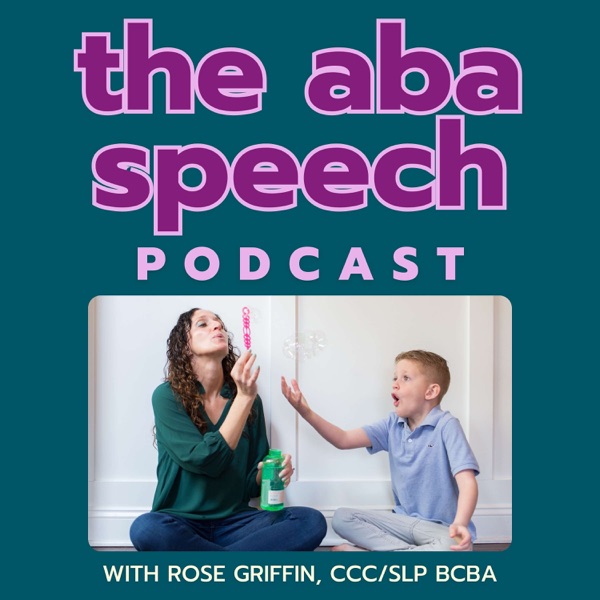
The ABA Speech Podcast- Easy Strategies for Speech Therapists, BCBAs, and RBTs
Join Rose Griffin, a dedicated Speech Therapist and BCBA from ABA SPEECH, as she shares her compassionate approach to supporting the communication needs of autistic individuals. With 20 years of experience, Rose is committed to respecting and understanding the diverse ways autistic people communicate and interact with the world.
This podcast is a resource for professionals and parents alike, offering practical strategies that honor each person's unique communication style. Rose covers a wide range of topics, including how to recognize and support autistic communication from an early age, the distinctions between autism and speech differences, and effective, respectful approaches to fostering communication, whether a child is non-speaking, minimally speaking, or verbal.
Through a mix of interviews and solo episodes, Rose explores how to enhance meaningful connections, address challenges with empathy, and celebrate the strengths of autistic individuals. Whether you're a parent, therapist, or educator, you'll find valuable insights and actionable advice to create supportive environments that empower communication and honor neurodiversity.
Hit subscribe and learn more at http://www.abaspeech.org.
- Episodes
- 308
- Releases
- Weekly
- Typical length
- 27 min
- On air since
- 2020
- Latest episode
- 19 hours ago
Episodes
308 episodes, newest first
-
30 min
#305: The Constructional Approach with Dr. Awab Abdel-Jalil, BCBA-D
Episode 305
Show notes
What if we stopped focusing on reducing problem behavior and started asking what skills our learners need to be successful?
I’m excited to welcome Dr. Awab Abdel-Jalil to explore the constructional approach, a different lens for understanding behavior and creating meaningful change. Awab shares how this approach moves us beyond simply replacing behaviors to building repertoires that help learners thrive in their everyday environments.
We explore nonlinear contingency analysis and a powerful classroom example that shows why looking beyond the behavior itself matters. I love how this connects to compassionate care, assent, and the importance of understanding what our learners truly need.
We also discuss practical resources for getting started, including Awab’s upcoming publications and opportunities to keep learning.
#autism #speechtherapy
What’s Inside:
• Understanding the constructional approach and its focus on building skills
• How nonlinear contingency analysis reveals what's missing
• A classroom example highlighting compassionate, skill-based intervention
• Resources for applying constructional thinking in clinical practiceMentioned In This Episode:
Nonlinear Contingency Analysis: Going Beyond Cognition and Behavior in Clinical PracticeThe Constructional Approach to Behavior Analysis Facebook Group3rd Annual Constructional Approach ConferenceUpstate Caring Partners
Say It With Me by Rose GriffinAAC Mastery for SLPs and BCBAsEarn CEUs with a community of peers. Join the ABA Speech Connection
ABA Speech: Home -
31 min
#304: Understanding AAC with Laurie Shaw
Episode 304
Show notes
AAC can feel overwhelming when you're not sure where to start, but you don't have to figure it all out on your own!
In this episode, I sit down with Laurie Shaw, a speech-language pathologist and LAMP Certified Professional, to answer some of the most common questions I hear about AAC. We talk about why motor planning matters and why moving buttons around on a communication device can actually make language learning more difficult. I love how Laurie explains the science behind keeping motor plans consistent!
We also discuss what to do when schools limit device access, how to think about core and fringe vocabulary, and practical ways to build your confidence as a clinician. One of my biggest takeaways is that AAC is about so much more than matching pictures to objects. We want to create meaningful, joyful experiences that help our students build real connections through communication.
If you're a speech therapist, BCBA, or educator looking to feel more confident supporting AAC users, this episode is for you!
#autism #speechtherapy
What’s Inside:
• Understanding motor planning and consistent AAC layouts
• Navigating school-based AAC challenges and device access
• Choosing meaningful core and fringe vocabulary
• Finding practical resources and training to grow your AAC confidenceMentioned In This Episode:
Vocabulary in Toddlers: Study: Banajee, M., DiCarlo, C., & Stricklin, S. B. (2003), "Core Vocabulary Determination for Toddlers," Augmentative and Alternative Communication, 19(2), 67-73 Banajee word list
Touch to learn: Multisensory input supports word learning and processing
AAC Language Lab
Additional research and resources related to LAMP approach
Sign up for a LAMP workshopSay It With Me by Rose GriffinAAC Mastery for SLPs and BCBAsEarn CEUs with a community of peers. Join the ABA Speech Connection
ABA Speech: Home -
27 min
#303: Setting Up Systems that Support ABA, SLP and OT Services with Dr. Stephanie Nostin
Episode 303
Show notes
Strong collaboration doesn't happen by accident. It takes intentional systems, ongoing communication, and a team that's willing to grow together!
Dr. Stephanie Nostin shares how she helped build speech and occupational therapy services within Verbal Beginnings, a large ABA organization. I love hearing how her team has created systems that make interdisciplinary collaboration more effective while supporting clinicians and families.We explore how technology can simplify data collection, streamline documentation, and help providers develop coordinated treatment plans. One of my biggest takeaways is the importance of listening to employee feedback and refining systems over time. These changes can make a real difference in reducing clinician burnout!
We also get into AAC and how Stephanie's team prepares BCBAs, RBTs, and families to confidently support device use. I especially love their approach to hands-on caregiver training before sending a device home.
#autism #speechtherapy
What’s Inside:
• Building collaborative ABA, speech, and OT services within a growing organization
• Using technology to streamline documentation, data collection, and treatment planning
• Creating sustainable systems through employee feedback and ongoing training
• Supporting AAC implementation through team collaboration and caregiver educationMentioned In This Episode:
Verbal BeginningsSay It With Me by Rose GriffinAAC Mastery for SLPs and BCBAsEarn CEUs with a community of peers. Join the ABA Speech Connection
ABA Speech: Home -
32 min
#302: Speech Therapy, ABA and AA with Elaine Keuning & Dr. Sarah Heller
Episode 302
Show notes
I’m joined by Elaine Keuning and Dr. Sarah Heller to explore what meaningful collaboration between speech therapy and ABA can look like, especially when supporting AAC users with complex communication needs. We talk about those sometimes “prickly” beginnings between professionals and how curiosity, respect, and a shared goal can help teams find common ground.
We also dig into AAC beyond programming. A communication device needs to travel with the learner, become part of everyday routines, and support communication that matters now and years from now. I loved our discussion about thinking beyond percentages and trials and recognizing meaningful progress in the small shifts, like bringing the device on a walk, modeling away from the work table, or seeing a learner begin to seek out their communication system.
#autism #speechtherapy
What’s Inside:
• Building stronger SLP and BCBA collaboration through shared roles and respect
• Supporting AAC across environments, routines, and everyday life
• Helping families and teams think about communication with the long term in mind
• Recognizing the small but meaningful signs of AAC progressMentioned In This Episode:
Meaningful Metrics Online AcademyDr. Sarah Hellerhttps://meaningful-metrics.learnworlds.com/homeWilliams Speech and Language Pathology PLLCSay It With Me by Rose GriffinAAC Mastery for SLPs and BCBAsEarn CEUs with a community of peers. Join the ABA Speech Connection
ABA Speech: Home -
27 min
#301: Assent-Based Care with Cristina Theis
Episode 301
Show notes
Teaching someone to say “no” is just as important as teaching them to say “yes.”
I’m joined by Cristina Theis, Director of Training & Educational Development at Firefly Autism, to explore what assent-based care actually looks like in practice, especially when supporting autistic learners with complex communication and behavioral needs.
We talk about moving beyond simply using terms like assent-based or trauma-informed and making sure those values show up in our everyday clinical decisions. Cristina shares why self-advocacy and communication come first, including teaching learners meaningful, understandable ways to tell us when they are, or are not, comfortable participating.
We also dig into interdisciplinary collaboration and why shared values can help BCBAs, SLPs, OTs, educators, and other professionals work through differences in clinical recommendations. I especially love Cristina’s reminder that collaboration does not mean abandoning the science. We can try something, collect data, look at the results, and come back together as a team.
#autism #speechtherapy
What’s Inside:
• What assent and assent withdrawal can look like in practice
• Why teaching “no” supports autonomy and self-advocacy
• Using shared values to strengthen interdisciplinary collaboration
• Balancing compassionate care, clinical judgment, and dataMentioned In This Episode:
Firefly AutismFirefly Autism on InstagramSay It With Me by Rose GriffinAAC Mastery for SLPs and BCBAsEarn CEUs with a community of peers. Join the ABA Speech Connection
ABA Speech: Home -
31 min
#300: Celebrating Episode 300 with Dr. DeMuesy
Episode 300
Show notes
Three hundred episodes, six years of learning together, and so many meaningful connections along the way. What better way to celebrate than with a little reflection, practical insight, and fun?
For this milestone, I’m welcoming back my friend and colleague Dr. Ron DeMuesy. We talk about how much the field has changed, Ron’s journey to earning his PhD, and his work supporting compassionate approaches to severe problem behavior in public schools. Ron also shares practical thoughts on PFA, SBT, collaboration, and why understanding the environment matters when we’re supporting students and school teams.
We also dig into what school-based BCBAs need to know, including the importance of listening before giving advice, recognizing staff strengths, and building behavior plans collaboratively. And because this is episode 300, we finish with a lightning round and reflect on where the podcast has been and where I hope it goes next.
#autism #speechtherapy
What’s Inside:
• Using PFA and SBT to support students with severe problem behavior
• Creating safer, more collaborative school environments
• What new and school-based BCBAs need to know about listening, relationships, and FBAs
• Reflections and rapid-fire questions celebrating 300 episodesMentioned In This Episode:
Don’t Shoot the Dog! by Karen PryorFTF Behavioral ConsultingOhio Association for Behavior AnalysisJohn Carroll University ABA ProgramSay It With Me by Rose GriffinAAC Mastery for SLPs and BCBAsEarn CEUs with a community of peers. Join the ABA Speech Connection
ABA Speech: Home -
26 min
#299: My 5 Most Asked Questions
Episode 299
Show notes
What are clinicians really asking when they want to feel more confident supporting autistic learners? I’m answering the five questions that show up most often in my inbox, DMs, course evaluations, and conversations with members of the ABA Speech Connection.
AAC is at the top of the list. I’m sharing why becoming comfortable with a learner’s device matters, what to consider during the AAC assessment process, and why vocabulary should be meaningful across the learner’s day. Our students deserve access to communication now, not after we feel perfectly prepared.
I’m also digging into SLP-BCBA collaboration and gestalt language processing. Curiosity, communication, and strong soft skills can make a huge difference when professionals approach treatment differently. We can stay grounded in evidence-based practice while listening to one another and keeping the learner at the center.
We’ll also look at joint attention, naturalistic intervention, and parent training. Whether we’re using books, music, and play or helping families understand communication goals, we need to know why we’re teaching a skill and how it will make a meaningful difference in everyday life.
#autism #speechtherapy
What’s Inside:
• Getting started with AAC assessment, vocabulary, and implementation
• Strengthening SLP-BCBA collaboration, especially around AAC and gestalt language processing
• Building joint attention through naturalistic, functional intervention
• Making parent training more meaningful by understanding communication goals and developmental milestonesMentioned In This Episode:
Gestalt Super PackASHAEpisode #121: Core Vocabulary and Typical Language Development with Allison Bean and Bethany Frick SemmlerSay It With Me by Rose GriffinAAC Mastery for SLPs and BCBAsEarn CEUs with a community of peers. Join the ABA Speech Connection
ABA Speech: Home -
24 min
#298: What You Need to Know About Selective Mutism with Chelsea Gamache
Episode 298
Show notes
Selective mutism isn’t a choice, defiance, or simply being shy. It’s about being unable to speak when speaking is socially expected because anxiety can make communication feel incredibly difficult.
Chelsea Gamache brings such an important perspective to this topic, both as a BCBA and as someone diagnosed with selective mutism at age five. We talk about what selective mutism can actually look like, including whispering, using an altered voice, or communicating freely at home while being unable to speak at school or in the community.
One of my biggest takeaways is the importance of meeting learners where they are. We can use behavioral principles like positive reinforcement, gradual exposure, shaping, stimulus fading, and visual supports, but we also have to understand the anxiety component. Communication should never become something we pressure out of a learner.
#autism #speechtherapy
What’s Inside:
• Why selective mutism is different from shyness, defiance, or choosing not to speak
• How pressure to communicate can make people and environments feel unsafe
• Using gradual exposure, reinforcement, shaping, and stimulus fading compassionately
• Why collaboration, family involvement, and learner autonomy matterMentioned In This Episode:
Chelsea on TikTok
Outloud the Selective Mutism PodcastSMART CenterI Am BraveChild Mind InstituteBoston Child Study CenterSelective Mutism AssociationSay It With Me by Rose GriffinAAC Mastery for SLPs and BCBAsEarn CEUs with a community of peers. Join the ABA Speech Connection -
32 min
#297: Supporting Functional Communication Skills with Ashley Whitaker
Episode 297
Show notes
Functional communication is about more than getting a learner to request. It’s about helping them communicate what they want and need spontaneously, across people, places, and real-life situations.
Ashley Whitaker joins me to share practical clinical shifts that can make a big difference for autistic learners, especially those who are prompt dependent or seem stuck in their communication progress. We talk about why a simple prompt like “What do you want?” can unintentionally become a barrier to spontaneous communication, and how we can create a stronger connection between motivation and independent requesting.
We also dig into data collection and why tracking both prompted and spontaneous communication gives us valuable information about whether a learner needs more opportunities or a change in programming. Ashley shares practical ways to build communication opportunities throughout the day without making every interaction feel like a structured therapy trial.
Finally, we explore speech clarity and teaching functional communication before moments of escalation. When learners practice responses like “more time,” “all done,” or “no” outside of crisis situations, we can help them build communication skills they can actually access when they need them most.
#autism #speechtherapy
What’s Inside:
• Reducing verbal prompts to encourage spontaneous communication
• Using prompted and independent communication data to guide programming
• Supporting speech clarity with slower, exaggerated vocal models
• Practicing functional communication before escalation occursMentioned In This Episode:
VB-MAPPThe Verbal Behavior ApproachLighthouse Autism CenterSay It With Me by Rose GriffinAAC Mastery for SLPs and BCBAsEarn CEUs with a community of peers. Join the ABA Speech Connection
ABA Speech: Home -
29 min
#296: Social Skills and Mealtimes with Dr. Katherine Bateman
Episode 296
Show notes
Mealtimes are full of natural opportunities for communication, connection, and friendship, but we may be overlooking just how valuable those moments can be.
Dr. Katherine Bateman joins me to explore Snack Talk, a simple visual communication support designed to help learners engage with peers during meals and snacks. We talk about using personalized questions and visual choices to make communication accessible across modalities, including speech, gestures, AAC, and other forms of communication.
What I love about Snack Talk is how practical it is. We can build visuals around what our learners genuinely enjoy, rotate topics to keep them meaningful, and use prompting to support engagement without making implementation complicated. Katie also shares how this approach can help educators become more intentional during typically unstructured times while creating opportunities for SLPs, BCBAs, teachers, and paraprofessionals to collaborate.
Ultimately, this is about more than answering social questions. It is about belonging, friendship, and giving learners meaningful ways to connect with the people around them.
#autism #speechtherapy
What’s Inside:
• Why mealtimes are an underused opportunity for social communication
• How Snack Talk supports different communication modalities
• Ways to individualize visual supports around interests, culture, and preferences
• Using Snack Talk to foster peer relationships and interdisciplinary collaborationMentioned In This Episode:
Visual Supports to Increase Conversation Engagement for Preschoolers With Autism Spectrum Disorder During MealtimesSnack TalkHaring Center for Inclusive Education, University of WashingtonSay It With Me by Rose GriffinAAC Mastery for SLPs and BCBAsEarn CEUs with a community of peers. Join the ABA Speech Connection
ABA Speech: Home -
31 min
#295: The Motas Assessment with Dr. Anika Hoybjerg
Episode 295
Show notes
Have you ever picked up an assessment and thought, “This still isn’t giving me the information I need?”
That’s why I’m so excited to introduce you to the Meaningful Outcomes Treatment and Assessment Scale, or MOTAS. Dr. Anika Hoybjerg shares how she and co-creator Casey Barron developed a comprehensive assessment that keeps meaningful, individualized outcomes at the center.
What immediately stood out to me is how practical and approachable the MOTAS feels. It addresses areas like communication, flexibility, social behavior, transitions, personal care, leisure, self-awareness, and perspective taking. There is also an Early Learner version that incorporates developmental milestones and AAC considerations.
I especially love the LOOP interviews, which bring clients, caregivers, and other professionals directly into treatment planning. Instead of assuming what matters most, we can ask, prioritize, and continue checking whether our goals are actually meaningful. That collaboration can make such a difference in creating functional treatment plans that support independence and quality of life.
#autism #speechtherapy
What’s Inside:
• How the MOTAS fills gaps Dr. Hoybjerg noticed in existing assessments
• Using LOOP interviews to prioritize meaningful goals with clients and caregivers
• How the MOTAS supports individualized, collaborative treatment planning
• Who can use the MOTAS and why it was designed to be approachable for cliniciansMentioned In This Episode:
Get the MOTASABA Education CenterSay It With Me by Rose GriffinAAC Mastery for SLPs and BCBAsEarn CEUs with a community of peers. Join the ABA Speech Connection
ABA Speech: Home -
16 min
#294: Feel Confident Supporting Autistic Students
Episode 294
Show notes
I still remember what it felt like to walk into a therapy session and have no idea how to move forward.
Early in my career, I was working with autistic learners with complex communication and behavioral needs, and I quickly realized graduate school had not prepared me for everything I was seeing. I wanted to help, but I didn’t always have practical strategies I could use when a learner struggled to attend, engage, or communicate. That experience sent me searching for better answers and ultimately shaped the way I practice today.
More than 20 years later, I want clinicians to have something I desperately needed back then: support, practical education, and a community that helps you feel confident about what to do next.
That’s why I created the ABA Speech Connection. It brings speech therapists, BCBAs, and RBTs together to learn evidence-based strategies, earn CEUs, collaborate, and immediately apply what they’re learning with autistic students. From AAC and functional communication to clinical roundtables and live learning, everything is designed to make professional development practical and useful.
You don’t have to spend hours searching for your next CEU or wonder whether you’re doing enough. You can have a place to learn, ask questions, and keep growing alongside professionals who care about helping every student communicate with the world.
#autism #speechtherapy
What’s Inside:
• Why my early clinical experiences shaped the ABA Speech Connection
• How ongoing education can build confidence and strengthen clinical practice
• Practical learning around AAC, communication, and evidence-based intervention
• How the Connection supports individuals and professional teamsMentioned In This Episode:
Say It With Me by Rose GriffinAAC Mastery for SLPs and BCBAsEarn CEUs with a community of peers. Join the ABA Speech Connection
ABA Speech: Home -
27 min
#293: Providing SLP, OT and ABA Under One Roof with Colleen Lama
Episode 293
Show notes
What happens when collaboration is built into a practice from the very beginning? The results can be powerful for clinicians, families, and most importantly, the children we serve.
I love hearing how different professionals find their path, and Colleen Lama's story is such a great reminder that unexpected career moments can lead to something even better. As both a speech-language pathologist and BCBA, she shares how becoming dual certified helped her better support autistic learners and inspired her to create a practice where speech therapy, occupational therapy, and ABA truly work together. We also talk about the realities of growing a multidisciplinary practice, from navigating insurance challenges to building a team that values collaboration and family-centered care. If you've ever wondered what it looks like to provide coordinated services under one roof, I think you'll find plenty of practical insights and encouragement here.
#autism #speechtherapy
What’s Inside:
• Why Colleen became both an SLP and BCBA, and how that shaped her career
• The benefits of offering speech, OT, and ABA in one collaborative practice
• Challenges that come with multidisciplinary care and how strong communication keeps teams aligned
• How the ABA Speech Connection supports ongoing learning for SLPs, BCBAs, and RBTsMentioned In This Episode:
Lama Pediatric TherapySelective Mutism, Anxiety and Communication
AAC Mastery for SLPs and BCBAsEarn CEUs with a community of peers. Join the ABA Speech Connection
ABA Speech: Home -
26 min
#292: Comparing Vocabulary Intervention For Children Who Use AAC with Dr. Courtney Trevino
Episode 292
Show notes
Comparing vocabulary instruction for children who use AAC is not a one size fits all decision, and that is exactly what makes this conversation so valuable.
Vocabulary intervention is one of the topics I get asked about most often, and there is still so much to learn about the best ways to support children who use AAC. I’m joined by Dr. Courtney Trevino to unpack her research comparing explicit vocabulary instruction with more naturalistic, incidental teaching. We explore what each approach looks like in practice, how vocabulary was selected for the study, and what the findings can teach us as clinicians.
One strategy that really stood out to me was navigation description, talking out loud through the path you take to find a word on an AAC system. It is such a practical way to support learning, while also helping parents, teachers, RBTs, and other team members become more confident using AAC. I walked away thinking differently about how I teach vocabulary, and I think you will too. If you are looking for practical, research-backed ideas that you can start using right away, this conversation is full of them.
#autism #speechtherapy
What’s Inside:
• Why explicit vocabulary instruction led to stronger word learning outcomes
• How navigation description can support both AAC users and communication partners
• Choosing vocabulary for early AAC learners, including developmental versus core words
• Practical ways to blend structured teaching into everyday therapyMentioned In This Episode:
Comparing Two Vocabulary Interventions for Children Who Use Augmentative and Alternative CommunicationDr. Courtney TrevinoAAC Mastery for SLPs and BCBAsEarn CEUs with a community of peers. Join the ABA Speech Connection
ABA Speech: Home -
32 min
#291: Business Strategies For Clinic Owners with Stephen Smith
Episode 291
Show notes
Building a business that reflects your values takes more than hard work. It takes intention, clear systems, and a vision that keeps you grounded when growth starts to feel overwhelming.
Stephen Smith and I explore what it really takes to build an ethical, sustainable ABA practice without losing sight of why you started in the first place. We talk about the importance of defining your vision early, especially if you're starting a business with a partner, and why having the right legal and financial support can save you from major headaches down the road.
We also dive into delegation, something every business owner struggles with at some point. Letting go of tasks can feel uncomfortable, but creating systems, documenting processes, and trusting your team are essential if you want to avoid burnout and create a business that can grow beyond you. I also share a few of the books and tools that have helped me think differently about leadership, delegation, and protecting my own creativity as a business owner. Whether you're just getting started or looking to strengthen an established practice, I think you'll walk away with practical ideas you can put into action right away.
#autism #speechtherapy
What’s Inside:
• Why every clinic owner needs a clear vision before focusing on growth
• Business systems, delegation, and avoiding burnout
• The legal and financial foundations every practice should have
• Practical books, tools, and strategies for building a sustainable businessMentioned In This Episode:
Grab Say it With Me
The ABA Business Leader's Guide by Stephen Smith
3 Pie Squared
Earn CEUs with a community of peers. Join the ABA Speech Connection
ABA Speech: Home -
27 min
#290: Clinician Wellness and Red Flags for Burnout with Tiffany N. Arango
Episode 290
Show notes
If you've ever wondered whether constant stress is simply part of being a helping professional, this conversation is for you. Burnout isn't a badge of honor, and crying in your car or pushing through physical symptoms shouldn't be considered normal.
I’m joined by Tiffany N. Arango to explore what clinician wellness really looks like and why so many dedicated professionals end up running on empty. Tiffany shares her own experience of reaching severe burnout while working in what she believed was her dream job, and how that experience changed the direction of her career. We talk about the workplace red flags that are easy to overlook, why so many of us normalize unhealthy environments, and how psychological flexibility can help us respond with intention instead of simply surviving each day.
We also explore the role leaders play in creating healthy workplace cultures and why genuine care for employees should never be viewed as a weakness. Whether you're a speech therapist, BCBA, RBT, or another helping professional, I hope this conversation reminds you that your well-being matters just as much as the people you serve. If you're feeling overwhelmed, please know you don't have to navigate it alone. Reach out, find your community, and seek support.
#autism #speechtherapy
What’s Inside:
• Red flags that can signal workplace burnout
• How psychological flexibility supports clinician well-being
• Practical ways leaders can create healthier workplace cultures
• Why caring for yourself is essential to caring for othersMentioned In This Episode:
Grab Say it With Me
The Behavior Station
Earn CEUs with a community of peers. Join the ABA Speech Connection
ABA Speech: Home -
27 min
#289: A Conversation About School-Based SLP and BCBA Services with Dr. Selena J. Layden
Episode 289
Show notes
The best outcomes happen when we stop working in silos and start learning from each other.
I recently had the chance to be a guest on Dr. Selena J. Layden's podcast, and I knew I wanted to share our conversation with you because it highlights something I'm deeply passionate about, meaningful collaboration between speech-language pathologists and BCBAs. When we recognize each other's expertise and work together, we create better outcomes for the students we serve.
We talked about my journey from school-based speech therapy into the world of ABA, how those experiences shaped ABA Speech, and why I believe communication and behavior support are strongest when they are aligned. We also explored common misconceptions between our professions, practical ways to build trust with colleagues, and why curiosity and open communication can go a long way.
One of my favorite parts of our discussion was sharing what I wish every school-based BCBA understood about speech-language pathology. Our training is incredibly broad, and many of us continue developing our expertise long after graduate school. The same is true for BCBAs, which is why ongoing learning and collaboration matter so much.
Whether you're an SLP, BCBA, educator, or part of an interdisciplinary team, I hope this conversation encourages you to build stronger partnerships that help every student communicate and thrive.
#speechtherapy #autism
What’s Inside:
• Why speech therapy and ABA are stronger together
• Simple ways to build meaningful collaboration in school settings
• What I wish every school-based BCBA knew about speech-language pathology
• How mutual respect and ongoing learning improve student outcomesMentioned In This Episode:
Grab Say it With Me
The Behavior Education Connection
Earn CEUs with a community of peers. Join the ABA Speech Connection
ABA Speech: Home -
35 min
#288: Hot Topics in Speech and ABA with Dr. Melanie Olson Giles
Episode 288
Show notes
What happens when two SLPs and BCBAs get together to tackle the biggest conversations in our fields? You get an honest discussion about collaboration, research, and keeping students at the center of every decision.
Today, we're flipping the script and I'm answering some of the questions I hear most often about speech therapy and ABA, from choosing AAC vocabulary to navigating current topics like gestalt language processing, prompting, and aided language modeling. I share why I believe we have to move beyond an "all or nothing" mindset and focus on what the research tells us while making thoughtful, ethical decisions for each individual learner.
Dr. Giles and I also dig into functional communication, response forms, and why collecting meaningful data should guide every intervention we use. My hope is that these conversations help bridge the gap between disciplines so we can spend less time debating and more time helping our students communicate with confidence.
#autism #speechtherapy
What’s Inside:
• Why collaboration between SLPs and BCBAs leads to better outcomes for learners
• How I think about AAC vocabulary, response forms, and functional communication
• My perspective on gestalt language processing, prompting, and current research
• Why data driven decision making should shape every communication interventionMentioned In This Episode:
Grab Say it With MeEarn CEUs with a community of peers. Join the ABA Speech Connection
ABA Speech: Home -
18 min
#287: Tools To Spark Speech and Social Engagement
Episode 287
Show notes
Every student deserves a way to communicate with the world, and that belief has guided my work from the very beginning.
Today, I’m sharing something incredibly special, the story behind my new book, Say It With Me: Naturalistic Tools to Spark Speech and Social Engagement. This is the resource I wish I had when I first started working with autistic learners who were not yet speaking, struggled to engage in therapy, or faced behavioral barriers that made learning more challenging.
I take you behind the scenes of my journey, from my early days at the Cleveland Clinic Autism Center to the lessons that shaped the compassionate, collaborative approach I use today. I also walk through the practical strategies featured in the book, including assessment, joint attention, play-based learning, AAC, social engagement, group therapy, behavior supports, and meaningful goal writing. My goal has always been to make research approachable and actionable so you can feel confident putting these ideas into practice right away.
Whether you're a speech-language pathologist, BCBA, educator, or parent, I hope this conversation leaves you feeling encouraged and equipped with new ways to support learners who are often the hardest to reach.
#autism #speechtherapy
What’s Inside:
• Building the foundation for communication through engagement, play, and joint attention
• Practical strategies for AAC, language development, and meaningful generalization
• Supporting learners with behavioral barriers through collaborative care
• Writing effective goals and creating stronger IEP and team meetingsMentioned In This Episode:
Grab Say it With Me
Earn CEUs with a community of peers. Join the ABA Speech Connection
ABA Speech: Home -
33 min
#286: Picky Eating or Feeding Disorder with Margaryta Kuzmin
Episode 286
Show notes
Some kids are picky eaters, but when does it become something more?
Feeding challenges can feel overwhelming for families, especially when mealtimes become stressful, food choices become extremely limited, or concerns about nutrition start to grow. That's why I was excited to welcome feeding specialist Margaryta Kuzmin to the podcast. Together, we unpacked the difference between typical picky eating and pediatric feeding disorders, and why early support can make such a meaningful difference.
Margaryta shares the developmental reasons many children go through selective eating phases, along with important red flags that may signal a deeper concern. We also explore why feeding difficulties are rarely about food alone. Medical, nutritional, motor, sensory, and social factors can all play a role. I especially loved our discussion about how providers can approach these conversations with families in a supportive, compassionate way.
Whether you're a speech-language pathologist, BCBA, educator, or parent, this conversation highlights the power of collaboration and why feeding concerns deserve attention early on.
#autism #speechtherapy
What’s Inside:
• The difference between picky eating and pediatric feeding disorders
• Common feeding red flags that professionals and parents should watch for
• Why medical, nutritional, sensory, and motor factors all matter
• The professionals who make up a strong feeding team and how they work togetherMentioned In This Episode:
Feeding Matters
Kuzmin SLP
Margaryta Kuzmin on Instagram
Earn CEUs with a community of peers. Join the ABA Speech Connection
ABA Speech: Home
On these lists
The ABA Speech Podcast- Easy Strategies for Speech Therapists, BCBAs, and RBTs is one of the shows picked out on this list
More in How To
Placed highest on Apple Podcasts' How To chart right now