Podcast
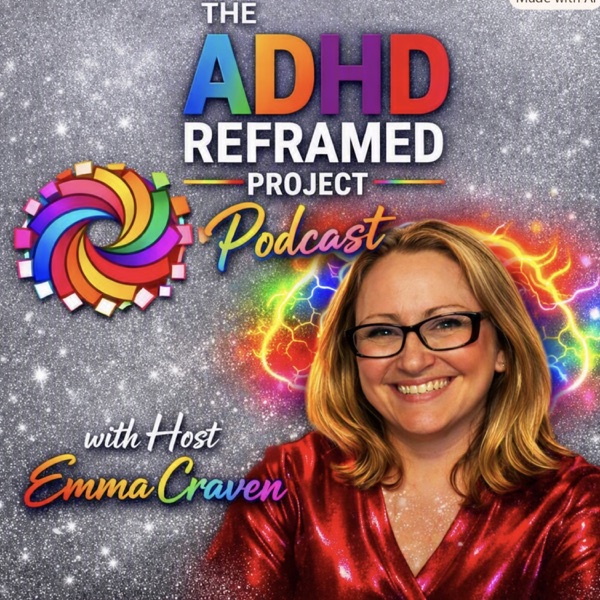
The ADHD Reframed Project Podcast
ADHD advocacy and ADHD women’s stories take center stage in The ADHD Reframed Project, hosted by Emma Craven. This podcast brings raw, real ADHD conversations to late-diagnosed ADHD adults, especially women who have spent years feeling misunderstood or unseen. Together, we challenge deficit-based ideas about ADHD and explore identity, cognitive diversity, lived experience, and the strengths of uniquely wired minds. If you’ve ever felt too much, not enough, or like you didn’t fit, welcome home. Unapologetically ADHD. Uniquely Wired.
The ADHD Reframed Project is more than a podcast, it’s a movement. A home for the Lost Generation of late‑diagnosed ADHD adults (mostly women!) who spent years feeling misunderstood, disregarded, or unheard.
This is a shout‑out to the hidden generation finally discovering the truth:
We were never the problem.
ADHD women and ADHD advocacy.
If you’ve ever felt too much, not enough, or completely unseen, you’ve found your people.
Welcome home.
This podcast shifts the ADHD conversation from a deficit narrative to one of distinct strengths, identity, and cognitive diversity.
Hosted by Emma Craven, a passionate advocate for neurodivergent minds, this project was born from a desire to change how we view our brains, our stories, and our potential.
- Social Sciences chart
- #70
- Episodes
- 45
- Releases
- Twice a week
- Typical length
- 1 hr 9 min
- On air since
- 2026
- Latest episode
- 1 week ago
Episodes
45 episodes, newest first
-
1 hr 17 min
Breaking Systemic Barriers: Caravan Clinics, Parent Trauma, and Reclaiming Our Stories with Nicola Hughes
Season 2, Episode 13
Show notes
This week, Emma sits down with Nicola Hughes to share her personal diagnostic journey with ADHD and Autism and her groundbreaking creation of a caravan clinic for therapy sessions.
Guest Bio: Nicola Hughes is a neurodivergent BACP‑accredited psychotherapist and consultant with 15+ years’ experience. She works with individuals and couples from her Caravan Clinic in West Yorkshire and is the author of SENT: The Emails I Sent, the Silence That Followed, which shines a light on Parent Carer Trauma.Together, we dive deep into the emotional impact of school-system trauma, the physical reality of Rejection Sensitivity Dysphoria (RSD), and how adopting a strengths-based approach allows late-diagnosed adults and parents to move past shame and build genuine resilience.What happens when standard support systems fail neurodivergent families, forcing us to navigate systemic trauma, bureaucratic brick walls, and the exhausting burden of constantly justifying our needs?
Unmasking isn't just about individual healing; it’s about exposing the systemic gaps in education and healthcare that leave families burning out. When the traditional "boxes" don't fit our neurodivergent reality, we stop trying to adapt to their rigid structures and build our own spaces of safety, healing, and strength.
Key Soundbites & Reframes:
•
"Rejection can be quite physical and debilitating."
•
"It's our story, and it’s happening."
•
"I met the criteria for ADHD and Autism..."
🌈 Join the Great Unmasking:This episode is part of The ADHD Reframed Project. We are the Lost Generation: the late-diagnosed adults (primarily women) releasing our masks like dandelion seeds to reveal the full rainbow spectrum of neurodivergent potential.
Guest Links:
Facebook: https://www.facebook.com/NicolaHughesCounselling Instagram: https://www.instagram.com/nicola_creativetherapy/
LinkedIn: https://www.linkedin.com/in/nicola-hughes-29043a75/
YouTube: https://www.youtube.com/@creativecounsellor
Nicola's book SENT: https://amzn.eu/d/0exG10pc
The ADHD Reframed Project Website: https://the-adhd-reframed-project.com/
-
59 min
The Strength in the Spectrum: Unmasking Misconceptions with the Community
Season 2, Episode 11
Show notes
Why do so many neurodivergent women spend decades feeling like they’re failing at being "normal," when they were actually trying to survive inside a societal box that was never built for them?
The labels placed on late-diagnosed women can be heavy, but when we step out from behind the mask and gather as a community, those labels lose their power. Unmasking isn't a solitary act; it's a shared revelation that transforms our dynamic, variable traits into our greatest strengths.
In This Episode:
This week, Emma sits down with a panel of neurodivergent women to pull back the curtain on the daily realities of living with ADHD and Autism.
Together, we challenge toxic societal stereotypes, explore the daily variability of our symptoms, and highlight why finding an authentic community is the key to letting go of the performance and stepping into our true colours.
Key Soundbites & Reframes:
•
"Symptoms vary between each person, and on different days."
•
"Labels can be really toxic and impact us deeply."
•
"I'm diagnosed with ADHD and Autism, and I'm studying psychology..."
🌈 Join the Great Unmasking:This episode is part of The ADHD Reframed Project. We are the Lost Generation - the late-diagnosed adults (primarily women) releasing our masks to reveal the full rainbow spectrum of the neurodivergent brain.
-
1 hr 56 min
ADHD, Media, The Insider’s Perspective - with Elizabeth Victoria Evans
Season 2, Episode 11
Show notes
An ADHD Narrative That We REALLY Deserve!
ADHD representation is shifting fast - and conversations like this help protect the community from misinformation and sensationalism.
In this episode, Emma and returning guest Elizabeth Victoria Evans explore how ADHD is portrayed in mainstream media - and what happens when representation misses the mark. Without naming the documentary directly, they discuss the impact of oversimplified narratives, the responsibility of storytellers, and why neurodivergent voices must be centred in conversations about ADHD. This is a grounded, honest conversation about ethics, inclusion, and reclaiming the ADHD story from sensationalism.
If you’ve ever watched ADHD content that felt “off,” harmful, or sensationalised, this episode will help you understand why - and what better representation looks like.
ADHD UK - https://adhduk.co.uk/challenging-c4-the-great-adhd-myth/complain-to-ofcom/
"A recent media release was highly offensive to those with ADHD."
"Over 11,000 complaints have been made to Ofcom."
"Misinformation fuels misunderstanding and harms society."
⭐ About Elizabeth Victoria Evans - Film Producer, Advocate & Neurodivergent Storyteller
Elizabeth Victoria Evans is a film producer, advocate, and neurodivergent creative whose work centres on authentic representation and ethical storytelling. She is known for bringing lived experience into the heart of her projects, challenging the industry to move beyond stereotypes and towards narratives that genuinely reflect the complexity of ADHD and neurodivergent lives. Her mission is simple but radical: to create media that doesn’t just show neurodivergent people - it listens to them. Elizabeth works across film, documentary, and digital media, using her platform to highlight access clashes, industry barriers, and the emotional realities of navigating high‑pressure creative environments with an ADHD brain. She advocates for safer, more inclusive production spaces and pushes for neurodivergent leadership behind the camera, not just tokenistic representation on screen. Her perspective is grounded, honest, and deeply informed by both her professional experience and her lived neurodivergence - making her one of the most important voices in the conversation about ADHD, media ethics, and representation today.
Key topics
• Impact of media on public perception of ADHD
• Misinformation and misrepresentation in documentaries
• The role of regulatory bodies like Ofcom in safeguarding accurate information
• Advocacy for neurodivergent communities and responsible journalism
• The importance of evidence-based information and scientific consensusShare this episode with someone who’s navigating ADHD through media noise - it might be the clarity they’ve been waiting for.
-
1 hr 26 min
ADHD Inclusion That Actually Works - Meeting People Where They Are (with guest Linz McCann)
Season 2, Episode 10
Show notes
“Support isn’t about forcing someone to run your race; it’s about altering the track so everyone can cross the finish line.”
Emma sits down with multi‑passionate advocate, volunteer, and educator Linz McCann for a masterclass in human‑centred inclusion. Together, they dive into the messy, often‑ignored intersections of ADHD, dyslexia, and dyspraxia — from navigating physical coordination and mental fatigue to designing organisational strategies that actually hold up in real life.
Linz shares her grassroots journey across adaptive sports, education reform, and lifelong learning, proving that humour, empathy, and subtle environmental modifications can completely dismantle societal barriers. Emma and Linz explore what it means to meet people where they are, how to build adaptive scaffolds that unlock potential, and why strength‑based inclusion is the future of every classroom, workplace, and community.
Whether you’re supporting children, navigating adulthood, or reframing your own multi‑layered neurodivergence, this conversation is a compassionate, practical roadmap for living authentically — without waiting for rigid systems to catch up.
“Live your life as best you can, go steady, and don’t let anyone reduce your worth to a standardized test.”
#ADHDDandelion 🌾
⭐ In This Episode, We Reframe
• The Overlapping Spectrum — navigating the complex interplay between ADHD, dyslexia, and dyspraxia without losing your sense of self.
• Meeting People Where They Are — why true inclusion requires flexible communication, empathy, and dropping rigid institutional expectations.
• The Adaptive Scaffold — how small modifications in sports, classrooms, and workplaces unlock massive potential for neurodivergent minds.
• Humor as a Shield & Bridge — leveraging wit, lightness, and mental preparation to manage executive dysfunction and social fatigue.
• Lifelong Growth — shifting away from deficit‑based survival toward a lifelong, strength‑based celebration of cognitive differences. -
55 min
AuDHD Identity & Belonging - From Isolation to Impact (with guest Dimi)
Season 2, Episode 9
Show notes
“The system wasn’t built for our brains, but our resilience is what rebuilds the system.”
This week, Emma sits down with student advocate Dimi for a deeply relatable and empowering conversation about navigating university life as an international student with ADHD in the UK. From managing the double shift of cultural adaptation alongside late autism and ADHD diagnoses to overcoming social isolation and academic friction, Dimi shares the honest, unmasked reality of his higher‑education journey.
Emma and Dimi unpack the power of peer community, the emotional weight of hidden traits, and the nuanced challenge of navigating social norms across cultures. They explore the mindset shifts required to move from survival mode to genuine academic achievement — and how resilience, self‑awareness, and community support can transform the entire university experience.
If you’re a student wondering whether you have what it takes to finish your degree, Dimi’s story is the ultimate proof that you can cross the finish line on your own terms.
⭐ In This Episode, We Reframe
• The Dual Transition — navigating the combined sensory and cultural load of moving to the UK as an international AuDHD student.
• Late Diagnosis in Academia — how discovering your neurodivergence mid‑degree reshapes study habits, identity, and self‑compassion.
• Bridging Cultural Norms — unpacking social expectations, communication styles, and relationship dynamics across different cultural environments.
• The Strength of Community — why finding authentic, understanding peers is the single greatest buffer against burnout and isolation.
• Relentless Advocacy — practical encouragement and self‑awareness strategies for turning academic barriers into milestones.
"You don't need to fit into their mould to succeed. Keep pushing, keep self-advocating, and grow right through the concrete." #ADHDDandelion 🌾
-
1 hr 1 min
ADHD Medication & The Biological Engine Reticular Rewiring, Vitality & Health (with Scott Harrison)
Season 2, Episode 8
Show notes
“When you change your physical environment and retrain your focus, your ADHD stops being a chaotic disruption and becomes your fuel.”
This week, Emma sits down with health expert, author, and entrepreneur Scott Harrison for a high‑intensity, deeply personal masterclass on body‑mind synergy. Scott speaks candidly about his late ADHD diagnosis, the emotional weight of finding answers in adulthood, and the startling ways medication reshaped his personality and mental health. Together, Emma and Scott explore how physical health — specifically nutrition, movement, gut‑brain connection, and nervous system regulation — forms the essential foundation for executive function.
Scott breaks down the neuroscience behind the Reticular Activating System (RAS), revealing how to intentionally program your brain’s filter to shift away from doom‑scrolling, paralysis, and emotional flattening — and toward purpose‑driven action. This conversation is a holistic blueprint for anyone who has felt misunderstood by medication‑only advice or disconnected from their spark.
If you’ve ever felt emotionally muted, physically drained, or frustrated by ADHD guidance that ignores the body‑mind connection, this episode shows you how to rebuild your foundation and reclaim your momentum.
⭐ In This Episode, We Reframe
• The Medication Trade‑Off — exploring emotional and psychological shifts that can occur on medication, and why physical health often supports cognitive stability.
• Programming the RAS Filter — understanding how the Reticular Activating System works and how to intentionally direct hyper‑focus toward meaningful outcomes.
• The Holistic Foundation — why gut health, nutrition, movement, and nervous system regulation are non‑negotiables for managing inflammation and burnout.
• Purpose Over Perfection — shifting from symptom management to building a life centred on strengths, passions, and sustainable routines.
• Navigating Relationships — how understanding your biological needs supports authentic, stable, and compassionate dynamics at home.
⭐ Guest Bio (Search‑Optimised & Movement‑Aligned)
Scott Harrison is a modern renaissance man whose work has transformed thousands of lives through personalised coaching, mindset training, fitness, nutrition, and community support. Dedicated to early intervention, he is equally passionate about improving children’s health and wellbeing. His beautifully illustrated children’s books inspire young readers to build positive mindsets and emotional resilience.
Scott’s track record includes high‑profile transformations for public figures such as Peter Andre, Rylan Clark, Sara Cox, Sara Davies, Jeremy Edwards, Carol Vorderman, Bobby Norris, and many more. His work has been featured across national television, radio, podcasts, and print media. Committed to making transformation simple and accessible, he collaborated with leading food scientists to create The Six Pack Revolution’s bestselling range of clean‑ingredient meal replacements, protein shakes, bars, and overnight oats.
A husband and father of three, Scott continues to champion sustainable, realistic change that strengthens both physical and mental wellbeing.
Featured Resources & Guest Links:
• Connect with Scott on Instagram: @iamscottharrison
• Explore Scott's Program: The Six Pack Revolution"Embrace your operating system. When you align your purpose with your biology, your ADHD isn't a flaw—it's your engine." #ADHDDandelion 🌾
-
1 hr 49 min
ADHD & The AI Advantage - Executive Function, Assessments & Academic Self‑Advocacy (with Rebecca)
Season 2, Episode 7
Show notes
“AI isn’t a shortcut or a cheat code; it is an external working memory that levels a deeply unequal playing field.”
This week, Emma sits down with Rebecca for an essential masterclass on leveraging technology to break through systemic barriers. Together, they unpack the daunting bureaucracy of ADHD assessment processes, the emotional toll of navigating inaccessible academic systems, and the transformative power of modern AI tools in higher education and the workplace.
Rebecca and Emma explore how platforms like Gamma AI, ChatGPT, Perplexity, Zotero, and MindView can reduce the cognitive load of executive dysfunction, support complex study tasks, and unlock genuine accessibility for neurodivergent learners. They also dive into the realities of educational self‑advocacy, showing students and professionals how to assert their accommodation rights without burning out or being dismissed.
This episode is a call to stop forcing an unsupported brain through outdated systems.
It’s time to build a digital scaffold that lets your intellect shine.
⭐ In This Episode, We Reframe
• Demystifying the Assessment - navigating clinical assessment processes with clarity, realistic expectations, and confidence.
• The AI Working Memory - how generative AI tools act as cognitive scaffolding for executive dysfunction.
• The Academic Toolkit - practical workflows using Zotero for reference management and MindView for visual mind mapping.
• Dismantling Educational Barriers - moving past rigid institutional gatekeeping and advocating for fair, inclusive assessment methods.
• Radical Self‑Advocacy - how self‑awareness, validation, and community support transform the academic journey.Guest Bio & Links
Rebecca Parkin is a neurodiversity consultant and educator with over 20 years’ experience across education and employment. She specialises in helping organisations, educators, and individuals understand neurodiversity in practice. Informed by both lived experience and professional expertise, she looks beyond labels to focus on impact, accessibility, and the relationship between people and the environments in which they learn and work.LinkedIn - www.linkedin.com/in/rebecca-parkin-mdg-44374aa4
Website - catnd.co.uk
Featured Resources & Tools in this Episode:
• Reference Management: Zotero Free Bibliography Tool
• Visual Strategy: MindView Mind Mapping Software
• Deep Research: Perplexity AI Search Engine
• Visual Content & Presentations: Gamma AI BuilderPlease note:
This is an audio-first deep dive episode, available across all major streaming platforms!)
When society builds a wall too high for your executive function, you don't keep hitting it - you build a digital ladder.
#ADHDDandelion 🌾
-
2 hr 8 min
ADHD Women & Unmasking - Social Media Myths & Education Reform (with Kayleigh Johnstone)
Season 2, Episode 6
Show notes
“Social media introduced us to our brains, but radical self‑acceptance is what saves them.”
This week, Emma sits down with advocate Kayleigh Johnstone to dissect the double‑edged sword of social media and modern societal norms on the neurodivergent mind. Short‑form content has sparked an unprecedented wave of late adult diagnoses — especially for women who spent decades high‑masking — but it has also created a minefield of stereotypes, online judgement, and pressure to conform to a digital caricature of neurodivergence.
Kayleigh and Emma step into the deep end of female AuDHD: the emotional exhaustion of hidden traits, the lifelong cost of chronic people‑pleasing, and the rigid education systems that punish unique thinkers. Together, they explore how to move beyond algorithm‑driven “quick fixes” and into long‑term cognitive scaffolding, environment design, and radical self‑acceptance.
If you’ve ever felt caught between the overwhelming noise of the digital world and the quiet longing to simply be understood, this episode is your space to exhale.
⭐ In This Episode, We Reframe
• The Social Media Double‑Edge — how online platforms empowered a generation of women to seek answers while breeding new forms of performative stigma.
• The Hidden Cost of Female Masking — unpacking the societal pressures that force neurodivergent women into chronic people‑pleasing, emotional suppression, and burnout.
• Education Systemic Reform — why traditional academic environments alienate neurodivergent learners and how adaptive, inclusive frameworks can transform outcomes.
• Reframing the Narrative — moving away from social media “quick fixes” toward deep, long‑term cognitive scaffolding and environment optimisation.
• Radical Self‑Acceptance — learning to quiet external noise, trust lived experience, and step out from behind the mask.
“Stop letting an algorithm define your neurodivergence. You aren't a trend to be curated; you are built to grow wild." #ADHDDandelion 🌾
Resources
Access to Work - UK Government Support Program - https://www.gov.uk/access-to-work
Speechify - Text-to-Speech Software -https://speechify.com/
Guest Links & Information
Kayleigh is the founder of COZ & Co, a virtual assistant agency specialising in supporting neurospicy entrepreneurs with visibility and business strategy, and The VA Village, a community supporting women to start and grow their Virtual Assistant businesses. She has two neurospicy children and is herself diagnosed Au-DHD.
Website - www.thevavillage.com www.cozandco.com
LinkedIn - https://uk.linkedin.com/in/kayleighjohnstone
Insta - https://ww margatsnIw margatsnI.instagram.com/kayleighjohnstone1/
-
1 hr 51 min
ADHD Women & The Menopause Collision — Career Transitions & Radical Resilience (with Jeanna Malines)
Season 2, Episode 5
Show notes
DISCLAIMER: This episode includes a discussion of childhood trauma.
“When hormones drop, the mask breaks. It’s not a personal failure; it’s a biological shift.”
This week, Emma sits down with neurodivergent career coach Jeanna Malines for one of the most raw, urgent, and deeply personal conversations of the season. Together, they step directly into the storm that mainstream medicine continues to minimise: the catastrophic intersection of ADHD, perimenopause, and menopause.
Jeanna shares the lived reality of navigating major career pivots while her brain chemistry is actively shifting, the exhausting fight for female health advocacy, and how hormonal drops amplify neurodivergent traits to overwhelming levels. Emma pairs this with her own unfiltered story of moving through profound family trauma, navigating mental health crises, and finding the grounding clarity of radical self‑acceptance.
This episode is not just information.
It is validation.
A lifeline for every woman who feels like she is losing her grip on a life she fought to build — and needs to know she is not failing, she is changing.
⭐ In This Episode, We Reframe
• The Hormonal Collision — the clinical reality of how dropping estrogen destabilises ADHD traits and disrupts long‑standing coping mechanisms.
• The Career Shift Ecosystem — practical strategies for pivoting careers mid‑life while protecting executive capacity.
• Catharsis Through Truth — why breaking silence around deep family trauma can support emotional processing and neurological healing.
• The Masking Breakdown — recognising when survival mechanisms stop working and how to move toward authentic connection safely.
• Scaffolding the Future — how modern tools and AI can act as external working memory during intense cognitive transitions.
Resources
ADHD and Women - Book by Dr. Patricia Quinn -https://www.amazon.com/s?k=ADHD+and+Women+by+Patricia+Quinn
Neurodivergent Women - Support Group - https://www.neurodivergentwomen.com/
Hormonal Changes and Brain Chemistry - Research Article - https://www.ncbi.nlm.nih.gov/pmc/articles/PMCXXXXXX/
Guest links
LinkedIn - Jeanna Malines | LinkedIn
Website - Trajecta - Neurodivergent Career Coach & Career Transition Coaching
-
1 hr 11 min
ADHD at Work - Inclusive Systems, Neuroaccreditation & Stigma‑Breaking (with Rob Annis)
Season 2, Episode 4
Show notes
“Inclusion isn’t a training session you attend once a year, it’s an infrastructure you build into the foundation.”
This week, Emma sits down with organisational psychologist and late‑diagnosed AuDHD advocate Rob Annis for a masterclass in genuine systemic reform. If you’re exhausted by shallow corporate compliance, tick‑box diversity panels, or workplaces that claim inclusion while reinforcing stigma, this conversation is your blueprint for real change.
Featuring Robert Annis, Co-Founder and Organisational Psychologist at NEURO. Explore NEURO's work on neuroinclusion, cognitive diversity and organisational intelligence: https://www.youtube.com/@NEURO-YTu
Rob breaks down how his own AuDHD diagnosis transformed his approach to organisational psychology, why traditional diversity training fails, and how neuroaccreditation forces institutions to respect cognitive differences at a structural level. Together, Emma and Rob explore the silent emotional toll of stigma, the invisible barriers neurodivergent people face in modern workplaces, and the practical strategies leaders can use to build environments where every mind can safely unmask and thrive.
This episode is not about fixing people.
It’s about fixing systems.
“We have to stop treating inclusion like an administrative chore. You don’t manage a dandelion; you change the soil.”
#ADHDDandelion 🌾
⭐ In This Episode, We Reframe
• The Psychologist’s Lens — how Rob’s late‑diagnosis journey reshaped his entire approach to organisational psychology.
• Beyond Box‑Ticking — the difference between superficial corporate diversity training and genuine, structural organisational reform.
• The Neuroaccreditation Blueprint — how formal accreditation transforms policy, accountability, and institutional respect for cognitive differences.
• The Toll of Stigma — a deep dive into the invisible emotional and systemic barriers faced by neurodivergent individuals.
• Designing for Empathy — high‑impact strategies for fostering authentic communication, validation, and psychological safety across diverse teams.Resources
Neuro Charity - https://neurocharity.org/
Rob Annis on LinkedIn - https://linkedin.com/in/robannis
The Neuro Standard Accreditation -https://neurocharity.org/neuro-standardUnderstanding Neurodiversity - Library Resources - https://neurocharity.org/library
Guest links
LinkedIn - https://linkedin.com/in/robannis
-
1 hr 9 min
ADHD Dopamine & Rewiring - Solution‑Focused Hypnotherapy & Thriving (with Keira Smith)
Season 2, Episode 4
Show notes
“It’s a brain type, not a problem to fix.”
This week, Emma sits down with solution‑focused hypnotherapist Keira Smith to dismantle the medical deficit model and offer a practical, neuroscience‑aligned blueprint for cognitive self‑regulation. If you’ve been battling emotional dysregulation, chronic overwhelm, or the exhausting cycle of dopamine‑chasing burnout, this conversation is a breath of fresh air.
Keira pulls back the curtain on how solution‑focused hypnotherapy supports the brain in rewiring stress responses, how late‑diagnosed adults can transition from high‑masking survival to radical self‑acceptance, and how to intentionally design an environment where hyper‑focus becomes a strength rather than a source of collapse.
This episode is a reminder:
Your brain is not a garden to weed.
It’s an ecosystem to understand.
“Neurodiversity is just doing things differently. Stop fixing, start flourishing.”
#ADHDDandelion 🌾
⭐ In This Episode, We Reframe
• The Blueprint Shift — moving past deficit narratives to understand neurodiversity as a unique operating system, not a clinical flaw.
• Solution‑Focused Hypnotherapy — the neuroscience behind hypnotherapy and how it supports stress regulation, emotional grounding, and cognitive clarity.
• Dopamine Mapping — actionable, ground‑level strategies for managing emotional regulation and interrupting the burnout cycle.
• Hyper‑Focus Mastery — reframing hyper‑focus as a functional strength and learning how to harness it safely.
• Co‑Regulation in Relationships — navigating communication, sensory boundaries, and emotional triggers with partners who process the world differently.
🎙️ Resources Mentioned in this Episode:
• Connect with Keira Smith: Positive Change Hypnotherapy Website
• Follow Keira on Instagram: @rewire_to_thrive
• Follow Keira on Facebook: Keira Smith Hypnotherapy -
59 min
ADHD Medication & Hormones - Lived Experience, Healthcare & Identity (with Osayomore)
Season 2, Episode 2
Show notes
What happens when the person dispensing the medication is also the one navigating the neurodivergent brain?
This week, Emma sits down with ADHD Specialist Pharmacist Osayomore — the first non‑ADHD guest on the show — for a high‑level, biochemistry‑backed masterclass that dismantles the most persistent myths surrounding ADHD treatment.
Osayomore breaks down the mechanical reality of how stimulants and non‑stimulants affect the brain, why hormonal fluctuations can dramatically shift medication effectiveness for women, and how clinicians think about managing physical side effects safely. She also shares her own late‑diagnosis journey, revealing the cognitive tools that keep her functioning in a demanding medical profession — from visual mind mapping to body doubling and structured scaffolding.
This episode is not just clinical insight.
It’s a healthcare empowerment toolkit.
If you’ve ever felt dismissed by a clinician, confused by your prescription, or frustrated when your medication seems to “stop working” at certain points in your cycle, this conversation gives you the language, confidence, and clarity to advocate for yourself.
“Medication is a vehicle, but self‑advocacy is who drives the car.”
#ADHDDandelion 🌾
⭐ In This Episode, We Reframe
• The Stimulant Blueprint — shifting past stigma to understand how ADHD medications influence neurotransmitter pathways.
• The Estrogen Drop — why hormonal fluctuations can affect medication response and how women can track patterns to support conversations with clinicians.
• Side‑Effect Warfare — practical, general strategies clinicians often consider when supporting patients through physical side effects.
• Dismantling Medical Gaslighting — how to communicate clearly, request reasonable adjustments, and advocate for your needs in healthcare settings.
• The Practical Toolbox — why medication works best when paired with lifestyle scaffolding like body doubling, mind mapping, and visual systems.
🎙️ Resources Mentioned in this Episode:
• Mind View Mind Mapping - https://www.matchware.com/mind-mapping-software
• Connect with Osayomore: Check out her professional insights and advocacy directly on LinkedIn - https://www.linkedin.com/in/osayomore-abusi-a0338a84/Website - https://pharmacistdiary.com/
-
58 min
AuDHD, RSD & Burnout — The Tug‑of‑War of Being Both (with Charlie Ruttle)
Season 2, Episode 1
Show notes
Season 2, Episode 1 — Full Description
What happens when one half of your brain demands absolute routine, and the other half thrives on total chaos?
To launch Season 2, Emma sits down with Charlie Ruttle — founder of the Comfortably Chaotic community — for a raw, unmasked exploration of late‑diagnosed ADHD and the lived reality of being AuDHD.
Charlie shares the internal tug‑of‑war that defines so many late‑diagnosed adults: the autistic need for predictability colliding with the ADHD craving for novelty. They unpack how ADHD medication can unexpectedly amplify autistic sensory traits, why burnout feels like neurological collapse rather than “being tired,” and how RSD can turn everyday interactions into emotional landmines.
This conversation is a survival guide for anyone who has ever felt like a walking contradiction.
It’s about stopping the fight with your own brain — and starting the journey toward radical self‑acceptance.
Charlie’s story is not just personal; it’s communal. Their work with Comfortably Chaotic shows how micro‑communities become lifelines for neurodivergent adults who have spent decades masking, contorting, and trying to “fit.” When you finally find people who understand your wiring, the chaos becomes something you can navigate — not something you fear.
“The chaos and the need for routine coexist — stop making excuses and start finding explanations.”
In This Episode, We Reframe
• The AuDHD Paradox — how strict routine and novelty‑seeking coexist inside the same brain, and why this contradiction makes perfect sense neurologically.
• The Medication Flip — why treating ADHD can make autistic sensory traits feel louder, sharper, or more overwhelming.
• The Anatomy of Burnout — recognising the early warning signs of neurological exhaustion and how to recover without shame.
• RSD & Relationships — navigating emotional dysregulation, fear of rejection, and the impact of RSD on communication.
• The Comfortably Chaotic Blueprint — how micro‑communities create safety, belonging, and a path out of systemic stigma.
🎙️ Resources Mentioned in this Episode:
• Connect with Charlie & Comfortably Chaotic: Charlie Ruttle on LinkedIn
• ADDitude Magazine (ADHD/Autism Resources): http://additudemag.com/
• Neurodivergent Support Networks: http://neurodivergent.support/ -
1 hr 9 min
ADHD His & Hers — A Mini‑Series on Lived Experience
Show notes
The conversation covers the importance of open communication, the impact of past experiences on present behavior, the need for safe spaces, and the power of listening. It also delves into men's mental health and the journey of diagnosis. The discussion highlights the significance of understanding and communication in the context of neurodivergence and mental health. The conversation delves into the impact of an ADHD diagnosis, the process of unmasking and embracing authenticity, the challenges of unmasking, the importance of supportive relationships, and planning for future conversations. The takeaways highlight the clarity that comes with an ADHD diagnosis and the empowering nature of unmasking and authenticity.
Takeaways
• Importance of open communication
• The impact of past experiences on present behavior ADHD diagnosis brings clarity
• Unmasking and authenticity -
35 min
ADHD Season 1 Recap — Highlights, Breakthroughs & Big Moments
Show notes
Welcome to the end-of-season 1 wrap-up compilation.
-
1 hr 16 min
ADHD Men & Late Diagnosis - Stigma, Medication & Unmasking (with Ryan Davies)
Season 1, Episode 29
Show notes
What happens when the people trained to protect and heal are the ones afraid to unmask?
This week, Emma sits down with Ryan Davies for a powerful, eye‑opening conversation about navigating ADHD and Autism inside two of the UK’s most rigid professional systems: the Police and the NHS.
Ryan’s story begins with the shock of a late diagnosis — the moment the puzzle pieces finally clicked — and unfolds into the complex reality of managing stimulants, side effects, burnout, and the emotional labour of masking in high‑pressure environments. He speaks candidly about the cultural expectation to “hold it together,” even when your brain is fighting to be understood.
This episode exposes the truth: masking isn’t professionalism.
It’s survival mode.
And in public safety and public health, survival mode is a liability.
Ryan’s advocacy is a masterclass for anyone trying to maintain authenticity inside a structured career. From the life‑changing impact of the Oliver McGowan Mandatory Training to the unique mental health pressures faced by men in uniform, this conversation reframes neurodivergence as a strength — not a secret.
His daughter calls it his “nutty brain.”
Ryan calls it his story.
And sharing it is how we smash the stigma.
Resources Mentioned in this Episode:
• The Oliver McGowan Mandatory Training: http://nhs.uk/oliver-mcgowan-campaign
• Connect with Ryan: Ryan Davies on LinkedInYou aren't losing your mind; you're finding your true self. Hit follow and join the project.
-
1 hr 23 min
AuDHD, CPTSD & The Menopause Storm - The Layered Mind (with Kari Suderley)
Season 1, Episode 28
Show notes
What happens when trauma, hormones, and neurodivergence collide?
This week, Emma sits down with Kari Suderley for an unfiltered, deeply educational masterclass on the complex intersections of adult neurodivergence. Kari opens up about her diagnosis journey with ADHD and Autism, tracing how these traits interact with CPTSD and collide head‑on with menopause. From the raw reality of sensory overload and emotional hyperarousal to the strategic fight for reasonable adjustments in higher education, this episode pulls back the curtain on the layers most people ignore.
If you’re navigating academia, parenthood, or professional life while managing a brain under siege from shifting hormones and trauma, Kari’s story is the blueprint you need.
In this episode, we reframe:
• The Intersection of Trauma & AuDHD — How CPTSD reshapes the executive‑function landscape and intensifies neurodivergent traits.
• The Menopause Multiplier — Why hormonal shifts escalate ADHD symptoms, sensory overload, and emotional reactivity.
• The Academic Battle — Navigating higher education, securing Disabled Students’ Allowances (DSA), and advocating for adjustments that actually work.
• Emotional Regulation Toolkits — Practical tech and cognitive strategies for managing hyperarousal and overwhelm.
• Intergenerational Dynamics — Parenting as a neurodivergent adult while breaking cycles for the next generation.
Advocacy isn't a luxury; it’s the most important piece.
🎙️Resources Mentioned in this Episode:
• UK Disabled Students’ Allowances (DSA): http://gov.uk/disabled-students-allowances
• NotebookLM: http://notebooklm.google.com/ (AI tool for summaries)
• Speechify: http://speechify.com/ (Text-to-speech app)
• LinkedIn - https://www.linkedin.com/in/kari-suderley-m-ed-17970866/You aren't losing your mind; you're finding your true self. Hit follow and join the project.
-
1 hr
ADHD Advocacy in Education & Work - The Transformation Blueprint (with Stu Coleman)
Season 1, Episode 27
Show notes
Is your workplace inclusive, or are you just “fitting in”?
This week, Emma is joined by Stu Coleman to explore the ripple effect of an ADHD diagnosis. Stu shares his personal discovery journey and explains how a deeper understanding of neurodiversity doesn’t just help the individual — it transforms entire environments. Together, we break down the practical strategies needed to overhaul the “factory model” of education and the corporate world, turning them into spaces where neurodivergent brains can actually lead.
If you’re looking for the language to advocate for yourself or others, this is your field guide.
In this episode, we reframe:
• The Transformation Shift — How understanding your brain changes how you show up at work.
• Education Evolution — Moving beyond standard learning models to support neurodiverse students.
• The Advocacy Toolkit — Practical tips for demanding better support systems in professional spaces.
• Cultural Change — Why neurodiversity is a competitive advantage, not a liability.
Sound bites
“To find myself is the final frontier.”
“Imagine filling a water balloon really quickly.”
“Judge me on what I do, not how I do it.”
Resources
ADHD Coaching with Stu Coleman - https://stucolman.com/
Purple Platform by Georgina Craven - https://purpleplatform.com/
Neurodiversity Index Report by City & Guilds - https://cityandguilds.com/research/neurodiversity-index
Guest links
Website - https://stucolman.com/
Twitter - https://twitter.com/stucolman
Stop asking for permission; start leading the change.
-
1 hr 28 min
AuDHD & Late Diagnosis — I Wasn’t Broken, I Was Undiagnosed (with Siobhan Fox) 🦊
Season 1, Episode 28
Show notes
Is it “brain fog,” or is your neurodivergence meeting a hormonal storm?
This week, Emma sits down with Siobhan Fox for a deep dive into the intersection of ADHD, Autism, and the “Great Disruptor”: Perimenopause. Siobhan shares her raw journey of self‑discovery at midlife, exploring how shifting hormones can unmask traits we’ve spent decades hiding. From the complexities of neurodivergent parenting to overcoming the societal “shoulds” that weigh women down, this episode is a guide for anyone navigating a major life transition.
Stop wondering why your old coping mechanisms aren’t working anymore. It’s time to build a new toolkit that respects the person you are becoming.
In this episode, we reframe:
• The Hormonal Unmasking — Why perimenopause often leads to an ADHD or Autism diagnosis.
• The Parenting Parallel — Navigating your own discovery while raising neurodivergent children.
• Societal Deconditioning — Letting go of the “Neurotypical Standard” of womanhood.
• Transition Strategies — Practical tools for managing executive function when your hormones are in flux.
Sound bites
“Shame is so liberating when you let go of it.”
“Hormonal changes during menopause rewire the brain.”
“Always backing myself keeps me going.”
Resources
ADHD Coach Training Program - https://www.adhdcoachtraining.com/
Elaine Aron's Book on Highly Sensitive Person - https://www.amazon.com/Highly-Sensitive-Person-Understanding-Yourself/dp/0553062182
Menopause Brain by Dr. Lisa Mosconi - https://www.amazon.com/Menopause-Brain-Understanding-Yourself-Change/dp/0593194484
Wild Power by Alexandra Pope and Sjanie Hugo Wurlittle - https://www.amazon.com/Wild-Power-Reclaiming-Menarche-Myth/dp/1785042784
Guest links
LinkedIn - https://www.linkedin.com/in/siobhanrfox/
Instagram - @siobhan_reveals
Website - bigpicturebusinesscoach.com
You aren't losing your mind; you're finding your true self.
Hit follow and join the project.
-
48 min
ADHD, MS & The Resilience Loop - Reclaiming Your Power (with Georgina Colman)
Season 1, Episode 25
Show notes
When your brain is “fast” but your body says “slow,” how do you find the middle ground?
In our season finale, Emma is joined by Georgina Colman to explore the powerful intersection of ADHD and Multiple Sclerosis (MS). Georgina shares a masterclass in resilience, unpacking the hidden links between hormonal health, autoimmune conditions, and neurodivergence. This conversation goes beyond struggle and into solution — including the introduction of Purple, a platform dedicated to empowering disabled and neurodivergent people with real‑world resources, advocacy, and discounts.
This episode is a call to reclaim your power, regardless of your diagnosis. It’s the perfect close to our first chapter: a reminder that with the right tools and community, we don’t just survive — we thrive.
In this episode, we reframe:
• The ADHD/MS Connection — Navigating life with both a neurodivergent brain and an autoimmune condition.
• Hormones & Health — How hormonal shifts act as a “volume knob” for both ADHD and autoimmune symptoms.
• The Purple Mission — Discovering a platform built to empower the disabled community with resources and discounts.
• Advocacy in Action — Moving from patient to power‑player in your own healthcare journey.
On these lists
The ADHD Reframed Project Podcast is one of the shows picked out on this list

More in Social Sciences
Placed highest on Apple Podcasts' Social Sciences chart right now