Podcast
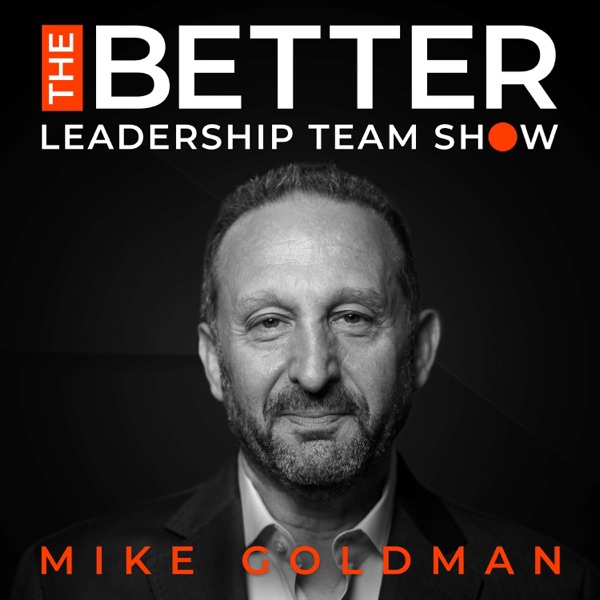
The Better Leadership Team Show
The Better Leadership Team Show helps growth-minded, mid-market CEO's to grow their business without losing their minds. It’s hosted by Leadership Team Coach, Mike Goldman. If you find yourself overwhelmed by all of the obstacles in the way to building a great business, this show will help you improve top and bottom-line growth, fulfillment and the value your company adds to the world. If you want to save years of frustration, time and dollars trying to figure it out on your own, check out this show!!
- Management chart
- #181
- Episodes
- 198
- Releases
- Weekly
- Typical length
- 45 min
- On air since
- 2023
- Latest episode
- 1 day ago
Episodes
198 episodes, newest first
-
44 min
Building Conversational Capacity with Craig Weber
Season 1, Episode 197
Show notes
What happens when smart people are unable to discuss their most difficult issues productively?
In this episode of The Better Leadership Team Show, I speak with Craig Weber, bestselling author of Conversational Capacity, about helping leadership teams remain candid, curious, and focused on learning when the pressure rises.
Craig explains why productive dialogue requires a balance between candor and curiosity—and how leaders often disrupt that balance by trying to win an argument or minimize discomfort. We also explore how authority affects participation, why meetings after the meeting signal a deeper problem, and how leaders can invite quieter voices into important conversations.
I’ve recommended Craig’s work to my clients for years because his framework gives leadership teams practical tools for improving meetings, decisions, feedback, strategy, and collaboration.
Key Takeaways
• Why conversational capacity is essential to team performance
• How to balance rigorous candor with genuine curiosity
• The difference between “win mode” and “minimize mode”
• Why authority can discourage people from speaking honestly
• How to treat strong opinions as hypotheses rather than truths
• Ways to bring quieter voices into team discussions
• How to identify undiscussable and unproductively discussable issues
• Why meetings after the meeting and zombie decisions are warning signs
• How a sweet spot facilitator can improve team dialogueGuest Contact Information and Resources
Website: http://conversationalcapacity.com
LinkedIn: https://www.linkedin.com/in/concapcraig/
Books:
• Conversational Capacity: The Secret to Building Successful Teams That Perform When the Pressure Is On
• Influence in Action: How to Build Your Conversational Capacity, Do Meaningful Work, and Make a Powerful DifferenceThanks for listening! Connect with us at https://www.mike-goldman.com/blog and on Instagram@mikegoldmancoach and on YouTube @Mikegoldmancoach
-
29 min
Why Leadership Teams Don't Decide, and How to Fix It.
Season 1, Episode 196
Show notes
In this Mike on the Mic episode of The Better Leadership Team Show, I explore why leadership teams often struggle to make decisions—and why the decisions they avoid can be more damaging than the ones they get wrong.
I break down four common traps that cause important decisions to disappear, stall, or fall apart after the meeting. I also share practical ways to create a visible issues list, decide without complete certainty, clarify who owns the final call, and build commitment without requiring unanimous agreement.
Key Takeaways
• Why postponing a decision is still a decision
• How a shared issues list keeps important questions visible
• How Colin Powell’s 40–70 Rule can prevent analysis paralysis
• Why every discussion needs a clearly identified decider and purpose
• The difference between consensus and commitment
• How “disagree and commit” prevents zombie decisions
• How cascading communication turns decisions into executionIf your leadership team keeps discussing the same issues without resolving them, this episode provides a clear framework for becoming more decisive and accountable.
Resources: Colin Powell’s 40–70 Rule and Patrick Lencioni’s teachings on team commitment.
Thanks for listening! Connect with us at https://www.mike-goldman.com/blog and on Instagram@mikegoldmancoach and on YouTube @Mikegoldmancoach
-
45 min
Trust Isn’t Binary with Matt Jarvis
Season 1, Episode 195
Show notes
What if trust wasn’t something you either had or didn’t have?
In this episode of The Better Leadership Team Show, I speak with Matt Jarvis, co-founder and co-chairman of 72andSunny, about why trust is the ultimate amplifier of teamwork.
Matt helped grow 72andSunny into a global advertising agency with more than $250 million in revenue, operations across five continents, multiple Agency of the Year awards, and recognition as one of the world’s most innovative companies. Its success was built on a culture that replaced silos and ego with collaboration, optimism, and personal growth.
Matt explains how leaders can understand trust through three dimensions: honesty, respect, and responsibility. We also discuss why great organizations grow their own stars, how daily development shapes culture, why people should attach their egos to the team’s outcome, and what genuine succession planning looks like.
Matt also shares his work with the Surfrider Foundation and why grassroots ocean advocacy gives him hope about the future.
Key Takeaways
• Why trust is more important than strategy
• How honesty, respect, and responsibility shape trust
• Why treating trust as binary makes it harder to repair
• How to communicate difficult truths with an open heart
• Why employee development must extend beyond formal training
• How to grow stars instead of relying on outside superstars
• Why teams should attach their egos to the collective outcome
• How strong succession planning creates a lasting organization
• Why grassroots environmental action can replace despair with optimismGuest Contact Information and Links
Matt Jarvis
Co-founder and Co-chairman, 72andSunny
LinkedIn: https://www.linkedin.com/in/mattjarvis1/
72andSunny:https://www.72andsunny.comSurfrider Foundation:https://www.surfrider.orgThanks for listening! Connect with us at https://www.mike-goldman.com/blog and on Instagram@mikegoldmancoach and on YouTube @Mikegoldmancoach
-
25 min
Succeeding Yourself: The Leader’s Hardest Transition
Season 1, Episode 194
Show notes
In this Mike on the Mic episode of The Better Leadership Team Show, I explore one of the hardest transitions any leader can make: succeeding yourself.
When every important decision flows through you, it may feel like proof that you are indispensable. In reality, it often means you have become the bottleneck preventing your team, company, and career from growing.
I explain why succeeding yourself is about much more than delegation. It requires shifting your identity from being the hero with all the answers to becoming the coach who develops others to think, decide, and lead. I also share practical ways to transfer meaningful ownership, build leadership bench strength, establish dependable operating rhythms, and create a team that can function without your constant involvement.
Whether you are a CEO, founder, business owner, or team leader, the goal is not to remain needed every day. The goal is to build something capable of succeeding beyond you.
Key Takeaways
• Why being indispensable can become a leadership liability
• How founder dependency limits growth and company value
• Why leaders must delegate decisions rather than only tasks
• How to move from being the hero to becoming the coach
• The importance of building leadership bench strength
• How operating rhythms create consistency and accountability
• Why organizational and personal vision make letting go easier
• The two-week test for measuring leadership effectiveness
• A practical challenge for transferring meaningful ownershipResource mentioned: What Got You Here Won’t Get You There by Marshall Goldsmith.
Thanks for listening! Connect with us at https://www.mike-goldman.com/blog and on Instagram@mikegoldmancoach and on YouTube @Mikegoldmancoach
-
53 min
De-Escalation Skills Every Leader Needs, From a Former SWAT Negotiator with Jessi Beyer
Season 1, Episode 193
Show notes
In this episode of The Better Leadership Team Show, I sit down with Jessi Beyer, a crisis mental health professional, TEDx speaker, and former SWAT negotiator, to explore what leaders need to know about de-escalation, active listening, and supporting employees through difficult moments.
Jessi explains why having an Employee Assistance Program is not enough to create a crisis-ready organization. We talk about recognizing changes in employee behavior, why everyday human connection matters, and what to do when someone actually opens up about what they are going through.
Jessi also walks me through six tactical active listening skills used in crisis and hostage negotiation that leaders can apply in everyday conversations. We discuss why trying to fix someone’s problem or make it sound better can actually get in the way, why silence is such a powerful communication tool, and how listening creates the trust necessary to eventually move someone toward action.
These skills are not only useful during a mental health crisis. They can help leaders build stronger relationships, navigate difficult conversations, create greater trust, and develop a more resilient workplace culture.
Key Takeaways:
• Why EAPs should be a resource, not an organization’s entire mental health strategy
• How to recognize meaningful changes from an employee’s normal behavior
• Why small, consistent check-ins can build significant trust
• The warning signs leaders and coworkers should pay attention to
• Why relationships matter more than organizational hierarchy when someone needs support
• Why leaders should resist trying to immediately fix or minimize someone’s problem
• Six tactical active listening skills that can improve difficult conversations
• How reflection, mirroring, open-ended questions, summaries, and silence work in practice
• Why active listening should eventually lead toward an appropriate action
• How a genuine apology can repair a conversation when you get something wrong
• Why scenario-based practice is essential for crisis readiness
• How these skills strengthen leadership and organizational culture even outside a crisisConnect With Jessi Beyer
Jessi Beyer
Crisis mental health professional, former SWAT negotiator, TEDx speakerWebsite: Crisis Readiness GroupLinkedIn: Jessi Beyer / @JessiBeyer
Free Crisis Readiness Diagnostic: Available through the Crisis Readiness Group website.Thanks for listening! Connect with us at https://www.mike-goldman.com/blog and on Instagram@mikegoldmancoach and on YouTube @Mikegoldmancoach
-
19 min
5 Excuses to Keep a Toxic Star
Season 1, Episode 192
Show notes
What happens when your highest-performing employee is also damaging your culture?
In this Mike on the Mic episode of The Better Leadership Team Show, I’m tackling one of the hardest decisions leaders face: what to do with a top producer who delivers incredible results but consistently violates your organization’s core values.
I’ve seen leaders tolerate toxic behavior because someone brings in revenue, has been with the company for years, seems impossible to replace, or might eventually respond to coaching. But every exception sends a message to the rest of the team about what your values are actually worth.
I break down the five most common excuses leaders use to keep toxic top performers and explain why the true cost of keeping them goes far beyond what appears on a sales or productivity report.
Key Takeaways:
• Why performance must include both productivity and culture fit
• The hidden organizational cost of a toxic top producer
• Why being short-staffed may not be as dangerous as keeping the wrong person
• How loyalty can become an excuse for avoiding a difficult decision
• Why productivity issues are often more coachable than culture-fit problems
• How fear of lawsuits and negative reactions can weaken your culture
• Why doing nothing is still a leadership decision
• How to identify the excuse preventing you from taking actionYour best people are watching what you tolerate. If your core values are truly non-negotiable, they have to apply to everyone—including the people delivering your biggest numbers.
Resources Mentioned
Visit my website:https://mike-goldman.com/
Take the Talent Density Quick Assessment: http://mike-goldman.com/talent-density-quick-assessment
Thanks for listening! Connect with us at https://www.mike-goldman.com/blog and on Instagram@mikegoldmancoach and on YouTube @Mikegoldmancoach
-
54 min
How to Lead Brilliant Work in a Busy World with Shawn Vanderhoven
Season 1, Episode 191
Show notes
How can leaders create more focus in a world filled with constant distractions?
In this episode of The Better Leadership Team Show, I sit down with Shawn Vanderhoven, Partner at The Wiseman Group and author of Pause: How to Lead Brilliant Work in a Busy World, to explore why today's biggest leadership challenge isn't working harder—it's creating the conditions for brilliant work.
We discuss why great leadership teams encourage every voice, how to delegate more effectively, why leaders struggle to eliminate important work, and practical ways to reduce digital distractions while helping teams focus on what truly matters. We also explore how AI is changing leadership and why better prioritization has never been more important.
If you're looking to improve your leadership team, create more focused execution, and help your people produce higher-impact work, this episode is packed with practical ideas you can implement immediately.
Key Takeaways
• Why psychological safety begins with the least powerful voice being heard.
• How strategic pauses create better long-term execution.
• A better approach to delegation through partnership.
• Why leaders must learn to say no to important work.
• Practical ways to eliminate digital distractions.
• How to create protected time for deep work.
• Why AI increases the need for better prioritization—not more activity.
• How emotional distractions quietly reduce team performance.Guest Contact Information:
Shawn Vanderhoven
Book
• Pause: How to Lead Brilliant Work in a Busy World
• Book website:https://pausebook.coOrganization
• The Wiseman Group
Thanks for listening! Connect with us at https://www.mike-goldman.com/blog and on Instagram@mikegoldmancoach and on YouTube @Mikegoldmancoach
-
48 min
Why Winning Doesn’t Always Create Confidence with Jilyne Jarvis
Season 1, Episode 190
Show notes
On this episode of The Better Leadership Team Show, I sit down with Jilyne Jarvis, retired U.S. Ski Team member, seven-time NCAA All-American, and co-founder of Z Girls, to explore why winning doesn't always create confidence.
We talk about the critical difference between confidence and self-worth, why so many high achievers struggle with imposter syndrome, and how leaders can build healthier teams by modeling vulnerability, self-awareness, and humility. Jilyne shares practical tools that athletes use to overcome fear, explains why "Do It Scared" has become a guiding principle, and offers actionable strategies every leader can use to prevent burnout and build lasting confidence.
Whether you're leading an organization, growing a business, or simply trying to become a stronger leader, this conversation will challenge the way you think about success and help you build confidence that isn't dependent on achievement.
Key Takeaways
-Why confidence and self-worth are not the same thing
-The leadership power of self-awareness and humility
-How imposter syndrome affects high achievers
-Why "Do It Scared" is a powerful leadership mindset
-Practical ways to recognize and prevent burnout
-How to create a culture where vulnerability strengthens performance
-Simple habits that build lasting confidenceConnect with Jilyne Jarvis
Website: Z Girls —https://zgirls.org
LinkedIn: Jilyne Jarvis
Other social media: @jilyne
Speaking, leadership development, and Z Girls information available through the Z Girls website.Thanks for listening! Connect with us at https://www.mike-goldman.com/blog and on Instagram@mikegoldmancoach and on YouTube @Mikegoldmancoach
-
46 min
Why Do Most Leaders Fail to Lead? with Alain Hunkins
Season 1, Episode 189
Show notes
Why do so many leaders struggle despite having access to countless books, podcasts, and leadership training?
In this episode of The Better Leadership Team Show, I sit down with leadership expert and author Alain Hunkins to explore why only a small percentage of employees believe their leaders lead well—and what separates truly effective leaders from the rest.
We discuss why clarity should be every leadership team's top priority, the importance of balancing empathy with accountability, and Alain's Three C Leadership Framework: Connection, Communication, and Collaboration. We also dive into why feedback is one of the fastest ways to improve as a leader, how vulnerability builds trust, and practical ways leaders can create environments where people consistently perform at their best.
Whether you lead a small team or a global organization, this conversation is packed with practical leadership insights you can apply immediately.
Key Takeaways
• Why clarity is the most important characteristic of great leadership teams
• The Three C Leadership Framework: Connection, Communication, and Collaboration
• Why leaders often mistake good intentions for effective leadership
• How empathy and accountability work together
• The importance of creating shared understanding instead of simply communicating
• Why honest feedback is essential for leadership growth
• How vulnerability creates authentic trust within teams
• Practical ways to improve meetings, communication, and collaborationIf you enjoyed this episode, be sure to subscribe and leave a review to help more leaders build stronger teams.
Connect with Alain Hunkins
Website:https://alainhunkins.comEmail: alain@alainhunkins.com
Book: Cracking the Leadership Code: Three Secrets to Building Strong LeadersThanks for listening! Connect with us at https://www.mike-goldman.com/blog and on Instagram@mikegoldmancoach and on YouTube @Mikegoldmancoach
-
40 min
How to Operationalize Culture with Anya Soto
Season 1, Episode 188
Show notes
Culture isn't built by inspirational posters or carefully written mission statements—it’s built through the systems, behaviors, and decisions leaders make every day.
In this episode of The Better Leadership Team Show, I sit down with workforce strategist Anya Soto to explore what it really means to operationalize culture as organizations grow. We discuss why trust begins with difficult conversations, how to translate values into measurable behaviors, why onboarding is often the biggest missed opportunity, and how leaders unintentionally destroy culture by tolerating the wrong behaviors.
We also dive into hiring for outcomes instead of tasks, building coaching capabilities in managers, creating scalable people systems, and ensuring strategy cascades throughout the organization.
If you're leading a growing company and want your culture to become a competitive advantage instead of a vague aspiration, this episode provides practical frameworks you can implement immediately.
In this episode, you'll learn:
• Why culture is a system—not a feeling
• How to translate values into daily behaviors
• The biggest hiring mistakes growing companies make
• Why onboarding determines long-term success
• How managers become the true owners of culture
• Why what leaders tolerate defines organizational culture
• How to build trust through consistent leadership
• How to operationalize culture as your company scalesConnect with Anya Soto
Website:https://www.culturecraftersus.com
LinkedIn:https://www.linkedin.com/in/anyasoto/
Thanks for listening! Connect with us at https://www.mike-goldman.com/blog and on Instagram@mikegoldmancoach and on YouTube @Mikegoldmancoach
-
45 min
Manage the Madness and Free Your Team to Do Great Work with Dr. Liane Davey
Season 1, Episode 187
Show notes
In this episode of The Better Leadership Team Show, I sit down with Dr. Liane Davey, internationally recognized as the Teamwork Doctor and author of Thought Load: Manage the Madness and Free Your Team to Do Great Work. We explore why so many leaders and teams feel overwhelmed even when they're working harder than ever—and why workload isn't actually the biggest problem.
We discuss the hidden concept of thought load, how leaders unintentionally create mental and emotional overload for their teams, and practical strategies for reducing distractions, improving prioritization, processing emotions more effectively, and leading with greater clarity. We also dive into the impact AI is having on modern work, why more productivity doesn't always mean less stress, and how leaders can create healthier, higher-performing organizations by focusing on outcomes instead of activity.
If you're leading a team through constant change, competing priorities, and increasing complexity, this conversation offers practical insights you can implement immediately.
Check out my new book! 👇
https://lianedavey.com/books/thoughtload/
Thanks for listening! Connect with us at https://www.mike-goldman.com/blog and on Instagram@mikegoldmancoach and on YouTube @Mikegoldmancoach
-
50 min
The Untapped Value of Age in the Workforce with Dan Pontefract
Season 1, Episode 186
Show notes
n this episode of The Better Leadership Team Show, I sit down with Dan Pontefract, leadership strategist, keynote speaker, and author of The Future of Work is Gray, to explore one of the most overlooked challenges facing organizations today: the untapped value of age in the workforce.
We discuss why demographic shifts, longer careers, and age bias are creating what Dan calls “age debt” and why many organizations are unknowingly losing critical knowledge, wisdom, and expertise. Dan introduces his Rivers, Rocks, and Rubies framework, explains the concept of crystallized intelligence, and shares practical strategies leaders can use to capture institutional knowledge before it walks out the door.
We also dive into how AI should complement human intelligence rather than replace it, why age-diverse teams consistently outperform homogeneous ones, and what forward-thinking organizations like BMW are doing to preserve experience while developing future leaders.
If you’re a CEO, business owner, or leadership team member looking to build a stronger organization for the future, this conversation will challenge the way you think about talent, succession planning, and workforce strategy.
Thanks for listening! Connect with us at https://www.mike-goldman.com/blog and on Instagram@mikegoldmancoach and on YouTube @Mikegoldmancoach
-
21 min
Your #1 Team Isn't the One You Manage
Season 1, Episode 185
Show notes
What if the most important team you belong to isn't the one you lead?
In this Mike on the Mic episode, I share one of the most important leadership lessons I've learned in nearly four decades of coaching executive teams. Using Alan Mulally's remarkable turnaround of Ford as the backdrop, I explain why organizations struggle when leaders prioritize their own departments over the leadership team.
I'll walk through how silos develop, why "disagree and commit" is essential for executive alignment, and the five practical moves that help leadership teams become true strategic partners instead of simply reporting updates around the table.
If you want your organization to break through growth barriers, it starts with strengthening the team at the top.
Key Takeaways
• Why your first team should be the leadership team—not the department you manage.
• The leadership lesson behind Ford's dramatic turnaround under Alan Mulally.
• How silos quietly limit organizational growth.
• What "disagree and commit" really means.
• Five practical ways to build a stronger leadership team.
• A simple question that reveals whether your executives are truly operating as one team.Website:https://www.mike-goldman.com
Breakthrough Leadership Team Assessment:https://www.mike-goldman.com/bltassessment
Thanks for listening! Connect with us at https://www.mike-goldman.com/blog and on Instagram@mikegoldmancoach and on YouTube @Mikegoldmancoach
-
55 min
The Secret to Maximizing Influence and Behavior Change with Owen Fitzpatrick
Season 1, Episode 184
Show notes
What if the biggest obstacle to better leadership isn't external—but the stories we tell ourselves?
In this episode of The Better Leadership Team Show, I sit down with social psychologist, speaker, and bestselling author Owen Fitzpatrick to discuss his new book, Inner Propaganda: Leading Hearts and Minds Through Turbulent Times.
We explore how beliefs shape behavior, why people become attached to limiting ideas, and how great leaders influence lasting change by understanding what truly motivates others. We also discuss intellectual humility, communication, sacred values, asking better questions, and why relationships are becoming even more important in the age of AI.
If you want to become a more influential leader and build stronger teams, this conversation offers practical insights you can start applying immediately.
Connect with Owen Fitzpatrick
• https://owenfitzpatrick.com
• Podcast: The Inner Propaganda Podcast
• LinkedIn: https://www.linkedin.com/in/owenfitzp/
• Instagram: https://www.instagram.com/owenf23/
• Facebook: https://www.facebook.com/ofi23Check out Owen’s new book! 👇
Thanks for listening! Connect with us at https://www.mike-goldman.com/blog and on Instagram@mikegoldmancoach and on YouTube @Mikegoldmancoach
-
45 min
Preventing HR Crisis With Behavioral Analytics with Karine Shahar
Season 1, Episode 183
Show notes
n this episode of The Better Leadership Team Show, I sit down with Karine Shahar, Founder of Strategic Global Talent, to explore how behavioral analytics can help leaders build stronger teams, improve hiring decisions, and prevent costly HR crises before they happen.
With more than 20 years of global HR experience across 36 countries, Karine shares why integrity is the foundation of great leadership, how strategic HR differs from tactical HR, and why many organizations wait too long to invest in people leadership. We also dive into the power of Predictive Index, how behavioral analytics can improve communication, hiring, onboarding, leadership development, and team performance, and why understanding how people naturally work can dramatically improve culture and engagement.
Whether you’re leading a growing company, developing your leadership team, or looking to create a stronger workplace culture, this conversation offers practical insights that can help you build a healthier, higher-performing organization.
Website: https://strategicglobaltalent.com
LinkedIn: https://www.linkedin.com/in/karineshaharThanks for listening! Connect with us at https://www.mike-goldman.com/blog and on Instagram@mikegoldmancoach and on YouTube @Mikegoldmancoach
-
44 min
Personal Branding for Senior Leaders with Alyssa Gelbard
Season 1, Episode 182
Show notes
In this episode of The Better Leadership Team Show, I sit down with Alyssa Gelbard, Founder and CEO of Point Road Group, to explore why personal branding is far more than a marketing exercise. We discuss how leaders shape company culture, build trust, attract talent, strengthen customer relationships, and drive revenue through the way they communicate and show up every day.
Alyssa shares practical insights on executive presence, LinkedIn credibility, leadership communication, personal brand awareness, and the common mistakes that unintentionally undermine trust. We also discuss why leadership teams must align around a consistent company story and how personal branding impacts both internal team dynamics and external business relationships.
If you want to strengthen your leadership team, improve organizational alignment, and create greater influence as a leader, this conversation provides actionable strategies you can begin applying immediately.
Employee Branding Snapshot Assessment
https://assessment.pointroadgroup.com/assessment/17340Website: https://www.pointroadgroup.com
LinkedIn: https://www.linkedin.com/in/alyssagelbard/
Point Road Group: https://www.linkedin.com/company/point-road-group/
Thanks for listening! Connect with us at https://www.mike-goldman.com/blog and on Instagram@mikegoldmancoach and on YouTube @Mikegoldmancoach
-
47 min
Turn Negotiations into Winning Outcomes with Rick Czaplewski
Season 1, Episode 181
Show notes
In this episode of The Better Leadership Team Show, I sit down with negotiation expert Rick Czaplewski to explore how leaders can turn difficult conversations into winning outcomes.
Rick shares lessons from a remarkable career spanning finance, operations, project management, and high-stakes negotiations that have generated hundreds of millions of dollars in closed deals and cost savings. We discuss why negotiation is about far more than price, how leaders negotiate every day without realizing it, and the common mistakes that cause organizations to leave value on the table.
Rick introduces his OPERATE negotiation framework, explains the four major sources of leverage using his DEAL model, and shares practical strategies for building trust, improving outcomes, and preserving relationships during challenging conversations.
Whether you’re negotiating with customers, vendors, employees, or business partners, this episode provides actionable tools to help you prepare effectively, communicate with confidence, and create win-win outcomes.
Website: https://noonewalksalone.com
Thanks for listening! Connect with us at https://www.mike-goldman.com/blog and on Instagram@mikegoldmancoach and on YouTube @Mikegoldmancoach
-
47 min
Creating a More Agile Company with Jaime Taets
Season 1, Episode 180
Show notes
In this episode of The Better Leadership Team Show, I sit down with Jaime Taets, CEO and Founder of Keystone Group International, to discuss what it really takes to build an agile organization in today’s rapidly changing business environment.
We explore why many leadership teams struggle with execution, how decision rights and decision speed impact organizational performance, and why executive operating models may be the missing ingredient behind successful strategy implementation.
Jaime shares insights on strategic agility, AI’s growing impact on business, risk tolerance, talent development, leadership activation, and how organizations can better engage the next generation of employees. We also discuss why traditional leadership development programs often fail and what companies can do to create lasting behavior change.
Finally, Jaime shares powerful lessons learned from climbing Mount Kilimanjaro and how adversity can shape stronger leaders.
If you’re looking to improve decision-making, increase organizational agility, develop stronger leaders, and prepare your company for the future, this episode is packed with practical insights you can apply immediately.
Website: https://keystonegroupintl.com
Thanks for listening! Connect with us at https://www.mike-goldman.com/blog and on Instagram@mikegoldmancoach and on YouTube @Mikegoldmancoach
-
45 min
Wording, Speaking and Presence with David Goldberg
Season 1, Episode 179
Show notes
In this episode of The Better Leadership Team Show, I speak with David Goldberg, CEO of The Prosody Center and one of the leading experts on wording, speaking, and presence.
Born hearing impaired with delayed speech, David developed an extraordinary sensitivity to sound, voice, tone, and communication that eventually led him to coach CEOs, politicians, entrepreneurs, athletes, speakers, and performers on how to communicate with greater authority and impact.
We explore why leaders often spend so much time thinking about branding, visuals, and presentations while overlooking one of the most important parts of influence: how they sound. David shares practical insights on hedge words, pacing, pauses, vocal tone, positive language, Zoom presence, and the subtle communication habits that either strengthen or weaken credibility.
This conversation is packed with immediately actionable communication strategies leaders can use in presentations, meetings, interviews, sales conversations, investor pitches, and everyday interactions.
Website: https://prosody.center
Email: david.goldberg@prosody.centerThanks for listening! Connect with us at https://www.mike-goldman.com/blog and on Instagram@mikegoldmancoach and on YouTube @Mikegoldmancoach
-
46 min
Building an Authentic Leadership Brand in an AI World with Elizabeth Rosenberg
Season 1, Episode 178
Show notes
n this episode of The Better Leadership Team Show, I sit down with Elizabeth Rosenberg, founder of The Good Advice Company, to talk about the future of leadership, authenticity, intuition, personal branding, and workplace culture in an AI-driven world.
We explore why accountability remains one of the most important traits of strong leadership teams, how intuition can become a competitive advantage, and why leaders are struggling to balance data, AI, and human judgment.
Elizabeth also shares insights on C-suite personal branding, the risks of inauthentic leadership, how executives can build trust through vulnerability, and why employees increasingly want to work for leaders who genuinely care about people.
We also dive into:
• The role of intuition in decision-making
• AI as a creative collaborator instead of a replacement for thought leadership
• Why authenticity matters more than perfection
• Managing personal brands inside organizations
• Mentorship, remote work, and the loss of informal leadership development
• The importance of spiritual health and human connection in leadershipThis conversation challenges traditional ideas about leadership while offering practical insights for executives, founders, and leadership teams trying to navigate an increasingly fast-moving and polarized world.
Website: https://thegoodadvicecompany.com
LinkedIn: https://www.linkedin.com/in/elizabeth-rosenberg/Thanks for listening! Connect with us at https://www.mike-goldman.com/blog and on Instagram@mikegoldmancoach and on YouTube @Mikegoldmancoach
Management lists
More Management shows picked out from the charts









More in Management
Placed highest on Apple Podcasts' Management chart right now