Podcast
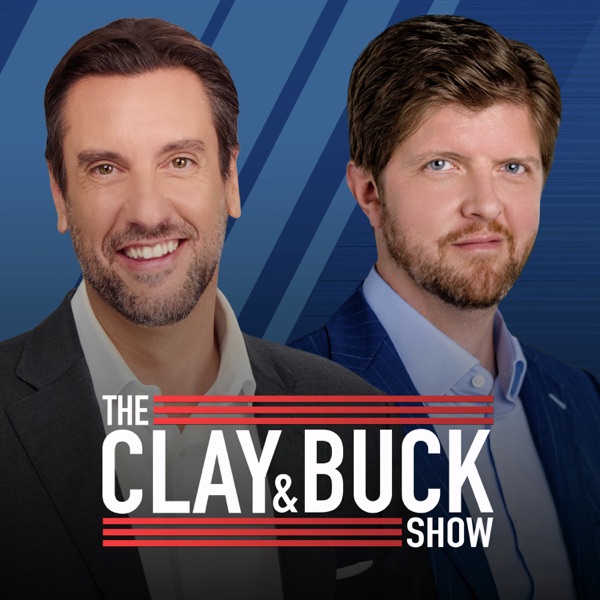
The Clay Travis and Buck Sexton Show
The Clay Travis and Buck Sexton Show. Clay Travis and Buck Sexton tackle the biggest stories in news, politics and current events with intelligence and humor. From the border crisis, to the madness of cancel culture and far-left missteps, Clay and Buck guide listeners through the latest headlines and hot topics with fun and entertaining conversations and opinions.
- Daily News chart
- #18
- Episodes
- 12,336
- Releases
- Daily
- Typical length
- 37 min
- On air since
- 2017
- Latest episode
- 2 hours ago
Episodes
12,336 episodes, newest first
-
27 min
Nation States: Why China Became an Election-Year Kitchen Table Issue
Season 1, Episode 51
Show notes
China may not be listed on the ballot, but its impact on American land, jobs, energy, agriculture, trade, and fentanyl remains front and center. Steve Yates explains how China emerged as a key issue in races across Texas, Iowa, and Ohio, why voters connect Beijing to everyday concerns, and how the next Congress will shape policy on trade, advanced technology, Taiwan, and national security.
Listen for a practical look at what happens after Election Day and why the decisions made in Washington could affect communities across America for years to come.
Follow Nation States with Yates for clear, common-sense insights where Steve Yates serves as your personal national security advisor, breaking down world events in ways that matter to Main Street, not just Washington. Connect with the show at Feedback@NationStatesYates.com and follow on X @NSWithYates.
Follow Clay & Buck on YouTube: https://www.youtube.com/c/clayandbuck
See https://omnystudio.com/listener for privacy information.
-
25 min
The Truth with Lisa Boothe: Blue Wave or GOP Comeback? Matt Whitlock's Shocking Election Day Predictions
Show notes
Is a Democratic blue wave about to sweep Washington, or could Republicans pull off a stunning Election Night surprise? Lisa Boothe sits down with political strategist Matt Whitlock for a high-stakes breakdown of the 2026 midterm elections, President Trump's political future, and the battle for control of Congress.
Whitlock explains why Republicans could face devastating House losses while still having a path to retaining the Senate. They examine critical battleground races in Texas, Kansas, Maine, Michigan, and Iowa, the impact of candidate quality, questionable polling, and the massive spending required to defend traditionally Republican states. Plus, Whitlock reveals his potential Election Night scenarios and why a narrow Senate majority could be crucial to Trump's judicial appointments and legislative agenda.
The conversation also looks beyond the midterms to the growing influence of the Democratic Party's progressive wing, the political fallout from the Iran war, rising energy costs, economic uncertainty, and the possibility of Alexandria Ocasio-Cortez emerging as a major force in the 2028 presidential election.
Will Republicans survive Election Night, or will Democrats seize control of Congress and unleash two years of political warfare against President Trump?
Follow Clay & Buck on YouTube: https://www.youtube.com/c/clayandbuck
See https://omnystudio.com/listener for privacy information.
-
52 min
Daily Review with Clay and Buck - Nov 3 2026
Show notes
Clay Travis and Buck Sexton conduct an extended interview with Greg Abbott, governor of Texas and a candidate for reelection. Abbott discusses voter turnout trends across Texas, emphasizing the importance of Election Day voting, particularly in rural communities. He argues that the race remains highly competitive despite polling and highlights issues he believes are driving voters to the polls, including border security, taxation, affordability, and economic growth. Abbott contrasts his policy agenda with that of his Democratic opponent, outlining plans to reduce property taxes, lower insurance costs, improve affordability, maintain border enforcement programs, and continue attracting businesses and investment to Texas. He also discusses the state's economic performance, job creation, and efforts to remain the nation's most business-friendly state.
An interview with Markwayne Mullen, serving as Secretary of Homeland Security and a former U.S. senator from Oklahoma. Discussion centers on competitive Senate races across the country, including contests in Maine, Iowa, Kansas, Michigan, North Carolina, Georgia, Texas, Ohio, and Alaska. Mullen describes the election environment as highly competitive and emphasizes that turnout will determine the outcome of many races. He also praises campaign efforts by Republican candidates and discusses former campaign support provided by President Donald Trump.
An extended interview with Marsha Blackburn, who is running for governor of Tennessee. Blackburn discusses Election Day turnout across Tennessee, describing strong enthusiasm among Republican voters and expressing confidence in Republican prospects nationwide. She analyzes Senate contests in states including Texas, Michigan, Minnesota, New Hampshire, and Maine, while arguing that conservative candidates are benefiting from voter frustration with progressive policies. Blackburn also outlines her vision for Tennessee, focusing on affordability, reducing government spending, lowering regulatory burdens, workforce housing, tax policy, economic development, healthcare innovation, crime reduction, and energy production. She highlights Tennessee's lack of a state income tax and defends policies designed to maintain the state’s economic competitiveness and population growth.
Clay and Buck devote considerable time to analyzing whether Jewish voters in Michigan may shift away from traditional Democratic voting patterns. The discussion follows the airing of a campaign advertisement featuring Taylor Weintraub, a lifelong Democrat and Michigan mother whose son attended Temple Israel during a violent attack on the synagogue and school. The hosts present Weintraub’s story as one of the defining narratives in the Michigan race and discuss broader concerns about antisemitism, public safety, and political rhetoric.
Weintraub then joins the program for a lengthy interview. She explains her decision to support Rogers despite her long history of voting Democratic, citing concerns about antisemitism, community safety, and comments made by Al-Sayed following the attack. Weintraub discusses the increasing security measures required at Jewish institutions, the emotional impact of the attack on her family, and her belief that some traditional Democratic voters may reconsider their political allegiances because of concerns surrounding antisemitism and support for Israel. The discussion also references Haley Stevens and her public support for Rogers, examining divisions within the Democratic coalition over Middle East policy and Jewish voter outreach.
Make sure you never miss a second of the show by subscribing to the Clay Travis & Buck Sexton show podcast wherever you get your podcasts! http://ihr.fm/3InlkL8
For the latest updates from Clay & Buck, visit our website https://www.clayandbuck.com/
Connect with Clay Travis and Buck Sexton:
FB - https://www.facebook.com/ClayandBuck/
IG - https://www.instagram.com/clayandbuck/
YouTube - https://www.youtube.com/c/clayandbuck
Rumble - https://rumble.com/c/ClayandBuck
TikTok - https://www.tiktok.com/@clayandbuck
Follow Clay & Buck on YouTube: https://www.youtube.com/c/clayandbuck
See https://omnystudio.com/listener for privacy information.
-
37 min
Hour 1 - Feelin' Good on Election Day
Show notes
Hour 1 of the Clay Travis and Buck Sexton Show is a special Election Day edition focused almost entirely on the 2026 midterm elections, voter turnout, battleground states, Senate races, gubernatorial contests, and Republican voter mobilization efforts across the country. The hosts repeatedly emphasize the importance of Election Day participation, framing the day's contests as critical to the political direction of the United States and encouraging listeners in competitive states to head to the polls.
Throughout the hour, Clay Travis and Buck Sexton analyze early voting data and turnout figures, noting that approximately 55 million early votes had already been cast nationwide, significantly exceeding 2022 levels. They discuss Republican optimism in key states including Florida, Texas, Ohio, Michigan, Maine, North Carolina, Georgia, Arizona, Iowa, Nebraska, Alaska, Kansas, and New Hampshire. The hosts argue that many races appear highly competitive and suggest that polling may once again be underestimating Republican support, a recurring theme throughout the broadcast. Florida receives particular attention, with discussion of Republican advantages in early voting and the state's reputation for reporting results quickly on election night.
A major portion of Hour 1 focuses on Senate, governor, and congressional races that the hosts consider crucial to maintaining Republican political strength. The conversation highlights races involving candidates and political figures such as Byron Donalds, Ashley Moody, Marsha Blackburn, John Husted, Vivek Ramaswamy, Susan Collins, Greg Abbott, Chris Sununu, and others. The hosts repeatedly stress the importance of turnout in Republican-leaning states, arguing that voter participation will determine whether Republicans can hold Senate seats, win governor's races, and limit Democratic gains in Congress.
Texas emerges as one of the central storylines of the hour. Clay and Buck devote significant discussion to the Texas Senate race, arguing that the outcome could have long-term implications for the state and national politics. They contrast Republican candidates with Democratic contender James Talarico, discussing his policy positions on immigration, gender identity, environmental issues, criminal justice reform, and veganism. The hosts frame the contest as a defining battle over Texas's political identity and repeatedly urge Texas listeners to vote.
The program also examines broader election trends and campaign mechanics, including early voting patterns, Election Day turnout models, polling accuracy, prediction markets, and voter enthusiasm. Clay and Buck argue that raw turnout reports from around the country suggest strong Republican motivation. They discuss anecdotal evidence from polling locations, share reports from listeners, and speculate about what unusually high turnout could mean for statewide and national outcomes. Arizona's Maricopa County, Florida turnout statistics, and reports from Texas voting locations are highlighted as indicators the hosts believe favor Republican candidates.
A substantial segment is devoted to live listener interaction. Callers from Ohio, Texas, Michigan, New Hampshire, and Maine provide firsthand reports from polling places. Many describe large crowds, long wait times, and unusually strong voter participation. The hosts use these reports to reinforce their argument that enthusiasm among Republican voters is high and that turnout could influence competitive races across the country. Ohio receives particular focus, with callers discussing turnout around Columbus, Cincinnati, and other regions viewed as important to statewide races.
The discussion also touches on control of Congress and the long-term impact of election outcomes. Clay and Buck debate the significance of maintaining Senate control, arguing that Senate majorities affect judicial confirmations, Supreme Court appointments, and the ability of a presidential administration to advance its agenda. They acknowledge that House races are more difficult to track individually but stress that congressional control remains a major factor in determining the balance of power in Washington.In addition to election analysis, the hosts discuss Republican prospects in traditionally competitive or Democratic-leaning states such as Michigan, Minnesota, and New Hampshire. They mention strong Republican turnout reports, discuss campaign strategies, and speculate about potential upsets. New Hampshire receives attention because of reports of large voter turnout and the candidacy of Chris Sununu, while Michigan is presented as one of the most important battlegrounds of the cycle.
The hour also includes lighter political commentary and humor. Clay and Buck react to early election news from Guam, noting Republican successes there and joking about an old congressional comment from Hank Johnson regarding Guam potentially "tipping over" from overpopulation. The exchange serves as comic relief amid the intensive election coverage while reinforcing the show's broader theme of Republican momentum heading into election night.
Make sure you never miss a second of the show by subscribing to the Clay Travis & Buck Sexton show podcast wherever you get your podcasts! http://ihr.fm/3InlkL8
For the latest updates from Clay & Buck, visit our website https://www.clayandbuck.com/
Connect with Clay Travis and Buck Sexton:
FB - https://www.facebook.com/ClayandBuck/
IG - https://www.instagram.com/clayandbuck/
YouTube - https://www.youtube.com/c/clayandbuck
Rumble - https://rumble.com/c/ClayandBuck
TikTok - https://www.tiktok.com/@clayandbuck
Follow Clay & Buck on YouTube: https://www.youtube.com/c/clayandbuck
See https://omnystudio.com/listener for privacy information.
-
37 min
Hour 2 - Gov. Greg Abbott: We Can't Lose TX
Show notes
Hour 2 of the Clay Travis and Buck Sexton Show continues the program’s special Election Day 2026 coverage, with an emphasis on battleground state turnout, key Senate and gubernatorial races, border security, immigration policy, economic issues, and live reports from voters across the country. Throughout the hour, Clay Travis and Buck Sexton repeatedly stress the importance of Election Day participation, arguing that voter turnout in competitive states will ultimately determine control of critical offices and the future political direction of the country.
A major focus of Hour 2 is an extended interview with Greg Abbott, governor of Texas and a candidate for reelection. Abbott discusses voter turnout trends across Texas, emphasizing the importance of Election Day voting, particularly in rural communities. He argues that the race remains highly competitive despite polling and highlights issues he believes are driving voters to the polls, including border security, taxation, affordability, and economic growth. Abbott contrasts his policy agenda with that of his Democratic opponent, outlining plans to reduce property taxes, lower insurance costs, improve affordability, maintain border enforcement programs, and continue attracting businesses and investment to Texas. He also discusses the state's economic performance, job creation, and efforts to remain the nation's most business-friendly state.
The conversation extensively covers Texas politics and the broader significance of the state's elections. Abbott and the hosts discuss concerns that national media and polling organizations may be overstating Democratic momentum in Texas. The governor argues that Republican voter participation, especially outside major urban areas, will determine whether Texas maintains its current political direction. Immigration, border security, sanctuary city policies, and economic competitiveness emerge as recurring themes throughout the interview.
Hour 2 also turns significant attention toward Michigan and several other battleground states. Clay and Buck discuss the highly competitive Michigan Senate race featuring Mike Rogers and Abdul El-Sayed, while also examining political fallout surrounding Haley Stevens. The hosts debate divisions within the Democratic Party and discuss Stevens' decision to distance herself from comments and positions she considered problematic. They also reference comments from Pete Buttigieg, analyzing potential implications for future Democratic leadership contests and the 2028 presidential election landscape.
Another major segment features an interview with Markwayne Mullen, serving as Secretary of Homeland Security and a former U.S. senator from Oklahoma. Discussion centers on competitive Senate races across the country, including contests in Maine, Iowa, Kansas, Michigan, North Carolina, Georgia, Texas, Ohio, and Alaska. Mullen describes the election environment as highly competitive and emphasizes that turnout will determine the outcome of many races. He also praises campaign efforts by Republican candidates and discusses former campaign support provided by President Donald Trump.
The interview then shifts into an in-depth examination of border security, immigration enforcement, crime reduction, and public safety. Mullen argues that the Trump administration's immigration policies have strengthened border security and discusses Department of Homeland Security priorities related to deportations, law enforcement cooperation, anti-trafficking operations, and cartel interdiction. He highlights efforts to combat fentanyl trafficking, reduce violent crime, and enforce immigration laws, while describing coordination between federal, state, and local agencies. Human trafficking investigations, criminal enforcement initiatives, and the long-term continuation of border policies are all discussed as major administration priorities.
Crime and public safety become another significant topic as the hosts and Mullen discuss declining crime rates, record-low murder statistics, and the relationship between immigration enforcement and public safety outcomes. They argue that removing criminal offenders from communities allows local law enforcement agencies to devote more resources to public safety efforts and broader crime prevention initiatives. The discussion connects border enforcement, drug trafficking, cartel activity, human trafficking, and violent crime trends.
Throughout Hour 2, Clay and Buck continue taking live calls from listeners across important battleground states. Voters from Texas, Ohio, Michigan, and other contested regions call in to report long lines, heavy turnout, and energized voting environments. The hosts repeatedly highlight reports of crowded polling locations and enthusiastic participation, viewing those developments as indicators of significant voter engagement on Election Day. Texas and Ohio in particular receive extensive listener coverage, with callers describing turnout levels they characterize as higher than previous elections. Michigan callers discuss voting experiences in both rural parts of the state and the Upper Peninsula.
The hour also includes discussion of several key election races and political figures, including Susan Collins, Roger Marshall, Dan Sullivan, Ken Paxton, Ashley Moody, John Husted, and Marsha Blackburn. The hosts repeatedly return to the broader question of whether polling accurately reflects voter sentiment and whether Election Day turnout could produce outcomes different from pre-election expectations.
A lighter recurring subplot throughout the hour involves Buck Sexton's young son, "Speed," whose appearances during the live broadcast provide comic relief amid the serious political discussions. Conversations about family life, grandchildren, and parenting offer a break from the election-focused analysis while maintaining the conversational tone that characterizes the program.
Make sure you never miss a second of the show by subscribing to the Clay Travis & Buck Sexton show podcast wherever you get your podcasts! http://ihr.fm/3InlkL8
For the latest updates from Clay & Buck, visit our website https://www.clayandbuck.com/
Connect with Clay Travis and Buck Sexton:
FB - https://www.facebook.com/ClayandBuck/
IG - https://www.instagram.com/clayandbuck/
YouTube - https://www.youtube.com/c/clayandbuck
Rumble - https://rumble.com/c/ClayandBuck
TikTok - https://www.tiktok.com/@clayandbuck
Follow Clay & Buck on YouTube: https://www.youtube.com/c/clayandbuck
See https://omnystudio.com/listener for privacy information.
-
37 min
Hour 3 - Lifelong Dem on Why She's Voting Red
Show notes
Hour 3 of the Clay Travis and Buck Sexton Show serves as the program’s final Election Day 2026 hour before voting concludes and results begin to arrive. The hour centers on key gubernatorial and Senate races, Republican election strategy, voter turnout, the future of Tennessee politics, battleground-state voting trends, California's gubernatorial contest, and a major discussion surrounding Jewish voters in Michigan and concerns about antisemitism in politics. Throughout the broadcast, Clay Travis and Buck Sexton repeatedly encourage listeners to vote, arguing that turnout will ultimately determine the outcome of closely contested races across the country.
A major segment features an extended interview with Marsha Blackburn, who is running for governor of Tennessee. Blackburn discusses Election Day turnout across Tennessee, describing strong enthusiasm among Republican voters and expressing confidence in Republican prospects nationwide. She analyzes Senate contests in states including Texas, Michigan, Minnesota, New Hampshire, and Maine, while arguing that conservative candidates are benefiting from voter frustration with progressive policies. Blackburn also outlines her vision for Tennessee, focusing on affordability, reducing government spending, lowering regulatory burdens, workforce housing, tax policy, economic development, healthcare innovation, crime reduction, and energy production. She highlights Tennessee's lack of a state income tax and defends policies designed to maintain the state’s economic competitiveness and population growth.
The hosts and Blackburn also discuss demographic changes in Tennessee as new residents continue relocating from higher-tax states. The conversation explores whether recent transplants are likely to embrace Tennessee’s fiscal and regulatory model, with Blackburn arguing that newcomers are often drawn by low taxes, limited government, business-friendly policies, healthcare innovation, educational opportunities, and public safety. Particular attention is given to Tennessee's economic growth, nuclear energy leadership centered around Oak Ridge, and efforts to preserve conservative governance despite rapid population growth.
Another significant focus of Hour 3 is the Michigan Senate race involving Mike Rogers and Abdul Al-Sayed. Clay and Buck devote considerable time to analyzing whether Jewish voters in Michigan may shift away from traditional Democratic voting patterns. The discussion follows the airing of a campaign advertisement featuring Taylor Weintraub, a lifelong Democrat and Michigan mother whose son attended Temple Israel during a violent attack on the synagogue and school. The hosts present Weintraub’s story as one of the defining narratives in the Michigan race and discuss broader concerns about antisemitism, public safety, and political rhetoric.
Weintraub then joins the program for a lengthy interview. She explains her decision to support Rogers despite her long history of voting Democratic, citing concerns about antisemitism, community safety, and comments made by Al-Sayed following the attack. Weintraub discusses the increasing security measures required at Jewish institutions, the emotional impact of the attack on her family, and her belief that some traditional Democratic voters may reconsider their political allegiances because of concerns surrounding antisemitism and support for Israel. The discussion also references Haley Stevens and her public support for Rogers, examining divisions within the Democratic coalition over Middle East policy and Jewish voter outreach.
The hosts spend considerable time examining how Jewish voters in Michigan could influence the outcome of one of the nation’s most closely watched Senate races. Clay and Buck debate whether concerns over antisemitism, synagogue security, and attitudes toward Israel are powerful enough to drive significant cross-party voting among suburban voters, particularly in the Detroit metropolitan area and Oakland County. The conversation frames Michigan as one of the most consequential battlegrounds of the 2026 midterm elections.
Later in the hour, the program shifts to California politics with an interview featuring Steve Hilton, Republican candidate for governor. Hilton discusses what he characterizes as growing voter dissatisfaction with California's Democratic leadership, focusing on issues including taxation, gasoline prices, housing affordability, homelessness, government spending, regulation, and quality-of-life concerns. He argues that despite polling indicating a Democratic advantage, grassroots enthusiasm and voter frustration could produce a more competitive result than many analysts expect.
Hilton outlines several policy proposals that he argues would improve affordability and economic conditions in California, including lower fuel prices, tax relief, reduced vehicle registration costs, and opposition to a proposed mileage tax. He contrasts his campaign with that of opponent Javier Becerra, arguing that California voters are increasingly open to political change after years of one-party control. The hosts discuss broader national trends, including whether polling may once again underestimate Republican support and whether voter enthusiasm could produce surprise outcomes in traditionally Democratic states.
Throughout the final hour, Clay and Buck repeatedly return to Election Day turnout data, emphasizing reports from Florida, Arizona, Nevada, Michigan, Tennessee, Texas, and other key states. They argue that Republican enthusiasm appears strong and contend that predictions of a substantial Democratic wave have not materialized based on turnout information available during the day. The hosts encourage listeners in competitive races to contact family members, friends, and neighbors and ensure they vote before polls close.
As the program concludes, Clay and Buck reflect on the significance of the 2026 midterm elections, emphasizing Senate control, gubernatorial races, voter turnout, and the long-term political direction of the country. The show closes with a final call for civic participation and a preview of the next day's election-results coverage.
Make sure you never miss a second of the show by subscribing to the Clay Travis & Buck Sexton show podcast wherever you get your podcasts! http://ihr.fm/3InlkL8
For the latest updates from Clay & Buck, visit our website https://www.clayandbuck.com/
Connect with Clay Travis and Buck Sexton:
FB - https://www.facebook.com/ClayandBuck/
IG - https://www.instagram.com/clayandbuck/
YouTube - https://www.youtube.com/c/clayandbuck
Rumble - https://rumble.com/c/ClayandBuck
TikTok - https://www.tiktok.com/@clayandbuck
Follow Clay & Buck on YouTube: https://www.youtube.com/c/clayandbuck
See https://omnystudio.com/listener for privacy information.
-
10 min
Buck Brief - This Is What Happens When We Stop Punishing Bad Behavior
Show notes
A viral video from a 12-year-old girls’ softball game shows a confrontation between parents erupting into brutal violence, leaving one man hospitalized with serious injuries. Now the alleged attacker is claiming self-defense. Buck Sexton breaks down the disturbing footage and explains why he believes the case demands serious consequences.
Never miss a moment from Buck by subscribing to the Buck Sexton Show Podcast onIHeart Radio,Apple Podcasts or wherever you get your podcasts!
Connect with Buck Sexton:
Facebook – / bucksexton
X – @bucksextonInstagram – @bucksextonTikTok -@BuckSexton
YouTube -@BuckSexton
Website –https://www.bucksexton.com/
Follow Clay & Buck on YouTube: https://www.youtube.com/c/clayandbuck
See https://omnystudio.com/listener for privacy information.
-
52 min
Clay Travis Show: Election Eve Bombshells, Alaska Ballot Controversy & College Football Chaos
Show notes
It's Election Eve, and Clay Travis is making his bold 2026 midterm predictions, including key Senate races in Michigan, Alaska, Ohio, and Tennessee. Clay breaks down the controversial Dan Sullivan ballot situation in Alaska, Haley Stevens' shocking endorsement of Republican Mike Rogers, and Abdul El-Sayed's explosive comments on transgender athletes. Plus, college football chaos erupts as USC stuns Ohio State, Clay declares the Big Ten overrated, reveals his Top 10 and SEC power rankings, and previews a massive weekend of matchups featuring Alabama-LSU, Georgia-Ole Miss, and Miami-Notre Dame. Don't miss Clay's NFL Monday Night Football picks, his reaction to Amy Acton's viral campaign speech, and the Jessica Alba Halloween costume controversy.
Follow Clay & Buck on YouTube: https://www.youtube.com/c/clayandbuck
See https://omnystudio.com/listener for privacy information.
-
34 min
Normally Podcast: Democrat Civil War ERUPTS in Michigan as Florida Republicans Face Election Day Panic
Show notes
Election Day 2026 is here, and Democrats are facing a political firestorm in Michigan! Mary Katharine Ham and Karol Markowicz break down Haley Stevens' stunning endorsement of Republican Mike Rogers over Abdul El-Sayed, the backlash from Democrats, and the controversy surrounding antisemitism in the Michigan Senate race.
Meanwhile, Florida Republicans are growing nervous about Byron Donalds' showdown with David Jolly as Ron DeSantis stays off the campaign trail. Plus, the hosts examine allegations of ballot manipulation in Alaska involving Mary Peltola, questionable election polling, transgender sports and parental rights ballot measures, California's proposed billionaire wealth tax, and new research on America's declining birth rates.
Follow Clay & Buck on YouTube: https://www.youtube.com/c/clayandbuck
See https://omnystudio.com/listener for privacy information.
-
2 min
Nation States Update: China on the Ballot: 2026 Midterms, Trump's Asia Showdown & Taiwan
Show notes
China is on the ballot in the 2026 midterm elections, and the stakes couldn't be higher. Steve Yates examines how the Chinese Communist Party, fentanyl, farmland ownership, and U.S.-China trade are shaping critical congressional races from Texas to Ohio to Iowa.
With Election Day approaching, Steve previews two major Nation States episodes: Tuesday's breakdown of China's influence on the midterms and the challenges facing the next Congress, followed by Thursday's examination of President Trump's high-stakes Asia meetings, Beijing's growing pressure on Taiwan, and why U.S. arms sales to Taiwan must never become a bargaining chip.
Subscribe to Nation States with Yates for sharp analysis of China, American national security, foreign policy, and the geopolitical battles shaping America's future.
Follow Clay & Buck on YouTube: https://www.youtube.com/c/clayandbuck
See https://omnystudio.com/listener for privacy information.
-
1 hr 4 min
Daily Review with Clay and Buck - Nov 2 2026
Show notes
Clay Travis and Buck Sexton welcome Senator Dan S. Sullivan to discuss allegations surrounding a so-called "decoy candidate" with a similar name appearing on the ballot. Sullivan argues that the situation was designed to confuse voters and potentially siphon votes from his campaign. During the interview, he criticizes Democratic candidate Mary Peltola and Senate Democratic leadership, claiming the strategy represents a broader effort to manipulate election outcomes. The discussion examines voter confusion, ballot design, ranked-choice voting, campaign turnout efforts, and the national significance of the Alaska race in determining Senate control. Sullivan repeatedly urges Alaskans to vote, while Clay and Buck frame the contest as both an electoral battle and a debate over election integrity.
A major segment centers on election forecasting and turnout analysis with Ryan Girdusky, who provides a state-by-state assessment of key Senate and governor races. Girdusky argues that voting patterns vary significantly across the country and rejects the notion of a uniform national wave election. He expresses concern about Republican turnout in Texas, Kansas, North Carolina, Florida, and other battleground states, while questioning polling methodologies that project strong Democratic performance. The discussion explores early voting data, youth turnout, minority voter participation, polling biases, and the challenges of accurately modeling likely voters in a rapidly changing electorate. Girdusky specifically criticizes assumptions that Democrats will significantly outperform historical trends, contending that Republican and Republican-leaning voters may be underrepresented in polls.
Clay and Buck discuss Michigan's competitive Senate race with Republican candidate Mike Rogers. They start with the headline-making endorsement he received from former Democratic congresswoman Haley Stevens. Rogers describes the endorsement as evidence that many Democrats have become deeply concerned about Democratic nominee Abdul El-Sayed, arguing that Stevens remained a Democrat while concluding that El-Sayed was too extreme to support. The conversation explores divisions within Michigan's Democratic coalition, the significance of cross-party endorsements, and the potential impact of Stevens' decision on independent voters, moderates, and traditional Democratic constituencies.
Clay and Buck also highlight Tennessee politics through an interview with Republican congressional candidate Dr. Charlie Hatcher, who is seeking election in Tennessee's newly configured Fifth Congressional District. Hatcher discusses his campaign across rural and suburban communities, emphasizing cost-of-living concerns, infrastructure investment, government spending, fiscal responsibility, food security, agriculture, and economic development. Drawing on his background as a farmer, veterinarian, former agriculture commissioner, and small-business owner, Hatcher outlines a campaign message focused on practical governance and local representation. The discussion includes detailed analysis of early voting turnout, Republican enthusiasm, and efforts to secure a complete Republican sweep of Tennessee's congressional delegation.
The conversation then shifts to a wide-ranging interview with TN Senator Bill Haggerty, who discusses the national political landscape, Senate control, early voting operations, and key battleground races. Haggerty specifically highlights Michigan and Alaska as critical Senate contests and argues that public polling has become increasingly unreliable. He points to internal Republican data suggesting tighter races than publicly reported and discusses voter turnout operations designed to maximize Republican participation in pivotal states.
Make sure you never miss a second of the show by subscribing to the Clay Travis & Buck Sexton show podcast wherever you get your podcasts! http://ihr.fm/3InlkL8
For the latest updates from Clay & Buck, visit our website https://www.clayandbuck.com/
Connect with Clay Travis and Buck Sexton:
FB - https://www.facebook.com/ClayandBuck/
IG - https://www.instagram.com/clayandbuck/
YouTube - https://www.youtube.com/c/clayandbuck
Rumble - https://rumble.com/c/ClayandBuck
TikTok - https://www.tiktok.com/@clayandbuck
Follow Clay & Buck on YouTube: https://www.youtube.com/c/clayandbuck
See https://omnystudio.com/listener for privacy information.
-
37 min
Hour 1 - Clay's Message for Men
Show notes
Hour 1 of the Clay Travis and Buck Sexton Show focuses heavily on the eve of Election Day, with Clay and Buck emphasizing the importance of voter turnout in several key battleground states and arguing that many critical Senate, gubernatorial, and congressional races could be decided by razor-thin margins. The hosts discuss early voting data, describing the political environment as highly competitive and urging listeners, particularly Republicans, to turn out on Election Day. They analyze the electoral landscape in states including Michigan, Texas, Alaska, North Carolina, Ohio, Kansas, and Maine, framing the election as a pivotal moment for control of the U.S. Senate and the future of President Donald Trump's agenda.
A major segment centers on the Michigan Senate race, where former Democratic congresswoman Haley Stevens publicly endorses Republican candidate Mike Rogers over Democratic nominee Abdul El-Sayed. Clay and Buck describe the endorsement as a potentially game-changing political development, highlighting Stevens' criticism of El-Sayed and discussing what they view as growing divisions within the Democratic Party. The hosts examine Stevens' rationale for crossing party lines, her concerns about El-Sayed's political alliances and ideological positions, and the potential electoral impact of her endorsement on independent, moderate Democratic, and Jewish voters in Michigan. They also speculate about voter coalitions, turnout dynamics in Detroit, and the broader implications for one of the nation's most closely watched Senate contests.
The conversation then turns to cultural and social issues after the hosts play and react to comments made by Abdul El-Sayed regarding transgender participation in schools and locker room policies. Clay and Buck sharply criticize El-Sayed's response to questions about transgender students and women's spaces, arguing that Democrats continue to face political challenges on cultural issues. They frame the debate as one of the central motivating factors for voters heading into Election Day and encourage male voters and families to become politically engaged.
Another major focus of Hour 1 is Alaska's Senate race. The hosts welcome Senator Dan S. Sullivan to discuss allegations surrounding a so-called "decoy candidate" with a similar name appearing on the ballot. Sullivan argues that the situation was designed to confuse voters and potentially siphon votes from his campaign. During the interview, he criticizes Democratic candidate Mary Peltola and Senate Democratic leadership, claiming the strategy represents a broader effort to manipulate election outcomes. The discussion examines voter confusion, ballot design, ranked-choice voting, campaign turnout efforts, and the national significance of the Alaska race in determining Senate control. Sullivan repeatedly urges Alaskans to vote, while Clay and Buck frame the contest as both an electoral battle and a debate over election integrity.
Throughout the hour, Clay and Buck repeatedly return to the theme of voter mobilization, warning that many races across the country are within the margin of error and that turnout will ultimately determine the outcome. They compare the election to a close football game entering the second half, arguing that Republicans must increase participation if they hope to secure victories in key Senate races. The hosts preview upcoming interviews with Ryan Girdusky, Mike Rogers, John James, Dr. Charlie Hatcher, and Senator Bill Hagerty, indicating that Michigan, Tennessee, and Alaska will remain major topics for the remainder of the program.
Make sure you never miss a second of the show by subscribing to the Clay Travis & Buck Sexton show podcast wherever you get your podcasts! http://ihr.fm/3InlkL8
For the latest updates from Clay & Buck, visit our website https://www.clayandbuck.com/
Connect with Clay Travis and Buck Sexton:
FB - https://www.facebook.com/ClayandBuck/
IG - https://www.instagram.com/clayandbuck/
YouTube - https://www.youtube.com/c/clayandbuck
Rumble - https://rumble.com/c/ClayandBuck
TikTok - https://www.tiktok.com/@clayandbuck
Follow Clay & Buck on YouTube: https://www.youtube.com/c/clayandbuck
See https://omnystudio.com/listener for privacy information.
-
37 min
Hour 2 - Shocking Election Eve Polls
Show notes
Hour 2 of the Clay Travis and Buck Sexton Show is almost entirely focused on the final 24 hours before Election Day, with Clay Travis and Buck Sexton analyzing battleground Senate and gubernatorial races, evaluating early voting trends, discussing polling data, and emphasizing the importance of voter turnout. This hour features an extended interview with political analyst and podcast host Ryan Girdusky, followed by a lengthy conversation with Michigan gubernatorial candidate John James, as the hosts examine the state of the Republican Party heading into Election Day and the potential implications for Senate control, the Trump agenda, and the 2028 election cycle.
A major segment centers on election forecasting and turnout analysis with Ryan Girdusky, who provides a state-by-state assessment of key Senate and governor races. Girdusky argues that voting patterns vary significantly across the country and rejects the notion of a uniform national wave election. He expresses concern about Republican turnout in Texas, Kansas, North Carolina, Florida, and other battleground states, while questioning polling methodologies that project strong Democratic performance. The discussion explores early voting data, youth turnout, minority voter participation, polling biases, and the challenges of accurately modeling likely voters in a rapidly changing electorate. Girdusky specifically criticizes assumptions that Democrats will significantly outperform historical trends, contending that Republican and Republican-leaning voters may be underrepresented in polls.
The hosts and Girdusky closely examine several high-profile Senate contests, including races in Texas, Kansas, Ohio, Michigan, Maine, and Alaska. In Texas, they discuss growing turnout among younger and Latino voters, while debating whether Republican voters can close the enthusiasm gap on Election Day. Kansas receives attention because of questions surrounding Republican turnout and polling that suggests substantial crossover voting. In Ohio, the discussion focuses on rural voters, turnout in counties surrounding Cleveland and Columbus, and the importance of working-class voters to the outcome of the Senate race. Maine is analyzed through the lens of gender-based voting trends and the political durability of Susan Collins, while Alaska remains a focal point because of its competitive Senate race involving Mary Peltola and ongoing debates surrounding campaign dynamics and voter behavior.
Michigan emerges as one of the central topics of Hour 2. Girdusky discusses polling surrounding Democratic Senate candidate Abdul El-Sayed and Republican candidate Mike Rogers, arguing that traditional polling may be underestimating challenges facing El-Sayed among rural voters, Jewish voters, and moderate Democrats. The hosts revisit the significance of former Democratic congresswoman Haley Stevens endorsing Rogers, portraying the endorsement as evidence of divisions within the Democratic coalition and suggesting it could influence undecided and independent voters throughout the state.
Another significant portion of the hour is devoted to an interview with John James, Republican candidate for governor of Michigan. James outlines his campaign message, arguing that Michigan has fallen behind other states in areas including infrastructure, education, economic growth, and quality of life. He contends that voters are seeking change after years of Democratic leadership and claims Republican voter enthusiasm and early voting participation are running stronger than in previous election cycles. Throughout the interview, James repeatedly urges voter turnout while discussing the competitiveness of the gubernatorial race and the importance of Michigan as a national political battleground.
James also discusses demographic shifts and voter outreach efforts, with particular focus on Black voters, Jewish voters, suburban communities, and independent voters. He argues that economic concerns, educational performance, public safety, and cost-of-living challenges are motivating voters to reconsider long-standing partisan loyalties. Much of the conversation concentrates on how Michigan's political landscape is evolving and whether moderate Democrats and independents may be more willing to support Republican candidates than in previous election cycles.
Energy policy and economic issues become another important theme during the Michigan interview. James criticizes Michigan's energy regulations and argues that state policies have contributed to higher utility costs and broader affordability challenges. The discussion expands into economic development, regulatory reform, insurance costs, healthcare expenses, manufacturing competitiveness, and job creation. James presents these issues as key campaign priorities and contrasts his proposals with those of Democratic leaders in the state.
The hour also includes extensive discussion of political coalitions, voter motivation, turnout operations, and campaign strategy. The hosts repeatedly compare Election Day to a football game entering its final moments, arguing that Republican success depends on maximizing turnout among reliable and infrequent voters alike. They stress the significance of bringing additional family members and friends to the polls and characterize several race outcomes as potentially determining the balance of power in Washington for years to come.
Toward the end of the program, Clay and Buck analyze prediction markets, betting odds, and political forecasts for major Senate races. They discuss Democratic advantages appearing in certain forecasting models and argue that Republican voters should not become complacent. The hosts emphasize the potential long-term consequences of Senate control, including judicial confirmations, Supreme Court vacancies, federal legislation, and the policy agenda of President Donald Trump. They frame the election as a consequential turning point that could affect the direction of national politics well beyond the current cycle.
Make sure you never miss a second of the show by subscribing to the Clay Travis & Buck Sexton show podcast wherever you get your podcasts! http://ihr.fm/3InlkL8
For the latest updates from Clay & Buck, visit our website https://www.clayandbuck.com/
Connect with Clay Travis and Buck Sexton:
FB - https://www.facebook.com/ClayandBuck/
IG - https://www.instagram.com/clayandbuck/
YouTube - https://www.youtube.com/c/clayandbuck
Rumble - https://rumble.com/c/ClayandBuck
TikTok - https://www.tiktok.com/@clayandbuck
Follow Clay & Buck on YouTube: https://www.youtube.com/c/clayandbuck
See https://omnystudio.com/listener for privacy information.
-
37 min
Hour 3 - Mike Rogers With the Stevens Backstory
Show notes
Hour 3 of the Clay Travis and Buck Sexton Show is a high-energy Election Eve edition focused on crucial U.S. Senate races, voter turnout operations, battleground state politics, Republican campaign strategy, and the final push before Election Day. The hour features extensive interviews with Mike Rogers, Tennessee congressional candidate Charlie Hatcher, and Senator Bill Haggerty, while Clay Travis and Buck Sexton repeatedly emphasize the importance of turnout in determining control of the U.S. Senate and advancing the agenda of President Donald Trump.
A major portion of Hour 3 centers on Michigan's competitive Senate race as Republican candidate Mike Rogers joins the program to discuss the headline-making endorsement he received from former Democratic congresswoman Haley Stevens. Rogers describes the endorsement as evidence that many Democrats have become deeply concerned about Democratic nominee Abdul El-Sayed, arguing that Stevens remained a Democrat while concluding that El-Sayed was too extreme to support. The conversation explores divisions within Michigan's Democratic coalition, the significance of cross-party endorsements, and the potential impact of Stevens' decision on independent voters, moderates, and traditional Democratic constituencies.
The hosts and Rogers spend considerable time discussing voter coalitions in Michigan, especially among Jewish voters and African American voters. Rogers claims that a growing number of traditionally Democratic Jewish voters are supporting his campaign because of concerns about El-Sayed's positions and broader ideological trends within the Democratic Party. The discussion focuses on voter realignment, coalition building, crossover voting, and the importance of suburban and independent voters in what all participants characterize as one of the nation's most consequential Senate races.
Cultural and social issues also emerge as a significant topic during the interview. The hosts ask Rogers about comments made by Abdul El-Sayed regarding transgender policies, women's sports, and gender-related issues. Rogers argues that El-Sayed's positions place him outside the mainstream of Michigan voters and cites concerns about parental rights, youth gender-transition policies, and progressive social initiatives. The conversation further expands into criticism of the Green New Deal, progressive economic policies, and national Democratic leadership figures, with Rogers portraying the Michigan Senate race as a broader referendum on the future direction of the country.
Following the Rogers interview, Clay and Buck turn to listener calls and broader election analysis. Callers express concerns about Democratic Socialist candidates, religious issues, socialism versus capitalism, and polling accuracy. The hosts discuss Texas politics, arguing that several statewide races will serve as indicators of voter attitudes toward progressive policies and culture-war issues. Election forecasting, polling skepticism, voter enthusiasm, and expectations for House and Senate races remain recurring themes throughout the segment.
Another major section of Hour 3 revisits Alaska's Senate race and allegations involving a second candidate named Dan Sullivan appearing on the ballot. The hosts discuss concerns about voter confusion, ranked-choice voting, and the possibility that a close election could create post-election legal and political disputes. They argue that turnout for incumbent Senator Dan Sullivan is essential to avoid uncertainty over Senate control and speculate about the national implications should the Alaska race prove decisive.
The hour also highlights Tennessee politics through an interview with Republican congressional candidate Dr. Charlie Hatcher, who is seeking election in Tennessee's newly configured Fifth Congressional District. Hatcher discusses his campaign across rural and suburban communities, emphasizing cost-of-living concerns, infrastructure investment, government spending, fiscal responsibility, food security, agriculture, and economic development. Drawing on his background as a farmer, veterinarian, former agriculture commissioner, and small-business owner, Hatcher outlines a campaign message focused on practical governance and local representation. The discussion includes detailed analysis of early voting turnout, Republican enthusiasm, and efforts to secure a complete Republican sweep of Tennessee's congressional delegation.
The conversation then shifts to a wide-ranging interview with Senator Bill Haggerty, who discusses the national political landscape, Senate control, early voting operations, and key battleground races. Haggerty specifically highlights Michigan and Alaska as critical Senate contests and argues that public polling has become increasingly unreliable. He points to internal Republican data suggesting tighter races than publicly reported and discusses voter turnout operations designed to maximize Republican participation in pivotal states.
Haggerty also addresses broader economic and foreign policy concerns, including inflation, housing affordability, government spending, federal shutdowns, energy prices, Iran, and international security issues. He argues that voters should compare current political conditions with those under the Biden administration and contends that a Republican-controlled Senate is necessary to advance economic growth, increase domestic investment, reduce regulatory costs, and support the Trump administration's policy goals. The interview includes discussion of housing reform proposals, economic competitiveness, capital investment, job creation, and long-term market confidence in the United States economy.
As the program concludes, Clay and Buck deliver an extended Election Day message urging listeners nationwide to vote and encourage others to participate. The hosts stress that many Senate, House, and statewide races could be decided by relatively small margins and argue that even voters in heavily Republican or heavily Democratic states can influence congressional outcomes and national policy. They frame the election as a pivotal moment for legislative control, the future of President Donald Trump's agenda, and the overall direction of federal governance.
Make sure you never miss a second of the show by subscribing to the Clay Travis & Buck Sexton show podcast wherever you get your podcasts! http://ihr.fm/3InlkL8
For the latest updates from Clay & Buck, visit our website https://www.clayandbuck.com/
Connect with Clay Travis and Buck Sexton:
FB - https://www.facebook.com/ClayandBuck/
IG - https://www.instagram.com/clayandbuck/
YouTube - https://www.youtube.com/c/clayandbuck
Rumble - https://rumble.com/c/ClayandBuck
TikTok - https://www.tiktok.com/@clayandbuck
Follow Clay & Buck on YouTube: https://www.youtube.com/c/clayandbuck
See https://omnystudio.com/listener for privacy information.
-
33 min
It's a Numbers Game: DEMOCRAT TSUNAMI?! Ryan Girdusky RIPS APART Final Midterm Polls!
Show notes
With the 2026 midterm elections just hours away, Ryan Girdusky tears into shocking New York Times and AtlasIntel polls predicting a massive Democratic tsunami, exposing questionable voter models, Republican response rates, and numbers he says simply don't add up. Meanwhile, Michigan Democrats turn on their own Senate nominee as Haley Stevens endorses Republican Mike Rogers, while Kansas Senator Roger Marshall faces mounting criticism over his chaotic reelection campaign. From explosive polling controversies to last-minute political betrayals and surprising Census data, A Numbers Game breaks down the election-eve chaos that could reshape Washington.
EMAIL RYAN
Follow Clay & Buck on YouTube: https://www.youtube.com/c/clayandbuck
See https://omnystudio.com/listener for privacy information.
-
12 min
Buck Brief - The Viral Red Baron Prank That Completely Backfired
Show notes
A viral prank targeting a Red Baron worker has sparked a massive backlash online. Buck Sexton breaks down why the moment struck such a nerve, how the internet rallied behind the hardworking father of four, and why Americans are increasingly fed up with rage-bait prank culture.
Never miss a moment from Buck by subscribing to the Buck Sexton Show Podcast onIHeart Radio,Apple Podcasts or wherever you get your podcasts!
Connect with Buck Sexton:
Facebook – / bucksexton
X – @bucksextonInstagram – @bucksextonTikTok -@BuckSexton
YouTube -@BuckSexton
Website –https://www.bucksexton.com/
Follow Clay & Buck on YouTube: https://www.youtube.com/c/clayandbuck
See https://omnystudio.com/listener for privacy information.
-
1 hr 8 min
Dave Rutherford Show: PREPPING 101 - Green Beret's Guide For What's Coming | Clay Martin
Show notes
🚨 "Something big is coming." The world feels like it's going crazy, the Pentagon now wants major bases ready to run 90 days on their own. Clay, author of Concrete Jungle and Prairie Fire, joins Navy SEAL David Rutherford with a straight answer on what prepping is smart and what's dumb. He explains why general preparedness beats trying to predict the one big event, why he says 95% of prepper gear is garbage, what food, water, power and medical supplies you actually need, his realistic loadout of a thousand rounds and night vision, and how a neighborhood group should run itself. He closes with his read on timing: today's crises aren't the collapse, but he thinks something big is coming within 2 to 3 years.
✅ Sponsors: ☕️ Black Rifle Coffee: https://www.blackriflecoffee.com/
🏫 Get coaching by David Rutherford: https://www.froglogicinstitute.com/
0:00 Cold Open
1:19 Clay Martin Joins
2:39 General Preparedness vs Predicting the One Event
5:13 Prepper Myths: More Guns Won't Win
8:03 Building Your Neighborhood Group
23:07 Terrain, Threat and When Your City Is Undefendable
30:30 Black Rifle Coffee
31:19 95% of the Prepper Market Is Garbage: Food and Water
39:39 Power and the Medical Die Off
45:16 The Realistic Loadout: 1,000 Rounds and Night Vision
51:31 Governance and Something Big in 2 to 3 YearsClay Martin's books, Concrete Jungle and Prairie Fire, are on Amazon. Follow Clay on X: @wayofftheres
Sponsor: Black Rifle Coffee, https://www.blackriflecoffee.com/
Substack: https://davidrutherfordletter.substack.com/
Froglogic Institute: froglogicinstitute.com
The medical discussion is general information, not medical advice.Follow Clay & Buck on YouTube: https://www.youtube.com/c/clayandbuck
See https://omnystudio.com/listener for privacy information.
-
41 min
The Tudor Dixon Podcast: Democrat Civil War Erupts as NRA Warns Gun Rights Are on the Ballot
Show notes
A political earthquake rocks Michigan as Tudor Dixon reacts to Haley Stevens' stunning endorsement of Republican Mike Rogers over Democrat Abdul El-Sayed, exposing deep divisions within the Democratic Party over antisemitism, socialism, and the future of American politics.
Then, NRA Institute for Legislative Action Executive Director John Comerford joins Tudor to sound the alarm on Second Amendment rights ahead of the 2026 midterm elections. They discuss James Talarico's gun control proposals in Texas, the battle over gun rights in Michigan and Virginia, election controversies in Alaska, and why state and local races could reshape constitutional freedoms.
With Election Day approaching, Tudor examines the stakes for gun owners, religious liberty, and the direction of the Democratic Party.
Follow Clay & Buck on YouTube: https://www.youtube.com/c/clayandbuck
See https://omnystudio.com/listener for privacy information.
-
36 min
Weekly Review With Clay and Buck H1 - Buck Experiences the Future
Show notes
In Hour 1 of the Clay Travis and Buck Sexton Show, Clay and Buck dive into the final days before the 2026 midterm elections, focusing heavily on key Senate and gubernatorial races across the country, early voting trends, Republican voter enthusiasm, and the political landscape heading into Election Day. The hosts express optimism about Republican turnout, arguing that early voting data suggests the long-predicted Democratic “blue wave” has yet to materialize. They discuss voting patterns in critical battleground states including Texas, Ohio, Michigan, North Carolina, Iowa, Kansas, Nebraska, and Maine, emphasizing the importance of voter participation and highlighting several races they believe could determine control of the Senate. The episode previews upcoming interviews with candidates including Mike Rogers in Michigan, Jon Husted in Ohio, and Steve Hilton in California, while also teasing a conversation with journalist Andy Ngo about his new book examining radical gender ideology.
A significant portion of Hour 1 centers on the increasingly competitive Texas Senate race between Ken Paxton and Democrat James Talarico. Clay and Buck discuss Republican confidence in recent early voting numbers and argue that momentum appears to be shifting toward Republicans after an initially strong Democratic turnout. The hosts analyze President Donald Trump’s campaign appearances in Texas and discuss his comments about the importance of maintaining Republican control of the Senate. They also revisit Trump’s suggestion that Senator Ted Cruz could one day serve on the U.S. Supreme Court, sparking a broader discussion about potential judicial vacancies, constitutional originalism, and why Senate control could have long-term consequences for future Supreme Court appointments.
The show also explores broader campaign messaging and candidate quality, with Clay and Buck contrasting Republican and Democratic candidates in several states. They predict close contests in Michigan and Maine while expressing concern about Republican prospects in North Carolina and Ohio. The hosts debate polling reliability versus actual voting data and discuss how turnout, rather than polling, may ultimately determine election outcomes. Throughout the conversation, they encourage listeners to cast ballots early where permitted and repeatedly stress that Republicans cannot afford complacency in any competitive race.
Beyond politics, Hour 1 features a lively and humorous discussion sparked by Clay Travis’s viral commentary defending Cheesecake Factory as a higher-end dining destination. The segment evolves into a larger conversation about cultural perceptions, economic class indicators, chain restaurants, and whether prominent Democrats such as former President Barack Obama have become disconnected from the experiences of ordinary Americans. Clay and Buck analyze social media reactions, discuss consumer behavior data tied to various national restaurant chains and retailers, and use the debate as a lens to examine broader cultural and political divisions in America.
The hosts also spend time discussing technology and innovation, particularly Buck Sexton’s recent purchase of a Tesla Model Y. Buck enthusiastically describes the buying experience, vehicle technology, user interface, and the rapid evolution of electric vehicles. Clay joins the conversation by praising Tesla’s engineering achievements and discussing how autonomous driving technologies may reshape transportation and even future generations’ relationship with driving. The discussion expands into commentary on Elon Musk, innovation culture, and how consumer technology continues to transform everyday life.
Later in the hour, Republican California gubernatorial candidate Steve Hilton joins the program to discuss his campaign and the challenges facing California residents. Hilton argues that voters are increasingly frustrated by rising living costs, homelessness, crime, energy prices, and one-party Democratic rule. He outlines proposals to lower taxes, reduce gasoline prices, cut government spending, and increase affordability for working families. Clay and Buck characterize California as a key political battleground despite its Democratic leanings and encourage listeners in the state to participate in the election.
Make sure you never miss a second of the show by subscribing to the Clay Travis & Buck Sexton show podcast wherever you get your podcasts! http://ihr.fm/3InlkL8
For the latest updates from Clay & Buck, visit our website https://www.clayandbuck.com/
Connect with Clay Travis and Buck Sexton:
FB - https://www.facebook.com/ClayandBuck/
IG - https://www.instagram.com/clayandbuck/
YouTube - https://www.youtube.com/c/clayandbuck
Rumble - https://rumble.com/c/ClayandBuck
TikTok - https://www.tiktok.com/@clayandbuck
Follow Clay & Buck on YouTube: https://www.youtube.com/c/clayandbuck
See https://omnystudio.com/listener for privacy information.
-
37 min
Weekly Review With Clay and Buck H2 - Trans Violence is Real
Show notes
Hour 2 of the Clay Travis and Buck Sexton Show focuses heavily on the closing days of the 2026 midterm election cycle while also featuring an extended interview on political extremism, radical ideology, and cultural issues. The hour opens with investigative journalist and bestselling author Andy Ngo discussing his book The Zizians: Inside a Trans Death Cult. Clay and Buck explore Ngo’s reporting on extremist activist movements, the evolution of political violence, and his investigation into a group he describes as having links to multiple violent crimes and deaths. The conversation examines transgender activism, ideological radicalization, social contagion debates, political violence, terrorism classifications, and concerns about emerging extremist movements. The hosts and Ngo also discuss recent high-profile acts of violence, media coverage of those incidents, and broader debates surrounding identity politics, free speech, and public safety.
A major theme throughout Hour 2 is the intersection of political ideology and extremism. Clay and Buck question whether certain radical activist movements should be viewed through the same lens as other ideological extremist groups, while Ngo argues that some activist networks have embraced increasingly militant rhetoric. The discussion touches on law enforcement responses, the growth of firearm training among ideological activists, and what the guests characterize as the consequences of media and political institutions failing to address extremism directly. The segment serves as one of the hour’s most in-depth policy and culture discussions, focusing on political violence, public discourse, and national security concerns.
Following the interview, the program shifts back to campaign politics and election coverage. Clay and Buck preview key battleground Senate races, particularly the highly competitive Michigan Senate contest. Before diving into election analysis, the hosts engage listeners with lighter moments, including listener feedback, humorous banter about Buck Sexton’s hair, campaign rally stories involving Senator Marsha Blackburn, former NBA player Enes Kanter, and Glenn Jacobs, as well as an ongoing discussion about sports bars, restaurant chains, and changing consumer habits. The hosts debate the challenges facing businesses such as Hooters and Twin Peaks, while discussing how social media, influencer culture, and improved home entertainment systems may be reshaping the sports-viewing experience.
The political focus intensifies when Clay and Buck discuss reports concerning Alaska’s Senate race and allegations of ballot strategy tactics involving Democratic operatives. The hosts analyze a report describing efforts to recruit candidates with names similar to incumbent candidates, framing the issue as evidence of aggressive campaign tactics in closely contested elections. This segment broadens into a larger discussion about election integrity, campaign strategy, ranked-choice voting, and the increasingly intense battle for Senate control.
The centerpiece of the second half of Hour 2 is a lengthy interview with Michigan Senate candidate Mike Rogers. Rogers details the state of the Michigan Senate race, argues that the election is coming down to turnout and persuasion among key voter blocs, and outlines his campaign’s efforts to build a broad coalition. The conversation focuses on early voting trends, voter outreach operations, grassroots organizing, campaign messaging, and the importance of winning support beyond the traditional Republican base. Rogers specifically highlights outreach to Jewish voters, African American voters, independents, and disaffected Democrats, while discussing Republican ground-game efforts and extensive voter-contact programs across the state.
During the interview, Rogers and the hosts discuss the role of demographic shifts in determining election outcomes, voter enthusiasm in Michigan, and concerns about national security, foreign policy, and ideological extremism. Rogers argues that significant numbers of traditionally Democratic voters are reconsidering their political affiliations, while Clay and Buck emphasize the importance of early voting and turnout operations in what they characterize as one of the nation’s most competitive Senate races. The discussion includes detailed analysis of campaign strategy, coalition-building, urban voter outreach, and the electoral map in Michigan.
As Hour 2 concludes, the hosts widen their focus to the national midterm picture, examining Senate races in Ohio, Michigan, Alaska, and other battleground states that could determine control of Congress. Clay and Buck discuss polling trends, voter enthusiasm, President Donald Trump’s campaign efforts on behalf of Republican candidates, and the importance of turnout in traditionally Republican states.
Make sure you never miss a second of the show by subscribing to the Clay Travis & Buck Sexton show podcast wherever you get your podcasts! http://ihr.fm/3InlkL8
For the latest updates from Clay & Buck, visit our website https://www.clayandbuck.com/
Connect with Clay Travis and Buck Sexton:
FB - https://www.facebook.com/ClayandBuck/
IG - https://www.instagram.com/clayandbuck/
YouTube - https://www.youtube.com/c/clayandbuck
Rumble - https://rumble.com/c/ClayandBuck
TikTok - https://www.tiktok.com/@clayandbuck
Follow Clay & Buck on YouTube: https://www.youtube.com/c/clayandbuck
See https://omnystudio.com/listener for privacy information.
Daily News lists
More Daily News shows picked out from the charts








More in Daily News
Placed highest on Apple Podcasts' Daily News chart right now