Podcast
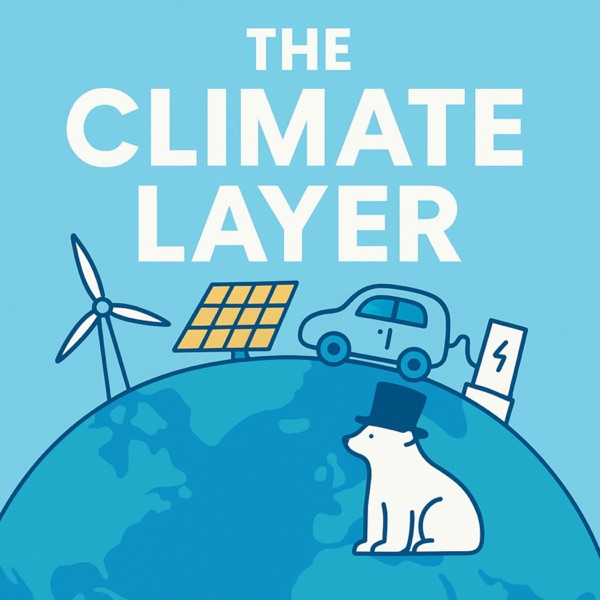
The Climate Layer
The Climate Layer makes sustainability simple and misinformation extinct. Hosted by Alex Banat, Harvard researcher and clean energy veteran, this show peels back the myths surrounding climate change, from energy and EVs to food, policy, and biodiversity. Each episode exposes the narratives holding us back, replaces them with scientific fact, and finds the human stories that make truth worth sharing. If there's a lie circulating about it, this show is coming for it.
- Episodes
- 16
- Releases
- Every two weeks
- Typical length
- 17 min
- On air since
- 2026
- Latest episode
- 1 week ago
Episodes
16 episodes, newest first
-
17 min
The Architecture of Doubt, Part 1: Why Facts Aren’t Winning
Season 1, Episode 16
Show notes
Climate scientists have said it plainly: we are losing the information war. The science isn’t the problem. We know the planet is warming, we know why, and we know EVs and renewables are among the fastest ways to bring emissions down. So why does every step forward make the conversation louder, angrier, and further from the facts?
First, an apology. It’s been a long gap between episodes, and you deserve to know why. I’ve been buried in my thesis research, and on top of that, parenting got CRAZY. Thank you for sticking around. I’m finally coming up for air, and I’m back with a lot to share.
In Episode 16 of The Climate Layer, recorded live on YouTube and Twitch, we start a two-part series on climate misinformation. Part 1 covers what the research already knows about how it works, and why facts alone aren’t winning.
In this episode:
• How a 70-year-old doubt playbook moved from the tobacco industry to fossil fuels
• The difference between misinformation and disinformation, and why your uncle isn’t the villain, he’s the target
• What the research shows about how EV and renewable energy myths reduce policy support, even after people are corrected
• The three levers that make misinformation stick: framing, emotional tone, and identity cues
• Why the platforms aren’t neutral, and how a small slice of unreliable content gets outsized engagement
• The AI wildcard, and what generative tools are doing to the volume of misleading content
• The research gap my thesis set out to fill, using 3,037 comments from Facebook, YouTube, and XNone of this means we’re doomed. It means we finally understand the game we’re playing.
Next episode: what the thesis found, and the platform results that weren’t what I expected.
Catch The Climate Layer live every Wednesday and Thursday at 8 PM Eastern, on YouTube as The Climate Layer and on Twitch as Gentleman Polar Bear.
-
22 min
A Battery Doesn't Vote: How Clean Energy Got Trapped in the Culture War
Season 1, Episode 15
Show notes
Wildfires don't check voter registration, and hurricanes don't care about politics. Yet in 2026, clean energy is facing unprecedented federal opposition, not because the economics fail, but because technology got swallowed by a culture war.
In this episode of The Climate Layer, Alex Banat unpacks how America repeatedly pioneered clean energy technologies, from solar cells to lithium batteries, only to step aside as other nations built the future. We look at the policy shifts from Carter to today, the strategic communications mistakes that made renewables tribal, and the immediate financial impact on American households as power demand accelerates.
Key takeaways:• Why Jimmy Carter’s 1979 solar panels were a fork in the road• How clean energy lost its bipartisan footing• The true cost of using taxpayer dollars to buy out renewable leases during an energy crunch• Why an "all-of-the-above" approach is economic reality, not political ideology
Help us spread the word: subscribe, pass this episode along, or reach out directly at theclimatelayer@gmail.com.
-
17 min
Why a Polar Bear in a Top Hat: The Case for the Polar Bear and the Story Behind the Logo
Season 1, Episode 14
Show notes
Fourteen episodes in, and someone finally asked the question.
My wife wanted to know why I chose a gentleman polar bear as the logo for The Climate Layer. And I realized I had never actually explained it. Not to her, not to this audience, not to anyone.
So today we fix that.
This episode is about the polar bear. Why I chose it, what it means to me, and why this animal, one of the most extraordinary creatures to ever walk this planet, has become the face of a crisis it had no part in creating.
We cover the animal itself, its intelligence, its adaptability, its extraordinary capacity to survive the most brutal conditions on Earth. We talk about how it became a symbol of climate change, and why I think that symbolism deserves more credit than its critics give it. We talk about the Nissan Leaf commercial that planted a seed in my head over a decade ago. About Steve Irwin and the communication model worth returning to. About empathy, and why it is not a weakness but the most powerful tool we have. And about who I am ultimately building this show for.
Just me today. No guests. A story I should have told a long time ago.
If you are new here, check out previous episodes covering everything from planetary boundaries and ocean health to climate misinformation, battery storage, and the war on science. There is a lot to dig into.
Questions or thoughts? Reach me at theclimatelayer@gmail.com.
And if this episode resonated with you, please subscribe and share it with someone who needs to hear it.
The science is clear. The solutions are real. The noise is the problem.
-
49 min
The Anatomy of a Lie: Unpacking Landman's Wind Turbine Scene with Matt Brady and Derek Banat
Season 1, Episode 13
Show notes
First, a quick note. This episode is a little later than usual. Parenting has thrown some curveballs recently and I appreciate everyone's patience and continued support. It means more than you know.
Now, onto episode 13 of our show.
A scene from Paramount's Landman went viral for all the wrong reasons a few years ago. In it, Billy Bob Thornton's character delivers a confident, charismatic takedown of wind energy that was shared by oil executives, fossil fuel advocacy organizations, and a political figure as if it were fact rather than fiction.
It is not fact. But it is effective. And understanding why it works is just as important as knowing what is wrong with it.
In Episode 13 of The Climate Layer, we sit down with returning guest Matt Brady, professional dog trainer and founder of Manageable Mutts, and first time guest Derek Banat, Cognitive Performance Specialist working with U.S. Air Force pilots, to break down the scene claim by claim and unpack why misinformation packaged this well is so hard to counter.
You can watch the scene we're referencing here: https://www.youtube.com/watch?v=Tf4RFaOr0kc&t=1s
In this episode:
• Every factual claim in the scene, broken down against the actual data
• Why petroleum accounts for less than 1% of U.S. grid electricity, and why that matters
• How confident, simple, folksy language makes misinformation stickier than complicated accurate information
• What cognitive performance science tells us about why the brain falls for persuasive misinformation
• What the behavioral science world learned about breaking through deeply held false beliefs
• Why we are not on different sides, in behavioral science we are on the animal's side, in climate we are on the side of the people being impacted
•The science is clear. The solutions are real. The noise is the problem.
You can find Matt and Manageable Mutts LLC at:
-
40 min
The Alpha Myth: What Dog Training Teaches Us About Fighting Climate Misinformation
Season 1, Episode 12
Show notes
In the 1960s, a researcher published a study on wolf behavior that changed everything. The concept of the alpha wolf, the dominant leader who rules through force and aggression, spread through science, self-help, and eventually dog training. There was just one problem. The researcher spent the rest of his career trying to take it back.
In this episode of The Climate Layer, Alex sits down with Matt Brady, professional dog trainer and founder of Manageable Mutts, to talk about what happens when misinformation gets ahead of the truth, and what it takes to close that gap.
Matt has spent his career undoing the damage bad science did to how people relate to their dogs. And the lessons he has learned, about empathy, patience, education, and meeting people where they are without judgment, turn out to be exactly what climate communicators need to hear.
In this episode:
• How the alpha wolf myth spread from a single flawed study into a cultural phenomenon the original researcher could not stop
• What the dog training world learned about breaking through deeply held misinformation
• Why we are not on different sides. In dog training, we are on the dog's side. In climate, we are on the side of the people being impacted
• How empathy and patience outperform data and debate when the lie has already beaten the truth to the finish line
• Why misinformation built on the beginning of a theory is the hardest kind to counter, and what actually worksThe science is clear. The solutions are real. The noise is the problem.
More information on Matt and his company Manageable Mutts can be found below:
-
14 min
The War on Science: Why We Believe in Gravity But Not Climate Change
Season 1, Episode 11
Show notes
Why do we accept gravity, the atom, and plate tectonics without question, but draw the line at climate science? The answer is not intelligence. It is not education. It is something far more deliberate.
In Episode 11 of The Climate Layer, we go deep on the war on science. Where it started, who funded it, and how it evolved from tobacco industry playbooks in the 1950s to algorithmically amplified misinformation in 2025. And more importantly, what we do about it.
In this episode:
• Why climate science triggers identity-protective cognition in a way that gravity never will
• How the fossil fuel industry borrowed the tobacco industry's doubt manufacturing playbook almost verbatim
• How generative AI collapsed the cost of producing convincing misinformation almost overnight
• Why debunking rarely works and what the research says actually does
• Why the fight against misinformation is won with clarity and storytelling, not outrageThe science is clear. The solutions are real. The noise is the problem.
-
26 min
Every Drop Counts: The Water Crisis We're Not Talking About
Season 1, Episode 10
Show notes
While the world debates energy and emissions, another planetary boundary is quietly being crossed. Water. In Episode 10 of The Climate Layer, we go deep on the freshwater crisis, from the ancient fossil water reserves we are draining faster than they can ever be replenished, to the hidden water footprint of your diet, your clothes, and the AI tools you use every day.
Battery storage gets the headlines. Water scarcity is the crisis nobody is talking about. Until now.
In this episode:
• What fossil water is and why draining it is the water equivalent of burning fossil fuels
• How AI data centers are consuming massive amounts of water in already stressed regions, with Microsoft up 34 percent and Google up 20 percent in a single year
• Why your diet has a bigger impact on your water footprint than your shower
• What responsible water use actually looks like depending on where you live
• Why every small change multiplied by millions of people is how the world actually changesThe science is clear. The solutions are real. The noise is the problem.
-
19 min
Hope Is a Strategy: Climate Solutions at Scale
Season 1, Episode 9
Show notes
It is easy to feel like nothing is working. Federal policy is moving backward. Headlines are bleak. And if you work in climate, clean energy, or sustainability, the weight of it can feel relentless.
But hopelessness in the face of real progress is its own kind of risk. Because the progress is real.
Episode 9 is about what actually works. Not pilot projects. Not experiments. Real countries, real policies, and real results at scale. Denmark generating over 50% of its electricity from wind. Norway selling 92% of new cars as electric. Iceland heating nearly every home with geothermal energy. Texas leading the U.S. in wind power, not because of climate activism, but because the economics made sense.
These are not hypotheticals. They are proof.
When we only focus on what is broken, we miss the lesson hiding in what is working. And that lesson matters, because it tells us exactly what to do next.
In this episode:
• How Denmark built a wind revolution over decades and became a global energy exporter
• Why Norway's EV transformation happened through smart economics, not mandates
• What Iceland's geothermal success means for the rest of the world as new drilling technology changes the game
• The U.S. bright spots proving that progress does not require federal leadershipThe solutions exist. The technology works. The examples are real.
The Climate Layer is a podcast about climate change, clean energy, and the systems shaping our future. Hosted by Alex Banat.
-
18 min
The Innovators: Climate Tech That's Scaling Right Now
Season 1, Episode 8
Show notes
While federal climate policy moves backward, the economics of clean energy keep moving forward. In Episode 8, we look at the technologies scaling right now. Not someday, not in the lab, but in commercial deployment across the globe.
Battery storage costs dropped 67% in three years. Offshore wind is advancing despite federal hostility because state commitments are real. Global clean tech investment hit $1.8 trillion in 2025. And the countries treating clean energy as industrial strategy are winning races the U.S. keeps choosing to lose.
One of the biggest obstacles to climate progress is the noise designed to make you feel like nothing is working. The best counter to that noise is knowing the real story. The facts in clean energy right now are genuinely hopeful, and this episode is full of them.
In this episode:
• Why battery storage is solving the single biggest challenge renewable energy has ever faced
• How states like Massachusetts, New York, and New Jersey are moving offshore wind forward without Washington
• The pattern of U.S. innovation followed by Chinese dominance, and what it costs us
• A reality check on critical materials and why the mining challenge is real but not a reason to stopThe question isn't whether the clean energy transition happens. It's whether we lead it or follow it.
The Climate Layer is a podcast about climate change, clean energy, and the systems shaping our future.
Hosted by Alex Banat.
-
24 min
Why I Drive Electric - And What I Learned Along the Way
Season 1, Episode 7
Show notes
I had the same fears you probably have. Range anxiety. Charging time. Winter performance. Cost. Whether it would actually work for my life.
But I did the research. I talked to people who made the switch. I test drove cars. I mapped out charging options. I ran the numbers. And what I learned surprised me.
This episode isn't a sales pitch. It's my journey from skeptical to convinced. From anxious to confident. From "I don't think this will work" to driving past gas stations every day with a full charge and a smile.
I cover:
• Why EVs are the best option compared to hydrogen, e-fuels, and hybrids
• The reality of charging (home, public, road trips)
• Winter performance, range anxiety, and cost breakdowns
• The vision of a closed-loop system with renewable energy and battery recycling
• Why this matters beyond your drivewayIf you've been curious about EVs but had questions, this episode gives you real information. Not myths. Not outdated assumptions from 2015. The truth about what it's actually like to drive electric in 2026.
-
21 min
The Living Ocean: What We're Fighting For
Season 1, Episode 6
Show notes
The ocean covers 71% of our planet and plays a critical role in regulating climate, producing oxygen, and supporting life on Earth. But rising temperatures, acidification, and overfishing are threatening ocean health at an unprecedented scale. In this episode, we explore why the ocean matters for climate stability, how human activity is devastating marine ecosystems, and what we can do to protect the living ocean before it's too late.
-
16 min
Nine Planetary Boundaries: How Close Are We to the Edge?
Season 1, Episode 5
Show notes
We've crossed seven of the nine planetary boundaries that keep Earth habitable. What does that actually mean? And why aren't more people talking about it?
In this episode, I break down the planetary boundaries framework - the scientific thresholds that define a "safe operating space" for humanity. From climate change to biodiversity loss to novel entities (yes, that includes microplastics), we're pushing Earth's systems to their limits.
But this isn't just about listing problems. It's about understanding how these boundaries connect to each other, why crossing them creates cascading risks, and what it means when we treat a stable climate as negotiable.
If you've ever wondered "how bad is it, really?" - this episode gives you the clearest answer science can offer.
Topics covered:
• What planetary boundaries are and why they matter
• The seven boundaries we've already crossed
• How these systems interconnect (spoiler: everything affects everything)
• Why "unknown unknowns" might be the scariest part
• The difference between knowing we're in danger and acting like itThis is Episode 5 of The Climate Layer - where we translate complex climate science into clear, accessible stories. No jargon. No doom-scrolling. Just honest conversations about the most important challenge of our time.
Next week: We're going to the ocean. Episode 6 dives into what we're doing to marine ecosystems - and what happens when we give them space to heal.
Find me on LinkedIn or email TheClimateLayer@gmail.com with your questions, feedback, or myths you want busted.
-
13 min
The Playbook: A Short History of Climate Misinformation
Season 1, Episode 4
Show notes
For decades, the biggest barrier to climate action hasn't been a lack of solutions - it's been misinformation. From organized doubt campaigns in the 1980s to viral myths about EVs and renewable energy today, deliberate narratives have shaped public opinion and slowed progress. In this episode, we trace the evolution of climate misinformation: how denial became delay, how the playbook adapted to social media, and why local opposition fueled by fear-based messaging is stalling wind farms, solar projects, and offshore installations across the country. If you've ever wondered why so many people believe things about climate and clean energy that simply aren't true, this is the episode that connects the dots.
-
13 min
The Grid’s Big Shift: Clean Energy, AI, and the Future of Power
Season 1, Episode 3
Show notes
The grid is more than wires. It is a living system that is shifting from coal to cleaner energy, while facing new pressure from AI and data centers. In this episode, we break down how the grid works, how the fuel mix is changing, and why misinformation about reliability keeps getting in the way. We also look at the rising demand from AI, the strain on interconnection queues, and the role of microgrids and storage in building a more resilient future.
-
13 min
From Electrobat to EVs: How Oil Won and Why Electricity Is Winning Back
Season 1, Episode 2
Show notes
Oil didn’t become the backbone of global transportation because it was the best option. It became the default because we built our entire world around it. In this episode, we trace how oil took over mobility, from the first electric taxis in 1897 to the rise of gasoline, highways, aviation, and global shipping. We explore how fracking reshaped the industry, why oil still dominates planes and freight, and what electrification is changing today.
We also tackle one of the most common EV fears: “What happens when the power goes out?” and explain why the question misses the bigger picture about how our transportation system really works.
If you’ve ever wondered why oil became king, and how electricity is reshaping the future, this episode peels back the layers.
-
16 min
Welcome to The Climate Layer
Season 1, Episode 1
Show notes
In this debut episode of The Climate Layer, host Alex Banat lays out why climate communication is broken and how misinformation shapes the way we see energy, transportation, and everyday choices. Alex shares the personal journey that led to launching this show — from chasing environmental storytelling in Hollywood, to building EV education programs with utilities, to guiding clean transportation narratives in PR, and finally to pursuing a master’s in sustainability at Harvard. Along the way, he explains why cutting through myths with clarity, compassion, and hope is more urgent than ever.
This episode dives into the wind turbine scene from Landman and unpacks why it’s a masterclass in misinformation, breaking down the facts about turbine lifecycles, oil abundance, and emotional manipulation. It then tackles the myth that EVs aren’t actually green, showing how efficiency, cleaner grids, and public health benefits make them a critical part of the transition. You’ll also get an introduction to the electric grid — what it is, how it works, and why understanding it matters for the future of clean energy. Finally, Alex offers practical tools for spotting climate misinformation in everyday conversations, helping listeners cut through noise and false balance with curiosity and confidence.
Start here to understand the mission of The Climate Layer and join the effort to make sustainability simple, approachable, and free from spin. This is the foundation for a show built to challenge myths, untangle fear, and inspire action toward a cleaner world.
Social Sciences lists
More Social Sciences shows picked out from the charts












More in Social Sciences
Placed highest on Apple Podcasts' Social Sciences chart right now