Podcast
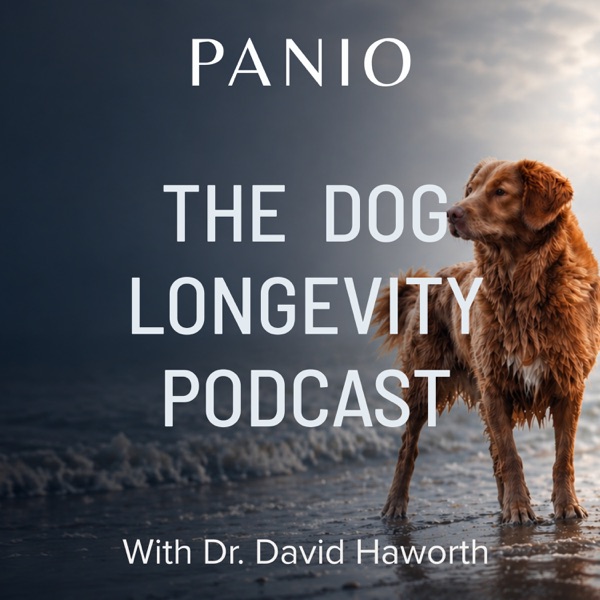
The Dog Longevity Podcast
The Dog Longevity Podcast is the definitive show for dog parents who want their dogs to live longer, healthier, happier lives.
Hosted by Dr David Haworth, the podcast explores the future of canine health through the lens of Medicine 3.0 - moving away from reactive, symptom-led care and toward prevention, vitality and longevity.
Each episode brings together world-class experts, scientists, veterinarians, authors, pioneering founders, passionate pet parents, and even some extraordinary dogs, to unpack what really matters when it comes to lifelong canine wellbeing.
- On air since
- 2026
- Episodes
- 13
- Releases · typical length
- Every two weeks · 47 min
- Latest episode
- 2 weeks ago
Chart history since Oct 26
| Now | Chart | Peak | Since Oct 26 |
|---|---|---|---|
| Off | Pets & Animals Last on it Nov 12 at #197 | #87 |
Episodes
13 episodes, newest first
-
41 min
Alex Powell: The Road to Formula 1, Elite Performance and Life With His Dog
Show notes
What does it take to compete at one of the highest levels of motorsport, and what can elite performance teach us about health, resilience and longevity?
In this episode of the Dog Longevity Podcast, veterinarian Dr. David Haworth speaks with Formula 3 racing driver Alex Powell about his journey from karting in the Caribbean to competing on the pathway towards Formula 1.
Alex began racing as a child, moved across the world to pursue the sport, and joined the Mercedes junior programme at just 11 years old. He shares what it was like growing up under the pressure of elite motorsport, sacrificing a normal childhood, and learning to perform when every race can shape the direction of your career.
The conversation also explores one of the biggest setbacks of Alex’s career: being released from the Mercedes Junior Programme after seven years. Rather than ending his ambitions, the experience forced him to become more proactive, resilient and responsible for his own future.
David and Alex also dive into the health and performance side of professional racing, including sleep, cardiovascular training, strength work, simulator sessions, concentration, heart-rate monitoring and regular physical testing.
For most of the racing season, Alex says his health is closely monitored. He prioritises at least eight to eight and a half hours of sleep, uses wearable technology to track recovery, combines cardio and gym work with extensive simulator training, and undergoes regular medical and physical assessments.
And, of course, there’s Mickey.
Alex shares the story of his miniature schnauzer, who has been part of the Powell family for nearly a decade, including Mickey’s habit of escaping from the family home and returning as if nothing had happened.
The conversation ultimately draws an interesting parallel between elite athletes and our pets: if we measure, monitor and optimise human performance so carefully, should we be thinking more proactively about the health of our dogs too?
Alex explains that the level of care he applies to his own health has shaped how he thinks about Mickey’s wellbeing, and why he wants the same proactive approach for the dog he considers part of his family.
The conversation covers:
• How Alex Powell started racing at seven years old
• What it takes to progress through the Formula 1 feeder system• The sacrifices required to pursue professional motorsport
• Life inside the Mercedes Junior Programme• How Formula 3 drivers train away from the racetrack
• Why sleep and recovery are critical for elite performance
• Alex’s relationship with his miniature schnauzer, Mickey
• Why Alex believes dogs deserve the same proactive approach to health
• His ambitions to reach Formula 1 by the end of the decadeAlex also answers a series of rapid-fire questions covering his favourite circuit, dream road car, racing superstitions, motorsport heroes, and which Formula 1 driver he would trust to look after Mickey.
Alex Powell: @alexpowellracing
David Haworth: / david-haworth
PANIO: https://panio.io/ | https://www.instagram.com/panio.ioChapters
00:00 – Alex Powell’s Journey From Karting to Formula 3
07:12 – Sacrifice, Moving to Europe and Growing Up in Motorsport
11:03 – Mercedes, Pressure and the Biggest Setback of Alex’s Career
19:54 – Mickey: The Dog Behind the Racing Driver
24:38 – How a Formula 3 Driver Trains, Sleeps and Recovers
28:14 – Simulator Training, Performance Data and Mental Focus
35:52 – Formula 1 Ambitions, Racing Rituals and What Comes Next—
Content is provided for general information only and does not constitute veterinary, medical or nutritional advice. It should not be used as a substitute for professional guidance tailored to your pet. Views expressed by hosts and guests are their own and do not necessarily reflect those of PANIO.
-
51 min
Red Light Therapy, Recovery and Longevity in Dogs
Show notes
Could light play a bigger role in your dog’s health than we realise?
In this episode of the Dog Longevity Podcast, veterinarian Dr. David Haworth speaks with Jackie Jolie, founder of AnimaSol and an equine and canine physical therapist, about red light therapy, photobiomodulation, circadian biology and the role our environment may play in animal health and longevity.
Jackie spent nearly two decades working with performance dogs and horses before becoming deeply interested in light biology and developing full-body red and near-infrared light therapy devices for animals.
Together, Jackie and David explore both the promise and the limitations of red light therapy. They discuss what photobiomodulation (PBM) is, how red and near-infrared wavelengths interact with tissue, and why light-based therapies are increasingly being explored for recovery, mobility, pain support and general wellbeing.
The conversation also goes deeper into circadian rhythm and the everyday environment dogs share with us, including natural daylight, artificial lighting, darkness, sleep and time spent indoors.
Importantly, David and Jackie also examine where evidence ends and hypothesis begins, why complementary therapies can be difficult to study, and why improving quality of life is different from claiming to cure an underlying disease.
The conversation covers:
• What red light therapy and photobiomodulation actually are
• How red and near-infrared light interact with the body
• Why circadian rhythm may matter for dogs as well as humans
• The difference between targeted veterinary lasers and full-body red light devices
• How photobiomodulation may support recovery, mobility and comfort
• Why natural light, darkness and sleep are interconnected
• The scientific challenges of studying complementary therapies
• How to separate promising biological mechanisms from unproven health claims
• Why movement and quality of life matter so much as dogs age
• How Jackie developed AnimaSol’s light therapy technology for dogs and horsesJackie Jolie: https://www.linkedin.com/in/equisol222/
AnimaSol: https://www.animasol.life/
Dr. David Haworth: https://www.linkedin.com/in/david-haworth/
PANIO: https://panio.io/
Jackie’s Recommendations:
AnimaSol: science, case studies and educational resources
Quantum Biology Collective: podcast and educational resources on light, water and quantum biology
Chapters:
00:00 – From Animal Physical Therapy to Red Light Therapy
06:35 – Does Photobiomodulation Actually Work? The Science and the Evidence
15:23 – Light, Health and Why Science Should Stay Open-Minded
27:05 – Are We Making Health and Longevity Too Complicated?
34:10 – Circadian Rhythm, Sleep and Creating a Healthier Light Environment
38:11 – How Red Light Therapy for Dogs Actually Works
43:04 – Recovery, Mobility, Quality of Life and Where the Limits Are
—
Content is provided for general information only and does not constitute veterinary, medical or nutritional advice. It should not be used as a substitute for professional guidance tailored to your pet. Some topics discussed in this episode represent emerging research, hypotheses or the personal views and experiences of the guest. Views expressed by hosts and guests are their own and do not necessarily reflect those of PANIO.
-
53 min
The Supplement Problem No One Talks About
Show notes
What makes a pet supplement actually work?
In this episode of The Dog Longevity Podcast, veterinarian Dr. David Haworth speaks with Colin Topham, founder of Alchemy Pet, about the science behind pet supplements, bioavailability, gut health and the future of natural pet wellness.
Together they explore why not all supplements are absorbed equally, how advanced delivery systems such as microencapsulation may improve ingredient effectiveness, and why manufacturing methods can make a major difference to potency and quality.
Colin shares the founding story behind Alchemy Pet and explains how the company is combining science, traditional nutrition and innovative supplement delivery to support healthier, longer lives for pets.
The conversation also covers the growing importance of the microbiome, the role of gut health in overall wellbeing, and how pet owners can think more carefully about the “spectrum of care” between everyday nutrition, preventative support and veterinary intervention.
This episode is essential listening for dog owners, pet parents, veterinarians and anyone interested in pet longevity, natural medicine, pet nutrition, supplement absorption and the future of preventative pet health.
The conversation covers:
• Why bioavailability matters in pet supplements
How microencapsulation can support supplement absorption
• Why turmeric and other natural ingredients may perform differently depending on delivery method
• The founding story behind Alchemy Pet
• How to think about a spectrum of care for pets
• The connection between gut health, the microbiome and long-term wellness
• Why individual pets may respond differently to the same nutrition or supplement
• How manufacturing methods can affect potency and quality
• The challenges of navigating pet health claims and regulations
• Why preventative pet health needs both science and nuanceColin also discusses the human-animal bond, the emotional reasons many founders enter pet health, and why better education can help pet owners make more confident decisions about their animals’ wellbeing.
With better science, better delivery systems and a deeper understanding of the gut, pet wellness can move beyond generic products and towards more thoughtful, effective support for long-term health.
Colin Topham: https://linkedin.com/in/colintopham
Alchemy Pet: https://www.alchemypet.com/
David Haworth: https://www.linkedin.com/in/david-haworth/
PANIO: https://panio.io/Colin’s Recommendations:
HABRI’s Research on Pet Health: https://habri.com
Texas A&M GI Institute: https://vetmed.tamu.edu
The Forever Dog by Rodney Habib and Dr. Karen BeckerChapters
00:00 - Introducing Alchemy Pet and the Future of Pet Supplements
01:07 - The Founding Story Behind Alchemy Pet
02:52 - Bioavailability, Microencapsulation and Smarter Supplement Delivery
12:04 - Creating a Spectrum of Care for Pets
22:04 - Supplementation, Individual Variation and Pet Health Outcomes
32:00 - Nutrition, Leaky Gut and the Microbiome in Pets
47:56 - Cold Process Manufacturing, Potency and Pet Health Resources—
Content is provided for general information only and does not constitute veterinary, medical or nutritional advice. It should not be used as a substitute for professional guidance tailored to your pet. Views expressed by hosts and guests are their own and do not necessarily reflect those of PANIO.
-
1 hr 4 min
What 53,000 Dogs Are Teaching Us About Longevity
Show notes
In this episode of the Dog Longevity Podcast, Dr. David Haworth speaks with Dr. Kate Creevy, Professor of Small Animal Internal Medicine at Texas A&M University and Chief Veterinary of the Dog Aging Project - the world’s largest long-term study of ageing in dogs.
Together they explore what more than 53,000 dogs are teaching researchers about dog ageing, canine healthspan, lifestyle, genetics, nutrition, cognitive decline, heart health and longevity science.
This episode is essential listening for dog owners, veterinarians, researchers and anyone interested in canine longevity, preventative pet health and the future of veterinary science.
The conversation covers:
• What the Dog Aging Project is and why it matters
• Why 53,000 dogs are being followed over time
• How lifestyle, diet, genetics and environment may influence dog ageing
• Why cognitive decline and heart health are key ageing markers in dogs
• What Rapamycin is and why it is being studied in canine longevity
• How activity and social connection may support cognitive health in older dogs
• How metabolomics may reveal biological patterns linked to ageing
• How AI could help analyse veterinary medical records at scaleWith better data, better science and more personalised care, we can move closer to a future where dogs not only live longer, but enjoy more healthy, active and comfortable years.
Dr. Kate Creevy: https://scholars.library.tamu.edu/vivo/display/nf40f2eea
Dr. David Haworth: https://www.linkedin.com/in/david-haworth/
PANIO: https://panio.io/
Kate’s Recommendations:
•
Dog Aging Project: https://dogagingproject.org/
•
The Hallmarks of Aging: 2013 and 2023 papers by López-Otín and colleagues (https://pubmed.ncbi.nlm.nih.gov/36599349/)
•
Canine Geriatric Syndrome research, including work by Brennan McKiernan, Natasha Olby and colleagues
Chapters
00:00 – The Dog Aging Project and the Science of Canine Longevity
08:00 – What 53,000 Dogs Can Teach Us About Ageing, Lifestyle and Genetics
18:00 – Rapamycin, Fasting Biology and the Search for Longer Healthspan
25:50 – Lifespan vs Healthspan: What Really Matters for Ageing Dogs
32:30 – Why Dogs Are a Powerful Model for Human Longevity Research
43:55 – Diet, Activity, Social Connection and Cognitive Health in Older Dogs
50:50 – Metabolomics, AI and the Future of Veterinary Longevity Science
—
Content is provided for general information only and does not constitute veterinary, medical or nutritional advice. It should not be used as a substitute for professional guidance tailored to your pet. Views expressed by hosts and guests are their own and do not necessarily reflect those of PANIO.
-
49 min
The Hidden Cause of Dog Aging: Chronic Inflammation Explained
Show notes
Most dog owners focus on how long their dog will live. But the real goal should be healthspan - the number of years a dog stays healthy, active, and pain-free.
In this episode of the Dog Longevity Podcast, veterinarian Dr. David Haworth speaks with Dr. Heidi Lobprise, veterinary dentist, senior pet advocate, and author who has spent decades studying aging and longevity in pets.
Together they explore how chronic inflammation accelerates aging, why dental disease is one of the most overlooked health threats in dogs and cats, and what pet owners can do to help their animals stay healthier for longer.
Dr. Lobprise shares practical strategies for recognizing the early signs of aging, managing inflammation, and protecting your pet’s healthspan throughout their life.
The conversation covers:
• Why chronic inflammation accelerates aging in dogs
• How periodontal disease affects overall health
• The surprising connection between dental health and longevity
• Why obesity and visceral fat increase inflammatory disease
• The early signs that your dog is entering the senior stage of life
• How to monitor your dog’s body condition and muscle health
• The role of mobility, pain management, and exercise in aging dogs
• How mental stimulation helps protect against cognitive decline
• Why extending healthspan matters more than simply extending lifespan
With the right care and awareness, pet owners can help their dogs live longer - while maintaining the quality of life that truly matters.
Dr. Heidi Lobprise: https://www.linkedin.com/in/heidi-lobprise-a161684/
David Haworth: https://www.linkedin.com/in/david-haworth/
PANIO: https://panio.io/
Heidi’s Recommendations:
Dog Aging Project: https://dogagingproject.org/
Grey Muzzle Organization: https://www.greymuzzle.org/
Chapters
00:00 – Why Chronic Inflammation Accelerates Aging in Dogs
03:10 – When Dogs Become “Senior” and What Changes
07:20 – Obesity, Metabolism and the Inflammation Cycle
11:30 – Why Dental Disease Is a Major Health Risk
16:40 – Preventing Periodontal Disease in Dogs
21:10 – Monitoring Body Condition and Muscle Loss
26:20 – Early Signs of Aging Most Owners Miss
31:10 – Mental Stimulation and Cognitive Health in Dogs
36:30 – Managing Mobility, Pain and Osteoarthritis
41:30 – Practical Longevity Tips for Dog Owners
46:50 – Resources for Learning More About Dog Aging
—
Content is provided for general information only and does not constitute veterinary, medical or nutritional advice. It should not be used as a substitute for professional guidance tailored to your pet. Views expressed by hosts and guests are their own and do not necessarily reflect those of PANIO.
Pets & Animals lists
More Pets & Animals shows picked out from the charts