Podcast
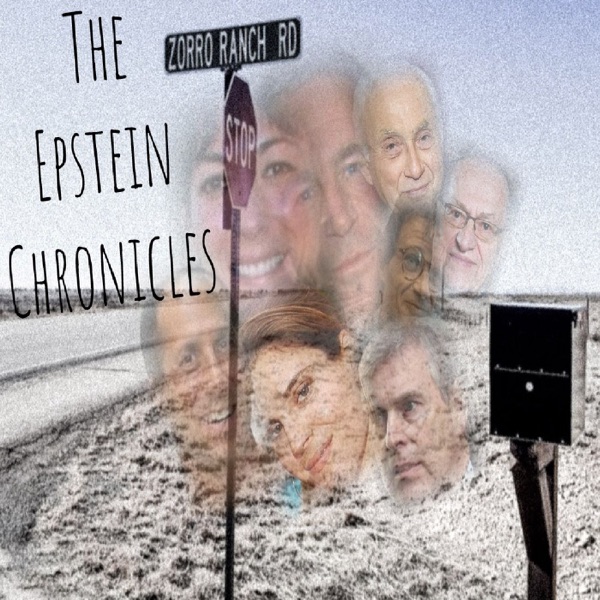
The Epstein Chronicles
Jeffrey Epstein was a multi millionaire who had political and business ties to some of the most rich and powerful people in the world. From businessmen to politicians at the highest levels, Epstein broke bread with them all.
Yet for years the Legacy media and the rest of high society looked the other way and ignored his behavior as multiple women came forward with allegations of abuse.
Even after he was convicted and subsequently received a sweetheart deal those same so called elites welcomed him back with open arms.
Now after his death and the arrest of Maxwell, the real story is starting to come together and the curtain has begun to be drawn back and what it has revealed is truly disturbing.
From Princes to Ex Presidents, the cast of scoundrels in this play spans continents and political affiliations leaving us with a transcontinental criminal conspiracy possibly unlike any we have ever seen before.
In this podcast we will explore all of the levels of Jeffrey Epstein and his criminal enterprise.
From his most trusted assistants to obscure associates, we will leave no stone unturned as we swim through the muck searching for clarity and answers to some of the most pressing questions of the case.
From interviews with people directly involved in the case to daily updates, the Epstein Chronicles will have it all.
Just like our other project, The Jeffrey Epstein Show, you can expect no punches pulled and consistent content. We have covered the Epstein case daily(everyday since October 1st 2019) and will continue to do so until there are convictions. With a library of well over 1k shows, you can expect a ton of content coming your way including on scene reporting from the Maxwell trial and from places like Zorro Ranch.
Thank you for tuning in and I look forward to having you all along for the ride.
(Created and Hosted by Bobby Capucci)
Become a supporter of this podcast: https://www.spreaker.com/podcast/the-epstein-chronicles--5003294/support.
- Episodes
- 1,089
- Releases
- Daily
- Typical length
- 12 min
- On air since
- 2026
- Latest episode
- 3 hours ago
Episodes
1,089 episodes, newest first
-
12 min
Tyler Robinson Preliminary Hearing (Day 6 Part 16) (11/3/26)
Show notes
Day six of Tyler Robinson’s preliminary hearing, held September 1, 2026, centered on closing arguments and the prosecution’s claim that the evidence easily cleared Utah’s probable-cause standard. Deputy Utah County Attorney Ryan McBride argued that the state had built its case through four overlapping categories of evidence: surveillance footage placing Robinson at Utah Valley University, DNA recovered from the rifle authorities identified as the murder weapon, Robinson’s alleged admissions after the shooting, and circumstantial evidence establishing motive, means and opportunity. Prosecutors also leaned heavily on Robinson’s alleged messages to Lance Twiggs, including statements that he had gone on a “mission” to kill Charlie Kirk and had “had enough of his hatred,” along with politically charged engravings found on ammunition. The state maintained that the evidence established not only that Robinson was the shooter, but that Kirk had been targeted because of his political expression. Prosecutors characterized the case as overwhelming and argued that the remaining factual disputes belonged before a jury rather than being resolved at the preliminary-hearing stage.
The defense concentrated much of its closing argument on the aggravating circumstance that could keep the aggravated-murder charge death-penalty eligible: whether the shooter knowingly created a great risk of death to someone other than Kirk. Attorney Staci Visser stressed that there had been one shot, one bullet and one person struck, arguing that prosecutors were stretching possible dangers—such as a miss, ricochet or pass-through bullet—into proof that another person had actually been placed within the legally required “zone of danger.” Richard Novak separately challenged the state’s evidence concerning political motivation and whether Robinson could reasonably have known children were present. Prosecutor Chad Grunander answered that argument by describing the shot as “ballistic roulette,” emphasizing that Kirk was surrounded by security personnel, a questioner and thousands of spectators and arguing that a slight error in aim could easily have killed someone else. The fundamental dispute at closing was therefore not simply whether the state could identify Robinson as the alleged shooter, but whether prosecutors had established the aggravating circumstances and enhancements necessary to carry the entire case—including its potential death penalty—forward to trial.
to contact me:
bobbycapucci@protonmail.com
Become a supporter of this podcast: https://www.spreaker.com/podcast/the-epstein-chronicles--5003294/support.
-
11 min
Tyler Robinson Preliminary Hearing (Day 6 Part 15) (11/3/26)
Show notes
Day six of Tyler Robinson’s preliminary hearing, held September 1, 2026, centered on closing arguments and the prosecution’s claim that the evidence easily cleared Utah’s probable-cause standard. Deputy Utah County Attorney Ryan McBride argued that the state had built its case through four overlapping categories of evidence: surveillance footage placing Robinson at Utah Valley University, DNA recovered from the rifle authorities identified as the murder weapon, Robinson’s alleged admissions after the shooting, and circumstantial evidence establishing motive, means and opportunity. Prosecutors also leaned heavily on Robinson’s alleged messages to Lance Twiggs, including statements that he had gone on a “mission” to kill Charlie Kirk and had “had enough of his hatred,” along with politically charged engravings found on ammunition. The state maintained that the evidence established not only that Robinson was the shooter, but that Kirk had been targeted because of his political expression. Prosecutors characterized the case as overwhelming and argued that the remaining factual disputes belonged before a jury rather than being resolved at the preliminary-hearing stage.
The defense concentrated much of its closing argument on the aggravating circumstance that could keep the aggravated-murder charge death-penalty eligible: whether the shooter knowingly created a great risk of death to someone other than Kirk. Attorney Staci Visser stressed that there had been one shot, one bullet and one person struck, arguing that prosecutors were stretching possible dangers—such as a miss, ricochet or pass-through bullet—into proof that another person had actually been placed within the legally required “zone of danger.” Richard Novak separately challenged the state’s evidence concerning political motivation and whether Robinson could reasonably have known children were present. Prosecutor Chad Grunander answered that argument by describing the shot as “ballistic roulette,” emphasizing that Kirk was surrounded by security personnel, a questioner and thousands of spectators and arguing that a slight error in aim could easily have killed someone else. The fundamental dispute at closing was therefore not simply whether the state could identify Robinson as the alleged shooter, but whether prosecutors had established the aggravating circumstances and enhancements necessary to carry the entire case—including its potential death penalty—forward to trial.
to contact me:
bobbycapucci@protonmail.com
Become a supporter of this podcast: https://www.spreaker.com/podcast/the-epstein-chronicles--5003294/support.
-
11 min
Maria Farmer Sues the Federal Government Over Its Handling of Jeffrey Epstein (Part 3) (11/3/26)
Show notes
On May 29, 2025, Jeffrey Epstein survivor Maria Farmer filed a 63-page federal lawsuit against the United States government, accusing the FBI, Department of Justice, and federal prosecutors of decades of negligence that allowed Epstein and Ghislaine Maxwell to continue sexually exploiting vulnerable women and children. Farmer alleged that she reported Epstein and Maxwell to the FBI in August 1996 after being sexually assaulted and discovering evidence that the pair had stolen nude photographs of her underage sisters and transported them across state lines. She also warned investigators about Epstein's exploitation of young girls, suspected child sexual abuse material, and threats against her family. According to the complaint, an FBI agent hung up on Farmer, and federal authorities failed to conduct a meaningful investigation or follow up on her allegations. Farmer maintained that the government violated mandatory reporting requirements and established investigative procedures that should have triggered immediate action. The lawsuit further accused federal prosecutors in Florida of disregarding evidence of Epstein's crimes, failing to coordinate with specialized DOJ divisions, and negotiating the extraordinary 2007 non-prosecution agreement that protected Epstein and potential co-conspirators. Farmer argued that these failures enabled Epstein's trafficking operation to continue for years, exposing countless additional victims to abuse that might have been prevented had authorities acted on her original warnings.
The complaint also detailed Farmer's unsuccessful attempts to obtain accountability from the government after decades of alleged intimidation, emotional trauma, and institutional indifference. Farmer accused Epstein and Maxwell of threatening her safety, destroying her career prospects, and forcing her to repeatedly relocate out of fear of retaliation. She also alleged that federal authorities misled victims about the status of their investigations, failed to enforce even the limited restrictions imposed by Epstein's Florida plea arrangement, and concealed information that could have exposed misconduct within the Justice Department. After requesting FBI records concerning her 1996 and 2006 complaints, Farmer was informed that her Freedom of Information Act request might not be completed until November 2027. She also contacted the DOJ's Inspector General in 2023, but the department subsequently closed her complaint without initiating an internal affairs investigation. Filed under the Federal Tort Claims Act, the lawsuit asserted negligence and negligent or intentional infliction of emotional distress, seeking monetary damages and other relief for the government's alleged failures. Farmer maintained that the FBI and DOJ had numerous opportunities to intervene against Epstein but repeatedly failed to fulfill their responsibilities, allowing his criminal activities to continue while victims suffered the consequences. The filing represented a direct attempt to hold the federal government financially and legally accountable for its historical handling of Epstein, with Farmer arguing that the catastrophe was not simply the result of investigative mistakes but a prolonged failure to enforce laws specifically designed to protect children from sexual exploitation. These were allegations presented in Farmer's complaint, not findings that the government had been held liable.
to contact me:
bobbycapucci@protonmail.com
source:
gov.uscourts.dcd.281128.1.0.pdf
Become a supporter of this podcast: https://www.spreaker.com/podcast/the-epstein-chronicles--5003294/support.
-
14 min
Maria Farmer Sues the Federal Government Over Its Handling of Jeffrey Epstein (Part 2) (11/3/26)
Show notes
On May 29, 2025, Jeffrey Epstein survivor Maria Farmer filed a 63-page federal lawsuit against the United States government, accusing the FBI, Department of Justice, and federal prosecutors of decades of negligence that allowed Epstein and Ghislaine Maxwell to continue sexually exploiting vulnerable women and children. Farmer alleged that she reported Epstein and Maxwell to the FBI in August 1996 after being sexually assaulted and discovering evidence that the pair had stolen nude photographs of her underage sisters and transported them across state lines. She also warned investigators about Epstein's exploitation of young girls, suspected child sexual abuse material, and threats against her family. According to the complaint, an FBI agent hung up on Farmer, and federal authorities failed to conduct a meaningful investigation or follow up on her allegations. Farmer maintained that the government violated mandatory reporting requirements and established investigative procedures that should have triggered immediate action. The lawsuit further accused federal prosecutors in Florida of disregarding evidence of Epstein's crimes, failing to coordinate with specialized DOJ divisions, and negotiating the extraordinary 2007 non-prosecution agreement that protected Epstein and potential co-conspirators. Farmer argued that these failures enabled Epstein's trafficking operation to continue for years, exposing countless additional victims to abuse that might have been prevented had authorities acted on her original warnings.
The complaint also detailed Farmer's unsuccessful attempts to obtain accountability from the government after decades of alleged intimidation, emotional trauma, and institutional indifference. Farmer accused Epstein and Maxwell of threatening her safety, destroying her career prospects, and forcing her to repeatedly relocate out of fear of retaliation. She also alleged that federal authorities misled victims about the status of their investigations, failed to enforce even the limited restrictions imposed by Epstein's Florida plea arrangement, and concealed information that could have exposed misconduct within the Justice Department. After requesting FBI records concerning her 1996 and 2006 complaints, Farmer was informed that her Freedom of Information Act request might not be completed until November 2027. She also contacted the DOJ's Inspector General in 2023, but the department subsequently closed her complaint without initiating an internal affairs investigation. Filed under the Federal Tort Claims Act, the lawsuit asserted negligence and negligent or intentional infliction of emotional distress, seeking monetary damages and other relief for the government's alleged failures. Farmer maintained that the FBI and DOJ had numerous opportunities to intervene against Epstein but repeatedly failed to fulfill their responsibilities, allowing his criminal activities to continue while victims suffered the consequences. The filing represented a direct attempt to hold the federal government financially and legally accountable for its historical handling of Epstein, with Farmer arguing that the catastrophe was not simply the result of investigative mistakes but a prolonged failure to enforce laws specifically designed to protect children from sexual exploitation. These were allegations presented in Farmer's complaint, not findings that the government had been held liable.
to contact me:
bobbycapucci@protonmail.com
source:
gov.uscourts.dcd.281128.1.0.pdf
Become a supporter of this podcast: https://www.spreaker.com/podcast/the-epstein-chronicles--5003294/support.
-
12 min
Maria Farmer Sues the Federal Government Over Its Handling of Jeffrey Epstein (Part 1) (11/3/26)
Show notes
On May 29, 2025, Jeffrey Epstein survivor Maria Farmer filed a 63-page federal lawsuit against the United States government, accusing the FBI, Department of Justice, and federal prosecutors of decades of negligence that allowed Epstein and Ghislaine Maxwell to continue sexually exploiting vulnerable women and children. Farmer alleged that she reported Epstein and Maxwell to the FBI in August 1996 after being sexually assaulted and discovering evidence that the pair had stolen nude photographs of her underage sisters and transported them across state lines. She also warned investigators about Epstein's exploitation of young girls, suspected child sexual abuse material, and threats against her family. According to the complaint, an FBI agent hung up on Farmer, and federal authorities failed to conduct a meaningful investigation or follow up on her allegations. Farmer maintained that the government violated mandatory reporting requirements and established investigative procedures that should have triggered immediate action. The lawsuit further accused federal prosecutors in Florida of disregarding evidence of Epstein's crimes, failing to coordinate with specialized DOJ divisions, and negotiating the extraordinary 2007 non-prosecution agreement that protected Epstein and potential co-conspirators. Farmer argued that these failures enabled Epstein's trafficking operation to continue for years, exposing countless additional victims to abuse that might have been prevented had authorities acted on her original warnings.
The complaint also detailed Farmer's unsuccessful attempts to obtain accountability from the government after decades of alleged intimidation, emotional trauma, and institutional indifference. Farmer accused Epstein and Maxwell of threatening her safety, destroying her career prospects, and forcing her to repeatedly relocate out of fear of retaliation. She also alleged that federal authorities misled victims about the status of their investigations, failed to enforce even the limited restrictions imposed by Epstein's Florida plea arrangement, and concealed information that could have exposed misconduct within the Justice Department. After requesting FBI records concerning her 1996 and 2006 complaints, Farmer was informed that her Freedom of Information Act request might not be completed until November 2027. She also contacted the DOJ's Inspector General in 2023, but the department subsequently closed her complaint without initiating an internal affairs investigation. Filed under the Federal Tort Claims Act, the lawsuit asserted negligence and negligent or intentional infliction of emotional distress, seeking monetary damages and other relief for the government's alleged failures. Farmer maintained that the FBI and DOJ had numerous opportunities to intervene against Epstein but repeatedly failed to fulfill their responsibilities, allowing his criminal activities to continue while victims suffered the consequences. The filing represented a direct attempt to hold the federal government financially and legally accountable for its historical handling of Epstein, with Farmer arguing that the catastrophe was not simply the result of investigative mistakes but a prolonged failure to enforce laws specifically designed to protect children from sexual exploitation. These were allegations presented in Farmer's complaint, not findings that the government had been held liable.
to contact me:
bobbycapucci@protonmail.com
source:
gov.uscourts.dcd.281128.1.0.pdf
Become a supporter of this podcast: https://www.spreaker.com/podcast/the-epstein-chronicles--5003294/support.
-
11 min
Prince Andrew and King Charles Face Renewed Tensions Over the Epstein Scandal (11/3/26)
Show notes
Andrew Mountbatten-Windsor has reportedly launched a legal challenge against his arrest in connection with the ongoing investigation into his relationship with Jeffrey Epstein, creating another controversy for the British royal family and escalating tensions with King Charles III and Prince William. The former Duke of York, who was arrested in February 2026 on suspicion of misconduct in public office, is challenging the legality of search warrants used during the investigation into allegations that he improperly shared confidential government information with Epstein while serving as Britain's trade envoy between 2001 and 2011. Andrew was questioned for nearly 12 hours before being released without charges, although investigators have continued examining his activities and potential misconduct. His legal challenge has reportedly caught Buckingham Palace off guard, with royal insiders suggesting that Andrew's determination to fight the investigation could create additional embarrassment for the monarchy. Sources have characterized the legal maneuver as a warning to Charles and William that Andrew has no intention of disappearing quietly, despite losing his royal titles and facing mounting scrutiny over his longstanding relationship with Epstein.
The controversy has also generated allegations that Andrew could attempt to pressure his brother by threatening to reveal damaging information about the royal family unless he receives assistance with his legal troubles. Unnamed insiders and royal commentators have speculated that Andrew possesses sensitive knowledge about Charles and other family members, although no evidence of an actual blackmail attempt has been presented. Sources further claimed that Charles prohibited Andrew from using money previously provided by the king to finance his legal battle, raising questions about how the disgraced former prince intends to pay his mounting legal expenses. Royal commentator Hilary Fordwich criticized Andrew's decision to challenge the investigation, arguing that his actions were further humiliating the monarchy and worsening his already precarious position. The latest confrontation underscores the increasingly difficult position facing Buckingham Palace as Andrew continues resisting the legal and reputational consequences of his Epstein connections. Rather than quietly accepting his removal from royal life, Andrew appears determined to fight the investigation, potentially prolonging a scandal that has already inflicted significant damage on the monarchy's credibility. The claims about threatened disclosures, financial pressure, and internal royal tensions remain attributed to unnamed sources rather than independently established facts.
to contact me:
bobbycapucci@protonmail.com
source:
Andrew Windsor's Legal Battle 'Stirs Renewed Royal Family Tensions'
Become a supporter of this podcast: https://www.spreaker.com/podcast/the-epstein-chronicles--5003294/support.
-
17 min
The Epstein Effect: How Trump's Handling of the Files Became a Midterm Election Liability (11/3/26)
Show notes
As Americans headed to the polls for the 2026 midterm elections, the Trump administration faced the potential political consequences of its handling of the Jeffrey Epstein scandal, an issue that had become a significant source of frustration among voters, including some of the president’s own supporters. After years of promises about exposing powerful individuals connected to Epstein, the administration instead found itself defending missed disclosure deadlines, disputed redactions, and its refusal to embrace an independent special counsel investigation. Trump further aggravated the controversy by dismissing the scandal as a hoax and publicly attacking Republicans who continued demanding answers, alienating voters who had previously supported him and believed his promises of transparency. The Epstein Files Transparency Act was supposed to provide a measure of accountability, but the Justice Department’s handling of the releases, questions about withheld material, and concerns over the exposure of survivors’ private information intensified public distrust. What could have been an opportunity for Trump to distinguish himself as a president willing to confront institutional corruption instead became a self-inflicted political crisis, leaving Republican candidates across the country struggling to defend an administration that appeared increasingly hostile to scrutiny.
With control of Congress at stake, the Epstein controversy added another layer of uncertainty to an election already dominated by economic concerns, dissatisfaction with Washington, and questions about the administration’s performance. Democratic candidates sought to capitalize on the backlash, while Republicans faced the possibility that frustrated conservatives, independents, and former Trump supporters could stay home or vote against the party. Even relatively small shifts in turnout could prove consequential in competitive congressional races, particularly if voters viewed the administration’s conduct as evidence of broader dishonesty and political arrogance. A Democratic takeover of the House could also fundamentally change the direction of congressional oversight, potentially opening the door to more aggressive subpoenas, document demands, and investigations into Epstein’s associates and the government institutions that failed to stop him. However, Democrats would face their own accountability test if they gained power after campaigning on transparency and justice for survivors. Ultimately, the controversy illustrated how an administration that promised to expose corruption instead created a political liability through its own decisions, leaving Trump and the Republican Party facing an electorate with an opportunity to deliver consequences at the ballot box.
to contact me:
bobbycapucci@protonmail.com
Become a supporter of this podcast: https://www.spreaker.com/podcast/the-epstein-chronicles--5003294/support.
-
45 min
Mega Edition: Prince Andrew Has Perfected The Art Of Ducking Accountability (11/3/26)
Show notes
during his bbc interview
Prince Andrew spent years avoiding questioning by American federal investigators about his relationship with Jeffrey Epstein, despite publicly promising to cooperate with law enforcement following his disastrous November 2019 BBC Newsnight interview. After stepping away from royal duties, Andrew declared that he was willing to assist any appropriate law enforcement agency investigating Epstein and his associates. However, when prosecutors from the Southern District of New York and the FBI attempted to arrange an interview, the prince's apparent willingness to cooperate quickly evaporated. In January 2020, U.S. Attorney Geoffrey Berman publicly revealed that Andrew had provided no cooperation whatsoever, despite repeated attempts to contact his legal representatives. By June, Berman accused Andrew of falsely portraying himself as willing to assist investigators, revealing that his attorneys had explicitly informed prosecutors months earlier that he would not submit to an interview. Andrew's legal team disputed those accusations, claiming that he had offered assistance on three separate occasions, but no interview materialized. The contradiction between Andrew's public promises and his refusal to sit down with investigators raised serious questions about why someone who insiste
The standoff became even more contentious when American authorities pursued a formal mutual legal assistance request through the British government in an attempt to secure Andrew's testimony. According to Berman, prosecutors encountered repeated obstacles when attempting to communicate with Buckingham Palace, Andrew's attorneys, and British officials, leaving them unable to obtain the interview they had sought. In his subsequent account of the investigation, Berman questioned whether influential figures within the British establishment had helped shield Andrew from American scrutiny. Meanwhile, Virginia Roberts Giuffre and her attorneys repeatedly criticized the prince's refusal to cooperate, particularly given her allegations that Epstein and Ghislaine Maxwell had trafficked her to Andrew for sexual abuse when she was 17 years old. Andrew continued denying those allegations and ultimately settled Giuffre's civil lawsuit in February 2022 without admitting liability, avoiding the prospect of being questioned under oath during a public trial. His conduct left an extraordinary contradiction at the center of the Epstein investigation: a senior member of the British royal family who repeatedly professed his willingness to help uncover the truth, yet never provided the substantive interview American prosecutors had requested. The years of legal maneuvering and unfulfilled promises reinforced concerns that Andrew's wealth, connections, and royal status had allowed him to resist scrutiny that an ordinary witness would have found far more difficult to avoid.
to contact me:
bobbycapucci@protonmail.com
Become a supporter of this podcast: https://www.spreaker.com/podcast/the-epstein-chronicles--5003294/support.
-
44 min
Mega Edition: Maxwell Complains About Her Cell Conditions And The Prosecution Responds (11/3/26)
Show notes
In June 2021, Ghislaine Maxwell's attorneys complained that she was being subjected to filthy and degrading conditions at the Metropolitan Detention Center in Brooklyn while awaiting trial on federal sex trafficking charges. Her attorney, Bobbi Sternheim, alleged that raw sewage had seeped into Maxwell's isolation cell, forcing authorities to relocate her, while rodent droppings had fallen through the ventilation system. The defense also described persistent sewage odors, overflowing toilets, mold, cockroaches, and other vermin throughout the facility. Maxwell's attorneys argued that these conditions, combined with constant surveillance, sleep interruptions, inadequate access to drinking water, and restrictions on confidential communications with her legal team, amounted to unnecessarily punitive treatment of a defendant who had not yet been convicted. They maintained that repeated complaints to prison officials and prosecutors had produced little meaningful improvement and accused the government of downplaying the severity of her confinement. The allegations became part of Maxwell's broader effort to challenge her detention and convince the court that the conditions were interfering with her ability to prepare an adequate defense.
Federal prosecutors pushed back against Maxwell's repeated complaints, arguing that her attorneys had exaggerated the conditions and misrepresented the treatment she was receiving. In an earlier April 2021 filing addressing complaints about sanitation and mistreatment, prosecutors reported that prison officials had instructed Maxwell to clean her cell because it had become extremely dirty, claiming that she frequently failed to flush her toilet and had neglected basic cleaning responsibilities. Maxwell's attorneys rejected that accusation, explaining that sewage odors originated from the prison's deteriorating plumbing and overflowing toilets in the cellblock above, rather than her personal hygiene. Prosecutors also disputed allegations of abusive searches and inadequate medical care, maintaining that Maxwell received regular health monitoring and unusually extensive access to legal materials compared with other detainees. The government's broader position was that Maxwell's confinement was justified by her substantial flight risk and that her complaints did not warrant releasing her from custody. Although the defense continued documenting sanitation problems, including the subsequent raw sewage incident and vermin droppings, prosecutors maintained that the detention facility was taking appropriate measures to accommodate her needs. The dispute illustrated the increasingly bitter confrontation between Maxwell's attorneys and federal prosecutors over whether her confinement represented legitimate security precautions or unnecessarily harsh treatment before trial.
to contact me
bobbycapucci@protonmail.com
Become a supporter of this podcast: https://www.spreaker.com/podcast/the-epstein-chronicles--5003294/support.
-
50 min
Mega Edition: Prince Andrew Gets His Picture Narrative Decimated (11/1/26)
Show notes
For years, Prince Andrew attempted to discredit one of the most recognizable pieces of evidence connecting him to Jeffrey Epstein's sex trafficking operation: the photograph showing him with his arm around 17-year-old Virginia Roberts Giuffre while Ghislaine Maxwell stood smiling in the background. During his disastrous 2019 BBC Newsnight interview, Andrew claimed he had no recollection of ever meeting Giuffre, questioned whether the photograph had been manipulated, and insisted that he could not remember the picture being taken. His explanations became increasingly difficult to believe, particularly when he offered his now-infamous account of visiting a Pizza Express in Woking and claimed that a medical condition prevented him from sweating, directly challenging details Giuffre had provided about their alleged encounter. However, documents released by the House Oversight Committee in November 2025 delivered a devastating blow to Andrew's carefully constructed defense. In a July 2011 email, Jeffrey Epstein himself acknowledged that Giuffre had traveled aboard his aircraft and had been photographed with Andrew, writing, "Yes, she was on my plane, and yes, she had her picture taken with Andrew, as many of my employees have." The significance of that admission was enormous because Epstein was not an outside observer speculating about whether the photograph existed. He was intimately familiar with both individuals, allegedly took the photograph himself, and was directly involved in the circumstances that brought Giuffre into Andrew's orbit. Although the email was not a forensic examination of the image, it directly contradicted Andrew's repeated suggestions that the photograph might be fake and seriously undermined his insistence that he had never met Giuffre.
The revelations became even more damaging in February 2026, when another batch of Epstein documents contained a January 2015 email attributed to Ghislaine Maxwell that independently supported the photograph's authenticity. In a draft statement sent to Epstein, Maxwell acknowledged that Giuffre had met Prince Andrew at her London residence in 2001 and that a photograph had been taken during the encounter. Maxwell attempted to distance herself from allegations of sexual misconduct, but her account nevertheless corroborated the central circumstances surrounding a photograph that Andrew had spent years questioning. Taken together, the emails presented an extraordinary contradiction: both Jeffrey Epstein and Ghislaine Maxwell, the two individuals at the center of the trafficking operation, had acknowledged the existence of a photograph that Andrew continued to cast doubt upon. The revelations were particularly significant because Giuffre had maintained the same basic account for years, insisting that the photograph was genuine and that she had been introduced to Andrew through Epstein and Maxwell. Andrew ultimately settled Giuffre's civil sexual assault lawsuit in February 2022 without admitting liability, avoiding a trial that could have subjected his explanations to extensive examination under oath. Following the release of Maxwell's email, Giuffre's family described the discovery as vindication, emphasizing that Virginia had continued to defend the truthfulness of her account despite years of public attacks against her credibility. While neither email independently establishes that Andrew sexually assaulted Giuffre, both substantially undermine his efforts to dispute their documented encounter, leaving serious questions about why he repeatedly challenged a photograph that Epstein and Maxwell themselves acknowledged had been taken.
to contact me:
bobbycapucci@protonmail.com
Become a supporter of this podcast: https://www.spreaker.com/podcast/the-epstein-chronicles--5003294/support.
-
11 min
The Federal Gun Violation That Should Have Put Epstein’s NPA Back Under the Microscope
Show notes
Jeffrey Epstein was reportedly in possession of firearms at his Zorro Ranch in New Mexico even after his 2008 Florida felony conviction, raising questions about why he was never prosecuted for what authorities themselves had identified as potentially illegal gun possession. The New Mexico Survivors’ Truth Commission cited documentation indicating that Epstein maintained control over firearms at the ranch after becoming a convicted felon. A July 2009 policy concerning security at Epstein’s properties specifically noted his felony status and acknowledged that federal law prohibited convicted felons from knowingly possessing firearms or ammunition. The commission also reported that Epstein had weapons spread across multiple properties, including residences in Florida and the U.S. Virgin Islands, and that he had previously held a concealed-carry license.
The records suggested Epstein was well aware that his conviction created problems for his ability to legally possess guns. In 2014, he emailed attorney Erika Kellerhals asking whether his civil rights could be restored so that he could own a firearm, and she reportedly told him that he could not and instead suggested hiring armed security. Other records indicated that Epstein closely tracked where weapons were stored and had previously instructed employees regarding firearms at his properties. The revelations add another unanswered question to Epstein’s post-conviction treatment: despite documentation suggesting that authorities knew a convicted felon continued to exercise control over firearms, there was apparently no resulting federal firearms prosecution before his 2019 arrest on sex-trafficking charges.
to contact me:
bobbycapucci@protonmail.com
source:
Epstein Was in 'Possession of Firearms' Even After 2008 Conviction
Become a supporter of this podcast: https://www.spreaker.com/podcast/the-epstein-chronicles--5003294/support.
-
11 min
What Jes Staley Told Congress About Jeffrey Epstein’s Assistant
Show notes
Former Barclays chief Jes Staley told House Oversight Committee investigators that he had a sexual encounter with one of Jeffrey Epstein’s assistants after meeting her through Epstein. Staley said he first met the unnamed woman at Epstein’s Manhattan townhouse and that their conversations eventually became flirtatious. According to his testimony, the woman later invited him to her Upper East Side apartment sometime around 2009 or 2010, where they had what he described as a single consensual sexual encounter. Staley insisted Epstein had not arranged the meeting, claimed he never told Epstein about it and said he had no knowledge of Epstein directing women to have sex with his associates. Investigators also informed Staley that the woman had later sued Epstein alleging sexual abuse and reached a settlement with Epstein’s estate, something Staley said he had not known. The questioning came amid congressional scrutiny of Staley’s extraordinarily close relationship with Epstein, including roughly 1,200 communications exchanged between the two from 2008 through 2012 while Staley headed JPMorgan’s Private Bank and Epstein remained a client.
Investigators also confronted Staley with some of the more disturbing and suggestive correspondence contained in the released Epstein material. In July 2010, Staley had written to Epstein, “Say hi to Snow White,” prompting Epstein to ask what character Staley wanted next, to which Staley replied, “Beauty and the Beast.” Another message sent to Epstein around the same time referenced a woman in a Snow White costume having sex shortly after putting it on, and investigators showed Staley a photograph Epstein had circulated of a young woman dressed as the Disney character. Staley maintained that he did not remember seeing a woman dressed as Snow White at Epstein’s residence, denied having sex with anyone wearing such a costume and said he did not recognize the woman in the photograph. His testimony therefore added another uncomfortable layer to the long-running scrutiny of his relationship with Epstein: Staley acknowledged becoming sexually involved with a woman he met inside Epstein’s orbit while simultaneously denying that Epstein facilitated the encounter or that he understood what was happening to women around Epstein.
to contact me:
bobbycapucci@protonnail.com
source:
b
Become a supporter of this podcast: https://www.spreaker.com/podcast/the-epstein-chronicles--5003294/support.
-
11 min
Tyler Robinson Preliminary Hearing (Day 6 Part 14) (11/2/26)
Show notes
Day six of Tyler Robinson’s preliminary hearing, held September 1, 2026, centered on closing arguments and the prosecution’s claim that the evidence easily cleared Utah’s probable-cause standard. Deputy Utah County Attorney Ryan McBride argued that the state had built its case through four overlapping categories of evidence: surveillance footage placing Robinson at Utah Valley University, DNA recovered from the rifle authorities identified as the murder weapon, Robinson’s alleged admissions after the shooting, and circumstantial evidence establishing motive, means and opportunity. Prosecutors also leaned heavily on Robinson’s alleged messages to Lance Twiggs, including statements that he had gone on a “mission” to kill Charlie Kirk and had “had enough of his hatred,” along with politically charged engravings found on ammunition. The state maintained that the evidence established not only that Robinson was the shooter, but that Kirk had been targeted because of his political expression. Prosecutors characterized the case as overwhelming and argued that the remaining factual disputes belonged before a jury rather than being resolved at the preliminary-hearing stage.
The defense concentrated much of its closing argument on the aggravating circumstance that could keep the aggravated-murder charge death-penalty eligible: whether the shooter knowingly created a great risk of death to someone other than Kirk. Attorney Staci Visser stressed that there had been one shot, one bullet and one person struck, arguing that prosecutors were stretching possible dangers—such as a miss, ricochet or pass-through bullet—into proof that another person had actually been placed within the legally required “zone of danger.” Richard Novak separately challenged the state’s evidence concerning political motivation and whether Robinson could reasonably have known children were present. Prosecutor Chad Grunander answered that argument by describing the shot as “ballistic roulette,” emphasizing that Kirk was surrounded by security personnel, a questioner and thousands of spectators and arguing that a slight error in aim could easily have killed someone else. The fundamental dispute at closing was therefore not simply whether the state could identify Robinson as the alleged shooter, but whether prosecutors had established the aggravating circumstances and enhancements necessary to carry the entire case—including its potential death penalty—forward to trial.
to contact me:
bobbycapucci@protonmail.com
Become a supporter of this podcast: https://www.spreaker.com/podcast/the-epstein-chronicles--5003294/support.
-
11 min
Tyler Robinson Preliminary Hearing (Day 6 Part 13) (11/2/26)
Show notes
Day six of Tyler Robinson’s preliminary hearing, held September 1, 2026, centered on closing arguments and the prosecution’s claim that the evidence easily cleared Utah’s probable-cause standard. Deputy Utah County Attorney Ryan McBride argued that the state had built its case through four overlapping categories of evidence: surveillance footage placing Robinson at Utah Valley University, DNA recovered from the rifle authorities identified as the murder weapon, Robinson’s alleged admissions after the shooting, and circumstantial evidence establishing motive, means and opportunity. Prosecutors also leaned heavily on Robinson’s alleged messages to Lance Twiggs, including statements that he had gone on a “mission” to kill Charlie Kirk and had “had enough of his hatred,” along with politically charged engravings found on ammunition. The state maintained that the evidence established not only that Robinson was the shooter, but that Kirk had been targeted because of his political expression. Prosecutors characterized the case as overwhelming and argued that the remaining factual disputes belonged before a jury rather than being resolved at the preliminary-hearing stage.
The defense concentrated much of its closing argument on the aggravating circumstance that could keep the aggravated-murder charge death-penalty eligible: whether the shooter knowingly created a great risk of death to someone other than Kirk. Attorney Staci Visser stressed that there had been one shot, one bullet and one person struck, arguing that prosecutors were stretching possible dangers—such as a miss, ricochet or pass-through bullet—into proof that another person had actually been placed within the legally required “zone of danger.” Richard Novak separately challenged the state’s evidence concerning political motivation and whether Robinson could reasonably have known children were present. Prosecutor Chad Grunander answered that argument by describing the shot as “ballistic roulette,” emphasizing that Kirk was surrounded by security personnel, a questioner and thousands of spectators and arguing that a slight error in aim could easily have killed someone else. The fundamental dispute at closing was therefore not simply whether the state could identify Robinson as the alleged shooter, but whether prosecutors had established the aggravating circumstances and enhancements necessary to carry the entire case—including its potential death penalty—forward to trial.
to contact me:
bobbycapucci@protonmail.com
Become a supporter of this podcast: https://www.spreaker.com/podcast/the-epstein-chronicles--5003294/support.
-
12 min
The US Department Of Justice Motion To Dismiss The Epstein Survivor Lawsuit (Part 2) (11/1/26)
Show notes
The United States Department of Justice filed an eleven-page reply on June 25, 2026, in the Southern District of Florida, urging federal Judge David Leibowitz to dismiss a lawsuit brought by 34 Jeffrey Epstein survivors who accused the FBI of failing to investigate credible warnings about Epstein's sexual abuse and trafficking operation. The filing, submitted in support of the government's motion to dismiss the survivors' fourth amended complaint, argued that the plaintiffs had repeatedly failed to establish a legally sufficient basis for holding the federal government responsible for the abuse they suffered. Federal attorneys maintained that the survivors' claims were barred by the Federal Tort Claims Act's two-year limitations period and disputed their argument that government concealment justified extending that deadline. According to the DOJ, extensive public reporting, including Julie K. Brown's investigation, previous court decisions, government reviews, and documentaries examining the FBI's failures, had made the relevant information publicly available years before the plaintiffs filed their administrative claims in 2024. The government also argued that FBI decisions about whether to investigate particular allegations were discretionary and generally protected from civil liability. It emphasized that the original federal investigation had produced an 82-page prosecution memorandum and a 53-page draft indictment, which prosecutors cited as evidence that the FBI had conducted a substantial investigation. The DOJ further maintained that the ultimate decision not to prosecute Epstein federally was made by the United States Attorney's Office through the controversial nonprosecution agreement, rather than by the FBI independently.
The government's filing also challenged the survivors' argument that the FBI assumed a legal responsibility to protect them after receiving information about Epstein's activities. Federal attorneys rejected comparisons to litigation arising from the 2018 Marjory Stoneman Douglas school shooting, where the FBI's failure to properly forward a warning had supported negligence claims. The DOJ argued that the circumstances were fundamentally different because individuals reporting Epstein's conduct had communicated directly with FBI agents, who retained discretion over whether to pursue additional investigative steps. Prosecutors further contended that the survivors had failed to demonstrate that the FBI created a foreseeable danger or that its conduct established the necessary legal connection to their subsequent abuse. The filing also raised a separate procedural objection involving three plaintiffs, identified as Jane Does 13, 21, and 29, arguing that their administrative claims failed to specify the monetary damages being sought, a requirement the government maintained was necessary for the court to exercise jurisdiction. The DOJ insisted that it could raise this jurisdictional objection even though it had not presented the argument in earlier dismissal motions. Ultimately, the government asked the court to dismiss the entire lawsuit without allowing further amendments, arguing that repeated revisions had failed to correct the complaint's fundamental legal deficiencies. The filing represented another effort by federal authorities to defeat a lawsuit seeking to hold the government financially accountable for its handling of warnings about Epstein, with the DOJ arguing that investigative discretion, statutory deadlines, and procedural requirements prevented the survivors from pursuing their claims.
to contact me:
bobbycapucci@protonmail.com
source:
gov.uscourts.flsd.693362.117.0.pdf
Become a supporter of this podcast: https://www.spreaker.com/podcast/the-epstein-chronicles--5003294/support.
-
13 min
The US Department Of Justice Motion To Dismiss The Epstein Survivor Lawsuit (Part 2) (11/2/26)
Show notes
The United States Department of Justice filed an eleven-page reply on June 25, 2026, in the Southern District of Florida, urging federal Judge David Leibowitz to dismiss a lawsuit brought by 34 Jeffrey Epstein survivors who accused the FBI of failing to investigate credible warnings about Epstein's sexual abuse and trafficking operation. The filing, submitted in support of the government's motion to dismiss the survivors' fourth amended complaint, argued that the plaintiffs had repeatedly failed to establish a legally sufficient basis for holding the federal government responsible for the abuse they suffered. Federal attorneys maintained that the survivors' claims were barred by the Federal Tort Claims Act's two-year limitations period and disputed their argument that government concealment justified extending that deadline. According to the DOJ, extensive public reporting, including Julie K. Brown's investigation, previous court decisions, government reviews, and documentaries examining the FBI's failures, had made the relevant information publicly available years before the plaintiffs filed their administrative claims in 2024. The government also argued that FBI decisions about whether to investigate particular allegations were discretionary and generally protected from civil liability. It emphasized that the original federal investigation had produced an 82-page prosecution memorandum and a 53-page draft indictment, which prosecutors cited as evidence that the FBI had conducted a substantial investigation. The DOJ further maintained that the ultimate decision not to prosecute Epstein federally was made by the United States Attorney's Office through the controversial nonprosecution agreement, rather than by the FBI independently.
The government's filing also challenged the survivors' argument that the FBI assumed a legal responsibility to protect them after receiving information about Epstein's activities. Federal attorneys rejected comparisons to litigation arising from the 2018 Marjory Stoneman Douglas school shooting, where the FBI's failure to properly forward a warning had supported negligence claims. The DOJ argued that the circumstances were fundamentally different because individuals reporting Epstein's conduct had communicated directly with FBI agents, who retained discretion over whether to pursue additional investigative steps. Prosecutors further contended that the survivors had failed to demonstrate that the FBI created a foreseeable danger or that its conduct established the necessary legal connection to their subsequent abuse. The filing also raised a separate procedural objection involving three plaintiffs, identified as Jane Does 13, 21, and 29, arguing that their administrative claims failed to specify the monetary damages being sought, a requirement the government maintained was necessary for the court to exercise jurisdiction. The DOJ insisted that it could raise this jurisdictional objection even though it had not presented the argument in earlier dismissal motions. Ultimately, the government asked the court to dismiss the entire lawsuit without allowing further amendments, arguing that repeated revisions had failed to correct the complaint's fundamental legal deficiencies. The filing represented another effort by federal authorities to defeat a lawsuit seeking to hold the government financially accountable for its handling of warnings about Epstein, with the DOJ arguing that investigative discretion, statutory deadlines, and procedural requirements prevented the survivors from pursuing their claims.
to contact me:
bobbycapucci@protonmail.com
source:
gov.uscourts.flsd.693362.117.0.pdf
Become a supporter of this podcast: https://www.spreaker.com/podcast/the-epstein-chronicles--5003294/support.
-
17 min
DOJ Rejects Calls for Special Counsel in Jeffrey Epstein Investigation (11/2/26)
Show notes
The Department of Justice has brushed aside growing demands for an independent special counsel to investigate Jeffrey Epstein's associates, potential co-conspirators, and the federal government's handling of the case, despite mounting criticism of its refusal to pursue additional prosecutions. On October 26, 2026, Democrats on the House Judiciary Committee released a report calling for an outside prosecutor to examine allegations involving President Donald Trump, Epstein's network, and potential misconduct within the Justice Department itself. Led by Representative Jamie Raskin, lawmakers argued that newly examined witness accounts, investigative records, and allegations involving multiple women provided sufficient grounds for renewed criminal investigations. The demand followed months of controversy surrounding the DOJ's handling of the Epstein Files Transparency Act, disputed redactions, withheld evidence, and questions about why federal authorities had abandoned investigative avenues involving Epstein's associates. Rather than embrace independent scrutiny, the department has maintained that its previous investigations failed to establish sufficient evidence to justify additional prosecutions, while Attorney General Todd Blanche has defended the government's handling of the files. The DOJ's resistance has intensified concerns about whether an agency led by Trump's former personal attorney can credibly oversee an investigation that could involve the president, his associates, and decisions made by the department's own leadership.
The refusal to embrace an independent investigation is particularly controversial because the department has already faced accusations of withholding evidence from state and foreign authorities pursuing their own Epstein-related investigations. Raskin has demanded explanations for the DOJ's reported refusal to cooperate with investigators in New Mexico and several European countries, while congressional Democrats have accused federal officials of shutting down investigative leads and prematurely declaring that no additional prosecutions were warranted. Blanche has insisted that the department remains willing to investigate credible new evidence, but that assurance has done little to satisfy critics who question why the same officials responsible for the disputed handling of the Epstein files should retain exclusive control over determining what warrants further examination. Appointing a special counsel would not automatically establish criminal wrongdoing, but it could provide a degree of investigative independence that the department's current approach has failed to inspire. Instead, the administration's resistance has left the DOJ in the uncomfortable position of effectively asking the public to trust its own assessment of allegations involving its leadership and the president it serves. For Epstein survivors and lawmakers demanding accountability, the continued absence of an independent investigation reinforces concerns that potentially important evidence will remain unexamined and that decisions about further prosecutions will continue to be made behind closed doors.
to contact me:
bobbycapucci@protonmail.com
Become a supporter of this podcast: https://www.spreaker.com/podcast/the-epstein-chronicles--5003294/support.
-
12 min
Donald Trump's Legal Offensive Against Epstein Reporting Falls Apart(11/2/26)
Show notes
President Donald Trump's $10 billion defamation lawsuit against The Wall Street Journal, Rupert Murdoch, and other defendants was dismissed with prejudice on October 31, 2026, delivering another major legal setback in his battle over the newspaper's reporting about Jeffrey Epstein. The lawsuit stemmed from a July 2025 story alleging that Trump had contributed a sexually suggestive birthday letter to a 2003 album assembled by Ghislaine Maxwell for Epstein's 50th birthday. The letter reportedly featured a drawing of a naked woman, Trump's signature, and a reference to shared secrets between the two men. Trump vehemently denied creating or signing the document and accused the newspaper of publishing fabricated information intended to damage his reputation. However, U.S. District Judge Darrin Gayles determined that Trump's amended complaint failed to establish that the newspaper had acted with actual malice, the legal standard requiring public figures to demonstrate that allegedly defamatory reporting was published with knowledge of its falsity or reckless disregard for the truth. Gayles criticized Trump's legal arguments as an attempt to manufacture problems with the newspaper's investigation, which he described as thoughtful and detailed. The dismissal came approximately six months after the judge rejected Trump's original complaint and gave his attorneys an opportunity to correct its deficiencies.
The ruling also rejected Trump's argument that The Wall Street Journal should have abandoned its reporting after he personally denied writing the letter. Judge Gayles emphasized that allowing public officials to prevent unfavorable stories simply by disputing their accuracy would violate fundamental First Amendment protections. The court found that the newspaper had conducted a substantial investigation, contacted relevant individuals, sought Trump's response, and included his denials in its published account. Importantly, the judge did not determine whether Trump actually wrote or signed the disputed letter, focusing instead on whether his lawsuit satisfied the legal requirements for defamation. Because the case was dismissed with prejudice, Trump cannot submit another amended complaint in the district court, although his legal team announced plans to appeal. The decision represented a significant victory for the Journal and Murdoch, particularly because Trump had reportedly contacted Murdoch before publication in an unsuccessful attempt to stop the story. The ruling also came amid Trump's broader legal confrontations with major news organizations, including a separate $10 billion lawsuit against the BBC in which a federal judge recently ordered him to sit for a deposition. For Trump, the decision marked another unsuccessful attempt to use defamation litigation to challenge damaging reporting concerning his historical relationship with Epstein, while leaving the authenticity of the controversial birthday letter unresolved.
to contact me:
bobbycapucci@protonmail.com
Become a supporter of this podcast: https://www.spreaker.com/podcast/the-epstein-chronicles--5003294/support.
-
11 min
Epstein's Traveling Massage Therapist Draws Scrutiny in Balmoral Investigation (11/2/26)
Show notes
Police Scotland is investigating allegations that Jeffrey Epstein trafficked young women to Balmoral Castle, including a traveling massage therapist who reportedly visited the royal estate on multiple occasions. According to newly uncovered FBI records, a woman interviewed by federal investigators in 2019 described accompanying Epstein on international trips and identified another woman who traveled to both Balmoral and Epstein's Palm Beach residence several times. The witness, whom Ghislaine Maxwell reportedly referred to as her little sister, acknowledged meeting Prince Andrew but said she had not personally experienced anything unusual during those encounters. The revelations followed earlier allegations from a former model who claimed Epstein brought her to Balmoral in 1999 and instructed her to massage Andrew, a request she refused because she felt uncomfortable. Additional Epstein records revealed that the financier continued encouraging women to visit Balmoral and Windsor as late as 2019. Photographs, flight records, and correspondence also documented Epstein and Maxwell's connections to the royal estate, raising further questions about whether the properties were used to facilitate their trafficking operation.
The investigation represents another serious development in the expanding scrutiny surrounding Andrew Mountbatten-Windsor and his longstanding relationship with Epstein. Police Scotland confirmed that officers had received new information and were conducting active inquiries, although authorities emphasized that the investigation remained in its earliest stages. Investigators are examining the circumstances surrounding Epstein and Maxwell's visits to Balmoral, including a 1999 stay and a 2006 private flight that carried Andrew and Maxwell to Edinburgh. Correspondence believed to involve Andrew also included a 2001 message from Balmoral asking Maxwell whether she had found him any new inappropriate friends, adding another troubling element to the historical record. At least nine British police forces are currently investigating or reviewing Epstein-related allegations, while Andrew remains under investigation following his February 2026 arrest on suspicion of misconduct in public office over allegations that he shared sensitive government information with Epstein. Andrew has denied wrongdoing, and Scottish authorities have not established that trafficking occurred at Balmoral. Nevertheless, the latest disclosures raise serious questions about how Epstein and Maxwell gained access to royal properties, who accompanied them during those visits, and whether their activities received the scrutiny they warranted at the time.
to contact me:
bobbycapucci@protonmail.com
source:
Become a supporter of this podcast: https://www.spreaker.com/podcast/the-epstein-chronicles--5003294/support.
-
41 min
Mega Edition: Jeffrey Epstein And The Billionaires Dinner They Want You To Forget (11/2/26)
Show notes
Elon Musk has been loudly criticizing the DOJ and FBI over their handling of the Jeffrey Epstein investigation, calling out what he sees as a disgraceful failure to hold powerful figures accountable. He presents himself as an outsider raging against the elite, demanding justice and transparency from the very institutions he claims are protecting predators. But there's a glaring contradiction that undercuts this entire performance: Musk himself once sat down at the same table as Jeffrey Epstein. At a private billionaire’s dinner, years after Epstein’s 2008 conviction was public knowledge, Musk broke bread with a man already known to be a convicted sex offender—making his current outrage feel more like calculated damage control than genuine moral concern.
The hypocrisy is almost unbearable. You don’t get to dine with a monster, stay silent for over a decade, and then pretend to be the loudest voice in the room demanding accountability. Musk’s selective outrage reeks of self-preservation, not justice. He wasn’t just in the same room—he was a participant in the same closed-door culture of wealth, access, and impunity that allowed Epstein to thrive. And now, as public pressure mounts, he wants to rewrite the past, cast himself as a truth-teller, and hope no one remembers where he was when it mattered. But history has receipts—and the dinner napkin still has his name on it.
Elon Musk isn’t the only one feigning moral outrage about Jeffrey Epstein while conveniently forgetting the dinner table they once shared. In 2011, at a private billionaires’ dinner during a TED conference, Musk, Jeff Bezos, Sergey Brin, and other tech titans sat shoulder to shoulder with Epstein—a man already convicted of soliciting sex from a minor. These weren’t ignorant bystanders. Epstein’s name was radioactive by then, his crimes well documented. Yet these men, who now pretend to be disgusted by the cover-up, saw no issue sharing wine and strategy with him over filet mignon and handshakes. It was a who’s who of unchecked power pretending Epstein was just another quirky financier with connections.
Fast-forward to now, and the same billionaires want to position themselves as the public’s moral compass—demanding justice, accountability, and answers from the government while playing dumb about their own proximity to the rot. Musk rails against the DOJ, Bezos hides behind silence, and the rest of them act like their invitations got lost in the mail. But this wasn’t some accident. They sat there. They talked. They mingled. And they helped normalize a predator. These men didn’t just witness the corruption—they were part of the network that allowed it to keep operating in plain sight. Now they want to shout from the rooftops as if they weren’t once whispering in the same room. That’s not courage. That’s cleanup.
to contact me:
bobbycapucci@protonmail.com
source:
Become a supporter of this podcast: https://www.spreaker.com/podcast/the-epstein-chronicles--5003294/support.
Daily News lists
More Daily News shows picked out from the charts









More in Daily News
Placed highest on Apple Podcasts' Daily News chart right now