Podcast
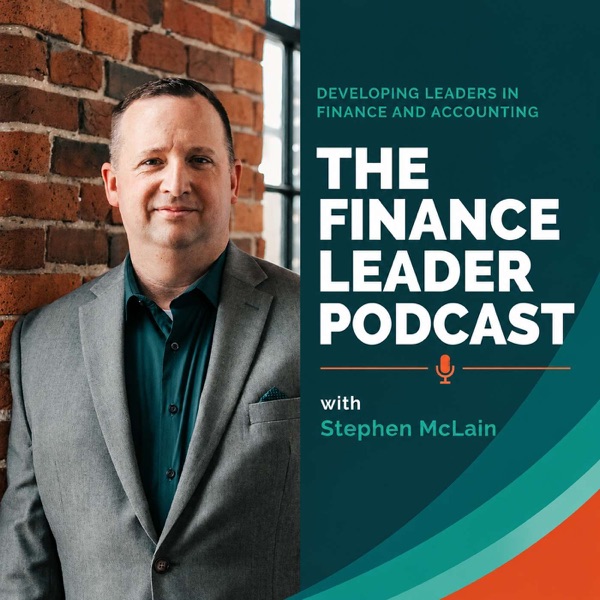
The Finance Leader Podcast
What separates finance professionals who influence strategy from those who only report the numbers?
The answer isn't better spreadsheets. It's developing the judgment, leadership, and business acumen to become a trusted strategic advisor.
The Finance Leader Podcast helps finance and accounting professionals, FP&A teams, controllers, CFOs, business owners, and executive leaders strengthen the connection between finance, operations, and strategy. Episodes provide practical insights, proven frameworks, and real-world lessons to help you improve decision making, develop executive presence, build stronger partnerships across the organization, and create measurable business value.
Hosted by Stephen McLain, a retired U.S. Army Finance Officer and corporate FP&A and accounting consultant, the podcast combines military leadership experience with practical corporate finance expertise to help finance professionals lead with greater confidence and strategic impact.
Start with the trailer, then subscribe so you never miss an episode. Thank you!
- Episodes
- 267
- Releases
- Weekly
- Typical length
- 15 min
- On air since
- 2020
- Latest episode
- 6 days ago
Episodes
267 episodes, newest first
-
14 min
The CFO Balancing Act of Cost Discipline versus Investment and Growth
Season 23, Episode 6
Show notes
Episode # 163: Every CFO knows the moment: the numbers say “cut,” the strategy says “invest,” and the business needs both. I walk through how to balance cost discipline with investment and growth without falling into the traps that quietly weaken competitiveness. This is not about trimming budgets for optics. It’s about making deliberate choices that protect financial resilience, fund the priorities that matter, and avoid paying a bigger price later.
We start with a practical definition of cost discipline as ongoing evaluation of whether spending is necessary, effective, and aligned to strategic priorities. I explain why across-the-board cuts can damage customer service, maintenance, talent development, and risk controls, even when they look “fair” on paper. Then we look at the other side of the risk: aggressive investment without tested assumptions can strain cash flow, dilute focus, and leave teams with more initiatives than they can execute.
You’ll also hear a simple cadence for better capital allocation: a strategy-linked, stage-gated review that revisits business cases after the budget is approved. I break down common decision traps, including optimistic forecasts without sensitivity testing, funding projects without accountable owners, and continuing to fund work after evidence no longer supports the original case. You’ll leave with an action checklist to evaluate significant costs and proposed investments using strategic outcomes, owners, assumptions, risks, and the next decision point.
Episode outline:
• The CFO’s balancing act with cost discipline and growth,
• Let’s define cost discipline, and
• Common decision traps.Please connect with me on:
1. Instagram: stephen.mclain
2. Twitter: smclainiii
3. Facebook: stephenmclainconsultant
4. LinkedIn: stephenjmclainiiiFor more resources, please visit Finance Leader Academy: https://www.financeleaderacademy.com/.
Stephen is an experienced Finance Professional and Leader who offers fractional CFO services and development opportunities. Please visit his LinkedIn profile or Finance Leader Academy for more information.
The views and information shared on The Finance Leader Podcast are intended solely for educational and informational purposes. They do not constitute financial, accounting, tax, legal, investment, or other professional advice. Always seek guidance from a qualified professional before making decisions related to your specific circumstances.
-
13 min
How To Use Contribution Margin For Smarter Pricing And Product Mix Decisions
Season 23, Episode 5
Show notes
Episode # 162: Revenue can climb while profit stays stubbornly flat, and the culprit is often hiding in plain sight: contribution margin. We walk through a practical way to think about contribution margin so leaders can see what each product or service truly contributes toward fixed costs and operating profit, and why “best-selling” does not always mean “best for the business.” If you’ve ever approved a discount and later wondered why the results felt underwhelming, this conversation gives you a cleaner lens for making tradeoffs.
If you want a concrete next step, we share an action you can take today: bring accounting, FP&A, and an operating leader together to align definitions, find the biggest margin shifts, and test one operational move with an owner and a review date.
Episode outline:
• What contribution margin tells leaders,
• The roles of FP&A and Accounting with contribution margin, and
• Work with leaders on practical options.Please connect with me on:
1. Instagram: stephen.mclain
2. Twitter: smclainiii
3. Facebook: stephenmclainconsultant
4. LinkedIn: stephenjmclainiiiFor more resources, please visit Finance Leader Academy: https://www.financeleaderacademy.com/.
Stephen is an experienced Finance Professional and Leader who offers fractional CFO services and development opportunities. Please visit his LinkedIn profile or Finance Leader Academy for more information.
The views and information shared on The Finance Leader Podcast are intended solely for educational and informational purposes. They do not constitute financial, accounting, tax, legal, investment, or other professional advice. Always seek guidance from a qualified professional before making decisions related to your specific circumstances.
-
15 min
Improving Restaurant Forecasting with a Driver-Based Process
Season 23, Episode 4
Show notes
Episode # 161: Restaurant forecasting can feel impossible when demand changes fast and yesterday’s playbook stops working. Sales might be steady while traffic quietly drops, or a shift to delivery lifts revenue but creates new labor, inventory, and margin problems. We want forecasts that explain what is happening, not just a number that misses with confidence.
We walk through a driver-based restaurant forecast built on what leaders can manage: traffic, average check, and mix. That means getting painfully clear about definitions like transactions vs guest counts, then showing how pricing, discounts, add-ons, day part, and channel mix move the check. We also dig into why forecasts fail in the first place: treating stockouts and closures like normal demand, assuming last year is automatically comparable, and letting different teams run on different assumptions. If you only measure total sales accuracy, you can miss the real problem and never learn from forecast error.
From there, we talk practical AI for restaurant demand forecasting. A useful machine learning approach can forecast transactions by restaurant, day part, and channel, then estimate check and menu mix to project item quantities for purchasing and prep. Inputs like POS history, menu changes, promotions, loyalty data, weather, and local calendars matter, but testing matters more. We share how to backtest models under realistic conditions and why you should compare AI results to both your current manual forecast and a simple seasonal baseline.
If you want a restaurant forecasting process that improves staffing decisions, reduces waste, and makes promotions less of a gamble, this is for you.
Episode outline:
• Why a dynamic forecast matters more than ever,
• Build the forecast from its critical drivers,
• Develop a more robust forecasting process and continue to improve it.Please connect with me on:
1. Instagram: stephen.mclain
2. Twitter: smclainiii
3. Facebook: stephenmclainconsultant
4. LinkedIn: stephenjmclainiiiFor more resources, please visit Finance Leader Academy: https://www.financeleaderacademy.com/.
Stephen is an experienced Finance Professional and Leader who offers fractional CFO services and development opportunities. Please visit his LinkedIn profile or Finance Leader Academy for more information.
The views and information shared on The Finance Leader Podcast are intended solely for educational and informational purposes. They do not constitute financial, accounting, tax, legal, investment, or other professional advice. Always seek guidance from a qualified professional before making decisions related to your specific circumstances.
-
15 min
Improve Communications Between Finance and Operations: Shared Facts, Better Decisions
Season 23, Episode 3
Show notes
Episode # 160: Quarterly reviews shouldn’t feel like three teams arguing in three different languages, but that’s exactly what happens when operations, FP&A, and accounting aren’t aligned on the basics. We dig into the real source of cross-functional friction: mismatched definitions, different timelines, and metrics that mean one thing to ops and another thing to finance. When each group owns only a slice of the story, leaders end up waiting for separate explanations while the decision deadline keeps moving closer.
We walk through how to build trust with shared facts without forcing everyone into the same system. You’ll hear what “shared facts” actually look like in practice: clear metric definitions, authoritative sources, consistent timing, known limitations, and named data owners. We also cover why timing gaps like orders received vs orders shipped vs orders invoiced can quietly derail decision making, plus how accounting’s role goes far beyond closing the books by ensuring results are recorded consistently and reliably.
Then we get tactical with a simple four-part conversation structure you can use across functions: verified results, operating explanation, business implications, and the most important part, the next step with an owner and a date to check progress. We also reframe performance reviews as shared problem solving conversations with concise prereads, clear separation of results vs causes, and a short list of actions instead of a long list of excuses. Finally, we show how to keep KPIs relevant as strategy and conditions change using a keep, adjust, add, retire approach and practical “guardrails” like balancing productivity with quality.
Episode outline:
• Set clearer communication expectations across operations, FP&A, and accounting,
• Turn team performance reviews into shared problem-solving conversations,
• Keep KPIs relevant as conditions change.Please connect with me on:
1. Instagram: stephen.mclain
2. Twitter: smclainiii
3. Facebook: stephenmclainconsultant
4. LinkedIn: stephenjmclainiiiFor more resources, please visit Finance Leader Academy: https://www.financeleaderacademy.com/.
Stephen is an experienced Finance Professional and Leader who offers fractional CFO services and development opportunities. Please visit his LinkedIn profile or Finance Leader Academy for more information.
The views and information shared on The Finance Leader Podcast are intended solely for educational and informational purposes. They do not constitute financial, accounting, tax, legal, investment, or other professional advice. Always seek guidance from a qualified professional before making decisions related to your specific circumstances.
-
21 min
How FP&A Helps Hospitality Leaders Make Better Daily Decisions
Season 23, Episode 2
Show notes
Empty hotel rooms don’t roll over to next week, and a slow variance deck won’t save tonight’s margin. We dig into what hospitality FP&A should look like when the business needs real-time decisions on staffing, purchasing, pricing, capacity, and guest service, not just reporting after the fact. If you’ve ever stared at “labor is unfavorable” and still didn’t know what to do next, this is built for you.
We start with a simple shift that changes everything: begin with the operational decision. Instead of debating last month’s results, we define the choice a leader must make now, map the operational drivers behind it (departures vs stayovers, room mix, cleaning standards, wage rates), and make assumptions visible so finance and operations can test what’s true. You’ll hear practical examples like scheduling housekeeping for a busy weekend and evaluating whether a promotion improves profitability once you account for discounts, commissions, and the cost to serve.
Then we build a scorecard that connects finance, operations, and the guest experience. Revenue and operating profit matter, but they rarely tell the full story. We talk through hospitality KPIs that actually support action, such as labor cost per occupied room, overtime, rooms ready by check-in, booking pace, staffing gaps, and guest complaints, plus how FP&A can normalize comparisons for workload and wage changes so leaders respond to the right cause.
Finally, we walk through how FP&A turns results into better operating choices using flexible budgets, scenario analysis, and clear recommendations with trade-offs and triggers, then closes the loop by reviewing outcomes and learning.
Episode outline:
• Start with the operational decisions,
• Build a scorecard that connects finance, operations, and the guest experience,
• How FP&A turns financial results into better operating choices.Please connect with me on:
1. Instagram: stephen.mclain
2. Twitter: smclainiii
3. Facebook: stephenmclainconsultant
4. LinkedIn: stephenjmclainiiiFor more resources, please visit Finance Leader Academy: https://www.financeleaderacademy.com/.
Stephen is an experienced Finance Professional and Leader who offers fractional CFO services and development opportunities. Please visit his LinkedIn profile or Finance Leader Academy for more information.
The views and information shared on The Finance Leader Podcast are intended solely for educational and informational purposes. They do not constitute financial, accounting, tax, legal, investment, or other professional advice. Always seek guidance from a qualified professional before making decisions related to your specific circumstances.
-
21 min
How the Future Hospitality FP&A Team Forecasts Demand And Protects Margins
Season 23, Episode 1
Show notes
Episode # 158: A hotel room empty tonight is not “lost demand” on a spreadsheet. It’s gone forever. That one reality makes hospitality one of the clearest places where FP&A has to operate in real time, not on last month’s variance deck.
We start with the big strategic priorities: building demand sensing forecasts that update with signals like booking pace, cancellations, group sales pipelines, local events, weather, transportation constraints, competitor pricing, and digital engagement. Then we connect the dots between pricing strategy and capacity planning, because revenue management only works when it respects service constraints and protects contribution margin. Finally, we get practical about labor planning, where cutting too hard can quietly destroy the guest experience and long-term profitability through slower service, burnout, and turnover.
From hotels and lodging to restaurants, resorts, theme parks, cruise lines, and conference centers, the drivers change but the job stays the same: link operational reality to financial performance so leaders can act faster. We also dig into AI in hospitality FP&A, including where it helps most (forecasting, scenario analysis, anomaly detection, decision support) and what must be in place (data governance, privacy, validation, approval controls, and human accountability).
Episode outline:
• Top strategic hospitality industry priorities,
• How priorities change across hospitality categories,
• Where AI can help the hospitality industry FP&A team.Please connect with me on:
1. Instagram: stephen.mclain
2. Twitter: smclainiii
3. Facebook: stephenmclainconsultant
4. LinkedIn: stephenjmclainiiiFor more resources, please visit Finance Leader Academy: https://www.financeleaderacademy.com/.
Stephen is an experienced Finance Professional and Leader who offers fractional CFO services and development opportunities. Please visit his LinkedIn profile or Finance Leader Academy for more information.
The views and information shared on The Finance Leader Podcast are intended solely for educational and informational purposes. They do not constitute financial, accounting, tax, legal, investment, or other professional advice. Always seek guidance from a qualified professional before making decisions related to your specific circumstances.
-
18 min
A Strong Audit Plan Turns Compliance Into Trust Bonus
Show notes
Bonus episode # 103: If you think “the audit” is just a yearly event, you’re leaving your organization exposed. I’m sharing a replay of The Audit Blueprint, my CFO’s guide to financial integrity, because accurate books and strong internal controls are not box-checking, they’re how you protect trust, prevent asset loss, and keep leaders from making decisions on bad data.
I walk through what a solid audit plan should actually do: validate that transactions are recorded correctly and on time, confirm compliance, and pressure-test the internal control system that stands between your company and fraud, waste, or abuse. We also get specific about the outcomes that matter most to me: unyielding professional ethics, financial accuracy aligned with GAAP and regulatory requirements, and real asset protection across the business. From there, I connect audit to risk assessment and strategy.
Please connect with me on:
1. Instagram: stephen.mclain
2. Twitter: smclainiii
3. Facebook: stephenmclainconsultant
4. LinkedIn: stephenjmclainiiiFor more resources, please visit Finance Leader Academy: https://www.financeleaderacademy.com/.
Stephen is an experienced Finance Professional and Leader who offers fractional CFO services and development opportunities. Please visit his LinkedIn profile or Finance Leader Academy for more information.
The views and information shared on The Finance Leader Podcast are intended solely for educational and informational purposes. They do not constitute financial, accounting, tax, legal, investment, or other professional advice. Always seek guidance from a qualified professional before making decisions related to your specific circumstances.
-
10 min
Small Business Series - Think Like a CEO (Ep 5) Bonus
Show notes
Bonus episode # 102: If you started your business to build something meaningful, here’s the uncomfortable question: are you creating an asset or creating another job for yourself? I’m wrapping up my limited small business series by zooming out from the daily grind and stepping into a CEO mindset, without the corporate fluff. This is about changing how we think so our decisions create a stronger company six and twelve months from now, not just a smoother week.
I break down the difference between the owner-operator perspective and the CEO perspective, then walk through five practical focus areas you can apply immediately. We talk about setting real strategy instead of vague goals, choosing three or four priorities for the next year, and using financial numbers to make better calls on hiring, equipment, marketing, and new products.
We also get real about leverage: stopping the habit of doing everything yourself, delegating or outsourcing intelligently, and building basic systems so your business doesn’t depend on what’s stored in your head.
Please connect with me on:
1. Instagram: stephen.mclain
2. Twitter: smclainiii
3. Facebook: stephenmclainconsultant
4. LinkedIn: stephenjmclainiiiFor more resources, please visit Finance Leader Academy: https://www.financeleaderacademy.com/.
Stephen is an experienced Finance Professional and Leader who offers fractional CFO services and development opportunities. Please visit his LinkedIn profile or Finance Leader Academy for more information.
The views and information shared on The Finance Leader Podcast are intended solely for educational and informational purposes. They do not constitute financial, accounting, tax, legal, investment, or other professional advice. Always seek guidance from a qualified professional before making decisions related to your specific circumstances.
-
10 min
Small Business Series - A Simple Financial Scorecard For Small Business Health (Ep 4) Bonus
Show notes
Bonus Episode #101: If someone asked whether your business is financially healthy, could you answer without guessing? We walk through five numbers that cut through the noise and tell you what’s really happening, even when sales are up and your bank account looks fine.
We start with revenue, but we don’t stop there. We show you how to compare revenue month over month and year over year, and why “more sales” can still mean a weaker business if it costs too much to deliver. From there, we break down gross profit margin in plain language and connect it directly to pricing, discounts, labor, materials, vendor costs, and product or service mix. The goal is simple: understand how much you keep from every dollar you sell.
Next, we move to net profit margin to translate performance into a clear bottom line view, then zoom in on cash available so you can see your real short term flexibility after payroll, taxes, rent, debt payments, and vendor bills. We also explain why a rolling cash flow forecast beats relying on a bank balance snapshot. Finally, we highlight the break even point, the metric many owners skip, and the one that quickly reveals whether your sales goal is realistic or a structural problem.
If you want a practical small business finance framework you can review every month, this is your scorecard. Subscribe for more, share this with a business owner who needs it, and leave a review, then tell us which of the five numbers you’re going to track first.
Please connect with me on:
1. Instagram: stephen.mclain
2. Twitter: smclainiii
3. Facebook: stephenmclainconsultant
4. LinkedIn: stephenjmclainiiiFor more resources, please visit Finance Leader Academy: https://www.financeleaderacademy.com/.
Stephen is an experienced Finance Professional and Leader who offers fractional CFO services and development opportunities. Please visit his LinkedIn profile or Finance Leader Academy for more information.
The views and information shared on The Finance Leader Podcast are intended solely for educational and informational purposes. They do not constitute financial, accounting, tax, legal, investment, or other professional advice. Always seek guidance from a qualified professional before making decisions related to your specific circumstances.
-
10 min
Small Business Series - A Practical Pricing Checkup, Are You Charging Enough (Ep 3) Bonus
Show notes
Bonus episode # 100: You can be fully booked, gaining customers, and still feel like the business never throws off real money and pricing is often the reason. We take a hard look at the question many small business owners avoid: what if you are not charging enough for what you already sell? When pricing is off, it quietly hits revenue, profit margin, and cash flow all at once, and “more sales” can actually magnify the damage.
The goal is not to charge the highest price possible, but to set a sustainable price that matches customer value, market conditions, and the profitability your business needs to grow. If this helped, subscribe, share it with a business owner friend, and leave a review with the pricing challenge you are facing right now.
Please connect with me on:
1. Instagram: stephen.mclain
2. Twitter: smclainiii
3. Facebook: stephenmclainconsultant
4. LinkedIn: stephenjmclainiiiFor more resources, please visit Finance Leader Academy: https://www.financeleaderacademy.com/.
Stephen is an experienced Finance Professional and Leader who offers fractional CFO services and development opportunities. Please visit his LinkedIn profile or Finance Leader Academy for more information.
The views and information shared on The Finance Leader Podcast are intended solely for educational and informational purposes. They do not constitute financial, accounting, tax, legal, investment, or other professional advice. Always seek guidance from a qualified professional before making decisions related to your specific circumstances.
-
9 min
Small Business Series - Why Profitable Businesses Still Run Out of Cash (Ep 2) Bonus
Show notes
Bonus episode # 99: Your P&L says you’re profitable, but the bank account keeps hovering near empty, so what’s actually happening? I walk through the gap between profit and cash and why small businesses can look healthy on paper while still running out of money. Cash flow is the fuel that keeps operations moving, and when you don’t manage the timing of cash in and cash out, even a “good” month can turn into a scramble to cover payroll, rent, taxes, and loan payments.
Please connect with me on:
1. Instagram: stephen.mclain
2. Twitter: smclainiii
3. Facebook: stephenmclainconsultant
4. LinkedIn: stephenjmclainiiiFor more resources, please visit Finance Leader Academy: https://www.financeleaderacademy.com/.
Stephen is an experienced Finance Professional and Leader who offers fractional CFO services and development opportunities. Please visit his LinkedIn profile or Finance Leader Academy for more information.
The views and information shared on The Finance Leader Podcast are intended solely for educational and informational purposes. They do not constitute financial, accounting, tax, legal, investment, or other professional advice. Always seek guidance from a qualified professional before making decisions related to your specific circumstances.
-
7 min
Small Business Series - Why Sales Growth Can Still Feel Like Struggle (Ep 1) Bonus
Show notes
Bonus episode # 98: Revenue can be up and your stress can still be up right along with it. If your business is selling more but cash feels tight, your credit card is creeping higher, and you cannot explain where the money went, we are looking at the wrong scoreboard.
We walk through the difference between revenue, gross profit, and net profit in plain language, then use a simple real-world example to show how “great sales” can turn into surprisingly small profit once direct costs and overhead hit. From underpricing and discounting to growth-driven expenses like contractors, software, ads, inventory, and equipment, we lay out the most common reasons sales volume can hide weak margins. We also call out the hidden costs that quietly erase your wins, including revisions, admin time, payment processing fees, travel, rework, and unpaid consultations.
Please connect with me on:
1. Instagram: stephen.mclain
2. Twitter: smclainiii
3. Facebook: stephenmclainconsultant
4. LinkedIn: stephenjmclainiiiFor more resources, please visit Finance Leader Academy: https://www.financeleaderacademy.com/.
Stephen is an experienced Finance Professional and Leader who offers fractional CFO services and development opportunities. Please visit his LinkedIn profile or Finance Leader Academy for more information.
The views and information shared on The Finance Leader Podcast are intended solely for educational and informational purposes. They do not constitute financial, accounting, tax, legal, investment, or other professional advice. Always seek guidance from a qualified professional before making decisions related to your specific circumstances.
-
21 min
Developing the FP&A Training Plan - Building a More Strategic Finance Capability
Season 22, Episode 7
Show notes
Episode # 157: We walk through how we build an FP&A training plan that develops individual talent while raising the effectiveness of the whole finance organization. That starts with a formal development strategy, not ad hoc learning squeezed in when time allows. We talk about the capabilities that separate high-performing FP&A teams from strong reporting teams: business acumen, critical thinking, stakeholder management, leadership, decision support, and financial storytelling that makes recommendations clear and usable.
We also get practical about how to turn analysts into trusted strategic business partners. That means immersing FP&A in the functions they support, teaching curiosity and root-cause thinking, and creating real exposure to strategic planning, capital decisions, pricing, product discussions, and post-implementation reviews. Along the way, we address how to build a culture of continuous improvement through peer learning and safe experimentation with automation and AI in FP&A, plus how to measure training success by impact, not courses completed.
Episode outline:
• Why FP&A needs a formal development plan,
• Our goal is to develop strategic business partners,
• Creating a culture of continuous improvement,
• Measuring training success.Please connect with me on:
1. Instagram: stephen.mclain
2. Twitter: smclainiii
3. Facebook: stephenmclainconsultant
4. LinkedIn: stephenjmclainiiiFor more resources, please visit Finance Leader Academy: https://www.financeleaderacademy.com/.
Stephen is an experienced Finance Professional and Leader who offers fractional CFO services and development opportunities. Please visit his LinkedIn profile or Finance Leader Academy for more information.
The views and information shared on The Finance Leader Podcast are intended solely for educational and informational purposes. They do not constitute financial, accounting, tax, legal, investment, or other professional advice. Always seek guidance from a qualified professional before making decisions related to your specific circumstances.
-
22 min
SWOT Analysis for a Competitive Strategic Advantage
Season 22, Episode 6
Show notes
Episode # 156: Most SWOT analyses fail for one simple reason: they end as a four-quadrant chart instead of becoming a set of decisions. I’m breaking down how to run a strategic SWOT assessment that actually changes what you do next so you can outperform competitors over the next three to five years, not just document what you already know.
We walk through what SWOT analysis is really for in modern strategic planning: clarifying your competitive position, surfacing vulnerabilities early, spotting emerging market trends, and choosing investment priorities when capital, time, and leadership attention are limited. I also explain why SWOT can’t be a solo assignment. It needs executive sponsorship and real input across the business, from sales and marketing to operations, IT, HR, legal, accounting, and finance, so you get an honest view of strengths, weaknesses, opportunities, and threats.
From a finance leader perspective, I share how CFOs and FP&A teams can anchor the process in data instead of opinion, using profitability analysis, cash flow trends, ROIC, retention, productivity, and operating metrics to test assumptions. We dig into scenario planning and sensitivity analysis to model uncertainty, then cover how to convert SWOT themes into a strategy plan with clear owners, resources, milestones, KPIs, and business outcomes. Finally, we talk about where AI can accelerate research, competitor benchmarking, and trend detection without replacing executive judgment.
Episode outline:
• Why Every Organization Needs a Strategic SWOT assessment,
• Building the Right SWOT Analysis Team and Value-added Process,
• Converting your SWOT assessment Into a Strategy plan.Please connect with me on:
1. Instagram: stephen.mclain
2. Twitter: smclainiii
3. Facebook: stephenmclainconsultant
4. LinkedIn: stephenjmclainiiiFor more resources, please visit Finance Leader Academy: https://www.financeleaderacademy.com/.
Stephen is an experienced Finance Professional and Leader who offers fractional CFO services and development opportunities. Please visit his LinkedIn profile or Finance Leader Academy for more information.
The views and information shared on The Finance Leader Podcast are intended solely for educational and informational purposes. They do not constitute financial, accounting, tax, legal, investment, or other professional advice. Always seek guidance from a qualified professional before making decisions related to your specific circumstances.
-
15 min
Overcome the AI Overwhelm
Season 22, Episode 5
Show notes
Episode # 155: AI can feel like it’s coming for your job while you’re still trying to close the month. If you’ve felt overwhelmed by artificial intelligence, unsure which tools matter, or worried you’re falling behind, we’re going to slow it down and make it practical, especially for finance leaders, FP&A, accounting, and anyone responsible for decisions, controls, and credibility.
We start with the real reason AI creates anxiety: finance professionals build careers by becoming experts, but AI changes too fast to “master” in the old way. I explain why information overload fuels fear, what AI can do well today, and where human judgment remains essential for critical decisions and strategic leadership. We also talk about responsible AI use, including following organizational policies so you don’t accidentally expose sensitive company information.
Then we shift the mindset that unlocks confidence: don’t start with AI, start with the business problem. I share the questions I want every finance team asking, from repetitive work that wastes time to reports nobody reads to decisions that need better insight. From there, I walk through a simple confidence-building progression: awareness, personal productivity, financial analysis, and finally using AI to elevate your role as a true strategic partner, not just someone who automates reporting.
Episode outline:
• Why AI creates so much anxiety,
• Shift your mindset from technology to business problems, and
• Build your confidence in using Artificial Intelligence effectively.Please connect with me on:
1. Instagram: stephen.mclain
2. Twitter: smclainiii
3. Facebook: stephenmclainconsultant
4. LinkedIn: stephenjmclainiiiFor more resources, please visit Finance Leader Academy: https://www.financeleaderacademy.com/.
Stephen is an experienced Finance Professional and Leader who offers fractional CFO services and development opportunities. Please visit his LinkedIn profile or Finance Leader Academy for more information.
The views and information shared on The Finance Leader Podcast are intended solely for educational and informational purposes. They do not constitute financial, accounting, tax, legal, investment, or other professional advice. Always seek guidance from a qualified professional before making decisions related to your specific circumstances.
-
14 min
How Agile Strategy Can Transform FP&A from a Reporting Function to a Strategic Business Partner
Season 22, Episode 4
Show notes
Episode # 154: Most FP&A teams aren’t short on effort they’re short on time to think. When the calendar is dominated by budgets, monthly reporting, variance explanations, and forecast refreshes, finance can end up reacting to problems after they’ve already hit results. That’s risky in a world of rapid market shifts, customer behavior changes, supply chain disruption, and nonstop technology transformation.
We walk through how agile strategy applies to financial planning and analysis without throwing out long-term goals. The difference is execution: shorter planning cycles, frequent reassessment, rolling forecasts, and continuous scenario analysis that keep assumptions current. I explain why traditional FP&A models become reactive, especially when finance is separated from sales, marketing, operations, HR, and supply chain and only sees emerging issues once they appear in the financial statements.
Episode outline:
• What is Agile Strategy?
• Why traditional FP&A can become reactive, and
• Let’s examine some key agile principles.Please connect with me on:
1. Instagram: stephen.mclain
2. Twitter: smclainiii
3. Facebook: stephenmclainconsultant
4. LinkedIn: stephenjmclainiiiFor more resources, please visit Finance Leader Academy: https://www.financeleaderacademy.com/.
Stephen is an experienced Finance Professional and Leader who offers fractional CFO services and development opportunities. Please visit his LinkedIn profile or Finance Leader Academy for more information.
The views and information shared on The Finance Leader Podcast are intended solely for educational and informational purposes. They do not constitute financial, accounting, tax, legal, investment, or other professional advice. Always seek guidance from a qualified professional before making decisions related to your specific circumstances.
-
18 min
Start Shaping Strategic Decisions Instead of Only Reporting Financial Results, Deliver Real Impact to Senior Leaders
Season 22, Episode 3
Show notes
Episode # 153: Strategy rarely changes because of a perfect variance report. It changes when someone connects the numbers to what customers feel, what operations can deliver, and which levers will protect margin and growth. We dig into how FP&A analysts and staff accountants can stop just reporting results and start shaping what happens next by diagnosing drivers, partnering across functions, and communicating like executives.
We start with a mindset reset: reporting performance is not the same as shaping performance. You will hear practical ways to move from scorekeeper to strategist, including turning variance reports into conversations, using price‑volume‑mix to explain revenue shifts, and running simple scenario and sensitivity analyses
If you are ready to think and operate at a higher level, start building the CFO mindset now: keep technical excellence, expand business acumen, and practice clear, decisive storytelling that earns influence.
Episode outline:
• Shift from scorekeeper to strategist,
• Build credibility by understanding the business beyond finance, and
• Communicate like an executive so your analysis actually drives action.Please connect with me on:
1. Instagram: stephen.mclain
2. Twitter: smclainiii
3. Facebook: stephenmclainconsultant
4. LinkedIn: stephenjmclainiiiFor more resources, please visit Finance Leader Academy: https://www.financeleaderacademy.com/.
Stephen is an experienced Finance Professional and Leader who offers fractional CFO services and development opportunities. Please visit his LinkedIn profile or Finance Leader Academy for more information.
The views and information shared on The Finance Leader Podcast are intended solely for educational and informational purposes. They do not constitute financial, accounting, tax, legal, investment, or other professional advice. Always seek guidance from a qualified professional before making decisions related to your specific circumstances.
-
16 min
When FP&A Translates Drivers, Strategy Finally Moves
Season 22, Episode 2
Show notes
Episode # 152: We show how finance becomes a real partner to operations by translating numbers into drivers, embedding FP&A in decisions before they are made, and aligning metrics and incentives to strategy. The result is faster execution, fewer surprises, and teams that own outcomes.
• translating financials into operational drivers
• replacing data dumps with clear operational stories
• partnering early to frame trade‑offs and scenarios
• aligning metrics, goals, and incentives to strategy
• shifting from metric protection to outcome ownership
• strengthening accountability while deepening trust
• practical questions to assess team impact
• getting out of the stovepipe to join project teamsPlease connect with me on:
1. Instagram: stephen.mclain
2. Twitter: smclainiii
3. Facebook: stephenmclainconsultant
4. LinkedIn: stephenjmclainiiiFor more resources, please visit Finance Leader Academy: https://www.financeleaderacademy.com/.
Stephen is an experienced Finance Professional and Leader who offers fractional CFO services and development opportunities. Please visit his LinkedIn profile or Finance Leader Academy for more information.
The views and information shared on The Finance Leader Podcast are intended solely for educational and informational purposes. They do not constitute financial, accounting, tax, legal, investment, or other professional advice. Always seek guidance from a qualified professional before making decisions related to your specific circumstances.
-
16 min
How Clear Priorities, Trust, And Timely Decisions Transform Performance
Season 22, Episode 1
Show notes
Episode # 151: Start the year with leadership that actually moves the needle. We walk through the strategic actions that make teams faster, clearer, and more resilient—without adding noise.
We begin with the culture you model when pressure hits, because people copy what you do, not what you say. Calm, integrity, and active listening create psychological safety and higher standards at the same time. From there, we narrow in on priorities: how to publish a short, ranked list, tie it to forecasts and analysis, and adjust in real time so finance and accounting stop guessing. You’ll hear practical ways to align tasks to business objectives using specified, implied, and essential work—an approach that reduces miscommunication and keeps execution honest.
Governance becomes your engine for speed. We outline how to set clear escalation thresholds, run effective risk and operating reviews, and reward early warnings over last‑minute heroics. Then we tackle direct engagement and decision timeliness: structured operating rhythms, skip‑level listening, and defined decision rights that accelerate choices without micromanaging. The throughline is clarity—who decides, what matters now, and why trade‑offs are worth it—so people can move with confidence.
By the end, you’ll have a checklist for today: model one cultural behavior, publish your priorities, and set a simple escalation path. Whether you lead FP&A, accounting, or the broader enterprise, these moves build trust and momentum that last beyond January.
Episode outline:
• Set a positive team culture,
• Establish clear priorities, transparency, and accountability,
• Encourage risk issue escalation with good governance, and
• Lead with more direct engagement and better decision timeliness.Please connect with me on:
1. Instagram: stephen.mclain
2. Twitter: smclainiii
3. Facebook: stephenmclainconsultant
4. LinkedIn: stephenjmclainiiiFor more resources, please visit Finance Leader Academy: https://www.financeleaderacademy.com/.
Stephen is an experienced Finance Professional and Leader who offers fractional CFO services and development opportunities. Please visit his LinkedIn profile or Finance Leader Academy for more information.
The views and information shared on The Finance Leader Podcast are intended solely for educational and informational purposes. They do not constitute financial, accounting, tax, legal, investment, or other professional advice. Always seek guidance from a qualified professional before making decisions related to your specific circumstances.
-
8 min
Finance Leadership, Beyond The Numbers
Season 21, Episode 6
Show notes
Episode # 150: Leadership in finance isn’t a title—it’s a practice. We dive into what turns any role in accounting, FP&A, or audit into a force for strategic impact, starting with the four pillars that anchor meaningful change: influence, grow your people, deliver results, and see the future. Along the way, we unpack how to turn data into decisions, build trust with senior leaders, and convert operational friction—like a chaotic month end—into a reliable, learning-driven process.
We start by reframing influence as earned alignment. You’ll hear how to show up with validated numbers, a sharp point of view, and a concise ask that respects executive time. Then we get practical about developing talent: mentoring for strategic thinking, cross-training on the business model, and running blameless reviews that raise the team’s ceiling. Execution takes center stage with tactics to speed the close, improve forecast accuracy, and translate variances into action. Finally, we step into forward-looking leadership—tracking external signals that matter, setting crisp scenarios, and aligning decisions to both profitability and purpose.
If you’re ready to elevate your impact, this conversation will help you become the partner your organization needs: people-centered, data-driven, and ethically grounded.
Please connect with me on:
1. Instagram: stephen.mclain
2. Twitter: smclainiii
3. Facebook: stephenmclainconsultant
4. LinkedIn: stephenjmclainiiiFor more resources, please visit Finance Leader Academy: https://www.financeleaderacademy.com/.
Stephen is an experienced Finance Professional and Leader who offers fractional CFO services and development opportunities. Please visit his LinkedIn profile or Finance Leader Academy for more information.
The views and information shared on The Finance Leader Podcast are intended solely for educational and informational purposes. They do not constitute financial, accounting, tax, legal, investment, or other professional advice. Always seek guidance from a qualified professional before making decisions related to your specific circumstances.
Careers lists
More Careers shows picked out from the charts












More in Careers
Placed highest on Apple Podcasts' Careers chart right now