Podcast
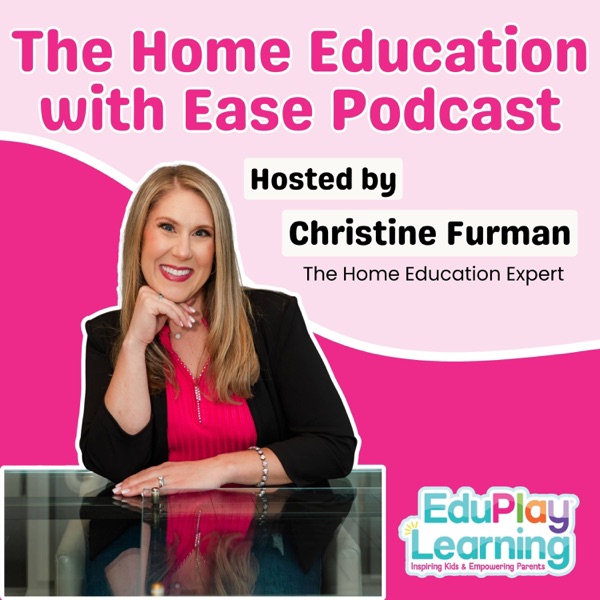
The Home Education with Ease Podcast
Let's redefine what it means to educate our kids at home, ditch the stress, embrace the joy of learning, and set your family up for a lifetime of success!
Welcome to The Home Education with Ease Podcast, I’m your host, Christine Furman, a certified Elementary and Special Education teacher, homeschool mom, creator of the EduPlay Learning method and curriculum, Best-Selling Co-Author and founder of EduPlay® Learning and Momspiration412® Worldwide. It’s my mission to help you raise lifelong learners and embrace a holistic approach to education at home.
I believe learning truly happens all the time. From the moment our children are born, we’re shaping their education through meaningful connections, real-world experiences, and a variety of learning methods.
Each week I share practical strategies, hands-on learning activities, and resources to help you meet the unique needs of every learner in your family. Whether you’re a stay-at-home mom, a business owner, or balancing work and homeschool, I would love to help you build a flexible, enriching education for your child and connect you with a community that values education just as much as you do.
Subscribe for more resources on all things Parenting, Homeschool, Holistic health & ways to Make Learning FUN! Leave a Review and Share with a Friend to help grow the Home Education with Ease Mission. It's allowed to be easy and we can help!
- Episodes
- 149
- Releases
- Weekly
- Typical length
- 40 min
- On air since
- 2024
- Latest episode
- 2 days ago
Episodes
149 episodes, newest first
-
34 min
Are We Teaching Kids to Pass a Test or Actually Learn? Ep. 149
Episode 149
Show notes
149: Are We Teaching Kids to Pass a Test or Actually Learn?
Release Date: To be confirmed
Show Notes
Are our children truly understanding what they're learning, or are we simply preparing them to pass the next test?
In this week's episode of Home Education with Ease, Christine Furman, former classroom and special education teacher, homeschool mom, and home education expert, shares her concerns about the growing emphasis on standardized testing and what it means for our children's education.
Drawing from her years in the classroom and her current experience supporting students, Christine discusses how the pressure to perform on assessments can sometimes overshadow what matters most: building strong foundational skills and helping children become confident, independent learners.
From lengthy online reading comprehension passages to children relying on skip counting instead of developing multiplication fact fluency, Christine shares real examples of where children may be moving forward academically without fully understanding essential skills.
She also explores the important role of assessments, why technology should remain a tool rather than replace meaningful instruction, and how parents can advocate for their children when something isn't working.
Whether your children attend traditional school or you're homeschooling, this conversation will encourage you to look beyond grades and test scores and focus on what your child truly understands.
Because education isn't about checking boxes or keeping up with a pacing guide. It's about meeting children where they are, strengthening their foundations, and equipping them with skills they'll carry throughout their lives.
Join the Conversation
Head over to the Home Education with Ease Facebook Group and answer this week's question:
• Do you feel children are being taught for understanding or simply being prepared for the next test?
Share your answers with the community, ask questions, or DM Christine! I'd love to hear your perspective, whether you homeschool or your children attend traditional school.
Takeaways
1. Assessments should guide instruction, not drive it. Testing can help identify what children understand and where they need additional support, but preparing for an assessment shouldn't become the entire focus of learning.
2. Strong foundational skills make future learning easier. Reading, writing, addition, subtraction, multiplication, and division are essential building blocks that help children approach more advanced concepts with confidence.
3. Understanding comes before moving on. Just because a child has completed a lesson doesn't necessarily mean they've mastered the skill. Sometimes slowing down, revisiting concepts, and teaching in a different way makes all the difference.
4. Technology is a tool, not a replacement for meaningful learning. Online programs and assessments can be valuable, but children also benefit from books, paper and pencil, hands-on activities, meaningful conversations, and real-life experiences.
5. Parents are their children's greatest advocates. Whether homeschooling or working alongside classroom teachers, parents can ask questions, identify learning gaps, and help children receive the support they need.
Quotes
"I want them to be problem solvers. I want them to have critical thinking skills. I want them to know where to go to find information."
— Christine Furman
"We are taking these skills, and instead of teaching to the test, we are building a strong foundation."
— Christine Furman
"Let the assessments be the guide. Okay. Instead of the whole purpose for teaching."
— Christine Furman
"But your child is who you're teaching. Keep that in mind. They are the most important thing."
— Christine Furman
Resources & Links
• EduPlay® Learning Academy: Personalized, meaningful, hands-on learning experiences designed to meet children where they are and strengthen foundational skills.
• IXL: IXL Learning — A supplemental tool Christine uses to practice and monitor specific skills.
• Home Education with Ease Facebook Group : Join the community to continue the conversation about assessments, foundational skills, and meaningful learning.
• EduPlay® Learning: https://eduplaylearning.com/
• Christine Furman: https://christinefurman.com/
• Connect with Christine: Facebook or Instagram
• Previous Episode 148: Continue the conversation about technology, screen time, and its role in children's learning. -
41 min
Are Screens Replacing Childhood? What Every Parent Should Consider Ep. 148
Episode 148
Show notes
Have you ever handed your child a phone or tablet because you just needed a few minutes to get something done?
I HAVE! And friend, there is absolutely no judgment here!
But how often are we reaching for technology without even realizing it?
This week on the Home Education with Ease Podcast, I'm continuing our conversation about technology following last week's interview with children's author Rebecca Shinsky.
As a mom and educator, I have some growing concerns about how technology is being used in our children's everyday lives, from video games and educational television to the increasing use of computers for assessments in schools.
We're talking about why video games can be so difficult for kids to put down, how seemingly harmless screen time can become a habit, and why it's important to consider what our children might be missing when they're constantly entertained by a device.
I also share some personal experiences with my own kids, including how we've had to adjust our family's technology boundaries as they've gotten older.
And we're diving into something that's especially close to my heart: the importance of hands-on learning and making sure we're assessing what children actually know, not simply how well they navigate technology.
We'll discuss practical ways to reduce unnecessary screen time, create predictable boundaries, encourage independence, and give our children meaningful alternatives to video games, television, and tablets.
This conversation isn't about eliminating technology or making anyone feel guilty.
It's about awareness, intentional choices, and raising children who are confident, independent, and capable of connecting with the world around them.
Because technology can be an incredible tool, but it shouldn't replace the meaningful learning experiences our kids need.
Join the Conversation:
Head over to the Home Education with Ease Facebook Group and answer this week's questions:
• Do you think technology is helping our kids become better learners, or are they becoming too dependent on screens?
Share your answer with the community, ask questions, or DM Christine!
Takeaways:
1. Screen time can become a habit before we realize it.
Whether it's watching a movie during a short car ride, playing a game while waiting, or reaching for a tablet during downtime, technology can gradually become our children's default form of entertainment. Taking inventory of when and why screens are being used is an important first step.
2. Video games can be especially difficult for children to stop playing.
Levels, rewards, achievements, and opportunities to connect with friends can make gaming highly engaging. Setting boundaries, understanding the games our children play, and providing natural stopping points can help families develop healthier habits.
3. Educational content doesn't replace real-life learning.
Even when a television show is educational, children still need opportunities to play, move, create, communicate, solve problems, and explore the world around them.
4. The way children are assessed matters.
Computer-based assessments can introduce additional demands beyond the academic skills being measured. Parents should pay attention to whether the assessment format allows their child to demonstrate what they actually understand and advocate when additional support is needed.
5. Healthy technology habits begin with intentional boundaries and meaningful alternatives.
Creating screen-free routines, modeling appropriate technology use, communicating expectations, and offering hands-on activities can help children build patience, emotional regulation, independence, and real-life skills.
Quotes:
Christine Furman:
"Pay attention to where the screen time creeps in."
Christine Furman:
"Am I just giving them the phone because it's easy? Or are we being intentional with it?"
Christine Furman:
"Our kids need these opportunities. They need them to develop patience, emotional regulation, independence, and ability to entertain themselves without relying on a device."
Christine Furman:
"If this is affecting their learning, go talk to the school."
Christine Furman:
"Let's raise our kids to use it wisely, that can entertain themselves and connect with others."
Resources & Links:
Connect with Christine:
• EduPlay® Learning: https://eduplaylearning.com/
• Christine Furman: https://christinefurman.com/
• Home Education with Ease Facebook Group
• Personalized home education support, hands-on learning resources, and EduPlay® activitiesRelated Podcast Episode:
• Episode 147 — Is Technology Taking Over Childhood? Raising Kids with Healthy Screen Habits featuring Rebecca Shinsky
Research and additional resources:
• World Health Organization — Gaming Disorder: https://www.who.int/standards/classifications/frequently-asked-questions/gaming-disorder
• American Academy of Pediatrics — HealthyChildren.org: https://www.healthychildren.org/
• Common Sense Media — Reviews and guidance for games, shows, and technology: https://www.commonsensemedia.org/
• Van der Weel & Van der Meer (2024) — Handwriting but Not Typewriting Leads to Widespread Brain Connectivity: https://doi.org/10.3389/fpsyg.2023.1219945Coming Next: A deeper conversation about standardized testing, teaching to the test, and how we can better support our children's foundational academic skills.
-
47 min
Is Technology Taking Over Childhood? Raising Kids with Healthy Screen Habits with Rebecca Shinsky Ep. 147
Episode 147
Show notes
How much technology is too much for our kids? And how can we help them develop healthy habits in a world where screens are everywhere?
This week on the Home Education with Ease Podcast, I'm joined by children's author and mom of four, Rebecca Shinsky, for a conversation that I think every parent needs to hear!
Rebecca is the author of Techie Tess Takes a Rest and Bucktooth Becky and Her Silly Headed Siblings. Her mission is to help children develop confidence, self-worth, and healthy habits through meaningful stories.
We talked about the growing role technology plays in our children's lives, how screen time can affect family routines, and why it's so important to begin conversations about healthy technology habits while our children are young.
I even shared a personal experience with my own kids when I noticed how differently our morning went after allowing them to start the day watching television.
Rebecca shared how her family approaches delaying smartphones, setting social media boundaries, and creating opportunities for technology-free family time.
We also discussed something I think is SO important: Our kids are watching us!
If we're constantly checking our phones, responding to notifications, or scrolling through social media, what are we teaching our children about technology?
But this conversation isn't about eliminating technology altogether.
It's about helping our children understand that technology is a TOOL, not something that needs to consume their time, attention, or relationships.
From simple screen-free activities and family game nights to teaching digital citizenship and advocating for changes in schools, we shared practical ways families can be more intentional.
Whether your children are toddlers, elementary-aged, or teenagers, I hope this conversation encourages you to look at your family's technology habits and consider how you can create more opportunities for meaningful learning and connection.
Join the Conversation:
Head over to the Home Education with Ease Facebook Group and answer this week's question:
• At what age do you think children should have their own smartphone?
Share your answers with the community, ask questions, or DM Christine!
Takeaways:
1. Start conversations about technology early.
Rebecca encourages parents to begin teaching healthy technology habits while children are young. Books, conversations, and everyday experiences can help children understand why boundaries matter.
2. Our children learn from what we model.
It's not just about how much time our kids spend on devices. We also need to consider our own habits. Putting our phones away, being present, and setting healthy boundaries ourselves can reinforce the lessons we're teaching.
3. Technology should be a tool, not the center of childhood.
Technology offers wonderful opportunities for learning, communication, and connection. But children also need time to play, move, explore, develop friendships, and enjoy activities away from screens.
4. Small changes can create meaningful family connections.
Keeping a deck of cards in your bag, playing games after dinner, taking walks, or scheduling technology-free time can provide alternatives to reaching for a device.
5. Be intentional about introducing smartphones and social media.
Rebecca shared how her family delays personal smartphones, discusses screen time regularly, and adjusts boundaries as her children grow. She also discussed how parents worked with her local school district to change its cellphone policies.
Quotes:
Christine Furman:
"I think the biggest factor there is that communication that we have with our children, right?"
Rebecca Shinsky:
"I think the biggest key is probably being deliberate about the choices that you're making"
Christine Furman:
"And again, it's that connection that we have as a family, you know."
Rebecca Shinsky:
"no, my attention's not for sale."
Rebecca Shinsky:
"As a parent, first look at yourself and what you're doing so that you can best model for your children"
Resources & Links:
Connect with Christine:
• EduPlay® Learning: https://eduplaylearning.com/
• Christine Furman: https://christinefurman.com/
• Home Education with Ease Facebook GroupConnect with Rebecca Shinsky:
• Website: https://rebeccashinskyauthor.com/
• Instagram: @rebeccashinskyauthor
• Children's book: Techie Tess Takes a Rest
• Children's book: Bucktooth Becky and Her Silly Headed SiblingsAdditional resources discussed:
• Common Sense Media: https://www.commonsensemedia.org/
• Wait Until 8th: https://www.waituntil8th.org/
• Digital Citizenship Week
• Screen-free family activities, including card games, board games, outdoor play, and family walks. -
42 min
Are We Expecting Too Much from Our Kids? Education in Germany vs. the U.S. Ep. 146
Episode 146
Show notes
What if some of the things we consider essential to early education aren't actually what our children need most?
What if more play, more movement, more time outdoors, and less academic pressure could make a meaningful difference in how our children learn and grow?
This week on the Home Education with Ease Podcast, I'm joined by Jana, a mom of two, military spouse, and business owner who was born in the Czech Republic, grew up in Germany, and is now raising her children in the United States.
We had such an interesting conversation about the differences between education in Germany and the United States, and I found myself thinking about how much pressure we sometimes place on our kids to meet certain milestones at certain ages.
Jana shared her experiences growing up in Germany, where her early childhood education emphasized play, outdoor exploration, creativity, and storytelling before formal academics began.
We talked about shorter school days, learning to read, the importance of movement, and why we need to recognize that every child develops and learns differently.
But our conversation went beyond education.
We also discussed the challenges of motherhood, maternity leave, finding community, screen time, sleep, attention and focus, and Jana's personal experience advocating for her son after his ADHD diagnosis and discovering concerns about his airway and sleep.
One of the biggest reminders from this conversation?
Our children are individuals. And instead of focusing only on what they should be doing at a certain age, we need to understand what they actually need to thrive.
Whether your children attend traditional school, homeschool, or are just beginning their educational journey, I hope this conversation encourages you to ask questions, embrace meaningful learning experiences, and continue advocating for your children.
Join the Conversation:
Head over to the Home Education with Ease Facebook Group and answer this week's question:
• Do you feel like there's more pressure on young kids academically today than when we were growing up?
Share your answers with the community, ask questions, or DM Christine!
Takeaways:
1. Play is an important part of early childhood education.
Jana described how play, outdoor exploration, art, and storytelling were central to her early experiences in Germany. Children can develop foundational skills through meaningful experiences without every activity becoming a formal lesson.
2. Every child develops and learns differently.
Children enter school with different experiences, abilities, and readiness levels. Instead of automatically labeling children as behind, we should focus on understanding their individual needs and providing appropriate support.
3. Movement and outdoor experiences deserve a place in children's daily routines.
From walking to school to spending time outside, Jana shared how movement was incorporated into everyday life. We discussed why children need opportunities to move, explore, and develop independence.
4. Supporting a struggling child often means asking more questions.
Jana shared her family's experience exploring her son's attention, sleep, and breathing concerns. The conversation highlighted the value of professional evaluations, second opinions, and considering a child's overall well-being alongside academic performance.
5. Moms need community and encouragement, too.
Raising children isn't always easy. Having trusted people to talk to, share experiences with, and lean on can make a meaningful difference.
Quotes:
Christine Furman:
"But my approach to it is never forcing it. It's very enjoyable. It's very fun, you know."
Jana:
"They at least have the chance to really fall in love with it, right? With the story time, instead of being already like trained to having to analyze it"
Christine Furman:
"We have to recognize that not all children coming into the school setting are gonna be at the same level."
Jana:
"Don't give up, get second opinions."
Jana:
"Don't ever like feel like you cannot talk to others about your problems and you know, build yourself a little village"
Resources & Links:
Connect with Christine:
• EduPlay® Learning — https://eduplaylearning.com/
• Christine Furman — https://christinefurman.com/
• Home Education with Ease Facebook Group — Join our community for encouragement, questions, and home education support.Connect with Jana:
• List and Ledger Bookkeeping — Jana's bookkeeping business supporting small-business owners.
• Certified QuickBooks ProAdvisor — Jana helps business owners with QuickBooks setup and bookkeeping. https://listandledger.com/free-quickbooks-guide
• contact@listandledger.com
• List and Ledger Bookkeeping FacebookAdditional resources mentioned:
• Dolly Parton's Imagination Library — https://imaginationlibrary.com/
• Myofunctional therapy — Refer to Christine's previous podcast conversation with Dr. Leslie.
• Your local library — A great resource for reading aloud and meaningful learning experiences.The health-related discussion reflects personal experiences and questions raised during the interview, not medical advice. ADHD, sleep-disordered breathing, and treatment decisions should be evaluated with qualified healthcare professionals.
-
31 min
Do You Really Not Have Enough Time? Reframing the Words Our Kids Hear Ep. 145
Episode 145
Show notes
Have you ever caught yourself saying:
“I don't have enough time.”
“We're too busy.”
“I don't have what I need.”
“I should be doing more.”
I have, and recently, I started realizing just how often those words were coming out of my mouth.
After last week's conversation about shifting our mindset around money, I started thinking about abundance in a completely different way. Maybe I don't have a scarcity mindset around money…but I realized I was carrying one around time.
And our kids are listening.
In Episode 145 of the Home Education with Ease Podcast, I'm sharing what God has been teaching me about time, resources, generosity, and stewardship. And how I'm intentionally changing the words I use around my kids.
We don't need unlimited time, money, curriculum, activities, or resources to give our children a meaningful education or create a meaningful life.
Sometimes we need to stop searching for the next thing and recognize what God has already placed in our hands.
We'll talk about how to reframe scarcity language, why our children are learning from the way we talk about time and resources, how to become better stewards of what we've already been given, and why one simple resource, like a book, can create countless meaningful learning opportunities.
I'm also challenging you this week to notice the words don't, can't, won't, shouldn't, and don't have enough.
When you hear yourself saying them, pause.
What could you say instead?
Maybe you have more than enough to take the next step.
Join the Conversation:
Head over to the Home Education with Ease Facebook Group and answer this week's question:
• How often do you catch yourself saying, “I don't have enough time” or “We're too busy”?
Share your answers with the community, ask questions, or DM Christine!
Takeaways:
1. Our kids are listening to the way we talk.
Even when we're not speaking directly to them, they're hearing how we talk about money, time, opportunities, and resources. The language we model can shape how they view their own lives.
2. Abundance doesn't mean pretending there are no limitations.
Budgets, schedules, and limitations are real. An abundance mindset asks, “What can we do with what we have?” rather than automatically focusing on what we lack.
3. Time is a resource, and we can choose how we steward it.
Instead of constantly saying, “I don't have enough time,” we can examine how we're spending the time we've been given and whether our priorities reflect what matters most.
4. You may already have the resources you need to teach your child well.
A bookshelf, board games, the library, everyday experiences, or one great book can become meaningful opportunities for reading, writing, math, science, social studies, and more.
5. Stewardship includes using our gifts well.
God has given each of us different gifts, abilities, time, and resources. Part of living abundantly is recognizing those gifts and intentionally using them to serve our families and others.
Quotes:
Christine Furman:
“Our kids are listening to us all the time.”
Christine Furman:
“He has given me more than enough time.”
Christine Furman:
“What if we just paused?”
Christine Furman:
“I have more than enough that I need to move forward.”
Christine Furman:
“We have to be intentional. We have to pause. And we have to really look internally at the words we're using.”
Resources & Links:
• Home Education with Ease Facebook Group — Join the conversation and connect with other families.
• EduPlay® Learning — Resources and individualized support to help families make learning fun, meaningful, and personalized.
• Your local library — One of the simplest and most valuable resources available for creating meaningful learning experiences.
• Books you already own — Try using one book across subjects by incorporating reading comprehension, vocabulary, grammar, writing, math, science, geography, and history.
• Individualized Home Education Support with Christine — Reach out if you need help identifying what your child truly needs and creating a learning plan that fits your child and family. -
40 min
From “We Can't Afford That” to “How Can We Make It Work?” Teaching Kids About Money, Abundance & Stewardship with Marta Sauret Greca Ep. 144
Episode 144
Show notes
What did you hear about money growing up?
“Money doesn't grow on trees.”
“We can't afford that.”
“That's too expensive.”
For many of us, the way we think and talk about money didn't start when we became adults. It began years ago with the words, experiences, and financial habits we witnessed as children.
But we don't have to automatically carry all of those same patterns into the next generation.
In this week's episode, Christine sits down in person with her dear friend, financial strategist, entrepreneur, mom of seven, and four-time bestselling author Marta Sauret Greca for an open conversation about money, scarcity, abundance, stewardship, generosity, and the financial lessons we're passing on to our kids.
Marta vulnerably shares her own journey, from experiencing rapid business growth and financial abundance to realizing that having more money didn't automatically mean she was stewarding it well. She shares some of the financial mistakes she's made, what she's learned from them, and how she's rebuilding with greater intention.
Christine and Marta also talk about the importance of looking at what we already have, paying attention to where our money is going, being willing to pause before a purchase, and making financial decisions based on our family's priorities rather than fear or comparison.
Christine shares how she teaches children about money using a simple three-jar system for saving, spending, and giving, and the conversation explores how parents can begin shifting the language they use around money.
Instead of immediately saying:
“We can't afford that.”
What if we paused and said:
“Let's look at our budget.”
“Maybe that's not something we're choosing to spend our money on this month.”
Or:
“That's not in our budget right now. How could we save for it?”
This isn't about pretending that financial limitations don't exist.
It's about helping our children understand that money is a resource, choices have to be made, and we can learn to be thoughtful about what we earn, save, spend, give, and invest.
The conversation also dives into faith, gratitude, generosity, entrepreneurship, family priorities, and Marta's newest collaborative book, Completely Wealthy, releasing October 1.
Most importantly, Christine and Marta remind us that our past financial experiences don't have to determine our family's future.
We get to decide what lessons we want to carry forward, and which patterns we're ready to change.
Join the Conversation:
Head over to the Home Education with Ease Facebook Group and answer this week's question:
• Have you ever caught yourself saying, “We can't afford that”? What could you say instead?
Share your answer with the community, ask questions, or DM Christine!
Takeaways:
• Our childhood experiences can shape how we think about money as adults. We have an opportunity to examine those patterns and intentionally decide what we want to pass on to our children.
• More money doesn't automatically create better financial habits. Marta shares how periods of greater income also taught her the importance of tracking, planning, setting priorities, and being intentional with what she had.
• Teach children what to DO with money. Christine's three-jar method introduces children to saving, spending, and giving rather than treating every dollar they receive as money available to spend.
• The language we use matters. Instead of making “We can't afford it” the automatic response, we can talk about budgets, priorities, saving, waiting, and deciding whether something is worth spending money on.
• Wealth can be about more than money. Throughout the conversation, Christine and Marta connect financial wellness with faith, generosity, family, experiences, gratitude, stewardship, and living intentionally in the present while also planning for the future.Quotes:
Marta Sauret Greca:
“If you didn't grow up with generational wealth, you get to be the one to believe that you can create it.”
Christine Furman:
“Money is a resource.”
Christine Furman:
“How can we take what we do have and make the right choices with it?”
Marta Sauret Greca:
“It's a relationship. Just like you have a relationship with your spouse or your kids or your friends, and you're nurturing that, that's the same thing with money, because it's a resource from God.”
Marta Sauret Greca:
“I don't know how we could make that work financially right now, but let's aspire to it if that's something that we really wanna do.”
Resources & Links:
• Completely Wealthy — Marta's newest collaborative book, releasing October 1, featuring perspectives on the spiritual, mindset, strategy, generosity, planning, real estate, and other aspects of wealth.
• The Completely Wealthy Event - Embody Your Wealthiest Self — October 1 from 6–9 PM at The Club at Enterprise. Marta shares the code 25OFF in the episode for $25 off VIP pricing.
• Marta Sauret Greca — http://martasauretgreca.com/ Financial strategist for families and entrepreneur.
• The Global Sisterhood 501c3 — Marta explains that profits associated with the book and event support the organization's charitable work.
• Three-Jar Money Method — Teach children to divide money between Save • Spend • Give. Families can also introduce investing as children get older.
• Home Education with Ease Facebook Group — Join Christine and the community to continue the conversation about teaching children healthy money habits and moving from scarcity toward abundance.
• EduPlay® Learning — Real-life learning opportunities that help children develop confidence, independence, and practical life skills. -
36 min
From Distracted to Focused: Simple Ways to Keep Kids Engaged in Learning Ep. 143
Episode 143
Show notes
Does your child suddenly need a snack, a drink, a bathroom break, or anything else they can think of, the minute it's time to learn? 😂
You're not alone.
Whether you're homeschooling, helping with homework after school, or introducing activities to a toddler, keeping kids focused can sometimes feel like a battle.
But what if the answer isn't asking them to sit still longer?
In this episode, Christine shares practical strategies she's used with her own children, in the classroom, and with the students and families she works with today to make learning more engaging, meaningful, and individualized.
You'll learn how to break longer lessons into manageable chunks, incorporate quick movement breaks, use “first, then” language, give children choices, build lessons around their interests, change the learning environment, and turn academic skills into games and real-life experiences.
Christine also talks about something that's sometimes harder for us as parents and educators: recognizing when it's time to stop.
Pushing through frustration doesn't always result in more learning. Sometimes our kids need us to recognize the signs of mental fatigue, help them experience one more small success, take a break, and return to the skill with a fresh brain.
Most importantly, remember that every child is different.
What worked beautifully for one child may not work for another, and that's okay.
Instead of asking, “Why won't my child focus?” this episode encourages us to get curious and ask:
“What does my child need in order to learn this well?”
Sometimes one small change can make a really big difference.
Join the Conversation:
Head over to the Home Education with Ease Facebook Group and answer this week's questions:
• What usually distracts your child most when it's time to learn?
Share your answer with the community, ask questions, or DM Christine!
Takeaways:
• Shorter can be better. A 30-minute lesson doesn't necessarily require 30 uninterrupted minutes of sitting. Break learning into smaller chunks and incorporate quick movement or brain breaks.
• Give kids appropriate choices. Letting a child choose whether to start with math or reading, or choose the movement they do during a brain break, can give them ownership without changing what needs to be accomplished.
• Use what your child already loves. Dogs, dinosaurs, cars, Rubik's Cubes, favorite snacks, sports, or another interest can become tools for practicing academic skills.
• Learning can happen anywhere. The kitchen table isn't the only classroom. Read outside, practice math in the car, count at the grocery store, work on the floor, or take learning on a walk.
• Know when to take a break. When frustration and mental fatigue are taking over, help your child finish with a small success, take a break, and return with a fresh brain rather than continuing to push until they completely shut down.Quotes:
Christine Furman:
“Sometimes one small tweak can really make a big difference.”
Christine Furman:
“Every child learns differently.”
Christine Furman:
“Truly learning can happen anywhere.”
Christine Furman:
“How can we take the skill that we want them to learn and turn it into something that is fun and meaningful and individualized for your kids?”
Christine Furman:
“I really want educating our kids to be fun and enjoyable for everyone.”
Resources & Links:
• Home Education with Ease Facebook Group — Join the community, share what's working for your child, ask questions, and get additional ideas from Christine.
• EduPlay® Learning — Hands-on, meaningful learning designed to make education fun while supporting different learning needs and styles.
• EduPlay® Learning Academy — Done-for-you curriculum with activities and materials designed to make learning engaging, meaningful, and individualized.
• EduPlay® Learning Membership — Connect with Christine for additional activity ideas, support, and guidance.
• Simple Brain Break Supplies — Dice, a jump rope, hula hoop, learning cards, a ball, music, or even a crumpled piece of paper can turn skill practice into movement and play.
• Connect with Christine — DM Christine if you're struggling to keep your child engaged and want help brainstorming strategies that fit your child and family.Connect with Christine:
If this episode resonated with you and you’re wondering what next steps might look like for your family, I’d love to connect. Feel free to reach out and send me a message.
Email: christine@eduplaylearning.com
Facebook: Home Education with Ease Facebook Group
Instagram:https://www.instagram.com/mschristine.furman@thehomeeducationexpert |https://www.instagram.com/eduplaylearning@eduplaylearning
YouTube: EduPlay Learning YouTube
You don’t have to do this alone. I’m here to support and encourage you every step of the way.
-
50 min
Health, Wealth & Wisdom: What 13 Years of Marriage and Parenthood Have Taught Us with Special Guest Dan Furman Ep. 142
Episode 142
Show notes
This week's episode is an extra special one! Christine is joined by her husband, Dan Furman, on his birthday for his very first appearance on the Home Education with Ease Podcast.
After nearly 13 years of marriage and almost 12 years of parenthood, Christine and Dan sit down for a candid conversation about how they've grown individually, as a couple, and as parents and some of the lessons they've learned along the way.
Using the familiar phrase “healthy, wealthy and wise” as their starting point, they talk about three areas that affect so much of family life: physical health, financial wellness, and the wisdom that comes from learning to communicate, manage emotions, and intentionally invest in your family.
They share how their eating habits have changed since their early dating days, why they involved Ella and Alex in the kitchen from a young age, and how meal planning, movement, and making healthier choices have become part of their family rhythm.
Then the conversation turns to money, not from the perspective of needing to have more, but learning to be content with what you have, live within your means, pay attention to where your money is going, and intentionally choose experiences and family memories over accumulating more “stuff.”
Finally, Christine and Dan talk about communication, handling difficult emotions, creating a home where kids feel safe talking about what's happening in their lives, and the importance of listening to your spouse, your children, and the people you can learn from.
This isn't about having health, finances, marriage, or parenting completely figured out.
It's about recognizing that growth happens over a lifetime, and sometimes the smallest choices, repeated consistently, make the biggest difference.
Join the Conversation:
Head over to the Home Education with Ease Facebook Group and answer this week's question:
• What's one piece of wisdom you've learned through marriage or parenthood that you wish you'd known earlier?
Share your answer with the community, ask questions, or DM Christine!
Takeaways:
• Healthy habits can start young. Inviting children into the kitchen, exposing them to a variety of foods, moving together, and modeling balanced choices can help establish skills and habits they'll carry into adulthood.
• Financial wellness is about intentionality, not simply having more. Knowing where your money goes, living within your means, being content with what you have, and choosing what matters most to your family can create greater freedom.
• Invest in experiences and relationships, not only things. Stuff gets old, but intentional family time and shared experiences can create memories and strengthen relationships.
• Communication and emotional safety begin at home. Children need opportunities to talk, be heard, express emotions, and know that home is a safe place to bring their problems.
• You don't have to change everything at once. Small, consistent steps toward better health, finances, communication, and family rhythms can add up over a lifetime.Quotes:
Dan Furman:
“Invest in the time, invest in the experiences… don't just invest in the stuff.”
Christine Furman:
“We know our kids best. So you know when something's not right.”
Dan Furman:
“If you don't really foster it and embrace it and try to really engage it, then it will naturally just slip away.”
Christine Furman:
“Your home needs to be the safe place for your kids to come to.”
Dan Furman:
“Don't feel like you have to do it all in one day or do everything all at once… It's a lifelong process.”
Resources & Links:
• Home Education with Ease Facebook Group — Join Christine and families from around the world to continue the conversation, ask questions, exchange ideas, and learn from one another.
• Family Meal Planning — Consider creating a simple weekly meal plan together to make healthy meals at home easier and reduce last-minute takeout.
• Family Cooking — Give children age-appropriate opportunities to help plan, prepare, cook, and clean up meals.
• Family Budget Check-In — Review recurring expenses and subscriptions, talk about needs versus wants, and identify what your family truly values spending money on.
• Intentional Family Time — Walk together, cook dinner, read aloud, play board games, or create simple screen-free rhythms that encourage conversation.
• Connect with Christine — Send a DM and share what you're taking away from Episode 142.
• 📝https://api.leadconnectorhq.com/widget/quiz/pY6H3NXPdtRD4f2dlHGzLearning Style/Starting Point Quiz: Discover where your family is in your home education journey.Connect with Christine:
If this episode resonated with you and you’re wondering what next steps might look like for your family, I’d love to connect. Feel free to reach out and send me a message.
Email: christine@eduplaylearning.com
Facebook: Home Education with Ease Facebook Group
Instagram:https://www.instagram.com/mschristine.furman@thehomeeducationexpert |https://www.instagram.com/eduplaylearning@eduplaylearning
YouTube: EduPlay Learning YouTube
You don’t have to do this alone. I’m here to support and encourage you every step of the way.
-
38 min
What Should I Be Teaching My Toddler? Why Play Matters Ep. 141
Episode 141
Show notes
If you have a toddler or preschooler, have you ever wondered, “What am I actually supposed to be teaching them?”
Maybe you've heard someone say, “Just play with them!” But what does that actually mean? And are they really learning enough through play?
In this episode of Home Education with Ease, Christine breaks down the WHY behind learning through play and shares how many of the simple things you're probably already doing with your child are building important academic, physical, social, and developmental skills.
From reading the same favorite book over and over again to taking a walk around the neighborhood, singing silly songs, building with blocks, creating an indoor obstacle course, or playing restaurant in a pretend kitchen, learning is happening everywhere.
Christine shares how reading builds vocabulary, comprehension, confidence, grammar awareness, and connection; how outdoor exploration naturally introduces math, science, language, and movement; and why songs, pretend play, tabletop activities, and fine- and gross-motor experiences are such an important part of early childhood.
Most importantly, this episode is a reminder that we don't have to rush our children through childhood in order to prepare them for the future.
We can intentionally introduce skills while still giving them plenty of room to play, explore, move, imagine, make mistakes, and have FUN.
Because sometimes the most meaningful learning doesn't look like school at all.
Join the Conversation:
Head over to the Home Education with Ease Facebook Group and answer this week's question:
• Which area would you like more ideas for reading, early math, movement, fine motor skills, or imaginative play?
Share your answers with the community, ask questions, or DM Christine!
Takeaways:
• Play is learning. Children build language, math, problem-solving, fine-motor, gross-motor, social, creative, and academic skills through everyday play and exploration.
• Reading aloud is about so much more than learning to read. Children are developing vocabulary, comprehension, grammar awareness, listening skills, confidence, and connection every time you share a book.
• Learning doesn't have to happen at a table. Walks, outdoor play, songs, movement, imaginative play, and ordinary conversations can become meaningful learning opportunities.
• Don't rush childhood. Introducing children to letters, numbers, books, and academic concepts can happen naturally without taking away the play and movement they need.
• You probably don't need to add more to your day. Instead, begin noticing the learning that's already happening and intentionally build upon it.Quotes:
“It all starts with play.”
“Reading to our kids is not just story time. There's so much more to it.”
“Our kids are always absorbing everything. Okay. They are like little sponges.”
“The time goes so fast. And if we're worried about how early our kids are going to write or read, we're going to miss so much.”
Resources & Links:
• EduPlay® Learning — Hands-on, meaningful learning experiences designed to make learning fun while helping children build confidence and independence.
• Home Education with Ease Facebook Group — Join the community, ask questions, share what's working for your family, and connect with Christine.
• Your Local Library — Look for children's library cards, story times, early-learning programs, and a rotating selection of books for your home.
• Simple learning materials mentioned in the episode: books, blocks, puzzles, Play-Doh, magnetic tiles, sidewalk chalk, pretend-play materials, Magna Doodle-style boards, and simple movement/obstacle-course materials.
• Connect with Christine — Send Christine a DM and tell her you're listening to Episode 141, where you're listening from, and what you'd love to hear covered in an upcoming episode.
• 📝https://api.leadconnectorhq.com/widget/quiz/pY6H3NXPdtRD4f2dlHGzLearning Style/Starting Point Quiz: Discover where your family is in your home education journey.Connect with Christine:
If this episode resonated with you and you’re wondering what next steps might look like for your family, I’d love to connect. Feel free to reach out and send me a message.
Email: christine@eduplaylearning.com
Facebook: Home Education with Ease Facebook Group
Instagram:https://www.instagram.com/mschristine.furman@thehomeeducationexpert |https://www.instagram.com/eduplaylearning@eduplaylearning
YouTube: EduPlay Learning YouTube
You don’t have to do this alone. I’m here to support and encourage you every step of the way.
-
26 min
How Do You Bring It All Together? Ep. 140
Episode 140
Show notes
What if creating a meaningful education for your child didn't require adding more to your already-full plate?
In this final episode of Christine's three-part Build Your Child's Personalized Learning Plan series, Christine brings everything together by focusing on the child sitting in front of you and the life you're already living.
She shares why two children, even siblings in the same family, may need completely different approaches to learning and why that's not something parents need to "fix." Instead, understanding how each child thinks, processes, and learns can help us meet them where they are.
Christine also challenges us to expand our definition of education beyond reading, writing, math, science, and social studies. Cooking dinner, doing laundry, managing money, solving problems, working through emotions, helping around the house, serving the community, and even building puzzles can all become meaningful teaching moments.
The goal isn't to recreate someone else's homeschool or squeeze every possible activity into your schedule. It's to identify what matters most to your child and your family in this season and intentionally build learning around it.
Because ultimately, we're not simply preparing our children for the next grade, we're preparing them for life.
Join the Conversation:
Head over to the Home Education with Ease Facebook Group and answer this week question:
• What everyday activity in your home could become a teaching moment this week?
Share your answer with the community, ask questions, or DM Christine!
Takeaways:
• Your children don't have to learn the same way. Even siblings may process information differently, and personalized learning allows you to meet each child where they are.
• Meaningful learning doesn't require doing more. Look for opportunities within the life you're already living.
• Life skills are part of education. Cooking, laundry, money management, communication, responsibility, emotional regulation, and problem-solving help prepare children for adulthood.
• Priorities matter. Rather than trying to teach and incorporate everything at once, decide what matters most to your family in this particular season.
• Your homeschool doesn't have to look like anyone else's. You know your children best, and your educational journey can reflect their needs and your family's values.Quotes:
"We're not comparing one child to another or expecting them to learn something in the exact same way."
"How can you take things that are already happening in your home and turn them into a teaching moment, a real life experience?"
"Rather than trying to do everything, focus on what matters most."
"Meaningful learning does not have to mean doing more. It means becoming more intentional about what matters most for your child and your family."
"We're not just preparing our kid for the next grade. We're preparing them for life."
Resources & Links:
• 🎙️ Episodes 138 & 139: Listen to Parts 1 and 2 of the Build Your Child's Personalized Learning Plan series.
• 💛 Personalized Learning Plan: DM Christine the word PLAN if you'd like help creating a personalized learning plan for your child and family.
• 💬Home Education with Ease Facebook Group : Connect with Christine and other families and continue the conversation.
• 📝https://api.leadconnectorhq.com/widget/quiz/pY6H3NXPdtRD4f2dlHGzLearning Style/Starting Point Quiz: Discover where your family is in your home education journey.Connect with Christine:
If this episode resonated with you and you’re wondering what next steps might look like for your family, I’d love to connect. Feel free to reach out and send me a message.
Email: christine@eduplaylearning.com
Facebook: Home Education with Ease Facebook Group
Instagram:https://www.instagram.com/mschristine.furman@thehomeeducationexpert |https://www.instagram.com/eduplaylearning@eduplaylearning
YouTube: EduPlay Learning YouTube
You don’t have to do this alone. I’m here to support and encourage you every step of the way.
🎧 Loved this episode? Subscribe, leave a review, and share it with a fellow mom that could use some inspiration and encouragement!
-
24 min
What Does Your Child Really Need Right Now? Ep. 139
Episode 139
Show notes
Do you ever feel like there are so many things you want to teach your child?
Reading. Math. Writing. Life skills. Confidence. Independence. Social skills. Character. Activities. Field trips...
The list can quickly become overwhelming.
But here's the good news: You don't have to focus on everything at once.
In Part 2 of this special Build Your Child's Personalized Learning Plan series, Christine takes you back inside Day 2 of the workshop to help you identify what matters most for your child and family in this season.
Instead of trying to do everything, you'll learn how to choose a few intentional priorities based on your child's current needs, strengths, areas for growth, and your family's goals.
Ask:
"What meaningful learning opportunities or experiences will help my child reach our goals?"
Whether you're strengthening multiplication skills through games, building confidence by encouraging your child to order their own meal at a restaurant, teaching practical life skills, or helping your child navigate disappointment, education can happen through experiences that prepare our children for real life.
This episode is your reminder that you have permission to pause, adjust, practice a skill differently, and meet the needs of your child. You don't have to keep up with anyone else's homeschool.
And this is only a snapshot! Next week, Christine takes you inside Day 3, where you'll begin seeing how all the pieces come together to create your child's personalized learning plan.
Head over to the Home Education with Ease Facebook Group and answer this week's questions:
• Is there something you've been trying to teach that might need a different approach rather than more practice?
Share your answers with the community, ask questions, or DM Christine!
Takeaways:
• You don't have to teach everything at once. Choose the priorities that matter most for your child and family in your current season.
• Mastery doesn't have to happen on someone else's timeline. Home education gives you the freedom to pause, practice, adjust your approach, and revisit skills when your child needs more time.
• Your child's priorities aren't limited to academics. Confidence, independence, resilience, communication, life skills, routines, and character development are valuable parts of their education.
• Real life gives children opportunities to practice important skills. Something as simple as ordering their own meal can become an opportunity to practice communication, confidence, eye contact, independence, and self-advocacy.Quotes:
• Christine Furman: "Instead of trying to teach everything, choose your priorities."
• Christine Furman: "The beauty of where we are as home educators is we are able to pause."
• Christine Furman: "How can I take this skill and make it meet your individual needs?"
• Christine Furman: "I want them to be so confident that they feel like they can go for the big goals and see what happens."
• Christine Furman: "Instead of asking what curriculum should I buy, ask what meaningful learning opportunities or experiences will help my children reach our goals."Resources & Links:
Build Your Child's Personalized Learning Plan Workshop — Want to go beyond these podcast snapshots? DM Christine PLAN to learn how to access the complete three-day workshop and workbook.
Home Education with Ease Membership — Want ongoing support as you create a homeschool that works for your child and your family? Comment or DM EASE to learn more about joining the membership.
Home Education with Ease Facebook Group — Join the conversation, connect with other home-educating families, and get encouragement and practical support.
Home Education with Ease Podcast — Subscribe so you don't miss Part 3, when Christine takes you back inside the workshop to begin bringing the pieces of your child's personalized learning plan together.
Connect with Christine:
If this episode resonated with you and you’re wondering what next steps might look like for your family, I’d love to connect. Feel free to reach out and send me a message.
Email: christine@eduplaylearning.com
Facebook: Home Education with Ease Facebook Group
Instagram:https://www.instagram.com/mschristine.furman@thehomeeducationexpert |https://www.instagram.com/eduplaylearning@eduplaylearning
YouTube: EduPlay Learning YouTube
You don’t have to do this alone. I’m here to support and encourage you every step of the way.
🎧 Loved this episode? Subscribe, leave a review, and share it with a fellow mom that could use some inspiration and encouragement!
-
24 min
What Does Success Really Look Like for Your Child? Ep.138
Episode 138
Show notes
Before you choose curriculum, create the perfect schedule, or start worrying about everything your child should be learning this year, there's a more important question to ask:
What does success really look like for your child?
In this special episode of the Home Education with Ease Podcast, Christine takes you behind the scenes of Day 1 of her Build Your Child's Personalized Learning Plan Workshop.
You'll hear a snapshot of Christine's approach to creating an educational experience that begins with your family's vision and values, not a curriculum checklist.
Christine shares why a successful home education plan needs both structure and flexibility, how everyday experiences can become meaningful learning opportunities, and why preparing our children for life goes far beyond academics.
From gardening and nature walks to grocery-store budgeting and conversations in the car, you'll discover how much learning is already happening in your everyday life.
Most importantly, Christine challenges you to step back and consider the bigger picture: When your child is grown, who do you hope they will be?
Kind? Independent? Confident? Responsible? Resilient? A lifelong learner?
Once you're clear on the destination, you can begin making educational decisions that truly align with your child and your family.
This is just Day 1! Over the next two episodes, Christine will share additional snapshots from Days 2 and 3 of the workshop.
Head over to the Home Education with Ease Facebook Group and answer this week's questions:
• What does success really look like for your child?
Share your answers with the community, ask questions, or DM Christine!
Takeaways:
• Start with your vision, not your curriculum. Before choosing books, programs, or schedules, identify what you truly want for your child and family.
• Structure and flexibility can coexist. Having a plan gives your family direction, while flexibility allows you to respond to your child's needs and your current season.
• Education is about preparing children for life. Academics matter, but so do independence, responsibility, confidence, character, resilience, and practical life skills.
• Learning happens everywhere. Cooking, grocery shopping, gardening, traveling, caring for pets, playing games, and meaningful conversations can all become valuable educational experiences.
• Your family vision can change. You can revisit your goals as your children grow and your family's needs, priorities, and season change.Quotes:
• "Before we choose the books, the curriculum, the activities, we're gonna take a moment and think about the bigger picture."
• "We're learning all the time. We're not just learning when we sit down and we do a worksheet."
• "It's not always about sitting at a desk and completing a lesson. It's how we are preparing our kids for life."
• "I believe that learning just doesn't happen during the lessons. It happens during life."
• "When your child is grown, what do you hope people say about them?"Resources & Links:
Build Your Child's Personalized Learning Plan Workshop — Want more than the podcast snapshots? Get information about accessing the complete three-day workshop and workbook.
DM "PLAN" to Christine on Instagram or Facebook to learn more about accessing the full workshop.
Home Education with Ease Facebook Group — Join the community for support, encouragement, resources, and conversations about creating an educational experience that works for your family.
Home Education with Ease Podcast — Subscribe so you don't miss the Day 2 and Day 3 workshop snapshots over the next two episodes.
EduPlay Learning — Explore hands-on, meaningful learning resources and personalized educational support.
Connect with Christine:
If this episode resonated with you and you’re wondering what next steps might look like for your family, I’d love to connect. Feel free to reach out and send me a message.
Email: christine@eduplaylearning.com
Facebook: Home Education with Ease Facebook Group
Instagram:https://www.instagram.com/mschristine.furman@thehomeeducationexpert |https://www.instagram.com/eduplaylearning@eduplaylearning
YouTube: EduPlay Learning YouTube
You don’t have to do this alone. I’m here to support and encourage you every step of the way.
🎧 Loved this episode? Subscribe, leave a review, and share it with a fellow mom that could use some inspiration and encouragement!
-
49 min
Homeschooling as a Business Owner: Is It Really Possible? with Yafit Ep. 137
Episode 137
Show notes
Have you ever wondered if homeschooling is possible when you're already juggling work, business, and everyday life?
In this week's episode of the Home Education with Ease Podcast, Christine welcomes back special guest Yafit, entrepreneur and founder of Yeli Creations, to continue a conversation many parents are asking themselves:
Can I really homeschool my child while running a business?
Together, they explore the biggest questions families have when considering homeschooling, from creating a flexible daily routine to choosing curriculum, finding social opportunities, and balancing work with intentional family time.
Christine shares practical advice from her own homeschooling journey as a business owner, including how to create routines that fit your family, why learning should be individualized, and how everyday life can become one of the greatest classrooms.
Whether you're simply curious about homeschooling or actively considering making the transition, this episode offers encouragement, practical strategies, and the reminder that you don't have to figure it all out alone.
Join the Conversation
Head over to the Home Education with Ease Facebook Group and answer this week's question:
If you're already homeschooling, what advice would you give a family that's just getting started?
Share your answer with the community, ask questions, or DM Christine!
Takeaways
• Every child learns differently, and homeschooling allows you to personalize education around your child's strengths, interests, and learning style.
• A peaceful routine doesn't have to be rigid, it should support your family's unique schedule and lifestyle.
• Everyday experiences like grocery shopping, running a business, cooking, and visiting the post office become valuable life lessons.
• Homeschooling doesn't mean learning alone, community, co-ops, field trips, and local groups provide meaningful social connections.
• You don't have to commit forever. Take homeschooling one year at a time and adjust as your family's needs change.Quotes
Christine Furman: "Every single family is different and unique. We all have our own educational journey not only per family, but also per child."
Yafit: "I want more connection with her, more time with her. It feels more natural to me that she would be with me throughout the day."
Christine Furman: "I don't want to know what your child doesn't know. I want them to show me what they do know."
Christine Furman: "The biggest thing I want my children to learn is how to make money and use the gifts God has given them."
Christine Furman: "You don't have to make a decision today. You just have to take one small step."
Resources & Links
✨ Take the EduPlay Learning Quiz to discover your child's unique learning style and personalized starting point.
💛 Join the Home Education with Ease Facebook Group for encouragement, support, and community.
🎧 Listen to previous episodes of the Home Education with Ease Podcast for practical home education tips.
🌟 Learn more about EduPlay Learning and personalized educational support for your family.
🎨 Connect with Yafit and explore Yeli Creations for creative educational resources, workshops, and hands-on learning experiences.
Connect with Christine:
If this episode resonated with you and you’re wondering what next steps might look like for your family, I’d love to connect. Feel free to reach out and send me a message.
Email: christine@eduplaylearning.com
Facebook: Home Education with Ease Facebook Group
Instagram:https://www.instagram.com/mschristine.furman@thehomeeducationexpert |https://www.instagram.com/eduplaylearning@eduplaylearning
YouTube: EduPlay Learning YouTube
You don’t have to do this alone. I’m here to support and encourage you every step of the way.
-
39 min
Creativity, Culture & Connection: Raising Confident Learners Through Meaningful Experiences with Yafit Ep. 136
Episode 136
Show notes
What if some of your child's greatest learning moments happen through creativity, culture, and everyday experiences, not worksheets?
In this inspiring conversation, Christine sits down with entrepreneur and creator Yafit, founder of Yelly Creations, to discuss how hands-on learning, creativity, family traditions, and following your child's interests can create meaningful educational experiences that last a lifetime.
Yafit shares her journey of moving from Israel to the United States, becoming a single mom, and creating educational resources to help her daughter stay connected to her Hebrew language and culture. What began as a simple desire to preserve family connections grew into a thriving business focused on helping children and families learn through creativity and play.
Together, Christine and Yafit discuss:
• Why creativity is an essential part of education
• The importance of preserving culture and language
• How hands-on experiences create deeper learning
• Raising children who think independently instead of simply following the crowd
• Including children in your business and everyday life as meaningful learning opportunities
• Why the process of creating together matters more than the final product
• Simple ways every parent can encourage creativity at home, even if they don't consider themselves creative.Whether you homeschool, attend public school, or simply want to create more meaningful learning experiences with your children, this episode will encourage you to slow down, create together, and discover the incredible gifts already inside your child.
Join the Conversation
Head over to the Home Education with Ease Facebook Group and answer this week's question:
• What is something your child naturally loves to create, build, or explore?
Share your answers with the community, ask questions, or DM Christine!
Takeaways
• Creativity is one of the most powerful ways children learn and express themselves.
• Real-life experiences often teach lessons that can't be found in a textbook.
• Following your child's interests helps build confidence, curiosity, and lifelong learning.
• Language, culture, and family traditions create meaningful connections that last generations.
• Parents don't need to be "crafty", simply creating alongside your child builds relationships and learning.Quotes
Christine Furman: "Once we're in the experience, that's when learning really starts to make sense."
Yafit: "What I was missing, I'm just going to create."
Christine Furman: "We really want to raise problem solvers and critical thinkers who make their own choices."
Yafit: "As long as you're happy, and it makes your heart happy, that's what's most important."
Yafit: "When you let kids lead, they can fully express themselves through creativity."
Resources & Links
• Connect with Yafit at Yelly Creations
• Visit the Yelly Creations website for educational resources, craft kits, and upcoming Charm Bar events.
• Join the Home Education with Ease Facebook Group for encouragement, support, and weekly conversations.
• Learn more about EduPlay Learning and discover hands-on learning resources designed to build kind, independent, confident lifelong learners.
• Subscribe to the Home Education with Ease Podcast and share this episode with another parent who values meaningful learning experiences.
• FREE Live Workshop:https://eduplaylearning.com/learningplanworkshop-784949Build Your Child's Personalized Learning PlanConnect with Christine:
If this episode resonated with you and you’re wondering what next steps might look like for your family, I’d love to connect. Feel free to reach out and send me a message.
Email: christine@eduplaylearning.com
Facebook: Home Education with Ease Facebook Group
Instagram:https://www.instagram.com/mschristine.furman@thehomeeducationexpert |https://www.instagram.com/eduplaylearning@eduplaylearning
YouTube: EduPlay Learning YouTube
You don’t have to do this alone. I’m here to support and encourage you every step of the way.
🎧 Loved this episode? Subscribe, leave a review, and share it with a fellow mom that could use some inspiration and encouragement!
-
32 min
How to Create a Peaceful Homeschool Rhythm Ep. 135
Episode 135
Show notes
Do you ever feel like you're constantly rushing from one thing to the next, trying to do it all while wondering why you still feel overwhelmed?
In this episode, Christine shares a heartfelt reflection on what she's been learning about creating more peace and ease in everyday life—especially while spending time with family during the summer. She opens up about how overpacking her schedule, even with good things, left her exhausted and reminded her of the importance of margin, intentionality, and having a plan.
Christine explains how these same principles apply to home education. Instead of feeling pressured to recreate someone else's homeschool or accomplish everything at once, she encourages parents to slow down, focus on what matters most, and build routines that fit their family's unique season of life.
She also shares practical ways to create meaningful learning experiences through everyday moments like reading together, cooking, building with LEGO®, and helping around the house. Most importantly, she reminds listeners that learning happens everywhere—and that a personalized learning plan can bring the clarity, confidence, and peace every family desires.
If you've been longing for a more peaceful homeschool rhythm, this episode will encourage you to simplify, be intentional, and start building an education that truly fits your child and your family.
Head over to the Home Education with Ease Facebook Group and answer this week's questions:
• What would your ideal homeschool day look like if you removed the pressure and comparison?
Share your answers with the community, ask questions, or DM Christine!
Takeaways:
• Peace begins with being intentional about your time, priorities, and schedule.
• Creating margin in your day allows you to respond with more patience and less stress.
• Home education doesn't have to be complicated, simple, meaningful experiences are powerful teaching opportunities.
• Understanding your child's strengths helps you create learning experiences they'll enjoy and remember.
• A personalized learning plan provides direction, confidence, and a peaceful rhythm for your family.Quotes:
• "I don't want it to be complex. I don't want it to be hard. I want it to be simple."
• "It's about us being intentional. It's about our kids being intentional."
• "Learning happens everywhere."
• "You don't have to figure everything out before you begin. We just need that starting place."
• "I promise you, you can with just a little extra help."Resources & Links:
🎙️ Episode 133: Build Your Child's Personalized Learning Plan (recommended listening before this episode)
🎉 FREE Live Workshop:https://eduplaylearning.com/learningplanworkshop-784949Build Your Child's Personalized Learning Plan
• July 29–31, 2026
• 1:00–2:00 PM Eastern💬 Join the Home Education with Ease Facebook Group to continue the conversation and connect with other families.
🌿 Learn more about EduPlay Learning and discover resources designed to help you create meaningful learning experiences that raise Kind, Independent, Confident Lifelong Learners.
Connect with Christine:
If this episode resonated with you and you’re wondering what next steps might look like for your family, I’d love to connect. Feel free to reach out and send me a message.
Email: christine@eduplaylearning.com
Facebook: Home Education with Ease Facebook Group
Instagram:https://www.instagram.com/mschristine.furman@thehomeeducationexpert |https://www.instagram.com/eduplaylearning@eduplaylearning
YouTube: EduPlay Learning YouTube
You don’t have to do this alone. I’m here to support and encourage you every step of the way.
🎧 Loved this episode? Subscribe, leave a review, and share it with a fellow mom that could use some inspiration and encouragement!
-
26 min
4 Reasons Parents Get Stuck Planning Their Homeschool Year (And How to Move Forward) Ep. 134
Episode 134
Show notes
Have you ever found yourself staring at curriculum options, scrolling through homeschool Facebook groups, or saving Pinterest ideas, only to feel more overwhelmed than when you started?
You're not alone.
In this episode, Christine continues the conversation from Episode 133 by addressing one of the biggest struggles parents face when planning their home education journey: overwhelm. Instead of searching for the "perfect" curriculum, Christine encourages parents to step back, gain clarity on their family's vision, and create a personalized learning plan built around their unique child.
She shares the four common roadblocks that keep families stuck, explains why comparison steals confidence, and offers practical encouragement for creating an education that aligns with your family's values, priorities, and goals.
If you've been second-guessing your decisions or wondering where to begin, this episode will remind you that you don't need more recommendations, you need a plan that fits your family. Christine also invites listeners to join her upcoming free live workshop, Build Your Child's Personalized Learning Plan, where she'll walk families through creating a customized roadmap for the upcoming school year.
Head over to the Home Education with Ease Facebook Group and answer this week's questions:
• Which of the four roadblocks do you struggle with most: fear of making the wrong decision, comparison, trying to do everything, or forgetting your "why"?
Share your answers with the community, ask questions, or DM Christine!
Takeaways:
• Clarity and confidence are more valuable than collecting more curriculum recommendations.
• The best educational decisions begin by understanding your child's unique strengths, needs, and learning style.
• Comparison and trying to do everything often lead to overwhelm and burnout.
• A clear family vision and intentional plan create more meaningful learning experiences.
• Success isn't about finishing every worksheet, it's about raising kind, independent, confident lifelong learners.Quotes:
• "I believe what we need is more clarity and confidence when it comes to making that plan for our family."
• "The problem isn't there's not enough options. Sometimes there's too many options."
• "What is right for my family? What is right for my child? And what is right for our season of life?"
• "We want them to be independent. We want them to be confident. We want them to be kind and lifelong learners."
• "If I stopped comparing myself to everyone else, what kind of education journey would I be creating for my child or children?"Resources & Links:
🎙️ Episode 133: Build Your Child's Personalized Learning Plan (recommended listening before this episode)
🎉 FREE Live Workshop: Build Your Child's Personalized Learning Plan
• July 29–31, 2026
• 1:00–2:00 PM Eastern💬 Join the Home Education with Ease Facebook Group to continue the conversation and connect with other families.
🌿 Learn more about EduPlay Learning and discover resources designed to help you create meaningful learning experiences that raise Kind, Independent, Confident Lifelong Learners.
Connect with Christine:
If this episode resonated with you and you’re wondering what next steps might look like for your family, I’d love to connect. Feel free to reach out and send me a message.
Email: christine@eduplaylearning.com
Facebook: Home Education with Ease Facebook Group
Instagram:https://www.instagram.com/mschristine.furman@thehomeeducationexpert |https://www.instagram.com/eduplaylearning@eduplaylearning
YouTube: EduPlay Learning YouTube
You don’t have to do this alone. I’m here to support and encourage you every step of the way.
🎧 Loved this episode? Subscribe, leave a review, and share it with a fellow mom that could use some inspiration and encouragement!
-
40 min
Before You Buy Another Curriculum: How to Create a Learning Plan That Fits Your Child Ep. 133
Episode 133
Show notes
With back-to-school season just around the corner, it's easy to get caught up in searching for the "perfect" curriculum. But what if the best place to start isn't with curriculum at all?
In this episode, Christine shares a different approach to planning your home education year, one that begins with understanding your child. Rather than trying to fit every child into the same educational box, she encourages parents to consider each child's personality, learning style, strengths, challenges, and interests before selecting resources.
You'll learn practical questions to ask as you prepare for the upcoming school year, discover why meaningful learning looks different for every family, and hear how Christine personally creates individualized learning plans for her own children. She also shares how strong foundations in reading, writing, math, life skills, and character development can help children become kind, independent, confident lifelong learners.
If you're feeling overwhelmed by curriculum choices or unsure where to begin, this episode will help you approach your planning with greater clarity and confidence.
Join the Conversation:
Head over to the Home Education with Ease Facebook Group and answer this week's questions:
• ✨ What's one strength they have?
• ✨ What do they absolutely LOVE learning about?
• ✨ How do they seem to learn best?Share your answers with the community, ask questions, or DM Christine!
Takeaways:
• The best learning plan starts with understanding your child, not purchasing curriculum.
• Every child has unique strengths, learning styles, interests, and challenges that should shape their educational experience.
• Strong foundations in reading, writing, math, life skills, and character create confident lifelong learners.
• Home education gives families the flexibility to personalize learning instead of following a one-size-fits-all approach.
• Meaningful learning happens when education reflects your child's needs, your family's values, and your current season of life.Quotes:
"They are uniquely perfect, exactly the way they are."
"You need a routine. You need a structure."
"Each of our kids' individual needs. That's what it's all about for me."
"It is not about a grade level. It's about figuring out why that challenge is coming up for them."
"I love being able to figure out what is best for our individual family and each of our kids."
Resources & Links:
🌟 Connect with like-minded families, build community and access resources in the Home Education with Ease Facebook Group
Take the EduPlay Learning Quizto find your next best step
Inquire about one on one support with Christine for a personalized family plan
📅 Register for Christine's FREE Live Workshop: Plan Your Home Education Year with Confidence (July 29–31, 2026).
Connect with Christine:
If this episode resonated with you and you’re wondering what next steps might look like for your family, I’d love to connect. Feel free to reach out and send me a message.
Email: christine@eduplaylearning.com
Facebook: Home Education with Ease Facebook Group
Instagram:https://www.instagram.com/mschristine.furman@thehomeeducationexpert |https://www.instagram.com/eduplaylearning@eduplaylearning
YouTube: EduPlay Learning YouTube
You don’t have to do this alone. I’m here to support and encourage you every step of the way.
🎧 Loved this episode? Subscribe, leave a review, and share it with a fellow mom that could use some inspiration and encouragement!
-
41 min
Raising Lifelong Learners One Summer Day at a Time Ep. 132
Episode 132
Show notes
Summer is meant to be filled with fun, family memories, and a break from the traditional school routine, but that doesn't mean learning has to stop.
In this episode, Christine shares practical ways to keep your child's mind engaged throughout the summer without relying on endless worksheets or recreating school at home. From cooking together and visiting the library to grocery shopping, gardening, reading, and building life skills, you'll discover how everyday moments can become meaningful learning experiences.
Christine also shares how her own family incorporates simple educational routines while still making plenty of time for water balloon fights, pool days, travel, and summer adventures. You'll walk away encouraged to embrace a different view of education, one where learning happens naturally through conversations, experiences, and real life.
Whether your children attend public school, private school, or are educated at home, this episode will help you finish the summer strong while continuing to raise kind, independent, confident lifelong learners.
Join the Conversation:
Head over to the Home Education with Ease Facebook Group and answer this week’s questions:
• Which life skill are you intentionally helping your child develop this summer?
• What has been one of your family's favorite summer memories so far?Share your answers with the community, ask questions, or DM Christine!
Takeaways:
• Learning doesn't have to stop during the summer, it simply looks different.
• Everyday experiences like cooking, grocery shopping, gardening, traveling, and reading together create powerful learning opportunities.
• Consistent routines and life skills help children build confidence, independence, and responsibility.
• Reading every day, even for just 15 minutes, strengthens comprehension, vocabulary, and confidence.
• The goal isn't to recreate school at home but to create meaningful learning experiences that fit naturally into family life.Quotes:
"We all need a break at some point. We all need to just enjoy sweet summertime."
"Sometimes the best learning happens in the smallest moments."
"These are the life skills that matter the most."
"Learning is happening every single day. In all of the moments. They are literally teaching moments."
"What we really want is we want our kids to become kind, independent, and confident and lifelong learners."
Resources & Links:
🌟 Connect with like-minded families, build community and access resources in the Home Education with Ease Facebook Group
Take the EduPlay Learning Quizto find your next best step
Inquire about one on one support with Christine for a personalized family plan
Connect with Christine:
If this episode resonated with you and you’re wondering what next steps might look like for your family, I’d love to connect. Feel free to reach out and send me a message.
Email: christine@eduplaylearning.com
Facebook: Home Education with Ease Facebook Group
Instagram:https://www.instagram.com/mschristine.furman@thehomeeducationexpert |https://www.instagram.com/eduplaylearning@eduplaylearning
YouTube: EduPlay Learning YouTube
You don’t have to do this alone. I’m here to support and encourage you every step of the way.
🎧 Loved this episode? Subscribe, leave a review, and share it with a fellow mom that could use some inspiration and encouragement!
-
50 min
How to Raise Resilient, Confident Kids in an Uncertain World with Dr. Cindy Zurchin Ep. 131
Episode 131
Show notes
What if one of the greatest gifts we can give our children isn't protecting them from challenges, but preparing them to overcome them?
In this inspiring conversation, Christine sits down with leadership consultant, educator, author, and entrepreneur Dr. Cindy Zurchin to explore how parents can intentionally raise resilient, confident children who are equipped to face life's ups and downs.
Drawing from decades of experience as a teacher, principal, superintendent, business consultant, and dance studio owner, Dr. Cindy shares powerful stories about transforming struggling schools, creating supportive learning environments, and helping children discover confidence through encouragement rather than pressure.
Together, Christine and Dr. Cindy discuss why resilience is built through everyday moments, how our children learn by watching us, and why mistakes, disappointment, and failure can become some of life's greatest teachers.
Whether you're homeschooling, parenting, or simply looking to create a stronger family culture, this episode is filled with practical wisdom and encouragement you'll want to come back to again and again.
Join the Conversation:
Head over to the Home Education with Ease Facebook Group and answer this week’s questions:
• What is one way you're intentionally helping your child build resilience?
• How do you respond when your child experiences disappointment or failure?Share your answers with the community, ask questions, or DM Christine!
Takeaways:
• Children build resilience by watching how we respond to life's challenges, not just by listening to what we say.
• Confidence grows through encouragement, persistence, and celebrating progress rather than perfection.
• Failure isn't the end, it's an opportunity to learn, grow, and try again.
• Building a positive family culture starts with modeling gratitude, kindness, honesty, and emotional regulation.
• Every child deserves an environment where they are seen, valued, encouraged, and supported for who they are.Quotes:
• "One of the greatest gifts we can give our children is helping them become prepared to face life's challenges." - Dr. Cindy Zurchin
• "Our children are always, always watching us. They are always learning from us." - Dr. Cindy Zurchin
• "The sun is gonna come up tomorrow... It's a fresh day. It's time to start again." - Dr. Cindy Zurchin
• "We're teaching our children that we are giving it our best, not putting this pressure on ourselves." - Christine Furman
• "It's not really a failure. They're learning opportunities." - Christine FurmanResources & Links:
Connect with Dr. Cindy Zurchin
• Website: http://drcindyzurchin.com
• Email: Cindy@DrCindyZurchin.com
• https://www.facebook.com/cindy.zurchin
• https://www.instagram.com/cindyzurchin/
•
• Books Mentioned
• The Whale Done School: Transforming a School’S Culture by Catching Students Doing Things Right
• Ballerina on Wheels: Amazing Ava's First Dance Recital
• Made of More (Coming September 2026)🌟 Connect with like-minded families, build community and access resources in the Home Education with Ease Facebook Group
Take the EduPlay Learning Quizto find your next best step
Inquire about one on one support with Christine for a personalized family plan
Connect with Christine:
If this episode resonated with you and you’re wondering what next steps might look like for your family, I’d love to connect. Feel free to reach out and send me a message.
Email: christine@eduplaylearning.com
Facebook: Home Education with Ease Facebook Group
Instagram:https://www.instagram.com/mschristine.furman@thehomeeducationexpert |https://www.instagram.com/eduplaylearning@eduplaylearning
YouTube: EduPlay Learning YouTube
You don’t have to do this alone. I’m here to support and encourage you every step of the way.
🎧 Loved this episode? Subscribe, leave a review, and share it with a fellow mom that could use some inspiration and encouragement!
-
30 min
Raising Kind, Confident, Independent Kids Ep. 130
Episode 130
Show notes
What are we actually trying to accomplish as parents? Is it perfect grades, perfect behavior, and checking all the boxes? Or is it raising children who are kind, confident, and independent?
In this episode, Christine shares the heart behind EduPlay Learning and her mission to help families raise kind, confident, and independent kids. Drawing from her own parenting journey, she explores the life skills, character traits, and daily habits that truly prepare children for success.
From teaching manners and gratitude to building confidence through perseverance and fostering independence through everyday responsibilities, Christine reminds us that the little moments matter most.
This episode is a powerful reminder that our goal isn't perfection, it's preparing our children to thrive in the world while knowing they are loved, capable, and equipped to overcome challenges.
Join the Conversation:
Head over to the Home Education with Ease Facebook Group and answer this week’s questions:
• When your child leaves home one day, what qualities do you hope they have?
Share your answers with the community, ask questions, or DM Christine!
Takeaways:
• Success is about more than grades and academics, it's about character, confidence, and life skills.
• Kindness is taught through modeling, practice, and everyday interactions.
• Confidence grows when children are encouraged to try, fail, learn, and try again.
• Independence begins with small responsibilities and grows over time.
• The little moments, conversations, chores, acts of kindness, and real-life learning experiences, have a lasting impact on who our children become.Quotes:
• "We have to take care of ourselves so we can take care of our kids."
• "It's not about making every moment perfect. It's about setting them up for success along the way."
• "There are no mistakes. They're all learning opportunities."
• "The goal is not to make it easy. The goal is to help them become independent."Resources & Links:
🌟 Connect with like-minded families, build community and access resources in the Home Education with Ease Facebook Group
Take the EduPlay Learning Quizto find your next best step
Inquire about one on one support with Christine for a personalized family plan
Connect with Christine:
If this episode resonated with you and you’re wondering what next steps might look like for your family, I’d love to connect. Feel free to reach out and send me a message.
Email: christine@eduplaylearning.com
Facebook: Home Education with Ease Facebook Group
Instagram:https://www.instagram.com/mschristine.furman@thehomeeducationexpert |https://www.instagram.com/eduplaylearning@eduplaylearning
YouTube: EduPlay Learning YouTube
You don’t have to do this alone. I’m here to support and encourage you every step of the way.
🎧 Loved this episode? Subscribe, leave a review, and share it with a fellow mom that could use some inspiration and encouragement!
On these lists
The Home Education with Ease Podcast is one of the shows picked out on this list

More in Education for Kids
Placed highest on Apple Podcasts' Education for Kids chart right now