Podcast
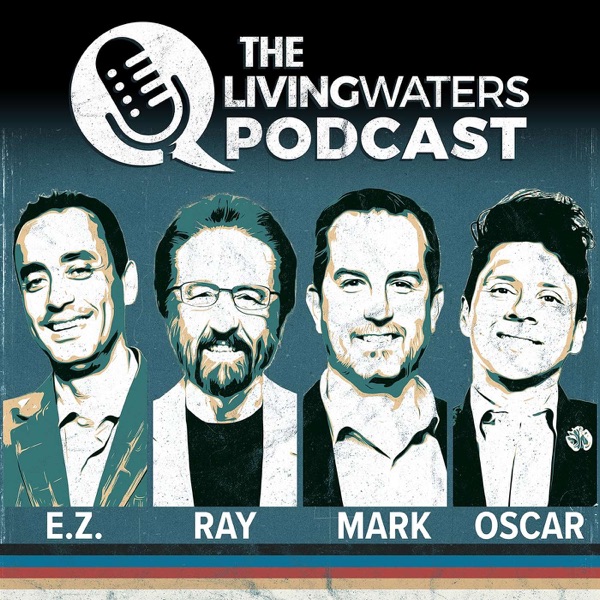
The Living Waters Podcast
Enjoy the ride with this hilarious new Podcast as hosts (Ray Comfort, Emeal (“E.Z.”) Zwayne, Mark Spence, and Oscar Navarro) and special guests explore the pressing questions of our day with sound theology and apologetics! We would love to hear from you. How has the podcast encouraged you? Are there any subjects you’d like the guys to cover or questions you’d like them to answer? Email us at Podcast@LivingWaters.com and you may hear your feedback and questions quoted on the next episode!
- Christianity chart
- #178
- Episodes
- 475
- Releases
- Weekly
- Typical length
- 1 hr 2 min
- On air since
- 2021
- Latest episode
- 6 days ago
Episodes
475 episodes, newest first
-
1 hr 2 min
Ep. 414 - The Danger of Becoming Spiritually Unimpressible
Season 6, Episode 414
Show notes
What happens when the things of God become so familiar that they no longer leave us in awe? Ray, E.Z., Mark, and Oscar explore the danger of becoming spiritually unimpressible and the difference between knowing the truth intellectually and truly tasting the beauty and glory of God. The guys discuss how secularism and the world’s focus on looking inward can disconnect people from wonder, using the image of seeing a model of the Matterhorn rather than experiencing the real mountain. They consider how Christians can know about God without being genuinely captivated by who He is.
The conversation then turns to how believers can gradually lose their sense of awe. The guys discuss how routines, entertainment, and seemingly harmless habits can cool a believer’s love for the Lord. They also consider how weakness can become a catalyst for spiritual power, noting that recognizing it should drive believers toward dependence on God. The guys examine the danger of becoming rich in knowledge while losing zeal for Christ and the lost, emphasizing that spiritual maturity should produce a growing desire to make God known rather than simply accumulating information about Him.
From there, the guys examine how modern technology and constant novelty can leave people spiritually and emotionally numb. They discuss doom scrolling as something that can function like a drug, creating a desire for increasingly sensational experiences and even pushing Christians toward overstimulating forms of worship and Christianity. The guys contrast this with slowing down, becoming more connected to the Lord through the embodied life of the church, and experiencing the goodness of God in the world around us. They consider how believers can keep the cross from becoming background noise by intentionally meditating on the Lord and remembering how He has transformed them.
How do Christians recover awe and allow it to shape their lives? The guys emphasize the priceless treasure believers possess and the importance of becoming people who genuinely long for the Lord. They link renewed wonder to evangelism, explaining that a deeper love for Christ should fuel a greater desire to make Him known. The guys encourage listeners to examine whether the things of the world have become more impressive than the things of God and to return to their first love if they have drifted. They close by reflecting on the prodigal son and the Father’s readiness to welcome His children home, reminding believers that the answer to spiritual numbness is a renewed vision of God.
Thanks for listening! If you’ve been helped by this podcast, we’d be grateful if you’d consider subscribing, sharing, and leaving us a comment and 5-star rating!
Visit the Living Waters website to learn more and to access helpful resources!
You can find helpful counseling resources at https://biblicalcounseling.com/.
Check out The Evidence Study Bible and the Basic Training Course.You can connect with us at podcast@livingwaters.com. We're thankful for your input!
Learn more about the hosts of this podcast.
Ray Comfort
Emeal (“E.Z.”) Zwayne
Mark Spence
Oscar Navarro -
1 hr 2 min
Ep. 413 - How to Recover from a Bad Evangelism Experience
Show notes
What do you do when an evangelism experience goes poorly and you walk away wondering whether you failed? Ray, E.Z., Mark, and Oscar unpack the discouragement that can follow difficult conversations, rejection, and moments when evangelism does not go as planned.
The guys begin with Mark and Oscar's experience on the pier, where poor conditions made the first hour feel like a disaster. Yet the night turned around with meaningful conversations, reminding them that a difficult start does not determine what God will do. Ray shares his history of hard interviews and tough open-air preaching, and explains why believers should expect setbacks rather than measure evangelism by success.
The guys then reflect on some of the hardest experiences they've faced while preaching the gospel. From physical aggression to accusations against their character, they discuss the many forms rejection can take and how quickly difficult encounters can become discouraging. These experiences lead to a broader discussion of persecution and how believers should respond when they suffer for faithfully proclaiming Christ. The guys point to the apostles' rejoicing when they suffered for Christ and emphasize that adversity can strengthen believers rather than prove their efforts were failures.
The conversation turns inward as the guys consider how discouragement can reveal misplaced expectations and dependence on self. They compare evangelism to sowing seed and emphasize that salvation is ultimately God's work, not the result of a perfect argument. They explore how rejection can weigh on a person and how easily discouragement can shift the focus away from the true goal of evangelism. The guys also address the temptation to feel discouraged when evangelizing alone and encourage believers to remain faithful even when the work feels difficult or isolating.
The guys discuss how the Great Commission is about faithful proclamation rather than controlling outcomes and how God can use conversations that seem ordinary or unsuccessful. They reflect on Paul's endurance and the promise that Christ is with His people as they proclaim the gospel.
The guys then turn to glad obedience, reminding listeners that believers are ambassadors who should continue even when they do not feel like it. Remembering Christ's mercy should overflow into joyful proclamation because there are souls around us who need life.
Christians are beggars who have found food and have been sent to tell other beggars where to find it.
Thanks for listening! If you’ve been helped by this podcast, we’d be grateful if you’d consider subscribing, sharing, and leaving us a comment and 5-star rating!
Visit the Living Waters website to learn more and to access helpful resources!
You can find helpful counseling resources at https://biblicalcounseling.com/.
Check out The Evidence Study Bible and the Basic Training Course.You can connect with us at podcast@livingwaters.com. We're thankful for your input!
Learn more about the hosts of this podcast.
Ray Comfort
Emeal (“E.Z.”) Zwayne
Mark Spence
Oscar Navarro -
1 hr 3 min
Ep. 412 - Can Anyone Be Too Far Gone?
Season 6, Episode 412
Show notes
Is there a point at which a person goes too far for God to forgive them? Ray, E.Z., Mark, and Oscar explore whether anyone can truly be beyond God's reach, beginning with the fears that prompt people to wonder if they have crossed a line or lost their salvation. The guys point to the hope found in Christ and explain that being alive means God is not finished with you. They distinguish biblical hope from wishful thinking and emphasize that our hope rests on the resurrected Savior, not on circumstances or our ability to make ourselves worthy.
The conversation then turns to the gospel itself and to the mistake of thinking that salvation depends on how far someone has fallen or how well they can clean themselves up. The guys examine the prodigal son, the older brother, and a long list of deeply sinful people in Scripture, including Rahab, Moses, David, Manasseh, Peter, Paul, and the thief on the cross. Paul’s description of himself as the chief of sinners becomes a central example of God’s mercy. The guys explain that the history of redemption is filled with God saving wretched people for His glory and that even a desperate prayer for help can be an expression of genuine faith.
From there, the discussion moves into the passages that can cause Christians the most fear. The discussion then focuses more directly on the blasphemy of the Holy Spirit. The guys explain why this should not be confused with a careless statement, a moment of anger, or even someone deliberately saying something blasphemous because they think they can somehow commit an unforgivable sin. The guys return to the distinction between temporary rebellion and a settled rejection of the truth, while emphasizing the importance of repentance.
From there, the conversation turns to the person whose own thoughts, words, and past actions leave them wondering whether they are beyond forgiveness. The guys emphasize that even someone who has committed horrific crimes can find mercy through genuine repentance. The gospel is not about a drowning person receiving a life-saving device but about a spiritually dead person being given life by God. Instead, the guys point listeners to Christ's sufficiency and the power of His blood to cleanse sinners. They close with the restoration of the deeply sinful man in Corinth, where Paul urges the church to forgive and comfort him after he repented. Repentance becomes the great word of hope: no matter where someone is or how badly they have failed, they should turn to Christ, because there is hope in the Lord.
Thanks for listening! If you’ve been helped by this podcast, we’d be grateful if you’d consider subscribing, sharing, and leaving us a comment and 5-star rating!
Visit the Living Waters website to learn more and to access helpful resources!
You can find helpful counseling resources at https://biblicalcounseling.com/.
Check out The Evidence Study Bible and the Basic Training Course.You can connect with us at podcast@livingwaters.com. We're thankful for your input!
Learn more about the hosts of this podcast.
Ray Comfort
Emeal (“E.Z.”) Zwayne
Mark Spence
Oscar Navarro -
1 hr 2 min
Ep. 411 - When Comfort Becomes an Idol
Show notes
What if the comfort we thank God for quietly becomes the thing we trust instead of Him? Ray, E.Z., Mark, and Oscar examine how comfort becomes an idol, starting with the abundance many Americans experience. The guys explain that comfort itself is not sinful; the danger arises when it pushes God to the background. They explore common idols and offer a revealing test: what happens when something we depend on is taken away? Losing health, finances, or relationships can reveal whether our hope is in Christ.
The discussion then moves beyond material comfort to address physical suffering and the expectation of an easy life. They challenge the American dream’s pursuit of comfort and explain that discomfort is not an abnormal interruption of the Christian life. Believers are called to give thanks, rejoice in the Lord, and worship even when circumstances are painful. The guys examine how anger and anxiety can reveal a threatened idol. They point to Philippians 2 and the call to shine as lights in a crooked generation, showing that Christian responses to discomfort can reflect Christ.
From there, the conversation turns to how comfort can keep believers from following God’s calling. The guys discuss the safest place to be, which is at the center of God’s will, even when that means danger, ridicule, or suffering. They consider how God can use financial pressure, a wayward child, sickness, and other trials to deepen prayer and remove weights that keep believers from Him. Rather than making comfort the goal, the guys emphasize sanctification and becoming more like Christ. They use the images of a child who cannot understand a painful medical procedure and of a sculptor chiseling stone to explain how God may be doing something good even when His work is painful and beyond our understanding.
The final portion turns to Job, suffering, and what it means to follow Christ when obedience costs something. Job’s response to devastating loss reminds the guys that God remains worthy of worship in both prosperity and adversity. Ray reflects on his excruciating kidney stone and how the Lord used that suffering to deepen his gratitude, empathy, and compassion. The guys connect this to Christ’s call to bear the cross, explaining that following Jesus means dying to self, plans, reputation, and comfort. They close by confronting the temptation to use grace as an excuse for compromise, emphasizing that genuine faith produces repentance and fruit. Ultimately, the goal is not a comfortable life but living in communion with Christ.
Thanks for listening! If you’ve been helped by this podcast, we’d be grateful if you’d consider subscribing, sharing, and leaving us a comment and 5-star rating!
Visit the Living Waters website to learn more and to access helpful resources!
You can find helpful counseling resources at https://biblicalcounseling.com/.
Check out The Evidence Study Bible and the Basic Training Course.You can connect with us at podcast@livingwaters.com. We're thankful for your input!
Learn more about the hosts of this podcast.
Ray Comfort
Emeal (“E.Z.”) Zwayne
Mark Spence
Oscar Navarro -
1 hr 2 min
Ep. 410 - The Sin of Self-Reliance
Season 6, Episode 410
Show notes
What if the desire to do everything ourselves is keeping us from trusting God? Ray, E.Z., Mark, and Oscar explore the difference between biblical responsibility and self-reliance, examining how people look for strength, security, and relief elsewhere rather than in the Lord. The guys discuss how self-reliance can even disguise itself as devotion, as people seek relief through their own efforts or other forms of self-medication. They return to the reality that righteousness cannot be earned and that true reliance means trusting and depending on God.
The conversation then turns to God's sovereignty and human responsibility. The guys explain that God has chosen to work through the means He provides, assigning believers responsibilities while remaining sovereign over the outcome. Planning and effort are not the problem; the question is whether they are done in dependence on the Lord. They compare the Christian life to sailing, where we set the sails but depend on the wind to move us. Prayer should be the default response. The guys encourage listeners to pray without ceasing, trust the Lord rather than their own understanding, and acknowledge Him in every part of life. Faithfulness means moving forward while leaving the results to God.
Trust is not merely believing that God will give us the outcome we want, but believing that whatever He allows, He is still working for our good and shaping our character. The guys challenge listeners to consider their warhorse, the thing they hide behind, whether it is power, reputation, beauty, or ability. They discuss how Western culture celebrates independence and how easily that mindset can influence Christians. Yet dependence on God does not mean refusing the means He has provided. It means recognizing that everything we have is ultimately from Him and being willing to seek counsel, correction, and support from other believers.
The guys discuss how difficulty receiving criticism can reveal a heart that has forgotten its helplessness, because the gospel begins with admitting we cannot save ourselves. They turn to trials and grace, emphasizing that grace is not something we earn and is not merely what saves us at conversion. God's grace sustains us throughout the Christian life. They ultimately trace self-reliance back to Adam and Eve's desire for independence from God. The gospel brings us to the end of ourselves, reconciles us to our Maker, and teaches us to abide in Christ, like branches that depend on the vine, and to trust His strength rather than our own.
Thanks for listening! If you’ve been helped by this podcast, we’d be grateful if you’d consider subscribing, sharing, and leaving us a comment and 5-star rating!
Visit the Living Waters website to learn more and to access helpful resources!
You can find helpful counseling resources at https://biblicalcounseling.com/.
Check out The Evidence Study Bible and the Basic Training Course.You can connect with us at podcast@livingwaters.com. We're thankful for your input!
Learn more about the hosts of this podcast.
Ray Comfort
Emeal (“E.Z.”) Zwayne
Mark Spence
Oscar Navarro -
1 hr 4 min
Ep. 409 - The Dangers of Denying Original Sin
Season 6, Episode 409
Show notes
What happens when we deny that sin is part of who we are? Ray, E.Z., Mark, and Oscar examine the dangers of denying original sin, beginning with the biblical teaching that Adam's disobedience brought sin and death into the world. They explain why the doctrine matters as people increasingly view humanity as basically good. They trace the idea from Pelagius through Locke, Rousseau, Marx, Freud, and the self-esteem movement. The explanation for human brokenness shifted farther from the heart and toward society and circumstances.
The conversation then returns to the biblical diagnosis of human nature. The guys discuss what it means to be sinners by nature and by choice, emphasizing that a sinful nature does not remove personal guilt. If sin were merely bad behavior, better morals would be enough, but Scripture presents a deeper problem that requires a new heart. They compare denying sin's root to treating symptoms rather than the disease. From there, they clarify total depravity, explaining that it does not mean people are as evil as they could possibly be. Rather, every part of a person is affected by sin, while common grace still allows unbelievers to do genuine good.
The discussion moves from the problem of sin to why this doctrine should drive believers toward grace. The guys explain that denying original sin lays the foundation for self-righteousness, while recognizing the depth of sin makes Christ's mercy all the more glorious. They reflect on preaching the gospel to yourself and remembering that Christ saves sinners who cannot rescue themselves. Ray connects this to the law of God, explaining that the law serves as a mirror, revealing what is already present in the human heart. It exposes guilt and shows why they need a Savior.
The guys talk about applying original sin to the Christian life and the question of authority. They explain that seeing the depths of their own hearts should prompt believers to run toward God rather than become self-righteous, and that Romans 7 can be understood as an increasing awareness of our dependence on grace. Sanctification is not merely becoming better people but growing deeper in our understanding of the grace that saves and keeps us. Mark encourages preaching the gospel to yourself, remembering that Christ has already dealt with your sin and that your past does not have the final word. Rather than letting awareness of depravity drive you into despair, let it drive you toward Christ, because recognizing how deeply you need grace is part of growing in dependence on Him.
Thanks for listening! If you’ve been helped by this podcast, we’d be grateful if you’d consider subscribing, sharing, and leaving us a comment and 5-star rating!
Visit the Living Waters website to learn more and to access helpful resources!
You can find helpful counseling resources at https://biblicalcounseling.com/.
Check out The Evidence Study Bible and the Basic Training Course.You can connect with us at podcast@livingwaters.com. We're thankful for your input!
Learn more about the hosts of this podcast.
Ray Comfort
Emeal (“E.Z.”) Zwayne
Mark Spence
Oscar Navarro -
1 hr 1 min
Ep. 408 - The Dumbest Things We’ve Done
Season 6, Episode 408
Show notes
Everyone has done something so dumb they wish they could erase it from history, but sometimes those failures make the best stories and teach the most memorable lessons. Ray, E.Z., Mark, and Oscar look back on some of their most embarrassing mistakes, from mistaken identities and awkward encounters to Ray accidentally taking someone else's car and Oscar putting himself in serious danger while snorkeling. What begins as a hilarious collection of stories becomes a reminder that everyone is prone to error and that admitting our failures can bring humility and encouragement to others.
The conversation then turns to some of the foolish decisions recorded in Scripture. The guys consider Lot's wife, who looked back at the world God was judging, and Solomon, a man blessed with extraordinary wisdom who still allowed compromise to lead him toward idolatry. The Bible does not hide its people's failures, and their stories warn of the pull of sin and the danger of foolish choices. Even those greatly blessed by God can make devastating decisions when their hearts begin to drift away from Him. Their honesty also shows why biblical warnings matter: wisdom is not merely knowing what is right but faithfully responding before small compromises take root within us.
From there, Oscar introduces the idea that not every failure is the same. Some mistakes are preventable, while others occur when someone steps into unfamiliar territory in pursuit of a worthwhile goal. That distinction matters for Christians who are afraid to evangelize, create, serve, or try something new because they worry about getting it wrong. Sometimes, trying, failing, learning, and trying again is exactly how someone grows. The guys point to Ray's willingness to pursue new ideas, even when some never become what he hoped for, as an example of refusing to let fear of failure stop him from taking action.
The episode closes with an encouragement to step out when the goal is to honor and glorify the Lord. E.Z. recalls an unplanned evangelistic conversation that unexpectedly reached millions online, showing how God can use simple acts of obedience in ways we could never predict. Christians should not wait until they know everything will go perfectly before acting. Like Peter stepping onto the water, we may begin to sink, but Christ remains near, and His grace is sufficient. The goal is not a life without mistakes but a life willing to pursue what is good, learn along the way, and trust God with the outcome.
Thanks for listening! If you’ve been helped by this podcast, we’d be grateful if you’d consider subscribing, sharing, and leaving us a comment and 5-star rating!
Visit the Living Waters website to learn more and to access helpful resources!
You can find helpful counseling resources at https://biblicalcounseling.com/.
Check out The Evidence Study Bible and the Basic Training Course.You can connect with us at podcast@livingwaters.com. We're thankful for your input!
Learn more about the hosts of this podcast.
Ray Comfort
Emeal (“E.Z.”) Zwayne
Mark Spence
Oscar Navarro -
1 hr
Ep. 407 - How Knowledge Produces Accountability
Season 6, Episode 407
Show notes
Knowing the truth means very little if it never transforms the way we live. Ray, E.Z., Mark, and Oscar examine the dangerous gap between hearing God's Word and actually obeying it. The guys explain that many people assume the man who built his house on the sand represents only unbelievers, yet Jesus warns that even those who hear His teachings can deceive themselves if they refuse to put them into practice. True doctrine is not meant to remain stored away but to flow outward in obedience, worship, and service. Knowledge that does not produce action eventually becomes self-deception.
The guys explore why accountability is not something Christians should fear but something to delight in. God has lavished His people with grace, and knowledge of His goodness should produce gratitude, humility, and obedience. Accountability is more than confessing failures. It involves receiving wisdom, pursuing holiness together, and allowing trusted believers to draw one another closer to Christ. The conversation highlights how relationships within the body of Christ protect against drifting and help believers apply truth in practical ways. Knowledge is meant to lead to obedience, and wisdom grows when believers humbly receive correction and seek counsel from others.
The discussion then turns to the knowledge unbelievers possess and the responsibility that accompanies truth. The guys explain that God has revealed Himself through creation and conscience, leaving humanity without excuse. People recognize beauty, morality, and purpose because these reflect the reality of their Creator, even when they suppress that truth. The guys also discuss how spiritual decline rarely happens overnight. Lives are often shaped by thousands of choices, either toward destruction or toward faithfulness. The warnings God gives through Scripture and fellow believers are acts of grace meant to keep His people from drifting away from Him.
Finally, the guys encourage listeners to respond promptly whenever God reveals truth. Knowledge should first be received, then transformed into wisdom, and ultimately passed on to others. They emphasize that delaying obedience only makes it harder. Knowledge that puffs up produces pride, but knowledge of God produces humility and worship. Whether through parenting, discipleship, or evangelism, believers are called to steward the truth they have received and share it with others. Ultimately, the guys remind listeners that heaven and hell are real, that today is the day of salvation, and that the proper response to the truth is repentance, faith, and joyful obedience.
Thanks for listening! If you’ve been helped by this podcast, we’d be grateful if you’d consider subscribing, sharing, and leaving us a comment and 5-star rating!
Visit the Living Waters website to learn more and to access helpful resources!
You can find helpful counseling resources at https://biblicalcounseling.com/.
Check out The Evidence Study Bible and the Basic Training Course.You can connect with us at podcast@livingwaters.com. We're thankful for your input!
Learn more about the hosts of this podcast.
Ray Comfort
Emeal (“E.Z.”) Zwayne
Mark Spence
Oscar Navarro -
1 hr 4 min
Ep. 406 - How to Know if You’re Called to Ministry
Season 6, Episode 406
Show notes
How do you know if God is calling you into ministry? Ray, E.Z., Mark, and Oscar, along with John Harris, explore the weight of handling God's Word and the distinction between being called to serve and being called to vocational ministry. The guys begin by challenging the sacredsecular divide, reminding listeners that faithfulness is not limited to pastors, missionaries, or employees of Christian organizations. Every believer is called to glorify God in the work already before them. Rather than waiting for a title or position, Christians should begin by faithfully serving where God has placed them and allow any future ministry role to grow out of that obedience.
The conversation then turns to how a calling often becomes evident through faithful service. The guys share that their paths into ministry began with preaching, discipling, evangelizing, and serving long before a formal position came along. A desire for ministry should be accompanied by a genuine love for God's people, a burden for the lost, and gifts already being exercised within the local church. They encourage listeners to start small and seek counsel from mature believers. A calling should first be tested locally, where character, service, and spiritual fruit can be seen.
From there, the guys address both the dangers and rewards of ministry. Pride, money, and the desire for recognition can easily distort a person's motives. At the same time, opposition and hardship are unavoidable for those who faithfully serve Christ. Ministry is service, not a platform, and those who pursue it should expect their faith to be tested. Yet few privileges are greater than preaching God's Word, building up His people, and proclaiming the gospel. The guys encourage those considering ministry to remain rooted in a local church, depend deeply on prayer, and honestly examine whether the burden to serve Christ endures even when the work is difficult and unseen.
Finally, the conversation offers a framework for discerning vocational ministry through calling, capacity, competency, character, and affirmation from the local church. Giftedness alone is not enough if spiritual fruit and godly character do not grow alongside it. The guys warn against rushing into ministry for identity, reminding listeners that their identity is already secure in Christ. Whether or not a formal position ever comes, believers can continue serving God in their homes, churches, neighborhoods, and workplaces. Faithfulness in small things is never insignificant, and true ministry begins long before anyone receives a title.
Thanks for listening! If you’ve been helped by this podcast, we’d be grateful if you’d consider subscribing, sharing, and leaving us a comment and 5-star rating!
Visit the Living Waters website to learn more and to access helpful resources!
You can find helpful counseling resources at https://biblicalcounseling.com/.
Check out The Evidence Study Bible and the Basic Training Course.You can connect with us at podcast@livingwaters.com. We're thankful for your input!
Learn more about the hosts of this podcast.
Ray Comfort
Emeal (“E.Z.”) Zwayne
Mark Spence
Oscar Navarro -
1 hr 1 min
Ep. 405 - How to Respond to Entitled People
Season 6, Episode 405
Show notes
What does the gospel say about entitlement in a culture that believes it deserves everything? John Harris joins Ray, E.Z., Mark, and Oscar for a conversation about entitlement, gratitude, and the humility that flows from understanding God's grace. The discussion begins by examining how a growing sense of entitlement has shaped modern culture, reminding listeners
that this struggle is not unique to society but is rooted in every human heart. While it is easy to recognize entitlement in others, the guys challenge believers first to examine themselves, remembering that Christians are called to respond to a changing culture with the same love, service, and faithfulness that marked the early church.The guys explain that every person bears God's image and should be treated with dignity and respect, even when they are difficult or demanding. Looking to the life of Christ, they show that people often seek temporary solutions, even though their greatest need is the gospel. As believers grow in their understanding of God's grace, they realize that everything they have is a gift rather than something they have earned. Humility flourishes when Christians remember that God owes them nothing yet has freely given them everything they need in Christ.
From there, the discussion turns to practical ways believers can combat entitlement in everyday life. The guys encourage listeners to cultivate gratitude, renew their minds with Scripture, and view every circumstance through the lens of God's sovereignty. Rather than focusing on what is
happening to them, Christians are called to consider what God is accomplishing through them. They remind listeners that trials are opportunities for spiritual growth and that thankfulness is one of the most powerful weapons against pride. As believers learn to treasure Christ above
earthly comforts, they become increasingly content with whatever the Lord has ordained.Finally, the conversation points to Jesus as the ultimate example of humility and servanthood. Though He alone was truly entitled to glory and honor, Christ willingly humbled Himself, served others, and even washed Judas's feet before going to the cross. The guys challenge listeners to follow their Savior by embracing repentance, practicing daily faithfulness, and serving others
without seeking recognition. Ultimately, this episode reminds believers that the evidence of a heart transformed by the gospel is not demanding to be served but joyfully becoming a servant for the glory of God.Thanks for listening! If you’ve been helped by this podcast, we’d be grateful if you’d consider subscribing, sharing, and leaving us a comment and 5-star rating!
Visit the Living Waters website to learn more and to access helpful resources!
You can find helpful counseling resources at https://biblicalcounseling.com/.
Check out The Evidence Study Bible and the Basic Training Course.You can connect with us at podcast@livingwaters.com. We're thankful for your input!
Learn more about the hosts of this podcast.
Ray Comfort
Emeal (“E.Z.”) Zwayne
Mark Spence
Oscar Navarro -
1 hr 3 min
Ep. 404 - The Errors of Gentle Parenting
Season 6, Episode 404
Show notes
Is gentle parenting biblical, or has the conversation gone too far? Ray, E.Z., Mark, and Oscar begin by distinguishing the helpful aspects of gentle parenting, such as patience, empathy, and respectful communication, from philosophies that conflict with Scripture. They discuss the growing cultural resistance to discipline, the importance of parental self-control, and why biblical correction should never be motivated by anger. Instead, loving discipline is presented as an intentional act that teaches children respect, obedience, and wisdom and points them toward the Lord.
The conversation then examines the worldview behind many modern parenting philosophies. The guys explain that while children should be treated with dignity and compassion, parenting must also acknowledge the biblical reality of humanity's sinful nature. Ignoring or excusing sin
does not prepare children for life or for their need for the gospel. They discuss the importance of setting boundaries early, consistently training children from a young age, and remembering that discipline is not limited to a single method but should always seek the child's good. Throughout the discussion, they emphasize that correction should be rooted in love, never in frustration or personal anger.From there, the guys explore how modern parenting often elevates feelings over truth and downplays the importance of obedience. They clarify the difference between understanding a child's struggles and excusing sinful behavior, encouraging parents to lovingly address the heart behind their children's actions rather than simply managing outward behavior. Consistency, follow-through, and thoughtful correction help children understand both authority and security. Rather than seeking to be popular parents, Christians are called to faithfully shepherd their children with compassion and conviction, preparing them to honor God throughout their lives.
Finally, the conversation returns to the biblical foundation for discipline, reminding listeners that God's loving correction of His children provides the model for Christian parenting. The guys encourage parents to saturate themselves in Scripture rather than in cultural trends, to study
each of their children carefully, and to remember that every act of discipline should ultimately point them toward Christ. Love without truth leaves children vulnerable, while truth without love misrepresents the heart of God. Biblical parenting holds both together, raising children with grace, wisdom, authority, and deep confidence in the Lord's goodness.Thanks for listening! If you’ve been helped by this podcast, we’d be grateful if you’d consider subscribing, sharing, and leaving us a comment and 5-star rating!
Visit the Living Waters website to learn more and to access helpful resources!
You can find helpful counseling resources at https://biblicalcounseling.com/.
Check out The Evidence Study Bible and the Basic Training Course.You can connect with us at podcast@livingwaters.com. We're thankful for your input!
Learn more about the hosts of this podcast.
Ray Comfort
Emeal (“E.Z.”) Zwayne
Mark Spence
Oscar Navarro -
1 hr 1 min
Ep. 403 - Examining the Eating Disorder Epidemic
Season 6, Episode 403
Show notes
What does God say about how we see our bodies? Ray, E.Z., Mark, and Oscar begin by discussing the rising prevalence of eating disorders and the cultural pressures that shape self-perception. They explore how social media, comparison, and the desire for acceptance have fueled unhealthy relationships with food and body image, reminding listeners that true identity is not found in appearance but in being created in the image of God. Rather than allowing the world's standards to define beauty and worth, believers are called to see themselves through the lens of God's truth.
The conversation then moves beyond physical appearance to the deeper issues of the heart. The guys explain that while eating disorders can have many contributing factors, the underlying struggle often centers on worship, identity, and misplaced affection. They remind listeners that God alone is the source of beauty and that every person possesses intrinsic value because they bear His image. Whether someone feels inadequate, forgotten, or consumed by comparison, Scripture declares that the Lord intentionally created them and that they never exist by accident. The gospel offers a foundation for identity that no shifting standard of beauty can ever provide.
From there, the discussion turns to practical wisdom for cultivating a healthy relationship with food and the body. The guys encourage parents to speak carefully about health and self-control rather than appearance, helping children develop habits that honor the Lord rather than chase unrealistic ideals. They also emphasize that food is a good gift from God to be enjoyed with gratitude rather than abused through excess or deprivation. As believers seek first the kingdom of God, they are freed to pursue contentment rather than comparison, recognizing that their bodies ultimately belong to Christ and were created to be stewarded faithfully for His glory rather than used to seek the approval of others.
Finally, the guys point listeners back to the hope of the gospel for those who are struggling. They remind anyone battling an eating disorder that they are not beyond God's love, that help is available, and that lasting freedom is found in Christ rather than in changing their appearance. True acceptance is not earned by a number on a scale but received through the finished work of Jesus. Ultimately, this conversation encourages believers to find their worth in the One who created them, redeemed them, and calls them His own.
Thanks for listening! If you’ve been helped by this podcast, we’d be grateful if you’d consider subscribing, sharing, and leaving us a comment and 5-star rating!
Visit the Living Waters website to learn more and to access helpful resources!
You can find helpful counseling resources at https://biblicalcounseling.com/.
Check out The Evidence Study Bible and the Basic Training Course.You can connect with us at podcast@livingwaters.com. We're thankful for your input!
Learn more about the hosts of this podcast.
Ray Comfort
Emeal (“E.Z.”) Zwayne
Mark Spence
Oscar Navarro -
55 min
Ep. 402 - Developing an Attitude of Gratefulness
Season 6, Episode 402
Show notes
What if your greatest struggle isn't your circumstances but your gratitude? Ray, E.Z., Mark, and Oscar begin by sharing the blessings they are most grateful for, from faithful family members to countless ordinary moments that reveal God's kindness. Their conversation quickly turns to the source of true gratitude, explaining that lasting thankfulness is rooted not in favorable circumstances but in God's unchanging promises and faithfulness. Rather than focusing on what is lacking, believers are called to recognize God's goodness in both the extraordinary and the seemingly insignificant moments of everyday life.
The guys then explore what Scripture teaches about gratitude, emphasizing that thankfulness is not merely a suggestion but a command for every believer. They discuss how God's sovereignty reshapes how Christians view suffering, reminding listeners that there is no panic in heaven, only the Lord accomplishing His perfect purposes. Whether facing hardship or abundance, believers can trust that God is using every circumstance to shape their character into the likeness of Christ. The conversation also challenges listeners to resist the constant pull of a culture built on discontentment and instead cultivate hearts satisfied in Christ alone.
From there, the discussion examines the dangers of ingratitude and the subtle idolatry that often fuels it. The guys explain that grumbling is more than a bad habit; it reveals a heart that has lost sight of God's goodness. They contrast the hopelessness of unbelief with the confidence Christians have through the gospel, encouraging believers to demonstrate their faith by responding to trials with thankfulness rather than complaint. True gratitude does not deny suffering but declares that God remains worthy of praise even in the midst of it. A thankful heart becomes a powerful testimony to the watching world that Christ is enough.
Finally, the guys offer practical encouragement for cultivating a life marked by gratitude. They remind listeners to anchor themselves in God's promises, fill their prayers with thanksgiving, and continually remember the salvation they have received through Christ. Rather than letting anxiety or dissatisfaction shape their perspective, believers are called to fix their eyes on eternity and on God's faithfulness. Ultimately, the conversation encourages Christians to become people whose gratitude shines brightly in a world marked by complaint, pointing others to the unchanging hope found in the Lord.
Thanks for listening! If you’ve been helped by this podcast, we’d be grateful if you’d consider subscribing, sharing, and leaving us a comment and 5-star rating!
Visit the Living Waters website to learn more and to access helpful resources!
You can find helpful counseling resources at https://biblicalcounseling.com/.
Check out The Evidence Study Bible and the Basic Training Course.You can connect with us at podcast@livingwaters.com. We're thankful for your input!
Learn more about the hosts of this podcast.
Ray Comfort
Emeal (“E.Z.”) Zwayne
Mark Spence
Oscar Navarro -
1 hr 4 min
Ep. 401 - Combating Depression
Season 6, Episode 401
Show notes
When depression settles over life, where should Christians turn? Ray, E.Z., Mark, and Oscar begin by addressing the reality of depression and discouragement, acknowledging that seasons of darkness touch every believer in different ways. Rather than treating depression as evidence of weak faith, they explain that Scripture honestly portrays the sorrow of God's people while continually pointing them back to His faithfulness. Though emotions often tell a different story, believers are reminded that God is working all things together for their good and that each day is another opportunity to know Him, serve Him, and trust His promises.
The conversation then explores the biblical understanding of depression, challenging common misconceptions about mental health. The guys explain that sorrow is often multifaceted, encompassing physical, emotional, relational, moral, and spiritual realities that should not be ignored. Looking to Christ as the Man of Sorrows and to countless examples throughout Scripture, they remind listeners that seasons of grief do not necessarily indicate personal sin or a lack of faith. Rather than seeking quick fixes, believers are encouraged to anchor themselves in God's truth, knowing that while suffering is part of life in a fallen world, it will not have the final word.
From there, the discussion turns to practical ways Christians can faithfully navigate seasons of depression. The guys encourage listeners to keep moving forward, one step at a time, to seek help from the body of Christ, and to embrace the ordinary means God has provided for their care. Exercise, rest, healthy routines, purposeful work, serving others, reading Scripture, and cultivating daily habits all become practical expressions of trusting the Lord rather than surrendering to despair. They also remind listeners that true identity is found in Christ, not in feelings or circumstances, and that lasting hope comes from being fully known and fully loved by God.
Finally, the guys address the important distinction between depression and suicidal thoughts, urging believers to respond with wisdom, compassion, and urgency when someone is in crisis. They emphasize asking difficult questions, helping loved ones find safety, and seeking professional care when necessary. Throughout the conversation, the gospel remains the foundation of hope, reminding believers that Christ has entered human suffering, conquered sin and death, and promises an eternal future in which sorrow will one day be no more.
Thanks for listening! If you’ve been helped by this podcast, we’d be grateful if you’d consider subscribing, sharing, and leaving us a comment and 5-star rating!
Visit the Living Waters website to learn more and to access helpful resources!
You can find helpful counseling resources at https://biblicalcounseling.com/.
Check out The Evidence Study Bible and the Basic Training Course.You can connect with us at podcast@livingwaters.com. We're thankful for your input!
Learn more about the hosts of this podcast.
Ray Comfort
Emeal (“E.Z.”) Zwayne
Mark Spence
Oscar Navarro -
1 hr 2 min
Ep. 400 - Overcoming Being Ashamed of the Gospel
Season 6, Episode 400
Show notes
Being ashamed of the gospel is rarely about the gospel itself. Ray, E.Z., Mark, and Oscar examine why believers often shrink back from boldly identifying with Christ and how the fear of man quietly competes for the worship that belongs to God alone. The guys explain that shame is often rooted in idolatry, whether it is the desire for approval, the pursuit of success, or the fear
of rejection. When acceptance from others takes the throne of the heart, faithfulness to Christ becomes increasingly difficult. Yet the gospel frees believers from living for the opinions of man and calls them to treasure Christ above every earthly idol.The guys emphasize that the world has always opposed God's truth, yet believers are still called to proclaim the gospel with compassion and courage. They reflect on faithful examples of Christians who patiently shared the gospel for years, reminding listeners that salvation belongs to the Lord and that no one is beyond His reach. Rather than letting fear silence them, believers are called to love people enough to speak the truth, trusting God to accomplish the work only He can do. Evangelism becomes an act of worship, flowing from gratitude for the grace believers have already received.
The guys also discuss how believers overcome shame by fixing their eyes on Christ rather than on themselves. When idols are removed from the heart and replaced with a greater affection for God, the fear of people begins to lose its grip. They explain that remembering the gospel, meditating on eternity, and growing in love for Christ naturally produce boldness. Just as the disciples counted it an honor to suffer for the name of Jesus, Christians today are called to see opposition as an opportunity to identify with their Savior. The more believers treasure Christ, the less intimidating the world's opinions become.
Finally, the guys offer practical encouragement to grow in confidence while sharing the gospel. Boldness develops through faithful obedience, regular study of Scripture, prayer, and consistent conversations with others. They encourage listeners not to wait until they have all the answers but to trust that God equips those who step forward faithfully. Even when believers struggle with fear or shame, Christ welcomes them with mercy and grace rather than condemnation. Ultimately, the guys remind listeners that the gospel is God's power for salvation, Christ is worthy of wholehearted devotion, and there is no greater privilege than making Him known to a world that desperately needs Him.
Thanks for listening! If you’ve been helped by this podcast, we’d be grateful if you’d consider subscribing, sharing, and leaving us a comment and 5-star rating!
Visit the Living Waters website to learn more and to access helpful resources!
You can find helpful counseling resources at https://biblicalcounseling.com/.
Check out The Evidence Study Bible and the Basic Training Course.You can connect with us at podcast@livingwaters.com. We're thankful for your input!
Learn more about the hosts of this podcast.
Ray Comfort
Emeal (“E.Z.”) Zwayne
Mark Spence
Oscar Navarro -
46 min
Ep. 399 - When Life Falls Apart: Finding Courage through Crisis
Season 5, Episode 399
Show notes
When suffering suddenly interrupts life, where do believers find the strength to endure? Pastor Shane Idleman joins Ray and Mark to share his recent cancer diagnosis and the profound lessons God has taught him amid uncertainty, fear, and waiting. Rather than letting the diagnosis shake his faith, Shane explains how the Lord has drawn him into deeper dependence on His sovereignty, reminding him that God's grace is given one day at a time. The discussion explores how trials reveal what believers truly trust and why resting in God's character brings peace when the future feels uncertain.
The guys discuss difficult decisions that often accompany serious illness. Shane shares how he sought the Lord while weighing treatment options, emphasizing that believers should neither act out of fear nor place their hope in medicine itself. Instead, the guys encourage listeners to pursue wisdom, remembering that healing ultimately comes from God. Throughout the discussion, Shane returns to a simple truth that carried him through the diagnosis: God's sovereignty is the believer's sanity, providing stability even when circumstances remain unresolved.
Spiritual fruit often grows from suffering. Shane tells Ray and Mark how his diagnosis has deepened his compassion, reignited his preaching, and renewed his dependence on Christ in ways comfort never could. They discuss how affliction often becomes God's instrument to awaken His people, refine their faith, and produce lasting spiritual fruit. Shane also challenges the modern church to recover preaching marked by conviction and dependence on the Holy Spirit rather than by comfort and cultural approval. Rather than viewing suffering as evidence of God's absence, they encourage believers to see it as an opportunity to know Him more deeply and trust Him more fully.
Finally, the conversation turns to the hope found only in the gospel. The guys contrast the biblical gospel with the man-centered message often heard today, reminding listeners that Christ came first to save sinners from God's wrath before addressing life's temporary struggles. Everyone will one day face death, making repentance and faith infinitely more important than any earthly diagnosis. Whether facing cancer or any other trial, believers can rest in the promise of eternal life, while those who do not yet know Christ are urged to trust Him today. Ultimately, the episode reminds listeners that suffering may change life's circumstances, but it cannot overcome the hope found in Christ alone.
Thanks for listening! If you’ve been helped by this podcast, we’d be grateful if you’d consider subscribing, sharing, and leaving us a comment and 5-star rating!
Visit the Living Waters website to learn more and to access helpful resources!
You can find helpful counseling resources at https://biblicalcounseling.com/.
Check out The Evidence Study Bible and the Basic Training Course.You can connect with us at podcast@livingwaters.com. We're thankful for your input!
Learn more about the hosts of this podcast.
Ray Comfort
Emeal (“E.Z.”) Zwayne
Mark Spence
Oscar Navarro -
1 hr
Ep. 398 - Ways to Avoid a Hardened Heart
Season 5, Episode 398
Show notes
A hardened heart rarely happens all at once but develops through small compromises that dull sensitivity to God. Ray, E.Z., Mark, and Oscar examine why believers must fight daily to remain tender toward the Lord. Sin is deceptive, and the guys explain that hardened hearts often form through neglected prayer, delayed obedience, and unconfessed sin rather than through dramatic rebellion. They emphasize the importance of staying teachable, receiving correction humbly, and seeking truth. A soft heart is not automatic but cultivated through repentance, dependence on God, and a willingness to let His Word expose what lies beneath the surface.
The guys explore the link between idolatry and spiritual hardness, explaining that every sin ultimately stems from worshiping something other than God. Whether it is pleasure, bitterness, self-pity, or even legalism, misplaced worship slowly turns the heart away from Christ. The guys warn that Christians can smuggle idols into their lives, even into acts of worship, while believing they remain in control. Idolatry is never passive, and over time it shapes affections, priorities, and responses to both God and others. The conversation highlights how even good things become dangerous when they take the place reserved for the Lord alone.
The discussion turns to the urgency of confession and repentance. The guys explain that delaying action on sin only strengthens its grip. They encourage believers to look past the messenger and focus on the truth presented, seeking out the small areas where correction may be warranted rather than immediately defending themselves. Self-pity often becomes fertile ground for bitterness and hardness, especially when people believe others owe them something. Instead, the guys encourage listeners to forgive quickly, walk in the light, and cultivate gratitude even amid trials. Repentance is presented not as punishment but as a gift that leads believers back into fellowship with God.
Finally, the guys discuss practical ways believers can guard their hearts and stay sensitive to the Spirit. Spiritual disciplines such as prayer, Scripture, fasting, discipleship, and intentional silence help keep the heart tender before the Lord. The fear of God, regular self-examination, and continual meditation on the gospel all help protect believers from drifting. Ultimately, the guys point listeners back to Christ, whose tender heart on the cross displayed perfect forgiveness and reminds believers that every battle against hardness finds its answer in the gospel.
Thanks for listening! If you’ve been helped by this podcast, we’d be grateful if you’d consider subscribing, sharing, and leaving us a comment and 5-star rating!
Visit the Living Waters website to learn more and to access helpful resources!
You can find helpful counseling resources at https://biblicalcounseling.com/.
Check out The Evidence Study Bible and the Basic Training Course.You can connect with us at podcast@livingwaters.com. We're thankful for your input!
Learn more about the hosts of this podcast.
Ray Comfort
Emeal (“E.Z.”) Zwayne
Mark Spence
Oscar Navarro -
57 min
Ep. 397 - Compelled: Oscar Navarro
Season 5, Episode 397
Show notes
A life shaped by abuse, abandonment, and unbelief became a testimony to God's relentless grace. Oscar shares how the Lord met him amid a broken childhood marked by instability, trauma, and painful lies about his identity and worth. Though his grandmother planted seeds of truth, he eventually embraced atheism and grew openly hostile toward Christianity. Yet even in rebellion, God was quietly at work, using faithful prayers and providence to prepare him for a future he never could have imagined.
The conversation traces the surprising ways God began drawing Oscar to Himself. Though convinced Christianity was false, he was deeply unsettled by a message at a baptism service and a prayer directed toward him. Over the following year, the life he had built slowly lost its appeal as conviction exposed the emptiness beneath it. Eventually, he reached out to the only Christian in his contacts and found himself surrounded by believers who patiently answered questions and faithfully walked beside him. Through discipleship and genuine Christian community, years of skepticism and anger gradually gave way to faith in Christ. One of the most meaningful moments came at his own baptism, when fellow believers stood beside him after many of his old friends had chosen not to. In that moment, God reminded him that He had given him a new family through His church.
Oscar also reflects on the people God used to reshape his understanding of family and belonging. Mature believers modeled Christ's love through simple acts of hospitality and friendship. He shares how the Lord brought Kelly into his life and how God redeemed two painful stories through marriage and raising children in the faith. Through these relationships, the Lord continued to heal old wounds and deepen Oscar's understanding of grace. Looking back, Oscar sees God's kindness not only in dramatic moments but also in ordinary faithfulness. Finally, Oscar recounts the unexpected restoration of his relationship with his biological father after decades spent believing painful misconceptions. Rather than finding the man he had imagined, he discovered a loving family who had never forgotten him. Through that relationship, God revealed deeper truths about His own fatherly love and faithfulness. His testimony ultimately points to the truth that no wound is beyond God's power to redeem and that those who belong to Christ are fully known, fully loved, and forever secure in their heavenly Father.
Enjoy more testimonies from the Compelled Podcast on Spotify or Apple or their website.
Thanks for listening! If you’ve been helped by this podcast, we’d be grateful if you’d consider subscribing, sharing, and leaving us a comment and 5-star rating!
Visit the Living Waters website to learn more and to access helpful resources!
You can find helpful counseling resources at https://biblicalcounseling.com/.
Check out The Evidence Study Bible and the Basic Training Course.You can connect with us at podcast@livingwaters.com. We're thankful for your input!
Learn more about the hosts of this podcast.
Ray Comfort
Emeal (“E.Z.”) Zwayne
Mark Spence
Oscar Navarro -
1 hr 2 min
Ep. 396 - How Not to Be a Spectator Christian
Season 5, Episode 396
Show notes
A spectator mindset has quietly crept into modern Christianity, leaving many believers watching the mission instead of participating. Ray, E.Z., Mark, and Oscar challenge listeners to examine whether they have become passive observers rather than active followers of Christ. The guys explain that there is no such thing as a spectator Christian because every believer has been called to make disciples, serve the church, and engage in the work of the gospel. Too often, Christians excuse themselves from evangelism or ministry, believing those responsibilities belong to someone else. The conversation emphasizes that following Jesus requires action, obedience, and a willingness to step onto the front lines of spiritual battle.
The guys then explore how consumerism has shaped the way many people view the local church. Rather than seeing the church as a covenant community where believers serve one another, many approach it with the mindset of a customer evaluating a product. This perspective turns worship, fellowship, and discipleship into something to consume rather than something to contribute to. The guys explain that believers have been freed by the gospel not merely to attend church but to actively participate in God's unfolding story of grace.
The conversation also addresses practical barriers that keep believers from engaging in ministry. Fear, social anxiety, comparison, and distraction often prevent Christians from sharing the gospel or using their gifts. The guys discuss how technology has weakened many everyday interactions that help people build confidence and form meaningful relationships. Yet God has uniquely equipped every believer with gifts and opportunities to serve. Rather than comparing themselves to others, Christians are called to faithfully use whatever gifts God has provided and to trust that every member of the body plays a necessary role.
Finally, the guys focus on the Holy Spirit's empowering work and the practical steps believers can take to become more active in their faith. The same Spirit who empowered the early church continues to guide, strengthen, and equip believers today. The guys encourage listeners to put down distractions, invest their time intentionally, arrive ready to serve, and look for opportunities to share the gospel. In the end, the Christian life is not about watching others live for Christ but about actively participating in His mission, trusting that God uses ordinary obedience to accomplish extraordinary things.
Thanks for listening! If you’ve been helped by this podcast, we’d be grateful if you’d consider subscribing, sharing, and leaving us a comment and 5-star rating!
Visit the Living Waters website to learn more and to access helpful resources!
You can find helpful counseling resources at https://biblicalcounseling.com/.
Check out The Evidence Study Bible and the Basic Training Course.You can connect with us at podcast@livingwaters.com. We're thankful for your input!
Learn more about the hosts of this podcast.
Ray Comfort
Emeal (“E.Z.”) Zwayne
Mark Spence
Oscar Navarro -
1 hr 1 min
Ep. 395 - Frontline Advocates
Season 5, Episode 395
Show notes
In a world flooded with competing narratives, truth can feel buried beneath emotion, media influence, and cultural pressure. Ray, E.Z., Mark, and Oscar sit down with Eliana Solomonn, who goes by Ellie, along with Shaya Leban and Chad Williams, to unpack the battle for truth surrounding Israel and the rise of modern propaganda. The guys explore how misinformation spreads rapidly, especially among younger generations, shaping opinions before facts are examined. Ellie shares firsthand experience of growing up in a Jewish community, moving to Israel, and witnessing the realities of conflict that many only see through filtered headlines. Her story highlights how easily truth can be distorted when narratives are driven by emotion rather than reality.
The conversation dives into the growing influence of propaganda and how it is shaping public perception on a global scale. The guys discuss how outrage and emotional manipulation are often used to sway opinions, especially through media and social platforms. Ellie and Shaya explain how even firsthand experiences can be misrepresented, recalling moments where real events were reported in ways that barely resembled the truth. This disconnect reveals how powerful and subtle misinformation can be. The guys emphasize that discernment is critical, especially in a time when many are told what to think rather than how to think.
Ellie shares the personal impact of the October 7 attacks and the emotional toll of witnessing her country in crisis. She describes the fear, confusion, and heartbreak as sirens sounded and daily life turned into chaos. In the aftermath, she attended funerals, comforted grieving families, and saw the weight of loss across her community. The pain was compounded when she saw people abroad protesting Israel, revealing a stark contrast between lived experience and public perception. Her story underscores the importance of hearing real voices rather than relying solely on the media.
Finally, the guys bring the conversation back to the deeper spiritual reality behind the conflict. They discuss the role of evil, the influence of Satan as the source of deception, and the need to combat lies with truth. The gospel becomes the ultimate lens through which to understand both the world's brokenness and the hope of redemption. The guys emphasize that truth is not relative but grounded in God, and that believers are called to seek it, share it, and stand firm in it. In the end, the conversation points to the power of truth to cut through deception and the hope found in Christ alone.
Thanks for listening! If you’ve been helped by this podcast, we’d be grateful if you’d consider subscribing, sharing, and leaving us a comment and 5-star rating!
Visit the Living Waters website to learn more and to access helpful resources!
You can find helpful counseling resources at https://biblicalcounseling.com/.
Check out The Evidence Study Bible and the Basic Training Course.You can connect with us at podcast@livingwaters.com. We're thankful for your input!
Learn more about the hosts of this podcast.
Ray Comfort
Emeal (“E.Z.”) Zwayne
Mark Spence
Oscar Navarro
On these lists
The Living Waters Podcast is one of the shows picked out on this list



More in Christianity
Placed highest on Apple Podcasts' Christianity chart right now