Podcast
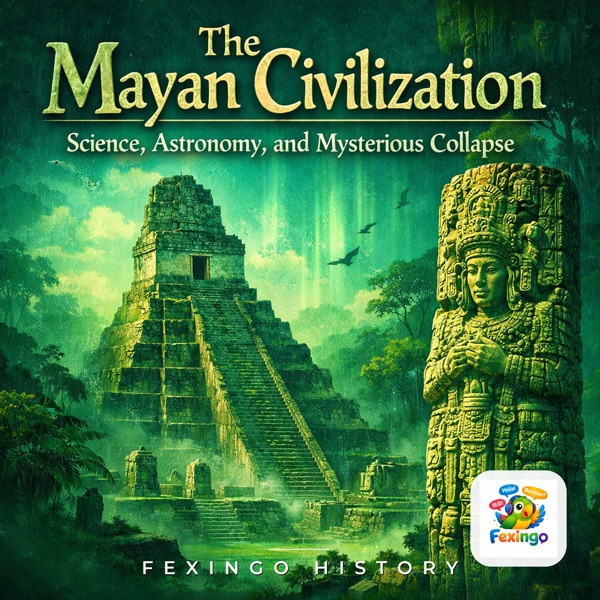
The Mayan Civilization: Science, Astronomy, and Mysterious Collapse — Fexingo History
The Maya civilization thrived for over three millennia across the Yucatán Peninsula, Guatemala, Belize, and Honduras, building dazzling city-states like Tikal, Calakmul, and Palenque. Their achievements in mathematics, hieroglyphic writing, and astronomy rivaled any in the ancient world—they tracked Venus with precision, invented the concept of zero independently, and created the famous Long Count calendar that sparked apocalyptic predictions in the modern era. Yet by the ninth century CE, the Classic Maya heartland experienced a profound collapse: cities were abandoned, dynastic records ceased, and populations dwindled. In this ongoing conversation, Lucas and Luna examine the full arc of Maya history, from its Preclassic origins at El Mirador through the rise of divine kings like Pakal the Great and the fierce rivalry between Tikal and Calakmul. They delve into decipherment controversies, the recent lidar discoveries that revealed vast urban landscapes hidden beneath jungle, and the environmental, political, and social theories behind the collapse. The show also explores the enduring Maya presence today, challenging the myth of a vanished people. To understand the rise and fall of this brilliant civilization is to confront universal questions about sustainability, resilience, and the fragility of complex societies.
#MayaCivilization #Tikal #Palenque #Calakmul #PakalTheGreat #YucatanPeninsula #Mesoamerica #LongCountCalendar #ClassicMaya #MayanCollapse #LidarArchaeology #MayanScript #AstronomyHistory #ZeroInvention #ElMirador #AncientHistory #FexingoHistory #Podcast
Keep every episode free: https://buymeacoffee.com/fexingo
- Episodes
- 277
- Releases
- Daily
- Typical length
- 8 min
- On air since
- 2026
- Latest episode
- 3 hours ago
Episodes
277 episodes, newest first
-
9 min
Maya Collapse: The Drought That Broke the Kings
Season 6, Episode 277
Show notes
We often hear that the Maya civilization collapsed, but that narrative hides a more complex reality of resilience and adaptation. In this episode, we explore the paleoclimatic evidence from Lake Chichancanab and Lake Salpetén, which reveals severe multi-decadal droughts during the Classic period’s end. We look at how cities like Tikal and Calakmul responded to water scarcity not just through warfare, but through drastic urban restructuring and population shifts. By examining archaeological layers of sediment and pollen, we see how communities abandoned monumental centers for smaller, scattered settlements better suited to arid conditions. This isn't a story of disappearance, but of transformation under extreme environmental pressure.
#MayaCivilization #Mesoamerica #ClassicPeriod #Paleoclimatology #LakeChichancanab #Tikal #Calakmul #Drought #ClimateChangeHistory #Archaeology #KuhulAjaw #PopulationShift #SedimentAnalysis #UrbanResilience #YucatanPeninsula #WaterManagement #HistoryPodcast #FexingoHistory
-
8 min
Mayan Glyphs: The Lost Voice of the Ajtzib Scribes
Season 6, Episode 276
Show notes
We usually talk about Maya kings, wars, and calendars, but rarely about the people who actually wrote them down. In this episode, we step into the quiet workshops of the aj tz'ib — the sacred scribes who guarded the hieroglyphic tradition. We explore how these elite literati were trained, what materials they used beyond the famous codices, and how their work shaped political legitimacy across city-states like Tikal and Calakmul. From carving stone stelae to painting on ceramic vessels, the aj tz'ib turned ink and stone into immortal records. We look at specific examples of their signatures, the evolution of glyph styles over centuries, and the mysterious disappearance of their craft as cities fell. This is a deep dive into the hands that held the brush and the chisel, revealing the human cost and brilliance behind the Maya's written legacy.
#MayaCivilization #AjTzib #MesoamericanHistory #Hieroglyphics #Tikal #Calakmul #MayaScribes #Archaeology #Glyphs #PreColumbian #MayaWriting #StoneCarving #Codex #KingsOfMaya #AncientInk #FexingoHistory #HistoryPodcast #MayaArt
-
10 min
Maya Collapse: Why the Jungle Swallowed the Kings
Season 6, Episode 275
Show notes
For centuries, the Classic Maya collapse was blamed on drought or invasion, but recent scholarship points to a more human tragedy. This episode explores the political fragmentation of the Late Classic period, focusing on how the breakdown of diplomatic networks and the erosion of the sacred kingship model accelerated urban abandonment. We trace the shift from the stable hegemony of Tikal and Calakmul to the chaotic warfare of the eighth century, examining sites like Caracol and Naranjo. Lucas and Luna discuss the role of elite competition, the failure of water management systems under stress, and why the people didn't just vanish, but migrated and adapted their culture in the northern Yucatán.
#MayaCollapse #ClassicPeriod #Tikal #Calakmul #Caracol #Naranjo #MesoamericaHistory #Archaeology #Kingship #DroughtAndWar #Yucatan #PeténBasin #LateClassic #PoliticalFragmentation #FexingoHistory #HistoryPodcast #AncientCivilizations #UrbanAbandonment
-
10 min
Maya Astronomy: Tracking Venus in the Dresden Codex
Season 6, Episode 274
Show notes
For anyone stepping into history with us through these conversations about Mesoamerica, we are diving into the most precise astronomical record of the ancient Americas. In this episode, Lucas and Luna explore how Maya scribes, known as aj tz'ib, meticulously tracked the cycle of Venus over centuries. We examine the Dresden Codex, a folding book of bark paper that survived Spanish destruction to reveal the Mayan understanding of celestial mechanics. You will learn about the synodic cycle of Venus, its heliacal rising, and why this planet was associated with war and sacrifice. Lucas unpacks the mathematical precision behind the tables found in the codex, while Luna helps clarify the distinction between myth and observation. We also look at specific rulers like K'inich Janaab' Pakal and their connection to these celestial events. This is not just about mysticism; it is about engineering time itself to maintain cosmic order and political power.
#MayaAstronomy #DresdenCodex #VenusCycle #MesoamericanHistory #K'inichJanaabPakal #Tikal #Palenque #SynodicCycle #HeliacalRising #AjTzib #LongCount #Tzolk'in #Haab' #NohEk #MayaMathematics #Archaeoastronomy #FexingoHistory #History
-
8 min
The Maya’s Final Stand: The Fall of Tamchén and Last Days
Season 6, Episode 273
Show notes
In Episode 273, Lucas and Luna trace the dramatic final century of the Classic Maya period, focusing on the siege and fall of Tamchén in the Petén Basin. We move beyond the vague notion of a 'collapse' to examine specific political fractures, the rise of northern powers like Chichen Itza, and the desperate last stands of southern city-states. Through the lens of epigraphic records from sites like Naranjo and Caracol, we explore how alliances shattered, water sources were weaponized, and how the elite class disintegrated under pressure from both internal rebellion and external conquest. This episode delves into the human reality of displacement, the abandonment of monumental architecture, and the survival of Maya culture in the face of systemic failure, offering a nuanced look at one of history's most complex urban transformations.
#MayaCivilization #ClassicPeriodEnd #Tamchen #Tikal #Calakmul #ChichenItza #PetenBasin #MayaCollapse #MesoamericanHistory #Naranjo #Caracol #MayaEpigraphy #AncientAstronomy #WaterManagement #UrbanAbandonment #FexingoHistory #HistoryPodcast #Archaeology
-
9 min
The Maya's Forgotten Trade Network: Copan and Teotihuacan
Season 6, Episode 272
Show notes
While we often think of the Maya as isolated jungle kingdoms, their world was deeply interconnected through vast trade networks that stretched from the highlands to the coast. In this episode, Lucas and Luna explore the surprising influence of Teotihuacan on the Maya lowlands, focusing on the city-state of Copán in modern-day Honduras. We dive into the story of K'inich Yax K'uk' Mo', a warrior-king who arrived from the distant west, possibly with Teotihuacan backing, and transformed Copán into a cosmopolitan center of art and politics. The conversation examines the archaeological evidence of 'foreign' burials, the adoption of central Mexican artistic styles, and how this cross-cultural fusion helped shape the political landscape of the Classic period. We also look at the Motagua Valley as a crucial conduit for jade and obsidian, revealing how economic ties drove diplomatic alliances. By tracing these connections, we uncover a Maya civilization that was not just locally focused but actively engaged in a broader Mesoamerican dialogue, challenging old assumptions about cultural isolation and highlighting the complex web of relationships that defined ancient urban life.
#MayaCivilization #Copan #Teotihuacan #K'inichYaxKukMo #Mesoamerica #Archaeology #AncientHistory #TradeNetworks #MotaguaValley #JadeTrade #Obsidian #ClassicPeriod #RoyalBurials #CulturalFusion #Ep272 #FexingoHistory #HistoryPodcast #AncientCities
-
13 min
The Maya’s Lost Architects: Designing the Sky in Stone
Season 6, Episode 271
Show notes
We often think of the Maya as ancient astronomers who merely watched the stars, but Episode 271 reveals them as master engineers who built their cities to interact with the cosmos. We explore how rulers like K’inich Janaab’ Pakal didn’t just record celestial cycles—they physically aligned temples to capture specific light events. By examining the architectural precision of Tikal and Palenque, we uncover how solar alignments dictated political power. Lucas and Luna discuss the role of the aj tz’ib in designing these structures, the engineering challenges of building on limestone bedrock, and the symbolic meaning behind window placements that framed Venus or the solstice sun. This episode moves beyond calendar mysteries to show how astronomy was embedded in the very mortar and geometry of Mayan urbanism, turning stone into a functional instrument for cosmic alignment.
#MayaArchitecture #K'inichJanaabPakal #Tikal #Palenque #AjTz'ib #MesoamericaHistory #MayanAstronomy #SolsticeAlignment #AncientEngineering #LimestoneConstruction #CosmicOrder #MayanCivilization #Archaeoastronomy #ClassicPeriod #TempleDesign #LightSculpture #FexingoHistory #History
-
7 min
The Maya’s Forgotten Trade Network: Copan and Teotihuacan
Season 6, Episode 270
Show notes
While Tikal and Calakmul dominated the political landscape of the Classic Maya period, a quieter but equally powerful force was shaping Mesoamerican culture: long-distance trade. This episode explores the intricate web of commerce that connected the highlands to the lowlands, focusing on the pivotal relationship between the Maya city of Copan and the distant Mexican metropolis of Teotihuacan. We examine how obsidian from central Mexico flowed into Maya hands, fueling both daily life and elite rituals, while jade from the Motagua River Valley traveled north. Through the lens of archaeological finds in structures like Copan’s Structure 16, we uncover evidence of diplomatic marriages and cultural exchange that predated the famous 'Teotihuacan Incarnation' at Tikal. The conversation delves into the role of merchant elites, known as the chan k’in, who operated with near-diplomatic immunity across hostile terrain. By tracing these material connections, we reveal a Maya world deeply integrated into a broader continental network, challenging the old view of isolated jungle kingdoms.
#Copan #Teotihuacan #Mesoamerica #MayaHistory #ObsidianTrade #ChanKin #JadeRoads #ClassicPeriod #Archaeology #LongDistanceTrade #Diplomacy #MaterialCulture #MotaguaRiver #CentralMexico #HieroglyphicStairway #K’inichYaxK’ukMo #Sacbeob #FexingoHistory #History
-
9 min
Mayan Star Warriors: Venus, Blood, and Imperial Ambition
Season 6, Episode 269
Show notes
This episode dives into the strategic marriage of astronomy and warfare in Classic Maya civilization. We explore how rulers like K'inich Janaab' Pakal used celestial events, particularly the heliacal rising of Venus, to justify military campaigns and consolidate power. Through the lens of the Dresden Codex and inscriptions at Tikal and Calakmul, we examine the concept of 'star wars' where battles were timed to align with cosmic cycles. Lucas and Luna discuss the role of the aj tz'ib (scribe) in interpreting these omens, the political weight of bloodletting rituals before battle, and the complex alliances that defined Mesoamerican politics. The conversation moves beyond mere myth to look at the practical application of astronomical knowledge in empire-building, highlighting the tension between religious duty and imperial ambition.
#K'inichJanaabPakal #Tikal #Calakmul #DresdenCodex #NohEk #VenusAstronomy #MayaWarfare #HeliacalRising #SynodicCycle #AjTzib #Xultun #Bloodletting #Mesoamerica #ClassicPeriod #MayaNumerals #LongCount #TzolkIn #History #FexingoHistory
-
7 min
Mayan Urbanism: The City-States That Defied Empire
Season 6, Episode 268
Show notes
While earlier episodes explored the rise and fall of individual capitals like Tikal and Calakmul, this episode examines a fundamental question that haunts Mesoamerican studies: why did the Maya never form a unified empire? Unlike the Aztecs or Romans, who built vast administrative structures to control conquered territories, the Classic Maya political landscape was defined by fierce independence. We trace the ideological roots of this fragmentation back to the Preclassic period, where the concept of divine kingship became so deeply tied to specific cities that expansion meant diluting sacred authority. Through the lens of archaeological evidence from sites like El Mirador and Caracol, we explore how local elites used architecture, ritual, and warfare to maintain autonomy against hegemonic powers. This conversation moves beyond the binary of collapse versus continuity, looking instead at the deliberate choice of decentralization as a survival strategy in a resource-constrained environment.
#Mesoamerica #MayaCivilization #ClassicPeriod #PoliticalStructure #DivineKingship #Tikal #Calakmul #ElMirador #Caracol #Decentralization #Archaeology #PreclassicPeriod #KuhulAjaw #CityStates #AncientHistory #History #FexingoHistory #MesoamericanStudies
-
9 min
Mayan Star Warriors: Venus, Blood, and Imperial Ambition
Season 6, Episode 267
Show notes
We often think of the Maya as passive observers of the cosmos, tracking time for ritual rather than war. But the Dresden Codex reveals a darker truth: Venus was not just a clock, but a weapon. In this episode, we explore how K'inich Janaab' Pakal and his successors used the heliacal rising of Noh Ek to justify military campaigns and bloodletting rituals that cemented their power over rival city-states like Calakmul and Tikal. We examine the specific astronomical calculations that predicted eclipses and the political maneuvering that turned celestial events into casus belli. You will learn about the synodic cycle of fifty-eight days and how it aligned with the Tzolk'in calendar to create periods of intense violence known as 'war bundles.' This is a story of how astronomy served empire, where priests and kings collaborated to read the stars not for peace, but for conquest.
#K'inichJanaabPakal #DresdenCodex #NohEk #VenusAstronomy #MayaWarfare #HeliacalRising #SynodicCycle #Tzolkín #Haab' #Calakmul #Tikal #Bloodletting #Mesoamerica #AncientAstronomy #MayaEmpire #RoyalRituals #HistoryPodcast #FexingoHistory
-
8 min
Mayan Ballgame: Gods, Kings, and the Court of Life
Season 6, Episode 266
Show notes
While earlier episodes have explored Mayan astronomy, water engineering, and political warfare, Episode 266 turns to the most visceral intersection of sport, religion, and statecraft: the Mesoamerican ballgame. We explore how the rubber ball was not merely a game but a cosmic reenactment of the Hero Twins' journey through Xibalba. Lucas details the strict rules of the court at Chichen Itza and Palenque, explaining why the outcome was never just about winning or losing, but about maintaining the cosmic order. Luna probes the physical reality of the game—the heavy jade balls, the leather padding, and the terrifying possibility that the captain of the losing team might be sacrificed. We examine specific archaeological evidence from the Great Ballcourt, including the reliefs of decapitation, and discuss how kings like K'inich Janaab' Pakal used their athletic prowess to legitimize their divine right to rule. This episode separates myth from material culture, showing how the ballgame served as a diplomatic tool for peaceful treaty signings and a violent spectacle for asserting dominance. Listeners will discover the intricate symbolism embedded in the architecture of the courts themselves, designed to amplify sound and channel spiritual energy, and learn why the Maya believed that keeping the sun moving required human participation in this sacred ritual.
#MesoamericanBallgame #ChichenItza #Xibalba #HeroTwins #K'inichJanaabPakal #Palenque #MayaSports #Archaeology #RubberBall #CosmicOrder #RitualSacrifice #AncientMexico #FexingoHistory #MayaCivilization #HistoricalAnalysis #Mesoamerica #AncientHistory #History
-
8 min
Mayan Medicine: Blood, Bones, and Healing Rituals
Season 6, Episode 265
Show notes
This episode moves beyond the political intrigues and astronomical calculations we have discussed in previous episodes to explore the intimate, physical reality of Mayan healthcare. We examine how practitioners known as ah men combined empirical observation with spiritual ritual to treat everything from broken bones to chronic pain. Lucas walks us through the specific tools used in these procedures, including obsidian scalpels for incisions and bone-setting techniques that modern medicine is only beginning to fully appreciate. Luna asks about the training required to become an ah men, leading to a discussion on the rigorous apprenticeship systems and the classification of healers who specialized in herbal remedies versus surgical interventions. We also look at the controversial practice of bloodletting not just as royal ceremony, but as a therapeutic tool for balancing bodily humors and expelling disease. The conversation touches on archaeological evidence from burial sites in Aguateca and Tikal, where skeletal remains reveal healed fractures that suggest successful medical intervention. By focusing on the body rather than the crown or the calendar, we uncover a sophisticated understanding of anatomy and pathology that sustained communities for centuries despite the eventual collapse of their cities.
#MayanMedicine #AhMen #ObsidianScalpels #Tikal #Aguateca #BloodlettingRituals #BoneSetting #HerbalRemedies #MesoamericanHistory #MayaAnatomy #SkeletalRemains #MedicalArchaeology #K'inichJanaabPakal #HealingRituals #DiseaseAndIllness #AncientHealthcare #FexingoHistory #History
-
8 min
Maya Engineering: The Reservoirs That Fed Tikal
Season 6, Episode 264
Show notes
We often imagine the Maya as purely astronomers and scribes, but their true power lay in hydrology. This episode explores how Tikal’s rulers engineered a complex system of reservoirs to survive the dry season, turning water into political currency. We’ll look at the engineering behind these concrete-lined basins, the labor required to maintain them, and how control over water dictated the rise and fall of the k'uhul ajaw. From the initial excavation of the basin floors to the final sealing with lime plaster, we trace the physical infrastructure that sustained a jungle empire. You will hear about specific reservoirs like Aguateca and Usumajcha, and how drought didn't just mean no rain—it meant the collapse of the social contract itself.
#Tikal #MayaEngineering #Hydrology #Reservoirs #Mesoamerica #KuhulAjaw #WaterManagement #AncientTech #Archaeology #DroughtHistory #ConcreteHistory #JungleEmpire #MayaCivilization #FexingoHistory #HistoryPodcast #UrbanPlanning #ClimateHistory #PreColumbian
-
10 min
Mayan Calendar Mysteries: Venus, War, and the Long Count
Season 6, Episode 263
Show notes
For anyone coming with us through these conversations about Mesoamerica, we’ve looked at politics, water, and collapse. Now we turn to the Maya’s most profound intellectual achievement: their understanding of time. This episode explores how the Dresden Codex recorded the synodic cycle of Venus with startling precision, not just for agriculture but as a divine signal for warfare. We examine the role of K'inich Janaab' Pakal in Palenque, whose tomb inscriptions reveal a king obsessed with cosmic cycles. Lucas walks us through the mathematical genius behind the vigesimal system and the interlocking calendars of Tzolk'in and Haab'. Luna asks how these calculations influenced daily life and royal decisions. We also discuss the Long Count dating system, the concept of Baktun endings, and why specific dates like 9.16.10.13.0 were chosen for monumental construction. The conversation touches on the mythological framework of Xibalba and the Popol Vuh, showing how science and spirituality were woven together. By the end, you’ll understand why the Maya didn’t fear the end of the world, but rather saw it as a necessary reset in an eternal cosmic dance.
#MayanAstronomy #DresdenCodex #KinchinaPakal #VenusCycle #LongCount #TzolkIn #HaabCalendar #Palenque #MesoamericanMath #VigesimalSystem #BaktunEndings #Xibalba #PopolVuh #SynodicPeriod #HeliacalRising #MayanHistory #FexingoHistory #AncientScience
-
8 min
Mayan Astronomy: Venus, War, and the Dresden Codex
Season 6, Episode 262
Show notes
We often think of the Maya as builders of great cities, but their true power lay in their mastery of the cosmos. In this episode, we look past the political struggles of Tikal and Calakmul to explore how astronomical knowledge dictated state policy. We examine the Dresden Codex, a folded book of bark paper that contains precise tables for tracking the movements of Venus. For the Maya, Venus wasn't just a bright star; it was Noh Ek, the Great Star, associated with war and sacrifice. We discuss how priests calculated the synodic cycle of fifty-eight days with such accuracy that modern astronomers were stunned by their precision. You will hear about K'inich Janaab' Pakal, whose reign was deeply intertwined with these celestial omens, and how the alignment of Venus could trigger military campaigns or diplomatic marriages. This is not just about math; it is about how a civilization used the sky to justify its actions on the ground, turning the night into a calendar of destiny.
#MayaAstronomy #DresdenCodex #VenusRituals #NohEk #K'inichJanaabPakal #SynodicCycle #HeliacalRising #MesoamericanHistory #AncientMathematics #MayanPriests #Tikal #Calakmul #MayanWarfare #CelestialNavigation #BarkPaperBooks #XultunGlyphs #LongCountCalendar #FexingoHistory
-
10 min
Mayan Medicine: Blood, Bones, and Healing Rituals
Season 6, Episode 261
Show notes
While we’ve spent countless episodes discussing the Maya’s mastery of astronomy, water engineering, and political warfare, there is another pillar of their civilization that remains largely in the shadows: their sophisticated medical system. In this episode, Lucas and Luna explore how Mayan physicians understood the human body not just as flesh, but as a cosmic interface. We dive into the archaeological evidence from royal tombs, including the famous 'Sacrificial Dagger' found in Pakal’s tomb, which hints at surgical practices far more advanced than previously assumed. We examine the use of psychoactive plants like the yaxché tree and tobacco in healing ceremonies, the role of bloodletting in restoring balance between the physical and spiritual realms, and the intricate network of herbal knowledge passed down through generations. From treating bone fractures with splints to using obsidian scalpels for precision incisions, the Maya developed a holistic medicine that integrated shamanic ritual with empirical observation. Join us as we uncover the stories of the healers who stood between life and death, and discover how their understanding of pain, fever, and trauma was deeply intertwined with their view of the universe.
#MayanMedicine #K'inichJanaabPakal #YaxcheTree #ObsidianScalpels #BloodlettingRituals #MesoamericanHealthcare #ArchaeologicalDiscoveries #MayanHerbalism #ShamanicHealing #TikalHistory #PalenqueTombs #AncientSurgery #PsychoactivePlants #MayanCosmology #BoneSplinting #FexingoHistory #HistoryPodcast #AncientScience
-
7 min
Mayan Artisans: The Hidden Craft of Jade and Shell
Season 6, Episode 260
Show notes
While kings waged war and priests tracked Venus, a different kind of power was being carved in the workshops of the Maya lowlands. This episode explores the lives of the elite artisans who transformed raw materials into symbols of divine authority. We focus on jade lapidaries, whose meticulous work turned nephrite into heirlooms for rulers like K'inich Janaab' Pakal, and shell workers who created intricate mosaics from Gulf Coast conch. Through recent archaeological finds at sites like Aguateca and the royal tomb in Palenque, we uncover how these crafts were not merely decorative but essential to political legitimacy. You will hear about the specialized tools used to drill stone without electricity, the trade routes that brought precious materials from distant highlands and coasts, and the social status of master craftsmen who operated just below the throne. Discover why a simple bead could be more valuable than gold, and how the destruction of artisan quarters during the collapse silenced voices that history has largely forgotten.
#MayaCivilization #MesoamericaHistory #JadeCraftsmanship #KinchanaPakal #PalenqueArchaeology #MayanArtisans #NephriteStone #ShellMosaics #AguatecaRuins #MayanTradeRoutes #AncientTechnology #LapidarySkills #ConchShellWork #RoyalHeirlooms #MayanCollapse #FexingoHistory #HistoryPodcast #Archaeology
-
9 min
Maya Water Management: Engineering Resilience in the Jungle
Season 6, Episode 259
Show notes
While previous episodes have explored the political rivalries between Tikal and Calakmul or the astronomical precision of the Dresden Codex, Episode 259 shifts focus to the invisible infrastructure that made Maya civilization possible. We examine how cities like Tikal and Caracol engineered vast reservoirs, known as chultuns and modified natural depressions, to capture rainwater during a season that lasted only half the year. This conversation explores the hydraulic engineering behind these systems, the social hierarchy required to maintain them, and how water scarcity ultimately became the primary driver of the Classic Maya collapse. We look at specific archaeological evidence from Aguateca and Xultun, where sediment cores reveal a dramatic shift in water quality preceding urban abandonment. Join us as we trace the flow of water through the jungle empire, understanding that the Maya didn't just build monuments; they built survival systems in one of the most demanding environments on Earth.
#MayaCivilization #Tikal #HydraulicEngineering #Mesoamerica #ClassicPeriod #Archaeology #WaterManagement #Chultun #Aguateca #Xultun #DroughtHistory #AncientTech #FexingoHistory #HistoryPodcast #Reservoirs #SedimentAnalysis #MayaCollapse #UrbanPlanning
-
7 min
Maya Astronomy: The Secret Life of Venus
Season 6, Episode 258
Show notes
While previous episodes explored the Maya's mastery of timekeeping through the Tzolk'in and Haab' calendars, this episode shifts focus to their most precise astronomical obsession: the planet Venus. We explore how the ancient Maya tracked the synodic cycle of Venus with startling accuracy, embedding its movements into their military and political strategies. The narrative centers on the Dresden Codex and the specific glyph for Venus known as 'Noh Ek'. We examine the life of K'inich Janaab' Pakal and how his reign was punctuated by events aligned with Venus's heliacal rising. By analyzing stelae from Tikal and Calakmul, we reveal how these celestial observations were not just spiritual but deeply practical, influencing the timing of wars and royal accessions. This is a deep dive into the intersection of sky, power, and survival in the Petén Basin.
#MayaAstronomy #VenusCycle #DresdenCodex #KinchJanaabPakal #Tikal #Calakmul #Mesoamerica #AncientScience #HeliacalRising #NohEk #SynodicCycle #MayaHistory #Archaeology #PetenBasin #PreColumbian #FexingoHistory #HistoryPodcast #AncientCivilizations
On these lists
The Mayan Civilization: Science, Astronomy, and Mysterious Collapse — Fexingo History is one of the shows picked out on each of these




More in History
Placed highest on Apple Podcasts' History chart right now