Podcast
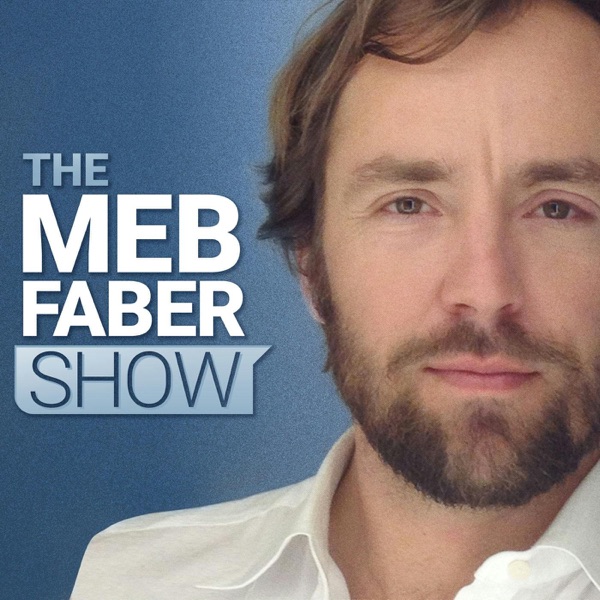
The Meb Faber Show - Better Investing
Ready to grow your wealth through smarter investing decisions? With The Meb Faber Show, bestselling author, entrepreneur, and investment fund manager, Meb Faber, brings you insights on today’s markets and the art of investing. Featuring some of the top investment professionals in the world as his guests, Meb will help you interpret global equity, bond, and commodity markets just like the pros. Whether it’s smart beta, trend following, value investing, or any other timely market topic, each week you’ll hear real market wisdom from the smartest minds in investing today. Better investing starts here. For more information on Meb, please visit MebFaber.com. For more on Cambria Investment Management, visit CambriaInvestments.com.
- Investing chart
- #166
- Episodes
- 724
- Releases
- Weekly
- Typical length
- 48 min
- On air since
- 2016
- Latest episode
- 4 days ago
Episodes
724 episodes, newest first
-
24 min
Cambria Fund Profile – Asset Allocation Suite
Show notes
In the latest podcast episode, I discuss three Cambria funds that each wrap a globally diversified portfolio into a single ETF: the Cambria Global Asset Allocation ETF (GAA), the Cambria Global Momentum ETF (GMOM), and the Cambria Trinity ETF (TRTY).
I share my perspective on why the traditional 60/40 portfolio may disappoint from today’s starting valuations and why going global and keeping fees low matters more than picking the “perfect” allocation. Then I walk through GAA, GMOM and TRTY.
Learn More:
Cambria Global Asset Allocation ETF (GAA): https://cambriafunds.com/gaa
Cambria Global Momentum ETF (GMOM): https://cambriafunds.com/gmom
Cambria Trinity ETF (TRTY): https://cambriafunds.com/trty
Global Asset Allocation (free book download): https://www.cambriainvestments.com/global-asset-
allocation-book/
Contact us at info@cambriainvestments.com, 310-683-5500
TO DETERMINE IF THE FUND IS AN APPROPRIATE INVESTMENT FOR YOU, CAREFULLY CONSIDER THE FUND'S INVESTMENT OBJECTIVES, RISK FACTORS, CHARGES AND EXPENSES BEFORE INVESTING. THIS AND OTHER INFORMATION CAN BE FOUND IN THE FUND'S PROSPECTUS WHICH MAY BE OBTAINED BY CALLING 855-383-4636 (ETF INFO) OR VISITING OUR WEBSITE AT WWW.CAMBRIAFUNDS.COM. READ THE PROSPECTUS CAREFULLY BEFORE INVESTING OR SENDING MONEY.
The Cambria ETFs are distributed by ALPS Distributors Inc., 1290 Broadway, Suite 1000, Denver, CO 80203, which is not affiliated with Cambria Investment Management, LP, the Investment Adviser for the Fund.
Investing involves risk, including potential loss of capital.
-
1 hr 1 min
StoneX' Vincent Deluard: The S&P Is Hiding a Bear Market | #655
Episode 655
Show notes
My guest today is Vincent Deluard, Director of Global Macro Strategy at StoneX.
In today’s episode, Vincent explains why he’s turning bearish on stocks after years of being a bull. He shares why tax collections are his favorite gauge of the economy, why the world is really paying $150 to $200 for oil and why Europe resembles Japan in 2012, just uglier.
To close, Vincent makes the case for owning the yen, Korean won and UK stocks.
(0:00) Bull Market or Bear Market?
(3:04) The Bifurcated Economy
(6:50) Turning Bearish on Stocks
(10:31) Midterm Politics and the Policy Put
(14:20) Shadow Oil and Inflation
(22:47) Shadow VIX and Market Churn
(26:40) Europe Looking Like Japan
(38:54) Bond Yields and Global Rotation
(46:08) Brazil, Korea, and France
-----
Sponsors:
Upwork is the world's largest human and AI-powered freelance marketplace to hire top talent—trusted by businesses and professionals worldwide.
-----
Follow Meb onX,LinkedIn andYouTube
For detailed show notes, click here
To learn more about our funds and follow us, subscribe to our mailing list or visit us athttp://www.cambriainvestments.com/
-----
Follow The Idea Farm: X | LinkedIn | Instagram | TikTok
-----
Interested in sponsoring the show? Email us at Feedback@TheMebFaberShow.com
-----
Past guests include Ed Thorp, Richard Thaler, Jeremy Grantham, Joel Greenblatt, Campbell Harvey, Ivy Zelman, Kathryn Kaminski, Jason Calacanis, Whitney Baker, Aswath Damodaran, Howard Marks, Tom Barton, and many more.
-----
Meb's invested in some awesome startups that have passed along discounts to our listeners. Check them out here!
-----
Editing and post-production work for this episode was provided by The Podcast Consultant (https://thepodcastconsultant.com/).
-
49 min
Citi's Dirk Willer on Why You Buy the Bubble | #654
Episode 654
Show notes
My guest today is Dirk Willer, Head of Global Macro, Asset Allocation and Emerging Market Strategy at Citi.
In today’s episode, Dirk says we’re in an AI bubble and why that’s a reason to buy, not sell. He shares why the bond selloff relates to growth rather than deficits, how the Warsh Fed echoes Greenspan and why Brazil is one of his favorite markets.
To close, Dirk shares his best hedges for when the bubble finally bursts.
(0:00) Dirk Willer
(3:52) Trading Bubbles and Fed Liquidity
(9:10) Sponsor: Upwork
(9:51) The Fed Cycle and Bond Timing
(13:45) Treasury Supply and Treasury Myths
(20:25) Dollar Strength and Global Macro
(25:10) Brazil, Asia, and China
(32:06) Sponsor: Meb Faber
(32:46) Gold, Copper, and Macro Signals
(40:00) Bubble Indicators and Hedging
-----
Sponsors:
Upwork is the world's largest human and AI-powered freelance marketplace to hire top talent—trusted by businesses and professionals worldwide.
-----
Follow Meb onX,LinkedIn andYouTube
For detailed show notes, click here
To learn more about our funds and follow us, subscribe to our mailing list or visit us athttp://www.cambriainvestments.com/
-----
Follow The Idea Farm: X | LinkedIn | Instagram | TikTok
-----
Interested in sponsoring the show? Email us at Feedback@TheMebFaberShow.com
-----
Past guests include Ed Thorp, Richard Thaler, Jeremy Grantham, Joel Greenblatt, Campbell Harvey, Ivy Zelman, Kathryn Kaminski, Jason Calacanis, Whitney Baker, Aswath Damodaran, Howard Marks, Tom Barton, and many more.
-----
Meb's invested in some awesome startups that have passed along discounts to our listeners. Check them out here!
-----
Editing and post-production work for this episode was provided by The Podcast Consultant (https://thepodcastconsultant.com/).
-
46 min
Andrew Ang: Should AI Agents Run Your Asset Allocation? | #653
Episode 653
Show notes
My guest today is Andrew Ang, Founder of Tau Balance and professor at Columbia University. He previously ran factor investing at BlackRock.
In today's episode, Andrew explains how a swarm of AI agents can reinvent the investment workflow rather than automating pieces of it. He shows how specialized agents, each running its own asset class or portfolio method, vote on one another's allocation calls. He also argues for diversification across signals, factors and time. To close, Andrew reveals how the quiet drag of taxes erases roughly 36% of a stock investor's returns over 30 years.
(0:00) Starts
(3:09) The Self-Driving Investment Portfolio with AI
(8:08) Evaluating AI-Driven Investment Outputs
(14:41) Multi-Level Diversification in Factor Investing
(22:08) Factor Weighting, Timing, and Model Diversification
(24:27) The Long-Term Drag of Taxes on Equity Returns
(33:24) Rising Taxes: Strategies and Asset Location
(37:53) Tax Alpha vs. Investment Alpha & Market Impact
(42:08) Tax-Aware Bond Strategies
-----
Sponsors:
Upwork is the world's largest human and AI-powered freelance marketplace to hire top talent—trusted by businesses and professionals worldwide.
-----
Follow Meb onX,LinkedIn andYouTube
For detailed show notes, click here
To learn more about our funds and follow us, subscribe to our mailing list or visit us athttp://www.cambriainvestments.com/
-----
Follow The Idea Farm: X | LinkedIn | Instagram | TikTok
-----
Interested in sponsoring the show? Email us at Feedback@TheMebFaberShow.com
-----
Past guests include Ed Thorp, Richard Thaler, Jeremy Grantham, Joel Greenblatt, Campbell Harvey, Ivy Zelman, Kathryn Kaminski, Jason Calacanis, Whitney Baker, Aswath Damodaran, Howard Marks, Tom Barton, and many more.
-----
Meb's invested in some awesome startups that have passed along discounts to our listeners. Check them out here!
-----
Editing and post-production work for this episode was provided by The Podcast Consultant (https://thepodcastconsultant.com/).
-
13 min
Cambria Fund Profile: Shareholder Yield Suite
Show notes
In the latest podcast episode, I discuss five Cambria funds that each apply the same shareholder yield discipline, emphasizing companies that return cash to shareholders through dividends and buybacks.
I share my perspective on why focusing on dividends alone misses most of the story, how buybacks grew to rival and then surpass dividends in some parts of the world, and why valuation matters when companies repurchase their own shares. Then I walk through SYLD, FYLD, EYLD, MYLD and LYLD. Learn More:
Cambria Shareholder Yield ETF (SYLD): https://cambriafunds.com/syld
Cambria Foreign Shareholder Yield ETF (FYLD): https://cambriafunds.com/fyld
Cambria Emerging Shareholder Yield ETF (EYLD): https://cambriafunds.com/eyld
Cambria Micro & SmallCap Shareholder Yield ETF (MYLD): https://cambriafunds.com/myld
Cambria Large Cap Shareholder Yield ETF (LYLD): https://cambriafunds.com/lyld
Shareholder Yield (free book download): https://www.cambriainvestments.com/shareholder-yield-book/
Contact us at info@cambriainvestments.com, 310-683-5500
TO DETERMINE IF THE FUND IS AN APPROPRIATE INVESTMENT FOR YOU, CAREFULLY CONSIDER THE FUND'S INVESTMENT OBJECTIVES, RISK FACTORS, CHARGES AND EXPENSES BEFORE INVESTING. THIS AND OTHER INFORMATION CAN BE FOUND IN THE FUND'S PROSPECTUS WHICH MAY BE OBTAINED BY CALLING 855-383-4636 (ETF INFO) OR VISITING OUR WEBSITE AT http://WWW.CAMBRIAFUNDS.COM. READ THE PROSPECTUS CAREFULLY BEFORE INVESTING OR SENDING MONEY.
The Cambria ETFs are distributed by ALPS Distributors Inc., 1290 Broadway, Suite 1000, Denver, CO 80203, which is not affiliated with Cambria Investment Management, LP, the Investment Adviser for the Fund.
Investing involves risk, including potential loss of capital.
-
37 min
Dave Iben: The World Is on Sale While America Trades at a Premium | #652
Show notes
In today's episode, Dave draws on 45 years and over 100 countries to argue why scarcity still matters in a world obsessed with infinite money and AI. He makes the case that the world trades at a discount while America sits at record valuations.
To close, Dave explains why undervalued commodities eventually catch up with inflation.
(0:00) Starts
(5:13) Dave Iben on investing in scarce assets
(9:24) Accessing farmland and global agricultural assets through public markets
(11:34) Finding value in emerging markets, with a focus on South Korea
(18:18) Portfolio management, valuation risk in S&P 500 and AI stocks
(24:36) Historical parallels, underweighting the index, and finding stock ideas in unique countries
(28:33) Investing in China, India, nuclear power, and other overlooked Asian markets
(31:27) Brazil, Argentina, scarcity, local sentiment, and the role of AI and human judgment
-----
Sponsor:
Upwork is the world's largest human and AI-powered freelance marketplace to hire top talent—trusted by businesses and professionals worldwide.
-----
Follow Meb on X, LinkedIn and YouTube
For detailed show notes, click here
To learn more about our funds and follow us, subscribe to our mailing list or visit us athttp://www.cambriainvestments.com/
-----
Follow The Idea Farm: X | LinkedIn | Instagram | TikTok
-----
Interested in sponsoring the show? Email us at Feedback@TheMebFaberShow.com
-----
Past guests include Ed Thorp, Richard Thaler, Jeremy Grantham, Joel Greenblatt, Campbell Harvey, Ivy Zelman, Kathryn Kaminski, Jason Calacanis, Whitney Baker, Aswath Damodaran, Howard Marks, Tom Barton, and many more.
-----
Meb's invested in some awesome startups that have passed along discounts to our listeners. Check them out here!
-----
Editing and post-production work for this episode was provided by The Podcast Consultant (https://thepodcastconsultant.com/).
-
43 min
Roger Ibbotson - Why Isn’t Everyone Rich? | #651
Episode 651
Show notes
Today’s guest is Roger Ibbotson, a finance professor at Yale for four decades and founder of Ibbotson Associates.
In today’s episode, Roger shares a century of stock and bond data and how one dollar became fifteen thousand in large caps over a hundred years. He explains why most people never capture those returns, and why total returns went unmeasured for decades. To close, Roger makes the case for young investors owning nothing but stocks and forecasts the next twenty five years.
(0:00) Introduction of Roger Ibbotson
(1:34) Overview of "Centuries of Stock and Bond Returns"
(5:15) The challenges of market timing
(10:19) Market cycles, risk, and the role of human capital for young investors
(12:30) Historical bond yields, probability of ruin, and small caps vs. long bonds
(19:13) Investor preferences and historical market forecasts
(23:41) Nominal vs. real returns, inflation, and bond yields
(29:17) Valuation metrics, market anomalies, and long-term outlook
(33:15) Buybacks vs. dividends and private company valuations
(37:12) IPO trends
-----
Sponsors:
Farmland LP is one of the largest investment funds in the US focused on converting chemical-based conventional farmland to organic, sustainably-managed farmland using a value-add commercial real estate strategy in the agriculture sector.
Upwork is the world's largest human and AI-powered freelance marketplace to hire top talent—trusted by businesses and professionals worldwide.
-----
Follow Meb on X, LinkedIn and YouTube
For detailed show notes, click here
To learn more about our funds and follow us, subscribe to our mailing list or visit us athttp://www.cambriainvestments.com/
-----
Follow The Idea Farm: X | LinkedIn | Instagram | TikTok
-----
Interested in sponsoring the show? Email us at Feedback@TheMebFaberShow.com
-----
Past guests include Ed Thorp, Richard Thaler, Jeremy Grantham, Joel Greenblatt, Campbell Harvey, Ivy Zelman, Kathryn Kaminski, Jason Calacanis, Whitney Baker, Aswath Damodaran, Howard Marks, Tom Barton, and many more.
-----
Meb's invested in some awesome startups that have passed along discounts to our listeners. Check them out here!
-----
Editing and post-production work for this episode was provided by The Podcast Consultant (https://thepodcastconsultant.com/).
-
52 min
FT’s Robin Wigglesworth: Why Bonds, Not Stocks, Rule Everything Around Us | #650
Episode 650
Show notes
Today’s guest is Robin Wigglesworth, editor of FT Alphaville at the Financial Times and the author of A Fabulous Debt: The Epic Story of How Bonds Built the Modern World.
In today’s episode, Robin makes the case that bonds, not stocks, are the bedrock of finance and quietly built the modern world. He explores the hidden plumbing beneath it, from the $12 trillion repo market to the leverage lurking in Treasuries, and why fixed income ETFs are rewiring how bonds trade.
(0:00) Starts
(2:39) Robin Wigglesworth on the strength of bonds
(3:57) Political influence and origins of the bond market
(8:09) Evolution, creditworthiness, and historical impacts of bonds
(16:34) Memorable defaults, financial crises, and scams
(20:04) Bond market innovations and securitization
(23:52) Sovereign debt concerns
(28:03) Stories, misconceptions, and recent bond market events
(38:43) Innovations, future trends, and misunderstandings in income investments
(43:33) The rise of private credit and liquidity risks
-----
Sponsors:
Upwork is the world's largest human and AI-powered freelance marketplace to hire top talent—trusted by businesses and professionals worldwide.
-----
Follow Meb onX,LinkedIn andYouTube
For detailed show notes, click here
To learn more about our funds and follow us, subscribe to our mailing list or visit us athttp://www.cambriainvestments.com/
-----
Follow The Idea Farm: X | LinkedIn | Instagram | TikTok
-----
Interested in sponsoring the show? Email us at Feedback@TheMebFaberShow.com
-----
Past guests include Ed Thorp, Richard Thaler, Jeremy Grantham, Joel Greenblatt, Campbell Harvey, Ivy Zelman, Kathryn Kaminski, Jason Calacanis, Whitney Baker, Aswath Damodaran, Howard Marks, Tom Barton, and many more.
-----
Meb's invested in some awesome startups that have passed along discounts to our listeners. Check them out here!
-----
Editing and post-production work for this episode was provided by The Podcast Consultant (https://thepodcastconsultant.com/).
-
51 min
Why Gold Stopped Being a Commodity (AllianceBernstein’s Inigo Fraser Jenkins) | #649
Show notes
Today’s guest is Inigo Fraser Jenkins, Chief Investment Strategist at AllianceBernstein.
In today’s episode, Inigo argues that the golden era of easy diversification and high real returns is ending. He defends US equity exceptionalism while declining to defend the dollar.
To close, he makes the case for gold and explains why bonds may no longer diversify equities.
(0:00) Starts
(0:54) Is US exceptionalism dead?
(10:27) US vs. foreign profit margins
(15:12) Diversifying beyond 60/40
(21:05) Gold is money and the role it plays in portfolios
(33:08) Higher expected future inflation
(35:26) The bull case for healthcare
(39:24) Inflation volatility and commodity demand
(42:38) AI's impact on the labor market
-----
Sponsors:
Farmland LP is one of the largest investment funds in the US focused on converting chemical-based conventional farmland to organic, sustainably-managed farmland using a value-add commercial real estate strategy in the agriculture sector.
Upwork is the world's largest human and AI-powered freelance marketplace to hire top talent—trusted by businesses and professionals worldwide.
-----
Follow Meb onX,LinkedIn andYouTube
For detailed show notes, click here
To learn more about our funds and follow us, subscribe to our mailing list or visit us athttp://www.cambriainvestments.com/
-----
Follow The Idea Farm: X | LinkedIn | Instagram | TikTok
-----
Interested in sponsoring the show? Email us at Feedback@TheMebFaberShow.com
-----
Past guests include Ed Thorp, Richard Thaler, Jeremy Grantham, Joel Greenblatt, Campbell Harvey, Ivy Zelman, Kathryn Kaminski, Jason Calacanis, Whitney Baker, Aswath Damodaran, Howard Marks, Tom Barton, and many more.
-----
Meb's invested in some awesome startups that have passed along discounts to our listeners. Check them out here!
-----
Editing and post-production work for this episode was provided by The Podcast Consultant (https://thepodcastconsultant.com/).
-
46 min
Paul Kedrosky: AI is the First Bubble With Every Ingredient at Once | #648
Episode 648
Show notes
Today’s guest is Paul Kedrosky, a fellow at the MIT Institute for the Digital Economy, partner at SK Ventures and former sell-side analyst.
In today’s episode, Paul Kedrosky explains why AI sits at the intersection of every force behind the biggest bubbles. He walks through why tokens are the fastest-deflating commodity ever, why more than half the data center buildout runs on debt instead of cash flow, and why an IPO wave pressures the market’s biggest winners.
To close, Paul argues AI already drives most US GDP growth, and revisits how badly humans misjudge scale.
(0:00) Introduction
(1:19) AI solving its own problems and historical economic crises
(3:14) The impact of AI on energy and emissions
(7:25) AI’s economic implications
(10:45) Financing and economic impact of data centers
(18:42) Deflationary effects of AI tokens and tech company debt
(22:26) Tech companies as utilities and the IPO surge
(28:01) High PE ratios and valuation risks
(34:04) AI model convergence and diminishing returns
(40:22) Global attitudes toward AI and technology adoption
-----
Sponsor:Upwork is the world's largest human and AI-powered freelance marketplace to hire top talent—trusted by businesses and professionals worldwide.
-----
Follow Meb onX,LinkedIn andYouTube
For detailed show notes, click here
To learn more about our funds and follow us, subscribe to our mailing list or visit us athttp://www.cambriainvestments.com/
-----
Follow The Idea Farm: X | LinkedIn | Instagram | TikTok
-----
Interested in sponsoring the show? Email us at Feedback@TheMebFaberShow.com
-----
Past guests include Ed Thorp, Richard Thaler, Jeremy Grantham, Joel Greenblatt, Campbell Harvey, Ivy Zelman, Kathryn Kaminski, Jason Calacanis, Whitney Baker, Aswath Damodaran, Howard Marks, Tom Barton, and many more.
-----
Meb's invested in some awesome startups that have passed along discounts to our listeners. Check them out here!
-----
Editing and post-production work for this episode was provided by The Podcast Consultant (https://thepodcastconsultant.com/).
-
47 min
Jerry Parker on Big Game Hunting in the Market | #647
Episode 647
Show notes
Today’s guest is Jerry Parker, founder and CEO of Chesapeake Capital and one of the original Turtles trained by Richard Dennis. Together we run the Cambria Chesapeake Pure Trend ETF (MFUT).
In today's episode, Jerry explains why managed futures isn't the same as trend following. He breaks down the math and psychology of hunting outliers, letting a few winners pay for many small losses, and why he'd never chase crisis alpha at the cost of returns. To close, Jerry explains why MFUT trades individual stocks rather than just indices.
Learn more about the Cambria Chesapeake Pure Trend ETF http://www.cambriafunds.com/mfut
Have questions? Reach out to us any time at info@cambriainvestments.com.
Full show notes: Link
(0:00) Jerry Parker
(3:09) Trend following vs managed futures
(11:00) Misconceptions about crisis alpha
(18:42) Portfolio construction, volatility targeting, and strategy complexity
(23:47) Trend following in individual stocks
(32:18) Performance reflection and importance of sticking to a strategy
(37:46) Allocation challenges and memorable recent trades
TO DETERMINE IF THIS FUND IS AN APPROPRIATE INVESTMENT FOR YOU, CAREFULLY CONSIDER THE FUND'S INVESTMENT OBJECTIVES, RISK FACTORS, CHARGES AND EXPENSE BEFORE INVESTING. THIS AND OTHER INFORMATION CAN BE FOUND IN THE FUND'S FULL OR SUMMARY PROSPECTUS WHICH MAY BE OBTAINED BY CALLING 855-383-4636 (ETF INFO) OR VISITING OUR WEBSITE AT WWW.CAMBRIAFUNDS.COM. READ THE PROSPECTUS OR SUMMARY PROSPECTUS CAREFULLY BEFORE INVESTING OR SENDING MONEY.
Past performance is not indicative of future results. The material above has been provided for informational purposes only and is not intended as legal or investment advice or a recommendation of any particular security or strategy.
The Cambria ETFs are distributed by ALPS Distributors Inc., 1290 Broadway, Suite 1000, Denver, CO 80203, which is not affiliated with Cambria Investment Management, LP.
MFUT: This fund is new and has a limited operating history. There is no guarantee that the Fund will achieve its investment goal. Investing involves risk, including the possible loss of principal. Commodities Risk: Exposure to the commodities markets may subject the Fund to greater volatility than investments in traditional securities. Fixed Income Securities Risk: The prices of fixed income securities respond to economic developments, particularly interest rate changes, as well as to changes in an issuer’s credit rating or market perceptions about the creditworthiness of an issuer. Foreign Securities Risk: The Fund may invest in foreign securities. Such investments involve certain risks not involved in domestic investments and may experience more rapid and extreme changes in value than investments in securities of U.S. companies. Leverage Risk: The derivative instruments in which the Fund may invest provide the economic effect of financial leverage by creating additional investment exposure to the underlying instrument, as well as the potential for greater loss. If the Fund uses leverage through purchasing derivative instruments, the Fund has the risk that losses may exceed the net assets of the Fund. Derivatives Risk: Derivatives are financial instruments that derive value from the underlying reference asset or assets, such as stocks, bonds, commodities, currencies, funds (including ETFs), interest rates or indexes. Short Selling Risk: If a security sold short or other instrument increases in price, the Fund may have to cover its short position at a higher price than the short sale price, resulting in a loss. Commodity-Linked Derivatives Tax Risk: The tax treatment of commodity-linked derivative instruments may be adversely affected by changes in legislation, regulations, or other legally binding authority. Non-Diversification Risk: Because the Fund is “non-diversified,” it may invest a greater percentage of its assets in the securities of a single issuer or a smaller number of issuers than if it was a diversified fund.
Commodities Risk. Exposure to the commodities markets may subject the Fund to greater volatility than investments in traditional securities. Fixed Income Securities Risk. The prices of fixed income securities respond to economic developments, particularly interest rate changes, as well as to changes in an issuer’s credit rating or market perceptions about the creditworthiness of an issuer. Foreign Securities Risk. The Fund may invest in foreign securities. Such investments involve certain risks not involved in domestic investments and may experience more rapid and extreme changes in value than investments in securities of U.S. companies. Leverage Risk. The derivative instruments in which the Fund may invest provide the economic effect of financial leverage by creating additional investment exposure to the underlying instrument, as well as the potential for greater loss. If the Fund uses leverage through purchasing derivative instruments, the Fund has the risk that losses may exceed the net assets of the Fund. Derivatives Risk. Derivatives are financial instruments that derive value from the underlying reference asset or assets, such as stocks, bonds, commodities, currencies, funds (including ETFs), interest rates or indexes. Short Selling Risk. If a security sold short or other instrument increases in price, the Fund may have to cover its short position at a higher price than the short sale price, resulting in a loss. Commodity-Linked Derivatives Tax Risk. The tax treatment of commodity-linked derivative instruments may be adversely affected by changes in legislation, regulations, or other legally binding authority. Non-Diversification Risk. Because the Fund is “non-diversified,” it may invest a greater percentage of its assets in the securities of a single issuer or a smaller number of issuers than if it was a diversified fund. New Fund Risk. The Fund is a recently organized management investment company with no operating history.
Diversification does not guarantee against a loss.
Definitions:
Alpha: The portion of an investment's return that differs from its benchmark after adjusting for risk, measured over a specific historical period and not predictive of future results.
Crisis Alpha: Returns a strategy seeks to generate during periods of significant equity market stress — a stated objective, not a guaranteed or expected outcome.
Stop Loss: A standing order to sell a security once it reaches a specified price, which does not guarantee execution at that price in fast-moving or gapping markets.
Trailing Stop: A stop order set at a fixed distance from the market price that adjusts upward as the price rises and holds when it falls, carrying the same execution risks as a stop loss.
Shorting: Selling a borrowed security intending to repurchase it later, which profits if the price falls and carries theoretically unlimited loss potential if the price rises.
Correlation: A statistical measure of how two assets move relative to one another, ranging from -1.0 to +1.0, which changes over time and often rises during market stress.
Derivatives: Financial contracts deriving value from an underlying asset, rate, or index — including futures, options, and swaps — that may involve leverage, counterparty risk, and losses exceeding the initial investment.
Futures: Standardized exchange-traded contracts to buy or sell an asset at a set price on a future date, traded on margin so that leverage magnifies both gains and losses.
Long: Owning or holding a position expected to benefit from an increase in the price of the underlying asset.
S&P GSCI (formerly the Goldman Sachs Commodity Index): A production-weighted, energy-heavy index of commodity futures created by Goldman Sachs in 1991 and acquired by S&P in 2007, which is unmanaged and cannot be invested in directly.
Get Stopped Out: Having a position closed automatically when a stop order triggers, which can occur on a temporary price move and exit the position before any recovery.
MSCI EAFE Index: A market-capitalization-weighted index of developed-market equities outside the US and Canada, covering Europe, Australasia, and the Far East, which is unmanaged and not directly investable.
MSCI Emerging Markets Index: A market-capitalization-weighted index of equities across emerging-market countries, which is unmanaged and not directly investable.
Commodity Trading Advisor (CTA): An individual or firm advising others on futures, options on futures, or certain swaps, generally required to register with the CFTC and join the NFA — registration that implies no skill level or regulatory endorsement.
-
39 min
David Booth: 45 Years to $1 Trillion at Dimensional | #646
Episode 646
Show notes
Today’s guest is David Booth, founder of Dimensional Fund Advisors, which now manages over $1 trillion. He studied under Eugene Fama at Chicago and helped build one of the first index funds at Wells Fargo.
In today’s episode, David traces Dimensional’s arc from indexing’s earliest days at Wells Fargo to crossing $1 trillion in AUM this year. He shares what Gene Fama said when he got the call, the story of driving a client to Chicago to walk through the Fama-French paper, and why AI investing looks like the California gold rush.
To close, David makes the case for judging yourself by decisions, not outcomes.
Get David's book: Stay Calm: Learn to Embrace Uncertainty in Investing and Life
(0:00) Introduction
(0:58) David Booth's start to investing
(3:38) The beginnings of index funds and early challenges at Dimensional
(10:09) Long-term investment perspectives and the Fama-French three-factor model
(17:26) Dimensional’s educational focus and advisor partnerships
(20:21) Small cap value performance, AI & market trends
(23:26) Symbolism of bankrupt stock certificates and lessons on diversification
(25:44) Compounding for 45 years
(30:56) David's passion for Kansas basketball
-----
Sponsor: Upwork is the world's largest human and AI-powered freelance marketplace to hire top talent—trusted by businesses and professionals worldwide.
Follow Meb onX,LinkedIn andYouTube
For detailed show notes, click here
To learn more about our funds and follow us, subscribe to our mailing list or visit us athttp://www.cambriainvestments.com/
-----
Follow The Idea Farm: X | LinkedIn | Instagram | TikTok
-----
Interested in sponsoring the show? Email us at Feedback@TheMebFaberShow.com
-----
Past guests include Ed Thorp, Richard Thaler, Jeremy Grantham, Joel Greenblatt, Campbell Harvey, Ivy Zelman, Kathryn Kaminski, Jason Calacanis, Whitney Baker, Aswath Damodaran, Howard Marks, Tom Barton, and many more.
-----
Meb's invested in some awesome startups that have passed along discounts to our listeners. Check them out here!
-----
Editing and post-production work for this episode was provided by The Podcast Consultant (https://thepodcastconsultant.com/).
-
54 min
Luke Gromen: The Bull Market That Loses You Money | #645
Show notes
Today’s guest is Luke Gromen, founder of the macro research firm Forest for the Trees, or FFTT.
In today's episode, Luke argues that free trade is dead, and the US is pivoting to Hamiltonian economics: tariffs, reshoring, and a neutral reserve asset. He explains why the US Treasury can no longer be the world's reserve asset, why long bonds have become certificates of confiscation, and why gold belongs in every portfolio. To close, Luke explains why AI has become a snake eating its own tail on the government's tax base.
(0:00) Introduction
(2:38) The Stupid Washington Consensus and Hamiltonian Economics
(9:14) Portfolio positioning and real rates in the current regime
(15:19) Sponsor: Upwork
(16:17) Importance of real returns and gold
(21:18) US fiscal challenges and bond market outlook
(27:21) Gold performance, allocation strategies, and diversification
(35:09) Evaluating non-US equity markets and sectors
(40:54) Investing in electricity and industrials
(45:11) Risks, competition, and national security in the AI sector
-----
Sponsor: Upwork is the world's largest human and AI-powered freelance marketplace to hire top talent—trusted by businesses and professionals worldwide.
Follow Meb on X, LinkedIn and YouTube
For detailed show notes, click here
To learn more about our funds and follow us, subscribe to our mailing list or visit us at cambriainvestments.com
-----
Follow The Idea Farm: X | LinkedIn | Instagram | TikTok
-----
Interested in sponsoring the show? Email us at Feedback@TheMebFaberShow.com
-----
Past guests include Ed Thorp, Richard Thaler, Jeremy Grantham, Joel Greenblatt, Campbell Harvey, Ivy Zelman, Kathryn Kaminski, Jason Calacanis, Whitney Baker, Aswath Damodaran, Howard Marks, Tom Barton, and many more.
-----
Meb's invested in some awesome startups that have passed along discounts to our listeners. Check them out here!
-----
Editing and post-production work for this episode was provided by The Podcast Consultant (https://thepodcastconsultant.com).
-
13 min
Teaser: Investing in America: The Rise Of A 250-Year Bull Market
Show notes
In today's episode, I read the opening of my new book, Investing in America: The Rise of a 250-Year Bull Market, plus a couple of sidebars. The book is available now. Grab a copy on Amazon or learn more at http://www.investinginamericabook.com/.
-----
Follow Meb on X, LinkedIn and YouTube
To learn more about our funds and follow us, subscribe to our mailing list or visit us at cambriainvestments.com
-----
Follow The Idea Farm: X | LinkedIn | Instagram | TikTok
-----
Interested in sponsoring the show? Email us at Feedback@TheMebFaberShow.com
-----
Past guests include Ed Thorp, Richard Thaler, Jeremy Grantham, Joel Greenblatt, Campbell Harvey, Ivy Zelman, Kathryn Kaminski, Jason Calacanis, Whitney Baker, Aswath Damodaran, Howard Marks, Tom Barton, and many more.
-----
Meb's invested in some awesome startups that have passed along discounts to our listeners. Check them out here!
-----
Editing and post-production work for this episode was provided by The Podcast Consultant (https://thepodcastconsultant.com).
-
41 min
Liaquat Ahamed on the Railroad Bubble That Crashed the World | #642
Show notes
Today’s guest is Liaquat Ahamed, the Pulitzer Prize–winning author of Lords of Finance: The Bankers Who Broke the World, one of the greatest financial history books ever written. His new book is called 1873: The Rothschilds, the First Great Depression, and the Making of the Modern World.
In today’s episode, Liaquat shares the story of the world’s first truly global financial crisis. He walks through the Rothschild-led bond boom that funded railroads on three continents, the German IPO mania sparked by French war reparations, and the monetary blunder of abandoning silver that turned a crash into twenty years of deflation.
(0:00) Starts
(1:03) The 1873 financial crisis: causes and global impact
(3:25) Railroads and the rise of the Rothschilds
(6:37) Stock market mania and bubbles in Germany
(10:58) The role of precious metals
(15:20) The economic, political, and societal effects of deflation
(26:05) Comparisons to modern financial crises and populist movements
(32:48) Lessons from history: Lords of Finance
(36:46) Modern currency systems
-----
Follow Meb onX,LinkedIn andYouTube
For detailed show notes, click here
To learn more about our funds and follow us, subscribe to our mailing list or visit us athttp://www.cambriainvestments.com/
-----
Follow The Idea Farm: X | LinkedIn | Instagram | TikTok
-----
Interested in sponsoring the show? Email us at Feedback@TheMebFaberShow.com
-----
Past guests include Ed Thorp, Richard Thaler, Jeremy Grantham, Joel Greenblatt, Campbell Harvey, Ivy Zelman, Kathryn Kaminski, Jason Calacanis, Whitney Baker, Aswath Damodaran, Howard Marks, Tom Barton, and many more.
-----
Meb's invested in some awesome startups that have passed along discounts to our listeners. Check them out here!
-----
Editing and post-production work for this episode was provided by The Podcast Consultant (https://thepodcastconsultant.com/).
-
58 min
Zombie Stocks and Hidden Value With Bob Robotti | #641
Show notes
Today’s guest is Bob Robotti, founder and CIO of Robotti and Company Advisors, which he’s been running the firm since 1983.
In today’s episode, Bob explains why volatile markets driven by passive flows keep handing opportunities to stock pickers. He makes the case for offshore oil services and homebuilders, shows why zombie companies can be dollars trading for 20 cents, and argues 2% inflation is a pipe dream.
To close, Bob shares the biggest loss of his career, selling a winner too early.
(0:00) Starts
(1:23) Bob Robotti's investment framework and value traps
(3:01) Evolution of investment strategies and market consistency
(5:22) Sector opportunities in energy and homebuilding
(14:13) Managing cyclical and long-term investments
(17:05) Housing policies, build-to-rent, and affordability
(20:19) Homebuilding outlook, Airbnb, and commercial real estate
(22:32) Small cap opportunities
(27:40) Distressed investing and zombie companies
(37:35) Inflation and interest rates
(45:47) Building a lasting investment firm and Bob's most memorable investment
-----
Follow Meb onX,LinkedIn andYouTube
For detailed show notes, click here
To learn more about our funds and follow us, subscribe to our mailing list or visit us athttp://www.cambriainvestments.com/
-----
Follow The Idea Farm: X | LinkedIn | Instagram | TikTok
-----
Interested in sponsoring the show? Email us at Feedback@TheMebFaberShow.com
-----
Past guests include Ed Thorp, Richard Thaler, Jeremy Grantham, Joel Greenblatt, Campbell Harvey, Ivy Zelman, Kathryn Kaminski, Jason Calacanis, Whitney Baker, Aswath Damodaran, Howard Marks, Tom Barton, and many more.
-----
Meb's invested in some awesome startups that have passed along discounts to our listeners. Check them out here!
-----
Editing and post-production work for this episode was provided by The Podcast Consultant (https://thepodcastconsultant.com/).
-
48 min
Muddy Waters’ Carson Block on How AI Could Unwind the S&P 500 | #640
Show notes
My guest today is Carson Block, founder of Muddy Waters Research & Muddy Waters Capital and one of the last short sellers still standing.
In today’s episode, Carson Block explains why he thinks AI could displace 15% of knowledge workers and unwind the market’s biggest stocks. He breaks down his short of SoFi’s aggressive loan accounting, why record-tight credit spreads worry him, and how he trades that risk with put spreads.
To close, Carson explains why he still calls China uninvestable and recounts his hardest battles.
(0:00) Starts
(1:02) Carson Block on the evolution of short selling
(3:03) The impact of AI on jobs, economy, and markets
(9:43) Evolving Muddy Waters' business model beyond short-selling
(13:32) Investing in momentum and junior gold miners
(17:52) Navigating markets amid AI disruption and labor market impact
(25:21) Thoughts on historically low corporate yield spreads
(30:25) Carson's short call on SoFi
(38:10) Carson's most memorable investment
-----
Follow Meb onX,LinkedIn andYouTube
For detailed show notes, click here
To learn more about our funds and follow us, subscribe to our mailing list or visit us athttp://www.cambriainvestments.com/
-----
Follow The Idea Farm: X | LinkedIn | Instagram | TikTok
-----
Interested in sponsoring the show? Email us at Feedback@TheMebFaberShow.com
-----
Past guests include Ed Thorp, Richard Thaler, Jeremy Grantham, Joel Greenblatt, Campbell Harvey, Ivy Zelman, Kathryn Kaminski, Jason Calacanis, Whitney Baker, Aswath Damodaran, Howard Marks, Tom Barton, and many more.
-----
Meb's invested in some awesome startups that have passed along discounts to our listeners. Check them out here!
-----
Editing and post-production work for this episode was provided by The Podcast Consultant (https://thepodcastconsultant.com/).
-
49 min
Joseph Moore: How to Get Rich in American History: 300 Years of Financial Advice That Worked (& Didn’t) | #639
Episode 640
Show notes
My guest today is Joseph Moore, a historian and former professor who spent over a decade in the archives studying 300 years of American financial advice, which he explains in his new book, How to Get Rich in American History: 300 Years of Financial Advice That Worked (& Didn’t).
In today’s episode, Joseph explains what 300 years of American financial advice reveals about getting rich. He shares why real estate barely appreciated for a century, why bonds beat stocks for decades, and how modern investing advice was born chasing inflation and taxes. To close, Joseph reveals the five timeless principles that built wealth in every era.
(0:00) Starts
(1:34) Joseph Moore shares a historical perspective on money
(13:04) Real estate investment strategies
(20:59) Stocks vs. bonds debate
(25:45) Should you try to beat the market?
(33:32) Key financial lessons from history
(39:54) Joseph's most memorable investments
(42:10) Surprising historical financial statistics
-----
Follow Meb onX,LinkedIn andYouTube
For detailed show notes, click here
To learn more about our funds and follow us, subscribe to our mailing list or visit us athttp://www.cambriainvestments.com/
-----
Follow The Idea Farm: X | LinkedIn | Instagram | TikTok
-----
Interested in sponsoring the show? Email us at Feedback@TheMebFaberShow.com
-----
Past guests include Ed Thorp, Richard Thaler, Jeremy Grantham, Joel Greenblatt, Campbell Harvey, Ivy Zelman, Kathryn Kaminski, Jason Calacanis, Whitney Baker, Aswath Damodaran, Howard Marks, Tom Barton, and many more.
-----
Meb's invested in some awesome startups that have passed along discounts to our listeners. Check them out here!
-----
Editing and post-production work for this episode was provided by The Podcast Consultant (https://thepodcastconsultant.com/).
-
55 min
The Secret Sauce Behind 250 Years of American Success (McKinsey’s Rebecca Anderson) | #638
Episode 636
Show notes
Today’s guest is Rebecca Anderson, a Senior Fellow at the McKinsey Global Institute, McKinsey’s business and economics research arm. She leads research on economic growth and the financial system, in the United States and globally.
In today’s episode, Rebecca shares her McKinsey report on what has powered America’s economy for 250 years: natural endowments, a culture of entrepreneurship, and the institutions that harnessed them. She examines labor force dynamism in the age of AI, the $2 trillion cost of reindustrialization, and a global balance sheet stretched to record highs.
(0:00) Starts
(1:11) Rebecca explains American's natural advantages
(9:11) US leadership in science, technology, and education
(16:29) AI, workforce transitions, and manufacturing ramp-up
(25:56) Infrastructure challenges and US-China comparisons
(33:38) US policy recommendations
(43:44) The global balance sheet
(52:14) Cultural attitudes and geopolitics
-----
Follow Meb onX,LinkedIn andYouTube
For detailed show notes, click here
To learn more about our funds and follow us, subscribe to our mailing list or visit us athttp://www.cambriainvestments.com/
-----
Follow The Idea Farm: X | LinkedIn | Instagram | TikTok
-----
Interested in sponsoring the show? Email us at Feedback@TheMebFaberShow.com
-----
Past guests include Ed Thorp, Richard Thaler, Jeremy Grantham, Joel Greenblatt, Campbell Harvey, Ivy Zelman, Kathryn Kaminski, Jason Calacanis, Whitney Baker, Aswath Damodaran, Howard Marks, Tom Barton, and many more.
-----
Meb's invested in some awesome startups that have passed along discounts to our listeners. Check them out here!
-----
Editing and post-production work for this episode was provided by The Podcast Consultant (https://thepodcastconsultant.com/).
-
54 min
Ben Carlson: The Numbers That Break Your Brain About Long Term Investing | #637
Show notes
Today’s guest is Ben Carlson of Ritholtz Wealth Management, author of A Wealth of Common Sense and host of the Animal Spirits podcast.
In today’s episode, Ben unpacks the counterintuitive math behind long term investing. He reveals that picking the wrong asset every year still makes money, that the average up year tops 20%, and that stocks grow less volatile than bonds the longer you hold. To close, Ben explains why patience has never been harder.
(0:00) Starts
(2:05) Ben Carlson on the secret to investing
(5:00) The worst investor ever
(15:20) Tax management as new alpha
(17:12) Inflation’s impact on asset classes
(21:06) "Now do Japan"
(33:02) Lessons from bear markets
(41:54) Discretionary investing challenges
(46:31) Poor performance of hyperactive traders
-----
Sponsor: Ivy Invest - To learn more about Ivy Invest's SEC-registered endowment-style fund, view the prospectus, and learn how to invest, visit ivyinvest.co/fund
-----
Follow Meb onX,LinkedIn andYouTube
For detailed show notes, click here
To learn more about our funds and follow us, subscribe to our mailing list or visit us athttp://www.cambriainvestments.com/
-----
Follow The Idea Farm: X | LinkedIn | Instagram | TikTok
-----
Interested in sponsoring the show? Email us at Feedback@TheMebFaberShow.com
-----
Past guests include Ed Thorp, Richard Thaler, Jeremy Grantham, Joel Greenblatt, Campbell Harvey, Ivy Zelman, Kathryn Kaminski, Jason Calacanis, Whitney Baker, Aswath Damodaran, Howard Marks, Tom Barton, and many more.
-----
Meb's invested in some awesome startups that have passed along discounts to our listeners. Check them out here!
-----
Editing and post-production work for this episode was provided by The Podcast Consultant (https://thepodcastconsultant.com/).
Investing lists
More Investing shows picked out from the charts









More in Investing
Placed highest on Apple Podcasts' Investing chart right now