Podcast
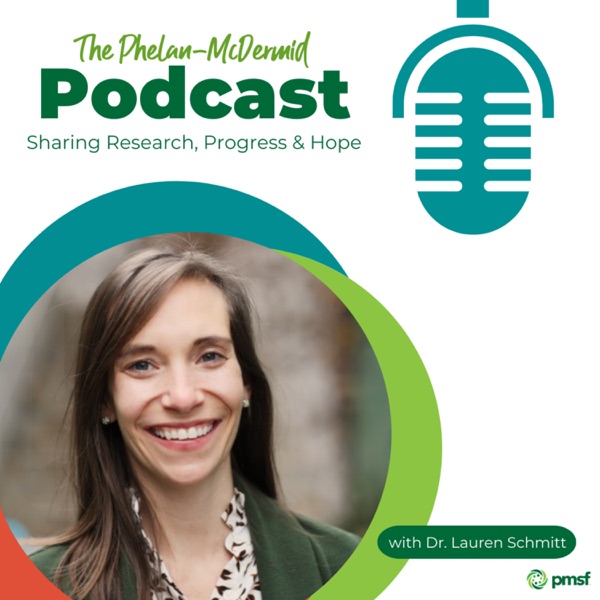
The Phelan-McDermid Podcast: Sharing Research, Progress, and Hope
Stay up-to-date on the cutting edge of science and medicine in the Phelan-McDermid syndrome field! Dr. Lauren Schmitt, the Chief Science Officer of the Phelan-McDermid Syndrome Foundation (PMSF), sits down with top experts driving groundbreaking research, treatment, and care. These engaging conversations deliver the latest breakthroughs in a way that's easy to understand, keeping our PMSF community informed and empowered. You won't want to miss this!
- On air since
- 2023
- Episodes
- 43
- Releases · typical length
- Every two weeks · 32 min
- Latest episode
- 5 days ago
Chart history since Oct 26
| Now | Chart | Peak | Since Oct 26 |
|---|---|---|---|
| 140 New | Life Sciences Arrived Nov 19 | #100 |
Episodes
43 episodes, newest first
-
46 min
Every Inch Counts: Updates on the Inchstone Project with Drs. Natasha Ludwig and Jenny Downs
Show notes
In this episode, we welcome Dr. Natasha Ludwig (Kennedy Krieger Institute / Johns Hopkins) and Dr. Jenny Downs (Kids Research Institute, Australia) for an exciting update on the Inchstone Project. The Inchstone Project is a cross-syndrome collaborative international effort to improve how we measure progress and quality of life for individuals with individuals with developmental and epileptic encephalopathies (DEEs), including Phelan-McDermid syndrome (PMS).
We discuss:
•
What the Inchstone Project is and why it matters
•
How families helped shape new research by contributing to the DEE Parent Speak Survey
•
Key findings on quality of life, including the importance of communication, cognitive skills, and touchscreen use
•
What “clinical meaningfulness” really means—and why small changes can have a big impact
•
How this research is informing clinical trial readiness and future interventions
•
What’s next for the Inchstone team, including new measures of awareness and a follow-up longitudinal study
PMS families made up nearly 20% of the study sample! This is such a powerful reminder that your participation is helping to change the research landscape.
Tune in to learn how every inchstone of progress matters—and how you’re helping move science forward.
Recorded: 7/22/2025
Initially Aired: 1/21/2025
Updates since the recording:
• Dr. Ludwig is a confirmed speaker at our 2026 PMSF Family Conference in Aurora, CO!
• Dr. Ludwig's paper on caregiver-reported quality of life in individuals with DEEs has been published! You can read the full text here: https://pmc.ncbi.nlm.nih.gov/articles/PMC12804316/ -
41 min
Every Voice Matters: The Next Chapter of ORCA
Show notes
Communication is about so much more than words. For individuals with Phelan-McDermid syndrome , meaningful communication can take many forms, from gestures and facial expressions to assistive communication devices to spoken words and phrases.
In this episode, Dr. Lauren is joined by Dr. Bryce Reeve and Kelly Gordon from Duke University to discuss the Observer-Reported Communication Ability (ORCA) measure, an innovative, caregiver-reported tool designed to capture the full range of communication abilities in individuals with rare neurodevelopmental disorders, including Phelan-McDermid syndrome.
Together, they explore how families have helped shape ORCA, why measuring even small changes in communication is critical for future clinical trials, and how collaboration with the FDA is helping advance this important work.
ORCA is entering an exciting new phase of research, and our PMSF families have an opportunity to contribute! Learn about the upcoming remote study, who is eligible to participate, and how to prepare by ensuring your loved one's genetic report is uploaded and curated in the PMS DataHub.
Resources:
• PMS DataHub
• DataHub questions and assistance: datahub@pmsf.org
• ORCA measureNote: Study eligibility includes a confirmed Phelan-McDermid syndrome diagnosis within the PMS DataHub, children ages 1 through 17, and from primarily English-speaking countries (e.g., United States, Canada, United Kingdom, and Australia). Recruitment details and availability may change.
-
32 min
Measuring Meaningful Progress in Phelan-McDermid Syndrome: Updates from the Inchstone Project
Show notes
How do we measure meaningful progress in individuals with Phelan-McDermid syndrome, especially when traditional developmental assessments often miss important milestones? How do we capture meaningful change in clinical trials, especially when traditional measures are not sensitive enough to things that actually matter to our families?
To help answer these questions, Dr. Lauren welcomes Dr. Natasha Ludwig from Kennedy Krieger Institute and Dr. Mary Wojnaroski from Nationwide Children’s Hospital to discuss the Inchstone Project and its latest project, Parents Speak Survey 2 (PSS2).
Learn how this innovative research is working to develop more inclusive outcome measures that capture meaningful changes in cognition, communication, behavior, and development across rare neurogenetic conditions, including Phelan-McDermid syndrome. Our guests discuss the importance of caregiver perspectives, collaboration with the FDA, and how better assessments can improve clinical trial readiness.
We also explore how families can participate in PSS2, a remote, study open to individuals ages one and older with Phelan-McDermid syndrome!
Learn more and participate: https://inchstoneproject.org/pss2/
-
24 min
The PMS DataHub: What Families Need to Know
Show notes
What is the PMS DataHub? And why does participation matter?
In this episode of the Phelan-McDermid Syndrome Podcast, Dr. Lauren is joined by Kathy Fiscus, PMSF Data Manager and co-principal investigator of the PMS DataHub, to explain how this important resource supports both families and Phelan-McDermid syndrome research.
Kathy breaks down the difference between the current PMS DataHub and the legacy Phelan-McDermid Syndrome International Registry (PMSIR), explains how genetic reports are curated, and shares how researchers can use registry information to identify potential participants for studies.
Families also will learn about tools available within the DataHub, including de-identified survey results, document storage and sharing, medication and symptom tracking, and a personal journal. The conversation also explains why keeping health information current and uploading a genetic report can be valuable as new research opportunities emerge.
Dr. Lauren ends the episode reminding families of children aged 1-17 years to upload their genetic reports if they are interested in joining the next phase of the Observer-Reported Communication Ability (ORCA) study. ORCA will exclusively be recruiting families who have curated genetic reports in the PMS DataHub. Tune in to future episode to learn even more about what the ORCA team has accomplished so far and about their new study!
Learn more at pmsf.org/DataHub or contact DataHub@pmsf.org for assistance.
Needing additional help? You can schedule DataHub Help Desk with Kathy here!
-
33 min
Diving into the Developmental Milestone Survey with Dan Gallo and Tessa Clarkson from Jaguar Gene Therapy
Show notes
In this episode of the Phelan-McDermid Syndrome Podcast: Sharing Research, Progress, and Hope, Lauren is joined by Dan Gallo, Executive Vice President and Head of Clinical Development and Medical Affairs at Jaguar Gene Therapy, and Tessa Clarkson, Clinical Development Consultant at Jaguar Gene Therapy.
They discuss Jaguar’s Developmental Milestone Survey, a study designed to better understand how people with Phelan-McDermid syndrome gain, lose, and potentially regain meaningful developmental skills. The goal is to identify developmental patterns that could help researchers measure meaningful treatment effects and inform future clinical trials—including potentially reducing the need for placebo-controlled designs.
The conversation covers the survey’s scientific rationale, lessons from a similar approach in Rett syndrome, eligibility and participation, and why family participation is especially important as Jaguar prepares for discussions with the FDA about future JAG201 development.
JAG201 update: As of August 21, 2026, Jaguar reported that Cohort 1 dosing in its Phase 1/2 trial was complete and Cohort 2 dose escalation was underway. Jaguar described early indications of clinical benefit across neurodevelopmental domains and an emerging safety profile with no treatment-related serious adverse events reported to date, while emphasizing that more follow-up and complete analysis are needed before conclusions can be drawn.
Learn more about the Developmental Milestone Survey: pmscaregiverstudy.com
On these lists
The Phelan-McDermid Podcast: Sharing Research, Progress, and Hope is one of the shows picked out on this list