Podcast
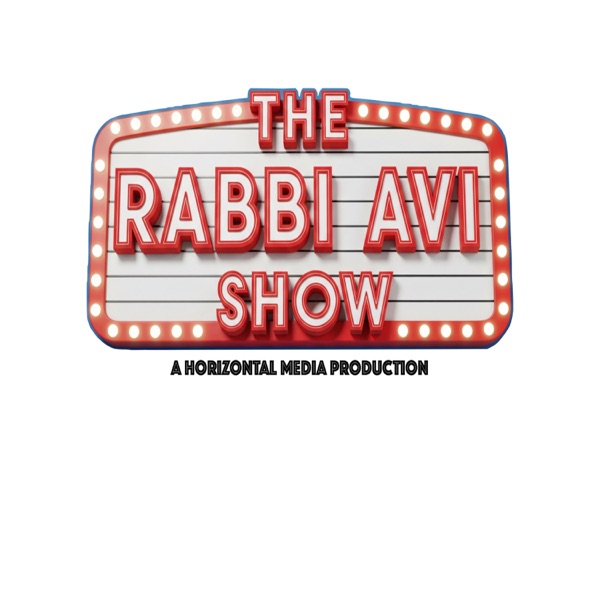
The Rabbi Avi Show
The Rabbi Avi Show is the podcast that explores the full spectrum of human connection. Each episode, Rabbi Avi brings his wisdom, humor, and unique perspective to a new conversation about the relationships that shape our lives.
From the bonds of marriage and family to the dynamics of friendship, community, and even our relationship with ourselves, The Rabbi Avi show tackles the big questions and everyday challenges with warmth and honesty.
By diving into complex and crucial topics The Rabbi Avi Show looks closely at relationships between Jews and other groups, exploring the contours and nuance of the unique connections between Israelis and Americans, examining the shared values, differences, and evolving ties that bind these two communities on the micro and macro levels.
Whether you're Jewish or not, The Rabbi Avi Show uncovers valuable perspectives dwelling in the fabric between us. Join us as we discover what it truly means to be connected.
- Episodes
- 31
- Releases
- Every two weeks
- Typical length
- 1 hr 2 min
- On air since
- 2025
- Latest episode
- 1 week ago
Episodes
31 episodes, newest first
-
1 hr 7 min
Third Temple? Call Deputy Mayor of Jerusalem, Arieh King
Season 2, Episode 4
Show notes
Episode Summary In this episode of The Rabbi Avi Show, Rabbi Avi sits down with Arieh King, the Deputy Mayor of Jerusalem, to explore the complex, on-the-ground realities of governing the epicenter of the Jewish world. Moving far beyond international headlines, Deputy Mayor King discusses Jerusalem's massive modern transformation, his unapologetic approach to international diplomacy, and the delicate balancing act of managing a city composed of secular, Haredi, and Arab communities. From the successful campaign to oust UNRWA from Israel's capital to his ultimate vision for a unified region, King offers an unfiltered look into the future of the Holy City.
Key Topics Discussed
•
Punching Back on the Global Stage: Deputy Mayor King addresses being barred from Canada due to his political stances and explains his philosophy of pushing back against foreign countries attempting to penalize Israeli officials.
•
Ousting UNRWA: An inside look at the successful, two-year campaign to remove UNRWA from Jerusalem and how the municipality provides Israeli curriculum education and healthcare to Arab residents.
•
An Open Invitation to Critics: In a rare move, King shares his personal cell phone number, inviting liberal diaspora Jews to personally tour East Jerusalem with him and hear directly from Arab residents.
•
The "Zionist Prisoners": A dive into the complex residency-versus-citizenship status of East Jerusalem's Arab population and King's calls to change the 1967 temporary rules.
•
Building Boom & Demographics: How a supportive national government is fueling unprecedented development, driving down apartment prices, and positioning Jerusalem for new Olim.
•
Preserving the Holy City: The ongoing municipal conflict over balancing massive modernization with protecting Jerusalem's historical character and the quiet atmosphere of Shabbat.
•
A Vision for the Future: Deputy Mayor King shares his ultimate hope for true regional peace, open borders, and the rebuilding of the Third Temple for all nations.
Mentioned in this Episode
•
Support the Show: Help us continue these vital conversations by becoming a supporter on https://patreon.com/horizontalmedia
•
Horizontal Media Podcasts: Check out Rabbi Yosef Lopez's deep insights into the Jewish calendar on Hokhmat HaHodesh, and keep an eye out for his highly anticipated upcoming podcast covering the entire Tanakh.
•
Connect with Deputy Mayor Arieh King: Call him directly to set up a tour of East Jerusalem at +972-54-333-1058.
-
1 hr 7 min
Translating Truth with Yishay and Ruchie Avital
Season 2, Episode 3
Show notes
In this inspiring episode of The Rabbi Avi Show, we sit down in Jerusalem with Yishay and Ruchie Avital, a remarkable couple whose lives and careers are deeply woven into the fabric of modern Israel. Ruchie, one of Israel’s premier simultaneous interpreters, has carried the words of world leaders—from U.S. Presidents to Israeli Prime Ministers—while Yishay has spent over four decades bringing the biblical and modern realities of the land to life as a master tour guide, educator, and Yad Vashem scholar. Together, they share their unique journeys, the profound optimism that anchors them amidst national grief, and the deep spiritual and musical heritage that nourishes their daily lives.
Key Topics Discussed:
•
The Power of Words in Real-Time: Ruchie discusses the cognitive demands and immense gravity of simultaneously interpreting for heads of state, the Knesset, and federal terror trials.
•
Torah and Avoda (Learning and Labor): Yishay explores how his early years in kibbutz agriculture informed his lifelong approach to Jewish education, community outreach, and connecting visitors to the soil of Israel.
•
Deconstructing the Colonial Narrative: A vital historical breakdown of why the Jewish presence in Israel is an indigenous return rather than a colonial enterprise, exploring the Roman origins of the name "Palestine."
•
The Eternal Bond with Jerusalem: How the unbroken loyalty to Jerusalem is echoed in daily Jewish life, from the Grace After Meals to the breaking of the glass at weddings.
•
Finding Light in the Darkness: Maintaining profound optimism and faith (Emuna) in the wake of October 7th and ongoing national tragedies.
•
The Healing Joy of Hazzanut: The Avitals' rich cantorial heritage, the transcendent joy of the Yom Kippur Ne'ila service, and the life-giving power of traditional Jewish music and table songs.
Featured Guests:
•
Ruchie Avital: The child of Holocaust survivors who made an independent leap to Israel after high school. She has spent over 30 years as a leading Hebrew-English interpreter for the Israeli Supreme Court, the Knesset, the United Nations, and international news networks.
•
Yishay Avital: A military veteran of the Yom Kippur War and former unit commander in the Nachal Infantry Corps. For over 40 years, he has guided thousands of visitors through Israel, combining geology, archaeology, and military history with deep Jewish storytelling.
Support The Rabbi Avi Show: If you believe in the work we are doing and want to help us continue bringing these vital stories to light, please consider supporting our efforts. Partner with us today athttps://www.google.com/search?q=https://patreon.com/horizontalmediapatreon.com/horizontalmedia.
-
1 hr 2 min
Embracing Joy, Vulnerability, and the Sukkah with Rabbi Yosef Lopez
Season 2, Episode 2
Show notes
Episode Summary:
As we transition from the introspection of the High Holy Days into the festival season, this episode of The Rabbi Avi Show is dedicated to unpacking the profound themes of Sukkot, Shemini Atseret, and Simhat Torah. Rabbi Yosef Lopez, host of the חכמת החודש podcast, returns to the show to explore how a temporary booth and the agricultural harvest connect us to our shared humanity. From Maimonidean perspectives on the Four Species to the reality of human vulnerability, this conversation reframes our understanding of the holidays and reveals why our true baseline state of existence is pure joy.
Key Takeaways & Topics Explored:
•
The Universal Foundation of Tishrei: While Nissan marks the liturgical head of the year, Tishrei celebrates the creation of humanity. Sukkot (Hag HaAsif) expands on this by emphasizing our connection to the entire human race, historically marked by bringing sacrifices and requesting rain (Yoreh) on behalf of the whole world.
•
Dwelling in the Temporary (Leshev BaSukkah): Drawing on the insights of Hakham Jose Faur, the episode explores how the seven days spent in the flimsy, temporary shelter of the Sukkah mirror the proverbial seventy years of a human lifespan. The Sukkah challenges us to transform a temporary dwelling (dirat arai) into a space of meaningful, intentional living.
•
A Grounded View of the Arba Minim: Moving beyond midrashic allegories, Maimonides grounds the Four Species in concrete terms—accessibility, pleasing appearance, and a historical reminder of the transition from a barren wilderness to an abundant, fruit-laden land that relies heavily on water.
•
Halacha and Human Vulnerability: True observance does not require martyrdom. Following Sephardic tradition and the rulings of the Rashba and Maran Yosef Karo, leaving the Sukkah during a rainstorm teaches us how Jewish law pivots to accommodate genuine discomfort and reality.
•
Patience and the Wisdom of Kohelet: Reading Ecclesiastes under the sechach reminds us that "everything is beautiful in its time." The agricultural roots of Sukkot serve as a powerful antidote to modern culture's demand for instant gratification.
•
Returning to Joy (Simha): As the season culminates in Shemini Atseret and Simhat Torah, we step outside the Sukkah to dance with the Torah. This celebration is a powerful reminder that joy is not just a commanded action, but the normal, baseline state of human existence.
Support the Show:
A massive thank you to our sponsors for making this episode possible. If this conversation was therapeutic or thought-provoking for you, we want to hear from you! Please support our work and communicate with us directly by visitinghttp://patreon.com/horizontalmediapatreon.com/horizontalmedia.
-
1 hr 27 min
Put Down the Lizard: The Psychology of Teshuvah and Maimonides' Laws of Return
Season 2, Episode 1
Show notes
Episode Description & Show Notes:
As Rosh Hashanah and Yom Kippur approach, millions around the world begin the demanding, inward journey of the Days of Awe. We ask the difficult, foundational questions: Who have I been this past year? Where did I miss the mark? And who am I fighting to become when the shofar finally splits the silence?
In this episode, Rabbi Avi is joined once again by his dear friend, scholar, and intellectual partner Rabbi Yosef Lopez for a raw, unflinching dive into the mechanics of true transformation. Drawing deeply from Maimonides’ (Rambam’s) Hilkhoth Teshuba in Sefer HaMadda, as well as the groundbreaking scholarship of Ḥakham José Faur and Ḥakham Ike Choua, they break through the seasonal platitudes and Westernized theological assumptions that obscure our understanding of repentance.
The discussion anchors on Maimonides’ striking, vivid metaphor in Chapter 2: the person who immerses in a miqwa while holding a sheretz—a creeping lizard—in their hand. No matter how deep the waters or how sincere the tears, the immersion is completely invalid until the lizard is cast away.
What We Discuss in This Episode:
•
The Sheretz in the Hand: Why human beings crave the emotional high and drama of ritual while stubbornly refusing to unclench their fists from the habits, grudges, and rationalizations that keep them spiritually stuck.
•
•
Teshuvah as Psychology: How Maimonides positions the laws of repentance inside Sefer HaMadda (The Book of Knowledge) as an internal science of human behavior rather than mere religious ceremony.
•
•
Dismantling "Sin" and "Atonement": Why Western theological terms fail authentic Jewish thought. Understanding ḥeṭ not as an inherited moral stain, but as an archery term for missing the target—a covenantal debt (ḥov) that can be recalibrated and repaired.
•
•
The Genius of José Faur: Examining why the Torah commands Vidui (spoken, articulated confession) rather than Teshuvah itself, and how internal transformation is actually framed as a divine promise (havtaḥa).
•
•
The Fallacy of Vague Apologies: Why Maimonides insists that confession must name the specific fault aloud, and why blanket social media apologies ("to anyone I may have offended") fall short of real repair.
•
•
Ani Aḥer ("I Am Another"): How a person bridges the gap from sheer willpower to internalizing an entirely new identity, examined alongside the tragic Talmudic figure of Elisha ben Abuyah (Aḥer) and the lethal trap of despair.
•
•
Kappara vs. Meḥila: Breaking down the vital distinction between kappara (legal protection from consequence) and meḥila (the complete removal of the partition between two people or between man and God).
•
•
The Wake-Up Call of the Shofar: Moving past seasonal terror to hear the shofar as a call back to Sinai, self-worth, and proactive righteousness (Tzedakah).
•
Support the Podcast:
The Rabbi Avi Show is completely independent, produced without corporate sponsors, and dedicated to delivering serious, high-production conversations rooted in authentic Torah.
To partner with us, unlock exclusive behind-the-scenes content, and join the dialogue directly:
•
Patreon:https://www.patreon.com/horizontalmediahttps://patreon.com/horizontalmedia
•
Share this episode with friends, family, and your community to help spread the word!
-
26 min
Where We've Been, Where We're Going: A Retrospective & The Horizon Ahead
Season 1, Episode 26
Show notes
The Rabbi Avi Show: Ep. 26, Season 1 Finale
EPISODE SUMMARY
In this special season-ending transitional episode, Rabbi Avi looks back at the foundational themes, remarkable guests, and core moral questions that defined the inaugural season of The Rabbi Avi Show. From the frontiers of Israel to the lecture halls of American academia, this retrospective weaves together the threads of human experience through a single guiding truth: Torah is all around us.
Torah is not merely an ancient scroll locked in an ark; it spans the fullness of human experience—how we wage war with morality, build education systems, process grief, treat our physical bodies, and build bridges across deep cultural divides. In addition to recapping the four thematic pillars of Season 1, Rabbi Avi outlines the vision for Season 2, introducing multi-person panel discussions and sharing how listeners can directly shape the future of the show through Patreon.
THE FOUR THEMATIC PILLARS OF SEASON 1
1. The Frontier of Courage and Security
Exploring what it means to defend a nation, govern under fire, and maintain moral clarity on the physical and spiritual edges of Israel.
•
Rabbi Yaron Buki (Katsrin, Golan Heights): Grandson of Holocaust survivors and a "rabbi with calloused hands" serving as a mohel, shokhet, and member of the Chevra Kadisha. He highlights raising a family on the border, rejecting victimhood, and living as Goy Echad Ba'aretz (one unified nation).
•
Yaakov Selavan (Deputy Governor, Golan Regional Council): Sharing his journey from tank command in Gaza post-October 7th to managing a council under daily fire, illustrating why the Golan is a sacred frontier where "where the plow stops, the border is set," and fighting out of love rather than hatred.
•
Eden Achituv (Retamim, Negev Desert): Raising four boys in the ring of fire, showing how community youth transformed burned lookout points into sanctuaries of life.
•
Rabbi Yossi Etz-Hasadeh (Har Hevron, Judea): Moving from a New Zealand sheep farm to the biblical heartland, detailing the daily realities of living alongside Arab neighbors and standing as a sovereign people in our native homeland.
2. The Fabric of Identity and Disarming Propaganda
Dismantling rigid Western racial paradigms and narrative distortions by elevating authentic, diverse Jewish voices.
•
Leah Avuno (Reshet Amit): Former IDF platoon commander born in Gondar, Ethiopia, dismantling Western "apartheid" labels and highlighting digital propaganda vs. lived reality.
•
Tali Aynalem (Givati Brigade Veteran): Digital advocate pushing back against victim mentality in American academia, urging young Jews to ground themselves at their family's dinner table rather than a smartphone screen.
•
Classical Traditions: Exploring Sephardic and Maimonidean heritage with Rabbi Yosef Lopez and analyzing historical Jewish roots with Professor David Graizbord.
3. The Intellectual, Cultural, and Academic Frontlines
Confronting institutional bias, the post-October 7th awakening, and processing heavy realities through art and literature.
•
Dr. Molly Dunn (Center for Jewish Resilience): Tracking her masterclass in intellectual evolution from far-left critical theories to the political center and legal advocacy.
•
Chloe Loos (Tucson JCC): Discussing the "October 8th Awakening," political homelessness, and stepping into an unapologetic Jewish identity.
•
Pastor Jeff Logsdon (Hope City Church): Demonstrating genuine, non-transactional interfaith solidarity, standing with the Jewish community on the morning of October 7th and serving the local community together.
•
Theological & Psychological Literature: Examining moral self-defense through magical realism in Roger Simon’s Emmet, and exploring transgenerational trauma, the Iraqi Farhud, and diaspora safety in Benjamin Abravenel’s The Past Again.
4. Health, Purpose, and the Everyday Torah
Bringing sanctity, discipline, and physical resilience into everyday human life.
•
Holistic Health & Medical Ethics: Conversations on physical health, faith, and facing adversity with Adam Fox, Dr. David Dierks, and author E.C. Stilson.
•
Dr. Zuhdi Jasser (American Islamic Forum for Democracy): A physician-led diagnostic approach to civil discourse, fighting religious authoritarianism, and defending the U.S. Constitution and Israel.
•
The Dignity of Labor: Celebrating craftsmanship, local educators, and practical living expressions of Torah.
LOOKING AHEAD TO SEASON 2
•
Multi-Person Panel Discussions: Season 2 will expand beyond 1-on-1 interviews to bring 2, 3, or 4+ guests together simultaneously to dissect complex topics from multiple perspectives and model constructive, Torah-informed dialogue.
•
Holiday Schedule: During the upcoming Hebrew holiday season, production will feature two special standalone episodes focused on the Days of Awe (Yamim Nor'im) and the Feast of Tabernacles (Sukkot) before launching Season 2 full throttle.
JOIN OUR COMMUNITY & SUPPORT THE SHOW
•
Main Patreon Page: Watch video podcasts and directly support independent, corporate-free media for as little as $5/month athttps://www.google.com/search?q=https://patreon.com/horizontalmediahttps://patreon.com/horizontalmedia.
•
Virtual Town Hall & Community Chat: Interface directly with Rabbi Avi, submit questions for Season 2 panels, suggest guests/topics, and access behind-the-scenes updates in ourhttps://www.patreon.com/c/horizontalmedia/chatsVirtual Town Hall Chat Space.
-
1 hr 24 min
Leading on the Frontier with Yaakov Selavan
Season 1, Episode 25
Show notes
The Rabbi Avi Show Episode 25 Show Notes:
In this episode of The Rabbi Avi Show, Rabbi Avi sits down with Yaakov Selavan, Deputy Governor of the Golan Regional Council, for a raw and deeply personal conversation about leadership, resilience, and the future of Israel’s northern frontier.
Recorded following a recent mission to the Golan Heights, this episode moves beyond the headlines to explore the human reality of life in Israel’s most volatile border region.
Episode Highlights
From the Old City to the Frontlines Yaakov shares his unique journey: growing up between Jerusalem and Atlanta, finding his calling in the rugged landscapes of the Golan, and serving as an IDF tank commander. He recounts the jarring transition from civilian community leadership to the frontlines of Gaza on October 7th, and how his unit—and his nation—responded to the crisis.
The "Frontier" Philosophy Rabbi Avi and Yaakov discuss the vital distinction between the "periphery" and the "frontier." Yaakov explains why he and his fellow leaders made the agonizing, controversial decision to keep civilians in their homes in the Golan rather than evacuating. They examine the devastating social costs of mass evacuation and why maintaining a presence on the land is essential for national security.
The Moral Weight of Command Drawing on his experiences in urban warfare and the search for hostages, Yaakov addresses the ethical dilemmas of fighting an enemy that embeds itself within hospitals, schools, and even graveyards. He shares a powerful lesson he taught his soldiers: It isn’t about having the right answers; it’s about asking the right questions to remain on the path of Jewish values, even in the heat of battle.
Transformation in the North Yaakov details the dramatic shifting of the geopolitical landscape in the Golan, including:
•
The Majdal Shams Tragedy: The impact of the rocket attack that killed 12 children on a soccer field, and how it catalyzed a historic shift in the Druze community’s relationship with Israel.
•
The Fall of Assad: How the collapse of the Syrian regime and the rise of local instability led to a new era of cooperation and Israeli sovereignty.
•
A "Mini-Abraham Accord": The push to create economic gateways for Druze and local partners across the border, fostering peace through shared prosperity.
A Symbol of Purpose Throughout the conversation, Yaakov reflects on the 2,000-year-old coin he carries in his pocket—minted in Gamla during the Great Revolt—bearing the inscription: "For the redemption of Jerusalem, the Holy." He explains how this small piece of metal serves as his compass during the hardest days of war and political uncertainty.
Key Topics Discussed
•
The psychological and social toll of the "Ceasefire War" and daily drone attrition.
•
The reality of indoctrination in Gazan schools versus the values taught to Israeli children.
•
The unique "Golan Spirit"—a model of political cooperation between secular and religious communities.
•
Why the future of Northern Israel depends on building a society that competes with the center in healthcare, education, and opportunity.
Support The Mission
The Rabbi Avi Show is dedicated to bringing you the voices, souls, and boots-on-the-ground truths of the people actively shaping history. These high-production, on-location conversations rely entirely on the support of our listeners.
Help us continue this work:
•
Become a Patron:https://www.patreon.com/horizontalmediahttps://patreon.com/horizontalmedia
•
Your monthly support directly funds the travel and production required to bring these frontline stories to light.
Connect with us:
•
Follow the show for more updates on upcoming guests and future episodes.
•
Thank you for standing with us as we navigate these historic times with courage and shared purpose.
-
51 min
Building Living Bridges with Leah Avuno
Season 1, Episode 24
Show notes
Show Notes: The Rabbi Avi Show, Episode 24
Guest: Leah Avuno (Head of International Relations at Reshet Amit, Educator, and former Tucson Shinshinit)
Episode Summary
In this episode, Rabbi Avi has a profound, hour-long reunion with his dear friend Leah Avuno, joining remotely from Israel. Exactly ten years after Leah arrived in Arizona as an 18-year-old Shinshinit (pre-military Israeli emissary), she and Avi look back at her journey and trace her evolution from a young volunteer into a powerhouse of international educational leadership.
Leah shares her raw experiences as a female IDF commander leading a diverse platoon of Druze, Arab, and Cherkesium soldiers—a journey that was featured globally in the Amazon Prime Video docuseries The Women of the IDF. Today, she serves as the Head of the International Relations Department at Reshet Amit, the largest educational network in Israel, where she actively works to close the socioeconomic gap between central Israel and the periphery.
Together, Avi and Leah tackle the rigid Western racial frameworks and propaganda often projected onto the Middle East, illustrated by a lighter moment with a global traveler's skewed perception of Gaza weather. Crucially, they dive into Leah's vital work on the ground providing immediate psychological, therapeutic, and emotional support to children in Israel's southern districts processing the continuous trauma of October 7th.
Key Topics Discussed
•
The Periphery and Reshet Amit: Leah explains the "30/70 ratio" framework used by Israel's largest educational network to provide equal educational opportunities and specialized support to lower socioeconomic and immigrant families across 93 schools.
•
Reflections on Tucson (2016): Looking back at her gap year in Arizona, her outreach to students on the University of Arizona campus with Avi, and her time building bridges with local communities, including speaking at a Black Baptist church and historical teen coalitions.
•
Identity Beyond Labels: How growing up in an incredibly diverse Israel shaped her worldview, why her identity has always been "Jewish first" since her early childhood in Gondar, Ethiopia, and how her authentic presence naturally shatters flat, Western demographic assumptions.
•
The Reality of Military Service: Behind the scenes of her leadership as an IDF commander, navigating the intense psychological demands of border defense as a young adult, and why she chose to participate in the Amazon Prime Video series The Women of the IDF to counter global misinformation.
•
Dismantling Online Propaganda: A real-world encounter challenging the absolute "black-and-white" narratives found on Western university campuses, emphasizing the danger of algorithm-driven propaganda.
•
The Ultimate Anchor: Leah shares her mother's timeless wisdom about centering our energy on the next generation and explains the profound practice of Cheshbon HaNefesh—conducting a dedicated, weekly inner accounting of the soul to bring more light into the world.
Connect & Support
•
Support Leah's Educational and Therapeutic Work: To learn more about Leah's regional tours or to donate toward the vital psychological and emotional therapy programs for children in Israel's southern periphery, visit the official website athttps://amitchildren.orghttps://amitchildren.org.
•
Support the Show: The Rabbi Avi Show is entirely independent and listener-supported under the Horizontal Media umbrella. To help keep these raw, corporate-free long-form dialogues going, consider becoming a monthly supporter athttps://www.patreon.com/horizontalmediahttps://patreon.com/horizontalmedia.
-
1 hr 6 min
Disrupting the Narrative with Tali Aynalem
Season 1, Episode 23
Show notes
The Rabbi Avi Show: Episode 23 Show Notes
In this very special episode, Rabbi Avi sits down with the outstanding Tali Aynalem—an Israeli-Ethiopian-American, IDF veteran of the Givati Brigade, and a sharp marketing professional who is completely shifting the conversation on social media.
Born in Israel to parents who made Aliyah in the early 1980s, Tali grew up in Oregon, giving her a completely unique perspective on both the Israeli cultural fabric and modern American activism. They dive into a deep, long-form conversation about her lived experience, breaking through the victim mentality on progressive American campuses, the hidden systemic realities of the Middle East, and her exciting new grassroots project, Breaking Bread.
Key Topics
•
Generational Roots & Aliyah History: Tali shares her family's unique background, predating the famous military airlifts of the mid-80s, and discusses the profound longing for Jerusalem (Beit HaMiqdash) that defined early Ethiopian pioneers.
•
The Shock of American Racial Politics: Moving from Israel to Oregon, Tali describes the bizarre shift of entering an American university environment where she was explicitly introduced to an "oppression and victimhood" mentality for the first time.
•
Life in the Fabric of Israel: Pushing back against online myths of a systemic "apartheid state," Tali shares her lived reality of total cultural belonging in Israel compared to the actual second-class citizenship and labor abuse under the Kafala system in parts of the Arab world.
•
The Morality of the IDF: Drawing from her service in the Givati Brigade, Tali humanizes the soldiers on the borders, refuting Western media caricatures and detailing a culture that celebrates life rather than glorifying destruction.
•
The Betrayal of October 7th: Tali reflects on being physically on the ground in Israel during the Simchat Torah attacks, catching one of the last flights out, and navigating the painful relational fallout with long-term American friends in the weeks that followed.
•
Grassroots Leadership & "Breaking Bread": A look at Tali's new project with Ashira (Black and Jewish Podcast), moving past traditional, institutional "pastor and rabbi dinners" toward a model focused on business networking, economic partnership, and uncompromised Zionist dialogue.
•
The Core of Jewish Identity: Tali explains why her personal representation doesn't matter as much as strong foundations built at home, culminating in her latest thesis: There is no Judaism without Zionism, and there is no Judaism without God.
Important Links
•
Support the Show: Show your appreciation for independent, long-form media by supporting our channel athttps://www.patreon.com/horizontalmediaHorizontal Media Patreon.
•
Tali’s Writing: Read, subscribe, and share Tali's sharp weekly cultural commentary onhttps://taliaynalem.substack.comTali Aynalem's Substack.
Final Takeaway
"Always answer with truth. Look for the numbers yourself, look for the pictures yourself, and you'll find everything that you are looking for. Because truth always wins." — Tali Aynalem
-
52 min
The Rabbi Avi Show: Waking Up to History — Assimilation, Trauma, and The Past, Again with Benjamin Abravenel
Season 1, Episode 22
Show notes
Show Notes: The Rabbi Avi Show, Episode 22
Episode Overview
In this powerful and timely episode, Rabbi Avi unpacks a profound tectonic shift currently altering the collective Jewish psyche in the wake of October 7th. Tracing a direct narrative arc over recent conversations, the show explores what it truly means to wake up to history when comfortable diaspora illusions of security begin to shatter.
Rabbi Avi is joined remotely by physician and debut novelist Benjamin Abravenel to discuss his captivating new psychological family drama, The Past, Again (published by Koehler Books). Together, they dive deep into the heavy existential questions facing modern Jewry: Is American exceptionalism a fragile myth? Can diaspora Jews ever truly unpack the suitcase in the closet? And how does transgenerational trauma shape our response to rising contemporary anti-Semitism?
Connecting the Threads: The Arc of Waking Up
Before sitting down with today's guest, Rabbi Avi reflects on the foundational themes laid down across recent episodes that bridge personal trauma, institutional betrayal, and the moral burdens of self-defense:
•
The October 8th Awakening (with Chloe Loos): A raw look at the immediate psychological shattering that occurred the morning after the attacks. This conversation confronted the sudden birth of the "October 8th Jew"—the jarring moment when the comfortable, sun-bleached illusions of diaspora exceptionalism cracked open.
•
Ideological Evolution (with Dr. Molly Dunn): An analysis of the macro-level systemic failures and the moral collapse within elite academic and cultural institutions. This episode illuminated the deep isolation and political homelessness felt by Jewish families when the modern public square pressures them to mute or repackage their trauma just to stay palatable for prime time.
•
Truth, Fiction, and the Modern Golem (with Roger Simon): A deep dive into theological fiction through the novel Emmet. Roger Simon demonstrated how dry journalism and political essays reach their limit when trying to capture existential dread, showing that narrative fiction is often the best vessel capable of holding the raw spiritual weight of our historical survival.
Key Discussion Points with Benjamin Abravenel
1. Moving from Medicine to Fiction
After 35 years of practicing medicine, Dr. Abravenel turned to fiction to unpack heavy, modern anxieties. He shares the defining turning point behind the book: a poignant conversation with an Auschwitz-surviving patient who told him she still keeps a packed suitcase in her closet because safety is only guaranteed "so far." This, combined with witnessing literal anti-Semitic graffiti on the walls of modern Europe, sparked a desire to write a dystopian narrative set right in his idyllic hometown.
2. The Illusion of Paradise
The novel is intentionally set in the carefree, sun-bleached paradise of Santa Barbara and Montecito. Dr. Abravenel explains that Jewish history is full of cycles where Jews reach the highest pinnacles of societal success before elements of society abruptly turn against them. In modern America, he flags the rise of fragmented tribalization and "lone wolf" attacks from both the far left and far right as modern echoes of these historical repetitions.
3. The Generational Rift & Family Secrets
The book charts a profound family divide:
•
Brian (The Father): A deeply analytical Talmudic scholar who embodies the naive confidence of American exceptionalism.
•
Judah/James (The Son): A protagonist who undergoes childhood trauma from early exposure to Holocaust imagery, choosing to change his name to "James" and aggressively adopting dogmatic atheism just to fit in and escape his heritage.
•
Lori (The Mother): Born in Baghdad, she survived the horrific 1941 Farhud pogrom. She goes to great lengths to play down her Mizrahi roots to present herself strictly as Israeli—not out of shame, but because her history carries the lingering, haunting truth that paradise is never permanent.
4. Cultural Gaslighting and Litmus Tests
Rabbi Avi and Benjamin confront the modern public square, where mentioning historical anti-Semitism is often treated as an aggressive act, and perpetrators claim the mantle of victimhood. They discuss the immense pressure placed on modern American Jews—particularly on elite college campuses—to undergo ideological litmus tests and reject their own identity or connection to Israel simply to be accepted by contemporary society.
5. Is There a Safe Haven?
The conversation concludes on a sobering yet resilient note. While the novel's characters try to outrun history through renaming, erasure, or silence, history ultimately catches up to them in a gripping conclusion tied to the reality of regional warfare. Yet, leaning on the words of the book's Auschwitz-surviving grandmother, Benjamin notes that Jewish survival has always been anchored in a refusal to be erased: "I'm still here."
Featured Book
•
The Past, Againby Benjamin Abravenel (Published by Koehler Books). Available now on Amazon.
Memorable Quotes from the Episode
"I always keep the packed suitcase in my closet... So far." — Benjamin Abravenel, quoting an Auschwitz-surviving patient
"The unique thing about anti-Semitism, Jew hatred, is that it comes from both sides—the far left and the far right... Jews are being forced to undergo a litmus test before they can move on in society." — Benjamin Abravenel
"Our identity is not merely a casual religious preference. It's an interconnected civilization in a continuous historical chain." — Rabbi Avi
"While we may not be expected to finish the work of repairing this fractured world, we are absolutely not free to desist from it." — Rabbi Avi
Support Independent Jewish Media!
The Rabbi Avi Show is entirely independent, produced under the banner of Horizontal Media. We are not backed by corporate sponsors, and we do not answer to institutional boards. Diving into heavy truths, political realignments, and the raw vulnerability of our people takes immense time and operational resources.
If you value these long-form dialogues and believe that independent Jewish thought is an absolute necessity, please consider turning from a passive listener into an active financial partner.
•
Support us on Patreon:https://www.patreon.com/horizontalmediahttps://patreon.com/horizontalmedia
Subscribe, leave a review, and share this episode to refuse to let the past be erased or distorted.
-
1 hr 13 min
The Battle for the Soul of Islam and the Future of American Liberty
Season 1, Episode 21
Show notes
Show Notes Ep. 21
In this comprehensive, long-form conversation, Rabbi Avi Alpert sits down with Dr. Zuhdi Jasser—a U.S. Navy veteran, practicing Phoenix physician and cardiologist, founder of the American Islamic Forum for Democracy (AIFD), and candidate for U.S. Congress in Arizona's 4th District.
Together, they go far beyond the standard political talking points to diagnose the deep systemic pathologies facing both Western democracy and modern Islamic thought. From comparing bureaucratic institutional "groupthink" to religious authoritarianism, to outlining a proactive ideological strategy for the Middle East, this episode serves as an unfiltered masterclass in independent thinking.
Support Independent Media
The Rabbi Avi Show is entirely listener-supported. If you find value in these deep, long-form intellectual dialogues, please consider partnering with us financially to keep our production standards high.
•
Support us on Patreon:https://www.google.com/search?q=https://patreon.com/horizontalmediahttps://patreon.com/horizontalmedia
Key Episode Themes & Discussion Points
•
A Clinical Diagnosis of Washington: How primary care medicine teaches a leader to build diverse coalitions, look beyond superficial symptoms, identify the root pathology of a crisis, and apply evidence-based treatments to policymaking.
•
The "Red-Green Axis" and Tribalization: Analyzing how multi-billion-dollar foreign funding operations and identity politics have radicalized American discourse, shifting ideological traditions into weaponized, protective identity groups.
•
The Pathology of Authoritarianism: Drawing direct structural parallels between the dictatorial control of religious imams who demand uncritical fealty ("Godolatry") and the federal mandates, media silencing, and bureaucratic overreach witnessed during the COVID-19 pandemic.
•
National Security & Border Ideology: Why securing the southern border requires moving past defensive, reactive organizational blacklists to proactively vetting immigrant populations for anti-constitutional, totalitarian ideologies.
•
The "Cold War" Strategy for the Middle East: Moving past the failed nation-building models of the Bush era to employ "muscular liberalism"—deploying a robust ideological offense that pumps classical liberal values directly to oppressed populations via media networks.
•
Pluralism vs. Triumphalism: Dr. Jasser addresses the fear of global Islamic dominance, arguing for an internal Islamic Reformation that isolates political Islam (Islamism) and elevates a character-driven, personal faith rooted in individual liberty.
•
A Rational Muslim Defense of Israel: Exploring why the Jewish State stands as a vibrant, free-market beacon of Western values in the Middle East, featuring autonomous, adaptive judicial precedents that outshine state-controlled theological blocks.
Organizations & Policy Frameworks Mentioned
•
American Islamic Forum for Democracy (AIFD) – Founded by Dr. Jasser to champion the separation of mosque and state.
•
The Muslim Reform Movement – An initiative launched in 2015 by secular and reform-minded Muslim patriots across the West.
•
The Declaration of the Muslim Reform Movement – A foundational two-page document establishing principles of human rights, gender equality, and secular governance used to distinguish patriotic faith from political Islam.
•
The Clarity Coalition – An umbrella group patterned after the Cold War-era Committee on the Present Danger (CPD), standing for "Champions for Liberty Against the Reality of Islamist Tyranny".
•
Committee on the Present Danger (CPD) – The historic, bipartisan coalition formerly led by Senators Jon Kyl and Joe Lieberman that helped shape the Reagan administration's peaceful triumph over the Soviet Union.
Books & Scholars Reference List
Books Mentioned:
•
A Battle for the Soul of Islam: An American Muslim Defeats Radical Islam by Dr. Zuhdi Jasser (2013) – Dr. Jasser's personal narrative and blueprint for systemic internal reform.
•
What Went Wrong?: The Clash Between Islam and Modernity in the Middle East by Bernard Lewis – A historical analysis tracking the ossification of critical thinking and the decline of intellectual diversity in the Islamic world.
•
The Jews of Islam by Bernard Lewis – A study documenting the historical coexistence and cultural achievements of religious minorities under classical Islamic rule.
•
Democracy in America by Alexis de Tocqueville – A seminal text exploring how a shared moral fabric and decentralized civic virtue made American republicanism uniquely successful without relying on authoritarian military enforcement.
•
The Protocols of the Elders of Zion – Referenced historically as a fraudulent, early 20th-century Russian text deployed across Arabist regimes to fuel systemic anti-Semitism.
Scholars & Intellectuals Cited:
•
Maimonides (The Rambam) – The premier medieval philosopher whose towering legal and rational works flourished under Sefarad/Muslim governance.
•
Fatima Mernissi – Islamic scholar and writer noted for her foundational texts analyzing the compatibility of Islam and democracy.
•
Abdullahi Ahmed An-Na'im – Emory University professor recognized for his extensive work on Islamic reform and secular civic law.
•
Abdolkarim Soroush – Renowned Tehran philosopher and intellectual who articulated a framework for Islamic liberalism.
•
Mustafa Akyol – Contemporary author and journalist focusing on liberty, reason, and the history of liberal thought within Islamic traditions.
Connect with Our Guest
•
Campaign Website:https://www.z4az.comhttps://Z4AZ.com (Z number four A Z)
•
Social Media: Learn more about Dr. Jasser's ongoing movement to bring constitutional principles and robust discourse back to Washington.
Subscribe & Review: If this masterclass in independent thinking challenged your assumptions, please subscribe to The Rabbi Avi Show, leave us a five-star review, and share this episode with someone looking for political sanity.
Tizku Lamitzvot!
-
51 min
Ideological Evolution With Dr. Molly Dunn
Season 1, Episode 20
Show notes
Show Notes | The Rabbi Avi Show Episode 20
Episode Summary
In this powerful continuation of our exploration into modern political and cultural shifts, Rabbi Avi sits down with Dr. Molly Dunn, a critical criminologist and former university professor whose life story reads like a roadmap of our current intellectual landscape. Following up on our recent conversation with Chloe Loos regarding journeys away from the far left, this episode dives into the mechanics of high-level academia, institutional power, systemic anti-Semitism, and the law.
Dr. Dunn shares her profound ideological evolution from the deconstructive frameworks of progressive critical theory to an active position in the pro-Israel political center. Now serving as the Education Associate for the Center for Jewish Resilience under the Jewish Philanthropies of Southern Arizona, she details her personal transition from the ivory tower to hands-on community building, unpacking what it truly means to foster Jewish continuity and pride today.
Key Topics Discussed
•
The Ideological Pivot: How tracking omissions of Jewish identity in historical research—and facing pushback from her own doctoral committee—shattered standard progressive paradigms for Dr. Dunn.
•
The Gaps in Intersectionality: Why modern academic frameworks miscategorize the Jewish people by forcing an ancient ethnicity, nation, and faith into rigid, contemporary American racial boxes.
•
When Theory Meets Reality: A look inside the criminology department and the inherent disconnect of viewing crime entirely as a social construct when Jewish communities actively require institutional protection.
•
The Battle with NAU: Dr. Dunn's firsthand experience dealing with antisemitic hostility from university authorities behind closed doors, and how mainstream pro-Israel legal advocates stepped up to secure an amicable resolution.
•
Building Institutional Literacy: Moving past street activism to teach the next generation of students how to read student handbooks, navigate institutional policies, and stand up to administrative overreach.
•
Legislative Hurdles & Local Action: The battle for Arizona House Bill 2867, designed to protect Jewish students and faculty, and why outside special interest groups are pushing back against those on the front lines.
•
The "Jewson" Community: Why Tucson’s unique ability to bring Orthodox, Conservative, and Reform leaders together to fight for Jewish peoplehood provides a powerful model for the rest of American Jewry.
Resources & Links Mentioned
•
Support Independent Media: Help keep our studio running and our content free from corporate influence by partnering with us athttps://www.patreon.com/horizontalmediahttps://patreon.com/horizontalmedia
•
Connect with Legal Support: If you are experiencing anti-Semitism or legal challenges on a college campus, find resources throughhttps://www.standwithus.comStandWithUs.
•
Explore Local Resilience: Learn more about the community initiatives, public affairs advocacy, and educational programming at thehttps://www.jparizona.orgJewish Philanthropies of Southern Arizona.
•
Previous Episodes Mentioned:
•
Catch up on the foundational episode on Christian Zionism featuring Pastor Jeff Logsdon at the beginning of the season.
•
Listen to our previous episode detailing personal journeys out of the far left with Chloe Loos.
-
37 min
The Oct 8th Awakening
Season 19, Episode 1
Show notes
Show Notes
In this installment of The Rabbi Avi Show, Rabbi Avi Alpert sits down with Chloe Loos, the Director of Arts and Culture at the Tucson JCC. Chloe shares her profound journey of "de-assimilation," tracing her path from a secular upbringing in Flagstaff to becoming a dedicated Jewish communal professional in the wake of personal and collective trauma. The conversation explores the "October 8th" phenomenon, where many Jews are rediscovering their heritage and a fierce commitment to Israel following the events of late 2023.
Key Discussion Points
•
Growing Up in Flagstaff: Chloe reflects on being one of the only Jewish children in her community, navigating "othering" experiences and a lack of visible Jewish infrastructure.
•
The Mediterranean Parallel: A look at the cultural similarities between Chloe’s Jewish and Italian-Catholic heritage and how those parallels shaped her identity.
•
A Journey Through Grief: How the loss of her mother in 2020 served as the first bridge back to Jewish tradition through the daily practice of the Mourner’s Kaddish.
•
The "October 8th" Awakening: Chloe discusses the "absolute rupture" she experienced within progressive and secular circles following October 7th, leading to her decision to dedicate her life to Jewish peoplehood.
•
The "Double Cross" of the Far-Left: A candid look at the ostracization Chloe faced from long-term friends and the "weaponization of therapy language" used to dismiss Jewish lived experiences.
•
Arts as Avodah: How Chloe utilizes the Tucson International Jewish Film Festival and other cultural programs to build a "vibrant mosaic" of Jewish life that fosters belonging.
•
De-assimilation Across Generations: The inspiring story of how Chloe’s own return to tradition has encouraged her grandmothers to reclaim their own Jewish symbols and heritage.
Notable Quotes
"The Chloe who voted for Bernie was doing her best... her frontal cortex wasn't developed."
"I really came back to the religious piece of Judaism or the spiritual aspect through grief, even though we're such a joyful practice."
"You don’t have to try so hard to fit in, because you already do."
Support the Show
This episode is part of a series at Horizontal Media exploring the deep shifts in Jewish identity today. If you find value in these conversations, please consider supporting our mission.
•
-
58 min
A View From The Negev
Season 1, Episode 18
Show notes
Show Notes:
In this episode, Rabbi Avi bridges the distance between the Sonoran Desert of Arizona and the Negev Desert of Israel to sit down with Eden Achituv.
Many in the Tucson community remember Eden and her husband Netanel from their time as shlichim (emissaries) at the Tucson Hebrew Academy. Today, Eden shares her perspective from her home in Retamim, a small community near Be'er Sheva, offering a "truth on the ground" perspective that challenges global narratives.
In This Episode, We Discuss:
•
The "Back and Forth" of Shlichut: How serving the Jewish community in the Diaspora (Chicago and Tucson) deepened Eden’s appreciation for Zionism and the intentionality required to live a Jewish life.
•
Life in the "Ring of Fire": What it looks like to raise four boys in the Negev during a multi-front war involving Gaza and Iran, and the "automatic" shift families make when the sirens go off.
•
The Mizrahi Story Identity: Reclaiming the narrative of the majority of Israelis whose families—like Eden’s—were exiled from Morocco, Tunisia, and Syria, and why the "colonial" label is a historical lie.
•
Resilience in Retamim: How a small desert community supports its families when 90% of the men are called to reserve duty, and how they responded to the burning of a local lookout point by planting trees and building roads.
•
The "TikTok Generation": The inspiring dedication of young Israeli soldiers and the "voice that calls" them to protect their people.
•
The Meaning of Victory: Moving beyond military benchmarks to focus on the return of hostages and the spiritual resilience of Klal Yisrael.
Mentioned in This Episode:
•
Tucson Hebrew Academy (THA):https://thaaz.org/https://thaaz.org/
•
Masa Israeli (The Israeli Journey):https://www.google.com/search?q=https://masaisrael.org/https://masaisrael.org/
•
Hannah Senesh: The poet and paratrooper whose words "The voice called, and I went" continue to inspire Israeli resilience.
Support the Show
The Rabbi Avi Show is a labor of love and a part of the Horizontal Media mission to provide nuanced, deep perspectives on Jewish life and thought.
If you find value in these vital stories, please consider supporting our work. Your contributions allow us to keep producing high-quality content and sharing voices like Eden’s with the world.
•
Support us on Patreon:https://www.patreon.com/horizontalmediahttps://www.patreon.com/horizontalmedia
-
1 hr 6 min
The Maimonidean Roadmap: A Conversation with Rabbi Yosef Lopez
Season 1, Episode 17
Show notes
Show Notes:
In this deeply personal episode, Rabbi Avi Alpert sits down with his longtime friend, colleague, and "partner in crime," Rabbi Yosef Lopez. Together, they trace Yosef’s journey from the independent environment of Tucson to the intense yeshivot of Israel, exploring the intellectual frictions that led him away from modern reactionary models and back to the classical, rationalist tradition of the Ge’onim and Maimonides.
They dive into the "systemic" nature of Torah, challenge the modern obsession with Mourner’s Kaddish while discussing the future of Sephardic scholarship.
Support the Show
The Rabbi Avi Show is a production of Horizontal Media. We are dedicated to bringing you raw, intellectual, and unfiltered explorations of Torah, philosophy, and Jewish life. We can’t do this without your support.
•
Support us on Patreon:https://www.google.com/search?q=https://patreon.com/horizontalmediahttps://patreon.com/horizontalmedia
Episode Highlights
•
Intro: A call to support Horizontal Media and an introduction to Rabbi Yosef Lopez.
•
Roots in the Desert: Yosef discusses his upbringing in Tucson and his "autodidactic" path to Jewish scholarship.
•
Navigating the Yeshiva: The intellectual turning points in Israel—from the discouragement of studying Miqra (Bible) to the "Godolatry" of modern reactionary models.
•
Mentors and Influences: The impact of Rabbi Mark Angel and the late Hakham Jose Faur on Yosef’s intellectual separation from mainstream Orthodoxy.
•
Hakham vs. Pulpit Rabbi: Defining the "wise person" in the Geonic tradition vs. the modern "Christianized" model of the pulpit rabbi.
•
Torah is Not a "Religion": Exploring Torah as a legal, political, and ethical system rather than a Western set of dogmas at odds with science.
•
Discipline vs. Narrowness: How the Maimonidean tradition provides more latitude and creativity through rigorous analysis.
•
The Calendar as a Roadmap: A look at Yosef’s podcast, Hokhmat HaHodesh, and the psychological curriculum of the Hebrew months.
•
The Kaddish Controversy: Why challenging the widely accepted customs of Mourner’s Kaddish can actually relieve the psychological burden of mourners.
•
Intermission: A spontaneous toast with Del Bac Whiskey, a Tucson original.
•
The Sephardic Brotherhood: Yosef’s work editing primary sources, Ladino texts, and the upcoming Maimonidean Siddur project.
•
First Steps: Advice for those who feel "threatened" by religion but crave the wisdom of a timeless Torah.
Resources Mentioned in This Episode
•
Podcast: Hokhmat HaHodesh (Wisdom of the Month) hosted by Rabbi Yosef Lopez.
•
Books:
•
The Way of Sephardic Mourning by Rabbi Yamin Levi: https://www.amazon.com/Sephardic-Way-Death-Mourning/dp/1947857894
•
Anti-Maimonidean Demons (Essay) by Hakham Jose Faur: http://moreshetsepharad.org/media/Anti-Maimonidean_Demons.pdf
•
Mekor Haim by Reverend Hakham Henry Pereira Mendes.
•
Organizations:
•
The Sephardic Brotherhood of America
•
The Institute for Jewish Ideas and Ideals
•
Local Flavor:https://www.whiskeydelbac.comHamilton Distillers / Whiskey Del Bac (Tucson, AZ).
Subscribe & Review: If you enjoyed this episode, please subscribe to The Rabbi Avi Show and leave us a review on your favorite podcast platform. It helps more people find the conversation!
Join the Conversation: Follow us on social media or visit Horizontal Media to learn more about our other programs, including Horizontal Conversations and Hokhmat HaHodesh.
Tizku Lamitzvot!
-
48 min
Truth, Fiction, and the Modern Golem with Roger Simon
Season 1, Episode 16
Show notes
In this thought-provoking episode, Rabbi Avi sits down with Academy Award-nominated screenwriter and legendary journalist Roger Simon. From the heart of secular Hollywood to becoming a leading voice in conservative journalism, Roger discusses the personal and geopolitical catalysts—including 9/11 and the events of October 7th—that shaped his spiritual and political evolution.
The conversation centers on Roger’s latest work of theological fiction, EMET. We explore why fiction is sometimes the only way to reach the heart of the facts, the mystical resurgence of the Golem in the 21st century, and the delicate balance between Divine trust (Bitachon) and human effort (Hishtadlut).
Featured Guest: Roger Simon
Roger Simon is an Oscar-nominated screenwriter (Enemies, A Love Story), author of the Moses Wine detective series, and co-founder of PJ Media. He is currently a columnist for The Epoch Times and a prolific novelist.
Connect with Roger:
Read his latest novel: EMET: A Novel https://www.amazon.com/EMET-Roger-Simon-ebook/dp/B0GNX8X9YW
Roger Simon on Substack: https://substack.com/@rogersimon
Journalism at The Epoch Times: https://www.theepochtimes.com/author/roger-l-simon
Key Discussion Points:
The Hollywood Pivot: Roger discusses his transformation from a Yale grad student and civil rights worker to a conservative journalist, triggered by the O.J. Simpson trial and 9/11.
The Concept of "Chosenness": Moving from discomfort with the term to understanding it as a "burden" and a responsibility to unite with the Divine.
The Modern Golem: Why Roger chose the ancient legend of the Golem—a creature of clay animated by the word Emet (Truth)—to address the horrors of October 7th and the Iranian missile attacks.
Kabbalah and Rationalism: Exploring the practical advice found within Jewish mysticism and how it informs Roger's "Kosher Light" lifestyle.
The Role of Fiction: Why journalism and political commentary sometimes fail to capture the "history behind the curtain" in a way that a novel can.
Antisemitism in Modern Institutions: A candid look at the failures of elite universities and the shifting tides of the "Woke Right."
Episode Resources & Mentions:
Rabbinic Literature: Mentions of Yetzer HaRa and Yetzer HaTov* in the works of Rabbi Shneur Zalman of Liadi.
Literary References: Isaac Bashevis Singer’s Enemies, A Love Story; Karel Čapek’s R.U.R.* (which invented the word "robot"); and the Golem works of Elie Wiesel.
Amit Segal: Amit Segal’s Daily Updates (Telegram/Email).
Pirkei Avot 2:16: "It is not your duty to finish the work, but neither are you at liberty to neglect it."
Support The Rabbi Avi Show:
If you enjoyed this deep-dive conversation, please consider supporting our mission to explore the intersection of theology, journalism, and Jewish life.
Support us on Patreon: https://patreon.com/horizontalmedia
Follow Rabbi Avi: Stay connected for more "Horizontal Conversations" on Jewish thought and modern reality.
Closing Thought: "Trust God and pass the ammunition."
-
59 min
Curriculum For Freedom
Season 1, Episode 15
Show notes
Guest: Peter Berkowitz, Senior Fellow at the Hoover Institution
In this episode, Rabbi Avi Alpert sits down with Peter Berkowitz, a distinguished scholar at the intersection of political philosophy and high-stakes statecraft. Formerly the Director of Policy Planning at the U.S. State Department, Peter brings a unique blend of academic rigor and practical diplomatic experience to the table.
Rabbi Avi adopts the role of "loyal opposition," challenging Peter with the toughest questions currently circulating in the media regarding the "Woke Right," the future of American education, and the existential military conflict with the Iranian regime.
Key Discussion Points
1. The "Woke Right" vs. The "Woke Left"
•
Defining "Woke": Peter argues that both extremes share a common repudiation of limited government and individual liberty, viewing our founding principles as the source of social evils rather than the solution.
•
The Institutional Shift: While "Wokeism" was traditionally a product of elite universities (the Left), Peter observes its migration into the mainstream political Right, specifically within "Trump world" and voices like Tucker Carlson.
2. A Curriculum for Freedom
•
The Centrality of Education: Drawing on Aristotle, Peter emphasizes that a regime's survival depends on an education relative to its principles.
•
The Missing Core: A critique of modern universities for failing to require the study of American political ideas, the Constitution, and the Civil War.
•
The Spirit of Inquiry: Why "educating the educators" must focus on teaching the disputes and controversies of history rather than mere indoctrination, inspired by John Stuart Mill’s defense of free discussion.
3. Strategic Realities in Iran
•
Military Objectives vs. Regime Change: Peter distinguishes between "regime change" and the immediate necessity of eliminating Iran’s capacity to project military force (nuclear programs, missiles, and proxies).
•
The "Maximum Pressure" Debate: A look at why slowing down the nuclear clock is a realistic strategic victory, even if total abandonment of the program is unlikely through diplomacy alone.
•
The Ethics of Proportionality: Addressing the "war crimes" of indiscriminate Iranian rocket fire versus the focused military targets of the U.S.-Israel alliance.
•
The "Head of the Snake": Why ending the 47-year war started by the Islamic Republic is a moral necessity for regional stability.
4. Great Power Competition: China and Venezuela
•
The Global "Axis": Comparing the threat of the Maduro regime in Venezuela to the far more complex challenge of the Chinese Communist Party (CCP).
•
Economic Interdependence: The delicate balance of competing with a primary strategic rival that is also a primary economic partner.
•
The Taiwan Flashpoint: The dangers of military miscalculation in the South China Sea and the end of "strategic ambiguity."
5. Philosophy and the Future of the West
•
Resilience: Comparing the "citizen army" culture of Israel to the potential vulnerability of a prosperous, comfortable American public.
•
Recovering Tradition: A call to return to the two pillars of Western civilization—classical philosophy and biblical faith—as a means of finding meaning in 2026.
•
A Post-Conflict Middle East: A vision of a stabilized region where moderate Sunni Arab nations and Israel can flourish without the looming shadow of an expansionist Iranian military-industrial complex.
Resources Mentioned
•
Book: Explaining Israel: The Jewish State, the Middle East, and America by Peter Berkowitz.
•
https://www.hoover.org/research/explaining-israel-jewish-state-middle-east-and-america
•
https://www.amazon.com/Explaining-Israel-Jewish-Middle-America/dp/B0FD4NTDY6
•
Organization: The Hoover Institution at Stanford University.
•
•
Philosophy: Friedrich Nietzsche's The Gay Science and John Stuart Mill's On Liberty.
Support the Show
If you value these deep dives into the soul of the matter, consider supporting us:
•
•
Subscribe: Follow The Rabbi Avi Show on your favorite podcast platform.
•
Review: Leave us a review to help others find moral clarity in an age of confusion.
-
1 hr 7 min
Jewish Identity Orientation with Professor David Graizbord
Season 1, Episode 14
Show notes
Show Notes:
In this episode, Rabbi Avi sits down with Professor David Graizbord, Director of the Arizona Center for Judaic Studies at the University of Arizona. A world-class historian and a beloved member of Congregation Bet Shalom in Tucson, Graizbord brings a unique vantage point to the modern Jewish experience. Born in Boston and raised in Mexico City, his academic expertise in the 17th-century conversos (secret Jews) serves as a powerful lens through which he analyzes Jewish identity, Zionism, and the challenges facing American Jews in 2026.
Key Discussion Points
The Two Worlds of a Jewish Scholar
•
The "Citizen" vs. The Professor: Graizbord reflects on the difference between being a "regular person" at Bet Shalom and the more guarded role of a professor at a state university.
•
The "Cultural Artifact" Phenomenon: He discusses the reality of teaching Judaic studies in a university where 75% of the students are not Jewish, and the irony of being perceived as a representative "artifact" of a culture rather than just an instructor.
The "New Zionists" and the Generational Divide
•
Identity Redefinition: A look at whether young Jews are dropping their identity or simply redefining Zionism in a way that feels less stigmatized in modern social circles.
•
The Weight of Heritage: The struggle for young Jews to handle their heritage in contexts where it is poorly understood or viewed with condescension.
The Modern "Converso" Experience
•
The Secret Jewish Self: Graizbord posits that many modern American Jews feel like "new conversos," hiding their identity or feeling a sense of internalized unease when demonstrating their Jewishness in public spaces.
•
The Progressive Conflict: How Jewish students who identify as "passionate progressives" navigate spaces that are increasingly anti-Israel and, at times, echo medieval libels.
The "Liberal Bargain"
•
The Cost of Acceptance: An analysis of the historical bargain offered by Western democracies: Jews are accepted as a "religious group" (analogous to Christians) but are often asked to forfeit their status as a "nation" or a distinct civilization.
•
Religion vs. Culture: Why Graizbord rejects the term "Judaism" as a simple religion, arguing instead for a "comprehensive culture" that includes peoplehood, land, and Torah.
The Diaspora vs. Israel: A Prolonged Divorce
•
A Bipolar World: The shifting centers of Jewish life between Israel and the Diaspora (specifically New York).
•
The Freedom of the Israeli: A provocative look at how Israelis possess a fundamental freedom that Diaspora Jews do not: the freedom from needing to constantly justify their existence to their neighbors.
Memorable Quotes
"Jewish organization is a contradiction in terms... ultimately it works because of the underlying anthropological reality, which is that we’re a people."
"Israeli soldiers don't worry about anti-Semitism. The anti-Semites worry about the Israeli soldiers. That is a kind of freedom that we do not have here."
"I’m a pessimist with regard to the future of Jews in America. I’m an optimist with regard to the future of Jews."
Supporting the Show
If you enjoyed this deep dive into Jewish history and identity, consider supporting the "disorganized but vital" conversations on the Rabbi Avi Show:
•
Subscribe: Available on all major podcast platforms.
•
Support: Visithttps://www.google.com/search?q=https://patreon.com/horizontalmediahttps://patreon.com/horizontalmedia to help keep these learning sessions unplugged and unapologetic.
-
50 min
The Lighthouse and the Compass
Season 1, Episode 13
Show notes
Featuring Special Guest: Rabbi Dr. Bennett Blum
In this deeply personal episode, Rabbi Avi and Rabbi Blum honor the life and legacy of their mentor, Rabbi Elijah Schochet, Zecher Tzadik L'ivracha (1935–2026). A descendant of the Vilna Gaon and a student of legendary scholars like Abraham Joshua Heschel and Saul Lieberman, Rabbi Schochet was a "Rabbi’s Rabbi" whose influence spanned the globe.
This episode explores the duality of a man who was both a towering intellectual and a simple practitioner of radical kindness. Through a rare 2015 recording and a moving dialogue with forensic psychiatrist Rabbi Dr. Bennett Blum, we examine how Rabbi Schochet navigated the darkest roots of human insecurity while remaining relentlessly committed to the joy and holiness within every individual.
Featured Segment: Freud’s Secret Library
The episode features a 2015 sermon by Rabbi Schochet in which he dives into the psychoanalytic roots of the Book of Genesis. Key themes include:
•
Sibling Rivalry: Examining the conflicts of Cain and Abel, Isaac and Ishmael, and Jacob and Esau as the central dilemma of human existence.
•
The Craving for Favoritism: How the desperate need for parental and divine love can lead to either destructive insecurity or lives of Chesed (loving-kindness).
•
Theology of Insecurity: A challenge to define whether our personal theology leads us to "kill for God’s glory" or to serve through Tzedakah (righteousness) and Rachamim (mercy).
Key Discussion Points:
•
The SLobodka Ideal: How Rabbi Schochet bridged the intellectual recognition of human flaws with a commitment to Gadlus HaAdam—the innate greatness of man.
•
"Enjoy, Enjoy": An analysis of Rabbi Schochet’s signature catchphrase as a radical theological choice. He believed we must choose whether to live a "life of joy interrupted by tragedy" or a "life of tragedy interrupted by joy."
•
Honoring the Individual: Stories of Rabbi Schochet’s unique ability to make every person feel like his "favorite," from his own family members to a woman struggling with self-esteem.
•
The "Third Ear": Reflections on his quiet authority, his vast knowledge base ranging from Aramaic Talmudic texts to Bollywood musicals and football statistics, and his refusal to be "Pollyannish" about the realities of suffering.
•
The Obligation of the Student: Discussing the responsibility to amplify Rabbi Schochet's example in a world that feels darker without his physical presence.
Terminology & Concepts
•
Lamed Vavnikim: The Jewish mystical tradition of the 36 hidden righteous souls upon whom the world depends.
•
Levayah: A funeral service; literally "escorting" the deceased.
•
Neshama: The soul or inner essence of a person.
•
Menschlichkeit: The quality of being a "mensch"—a person of integrity, honor, and compassion.
•
Azkara / Kel Maleh Rachamim: The memorial prayer asking for the soul of the departed to find rest and be bound in the bonds of eternal life.
A Final Note
As Rabbi Schochet’s grandson noted at his funeral, he was a lighthouse. When a lighthouse goes dark, the ships do not stop; they must find a new way to navigate. This episode serves as a guide for all those seeking to calibrate their own lives toward joy, kindness, and intellectual honesty.
Support the Show:
•
Help us produce these conversations by supporting Horizontal Media on Patreon:https://www.google.com/search?q=http://patreon.com/horizontalmediahttps://patreon.com/horizontalmedia
•
Please subscribe, like, and recommend The Rabbi Avi Show to your friends.
-
42 min
From Russia With Love for Israel and the USA
Season 1, Episode 12
Show notes
Featured Guest
•
Oleg Cohen: A theoretical nuclear physicist, MBA, and tech entrepreneur. Originally from Irkutsk, Siberia, Oleg is a black belt in American Kenpo and a dedicated instructor of self-defense for the Jewish community.
Episode Summary They say history repeats itself, but for Oleg Cohen, the future is already knocking at the door. Born in Irkutsk, Siberia, Oleg grew up in a society where antisemitism wasn’t just a sentiment—it was a fact of life. Today, as a successful tech entrepreneur and AI innovator in the United States, he sees haunting parallels between the collapse of the Soviet Union and the rising tide of hostility in modern America.
In this sobering yet empowering conversation, Rabbi Avi and Oleg discuss the "lifting of the taboo" on Jew-hatred, the dangerous "horseshoe" of political extremism, and why the image of the weak, victimized Jew must be left in the past. Oleg shares his journey from a young boy hiding his identity in Russia to a black belt in American Kenpo teaching self-defense to Jewish students. This is a call to wake up, build physical and mental resilience, and refuse to be an easy target.
Key Topics & Takeaways
•
The Soviet Experience: Oleg opens up about growing up in Siberia, where being Jewish was effectively illegal and a source of shame. He recounts the chilling normalization of slurs and the "glass ceilings" in academia.
•
The Lifting of the Taboo: Drawing from his experience with the collapse of the USSR, Oleg explains how societal instability can quickly turn "impolite" antisemitism into open, unchecked violence—a trend he now sees accelerating in the U.S. post-October 7th.
•
The Horseshoe Theory: A discussion on how the extreme left and extreme right, despite their differences, ultimately meet at the point of antisemitism and anti-Zionism.
•
Muscle Memory: Why intellectual success isn't enough. Oleg explains his transition into martial arts and why he believes every Jewish student needs to build the physical confidence to know "where the door is" and how to protect themselves.
•
The Silence of Friends: The painful reality of non-Jewish friends and colleagues who stayed silent—or turned hostile—when the Jewish community needed them most.
•
A New Strength: Why the "weak Jew" of the diaspora is a relic, and how Israel’s resilience should serve as a model for Jews in America.
Mentioned in this Episode
•
The "Guy with the Guitar" Song: Oleg references a viral Russian song that contrasts the "old" image of the weak, victimized Jew of the Soviet era with the "new" Jew of Israel who will fiercely defend their land.
•
Note: The song Oleg is likely referring to is by the famous Russian-Israeli bard and comedian Semyon Slepakov, whose songs about the war and Jewish identity went viral after October 7th. You can listen to his poignant (and often humorous) take on these themes here:
•
Semyon Slepakov - "Song about the situation" (Note: While there are several viral songs fitting this description, Slepakov is the most prominent "guy with a guitar" addressing this exact sentiment).
Connect with The Rabbi Avi Show
•
Support the show and help us continue these vital conversations: https://patreon.com/horizontalmedia
•
Like, rate, and subscribe to help us reach more listeners.
-
1 hr 4 min
The Principled Centrist
Season 1, Episode 11
Show notes
Show Notes:
Guest: Rabbi Daniel Levine
In this episode, Rabbi Avi sits down with Rabbi Daniel Levine, the Senior Jewish Educator for Hillel at UC Irvine and a lecturer in Jewish Studies. They dive deep into the intellectual and spiritual evolution of a modern rabbi, the challenges facing Jewish students on campus today, and the delicate balance of maintaining a "principled centrist" identity in a polarized world.
Episode Highlights
•
The Intellectual Journey: Rabbi Daniel shares his transition from the "hyper-intellectual" world of the Brisk/Soloveitchik Yeshiva tradition to the pluralistic "soup" of modern American Judaism. He discusses how studying Jewish history from an academic perspective changed his view of Torah from a "top-down" static revelation to a "bottom-up" organic creation of the Jewish people.
•
Biblical Criticism vs. Tradition: A candid discussion on the "shock to the system" that comes from encountering biblical criticism. Daniel explains how viewing the Torah as a composite text actually enhanced his connection to Jewish tradition and peoplehood, even as his relationship with halakha (Jewish law) changed.
•
The "Slippery Slope" of Observance: Avi and Daniel grapple with the "slippery slope" of non-Orthodox life—how to define parameters for Jewish commitment and continuity without the strict boundaries of traditional law.
•
The Fifth Question: Daniel discusses the philosophy behind his own podcast, The Fifth Question, and why long-form dialogue is the only way to preserve the nuance essential to Jewish thought.
•
Zionism as an Indigenous Movement: Why Daniel views Zionism as a successful decolonial, indigenous rights movement and his concerns about why it isn't celebrated as such by modern progressives.
•
Jewish Identity and Intermarriage: A nuanced look at the reality of assimilation and intermarriage in America. Daniel introduces the halakhic framework of L’chatchila (ideal) vs. B’dyeved (post-facto) as a way to remain welcoming to all families while advocating for Jewish continuity.
•
The Overton Window of Judaism: A debate on what constitutes "authentic" Judaism. Daniel argues for a wide "Overton Window" that includes everyone from female Reform rabbis to the ultra-Orthodox in Borough Park. *
•
Life on Campus Post-October 7: An honest assessment of the climate for Jewish students at UC Irvine and across the country. Daniel explains how modern Antizionist rhetoric often mirrors Soviet-era propaganda and why Jewish education is the best defense against campus hostility.
•
The "Fast Takes" Round: Daniel’s preference for Persian cuisine over Ashkenazi cholent, his recommendation for the one book every centrist should read (As a Driven Leaf by Milton Steinberg), and what he would ask Maimonides if given the chance.
Key Concepts Discussed
•
Torah Min HaShamayim: The traditional belief that the Torah was given directly by God at Sinai.
•
Kiruv: Jewish outreach aimed at bringing Jews closer to tradition.
•
Halakha: The collective body of Jewish religious laws.
•
Brisk Method: An analytical approach to Talmud study emphasizing conceptual definitions.
Connect with Rabbi Daniel Levine
•
Listen to his podcast: The Fifth Question
•
Follow his work at: Hillel at UC Irvine https://www.ochillel.org/ucirvine
Enjoyed the show? Please like, rate, and subscribe to The Rabbi Avi Show. To support the podcast, visithttps://www.google.com/search?q=https://patreon.com/horizontalmediapatreon.com/horizontalmedia.
Judaism lists
More Judaism shows picked out from the charts


More in Judaism
Placed highest on Apple Podcasts' Judaism chart right now