Podcast
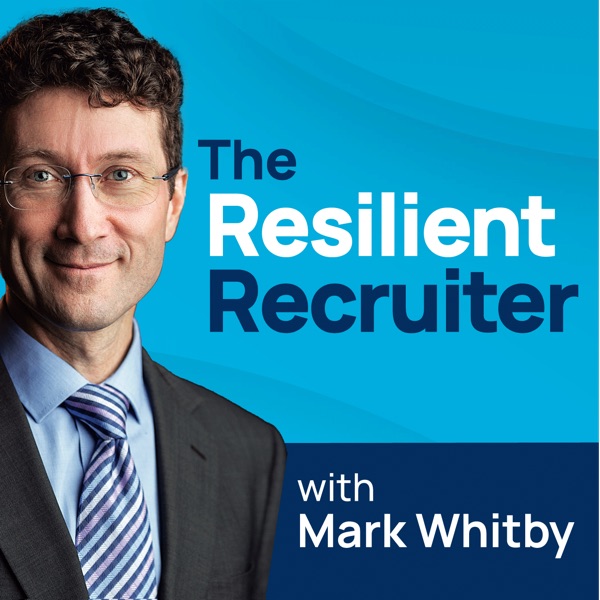
The Resilient Recruiter
Join "the Recruitment Coach" Mark Whitby as he and his guests unpack the secrets of what it takes to be a profitable and long-lived professional in the recruitment industry.
- Careers chart
- #181
- Episodes
- 346
- Releases
- Weekly
- Typical length
- 1 hr
- On air since
- 2019
- Latest episode
- 6 days ago
Episodes
346 episodes, newest first
-
1 hr 8 min
The Employee-Owned Recruitment Agency: How to Turn Recruiters Into Owners, with Mark Waschek and Scott Wedel
Episode 336
Show notes
A top biller wants equity in your recruitment firm. Can you offer them a future as an owner?
At Integra Partners, recruiters who generate $240,000 in placement revenue over 12 months become eligible for an invitation to buy shares. Eight of the firm’s 16 employees are shareholders. They receive distributions based on profitability, have access to the financials and have a defined arrangement for selling their shares when they leave.
My guests, Mark Waschek and Scott Wedel, lead Integra Partners, the employee-owned company behind Ag1Source and Career1Source. Before becoming President and COO, they were competing billers in different parts of the business.
Taking over from the founder meant learning to lead together, agreeing on where to invest and helping the founder prepare to let go. They explain why outside support, including a business psychologist, was so important to that process.
Mark and Scott explain how employee ownership works in practice, what it changes about recruiting and retaining your own team, and the tension between shareholder payouts and investing in growth.
In this episode:
• How recruiters qualify for an invitation to buy shares
• Why employees purchase shares with their own after-tax money
• How share prices, profit distributions and exit payments work
• What financial transparency demands of the leadership team
• How a retiring shareholder’s priorities can conflict with growth
• How two rival billers learned to lead one business
• Why clearer roles helped improve employee engagementEpisode highlights:
[01:32] Why the founders built an employee-owned recruitment firm
[05:13] The $240K threshold and how recruiters buy shares
[06:55] Leading when shareholders can see the P&L
[09:42] The disagreement that brought the founder’s exit into focus
[12:54] What happens to your shares when you leave
[16:18] Balancing shareholder returns with investment
[23:23] How a psychologist helped with the leadership transition
[28:03] Dividing leadership responsibilities around their strengthsAbout Mark Waschek and Scott Wedel
Mark Waschek is President of Integra Partners. He joined Ag1Source in 2006 and brings a background in agriculture, executive recruitment and business development.Scott Wedel is Chief Operating Officer. He joined as a sourcer, became a search consultant and recruited in banking before moving into leadership. He has since handed over most of his recruiting desk to focus on developing the team and running the business.
Connect with our guests:
Mark Waschek’s profile and contact details
Scott Wedel’s profile and contact details
Ag1Source
Career1SourcePodcast Partner
This episode is brought to you by Recruiterflow, an AI-native ATS and CRM built for recruitment agencies and executive search firms. Learn more: https://recruitmentcoach.com/recruiterflowFree Resources
Recruitment Business Scorecard
Free 30-minute strategy session with MarkConnect with Mark Whitby
LinkedIn
Facebook
Instagram: @RecruitmentCoach
Twitter: @MarkWhitbySubscribe to The Resilient Recruiter
If one of your top billers is asking about equity and you don’t have an answer yet, this one is worth your time.
-
51 min
Recruitment Principles: How a Contingent Agency Fills 84.6% of Jobs with Greg Benadiba
Episode 335
Show notes
A contingent agency filling 84.6% of its jobs? I wanted to know how.
That was Bilingual Source’s search-assignment fill rate in 2023. Every assignment comes with mandatory exclusivity. And Greg Benadiba has a way of earning that commitment even when the client is already working with other agencies.
After taking a detailed brief, he asks how confident the client is that those other agencies really understand the role. In 25 years of coaching recruiters, I hadn’t heard that question used in this way.
Greg is President and CEO of Bilingual Source and the author of Recruitment Principles. In this conversation, he explains the standards behind his team’s results, from choosing clients who will cooperate to making sure personal commission doesn’t get in the way of the best placement.
He also shares a mistake: a candidate he didn’t call back, the bad review that followed and the potential referral it put at risk. It’s a practical example of what keeping your word means in a business built on trust.
If you’re spending hours on jobs that never turn into placements, Greg’s approach will give you plenty to rethink.
What you’ll learn:
• How Greg earns exclusivity through a more detailed job intake.
• What asking for interview slots upfront reveals about client commitment.
• How consistent business development gives you the confidence to turn work down.
• How he tackles internal competition over candidates and commissions.
• Where to start with allocating 10% of your time to improving the business.
• How he uses AI to track the commitments he makes on calls.
• How his Recruitment Principles GPT helped an account executive get a response after six weeks of client silence.Episode highlights:
[01:56] The numbers behind Bilingual Source’s fill rate
[05:47] Two questions that help Greg earn exclusivity
[17:56] Testing client commitment before sending CVs
[26:28] Why colleagues are each other’s number one customers
[30:59] Making time to work on your business
[43:42] The missed callback and the cost of broken trust
[49:16] Getting a silent client to respond with the Recruitment Principles GPTAbout Greg Benadiba
Greg Benadiba is President and CEO of Bilingual Source, a Toronto-based French and English recruitment firm. He started his career in customer service at Dell, joined Bilingual Source as a recruiter, and now owns the company. More than half of the firm’s placements come from network referrals, and it holds a 4.9-star Google rating. Greg is the author of Recruitment Principles: Timeless Truths in the Age of AI, which is required reading for everyone on his team. He first appeared on The Resilient Recruiter as guest number 14 in March 2020.
Connect with Greg:
Website and newsletter:https://gregbenadiba.com/Recruitment Principles book:https://gregbenadiba.com/book/Recruitment Principles Companion GPT:https://gregbenadiba.com/gpt/LinkedIn:https://www.linkedin.com/in/gbenadiba/Bilingual Source:https://bilingualsource.com/
Podcast Partner:
This episode is brought to you by Recruiterflow, an an AI-native ATS and CRM with built-in AI agents that structure your data, monitor job changes and capture call notes into your CRM.
Learn more:https://recruitmentcoach.com/recruiterflowFree Resources:
Recruitment Business Scorecard:https://recruitmentcoach.com/scorecardGet your FREE 30-minute strategy call:https://recruitmentcoach.com/strategy-session/
Connect with Mark Whitby:
LinkedIn:https://www.linkedin.com/in/mwhitby/Twitter: @MarkWhitbyhttps://twitter.com/markwhitbyFacebook:https://www.facebook.com/TheRecruitmentCoach/Instagram: @RecruitmentCoachhttps://www.instagram.com/recruitmentcoach/
Follow The Resilient Recruiter for weekly conversations with recruitment leaders about building a profitable business and a life you enjoy.
-
1 hr
How Recruiters Go From Dabbling With AI to Real Results, with Vanessa Raath
Episode 334
Show notes
Vanessa Raath recently trained a team in Canada who thought they were using AI quite well. They all had the paid version.
They just didn’t know what it could do.
Vanessa helps recruitment teams put AI to work on their desks. She was already known worldwide for talent sourcing training when ChatGPT launched in November 2022. Within six months, she recognized how much sourcing work it could support and began training recruiters on AI. Today, she works with teams around the world from a small town on the South African coast.
In this conversation, Vanessa walks Mark through a repeatable workflow that combines a raw CV, interview notes and a LinkedIn profile into a formatted CV and executive summary in under five minutes. She explains how she gets AI to help write her sourcing prompts, organizes client information, and teaches it to sound like her.
They also discuss what recruiters need to do with the time they save. Vanessa explains why she ignores headhunters she can’t find online, and why a visible presence in your market gives clients and candidates a reason to trust you.
If your team pays for AI but is still dabbling with it, this episode will help you decide what to set up first.
In this episode:
• How to identify a recurring recruitment task for AI to help with
• Building a reusable skill for candidate CVs and executive summaries
• Why Claude gave Vanessa the best results when she tested three tools
• Removing sensitive personal information before uploading candidate documents
• Using Exa for candidate research and Tavily for competitor intelligence
• Getting AI to ask questions before it writes your sourcing prompt
• Using skills, projects and examples of your writing to improve the output
• Building the personal brand that helps clients and candidates trust youEpisode highlights:
[06:22] Getting up to speed with the right guidance
[08:38] CVs and executive summaries in under five minutes
[12:03] Testing the same workflow in Copilot, ChatGPT and Claude
[25:55] Getting AI to help write your sourcing prompt
[30:56] Dictating email replies with Copilot in Outlook
[34:11] How Vanessa uses skills alongside projects
[48:44] Why she checks the person behind a recruiter’s message
[59:25] Start with an end goal and work towards it with AIAbout Vanessa Raath
Vanessa Raath is a South Africa-based recruitment trainer who works with recruitment teams worldwide on AI and talent sourcing. She was already known internationally for sourcing training before expanding into AI following ChatGPT's launch. Her first course focused on helping recruiters build a personal brand.
Connect with Vanessa
LinkedIn: https://www.linkedin.com/in/vanessaraath/
Website: https://www.vanessaraath.com/
Tried and Tested AI Tools: https://start.me/p/l6bkk7/vanessa-raaths-tried-tested-ai-toolsPodcast Partner
This episode is brought to you by Recruiterflow, an AI-native ATS and CRM with built-in data enrichment for recruiting businesses.
Learn more: https://recruitmentcoach.com/recruiterflow
Free Resources
Recruitment Business Scorecard: https://recruitmentcoach.com/scorecard
Free 30-minute strategy session with Mark: https://recruitmentcoach.com/strategy-session/Connect with Mark
LinkedIn: https://www.linkedin.com/in/mwhitby/
Twitter: @MarkWhitby
Facebook: https://www.facebook.com/TheRecruitmentCoach/
Instagram: @RecruitmentCoachSubscribe to The Resilient Recruiter for new episodes every week:
https://plinkhq.com/i/1489513354 -
1 hr 2 min
Scaling: How to Build a $65M Recruiting Business That is Sellable, with Mike Kelly
Episode 333
Show notes
For the first five to six years of his first recruiting business, Mike Kelly did everything himself. Cold calls, interviews, client meetings, even payroll. He began handing off the work when he asked himself: what's the highest and best use of my time?
Mike is the Founder and CEO of Conexus Advisors and has grown and exited three professional services businesses. In this conversation, he shares how Conexus reached $65M in revenue, with 50 internal team members and 230 consultants working on client projects. The firm generates over $750,000 in gross profit per desk, including researchers.
About 85% of the business is project consulting and interim advisory. Mike explains how that revenue supports growth and walks through the division of work between researchers, screeners, recruiters, and account executives. Two people work on the database all year so fee earners can spend their time talking to clients and candidates.
Mike also explains how he develops managers who can take over coaching and grow their own teams. He shares why top billers don't always make good managers, how overrides and equity reward leadership, and what allowed him to hand over his own book of business for the first time in 28 years.
In this episode:
• How to identify the work you should hand off first
• Why Mike and his partners went nine months without a paycheck
• How a split desk works from research through to offer
• Why account executives personally prepare candidates for interviews
• How staying within a clear niche improves desk productivity
• The conversion targets Mike uses to assess recruiting performance
• How to develop and reward team leaders
• What makes a recruiting firm sellableEpisode highlights:
[09:24] Building a business instead of owning a job
[12:15] Protecting recruiter time and generating $750K GP per desk
[14:20] The fear that keeps owners doing everything
[16:33] Funding the team before paying yourself
[19:24] How the split desk works
[38:25] Conversion targets and the daily call report
[48:54] What makes a recruiting firm sellable
[54:49] Developing managers who take over coachingAbout Mike Kelly:
Mike Kelly is the Founder and CEO of Conexus Advisors, an advisory, interim and executive search firm focused on the Office of the CFO. A former CPA, Mike began his career at Ernst & Young. Over the course of his career, he has founded, scaled and sold three professional services firms, including Spinnaker Financial Resources, Beacon Resources and Tactical Cloud.
Connect with Conexus:
Podcast Partners:
This episode is brought to you by Recruiterflow, an AI-native ATS and CRM built for serious recruiting businesses. Learn more:
https://recruitmentcoach.com/recruiterflowIt is also brought to you by Juicebox, the modern AI platform for recruiting. Juicebox combines more than 30 datasets with AI models to support search, outreach and pipeline management in one workflow. Learn more:
https://recruitmentcoach.com/juiceboxFree Resources:
Book your FREE 30-minute strategy call:
https://www.recruitmentcoach.com/strategy-session/Take the Recruitment Business Scorecard:
https://recruitmentcoach.com/scorecardListen to more episodes:
https://recruitmentcoach.com/podcast/Connect with Mark Whitby:
• Mark on LinkedIn
• Mark on Twitter: @MarkWhitby
• Mark on Facebook
• Mark on Instagram: @RecruitmentCoachSubscribe to The Resilient Recruiter so you never miss an episode.
-
1 hr 4 min
How a $4M Recruiting Firm Rebuilt After a Brutal Year, with Josh Volinsky
Episode 332
Show notes
A hot market can hide a lot of problems.
Josh Volinsky and his partners launched Synergy Search in September 2020, and the accounting and finance recruiting firm has reached as high as $6M in revenue. When the market normalized, recruiters who had learned to work transactionally struggled to adapt, a run of hires didn't work out, and the founders recognized that they weren't tracking the activity behind their results.
"We got sloppy. And when you aren't tracking activity in any way, you can't see it coming."
In August 2025, a breakfast conversation between the three founders became the start of what Josh calls the reboot. That October, three recruiters each billed over $100K in a single month. At the time of recording, Synergy has 15 employees and revenue in the mid- to upper-$4 M range.
Josh explains how they introduced accountability into a firm built on freedom, what their scorecard now measures, and why shared office days became part of the reset. He also discusses supporting the team following the death of their colleague Cara, and the training process that has helped accountants become successful recruiters.
In this episode:
• How a strong market can disguise weaknesses in your recruiting business
• The breakfast question that prompted Synergy's reboot
• How conversion data encouraged a top biller to improve
• Why Josh prioritizes client interviews, job orders and calls
• How a Bullhorn-connected phone system reduced manual administration
• Why Synergy hires accountants and trains them to recruit
• How a written blueprint and regular role plays support new recruitersEpisode highlights:
[01:24] Hiring accountants as recruiters
[07:28] Preparing financially to launch the business
[18:11] Dividing responsibilities between three founders
[22:32] Building the recruiting blueprint
[25:29] Practical role plays that involve the whole team
[43:58] The market shift that exposed transactional habits
[48:31] The breakfast conversation that started the reboot
[54:06] The three recruiting metrics Josh prioritizesAbout Josh Volinsky
Josh is a co-founder of Synergy Search, an accounting and finance recruiting firm with offices in Maryland and Nashville. He began recruiting in 2007 and launched Synergy with Mark Hammond and Gary Palank in September 2020. He remains an active biller and joined The Pinnacle Society in spring 2025.Connect with Josh
LinkedIn: https://www.linkedin.com/in/joshvolinsky/
Synergy Search: https://synergysearch.com/Podcast Partners
Recruiterflow: The AI-native ATS and CRM built for serious recruiting businesses. https://recruitmentcoach.com/recruiterflowJuicebox: The modern AI platform for recruiting search, outreach and pipeline management. https://recruitmentcoach.com/juicebox
Free Resources
Take the 7-Figure Freedom Scorecard: https://recruitmentcoach.com/scorecard
Get your FREE 30-minute strategy call: https://recruitmentcoach.com/strategy-session/Connect with Mark Whitby
LinkedIn: https://www.linkedin.com/in/mwhitby/
Twitter: https://twitter.com/markwhitby
Facebook: https://www.facebook.com/TheRecruitmentCoach/
Instagram: https://www.instagram.com/recruitmentcoach/Subscribe to The Resilient Recruiter: https://plinkhq.com/i/1489513354
What would you change if you could start your recruitment firm again today?
-
1 hr
Rainmaker: The Business Development Machine That Feeds a 22-Person Team, with Kimberly Laipple
Episode 331
Show notes
In 2023, Kim Laipple led a 28-person team at Scientific Search and personally billed $1.4 million. Since then, the biotech market has been volatile. Between the downturn, retirements and other changes, the team dropped to about 16. Kim was also promoted to President after the previous owner retired.
Today, Scientific Search is back to around 22 people. Kim is running the business while still spending 30% to 50% of her week generating new business.
In this episode, Kim walks through the five channels feeding her pipeline: SEO that took nearly a year to produce consistent results, LinkedIn content built around the company and her personal brand, signal-based outbound using intent data, email marketing that depends on timing and relevance, and visibility through Claude and ChatGPT.
She also explains the 90-day training program she created for four new hires. Instead of giving inexperienced recruiters immediate ownership of live searches, the program allows them to build confidence on the phone while supporting established recruiters and protecting existing client relationships.
Kim is candid about the hardest part of becoming President. It is not learning new responsibilities. It is stepping back from the work that made her successful and allowing other people to do things differently.
In this episode, you’ll discover:
• How Scientific Search contracted from 28 people to 16 and rebuilt to 22
• Why do new hires spend their first 30 days building confidence on the phone
• The five channels behind Kim’s business development machine
• Why SEO took nearly a year to produce consistent leads
• How ZoomInfo intent data changes who gets called and when
• Why Kim tracks gross profit per fee earner across three groups
• What it takes to move from placements into longer-term strategy
• Why Kim launched a podcast interviewing life sciences leadersEpisode Highlights:
[00:00] Why Kim still calls herself “the rainmaker”
[01:22] Scientific Search goes from 28 people to 16 and rebuilds to 22
[05:24] Moving from placements into longer-term strategy
[12:08] Dividing the week between rainmaking, coaching and training
[24:36] Why the first 30 days center on phone work
[39:48] The five channels behind Kim’s business development machine
[42:54] SEO produces five to seven qualified company leads a month
[45:36] Timing outreach with ZoomInfo intent data
Podcast Partners:
This episode is brought to you by Recruiterflow, an AI-native ATS and CRM built for serious recruiting businesses. Learn more: https://recruitmentcoach.com/recruiterflow
It is also brought to you by Juicebox, the modern AI platform for recruiting. Juicebox combines more than 30 datasets with AI models to support search, outreach and pipeline management in one workflow. Learn more: https://recruitmentcoach.com/juicebox
About Kim:
Kimberly Laipple is President of Scientific Search. Alongside her operational responsibilities, she continues to run a full desk while managing 18 recruiters and researchers.
Kim has more than 30 years of recruitment experience and has personally billed more than $1.4 million in a single year. She is also Vice President of the Pinnacle Society, a consortium of 80 leading recruiters.
During her 18 years with Scientific Search, Kim has placed professionals across clinical and commercial operations, manufacturing, engineering, R&D and analytics. She holds an MBA and a BS in Business Management from Rowan University.
Connect with Kim:
• Kim Laipple on LinkedIn
• Scientific Search
• Inside the Industry with Kim LaippleConnect with Mark:
Free 30-minute strategy call: https://recruitmentcoach.com/strategy-session
Mark on LinkedIn: https://linkedin.com/in/mwhitby
Instagram: @RecruitmentCoach
Subscribe to The Resilient Recruiter for a new conversation with a top recruitment leader every week.
-
1 hr
She Sold Her Firm to Give Her Team a Bigger Ceiling, with Charlie Saffro
Episode 330
Show notes
Every December, Charlie Saffro caught up with a friendly competitor at Hirewell to compare notes on the recruiting market. At the end of their 2024 call, after four difficult years, she said something almost as a joke: if you know anyone looking to buy a supply chain recruiting firm, let me know. About a week later, Hirewell's owner called her.
Charlie founded CS Recruiting in 2010 and spent 15 years building a specialist logistics, supply chain and transportation firm. She had no exit plan. What changed was a prolonged downturn and two rounds of layoffs, the first in the company's history.
Charlie explains why she rejected buyers who wanted her client book without her people, and what she was looking for instead. She also talks through the part most owners never hear about: almost 12 months of confidential negotiation, running the business while both her senior leaders were on leave, and what closing day actually looked like from the 8am signature to the 3pm welcome meeting.
The second half of the conversation is about what happened next. Charlie walks through how her recruiters moved from a split desk into full desk work one account at a time, what that did for accountability and ownership, and why the best source of new business was already sitting in their database.
If you are weighing an exit, or you want your recruiters to own more of the work, Charlie's experience is worth an hour of your time.
In this episode:
• Why Charlie sold to protect her team rather than to cash out
• The three types of buyer she rejected and what disqualified each one
• What almost 12 months of confidential negotiation actually involves
• How she handled due diligence while two senior leaders were on leave
• What closing day looked like, hour by hour
• The advantages and disadvantages of full desk and split desk
• How recruiters can move into business development one account at a time
• Why past candidates may be your best source of new clientsEpisode highlights:
[02:31] CS Recruiting joins Hirewell and Charlie's entire team comes with her
[04:16] Fifteen years in business with no formal exit plan
[12:07] The buyer conversations that failed Charlie's test
[15:14] Keeping the deal secret while running the business
[18:30] The offhand comment that led to a call one week later
[21:19] Two senior leaders go on leave during the negotiation
[26:41] Signing at 8am and telling the team at 10am
[31:35] Moving recruiters toward full desk one account at a time
[33:23] Full desk versus split desk and the accountability trade-off
[39:14] Providing value on a retained search without a placement
[42:14] Why past candidates can become your best source of business
[49:33] Using recorded calls and AI feedback to coach recruitersPodcast Partners:
This episode is brought to you by Recruiterflow, an AI-native ATS and CRM built for serious recruiting businesses. Learn more: https://recruitmentcoach.com/recruiterflow
It is also brought to you by Juicebox, the modern AI platform for recruiting. Juicebox combines more than 30 datasets with AI models to support search, outreach and pipeline management in one workflow. Learn more: https://recruitmentcoach.com/juicebox
Free Resources:
7-Figure Freedom Scorecard: https://recruitmentcoach.com/scorecard
About Charlie Saffro:
Charlie Saffro founded CS Recruiting, a specialist recruitment firm serving logistics, supply chain and transportation. She started the company in 2010 and led it for 15 years before it joined Hirewell in December 2025. CS Recruiting now operates as a Hirewell company, giving its clients access to a broader nationwide recruiting team while retaining the specialist brand and team Charlie built.
Connect with Charlie Saffro:
LinkedIn: https://www.linkedin.com/in/charliesaffro
CS Recruiting: https://www.cs-recruiting.com/
Hirewell: https://hirewell.com/Connect with Mark Whitby:
Get your FREE 30-minute strategy call: https://recruitmentcoach.com/strategy-session/
LinkedIn: https://www.linkedin.com/in/mwhitby/
Twitter: https://twitter.com/markwhitby
Facebook: https://www.facebook.com/TheRecruitmentCoach/
Instagram: https://www.instagram.com/recruitmentcoach/Subscribe to The Resilient Recruiter: https://plinkhq.com/i/1489513354
-
1 hr 5 min
How to Bill Over $1 Million in Your First Year of Business, with Ross Cohen
Episode 329
Show notes
Ross Cohen left his role as managing director at one of Florida's leading search firms to launch Brinc Search Partners with his business partner, Brett Nortman. They gave up an established brand, a built-out book of business and the steady flow that came with a larger firm. Ross also had a non-compete preventing him from approaching his former clients.
Brinc launched in March 2025. In its first year, Ross and Brett billed over $1 million.
They did it by getting scrappy. Although both had spent years specializing in financial services recruitment, Ross accepted searches ranging from executive assistants to engineers. These assignments kept revenue moving, helped Brink prove its value and opened the door to further work.
Ross also explains why Brinc does not rely on traditional cold calls. Each search begins with people Ross and Brett already know in the market. They gather intelligence, ask for referrals and identify passive candidates who may never appear through job boards or LinkedIn searches.
You'll also hear why they hired their first associate before the business felt ready, how face-to-face meetings fit into Brinc's hybrid schedule and how the team uses Recruiterflow, PIN and Claude to reduce administration and present candidates more effectively.
What You'll Learn:
• How Ross and Brett billed over $1 million in Brinc's first year
• Why accepting searches outside their specialty helped create early momentum
• How Ross rebuilt his book of business without approaching former clients
• Why existing relationships outperform traditional cold calls
• How referral conversations uncover passive candidates
• Why Brinc hired its first associate earlier than planned
• How in-person meetings help the team assess cultural fit
• How Claude reduces administration and improves candidate presentationEpisode Outline:
[00:10] Billing over $1 million in the first year
[05:16] Lessons Ross carried from equity research into executive search
[17:22] Building candidate flow at StevenDouglas before launching Brinc
[23:01] Leaving an established firm to launch Brinc
[27:42] Rebuilding the business one phone call at a time
[38:51] Hiring an associate before the firm felt ready
[50:38] Replacing traditional cold calls with warm market conversations
[59:40] Building Brinc's technology stack around Recruiterflow, PIN and ClaudeAbout Ross Cohen:
Ross Cohen is the co-founder of Brinc Search Partners. He launched the firm with Brett Nortman in March 2025 after building a financial services recruitment practice at StevenDouglas. Ross began his career in equity research at Lazard before moving into recruitment with Solomon Page. He holds Series 7, 63, 86 and 87 securities licenses, an economics degree and a master's in international business from the University of Florida. He is based in South Florida.Connect with Ross:
Ross on LinkedIn: https://www.linkedin.com/in/ross-cohen-44658037/
Brinc Search Partners: https://www.brincsearch.com/Podcast Partners:
This episode is brought to you by Recruiterflow, an AI-native ATS and CRM built for serious recruiting businesses. Learn more: https://recruitmentcoach.com/recruiterflowIt is also brought to you by Juicebox, the modern AI platform for recruiting. Juicebox combines more than 30 datasets with AI models to support search, outreach and pipeline management in one workflow. Learn more: https://recruitmentcoach.com/juicebox
Connect with Mark Whitby:
Get your FREE 30-minute strategy call:https://www.recruitmentcoach.com/strategy-session/ Mark on LinkedIn:https://www.linkedin.com/in/mwhitby/ Mark on Twitter:https://twitter.com/markwhitby Mark on Facebook:https://www.facebook.com/TheRecruitmentCoach/ Mark on Instagram:https://www.instagram.com/recruitmentcoach/Subscribe to The Resilient Recruiter:https://plinkhq.com/i/1489513354
-
55 min
How to Bounce Back Stronger After Your Business Falls Apart, with Gemma Downing
Episode 328
Show notes
What do you do when the recruitment business you've poured everything into starts to fall apart?
Gemma Downing Mapp came back from holiday to find Mixxos £100,000 behind budget. Two months later, the company recorded its highest-billing month ever with roughly half the team.
Gemma is co-founder and CEO of Mixxos Group, a boutique recruitment consultancy she built with her business partner, Chris. They grew the company from a team of two into a multimillion-pound firm, with the numbers moving in the right direction year after year.
But the foundations had not kept pace.
Gemma and Chris knew within the first few months that a senior operations hire was not working. They liked the person and wanted the appointment to succeed, so they continued trying for 18 months. During that time, leadership became misaligned, standards slipped and financial forecasts became unreliable.
Gemma is open about the responsibility she and Chris carried for allowing the situation to continue. She explains why recruitment business owners delay difficult people decisions, what finally forced them to act and why the first thing she would fix is always the person leading the team.
The turnaround involved restructuring the company, reducing headcount by 50% and redefining the founders' roles. Gemma became CEO, responsible for the people and culture. Chris became Commercial Director, focused on revenue and gross profit.
They also brought in Sam to restore operational control. He introduced consistent one-to-ones, clearer financial reporting and a skills matrix, while helping the business prepare for a new technology rollout and launch a retained executive search desk.
Throughout the restructure, approximately 99% of Mixxos clients stayed with the company. Gemma credits the relationships she and Chris had built and their determination to do what they said they would do.
In this episode, you'll learn:
• How fast growth allowed problems to develop behind the scenes
• Why Gemma and Chris delayed a senior leadership decision for 18 months
• The danger of wanting success for an employee more than they want it themselves
• Why the leader between an owner and the team shapes everyone's standards
• How Gemma and Chris divided their roles around their strengths
• What Mixxos changed about hiring, onboarding and accountability
• How the company achieved its best month with half the headcount
• Why strong client relationships protected the business during the restructureEpisode highlights:
[05:58] Five years of growth and the foundations that failed to keep pace
[09:57] Returning from holiday to a business, Gemma no longer wanted to be in
[11:44] The cost of delaying a senior leadership decision for 18 months
[22:00] Gemma becomes CEO and Chris becomes Commercial Director
[28:29] Launching the retained executive search desk
[31:04] Achieving the best billing month in company history with half the team
[40:17] How Mixxos retained approximately 99% of its clientsPodcast Partners:
This episode is brought to you by Recruiterflow, an AI-native ATS and CRM built for serious recruiting businesses. Learn more:https://recruitmentcoach.com/recruiterflowIt is also brought to you by Juicebox, the modern AI platform for recruiting. Juicebox combines more than 30 datasets with AI models to support search, outreach and pipeline management in one workflow. Learn more:https://recruitmentcoach.com/juicebox
About Gemma Downing Mapp:
Gemma Downing Mapp is co-founder and CEO of Mixxos Group, a boutique recruitment consultancy based in Milton Keynes. She and her business partner, Chris, grew Mixxos from a team of two into a multimillion-pound firm working across permanent, temporary and retained executive search. The business now also delivers retained search assignments in EMEA and the United States.Connect with Gemma:
Mixxos Group:https://mixxos.com/Connect with Mark Whitby:
Get your free 30-minute strategy call:https://recruitmentcoach.com/strategy-session/Mark on LinkedIn:https://www.linkedin.com/in/mwhitby/Mark on Twitter:https://twitter.com/markwhitbyMark on Facebook:https://www.facebook.com/TheRecruitmentCoach/Mark on Instagram:https://www.instagram.com/recruitmentcoach/
Subscribe to The Resilient Recruiter:https://plinkhq.com/i/1489513354
-
1 hr
How to Grow Billings 33% in a Flat Market by Selling Without Selling, with Sachin Ruparelia
Episode 327
Show notes
While much of the recruitment industry was flat last year, Sachin Ruparelia grew billings by 33% and kept hiring.
Sachin is the Founder and Managing Director of Camino Partners and Camino Search. Over the last couple of years, his businesses have grown net fee income by 20% and then 33%, while scaling to around 37 people across London and Tampa.
A big part of that growth has come from community-led business development. Instead of calling prospects to ask if they're hiring, Camino creates reasons for clients and prospects to want to speak with them. They run events, CFO dinners and networking sessions. They publish salary surveys and a 120-page Global Report for the private equity market.
Sachin calls it "the art of selling without selling."
In this conversation, Sachin explains how those events and insights turn into real recruitment opportunities, including the important step recruiters often miss: making the commercial ask after they've earned the conversation.
You'll also hear how Sachin approaches the other side of scaling: people. He shares how to know when it's time for your next support hire, why an operations manager can be one of the smartest early hires for a growing firm, and his A's, B's and F's approach to hiring people who are better than you in the areas where you're weak.
Sachin also speaks openly about growing up in a violent household and the two years of psychodynamic counseling that helped him understand how those experiences had shaped his behavior. He explains how that self-awareness made him a better husband, father, friend and leader, and why he now speaks openly about mental health in recruitment.
In this episode, you'll learn:
• How Camino grew NFI by 20% and then 33% while scaling to around 37 people
• How community-led BD creates conversations without leading with a sales pitch
• Why Sachin runs one to two events a month and how he gets the right people into the room
• How a 120-page insight report creates multiple reasons to contact prospects
• How to turn events and content into actual recruitment opportunities
• When a growing recruitment firm should make its first operations hire
• How the A's, B's and F's test helps founders hire around their weaknesses
• Why is self-awareness becoming increasingly important as you build a larger teamEpisode Highlights
[08:50] Setting up the business at 31 and appointing a chairman
[09:33] The two years of therapy Sachin calls game changing
[17:20] Two verticals, 37 people and 33% growth in a flat market
[22:51] The first scaling lesson: hire people better than you
[29:25] Community-led BD: the art of selling without selling
[39:07] Insight-led BD and Camino's 120-page Global Report
[52:55] The first operations hire for a scaling recruitment firm
[54:50] The A's, B's and F's approach to hiring around your weaknessesSachin Ruparelia Bio
Sachin Ruparelia is the Founder and Managing Director of Camino Partners and Camino Search. He launched Camino Partners in 2012 with two former colleagues, initially specializing in accountancy and finance before expanding into "mission control" roles within recruitment businesses.
Camino Search works within the private capital ecosystem, placing CFOs and other senior finance professionals, along with corporate development, M&A and origination talent, into private equity-backed technology-enabled and business services companies.
The business operates from London and Tampa and has grown to around 37 people. Over the last two years, Camino's NFI grew first by 20% and then by 33%. Sachin's next plan, Mission 234, is to double headcount and triple NFI over four years.
Connect with Sachin
Sachin on LinkedIn: https://www.linkedin.com/in/sachinruparelia/
Camino Partners: http://www.caminopartners.co.uk/
Camino Search: http://www.caminosearch.co.ukSponsors
This episode is brought to you by Recruiterflow, an AI-native ATS and CRM built for serious recruiting businesses. Learn more: https://recruitmentcoach.com/recruiterflow
It is also brought to you by Juicebox, the modern AI platform for recruiting. Juicebox combines more than 30 datasets with AI models to support search, outreach, and pipeline management in one workflow. Learn more: https://recruitmentcoach.com/juicebox
Connect with Mark Whitby
Get your FREE 30-minute strategy call: http://www.recruitmentcoach.com/strategy-session/
Mark on LinkedIn: https://www.linkedin.com/in/mwhitby/
-
51 min
How to Build a $10M Recruitment Firm With Just 11 People, with Dave Fox
Episode 326
Show notes
There's a belief in recruitment that scaling a firm means scaling headcount.
Dave Fox has built a different model. His fully remote technology staffing firm, Focus GTS, generates more than $10 million in annual revenue with a team of just 11 people.
Early on, Dave assumed he would need 80 to 100 people to build the business he wanted. He also thought a 360 model and broader market coverage would be the right path. Over time, he found a different way to grow: stay close to one specialist market, build a split-desk team of strong people, and make AI part of how the whole business works.
Dave is the founder of Focus GTS, a Miami-based technology staffing firm that specializes in the Adobe Marketing Cloud ecosystem. He started in recruitment with the S3 Group, working his way from trainee consultant to manager and director before launching his own business eight years ago.
In this conversation, Dave explains why he is done with the "chase game" of constantly pursuing new opportunities. His focus now is on becoming so useful and well-known in his market that clients and candidates come to him.
That means creating free tools that solve real problems, publishing useful content, and using AI research agents to stay close to key customers. It also means giving every member of his 11-person team access to Claude and Claude Code, then creating a culture where people share what they are learning.
Dave is not suggesting AI is a shortcut to success. He spends 50 to 60 hours a week learning and building with it. But he makes a strong case that agency owners need to rethink the old relationship between headcount, growth, and productivity.
In this episode, you'll learn:
• Why Dave moved from a 360 model to a split-desk structure
• The assumption that made him think he needed 80 to 100 people
• Why a smaller, better-paid team can outperform a larger one
• How Focus GTS became known in the Adobe Marketing Cloud market
• How free tools and useful content can create inbound conversations
• How AI research agents help Dave's team stay close to top clients
• How to make AI a shared team habit rather than a founder-only project
• The mindset Dave believes agency owners need as AI changes the marketEpisode highlights:
• [02:49] Why Dave launched Focus GTS after walking away from a potential partnership
• [07:53] Building a fully remote technology staffing business
• [10:46] Why Focus GTS uses a split-desk model
• [18:18] The AI inflection point that changed Dave's view of growth
• [23:28] Building free tools for a specialist market
• [29:42] Using AI research agents on Focus GTS's top five clients
• [34:52] How to become a celebrity in your recruitment niche
• [45:25] How all 11 team members learn and use AI togetherSponsors:
This episode is brought to you by Recruiterflow, an AI-native ATS and CRM built for serious recruiting businesses. Learn more:https://recruitmentcoach.com/recruiterflow
It is also brought to you by Juicebox, the modern AI platform for recruiting. Juicebox combines more than 30 datasets with AI models to support search, outreach, and pipeline management within a single workflow. Learn more:https://recruitmentcoach.com/juicebox
Guest Bio:
Dave Fox is the founder of Focus GTS, a fully remote technology staffing firm based in Miami. Focus GTS generates more than $10 million in annual revenue with a team of 11 and has been recognized on the Inc. 5000 list. Dave and his team specialize in the Adobe Marketing Cloud ecosystem and use AI across research, marketing, sales, website development, and client delivery.
• Connect with Dave Fox on LinkedIn: https://www.linkedin.com/in/davefoxceo/
• Learn more about Focus GTS: https://www.focusgts.com/Connect with Mark Whitby:
• Get your FREE 30-minute strategy call:http://www.recruitmentcoach.com/strategy-session/
• Mark on LinkedIn: https://www.linkedin.com/in/mwhitby/
• Mark on Twitter: @MarkWhitby
• Mark on Facebook
• Mark on Instagram: @RecruitmentCoachSubscribe to The Resilient Recruiter
-
57 min
How to Build Talent Pools on Autopilot With AI Agents, with David Paffenholz
Episode 325
Show notes
David Paffenholz never worked as a recruiter. He studied economics at Harvard, led growth at Snap, and built a couple of consumer products with his co-founder, Ishan, before the two of them turned their attention to hiring. What they noticed was that most of the recruiting tech stack is built for candidates who are already in the funnel, while the harder and more valuable problem sits right at the top: finding the right people and getting them to reply.
The platform they built, Juicebox, is now used by more than 5,000 customers, and around 40% of them run AI agents that source candidates autonomously for open roles. One agent per role. Each learns from your feedback, sources a set number of new candidates every day, and tells you when the talent pool needs a different approach.
In this special sponsored episode, David walks Mark through what that looks like on a real desk. He covers the four-step outreach sequence Juicebox recommends, why generic AI-written emails hurt response rates and how to keep yours sounding like you, and how the platform searches and ranks candidates without a LinkedIn Recruiter seat. He also makes the case that recruiting will start to look more like executive search, with agents handling the research and sourcing while recruiters spend their time where they create the most value: building trust with candidates and clients.
He also shares the honest version of building the company, including the two difficult years when it was just him and Ishan, before Juicebox found momentum.
In this episode, you'll discover:
• How one AI agent per open role sources candidates every day
• The four-step outreach cadence Juicebox recommends, and why the fourth email waits
• Why generic AI-written emails hurt your response rate, and how to keep yours sounding like you
• How to search and rank candidates without relying on LinkedIn Recruiter
• When to add LinkedIn and phone steps to an automated sequence
• Why the future of recruiting may look more like executive search
• What helps recruiters and employers win the best talent
• The two difficult years before Juicebox found momentumEpisode highlights:
• 01:22 Why David and his co-founder chose to build for recruitment
• 03:41 The top-of-funnel problem most recruiting tools ignore
• 10:27 The four-step email cadence that gets more replies
• 12:00 Why AI-written outreach often sounds generic
• 24:57 The recruiting org chart of the future
• 26:49 What one AI agent per role does each day
• 32:18 Why recruiting will increasingly resemble executive search
• 51:01 The difficult two years before the business found momentumPodcast Partner
This special episode is sponsored by Juicebox, the AI recruiting platform that helps recruiters find and reach the right candidates. Book a demo: recruitmentcoach.com/juicebox
About David Paffenholz
David Paffenholz is the co-founder and CEO of Juicebox, an AI recruiting platform used by more than 5,000 customers to find and reach candidates. He studied economics at Harvard and led growth at Snap. He and his co-founder, Ishan, built several consumer products before founding Juicebox, which went through Y Combinator in 2022.
Connect with Mark
Free 30-minute strategy call: recruitmentcoach.com/strategy-session/
LinkedIn: linkedin.com/in/mwhitby
Instagram: @RecruitmentCoachSubscribe to The Resilient Recruiter so you never miss an episode.
-
58 min
7 Success Secrets of Elite Recruiters with Ben Mena,
Episode 324
Show notes
What separates recruiters building momentum from those whose desks are quietly drifting?
Benjamin Mena has recorded more than 300 episodes of The Elite Recruiter Podcast. Mark Whitby has done the same with The Resilient Recruiter. Between them, they have interviewed hundreds of high-performing recruiters and repeatedly seen the same success patterns.
Ben begins this conversation with an honest admission. His recruiting revenue had been drifting. It was not collapsing, but his attention had become divided and the work he should have completed months earlier had not happened.
That changed the conversation. Ben and Mark were not simply identifying what elite recruiters do. They were examining why proven fundamentals remain difficult to execute, even when you know exactly what they are.
"The wealth in our industry is built on going day after day, doing the most boring basics."
In This Episode, You'll Learn:
• Why successful recruiters plan the next day before the current one ends
• How rigorous qualification protects your time, energy and revenue
• Why hyper-specialization is common among the industry's top billers
• How engagement fees test whether a client is genuinely committed
• Why recruiters need to rebuild the sales skills weakened during easier markets
• How cornerstone clients create a more stable recruitment desk
• How LinkedIn, podcasts, newsletters and SEO can generate inbound opportunities
• Why long-term relationships become more valuable as AI changes recruitmentEpisode Highlights:
• [02:08] The revenue drift that made Ben delay this conversation
• [07:18] Defining success beyond recruitment billings
• [11:33] Why elite recruiters plan tomorrow before today ends
• [15:21] How rigorous qualification protects time and revenue
• [21:46] Becoming the go-to recruiter in a hyper-niche market
• [29:16] Rebuilding the sales skills weakened during easier markets
• [36:36] Building an inbound engine that compounds over time
• [46:05] How AI could widen the gap between recruitersAbout Benjamin Mena
Benjamin Mena is the host of The Elite Recruiter Podcast and Managing Partner of Select Source Solutions, an executive search firm specializing in federal recruiting for government contractors.
Ben has 20 years of recruiting experience across major defense contracts and complex federal programs. Through his podcast, recruiter community and virtual summits, he brings together top billers, firm owners and industry leaders to share what is working on the desk.
Connect With Benjamin Mena
The Elite Recruiter Podcast: https://www.eliterecruiterpodcast.com/
LinkedIn: https://www.linkedin.com/in/benjaminmena/If you want to build a recruitment desk around disciplined execution, market authority and relationships that compound, this episode is a must-listen.
Podcast Partners
This episode is brought to you by Recruiterflow — an AI-first ATS and CRM with built-in data enrichment. Book a demo at recruitmentcoach.com/recruiterflow.
Free Resources
Recruitment Freedom Scorecard: https://mark-rf1pexbm.scoreapp.com/
Book a free 30-minute strategy call: https://recruitmentcoach.com/strategy-session/Connect With Mark Whitby
LinkedIn: https://www.linkedin.com/in/markwhitby/
Twitter: @MarkWhitby
Facebook: https://www.facebook.com/RecruitmentCoach/
Instagram: @RecruitmentCoachSubscribe to The Resilient Recruiter so you never miss an episode.
-
1 hr 4 min
Claude for Recruiters: How to Automate Your Recruitment Business | Reyhan Khan
Episode 323
Show notes
Most recruiters know they should be using AI more. What they don't know is where to start, what to connect, and what it costs. Reyhan Khan makes all of that concrete.
Reyhan runs RecruiterGTM and has spent the last 60 days setting up Claude for 35 recruitment agencies. He's based in Lisbon, originally from Pakistan, and spent years running operations for US agencies before launching his own business. He places offshore talent from South Africa, Pakistan, and Latin America into recruitment agencies, which means he operates as a recruiter himself and follows the same process he teaches.
In this episode, Reyhan walks through the complete setup: how to connect your ATS, outreach tools, and data sources into Claude so you can run BD, sourcing, and outreach from a single screen. He covers honest tool reviews, a full tech stack cost breakdown, and the three moves to make first if you want results this month, including one approach most recruiters have never considered.
In this episode:
• How Reyhan set up Claude for 35 recruiters in 60 days, and what he found every time
• Why connecting your ATS, outreach tools, and data sources to Claude changes the economics of BD
• The recommended tech stack and cost breakdown for solo recruiters and full teams
• Why downloading your LinkedIn connections and ranking them by fit is the highest-return move most recruiters haven't made
• Honest tool reviews: RecruiterFlow, Loxo, Bullhorn, and more
• Why Claude builds market maps at a fraction of the cost of other tools
• How a recruiter over 60 who described himself as "not tech savvy" built six Claude agents
• Why offshore talent and Claude work better together than either does alone
• The recruiter who made a placement by going back to one person she already knewEpisode Highlights:
• [0:00] Intro
• [02:33] From electrical engineer to online business operator
• [07:20] Becoming Head of Operations as the agency grew to 45 people
• [12:56] Deploying Claude for 35 recruiters in 60 days
• [15:25] Where recruitment agencies need AI most
• [18:30] Connecting your recruitment tools inside one Claude cockpit
• [22:43] How a recruiter over 60 built six Claude agents
• [24:55] The Claude workflow that produced half a dozen placements
• [27:45] Reyhan's recommended recruitment technology stack
• [31:27] Why every client and candidate conversation should be recorded
• [41:29] Building lower-cost market maps with Claude
• [47:36] The highest-return place to begin with AI
• [52:26] Combining offshore talent with ClaudeListen: https://recruitmentcoach.com/podcast/
Podcast Partner: Recruiterflow, an AI-first ATS and CRM with built-in agents. https://recruitmentcoach.com/recruiterflow
Free Resources: Take the 7-Figure Freedom Scorecard at https://recruitmentcoach.com/scorecard or book a free strategy session at https://recruitmentcoach.com/strategy-session/
About Reyhan Khan: Reyhan Khan runs RecruiterGTM, helping recruitment agencies build go-to-market systems using AI and Claude. Over the course of his career, he moved from electrical engineering to freelance copywriting to Head of Operations at a US agency, before spending two and a half years coaching recruitment agencies. He now lives in Lisbon, Portugal, where he places offshore talent and helps agencies build AI-enabled recruiting systems. Find him on LinkedIn or at recruitergtm.com.
Connect with Reyhan:
LinkedIn: https://www.linkedin.com/in/reyhankhann/
Website: recruitergtm.comConnect with Mark Whitby:
Free 30-minute strategy call: http://www.recruitmentcoach.com/strategy-session/
Mark on Linkedin: https://www.linkedin.com/in/mwhitby/
Subscribe to The Resilient Recruiter: https://recruitmentcoach.com/podcast/ -
1 hr
How the Top 1% of Recruiters Win New Business in 2026 | Mike Williams, Jen Meyer, and Pree Sarkar
Episode 322
Show notes
What are the top 1% of recruiters doing differently to win new business in 2026? That's exactly what Mark Whitby wanted to find out. So instead of interviewing one guest, he brought together three Pinnacle Society members for a live panel discussion in front of more than 100 recruiters.
Jen Meyer is Chief Revenue Officer at Govig and Associates, a firm doing $12 to $15 million a year. Mike Williams built Carnegie Search into a team of 15 and billed $1.5 million last year. Pree Sarkar runs a global firm from Sydney focused on go-to-market hiring for scale-ups and AI companies.
They run successful businesses in very different markets, but there were surprising similarities in how they approach business development. Jen explained why companies going through layoffs can become some of your best client opportunities. Mike shared the simple accountability system that keeps his team on the phones every day. And Pree broke down the 90-day framework that led to seven of his last 10 client agreements.
If you're relying on referrals and repeat business, this conversation is a reminder that the best recruiters never stop building a pipeline.
In this episode:
• Why layoffs and restructures create high-value search work that never gets advertised
• The MPC approach that opens doors without the standard recruiter pitch
• Mike's fifteen-calls-a-day accountability system
• How to build a prospect list by hand, and what company size to target
• Ad calls versus target company calls, and what each means for your fees
• Pree's Brand, Win, Grow framework and the Fill strategy
• Nets, Seeds and Spears: balancing short and long-term pipeline
• What to do if you need a search assignment in the next 30 days
• Becoming "the recruiter for all seasons"Episode Highlights:
[00:00] Intro
[04:49] Why reputation and relationships won't build a repeatable pipeline
[05:28] Jen targets companies that are downsizing, and why it works
[09:56] Mike on why accountability beats good intentions
[11:23] The fifteen-calls-a-day spreadsheet system explained
[14:11] Why Mike builds every prospect list by hand
[16:00] The company size sweet spot for director-level roles
[16:51] Pree's three pillars: Brand, Win, Grow
[18:35] Nets, seeds and spears explained
[25:23] What each panellist would do starting over from zero
[30:37] Why one hundred calls a day still matters in 2026
[35:10] Ad calls versus target company calls, and the fee difference
[45:00] Becoming "the recruiter for all seasons"
[57:50] The one metric Jen says to measure every FridayPodcast Partner
Recruiterflow: AI-first ATS and CRM with built-in agents.
https://recruitmentcoach.com/recruiterflowAbout the Guests
Jen Meyer is Chief Revenue Officer at Govig and Associates, leading all business development. She has been in the industry for nearly 30 years, including 14 years running her own firm.Mike Williams is the founder of Carnegie Search, an engineering recruitment firm in Charlotte, North Carolina, with a team of 15.
Pree Sarkar runs a global recruitment firm from Sydney focused on software sales and go-to-market hiring for startups, scale-ups and AI companies.
Connect with the Guests
Jen Meyer on LinkedIn
Mike Williams on LinkedIn
Pree Sarkar on LinkedInConnect with Mark Whitby
Get your free 30-minute strategy call: https://recruitmentcoach.com/strategy-session/
Mark on LinkedIn | Twitter: @MarkWhitby | Facebook | Instagram: @RecruitmentCoach -
54 min
LinkedIn Algorithm: How the Latest Changes Affect Recruiters | Richard van der Blom
Episode 321
Show notes
LinkedIn has changed how it decides who sees your content, and many recruiters are feeling the impact. Reach is down for most creators, engagement is changing, and tactics that worked a year ago are becoming less effective.
Richard van der Blom has spent years studying those changes. His annual LinkedIn Algorithm Insights Report is now in its seventh edition, built from the analysis of 1.3 million LinkedIn posts published in the first half of 2026. His latest research suggests LinkedIn has fundamentally shifted from rewarding who you know to rewarding what you want to be known for.
In this episode, Richard explains what those changes mean for recruiters, how topic fingerprinting influences your visibility, why random posting is hurting more than helping, and how AI is changing the way LinkedIn evaluates content. He also shares the four content pillars behind high-performing posts, why newsletters are becoming one of LinkedIn's most underused tools, and what recruiters should change now to stay visible.
In this episode, you'll discover:
• Why LinkedIn's latest algorithm changes are reducing reach for many recruiters
• How topic fingerprinting determines who sees your content
• The four content pillars behind most high-performing LinkedIn posts
• Why your profile matters as much as the content you publish
• How LinkedIn is detecting AI-generated content
• Why newsletters are becoming one of LinkedIn's biggest opportunities
• What recruiters should change immediately to improve their visibilityEpisode highlights:
[04:47] LinkedIn's shift from a relationship graph to an interest graph
[08:41] Topic fingerprinting and why your profile matters
[19:19] The four content pillars behind successful LinkedIn content
[38:38] Which LinkedIn formats are performing best in 2026
[43:27] The LinkedIn Loop Cycle explained
[48:05] AI detection on LinkedIn and the reach penalty
About Richard
Richard van der Blom is the founder of Just Connecting, a LinkedIn training and consultancy agency. He has been helping businesses use LinkedIn since 2010 and has published the LinkedIn Algorithm Insights Report every year since 2020. His latest report analyzes 1.3 million LinkedIn posts and is widely referenced by organizations including Salesforce, PwC, and Nestlé.
Connect with Richard:
• LinkedIn:https://www.linkedin.com/in/richardvanderblom/
• Website:https://www.richardvanderblom.com/
• LinkedIn Algorithm Insights Report 2026: https://sales.richardvanderblom.com/content-algorithm-playbook/Connect with Mark Whitby:
Free Strategy Session:
https://recruitmentcoach.com/strategy-session/LinkedIn:
https://linkedin.com/in/mwhitbyInstagram: @RecruitmentCoach
Subscribe to The Resilient Recruiter so you never miss an episode.
-
1 hr 4 min
How AI Is Helping Recruiters Bill More, with Jordan Shlosberg
Episode 320
Show notes
Recruiters don't need AI to replace conversations with candidates or clients. They need AI to give them more time for those conversations. That's the philosophy Jordan Shlosberg has built his entire business around.
Jordan is the founder of Atlas, an AI-first CRMx built for recruitment agencies. Before Atlas, he built proSapient, an expert network platform, scaling it to $40 million in revenue and 300 people across four or five offices before stepping back from the business in 2022.
In this episode, Jordan explains where AI is already helping recruiters bill more, and where he thinks it has no place at all. He argues that business development, not delivery, is the real constraint on agency growth. He also shares why he uses Claude alongside his CRM to run his own business, and the simple test he applies to every new piece of technology. If you've been experimenting with AI but aren't sure how to turn that into more billings, this conversation gives you a clear way to think about it.
In this episode, you'll discover:
• Where AI helps recruiters bill more, and where it shouldn't be used
• Why specing a candidate to a client used to take a day, and what that looks like now
• How Jordan decides whether to use Claude or his CRM for a given task
• Why business development, not delivery, is the real constraint on agency growth
• What "micro AI" means, and why Jordan avoids building one big flashy feature
• The one test Jordan applies to every new feature before it ships
• What Jordan thinks every recruiter should try in the next 90 daysEpisode highlights:
00:54 From building proSapient to $40 million to launching Atlas
08:23 The hiring mistake that dropped Jordan's Glassdoor score to 2.2
30:18 Where AI is genuinely good in recruitment today, and where it isn't
34:20 Why Jordan uses Claude over ChatGPT to run his own business
47:19 The search Atlas can run that no one else can do yet
59:39 Why business development, not delivery, is the real constraint on growthPodcast Partner: This episode is sponsored by Atlas, the AI-first CRMx built for recruitment agencies. For more information, visit recruitmentcoach.com/atlas.
About Jordan: Jordan Shlosberg is the founder and CEO of Atlas, an AI-first CRMx built for recruitment agencies. He previously founded proSapient, an expert network platform, which he built to $40 million in revenue and 300 people across four or five offices before stepping back from the business in 2022.
Connect with Jordan:
https://www.linkedin.com/in/jordanshlosberg/Connect with Mark:
Free 30-minute strategy call: recruitmentcoach.com/strategy-session/
LinkedIn: linkedin.com/in/mwhitby
Instagram: @RecruitmentCoachSubscribe to The Resilient Recruiter so you never miss an episode.
-
1 hr 4 min
How to Bill $1.29 Million Without Sacrificing Family Life, with Emily Audibert
Episode 319
Show notes
Emily Audibert billed $1.29 million in 2025. She did it while eight and a half months pregnant with her third child, living in a 750-square-foot cottage for six months during a home renovation with her husband, two young boys, and a 70-pound dog.
Emily is the founder of EA Associates, a search firm specializing in go-to-market roles. The year before, she'd billed $800K. She knew she was capable of billing seven figures, but a bad RPO client was quietly eating the difference. She came home from a conference determined to make some changes, fired the client, worked with her sister, Amanda, to overhaul her processes and technology, and by spring had landed a major new contract.
In this episode, Emily walks through that whole sequence, along with the early years of her career, including five failed attempts at the same CPA exam before she ever considered recruiting, and the moment she stopped copying her trainer's script and started sounding like herself on the phone. Today, she's off the phone by 4:30 most afternoons to be with her kids, and she explains exactly how her business is built to make that possible.
In this episode, you'll discover:
• How to tell a good RPO from one that's quietly draining your business
• Why the type of contract you sign never fixes a role that's hard to fill
• What changed when Emily brought her sister on as her operations partner
• Why she spend nearly her whole day on the phone and almost nothing else
• The three things that took her from $80K to $390K in her second year
• Why a softer, more personal approach outperformed a memorized script
• The daily habits she leans on to stay calm during a demanding week
• How half her breakthrough year came from work she was already doingEpisode highlights:
02:26 Life with three kids under five
08:13 How 2025 became her breakthrough year
09:01 The RPO client she fired
14:41 Failing the CPA exam five times before finding recruitment
21:54 From $80K to $390K in year two
26:46 Finding her own voice on the phone
46:04 Why hiring her sister as integrator changed everything
52:43 A great RPO versus one you should firePodcast Partner: This episode is brought to you by Recruiterflow, the AI-first ATS and CRM built for recruitment agencies and search firms. recruitmentcoach.com/recruiterflow
Free Resources:
7-Figure Freedom Scorecard: https://mark-rf1pexbm.scoreapp.com/
Book a Strategy Session: recruitmentcoach.com/strategy-session/About Emily: Emily Audibert is the founder of EA Associates, a search firm specializing in go-to-market roles across marketing and sales. She began her career at Hobson Associates, trained under Danny Cahill, and has spent nearly 10 years in recruiting. She was inducted into the Pinnacle Society in 2025. That same year, she billed $1.29 million, up from $800K the year before.
Connect with Emily:
https://www.linkedin.com/in/emilyaudibert/
https://ea.associates/Connect with Mark:
Free 30-minute strategy call: recruitmentcoach.com/strategy-session/
LinkedIn: linkedin.com/in/mwhitby
Instagram: @RecruitmentCoachSubscribe to The Resilient Recruiter so you never miss an episode.
-
59 min
How to Make More Placements with Split Fees | NPA Worldwide Panel
Episode 318
Show notes
How many search assignments have you turned down because they were outside your niche, outside your geography, or you simply didn't have the capacity?
In this special sponsored panel episode, Mark Whitby is joined by Heather Gardner, Jeff McGraw, and Jen Anderson from NPA Worldwide to discuss how split-fee partnerships help independent recruiters make more placements without taking on more clients.
Heather made six split placements in her first year with NPA Worldwide. Jen has completed more than 55 split placements over the past decade. Jeff has been making split placements since 1994. Together, they explain how split fees work, how to build trusted recruiting partnerships, and how collaboration has helped them fill searches they would otherwise have declined.
What You'll Learn:
• How a standard 50/50 split fee works, including the fee paid back to the network
• What questions to ask before agreeing to work on someone else's job order
• How Jeff brought a partner onto an intake call and filled an optics engineer role he couldn't have qualified alone
• How Jen builds trust with a new partner by copying them on every email with the client and candidate
• How Heather turned six split placements into a steady first year with NPA Worldwide
• What separates a partner worth working with from one worth turning downTimestamps:
00:00 Why recruiters turn away good search assignments
07:45 How split fee partnerships work
10:43 Heather's first year: six split placements
22:16 Jeff's optics engineer success story
26:10 How to qualify a split opportunity
28:57 The university client Jen won with a partner's help
37:39 Why collaboration beats competition
45:57 What makes a great split recruiting partnerGuest Panel
Heather Gardner is the owner of High Sierra Talent in California and made six split placements during her first year with NPA Worldwide.Jeff McGraw is with William Charles Search Group in Pittsburgh, Pennsylvania, and has been making split placements through NPA Worldwide since 1994.
Jen Anderson is the owner of Prestige Recruiting Firm in Clearwater, Florida. She has been an NPA Worldwide member for 10 years, has completed more than 55 split placements, and currently serves on the NPA Worldwide Americas Board.
If you've ever turned down work because it sat outside your specialty, this conversation will change how you think about the next one.
This episode is sponsored by NPA Worldwide, a global, member-owned network of independent recruiters built around split fee placements.
Learn more about NPA Worldwide: https://npaworldwide.com
Mark Whitby: https://www.linkedin.com/in/markwhitby/
The Resilient Recruiter: https://www.recruitmentcoach.com/podcast/ -
1 hr 17 min
How a Solo Recruiter Went From Running a Bakery to Billing $100K a Month
Episode 317
Show notes
Michael Chambers didn't come into recruitment through the usual route.
Before becoming a recruiter, he spent eight years running a bakery with his mother in Charlotte, North Carolina. Then his father passed away from cancer, leaving behind a recruiting business that had barely gotten started. Michael decided to take it over despite having no recruiting experience.
A few years later, after navigating Covid, relocating across the country, and completely changing niches, Michael relaunched his business in manufacturing and battery recruitment across the Southeast United States.
By month two, he was billing $100,000 a month as a solo recruiter.
His business development strategy is unlike anything we've featured on the podcast before.
Michael combines the Dream 100 methodology with personalized market intelligence reports, handwritten notes, LinkedIn videos, voice messages, phone calls, and in-person visits. In one campaign discussed on the show, 25 personalized mailers generated 15 responses and 10 booked conversations.
He even shows up at target companies with cakes featuring their logo printed in icing.
In this conversation, Michael breaks down exactly how the system works, why he went all-retained after Covid, how he built a niche in the Southeast Battery Belt, and why giving away value before asking for anything has become the foundation of his business.
What You'll Learn
• How Michael went from bakery owner to a six-figure monthly recruiting desk
• Why he switched to a retained-only business model
• The complete Dream 100 campaign and follow-up sequence
• How personalized market intelligence reports open doors with target clients
• Why physical mail still works in a digital world
• How AI helps him create highly customized reports efficiently
• The thinking behind his two-year replacement guarantee
• How he became known as a specialist in battery manufacturing recruitment
Timestamps
[1:24] Michael's unusual route into recruitment
[8:23] Taking over his father's recruiting business
[15:21] Starting in 2019 and navigating Covid
[17:47] Going all-retained and becoming more selective
[21:51] Sending market intelligence before pitching anything
[28:14] Relocating and relaunching in the Battery Belt
[29:38] Billing $100K/month from month two as a solo recruiter
[39:28] Why physical mailers outperform digital outreach
[47:22] Dream 100 campaign breakdown: 25 mailers, 15 responses, 10 conversations
[53:09] Showing up unannounced with a logo-printed cake
[58:59] Inside a 30-page market intelligence report
[1:00:38] The two-year replacement guarantee
About Michael Chambers
Michael Chambers is the founder of The Chambers Group, a retained search firm focused on manufacturing, operations, aerospace, and semiconductor recruitment across the Southeast United States. He entered recruitment in 2019 after taking over the business his father had started before his passing. Today, he specializes in helping manufacturing organizations hire critical leadership and operational talent across the Southeast Battery Belt.
Connect with Mark Whitby
Free Strategy Session:
recruitmentcoach.com/strategy-session7-Figure Freedom Scorecard:
recruitmentcoach.com/scorecardLinkedIn:
linkedin.com/in/mwhitbyInstagram:
@RecruitmentCoach
Careers lists
More Careers shows picked out from the charts











More in Careers
Placed highest on Apple Podcasts' Careers chart right now