Podcast
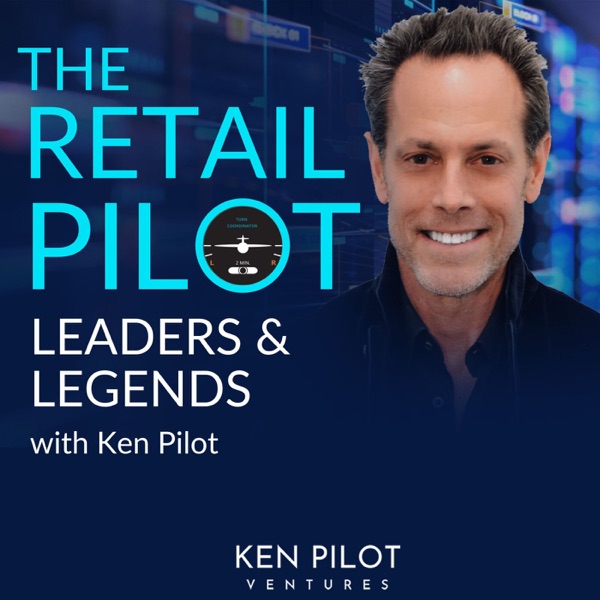
The Retail Pilot
The Retail Pilot is a series of interviews conducted by Ken Pilot with “Leaders and Legends” of the Retail industry. Ken will focus the conversation on his guests’ career journeys and their greatest career accomplishments and disappointments; gather insight into their leadership styles; learn who inspired them as they progressed through their careers; identify brands they admire; discover challenges they have faced; and talk about where they think Retail is headed and how they are leveraging technology to get there.
Hosted on Ausha. See ausha.co/privacy-policy for more information.
- Episodes
- 116
- Releases
- Every two weeks
- Typical length
- 52 min
- On air since
- 2023
- Latest episode
- 15 hours ago
Episodes
116 episodes, newest first
-
48 min
Bracken Darrell CEO, the VF Corp and his brand adventures North
Show notes
Three years ago, Bracken Darrell walked into VF Corp with a problem most incoming CEOs would run from: a $10B+ apparel holding company with declining revenue, shrinking gross margins, too much debt, and a portfolio of iconic brands (The North Face, Vans, Timberland, Dickies, Supreme) that had lost their way. Today, the company is growing again, profitability is expanding from under 5% to a projected 10%, and 75% of the portfolio is back in growth mode (up from 43% when he arrived). “I’m just such a growth junkie,” Darrell tells Ken. And he’s methodically rebuilding one of the most important apparel companies in the world.
In this episode of The Retail Pilot, Ken sits down with Bracken Darrell, President and CEO of VF Corporation, to unpack how he’s turning around one of the largest apparel holding companies in the world. They explore his unconventional path from Logitech to apparel, the Vans story (how it grew from $2B to $4B and then collapsed back to $2B), what Supreme taught him about scarcity and no-discounting, why he still believes wholesale will grow faster than DTC, his trees-plants-and-seeds framework for allocating capital, and how VF is using AI to shrink product development cycles from 22 months to under 90 days.
In this episode you’ll learn:
• Why Bracken took the VF Corp job and what the board saw in a non-apparel executive
• The real reasons VF was in a tough spot in 2023: debt, declining growth, shrinking gross margins
• The Supreme acquisition ($2.1B) – what went right, what went wrong, and what he kept from the business model
• Why “scarcity + no discounting” is the model he’s replicating across The North Face, Vans and Timberland
• The Vans story: from $2B to $4B to nearly half – what happened and how Sun Choe is leading the turnaround
• How The North Face balances performance heritage with becoming a global lifestyle brand
• Why Bracken believes wholesale will keep growing faster than DTC, even in a DTC-obsessed industry
• How AI is helping VF shrink product development cycles from 22 months to under 90 days
• Live streaming in retail: the Timberland Soho store story and what it signals for commerce
• Bracken’s leadership philosophy on design, long-term orientation, and growthThis episode is for you if: you’re a retail CEO navigating a turnaround, a brand leader thinking about scarcity vs. ubiquity in pricing, a merchant weighing wholesale vs. DTC balance, an operator deploying AI across product development, or anyone who wants to hear how one of the largest apparel holding companies in the world is being rebuilt.
Don’t forget to subscribe to The Retail Pilot podcast for more conversations with retail industry leaders and visionaries shaping the future of commerce.
If you missed our last episode, where Nitin Mangtani, EVP and GM of Salesforce Commerce Cloud, unpacks how retail commerce is being rebuilt for the agentic AI era, be sure to tune in.
Connect with Ken:
-Follow Ken Pilot Ventures on LinkedIn, Instagram, and YouTube.Hosted on Ausha. See https://ausha.co/privacy-policy for more information.
-
58 min
Jan Rogers Kniffen on the Q4 2026 Retail Forecast, Agentic AI & Who Wins This Holiday Season
Show notes
Jan Rogers Kniffen has been calling the retail recession for four years. It still hasn’t happened. “This is the recession that’s been six months off for the last four years,” he tells Ken. “It’s been the longest coming recession that I’ve seen since the recession.” The CEO of J. Rogers Kniffen WWE, a former senior executive at the May Department Stores, and a frequent CNBC retail commentator, Kniffen has watched the mall rise and fall, lived through Walmart eating the discount space, and witnessed the internet reshape half of all retail. He thinks agentic AI will change retail more than all of those combined. But first, Q4 2026 has to play out, and Kniffen is giving the consumer a 7.5 out of 10 heading into the golden quarter.
In this episode of The Retail Pilot, Ken sits down with Jan Rogers Kniffen, CEO of J. Rogers Kniffen WWE and longtime CNBC retail analyst, to unpack what’s actually going to happen in Q4 2026. They cover why consumer confidence hit 46.3 but spending kept growing, why Albertsons’ problem is Walmart (not the consumer), why Lululemon is losing to Vuori and Alo, why Ross is the “most improved” retailer in off price, how agentic AI will disintermediate customers from the search and buy process for the first time in retail history, and the three retailers Kniffen says will crush Q4 (and the three that will struggle).
In this episode you’ll learn:
• Why Kniffen scores the economy at 6.5 and the consumer at 7.5 heading into Q4 2026
• Why consumer confidence (46.3) has been a terrible predictor of consumer spending for years
• Why Levi’s had a tough Q3 and what it signals about denim and advertising missteps
• The “Costwalson” prediction: why Costco, Walmart, and Amazon will own the future of retail
• Kniffen’s Q4 2026 forecast: 4.8% growth vs. Mastercard’s 5.5% call
• The three retailers best positioned to win Q4: Walmart, Ross, and Five Below (and why)
• The three retailers most vulnerable: Home Depot, Macy’s/Kohl’s, and Nike/Lululemon/Levi’s
• Why Ross is the “most improved” retailer in off price and what it means for TJ Maxx
• Why agentic AI will change retail more than the mall, Walmart, or the internet ever didThis episode is for you if: you’re a retail CEO or operator planning for Q4 and 2027, an investor tracking public retail names into holiday, a brand leader thinking about how agentic AI will reshape product discovery, a merchant trying to read the macro signal from the noise, or anyone who wants a candid, veteran analyst read on what’s actually going to happen this holiday season.
Don’t forget to subscribe to The Retail Pilot podcast for more conversations with retail industry leaders and visionaries shaping the future of commerce.
If you missed our last episode, where Nitin Mangtani, EVP and GM of Salesforce Commerce Cloud, unpacks how retail commerce is being rebuilt for the agentic AI era, be sure to tune in.
Connect with Ken:
-Follow Ken Pilot Ventures on LinkedIn, Instagram, and YouTube.Hosted on Ausha. See https://ausha.co/privacy-policy for more information.
-
1 hr 2 min
Nitin Mangtani, EVP & GM of Salesforce Commerce Cloud: Inside the Future of Unified Commerce
Show notes
Nitin Mangtani has pivoted a company more than once. He built PredictSpring in a garage in 2013 as a white label mobile app platform, watched it work with brands like Ralph Lauren and Calvin Klein, then made the hardest call of his career: kill the model that was working and rebuild the company as a point of sale platform. That second act took PredictSpring to Crate and Barrel, Under Armour, Steve Madden, and eventually a September 2024 acquisition by Salesforce. Fourteen months later, Mangtani is running commerce for all of Salesforce. "You have to be prepared to pivot every five years even after you have reached scale," he tells Ken. He knows because he's lived it.
In this episode of The Retail Pilot, Ken sits down with Nitin Mangtani, EVP and GM of Salesforce Commerce Cloud and Retail Cloud, to unpack how retail commerce is being rebuilt for the agentic AI era. They explore his journey from Google to PredictSpring to Salesforce, the pivot from white label apps to POS that saved the business, the three pillars of true unified commerce, why the checkout cart will eventually disappear, how agents are live on brand sites like Shark Ninja, Williams Sonoma, and Pandora, and the Zoomin acquisition powering conversational commerce.
In this episode you'll learn:
• The 30-year arc of digital commerce and why the industry pivots every 5 years
• Why Nitin pivoted PredictSpring from white label apps to POS, and the metrics that forced the decision
• Why PredictSpring won by being mobile first, omnichannel first, and customer 360 first from day zero
• What actually happens in the 90 days after a startup gets acquired by Salesforce
• The three pillars of true unified commerce: e-commerce, POS, and Order Management (OMS)
• Why most competitors have only two of the three, and what that means for total cost of ownership
• Where agentic commerce is live today: Shark Ninja, Williams Sonoma, Pandora, and more
• Why Nitin believes the checkout cart will eventually disappear from the shopping journey
• The Zoomin acquisition and why conversational search is the new default for websites
• Working with Marc Benioff: leadership lessons from a hands on founder CEO
• The advice Nitin gives retail executives on how to actually work with technology startupsThis episode is for you if: you're a retail CIO or CTO evaluating commerce platforms, a founder in retail tech, a merchant curious how agentic AI is changing product discovery, a brand leader mapping your unified commerce roadmap, or anyone tracking how the biggest platforms are rebuilding for the AI era.
Don’t forget to subscribe to The Retail Pilot podcast for more conversations with retail industry leaders and visionaries shaping the future of commerce.
If you missed our last episode, where Shea Jensen, President of Urban Outfitters North America, unpacks the strategy behind the brand's comeback, be sure to tune in.
Connect with Ken:
-Follow Ken Pilot Ventures on LinkedIn, Instagram, and YouTube.Hosted on Ausha. See https://ausha.co/privacy-policy for more information.
-
50 min
Shea Jensen, President of Urban Outfitters North America: Inside the Brand's Comeback
Show notes
When Shea Jensen took over as President of Urban Outfitters North America in February 2024, the brand was posting double-digit comp declines. Eighteen months later, it's posting double-digit comp gains. "It's much more fun to go backwards in time when you're serving customers than forwards in time," Jensen tells Ken. "Nothing's better than going back to college." Jensen spent 35 years at Nordstrom, starting in a stock room at age 15, and is running one of retail's most-watched turnarounds by doing the unglamorous work: rebuilding BDG denim as a category authority, stretching Out from Under into lounge and athleisure, right-sizing the fleet, and meeting Gen Z where they actually live, on Reddit – on Pinterest, and now on DoorDash.
In this episode of The Retail Pilot, Ken and co-host Melissa Gonzalez sit down with Shea Jensen, President of Urban Outfitters North America, to unpack the strategy behind the brand's comeback. They explore the customer-first product philosophy driving BDG denim and Out from Under, the four-tier store strategy, the fleet right-sizing that unlocked productivity, the digital channels that actually matter for Gen Z , the DoorDash partnership pulling last-minute shoppers, and the collabs with Chipotle and Dunkin' that turned into cultural moments.
In this episode you'll learn:
• Why Urban Outfitters is going backwards in time to win with Gen Z and Gen Alpha
• The BDG denim strategy: premium denim at a non-premium price, building fit franchises with staying power
• How Out from Under became a lounge and athleisure powerhouse without trying to compete with Lululemon
• The price elasticity playbook: covering opening, mid, and best price points to serve every customer
• Urban's four store types: high-profile, community, college, and core doors
• The fleet right-sizing story: going from oversized boxes to a 7,000–9,000 sq ft sweet spot
• Why Reddit, Pinterest, connected TV, and TikTok are driving discovery, not Facebook or Instagram alone
• The DoorDash partnership pulling customers in on Thursday and Friday afternoons
• The Chipotle, Dunkin', and beverage collabs turning brand partnerships into cultural moments
• The one piece of career advice Shea would give her younger store manager selfThis episode is for you if: you're a retail operator running a turnaround, a merchant balancing private brands and national brands, a marketer trying to reach Gen Z where they actually are, a store designer rethinking format, or a brand leader curious how one of retail's most iconic names is rebuilding its cultural relevance.
Don’t forget to subscribe to The Retail Pilot podcast for more conversations with retail industry leaders and visionaries shaping the future of commerce.
If you missed our last episode, where Neil Saunders, Managing Director and Retail Analyst at GlobalData, unpacks the biggest stories shaping retail in the back half of 2026, be sure to tune in.
Connect with Ken:
-Follow Ken Pilot Ventures on LinkedIn, Instagram, and YouTube.Hosted on Ausha. See https://ausha.co/privacy-policy for more information.
-
1 hr 4 min
Neil Saunders, Managing Director of GlobalData: Inside Retail's Winners, Losers & the Back Half of 2026
Show notes
There's a common assumption in retail right now that the top of the market is the only thing growing. Neil Saunders, Managing Director of GlobalData Retail and one of the industry's most-followed analysts, doesn't buy it. "Every broad income group has contributed to the increase in retail sales," Saunders tells Ken. The K-shaped economy is real, he argues, but it's hiding in the volume numbers, not the dollars. It's one of many contrarian reads he brings to this wide-ranging conversation on the state of retail in 2026, from tariffs and consumer resilience, to why Lululemon's stores now feel "sterile," and which retail names he'd put his own money behind today.
In this episode of The Retail Pilot, Ken sits down with Neil Saunders, Managing Director and Retail Analyst at GlobalData, to unpack the biggest stories shaping retail in the back half of 2026: the tariff pass-through math (roughly 40–45% to consumers), the K-shaped consumer decoded, the denim wars between Levi's, Gap, and Abercrombie, the athleisure shift away from Lululemon toward Vuori and Alo, the department store resurgence under merchant-led leaders at Macy's and Saks, Walmart's move on the $100K+ household, and where AI is actually delivering results.
In this episode you'll learn:
•
The tariff pass-through math: ~40–45% of costs pushed to consumers, the rest absorbed through sourcing shifts and margin
•
The K-shaped consumer, decoded: why the real divergence is hiding in volume, not value
•
Why the first half of 2026 was propped up by tax refunds and what that means for the back half
•
How Gap's "cultural currency" strategy under Richard Dickson is pulling younger customers back
•
The athleisure shift: why Lululemon is losing ground to Vuori, Alo, and Abercrombie's YPB
•
Why department stores aren't going extinct and why Tony Spring at Macy's is Neil's pick for best retail CEO
•
Walmart's move on the $100K+ household and why they still behave like a small entrepreneurial retailer
•
The global fast fashion breakdown: why Uniqlo is winning, Zara is mature, and H&M feels like "yesterday's retailer"
This episode is for you if: you're a retail operator trying to read the macro signal from the noise, a brand leader benchmarking your category's competitive landscape, an investor tracking public retail names into the back half of 2026, a marketer thinking about cultural currency and celebrity partnerships, or anyone who wants a candid analyst read on who's actually winning in retail right now.
Don’t forget to subscribe to The Retail Pilot podcast for more conversations with retail industry leaders and visionaries shaping the future of commerce.
If you missed our last episode, where CEO of Vuori, Joe Kudla unpacks how a former CPA and fashion model turned a men's yoga apparel gap into one of the most admired brands in performance wear, be sure to tune in.
Connect with Ken:
-Follow Ken Pilot Ventures on LinkedIn, Instagram, and YouTube.Hosted on Ausha. See https://ausha.co/privacy-policy for more information.
-
58 min
Vuori Founder Joe Kudla: From Garage Startup to $5Billion+ Activewear Brand
Show notes
When Joe Kudla launched Vuori out of a Southern California garage in 2013, he was betting against his own track record. He'd already tried the apparel business twice and failed both times. He had a comfortable life, a thriving financial consulting firm he'd built to hundreds of employees, real financial independence, the kind of success that came from humble beginnings near Seattle. And he walked away from it.
What pulled him back was a men's activewear gap nobody else was serving and a creative pull he'd spent years ignoring. "I just didn't want to look back and be like, yeah, I wanted this so bad, but I never really jumped in with two feet," Kudla tells Ken. With $400K from friends and family and two employees who are still with him today, he went all in. Sixteen years later, Vuori is a billion-dollar global brand valued north of $5 billion, spanning 100+ stores, 30+ countries, and 3,000+ employees, and here's the kicker: he built the entire thing having put only about $2M on the company's balance sheet.
In this episode of The Retail Pilot, Ken sits down with Joe Kudla – Founder and CEO of Vuori – to unpack how a former CPA and fashion model turned a men's yoga apparel gap into one of the most admired brands in performance wear. They explore the founding story, the fabric-first product philosophy, the community-driven retail model that started in a 3,000-square-foot popup doubling as an art gallery, the REI break that opened wholesale, the capital strategy that returned $1.2B+ to shareholders, and the tariff playbook that protected quality over margin.
In this episode you'll learn:
• The white space that launched Vuori: an underserved men's yoga market 2x the size of surfing, and activewear you'd want to live in, not change out of
• Why raising money in 2013 was "almost impossible", and how $400K from friends and family got it started
• How the first store became a community hub, art gallery, and office all at once
• The REI break that proved premium men's athleisure could be a wholesale category
• How Vuori hit profitability by 2017 with the office in the backstock room
• The capital strategy most people misunderstand: $1.2B+ raised for shareholders, only ~$2M put on the balance sheet
• The international growth story: from a beach town in Encinitas to customers in China and Korea
• How Vuori handled the tariff hit: don't panic, never cut corners, and split the cost three ways
• The leadership philosophy: a "no drama" culture policy, fabric-first meetings, and why Kudla is still the fit modelDon’t forget to subscribe to The Retail Pilot podcast for more conversations with retail industry leaders and visionaries shaping the future of commerce.
If you missed our last episode, where James Reinhart, Co-Founder and CEO of Thredup, explains how he built one of the most operationally complex companies in fashion, be sure to tune in.
Connect with Ken:
-Follow Ken Pilot Ventures on LinkedIn, Instagram, and YouTube.Hosted on Ausha. See https://ausha.co/privacy-policy for more information.
-
56 min
James Reinhart, Co-Founder & CEO of Thredup: Building the Future of Resale
Show notes
When James Reinhart walked into a Cambridge consignment store with a bag of business school clothes in 2008 – a J.Crew cashmere sweater, a Brooks Brothers coat – and was told they had no resale value, he didn't accept the answer. "I can't believe this cashmere sweater is worth zero," Reinhart tells Ken. That moment became Thredup. Sixteen years later, the company he co-founded as a broke ex-teacher earning $24K a year is a public marketplace approaching $400M in annual revenue, with 25M+ items sold this year across 35,000 brands.
In this episode of The Retail Pilot, Ken sits down with James Reinhart – Co-Founder and CEO of Thredup – to unpack how a former 8th grade teacher built one of the most operationally complex companies in fashion. They explore the founding story, the "Netflix of shirts" pitch, the unit economics driving 80% gross margins, the Resale-as-a-Service partnerships with J.Crew, Athleta, Steve Madden, and Cotopaxi, the peer-to-peer launch competing with Poshmark and Depop, and the 4-day work week that became permanent.
In this episode you'll learn:
• How a Cambridge consignment rejection and a J.Crew cashmere sweater became the genesis of Thredup
• Why the first year ran on $70K with 7 employees – and why Boston VCs passed before Silicon Valley said yes
• The "Netflix of shirts" original pitch – and why it was a "terrible business" that taught them everything
• How Thredup hit ~$400M in annual revenue and a 25% YoY increase in active buyers
• The KPIs James actually tracks: contribution margins, LTV to CAC, and units per hour throughput
• The supply-side strategy: why dominating sellers is the playbook (and what Airbnb, OpenTable, and Spotify taught him)
• Resale-as-a-Service: how J.Crew, Athleta, Steve Madden, and Cotopaxi power resale with Thredup
• The direct listings launch: how Thredup is competing with Poshmark and Depop
• Inside Thredup's distribution centers: hundreds of thousands of items processed daily, 1M+ photos a day
• The Dallas warehouse: 4 football fields, 4 stories high, 10M items, $600–700M in throughput
• How AI is powering search, discovery, and Pinterest-board-to-shop curation
• The 4-day work week experiment that never ended – and the sabbatical and maker day policies before it
• Why Thredup went public – and why James thinks it made the company "so much better"This episode is for you if: you're a founder building operational moats, a retail operator exploring Resale-as-a-Service, an investor tracking unit economics, a brand leader weighing circularity, or an HR leader curious about the 4-day work week.
Subscribe to The Retail Pilot for more conversations with retail leaders shaping the future of commerce.
If you missed our last episode, where Denise Incandela unpacks Walmart's fashion transformation, be sure to tune in.
Connect with Ken:
-Follow Ken Pilot Ventures on LinkedIn, Instagram, and YouTube.Hosted on Ausha. See https://ausha.co/privacy-policy for more information.
-
47 min
Denise Incandela, EVP of Walmart Fashion: How Walmart Became a True Fashion Destination
Show notes
Walmart just named Denise Incandela a Sam Walton Entrepreneur of the Year — one of the highest honors inside the company, and one rarely given to merchants. It's a fitting recognition for the EVP of Fashion leading one of the largest fashion transformations in American retail.
In this episode of The Retail Pilot, Ken sits down with Denise Incandela -- EVP of Fashion at Walmart U.S. and a 20-year luxury retail veteran (Saks Fifth Avenue, Ralph Lauren) -- to unpack the three pillars driving Walmart's strategy: assortment, shopping experience, and perception. They explore the 80% insight that reshaped everything, how Denise's team modernized 15 private brands while bringing in 1,000+ national brands, why Walmart pop-ups in Soho became a viral cultural moment, how AI is collapsing the design-to-shelf cycle from nine months to under one, and why the $100K+ customer is now the growth engine. This is a conversation about scale, democratization, and changing how an entire country thinks about Walmart fashion.
In this episode you'll learn:
•
Why Denise won the Sam Walton Entrepreneur of the Year Award -- and why merchants almost never receive it
•
The three pillars of Walmart's fashion transformation: assortment, shopping experience, and perception
•
The 80% insight that changed everything: Walmart's customer spend was happening at higher price points than it offered
•
The private brand playbook: six $1B+ brands, four $2B+ brands, and the New York design team behind them
•
How Free Assembly, Scoop, Joy Spun, and Weekend Academy were built -- and why some legacy brands had to be sunset
•
The Soho pop-up that did 40% more daily volume than an average Supercenter with just three brands
•
Cashmere for $45 and silk for the first time in Walmart's history — and what sold out almost immediately
•
Why Walmart is "very different than fast fashion" -- and how quality sets the guardrails
•
The Zeekit acquisition and virtual try-on driving higher conversion and lower return rates
•
The creator strategy changing perception faster than any traditional media buy
•
The $100K+ customer: where Walmart is winning her from, and why she's the growth engine
•
Why "you had to shop at Walmart" is becoming "you want to shop at Walmart"
Don’t forget to subscribe to The Retail Pilot podcast for more conversations with retail industry leaders and visionaries shaping the future of commerce.
If you missed our last episode, where Tanya Golesic unpacks exactly how she's scaling Mackage beyond its outerwear roots, be sure to tune in.
Connect with Ken:
-Follow Ken Pilot Ventures on LinkedIn, Instagram, and YouTube.Hosted on Ausha. See https://ausha.co/privacy-policy for more information.
-
55 min
Tanya Golesic, CEO of Mackage: From Canadian down to a Global Luxury Brand
Show notes
When Tanya Golesic took the helm of Mackage in July 2021, she inherited a Canadian brand with extraordinary product and almost no story. "The minute you put the product on, you wouldn't want to take the product off," Golesic tells Ken. "But it was lacking a brand story. It was lacking storytelling." Four years and a record-breaking 2025 later, the former Jimmy Choo president has transformed a down-outerwear specialist into a global luxury lifestyle brand—stretching price points to $3,500, balancing the men's-women's split, and betting on the Croatia national team at the World Cup. This is a masterclass in brand building from someone who learned the craft at Ralph Lauren, Marc Jacobs, Canada Goose, and LVMH.
In this episode of The Retail Pilot, Ken sits down with Tanya Golesic, CEO of Mackage, to trace her journey from a Croatian immigrant family in Canada to the top of global luxury fashion, and to unpack how she's scaling Mackage beyond its outerwear roots. This is a conversation about craftsmanship, curation, building inside a private-equity-backed startup, and why fashion has more in common with sports than most people think.
In this episode you'll learn:
•
How Tanya went from a Croatian immigrant family in Canada to leadership at Ralph Lauren, Marc Jacobs, LVMH, Canada Goose, and Jimmy Choo
•
Why she turned down Mackage the first time—and how a "six-and-a-half-year interview" led her to the CEO role
•
The "aesthetics that protect" brand ethos: why Mackage product must be fashionable, functional, and technical all at once
•
How Mackage shifted from 50% heavyweight down to a 12-month lifestyle business spanning leather, cashmere, ready-to-wear, and rainwear
•
Why 2025 was a record year with double-digit growth—and how launching a real spring collection unlocked it
•
The logo strategy: segmenting between a "quiet luxury" customer and a streetwear customer with flexible branding
•
How she stretched price points from $850–$1,200 up to $3,500 without raising prices across the board
•
The wholesale discipline: applying the 80/20 rule and pulling back doors to focus on top-tier accounts
•
Mackage's global retail expansion across Canada, the US, Paris, Japan, China, and Korea—and when to use partners vs. going in-house
Don’t forget to subscribe to The Retail Pilot podcast for more conversations with retail industry leaders and visionaries shaping the future of commerce.
If you missed our last episode, where Pete Nordstrom unpacks the eight-year journey to go private, the strategic partnership with Liverpool that made it possible, and what's actually changed since May 2025, be sure to tune in.
Connect with Ken:
-Follow Ken Pilot Ventures on LinkedIn, Instagram, and YouTube.Hosted on Ausha. See https://ausha.co/privacy-policy for more information.
-
46 min
Pete Nordstrom: From public to private, Nordstrom’s gains momentum.
Show notes
In this episode of The Retail Pilot, Ken sits down with Pete Nordstrom – Co-CEO of the 125-year-old fashion retailer – to unpack the eight-year journey to go private, the strategic partnership with Liverpool that made it possible, and what's actually changed since May 2025. They explore why the Saks-Neiman Marcus merger created an opening Nordstrom is now seizing, how the Rack is scaling toward 25+ new stores a year, and where AI is genuinely moving the needle.
Pete is candid about the failed 2017 take-private attempt, the Canada expansion that became his generation's "biggest black eye," and why no department store has ever successfully exported its model abroad. This is a conversation about staying relevant across generations, competing with Amazon and Walmart, and the unglamorous discipline of just trying to be the best Nordstrom you can be.In this episode you'll learn:
•
Why Nordstrom went private in May 2025, and why the 2017 attempt failed
•
How the Liverpool partnership came together: 51% Nordstrom family, 49% Liverpool, zero pressure to merge or exit
•
The real downsides of being a public company: morale, distraction, governance overhead, and a stock price tied to a struggling sector narrative
•
What's actually changed day-to-day since going private and the one thing Pete misses about public-company rigor
•
Why Pete sees the Saks-Neiman's merger as a once-in-a-generation opportunity for Nordstrom to capture market share
•
How Nordstrom is winning brand partnerships, top talent (like Yumi Shin from Bergdorf Goodman), and customers from struggling competitors
•
The Rack expansion strategy: 25 stores this year, with capacity to potentially open 50 annually
•
Why Nordstrom Rack competes more with Macy's than with TJ Maxx—and what that means for store growth
•
The competitive reality of Amazon and Walmart in beauty, marketplace, and replenishment, and why Nordstrom can't get left behind
•
Why Nordstrom's marketplace (launched 18 months ago) is one of the company's biggest untapped growth levers
•
The Canada lesson: Why no department store has ever succeeded outside its home country – and what Pete learned from trying
•
What Pete hopes will be true at Nordstrom's 150th anniversary – and why agility matters more than any specific plan
Don’t forget to subscribe to The Retail Pilot podcast for more conversations with retail industry leaders and visionaries shaping the future of commerce.
If you missed our last episode, where Mickey Drexler tells all on how he operates with startup intimacy and five decades of wisdom, be sure to tune in.
Connect with Ken:
-Follow Ken Pilot Ventures on LinkedIn, Instagram, and YouTube.Hosted on Ausha. See https://ausha.co/privacy-policy for more information.
-
1 hr 10 min
Retail Legend Mickey Drexler: From Building Gap & Old Navy to Running Alex Mill Like a Startup
Show notes
Retail icon Mickey Drexler doesn't do retirement. At 80, the man who built Gap into a $14 billion empire, founded Old Navy, and revitalized J.Crew is running Alex Mill like a scrappy startup, and loving it. "I love what I do more now," Drexler says. "I don't have someone breathing down my neck." This is Mickey unfiltered: no corporate boards, no bureaucracy, no focus groups. Just 30 team members, two stores, and a merchant's eye as sharp as when he reinvented Ann Taylor in the 1980s.
In this episode of The Retail Pilot, Ken goes behind the scenes at Alex Mill to explore how Mickey operates with startup intimacy and five decades of wisdom. They walk through design boards covered in vintage scarves, discuss why "a great store looks like it was bought by one person," and unpack Mickey's weekend update ritual - clipping magazines, photographing street style, bringing visual inspiration to the team every Monday.
In this episode you'll learn:
•
Why Mickey runs Alex Mill with only 30 people and why smallness is an advantage
•
The "white space" strategy: How Mickey identified opportunities at Ann Taylor, Gap, and Alex Mill
•
Mickey's weekend update: How he curates inspiration from magazines, street style, and everyday observations
•
The curation philosophy: Why less is more and how to edit 32 prints down to 3-5
•
"If you know, you know": Mickey's brand-right approach and why focus groups are the enemy
•
Why AI will never pick colors and what technology can't replace in retail
•
Biggest career mistakes: Hiring wrong executives, opening too many stores, expanding internationally
•
How Mickey got fired from Gap with no notice after building $14B - and what he wishes he'd done
•
Why wholesale helped Alex Mill reach minimums with only two stores
•
The tension between designers (what's next) and merchants (what's been) - and how to bridge it
Don’t forget to subscribe to The Retail Pilot podcast for more conversations with retail industry leaders and visionaries shaping the future of commerce.
If you missed our last episode, where Nate Checketts (Rhone CEO) on why wholesale saved his brand, how women's beat 8 years of men's in 2, and building mental fitness into brand DNA, be sure to tune in.
Connect with Ken:
-Follow Ken Pilot Ventures on LinkedIn, Instagram, and YouTube.See Mickey Live: Ken and Mickey will be together on stage at Commerce Next on June 24th - join them for an unfiltered conversation about the craft of retail.
Learn More About Alex Mill:
•
Visit http://AlexMill.com to shop the collection
•
Follow @AlexMillon Instagram
Hosted on Ausha. See https://ausha.co/privacy-policy for more information.
-
58 min
Rhone CEO Nate Checketts on Mind & Body Wellness: How Mental Fitness Built a $100M Performance Brand
Show notes
Most performance apparel brands tell you they're building a lifestyle. Nate Checketts actually means it. As CEO and co-founder of Rhone, he's built a company where mental fitness isn't marketing—it's the foundation. "We say internally that we are a wellness company that just happens to sell clothes," Checketts explains. But here's what makes that more than a tagline: in year two of launching women's apparel, Rhone did more revenue than it generated in its first eight years of men's business combined.
In this episode of The Retail Pilot, Ken Pilot unpacks Rhone's unconventional journey—from defying the "wholesale is dead" narrative to launching a women's line that's reshaping the company's trajectory. They discuss why Warby Parker's advice to embrace wholesale early changed everything, how the 12 Pursuits mental fitness framework became both internal culture and external brand positioning, and why Checketts spent years resisting a women's launch before discovering his best customers were already 30% female.
In this episode you'll learn:
•
Why Rhone embraced wholesale when every DTC brand said it was dead—and how it drove faster profitability
•
How Rhone's women's business generated more revenue in 2 years than 8 years of men's
•
The mental health crisis that inspired Nate to start Rhone—and why he couldn't build "just another apparel brand"
•
Rhone's 12 Pursuits framework: How Benjamin Franklin's 13 virtues became a scalable mental fitness system
•
Why "commuter" apparel became one of Rhone's biggest categories
•
How Rhone navigated tariffs with a "third, third, third" model—splitting costs between suppliers, margins, and customers
•
The Rerun resale program with Archive: Why high-quality product beats greenwashing
•
Rhone's AI approach across design, merchandising, and customer service—and why "losing your job to someone who uses AI better" is the real risk
•
How Rhone differentiates from Lululemon and Alo by targeting "whole person health" vs. yoga-focused positioning
Essential listening for: brand founders navigating wholesale vs. DTC decisions, retail operators building purpose-driven businesses, apparel executives considering gender expansion, and anyone interested in how premium performance brands compete in an oversaturated market.
Subscribe to The Retail Pilot for more conversations with retail industry leaders shaping the future of commerce.
Previous episode: Simeon Siegel (Guggenheim Securities) on the consumer spending paradox, 2026 stock picks, and why NPS should be banned from boardrooms.
Connect: Follow Ken Pilot Ventures on LinkedIn, Instagram, and YouTube.
Learn More: Visit http://Rhone.com for the 12 Pursuits mental fitness framework and free wall calendar.
Hosted on Ausha. See https://ausha.co/privacy-policy for more information.
-
55 min
Guggenheim Analyst Simeon Siegel: Why Revenue Matters More Than Hype in Retail + 2026 Stock Picks
Show notes
Retail earnings season just wrapped, and the headlines are telling one story while the data tells another. Consumer sentiment is dismal. Tariffs are squeezing margins. Geopolitical uncertainty looms. Yet average retail revenues grew 7-9% in Q4, and consumers keep spending. How do you reconcile these contradictions? Simeon Siegel, Senior Managing Director at Guggenheim Securities and one of Wall Street's most data-driven retail analysts, cuts through the noise with a simple philosophy: "The first thing I look at is revenues. Because it's very easy to conflate growth rates with revenue sizes."
In this episode of The Retail Pilot, Ken sits down with Siegel to dissect what's really happening in retail beyond the sentiment surveys and macro doom-scrolling. From Nike's "dying" $47 billion business to Gap's viral comeback, from the D2C myth to why NPS scores should be banned from boardrooms, Siegel brings his signature contrarian analysis backed by hard numbers. This isn't about feelings—it's about what consumers are actually doing with their wallets, which stocks are positioned to win, and why the retail industry's most cherished beliefs might be leading CEOs astray.
In this episode you'll learn:
•
Why consumer spending remains strong despite abysmal consumer sentiment—and what that divergence really means
•
The revenue vs. narrative disconnect: How Nike can be "dying" with $47-49 billion in sales
•
Which retail subsectors are winning and losing in the K-shaped economy (hint: it's a market share story, not a demographic one)
•
Simeon's top stock picks for 2026: Why he's bullish on Nike, TJX, Ross, Birkenstock, Planet Fitness, and Capri
•
The real impact of tariffs on Q4 earnings: What retailers passed through vs. what they absorbed
•
Why Gap Inc.'s comeback under Richard Dickson is working—and whether it's sustainable beyond the hype
•
The one KPI Simeon wants banned from retail boardrooms: Net Promoter Score (NPS) and why it misleads executives
•
Why "D2C is not all it's cracked up to be": The data-driven case for wholesale distribution
•
How the Iran conflict could impact consumer spending, gas prices, and petroleum-based athleisure costs
•
The department store survival blueprint: What Macy's, Nordstrom, and off-price retailers are getting right
•
Why TJ Maxx's lack of e-commerce is actually an asset for moving premium brand inventory "invisibly"
Don’t forget to subscribe to The Retail Pilot podcast for more conversations with retail industry leaders and visionaries shaping the future of commerce.
If you missed our last episode, where Terry Lundgren (former Macy's CEO) and Jan Rogers Kniffen dissect the Saks Global bankruptcy, predict the future of department stores, and reveal why some retailers will survive while others won't, be sure to tune in.
Connect with Ken:
-Follow Ken Pilot Ventures on LinkedIn, Instagram, and YouTube.Hosted on Ausha. See https://ausha.co/privacy-policy for more information.
-
59 min
The Department Store Crisis: Terry Lundgren & Jan Rogers Kniffen on Saks Global Bankruptcy and What The Future Holds for Department Stores
Show notes
The department store industry just witnessed one of its most dramatic collapses. When Saks Global filed for bankruptcy in early 2026, it marked the end of an ambitious—but fatally flawed—attempt to merge two luxury retail icons.
For Terry Lundgren, former Chairman and CEO of Macy's, and Jan Rogers Kniffen, one of retail's most respected strategists, the failure was inevitable. "Putting two very weak financially organizations together will not make anything other than one big financially weak organization," Lundgren warned before the deal even closed.
In this episode of The Retail Pilot, host Ken Pilot brings together two industry veterans who've navigated mergers, bankruptcies, and retail transformation for decades. They reveal what killed Saks Global, why some department stores will survive while others won't, and what the retail landscape will look like in 2026 and beyond.
In this episode you'll learn:
•
Why the Saks Global and Neiman Marcus merger was "DOA" from the beginning and what red flags signaled the collapse
•
How Terry Lundgren successfully executed one of retail's most successful acquisitions: the May Department Stores deal that created a national Macy's footprint
•
Why department stores aren't broken—just overleveraged—and how the right balance sheet can save the model
•
The "My Macy's" strategy: How localized assortments and 70 district buying teams drove billion-dollar growth
•
The marketplace opportunity: How third-party sellers can expand assortments without inventory risk
•
Why physical stores still matter and how to make them "fun" again with experiential retail, restaurants, and curated galleries
•
Walmart's dominance: How they're "firing on all cylinders" and taking market share from Target, Kohl's, and JCPenney
•
Amazon's retail store struggles and why they should "buy somebody that has stores and let them run it"
•
The future in 10 years: Which department stores will survive (spoiler: Macy's, Bloomingdale's, Nordstrom, and Dillard's)
•
What it takes to save Saks and Neiman Marcus: A "white knight with deep pockets" and a long-term vision
This episode is essential listening for retail operators managing consolidation and change, investors evaluating the department store sector, vendors navigating complex retail partnerships, and anyone seeking to understand the forces reshaping American retail from two executives who've been at the center of it all.
Don’t forget to subscribe to The Retail Pilot podcast for more conversations with retail industry leaders and visionaries shaping the future of commerce.
If you missed ourlast episode, where Lizanne Kindler, CEO of Knitwell Group, shares how she leads eight iconic fashion brands generating over $6 billion in revenue and successfully integrated three separate companies into one unified powerhouse, be sure to tune in.
Connect with Ken:
-Follow Ken Pilot Ventures on LinkedIn, Instagram, and YouTube.Hosted on Ausha. See https://ausha.co/privacy-policy for more information.
-
43 min
Lizanne Kindler Leading A $6 Billion Fashion Empire, The KnitWell Group
Show notes
What does it take to lead eight iconic fashion brands generating over $6 billion in revenue? Lizanne Kindler's journey began at age 11 in a Washington D.C. department store, where her aunt—then president of the Garfinckles chain—gave her a glimpse into the magic of retail. "I remember feeling the buzz, the energy, the beauty," she recalls.
That transformative summer set a young Danish girl on an unlikely path: move to America and build a career in fashion retail. Today, as Executive Chair and CEO of KnitWell Group, Kindler oversees Ann Taylor, Loft, Talbot's, Lane Bryant, Chico's, White House Black Market, and Soma—proving that childhood dreams fueled by curiosity and determination can reshape an entire industry.
In this episode you’ll learn:
-How a childhood experience in a D.C. department store sparked a lifelong passion for fashion retail
-The strategy behind merging three separate companies into one unified $6+ billion powerhouse
-Why brand marketing is "really back at the center" after years of performance-focused strategies
-How growing up with deaf parents shaped Kindler's leadership style and ability to synthesize complex information
-Why 75% of retail sales still happen in physical stores despite the digital revolution
-The secrets behind Loft's "Summer of Loft" campaign and its massive customer acquisition success
-How to maintain distinct brand DNA while managing eight different fashion brands
-Micro-influencer strategies and the return of cultural relevance in marketing
Whether you're interested in brand building, modern marketing strategies, organizational integration, or want insider insights on leading a multi-brand retail empire, this conversation offers actionable lessons on managing complexity at scale.
Don’t forget to subscribe to The Retail Pilot podcast for more conversations with retail industry leaders and visionaries shaping the future of commerce.
If you missed our last episode, where Amy Errett shares how she built Madison Reed into a high‑growth, tech‑powered beauty company with hundreds of millions in revenue and a fiercely loyal customer base, be sure to tune in.
Connect with Ken:
-Follow Ken Pilot Ventures on LinkedIn, Instagram, and YouTube.Hosted on Ausha. See https://ausha.co/privacy-policy for more information.
-
51 min
Breaking the Salon Ceiling: How Madison Reed Redefined Hair Color with Amy Errett
Show notes
Amy Errett didn’t just enter the hair‑color category — she rewired it. In a space dominated by legacy brands, fragmented salons, and decades of “the way it’s always been done,” she built Madison Reed into a high‑growth, tech‑powered beauty company with hundreds of millions in revenue and a fiercely loyal customer base.
In this conversation, Amy shares how she trusted her operator instincts, spotted a massive overlooked category, and built a business with SaaS‑like retention in a consumer wrapper. She breaks down the early decisions that shaped Madison Reed’s trajectory, the pivotal moment Ulta came calling, and how the pandemic revealed the company’s grit, resilience, and product superiority.
We also explore how AI became a foundational advantage from color‑matching and personalization to labor modeling and customer experience and why staying obsessively focused on one thing has become Madison Reed’s moat.
If you’re interested in category disruption, operational excellence, or building a brand that scales with intention, this episode is a masterclass in modern leadership.
Show Notes
• Amy’s shift from investor to operator and the “itch” she couldn’t ignore
• Why hair color is a massive, misunderstood category hiding in plain sight
• The early DTC years and the product‑quality proof points that changed everything
• How Ulta became a breakthrough moment — and why Amy almost said no
• The pandemic surge: demand, resilience, and the unexpected acceleration
• Scaling from six stores to nearly 100 and building a membership‑driven model
• The role of AI in formulation, staffing, personalization, and customer care
• Why Madison Reed stays laser‑focused on hair color instead of expanding broadly
• The economics behind the business — recurring revenue, retention, and margins
• Amy’s perspective on IPO potential and why predictable revenue matters
• International expansion, retail partnerships, and what’s next for the brand
If you’re building, scaling, or reinventing a category, this episode is packed with insights you won’t want to miss. Listen now and subscribe to The Retail Pilot for more conversations with leaders shaping the future of retail.
Hosted on Ausha. See https://ausha.co/privacy-policy for more information.
-
33 min
Why Retail Is Holding Up Better Than Expected with Matt Shay
Show notes
NRF President and CEO Matt Shay joins The Retail Pilot to break down what is really happening inside retail as the holiday season reaches its peak. From consumer resilience and record setting holiday sales forecasts to tariffs supply chain challenges and pricing pressures this conversation offers a clear view of the forces shaping retail performance right now.
Matt shares how retailers are navigating uncertainty while continuing to execute at a high level and why consumers remain the driving force behind the economy. The discussion also explores how AI is being applied across retail operations from supply chain and fulfillment to marketing customer engagement and in store experiences and why AI is becoming a powerful equalizer for mid size retailers.
Show Notes
• Introduction and welcome to Matt Shay
• The state of the consumer heading into the holiday season
• Why retail performance remains strong across categories
• NRFs outlook on holiday sales and economic confidence
• The impact of tariffs on pricing supply chains and planning
• Why uncertainty has made this year especially challenging for retailers
• How AI is being used across retail today
• AI and its role in customer experience and brand storytelling
• What CEOs are saying about AI and the future of jobs
• Why physical stores continue to matter
• Gen Z and renewed energy around in store shopping
• What to expect from NRF 2026 and upcoming industry priorities
• Key questions mid size retailers should ask after the holidays
• Rapid fire questions to close out the conversationIf you found this episode valuable subscribe to The Retail Pilot for more conversations with leaders shaping retail today. Share this episode with your team and leave a review to help others discover the show.
Hosted on Ausha. See https://ausha.co/privacy-policy for more information.
-
54 min
A Legacy of Style and Innovation with Gene Pressman
Show notes
In this episode of The Retail Pilot, we sit down with Gene Pressman, a third-generation leader behind the iconic Barneys New York, to unpack how a single store became a cultural force. From redefining American fashion to championing emerging designers, Gene shares the behind-the-scenes decisions, risks, and creative instincts that shaped Barneys into more than retail—it became an experience.
Gene reflects on growing up inside the business, learning from his father and grandfather, and helping transform Barneys from a men’s discount store into a global destination for innovation, humor, and uncompromising taste. The conversation spans pivotal moments like discovering Giorgio Armani, building the women’s business, creating unforgettable windows and advertising, expanding globally, and navigating the realities of rapid growth.
This is a candid, thoughtful look at creativity versus data, risk-taking versus safety, and why true merchants don’t give customers what they ask for—they give them what they don’t know they want yet.
Show Notes
•
Gene Pressman’s role in transforming Barneys New York into a cultural and retail icon
•
Growing up in the Pressman family and learning the business from the ground up
•
How Barneys introduced American audiences to designers like Giorgio Armani, Comme des Garçons, Dries Van Noten, and more
•
The shift from men’s fashion to building a groundbreaking women’s business
•
Why humor, irreverence, and creativity were central to Barneys’ DNA
•
The decision to take advertising and creative in-house and what made Barneys’ campaigns unforgettable
•
Expansion to Madison Avenue, Los Angeles, and Tokyo—and the challenges that came with growth
•
Balancing creative vision with financial realities in large-scale retail
•
Why data can’t replace instinct in merchandising and brand building
•
Reflections on legacy, culture, and what Barneys represented beyond shopping
If you enjoyed this conversation, subscribe to The Retail Pilot and leave a review—it helps more listeners discover the show.
For the full story behind Barneys’ rise, challenges, and lasting impact, check out Gene Pressman’s memoir They All Came to Barneys.
Follow The Retail Pilot for more conversations with the leaders shaping retail, culture, and brand innovation.
Hosted on Ausha. See https://ausha.co/privacy-policy for more information.
-
52 min
The Evolution of Coach: Lew Frankfort on Culture, Consumers, and Creative Leadership
Show notes
In this episode, Ken Pilot speaks with Lew Frankfort, CEO of Coach, who helped guide the company from a $6 million leather goods business to a global brand generating more than $5 billion in annual sales. Over 35 years, Frankfort helped define Coach’s culture, expand its product vision, grow internationally, and strengthen its connection to the consumer.
He reflects on the decisions that shaped the company’s growth, the values that guided his leadership, the importance of collaboration, and the role of customer insight in every major step. Frankfort also shares how he evaluates emerging consumer brands today through his work at Benvolio Group.
The conversation provides a clear look at how purposeful leadership, strong teams, and consumer understanding can shape a brand’s trajectory.
Show Notes
– How Frankfort first learned about Coach and why he decided to join the company
– Early observations about customers, product loyalty, and unmet demand
– The growth journey from $6 million to $5 billion and the decisions that supported it
– The meaning behind “magic + logic” and how it guided product and brand development
– Why consumer insight was central to Coach’s identity and long-term success
– Building strong teams through immersive interviewing and shared values
– Encouraging collaboration between creative and business departments
– Approaching retail before “omni-channel” was defined: stores, catalog, outlets, wholesale, and early e-commerce
– Lessons learned from major turning points, including Coach’s path to independenceIf this conversation resonated with you, share it with someone interested in retail, brand building, or leadership.
Subscribe to The Retail Pilot for more conversations with leaders shaping the future of the industry.
Hosted on Ausha. See https://ausha.co/privacy-policy for more information.
-
49 min
Inside Tecovas: The $300 Million Brand Redefining Western Retail
Show notes
In this episode of The Retail Pilot, I sit down with David Lafitte, CEO of Tecovas, the Austin-based Western footwear and apparel brand reshaping what it means to build a premium lifestyle business. From radical hospitality to strategic wholesale expansion, David shares how the company has scaled past $200M+, opened more than 50 stores, and become one of the most influential names in modern Western retail. He walks through his unexpected journey from law to leading high-growth consumer brands, his operational philosophy, and what it takes to build a team capable of sustaining long-term momentum. This conversation offers a rare, inside look at brand building, product strategy, retail expansion, and navigating explosive consumer demand, all rooted in the Western lifestyle movement.
Show Notes
How Tecovas grew into a $200M+ brand with more than 50 stores nationwide
The brand’s shift from digitally native to an omni-channel powerhouse
Radical hospitality and how it differentiates Tecovas in-store
Product strategy including women’s growth, denim, shirting, and lifestyle expansion
Wholesale partnerships with Nordstrom, Dillard’s, and independent Western stores
The cultural tailwinds driving Western’s resurgence
Using AI to optimize inventory, customer experience, forecasting, and store allocation
Lessons from taking over leadership from a founder
International expansion opportunities and operational disciplineEnjoy 20% off at Tecovas with the exclusive code PILOT20 at checkout.
👉 Shop Tecovas and use PILOT20 for 20% off.Hosted on Ausha. See https://ausha.co/privacy-policy for more information.
Management lists
More Management shows picked out from the charts










More in Management
Placed highest on Apple Podcasts' Management chart right now