Podcast
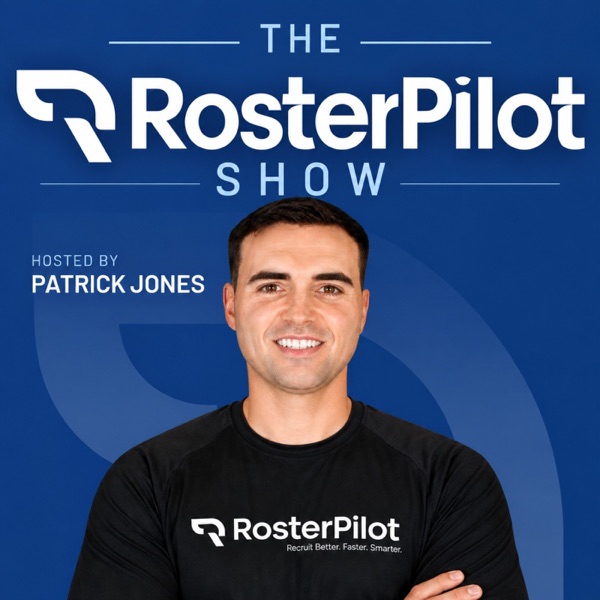
The RosterPilot Show
The RosterPilot Show is built for baseball and softball coaches who want to get better at evaluating, recruiting, developing, and managing their programs.
Hosted by Patrick Jones, former professional hitting coach and founder of RosterPilot, the show features conversations with college coaches, professional coaches, scouts, and other people shaping the game.
We go inside how coaches actually operate — from evaluating and recruiting players to player development, roster construction, managing a staff, and building a successful program.
You’ll hear real conversations about what’s working, what’s changing, and how coaches are adapting across every level of the game.
Evaluate. Recruit. Manage.
Learn more about RosterPilot at rosterpilot.com.
Hosted on Acast. See https://acast.com/privacy for more information.
- Baseball chart
- #185
- Episodes
- 417
- Releases
- Weekly
- Typical length
- 38 min
- On air since
- 2017
- Latest episode
- 1 week ago
Episodes
417 episodes, newest first
-
42 min
Why Talent Isn’t Everything in Travel Baseball | Chris Thompson
Show notes
Guest: Chris Thompson | Senior Manager of Baseball & Softball Programs, Cubs Charities
Travel baseball and softball have become increasingly expensive, but what if families didn't have to pay thousands of dollars for their kids to compete?
Chris Thompson oversees baseball and softball programming for Cubs Charities, including Cubs Nike RBI, an organization with 10 travel teams that operates at no charge to participating families.
But the program goes well beyond what happens on the field.
In this episode, Chris joins Patrick Jones to discuss how Cubs Nike RBI approaches player development, coaching, academics, and building relationships with families.
Chris also shares practical advice on running efficient practices, developing assistant coaches, evaluating players beyond their statistics, and creating an environment where young athletes can succeed.
The conversation explores two challenges facing travel baseball and softball: stay-to-play tournament policies and the shortage of umpires.
In This Episode
Why young coaches often struggle with communication and accountability
How to structure practices to maximize repetitions and minimize wasted time
Why coaches should focus on reinforcing fundamentals instead of constantly introducing new drills
What Chris has learned from Tim Corbin, Nick Saban, Patrick Murphy, and other successful coaches
The biggest issues facing travel baseball and softball
How Cubs Nike RBI provides baseball and softball opportunities without charging families
Why academic support and personal development are central to the program
How Chris evaluates players beyond batting averages and physical tools
What travel organizations should expect from parents
How to build a consistent culture across multiple teams and coaching staffs
Episode Timestamps
00:00 – Chris Thompson's coaching background
02:03 – Advice Chris would give his younger coaching self
04:14 – Lessons from teaching that translate to coaching
05:49 – Balancing new information with fundamentals
09:08 – Coaches who have influenced Chris's philosophy
13:49 – How to run more efficient practices
16:29 – Developing and managing assistant coaches
18:17 – The biggest problems in travel baseball and softball
21:20 – How the Cubs Nike RBI program operates
25:08 – Academic coaching and opportunities beyond baseball
28:35 – What Chris looks for in players and families
30:33 – Why character and accountability matter more than statistics alone
33:59 – Advice for parents of travel athletes
35:07 – The Cubs Nike RBI tryout process
36:58 – Offseason training and player development
39:11 – Managing 10 teams and multiple programs
41:15 – How to learn more about Cubs Nike RBI
Connect with Cubs Nike RBI
Email: CubsRBI@cubs.com
Follow Cubs Nike RBI on Instagram, Facebook, and X for program information and upcoming events.
About RosterPilot
RosterPilot is the recruiting operating system built for college baseball and softball coaches.
Evaluate. Recruit. Manage.
rosterpilot.com
Hosted on Acast. See https://acast.com/privacy for more information.
-
34 min
The D1 Baseball Path Nobody Talks About: Logan Hullette
Show notes
What does it take to play at one of the top junior college baseball programs in the country?
In this episode of the RosterPilot Show, Patrick Jones sits down with Logan Hullette, Recruiting Coordinator at Walters State Community College, to discuss how the program recruits, develops, and prepares players for Division I baseball.
Logan shares an inside look at Walters State's development philosophy, including why the program prioritizes live at-bats, competitive reps, and creating a professional-style environment. He also breaks down what their coaching staff looks for when evaluating high school players, the velocity benchmarks for incoming pitchers, and why seeing players compete in person is such an important part of their recruiting process.
The conversation also explores the advantages of junior college baseball in today's recruiting landscape, how the transfer portal has changed opportunities for high school players, and why finding the right program matters more than simply chasing the Division I label.
Topics Covered:
Why Walters State emphasizes live at-bats and game experience
How Walters State evaluates and recruits high school players
What it takes to compete at an elite JUCO program
Why JUCO can be a better developmental path than going directly to Division I
Pitching velocity benchmarks for incoming recruits
How the transfer portal impacts JUCO recruiting
The importance of academics, work ethic, and finding the right fit Episode
About RosterPilot: RosterPilot is the recruiting operating system built for college baseball coaches.
Evaluate players, organize recruiting information, and manage your roster in one place.
Learn more: https://rosterpilot.com
Hosted on Acast. See https://acast.com/privacy for more information.
-
34 min
Why 18-Year-Old Recruits Are Being Left Behind | ft. Colton Hann
Show notes
Colton Hahn is the hitting coach at Transylvania University and brings experience coaching at both the Division I and Division III levels.
In this episode, Colton shares his perspective on coaching and recruiting across different levels of college baseball, stories from his time in the game, and what makes Transylvania University and Lexington, Kentucky, a unique place for student-athletes.
We discuss:
• The differences between coaching at the Division I and Division III levels
• Colton’s approach to hitting and player development
• Recruiting at the Division III level
• Lessons and stories from his coaching career
• What Transylvania University offers student-athletes
• Building a career in college baseballHosted on Acast. See https://acast.com/privacy for more information.
-
40 min
Messiah University Head Coach: Phill Shallenberger
Show notes
In this episode, Phil Shallenberger shares insights on building a values-driven baseball program at Messiah, emphasizing character, culture, and strategic recruiting. He discusses how focusing on individual growth and team culture creates sustainable success and how parents and coaches can support young athletes.
Chapters
00:00 The Savannah Bananas Experience
03:00 Building a Culture at Messiah College
06:03 Recruitment Philosophy and Team Dynamics
09:10 The Importance of Character in Recruitment
11:57 Creating a Supportive Environment for Players
14:48 Niche and Identity of Messiah College Baseball
17:59 Facility Upgrades and Future Aspirations
22:18 Recruiting Strategies and Geographic Reach
26:04 Balancing Family and Coaching Life
30:07 Navigating Parental Involvement in Recruitment
37:17 Encouraging Youth Sports Participation and Identity
Resources
Messiah College Baseball - https://www.messiah.edu
Phil Shallenberger on Twitter - https://twitter.com/philshallenberger
Hosted on Acast. See https://acast.com/privacy for more information.
-
40 min
The Pitching Secret No One is Talking About | Cam Lanzilli
Show notes
In this episode, I sit down with Cam Lanzilli, college pitching coach and former professional pitching development specialist with the Baltimore Orioles, to talk about what elite pitching development actually looks like behind the scenes and what most coaches and families are getting completely wrong.
Cam breaks down why recruiting pitchers who "throw strikes" is the wrong way to think about command, what focal point training is and why it changes everything, and how he uses data and movement profiles to develop pitchers individually rather than forcing them into a one size fits all system.
We also get into the Tommy John epidemic, why low volume training in the fall is actually the smartest thing a pitcher can do. He also mentions what he saw in a preferred walk-on that nobody else wanted that turned him into a scout magnet by the end of the season.
This conversation is a must listen for pitchers, parents, and coaches who want to understand what modern elite pitching development actually looks like and why uniqueness beats everything else in recruiting.
Topics Covered:
0:00 Intro
0:08 Is "recruit guys who throw strikes" actually true or just a social media trend
3:55 What acquiring strikes actually means and why zone rate alone is misleading
4:45 How focal point training works and why pitchers should stop throwing to their target
7:35 What the average pitch miss differential is in the MLB and what it means for development
8:39 What Cam would teach hitters knowing everything he knows as a pitching coach
10:35 A simple breakdown of focal point vs target and how pitchers can use it today
13:45 What Cam learned about patience from his mom being an English teacher
15:58 The biggest differences between developing college pitchers and professional pitchers
19:00 Why Cam keeps fall workloads intentionally low and what he is actually building toward
21:39 The real reason Tommy John injuries spike at the start of every season
25:03 How Cam gets pitchers to buy in when they are resistant or listening to someone else
25:36 Why Cam always has a reason before asking a pitcher to make a change
27:43 When is the right time for a pitcher to get a biomechanics assessment and 3D motion capture
29:42 The preferred walk-on nobody wanted who became a scout magnet by the end of the season
32:34 What Cam looks for first when he watches a pitcher and why uniqueness beats everything
36:53 The advice Cam would give every player and family navigating the recruiting process today
Follow Cam Lanzilli:
Twitter/X: https://x.com/LanzilliCam
Hosted on Acast. See https://acast.com/privacy for more information.
-
35 min
What It Really Takes to Pitch in the ACC | Clay Martin
Show notes
In this episode, I sit down with Clay Martin, pitching coach at the University of Pittsburgh, to talk about what it really takes to compete on the mound at the highest level of college baseball and what separates pitchers who get there from those who don't.
Clay breaks down his journey from Division III to the ACC, what he learned building one of the best pitching staffs in Division II at Seton Hill, and what the biggest adjustments have been in his first year coaching in the ACC at Pitt.
We also get into the development side, why Clay believes failure is the most underrated tool in a pitcher's growth, what he would do completely differently if he could coach young pitchers over again, and what he saw in national Pitcher of the Year Ian Korn before anyone else did.
This conversation is especially valuable for pitchers and families trying to understand what the jump to elite college baseball really looks like and what coaches are actually evaluating when they recruit at the highest level.
Topics Covered:
0:00 Intro
0:05 What it was like competing at the ACC Tournament for the first time
2:00 The biggest adjustments Clay has made coaching in the ACC at Pitt
3:47 How TrackMan is changing the strike zone in college baseball and what it means for pitchers
5:45 What made Seton Hill one of the best Division II programs in the country
7:37 The biggest lesson Clay took from his time at Seton Hill
8:57 What is Seton Hill's secret sauce for recruiting good players year after year
10:51 The real talent difference between Division II and ACC baseball
13:00 How Clay recruits pitchers to fit the park and the program at Pitt
14:37 Is struggling to put hitters away a mental problem or a mechanical one
16:09 Command first or velocity first and which pitcher Clay would rather recruit
18:00 The resources at Pitt that give pitchers a real developmental edge
19:46 The one thing Clay wants to do better as a pitching coach next season
22:02 The biggest coaching lesson Clay learned working with 14U travel ball players
24:37 Why keeping it simple is the most underused tool in player development
25:51 When Clay realized Ian Korn had what it took to become national Pitcher of the Year
28:22 Was there ever a hidden gem Clay found that other schools overlooked
31:00 Why Clay calls Pittsburgh a dream job and what makes Pitt a special place to play
Follow Clay Martin and Pitt Baseball:
Twitter/X: @ClayMart_
Instagram: @therealclaymartin
Twitter/X (Pitt Baseball): @Pitt_BASE
Hosted on Acast. See https://acast.com/privacy for more information.
-
35 min
Why Command Beats Velocity Every Time | Nick Flesher
Show notes
In this episode, I sit down with Nick Flesher, recruiting coordinator and pitching coach at Milligan University, to talk about what it really takes to get recruited as a pitcher and what college coaches are actually evaluating when they get you on the phone.
Nick breaks down how Milligan builds their recruiting classes, why transparency with recruits matters more than selling a dream, and how their unique stackable aid system makes a high-academic school more affordable than most families expect.
We also get deep into the development side, why Nick doesn't call pitches during games, how he builds relationships with pitchers before he builds their mechanics, and what he's learned from being wrong in front of his players.
This conversation is especially valuable for pitchers, parents, and families trying to understand what coaches are really listening for during that first phone call and what separates the guys who get offers from the ones who don't.
Topics Covered:
0:00 Intro
0:04 What late May looks like for a coaching staff after the season ends
1:02 Why JUCO guys wait longer to commit and how Milligan operates around that
2:09 How Milligan's recruiting process works across all three coaches
3:35 The stackable aid system and how Milligan makes tuition more affordable
4:41 How late Milligan will go on a recruiting class and why
6:00 FaceTime campus tours and how Nick started using them for out of state recruits
7:22 Nick's personal portal journey from JUCO to Southeastern Louisiana to Tuskegee
8:26 Why Milligan is fully transparent with recruits about roster spots and roles
9:33 What Nick listens for the moment a pitcher picks up the phone
11:00 Why Milligan doesn't call pitches and the thumbs in vs index out philosophy
14:00 How Milligan's catchers are trained to become an extension of the pitching coach
14:57 The pitcher who went from struggling starter to a key contributor and what changed
18:20 What it looks like when Nick admits he was wrong to a pitcher mid-season
19:46 The hardest conversation Nick has had with a player and what he learned from it
22:39 Why getting to know a pitcher as a person comes before developing him as a player
23:10 What Nick attributes Milligan's 40-plus win seasons to over the last several years
24:32 Nick's favorite pitch to teach and why the knuckle ball is his secret dream
26:01 How Nick teaches a seam-shifted changeup to supinator pitchers
27:00 The hardest pitch to improve and what Nick does to fix a dead-zone fastball
28:00 Velocity or command first in recruiting and the minimum velo Nick will consider
29:15 The most underrated trait in a pitcher
29:52 The biggest recruiting red flag Nick sees
31:23 The most unexpected thing Nick has witnessed at a showcase or recruiting trip
Follow Milligan Baseball:
Twitter/X: @BuffBallMBB
Twitter/X (Nick): @CoachFlesh
Hosted on Acast. See https://acast.com/privacy for more information.
-
38 min
The Mental Side of Hitting No One Talks About | Justin Ebert
Show notes
In this episode, I sit down with Justin Ebert, hitting coach and recruiting coordinator at Greensboro College, to talk about what it really takes to develop as a hitter at the college level and what high school players and families should be doing right now to prepare.
Justin shares how his background in psychology shapes the way he communicates with hitters, why mental resilience matters just as much as mechanics, and how he builds individualized routines that set guys up for success from day one.
We also get into the recruiting side of things, how Greensboro evaluates players, what intangibles they look for beyond tools and stats, and how the transfer portal has changed the landscape for high school showcases.
This conversation is especially valuable for high school players and families who want to understand what college coaches are actually looking for and how development, attitude, and fit can matter more than rankings or division level.
Topics Covered:
0:00 Intro
0:53 Justin's origin story and path from player to coach
3:46 Why psychology changed how Justin coaches and communicates
4:45 How he helps hitters manage failure and stay mentally even
6:10 The biggest gap for incoming freshmen, building a routine
7:31 How Justin builds individual drill routines for each hitter
8:30 Tee work and underhand toss philosophy at Greensboro
9:55 Where Justin learned his hitting philosophy and who influenced him
11:13 Using visual cues instead of mechanical adjustments
11:48 Batter's box positioning and two-strike approach
14:38 Justin's experience playing travel baseball with the Canes
16:31 What Justin learned coaching travel ball with Team Elite and the Canes
18:34 How the recruiting landscape has changed since he played
19:46 Players who surprised him during the recruiting process
21:10 How the transfer portal has changed showcase baseball
21:17 When Greensboro starts recruiting and how they build their classes
25:37 The type of player and person Greensboro looks for
26:58 Why Greensboro College baseball is a family and what makes it different
29:03 Life in Greensboro, the city, campus, and culture
30:16 Best local food spots in Greensboro
32:10 Campus life, housing, and living situation for players
33:46 Facilities and why coaching matters more than resources
35:27 What Justin will do differently in his second year as hitting coach
Follow Greensboro Baseball:
Twitter/X: @GCPrideBaseball
Instagram: @GreensboroCollegeBaseball
TikTok: @GCBaseball
Hosted on Acast. See https://acast.com/privacy for more information.
-
27 min
What It Really Takes to Play Baseball at Harvard | Nate Cole
Show notes
In this episode, I sit down with Nate Cole, recruiting coordinator and pitching coach at Harvard University, to talk about what it actually takes to play baseball at one of the most selective schools in the country.
Nate walks through Harvard’s recruiting process, what they look for academically, how they evaluate players beyond stats and rankings, and why being a great student alone is not enough to play at the Division 1 level.
We also get into the development side of Harvard baseball, including how Nate works with pitchers, how they use technology and data, why some players need more simplicity instead of more information, and what separates players who succeed at the college level.
This conversation is especially valuable for players and families who want to understand the balance between academics, baseball ability, work ethic, and finding the right fit in the recruiting process.
Topics Covered:
What Harvard looks for in baseball recruits
How academics filter the recruiting process
Why GPA, SATs, and AP classes matter
The importance of challenging yourself early in high school
How Harvard evaluates players in person
Why Harvard recruits nationally for small classes
What families misunderstand about Ivy League recruiting
Why being “an Ivy League kid” is not specific enough
The type of player Harvard baseball wants
Why players need to be self-driven
How Nate develops pitchers at Harvard
Using technology, data, and video in player development
Why some players overthink and need to simplify
The role of passion, work ethic, and love for baseball
How baseball can open academic opportunities
The biggest mistakes families make in recruiting
Why fit matters more than logos, rankings, or scholarships
Follow Nate Cole:
Hosted on Acast. See https://acast.com/privacy for more information.
-
54 min
Maryville Head Coach Clint Helton
Show notes
In this episode, I sit down with Maryville College head coach Clint Helton to talk about Division III baseball, recruiting, player development, and what it really takes to build a winning program.
Clint shares his path from playing at Maryville to becoming the head coach, how the program has grown, and what he looks for when recruiting players. We also dive into the misconceptions around Division III baseball, why the right people matter as much as talent, and how Maryville has built a culture where players take ownership of their development.
We also get into pitching strategy, why pitchability matters more than velocity at certain levels, how Maryville uses data, and what makes the school and Knoxville/Maryville area such a unique place to play college baseball.
Show Notes
• Clint’s background as a Maryville player and coach
• His transition from assistant coach to head coach
• What he would tell his younger coaching self
• Why recruiting is about finding the right player and the right person
• How Maryville evaluates makeup during the recruiting process
• What high school players misunderstand about Division III baseball
• Why D3 baseball can be much better than people think
• The importance of self-directed work outside team practice
• How Maryville structures its fall development period
• Why pitchability, command, and off-speed usage matter
• How Maryville’s staff tracks competitive pitches and uses data
• What makes Maryville College and the surrounding area appealing
• The history of Maryville baseball, including its 150th seasonGuest Twitter/X
Clint Helton: @CHelt29
Hosted on Acast. See https://acast.com/privacy for more information.
-
52 min
What Parents Get Wrong About Recruiting | Steve Rodriguez
Show notes
In this episode, I sit down with former Division 1 head coach Steve Rodriguez to talk about recruiting, player development, leadership, and what actually separates players at the college level.
Steve shares lessons from decades in baseball—from coaching at the highest levels of college baseball to developing relationships with players, assistant coaches, and families throughout the recruiting process.
We dive into the mental side of player development, why communication matters more than most people realize, and the biggest mistakes players and parents make during recruiting.
This conversation goes way beyond mechanics and tools—it’s about mindset, adaptability, leadership, and understanding how successful players actually operate.
Topics Covered:
Traits successful college players consistently have
Why some players respond to coaching—and others don’t
Biggest recruiting red flags from both players and parents
Why body language matters so much to college coaches
The importance of learning how to fail and adapt
How Steve evaluated recruits beyond stats and metrics
Why communication is one of the most underrated skills in recruiting
The role parents should (and shouldn’t) play in the recruiting process
Transfer portal realities and common mistakes players make
NIL, scholarships, and making long-term decisions
Why development paths are rarely linear
What assistant coaches need to do to grow professionally
The importance of hip mobility, speed, and nutrition for players
Key Takeaways
Great players refuse to stay stuck
The best competitors are obsessed with improvement
Recruiting is about much more than talent alone
Players need to focus on development—not just labels and rankings
Parents can either help the process… or completely derail it
Follow Steve on Twitter: https://x.com/UTCoachRod
Hosted on Acast. See https://acast.com/privacy for more information.
-
37 min
JUCO Coach Jimmy Martin on What It Really Takes to Get Recruited
Show notes
Jimmy Martin, a college baseball coach at North Lake College, comes on the show to break down what actually matters in recruiting, player development, and making it to the next level.
Jimmy gives a behind-the-scenes look at how college coaches evaluate players, what makes players stand out (and what instantly turns coaches off), and why so many players struggle to move up levels—even when they have the talent.
If you’re a player, parent, or coach trying to understand how recruiting really works, this episode is packed with real, practical insight.
Jimmy's Twitter: https://x.com/_CoachJMartin
Patrick's Twitter: https://x.com/pjonesbaseball
Hosted on Acast. See https://acast.com/privacy for more information.
-
1 hr 46 min
Why Most Hitters Fail: Movement Patterns, Not Mechanics | Doug Latta & Dr. Ismael Gallo
Show notes
In this episode, I’m joined by Doug Latta and Dr. Ismael Gallo for a deep dive into one of the most misunderstood areas of baseball: player development.
We break down why most hitters struggle—not because of mechanics, but because of flawed movement patterns that are developed early and reinforced over time. From youth baseball to the highest levels of the game, this conversation challenges a lot of conventional thinking around hitting, training, and long-term development.
Doug shares insights from decades of working with hitters at every level, while Dr. Gallo explains the science behind movement, coordination, and how the body actually learns to perform in game environments.
If you’re a player, parent, or coach trying to understand what really matters in development, this episode will give you a completely different lens to look through.
Chapters
00:00 The Foundation of Movement Patterns in Young Athletes
07:10 The Importance of Early Development in Athleticism
10:19 Guiding Parents in Youth Baseball Training
10:51 Throwing Mechanics: The Key to Hitting Success
18:30 Balancing Mechanics and Athleticism in Hitting
24:53 The Debate on Hitting Off the Tee
32:46 The Importance of Efficient Movement Patterns
35:38 Understanding Movement in Hitting and Pitching
38:18 The Role of Timing and Vision in Hitting
44:09 Movement Capacity vs. Strength Training
48:54 The Dangers of Muscling Up in Hitting
54:49 Advice on Bat Speed Training and Weighted Implements
01:00:15 The Significance of Timing in Hitting
01:07:42 Understanding Player Development and Movement Patterns
01:10:15 The Psychological Impact of Failure in Sports
01:14:12 Parental Influence and Support in Youth Sports
01:15:50 Coaching Your Own Kids: Balancing Roles
01:19:01 The Importance of Athletic Flow and Energy
01:24:40 Navigating Parental Expectations and Player Performance
01:29:37 The Role of Coaches and the Learning Process
01:37:08 Life Lessons from Baseball: Embracing Failure and Growth
Doug Latta Twitter: https://x.com/LattaDoug
Dr. Ismael Gallo Twitter: https://x.com/flowsdoc
Movement Flows App: https://baseballflows.com/
Hosted on Acast. See https://acast.com/privacy for more information.
-
56 min
How to Spot Future Stars in Baseball | Jordan Gates
Show notes
Jordan Gates is the Midwest Crosschecker for Perfect Game, covering key recruiting hotbeds across Ohio, Indiana, Kentucky, Illinois, and Michigan. His role puts him on the front lines of amateur baseball—evaluating players, building reports, and identifying both top-tier prospects and under-the-radar talent.
Gates began his journey with Perfect Game as an intern in the Ohio Valley, working events while also gaining hands-on experience inside a training facility environment. He later moved into a full-time role as a Southeast Tournament Director, where he built relationships with players, coaches, and organizations while getting exposure to high-level competition across the region.
After a stint working with the Cincinnati Reds organization, Gates returned to Perfect Game in a full-time scouting capacity. Known for his detailed evaluations and balanced perspective on projection vs. performance, he combines in-game observation, video analysis, and industry collaboration to assess players at every level.
His work emphasizes not just tools, but how those tools translate into real game performance—making him a trusted voice in the evolving landscape of player development and recruiting.
• "Projection is a fickle game."
• "Most overrated stat is batting average."
• "Deception in pitch tunneling is a key trait."Chapters
00:00 Jordan Gates: Journey to Scouting
04:48 A Day in the Life of a Scout
09:59 The Art of Scouting: Finding Hidden Gems
14:43 Evaluating Players: The Perfect Game Scale
21:53 Showcase Insights: Maximizing Opportunities
36:36 Understanding Arm Injuries in Young Athletes
42:39 The Impact of Mental Health on Performance
47:30 Spotlight on Rising Baseball Talents
54:16 Evaluating Player Metrics and Traits
Resources
• Perfect Game Official Website
• Jordan Gates on Twitter/XHosted on Acast. See https://acast.com/privacy for more information.
-
39 min
Why Anderson University Doesn't Run the 60 | Tyler Rubasky: Head Coach, Anderson University
Show notes
In this episode, I sit down with Tyler Rubasky, first-year head coach at Anderson University, a D3 program in Indiana with a rich baseball history, including three D3 World Series appearances. We dig into:
• What it's actually like transitioning from assistant to head coach, and what he misses most
• Why he believes D3 baseball is the purest form of the game right now
• His approach to playing time transparency and keeping an open door
• The mental performance program that's changing how his players handle failure and pressure
• Why Anderson doesn't run a 60-yard dash, and what they measure instead
• Why Anderson baseball is "data supportive, not data driven"Follow Tyler Rubasky and Anderson University baseball on X:
Tyler Rubasky: @tyrub3
Anderson University baseball: @AURavensBSB
Connect with Patrick Jones Baseball:
On X: @pjonesbaseball
📬 Sign up for the Recruiting Times, my weekly baseball recruiting newsletter – Get insights on college recruiting, player spotlights, and advice for parents and coaches.
https://www.patrickjonesbaseball.com/blog
⚾ Need help with college recruiting? – We help serious baseball players get recruited. Book a 1-on-1 consult.
https://www.patrickjonesbaseball.com/recruiting
Hosted on Acast. See https://acast.com/privacy for more information.
-
33 min
How Does JUCO Compare to D1? | Jonathan Estes
Show notes
In this episode, I sit down with Jonathan Estes, assistant coach at Weatherford College, one of the top junior college baseball programs in the country.
Jonathan grew up in a town of 648 people in Arkansas, graduated in a class of 50, and worked his way through multiple small college stops before joining Weatherford this year. We dig into:
• How he structures batting practice to challenge hitters
• What he's looking for when he shows up to watch a high school player
• How fine the line really is between a junior college freshman and a Division I freshman.
• The sliding scale for pitching recruits
• Why making a JUCO roster isn't the same as playing
• What usually separates guys who succeed after transferring to a D1 from guys who struggleWe wrap up with the most important advice he'd give any high school player going through the recruiting process right now: Love the game.
Follow Jonathan Estes and Weatherford baseball on X:
Jonathan Estes: @estesthethird
Weatherford baseball: @WCoyoteBaseball
Connect with Patrick Jones Baseball:
On X: @pjonesbaseball
📬 Sign up for the Recruiting Times, my weekly baseball recruiting newsletter – Get insights on college recruiting, player spotlights, and advice for parents and coaches.
https://www.patrickjonesbaseball.com/blog
⚾ Need help with college recruiting? – We help serious baseball players get recruited. Book a 1-on-1 consult.
https://www.patrickjonesbaseball.com/recruiting
Hosted on Acast. See https://acast.com/privacy for more information.
-
41 min
Fastball or Cutter? How to Classify a Pitch | Dr. Adam Maloof of Princeton
Show notes
In this week's podcast, I sit down again with Dr. Adam Maloof, Princeton professor of Geosciences and athletics fellow for the baseball team.
This time he’s tackling one of the most overlooked problems in baseball analytics: pitch classification.
If you’ve ever looked at a scouting report and thought, “This guy doesn’t throw seven pitches,” you’re not alone. Dr. Maloof explains why existing pitch tagging data from popular systems (TrackMan, Synergy, and MLB’s StatCast) are often inconsistent, inaccurate, and difficult to use for data analysis.
Together, we discuss:
• Why MLB’s pitch classifier is trained on what pitchers call their own pitches (and why that’s a problem for hitters and analysts)
• How Dr. Maloof analyzed nearly 5 million college pitches using a “blank slate” approach inspired by geology
• The “color wheel” analogy: why pitches within a category (fastballs, breaking balls, changeups) exist on a continuous spectrum with no natural boundaries
• How Princeton’s staff uses reclassified data for scouting, pitch design, and pitching machine programming
• Pitch tunneling: what it is, how they measure it, and how they’re teaching it to pitchers
• The role of arm slot, biometrics, and what’s next for this researchRead Dr. Maloof's article on pitch tagging: How to Classify a Pitch
https://medium.com/sabr-tooth-tigers/how-to-classify-a-pitch-a4805ce35082
Connect with Patrick Jones Baseball:
On X: @pjonesbaseball
📬 Sign up for the Recruiting Times, my weekly baseball recruiting newsletter – Get insights on college recruiting, player spotlights, and advice for parents and coaches.
https://www.patrickjonesbaseball.com/blog
⚾ Need help with college recruiting? – We help serious baseball players get recruited. Book a 1-on-1 consult.
https://www.patrickjonesbaseball.com/recruiting
Hosted on Acast. See https://acast.com/privacy for more information.
-
26 min
Travel Ball vs. High School
Show notes
In this conversation, Nathan Collier and I sit down to talk about travel ball and high school baseball, and how both play a role in getting players recruited. We dig into what makes each one valuable — like how high school coaches can really vouch for a player's character and how competitive they are, while travel ball helps kids get seen by more coaches. We also talk about how youth baseball is changing, what college coaches are actually looking for, and why picking the right team can make a big difference in how a player grows and develops.
Connect with Patrick Jones Baseball:
On X: @pjonesbaseball
📬 Sign up for the Recruiting Times, my weekly baseball recruiting newsletter – Get insights on college recruiting, player spotlights, and advice for parents and coaches.
https://www.patrickjonesbaseball.com/blog
⚾ Need help with college recruiting? – We help serious baseball players get recruited. Book a 1-on-1 consult.
https://www.patrickjonesbaseball.com/recruiting
Hosted on Acast. See https://acast.com/privacy for more information.
-
32 min
Be Process-Driven, Not Outcome-Driven
Show notes
This week, I sit down again with Nathan Collier, Recruiting Service Operations Director here at Patrick Jones Baseball. Together, we discuss the importance of mindset and process orientation in baseball, particularly during the in-season period.
We explore common challenges players face, such as the "I'm Screwed Syndrome," and we talk about the need for players to adopt a process-driven mindset rather than a results-driven one. We also discuss the impact of social media on young athletes, the role of parents, and the significance of having both an approach and a plan at the plate.
Connect with Patrick Jones Baseball:
On X: @pjonesbaseball
📬 Sign up for the Recruiting Times, my weekly baseball recruiting newsletter – Get insights on college recruiting, player spotlights, and advice for parents and coaches.
https://www.patrickjonesbaseball.com/blog
⚾ Need help with college recruiting? – We help serious baseball players get recruited. Book a 1-on-1 consult.
https://www.patrickjonesbaseball.com/recruiting
Hosted on Acast. See https://acast.com/privacy for more information.
-
35 min
School Ball Has Started: Here's What Aspiring College Players Should Focus On Now
Show notes
In this episode, I'm joined again by Nathan Collier, a former sports journalist and our Recruiting Service Operations Director here at Patrick Jones Baseball. Nathan and I chat about what high school players should be doing to continue the recruiting outreach process to college coaches now that school seasons are starting across the country.
I explain how I think players can handle pressure during games and why success has to be defined by more than just stats in a box score. I also share practical advice on using social media the right way to create exposure that can help you get recruited. We also get into the role family support plays in the process and some of the most common mistakes I see players and parents make.
Connect with Patrick Jones Baseball:
On X: @pjonesbaseball
📬 Sign up for the Recruiting Times, my weekly baseball recruiting newsletter – Get insights on college recruiting, player spotlights, and advice for parents and coaches.
https://www.patrickjonesbaseball.com/blog
⚾ Need help with college recruiting? – We help serious baseball players get recruited. Book a 1-on-1 consult.
https://www.patrickjonesbaseball.com/recruiting
Hosted on Acast. See https://acast.com/privacy for more information.
Baseball lists
More Baseball shows picked out from the charts








More in Baseball
Placed highest on Apple Podcasts' Baseball chart right now