Podcast
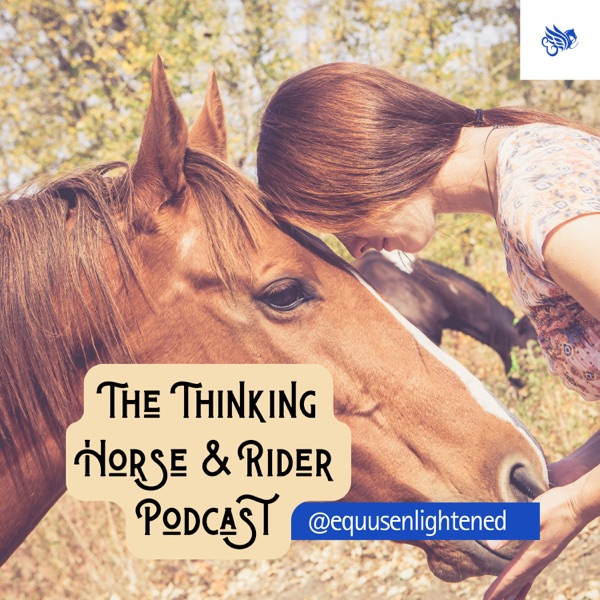
The Thinking Horse and Rider: Helping Riders Understand Their Horses | Anna Fox
Helping riders understand their horses through horse training, behavior, and connection. This equestrian podcast explores horse psychology, rider mindset, and practical horsemanship to solve common training problems like tension, miscommunication, and lack of trust. Learn how to build a calm, willing partnership using groundwork, riding, and awareness—so your horse isn’t something to control, but something to connect with.
- Pets & Animals chart
- #116
- Episodes
- 83
- Releases
- Weekly
- Typical length
- 38 min
- On air since
- 2023
- Latest episode
- 2 weeks ago
Episodes
83 episodes, newest first
-
54 min
81. Beyond the Bit: Slow Down to Learn Faster with Daniel Dauphin
Show notes
Could you ask your horse to walk exactly seven steps—and stop on the seventh? It sounds simple, but Daniel Dauphin explains why slowing down can reveal the gaps we rush past.
In Beyond the Bit: Slow Down to Learn Faster with Daniel Dauphin, I’m joined by the horseman, clinician, and host of Adult Onset Horsemanship for a conversation about better learning at both ends of the reins. We explore what bits can—and can’t—do, why the walk deserves more attention, and how stepping outside our horse-world bubbles can make us more thoughtful riders.
Daniel also shares his vision for the Best Horse Practices Summit and discusses Buck the Trend, a mental-health initiative supporting people in the horse community. Along the way, expect a few dad jokes and practical exercises for this episode’s ten-minute experiment.
Explore Daniel’s work and the organizations mentioned:
• Dauphin Horsemanship: https://dauphinhorsemanship.com/
• The Bit Course: https://thebitcourse.com/
• Best Horse Practices Summit: https://besthorsepracticessummit.org/Content note: This episode includes discussion of suicide and mental health.
Get the FREE Awareness workshop http://www.equusenlightened.com/
Find me on social media as @equusenlightened.
Join the Horse and Rider Lab on Skool. It’s free!
https://www.skool.com/equus-enlightened-8966/about
Find out more about Reconnect, Rebuild, and Ride with Heart in the Skool Classroom
You can also view videos of the riding episodes or listen to all of them on YouTube under Come Ride with Me Riding Videos. My channel is https://www.youtube.com/@equusenlightened
Read blogs or find more links @ https://linktr.ee/equusenlightened
Email me at Anna@equusenlightened.com
Happy Riding!
-
38 min
80. What’s the Mission? Adam Trenk on Horses, Leadership & Rebuilding Genuine Billy Cook Saddles
Show notes
What happens when the plan falls apart?
In this episode of The Thinking Horse and Rider, Anna Fox talks with Adam Trenk, CEO of Genuine Billy Cook Saddles, about horses, leadership, pressure, resilience, and rebuilding an iconic Western brand.
Adam shares the story of acquiring Genuine Billy Cook after years of decline, slowing production down to restore craftsmanship and quality, and then rebuilding the company again after a devastating tornado destroyed the factory in Sulphur, Oklahoma.
But this conversation goes far beyond saddles.
Anna and Adam explore the parallels between horsemanship and entrepreneurship: taking small wins, rebuilding trust, staying patient under pressure, learning from failure, and knowing when to adapt instead of forcing the original plan.
They also talk about saddle fit, Western versus English riding, leadership, nervousness, and one of the most important questions we can ask before working with a horse:
What’s the mission?
Because the right tool, the right amount of pressure, and even the right plan depend on the horse, the situation, and what you’re actually trying to accomplish.
In this episode:
• The rebirth of Genuine Billy Cook Saddles
• Rebuilding after the 2024 Sulphur tornado
• Why patience and small wins matter in horses and business
• Using the least amount of pressure possible
• Saddle fit and choosing the right tool for the job
• What horses teach us about leadership
• Failure, resilience, and getting back on
• Situational awareness and knowing when to change the planWhether you ride Western, English, dressage, hunters, jumpers, or just want to become a more thoughtful partner for your horse, there’s plenty here to take back to the barn.
🎧 Listen now and ask yourself: What’s today’s mission?
Learn more about Genuine Billy Cook Saddles at genuinebillycook.com.
Want to go deeper into awareness, trust, timing, and communication with your horse? Find Reconnect, Rebuild & Ride with Heart in the show notes.
Find Genuine Billy Cook Saddles @https://genuinebillycook.com/collections/saddles
or on Instagram @genuinebillycook
Get the FREE Awareness workshop http://www.equusenlightened.com/
Find me on social media as @equusenlightened.
Join the Horse and Rider Lab on Skool. It’s free!
https://www.skool.com/equus-enlightened-8966/about
Find out more about Reconnect, Rebuild, and Ride with Heart in the Skool Classroom
You can also view videos of the riding episodes or listen to all of them on YouTube under Come Ride with Me Riding Videos. My channel is https://www.youtube.com/@equusenlightened
Read blogs or find more links @ https://linktr.ee/equusenlightened
Email me at Anna@equusenlightened.com
Happy Riding!
-
1 hr 7 min
79. Ride Easier, Help Your Horse Move Better with Mary Debono
Show notes
Can changing the way you move help your horse move with greater ease?
Feldenkrais Method practitioner and Debono Moves creator Mary Debono joins us to explore how a rider’s balance, breathing, tension, and movement habits shape the horse–human conversation. We discuss why familiar patterns aren’t always comfortable, how curiosity can be more effective than correction, and why trying harder can sometimes make movement more difficult.
Mary shares a gentler approach to rider pain, horse stiffness, compensatory movement, and nervous-system learning. She also guides us through a short seated movement experience designed to increase awareness, ease, and choice. Please wait until you are seated somewhere safe—and not driving, riding, or operating equipment—to try it.
Learn more about Mary at marydebono.com.
Get your free videos here: https://www.marydebono.com/rider
Get the FREE Awareness workshop http://www.equusenlightened.com/
Find me on social media as @equusenlightened.
Join the Horse and Rider Lab on Skool. It’s free!
https://www.skool.com/equus-enlightened-8966/about
Find out more about Reconnect, Rebuild, and Ride with Heart in the Skool Classroom
You can also view videos of the riding episodes or listen to all of them on YouTube under Come Ride with Me Riding Videos. My channel is https://www.youtube.com/@equusenlightened
Read blogs or find more links @ https://linktr.ee/equusenlightened
Email me at Anna@equusenlightened.com
Happy Riding!
-
43 min
78. Does Your Horse Owe You Obedience? | Trust, Control & True Partnership
Show notes
We pay the bills. We buy the feed. We schedule the vet. We rearrange our lives around our horses. It’s easy to start feeling like the horse should give us something back. A good ride. Good behavior. Effort. Compliance. But horses don’t think about relationships that way.
In this episode of The Thinking Horse & Rider, we’re talking about relational tension—the tension that develops when expectations, control, trust, communication, and partnership all collide. We’ll explore why “my horse should do this for me” can quietly change the way we ride, why compliance is not the same as partnership, and what happens when we stop asking whether the horse was “good” and start asking how the horse actually felt that day.
We’ll also talk about:
• Why caring for your horse does not purchase obedience
• The difference between compliance and true partnership
• Why horses need clear communication, not constant management
• How predictability builds relational trust
• Why agency, choice, and control matter to horses
• How entitlement can creep into horse training without us realizing it
• Why a “good horse” is not always a happy horse
• How to redefine trust so it doesn’t mean “my horse will never surprise me”
• What it means to listen without immediately trying to control the outcome One of the biggest questions in this episode is: Can you allow your horse to make a small choice without treating that choice as a threat to your authority?
Get the FREE Awareness workshop http://www.equusenlightened.com/
Find me on social media as @equusenlightened.
Join the Horse and Rider Lab on Skool. It’s free!
https://www.skool.com/equus-enlightened-8966/about
Find out more about Reconnect, Rebuild, and Ride with Heart in the Skool Classroom
You can also view videos of the riding episodes or listen to all of them on YouTube under Come Ride with Me Riding Videos. My channel is https://www.youtube.com/@equusenlightened
Read blogs or find more links @ https://linktr.ee/equusenlightened
Walk to Partnership Meditation
https://assets.cdn.filesafe.space/9ckgbm3alzfPQK2HDqho/media/6aac819d867721cb57117360.mp4
Reference Articles
https://www.mdpi.com/2076-2615/11/6/1798
https://www.mdpi.com/2076-2615/11/10/2782
Email me at Anna@equusenlightened.com
Happy Riding!
-
42 min
77. Why Trying Harder Makes Riding Harder | Emotional Tension & Better Feel
Show notes
What happens when trying harder actually makes riding harder?
In this episode of The Thinking Horse & Rider, we’re digging into emotional tension—the pressure riders put on themselves to do everything correctly, remember every instruction, fix every mistake, and manage every part of the horse at once.
That tension doesn’t just make riding feel harder. It can also make your cues less clear, your body less sensitive, and your horse less certain about what you’re actually asking.
We’ll talk about:
• Why emotional tension often looks like overthinking instead of obvious fear
• How too many simultaneous cues can confuse the horse
• Why rewarding the right answer matters just as much as asking the question
• How pressure, release, repetition, and pauses affect learning
• Why “more” is not always better
• How tension narrows attention and reduces your ability to feel subtle information
• Why curiosity is more useful than immediately labeling something right or wrong
• How to stop correcting every little thing before your horse has a chance to respondYou’ll also get this week’s 10-Minute Experiment: a simple walking exercise where you count the horse’s footfalls, quiet the noise, and start developing better feel.
The goal isn’t to ride perfectly.
It’s to become quiet enough—physically, mentally, and emotionally—to actually hear what your horse is already telling you.
Sometimes your horse isn’t ignoring you. Sometimes they just can’t find the question in all of your noise.
Get the FREE Awareness workshop http://www.equusenlightened.com/
Find me on social media as @equusenlightened.
Join the Horse and Rider Lab on Skool. It’s free!
https://www.skool.com/equus-enlightened-8966/about
Find out more about Reconnect, Rebuild, and Ride with Heart in the Skool Classroom
You can also view videos of the riding episodes or listen to all of them on YouTube under Come Ride with Me Riding Videos. My channel is https://www.youtube.com/@equusenlightened
Read blogs or find more links @ https://linktr.ee/equusenlightened
Articles:
https://www.sciencedirect.com/science/article/abs/pii/S1558787807001359
https://www.sciencedirect.com/science/article/pii/S1558787810000626
https://www.equitationscience.com/ises-training-principles
Walk to Partnership Meditation
https://assets.cdn.filesafe.space/9ckgbm3alzfPQK2HDqho/media/6aac819d867721cb57117360.mp4
Email me at Anna@equusenlightened.com
Happy Riding!
-
25 min
76. Your Horse Can Feel Your Anxiety | Here’s What to Do Before You Ride
Show notes
If your brain is already rehearsing everything that could go wrong before you ever reach the mounting block, this episode is for you.
This week on The Thinking Horse & Rider, we’re continuing the conversation from Episode 75 and digging into mental tension and anticipatory anxiety—the fear of what might happen before anything has actually gone wrong.
You’ll learn why your thoughts and body can start rehearsing fear before you ride, how that changes the way you show up around your horse, and why your horse may notice those changes even though they have no idea what story is running through your head.
We’ll also talk about how to separate what’s actually happening from what you’re predicting, why present-moment narration can help interrupt anxious thought patterns, and how to start practicing the mental patterns you actually want to keep.
In this episode:
• Why your thoughts are always practicing something
• How anticipatory anxiety affects your brain and body
• What your horse may be picking up from your fear
• Why “don’t be afraid” usually isn’t useful advice
• How to name anxiety without letting it run the ride
• A practical 10-minute experiment to bring yourself back to the present
• How to tell the difference between a real warning sign and a fearful predictionThe goal isn’t to convince yourself that nothing bad could ever happen.
It’s to become more aware, more present, and better able to respond to the horse you actually have—not the horse you’re afraid you might have.
And remember:
Your thoughts are always practicing something. The question is whether they’re practicing the pattern you want to keep.
Get the FREE Awareness workshop http://www.equusenlightened.com/
Find me on social media as @equusenlightened.
Join the Horse and Rider Lab on Skool. It’s free!
https://www.skool.com/equus-enlightened-8966/about
Find out more about Reconnect, Rebuild, and Ride with Heart in the Skool Classroom
Walk to Partnership Meditation
https://assets.cdn.filesafe.space/9ckgbm3alzfPQK2HDqho/media/6aac819d867721cb57117360.mp4
You can also view videos of the riding episodes or listen to all of them on YouTube under Come Ride with Me Riding Videos. My channel is https://www.youtube.com/@equusenlightened
Read blogs or find more links @ https://linktr.ee/equusenlightened
Email me at Anna@equusenlightened.com
Happy Riding!
-
37 min
75. The Hardest Part of Riding | How to Stay Relaxed on Your Horse
Show notes
In this episode of The Thinking Horse and Rider, we're talking about something almost every rider experiences but few people know how to work through: fear and tension in the saddle.
After an unexpected run-in with a wasp (and a horse standing nearby), I realized just how quickly our brains jump into survival mode—and how similar that feels to what many riders experience before they even get on their horse.
We'll explore:
•
Why staying relaxed is the hardest part of riding
•
The difference between physical and mental relaxation
•
The four types of tension that affect riders and horses
•
Why "just be confident" and "push through it" often make fear worse
•
Simple exercises to build real balance, body awareness, and confidence
•
How breathing, visualization, and nervous system regulation can improve your riding
•
Why confidence is built through successful experiences—not by ignoring fear
Whether you're nervous about cantering, worried about your horse spooking, struggling with self-doubt, or simply want to become a calmer, more connected rider, this episode will give you practical tools to help both you and your horse stay in a learning mindset instead of a survival mindset.
Practice the standing exercise at the halt to improve your balance, body awareness, and confidence. Start with a helper if needed, focus on slow, controlled movement, and notice how learning to recover can change the way you ride.
💛 Join The Happy Horse & Rider Lab for more conversations, experiments, and support from riders learning to think differently about their horses.
If you enjoyed this episode, please follow the podcast, leave a rating or review, and share it with another horse person. It helps these conversations reach more riders who want a calmer, more connected partnership with their horses.
This Week's 10-Minute Experiment
-
28 min
74. The Horse Training Mistake Almost Everyone Makes (Without Realizing It)
Show notes
The Horse Training Mistake Almost Everyone Makes (Without Realizing It)
What if one of the biggest mistakes we make with our horses isn't what we teach...it's what we stop teaching?
When a horse becomes buddy sour, pushy for treats, anxious at the mounting block, spooky on the trail, or difficult to canter, many of us instinctively remove the problem. We stop taking them to horse shows. We stop feeding treats. We stay in the arena. We avoid the situation altogether.
Sometimes that's smart management.
But management isn't the same thing as education.
In this episode, Anna explores what she calls "The Keep Away Game"—our tendency to avoid the very situations that could help both horse and human learn and grow. Inspired by her recent conversation with animal communicator Ginny Horton, she challenges listeners to rethink whether they're solving the problem...or simply postponing it.
You'll learn:
•
Why avoidance is a management strategy—not a training method.
•
The difference between stopping a behavior and teaching a new skill.
•
How punishment and education create very different outcomes.
•
Why well-taught boundaries actually create more freedom for horses.
•
How to know whether your horse isn't ready—or you simply need a new way to teach.
•
What to look for when choosing the right trainer or coach for a specific problem.
•
Why the skills you build at home determine what happens under pressure at a horse show or on the trail.
If you've ever found yourself avoiding a situation because it feels easier than working through it, this episode will give you a new way to think about training—and remind you that every challenge is also an opportunity to learn.
Choose one thing you've been avoiding with your horse.
Then ask yourself:
Am I removing the opportunity because my horse isn't ready yet...or because I don't know how to help them become ready?
Spend ten minutes researching a new approach. Talk to your trainer. Read a book. Watch a video. Explore a different training modality.
Don't just keep the problem away.
Start educating yourself—and your horse.
If this episode resonated with you, follow The Thinking Horse & Rider Podcast, leave a review, and share it with another horse person who's ready to replace avoidance with education.
This Week's 10-Minute Experiment
Get the FREE Awareness workshop http://www.equusenlightened.com/
Find me on social media as @equusenlightened.
Join the Horse and Rider Lab on Skool. It’s free!
https://www.skool.com/equus-enlightened-8966/about
Find out more about Reconnect, Rebuild, and Ride with Heart in the Skool Classroom
You can also view videos of the riding episodes or listen to all of them on YouTube under Come Ride with Me Riding Videos. My channel is https://www.youtube.com/@equusenlightened
Read blogs or find more links @ https://linktr.ee/equusenlightened
Email me at Anna@equusenlightened.com
Happy Riding!
-
56 min
73. How about Animal Communicator Ginny Horton: What Horses Really Need From Humans | Soul Sketches
Show notes
What do horses really need from humans?
In this episode of The Thinking Horse & Rider, Anna talks with animal communicator Ginny Horton, author and illustrator of Soul Sketches, about what horses may be trying to tell us about community, choice, safety, connection, and belonging.
Ginny shares how she became an animal communicator, how remote animal communication works, and some of the common themes she hears from horses during her sessions. The conversation explores why horses may struggle when their social needs are limited, whether humans can truly be part of a horse’s community, how horses experience our emotions and intentions, and why some behaviors we label as training problems may actually be relationship or environment problems.
They also talk about horse welfare, independence, competition, listening to subtle signals, and the importance of asking “why” before trying to correct behavior.
Plus, Ginny shares the story behind Soul Sketches and how the book brings together real animal communication stories and her illustrations of the emotional messages she receives from animals.
If you’ve ever wondered what your horse might want you to understand, this conversation will give you plenty to think about.
Find Soul Sketches: Sketches from the soul of real communications from real animals and their humans by Ginny Horton on Amazon https://a.co/d/0gDOah5c
Get the FREE Awareness workshop http://www.equusenlightened.com/
Find me on social media as @equusenlightened.
Join the Horse and Rider Lab on Skool. It’s free!
https://www.skool.com/equus-enlightened-8966/about
Find out more about Reconnect, Rebuild, and Ride with Heart in the Skool Classroom
You can also view videos of the riding episodes or listen to all of them on YouTube under Come Ride with Me Riding Videos. My channel is https://www.youtube.com/@equusenlightened
Read blogs or find more links @ https://linktr.ee/equusenlightened
Email me at Anna@equusenlightened.com
Happy Riding!
-
1 hr 1 min
72. Heart Centered Horsemanship with Stacey Carter
Show notes
Should you lead your horse with your heart or your head?
In this episode, Anna talks with Stacey Carter, founder of Heart Centered Horsemanship, about moving beyond dominance-based training to create safer, more cooperative relationships with horses. Stacey shares how therapeutic horsemanship, nervous-system work, yoga, and Debono Moves shaped her mindful approach.
They explore why non-dominance doesn’t mean weak boundaries, how horses respond to what we’re actually communicating, and why doing less can create greater clarity and connection.
For this week’s 10-minute experiment, Stacey invites you to practice “going back to nothing”—releasing unnecessary tension, finding relaxed awareness, and noticing how your horse responds when you stop micromanaging every moment.
Get the FREE Awareness workshop http://www.equusenlightened.com/
Find me on social media as @equusenlightened.
Join the Horse and Rider Lab on Skool. It’s free!
https://www.skool.com/equus-enlightened-8966/about
Find out more about Reconnect, Rebuild, and Ride with Heart in the Skool Classroom
You can also view videos of the riding episodes or listen to all of them on YouTube under Come Ride with Me Riding Videos. My channel is https://www.youtube.com/@equusenlightened
Read blogs or find more links @ https://linktr.ee/equusenlightened
Email me at Anna@equusenlightened.com
Happy Riding!
-
47 min
71. Why You Miss the Signs Before Your Horse Spooks (And How to Change It)
Show notes
Did your horse really spook, buck or bolt “out of nowhere”—or did both of your nervous systems miss the quieter signals leading up to it?
In this episode of The Thinking Horse and Rider, Anna explores how stress, information overload and a high baseline level of anxiety can limit a rider’s ability to feel what is happening in their own body and recognize subtle changes in their horse. You’ll learn why regulation does not mean being sleepy or emotionless, why a calm-looking horse may still be dysregulated, and how nervous-system state affects learning, confidence, safety and responsiveness.
Anna also challenges common ideas about getting a horse “forward.” Forward is not miles per hour—it is availability. A responsive horse can go, slow down, rebalance and remain mentally present without the rider constantly nagging or applying conflicting aids.
This week’s Ten-Minute Tuesday experiment will help you notice the first signs of tension, pause before either of you enters survival mode and practice returning to relaxation before trying again.
Join the free Happy Horse and Rider Lab community and learn more about Reconnect, Rebuild and Ride With Heart on Skool.com https://www.skool.com/equus-enlightened-8966/about
Get the FREE Awareness workshop http://www.equusenlightened.com/
Find me on social media as @equusenlightened.
You can also view videos of the riding episodes or listen to all of them on YouTube under Come Ride with Me Riding Videos. My channel is https://www.youtube.com/@equusenlightened
Read blogs or find more links @ https://linktr.ee/equusenlightened
Find out more about Reconnect, Rebuild, and Ride with Heart
https://equusenlightened.com/reconnect-rebuild-horse-human-partnership
Email me at Anna@equusenlightened.com
Happy Riding!
-
23 min
70. Are You the Person Your Horse Needs You to Become?
Show notes
We spend so much time chasing outcomes in the horse world. We celebrate ribbons, scores, smooth rides, and milestones. But what if those aren’t the things that truly shape us—or our horses?
In this episode of The Thinking Horse & Rider, I explore why the process matters far more than the outcome. Your horse isn’t simply learning from you; they’re revealing who you already are. Every ride exposes your patience, clarity, consistency, emotional regulation, and compassion, giving you an opportunity to grow into the horseman your horse truly needs.
We’ll talk about why visualization is only the beginning, how daily execution creates lasting transformation, why some of the best horsemanship happens when you’re nowhere near your horse, and how creating clarity in your practice leads to faster progress for both horse and rider.
Because your horse isn’t the project. The relationship is.
And relationships are built through process—not outcomes.
In this episode:
• Why goals provide direction but process creates transformation
• How horses reveal our habits, emotions, and mindset
• Becoming the person your horse needs instead of trying to “fix” your horse
• Why daily habits matter more than big breakthroughs
• How clarity reduces decision fatigue and accelerates learning
• The difference between riding consistently and practicing consistently
• A simple three-question experiment to transform your next three weeksTimestamps
00:00 Why our culture celebrates outcomes instead of the process
02:15 Your horse reveals who you already are
05:15 Becoming the person your horse needs
08:20 Visualization is helpful—but execution changes everything
12:45 Why some of the best horsemanship happens away from your horse
16:15 Clarity creates speed: reducing latency in learning
21:30 Decision fatigue and creating a daily training plan
26:00 Why great coaching is about clarity, not more exercises
28:45 Falling in love with repetition
33:00 Every interaction trains two nervous systems
35:45 Consistency is practicing principles—not just riding more
38:10 Your 10-minute experiment: three questions to change your partnership
42:15 Final thoughts: Train yourself, and the horse will follow
Get the FREE Awareness workshop http://www.equusenlightened.com/
Find me on social media as @equusenlightened.
Join the Horse and Rider Lab on Skool. It’s free!
https://www.skool.com/equus-enlightened-8966/about
You can also view videos of the riding episodes or listen to all of them on YouTube under Come Ride with Me Riding Videos. My channel is https://www.youtube.com/@equusenlightened
Read blogs or find more links @ https://linktr.ee/equusenlightened
Find out more about Reconnect, Rebuild, and Ride with Heart
https://equusenlightened.com/reconnect-rebuild-horse-human-partnership
Email me at Anna@equusenlightened.com
Happy Riding!
-
29 min
69. BONUS When is it too Hot to Ride?
Show notes
Is it too hot to ride your horse? The answer isn’t as simple as checking the thermometer.
As a former collegiate athletic trainer, I learned that heat safety isn’t about comfort—it’s about physiology. In this episode, I compare modern sports medicine protocols used by the NCAA, NFL, Olympic athletes, and the military with the way we think about heat in the horse world.
You’ll learn why temperature alone doesn’t tell the whole story, what Wet Bulb Globe Temperature (WBGT) is, why humidity, sun, wind, footing, and workload all matter, and how to recognize the early signs of heat stress in both horses and humans before they become emergencies.
We’ll also discuss:
• Why horses and humans overheat differently
• How fitness, breed, age, and equipment affect heat tolerance
• Why behavior is often your first warning sign
• The importance of measuring core body temperature
• Why “cool first, transport second” saves lives
• How to make informed decisions instead of relying on arbitrary rulesThe best horsemen aren’t looking for a number—they’re looking for information. By understanding the physiology behind heat stress, you’ll be better equipped to protect both yourself and your horse during hot weather.
Get the FREE Awareness workshop http://www.equusenlightened.com/
Find me on social media as @equusenlightened.
Join the Horse and Rider Lab on Skool. It’s free!
https://www.skool.com/equus-enlightened-8966/about
You can also view videos of the riding episodes or listen to all of them on YouTube under Come Ride with Me Riding Videos. My channel is https://www.youtube.com/@equusenlightened
Read blogs or find more links @ https://linktr.ee/equusenlightened
Find out more about Reconnect, Rebuild, and Ride with Heart
https://equusenlightened.com/reconnect-rebuild-horse-human-partnership
Email me at Anna@equusenlightened.com
Happy Riding!
Keywords: horse heat stress, riding in hot weather, horse safety, equine health, WBGT, wet bulb globe temperature, heat stroke, heat exhaustion, horse training, equestrian, horse welfare, sports medicine, Thinking Horse and Rider.
-
57 min
68. The Biggest Myth in Horse Training: Dominance
Show notes
What does it really mean to be a leader for your horse?
For decades, riders have been taught that safety depends on being the “boss”—that horses need a dominant leader who controls every situation. But is that how horses actually live?
In this episode of The Thinking Horse and Rider, I sit down with Kim Hallin of Unbridled LLC, author of Horse Wisdom, to explore what horse ethology tells us about leadership, dominance, and the complex social lives of horses. Together, we discuss why wild horse herds don’t operate the way many of us were taught, how fear and control have shaped traditional horsemanship, and what we can learn by observing horses with curiosity instead of judgment.
We also explore how our relationships with horses often mirror our relationships with ourselves and others, why autonomy and emotional regulation matter, and how true leadership is built on trust, clarity, and connection—not force.
If you’ve ever questioned the advice to “show your horse who’s boss,” this conversation will challenge you to think differently about partnership, leadership, and what horses have been trying to teach us all along.
In this episode you’ll learn:
• Why dominance theory doesn’t accurately describe horse society
• How wild horses share leadership and adapt to changing situations
• The difference between leadership and control
• How fear influences both riders and training methods
• What horses can teach us about relationships, community, and living with greater awarenessChapters and Timestamps
00:00 Welcome Kim Hallin of Unbridled
01:05 What “Unbridled” Really Means
03:10 Horses, Humans, and Domesticated Beliefs
05:35 Are Humans Still Learning From Nature?
08:20 Where Dominance Theory May Have Started
10:15 Why Horse Herds Aren’t Dominance Hierarchies
13:35 Resource Guarding vs True Leadership
16:20 Why Riders Cling to Control
19:10 Fear, Trauma, and “Get Back On” Culture
23:40 When Riding Stops Feeling Joyful
27:30 How Fear Affects Horse and Rider Safety
30:45 Are We Rebranding Control as Leadership?
34:10 Boss vs Leader in Horse-Human Relationships
37:30 What Wild Horses Teach About Cooperation
41:05 Why Force Is Rare in Natural Herds
44:15 Stallions, Fighting, and Misunderstood Behavior
48:20 What Changes When Horses Aren’t Confined
51:10 Scarcity, Hay Piles, and Domestic Herd Stress
54:35 Shiloh the Mustang and Herd Education
59:45 What Young Stallions Actually Need to Learn
1:04:20 The Myth of the Alpha Mare
1:07:15 How Herds Help Raise Foals
1:11:10 Why Autonomy Matters for Horses
1:14:25 Micromanagement and Learned Helplessness
1:18:40 Naming Hard Truths Without Shame
1:21:15 10-Minute Experiment: Watch Spinal Alignment
1:26:30 Kim’s Retreats and Online Community
1:30:10 Horse Wisdom, Ownership, and Consent
1:34:45 Holding Complexity Without Getting Triggered
To learn more about Kim Hallin’s work, visit kimhallin.com, where you’ll find information about her immersive retreats, online courses, membership community, and her book, Horse Wisdom: Life Lessons for Humanity. Kim also shares thoughtful essays exploring horse behavior, relationships, and the wisdom of nature through her Substack, My Unbridled Life. Whether you’re looking to deepen your understanding of horse ethology or explore the parallels between horses and human relationships, her work offers a unique and thought-provoking perspective.
Get the FREE Awareness workshop http://www.equusenlightened.com/
Find me on social media as @equusenlightened.
Join the Horse and Rider Lab on Skool. It’s free!
https://www.skool.com/equus-enlightened-8966/about
Watch on YouTube https://www.youtube.com/@equusenlightened
Read blogs or find more links @ https://linktr.ee/equusenlightened
Find out more about Reconnect, Rebuild, and Ride with Heart
https://equusenlightened.com/reconnect-rebuild-horse-human-partnership
Email me at Anna@equusenlightened.com
Happy Riding!
-
22 min
67. We're All Traumatized. Now What?
Show notes
We’re all traumatized. Now what?
After a question at Happy Horse Camp about what “trauma lens” I work from, I found myself reflecting on my childhood, my years as a 911 dispatcher, and the many theories I’ve studied—from learning theory and neuroscience to polyvagal theory and psychology. What I’ve learned is that no single framework explains every horse or every human.
In this episode, we explore why life leaves marks on all of us, why trauma doesn’t mean broken, and why I believe awareness—not labels, dominance, or even trauma itself—is the foundation of growth.
We’ll talk about post-traumatic growth, the danger of labeling horses and humans, the two extremes horse people often fall into, and why I teach awareness before technique. You’ll also walk away with a few simple practices to help you observe with more curiosity and less judgment.
Because behavior is information, not identity.
And maybe the question isn’t “What happened to us?” but “What is possible next?”
✨ Want to dive deeper? Awareness is the first Seed in Reconnect, Rebuild, and Ride with Heart. You can also access my free Awareness workshop on my website or inside the Happy Horse and Rider Lab community on Skool.
Get the FREE Awareness workshop http://www.equusenlightened.com/
Find me on social media as @equusenlightened.
Join the Horse and Rider Lab on Skool. It’s free!
https://www.skool.com/equus-enlightened-8966/about
You can also view videos of the riding episodes or listen to all of them on YouTube under Come Ride with Me Riding Videos. My channel is https://www.youtube.com/@equusenlightened
Read blogs or find more links @ https://linktr.ee/equusenlightened
Find out more about Reconnect, Rebuild, and Ride with Heart
https://equusenlightened.com/reconnect-rebuild-horse-human-partnership
Email me at Anna@equusenlightened.com
Happy Riding!
-
25 min
66. The Horse Training Advice I Stopped Following: “Don't Let the Horse Win"
Show notes
One of the most common pieces of horse training advice is, "Don't let the horse win."
But what if that mindset is creating more fear, more tension, and more problems than it solves?
In this episode, Anna explores what really happens when riders get off after something goes wrong, why punishing a horse for being afraid often backfires, and how nervous system regulation impacts learning for both horses and humans. You'll learn why exhaustion is not the same as relaxation, why horses don't learn well in survival mode, and how ending a session with a positive emotional experience can improve trust, confidence, and rideability over time.
Whether you've ever fallen off, felt nervous getting on, or wondered if you're "rewarding bad behavior" by listening to your horse, this conversation offers a different perspective on safety, leadership, and partnership.
Topics include:
• The myth of "letting the horse win"
• Why punishment often fails to create lasting change
• Fear, overwhelm, and nervous system dysregulation
• The difference between compliance and relaxation
• How horses remember emotional experiences
• Practical ways to help your horse return to a regulated state
Because a horse in survival mode cannot learn—and sometimes the bravest thing a rider can do is stop trying to win the moment.
Get the FREE Awareness workshop http://www.equusenlightened.com/
Find me on social media as @equusenlightened.
Join the Horse and Rider Lab on Skool. It’s free!
https://www.skool.com/equus-enlightened-8966/about
You can also view videos of the riding episodes or listen to all of them on YouTube under Come Ride with Me Riding Videos. My channel is https://www.youtube.com/@equusenlightened
Read blogs or find more links @ https://linktr.ee/equusenlightened
Find out more about Reconnect, Rebuild, and Ride with Heart
https://equusenlightened.com/reconnect-rebuild-horse-human-partnership
Email me at Anna@equusenlightened.com
Happy Riding!
-
37 min
65. Why Lunging Your Horse First Isn’t Creating Relaxation (And What to Do Instead)
Show notes
Do you think your horse needs to be tired to be good?
A lot of riders have been taught that a tired horse is a relaxed horse. So we lunge them first, ride them down, or keep them moving until they “settle.” But exhaustion is not relaxation — and in the long run, it often creates fitter, more frustrated horses instead of calmer ones.
In this episode, Anna dives into the concepts of Reflex to Relax and Rhythmic Relaxation, exploring how rhythm, nervous system regulation, and emotional safety affect your horse’s ability to learn, trust, and stay mentally present.
You’ll learn:
• Why tiredness decreases learning and mental clarity
• The difference between coping and true relaxation
• How horses read rhythm and energy
• Why rhythm signals safety to mammals
• How nervous systems synchronize with each other
• Why relaxation and rhythm are the true foundation of training
• How riders accidentally create tension by over-asking
• A simple exercise to begin teaching your horse a Reflex to RelaxThis episode also explores how many “lazy,” anxious, or resistant horses may actually be struggling with nervous system dysregulation rather than disobedience — and how teaching relaxation can change your entire relationship with your horse.
Whether you ride dressage, trail ride, compete, or simply want a deeper connection with your horse, this conversation will help you rethink relaxation, training, and what horses truly need from us.
Get the FREE Awareness workshop http://www.equusenlightened.com/
Find me on social media as @equusenlightened.
Join the Horse and Rider Lab on Skool. It’s free!
https://www.skool.com/equus-enlightened-8966/about
You can also view videos of the riding episodes or listen to all of them on YouTube under Come Ride with Me Riding Videos. My channel is https://www.youtube.com/@equusenlightened
Read blogs or find more links @ https://linktr.ee/equusenlightened
Find out more about Reconnect, Rebuild, and Ride with Heart
https://equusenlightened.com/reconnect-rebuild-horse-human-partnership
Email me at Anna@equusenlightened.com
Happy Riding!
-
28 min
64. The Missing Piece in Horse Training: Relaxation for Horse AND Rider
Show notes
What if the missing piece in horse training isn’t more pressure, more control, or better technique… but relaxation?
In this episode of The Thinking Horse and Rider Podcast, I’m sharing why I created the Happy Horse (and Human) Experience at Shining River Ranch and the deeper philosophy behind it.
Most riders learn mechanics, positions, corrections, and patterns in riding lessons. But very few of us are taught:
- how horses actually learn
- how nervous systems affect training
- how humans unintentionally create tension
- how to regulate energy instead of suppressing behavior
- how to create connection instead of compliance
We’ll talk about:
- why so many equestrians feel tense, disconnected, and over-responsible
- how that pressure transfers to horses
- the importance of awareness, emotional clarity, and timing
- why relaxation is essential for BOTH horse and rider
- the groundwork and riding exercises we’ll explore at camp
Including:
- passive leading
- touch-it
- moving massage
- energy ladder exercises
- passive riding
- breathing for transitions
- hindquarter yield variations
This episode is rooted in the principles of Reconnect, Rebuild, and Ride with Heart and the “7 things we don’t learn in riding lessons.”
If you’ve been craving a softer, more connected way of learning with your horse, this conversation is for you.
If you want to join us in-person: https://equusenlightened.com/happy-horse-camp-north-carolina
If Louisburg, NC is not convenient to you, reach out to me about booking an experience near you.
Get the FREE Awareness workshop http://www.equusenlightened.com/
Find me on social media as @equusenlightened.
Join the Horse and Rider Lab on Skool. It’s free!
https://www.skool.com/equus-enlightened-8966/about
You can also view videos of the riding episodes or listen to all of them on YouTube under Come Ride with Me Riding Videos. My channel is https://www.youtube.com/@equusenlightened
Read blogs or find more links @ https://linktr.ee/equusenlightened
Find out more about Reconnect, Rebuild, and Ride with Heart
https://equusenlightened.com/reconnect-rebuild-horse-human-partnership
Email me at Anna@equusenlightened.com
Happy Riding!
-
39 min
63. Inside Leg to Outside Rein Explained (3 Exercises to Finally FEEL It)
Show notes
How many times have you heard the phrase “inside leg to outside rein”… but still secretly had no idea what it was supposed to FEEL like?
In this episode of The Thinking Horse and Rider, I’m breaking down 3 simple exercises that help riders finally understand the connection between the inside hind leg, outside shoulder, and outside aids — not just intellectually, but physically.
Using everything from hindquarter yields to figure 8 patterns (plus a surprising Gravitron carnival ride analogy 🤣), we explore how to create true connection, balance, bend, better half halts, and smoother turns without micromanaging your horse with the reins.
If you’ve ever struggled with:
• horses falling in or out through the shoulder
• weak turns or wobbly circles
• overusing the outside rein
• understanding “inside leg to outside rein”
• creating real self-carriage and connection
…this episode is for you.
Plus, I’ll walk you through:
🐴 The hindquarter yield that builds nearly everything
🐴 How to ride from your inside aids
🐴 Why transitions improve feel
🐴 A simple setup for teaching half halts
🐴 How to stop “holding” your horse together
Because once you FEEL it… everything changes.
Watch the video examples on YouTube for the full visual breakdown and try this week’s 10 Minute Experiment with your horse.
Get the FREE Awareness workshop http://www.equusenlightened.com/
Find me on social media as @equusenlightened.
Join the Horse and Rider Lab on Skool. It’s free!
https://www.skool.com/equus-enlightened-8966/about
You can also view videos of the riding episodes or listen to all of them on YouTube under Come Ride with Me Riding Videos. My channel is https://www.youtube.com/@equusenlightened
Read blogs or find more links @ https://linktr.ee/equusenlightened
Find out more about Reconnect, Rebuild, and Ride with Heart
https://equusenlightened.com/reconnect-rebuild-horse-human-partnership
Email me at Anna@equusenlightened.com
Happy Riding!
-
22 min
62. Horse Training Exercises That Build Confidence, Autonomy & Leadership
Show notes
In this bonus Ten Minute Tuesday episode of The Thinking Horse and Rider, Anna shares two simple horse training experiments designed to improve self-carriage, confidence, autonomy, and connection between horse and rider.
After forgetting to include the weekly experiment in the previous episode on autonomy with Elizabeth Reicks, Anna returns with two practical exercises you can try with your horse this week:
• The “Echo My Energy” exercise for building self-carriage without constant leg pressure or micromanagement
• The “Lead From Behind” exercise to encourage curiosity, confidence, and healthier leadership dynamicsThis episode explores horse behavior, rider awareness, nervous system regulation, and how giving horses more responsibility can create calmer, more connected partnerships.
If you’ve ever felt like you’re constantly managing your horse every second of the ride, this episode will challenge you to notice more, control less, and start building true communication and flow with your horse.
Get the FREE Awareness workshop http://www.equusenlightened.com/
Find me on social media as @equusenlightened.
Join the Horse and Rider Lab on Skool. It’s free!
https://www.skool.com/equus-enlightened-8966/about
You can also view videos of the riding episodes or listen to all of them on YouTube under Come Ride with Me Riding Videos. My channel is https://www.youtube.com/@equusenlightened
Read blogs or find more links @ https://linktr.ee/equusenlightened
Find out more about Reconnect, Rebuild, and Ride with Heart
https://equusenlightened.com/reconnect-rebuild-horse-human-partnership
Email me at Anna@equusenlightened.com
Happy Riding!
Pets & Animals lists
More Pets & Animals shows picked out from the charts
More in Pets & Animals
Placed highest on Apple Podcasts' Pets & Animals chart right now