Podcast
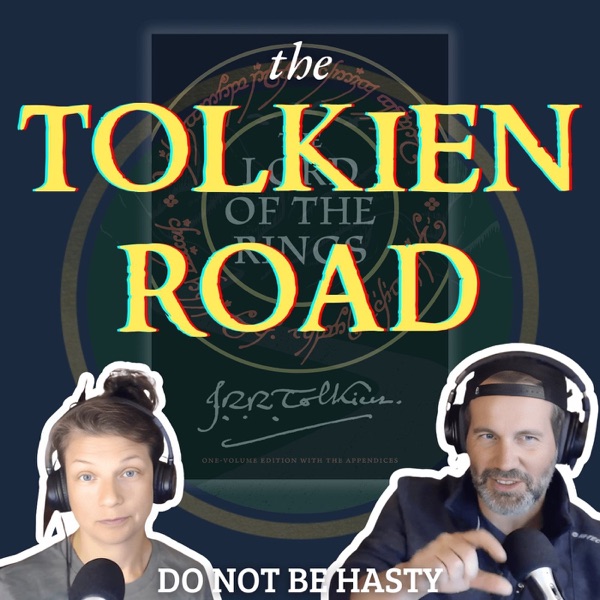
The Tolkien Road
Embark upon a wondrous journey through the realms of Middle-earth and beyond with the Tolkien Road, a podcast dedicated to the enchanting tales and writings of JRR Tolkien. Come, join John, Greta, and our mighty Fellowship as we delve deep into the magic that lingers within the pages of these timeless legends.
And always remember: DO NOT BE HASTY!!!
Become a supporter of this podcast: https://www.spreaker.com/podcast/the-tolkien-road--5222755/support.
- Episodes
- 576
- Releases
- Twice a week
- Typical length
- 37 min
- On air since
- 2015
- Latest episode
- 1 day ago
Episodes
576 episodes, newest first
-
45 min
0393: The Lord of the Rings » Prologue » Mathoms
Show notes
What did we miss in the Foreword and Prologue to The Lord of the Rings?
In Episode 393 of The Tolkien Road, John goes back through some fascinating “mathoms” from Do Not Be Hasty—from Tolkien’s rejected Silmarillion and savage early reviews to allegory, Sarehole Mill, the origins of “Hobbit” and “Dwarves,” the meaning of Middle-earth, and more.
━━━━━━━━━━━━━━
CHAPTERS
00:00 — Introduction
00:44 — What Is a Mathoms Episode?
01:49 — Tolkien and the “Impression of Depth”
03:29 — Why Publishers Rejected The Silmarillion
04:52 — Could Silmarillion Stories Become Novels?
07:23 — The Worst Early LOTR Reviews
09:23 — “Juvenile Trash”?
11:00 — Tolkien Was Supposedly Already Forgotten
13:35 — Tolkien on Allegory
15:00 — Allegory vs. Applicability
17:03 — Sarehole Mill and the Real Shire
18:11 — Tolkien Returns to His Lost Paradise
22:14 — Prologue Mathoms
22:19 — Did Tolkien Invent “Hobbit”?
25:30 — Why Tolkien Wrote “Dwarves”
28:03 — How Tolkien Imagined Hobbits
29:21 — Middle-earth Is Our World
30:58 — What Arnor and Gondor Mean
32:46 — Marcho and Blanco
34:09 — What “Angmar” Means
35:35 — The Shire Is Rural England
37:11 — Where “Shirriff” Comes From
38:40 — Tolkien Rewrites Bilbo’s Ring Story
40:13 — What “Samwise” Means
41:28 — The Meaning of Elrond
42:48 — Final Thoughts
━━━━━━━━━━━━━━
THE SILMARILLION WAS REJECTED
In 1937, Tolkien submitted Silmarillion material for publication.
It was considered too strange and difficult, though Stanley Unwin believed its stories might be mined for books more like The Hobbit.
That raises an interesting possibility: could individual Silmarillion stories have become full-length novels?
The Children of Húrin shows what that might look like.
━━━━━━━━━━━━━━
THEY CALLED LOTR “JUVENILE TRASH”
Some early critics dismissed The Lord of the Rings as childish, simplistic, or doomed to be forgotten.
History had other plans.
The reviews also reveal the divide between Tolkien and parts of the literary establishment that never quite knew what to make of him.
━━━━━━━━━━━━━━
ALLEGORY VS. APPLICABILITY
Tolkien was not opposed to readers finding deeper meaning in stories.
He objected to deliberately constructing stories as rigid one-to-one allegories.
A good story can apply naturally to many experiences because readers bring their own lives to it.
━━━━━━━━━━━━━━
HOBBITS, DWARVES, AND MIDDLE-EARTH
Did Tolkien invent “Hobbit”? Almost certainly in the form we know it.
Why “Dwarves” instead of “Dwarfs”? Tolkien preferred the form suggested by the word’s older linguistic history.
And Middle-earth is not another planet.
It is our world imagined in a distant mythological age.
━━━━━━━━━━━━━━
THE SHIRE IS ENGLAND
Tolkien explicitly said that, if we drop the fiction, the Shire is rural England.
Sarehole and the countryside of Tolkien’s childhood strongly influenced its creation.
The Hobbits may live in an ancient mythological world, but culturally they carry Victorian rural England with them.
━━━━━━━━━━━━━━
BILBO’S STORY
Tolkien changed Bilbo’s account of finding the Ring because The Lord of the Rings required a more sinister Ring.
Inside the story, that revision becomes evidence that the Ring was already affecting Bilbo.
A real-world rewrite becomes part of Middle-earth’s lore.
━━━━━━━━━━━━━━
THE BIG TAKEAWAY
With Tolkien, even the smallest details have histories.
Words, names, places, manuscripts, and revisions all lead somewhere deeper.
That is why these little “mathoms” are so rewarding: they show just how thoroughly Tolkien built his world.
━━━━━━━━━━━━━━
SPECIAL THANKS
• Caitlin of Tea with Tolkien
• John R.
• KG
• A.R. Endale Hope
• Alan C.
• Stephanie B.
• Dustin Q.
• Robert S.Become a supporter of this podcast: https://www.spreaker.com/podcast/the-tolkien-road--5222755/support.
-
1 hr 3 min
0233: The Book of Lost Tales I: The Early Forms of Middle-earth
Show notes
What was Tolkien’s mythology actually like when he first began writing it?
In Episode 233 of The Tolkien Road, John and Greta continue through The History of Middle-earth with the first four chapters of The Book of Lost Tales 1. They encounter Tolkien’s original frame narrative, early versions of the Music of the Ainur and Valinor, Tinfang Warble, and a Middle-earth that is familiar—but also wonderfully strange.
━━━━━━━━━━━━━━
CHAPTERS
00:00 — Introduction
01:51 — The Book of Lost Tales, Part 2
04:15 — Tolkien Quote of the Week
07:00 — How The Book of Lost Tales Is Organized
09:21 — The Ten Chapters of Volume 1
10:08 — Melko, the Noldoli, and Early Names
12:44 — Our Approach to The History of Middle-earth
14:33 — The Cottage of Lost Play
15:00 — Tolkien’s 1917 Exercise Book
19:11 — What Is the Cottage of Lost Play?
19:51 — Tolkien’s Original Frame Narrative
20:26 — Eriol Arrives on Tol Eressëa
25:26 — How the Frame Narrative Works
28:16 — Early Cottage of Lost Play Poems
29:09 — The Music of the Ainur
31:18 — Tolkien and the Oxford English Dictionary
35:24 — Rúmil Begins the Music
36:14 — How Similar Is It to the Ainulindalë?
37:00 — The Coming of the Valar
38:27 — The Strange Early Story of the Two Lamps
44:31 — The Chaining of Melko
44:57 — Tinfang Warble
46:27 — A Major Difference from The Silmarillion
47:33 — The Frame Narrative Continues
49:10 — The Tinfang Warble Poem
49:55 — A Precursor to Tom Bombadil?
53:26 — Could The Silmarillion Work Better With a Frame?
54:10 — Listener Correspondence
1:01:35 — What’s Coming Next
━━━━━━━━━━━━━━
THE COTTAGE OF LOST PLAY
Tolkien originally gave his mythology a frame narrative.
A mortal traveler named Eriol comes to Tol Eressëa and hears the ancient legends from the inhabitants of the Cottage of Lost Play.
Rather than presenting the mythology simply as history, Tolkien imagined someone actually hearing these stories within the world.
━━━━━━━━━━━━━━
THE EARLIEST SILMARILLION
The Music of the Ainur already resembles the later Ainulindalë.
The Coming of the Valar contains material recognizable from the published Silmarillion.
But names, geography, chronology, and details can be strikingly different.
Melkor is still Melko. The Noldor are the Noldoli. Familiar ideas are present, but the mythology is still changing.
━━━━━━━━━━━━━━
TINFANG WARBLE
The Chaining of Melko introduces one of the stranger delights of Tolkien’s earliest mythology: Tinfang Warble, a mysterious flute-playing figure associated with twilight and the stars.
Could he even contain a distant hint of the figure who eventually became Tom Bombadil?
━━━━━━━━━━━━━━
THE BIG TAKEAWAY
The Book of Lost Tales is not simply a rough draft of The Silmarillion.
It is an earlier vision of Tolkien’s mythology.
Some ideas are already remarkably familiar. Others would disappear completely.
And perhaps the most fascinating lost idea is the frame itself: Tolkien originally imagined these legends not simply as history, but as stories being told.
━━━━━━━━━━━━━━
SPECIAL THANKS
• Kaitlyn of Tea with Tolkien
• Liis U
• Andrew T
• John R
• Ms. Anonymous
• Shannon S
• Brian O
• Emilio P
• Zeke F
• James A
• James L
• Chris L
• Chuck F
• Asya V
• Ish of the Hammer
• Teresa C
• David of Pints with Jack
• Jonathan D
• Eric S
• Joey S
• Eric B
• Matt L
• Johanna T
• Sam N
• Mike M
• Dyrenair
• Robert H
• Paul DBecome a supporter of this podcast: https://www.spreaker.com/podcast/the-tolkien-road--5222755/support.
-
22 min
0386: The Lord of the Rings » Prologue » Of the Finding of the Ring and a Note on Shire Records
Show notes
Why did Bilbo lie about how he found the Ring—and why did Tolkien invent an entire history for the manuscripts behind The Lord of the Rings?
In Episode 386 of The Tolkien Road, John concludes the Prologue with “The Finding of the Ring” and “Note on the Shire Records.” We explore Bilbo’s false account, Gandalf’s suspicions, the mysterious “luck” behind finding the Ring, and Tolkien’s elaborate history of the Red Book of Westmarch.
━━━━━━━━━━━━━━
CHAPTERS
00:00 — Introduction
01:10 — The Finding of the Ring
02:27 — The Accident That Changed Middle-earth
03:24 — Was Finding the Ring Really Luck?
04:04 — Does the Ring Have a Will?
05:26 — Bilbo’s Original Version of the Story
07:11 — Why Did Bilbo Lie?
08:02 — Gandalf Doesn’t Believe Bilbo
08:25 — Bilbo’s Mithril Coat
09:16 — Note on the Shire Records
09:53 — Why Hobbits Started Writing History
11:00 — Tolkien’s Imaginary Textual History
11:47 — The Great Shire Libraries
12:32 — Merry, Pippin, and Sam’s Connections
13:08 — The Red Book of Westmarch
13:33 — The Thain’s Book
14:50 — Tolkien the Textual Historian
16:31 — Bilbo’s Translations from the Elvish
17:15 — A Frame Narrative for The Silmarillion?
17:48 — Merry and Pippin’s Historical Works
18:28 — Númenor and Sauron in the Records
19:08 — Tolkien’s Universe-Building
━━━━━━━━━━━━━━
BILBO LIED ABOUT THE RING
Bilbo did not originally tell the true story of how he obtained the Ring.
He claimed Gollum had promised it to him as a present if Bilbo won the riddle game.
Why change the story?
The altered version puts Bilbo’s ownership beyond doubt. Instead of merely taking Gollum’s treasure, he can tell himself that he legitimately earned it.
That becomes an early sign of the Ring working upon him.
━━━━━━━━━━━━━━
WAS IT REALLY LUCK?
Bilbo finding the Ring initially seems like an accident.
But the Ring may itself be trying to escape Gollum and return to Sauron.
At the same time, another will appears to be at work.
The fact that a Hobbit—and specifically Bilbo—finds it becomes enormously important.
━━━━━━━━━━━━━━
THE RED BOOK OF WESTMARCH
The final section of the Prologue gives us Tolkien’s imaginary textual history of Middle-earth.
After the War of the Ring, Hobbits develop a greater interest in their past and establish important libraries at Undertowers, Great Smials, and Brandy Hall.
At the center of this history is the Red Book of Westmarch.
It begins with Bilbo’s diary.
Frodo adds the account of the War of the Ring.
Later copies preserve and expand the material.
━━━━━━━━━━━━━━
BILBO AND THE SILMARILLION
Bilbo’s three volumes of Translations from the Elvish concern the Elder Days.
That strongly suggests an in-universe source for much of the material we know as The Silmarillion.
It also raises a fascinating possibility:
Bilbo working in Rivendell could have provided a natural frame narrative for The Silmarillion itself.
━━━━━━━━━━━━━━
THE BIG TAKEAWAY
Tolkien does more than invent history.
He invents the history of how that history was recorded.
The Red Book, the Thain’s Book, Bilbo’s translations, and the writings of Merry and Pippin make Middle-earth feel like a lost world whose surviving texts Tolkien merely inherited, edited, and translated.
━━━━━━━━━━━━━━
SPECIAL THANKS
• John R.
• Caitlin of Tea with Tolkien
• KG
• Melkor27
• Saber Systems
• Jeremy D.
• Emilio P.
• Jonathan D.
• Richard K.Become a supporter of this podcast: https://www.spreaker.com/podcast/the-tolkien-road--5222755/support.
-
55 min
0232: The Book of Lost Tales I » How Tolkien’s Middle-earth Really Began
Show notes
What exactly is The Book of Lost Tales—and why did Christopher Tolkien decide to publish the long, complicated history of his father’s evolving mythology?
In this episode of The Tolkien Road, John and Greta begin their journey through The History of Middle-earth with Volume 1, The Book of Lost Tales 1. Along the way, they explore Christopher Tolkien’s difficult task as his father’s literary executor, why The Silmarillion is so challenging, whether a frame narrative might have made it more accessible, and what Tolkien’s earliest surviving mythology reveals about the evolution of Middle-earth.
The episode also begins on a personal note, as John remembers his father, Nat Carswell, who first introduced him to The Hobbit and C.S. Lewis.
━━━━━━━━━━━━━━
CHAPTERS
00:00 — Introduction
03:12 — Remembering John’s Father
04:01 — The Hobbit Book Report That Started It All
05:05 — Narnia, C.S. Lewis, and Tolkien
06:00 — A Tolkienian Farewell
08:39 — Beginning The History of Middle-earth
12:28 — Christopher Tolkien’s Foreword
13:29 — What Is The Book of Lost Tales?
14:03 — How Christopher Created The Silmarillion
15:16 — Did Christopher Do His Father’s Work Justice?
15:48 — Why Publish a Textual History of Middle-earth?
20:26 — Why The Silmarillion Is So Difficult
21:23 — Tolkien’s “Impression of Depth”
24:20 — Does Explaining the Mystery Destroy It?
27:56 — The Problem of the Missing Frame Narrative
29:25 — The Book of Lost Tales Actually Had a Frame
30:20 — Would a Frame Have Improved The Silmarillion?
32:27 — The Silmarillion Tolkien Never Finished
33:41 — The Earliest Version of Tolkien’s Mythology
35:15 — How the Legends Changed Over Time
36:05 — Christopher Tolkien’s Editorial Method
37:16 — Listener Feedback
47:47 — Beren, Lúthien, and Thingol
48:49 — Should There Ever Be a “Special Edition” Silmarillion?
53:03 — What’s Coming Next
━━━━━━━━━━━━━━
CHRISTOPHER TOLKIEN’S PROBLEM
• Tolkien did not leave behind a completed Silmarillion ready for publication.
• Christopher inherited finished passages, unfinished stories, notes, revisions, and competing versions.
• For the 1977 Silmarillion, Christopher synthesized that material into a coherent whole.
• He later became increasingly interested in showing readers what his father had actually written.
• The History of Middle-earth became a textual history of how the mythology evolved.
━━━━━━━━━━━━━━
WHY IS THE SILMARILLION SO DIFFICULT?
• There are no Hobbits to act as relatable intermediaries.
• The style is not conventionally novelistic.
• The book consists of interwoven legends rather than one continuous character-driven narrative.
• Christopher also wrestled with whether publishing the ancient legends would lessen the mysterious “depth” of The Lord of the Rings.
John and Greta argue that discovering the stories behind Tolkien’s allusions does not exhaust the mystery. New answers lead to new questions, and the legendarium remains full of unexplored territory.
━━━━━━━━━━━━━━
WOULD A FRAME NARRATIVE HAVE HELPED?
The published Silmarillion has no central frame narrative.
The Book of Lost Tales originally did.
A traveler comes across the sea and hears the ancient histories of the Elves in the Cottage of Lost Play. Tolkien later also considered connections involving Bilbo and the Red Book of Westmarch.
John and Greta discuss whether a frame—perhaps Bilbo telling Frodo the ancient legends—could have helped readers gain traction and provided a familiar doorway into the mythology.
━━━━━━━━━━━━━━
WHAT IS THE BOOK OF LOST TALES?
• Tolkien began the work around 1916–17 during the First World War.
• It contains the earliest substantial narrative versions of stories that eventually became The Silmarillion.
• The texts were never completely fixed.
• Tolkien revised them even within the original notebooks.
• Familiar characters and stories appear under different names and sometimes in significantly different forms.
This is Middle-earth while it was still becoming Middle-earth.
━━━━━━━━━━━━━━
CHRISTOPHER TOLKIEN’S METHOD
• Explain the physical manuscript or notebook containing each text.
• Reproduce Tolkien’s writing as faithfully as possible.
• Document revisions and alternate versions.
• Provide commentary explaining how the material developed.
The result allows readers to watch Tolkien’s mythology change and grow across decades.
━━━━━━━━━━━━━━
LISTENER FEEDBACK
The episode also includes listener correspondence about Tolkien’s religious and mythological influences, Lúthien’s place among the great heroes of the legendarium, and whether future editors should ever produce an expanded or revised Silmarillion.
The comparison with the Star Wars Special Editions raises an important question: how do you preserve and expand a beloved fictional world without endlessly altering or commercializing the original?
━━━━━━━━━━━━━━
THE BIG TAKEAWAY
The Book of Lost Tales matters because it lets us see Tolkien’s mythology before it became fixed.
Christopher Tolkien could never give us exactly the Silmarillion his father might eventually have completed.
Instead, The History of Middle-earth gives us something different: the opportunity to watch Tolkien invent, revise, abandon, recover, and transform his mythology across decades.
Rather than presenting Middle-earth as one finished creation, it reveals the legendarium as a lifelong creative process.
━━━━━━━━━━━━━━
SPECIAL THANKS
• Kaitlyn of Tea with Tolkien
• Lise Yu
• Andrew T
• John R
• Ms. Anonymous
• Robert H
• Payne JoikerBecome a supporter of this podcast: https://www.spreaker.com/podcast/the-tolkien-road--5222755/support.
-
25 min
0385: The Lord of the Rings » Prologue » Concerning Pipe-weed and the Ordering of the Shire
Show notes
Why did Tolkien devote part of The Lord of the Rings Prologue to pipe-weed and the government of the Shire?
In this episode of Do Not Be Hasty, we continue through the Prologue with “Concerning Pipe-weed” and “Of the Ordering of the Shire,” exploring Tolkien’s love of small details, the history of Hobbit smoking, and the surprisingly simple political structure of the Shire.
━━━━━━━━━━━━━━
CHAPTERS
00:00 — Introduction: Why the Little Details Matter
01:37 — Why Tolkien Wrote About Pipe-weed
02:22 — The Hobbit Invention of Smoking
04:03 — Tobold Hornblower and the Southfarthing
05:31 — Bree, the Prancing Pony, and the Spread of Pipe-weed
06:21 — Did Pipe-weed Come from Númenor?
07:19 — Gandalf Takes Up the Art
08:30 — Of the Ordering of the Shire
08:43 — The Four Farthings
11:27 — Why Hobbits Needed So Little Government
12:32 — The King of Arnor and Hobbit Law
14:58 — The Thain and the Took Family
17:00 — The Mayor of Michel Delving
18:42 — The Shirriffs and Bounders
20:11 — Signs That All Was Not Well
21:33 — What These Details Add to Middle-earth
━━━━━━━━━━━━━━
WHY PIPE-WEED MATTERS
• The section continues Tolkien’s larger exploration of Hobbit culture.
• Pipe-weed adds another layer of realism and history to the Shire.
• Tolkien treats even a small custom as something with origins, traditions, and regional variations.
• The practice becomes relevant later in the story through Gandalf and other characters.
• Tolkien’s own fondness for pipes likely helped inspire the section.
━━━━━━━━━━━━━━
THE HISTORY OF PIPE-WEED
• Hobbits regarded pipe-smoking as one of their own inventions.
• Tobold Hornblower began cultivating true pipe-weed in the Southfarthing.
• Famous varieties included Longbottom Leaf, Old Toby, and Southern Star.
• Bree also claimed an important role in the history of smoking.
• The Prancing Pony became one of the great centers of the art.
• From Bree, the practice spread to Dwarves, Rangers, Wizards, and other travelers.
• Merry suggests that the plant itself may ultimately have come from the lower Anduin and perhaps even Númenor.
━━━━━━━━━━━━━━
THE ORDERING OF THE SHIRE
• The Shire was divided into four Farthings: North, South, East, and West.
• Local regions were also associated with important families such as the Brandybucks and Tooks.
• Hobbit society required surprisingly little formal government.
• Families largely managed their own affairs.
• Tolkien emphasizes that Hobbits were generally generous, stable, and not especially greedy or domineering.
━━━━━━━━━━━━━━
THE KING, THE THAIN, AND HOBBIT LAW
• Hobbits continued to remember the ancient King of Arnor long after his kingdom disappeared.
• They preserved old laws because they considered them both ancient and just.
• The Thain served as a representative of the old royal authority.
• The Took family traditionally held this position.
• In times of emergency, the Thain could oversee the Shire Muster and the Hobbitry-in-Arms.
━━━━━━━━━━━━━━
THE MAYOR, SHIRRIFFS, AND BOUNDERS
• The Mayor of Michel Delving was elected every seven years.
• The mayor also served as postmaster and first Shirriff.
• Only twelve Shirriffs normally served the entire Shire.
• Their duties were less about policing Hobbits and more about dealing with animals and minor disturbances.
• The Bounders watched the borders and kept an eye on outsiders.
• Their numbers increased sharply as the events of The Fellowship of the Ring approached.
━━━━━━━━━━━━━━
THE BIG TAKEAWAY
These seemingly minor details reveal just how seriously Tolkien treated Middle-earth as a living world. Pipe-weed, local government, old laws, family traditions, and border patrols may not drive the plot—but they make the Shire feel real.
They also reinforce a central theme of Tolkien’s storytelling: Hobbit society works precisely because it is simple, local, stable, and largely uninterested in domination. That quiet order makes the disturbances at the beginning of The Lord of the Rings feel all the more significant.
━━━━━━━━━━━━━━
SPECIAL THANKS
• John R
• Kaitlyn of Tea with Tolkien
• Melkor27
• KG
• SaberSystems
• Jeremy D
• Emilio P
• Jonathan D
• Richard K
• Paul D
• Julia
• Werty
• Chris B
• Tuor91
• Carolyn S
• Emiel K
• Brian O the 2nd
• Jonathan R
• Matthew W
• Daniel D
• Harrison C
• Jason C
• Seb M
• Willbo Baggins
• Ms. Anonymous
• Andrew T
• Redhawk
• Shannon S
• Brian O (the 1st)
• Zeke F
• James L
• Chris L
• Asya V
• Ish of the Hammer
• Teresa C
• David of Pints with Jack
• Eric BBecome a supporter of this podcast: https://www.spreaker.com/podcast/the-tolkien-road--5222755/support.
-
49 min
0231: Unfinished Tales » What’s In The Book?
Show notes
What exactly is inside Unfinished Tales—and why did Christopher Tolkien include these particular writings?
In this episode of The Tolkien Road, we continue our After the Silmarillion series with a guided tour through Unfinished Tales, covering material from the First, Second, and Third Ages, along with the book’s fascinating appendices.• 00:00 — Introduction: Unfinished Tales, Part Two
• 05:33 — Tolkien Quote of the Week: Recovery and Seeing the Ordinary Anew
• 08:00 — What Is Actually in Unfinished Tales?
• 10:04 — Part One: The First Age
• 12:56 — Tuor and His Coming to Gondolin
• 15:12 — The Children of Húrin
• 21:22 — Part Two: The Second Age
• 22:48 — Aldarion and Erendis: The Mariner’s Wife
• 27:18 — The Line of Elros
• 27:53 — The History of Galadriel and Celeborn
• 30:33 — Part Three: The Third Age
• 30:35 — The Disaster of the Gladden Fields
• 33:19 — Cirion and Eorl
• 34:06 — The Quest of Erebor
• 36:45 — The Hunt for the Ring
• 37:57 — The Battles of the Fords of Isen
• 40:48 — Part Four: The Appendices
• 40:58 — The Drúedain
• 42:36 — The Istari
• 43:47 — The Palantíri
• 44:22 — Tolkien’s Maps and the Mystery of Himling
• 46:02 — Final ThoughtsWhy Some Stories Appear Again
• Several stories in Unfinished Tales already appear in some form in The Silmarillion
• Christopher Tolkien included them because the versions in The Silmarillion were often heavily compressed or editorially reconstructed
• Unfinished Tales gives readers access to fuller, less polished, and more textually authentic versions of Tolkien’s writings
• This reflects Christopher’s broader decision to preserve the history of the manuscripts rather than smooth every story into a finished formPart One: The First Age
The First Age section contains two of Tolkien’s great tales:• Tuor and His Coming to Gondolin
• Based on Tolkien’s later expansion of one of his earliest Middle-earth stories
• Goes into considerably more detail than the abbreviated version found in The Silmarillion
• Remains truly unfinished, ending with Tuor’s arrival rather than the actual Fall of Gondolin• The Children of Húrin
• Another major story reaching back to the earliest days of the legendarium
• Tolkien developed this tale much further than many others
• It eventually formed the basis of the standalone Children of Húrin
• Along with Gondolin and Beren and Lúthien, it belongs among the great tales of the First AgePart Two: The Second Age
This section expands dramatically on Númenor and several major Second Age figures.• A Description of the Island of Númenor
• Primarily geographical rather than narrative
• Includes a map based on Tolkien’s own surviving sketch of Númenor• Aldarion and Erendis: The Mariner’s Wife
• One of the most substantial narratives in the book
• Explores marriage, ambition, Númenórean expansion, and the cost of Aldarion’s obsession with the sea
• Despite its richness, the story itself remains unfinished• The Line of Elros
• Provides a chronological history of the Kings of Númenor
• More reference work than narrative, but valuable for understanding the Second Age• The History of Galadriel and Celeborn
• Collects multiple writings and traditions surrounding Galadriel
• Shows just how complicated Tolkien’s evolving conception of her became
• Highlights the difficulties created by a character whose history stretches across thousands of yearsPart Three: The Third Age
For readers of The Lord of the Rings, this may be the most immediately accessible section.• The Disaster of the Gladden Fields
• Gives a much fuller account of Isildur’s death and the loss of the One Ring
• Complicates the simplified image of Isildur familiar from popular adaptations• Cirion and Eorl
• Explores the origins of the alliance between Gondor and Rohan
• Appears to have been intended as part of a larger history of the Third Age• The Quest of Erebor
• Retells the background of The Hobbit from Gandalf’s point of view
• Explains why Gandalf became involved with Thorin and why Bilbo was chosen• The Hunt for the Ring
• Expands on the Ringwraiths’ pursuit of the Ring before and during the opening of The Fellowship of the Ring
• Includes material involving Saruman, Gríma, and the movements surrounding the search for the Shire• The Battles of the Fords of Isen
• Gives a detailed historical treatment of the battles involving Rohan before the main action at Helm’s Deep
• Christopher describes it as a particularly rigorous historical analysisPart Four: The Appendices
The final section gathers several specialized pieces of lore:• The Drúedain
• Expands the history of the Wild Men encountered near Gondor
• Connects them to much older traditions reaching back toward the First Age• The Istari
• One of the most popular pieces in the book
• Explores Gandalf, Saruman, Radagast, the Blue Wizards, and the Wizards’ origins in Valinor• The Palantíri
• Collects Tolkien’s later writings about the Seeing Stones
• Explains their nature, history, and use in far greater detail than The Lord of the Rings• Maps and Geography
• Christopher updates the Middle-earth map with locations appearing in Unfinished Tales
• Even small geographical details, such as the island of Himling, open windows into the deeper history of the legendariumThe Big Takeaway
Unfinished Tales is less a single book than a guided tour through Tolkien’s unfinished workshop.
Its value comes from seeing Middle-earth expand outward in every direction: fuller First Age legends, the history of Númenor, overlooked events surrounding The Lord of the Rings, and dense pieces of lore about Wizards, Palantíri, maps, and forgotten peoples.
Christopher Tolkien’s willingness to preserve the rough edges gives readers something unique: not simply more Middle-earth stories, but a view into how Tolkien kept revisiting, revising, and deepening his world throughout his life.SPECIAL THANKS
• Kaitlyn of Tea with Tolkien
• Liis U
• Andrew T
• John R
• Shannon S
• Brian O
• Emilio P
• Zeke F
• James A
• James L
• Chris L
• Chuck F
• Asya V
• Ish of the Hammer
• Teresa C
• David of Pints with Jack
• Jonathan D
• Eric S
• Joey S
• Eric B
• Matt L
• Johanna T
• Ms. Anonymous
• Sam N
• Mike M
• DyrenairBecome a supporter of this podcast: https://www.spreaker.com/podcast/the-tolkien-road--5222755/support.
-
36 min
0384: The Lord of the Rings » Prologue » Concerning Hobbits
Show notes
What exactly are hobbits—and where did they come from?
In this episode of DO NOT BE HASTY, we begin our journey through the Prologue to The Lord of the Rings with “Concerning Hobbits,” exploring Tolkien’s surprisingly detailed history of hobbit origins, migrations, culture, and the eventual founding of the Shire.
━━━━━━━━━━━━━━
CHAPTERS
00:00 — Introduction: Concerning Hobbits
01:25 — Tolkien, the Red Book of Westmarch, and Hobbit History
03:12 — Hobbit Culture: Peace, Quiet, Magic, and Machinery
05:05 — What Do Hobbits Actually Look Like?
06:30 — The Merry Folk of the Shire
08:35 — Where Did Hobbits Come From?
10:06 — Did Hobbits Exist in the Second Age?
11:30 — The Earliest Hobbit Homelands
14:35 — Harfoots, Stoors, and Fallohides
18:05 — Hobbit Leadership and the Common Good
20:09 — The Hobbits Move West into Eriador
21:59 — The Founding of the Shire
26:05 — How Big Is the Shire?
29:10 — Hobbit Holes, Houses, and Architecture
30:44 — Hobbit Families and Genealogies
33:14 — Why Hobbits Matter to Tolkien
━━━━━━━━━━━━━━
TOLKIEN’S “HISTORY” OF THE HOBBITS
• Tolkien presents himself almost as a compiler or translator of an ancient history.
• The Hobbit is presented as material derived from Bilbo’s portion of the Red Book of Westmarch.
• The Prologue expands that fictional history with a broader account of the hobbits as a people.
━━━━━━━━━━━━━━
WHAT ARE HOBBITS LIKE?
• Hobbits love peace, quiet, good food, cultivated land, hospitality, and parties.
• They distrust complicated machinery.
• They may appear almost magical to outsiders, but they do not consider themselves magical.
• Tolkien contrasts simple hobbit life with the desire to dominate through “magic” and machinery.
• Hobbits generally stand between two and four feet tall.
• Shire hobbits favor bright colors and usually go barefoot.
━━━━━━━━━━━━━━
THE ANCIENT ORIGINS OF HOBBITS
• Hobbits are relatives of Men, though their exact relationship has been forgotten.
• Their origins reach back into the Elder Days.
• For much of history they were virtually unknown to the Wise and Great.
• Their earliest remembered homeland was in the upper vales of the Anduin.
• They eventually migrated westward as Men multiplied and the shadow over Greenwood grew.
━━━━━━━━━━━━━━
HARFOOTS, STOORS, AND FALLOHIDES
• Harfoots — smaller, more numerous, associated with hills and highlands, and especially connected with living underground.
• Stoors — broader and heavier, more comfortable around rivers and Men. Sméagol and Déagol came from this branch.
• Fallohides — taller and fairer, fond of forests, more friendly with Elves, and often found among the leaders of hobbit communities.
As the three groups migrated westward and blended together, their different qualities helped shape the hobbits we encounter in the Shire.
━━━━━━━━━━━━━━
HOBBIT SOCIETY AND THE COMMON GOOD
• Leadership among hobbits does not seem primarily based on domination.
• Different families and groups contribute their particular strengths to the community.
• Their culture tends toward cooperation and mutual support.
• Tolkien contrasts these overlooked “little people” with the powerful figures who dominate the great events of history.
━━━━━━━━━━━━━━
THE ROAD TO THE SHIRE
• The hobbits gradually migrated into Eriador as the northern kingdom of Arnor declined.
• They interacted with the remnants of the Dúnedain and eventually adopted the Common Speech.
• In Third Age 1601, Marcho and Blanco crossed the Brandywine with permission from the king at Fornost.
• That settlement marks the beginning of the Shire and Year 1 of the Shire Reckoning.
• The hobbits remained nominal subjects of the northern kings but largely governed themselves.
━━━━━━━━━━━━━━
HOW BIG IS THE SHIRE?
The Shire is much larger than it can sometimes feel in the story—roughly 140 miles east to west and 175 miles north to south. That puts it on the general scale of a smaller European country rather than a tiny village-sized region.
━━━━━━━━━━━━━━
HOBBIT HOMES AND FAMILIES
• Not every hobbit lived in a hole.
• Elaborate holes such as Bag End tended to belong to wealthy hobbits, while many middle-class hobbits lived in above-ground houses.
• Hobbits favored long, low buildings rather than towers.
• Round doors and windows became a distinctive feature of hobbit architecture.
• Hobbits were intensely family-oriented and loved elaborate genealogies and family trees.
━━━━━━━━━━━━━━
THE BIG TAKEAWAY
Hobbits may seem insignificant to the powerful people of Middle-earth, but that is precisely the point. Tolkien builds an entire history and culture around these humble, easily overlooked people—and then makes them central to the fate of the world.
Frodo, Sam, Bilbo, Merry, and Pippin emerge from a long tradition of ordinary people who value home, family, community, and simple things—yet are capable of extraordinary courage when history calls upon them.
━━━━━━━━━━━━━━
SPECIAL THANKS
• John R
• Kaitlyn of Tea with Tolkien
• Melkor27
• KG
• SaberSystems
• Jeremy D
• Emilio P
• Jonathan D
• Richard K
• Paul D
• Julia
• Werty
• Chris B
• Tuor91
• Carolyn S
• Emiel K
• Brian O the 2nd
• Jonathan R
• Matthew W
• Daniel D
• Harrison C
• Seb M
• Willbo Baggins
• Ms. Anonymous
• Andrew T
• Redhawk
• Shannon S
• Brian O (the 1st)
• Zeke F
• James L
• Chris L
• Asya V
• Ish of the Hammer
• Teresa C
• David of Pints with Jack
• Eric BBecome a supporter of this podcast: https://www.spreaker.com/podcast/the-tolkien-road--5222755/support.
-
1 hr 15 min
0230: Unfinished Tales » Overview & Background
Show notes
What exactly is Unfinished Tales—and why did Christopher Tolkien choose to publish his father’s unfinished writings at all?
In this episode of The Tolkien Road, we begin a new journey into Tolkien’s posthumously published legendarium by exploring the history, purpose, and editorial philosophy behind Unfinished Tales of Númenor and Middle-earth.• 00:00 — Introduction: Beginning Unfinished Tales
• 06:36 — Tolkien Quote of the Week: Why Fantasy Matters
• 08:52 — What Is Unfinished Tales?
• 10:14 — Why This Book Was So Important
• 11:38 — Christopher Tolkien Takes Up His Father’s Work
• 12:56 — Why Unfinished Tales Is Harder Than The Silmarillion
• 14:31 — Unfinished Tales as a Bridge to The History of Middle-earth
• 16:54 — Christopher Tolkien’s Experience with The Silmarillion
• 20:28 — The Three Choices Christopher Tolkien Faced
• 21:33 — Choosing Textual History Instead of New Stories
• 24:14 — Why Christopher Changed His Editorial Approach
• 27:36 — Why Publish Tolkien’s Unfinished Material?
• 28:23 — Do Tolkien Fans Really Want All the Details?
• 44:59 — Christopher Tolkien’s Lasting Editorial Legacy
• 45:42 — Listener CorrespondenceWhat Is Unfinished Tales?
• Unfinished Tales of Númenor and Middle-earth was published in 1980
• It followed The Silmarillion, which Christopher Tolkien published in 1977
• The book gathers incomplete narratives, drafts, notes, and alternate versions of stories from across the legendarium
• Some stories are relatively complete, while others require extensive editorial explanation
• Christopher frequently interrupts the narrative to explain manuscript differences, chronology, textual problems, and editorial choicesWhy It Is Different from The Silmarillion
• The Silmarillion was shaped into a relatively cohesive narrative
• Christopher combined and edited multiple sources in an attempt to present something close to his father’s intended mythology
• Unfinished Tales takes a very different approach
• Rather than smoothing over inconsistencies, Christopher increasingly shows readers the manuscripts as Tolkien actually left them
• The result is more scholarly, fragmented, and sometimes more difficult—but also much more transparentChristopher Tolkien’s Three Choices
After publishing The Silmarillion, Christopher essentially faced three paths:• Do nothing and leave his father’s unpublished material alone
• Continue the legendarium, perhaps by completing stories or bringing in other writers
• Present the textual history, allowing readers to see Tolkien’s drafts, revisions, contradictions, and unfinished writingsChristopher ultimately chose the third path.
Why That Decision Mattered• Unfinished Tales became a prototype for the later twelve-volume History of Middle-earth
• Instead of continuing Middle-earth himself, Christopher became the curator and interpreter of Tolkien’s manuscripts
• He increasingly preferred to show readers what his father actually wrote rather than construct polished versions of unfinished stories
• Stories already familiar from The Silmarillion, such as Tuor’s journey to Gondolin and the tale of the Children of Húrin, could now appear in fuller or less heavily edited forms
• Readers gained access not only to Tolkien’s stories but also to the process by which those stories developedChristopher Tolkien as “Tour Guide”
A useful way to understand Unfinished Tales is as a museum of Tolkien’s unfinished writings, with Christopher serving as the tour guide.He explains:• Which manuscripts survive
• How different versions relate to one another
• Where Tolkien changed his ideas
• Which texts are incomplete
• Why contradictions exist
• What editorial decisions were madeThat makes the book more demanding, but also extraordinarily valuable for readers who want to understand how Tolkien’s legendarium evolved.
Why Tolkien Fans Want This Material
Christopher sometimes seems uncertain whether readers really want such detailed material.
But for serious Tolkien readers, those details are part of the appeal. Geography, timelines, alternate drafts, abandoned ideas, and seemingly tiny differences can all provide insight into Tolkien’s creative process.
By publishing the textual history, Christopher also gave future readers and adapters a much clearer picture of Tolkien’s actual vision.
The Big Takeaway
Unfinished Tales represents a turning point in the history of Tolkien publishing.
After the more interventionist editorial approach required to create The Silmarillion, Christopher Tolkien chose a different path: preserve the manuscripts, expose their complexity, and let readers see the legendarium developing in Tolkien’s own words.
That decision gave us not only Unfinished Tales, but eventually The History of Middle-earth—and an unprecedented window into the creation of Middle-earth.
SPECIAL THANKS• Kaitlyn of Tea with Tolkien
• Liis U
• Andrew T
• John R
• Shannon S
• Brian O
• Emilio P
• Zeke F
• James A
• James L
• Chris L
• Chuck F
• Asya V
• Ish of the Hammer
• Teresa C
• David of Pints with Jack
• Jonathan D
• Eric S
• Joey S
• Eric B
• Matt L
• Johanna T
• Ms. Anonymous
• Sam N
• Mike MBecome a supporter of this podcast: https://www.spreaker.com/podcast/the-tolkien-road--5222755/support.
-
34 min
0381: The Lord of the Rings » Tolkien's Foreword(s)
Show notes
What did Tolkien himself say The Lord of the Rings was about?In this episode of Do Not Be Hasty, we explore Tolkien’s forewords to The Lord of the Rings — because there are actually two very different versions.
• 00:00 — What Did Tolkien Say The Lord of the Rings Was About?
• 02:15 — The Original 1954 Foreword
• 03:43 — The Red Book of Westmarch
• 09:45 — Tolkien as “Translator” and Middle-earth as History
• 13:20 — Why Tolkien Replaced the First Foreword
• 15:24 — The Second-Edition Foreword
• 20:17 — Why Tolkien Wrote The Lord of the Rings
• 21:21 — No Hidden Message or World War II Allegory
• 22:12 — What the Story Would Look Like If It WERE About WWII
• 26:09 — Allegory vs. Applicability
• 30:11 — So What Is The Lord of the Rings About?The First-Edition Foreword
• Published with The Fellowship of the Ring in 1954
• Tolkien presents The Lord of the Rings almost as an authentic historical document
• The story is supposedly drawn from the Red Book of Westmarch
• Bilbo and Frodo appear as memoirists whose accounts were preserved by Sam’s descendants
• Tolkien plays with the idea that he is discovering or translating Middle-earth rather than simply inventing it
• Why Tolkien later rejected this foreword
• The role of the unauthorized Ace Books edition and the U.S. copyright situation
• The first foreword’s possible spoiler concerning Frodo and SamThe Second-Edition Foreword
• How The Lord of the Rings grew out of The Hobbit
• Why the story was drawn toward the older world of The Silmarillion
• Tolkien’s long process of composition through the late 1930s and 1940s
• The extraordinary amount of work involved in completing and revising the book
• Tolkien’s stated purpose: to tell a long story that could hold readers’ attention, delight them, excite them, and move themWas The Lord of the Rings an Allegory?
• Tolkien rejects the idea that the book has a simple hidden message
• Why the War of the Ring should not be read as an allegory of World War II
• Tolkien imagines what the story might have looked like if WWII really had dictated the plot
• His skepticism toward political power and his concern for ordinary people
• Why the Scouring of the Shire is not simply commentary on contemporary EnglandAllegory vs. Applicability
• Tolkien’s famous declaration that he “cordially” disliked allegory
• Allegory depends upon the author imposing a particular meaning
• Applicability depends upon the freedom of the reader
• Real history and personal experience can influence storytelling without turning a story into allegory
• The importance of remaining faithful to the artistic vision rather than writing merely to make a topical pointThe Big TakeawayTolkien’s own explanation is surprisingly simple: he was primarily trying to tell a great story. The deeper truths of The Lord of the Rings arise organically from the story rather than from a coded attempt to comment upon specific historical events.SPECIAL THANKS
• John R
• Kaitlyn of Tea with Tolkien
• Melkor27
• KG
• SaberSystems
• Jeremy D
• Emilio P
• Jonathan D
• Richard K
• Paul D
• Julia
• Werty
• Chris B
• Tuor91
• Carolyn S
• Emiel K
• Brian O the 2nd
• Jonathan R
• Matthew W
• Daniel D
• Harrison C
• Seb M
• Willbo Baggins
• Ms. Anonymous
• Andrew T
• Redhawk
• Shannon S
• Brian O (the 1st)
• Zeke F
• James L
• Chris L
• Asya V
• Ish of the Hammer
• Teresa C
• David of Pints with Jack
• Eric BBecome a supporter of this podcast: https://www.spreaker.com/podcast/the-tolkien-road--5222755/support.
-
55 min
Three Major Problems With The Silmarillion (Episode 0253 Revisited)
Show notes
Is The Silmarillion harder to read than it needs to be?In this episode of The Tolkien Road, we take a loving but critical look at three major problems with the published Silmarillion — and how a future edition might make Tolkien’s mythology far more accessible to first-time readers.
• 00:00 — Introduction
• 04:45 — The Silmarillion: Three Big Problems and How to Fix Them
• 06:40 — Why the Published Silmarillion Is Open to Criticism
• 10:47 — The Three Big Problems
• 11:10 — Problem #1: The Maps
• 23:21 — Problem #2: The Lack of a Frame Narrative
• 28:57 — Problem #3: No Timetable
• 31:30 — What a Better Edition of The Silmarillion Could Look Like
• 33:11 — Is There a Fourth Problem?
• 33:35 — Listener CorrespondenceWhy The Silmarillion Is So Difficult
• Tolkien himself never completed the book
• Christopher Tolkien faced the enormous task of organizing decades of unfinished material
• Even highly motivated Tolkien readers often struggle to finish The Silmarillion
• The problems discussed here are less about Tolkien’s stories themselves than about how the material is presented
• Better reference material and narrative structure could help more readers enter Tolkien’s First AgeProblem #1: The Maps
• The maps in The Lord of the Rings give readers an immediate geographical frame of reference
• The Silmarillion primarily gives us a map of Beleriand
• That map does not become especially useful until well into the book
• Early locations such as Valinor are not represented on it
• Important locations such as Angband are also missing
• Without understanding Beleriand’s relationship to the later Middle-earth map, first-time readers can easily become confused
• A future edition could include multiple maps corresponding to different eras and sections of the story
• Additional reader aids such as character lists, footnotes, and more accessible appendices could also helpProblem #2: The Lack of a Frame Narrative
• The Hobbit and The Lord of the Rings give readers a much more immediate narrative point of view
• The Silmarillion can feel detached or chronicle-like by comparison
• Tolkien’s earliest versions of these stories actually did include a frame narrative
• The various tales of The Silmarillion are interconnected, but they are not one continuous story in the way The Lord of the Rings is
• Stories such as Beren and Lúthien and the Fall of Gondolin can feel almost like separate works within a larger mythology
• A frame involving Bilbo, Frodo, Aragorn, Rivendell, or the Red Book of Westmarch could potentially provide greater continuity
• Such a structure would also connect The Silmarillion more directly with the familiar world of The Hobbit and The Lord of the RingsProblem #3: No Timetable
• The Lord of the Rings gives readers useful chronological information in Appendix B
• The Silmarillion covers immense spans of time without providing a similarly accessible timeline
• A concise chronology could help readers understand when major events occur and how much time separates them
• Events such as Melkor’s alliance with Ungoliant, the destruction of the Two Trees, and the major wars of the First Age could be placed within a simple chronological framework
• The detailed chronological material elsewhere in Tolkien’s writings could potentially be distilled into a more reader-friendly referenceWhat a Better Silmarillion Could Accomplish
• More maps
• Better character and reference guides
• A stronger narrative frame
• A concise timeline of major events
• More help orienting first-time readers without changing Tolkien’s actual stories
• Greater accessibility could introduce many more Tolkien fans to the stories that were closest to Tolkien’s heart
• Understanding The Silmarillion also greatly enriches the experience of reading The Hobbit and The Lord of the RingsA Possible Fourth Problem
Listener and Tolkien scholar Keith Mathison suggests that the ending of The Silmarillion may present another problem worth exploring — a subject for a future discussion.Listener Correspondence
The episode closes with listener comments and questions touching on Tolkien and paganism, the Valar as angelic beings, the purposes of Tolkien’s mythology beyond entertainment, the meaning of “Flame of Udûn,” adaptations of The Lord of the Rings, Tolkien’s Catholic faith, and Galadriel’s ancestry.The Big TakeawayThe point isn’t that The Silmarillion needs different stories. It’s that those extraordinary stories might reach far more readers if the book gave newcomers a little more help finding their way through Tolkien’s vast mythology.EXECUTIVE PRODUCERS:
- Andrew T
- John R
- Ms. AnonymousSPECIAL THANKS:
- Andrew T
- John R
- Ms. Anonymous
- Kaitlyn of Tea with Tolkien
- Shannon S
- Brian O
- Emilio P
- Zeke F
- James A
- James L
- Chris L
- Chuck F
- Asya V
- Ish of the Hammer
- Teresa C
- David of Pints with Jack
- Jonathan D
- Eric S
- Joey S
- Eric B
- Johanna T
- Mike M
- Robert H
- Paul D
- Julia
- WertyBecome a supporter of this podcast: https://www.spreaker.com/podcast/the-tolkien-road--5222755/support.
-
56 min
The Mariner's Wife - Part 5: The Mariner's Mailbag (EP188 Revisited)
Show notes
My new book, Tolkien's Tragedy, is now available! Visit https://tolkienstragedy.com/ to learn more!
Hey there, Fellowship! Welcome to The Tolkien Road.
Over the next four episodes, we’re returning to one of Tolkien’s most compelling—and heartbreaking—tales: “Aldarion and Erendis: The Mariner’s Wife.”
Originally published in Unfinished Tales, this story takes us deep into the history of Númenor, exploring the troubled marriage of the royal couple Aldarion and Erendis—and the painful conflict between ambition, duty, love, and family.
Today, we’re revisiting Part Five of our discussion.
And for those of you waiting for fresh journeys down the Tolkien Road, don’t worry—we’ll be back soon with brand-new episodes.
For now, let’s return to Númenor and the story of Aldarion and Erendis.
Ad-Free Audio » https://www.patreon.com/tolkienroad/posts/early-access-pt-34728534
Episode Webpage » https://www.tolkienroad.com/e0188/Helpful Links:
• buy Tolkien's Tragedy » https://tolkienstragedy.com/
• take 10% OFF Tolkien Road merch at True Myths Press » https://truemythspress.com/discount/TENOFF (enter code TENOFF at checkout)
• listen to TOLKIEN’S WORKS for FREE » https://www.audibletrial.com/everon
• buy Tolkien’s Requiem » https://tolkiensrequiem.com/
• buy Tolkien’s Overture » https://tolkiensoverture.com/Become a supporter of this podcast: https://www.spreaker.com/podcast/the-tolkien-road--5222755/support.
-
59 min
The Mariner's Wife - Part 4: Númenor's First Queen (EP187 Revisited)
Show notes
My new book, Tolkien's Tragedy, is now available! Visit https://tolkienstragedy.com/ to learn more!
Hey there, Fellowship! Welcome to The Tolkien Road.
Over the next four episodes, we’re returning to one of Tolkien’s most compelling—and heartbreaking—tales: “Aldarion and Erendis: The Mariner’s Wife.”
Originally published in Unfinished Tales, this story takes us deep into the history of Númenor, exploring the troubled marriage of the royal couple Aldarion and Erendis—and the painful conflict between ambition, duty, love, and family.
Today, we’re revisiting Part One of our discussion.
And for those of you waiting for fresh journeys down the Tolkien Road, don’t worry—we’ll be back soon with brand-new episodes.
For now, let’s return to Númenor and the story of Aldarion and Erendis.
Watch On YouTube » https://youtu.be/8HzR-raLIjc
Ad-Free Audio » https://www.patreon.com/tolkienroad/posts/early-access-pt-34251645
Episode Webpage » https://www.tolkienroad.com/e0187/Helpful Links:
• buy Tolkien's Tragedy » https://tolkienstragedy.com/
• take 10% OFF Tolkien Road merch at True Myths Press » https://truemythspress.com/discount/TENOFF (enter code TENOFF at checkout)
• listen to TOLKIEN’S WORKS for FREE » https://www.audibletrial.com/everon
• buy Tolkien’s Requiem » https://tolkiensrequiem.com/
• buy Tolkien’s Overture » https://tolkiensoverture.com/Become a supporter of this podcast: https://www.spreaker.com/podcast/the-tolkien-road--5222755/support.
-
20 min
Tolkien's Overture: Music, Metaphysics, and Middle-earth (Chapter 8 / Coda)
Show notes
On this special episode of The Tolkien Road, I'm bring you the Final Chapter of my book Tolkien's Overture - Concerning the Music of the Ainur!
It's available now at https://tolkiensoverture.com/, so if you like what you hear, head on over and get yourself a copy!Table of Contents:
• Introduction
• Chapter 1: The Music of the Ainur
• Chapter 2: The Vision of Ilúvatar
• Chapter 3: The Reality of Arda
• Chapter 4: Ulmo, Lord of Water and Music
• Chapter 5: Lúthien, Mighty in Song
• Chapter 6: Tom Bombadil, the Musical Master
• Chapter 7: Musical Mathoms
• Chapter 8: CodaBecome a supporter of this podcast: https://www.spreaker.com/podcast/the-tolkien-road--5222755/support.
-
1 hr 18 min
The Mariner's Wife - Part 3: The Crowning of Aldarion (EP186 Revisited)
Show notes
Over the next four episodes, we’re returning to one of Tolkien’s most compelling—and heartbreaking—tales: “Aldarion and Erendis: The Mariner’s Wife.”
Originally published in Unfinished Tales, this story takes us deep into the history of Númenor, exploring the troubled marriage of the royal couple Aldarion and Erendis—and the painful conflict between ambition, duty, love, and family.
Today, we’re revisiting Part Three of our discussion.
And for those of you waiting for fresh journeys down the Tolkien Road, don’t worry—we’ll be back soon with brand-new episodes.
For now, let’s return to Númenor and the story of Aldarion and Erendis.
Watch On YouTube » https://youtu.be/NgcX2-QOmSI
Ad-Free Audio » https://www.patreon.com/tolkienroad/posts/early-access-ut-33859557
Tolkien Road on Substack - https://tolkienroad.substack.com/Helpful Links:
• buy Tolkien's Tragedy » https://tolkienstragedy.com/
• take 10% OFF Tolkien Road merch at True Myths Press » https://truemythspress.com/discount/TENOFF (enter code TENOFF at checkout)
• listen to TOLKIEN’S WORKS for FREE » https://www.audibletrial.com/everon
• buy Tolkien’s Requiem » https://tolkiensrequiem.com/
• buy Tolkien’s Overture » https://tolkiensoverture.com/Become a supporter of this podcast: https://www.spreaker.com/podcast/the-tolkien-road--5222755/support.
-
37 min
Tolkien's Overture: Musical Mathoms (Chapter 7)
Show notes
https://TolkiensOverture.com
On this special episode of The Tolkien Road, I'm bring you the Seventh Chapter of my book Tolkien's Overture - Concerning the Music of the Ainur!
It's available now at https://tolkiensoverture.com/, so if you like what you hear, head on over and get yourself a copy!Table of Contents:
• Introduction
• Chapter 1: The Music of the Ainur
• Chapter 2: The Vision of Ilúvatar
• Chapter 3: The Reality of Arda
• Chapter 4: Ulmo, Lord of Water and Music
• Chapter 5: Lúthien, Mighty in Song
• Chapter 6: Tom Bombadil, the Musical Master
• Chapter 7: Musical Mathoms
• Chapter 8: CodaBecome a supporter of this podcast: https://www.spreaker.com/podcast/the-tolkien-road--5222755/support.
-
48 min
The Mariner's Wife - Part 2: The Call of the Sea (EP185 Revisited)
Show notes
My new book, Tolkien's Tragedy, is now available! Visit https://tolkienstragedy.com/ to learn more!
Hey there, Fellowship! Welcome to The Tolkien Road.
Over the next four episodes, we’re returning to one of Tolkien’s most compelling—and heartbreaking—tales: “Aldarion and Erendis: The Mariner’s Wife.”
Originally published in Unfinished Tales, this story takes us deep into the history of Númenor, exploring the troubled marriage of the royal couple Aldarion and Erendis—and the painful conflict between ambition, duty, love, and family.
Today, we’re revisiting Part Two of our discussion.
And for those of you waiting for fresh journeys down the Tolkien Road, don’t worry—we’ll be back soon with brand-new episodes.
For now, let’s return to Númenor and the story of Aldarion and Erendis.
Watch On YouTube » https://youtu.be/l83a6Idacg4
Ad-Free Audio » https://www.patreon.com/tolkienroad/posts/early-access-ut-33451497
Episode Webpage » https://www.tolkienroad.com/e0185/Helpful Links:
• buy Tolkien's Tragedy » https://tolkienstragedy.com/
• take 10% OFF Tolkien Road merch at True Myths Press » https://truemythspress.com/discount/TENOFF (enter code TENOFF at checkout)
• listen to TOLKIEN’S WORKS for FREE » https://www.audibletrial.com/everon
• buy Tolkien’s Requiem » https://tolkiensrequiem.com/
• buy Tolkien’s Overture » https://tolkiensoverture.com/Become a supporter of this podcast: https://www.spreaker.com/podcast/the-tolkien-road--5222755/support.
-
12 min
Tolkien's Overture: Tom Bombadil, the Musical Master (Chapter 6)
Show notes
https://TolkiensOverture.com
On this special episode of The Tolkien Road, I'm bring you the Sixth Chapter of my book Tolkien's Overture - Concerning the Music of the Ainur!
It's available now at https://tolkiensoverture.com/, so if you like what you hear, head on over and get yourself a copy!Table of Contents:
• Introduction
• Chapter 1: The Music of the Ainur
• Chapter 2: The Vision of Ilúvatar
• Chapter 3: The Reality of Arda
• Chapter 4: Ulmo, Lord of Water and Music
• Chapter 5: Lúthien, Mighty in Song
• Chapter 6: Tom Bombadil, the Musical Master
• Chapter 7: Musical Mathoms
• Chapter 8: CodaBecome a supporter of this podcast: https://www.spreaker.com/podcast/the-tolkien-road--5222755/support.
-
47 min
Nolan’s Odyssey vs. The Rings of Power: What Makes a Great Adaptation?
Show notes
What makes a great adaptation of an ancient epic—and did Christopher Nolan nail it with The Odyssey? We discuss what worked, what didn’t, and how Nolan’s singular vision compares with the corporate approach behind Amazon’s The Rings of Power. Then Greta weighs in on John’s own proposal for adapting the story of Númenor, presented in Appendix B of Tolkien’s Tragedy.
Watch on YouTube: https://youtu.be/-2-X9hE5bAk
Watch Ad-Free on Patreon: https://www.patreon.com/tolkienroad/posts/nolans-odyssey-168051683Become a supporter of this podcast: https://www.spreaker.com/podcast/the-tolkien-road--5222755/support.
-
12 min
Tolkien's Overture: Lúthien, Mighty In Song (Chapter 5)
Show notes
https://TolkiensOverture.com
On this special episode of The Tolkien Road, I'm bring you the Fifth Chapter of my book Tolkien's Overture - Concerning the Music of the Ainur!
It's available now at https://tolkiensoverture.com/, so if you like what you hear, head on over and get yourself a copy!Table of Contents:
• Introduction
• Chapter 1: The Music of the Ainur
• Chapter 2: The Vision of Ilúvatar
• Chapter 3: The Reality of Arda
• Chapter 4: Ulmo, Lord of Water and Music
• Chapter 5: Lúthien, Mighty in Song
• Chapter 6: Tom Bombadil, the Musical Master
• Chapter 7: Musical Mathoms
• Chapter 8: CodaBecome a supporter of this podcast: https://www.spreaker.com/podcast/the-tolkien-road--5222755/support.
-
1 hr 10 min
The Mariner's Wife - Part 1: Young Aldarion (EP183 Revisited)
Show notes
My new book, Tolkien's Tragedy, is now available! Visit https://tolkienstragedy.com/ to learn more!
Hey there, Fellowship! Welcome to The Tolkien Road.
Over the next four episodes, we’re returning to one of Tolkien’s most compelling—and heartbreaking—tales: “Aldarion and Erendis: The Mariner’s Wife.”
Originally published in Unfinished Tales, this story takes us deep into the history of Númenor, exploring the troubled marriage of the royal couple Aldarion and Erendis—and the painful conflict between ambition, duty, love, and family.
Today, we’re revisiting Part One of our discussion.
And for those of you waiting for fresh journeys down the Tolkien Road, don’t worry—we’ll be back soon with brand-new episodes.
For now, let’s return to Númenor and the story of Aldarion and Erendis.
Watch On YouTube » https://youtu.be/Ey76ckHwROE
Ad-Free Audio » https://www.patreon.com/tolkienroad/posts/early-access-ut-33064441
Episode Webpage » https://www.tolkienroad.com/e0183/Helpful Links:
• buy Tolkien's Tragedy » https://tolkienstragedy.com/
• take 10% OFF Tolkien Road merch at True Myths Press » https://truemythspress.com/discount/TENOFF (enter code TENOFF at checkout)
• listen to TOLKIEN’S WORKS for FREE » https://www.audibletrial.com/everon
• buy Tolkien’s Requiem » https://tolkiensrequiem.com/
• buy Tolkien’s Overture » https://tolkiensoverture.com/Become a supporter of this podcast: https://www.spreaker.com/podcast/the-tolkien-road--5222755/support.
Books lists
More Books shows picked out from the charts




More in Books
Placed highest on Apple Podcasts' Books chart right now