Podcast
The Trades Show
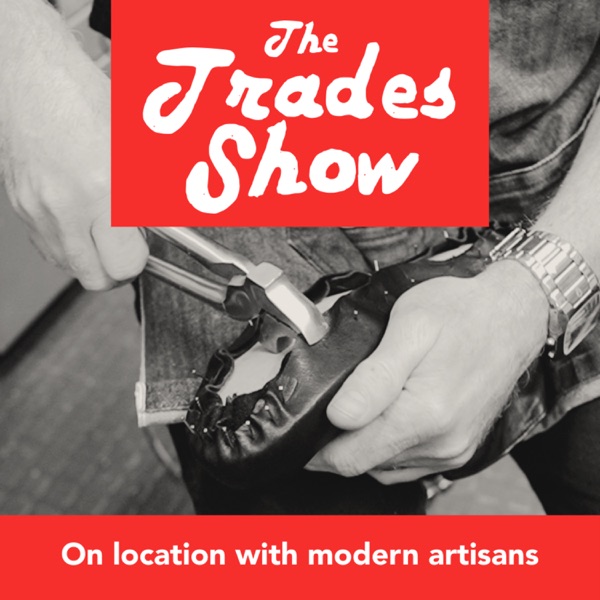
The Trades Show with Briana Ottoboni is an interview series with modern artisans, on location inside their workshops.
Each season is anchored in a city. Season 2 is filmed in San Francisco — the global epicenter of artificial intelligence, and quietly, one of the most vibrant craft communities in the country. On this season, you'll meet artisans from bladesmiths to chefs to surfboard craftsmen.
- Episodes
- 22
- Releases
- Every two weeks
- Typical length
- 47 min
- On air since
- 2025
- Latest episode
- 5 days ago
Episodes
22 episodes, newest first
-
58 min
20. PAPER THAT TELLS A STORY: Papermaker Pam DeLuco on a book from military uniforms, the power of everyday objects, and a handmade practice
Season 2, Episode 20
Show notes
📬 Get episode updates fromThe Trades Show x The Corral’s newsletter
In this episode of The Trades Show, host Briana Ottoboni sits down with Pam DeLuco, papermaker and founder of Shotwell Paper Mill, inside her working paper mill in San Francisco’s Mission district. Using traditional Western papermaking techniques, Pam turns old cotton clothes and other fibers into handmade paper, choosing her materials for their qualities and the stories they carry. We talk about Paper Dolls: Stories from Women Who Served, a book whose illustrations were printed on paper made from military uniforms, including many of the uniforms depicted on its pages. The conversation follows that connection between material and meaning into restaurant menus made from the restaurant’s own kitchen waste, and into Pam’s conviction that the beautiful things we own belong in daily use. Her path into papermaking began with a book she wanted to make herself, a $6,000 paper quote, and an exchange of bookkeeping help for lessons, alongside years of spinning, weaving, and making household objects from scratch. She explains the work of the Hollander beater, how she forms and presses a sheet, and why she cannot know exactly how a new recipe will turn out until it dries. She is equally frank about lifting heavy buckets, getting covered in pulp, and finding out whether you actually enjoy the work. Whether you’re a printmaker, a textile lover, or curious about the objects around you, this episode is a masterclass in understanding fibers, making paper with a purpose, and using the things you love.
The Trades Show is an interview series on location with modern artisans exploring what it means to be human: the ability to create with our hands.
📄 Where to find Pam DeLuco:Website: https://shotwellpapermill.com/Instagram: @shotwellpapermill
⚒️ Where to find The Trades Show:Instagram: @tradesshowTikTok: @tradesshow
YouTube: @tradesshow
Substack: Trade Secrets
Website: https://www.thetradesshowpod.com/✨ Where to find your host, Briana:Instagram: @brianaaugustinaSubstack: https://brianaaugustina.substack.com/Website: https://www.brianaaugustina.com/
🎬 In this episode:
00:00 Paper From Military Uniforms00:41 Welcome to The Trades Show01:20 Meet Pam DeLuco and Shotwell Paper Mill02:42 The Book That Led Her to Papermaking06:50 Making a Down Comforter From Scratch12:17 How Old Clothes Become Paper18:02 Paper for Printmaking, Books, and Letters21:32 Why Handmade Things Should Be Used27:35 Experimenting With Fibers and Recipes30:23 Paper Dolls and Women Veterans’ Stories34:15 When the Paper Becomes Part of the Story36:30 What Makes a Good Sheet of Paper42:01 Finding Customers and Making Paper From Currency43:59 Equipment and the Next Generation of Papermakers48:19 Moving Between Digital and Handmade50:58 Surprising Results From Recycled Materials53:10 Advice for Trying Papermaking
-
51 min
19. Made to outlive us: Pottery duo Sven Ceramics on functional art, staying small, and finding joy in clay
Season 2, Episode 19
Show notes
📬 Get episode updates from The Trades Show x The Corral’s newsletter, The Digest
In this episode of The Trades Show, host Briana Ottoboni sits down with Sven and Mallie, the husband-and-wife duo behind Sven Ceramics, inside their pottery studio at Pier 70 in San Francisco’s Dogpatch. Together they trace a decade of building a ceramics business from a backyard setup into a distinctive body of functional art—beginning with the childhood clay dragon that pulled Sven toward the wheel, Mallie’s gradual path from photographing and supporting the work to becoming half of the production team, and the Four Barrel commission that taught them how much they still had to learn about running a business. They break down the chemistry behind their cloud-and-mountain glazes, the ten to forty tests it can take to land on a new color, and why hand-painted gold luster begins like blood or muddy brown before the kiln transforms it. They are equally candid about the business around the craft: pandemic releases that sold out in three minutes, the mental-health whiplash of losing social reach after building an audience of 100,000, their deliberate choice not to scale into a large team, and the constant problem-solving required when trusted materials disappear. Finally, Sven and Mallie open up about the possibility of stepping back when their lease ends, spending a year making ceramics abroad, and creating room for larger art, books, and a life beyond momentum. Whether you’re a ceramicist, a small-business owner, or someone trying to build a creative life without letting growth dictate it, this episode is a masterclass in making useful things beautifully, staying small on purpose, and finding joy when the plan changes.
The Trades Show is an interview series on location with modern artisans exploring what it means to be human: the ability to create with our hands.
🏺 Where to find Sven Ceramics:
Website: Sven Ceramics
Instagram: @svenceramics
⚒️ Where to find The Trades Show:
Instagram: @tradesshow
TikTok: @tradesshow
YouTube: @tradesshow
Substack: Trade Secrets
Website: The Trades Show
✨ Where to find your host, Briana:
Instagram: @brianaaugustina
Substack: Briana Augustina
Website: Briana Augustina
🎬 In this episode:
00:00 Painting on Blood and Gold-Luster Magic
00:41 Welcome to The Trades Show
01:08 Meet Sven Ceramics at Pier 70
02:02 Functional Art and Finding Clay
04:39 Building a Business Together
05:42 Four Barrel and the Pandemic Pivot
09:04 Clouds, Mountains, and the Signature Glaze
12:00 Inspiration Beyond the Studio
14:30 Glaze Chemistry and Color Testing
17:17 When Ceramic Materials Disappear
22:15 Social Media Sellouts and Reach Collapse
30:15 Why They Chose Not to Scale
33:38 The Kiln That Changed the Business
38:17 AI, 3D Printing, and Pottery Tools
43:00 What Comes Next for Sven Ceramics
46:53 Going All In on a Creative Career
48:25 Making Objects That Outlive You
49:28 Finding Joy Through Setbacks
-
1 hr 4 min
18. KEEPING SAN FRANCISCO'S TIME: Horologist Dorian Clair on 72 years of repairing antique clocks, saving the Ferry Building clock tower, and doing only what's good for the clock
Season 2, Episode 18
Show notes
In this episode of The Trades Show, host Briana Ottoboni sits down with Dorian Clair, a horologist and antique clock restorer who has been repairing clocks for 72 years and keeps San Francisco's tower clocks running, inside his Sanchez Street shop in Noe Valley. Their conversation traces the whole arc — from the broken Westclox alarm clock a neighbor's mother gave him on his eighth birthday in 1954, to the Navy submarine where he kept fixing watches, to the storefront he has run for 39 years and still describes, when he leaves the house each morning, as going to play. Dorian walks through how a clock actually works — the escapement that gives the pendulum its push, the twelve-to-one gearing between the minute hand and the hour hand, why a weight keeps better time than a spring — and the habits that separate a repair that lasts from one that doesn't: polishing pivots instead of bushing holes, keeping a tired old mainspring rather than forcing in a new one, fixing worn gear teeth with twenty minutes and a file. He tells the story of the Ferry Building clock, an 1898 Howard movement with a 13-foot pendulum that was nearly broken up with a sledgehammer and dumped at sea during the building's restoration until his third proposal saved it, and of the Samuels Street clock on Market Street he lost to vandals despite weekly meetings with Dianne Feinstein over a set of protective grilles. He's candid about the edges — the customers who leave bad reviews when he tells them they've been winding a clock with a jerk, the rent that is now ten times what it was, the watches he gave up 25 years ago when parts disappeared — and easier about technology than you might expect, from the Apple Watch on his wrist to the synthetic oil he calls the most important thing to happen to clocks. In the second half, his apprentice Max joins to talk about the pocket watches his grandmother left him, a gap year that became a full-time job within a week, the lead-alloy steel that started the throwaway era in 1959, and why a properly serviced clock should be around for hundreds more years. Whether you're mechanically inclined, curious about how the objects around you actually work, or wondering how a craft gets passed from one pair of hands to the next, this episode is a masterclass in doing only what's good for the clock, diagnosing a problem in thirty seconds after thirty years of looking, and maintaining something well enough that it outlives you.
The Trades Show is an interview series on location with modern artisans exploring what it means to be human: the ability to create with our hands.
🕰️ Where to find Dorian Clair:Website: https://www.dorianclairacr.com/
⚒️ Where to find The Trades Show:Instagram: @tradesshowTikTok: @tradesshowYouTube: @tradesshowSubstack: Trade SecretsWebsite: https://www.thetradesshowpod.com/
✨ Where to find your host, Briana:Instagram: @brianaaugustinaSubstack: https://brianaaugustina.substack.com/Website: https://www.brianaaugustina.com/
🎬 In this episode:01:25 Meet Dorian Clair03:06 What A Horologist Does05:55 From The Navy To Noe Valley08:52 Why Repair, Not Build11:05 Thirty Seconds To Diagnose12:26 The Simon Willard Banjo Clock13:53 What Makes A Good Clock15:12 How A Clock Actually Works16:58 Never Do What The Customer Wants19:45 AI's Never Gonna Put Me Out Of Business22:48 The Trouble With YouTube Repairs24:40 The Samuels Street Clock29:26 The Ferry Building Clock Tower34:58 Three Proposals And A Sledgehammer38:28 A Favorite Clock In The City39:45 The Chimes Are A CD41:29 The Apple Watch42:04 Why Clocks Over Watches43:34 Meet Max46:15 A Gap Year That Became A Career47:08 Passing On The Craft48:46 Working On History50:20 Advice For Young Tinkerers51:46 The Clocks They Won't Take In54:05 Shortcuts That Ruin A Watch56:15 Quick Round: Technology's Cost57:43 Synthetic Oil And The Timing Machine60:40 What Excites Them Now62:40 One Thing To Take Away
-
35 min
17. Servant to the Painting: Master Gilder and Picture Framer Peter Werkhoven on a 3,000-Year-Old Craft
Season 2, Episode 17
Show notes
In this episode of The Trades Show, host Briana Ottoboni sits down with Peter Werkhoven, a master gilder and picture framer who trained for a decade at an Amsterdam workbench and now owns Aedicule, inside his fine framing studio and showroom in San Francisco. Their conversation traces a career that started by accident — Peter was in his early twenties, back from France with no plan, when someone asked him to help out at a frame shop for two weeks; he never left, bought into the business within a year, and spent ten years at a long shared table learning from a man who learned it from his father, who learned it from his. Peter walks through what happens between a piece of lumber and a finished frame — the carving, the gesso of chalk and animal-hide glue, the layers of colored clay, the gold leaf burnished with an agate stone the same way King Tut's mask was burnished three thousand years ago, and then the deliberate undoing of it, the scratches and wormholes and pigment dust that make a new frame read as three centuries old — and the two questions he answers the second a painting lands on his easel: white gold or yellow, and does this painting need help, or does he need to back away from it, because his job, as he puts it, is to be a servant to the painting. He's candid about the edges: the students who leave once they find out how much there is to learn, the silversmiths and clockmakers he thinks may be gone in fifty years, the clients who care whether the frame matches the couch. He's watched machines carve a frame to eighty percent accurate, and says the last twenty is what he's there for. Whether you're a maker, a collector, or someone who has stood in a museum and looked past the painting at the frame, this episode is a masterclass in learning a trade at someone else's elbow, serving the work instead of showing off, and building a life around something you would do seven days a week.
The Trades Show is an interview series on location with modern artisans exploring what it means to be human: the ability to create with our hands.
🖼️ Where to find Peter Werkhoven:Website: https://www.aedicule.com/Instagram: @aedicule
⚒️ Where to find The Trades Show:Instagram: @tradesshowTikTok: @tradesshowYouTube: @tradesshow Substack: Trade SecretsWebsite: https://www.thetradesshowpod.com/
✨ Where to find your host, Briana:Instagram: @brianaaugustinaSubstack: https://brianaaugustina.substack.com/Website: https://www.brianaaugustina.com/
🎬 In this episode:
00:00 Work as Play00:19 Season Intro San Francisco01:02 Meet Peter Werkhoven02:18 What a Master Gilder Does02:46 Finding the Craft by Accident03:52 Learning Never Ends06:20 Choosing the Right Frame07:47 Gold Karats and Style08:30 History in Every Profile09:47 Bringing Europe to SF13:34 Serving the Art First16:10 Loving the Work16:41 Training the Next Generation19:54 Apprenticeship and Sharing21:35 Shopping and Art World Shifts23:51 Gilding Demo and Patina25:48 Handmade vs Factory Frames27:28 Tech and AI in Craft31:55 Advice and Closing
-
46 min
16. Architectural Colorist Bob Buckter "Dr. Color" on his color formula behind 18,000 San Francisco buildings, the psychology of a facade, and what it means to have good taste
Season 2, Episode 16
Show notes
In this episode of The Trades Show, host Briana Ottoboni sits down with Bob Buckter, the San Francisco native known citywide as "Dr. Color," an architectural colorist whose palettes sit on more than 18,000 buildings in San Francisco and 25,000 across a 56-year career, inside his San Francisco home. Their conversation traces the whole arc — from the two weeks he worked for a painter in 1970 before going into business for himself, to the signs he staked on every finished Victorian that made the phone ring, to the year-long sailing trip around the world that ended with him quitting painting for good and doing only the part he loved. Bob walks through the formula underneath the color you see all over the city — a medium-value body, a moderate chroma, a light major trim, a darker shade at the base — and the subconscious architecture beneath it, the posts and beams and friezes he accents so a building reads as solid enough to walk into. He talks about popularizing gold leaf on San Francisco exteriors when nobody here had seen it, and the new book that took three and a half years to make, its cover a house he painted in 1976 from the colors he spotted in an architect's necktie. He's candid about the edges — the all-one-dark-color trend he calls an ignorant approach because it ignores the architecture, the difficulty of coming up with something genuinely new after 25,000 jobs, the fact that he's worked solo the entire time with no successor, though he says he's open to one — and he's easier about technology than you might expect, from the custom program he commissioned in 1990 that cut a job spec from forty-five minutes to seven, to the clients who try AI and then call him anyway. Whether you're a designer, a restorer, or someone who has walked past a building and wondered why it looked good, this episode is a masterclass in developing a signature style, building a reputation one sign at a time, and what good taste actually means from someone about to turn eighty.
The Trades Show is an interview series on location with modern artisans exploring what it means to be human: the ability to create with our hands.
🎨 Where to find Bob Buckter:Website: https://drcolor.com/Book: https://drcolorbook.com/
⚒️ Where to find The Trades Show:Instagram: @tradesshowTikTok: @tradesshowYouTube: @tradesshowSubstack: Trade SecretsWebsite: https://www.thetradesshowpod.com/
✨ Where to find your host, Briana:Instagram: @brianaaugustinaSubstack: https://brianaaugustina.substack.com/Website: https://www.brianaaugustina.com/
🎬 In this episode:00:00 This Is What San Francisco Looks Like00:53 Season Setup In SF01:26 Meet Bob Buckter02:43 What An Architectural Colorist Does04:09 Eighteen Thousand Buildings04:31 The Signs That Built A Reputation05:30 Costa Rica And The Rainforest Preserve09:08 From Painting To Color Consulting09:54 Quitting Painting, Sailing The World10:30 Inside The Process12:59 The New Book13:27 The Colors In An Architect's Necktie15:36 The Placement Formula16:43 The All-One-Color Trend17:44 Popularizing Gold Leaf19:56 Restoring Mercedes Convertibles21:42 What Good Taste Means23:09 Taste, AI, And What Machines Miss25:36 The Book, And Turning Eighty27:06 The Paint-By-Number Spec29:00 The Rose-Colored Glasses29:28 The Computer Program From 199033:01 What's Changed In 56 Years36:27 Post And Beam Psychology39:09 Where To Buy The Book39:36 The Lightning Round44:23 One Thing To Take Away
-
1 hr 4 min
15. THE LAST PLASTER SHOP: Ornamental Plasterer Lorna Kollmeyer on preserving Victorian San Francisco, the business of a rare trade, and becoming a living archive
Season 2, Episode 15
Show notes
In this episode of The Trades Show, host Briana Ottoboni sits down with Lorna Kollmeyer, a sculptor, mold maker, and caster of ornamental plaster who owns the last plaster shop in San Francisco, inside her studio at the Hunters Point Shipyard. Their conversation traces how the whole trade fell into Lorna's lap — from a young basketball star who landed in San Francisco in her early twenties with no plan, enchanted by a city where no two Victorians looked alike, to the couple restoring Victorian flats who taught her to strip originals and pour her own molds, to the day someone asked if she wanted to buy a plaster business and she answered, "No, but I'll ask my friends," before buying it herself. Lorna walks through the Majestic Hotel — her very first job, a corner building of mermaids and egg-and-dart she bid at twenty thousand dollars when the next bid came in at fifty-six, learning sculpture from her girlfriends as they went — and into what ornamental plaster actually is: the ceiling medallions, corbels, and crown moldings that make San Francisco's architecture its own quirky self. She opens up the process, from stripping a paint-caked original to laying rubber and building a mother mold, and the archive it has become — thousands of pieces brought in by homeowners who cared enough to save them, a living library she calls the city's collection, not her own. She's candid about the edges of the work — the ultra-wealthy gut-jobs that hollow out a Victorian's interior, the plaster shops that closed as commercial rents climbed, the fight to keep her shop and the Shipyard's artist community from being knocked down for condos — and where the craft is going as 3D scanning saves a three-month sculpting job and a new generation of thirty-somethings tells her they're starving for things not spat out by a machine. Whether you're a maker, a restorer, or someone who has ever lovedan old house, this episode is a masterclass in learning on the job, building a business that outlasts you, and becoming the custodian of a city's history.
The Trades Show is an interview series on location with modern artisans exploring what it means to be human: the ability to create with our hands.
🏛️ Where to find Lorna Kollmeyer:
Website: https://www.lornakollmeyer.com/
Instagram: @lornakollmeyer
⚒️ Where to find The Trades Show:
Instagram: @tradesshow
TikTok: @tradesshow
YouTube: @tradesshow
Substack: Trade Secrets
Website: https://www.thetradesshowpod.com/
✨ Where to find your host, Briana:
Instagram: @brianaaugustina
Substack: https://brianaaugustina.substack.com/
Website: https://www.brianaaugustina.com/
🎬 In this episode:
00:00 The Only Plaster Shop In SF
01:09 Meet Lorna Kollmeyer
02:20 From Basketball To San Francisco
06:34 Meeting Peter And Helaine
10:21 The Business Falls Into Her Lap
11:36 What Ornamental Plaster Is
13:53 Learning On The Job
14:51 The Majestic Hotel Bid
18:12 The Twenty-Thousand-Dollar Gamble
19:27 An Angel On Her Shoulder
21:05 Landing At Hunters Point
23:58 Too Dumb To Say No
27:21 Inside The Process
29:43 How A Mold Is Made
31:13 A Custodian Of The City's History
34:53 Gutting And Restoring Victorians
44:23 The Business Of Ornamental Plaster
47:04 The Last Plaster Shop In SF
48:36 Fighting To Stay At The Shipyard
51:15 Keeping The Trade Alive
52:24 Where Technology Meets Plaster
56:57 The Lightning Round
58:45 Advice For Getting Started
1:02:18 One Thing To Take Away
-
49 min
14. EVERY STITCH HAS A PURPOSE: Hermès-Trained Leather Artisan Béatrice Amblard on bespoke craftsmanship and reviving American leatherwork
Season 2, Episode 14
Show notes
In this episode of The Trades Show, host Briana Ottoboni sits down with Béatrice Amblard, the only Hermès-trained leather artisan in the US working under her own label and the founder of April in Paris and Heirloom Leathercraft, inside her San Francisco atelier. Their conversation traces nearly five decades in leather — from the moment a sixteen-year-old Béatrice, steered toward the trades by a French school system that didn't know what to do with her dyslexia, walked into a leather classroom and felt every one of her senses wake up — the scent of wax and hide, the benches worn smooth by generations of students — to the four years at Hermès that shaped her, where she learned that quality is non-negotiable and that every stitch has a purpose. Béatrice shares the philosophy behind her bespoke work — that real luxury is quiet, singular, and made to be kept and passed down — and walks through the arc of her career: leaving Hermès in 1988 to start April in Paris with nothing, building a one-of-a-kind custom accessories practice, and being pushed into teaching by students who would not take no for an answer, a leap that became Heirloom Leathercraft, the only formal school of its kind in the country, where she has trained more than a thousand people in fourteen years. She is candid about the realities behind the romance — the tanneries that have all but vanished, the quality of leather slipping as mass production took hold, the physical toll that has her working fewer days, the guilt of burning a piece that did not meet the mark — and genuinely hopeful about where craft and technology meet, how AI can help a maker launch a business and how the fast-paced tech world keeps sending her students hungry for something they can make with their hands. Whether you are a maker, a small-business builder, or someone craving a creative outlet beyond the screen, this episode is a masterclass in building a bespoke business without compromising on quality, preserving a trade by teaching it, and finding a whole life inside the work.
The Trades Show is an interview series on location with modern artisans exploring what it means to be human: the ability to create with our hands.
👜 Where to find Béatrice Amblard:April in Paris: https://www.aprilinparis.us/Heirloom Leathercraft: https://heirloomleathercraft.com/Instagram: @aprilinparis_sfInstagram: @heirloomleathercraft
⚒️ Where to find The Trades Show:Instagram: @tradesshowTikTok: @tradesshowYouTube: @tradesshowSubstack: Trade SecretsWebsite: https://www.thetradesshowpod.com/
✨ Where to find your host, Briana:Instagram: @brianaaugustinaSubstack: https://brianaaugustina.substack.com/Website: https://www.brianaaugustina.com/
🎬 In this episode:00:00 Season Setup In SF00:37 Meet Béatrice Amblard02:15 Describing The Craft02:52 From Paris To Hermès05:06 Starting April In Paris06:31 Falling In Love With Leather08:19 The Senses Of The Trade10:40 How The Industry Changed11:53 Luxury Is Quiet12:41 The Vanishing Tanneries15:15 Leather And A Sustainable Ecosystem20:35 The Trade School Stigma23:13 Every Stitch Has A Purpose28:49 Taking The Leap Into Teaching32:32 A Renewed Interest In Craft36:32 Training Her Daughter40:18 How AI Can Support The Craft44:30 Don't Give Up46:53 One Takeaway: Be Happy
-
52 min
13. THE FLORIST'S FLORIST: Studio Mondine's Amanda Luu on Ikebana, preserving a 600-year-old craft, intimacy with nature, and a tech-forward studio
Season 2, Episode 13
Show notes
In this episode of The Trades Show, host Briana Ottoboni sits down with Amanda Luu, florist, founder of Studio Mondine, and a lifelong student of Ikenobo Ikebana, inside her San Francisco home. Their conversation traces Amanda's circuitous path into flowers — from a degree in economics and environmental policy and a career in marketing, to the ten-minute commutes she spent gathering leaves and grasses from parking lots, to the apprenticeships she took on for $11 an hour to learn the craft hands-on, the way a cook stages in a kitchen. Amanda shares the quiet "portal" winter after she quit her job at the end of wedding season, where working with dead branches and gleaned material pushed her toward the minimalist forms that became her signature and eventually led her to formal Ikebana study — the 600-year-old Japanese practice whose oldest school she now trains in, learning to express the life force of a single stem and to read an arrangement as a landscape. She's candid about what it takes to keep a tradition alive when the average practitioner in the West is 72, and about the wordless correction of a teacher whose lineage runs back centuries, passed down through the kanji characters in a student's name. And in a turn you might not expect from a craft this old, Amanda makes the case for being a tech-forward flower studio — running a logistics business underwritten by data and flower "recipes," and rendering arrangements that don't yet exist in Canva and Gemini so a wild idea can be tested in the room before a single stem is sourced. Whether you're a florist, a maker drawn to slow practice, or someone curious how a centuries-old art stays alive in the age of AI, this episode is a masterclass in finding your own voice in a craft, building a studio that lasts, and cultivating an intimacy with nature that feeds everything else.
The Trades Show is an interview series on location with modern artisans exploring what it means to be human: the ability to create with our hands.
💐 Where to find Amanda Luu and Studio Mondine:
Website: https://www.studiomondine.com/
Instagram: @studiomondine
Substack: Mondine After Dark
⚒️ Where to find The Trades Show:
Instagram: @tradesshow
TikTok: @tradesshow
YouTube: @tradesshow
Substack: Trade Secrets
Website: https://www.thetradesshowpod.com/
✨ Where to find your host, Briana:
Instagram: @brianaaugustina
Substack: https://brianaaugustina.substack.com/
Website: https://www.brianaaugustina.com/
🎬 In this episode:
00:00 Season Setup in SF
01:00 Meet Amanda Luu
02:43 From Economics to Flowers
03:30 Magpie Gathering on the Commute
04:30 Apprenticing for Free
06:00 Balancing Two Careers
08:30 Quitting at Wedding Season's End
11:00 Finding Form in the Quiet Season
13:00 What Is Ikebana
15:00 Flowers Hold Time
21:00 Finding a Teacher
23:00 The Wordless Correction and Lineage
25:00 Preserving a 600-Year-Old Tradition
27:00 A Tech-Forward Flower Studio
31:00 Rendering Arrangements with AI
34:00 Flowers as Storytelling
37:00 The Language of Flowers
42:00 The Florist's Florist
43:30 Advice for Early-Stage Florists
46:00 Quick Round: Technology and Flowers
49:00 One Thing to Take Away
50:00 Where to Find Studio Mondine
-
1 hr 4 min
12. ANTIQUES FROM THE FUTURE: Architectural Blacksmith Jefferson Mack on a 50-year career, the art of selling, and reviving the American craftsman
Season 2, Episode 12
Show notes
In this episode of The Trades Show, host Briana Ottoboni sits down with Jefferson Mack, a self-taught architectural blacksmith with a 50-year career, inside his San Francisco workshop. Their conversation spans nearly five decades of making — from the Eric Sloane book that planted the seed when Jefferson was a child, to a self-taught path that wound through scrap-yard forges in his mother's backyard, lighting work on rock 'n' roll tours, and a construction career that finally cracked open the leap into full-time blacksmithing. Jefferson shares the philosophy behind his signature work — what he calls "antiques from the future," forms that fuse traditional hammered texture with contemporary tension — and walks through the milestones that built his career: the four-page Restoration Hardware spread that brought him a moment of national visibility, the demonstration nights he modeled after Dale Chihuly to teach architects what blacksmithing could be, the staircases that took seven and eight years to land, and the slow, hard-won art of selling a craft most people don't realize they need. He's candid about the toll of the work — the muscle memory it takes to feel hot steel through a hammer, the seven-year apprenticeship windows that no longer exist, the cost of making at 71 — and where the trade is going as the next generation finds its way in through maker spaces, welding kits, and YouTube. Whether you're a maker, a builder, or someone trying to figure out how to sustain a creative business over the long arc, this episode is a masterclass in self-taught mastery, pricing handmade work, declaring yourself in a craft no one else is pursuing, and what it actually takes to last 50 years.
The Trades Show is an interview series on location with modern artisans exploring what it means to be human: the ability to create with our hands.
🔥 Where to find Jefferson Mack:
Website: https://www.mackmetal.com/
Instagram: @mack.jefferson
⚒️ Where to find The Trades Show:
Instagram: @tradesshow
TikTok: @tradesshow
YouTube: @tradesshow
Substack: Trade Secrets
Website: https://www.thetradesshowpod.com/
✨ Where to find your host, Briana:
Instagram: @brianaaugustina
Substack: https://brianaaugustina.substack.com/
Website: https://www.brianaaugustina.com/
🎬 In this episode:
00:00 Season Setup In SF
01:50 Meet Jefferson Mack
03:37 Origins Of A Blacksmith
11:18 Taking The Leap
17:36 Selling And Apprenticeships
30:55 Learning Paths Today
31:44 Maker Spaces and Welding
33:19 Restoration Hardware Breakthrough
42:36 Pricing Handmade Work
59:16 Finish and Produce
-
56 min
11. ART OF THE RESTAURANT: James Beard Award-Winning Chef Stuart Brioza on the craft of cooking
Season 2, Episode 2
Show notes
In this episode of The Trades Show, host Briana Ottoboni sits down with Stuart Brioza, James Beard Award-winning chef and co-owner of State Bird Provisions, The Progress, and The Anchovy Bar, inside The Progress restaurant in San Francisco. Their conversation traces Stuart's path from dishwasher at fifteen to leading three of the city's most celebrated restaurants — and explores what it means to define California cuisine in a time when every ingredient imaginable shows up at the farmers market. Stuart shares the origin story of State Bird's small plates revolution, the handmade design philosophy that built The Progress (down to every chair, table, and piece of pottery), and why he opened The Anchovy Bar to celebrate a two-hour-out-of-water local fish that nobody else pays attention to. They talk about discovery versus innovation, the good-better-best mindset that drives his cooking, and why restaurants are one of the last places that require active human participation. Whether you're a cook, a craft-curious diner, or someone trying to figure out how to stay creative without burning out, this episode is a masterclass in leading with patience, building for longevity, and cooking with all five senses.The Trades Show is an interview series on location with modern artisans exploring what it means to be human: the ability to create with our hands.🔥 Where to find Stuart Brioza:Atomic Restaurant Group: https://atomic-workshop.com/Stuart Brioza IG: https://www.instagram.com/atomicstew/State Bird Provisions: https://www.statebirdsf.com/The Progress: https://theprogress-sf.com/home/The Anchovy Bar: https://www.theanchovybar.com/⚒️ Where to find The Trades Show:Instagram: @tradesshow (https://www.instagram.com/tradesshow/)TikTok: @tradesshow (https://www.tiktok.com/@tradesshow)YouTube: @tradesshow (https://www.youtube.com/@tradesshow)Substack: Trade Secrets (https://revivethetrades.substack.com/)Website: https://www.thetradesshowpod.com/✨ Where to find your host, Briana:Instagram: @brianaaugustina ( / brianaaugustina )Substack: https://brianaaugustina.substack.com/Website: https://www.brianaaugustina.com/🎬 In this episode:00:00 Welcome to The Trades Show00:36 Meet Chef Stuart Brioza01:45 Cooking as a Sensory Craft02:38 Leading Three Restaurants04:19 State Bird Small Plates06:38 The Progress Handmade Design09:30 Good Better Best Mindset12:20 Defining California Cuisine15:11 Anchovy Bar Local Mission20:14 From Dishwasher to Chef26:32 Landing First Kitchen Job28:14 Learning Through Mistakes29:53 How Cooking Culture Changed30:20 Social Media and Dish Lineage34:04 Discovery Becomes Innovation38:10 Boredom as Creative Fuel41:55 Restaurants as Human Refuge44:32 Innovating Without Burnout48:53 Tech Wins and Losses50:16 Simplicity and Career Advice51:40 Craftspeople for Life53:57 Closing Thanks and Outro
-
17 min
10. Artisan Crafts in the Age of AI with Host Briana Ottoboni
Season 2, Episode 11
Show notes
Host Briana Ottoboni introduces season two of The Trades Show, filmed on location with artisans in San Francisco, and explains why the rise of AI and the return to analog craftsmanship are happening at the same time. She shares her Bay Area background, her first encounter with shoe cobbling that sparked her passion for artisan trades, and her concern about who carries these crafts forward as older generations retire. Briana defines artisan trades as the intersection of fine arts and skilled trades—uniting creativity, aesthetic rigor, technique, and tradition—and recounts how a window of “creative spaciousness” led her to create a high-production “show,” with season one serving as a 10-episode pilot. She outlines a city-by-city vision, season two’s biweekly Thursday release schedule, and the broader ecosystem she’s building, including The Corral artisan jobs board that uses technology and AI to make artisan work more visible, viable, and valued.
In this episode, you’ll hear:
• Briana’s intro into the artisan trades and shoe cobbling
• The Why behind The Trades Show
• Why now in the age of AI is the perfect time to revive the artisan trades
• Her vision for the show
• What you can expect for Season 2 and beyond👩🏻🎨 Where to find Briana Ottoboni:
Follow on Instagram: @brianaaugustina
Follow on LinkedIn: @brianaottoboni
🛠️ Where to find The Trades Show:Follow on Instagram: @tradesshowFollow on TikTok: @tradesshowSubscribe on YouTube: @tradesshowRead the Substack: https://revivethetrades.substack.comVisit the website: https://www.thetradesshowpod.com/
🎙️Credits:Host & Creator – Briana OttoboniCreative Direction, Filming & Editing – Briana OttoboniOriginal Theme Music – Federico Wanzo, Skane Music
📺 In this episode:
00:00 AI Meets Craft01:01 Season Two Kickoff01:39 Cobbler Spark03:03 Why Trades Matter04:55 Learning In Portland06:01 Birth Of The Show08:50 Season One Lessons09:28 San Francisco Backdrop11:29 Humanity In Imperfection12:59 Mission And Pathways15:53 Release Schedule16:23 The Corral Jobs Board17:59 Wrap Up And Subscribe18:47 Outro Credits
-
1 min
Season 2: Official Trailer Trailer
Season 2, Episode 1
Show notes
Meet the artisans keeping craft alive in the age of AI. Season 2 of The Trades Show takes you inside the workshops of San Francisco's most skilled tradespeople — from bladesmiths to chefs — exploring why handcraft matters more than ever. New episodes coming soon.
Follow The Trades Show for stories of mastery, tradition, and the human hands shaping our world.
#TheTrades #Artisan #SkilledTrades #Handcraft #Craftsmanship #SanFrancisco #TradesShow #ArtisanEconomy #MadeByHand
-
42 min
9. MOMENTS OF MAGIC: Candlemaker Sarah Larson on the art of fragrance and the power of saying no
Season 1, Episode 9
Show notes
In this episode of The Trades Show, host Briana Ottoboni sits down with Sarah Larson, founder of Often Wander, inside Sarah's studio, which is also set to become a storefront. They discuss the nuances of crafting scents through candle making, the journey from managing two retail stores to focusing on e-commerce, and the struggles and rewards of saying no to misaligned opportunities. Sarah shares her origin story, which includes moments of manifestation and serendipity, and how she has navigated her business through significant changes, including the impact of COVID-19. The episode dives into the creative process, the importance of thinking small, and how setting boundaries can lead to sustainable success. Tune in to learn about Sarah’s unique journey, her approach to maintaining creativity, and her vision for the future of Often Wander.
The Trades Show is a show about modern craftwork — a conversation series with artisans and a return to what makes us human: the ability to create with our hands.
🕯️ Where to find Sarah Larson:https://oftenwander.com// oftenwander⚒️ Where to find The Trades Show:Instagram: @tradesshow (/ tradesshow )TikTok: @tradesshow (/ tradesshow)YouTube: @tradesshow Substack: Trade Secrets (https://revivethetrades.substack.com/)Website: https://www.thetradesshow.co/✨ Where to find your host, Briana:Instagram: @brianaaugustina (/ brianaaugustina)Substack: https://brianaaugustina.substack.com/Website: https://www.brianaaugustina.com/🎬 In this episode:00:00 Manifestation and the Birth of Often Wander00:16 Welcome to The Trades Show01:25 Introducing Sarah Larson of Often Wander02:22 The Origin Story of Often Wander05:44 The Journey to San Francisco08:38 Navigating Challenges and Growth09:49 Adapting to a Post-COVID World11:52 Embracing a Smaller, Sustainable Business Model17:16 Exploring New Creative Avenues22:17 Exploring Candle Making Techniques22:57 Creating Scents Inspired by Nature24:35 The Art and Science of Candle Making28:10 Future Plans for Often Wander30:14 Balancing Creativity and Business32:43 Advice for Aspiring Entrepreneurs39:19 Upcoming Projects and Where to Find Often Wander41:22 Conclusion and How to Support the Show
-
37 min
8. FORGING A CREATIVE LIFE: Blacksmith Marsha Trattner on Finding Flow in Metal, Wearing Many Hats, and How to Just Start
Season 1, Episode 8
Show notes
In this episode of The Trades Show, host Briana Ottoboni sits down with Marcia Trattner, blacksmith, sculptor, and founder of She-Weld, inside her Brooklyn, NY workshop.
Their conversation explores Marcia’s 35-year journey with metal — from her early days in biology and fine art to discovering blacksmithing as both a trade and an artistic language. She shares how sculpture, teaching, collaboration, and even repairing historic pieces for the Martha Graham Company all weave together in her creative life.
We dive into:
• The moment blacksmithing found her and how working with metal feels like drawing in three dimensions.
• Balancing personal creative projects with commissions, teaching, and running a studio.
• The history of her Brooklyn blacksmith shop and her Catskills backup space as anchors for her practice.
• Why hammer-ins, mentorship, and community are vital for blacksmithing’s future.
• Her advice to aspiring makers: don’t wait for perfect conditions — just start.Whether you’re a blacksmith, metalsmith, sculptor, or a craft-curious listener, this episode offers insight into the flow of making, the realities of sustaining an artisan practice, and the joy of letting craft find you.
The Trades Show is a show about modern craftwork — a conversation series with artisans and a return to what makes us human: the ability to create with our hands.
🔥 Where to find Marcia Trattner:
Website: https://www.she-weld.com
Instagram: @she_weld
⚒️ Where to find The Trades Show:
Instagram: @tradesshow
TikTok: @tradesshow
YouTube: @tradesshow
Substack: Trade Secrets
Website: https://www.thetradesshow.co/
✨ Where to find your host, Briana:
Instagram: @brianaaugustina
Substack: https://brianaaugustina.substack.com/
Website: https://www.brianaaugustina.com/
🎬 In this episode
0:00 Introduction to The Trades Show01:38 Meet Marsha Trattner: Blacksmith and Founder of She Weld04:32 Marsha's Journey: From Biology to Blacksmithing07:48 The Art and Science of Metalwork12:50 Balancing Creative and Commercial Projects24:25 The Evolution of Blacksmithing29:33 Advice for Aspiring Blacksmiths36:12 Conclusion and Final Thoughts
-
40 min
7. WEAVING TO HEAL: Weaver Cynthia Alberto on Bridging Community & Preserving Textile Tradition
Season 1, Episode 7
Show notes
In this episode of The Trades Show, host Briana Ottoboni sits down with Cynthia Alberto — a weaver, multidisciplinary artist, and founder of Weaving Hand — inside the Fridman Gallery in New York City.
Cynthia shares her remarkable journey from a career in computer science at Merrill Lynch to becoming a full-time artist with her work now featured at MoMA. Along the way, she opens up about how weaving became both her livelihood and her lifeline — a way to heal, build community, and preserve her Filipino heritage through textile traditions.
Together, they explore:
• The role of weaving circles and craft communities in a disconnected world
• How immigrant roots and cultural identity are expressed through textiles
• The founding of Weaving Hand and its impact on education and healing
• Weaving as both fine art and a deeply personal form of resilience
• The cultural and environmental significance of textiles in everyday life
• Reviving traditional crafts and sustainable approaches to making
• Practical advice for aspiring weavers, artisans, and creative entrepreneursWhether you’re an artisan, aspiring maker, or someone who simply values handmade work, this conversation is a powerful reminder of how craft connects us to identity, community, and the fine art world.
🎙 The Trades Show is a podcast and video series about modern craftwork — a return to what makes us human: the ability to make with our hands.
🧵 Where to find Cynthia Alberto:
Weaving Hand’s Instagram: @weavinghand
Cynthia’s Instagram: @cynthiaalbertostudio
⚒️ Where to find The Trades Show:
Instagram: @tradesshow
TikTok: @tradesshow
YouTube: @tradesshow
Substack: Trade Secrets
Website: https://www.thetradesshow.co/
✨ Where to find your host, Briana:
Instagram: @brianaaugustina
Substack: https://brianaaugustina.substack.com/
Website: https://www.brianaaugustina.com/
🎬 In this episode
00:00 The Importance of Community00:47 Welcome to The Trades Show01:43 Meet Cynthia Alberto: Weaver and Multidisciplinary Artist03:12 Cynthia's Journey from Computer Science to Art07:55 Transition to Weaving and Textile Design10:22 Founding Weaving Hand and Community Impact14:03 Weaving as a Form of Healing18:43 The Cultural and Environmental Significance of Textiles26:15 Reviving Traditional Crafts and Techniques34:42 Advice for Aspiring Weavers and Artists39:10 Conclusion and Final Thoughts
-
40 min
6. REVIVING AMERICAN SHOEMAKING: Bootmaker Frank Beneduci on What Makes a Good Shoe and Technology's Role in Manufacturing
Season 1, Episode 6
Show notes
In this episode of The Trades Show, host Briana Ottoboni sits down with Frank Beneduci, American bootmaker and founder of Beneduci Shoe Design & Instruction, inside his San Francisco workshop.
Their conversation traces Frank’s journey from growing up in Brockton, Massachusetts — once the shoemaking capital of America — to leaving a successful career in advertising to carry forward his family’s legacy in footwear. He shares what makes a truly good shoe, why leather only gets better with time, and how modern technology could shape the future of American shoemaking.
Frank also reflects on the challenges of reviving a fading trade, the lessons learned from the “school of hard knocks,” and what it means to start fresh with a new chapter in his business.
Whether you’re a shoemaker, leatherworker, or simply someone who values the craft of well-made goods, this episode offers insight into the artistry, grit, and innovation behind a pair of boots built to last.
In this episode, you’ll hear:
• Frank’s early memories of growing up in a shoemaking town
• Why the American shoe industry declined — and what it would take to revive it
• The difference between leather and synthetic shoes (and why it matters for longevity)
• How automation and CAD could shape the future of shoemaking
• Lessons from running a factory, starting over, and staying true to the craft🥾 Where to find Frank Beneduci:
Website: https://www.beneduci.com/
Instagram: https://www.instagram.com/beneducishoes/
🛠️ Where to find The Trades Show:
Follow on Instagram: @tradesshow
Follow on TikTok: @tradesshow
Subscribe on YouTube: @tradesshow
Subscribe to Trade Secrets on Substack: https://revivethetrades.substack.com/
Visit the website: www.revivethetrades.com
🎙️Credits:
Guest – Frank Beneduci, Bootmaker of Beneduci Shoe Design & Instruction
Host & Creator – Briana Ottoboni
Production – Fractal Studio (https://www.fractalstudio.work/)
Creative Direction, Filming & Editing – Briana Ottoboni
Original Theme Music – Federico Wanzo, Skane Music
📺 In this episode
00:00 The Vision to Reinvigorate American Shoemaking00:27 Introduction to The Trades Show01:22 Meet Frank Beneduci: American Boot Maker04:22 The Decline of the American Shoe Industry09:51 Reviving Shoemaking Through Automation11:36 The Art and Physicality of Shoemaking15:56 The Quality of American vs. European Leather17:54 Learning the Craft in Italy19:45 The School of Hard Knocks20:20 Learning in LA22:53 Starting My Own Factory23:05 Challenges and Setbacks23:48 A New Beginning24:32 Crafting High-Quality Shoes27:20 Simplifying the Process29:14 The Importance of Leather31:01 Breaking in Shoes33:43 Advice for Aspiring Shoemakers37:14 The Next Evolution of Beneduci39:08 Conclusion and Final Thoughts
-
50 min
5. POTTERY WITH INTENTION: Ceramicist MaryMar Keenan on creating connection through functional art, loving what you do, and 30 years of clay
Season 1, Episode 5
Show notes
In this episode of The Trades Show, host Briana Ottoboni sits down with MaryMar Keenan, ceramicist and founder of MMClay, in her storefront and studio in Hayes Valley, San Francisco.
Their conversation explores MaryMar’s 30-year journey in ceramics—from discovering her love for clay to building one of San Francisco’s most recognized handmade tableware brands. She shares her philosophy on functional art (“a piece isn’t really finished until it’s used”), the evolution of MMClay, and why she believes handmade pottery should be special, but not precious.
MaryMar also reflects on her transformative trip to Japan, the humbling lessons of working with clay, and how she continues to push her creative edges while running a small-batch production studio. You’ll hear about her innovative experiential pottery workshops, full-circle moments with Michelin-star chefs, and honest advice for aspiring potters navigating the balance of art and business.
Whether you’re a potter, a creative entrepreneur, or simply someone who loves handmade craftsmanship, this episode offers inspiration, insight, and a deep look into the artistry behind everyday objects.
The Trades Show is a show about modern craftwork—a conversation series with artisans and a return to what makes us human: the ability to create with our hands.
🏺 Where to find MaryMar Keenan:
Shop the website: https://www.mmclay.com/
Follow on Instagram: @mmclay_ceramics
🛠️ Where to find The Trades Show:
Follow on Instagram: @tradesshow
Follow on TikTok: @tradesshow
Subscribe on YouTube: @tradesshow
Subscribe to Substack: https://revivethetrades.substack.com/
Visit the Website: https://www.thetradesshow.co/
🎙️ Credits:
Guest – MaryMar Keenan, Ceramicist & Designer
Host & Creator – Briana Ottoboni
Production – Fractal Studio (https://www.fractalstudio.work/)
Creative Direction, Filming, & Editing – Briana Ottoboni
Original Music – Federico Wanzo, Skane Music
📺 In this episode:
00:00 Introduction to The Trades Show01:18 Meet MaryMar Keenan: Ceramicist and Designer02:40 Discovering the Love for Clay06:05 The Philosophy of Functional Art08:58 The Evolution of MMClay14:29 Balancing Art and Business16:55 Inspirations from Japan25:55 A Full Circle Moment in Tokyo27:10 The Humbling Nature of Clay28:13 Evolution of a Pottery Business29:16 The Power of Conversation and Opportunity31:06 From Baby Plates to Restaurant Ware32:25 The Birth of MMClay34:08 Current Business Challenges and Aspirations38:50 Innovative Pottery Workshops44:01 Advice for Aspiring Potters47:17 Final Thoughts and Reflections
-
36 min
4. FROM ETSY TO ARTISTRY: Leatherworker Ian James on a self-taught path, business resilience, & transformative art
Season 1, Episode 4
Show notes
In this episode of The Trades Show, host Briana Ottoboni sits down with leatherworker Ian James, in his namesake brand’s retail space and workshop in San Francisco, California.
Their conversation unpacks Ian's journey from dropping out of Parsons to launching his own label and opening a retail space in San Francisco. Ian shares insights into the day-to-day life of a leatherworker, the challenges of running a brick and mortar store, and how he has pushed boundaries in bag design to create meaningful art.
Ian also delves into his transition into fine art, the impact of the pandemic on his business, and offers advice for aspiring leatherworkers. Don't miss this inspiring conversation about creativity, resilience, and the artistry of leatherwork.
The Trades Show is a show about modern craftwork—a conversation series with artisans and a return to what makes us human: the ability to create with our hands.
👜 Where to find Ian:
Website: https://www.ianjamesmade.com
Instagram: @ianjamesmade
🛠️ Where to find The Trades Show:
Instagram: @tradesshow
TikTok: @tradesshowYouTube: @tradesshow
Substack (Trade Secrets): https://revivethetrades.substack.com/
Website: https://www.thetradesshow.co/
🎙️ Credits:
Guest – Ian James, Leatherworker
Host & Creator – Briana Ottoboni
Production – Fractal Studio (https://www.fractalstudio.work/)
Creative Direction, Filming, & Editing – Briana Ottoboni
Original Music – Federico Wanzo, Skane Music
📺 In this episode:
00:00 Resilience and Creativity: Overcoming Challenges
00:23 Welcome to The Trades Show
01:18 Introducing Ian James: Leatherworker and Designer
02:16 A Day in the Life of Ian James
03:25 The Journey from Parsons to Etsy
05:34 The Evolution of Ian James' Designs
08:37 The Transition to Leatherworking
13:29 Balancing Corporate Life and Craftsmanship
17:10 Starting the Retail Journey
17:44 Opening the First Store
18:10 Challenges and Costs of Setting Up
20:08 Struggles and Adaptations
22:05 Creative Breakthroughs
24:27 Exploring Leather Art
31:56 Advice for Aspiring Leatherworkers
34:29 Final Thoughts and Encouragement
-
40 min
3. MAKE BEAUTIFUL THINGS: Jeweler Lindsay Knox on heritage, history, & scaling slowly
Season 1, Episode 3
Show notes
In this episode of The Trades Show, host Briana Ottoboni visits the Oakland-based studio of Lindsay Knox, jewelry designer and founder of Ladha, for an intimate conversation on craft, identity, and the realities of building a handmade business.
Together, they explore Lindsay’s journey from corporate retail burnout to creating heirloom-inspired pieces by hand. She shares how motherhood, heritage, and a desire to be surrounded by beauty sparked her path to becoming a full-time jewelry maker. From wax carving and gold polishing to vendor partnerships and trade shows, this episode offers a rich look at what it means to think small while scaling with integrity.
Lindsay reflects on the tactile joy of making, her business phases, and why partnering with the right people has been essential to her sustainable growth. For anyone dreaming of turning a creative spark into a livelihood, this episode is filled with heart, hustle, and hard-earned wisdom.
The Trades Show is a show about modern craftwork—a conversation series with artisans and a return to what makes us human: the ability to create with our hands.
💍 Where to find Lindsay:
Website: https://www.ladhajewelry.com
Instagram: @ladhajewelry
🛠️ Where to find The Trades Show:
Instagram: @tradesshow
TikTok: @tradesshowYouTube: @tradesshow
Substack (Trade Secrets): https://revivethetrades.substack.com/
Website: https://www.thetradesshow.co/
🎙️ Credits:
Guest – Lindsay Knox
Host & Creator – Briana Ottoboni
Production – Fractal Studio (https://www.fractalstudio.work/)
Creative Direction, Filming, & Editing – Briana Ottoboni
Original Music – Federico Wanzo, Skane Music
📺 In this episode:
00:00 Introduction: Finding Your Path
00:15 Welcome to The Trades Show
01:10 Meet Lindsay Knox: Jewelry Designer and Founder of Ladha
02:10 A Day in the Life of a Jewelry Designer
03:10 The Journey from Retail to Jewelry Making
07:39 Inspiration and Early Influences
11:20 The Business of Jewelry Making
13:11 Design Process and Style
19:49 Balancing Craft and Business Growth
30:24 Future Plans and Aspirations
33:31 Advice for Aspiring Jewelry Designers
38:52 Conclusion and Farewell
-
36 min
2. CRAFT BUTCHERY FIGHTS FOR OUR FOOD SYSTEM: Angela Wilson on sustainability, small business, and the future of food | The Trades Show Ep 002
Season 1, Episode 2
Show notes
In this episode of The Trades Show, host Briana Ottoboni visits Avedano’s, a beloved butcher shop in San Francisco, to sit down with Angela Wilson, butcher and small business owner, for a conversation on craft butchery and the future of our food system. Together, they explore Angela’s journey from restaurant kitchens and martial arts to running a neighborhood butcher shop rooted in sustainability and care.
They discuss what it takes to run a small business in a changing city, the importance of sourcing from local farms, using every part of the animal, and why paying more and eating less might be the key to preserving our food systems. This episode offers a grounded, inspiring look into the rhythms of craft butchery, the challenges and rewards of small business ownership, and the deeper meaning behind connecting to the food we eat.
The Trades Show is a show about modern craftwork—a conversation series with artisans and a return to what makes us human: the ability to create with our hands.
🥩 Where to find Angela:
Visit Avedano’s: https://www.avedanos.com/
Follow on Instagram: @avedanosmeat
🛠️ Where to find The Trades Show:
Instagram: @tradesshow
TikTok: @tradesshow
Substack (Trade Secrets): https://revivethetrades.substack.com/
Website: https://www.thetradesshow.co/
🎙️ Credits:
Guest – Angela Wilson
Host & Creator – Briana Ottoboni
Production – Fractal Studio (https://www.fractalstudio.work/)
Creative Direction, Filming, & Editing – Briana Ottoboni
Original Music – Federico Wanzo, Skane Music
📺 In this episode:
00:00 – Introduction
01:12 – Meet Angela Wilson & Avedano’s
03:45 – From restaurant kitchens to butchery
07:10 – Starting a butcher shop from scratch
10:19 – The realities of running a small business
13:28 – Sourcing animals from local farms
17:20 – Using every part of the animal
20:33 – Sustainability and food systems
24:00 – Employee wellbeing in small businesses
27:15 – Pricing, inflation, and small business challenges
30:01 – Craft butchery and mentorship
33:12 – Advice for aspiring butchers
34:45 – Why supporting small farms matters
35:34 – Outro
Arts lists
More Arts shows picked out from the charts




More in Arts
Placed highest on Apple Podcasts' Arts chart right now