Podcast
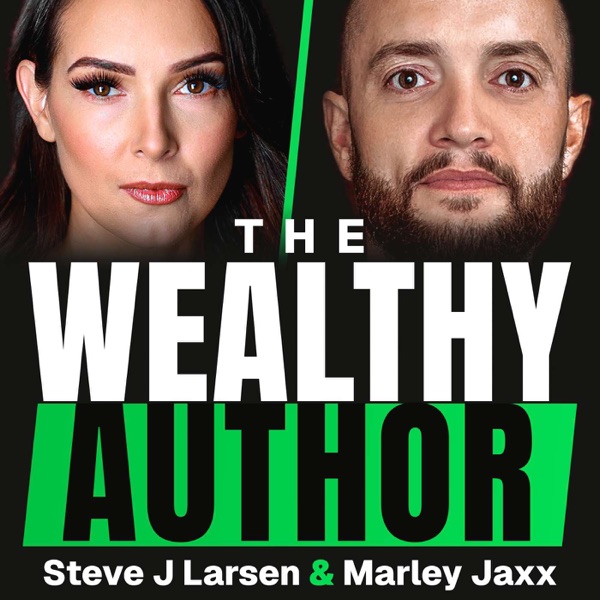
The Wealthy Author
Old publishers hand you royalties. We help you build revenue. Steve J Larsen and Marley Jaxx document their mission to help 100 authors sell 100 books a day, and break down how each book sells the backend offers that actually make authors wealthy. Book marketing and publishing strategy for experts who are done with the old model.
- Episodes
- 8
- Releases
- Daily
- Typical length
- 38 min
- On air since
- 2026
- Latest episode
- 6 days ago
Episodes
8 episodes, newest first
-
46 min
The WORST kind of Book to Write (The 'Process' Book)
Episode 7
Show notes
A college professor handed out Play-Doh and popsicle sticks, gave everyone 10 minutes to build a prototype, then banned them from looking at it or explaining it. In this episode, Steve J Larsen uses that lesson to break down the three reasons books fail, and the difference between a process book that expires in six months and a framework book that outlives you.
In this episode:
• The professor who ran IDEO’s human-centered design process on a classroom using Play-Doh and construction paper
• IDEO invented the computer mouse for Steve Jobs and knew nothing about computers. The end user is the only source of data.
• Why a blank Google Doc is gambling, and what a 25 to 50 person room gives you that a packed one never will
• If you have to explain your own book, the book did not do its job
• The two apple trees that never fruited until Steve pruned 100 shoots off each, then overproduced so hard the branches cracked
• Ryan Holiday writes 500,000 words and deletes down to 50,000. Annie Grace: most authors write multiple points instead of one.
• Process vs. framework, settled by the five-day challenge: if moving the pitch from day five to day one breaks it, you built a process
• The buddy who spent $150 million on Facebook ads, and why his book could not be about Facebook ads
• The delete drill: 100,000 words spoken on stage in two days, and StageBook cut from 55,000 words to 38,000
• The number one reason authors rewrite a book they paid a ghostwriter $50,000 forTimestamps:
00:00 The fastest book to write, and the strongest
00:53 The professor who ran marketing for Pizza Hut and Denny’s
01:19 Play-Doh, popsicle sticks, and 10 minutes
02:16 Hand it over. Do not look at it.
03:13 Rule two: you are not allowed to explain it
04:35 IDEO, the computer mouse, and your toothbrush
05:29 The end user is the only source of data
06:22 A book is a permanent way to be wrong
07:41 Visionaries live in the future. Readers live in the present.
09:02 The book I rewrote three times from scratch
09:54 Why we run small events on purpose
12:32 The book I proofread and thought, what was the point of this
13:24 The client I made livestream his speeches first
16:28 A good book has one point
17:20 Offer Launch went from 16 chapters to 8
17:48 Yard manager: contracts, invoices, and net 30 at 14 years old
21:45 Two apple trees and 100 shoots
22:40 The year the branches cracked
23:06 More is not better
24:30 Ryan Holiday deletes 90% of what he writes
25:30 Annie Grace on the one-point book
25:58 35,000 words that land beat 90,000 that read like a dictionary
27:24 You do not fill your own wallet
28:46 Reason three: the process book
29:43 $150 million in Facebook ads, and the book he could not write
31:09 What is the 20% that still works after 20 years
31:41 Sequence vs. principle
32:14 The five-day challenge test
34:20 Go one layer deeper and the book stays true
35:55 When a flash in the pan book is the right call
37:00 The moment the room does not react the way you expected
38:40 Confidence changes how loudly you market it
40:37 StageBook: 55,000 words cut to 38,000
41:06 Why ghostwritten books get rewritten
41:38 The delete drill
42:42 The David is already inside the marble
43:50 Beat My Funnel: two case study spots open
Links:
Beat My Funnel, two case study spots (start with an author interview): https://thestagebook.com
Get StageBook: https://stagebookbook.com
Record a question for the show: https://thewealthyauthor.com
Pursuit of Profit Publishing: https://pursuitofprofitpublishing.com
-
31 min
What Goes IN the Book to Turn Readers Into LEADS?
Episode 6
Show notes
In 2007, Gallup put a one-time use code inside the back cover of StrengthsFinder 2.0 and killed its own used book market. That book then spent 1,609 days in Amazon’s top 100. In this episode, Steve J Larsen keeps a promise from episode two and shows you exactly what to write into a book so Amazon buyers end up in your pipeline instead of Amazon’s.
In this episode:
• The one-time code that made a used copy worthless, and why a 200-person company had to buy 200 copies
• Amazon sells your book and keeps your customer. You get a royalty. No name, no email, no way to follow up.
• The question is not how to sell more books. It is what happens in the first 11 minutes after someone opens the front cover.
• Put something in the book that only works when the reader leaves the book and comes to you
• Four ways to do it: a one-time code, a companion course, a free software trial, and full page ads in the back (Expert Secrets v2, Dan Kennedy)
• Rich Dad Poor Dad started as the manual for the Cashflow board game
• Why Steve refuses to put the companion course behind a members area login, and how a share button sent 20% of his traffic
• Giving the bonuses away to people who never bought the book: 2 to 5 extra leads for every book buyer
• Ryan Lee’s 53% close rate on readers who finish one chapter and start the companion course
• Write a real book. We do not write books that are transcribed webinar pitches.Timestamps:
00:00 The promise from episode two
00:50 Gallup kills the used book market
01:23 The one-time code inside the back cover
01:50 200 employees means 200 copies
02:18 1,609 days in Amazon’s top 100
02:47 Why you still put the book on Amazon
03:45 Amazon gets the customer, you get the royalty
05:07 The first 11 minutes after the cover opens
05:36 Ryan Lee’s QR codes and the resources page
07:26 Put something in that only works if they come to you
07:56 The only advertisement a stranger pays to consume
09:52 Full page ads in the back: Expert Secrets and Dan Kennedy
11:14 Companion software and free trials
12:08 Rich Dad Poor Dad and the Cashflow board game
13:32 The companion course at the end of every chapter
15:54 Not a sales message. A real book.
16:51 My favorite version: the stage video behind each chapter
19:05 Why I will not hide it behind a login wall
20:24 The share button that drove 20% of my traffic
22:08 Perennial seller vs. a book that fills a business
23:03 Ryan Lee’s 53% close rate
23:56 Slow down to speed up
24:22 Republishing a book you already wrote
25:42 Give the bonuses to people who never bought
27:05 2 to 5 extra leads per book buyer
28:51 Next episode: the lawsuits nobody is talking about
Links:
See a real companion course: https://stagebookbook.com/resources
Get StageBook: https://stagebookbook.com
Record a question for the show: https://thewealthyauthor.com
Pursuit of Profit Publishing: https://pursuitofprofitpublishing.com
-
38 min
Ryan Lee: 4,000 Copies in Week One, 25,000 in a Year, and a 53% Close Rate
Episode 5
Show notes
One year after selling 4,000 copies in his first week, Ryan Lee has sold 25,000 copies of Retire in 10 Years or Less. And when people who read his book complete the first step of its companion course and then book a call, 53% of them buy his program. In this episode, Steve J Larsen and Ryan break down the launch, the funnel, and the numbers.
In this episode:
• Why Ryan paid a New York Times bestselling co-author for 18 months, then wrote the book himself
• His wife’s publisher “did exactly nothing”
• The book launch summit: 30+ experts, including Robert Kiyosaki and Ed Mylett, answer one question
• A free 3-day live event, and buyers who bought 100 copies at a time
• QR codes at the end of every chapter that turn Amazon buyers (about 200 a day) into leads
• Close rates by where the lead came from: stage 3%, podcast 10%, book buyers 15%, book buyers who started the companion course 53%
• Why Ryan is cutting 80% of his stage travel
• “Your dream has to be bigger than your excuse”Timestamps:
00:00 Intro
00:45 Who Ryan Lee is
03:20 Ryan joins
04:00 18 months of drafts, then he wrote it himself
06:00 Publishers “do exactly nothing”
07:30 Expert Secrets’ first month vs. Ryan’s first day
08:15 25,000 copies in one year
09:00 The book launch summit with 30+ experts
11:00 The free 3-day event and “buy the book”
13:00 Why the summit can’t be about your book
14:15 Book bundles and 100-copy buyers
16:20 QR codes in every chapter
17:40 Turning the summit recording into an upsell
19:30 Close rates by where the lead came from
22:00 Cutting 80% of stage travel
23:40 Ben Hardy: your goal decides your book
25:00 The companion course as a second book
30:00 Six months to build the launch
32:30 Your dream has to be bigger than your excuseLinks:
Get Ryan’s book and see his funnel: https://retirein10years.com
Ryan Lee: https://ryandlee.com
StageBook: https://stagebookbook.com
Record a question for the show: https://thewealthyauthor.com -
37 min
The Secret Behind Our Unique Book Launch Model
Episode 4
Show notes
In 1850, 30,000 people met a singer at the docks who most of them had never heard sing. In this episode, Steve J Larsen breaks down P.T. Barnum’s launch formula, the same 1800s model behind a 950-person event and Ryan Lee’s 4,000-copy first week.
In this episode:
• How P.T. Barnum sold his own book by bundling it with circus tickets
• The Jenny Lind story, step by step: farewell concerts, local shops making Jenny Lind products, 40 reporters, ticket sales before she landed, and a poem contest
• “The product sells itself” is a myth. If you’re quiet, you’re invisible.
• Make the market fall in love with the idea of your book before they can read it
• How to make your launch feel like the readers’ launch, not yours
• The $7 ticket auctioned for $200, and how book bundles (1, 10, 100, 1,000 copies) set your price anchor
• Why you need at least 6 weeks of buildup before launch
• The internet is a set of distribution channels. What you put in them is the marketing.Timestamps:
00:00 Intro
00:40 The 2019 question that sent me to the 1800s
02:00 Finding Barnum’s launch formula
03:00 950 people using a 170-year-old model
05:00 How Barnum sold books with circus tickets
06:40 Ryan Lee: 4,000 copies and bestseller status in under 2 days
09:30 The Jenny Lind story
14:00 No product sells itself
14:50 Make the other market jealous
16:50 Get other businesses into your launch
18:00 Make them love the idea first
20:40 Sell before it arrives
21:00 The poem contest: make it their launch
25:00 The $200 ticket and book bundles
28:00 30,000 people at the docks
29:00 How we used it for Ryan Lee’s launch
31:00 Give yourself 6 weeks of buildup
32:00 The internet is distribution, not marketing
34:20 1,000 copies in week one: our base goalLinks:
Become one of our authors (start with an author interview): https://thestagebook.com
See the StageBook funnel: https://stagebookbook.com
Record a question for the show: https://thewealthyauthor.com -
40 min
The #1 Skill for Wealthy Authors (and Why You Shouldn’t Do It Yourself)
Episode 3
Show notes
A wealthy author is a marketer who wrote a book, not an author hoping for marketing. In this episode, Steve J Larsen shares the one skill no author can skip, and why the smartest authors build a sales system so they never have to do the selling themselves.
In this episode:
• The professor who said the worst students think he’s responsible for their education
• From door-to-door security systems to telemarketing: how Steve learned to sell
• The moment he realized he was building a marketing company instead of a sales company
• The internet is great for getting leads. The phone is where the sales happen.
• Why we measure revenue added to your business, not copies sold
• General marketing vs. direct response, told through an NBA arena
• The 4 functions every business needs to make money: leads, sales, delivery, and repeat sales
• Author vs. business owner: “If you don’t have systems, you are the system”Timestamps:
00:00 Intro
00:50 The professor who rebuilt the Freedom Tower
02:30 Kiyosaki: if you can’t sell, you’re not in business
03:15 Door-to-door: the basic training of sales
04:30 Marketing company vs. sales company
08:00 The internet is for leads, the phone is for sales
10:00 12 phone reps and the studio bullpen
11:00 Revenue added, not copies sold
14:00 Our early mistake: asking authors to learn phone sales
17:00 How a $19 book can be worth $2,000 to your business
18:00 Three ways to measure your book’s success
20:00 Questions to ask your publisher
20:50 General marketing vs. direct response
24:30 What 100 books a day costs in ads
25:00 A wealthy author is a marketer who wrote a book
27:50 80% of every business is the same
29:00 The 4 functions that make a business money
31:30 34 failed products before one hit
32:00 Business owners build systems
37:40 Why publishers may not want you too bigLinks:
Free workshop, The 7 Figure Book: https://7figurebook.com
Record a question for the show: https://thewealthyauthor.com
Pursuit of Profit Publishing: https://pursuitofprofitpublishing.com -
38 min
The Math Behind Selling 100 Books a Day: A $19 Book With an $81 Cart
Episode 2
Show notes
If you can only spend $20 to sell a $20 book, you will lose to the author who can spend $70. In this episode, Steve J Larsen breaks down the real math behind selling 100 books a day: why authors need to own the channel that sells their book, and how a $19 book now brings in $81 per buyer.
In this episode:
• The e-commerce test that showed the gap: $29 per order on Amazon vs. $68 through a funnel, same product
• What Amazon gives you (reach) and what it keeps (your data and your buyers)
• Why it costs about $70 to sell a book with Facebook ads, and how authors can still afford it
• The return-on-ad-spend rule: if $1 in brings $2 back, you don’t need a marketing budget
• How to run ads without spending your own money, starting broke
• The “primer water” story, and why you shouldn’t spend your first profits
• Why paid ads give you control that organic posting never willTimestamps:
00:00 Intro
00:40 Owning the channel that sells your book
01:00 Same $29 product: Amazon vs. a funnel
04:00 Amazon: huge reach, zero data
07:00 Spend $70 to sell a $20 book
08:30 Our $19 book’s $81 average cart
10:40 What it really costs to sell a book with Facebook ads
13:40 Rich questions vs. poor questions
16:00 $1 in, $2 out: why you don’t need a marketing budget
20:00 Running ads when you’re broke
24:30 Don’t drink the primer water
26:40 How AI changed Facebook ads in 2026
29:30 Launch week vs. daily sales
32:00 Paid ads bring control
33:45 The HVAC and chiropractor examples
35:30 The one question every author should askLinks:
See the $19 book funnel in action: https://stagebookbook.com
Record a question for the show: https://thewealthyauthor.com
Pursuit of Profit Publishing: https://pursuitofprofitpublishing.com -
45 min
How to publish, without giving up your IP
Episode 1
Show notes
Every traditional publisher I talked to wanted the same deal: they promote your book for about six weeks, hand you 15 to 25% royalties, and keep your IP for life. So I walked away and built a new kind of publisher.
In this first episode, Steve J Larsen breaks down the numbers the publishing industry doesn’t advertise, and why he and Marley Jaxx built a publishing model where authors keep their IP and the book feeds the business behind it.
In this episode:
• Why Steve deleted a 50,000-word book live on social media and started over
• Half of new books from the top 10 publishers sell under 1,000 copies (BookScan)
• A $1.2 million advance backed by only $62,000 in marketing, admitted under oath in the 2022 Penguin Random House trial
• 85% of $250K advances never earn out
• How Ryan Lee sold 4,000 copies in his first week, then went from 2 or 3 sales a month to 23 to 25 with a “book flywheel”
• How a $19 book is worth $81 per buyer
• The 3 problems every author hits: how slowly books get written, no sales after launch week, and suddenly needing to learn phone salesTimestamps:
00:00 Intro
00:30 Deleting my first book in public
04:20 Shopping Hay House and Penguin: every one wanted my IP
07:30 Half of new books sell under 1,000 copies
08:15 $1.2M advance, $62K marketing
12:45 85% of big advances never earn out
14:50 The self-publishing street cred problem
16:00 How a $19 book becomes worth $81
17:00 A new model: authors keep their IP
18:45 From ClickFunnels to book funnels
22:00 Ryan Lee’s 4,000-copy launch and the book flywheel
26:30 The 3 problems we solve for authors
33:50 What this show is about, and how to send in your question
39:15 Why events and books capture market share
42:30 Only 35 of the top 100 author podcasts are still activeLinks:
Get StageBook (use a stage to film your book before it’s written): https://stagebookbook.com
Record a question for the show: https://thewealthyauthor.com
Pursuit of Profit Publishing: https://pursuitofprofitpublishing.comIf this episode hit a nerve, follow the show and leave a review. We’re on a mission to get 100 authors selling 100 books a day.
-
1 min
Welcome to The Wealthy Author Trailer
Show notes
The traditional publishing model is broken, so we invented a new kind. Publishers barely promote your book, hand you small royalties, and keep your IP for life. Steve J Larsen and Marley Jaxx are on a mission to help 100 authors sell 100 books a day, and this show documents every win and every failure along the way.
Follow the show so you don’t miss an episode.
Record a question for the show: https://thewealthyauthor.com
Get StageBook: https://stagebookbook.com
Books lists
More Books shows picked out from the charts







More in Books
Placed highest on Apple Podcasts' Books chart right now