Podcast
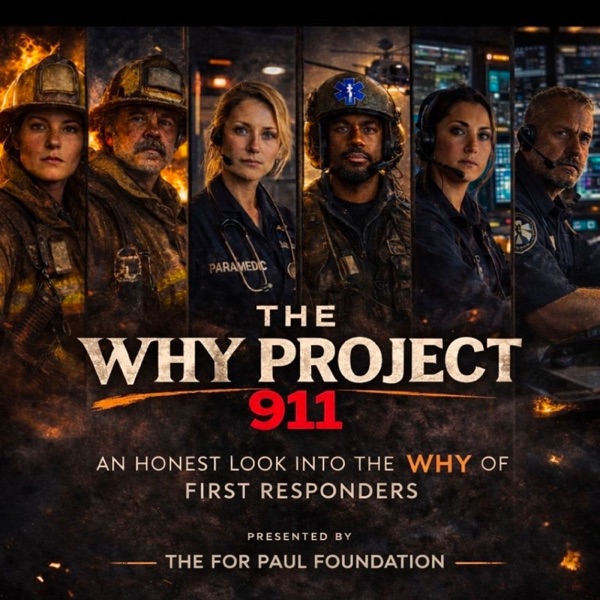
The WHY Project 911
An honest look into the WHY of first responders presented by The For Paul Foundation
- Non-Profit chart
- #138
- Episodes
- 26
- Releases
- Weekly
- Typical length
- 46 min
- On air since
- 2026
- Latest episode
- 1 day ago
Episodes
26 episodes, newest first
-
48 min
The Flip Flop Firefighter with Mike Mount Episode 24
Show notes
The conversation features Mike Mount, an Army veteran and firefighter, discussing his journey in the fire service, the importance of community and pride in the profession, and his role in the Flip Flop Firefighter apparel brand and the Polk Metro Fools organization. The dialogue explores generational differences in the fire service, the need for mentorship, and the significance of training and camaraderie among firefighters. The conversation focuses on the importance of collaboration and mentorship within the fire service, emphasizing the need for senior personnel to guide younger firefighters and the value of training and community engagement. Both speakers discuss their experiences and aspirations for fostering a supportive culture in firefighting, highlighting the significance of shared knowledge and camaraderie.
Takeaways
• Community and pride in firefighting
• Importance of mentorship and training Collaboration enhances firefighting effectiveness
• Mentorship is crucial for new firefightersChapters
• 00:00 Building Community and Pride
• 03:53 Journey in the Fire Service
• 07:58 Generational Differences in Firefighting
• 10:06 Mentorship and Motivation
• 18:02 The Role of the Polk Metro Fools
• 23:50 Training and Brotherhood in Firefighting
• 26:14 Building Bridges in Firefighting
• 28:50 The Importance of Training and Tools
• 31:53 Fostering Camaraderie and Culture
• 35:56 Navigating Promotions and Experience
• 40:09 The Role of Senior Personnel
• 49:30 Passion for Service and Community -
53 min
The Trauma Girl RN with Kelly Keys Episode 23
Show notes
In this episode, Mickey and Kelly discuss the critical roles of nurses and first responders in emergency management, emphasizing the importance of mental health, communication, and collaboration between different emergency services. Kelly shares her extensive experience in trauma care and the need for better integration and support systems for first responders. The conversation explores the challenges faced by the nursing profession post-COVID, highlighting generational differences in work ethic, the importance of communication in leadership, and the need for collaboration between first responders and healthcare providers to improve patient outcomes.
Takeaways
• Mental health is crucial
• Collaboration enhances emergency care Emphasize continuous learning
• Foster open communicationChapters
• 00:00 Introduction to Trauma Girl RN
• 01:45 Kelly's Journey in Emergency Management
• 04:28 The Importance of Loop Closure
• 07:14 Mental Health in First Responders
• 13:08 Improving Relationships Between EMS and Hospitals
• 18:12 The Role of Healthcare Coalitions
• 22:39 The Value of Competitions in EMS
• 25:38 Engaging the Younger Generation in Healthcare
• 26:27 Challenges in Nursing Education Post-COVID
• 30:35 Generational Differences in Work Ethic
• 34:46 The Importance of Communication in Leadership
• 39:58 Navigating Difficult Conversations
• 44:20 The Bigger Picture in First Responder Roles
• 49:00 Improving Trauma Patient Outcomes Through Collaboration -
47 min
The Culture Code with Derek Bagshaw Episode 22
Show notes
In this episode of the Why Project 911, Derek Bagshaw shares his journey through the ranks of the fire service, emphasizing the importance of leadership, culture, and accountability. He discusses the significance of building relationships and trust within a team to foster a positive culture in the fire department. The conversation focuses on the importance of building a positive culture within fire departments, emphasizing trust, accountability, and effective communication. Derek Bagshaw and Mickey discuss their experiences in leadership roles, the significance of training, and the need for mutual respect among team members.
Takeaways
• Leadership through relationship building
• Importance of culture in fire service Building trust through shared challenges
• Effective communication fosters accountabilityChapters
• 00:00 Introduction to Derek Bagshaw
• 03:00 Derek's Journey in the Fire Service
• 06:04 The Importance of Rank Experience
• 09:58 Earning Respect in Leadership
• 12:00 The Culture Code Class
• 15:58 Building a Positive Culture
• 19:00 Training and Trust in Teams
• 23:01 Building Trust Through Shared Challenges
• 24:14 Expectations and Accountability in Leadership
• 27:37 Navigating Negative Culture in the Workplace
• 30:06 Creating a Positive Training Environment
• 32:47 Understanding Generational Differences in Communication
• 36:25 The Importance of Personal Connections in Leadership
• 40:32 The Role of Senior Members in Firehouse Culture
• 43:51 Taking Responsibility for Training and Development
• 44:10 Defining Personal and Professional 'Whys' -
47 min
One Response with Mariah Fenwick Episode 21
Show notes
Mariah Fenwick, a 911 dispatcher with 17 years of experience, discusses the challenges and importance of dispatching for fire, police, and EMS. She emphasizes the need for critical thinking, communication, and flexibility in handling emergency calls. Mariah also highlights the significance of training, teamwork, and collaboration between dispatchers and first responders. The conversation covers the importance of communication and feedback between dispatchers and first responders, the value of open communication and support during emergency incidents, and the training and recruitment of new dispatchers.
Takeaways
• Critical thinking in emergency dispatch
• Importance of training and collaboration between dispatchers and first responders Communication and feedback between dispatchers and first responders is crucial
• Open communication and support during emergency incidents is essential
• Training and recruitment of new dispatchers is a key focusChapters
• 00:00 Introduction to Mariah Fenwick
• 02:27 Dispatching Fire, Police, and EMS
• 05:14 The Role of Dispatchers in First Response
• 09:10 Training and Collaboration
• 15:31 Dealing with Conflict and Communication
• 22:56 Critical Thinking and Flexibility in Dispatching
• 27:08 Communication and Feedback in Emergency Incidents
• 29:02 Support and Feedback for Dispatchers
• 35:22 Recruitment and Training of New Dispatchers
• 42:51 Challenges and Funny Stories in Dispatching -
37 min
Firefighter Fitness with Shantel Lund Episode 20
Show notes
The conversation delves into the world of firefighter fitness, Chantel's journey to becoming a firefighter, her aspirations and leadership in the fire service, competing in firefighter challenges, inspiring and mentoring young females, Camp Ignite's impact, generational differences in the fire service, and leadership and growth in the fire service. The conversation covers topics related to leadership, mental health, crew dynamics, technical difficulties, fitness and training support, the Why Project, social media and networking, training and learning opportunities, and overcoming challenges and pursuing goals.
Takeaways
• Firefighter fitness encompasses physical, mental, and technical skills.
• Mentoring and inspiring the next generation of firefighters is crucial for the future of the fire service. Leadership involves recognizing and addressing mental health issues within the crew.
• Building strong relationships and understanding crew dynamics are essential for effective leadership.
• Social media and networking provide valuable learning and networking opportunities for firefighters.Chapters
• 00:00 Introduction to Firefighter Fitness
• 01:08 Chantel's Journey to Becoming a Firefighter
• 02:30 Aspirations and Leadership in the Fire Service
• 04:06 Competing in Firefighter Challenges
• 07:19 Inspiring and Mentoring Young Females
• 11:36 Camp Ignite: Empowering Future Firefighters
• 17:56 Generational Differences in the Fire Service
• 24:16 Leadership and Growth in the Fire Service
• 26:49 Leadership and Mental Health
• 27:41 Building Relationships and Crew Dynamics
• 29:35 Technical Difficulties
• 34:10 Fitness and Training Support
• 35:57 The Why Project and Giving Back
• 37:41 Social Media and Networking
• 40:14 Training and Learning Opportunities
• 43:27 Overcoming Challenges and Pursuing Goals -
49 min
Uncle Larry Doeling Episode 19
Show notes
The conversation covers the experiences and insights of Uncle Larry, a retired firefighter paramedic, as he discusses the significance of leadership, behavioral health, and decision-making in the fire department. He emphasizes the importance of presence and accessibility as a leader, highlighting the challenges and rewards of the role. The conversation covers topics related to leadership, team building, retirement, transition, expectations, role clarity, career reflection, promotion, and professionalism in the fire service. It provides insights into the challenges and rewards of a career in the fire service, emphasizing the importance of leadership, preparation, and professionalism.
Takeaways
• Leadership is a choice
• The importance of presence and accessibility as a leader Leadership is about setting an example and engaging in team-building activities.
• Retirement from the fire service requires realistic expectations and a transition to a new identity.
• Role clarity and clear expectations are essential for effective team performance.
• The fire service career offers both challenges and rewards, shaping individuals into the professionals they become.
• Promotion in the fire service requires a balance of authority, respect, and professionalism.Chapters
• 00:00 The Best Job in the World
• 02:18 Leadership in the Fire Department
• 10:50 Behavioral Health and Leadership
• 18:48 Scenarios and Decision Making
• 27:50 The Ministry of Presence
• 29:05 Leadership and Team Building
• 32:03 Retirement and Transition
• 40:03 Expectations and Role Clarity
• 45:55 The Job and Career Reflection
• 53:34 Promotion and Professionalism -
30 min
Education is Key with Key Hose and Dothan Fire Episode 18
Show notes
The conversation revolves around the Education is Key series, a partnership between Key Hose and the Dothan Fire Department. It covers the vision, purpose, and future plans of the series, as well as the commitment to training, education, and community collaboration.
Takeaways
• Education is Key
• Commitment to Training and EducationChapters
• 00:00 Introduction to Education is Key Series
• 01:00 Partnership and Vision
• 02:14 Training and Repetition
• 04:29 Future Plans and Regional Conference
• 06:22 Dothan Fire Department and Training Facility
• 08:44 Fire Department Operations and Community Engagement
• 11:35 Collaboration and Brotherhood
• 23:08 Fraternal Order of Leatherheads Society (FOOLS) -
42 min
Backstep Leadership Episode 17
Show notes
A retired firefighter and paramedic, shares insights on backstep leadership, firefighter culture, and the importance of difficult conversations in the fire service. They emphasizes the impact of senior firefighters on firehouse culture and the need for people experience in leadership roles. The conversation delves into the importance of communication and culture within the fire service, highlighting the shift in the power of conversations and the impact on the firehouse environment. It also emphasizes the role of backstep firefighters in shaping the culture of the firehouse and the significance of fostering a positive and supportive environment.
Takeaways
• Backstep Leadership
• Firehouse Culture
• People Experience in Leadership Power of conversations
• Backstep firefighters and firehouse cultureChapters
• 00:00 The Importance of Difficult Conversations
• 51:04 The Evolution of Firehouse Culture -
45 min
Backseat Wisdom Adam Vapnar Episode 16
Show notes
The conversation begins with an introduction to the fire service and Adam's background as a volunteer firefighter. It then delves into Adam's passion for the fire service and his family's influence on his career choice. The discussion shifts to Adam's podcast, 'Backseat Wisdom,' and its purpose of passing down experiences and knowledge to the younger generation of firefighters. The conversation then explores the challenges and opportunities for youth in the fire service, addressing the generational gap and the importance of culture within the fire department. The role of senior firefighters and their impact on the younger generation is also discussed. Finally, the conversation concludes with a focus on the Fools organization and the significance of fire department culture. The conversation covers the importance of building a positive fire department culture, challenging tradition, implementing change, pushing for new ideas and training, mental health awareness in the fire service, and preparing for life-changing decisions in the fire service. The discussion also emphasizes the significance of mental health and the need for preparedness in critical situations.
Takeaways
• Passion for the fire service is often influenced by family and early exposure to the fire service.
• The role of senior firefighters is crucial in shaping the experiences and perspectives of younger firefighters. Building a positive fire department culture is a collective responsibility.
• Challenging tradition and implementing change requires patience and persistence.Chapters
• 00:00 Introduction to the Fire Service
• 01:35 Passion for the Fire Service
• 03:21 Backseat Wisdom Podcast
• 06:37 Youth in the Fire Service
• 07:07 Generational Gap and Culture
• 11:24 The Role of Senior Firefighters
• 18:38 The Fools and Fire Department Culture
• 26:31 Building a Positive Fire Department Culture
• 27:15 Challenging Tradition and Implementing Change
• 28:15 Pushing for New Ideas and Training
• 40:05 Mental Health Awareness in the Fire Service
• 44:21 Preparing for Life-Changing Decisions -
46 min
Modeling and Simulation Dr. Kate Kapalo Episode 15
Show notes
Kate Kapalo, a visiting associate professor of business analytics and AI, shares her experience and insights on the fire service, research, human factors, pre-incident planning, and simulation in the fire service. She emphasizes the importance of immersion in the field and the challenges of modeling and simulation in the fire service. The conversation covers various themes including challenges in technology accessibility, budget constraints and training costs, occupational safety and health advocacy, mental health support for first responders, holistic approach to health and safety, family support and mental health education, the importance of self-care and health awareness, and dedication to fallen firefighters.
Takeaways
• Importance of immersion in the field for effective research
• Challenges and opportunities in modeling and simulation for the fire service Technology accessibility is a challenge in rural areas
• Budget constraints impact training costs
• Advocacy for occupational safety and health is crucial
• Mental health support for first responders is essential
• A holistic approach to health and safety is necessary
• Family support and mental health education are important
• Self-care and health awareness are vital for first responders
• Dedication to fallen firefighters saves livesChapters
• 00:00 Understanding the Fire Service
• 02:09 The Importance of Immersion in Research
• 06:40 The Role of Human Factors Research
• 08:30 Pre-incident Planning and Technology
• 15:22 Simulation and Training in the Fire Service
• 21:33 Challenges of Modeling and Simulation
• 26:13 Challenges in Technology Accessibility
• 27:09 Budget Constraints and Training Costs
• 29:53 Occupational Safety and Health Advocacy
• 35:03 Mental Health Support for First Responders
• 39:01 Holistic Approach to Health and Safety
• 40:26 Family Support and Mental Health Education
• 44:13 The Importance of Self-Care and Health Awareness
• 49:36 Dedication to Fallen Firefighters -
47 min
Tenacity Saves Lives Walt Lewis, Jessie Almeida, Derrick Bagshaw Episode 14
Show notes
The conversation focuses on the importance of training and preparedness in the fire service, particularly in the context of Mayday scenarios. It also delves into the challenges and opportunities presented by the influx of younger firefighters and the need for a strong culture of learning and growth within the fire service. The conversation delves into the importance of culture, leadership, accountability, and mentorship within the fire service. It emphasizes the significance of fostering a positive and supportive work environment, having difficult conversations, and recognizing the value of personal and professional accountability. The speakers also highlight the role of senior firefighters, the need for continuous learning, and the importance of validation and mentorship in career development.
Takeaways
• Mayday scenarios and preparedness
• Challenges and opportunities of younger firefighters Culture and leadership are crucial in the fire service
• Difficult conversations and personal accountability are essential for a positive work environmentChapters
• 00:00 Importance of Mayday Scenarios
• 03:20 Training and Preparedness
• 15:33 Challenges and Opportunities of Younger Firefighters
• 25:48 Building a Positive Culture
• 26:45 The Role of Senior Firefighters
• 27:14 Difficult Conversations and Accountability
• 28:10 Mentorship and Career Development
• 29:08 Leadership and Personal Accountability
• 34:21 Career Progression and Role Specialization
• 37:29 Validation and Mentorship
• 47:30 The Why Project 911 and Final Thoughts -
53 min
The Fire Chief Dennis Reilly Episode 13
Show notes
The conversation covers the journey to becoming a fire chief, the challenges of moving up the ranks, the importance of leadership and development, dealing with an influx of youth in the fire service, the significance of difficult conversations and leadership, and the role of training and development in the fire service. The conversation covers a range of topics including social media presence, publishing a book, human performance in high stress environments, the why of the fire service, and mental health and support in the fire service. The guests share insights on tactical fitness and high performance in high stress environments, providing valuable takeaways for listeners.
Takeaways
• Leadership development
• Career progression
• Training and mentorship Tactical fitness
• High performance in high stress environmentsChapters
• 00:00 The Journey to Fire Chief
• 02:51 Moving Up the Ranks
• 06:00 Leadership and Development
• 13:08 Dealing with an Influx of Youth
• 19:04 Difficult Conversations and Leadership
• 28:03 Training and Development
• 30:51 Social Media Presence and Content
• 32:12 Publishing a Book and the Challenges
• 34:32 Human Performance in High Stress Environments
• 43:11 The Why of the Fire Service
• 52:06 Mental Health and Support in the Fire Service -
49 min
The Broken Responder Richard Burns Episode 12
Show notes
Richard Burns, a retired police officer and United States Marine, shares his journey from law enforcement to retirement, highlighting the mental health challenges faced by first responders. He discusses the impact of trauma, the struggle with identity post-retirement, and the importance of addressing mental health in the first responder community. The conversation delves into the importance of mental health support for first responders, addressing the stigma, and the need for regular mental health evaluations. It also highlights the impact of physical health on mental well-being and the significance of open conversations about emotions and feelings.
Takeaways
• Mental health challenges faced by first responders
• Struggle with identity and mental health post-retirement Mental health support is crucial
• Regular mental health evaluations are necessaryChapters
• 00:00 The Broken Responder and Mental Health Advocacy
• 30:05 Importance of Mental Health Assessments
• 37:25 The Stigma of Mental Health in First Responders
• 46:09 Teaching Mental Health Awareness at the Police Academy -
40 min
The Boo-Boo Bus Driver Denise Bjorge Episode 11
Show notes
The conversation begins with an introduction to Denise, a former firefighter and current EMT, and her background in emergency medical services. It then delves into the details of EMS transport, changes in EMS practice, the importance of EMT experience, the role of EMTs and paramedics, and concludes with a discussion on mental health and the 'Boo-Boo Bus Driver' initiative. The conversation covers the importance of creating accessibility and support for mental health, challenges of peer support, the significance of creating safe spaces for conversations, the stigma and comfort in seeking help, the importance of openness and normalizing mental health, the need for a supportive work environment, challenges in mental health support, leadership and mentorship, mental health awareness and education, and the impact of media on mental health.
Takeaways
• Importance of EMT experience before becoming a paramedic
• The need for improved mental health support in the EMS industry Creating safe spaces for conversations
• Importance of openness and normalizing mental healthChapters
• 00:00 Introduction and Background
• 07:00 Changes in EMS Practice
• 12:59 The Role of EMTs and Paramedics
• 17:56 The Boo-Boo Bus Driver and Mental Health
• 23:12 Challenges of Peer Support
• 35:31 Leadership and Mentorship
• 43:06 Impact of Media on Mental Health -
36 min
Survive and Thrive: Diane Dillon Episode 10
Show notes
The conversation covers the life of Jimmy Dillon, the experience of growing up in a firefighter family, the tragic loss, life after loss, support and healing, surviving and thriving, helping others, the importance of connectivity, honoring the legacy, and the role of senior leadership. The key takeaways include the importance of family and support, as well as the theme of surviving and thriving.
Takeaways
• Surviving and thriving
• Importance of family and supportChapters
• 00:00 The Life of Jimmy Dillon
• 05:59 The Tragic Loss
• 14:19 Support and Healing
• 22:15 The Importance of Connectivity
• 32:16 Honoring the Legacy
• 37:45 The Role of Senior Leadership -
38 min
Bitter to Brass: Chief Gene Landers Episode 9
Show notes
Chief Gene Landers shares his journey to becoming a fire chief, the challenges he faced, and the importance of community engagement. He discusses the differences between small and large fire departments, the significance of adult conversations, and the leadership and personnel management strategies he employs. Chief Landers also addresses the impact of negative influences and the importance of identifying and retaining quality personnel. The conversation delves into the power of choice, the impact of changing the culture, the essence of leadership and decision-making, the concept of 'Bitter to Brass' as a new mentality, and the significance of the Why Project 911. Chief Landers shares personal experiences and insights, emphasizing the importance of relativity, humility, and effective communication in leadership roles within the fire service.
Takeaways
• The journey to becoming a fire chief is filled with challenges and experiences that shape a leader's perspective.
• Community engagement and the role of the fire chief are crucial aspects of effective fire department management. The power of choice in shaping one's path
• The importance of relativity, humility, and effective communication in leadership rolesChapters
• 00:00 The Journey to Fire Chief
• 05:08 Community Engagement and Challenges
• 13:09 Importance of Adult Conversations
• 20:45 Dealing with Negative Influences
• 26:04 Changing the Culture
• 32:25 Leadership and Decision Making
• 38:00 Bitter to Brass: A New Mentality
• 44:39 The Why Project 911 -
1 hr 3 min
Fireground Engineering: Strategies and Tactics Chasing the Dominoes. Mickey, Avillo and Duffy
Show notes
The conversation covers a range of topics including residential fire statistics, the importance of understanding the 'why' in firefighting, firefighter fitness and challenges, the legacy of Bill Gustin, the evolution of firefighting equipment and techniques, and the significance of experience and training in the fire service. The discussion also highlights the challenges faced by small fire departments and emphasizes the importance of firefighter safety and preparedness. The conversation emphasizes the importance of understanding the 'why' in firefighting and emergency response, as well as recognizing and preventing dominoes from falling. It delves into the significance of size-up, street intelligence, and cultural change within fire departments. The discussion also highlights the need for proactive measures and a forward-thinking approach to incident command and response.
Takeaways
• Firefighter safety and preparedness
• The importance of understanding the 'why' in firefighting Understanding the 'why' is crucial
• Recognizing dominoes and preventing them from fallingChapters
• 00:00 Introduction and March Update
• 05:05 The Y Project 911 and Podcasting Plans
• 10:45 The Impact of Bill Gustin's Teaching
• 17:01 Challenges Faced by Small Fire Departments
• 25:21 The Importance of Experience and Training in the Fire Service
• 32:07 The Importance of Understanding the 'Why' -
40 min
First Call Ready: Ashley and Megan Episode 8
Show notes
The conversation covers the introduction to First Call Ready, the experiences of getting started in dispatch, the challenges and training involved, the transition to administration and leadership, dealing with tough personalities, and hot mic moments and team collaboration. The key takeaways include the recognition of dispatchers as first responders, the challenges faced in dispatching, and the importance of leadership and supervision in the field. The conversation delves into the importance of mental health awareness and peer support for dispatchers, highlighting the need for preventative care and early intervention. It also explores the role of dispatchers in the first responder family and the need for more recognition and support for their vital work.
Takeaways
• Dispatchers as First Responders
• Challenges of Dispatching
• Leadership and Supervision Mental Health Awareness
• Importance of DispatchersChapters
• 00:00 Introduction to First Call Ready
• 09:02 Transition to Administration and Leadership
• 14:31 Dealing with Tough Personalities
• 20:28 Hot Mic Moments and Team Collaboration
• 28:30 First Call Ready and the Role of Dispatchers
• 43:03 The Need for More Dispatch Voices -
48 min
The Firehouse Chef: Joseph Bonanno Episode 7
Show notes
Joseph Bonanno, a veteran of the FDNY and an award-winning chef, shares his journey from joining the FDNY to becoming a renowned firehouse chef. He discusses the importance of the firehouse kitchen table and the culture within the firehouse. Additionally, he addresses the critical issue of first responder mental health and suicide prevention, highlighting the need for mandatory mental health check-ins for all first responders. The conversation delves into the challenges of mandatory counseling, the impact of suicide on firefighters, retirement and moral injury, the importance of outlets and support, preparing for life after the fire service, the legacy and impact of firefighter suicide, balancing personal life and first responder identity, addressing mental health in first responders, approaching mental health conversations, recognizing warning signs and providing support, the need for comprehensive support and training, the importance of self-care and support systems, and addressing workplace bullying and supportive leadership. The conversation emphasizes the importance of mental, physical, spiritual, emotional, and financial well-being for first responders, as well as the need for a supportive and understanding environment within the fire service.
Takeaways
• The firehouse kitchen table serves as a central hub for camaraderie, support, and problem-solving within the firehouse culture.
• First responder mental health and suicide prevention are critical issues that require mandatory mental health check-ins for all first responders. The importance of comprehensive support and training for first responders
• The need for a supportive and understanding environment within the fire serviceChapters
• 00:00 Introduction to Joseph Bonanno
• 05:51 Cooking in the Firehouse
• 13:03 The Importance of the Firehouse Kitchen Table
• 18:57 First Responder Mental Health and Suicide Prevention
• 27:52 Addressing PTSD and Mandatory Mental Health Check-ins
• 33:28 The Importance of Outlets and Support
• 39:22 Addressing Mental Health in First Responders
• 45:21 The Importance of Self-Care and Support Systems -
39 min
The F.O.O.L.S: Ben Fleagle Episode 6
Show notes
The conversation delves into the significance of the Fools Fraternal Order of Leatherheads as a vital support network for firefighters, emphasizing the importance of brotherhood and camaraderie in the fire service. It explores the journey to Alaska, the origin and purpose of the Fools organization, the importance of acronyms, and the impact of brotherhood on firefighters. The conversation delves into the essence of brotherhood and camaraderie within the firefighting community, highlighting the cultural influence on departmental practices, the process of establishing and maintaining Fools chapters, and the importance of maintaining professionalism and ethical standards.
Takeaways
• Fools organization as a vital support network for firefighters
• The significance of brotherhood and camaraderie in the fire service Brotherhood
• TrainingChapters
• 00:00 The Brotherhood and Its Impact on Firefighters
• 35:04 Cultural Influence on Departmental Practices
• 43:09 Maintaining Professionalism and Ethical Standards
Non-Profit lists
More Non-Profit shows picked out from the charts









More in Non-Profit
Placed highest on Apple Podcasts' Non-Profit chart right now