Podcast
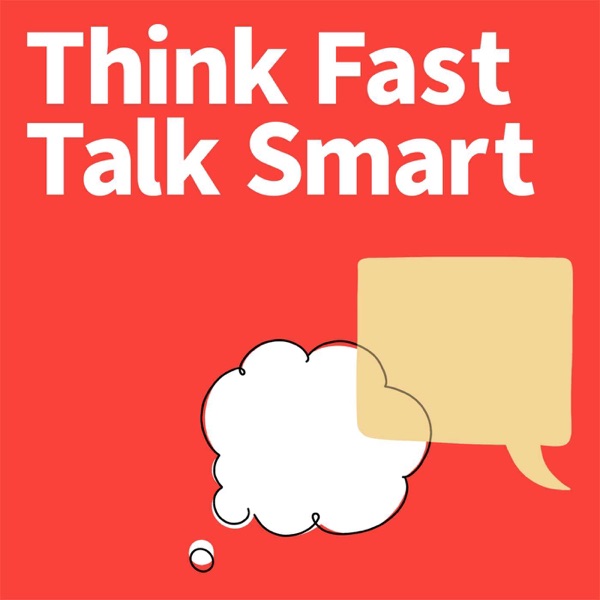
Think Fast Talk Smart: Communication Techniques
One of the most essential ingredients to success in business and life is effective communication.
Join Matt Abrahams, best-selling author and Strategic Communication lecturer at Stanford Graduate School of Business, as he interviews experts to provide actionable insights that help you communicate with clarity, confidence, and impact. From handling impromptu questions to crafting compelling messages, Matt explores practical strategies for real-world communication challenges.
Whether you’re navigating a high-stakes presentation, perfecting your email tone, or speaking off the cuff, Think Fast, Talk Smart equips you with the tools, techniques, and best practices to express yourself effectively in any situation. Enhance your communication skills to elevate your career and build stronger professional relationships.
Tune in every Monday and Thursday for new episodes. Subscribe now to unlock your potential as a thoughtful, impactful communicator. Learn more and sign up for our Newsletter at fastersmarter.io.
- Careers chart
- #6
- Episodes
- 343
- Releases
- Twice a week
- Typical length
- 24 min
- On air since
- 2020
- Latest episode
- 1 day ago
Episodes
343 episodes, newest first
-
25 min
337. Success Is Situational: How Feedback & Practice Transform Your Communication
Show notes
"It's been a paradigm shift for me to ask whether I can make my situation my ally rather than just try harder."
Trying harder isn't always the answer. Sometimes, the key to making progress isn't changing yourself, but changing the people and environments around you. In this episode of Think Fast, Talk Smart, psychologist and bestselling author Angela Duckworth joins Matt Abrahams to challenge conventional thinking about grit, perseverance, and personal growth. Drawing on insights from her new book, Situated: Find the People and Places That Bring Out Your Best, Duckworth explains why effort alone isn't enough, how asking for help can accelerate improvement, and what deliberate practice really takes.Takeaways:
• Sometimes changing your situation is more effective than trying harder. The people and environments around you can either support or limit your progress. Seeking help, mentorship, and the right conditions can make your efforts more successful.
• Better communication takes more than repetition. Deliberate practice requires specific goals, focused effort, and constructive feedback. Knowing what works, what needs improvement, and what to leave out can help you become a more effective communicator.Activity:
• Change the situation. Think of something you've been struggling to improve despite putting in the effort. Instead of working harder, make one change to your environment, routine, or support system that could help you make progress.
Printable Expanded Takeaways & Activities
To listen to the extended Deep Thinks version of this episode, please visit https://www.fastersmarter.io/premium/.
Episode Reference Links:
• Angela Duckworth
• Angela’s Books: Grit / SituatedConnect:
• Premium Signup >>>> Think Fast Talk Smart Premium
• Email Questions & Feedback >>> hello@fastersmarter.io
• Episode Transcripts >>>Think Fast Talk Smart Website
• Newsletter Signup + English Language Learning >>>http://fastersmarter.io/
• Think Fast Talk Smart >>>LinkedIn,Instagram, YouTube
• Matt Abrahams >>>LinkedInhttps://learning.fastersmarter.io/?redirect_from=podpageChapters:
• (00:00) - Introduction
• (01:09) - The Four Pillars of Grit
• (05:22) - The Power of Deliberate Practice
• (08:46) - Giving Effective Feedback
• (11:51) - Changing Your Situation
• (13:45) - The Value of Asking for Help
• (16:55) - The Final Three Questions
• (24:24) - Conclusion -
16 min
336. Rethinks: The “ABC’s” of Fright-Free Communication
Show notes
“Rather than trying to eliminate your nerves entirely, build your own anxiety management plan so you're prepared when they inevitably creep in.”
Around Halloween, few things feel scarier than being put on the spot to speak in front of others. Your heart races, your palms sweat, and suddenly the words you planned to say disappear. But while communication anxiety can be frightening, it doesn't have to haunt you. In this special Halloween Rethinks episode of Think Fast, Talk Smart, Matt Abrahams revisits research-backed strategies for managing speaking anxiety, featuring insights from experts including Andrew Huberman, Kelly McGonigal, and Alison Wood Brooks. Through the ABCs of anxiety management, Matt shares practical techniques for managing your emotions, calming your body, and reframing your thoughts. With a few tricks up your sleeve, you can take the fright out of public speaking and treat yourself to more confident communication.
Takeaways:
• Anxiety doesn't have to be the enemy of confident communication. Acknowledging your nerves as normal and reframing them as excitement or a sign that you care can help you approach speaking situations with a more positive mindset.
• Managing speaking anxiety starts with having a plan. Combining emotional, physical, and mental techniques into a personalized anxiety management plan can help you feel more comfortable, prepared, and confident under pressure.Activity:
• Build your anxiety management plan. Create your own three-step plan for managing speaking anxiety using the ABCs: one technique to reframe your emotions, one to calm your body, and one to redirect negative thoughts. Test your plan before your next presentation or important conversation, and adjust it based on what works best for you.
Episode Reference Links:
• Ep.18 Managing in the Moment: How to Get Comfortable with Being Uncomfortable
• Ep.69 Feeling Nervous? How Anxiety Can Fuel Better Communication
• Ep.66 Rethinks: Lessons from Neuroscientist Andrew Huberman to Help You Hack your Speaking Anxiety
• Ep.34 How We Gain — Or Give Away — Authority While Speaking
• Ep.40 Mindset Matters: How to Embrace the Benefits of Stress
• Ep.73 Listen Up: Why It’s Better to Be Interested Than InterestingConnect:
• Premium Signup >>>> Think Fast Talk Smart Premium
• Email Questions & Feedback >>> hello@fastersmarter.io
• Episode Transcripts >>>Think Fast Talk Smart Website
• Newsletter Signup + English Language Learning >>>http://fastersmarter.io/
• Think Fast Talk Smart >>>LinkedIn,Instagram, YouTube
• Matt Abrahams >>>LinkedInhttps://learning.fastersmarter.io/?redirect_from=podpageChapters:
• (00:00) - Introduction
• (02:41) - Managing Negative Feelings
• (04:07) - Reframing Anxiety
• (05:03) - Managing Physical Symptoms
• (05:40) - Breathing Techniques
• (06:25) - Physical Strategies for Anxiety
• (07:30) - Warming Up to Speak
• (08:31) - Managing Your Mindset
• (11:02) - Turning Anxiety Into Excitement
• (12:20) - Creating an Anxiety Management Plan
• (14:33) - Testing and Refining Your Plan
• (15:22) - ConclusionTo see what Scribe could look like for your organization, head to scribe.how/thinkfast and mention Think Fast for your first month of Scribe Capture free.
-
25 min
335. Power Play: Successfully Navigate Power, Status, and Influence at Work
Show notes
“As you're navigating your workplace hierarchy, you're also simultaneously shaping it.”
Power shapes the way we work, communicate, and connect with others. But when workplace hierarchies become overly competitive, unfair, or unstable, they can undermine the very teams they're meant to support. According to Stanford professor Nir Halevy, the solution isn't necessarily to eliminate hierarchies, but to rethink how they work. In this episode of Think Fast, Talk Smart, Halevy joins Matt Abrahams to share insights from his new book, Level Up: Why Hierarchies Are Broken and How to Fix Them. He explains how everyday acts of communication can help repair unhealthy workplace dynamics, why recognizing different contributions creates stronger teams, and how humor, empathy, and a better understanding of your audience can help you lead and influence others more effectively.
Takeaways:
• Healthy hierarchies reward more than individual success. Recognizing different contributions, encouraging collaboration, and valuing kindness alongside achievement can create stronger, more supportive teams.
• Everyday communication can reshape workplace dynamics. Small acts of gratitude, empathy, and recognition help build trust, strengthen relationships, and create a more positive organizational culture.Activity:
• Give credit where it's due. At your next team meeting, publicly recognize someone whose contributions often go unnoticed. Highlight something specific they did and why it mattered, helping reinforce a culture where different strengths and efforts are valued.
Printable Expanded Takeaways & Activities
Episode Reference Links:
• Nir Halevy
• Nir’s Book: Level Up
• Ep.30 Dissolve Disagreements: How Communication Impacts ConflictConnect:
• Premium Signup >>>> Think Fast Talk Smart Premium
• Email Questions & Feedback >>> hello@fastersmarter.io
• Episode Transcripts >>>Think Fast Talk Smart Website
• Newsletter Signup + English Language Learning >>>http://fastersmarter.io/
• Think Fast Talk Smart >>>LinkedIn,Instagram, YouTube
• Matt Abrahams >>>LinkedInhttps://learning.fastersmarter.io/?redirect_from=podpageChapters:
• (00:00) - Introduction
• (00:53) - Understanding Hierarchies
• (03:14) - Signs of Broken Hierarchies
• (05:14) - Fixing Unhealthy Hierarchies
• (06:27) - Building Healthy Hierarchies
• (09:36) - Competition and Collaboration
• (11:00) - Communication and Hierarchies
• (13:34) - Construal Fit
• (17:07) - Humor and Competence
• (19:18) - The Final Three Questions
• (23:56) - Conclusion********
Thank you to our sponsors. These partnerships support the ongoing production of the podcast, allowing us to bring it to you at no cost.Learn more about how Notion can support your business at notion.com/thinkfast.
Join our Think Fast Talk Smart Learning Community and become the communicator you want to be.
-
12 min
334. Quick Thinks: How to Make the Most Out of Meetings
Show notes
“Meetings are often used as band-aids, as ways of covering up for other larger communication challenges.”
Few things feel better than seeing a meeting canceled. But what if meetings were something we actually looked forward to? A productive meeting doesn't happen by accident. It starts with knowing whether you need one at all, continues with a clear purpose and thoughtful structure, and ends with everyone knowing what comes next. In this Quick Thinks episode of Think Fast, Talk Smart, Matt Abrahams breaks down what makes meetings work. He shares strategies for creating smarter agendas, making space for every voice, and turning discussions into decisions and action, so your next meeting is worth the time on everyone's calendar.
Takeaways:
• The best meetings start before anyone enters the room. Question whether a meeting is necessary, establish clear goals, and create a focused agenda that respects everyone's time and sets expectations for success.
• Effective meetings turn discussion into action. Encourage participation, manage time thoughtfully, and close with clear decisions and next steps. Following up afterward ensures conversations lead to meaningful results.Activity:
• Rethink your agenda. Take an upcoming meeting agenda and rearrange the topics by difficulty: medium first, most challenging second, and easiest last. Give each item a clear outcome, whether it's a decision, discussion, or update, to help keep the meeting focused and productive.
Episode Reference Links:
• Ep.261 Meetings With a Point: How to Design For Better Decisions
Connect:
• Premium Signup >>>> Think Fast Talk Smart Premium
• Email Questions & Feedback >>> hello@fastersmarter.io
• Episode Transcripts >>>Think Fast Talk Smart Website
• Newsletter Signup + English Language Learning >>>http://fastersmarter.io/
• Think Fast Talk Smart >>>LinkedIn,Instagram, YouTube
• Matt Abrahams >>>LinkedInhttps://learning.fastersmarter.io/?redirect_from=podpageChapters:
• (00:00) - Introduction
• (00:43) - Is a Meeting Necessary
• (01:55) - Set Goals & Create an Agenda
• (03:56) - Choose the Right Attendees
• (04:35) - Make the Most of Calendar Invites
• (05:08) - Optimize Meeting Length & Time
• (06:56) - Start Meetings Effectively
• (07:40) - Facilitate Participation
• (08:21) - Managing Hybrid Meetings
• (09:23) - End Meetings with Purpose
• (10:05) - Following Up After Meetings
• (11:04) - Conclusion********
Thank you to our sponsors. These partnerships support the ongoing production of the podcast, allowing us to bring it to you at no cost.Strawberry.me. Get 50% off your first coaching session today at Strawberry.me/smart
Join our Think Fast Talk Smart Learning Community and become the communicator you want to be.
-
31 min
333. Find the Vibe: Build Stronger Connections Through Communication Part 1
Show notes
“Be as curious about the other person as you are excited to share about yourself.”
What makes you click with someone? For organizational psychologist and bestselling author Adam Grant, meaningful connection isn't just about chemistry. It's about understanding how we relate to others, showing genuine curiosity, and creating interactions that bring us closer. In part one of this two-part Think Fast, Talk Smart episode, Grant joins Matt Abrahams to discuss the science of connection and share lessons from his new book, Vibe: The Secrets of Strong Connections in a Lonely World. From building confidence through practice and seeking advice instead of feedback to finding common ground and creating more dynamic conversations, Grant shares practical ways to strengthen relationships and make our interactions more meaningful.Takeaways:
• Strong connections are built with intention. Understanding whether you're seeking shared goals, interests, or values helps you approach relationships more thoughtfully and build stronger connections.
• Better conversations require curiosity and give-and-take. Showing genuine interest, keeping exchanges dynamic, and remembering personal details can turn everyday interactions into more meaningful, lasting relationships.Activity:
• Make a memory flex. After your next meaningful conversation, note one detail the other person shared. A few days later, follow up with a thoughtful message, recommendation, or question that shows you remembered and helps strengthen the connection.
Printable Expanded Takeaways & Activities
Episode Reference Links:
• Adam Grant
• Adam’s Book: Vibe
• Ep.80 Magic Words: Change What You Say to Inspire and Influence OthersConnect:
• Premium Signup >>>> Think Fast Talk Smart Premium
• Email Questions & Feedback >>> hello@fastersmarter.io
• Episode Transcripts >>>Think Fast Talk Smart Website
• Newsletter Signup + English Language Learning >>>http://fastersmarter.io/
• Think Fast Talk Smart >>>LinkedIn,Instagram, YouTube
• Matt Abrahams >>>LinkedInhttps://learning.fastersmarter.io/?redirect_from=podpageChapters:
• (00:00) - Introduction
• (01:03) - Overcoming Speaking Anxiety
• (04:03) - Building Confidence
• (05:28) - Expanding Your Comfort Zone
• (08:17) - Learning Through Advice
• (13:45) - Balancing Competence and Connection
• (15:21) - The Science of Vibing
• (16:53) - Building Connection Virtually
• (18:52) - Three Types of Connection
• (20:17) - Turn Connection Into Collaboration
• (23:38) - The Final Three Questions
• (30:34) - Conclusion********
Thank you to our sponsors. These partnerships support the ongoing production of the podcast, allowing us to bring it to you at no cost.Strawberry.me. Get 50% off your first coaching session today at Strawberry.me/smart
Join our Think Fast Talk Smart Learning Community and become the communicator you want to be.
-
35 min
332. Rethinks: Learn Faster and Fail Smarter
Show notes
“You learn nothing when you’re right.”
Effective communication isn’t about having all the answers. AsAstro Teller knows, it’s about finding, and sometimes fumbling, your way through the questions. As Captain of Moonshots at X, Alphabet’s Moonshot Factory, Teller embraces what he calls “a learning journey,” where being wrong isn’t the end, but an opportunity to discover something new. In this episode ofThink Fast, Talk Smart, Teller and Matt Abrahams discuss how embracing uncertainty drives innovation, why leaders should reward learning over outcomes, and why sometimes being wrong is the best way to learn.
Takeaways:
• Being wrong is where learning happens. Treating failure as useful information rather than something to avoid helps you stay curious, test assumptions, and discover better paths forward.
• Reward the habits that lead to innovation, not just the outcomes. Focusing on curiosity, humility, and experimentation creates space for people to take meaningful risks and pursue ideas that may not work the first time.Activity:
• Find the failure faster. Choose one idea or project you’re confident about and identify the assumption most likely to prove you wrong. Design one small test that could challenge that assumption, then treat whatever you learn as progress.
Episode Reference Links:
• Astro Teller
• Astro’s Book:Sacred Cows
• Ep.237 Mistake It Till You Make It: Learn Faster and Fail Smarter
• Ep.70 Ideas Fuel Innovation: Why Your First Ideas Aren't Always the Best
• Ep.20 Question Your Questions: How to Spark Creativity in Your CommunicationConnect:
• Premium Signup >>>> Think Fast Talk Smart Premium
• Email Questions & Feedback >>> hello@fastersmarter.io
• Episode Transcripts >>>Think Fast Talk Smart Website
• Newsletter Signup + English Language Learning >>>http://fastersmarter.io/
• Think Fast Talk Smart >>>LinkedIn,Instagram, YouTube
• Matt Abrahams >>>LinkedInhttps://learning.fastersmarter.io/?redirect_from=podpageChapters:
• (00:00) - Introduction
• (01:33) - Defining a Moonshot
• (03:35) - Building a Learning Mindset
• (06:15) - Learning vs. Productivity
• (07:50) - Sharing Learning Across Teams
• (10:04) - Rewarding Habits, Not Outcomes
• (12:32) - Destigmatizing Failure
• (15:12) - Moonshots in Action
• (18:51) - Storytelling for Understanding
• (20:11) - Using Analogies Effectively
• (22:15) - Fostering Creativity Through Play
• (25:20) - Hiring for a Moonshot Culture
• (27:57) - The Moonshot Podcast
• (29:44) - The Final Three Questions
• (34:19) - Conclusion********
Thank you to our sponsors. These partnerships support the ongoing production of the podcast, allowing us to bring it to you at no cost.Strawberry.me. Get 50% off your first coaching session today at Strawberry.me/smart
Join our Think Fast Talk Smart Learning Community and become the communicator you want to be.
-
24 min
331. Matchmaker Mindset: How to Make Yourself Memorable in Any Conversation
Show notes
“Boredom is just the enemy of conversation.”
Small talk doesn’t have to be boring. For matchmaker and dating coach Rachel Greenwald, better conversations start with a little preparation and a willingness to move beyond predictable questions toward the stories that make people memorable. In this episode of Think Fast, Talk Smart, Greenwald joins Matt Abrahams to share strategies for building stronger connections in dating, networking, and the workplace. From bridging small talk toward more meaningful topics to navigating taboo subjects and showing more vulnerability, she explains how to create conversations that bring out the best in others and ourselves.
Takeaways:
• Better small talk starts with a little strategy. Preparing a few topics and finding natural bridges toward what makes you unique can turn routine exchanges into more memorable, meaningful interactions.
• Connection comes from stories, not just information. Asking questions that invite people to share experiences and emotions can reveal more than factual answers and help deepen relationships.Activity:
• Build a better bridge. Turn three standard small-talk questions into openings that lead somewhere more interesting. For example, instead of answering “How are you?” with “Good,” practice a response that naturally introduces a story, interest, or experience someone could ask you about.
Printable Expanded Takeaways & Activities
To listen to the extended Deep Thinks version of this episode, please visit https://www.fastersmarter.io/premium/.
Episode Reference Links:
• Rachel Greenwald
• Ep.89 Listen, Listen, Listen: How to Build Deep ConnectionsConnect:
• Premium Signup >>>> Think Fast Talk Smart Premium
• Email Questions & Feedback >>> hello@fastersmarter.io
• Episode Transcripts >>>Think Fast Talk Smart Website
• Newsletter Signup + English Language Learning >>>http://fastersmarter.io/
• Think Fast Talk Smart >>>LinkedIn,Instagram, YouTube
• Matt Abrahams >>>LinkedInhttps://learning.fastersmarter.io/?redirect_from=podpageChapters:
• (00:00) - Introduction
• (00:50) - Strategic Small Talk
• (04:27) - Building Your Personal Brand
• (08:21) - Mastering the First 60 Seconds
• (10:54) - Starting in the Middle
• (12:17) - Navigating Taboo Topics
• (15:36) - The Final Three Questions
• (23:33) - Conclusion********
Thank you to our sponsors. These partnerships support the ongoing production of the podcast, allowing us to bring it to you at no cost.Strawberry.me. Get 50% off your first coaching session today at Strawberry.me/smart
Join our Think Fast Talk Smart Learning Community and become the communicator you want to be.
-
15 min
330. Quick Thinks: A CLEAR Way Through Conflict
Show notes
“Conflicts in relationships might be unpleasant, but they aren’t inherently bad. In fact, they’re essential.”
Conflict rarely gives us time to prepare. A sharp comment, unexpected criticism, or sudden disagreement can trigger strong emotions precisely when we need to communicate most clearly. But handled well, conflict can strengthen relationships, improve outcomes, and lead to better solutions. In this special episode of Think Fast, Talk Smart, hear an excerpt from the updated edition of Matt Abrahams’ Think Faster, Talk Smarter. Matt introduces the CLEAR framework for navigating conflict in the moment: checking yourself, listening with receptiveness, exploring the other person’s perspective, acknowledging before advocating, and responding strategically. With these five steps, you can move beyond reactive responses and approach difficult moments with greater calm, curiosity, and clarity.
Takeaways:
• Manage yourself before you manage the conflict. Recognizing when you’re triggered and creating a brief pause can help you move out of a reactive state and respond with greater calm and clarity.
• Understanding should come before advocating. Listening with genuine curiosity, exploring the other person’s perspective, and acknowledging what you’ve heard can keep disagreement from escalating and create space for a more productive response.Activity:
• Run it through CLEAR. Think of a disagreement you’re currently navigating and write one action for each step of CLEAR: Check yourself, Listen, Explore, Acknowledge, Respond. Use those five steps to plan how you’ll approach the conflict before deciding what you want to say.
Audio excerpt courtesy of Simon & Schuster Audio from THINK FASTER, TALK SMARTER by Matt Abrahams, read by the author. Copyright © 2023 by Matt Abrahams. Used with permission of Simon & Schuster, Inc.
Episode Reference Links:
• Matt's Book: Think Faster Talk Smarter
Connect:
• Premium Signup >>>> Think Fast Talk Smart Premium
• Email Questions & Feedback >>> hello@fastersmarter.io
• Episode Transcripts >>>Think Fast Talk Smart Website
• Newsletter Signup + English Language Learning >>>http://fastersmarter.io/
• Think Fast Talk Smart >>>LinkedIn,Instagram, YouTube
• Matt Abrahams >>>LinkedInhttps://learning.fastersmarter.io/?redirect_from=podpageChapters:
• (00:00) - Introduction
• (01:04) - Why Conflict Escalates
• (04:19) - Why Managing Conflict Matters
• (05:43) - The CLEAR Framework
• (06:31) - Check Yourself
• (08:18) - Listen Openly
• (10:21) - Explore Their Perspective
• (11:25) - Acknowledge Before Advocating
• (12:59) - Respond Strategically
• (14:33) - Conclusion********
Thank you to our sponsors. These partnerships support the ongoing production of the podcast, allowing us to bring it to you at no cost.Strawberry.me. Get 50% off your first coaching session today at Strawberry.me/smart
Join our Think Fast Talk Smart Learning Community and become the communicator you want to be.
-
24 min
329. Your Brand is Your Promise: The 4 C’s for Better Communication
Show notes
“A brand is a promise, and a great brand is a promise well kept.”
What does it take to build something people believe in? For Daniel Lubetzky, social entrepreneur and KIND Snacks founder, it starts with curiosity, compassion, creativity, and courage, along with a willingness to listen, learn, and stay true to what you stand for. In this episode of Think Fast, Talk Smart, Lubetzky joins Matt Abrahams to share lessons from building businesses, brands, and bridges between people. He explains why authenticity matters more than appearing to have all the answers, how great brands keep their promises, and what entrepreneurs can learn from listening, practicing, and knowing when to adapt without losing sight of their values.Takeaways:
• Authenticity builds trust. You don’t need to have every answer or appear perfectly polished. Being willing to admit what you don’t know, listen, and learn can make others more willing to believe what you do say.
• Strong brands know what they promise. Consistency around your values and value proposition helps people know what to expect from you, while thoughtful feedback can help you adapt without losing what you stand for.Activity:
• Practice the pause. In your next conversation, resist the urge to jump in when the other person finishes speaking. Leave a brief pause, then respond to what you actually heard rather than what you expected them to say.
Printable Expanded Takeaways & Activities
To listen to the extended Deep Thinks version of this episode, please visit https://www.fastersmarter.io/premium/.
Episode Reference Links:
• Daniel Lubetzky
• Daniel’s Book: Do the KIND Thing
• Daniel’s Podcast: Build or Break
• Ep.153 Listen Up, Leaders: A Record-Setting Coach's Guide to CommunicationConnect:
• Premium Signup >>>> Think Fast Talk Smart Premium
• Email Questions & Feedback >>> hello@fastersmarter.io
• Episode Transcripts >>>Think Fast Talk Smart Website
• Newsletter Signup + English Language Learning >>>http://fastersmarter.io/
• Think Fast Talk Smart >>>LinkedIn,Instagram, YouTube
• Matt Abrahams >>>LinkedInhttps://learning.fastersmarter.io/?redirect_from=podpageChapters:
• (00:00) - Introduction
• (01:01) - Builders vs. Destroyers
• (02:41) - The Four Cs of a Builder’s Mindset
• (04:28) - Listening, Pausing, and Authenticity
• (07:22) - What Entrepreneurs Get Wrong
• (08:51) - Betting on the Entrepreneur
• (10:20) - Building a Brand That Keeps Its Promise
• (12:42) - The Three Cs of the Creative Process
• (18:37) - The Final Three Questions
• (23:12) - Conclusion -
19 min
328. Ask Matt Anything: Don’t Let Your Communication Fizzle at the Finish
Show notes
“How you end something often can be as important, if not more important, than how you start.”
What’s the best way to wrap up a presentation? How do you stop yourself from repeating the same point? And what can you do when strong emotions start taking over? Matt Abrahams tackles these questions and more in this Ask Matt Anything episode of Think Fast, Talk Smart, recorded with members of the Learning Community. He shares why a strong ending deserves as much attention as a strong opening, along with practical advice for holding attention, getting better at small talk, breaking repetitive speaking patterns, and channeling emotion more effectively.
Takeaways:
• A strong ending reinforces what matters most. Return to your goal by reminding your audience what you want them to know, how you want them to feel, and what you want them to do next.
• Engagement requires giving your audience something to do. Questions, physical participation, vivid language, and shared experiences can help capture attention and keep people involved in your message.Activity:
• Land the plane. Take the ending of an upcoming presentation or meeting and write one sentence for each part of your goal: what you want people to know, feel, and do. Use those three points to build a concise closing.
Episode Reference Links:
• Think Fast Talk Smart Learning Community
Connect:
• Premium Signup >>>> Think Fast Talk Smart Premium
• Email Questions & Feedback >>> hello@fastersmarter.io
• Episode Transcripts >>>Think Fast Talk Smart Website
• Newsletter Signup + English Language Learning >>>http://fastersmarter.io/
• Think Fast Talk Smart >>>LinkedIn,Instagram, YouTube
• Matt Abrahams >>>LinkedInhttps://learning.fastersmarter.io/?redirect_from=podpageChapters:
• (00:00) - Introduction
• (00:44) - Why Endings Matter
• (02:16) - Ending With Your Goal
• (03:38) - Bringing It Full Circle
• (04:19) - Ending With a Call to Action
• (06:22) - Breaking Repetitive Speaking Patterns
• (08:50) - Keeping Your Audience Engaged
• (12:08) - Building Confidence in Small Talk
• (15:18) - Communicating Strong Emotions
• (18:01) - Conclusion********
Thank you to our sponsors. These partnerships support the ongoing production of the podcast, allowing us to bring it to you at no cost.Strawberry.me. Get 50% off your first coaching session today at Strawberry.me/smart
Join our Think Fast Talk Smart Learning Community and become the communicator you want to be.
-
26 min
327. The Human Reset: Reclaiming Authenticity in the Age of AI
Show notes
“Our imperfections reveal that we’re human.”
As AI makes it easier to polish our words, how do we prove that our communication is actually our own? For Matt Abrahams, the answer isn’t to avoid AI, but to protect the distinctly human thinking, experiences, and imperfections that build trust. In a special episode of Think Fast, Talk Smart, Lorraine K. Lee takes over the host chair to interview Matt about the updated edition of Think Faster, Talk Smarter. They discuss Matt’s TRUST framework for demonstrating authenticity, the risk of outsourcing empathy to AI, and ways to use AI as a practice partner rather than a replacement for your own thinking.
Takeaways:
• Your humanness is an advantage in the age of AI. Personal experiences, real-time thinking, and even small imperfections can signal authenticity and help others trust that your ideas and words are genuinely your own.
• Use AI to strengthen your communication skills, not replace them. Treating AI as a thought partner, coach, or practice tool can help you prepare and build empathy while keeping your own judgment and reflection at the center.Activity:
• Keep it human. Take one message you’ve used AI to help draft and add something only you could provide: a personal example, a specific observation, or your own perspective. Use AI to polish the message without polishing away your voice.
Printable Expanded Takeaways & Activities
Episode Reference Links:
• Lorraine K. Lee
• Lorraine’s Book: Unforgettable Presence
• Matt's Book: Think Faster Talk Smarter
• Ep.202 Own Your Brand: How to Communicate with Presence and ImpactConnect:
• Premium Signup >>>> Think Fast Talk Smart Premium
• Email Questions & Feedback >>> hello@fastersmarter.io
• Episode Transcripts >>>Think Fast Talk Smart Website
• Newsletter Signup + English Language Learning >>>http://fastersmarter.io/
• Think Fast Talk Smart >>>LinkedIn,Instagram, YouTube
• Matt Abrahams >>>LinkedInhttps://learning.fastersmarter.io/?redirect_from=podpageChapters:
• (00:00) - Introduction
• (01:15) - The AI Authenticity Crisis
• (03:13) - The TRUST Framework
• (08:25) - AI and the Empathy Paradox
• (10:40) - Using AI to Build Empathy
• (12:10) - AI as a Communication Coach
• (15:01) - Managing Conflict with CLEAR
• (18:10) - Meet AI Matt
• (21:01) - The Final Three Questions
• (25:07) - Conclusion -
25 min
326. Rethinks: The Secrets to Getting the Information You Need from AI
Show notes
“Most teams leave the vast majority of their innovation potential on the table.”
If you treat artificial intelligence like an oracle, you’ll likely be disappointed. But treat it like a teammate, and Jeremy Utleyand Kian Gohar say you may be surprised by how useful a collaborator it can be. Utley, an adjunct professor at the Stanford d.school, and Gohar, a bestselling author and futurist, have studied how teams can use AI to generate more creative ideas and solve problems. Their research shows that tools like ChatGPT can unlock new possibilities, but only when teams know how to work with them. In this episode of Think Fast, Talk Smart, Utley and Gohar join Matt Abrahams to discuss how to move beyond treating AI like a magic 8-ball and start using it as a creative partner for brainstorming and innovation.
Takeaways:
• Treat AI like a teammate, not an oracle. AI becomes more useful when you actively collaborate with it, asking questions, building on responses, and using it as a partner rather than expecting one perfect answer.
• Better AI collaboration can unlock better ideas. Integrating AI into brainstorming and problem-solving can help teams expand their thinking, generate more possibilities, and tap into creative potential they might otherwise leave unexplored.Activity:
• Give AI a seat at the table. During your next brainstorm, treat AI as another member of the team. Ask it to contribute ideas, challenge the group’s assumptions, or suggest a direction no one has considered yet.
Episode Reference Links:
• Jeremy Utley
• Jeremy's Book: Ideaflow
• Kian Gohar
• Kian's Book: Competing In The New World Of WorkConnect:
• Premium Signup >>>> Think Fast Talk Smart Premium
• Email Questions & Feedback >>> hello@fastersmarter.io
• Episode Transcripts >>>Think Fast Talk Smart Website
• Newsletter Signup + English Language Learning >>>http://fastersmarter.io/
• Think Fast Talk Smart >>>LinkedIn,Instagram, YouTube
• Matt Abrahams >>>LinkedInhttps://learning.fastersmarter.io/?redirect_from=podpageChapters:
• (00:00) - Introduction
• (01:43) - AI and Problem-Solving
• (04:13) - What the Research Revealed
• (05:18) - Why Better AI Takes More Work
• (08:40) - The FIXIT Method
• (13:10) - Better Conversations With AI
• (16:07) - Making AI Critique Itself
• (18:45) - The Final Three Questions
• (24:35) - Conclusion********
Thank you to our sponsors. These partnerships support the ongoing production of the podcast, allowing us to bring it to you at no cost.Strawberry.me. Get 50% off your first coaching session today at Strawberry.me/smart
Join our Think Fast Talk Smart Learning Community and become the communicator you want to be.
-
20 min
325. Message Market Fit: Turning Great Ideas Into Communication That Lands
Show notes
“No one cares about us, our company, our products. We have to make them care, and for that, we need the right words.”
Great work doesn’t always speak for itself. For communication strategist and author of Message Machine: How Communications Will Make You An Unstoppable Founder, Oliver Aust, getting your ideas noticed requires “message-market fit,” finding the right words and stories to make people understand why what you offer matters. In this episode of Think Fast, Talk Smart, Aust joins Matt Abrahams to discuss how to craft messages that resonate and stand out. From focusing on outcomes instead of products to building a personal brand and using storytelling to make sense of change, Aust shares practical strategies for communicating your value with greater clarity and impact.
Takeaways:
• Make people care about the outcome, not the product. Strong messaging focuses less on what you do and more on the value you create, helping your audience see and feel what’s possible.
• Good work still needs to be communicated. Building visibility isn’t just self-promotion. Clearly sharing your value, defining who you’re for, and developing a distinctive message can help the right people find you.Activity:
• Show the picture. Choose one product, service, or idea you regularly describe. Instead of explaining what it does, describe the outcome your audience wants to experience. Make that outcome the centerpiece of your message.
Printable Expanded Takeaways & Activities
To listen to the extended Deep Thinks version of this episode, please visit https://www.fastersmarter.io/premium/.
Episode Reference Links:
• Oliver Aust
• Oliver’s Books: Message Machine / Unignorable
• Ep.82 It’s Not About You: Why Effective Communicators Put Others F…Connect:
• Premium Signup >>>> Think Fast Talk Smart Premium
• Email Questions & Feedback >>> hello@fastersmarter.io
• Episode Transcripts >>>Think Fast Talk Smart Website
• Newsletter Signup + English Language Learning >>>http://fastersmarter.io/
• Think Fast Talk Smart >>>LinkedIn,Instagram, YouTube
• Matt Abrahams >>>LinkedInhttps://learning.fastersmarter.io/?redirect_from=podpageChapters:
• (00:00) - Introduction
• (01:00) - Message-Market Fit
• (04:03) - Becoming Unignorable
• (05:21) - Mindset, Message, Method
• (06:12) - Building a Distinctive Message
• (08:07) - The PACE Framework
• (10:27) - Managing Communication Anxiety
• (12:44) - Storytelling as a Leader
• (15:03) - The Final Three Questions
• (19:16) - Conclusion********
Thank you to our sponsors. These partnerships support the ongoing production of the podcast, allowing us to bring it to you at no cost.Strawberry.me. Get 50% off your first coaching session today at Strawberry.me/smart
Join our Think Fast Talk Smart Learning Community and become the communicator you want to be.
-
23 min
324. Rethinks: Defining Where We Want AI To Take Us
Show notes
“If you're worried that a ChatGPT type tool can replace you, you need to [ask]: Why am I communicating? What am I trying to say? Am I being authentic?”
Artificial intelligence can now do a lot of things. But if you’re worried about it taking your place as a communicator,Russ Altman says you need to question why you’re communicating in the first place. A Stanford professor of bioengineering and host of Stanford Engineering’s podcast,The Future of Everything, Altman sees advancing technology not as a threat to human creativity and connection, but as a tool for raising our standards for communication. In this Rethinks episode ofThink Fast, Talk Smart, Altman and Matt Abrahams discuss how effective communication can help us articulate ideas, strengthen connections, and navigate toward the future we want.
Takeaways:
• AI works best as an amplifier, not a replacement. Using AI to test, refine, and adapt your ideas can make communication clearer while keeping your purpose, judgment, and authentic message at the center.
• Make complexity easier to understand, not less meaningful. Stories, analogies, and audience-aware language can translate difficult ideas without dumbing them down.Activity:
• Treat questions as gifts. The next time someone questions your idea, resist the urge to defend it. Instead, thank them and ask one follow-up question to better understand their perspective before responding.
Episode Reference Links:
• Russ Altman
• Russ’s Podcast: The Future of Everything
• Ep.157 Communicating the Future: Defining Where We Want AI to Take UsConnect:
• Premium Signup >>>> Think Fast Talk Smart Premium
• Email Questions & Feedback >>> hello@fastersmarter.io
• Episode Transcripts >>>Think Fast Talk Smart Website
• Newsletter Signup + English Language Learning >>>http://fastersmarter.io/
• Think Fast Talk Smart >>>LinkedIn,Instagram, YouTube
• Matt Abrahams >>>LinkedInhttps://learning.fastersmarter.io/?redirect_from=podpageChapters:
• (00:00) - Introduction
• (01:41) - AI and Communication
• (03:46) - AI as a Feedback Tool
• (04:48) - Structuring a Strong Proposal
• (06:48) - Simplifying Complex Ideas
• (09:12) - Preparing for Tough Topics
• (10:53) - Asking Better Questions
• (13:43) - Building Stronger Teams
• (16:21) - Productive Conflict
• (17:53) - Finding People’s Passion
• (18:43) - The Final Three Questions
• (22:06) - Conclusion********
Thank you to our sponsors. These partnerships support the ongoing production of the podcast, allowing us to bring it to you at no cost.Strawberry.me. Get 50% off your first coaching session today at Strawberry.me/smart
Join our Think Fast Talk Smart Learning Community and become the communicator you want to be.
-
25 min
323. Turn Up the Heat: Make Conflict More Constructive
Show notes
“I’m not saying necessarily fight more, I’m saying fight better.”
Conflict doesn’t have to mean avoidance or escalation. Priya Parker, expert facilitator, strategic advisor and author of The Art of Fighting: The Transformative Power of Conflict, argues there’s a third option: “healthy heat,” where disagreement is handled with enough care, curiosity, and even humor to become productive rather than destructive. In this episode of Think Fast, Talk Smart, Parker joins Matt Abrahams to rethink how we approach disagreement. She explains why practicing low-stakes conflict can prepare us for harder conversations, how teams can build better systems for working through tension, and why the goal isn’t to fight more, but to fight better.
Takeaways:
• Conflict can be productive when you learn to hold the heat. Rather than avoiding disagreement or letting it escalate, adding care, humor, and curiosity can turn tension into something clarifying and constructive.
• Don’t fight more, fight better. Preparing for difficult conversations, clarifying your purpose, and creating structures for disagreement can help teams address the issues that matter instead of avoiding them.Activity:
• Start a grapple. Identify one issue your team keeps avoiding or turning into a logistical discussion. Give it a dedicated meeting where the explicit purpose is to debate the issue, hear different viewpoints, make a decision, and commit to what happens next.
Printable Expanded Takeaways & Activities
Episode Reference Links:
• Priya Parker
• Priya’s Books: The Art of Gathering / The Art of Fighting
• Ep.174 Fix Meetings: Transform Gatherings Into Meaningful MomentsConnect:
• Premium Signup >>>> Think Fast Talk Smart Premium
• Email Questions & Feedback >>> hello@fastersmarter.io
• Episode Transcripts >>>Think Fast Talk Smart Website
• Newsletter Signup + English Language Learning >>>http://fastersmarter.io/
• Think Fast Talk Smart >>>LinkedIn,Instagram, YouTube
• Matt Abrahams >>>LinkedInhttps://learning.fastersmarter.io/?redirect_from=podpageChapters:
• (00:00) - Introduction
• (00:55) - Healthy Heat
• (01:54) - Practicing Disagreement
• (07:29) - Conflict in the Moment
• (10:19) - Normalizing Conflict
• (14:47) - Conflict as a Signal
• (17:29) - Starting the Conversation
• (20:25) - The Final Three Questions
• (23:51) - Conclusion -
21 min
322. Talk Back: Why Arguing With Yourself Can Help You Flourish
Show notes
“What you think is not gospel.”
Can arguing with yourself make you happier? Martin Seligman, positive psychology pioneer and author of Agency: The Psychological History of Human Progress, says our negative thoughts don’t have to dictate how we feel. By recognizing our internal narratives and challenging them with evidence, we can change our outlook and build a greater sense of agency. In this episode of Think Fast, Talk Smart, Seligman and Matt Abrahams discuss flourishing, optimism, and the power of self-talk. They also examine why celebrating other people’s successes takes more than saying “congratulations,” and how active, constructive communication can deepen our relationships.
Takeaways:
• Your thoughts aren’t facts. Negative self-talk can shape your emotions and actions, but learning to challenge those thoughts with realistic evidence can help you develop a more optimistic outlook.
• Celebrate success with curiosity, not just congratulations. Asking thoughtful questions about someone’s good news helps them relive the experience and can deepen your relationship.Activity:
• Argue with yourself. Catch one negative thought you have about yourself this week and write it down as an argument rather than a fact. Then build the opposing case by listing three pieces of real evidence that challenge it.
To listen to the extended Deep Thinks version of this episode, please visit https://www.fastersmarter.io/premium/.
Episode Reference Links:
• Martin Seligman
• Martin’s Book: Agency
• Ep.179 Finding Positive in Negative Emotions: Communication, Happiness & Wellbeing
• Ep.181 Why Happiness is a Direction, Not a Destination: Communicat…Connect:
• Premium Signup >>>> Think Fast Talk Smart Premium
• Email Questions & Feedback >>> hello@fastersmarter.io
• Episode Transcripts >>>Think Fast Talk Smart Website
• Newsletter Signup + English Language Learning >>>http://fastersmarter.io/
• Think Fast Talk Smart >>>LinkedIn,Instagram, YouTube
• Matt Abrahams >>>LinkedInhttps://learning.fastersmarter.io/?redirect_from=podpageChapters:
• (00:00) - Introduction
• (01:20) - The Five Pillars of Flourishing
• (04:51) - Changing Your Inner Dialogue
• (06:22) - Challenging Negative Self-Talk
• (07:58) - Overcoming Imposter Syndrome
• (09:38) - Building a Sense of Agency
• (11:27) - Learning From Your Critics
• (13:18) - The Final Three Questions
• (20:17) - Conclusion********
Thank you to our sponsors. These partnerships support the ongoing production of the podcast, allowing us to bring it to you at no cost.Strawberry.me. Get 50% off your first coaching session today at Strawberry.me/smart
Join our Think Fast Talk Smart Learning Community and become the communicator you want to be.
-
20 min
321. The Respect Effect: What Stereotype Threat Teaches Us About Communication
Show notes
“Everybody you interact with needs that signal of respect.”
Feeling seen and respected can shape how we communicate and connect with others. For Stanford social psychologist and author ofChurn: The Tension That Divides Us and How to Overcome,Claude Steele, understanding stereotype threat and “churn,” the tension that arises when we worry about being judged based on our identity, can help us build greater trust across differences. In this episode ofThink Fast, Talk Smart, Steele joins Matt Abrahams to discuss how stereotypes influence our interactions and how to reduce their impact. From giving feedback that communicates respect to building trust, Steele shares how seeing people’s full humanity and potential can strengthen our connections.
Takeaways:
• Trust grows when people feel seen and respected. Recognizing someone’s abilities, potential, and individuality can reduce uncertainty and help build stronger relationships across differences.
• Feedback works better when respect is explicit. Pairing high standards with a clear belief in someone’s ability to meet them can make critical feedback feel more trustworthy and motivating.Activity:
• Add a signal of respect. Think of someone you need to give constructive feedback to. Before delivering the critique, add one sentence that communicates both your standards and your confidence in their ability to meet them. Notice whether this changes how the feedback is received.
Episode Reference Links:
• Claude Steele
• Claude’s Book: Churn
• Ep.40 Mindset Matters: How to Embrace the Benefits of StressConnect:
• Premium Signup >>>> Think Fast Talk Smart Premium
• Email Questions & Feedback >>> hello@fastersmarter.io
• Episode Transcripts >>>Think Fast Talk Smart Website
• Newsletter Signup + English Language Learning >>>http://fastersmarter.io/
• Think Fast Talk Smart >>>LinkedIn,Instagram, YouTube
• Matt Abrahams >>>LinkedInhttps://learning.fastersmarter.io/?redirect_from=podpageChapters:
• (00:00) - Introduction
• (00:57) - What is Stereotype Threat?
• (02:39) - Social Media and Stereotypes
• (03:44) - Reducing Stereotype Threat
• (07:18) - Building Personal Connections
• (08:13) - Understanding Churn
• (09:46) - Building Trust Through Feedback
• (13:54) - The Final Three Questions
• (19:10) - Conclusion********
Thank you to our sponsors. These partnerships support the ongoing production of the podcast, allowing us to bring it to you at no cost.Strawberry.me. Get 50% off your first coaching session today at Strawberry.me/smart
Join our Think Fast Talk Smart Learning Community and become the communicator you want to be.
-
17 min
320. Quick Thinks: How to Prepare, Stand Out, and Ace Your Interview
Show notes
“The ability to handle yourself in interviews and other high-pressure situations can make the difference in getting the job and achieving your goals.”
A successful interview is more than answering questions well. It’s an opportunity to communicate what sets you apart and demonstrate the value you can bring. Preparation, structure, and storytelling can help you do that with confidence. In this Quick Thinks episode of Think Fast, Talk Smart, Matt Abrahams and communication teacher Laura Joyce Davis share strategies for preparing for job interviews. From identifying what differentiates you to structuring answers and telling memorable stories, they explain how to present your experience with clarity while staying authentic and human.
Takeaways:
• Preparation makes confidence easier. Identifying what sets you apart and stockpiling stories, examples, and evidence helps you answer questions clearly while staying present in the moment.
• Structure turns experience into a stronger answer. Frameworks like “What? So what? Now what?” help you connect your skills and experiences directly to what matters to the interviewer.Activity:
• Build your interview bank. Create a simple bank of three strengths you want an interviewer to remember. Under each, add one story, piece of evidence, or testimonial that proves it. Use the bank to quickly assemble relevant answers rather than memorizing responses to individual questions.
Episode Reference Links:
• Laura Joyce Davis
• Think Fast Talk Smart Learning CommunityConnect:
• Premium Signup >>>> Think Fast Talk Smart Premium
• Email Questions & Feedback >>> hello@fastersmarter.io
• Episode Transcripts >>>Think Fast Talk Smart Website
• Newsletter Signup + English Language Learning >>>http://fastersmarter.io/
• Think Fast Talk Smart >>>LinkedIn,Instagram, YouTube
• Matt Abrahams >>>LinkedInhttps://learning.fastersmarter.io/?redirect_from=podpageChapters:
• (00:00) - Introduction
• (00:56) - Preparing for Your Interview
• (03:37) - Structuring Your Answers
• (05:02) - The ADD Framework
• (07:51) - Practicing for the Interview
• (09:16) - Storytelling That Stands Out
• (10:39) - Conflict, Beats, and Transformation
• (14:28) - The One-Minute Story Exercise
• (15:32) - The Importance of Pre-Work
• (16:45) - Conclusion********
Thank you to our sponsors. These partnerships support the ongoing production of the podcast, allowing us to bring it to you at no cost.Strawberry.me. Get 50% off your first coaching session today at Strawberry.me/smart
Join our Think Fast Talk Smart Learning Community and become the communicator you want to be.
-
25 min
319. Open the Portal: The Simple Science Behind Impactful Storytelling
Show notes
“Causality is this foundation that really allows us to anchor what we’re trying to do when we’re telling stories.”
Storytelling doesn’t require a dramatic narrative. For behavioral scientist and former Disney Imagineer Troy Campbell, even everyday information can become a story when we explain the “because” behind it, connecting what happened to why it matters. In this episode of Think Fast, Talk Smart, Campbell joins Matt Abrahams to unpack the psychology behind storytelling and persuasion. From structuring ideas around goals, insights, and actions to creating “portals” that prepare audiences for what comes next, he shares practical ways to make communication more relevant, persuasive, and memorable.
Takeaways:
• Stories are built on cause and change. Connecting information through the “because” behind it turns isolated facts into a narrative that helps audiences understand why something happened and why it matters.
• Start by preparing your audience for what comes next. Effective “portals” create anticipation, shift people into the right mindset, and provide just enough context to help them engage with your message.Activity:
• Create a portal. Choose an upcoming meeting or presentation and redesign the first minute to prepare your audience for what follows. Build an opening that creates anticipation, shifts their mindset, and previews where you’re taking them before diving into the main content.
To listen to the extended Deep Thinks version of this episode, please visit https://www.fastersmarter.io/premium/.
Episode Reference Links:
• Troy Campbell
• Ep.156 Creative Communication: How Our Design Choices Illustrate O…Connect:
• Premium Signup >>>> Think Fast Talk Smart Premium
• Email Questions & Feedback >>> hello@fastersmarter.io
• Episode Transcripts >>>Think Fast Talk Smart Website
• Newsletter Signup + English Language Learning >>>http://fastersmarter.io/
• Think Fast Talk Smart >>>LinkedIn,Instagram, YouTube
• Matt Abrahams >>>LinkedInhttps://learning.fastersmarter.io/?redirect_from=podpageChapters:
• (00:00) - Introduction
• (00:56) - The Power of “Because”
• (01:58) - Stories in Everyday Jobs
• (03:03) - Goal, Insight, Action
• (06:32) - Overcoming Change Resistance
• (11:34) - Creating Powerful Portals
• (17:54) - The Final Three Questions
• (23:35) - Conclusion -
14 min
318. Quick Thinks: Network Smarter and Make Better Connections
Show notes
“We are now competing in conversation with someone’s feed.”
Connecting with others requires more than knowing what to say. The signals we send through our body language, the questions we ask, and even where we position ourselves can shape how others experience a conversation. In this Quick Thinks episode of Think Fast, Talk Smart, behavioral researcher and author of Cues and Captivate, Vanessa Van Edwards joins Matt Abrahams to explore the subtle cues that make communication more engaging. She shares strategies for navigating networking events, sparking more meaningful conversations, and signaling the warmth and competence that shape charisma and connection.
Takeaways:
• Connection starts before you speak. Visible palms, eye contact, positioning, and other nonverbal cues can signal warmth and openness, shaping how others experience an interaction from the start.
• Better conversations spark curiosity. Moving beyond routine small talk with engaging questions, surprising stories, and genuine enthusiasm can make interactions more memorable and meaningful.Activity:
• Create a conversational feed. Start a note on your phone and collect three things from your week—a surprising moment, an interesting observation, or a small win. Bring one into your next networking event or meeting as “conversational confetti” instead of defaulting to routine small talk.
Printable Expanded Takeaways & Activities
Episode Reference Links:
• Vanessa Van Edwards
• Vanessa’s Books: Cues / Captivate
• Ep.301 Trust at First Sight: Create More Meaningful ConnectionsConnect:
• Premium Signup >>>> Think Fast Talk Smart Premium
• Email Questions & Feedback >>> hello@fastersmarter.io
• Episode Transcripts >>>Think Fast Talk Smart Website
• Newsletter Signup + English Language Learning >>>http://fastersmarter.io/
• Think Fast Talk Smart >>>LinkedIn,Instagram, YouTube
• Matt Abrahams >>>LinkedInhttps://learning.fastersmarter.io/?redirect_from=podpageChapters:
• (00:00) - Introduction
• (00:37) - Why Your Hands Matter
• (02:20) - Networking With Confidence
• (05:34) - Make Small Talk More Engaging
• (09:03) - The Science of Charisma
• (13:11) - Conclusion********
Thank you to our sponsors. These partnerships support the ongoing production of the podcast, allowing us to bring it to you at no cost.Strawberry.me. Get 50% off your first coaching session today at Strawberry.me/smart
Join our Think Fast Talk Smart Learning Community and become the communicator you want to be.
On these lists
Think Fast Talk Smart: Communication Techniques is one of the shows picked out on this list


More in Careers
Placed highest on Apple Podcasts' Careers chart right now