Podcast
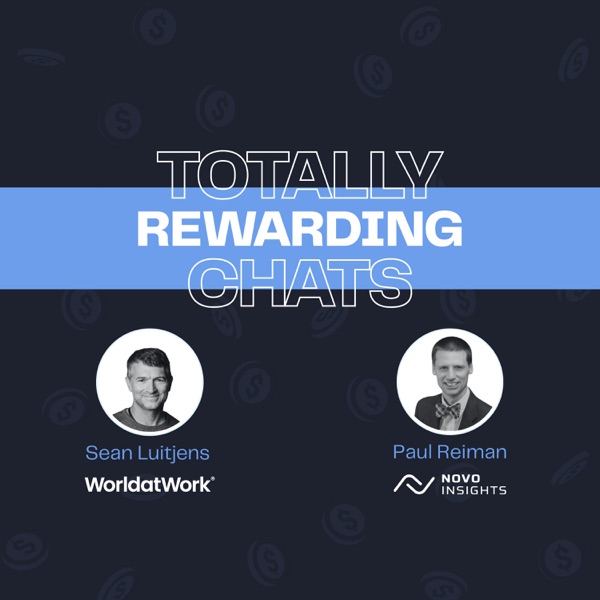
Totally Rewarding Chats
The Totally Rewarding Chats Series is brought to you by co-hosts Sean Luitjens, VP of Community Engagement and Strategic Partnerships at WorldatWork, and Paul Reiman, Founder & Managing Partner of Novo Insights. They will be jamming on all things total rewards and compensation technology with category thought leaders.
- Episodes
- 86
- Releases
- Weekly
- Typical length
- 44 min
- On air since
- 2024
- Latest episode
- 5 days ago
Episodes
86 episodes, newest first
-
44 min
Choosing the Right Compensation Data
Season 3, Episode 9
Show notes
This episode explains how compensation professionals and HR leaders can pick, judge, and use salary benchmark data when pricing jobs, especially in mid-market companies that have outgrown spreadsheets but are not ready for enterprise software. You will learn why pay data goes out of date so quickly, how to benchmark the full scope of a role instead of its title, how to handle title inflation, and how to price hybrid roles where one person does several jobs. The conversation also compares the strengths and weaknesses of traditional salary surveys, employee-reported pay data, and aggregated or predictive data sets, and covers what to do when a leader brings you a pay number generated by an AI tool. It closes with why executives still struggle to understand compensation, even though pay is often their largest expense. Chapters
03:49 – Compensation tools for companies outgrowing spreadsheets
13:09 – Why salary benchmark data goes stale so quickly
14:47 – Benchmarking the full job scope instead of the title
17:15 – Pricing the job versus fitting a job to a price
19:59 – Handling title inflation in smaller organizations
21:55 – How to price hybrid and blended roles
26:25 – Pros and cons of traditional salary surveys
28:52 – What employee-reported salary data is useful for
33:29 – Trusting aggregated and predictive pay data
39:37 – Why AI pay recommendations still need human review -
46 min
Aligning Talent Acquisition and Compensation on Offers
Season 3, Episode 8
Show notes
This episode explains how recruiters and compensation teams can work together to make better job offers, reduce pay compression, and improve early retention. A former head of global talent acquisition walks through how to define what a role actually needs before hiring begins, how to use job architecture, salary bands, and compa-ratio during the intake meeting, how to discuss pay with candidates when you cannot ask about salary history, and why very wide posted pay ranges weaken pay transparency. You will also learn why new hire offers often get far less scrutiny than merit increases, how recruiters can balance competing pressure from hiring managers, finance, and HR, and what compensation teams can do to educate recruiters instead of blaming them for pay problems.
Chapters
09:14 – How recruiters view compensation data and pay decisions
13:00 – Balancing hiring manager urgency with budget and internal equity
15:56 – Defining what a role really needs and avoiding up-leveling
18:12 – Using job architecture and compa-ratio in intake meetings
20:47 – How interview gaps make offer decisions harder to defend
23:07 – Why offers get less scrutiny than merit increases
24:09 – How much pay guidance recruiters actually need
26:30 – Discussing pay with candidates without asking salary history
27:35 – When wide posted pay ranges defeat pay transparency
42:04 – How hiring practices drive pay compression and how to fix it -
37 min
AI Adoption in HR Without Losing Control
Season 3, Episode 7
Show notes
HR and compensation leaders get a practical look at bringing AI into their organizations without creating new risks. HR consultant Jodi Brandstetter joins Sean and Paul to cover where AI works best in HR, why governance has to come first, and how to decide between the AI already built into your HR tools and building your own. They also share real examples of AI adoption going wrong, from employees pasting company data into free chatbots to an intern pulling data from several systems without anyone approving it. You will leave knowing how to start small, test AI on work your team already knows well, and set guardrails so employees can experiment safely. Chapters
09:24 – Where HR sees the most success with AI
10:51 – What organizations need before adopting AI
12:27 – Why to start AI on work you already understand
14:11 – Vendor AI versus building your own AI tools
16:22 – How to choose the right AI tool for your company
17:37 – Job matching, leveling, and embedded AI in compensation
20:45 – Why HR still needs basic AI knowledge
21:47 – Common ways AI adoption goes wrong in HR
28:08 – Using AI to rewrite a pay philosophy for different audiences
32:57 – How HR can become part of the AI conversation -
50 min
Rising Healthcare Costs and Employee Benefits Strategy
Season 3, Episode 6
Show notes
Healthcare costs keep rising, and employers have to decide who pays for it and what gets cut. This conversation looks at what is driving benefits costs right now, including specialty medications and GLP-1s. It covers how cost sharing affects the value of merit increases and why employees have trouble comparing benefits with salary. It also covers why total rewards statements can backfire when pay transparency is in place, and what employers can do to control spending without losing value. You will hear practical ideas: review underused benefits every year, use payroll data to see what employees actually use, and set different contribution levels for spouses and dependents. The episode also explains how lifestyle spending accounts work and why benchmarking is the best place to start a program review. Chapters
08:03 – Top benefits trends driven by rising healthcare costs
10:16 – Why the GLP-1 coverage debate is different now
13:16 – Employer versus employee cost sharing and merit increases
15:23 – Why employees struggle to connect benefits and pay
18:21 – Total rewards statements and pay transparency fairness
25:02 – Using company culture to explain benefit cost sharing
29:38 – Practical steps to control benefits costs
33:25 – Spouse coverage, wellness incentives, and cost caps
37:12 – How lifestyle spending accounts work
40:16 – Where to start when reviewing a benefits program -
49 min
Lessons Learned From Changing Lanes
Season 3, Episode 5
Show notes
Sean and Paul bring in Jessica Pontious, a compensation leader who spent a decade inside one company. Jess explains what actually changed when she started advising organizations across industries, sizes, and countries. The conversation covers why she left a large in-house rewards role, the fears that kept her from making the move sooner, which of those fears turned out to be unfounded, and what she wishes she had known about how much of comp knowledge transfers between industries. It also gets practical about how an outside advisor starts a new engagement, how to work with the person who built the program you were hired to examine, and why company size is a poor predictor of how well resourced a comp team is. Useful if you are weighing a move from in-house to advisory work, or if you are trying to understand how consultants approach a comp problem.
Chapters 02:17 – How a compensation career starts by accident
10:55 – Why leave a stable in-house rewards role
12:36 – The fears that come with switching to advisory work
14:00 – Handling imposter syndrome after one industry
16:01 – Why different backgrounds produce better advice
18:25 – What stays the same about comp everywhere
21:06 – Where to start with a brand new client
24:18 – Diagnosing the problem instead of selling a method
29:40 – The part of in-house work that does not transfer
33:42 – Why comp team size does not track company size
45:04 – One thing worth fixing about how HR shows up -
45 min
Is Merit Dead?
Season 3, Episode 4
Show notes
Sean and Paul get together with Christina Watts, Consultant with Marsh, to debate whether the traditional annual pay increase cycle still earns its place, and what companies can do instead. You will hear the case that the yearly increase process is trying to solve too many problems at once, a counterargument that it serves real human needs no spreadsheet captures, and a practical middle ground that separates market movement, internal equity, and performance into different tools. If you are deciding whether to keep, shrink, or replace your yearly increase cycle, this conversation walks through the budget math, the risks of shifting dollars into bonuses, how to stay competitive for talent, and why adding job levels may solve more than tweaking percentages. Chapters
08:36 – The argument that the yearly increase cycle satisfies no one
09:50 – What an annual increase is actually designed to fix
10:30 – Why raises are the wrong tool for rising benefit costs
11:23 – The human counterargument for manager discretion
12:29 – Cash, growth, and mission as competing motivators
14:18 – Does pay really not matter to some employees
17:00 – Why the budget number is the real breaking point
20:09 – Base salary as the worth of the job, bonuses for results
21:31 – Whether bonus dollars can be trusted to actually show up
23:33 – Building a budget from benchmarking instead of a flat percentage
28:30 – Competing for talent when base pay is capped
32:03 – Step progressions and job levels as an alternative
42:43 – The one thing worth fixing across HR -
42 min
Building Job Architecture That Actually Works
Season 3, Episode 3
Show notes
Travicka Keaton, Senior Manager of Compensation with Monogram Foods, walks through what it actually takes to build a job architecture inside a company that grew fast without one.
You will learn how long a real project takes, why salaried roles are usually sequenced before hourly and site-based roles, why manufacturing jobs are harder to level than software jobs, and how to keep executives informed without turning every week into a status meeting.
The conversation also covers a practical, low-tech approach to pay equity that uses performance, company tenure, general experience, and time in grade, and why that approach matched what an expensive third-party tool produced later.
If you are deciding whether to start a job architecture project, or trying to explain to leadership why it is not a pay increase exercise, this episode answers those questions directly.
Chapters
02:46 – Falling into compensation without planning to 09:56 – Why job architecture comes before everything else 10:48 – How long a real job architecture project takes 12:39 – Why manufacturing roles resist standard leveling 14:44 – Sequencing salaried roles ahead of hourly and site roles 17:17 – The actual problem a job architecture project solves 19:23 – Keeping executives informed without over-reporting 22:15 – Running the project in spreadsheets with AI help 25:56 – A practical framework for reviewing pay equity 28:25 – Why managers push back on equity decisions 35:39 – Why the pay conversation matters more than the number
-
49 min
A Look at the Larger HR Tech Space
Season 3, Episode 2
Show notes
This episode explains why the HR technology market feels chaotic right now and what that means for the people who buy and build it.
George LaRocque of WorkTech describes the market as an hourglass: established platforms at the top with time and options, AI-native newcomers at the bottom with speed and low overhead, and a crowded middle where most vendors are getting squeezed.
The conversation covers what actually protects a compensation technology company from being replaced by AI, why compliance stopped working as a sales message after the EU Pay Transparency Directive underdelivered, how buyers should assess whether a vendor will still exist in two years, and why a platform's track record integrating past acquisitions is becoming a real evaluation criterion.
Timestamps
01:38 – A career path from staffing practitioner to market analyst
03:37 – Why HR leaders need to track funding and M&A activity
12:07 – The hourglass model of the HR technology market
16:03 – Why the squeezed middle is where vendors are failing
18:24 – Whether compensation technology can ever be a platform
19:34 – How HCM platforms are absorbing compensation capabilities
22:32 – Why technology alone stopped being a competitive moat
27:20 – Compliance versus ROI as the real driver of purchases
30:30 – What happened when pay transparency rules lost their teeth
33:29 – How to assess whether a vendor will survive
37:22 – Consolidation, zombie vendors, and the next 18 months
43:52 – Why acquisition integration is becoming a buying criterion -
28 min
Season 3 Kickoff with Sean and Paul
Season 3, Episode 1
Show notes
This season-opening conversation covers what is shifting in compensation and total rewards heading into 2027, and what practitioners should watch.
Sean shares some exciting news and explains why a career move from building compensation software into association and community work made sense after three decades in the space, what professional communities need to do to actually deliver value to members, and why the methods that worked in comp for the last thirty years are unlikely to carry the next thirty.
Sean and Paul also preview the topics coming up this season, including the state of HR technology, whether merit pay still works, workforce analytics and modeling, EU pay transparency, moving between practitioner and consulting roles, and where AI realistically fits in comp planning.
Chapters 00:41 – Moving from building software into community work
02:45 – What members actually want from a professional association
03:53 – Changing careers after thirty years in one lane
06:10 – How a podcast survives a host's career change
08:19 – Finding unexpected common ground with a co-host
09:33 – What youth coaching teaches about team dynamics
12:14 – Setting goals based on what you can control
15:14 – Topics and themes coming this season
16:41 – The open debate over whether merit pay is dead
21:39 – Why the old compensation playbook is expiring
24:14 – Comp planning as the first real AI test -
53 min
End of Season 2
Season 2, Episode 50
Show notes
This episode explains why most compensation and HR teams are not getting real results from AI, and what to fix first. You will learn how to tell where your organization actually sits on the AI adoption curve, why inconsistent data fields like location and cost center quietly break AI analysis, how token-based pricing may change what HR software costs over the next few years, and what questions to ask a vendor before signing a multi-year deal. The conversation also covers how to choose a small set of data fields to clean instead of trying to fix everything, why a dashboard is not the same as an answer, and why data governance is becoming a job rather than a side task. Useful for compensation leaders, HR technology owners, and rewards teams of one who are being asked to do more with AI without a bigger budget.
Chapters 00:00 – Milestone episode and what keeps a weekly show running
06:00 – Rapid fire questions with the producer and the guest
12:30 – A career path from pre-med to compensation systems
17:00 – Where companies actually sit on the AI adoption curve
21:00 – Why AI hype still outpaces real capability
25:00 – AI mandates and measuring AI use in incentive plans
29:00 – How token pricing works and who absorbs the cost
34:00 – Why messy HR data blocks AI results
39:00 – Choosing which data fields to fix first
44:00 – Dashboards versus metrics that drive action -
44 min
Totally Rewarding Chats | Ep. 49: Best Practices in HR and a New Age Employee
Show notes
In this episode, Shayna Cooke from Dominion Payroll shares her journey from education to HR leadership, her approach to building effective programs, and how AI is transforming HR and payroll operations. Discover practical insights on change management, employee engagement, and leveraging technology for organizational growth.
Chapters
00:00 Introduction and Background
10:33 Best Practices in HR and Operations
19:01 Innovations in Employee Management
19:45 Embracing AI in the Workplace
24:11 Transforming Customer Support with Digital Employees
27:37 AI's Impact on Employee Roles and Responsibilities
30:48 Enhancing Performance Management with AI
36:25 Navigating Change Management in AI Adoption
41:02 The Future of AI and Human Collaboration
-
47 min
Totally Rewarding Chats | Ep. 48: Wisdom from a leadership and performance coach
Season 2, Episode 48
Show notes
Paul and Sean sit down with Holly Benner to explore what sustainable high performance looks like and how aligning your values with your work can lead to greater impact.
Holly shares insights from her experience at Merck Pharmaceuticals and MettaPerformance, including the importance of understanding what truly matters, investing in personal growth, and developing as a leader without sacrificing long-term well-being. From career alignment to leadership development, this conversation offers practical advice for building success that lasts.
Chapters:
00:00 Introduction to MetaPerformance Coaching
03:03 Understanding A Plus Personalities
05:53 The Balance of Performance and Happiness
08:40 Navigating Personal Values and Goals
11:47 Gender Dynamics in Coaching
14:49 The Importance of Integration in Life and Work
21:43 Navigating Professional Identity and Personal Branding
22:59 Coaching for Career Success
25:32 The Journey of Self-Realization
28:00 Defining a Rich Life vs. Wealthy Life
30:55 Aligning Values with Career Goals
33:18 Creating Action Plans for Change
36:17 The Importance of Scheduling and Discipline
39:09 Understanding Personal Constraints and Growth
41:39 The Value of Seeking Support and Coaching
44:43 Rethinking Career Progression in Organizations
-
46 min
Totally Rewarding Chats | Ep. 47: Perspective of a new comp professional
Season 2, Episode 47
Show notes
Paul and Sean sit down with Dane Hickey to explore the evolving world of compensation and what it takes to build a successful career in the field.
Dane shares lessons from his career journey, the value of resourcefulness and continuous learning, and why challenging traditional compensation practices can lead to better outcomes. From career growth to innovative thinking, this conversation offers practical insights for compensation and HR professionals looking to stay ahead.
Chapters:
0:02 Welcome and playful introductions
0:57 Introducing Dayne Hickey
3:47 Dayne’s background and path into compensation
10:00 Speed round and personal preferences
14:34 What Dayne wishes he knew earlier
19:27 Challenging traditional comp practices
23:27 Career growth, company context, and agility
24:58 Manager discretion and calibration sessions
33:04 Compensation, business partnering, and the art vs. science of pay
38:40 Workday, systems, and scaling decisions
41:15 Biggest HR challenge and closing advice
43:33 Final wrap-up and appreciation
-
47 min
Totally Rewarding Chats | Ep. 46: Managing a large global program
Season 2, Episode 46
Show notes
Paul and Sean sit down with Evren Yildirim to explore what it takes to successfully manage and scale HR programs across global organizations.
Evren shares insights from his experience leading initiatives across diverse regions, including the importance of flexibility, cultural understanding, and thoughtful implementation. From adapting programs to local needs to maintaining a consistent global strategy, this conversation offers practical guidance for HR leaders navigating international growth.
Chapters:
00:00 Introduction and Background of Evren Yildirim
10:02 Building Scalable Global Programs
19:54 Navigating Organizational Structures and Technology Implementation
22:59 Navigating Complexity in Global Payroll
27:13 Merit Management in Large Organizations
32:13 Flexibility vs. Agility in HR Processes
38:59 Understanding Local Contexts in Global Programs
44:16 The Future of HR: Storytelling and Automation
-
56 min
Totally Rewarding Chats | Ep. 45: The TR Space from a Recruiters perspective
Show notes
Paul and Sean sit down with Josh Mensinger to explore the current state of the HR and total rewards job market and what it takes to stand out in today's competitive hiring landscape.
Josh shares insights on how remote work has reshaped recruiting, what employers are looking for in today's candidates, and practical strategies for both job seekers and hiring teams. From hiring trends to career advice, this conversation offers valuable takeaways for HR professionals navigating an evolving workforce.
Chapters:
00:00 Welcome to the Dark Side of Recruitment
05:02 Josh Mensinger: The Recruiter’s Journey
09:57 The Shift in Recruitment Dynamics
13:19 Navigating the Total Rewards Market
19:57 The Future of Remote Work in Recruitment
20:35 Navigating Talent Acquisition Challenges
26:43 Evolving Skills in Total Rewards Leadership
33:43 Strategies for Job Seekers in Today's Market
45:31 Evaluating Recruiters and Job Opportunities
-
41 min
Totally Rewarding Chats | Ep. 44: UK Perspective on HR best Practices and EUPTD
Season 2, Episode 44
Show notes
Paul and Sean sit down with Kelly Light to explore how pay equity and pay transparency are evolving across the globe.
Kelly shares insights into UK pay gap reporting, global pay equity legislation, and the growing importance of evaluating work of equal value. From navigating international compliance to building fair and transparent compensation programs, this conversation offers practical guidance for compensation and HR leaders managing a global workforce.
Chapters:
00:00 Introduction and International Guests
02:25 Kelly Light's Career Journey
09:27 Compensation Strategies and Business Alignment
18:23 Understanding the Gender Pay Gap
24:15 EU Pay Transparency Directive and Its Implications
24:55 Navigating Legislative Changes in Pay Equity
28:22 Strategic Approaches to Global Compliance
30:26 Understanding Employee Expectations and Communication
32:54 Defining Work of Equal Value
35:50 Addressing Strategic Alignment in HR
-
43 min
Totally Rewarding Chats | Ep. 43: Annual Incentive plans
Season 2, Episode 43
Show notes
Paul and Sean sit down with Susan Malinowski to explore what makes short-term incentive programs successful and why thoughtful design matters just as much as the payout.
Susan shares best practices for building incentive plans that drive the right behaviors, communicating programs effectively, and measuring success over time. From the unique challenges facing mid-sized organizations to practical tips for improving incentive strategy, this conversation is full of actionable insights for compensation and HR leaders.
-
42 min
Totally Rewarding Chats | Ep. 42: Compensation best practices for small orgs
Season 2, Episode 42
Show notes
Paul and Sean sit down with Cassandra Vaughan to explore how small and mid-sized organizations can build effective HR and compensation programs without overcomplicating the process.
Cassandra shares practical strategies for leveraging compensation data, technology, and smart HR practices to support business growth. From creating sustainable pay programs to making informed decisions with limited resources, this conversation is packed with actionable advice for HR professionals and business leaders alike.
-
47 min
Totally Rewarding Chats | Ep. 41: Hanging with a technology anthropologist
Show notes
Paul and Sean sit down with Lee Cage to explore how organizations can approach technology transformation with a clear understanding of their business needs, culture, and long-term goals.
Lee shares lessons from leading large-scale HR technology initiatives, the importance of humility and continuous learning, and how leaders can make smarter technology decisions that drive real business impact. From organizational change to strategic tech selection, this conversation offers practical insights for HR and business leaders navigating transformation.
Chapters:
00:00 Introduction and Backgrounds
02:59 Best Practices in Organizational Transformation
05:52 Cultural Fit and Technology Selection
08:49 Understanding Organizational Needs
11:49 Navigating HR Tech and Implementations
23:06 The Urgency of Technology Adoption
25:53 The Role of Sales and Relationships in Tech
30:21 Navigating Technology Complexity
32:50 The Importance of Thoughtful Decision-Making
36:30 The Need for Technological Proficiency in HR
39:43 The Value of Continuous Learning in HR
-
42 min
Totally Rewarding Chats | Ep. 40: Hacking HR and what is HR working on
Season 2, Episode 40
Show notes
Sean and Paul sit down to discuss the latest trends shaping AI, HR, and workforce management. Drawing from recent industry events, customer conversations, and real-world observations, they explore how organizations are approaching AI adoption, what to watch for in the evolving HR technology landscape, and how leaders can separate hype from practical value.
From vendor strategies to emerging workforce trends, this conversation offers insights and takeaways for HR and compensation professionals looking to stay ahead of what's next.
Chapters:
00:00 Introduction and Setting the Scene
03:48 The Total Comp Tour Experience
07:34 Trends in Pay Transparency and AI
11:11 AI's Impact on Compensation Strategies
15:16 Understanding AI in Compensation Technology
18:55 Reflections on Digital Transformation and AI
21:28 Navigating AI Challenges and Opportunities
23:51 Cost Considerations in AI Implementation
26:52 Evaluating AI Vendor Value
28:49 Job Architecture and AI Efficiency
31:22 The Evolving Role of IT in AI
33:27 Building vs. Buying AI Solutions
35:44 The Future of AI in Organizations
Management lists
More Management shows picked out from the charts








More in Management
Placed highest on Apple Podcasts' Management chart right now