Podcast
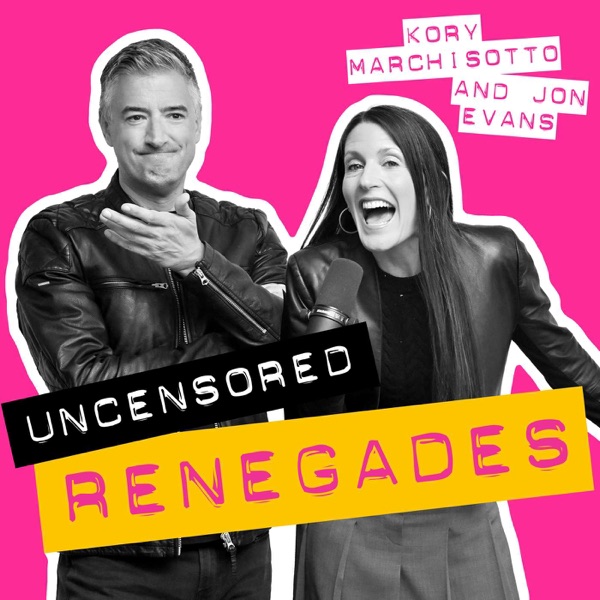
Uncensored Renegades
Kory Marchisotto, the trailblazing CMO of e.l.f., and Jon Evans, the perpetually fired host of the Uncensored CMO, team up to talk about the things leaders usually avoid talking about; failures, numbers, getting fired, and so on. The renegade duo fire through topics at speed, on a 20-minute time limit… ish.
- Marketing chart
- #114
- Episodes
- 43
- Releases
- Weekly
- Typical length
- 28 min
- On air since
- 2026
- Latest episode
- 5 days ago
Episodes
43 episodes, newest first
-
28 min
8 traits of a renegade leader
Episode 43
Show notes
Jon and Kory discuss the traits that separate renegade leaders from the rest.
From courage and risk tolerance to persistence and a bias for action, they explore what it takes to challenge conventional thinking inside large organisations, especially when bureaucracy, short-term pressure and fear of failure make bold decisions difficult.
Timestamps
00:00 - Start
01:16 - The core characteristics of a Renegade leader
02:39 - 3 surprising facts about Renegade leaders
03:49 - Why are companies so risk averse
08:00 - Challenging the status quo
13:47 - Why great leaders have courage
15:47 - Having a high risk tolerance
19:36 - Why e.l.f. want their competitors to get bigger
21:03 - Why great leaders provide air cover
21:49 - Renegade leaders are persistent
22:56 - Beating bureaucracy
24:18 - Do one thing, do it well
25:46 - Bias for action
26:56 - Jon does strategic distillation -
22 min
Why high-performing teams are built in person
Episode 42
Show notes
Jon and Kory discuss why, in an increasingly online world, some of the most important work still happens when people are together in a room.
From recording the podcast face-to-face to building high-performing teams, they explore what is lost when every interaction becomes a scheduled video call. Not productivity or convenience, but the trust, informal learning and unexpected opportunities that are much harder to create remotely.
They examine the changing attitude towards office life, including a Gen Z counter-swing towards real-world connection, and why some investors remain wary of backing fully remote teams. Kory also shares why e.l.f. is continuing to invest in in-person experiences, and how events can create connections that genuinely change someone’s career or life.
Timestamps
00:00 - Start
00:25 - Why we do the podcast in person
01:56 - How many companies are back in offices
04:46 - The Gen Z counterswing
07:33 - Why investors only invest in in-person teams
08:36 - The power of IRL within teams
12:19 - The unexpected opportunities that happen IRL
13:31 - Why e.l.f. are investing in in-person events
17:04 - How in-person events can change lives
18:27 - How do we use IRL in an ever online world
20:03 - A question from Jon and Kory -
20 min
Why leaders are using KPIs wrong
Episode 41
Show notes
Jon and Kory discuss why the metrics designed to improve performance can sometimes lead businesses in exactly the wrong direction.
Kory explains why e.l.f. does not tie compensation directly to KPIs, and why misaligned targets can discourage creativity, distort decision-making and even put good people at risk.
They also tackle a growing leadership problem: treating KPIs as instructions rather than information. How high should targets be? When do they create useful focus, and when do they become a ceiling? And what should leaders use instead when the work requires judgement, experimentation and long-term thinking?
Timestamps
00:00 - Start
01:01 - Do KPIs kill creativity?
02:56 - Goodhart’s law
03:31 - Why e.l.f. do not have compensation based KPIs
06:50 - Why misaligned KPIs can get you fired
09:37 - Can KPIs hold you back?
13:25 - People are using KPIs like AI
14:19 - How high should you set KPIs
16:19 - The better way to approach KPIs
19:09 - Are KPIs out? -
23 min
The serious case for humour (or humor)
Episode 40
Show notes
Jon and Kory discuss why humour is a serious advantage for brands, leaders and anyone trying to earn attention. They explore the science behind why humour makes ideas more memorable, why funny advertising has become less common, and the important difference between trying to be amusing and using humour to reveal a truth.
The conversation looks at what it takes to create the conditions for humour to thrive: giving people permission to take creative risks, planning for it rather than treating it as an afterthought, and understanding why brands such as Liquid Death make it look effortless.
A useful case for taking the work seriously, without always taking yourself quite so seriously.
Timestamps
00:00 - Start
01:44 - The serious case for humour
03:46 - The science behind humour
04:48 - Why humour is good for brands
06:28 - Why we are seeing less funny ads
09:23 - Humour touches on truth
11:17 - How to create the conditions for humour to thrive
14:25 - Why the best brands plan humour
17:38 - Why Liquid Death are so funny
19:37 - Can you use humour in a business context? -
29 min
The subtle art of persuasion: how leaders get buy-in
Episode 39
Show notes
Jon and Kory discuss why persuasion is one of the most important, and overlooked, skills in leadership.
Getting an idea approved is rarely about delivering the perfect argument in a meeting. It starts earlier: asking better questions, listening closely, understanding what different people need, and finding the stories that make an idea feel relevant rather than imposed.
They explore the role of verbal and non-verbal communication, why the meeting is never really just the meeting, and how to build support before a decision is formally on the table. Kory also shares practical lessons from winning over her own board, persuading an organisation to take risks, and turning advocates into people who will sell the idea when you are not in the room.
A practical episode for leaders who need to influence without forcing, build alignment without endless consensus, and give their best ideas a genuine chance of happening.
Links
• The Storyteller's Secret Book
Timestamps
00:00 - Start
00:56 - Is persuasion one of the secrets to being a successful leader?
02:24 - The importance of asking questions
05:00 - The art of listening
08:09 - Verbal and non verbal communication
10:49 - The power of communicating through stories
13:43 - The meeting is never actually the meeting
17:26 - How Kory sold So Many Dicks to her board
20:08 - Pursauding your company to take risks
21:17 - Getting advocates to sell your idea
26:03 - Identifying your leverage -
27 min
15 principles for building a customer-obsessed business
Episode 38
Show notes
Jon and Kory discuss the Wiseman’s 15 building blocks of customer obsession: a practical framework for turning customer-first intentions into the way an organisation actually works, exemplified by Dutch Bros.
As always, Kory brings the data behind customer-obsessed organisations before the duo discuss why internal politics so often gets in the way, and whether founder-led businesses have a natural advantage when it comes to staying close to the people they serve.
From empowering frontline teams to reading every customer complaint, they unpack the behaviours that make customer obsession tangible rather than a line in a values document. They also draw on lessons from Unreasonable Hospitality, challenge the limitations of the golden rule, and consider how leaders can embed a customer-first mindset across the business.
Links
• Founders Mentality Book
• Unreasonable Hospitality BookTimestamps
00:00 - Start
00:40 - Are you really obsessed with your customer?
01:59 - The data behind customer obsessed organisations
03:08 - Why internal politics gets in the way of the customer
05:15 - Are founder-led companies more customer led?
06:42 - The Wiseman’s building blocks
08:47 - Jon’s favourite customer first principles
10:25 - Example of empowering the front lines
13:11 - Kory’s favourite customer first principle
14:20 - Talking through all the Wiseman building blocks
17:13 - Why Kory reads all of e.l.f.’s customer complaints
19:13 - Customer first lessons from Unreasonable Hospitality
23:48 - Why Kory doesn’t like the golden rule
24:45 - How to embed these principles into your organisation -
23 min
How to make your teams perform 38x better
Episode 37
Show notes
Jon and Kory discuss how small, consistent improvements can transform team performance 38x in just 1 year. Using lessons from elite cycling and Team Sky’s famously obsessive approach to marginal gains, they explore why high-performing teams rarely improve through one dramatic intervention. Instead, progress comes from making incremental improvements that compound over time.
Links
• The Earned Life, Marshall Goldsmith - book
Timestamps
00:00 - Start
00:24 - Why Jon always wears black
02:45 - The compounding power of incremental gains
05:16 - Lessons from high performance sport
06:48 - The insane 1% improvements Team Sky made to win the Tour De France
11:21 - Applying cycling lessons to leadership
13:52 - Why you need to ask for feedback
16:27 - Just start
17:10 - How to see if you’ve actually made progress
20:28 - The paradoxical data on incremental progress -
22 min
9 decision making frameworks the best leaders use
Episode 36
Show notes
Jon and Kory discuss why making good decisions is one of the hardest – and most important – parts of leadership, and share the frameworks they use to make better choices when the answer isn't obvious.
From knowing when to trust the data and when to follow your gut, to de-risking big decisions and playing “angel's advocate”, they explore practical ways to challenge your own thinking. They unpack Solomon's paradox, the 10:10:10 rule, automatic negative thoughts and why sometimes the smartest thing you can do is ask someone else for help.
They also explore what happens when you stop actively thinking about a problem, some surprisingly useful Japanese wisdom, and one particularly simple test: would you make the same decision drunk?
Whether you're facing a huge strategic choice or simply stuck overthinking, these are 9 tools to help you make decisions with greater clarity and confidence.
Links
• G.O.A.T. Wisdom Book
• Greg Hahn on Uncensored CMO
• The Brain at Rest Book (why your brain can make good decisions when you're not thinking)Timestamps
00:00 - Start
00:26 - Why Jon looks “savagely tanned”
01:19 - Why decision making is hard
04:16 - When you need to trust the data or your gut
06:43 - How to make a decision
07:29 - How to de risk a decision
09:30 - Try playing “angel’s advocate”
10:50 - Solomon’s paradox when making a decision
11:51 - Squash the ants (automatic negative thoughts)
12:23 - The 10:10:10 rule
14:36 - Ask for help
15:22 - Make space for your default mode network
17:06 - Would you make the same decision drunk?
17:47 - Japanese wisdom for decision making
20:29 - The stats on why this is important -
29 min
The leadership offsite that changed how we work (on a horse ranch)
Episode 35
Show notes
Today Kory shares the lessons from taking her leadership team offsite and deliberately putting them into an unfamiliar environment - a horse ranch. Jon and Kory explore why pattern disruption can help teams break old habits, the difference between a group of strong individual contributors and a genuinely connected team, and why getting outside your comfort zone can reveal how you really work together.
They also discuss the language of connection, learning to ask for help, why pressure isn't always the answer, and how to turn an offsite from a memorable experience into lasting behavioural change. Because however busy your team feels, sometimes stepping away from the work is exactly what helps you do the work better.
Links
• G.O.A.T. Wisdom Book
• EQ2 Horse Ranch Leadership OffsiteTimestamps
00:00 - Start
00:37 - Why Kory takes her team offsite
03:01 - Why you need to transform your team
04:14 - The power of pattern disruption
07:13 - Individual contributors vs working as a team
11:20 - Going out of your comfort zone
13:40 - The language of connection
18:21 - Learning how to ask for help
23:44 - The power is not in the pressure, it’s in the release
25:40 - How Kory is implementing the lessons in the team
27:03 - You’re too busy to not do this
-
28 min
6 essential leadership frameworks that will make you a better leader
Episode 34
Show notes
Today, Jon and Kory open up their personal leadership toolbox, sharing the mental models and frameworks they rely on to make better decisions, communicate more effectively, and build high-performing teams.
From understanding your audience before creating content to aligning teams around a clear vision, raising the bar through belief and repetition, and creating dedicated thinking time, these are the practical tools that have shaped their careers. They also discuss why spending time with people smarter than you is one of the fastest ways to grow, and finish with the one framework that underpins everything else.
Timestamps
00:00 - Start
01:11 - Tools for your toolbox (in work and life)
01:57 - Framework 1: A.B.C. (Audience Before Content)
07:43 - Framework 2: A.B.C. (Always Be Curious)
09:14 - Framework 3: V.A.E. (Vision, Alignment, Execution)
13:43 - Framework 4: Raising the B.A.R. (Belief, Attention, Repetition)
18:08 - Bonus tool: spend time with people smarter than you
18:36 - Framework 5: 3, 5, 7, 9
22:31 - Framework 6: T Time!
26:43 - The framework to rule all frameworks -
28 min
How great leaders stay grounded
Episode 33
Show notes
Today Jon and Kory explore the leadership habits that keep successful organisations moving forward. Drawing on research, personal experience and examples from some of the world's best businesses, they discuss why the strongest leaders surround themselves with people who will tell them the truth, stay relentlessly close to their customers, and never shy away from difficult conversations.
Timestamps
00:00 - Start
00:56 - How to stay grounded when you’re successful
02:52 - Does success drive complacency?
04:14 - What the data says about successful companies
06:07 - You need people that are prepared to tell you the truth
09:25 - Why you need to have the tough conversations
12:45 - Spend time with your customer
15:07 - The power of saying no
17:42 - Working with the right people
23:06 - Define your organisation
25:22 - Play to win -
33 min
The new 4P's of marketing for leaders
Episode 32
Show notes
For decades, marketers have relied on the traditional 4 Ps: Product, Price, Place and Promotion. But as the role of the CMO has evolved, so too have the skills needed to succeed as leaders.
Today, Jon and Kory introduce a new framework for modern marketing leadership, inspired by research Jon conducted with TikTok. Rather than focusing on the marketing mix, these five Ps focus on what today's leaders need to excel inside their organisations: People, Planning, Persuasion and Performance. (Plus a bonus P that isn't a P - Storytelling.)
Timestamps
00:00 - Start
00:48 - A new set of marketing Ps
04:38 - P1 - People
08:05 - P2 - Planning
14:57 - P3 - Persuasion
23:52 - P4 - Performance
28:55 - P5 - Storytelling -
27 min
How to launch a brand from scratch
Episode 31
Show notes
Launching a brand is one of the hardest things you can do. Today, Jon and Kory break down the principles they've learned from building brands, products and podcasts from the ground up.
They explore the three ingredients every successful launch needs: a crystal-clear value proposition, surrounding yourself with exceptional people, and the persistence to keep going when progress feels slow. Along the way, they discuss why we're often too close to our own ideas, how constraints can become a competitive advantage, and why the best launches rarely happen by accident.
Timestamps
00:00 - Start
00:48 - How hard is it to build a brand from scratch?
02:52 - The 3 things that need to be true for a succesful launch
03:24 - Having a clear value prop
10:55 - Are we too close to our own proposition?
15:02 - Surround yourself with greatness
20:50 - Persistence
23:59 - The power of constraint -
29 min
The startling power of surprise
Episode 30
Show notes
Fresh from Jon Evans' Cannes Lions talk, this episode explores why surprise is one of the most powerful tools in leadership. Drawing on behavioural science, neuroscience and real-world campaigns, Jon and Kory unpack how unexpected moments capture attention, create stronger memories and help brands stand out in an increasingly predictable world.
Putting their marketing hat on, they look at examples such as Tubi's headline-grabbing Super Bowl campaign and e.l.f.'s unconventional product launch strategy. Along the way, they explain the science of Reward Prediction Error, discuss how to sell bold ideas inside large organisations, and reveal why partnerships can become a powerful source of unexpected creativity.
Watch the new e.l.f. haircare advert:
https://www.youtube.com/watch?v=uk2KmRlx7eATimestamps
00:00 - Start
01:38 - The origin story of Uncensored CMO
04:03 - Why surprise is the antidote to dull
05:23 - The data behind the power of surprise
07:52 - Tubi’s example of using the power of surprise
09:58 - Understanding Reward Prediction Error
13:09 - Surprising the judges at Cannes Lions
15:45 - Selling big ideas into the boardroom
17:47 - e.l.f.’s surprising approach to their new hair product launch
20:29 - The power of partnerships to be surprising
22:23 - Baking surprise into your culture
25:41 - Why you need to keep delivering new surprises -
31 min
Three Pillars of Great Leadership
Episode 29
Show notes
Jon and Kory explore the three qualities they believe define great leadership. From building genuine proximity with your team to being fully present in the moments that matter and communicating with clarity, they break down a simple leadership framework that can be applied whether you're leading a global organisation or your first team.
Timestamps
00:00 - Start
01:53 - Presence as a leader
03:31 - The 3 pillars of great leadership
03:52 - Pillar 1: Proximity
11:47 - Pillar 2: Presence
18:41 - Pillar 3: Clarity of Communication
28:26 - BCG on leadership -
35 min
Tarang Amin, CEO of e.l.f. Beauty, on enabling 29 quarters of consecutive growth
Episode 28
Show notes
Tarang Amin, CEO of e.l.f. Beauty, joins Jon and Kory for a special live episode of Uncensored Renegades to discuss the leadership philosophy behind one of the most remarkable growth stories in consumer brands.
Under Tarang's leadership, e.l.f. has delivered 29 consecutive quarters of growth while building a culture centred on ownership, transparency and long-term thinking. In this conversation, Tarang and Kory share why every employee became a shareholder, how the company balances ambitious growth with a people-first culture, and the leadership habits that have helped e.l.f. scale at an extraordinary pace.
The trio also discuss Kory's journey to becoming CMO of e.l.f., managing healthy conflict at the executive level, the rationale behind e.l.f.'s acquisition of Rhode, and why communication remains one of the CEO's most important responsibilities.
Timestamps
00:00 - Start
02:27 - How Tarang and Kory met
06:30 - How Kory got the job at e.l.f.
07:26 - Why e.l.f. made everyone in the compary shareholders
10:48 - The challenges of offering everyone equity
12:35 - How do you get 29 quarters of growth sustainably
16:46 - Why Tarang writes a personal newsletter
21:28 - How to handle conflict at the c-suite level
27:53 - Why e.l.f. aquired Rhode -
31 min
3 key insights from Cannes Lions 2026
Episode 27
Show notes
Live from Cannes Lions, Jon and Kory reflect on the biggest themes, surprises and lessons from this year's festival.
From experiencing unreasonable hospitality firsthand to the continued rise of creators and the rapid evolution of AI, they unpack what really stood out, and why many of the biggest takeaways had very little to do with technology.
Whether you made it to the Croisette or followed along from afar, this is the Uncensored Renegades debrief on what actually mattered at Cannes Lions 2026.
Timestamps
00:00 - Start
01:50 - Unreasonable hospitality in action
12:22 - The power of creators at Cannes
15:25 - How brands can collaborate with creators
19:52 - The AI shift in 2026
23:00 - The impact of the World Cup
26:09 - How brands are getting involved with the World Cup
28:59 - Final takeaway - getting back to basics -
26 min
Why culture eats strategy for breakfast
Episode 26
Show notes
Jon and Kory tackle one of the most talked-about, and most misunderstood, aspects of leadership: culture.
What actually is culture? How do you know if yours is healthy? And why do some organisations consistently attract great people while others struggle?
Drawing on research, personal experience, and leadership lessons, Jon and Kory discuss how culture is created, how it can be changed, and why hiring for cultural fit is only part of the story. They also explore why even brilliant people can fail in the wrong environment, how agency partners should become an extension of your culture, and why lasting change starts with taking ownership yourself.
Timestamps
00:00 - Start
00:35 - What does the data say about building culture
02:06 - Signs of a healthy culture
04:52 - What actually is culture?
06:27 - The different types of cultures
10:14 - How to hire for people that meet your culture
12:48 - How culture can feed into your agency partners
13:59 - How to change a culture
17:01 - Why is change scary?
20:17 - Dealing with the right person in the wrong culture
21:35 - How our beliefs shape our reality
24:03 - Why you need to take ownership to change the culture -
29 min
Take the leap - why taking risks can lead to big rewards
Episode 25
Show notes
Today, Jon and Kory discuss the moments that define careers. The ones where you have to leap before you know exactly how things will turn out.
From leaving secure jobs to betting on yourself, they reflect on the decisions that shaped their own careers and why waiting until you feel "ready" is often the biggest barrier to growth. They explore the importance of having a strong support network, embracing discomfort, and accepting that sometimes you need to take a step backwards before you can move forwards.
This is an honest conversation about risk, resilience, and why the biggest opportunities often sit just outside your comfort zone.
Timestamps
00:00 - Start
00:35 - Taking a giant leap
01:28 - A moment Kory took a giant leap
04:51 - Taking the leap before you feel ready
06:46 - Why Jon made the giant leap to go full time on the podcast
08:45 - The importance of a support network
10:10 - Get comfortable being uncomfortable
14:50 - The risks of taking the leap of faith
19:02 - Sometimes you have to take a step back to take a step forward
22:01 - Are you willing to lose the battle to win the war?
24:42 - You need a high risk tolerance -
32 min
Why being human can be your competitive advantage
Episode 24
Show notes
Jon and Kory explore why human connection matters more than ever in a world increasingly dominated by screens, automation, and AI.
From the power of in-person experiences to the importance of empathy in business, they discuss why relationships are still the foundation of great leadership, marketing, and culture. Jon explains why he only records podcasts face-to-face, Kory shares why B2B is ultimately human-to-human, and together they unpack the mistakes agencies often make by forgetting the people behind the pitch.
Timestamps
00:00 - Start
01:42 - What do we mean by human to human?
05:11 - Why we need more humanity now
06:55 - Why Jon only does podcasts in person
09:56 - What the data says about being in person
11:25 - The power of an in person experience
16:03 - Why experience matters
18:58 - Why being human matters in B2B
22:38 - Human relationships and the impact they can have
25:21 - What every agency gets wrong in a pitch
25:54 - How to be more human
27:33 - Everyone has something going on
On these lists
Uncensored Renegades is one of the shows picked out on this list
More in Management
Placed highest on Apple Podcasts' Management chart right now