Podcast
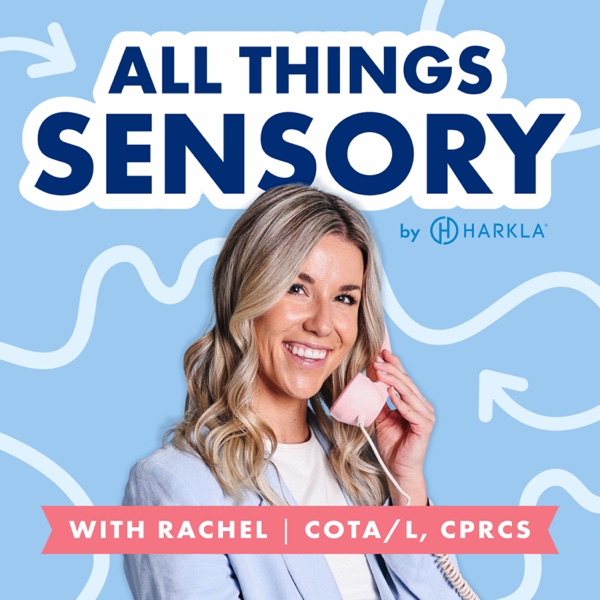
All Things Sensory by Harkla
Rachel Harrington, COTA/L, CPRCS is a passionate pediatric therapy practitioner who answers your questions related to all things sensory, occupational therapy, parenting, self-care, nutrition, and health, from a therapist’s perspective. Providing raw, honest, fun ideas, and strategies, for parents and families to implement into daily life. Great for those who work with children with sensory processing disorder, special needs, autism, and ADHD. This podcast is brought to you by Harkla, where our goal is to help those with special needs live happy and healthy lives!
- Episodes
- 430
- Releases
- Weekly
- Typical length
- 23 min
- On air since
- 2018
- Latest episode
- 1 week ago
Episodes
430 episodes, newest first
-
1 hr 6 min
Ehlers-Danlos Syndrome: What Therapists Need to Know with Abby Phillipson
Episode 423
Show notes
In this episode, I sit down with Abbey Phillipson, a strength and conditioning coach and disability advocate who lives with classical Ehlers-Danlos syndrome (EDS). Abbey shares how she went from being the kid who sat out of gym class to helping people with disabilities find their place in sports and strength training.
We talk about her childhood diagnosis, spinal surgery as a teenager, and what changed for her when she started building strength. Of course, we get into proprioception, too! Abbey describes what it felt like to struggle with body awareness and how learning to move differently became an important part of understanding her own body.
But this conversation goes beyond movement. Abbey shares the healthcare experiences that led her to advocate for people with rare EDS types and why knowing a diagnosis isn’t the same as knowing the person in front of you. For my fellow OT practitioners, there’s an important reminder here about listening to lived experience, questioning our assumptions, and helping clients participate in the things that matter to them.
Thanks for listening 🩷 Share this with a fellow practitioner who values learning directly from the people we support.
Links
https://www.instagram.com/abbeyphillipson/
https://collagenadvocacynetwork.org/
We’d love to answer your questions on the podcast! Fill out this form - https://harkla.typeform.com/to/ItWxQNP3
All Things Sensory Podcast Instagram
https://www.instagram.com/allthingssensorypodcast/
https://www.youtube.com/c/HarklaFamily
-
19 min
#422 - OTs Have Sensory Needs, Too: How to Support Yours
Episode 422
Show notes
I spend so much time thinking about what my clients and my own kiddos need. More movement? Less noise? A sensory break? But sometimes the person who needs those supports is me. And knowing all the regulation strategies doesn’t mean I always remember to use them myself.
In this episode, I’m turning the attention back to our own nervous systems. I talk about recognizing sensory overload, finding strategies that work for you, and building them into your day before you’re completely overwhelmed. For my fellow OT practitioners, that includes taking a closer look at our therapeutic use of self. How we connect, respond, and support co-regulation matters just as much as the tools we bring into a session.
This is exactly why I wrote Grounded: A Nervous System Regulation Guide for Overstimulated Parents. I’m sharing the experiences behind the book and how it brings together sensory strategies, movement, and practical daily routines. Whether you’re supporting clients, raising kids, or doing both, the goal isn’t to be calm every second. It’s to understand your own needs and have tools to come back to when things feel like too much.
Thanks for listening 🩷 Share this with a fellow practitioner who spends their day supporting everyone else and could use a reminder that their nervous system matters, too.
Links
Win Over $3,000 in Sensory Support! 💙 Click below to enter!
https://harkla.co/pages/spd-month-giveaway
Pre-order Grounded and explore the preorder bonuses
http://sensationalbrain.com/landing/grounded/
We’d love to answer your questions on the podcast! Fill out this form - https://harkla.typeform.com/to/ItWxQNP3
All Things Sensory Podcast Instagram
https://www.instagram.com/allthingssensorypodcast/
https://www.youtube.com/c/HarklaFamily
-
38 min
#421 - Sensory Processing Disorder Explained
Episode 421
Show notes
In honor of Sensory Processing Disorder Awareness Month, I’m going back to the basics and diving into one of my all-time favorite topics: sensory processing.
In this episode, we’re talking about sensory modulation, over- and under-responsiveness, sensory craving, and all eight sensory systems. We’ll also look at how sensory differences can show up during everyday occupations like dressing, eating, toileting, learning, play, and transitions.
But I don’t want to stop at understanding sensory processing, I want to talk about how we can actually support it in practice. We’ll get into proactive sensory input, movement, heavy work, sensory spaces, and helping our clients build awareness of what their own bodies need.
One of my biggest reminders for therapists: instead of immediately asking, “How do I stop this behavior?” Let's get curious and ask, “What is their nervous system trying to tell me?”
Whether you’re newer to pediatric OT or just need a good sensory processing refresher, this episode will help you get back to the basics and think about sensory needs through a practical OT lens. This is also a great episode to share with families if they need help understanding sensory processing more!
Thanks for being here 🩷 If this episode sparked a clinical lightbulb moment, come find me at @allthingssensorypodcast and tell me what you’re noticing in your practice.
Links
We’d love to answer your questions on the podcast! Fill out this form - https://harkla.typeform.com/to/ItWxQNP3
Episode #368 - Ocular Motor Skills
https://open.spotify.com/episode/6yGQpQ6r0NbOsOGIK2N0DE
Episode #372 - Crawling & Ocular Motor Skills
https://open.spotify.com/episode/2zf5VSTe0fxfmP6cFzTrG5
Episode #225 - ADHD Tips, Tricks & Info
https://open.spotify.com/episode/0qv4CsQGAXHaPaANCKNZWj
Episode #34 - What is Auditory Processing Disorder?
https://open.spotify.com/episode/1M48a9mEy0IVU4bB6iJvGR
Episode #367 - Auditory Processing vs Attention Issues
-
5 min
#420 - Quick Update for our ATS Family!
Episode 420
Show notes
Hi podcast fam! I just wanted to have a quick pow-wow and chat about what this season is going to look like. As many of you may know already, my son is starting kindergarten this fall and I'll be doing a homeschool program with him. Exciting but also very time consuming!
We also have a team member getting married this fall and we are excited to travel and celebrate with her family!
And of course, we have been working on a really exciting product launch: My Weighted Vest! It's finally coming to life and it's been a really time consuming product to bring (back) to life!
That being said, it's a crazy time for our whole team, which is why we're pressing the pause button on recording new episodes, so we can all find our footing over the next few months.
As always, I appreciate your support and dedication! I'll be back soon as your podcast host and give you all the homeschooling tea you could ever imagine!
Make sure you're subscribed here so you get notified when our next episode launches!
And we'll share all the pictures, videos and updates on Instagram in the meantime: @allthingssensorypodcast
Love you all and I'll be back soon!
Links
We’d love to answer your questions on the podcast! Fill out this form - https://harkla.typeform.com/to/ItWxQNP3
All Things Sensory Podcast Instagram
https://www.instagram.com/allthingssensorypodcast/
https://www.youtube.com/c/HarklaFamily
-
23 min
#419 - Research Papers Every OT Should Read in 2026
Episode 419
Show notes
If you're an occupational therapist who loves evidence-based practice, this episode is for you. In this episode, I'm sharing some of my favorite research articles that I think every pediatric OT should have bookmarked. These are the studies I come back to again and again, whether I'm teaching, creating content, working with clients, or answering questions from other therapists.
I’ll cover research on sensory processing, primitive reflexes, ADHD, interoception, proprioception, nature play, classroom lighting, whole body vibration, pregnancy, and so much more. I also share why these studies have stood out to me and how they've shaped the way I think about child development and occupational therapy.
Whether you're a new grad or a seasoned clinician, I hope this episode gives you a few new resources to explore and inspires you to keep asking questions and digging into the research.
Thanks for being here 🩷 If you have a favorite research article that's changed your practice, send it my way! I’m always looking to learn something new!
Links
We’d love to answer your questions on the podcast! Fill out this form - https://harkla.typeform.com/to/ItWxQNP3
Link to All Research Articles Mentioned
Interview with Dr. Tessa Grigg
Episode #409 - Using Vibration Plates with Kids
https://harkla.co/blogs/podcast/409-using-vibration-plates-with-kids-benefits-risks-safety
All Things Sensory Podcast Instagram
https://www.instagram.com/allthingssensorypodcast/
https://www.youtube.com/c/HarklaFamily
-
25 min
#418 - The School OT Guide to IEPs, 504s & Classroom Support
Episode 418
Show notes
Starting your first school-based OT job can feel overwhelming. Between IEP meetings, evaluations, accommodations, and the endless acronyms, it can be hard to know where to start.
In this episode, we break down the basics of school-based occupational therapy. Amanda shares what she wishes every new school-based OT knew before walking into their first IEP meeting, explains the differences between IEPs, 504 plans, and MTSS, and offers practical tips for collaborating with teachers, administrators, and the rest of the educational team.
We'll also discuss how school-based OT differs from clinic-based practice, why goals need to be educationally relevant, what consultative services actually look like, and how to feel more confident advocating for students while working as part of a multidisciplinary team.
Whether you're a new graduate, transitioning into the schools, or just curious about how school-based OT works, this episode is packed with practical advice to help you feel more prepared.
Links
We’d love to answer your questions on the podcast! Fill out this form - https://harkla.typeform.com/to/ItWxQNP3
Sensory Strategies for the Classroom Course
All Things Sensory Podcast Instagram
https://www.instagram.com/allthingssensorypodcast/
https://www.youtube.com/c/HarklaFamily
-
19 min
#417 - Fear Paralysis Reflex: Signs Every Pediatric Therapist Should Know
Episode 417
Show notes
Have you ever worked with a child who seems extremely cautious, shuts down when something feels hard, or gives up before they even get started? There may be more going on than meets the eye.
In this episode, we take a closer look at the Fear Paralysis Reflex (FPR), one of the lesser-known primitive reflexes that can have a significant impact on a child's development. We explain what the reflex is, why it serves an important purpose before birth, and what it can look like if it's retained beyond infancy.
Together, we explore how a retained Fear Paralysis Reflex may contribute to challenges like anxiety, perfectionism, selective mutism, low self-esteem, emotional regulation, and an intense fear of making mistakes. We also share why it's so important to look beyond behavior, connect with the child in front of you, and remember that your therapeutic relationship is often more powerful than any activity you have planned.
Whether you're a therapist, educator, or parent, this episode will help you better understand the nervous system and offer a more compassionate lens for supporting children who seem fearful, hesitant, or overwhelmed.
Links
We’d love to answer your questions on the podcast! Fill out this form - https://harkla.typeform.com/to/ItWxQNP3
All Things Sensory Podcast Instagram
https://www.instagram.com/allthingssensorypodcast/
https://www.youtube.com/c/HarklaFamily
-
19 min
#416 - Is Your Therapy Space Helping... or Hurting?
Episode 416
Show notes
Here's a hot take: sometimes the most dysregulating part of occupational therapy is the clinic itself.
In this episode, we take a closer look at how the therapy environment can impact a child's nervous system and why the space around us is just as important as the intervention itself. From fluorescent lighting and visual clutter to noisy waiting rooms, strong fragrances, and harsh cleaning products, we discuss simple ways to create a calmer, more regulation-friendly environment for both kids and therapists.
We also share practical ideas for reducing sensory overload, organizing therapy spaces with intention, making thoughtful product swaps, and creating an environment that helps children feel safe, regulated, and ready to learn.
Whether you're an OT, PT, SLP, educator, or clinic owner, this episode will leave you thinking differently about the spaces where we support children every day.
Thanks for listening 🩷 We'd love to hear from you! What's one small change you've made, or want to make, to create a calmer therapy environment?
LINKS
We’d love to answer your questions on the podcast! Fill out this form - https://harkla.typeform.com/to/ItWxQNP3
All Things Sensory Podcast Instagram
https://www.instagram.com/allthingssensorypodcast/
https://www.youtube.com/c/HarklaFamily
https://www.instagram.com/harkla_family/
https://harkla.co/collections/courses
-
24 min
#415 - The Real Cost of Screens in Classrooms
Episode 415
Show notes
I know this might be a controversial opinion, but I don't think screens belong in preschool classrooms.
In this solo episode, I share what I've observed as a school-based occupational therapist and why I believe we've become too reliant on technology in early education. This isn't about being anti-screen or anti-teacher. It's about asking whether screens are replacing the hands-on, movement-rich experiences that young children actually need to develop.
I talk about SMART Boards, educational apps, handwriting, fine motor development, free play, and why movement, creativity, and real-world learning can't be replaced by a screen. I also share practical ideas for parents, therapists, and educators who want to reduce screen time without eliminating technology altogether.
At the end of the day, technology isn't the enemy, but development has to come first.
Thanks for listening 🩷 I'd love to hear your perspective. Do you think screens belong in preschool classrooms? Let me know on Instagram or in the comments!
Links
We’d love to answer your questions on the podcast! Fill out this form - https://harkla.typeform.com/to/ItWxQNP3
All Things Sensory Podcast Instagram
https://www.instagram.com/allthingssensorypodcast/
https://www.youtube.com/c/HarklaFamily
-
14 min
#414 - How to Write Primitive Reflex Goals That Actually Get Approved
Episode 414
Show notes
If you're writing goals for primitive reflex integration, this episode is for you.
In this episode, we break down one of the biggest mistakes therapists make when writing goals for primitive reflex integration and explain how to connect reflex work to meaningful, functional outcomes that matter to families, IEP teams, and insurance providers.
We discuss why reflex integration itself should never be the goal, how retained reflexes can impact skills like handwriting, attention, coordination, regulation, and participation, and how to write goals that focus on the real-life challenges a child is experiencing. We also share practical examples of how to connect primitive reflex interventions to functional outcomes that support independence and participation.
Whether you're an OT, COTA, PT, or therapist interested in reflex integration, this episode will help you think differently about goal writing, advocacy, and demonstrating the value of the services you provide.
Thanks for listening 🩷 If you work in pediatrics, we'd love to hear from you. What's one goal-writing tip that's helped you better advocate for the kids you support?
Links
We’d love to answer your questions on the podcast! Fill out this form - https://harkla.typeform.com/to/ItWxQNP3
Primitive Reflex Digital Course
https://harkla.co/products/primitive-reflexes-course
All Things Sensory Podcast Instagram
https://www.instagram.com/allthingssensorypodcast/
https://www.youtube.com/c/HarklaFamily
-
22 min
#413 - It's Not Just You: OT Burnout Is More Common Than You Think
Episode 413
Show notes
If you asked 100 occupational therapists whether they've experienced burnout, how many do you think would say yes?
In this episode, we have an honest conversation about burnout in the OT profession. We share our own experiences working in clinics, schools, and early intervention, and talk about the realities that many therapists face every day: overwhelming caseloads, endless documentation, productivity demands, long commutes, emotional exhaustion, and the pressure to constantly do more.
We also discuss something that doesn't get talked about enough: how caring deeply about the children and families we serve can make it difficult to leave work at work. From challenging cases to social media comparison, there are so many factors contributing to burnout that go beyond simply being "too busy."
Most importantly, we share practical strategies that have helped us protect our nervous systems, advocate for ourselves, set better boundaries, and create more sustainable careers.
Thanks for listening 🩷 Whether you're a new grad, a seasoned therapist, or somewhere in between, we hope this conversation helps you feel a little less alone. And reminder: GO ON THE TRIP. We’d love to hear your thoughts: have you experienced burnout and what have you used to combat it?
Links
We’d love to answer your questions on the podcast! Fill out this form - https://harkla.typeform.com/to/ItWxQNP3
Primitive Reflex Digital Course
https://harkla.co/products/primitive-reflexes-course
All Things Sensory Podcast Instagram
https://www.instagram.com/allthingssensorypodcast/
https://www.youtube.com/c/HarklaFamily
-
26 min
#412 - Why We're Screening More COVID-Era Kids for Primitive Reflexes
Episode 412
Show notes
If your child was born between 2018 and 2022, should they have their primitive reflexes screened?
In this episode, we explore how the COVID-19 pandemic may have impacted child development and why Rachel believes primitive reflex screenings should become a routine part of early childhood care. From pregnancy stress and delayed services to increased screen time, fewer social opportunities, and less movement, they discuss how these experiences may have affected (and continue to affect) kids today.
We also explain what primitive reflexes are, how retained reflexes can impact learning, behavior, coordination, and emotional regulation, and what signs parents, therapists, and educators may want to watch for.
This conversation isn't meant to cause fear or point blame. We want people to get curious, focus on early identification, and give kids the support they need to thrive.
Thanks for listening 🩷 We'd love to hear your thoughts. Do you have a pandemic-era child, and have you noticed any of the challenges we discussed?
Links
We’d love to answer your questions on the podcast! Fill out this form - https://harkla.typeform.com/to/ItWxQNP3
Primitive Reflex Digital Course
https://harkla.co/products/primitive-reflexes-course
All Things Sensory Podcast Instagram
https://www.instagram.com/allthingssensorypodcast/
https://www.youtube.com/c/HarklaFamily
-
1 hr 5 min
#411 - What Lactation Consultants Want Parents to Know: An Interview with Wild Milk Co.
Episode 411
Show notes
Feeding a baby can feel overwhelming, especially when things don't go as planned. In this episode, I sit down with Kristin and Maureen from Wild Milk Co., two International Board Certified Lactation Consultants (IBCLCs), for a conversation about infant feeding, lactation support, oral ties, and what families really need to know during those early months.
We talk about common feeding challenges like painful latch, supply concerns, reflux, colic, and bottle feeding struggles, as well as how oral function and oral ties can impact feeding. We also explore the connection between feeding, sensory processing, nervous system regulation, and infant development, along with what families can expect when working with an IBCLC.
Whether you're breastfeeding, bottle feeding, pumping, or doing a combination of all three, this episode is full of practical guidance, reassurance, and encouragement to help you feel more confident in your feeding journey.
Thanks for listening 🩷If this episode helped you feel more supported in your feeding journey, share it with another parent who might need to hear it.
LINKS
We’d love to answer your questions on the podcast! Fill out this form - https://harkla.typeform.com/to/ItWxQNP3
Follow Wild Milk Co. on Instagram
https://www.instagram.com/wildmilkco
https://www.amazon.com/Real-Food-Pregnancy-Prenatal-Nutrition/dp/0986295043
https://www.lactationmasterclass.com/
How to find a masterclass trained IBCLC:
https://www.lactationmasterclass.com/findanibclc
Idaho Breastfeeding Coalition:
https://www.idahobreastfeeding.org/
https://www.eufy.com/products/t8d04121?variant=43660277121210
https://naturalbreastfeeding.com/
First Droplets Educational Resource:
All Things Sensory Podcast Instagram
https://www.instagram.com/allthingssensorypodcast/
https://www.youtube.com/c/HarklaFamily
-
29 min
#410 - Understanding Pediatric Pelvic Floor Health and Potty Training Struggles
Episode 410
Show notes
If potty training, constipation, accidents, or stool withholding feel way harder than they should, you are not alone. In this episode, we’re talking about pediatric pelvic floor health and why many toileting struggles are actually connected to body awareness, sensory processing, nervous system regulation, and coordination.
Amanda shares her perspective as an OT specializing in pediatric pelvic floor health, while Rachel brings in the sensory and regulation lens. Together, we break down why kids who struggle with toileting are not being lazy, stubborn, or defiant, and why pressure and shame often make things worse.
We also talk about common signs a child may need extra support, how stress and dysregulation impact the body, and practical strategies families can use at home to make toileting feel safer and more manageable.
This episode is all about helping parents better understand what’s happening beneath the surface and reminding families that their child is not broken and they are not failing.
Thanks for listening 🩷 If this episode made you feel less alone, share it with another parent navigating toileting struggles right now.
LINKS
We’d love to answer your questions on the podcast! Fill out this form - https://harkla.typeform.com/to/ItWxQNP3
Amanda’s Potty Training Resources
https://stan.store/yourpediatricOT
All Things Sensory Podcast Instagram
https://www.instagram.com/allthingssensorypodcast/
https://www.youtube.com/c/HarklaFamily
-
16 min
#409 - Using Vibration Plates With Kids: Benefits, Risks & Safety
Episode 409
Show notes
Vibration plates are everywhere right now, but how do you actually use them safely and effectively with kids? In this episode, I’m diving into one of my favorite tools and sharing how I use vibration plates in therapy, what the research is saying, and what families and therapists need to know before trying one at home.
I talk about how vibration plates work, why they were originally developed, and why they can be such a powerful tool for sensory regulation, body awareness, muscle activation, and reflex integration. I also share some of the biggest safety considerations, including when to avoid using vibration plates, what signs to watch for during sessions, and why “low and slow” is always the best place to start.
Throughout the episode, I walk through practical ways I incorporate vibration plates into therapy sessions using functional activities instead of just having kids stand on them. From balance work and yoga flows to games, primitive reflex activities, and sensory integration exercises, I share ideas that make this tool purposeful and engaging.
I also discuss what current research is showing around toe walking, constipation, cerebral palsy, and sensory regulation, along with how I decide whether a vibration plate might be helpful for a child at home versus something better used in a clinical setting.
This episode is designed to help you feel more informed, more confident, and more thoughtful about using vibration plates with kids in a way that supports the nervous system safely and intentionally.
Thanks for listening 🩷If you’ve ever used a vibration plate with your child or in therapy, I’d love to hear about your experience!
LINKS
We’d love to answer your questions on the podcast! Fill out this form - https://harkla.typeform.com/to/ItWxQNP3
https://lifeprofitness.com/collections/vibration-therapy
Therapeutic Use of Vibration Plates Webinar
https://sensationalbrain.com/product/vibration-plates-pediatric-occupational-therapy/
All Things Sensory Podcast Instagram
https://www.instagram.com/allthingssensorypodcast/
https://www.youtube.com/c/HarklaFamily
-
20 min
#408 - Proprioception: What It Is and Why It Matters
Episode 408
Show notes
If your child is constantly crashing into things, squeezing you a little too tight, or always on the move, there’s a good chance they're seeking out proprioceptive input. In this episode, we’re breaking down one of the most important (and often overlooked) sensory systems and why it can feel like a “secret tool” when it comes to regulation.
We talk about what proprioception actually is, how it helps with body awareness, and why so many kids need more of this type of input throughout their day. You’ll hear why this system is unique compared to other sensory systems and how it can actually help calm and organize the nervous system, especially during moments of overwhelm or anxiety.
We also walk through what it can look like when a child is under-responsive in this system, from big, obvious movements like crashing and jumping to more subtle signs like leaning, slouching, or using too much force when playing or writing. We also touch on how this can show up differently from child to child and why it’s not always easy to spot.
Throughout the episode, we share simple ways to start using proprioceptive input as a tool, both for your kids and for yourself. From squeezing, pushing, and pulling, to everyday activities like chewing, exercising, or even leaning against a wall, these strategies can make a big difference in helping the nervous system feel more grounded and regulated.
This episode is all about helping you better understand what your child’s body might be asking for and giving you a few simple ways to start supporting it in a practical, realistic way.
Thanks for listening 🩷 If this episode helped you understand your child a little better, share it with someone who might be navigating similar sensory needs.
LINKS
We’d love to answer your questions on the podcast! Fill out this form - https://harkla.typeform.com/to/ItWxQNP3
All Things Sensory Podcast Instagram
https://www.instagram.com/allthingssensorypodcast/
https://www.youtube.com/c/HarklaFamily
-
16 min
#407 - Why I Took My Daughter to a Developmental Eye Doctor (Part 1)
Episode 407
Show notes
In this episode, I’m sharing a very real, very personal story about my daughter and what led me to take her to a developmental optometrist. As both a COTA and a mom, I always tell families “when in doubt, rule it out,” and this was one of those moments where I had to take my own advice.
I walk through what I started noticing at home, from how she was positioning her head while writing, to her difficulty with attention during fine motor tasks, to hesitations with sports and play. At first, it was easy to brush some of it off as personality or age, but the patterns kept showing up.
I share what our appointment actually looked like, what they were assessing, and the moment that really clicked for me when the doctor showed me what she might be seeing on a daily basis. It was one of those experiences where everything suddenly made more sense.
I also talk about the difference between visual acuity and how the eyes actually function together. Just because a child can “see” doesn’t mean their visual system is working efficiently. That was a big takeaway for me and something I think more families need to understand.
This episode is really about awareness. Ocular motor skills, accommodation, and visual processing play such a huge role in things like attention, behavior, reading, and overall development, and they’re often overlooked or mistaken for something else.
I also share how to know who to go to if you’re noticing similar concerns, what a developmental optometrist actually does, and why this can be such an important piece of the puzzle.
This is just the beginning of our journey, and I’ll continue to share updates as we learn more, especially if we move into vision therapy.
Thanks for listening 🩷 If this made you think about your own child’s vision in a new way, share it with someone who might need to hear this too.
LINKS
We’d love to answer your questions on the podcast! Fill out this form - https://harkla.typeform.com/to/ItWxQNP3
All Things Sensory Episode #75 The Power of Vision Therapy with Dr. Ryan Johnson
https://harkla.co/blogs/podcast/75-the-power-of-vision-therapy
All Things Sensory Podcast Instagram
https://www.instagram.com/allthingssensorypodcast/
https://www.youtube.com/c/HarklaFamily
-
24 min
#406 - Why Your Child Needs MORE Movement Before Bed (Sleep Tips for Sensory Seekers)
Episode 406
Show notes
If your child seems to get a burst of energy right before bed, asks for one more hug, one more drink, or one more lap around the house, it can feel confusing and exhausting. In this episode, we’re breaking down what might really be going on, especially for kids who are sensory seekers.
We talk about what it means to have a high sensory threshold and why some kids need more movement, pressure, and input throughout the day to feel regulated. For many of these kids, bedtime isn’t a behavior issue. It’s a nervous system that hasn’t met its sensory needs yet.
As the day winds down and the environment gets quieter, their bodies may actually feel more dysregulated, not less. We walk through why this happens, including challenges with body awareness, recognizing tired cues, and the difference between being overtired and under-regulated.
We also share some of the most common mistakes we see at bedtime, like expecting kids to go from high energy to completely calm, removing movement too early, or relying on screens to help them wind down.
Most importantly, we talk about what actually helps. From adding heavy work before bed, to using deep pressure and creating a predictable wind-down routine, to giving your child a small “top-off” of sensory input right before sleep. These strategies are simple, practical, and designed to work with your child’s nervous system instead of against it.
We also touch on when sleep struggles might be connected to something more, like medical or regulation-related challenges, and when it might be helpful to seek additional support.
If bedtime has been a struggle in your home, this episode is here to help you understand your child in a new way and give you a few simple things to try this week.
Thanks for listening 🩷 If this episode gave you a new perspective on bedtime, share it with a parent who’s in the thick of it right now.
We’d love to answer your questions on the podcast! Fill out this form - https://harkla.typeform.com/to/ItWxQNP3
Enter the Autism Acceptance Month Giveaway & Shop Our Sale!
All Things Sensory Podcast Instagram
https://www.instagram.com/allthingssensorypodcast/
https://www.youtube.com/c/HarklaFamily
-
23 min
#405 - ADHD in Women: My Diagnosis Journey as a Mom & Pediatric Therapist
Episode 405
Show notes
In today’s episode, I’m sharing something a little more personal. This conversation is all about ADHD in women and moms, why it’s so often missed, and what it can actually feel like in real life.
For so many of us, ADHD doesn’t look like what we're taught to expect. It’s not always the hyper, can’t-sit-still version we picture in young boys. For women, it often shows up as mental overload, constant overwhelm, emotional ups and downs, and feeling like we just can’t keep up no matter how hard we try. It gets labeled as anxiety, disorganization, or just being “too much,” and we carry that for years without realizing there might be more going on.
I share my own journey of starting to question things, what I experienced growing up versus now as a mom, and how masking, perfectionism, and overcompensating played a role in how I showed up. There were moments of relief, validation, and honestly a lot of emotion that came with finally understanding my brain in a different way.
I’ll also talk about how ADHD can show up in motherhood. The mental load, the constant juggling, the time blindness, the sensory overwhelm, and the emotional regulation challenges that can feel so intense. Motherhood has a way of bringing all of that to the surface in a way that’s hard to ignore.
But this episode isn’t just about the challenges. It’s also about reframing ADHD through a different lens. I talk about the strengths I now recognize in myself, like creativity, problem-solving, empathy, and the ability to hyperfocus. Letting go of unrealistic expectations and the “shoulds” has been a huge part of that process.
I also get into what support can actually look like. Things like creating systems that work for your brain, externalizing tasks instead of trying to hold everything mentally, using sensory strategies to regulate, and giving yourself permission to ask for help without guilt.
If you’ve ever wondered, “Is this me?” I want you to know that it’s okay to explore that question. You’re not broken, and you’re not failing. Understanding your brain can open the door to so much more compassion and support.
Thanks for listening 🩷 If this episode made you feel seen, share it with another mom who might need to hear this too.
LINKS
We’d love to answer your questions on the podcast! Fill out this form - https://harkla.typeform.com/to/ItWxQNP3
#233 ADHD in Adults with Dr. Ashley
https://harkla.co/blogs/podcast/233-adhd-in-adults-with-dr-ashley-houchin-clinical-psychologist
#275 - Alternative Strategies for ADHD with Dr. David
https://harkla.co/blogs/podcast/275-alternative-strategies-for-adhd-with-dr-david-nowell
Enter the Autism Acceptance Month Giveaway & Shop Our Sale!
All Things Sensory Podcast Instagram
https://www.instagram.com/allthingssensorypodcast/
https://www.youtube.com/c/HarklaFamily
-
23 min
#404 - Should Schools Take Away Recess? Why It Can Backfire
Episode 404
Show notes
Recess is often the first thing to go when kids are struggling at school. But what if taking it away is actually making things worse?
In this episode, we break down why recess is not a reward and should never be used as a punishment. From a sensory and nervous system perspective, movement is one of the most important tools kids have to regulate, focus, and learn throughout the day.
We talk about what a typical school day looks like today and how different it is from previous generations. Many kids are spending hours sitting, working on computers, and getting very little movement. For some students, recess may be the only time all day they have the opportunity to run, play, socialize, and reset their nervous system.
This episode walks through what’s actually happening in the brain and body during recess, including the role of movement, social play, emotional regulation, stress reduction, and even digestion. We also discuss why the kids who “struggle the most” are often the ones who need recess the most, and how removing it can create a cycle of more dysregulation, more behavior challenges, and more frustration for everyone involved.
We’ll also share practical ways to think differently about discipline and motivation in the classroom, along with simple strategies that support regulation without removing movement. From adding movement into the school day to advocating for your child through an IEP or 504 plan, this conversation is all about supporting kids in a way that actually works.
Thanks for listening 🩷 If this episode resonated, share it with a teacher, parent, or school team member who cares about supporting kids in a more effective way.
We’d love to answer your questions on the podcast! Fill out this form - https://harkla.typeform.com/to/ItWxQNP3
https://harkla.co/pages/ot-month-sale
Enter the Autism Acceptance Month Giveaway!
All Things Sensory Podcast Instagram
https://www.instagram.com/allthingssensorypodcast/
https://www.youtube.com/c/HarklaFamily
On these lists
All Things Sensory by Harkla is one of the shows picked out on this list

More in Kids & Family
Placed highest on Apple Podcasts' Kids & Family chart right now