Podcast
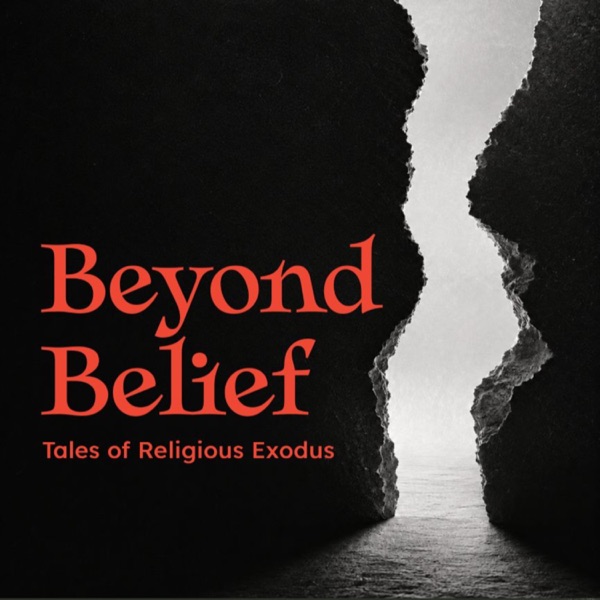
Beyond Belief: Tales of Religious Exodus
Beyond Belief: Tales of Religious Exodus is a podcast by Freidom Fighter that explore the personal journeys and experiences of people who have left fundamentalist religions. Hear from people who have deconstructed their region, high-control upbringing, and dogmatic beliefs, hailing from Jewish, Christian, Muslim, or Buddhist denominations.
Raw and unedited, the podcast is an invitation for you to share your story as you are, with a focus on your journey around healing, making sense of your past, and finding meaning outside of religion.
Learn more at freidomfighter.com/podcast
- Episodes
- 45
- Releases
- Weekly
- Typical length
- 1 hr 18 min
- On air since
- 2024
- Latest episode
- 1 week ago
Episodes
45 episodes, newest first
-
1 hr 33 min
Dov: Former Yeshivish Jewish
Show notes
Dov grew up in a deeply Yeshivish family in Baltimore, moving through increasingly intensive Orthodox institutions and eventually studying at the Mir in Jerusalem. Despite struggling in school with ADHD and receiving little accommodation, he was intensely curious and had long dreamed of studying engineering. As he became more immersed in Torah learning, he also began noticing contradictions between the values he had been taught and the institutions and religious leaders around him. Experiences with controlling rabbis, the expectation to remain in yeshiva indefinitely, and the rigid structure of Haredi life gradually changed the way he understood religious authority.
At the Mir, Dov began doing something that would ultimately transform his life: questioning not just religious questions, but the answers he was given. Moral questions about Torah, the treatment of biblical texts, the shidduch system, and the pressure to abandon his educational ambitions accumulated until he eventually left yeshiva and began community college on his own. Starting with roughly a tenth-grade secular education, he worked his way from remedial classes toward an engineering degree while slowly leaving Orthodox practice behind. Dov also discusses religious trauma therapy, the support he found through Footsteps, and the difficult process of learning that life, pleasure, curiosity, and meaning do not need to serve a religious purpose in order to have value.
Timestamps
00:01:40 - Growing up Yeshivish in Baltimore
00:05:00 - ADHD, learning disabilities, and being denied accommodations
00:15:20 - Choosing yeshiva despite a lifelong interest in engineering
00:24:09 - A controlling Rosh Yeshiva and the first cracks in rabbinic authority
00:34:20 - Going to the Mir in Jerusalem
00:45:12 - "You can ask the questions, but you can't question the answer"
00:57:37 - Moral problems in Tanakh and questioning religious explanations
01:04:28 - Wanting college and facing pressure to remain in yeshiva
01:14:39 - Leaving yeshiva and eventually losing belief
01:21:44 - Religious trauma therapy, Footsteps, and learning how to enjoy life -
1 hr 8 min
Malka: Former Hasidic Jewish
Show notes
Malka grew up as one of twelve children in a Hasidic family in Borough Park, in a childhood she describes as largely happy and loving. But even as a young girl, she was deeply bothered by the gender roles surrounding her and by teachings that placed Jews at the center of the world while diminishing the lives of outsiders. As she entered her teenage years, those tensions became harder to ignore. At 15, lying in bed and imagining what her life might have looked like in a different family, she had a simple realization: it was her life, and she could leave. From there, she began deliberately pushing boundaries, first by rolling up her sleeves, then through secret books, an illicit library card, internet access, jeans, and increasingly open rebellion.
Malka eventually left the Hasidic world before marriage, attended community college, and built a life that took an especially unexpected turn when she joined the U.S. Army Reserve. She now balances military service with civilian work as an EMT, including working back in Borough Park from the perspective of an outsider. She reflects on the remarkable support her family ultimately gave her, the lifelong process of deconstructing Hasidic assumptions, and the importance of finding other people who have left closed religious communities. The conversation also examines darker systemic issues, including mesirah, Beis Din, social coercion, and the ways closed communities can use schools, jobs, housing, and family relationships to enforce conformity. Malka closes by describing her departure not as a tragedy or failure, but as one of the most important decisions she ever made.
Timestamps
00:01:50 - Growing up Hasidic in Borough Park
00:02:26 - Misogyny, gender roles, and wanting to be a boy
00:09:25 - Jewish exceptionalism and the tsunami story
00:15:00 - Discovering that the sexism was also in the doctrine
00:17:21 - The realization at 15: "It's my life. I can just leave"
00:21:05 - Rolling up her sleeves and beginning to rebel
00:22:32 - Secret books, the library, the internet, and finding ex-Hasidic stories
00:35:00 - Trying to join the military and her family's unexpected turnaround
00:45:44 - Building an adult life outside Hasidism and ongoing deconstruction
00:54:47 - Mesirah, Beis Din, and coercion inside closed communities -
1 hr 30 min
Yoily: Closeted Former Hasidic Jewish
Show notes
Yoily is still visibly and socially embedded in the Hasidic community - but internally, he no longer believes. In this episode, he describes what it means to live between those two realities: raising children in a world he increasingly questions, concealing his beliefs from almost everyone around him, and weighing the enormous personal and family consequences of ever leaving. He traces his doubts from childhood questions and communal conflict to discovering the internet, other former believers, and the possibility that there were people like him who were neither broken nor alone.
The conversation explores the educational and financial pressures Yoily says shaped his life, his determination to pursue higher education despite resistance from family and community figures, and the strain of trying to build a different future while remaining present for his children. He and Shalom discuss conformity, public image, the difficulty of questioning authority, and why leaving can become dramatically more complicated after marriage and children. Yoily ultimately speaks directly to people inside the community who may already be questioning, sharing the warning he wishes he could have heard earlier.
Timestamps
00:00:24 - Living secretly without belief while remaining inside the Hasidic community
00:04:17 - Yoely’s childhood, isolation from secular education, and growing up without basic computer skills
00:10:22 - Marriage, communal conflict, and the doubts that began unraveling his faith
00:16:24 - The internet gathering, discovering outside information, and realizing other people had left
00:20:41 - Finding Footsteps and confronting how difficult either staying or leaving could be
00:25:30 - Telling his wife he had lost his faith and establishing a “don’t ask, don’t tell” arrangement
00:32:55 - Pursuing higher education despite pressure from his father, mentors, and community
00:50:06 - The emotional cost of staying for his children while questioning the rules they are being taught
01:10:01 - Could he ever actually leave? Yoely discusses age, family, grandchildren, and feeling permanently trapped
01:26:05 - Yoely’s final message to people who are questioning before marriageI kept the notes descriptive rather than making claims in Yoely’s voice sound like independently verified facts.
-
1 hr 19 min
Shayna: Former Modern Orthodox
Show notes
Shayna Sragovicz grew up in a family that became Orthodox when they were seven, moving from a largely secular Jewish childhood into Chabad schooling and eventually Modern Orthodoxy. In this episode, Shayna traces the contradictions they began noticing in seminary and college, how COVID disrupted the religious structures that had sustained their life, and how small acts of questioning eventually became a much broader process of deconstruction.
That process expanded beyond religion into gender, sexuality, career, family, spirituality, and community. Now a life coach working with people rebuilding their lives after religion, Shayna discusses self-trust, the difference between deconstruction and reconstruction, therapy versus coaching, and the challenge of figuring out what you actually want once the old rules are gone.
Resources
Shayna's coaching website: https://kacoachingmethod.com
Instagram: https://www.instagram.com/shayna.kacoaching/
Email: shayna@kacoachingmethod.com
Books:
Childfree by Choice - Dr. Amy Blackstone
The Origins of You - Vienna Pharaon, LMFT
The Power of Ritual - Casper ter Kuile
Timestamps
00:00 — Growing up as the child of baalei teshuva
05:40 — Entering public school and experiencing life outside the Orthodox bubble
11:18 — Why Shayna calls “Modern Orthodoxy” an oxymoron
16:01 — Seminary, women learning Gemara, and the beginnings of doubt
21:48 — COVID breaks apart the structures sustaining religious life
30:13 — Why leaving religion requires self-forgiveness and patience
32:37 — Queerness, gender, and deconstructing expectations beyond religion
45:03 — Rethinking career, children, and the life Shayna was “supposed” to build
48:56 — Becoming a coach: inner critics, intuition, therapy, and reconstruction
1:00:23 — Absolute truths, spirituality, community, belonging, and what comes next -
1 hr 37 min
Daniel: Former Religious Zionist
Show notes
Daniel grew up deeply embedded in the religious Zionist world, raised in Efrat and moving through religious schools, yeshiva, a pre-military academy, and service as a tank commander. Yet from childhood, he remembers noticing cracks in the systems around him - from his early fear of breaking Shabbat to questions about theology, authority, conformity, and the pressure to maintain an acceptable external identity. What followed was not one dramatic break, but a decades-long process of questioning Judaism, Zionism, family expectations, relationships, and ultimately the identity he had constructed to survive within them.
In this conversation, Daniel and Shalom explore the psychological and spiritual dimensions of deconstruction: fear and control, violated boundaries, institutional power, military disillusionment, marriage and radical honesty, and Daniel’s unexpected relationship with Christ outside conventional Christianity. Daniel also reflects on Zionism as part of a wider system of separation and conflict, his relationship with his children and family, and the practices that helped him rebuild his life. The episode ultimately circles back to a central theme: moving from externally imposed identity toward an unmediated relationship with truth, spirituality, and the self.
Timestamps:
00:00 — Introduction and Daniel’s story
01:01 — Growing up in Efrat and religious Zionism
07:52 — Breaking Shabbat and the first cracks in belief
11:47 — Teenage years, yeshiva, and questioning religious authority
18:10 — Sexual abuse, institutional silence, and trauma
23:20 — Deconstructing systems of fear and control
25:23 — Boundaries and creating “infinite layers of masks”
30:13 — Mechinah, family expectations, and checking the boxes
39:49 — Military service and walking away from officer training
44:50 — Marriage, education, and continuing to live behind a religious identity
48:23 — Taking off the masks and beginning to tell the truth
50:33 — Leaving religion, Zionism, and confronting the “sacred cows”
53:51 — COVID and the internal collapse of Daniel’s Zionism
1:10:12 — Christ, dogma, and personal spiritual liberation
1:16:32 — Family, his daughters, and “relationship Tai Chi”
1:20:26 — Zionism, imperialism, religion, and the larger system
1:26:29 — Psychedelics, the Tao, and the Gospel
1:27:18 — Radical honesty as a practice
1:35:40 — Gatekeepers, sacred texts, and institutional control -
1 hr 10 min
Sara: Former Orthodox Jewish
Show notes
What does it mean to build a spiritual life grounded in the body rather than in fear? Sara joins Shalom to explore her journey through an Orthodox upbringing, marriage and divorce, trauma recovery, and an evolving relationship with Jewish practice. Together, they examine how communities shaped by anxiety can disconnect people from their own needs, instincts, and inner knowing.
Sara shares how therapy, IFS, movement, art, nature, and emotionally safe relationships helped her reconnect with herself. The conversation explores communal silence around addiction and struggling marriages, the difficulty of being seen outside familiar religious categories, sexuality as life force, and the possibility of creating rituals that make room for movement, connection, honesty, and joy.
Rather than exchanging belief for disbelief, Sara describes an ongoing process of listening to her body, trusting her experience, and developing a spirituality capable of holding complexity.
About Sara
Sara Katzoff is a Somatic IFS and Craniosacral Therapist and Breathwork Facilitator based in Jerusalem. If something from this conversation touched you, she would love to hear from you.
Instagram: @simplehealings
Website: https://simple-healings.com/Timestamps
00:00 — Embodied spirituality and using the body as a compass
06:13 — Distinguishing religious devotion from anxiety and fear
16:49 — Seeking guidance during a struggling marriage
21:59 — Isolation, addiction, and unmet emotional needs
26:39 — The vulnerability of speaking honestly and being misseen
32:02 — Releasing rules through small acts of self-trust
36:09 — Sexuality, intimacy, and reconnecting with one’s life force
40:16 — Reclaiming spiritual teachings from systems shaped by trauma
54:14 — Reimagining ritual through nature, movement, fire, and song
1:02:18 — Safe witnesses, creativity, and learning to trust yourself -
1 hr 23 min
Bonus Episode: Zionism, Tribalism, and the Stories We Tell Ourselves
Show notes
In this bonus episode, Shalom sits down again with his brother Mike for a wide-ranging conversation about Zionism, Hasbara, and the psychological mechanisms that can make political narratives difficult to question. Rather than systematically fact-checking every talking point, they focus on the patterns underneath them: tribal essentialism, denial, exceptionalism, whataboutism, double standards, and the tendency to assume good intentions from one’s own group while interpreting an opposing group very differently.
Shalom and Mike explore arguments around antisemitism, Jewish safety, Palestinian identity, expansionism, the idea of “a land without a people,” and the claim that the IDF is “the most moral army in the world.” Drawing on their own experience of having been raised within a strongly Zionist worldview, they examine how ideology can be maintained through motivated reasoning, selective evidence, and assumptions about who is capable of doing harm.
Graphics from the show
Logical fallacy flowchart: https://freidomfighter.com/wp-content/uploads/2026/08/logic.jpeg
Settlers of Canaan board game: https://freidomfighter.com/wp-content/uploads/2026/08/settlers.jpeg
Timestamps
00:00 — Why another conversation about Zionism?
07:55 — “Jews need a homeland”: antisemitism and Jewish exceptionalism
11:31 — What happens when ethics make exceptions?
14:47 — “What about the Jews displaced from Arab countries?”
15:19 — “There are 34 Arab countries and only one Jewish state”
17:35 — Could Jewish self-determination have taken a different form?
19:01 — Expansionism, security, and the appeal of the ethnostate
22:02 — If Israel is expansionist, why did it make peace with Egypt and Jordan?
25:23 — Has Israel actually made Jews safer?
32:04 — The antisemitism feedback loop
35:55 — Conflating Israel, Zionism, and Judaism
39:43 — Tribal essentialism: judging “us” and “them” by different standards
43:40 — Denial, bad apples, and protecting the larger narrative
46:19 — “What about Yemen?” Whataboutism and disproportionate attention to Israel
53:51 — “A land without a people” and the erasure of Palestinian identity
1:00:10 — Is the problem Netanyahu, individual bad actors, or something more systemic?
1:05:45 — The relationship between Israeli military leadership and political leadership
1:09:45 — Group identity, collective power, and the psychology of victimhood
1:16:43 — “The most moral army in the world”
1:21:34 — Closing thoughts
In this episode
-
1 hr 29 min
Suri: Former Orthodox Jewish
Show notes
Suri Robinson grew up in an Orthodox Jewish community in Baltimore, where she learned to suppress her needs, protect her family’s image, and strive for religious perfection. After seminary, she married at 20, moved to Lakewood, raised five children, became a therapist, and helped build a Bais Yaakov school focused on children’s emotional wellbeing.
From inside the community’s institutions, however, she witnessed rigid expectations, concealed abuse, political pressure, discrimination, and what she describes as “toxic selflessness”—a culture in which saying no was treated as selfish or religiously unacceptable.
Following her mother’s death and years of relentless responsibility, Suri experienced severe burnout, depression, complex PTSD, and suicidal despair. Residential treatment gave her the distance to recognize patterns of religious abuse, coercion, shame, and control. She gradually left her marriage, institutional role, and religious observance, while facing claims that she had “snapped” or become mentally unstable. Today, through After the Burn, she speaks about religious trauma, nervous-system healing, mental health stigma, authentic connection, and rebuilding a meaningful life after losing the world she once knew.
Follow Suri: https://www.instagram.com/aftertheburnco/
Chapters
00:00 – Meet Suri
00:38 – Growing Up Orthodox in Baltimore
02:42 – The Burden of Being the “Perfect” Child
04:08 – Secret Dreams of a Different Life
05:48 – Fasting, Prayer, and Religious Performance
06:58 – Escaping into Books and Imaginary Worlds
08:38 – The Shame of a Small Rebellion
10:36 – Seminary, Spiritual Certainty, and Body Shame
13:28 – How Seminary Creates Belonging and Commitment
16:56 – Entering the Orthodox Marriage System
19:45 – Marriage, Lakewood, and Patriarchal Expectations
25:28 – Kollel Life, Motherhood, and Relentless Productivity
29:10 – Toxic Selflessness and the Inability to Say No
32:33 – Becoming a Therapist Inside the Religious System
34:59 – Building an Emotionally Supportive Bais Yaakov School
39:27 – Harassment, School Politics, and the Collapse of Boundaries
44:56 – Challenging Stereotypes About People Who Leave
46:39 – Grief, Burnout, and the Beginning of Collapse
48:47 – Depression, Suicidal Dread, and Nervous-System Breakdown
51:24 – Entering Residential Mental Health Treatment
54:20 – What Religious Abuse Looks Like
57:37 – Being Labelled Crazy After Stepping Away
01:04:04 – Rabbinical Bullying, Threats, and Control
01:07:10 – Rebuilding Belief, Identity, and Daily Life
01:13:46 – How Group Therapy Broke the Cycle of Shame
01:18:28 – After the Burn: Suri’s Work and Message
01:23:13 – Systemic Harm, Moral Injury, and Final Reflections
-
48 min
Chantal: Exposing Abuse in the Episcopal Church
Show notes
In this episode of Beyond Belief: Tales of Religious Exodus, host Shalom interviews Chantal, an Episcopal priest from North Carolina who grew up with both traditional church life and expansive spirituality, felt a clear call to priesthood, and was ordained at 24.
While serving in an affluent parish, she experienced sexual harassment by a senior rector and, after reporting it with email evidence, faced a traumatizing canonical process that shamed her, led to PTSD, and involved repeated psychological evaluations she felt were aimed at institutional self-protection.
She later planted a multicultural, bilingual church in a lower-income neighborhood and became a coaching consultant, then publicly shared her story at a women’s clergy conference, prompting many others to disclose harm. Chantal discusses her book, Following Jesus Beyond Church Walls, her expanded spirituality, calls for “future church” without harm or hierarchy, and her Water and Light network supporting healing cohorts and advocacy.
Website: https://www.chantalmckinney.com
Chapters00:00 Welcome to Beyond Belief01:23 Chantal’s Spiritual Upbringing02:03 Called to the Priesthood03:35 Harassment and Threats05:30 Seeking Justice and Betrayal06:04 Systemic Cover-Up and PTSD10:11 Building a Scrappy Church Plant11:52 Speaking Out and Others Come Forward15:16 What Episcopalians Believe16:52 Faith Beyond the Denomination20:08 Church Leadership Response and Silence24:28 Life After Payroll and New Communities26:47 Patriarchy and Empire29:03 Church Noise and Silence30:41 Women Leaders and Power33:02 Book and Healing Trauma38:04 Divine Feminine and Scripture41:04 God and Suffering42:30 Vision for Future Church45:11 Episcopal Values and Inclusion46:00 Water and Light Network47:05 Closing Thanks and Outro
-
1 hr 39 min
Gabi: Former Yeshivish Jewish
Show notes
Gabi shares his experience growing up in New York’s Bukharian Jewish community, becoming deeply committed to Orthodox Judaism, and eventually building a life outside religious observance. He discusses racism within Jewish institutions, the intellectual rewards of yeshiva study, purity culture, the Orthodox dating system, mental health, psychedelics, spirituality, and his evolving relationship with God.
Rather than presenting religion as wholly harmful or wholly beneficial, Gabi reflects on the teachers, practices, and communities that gave him purpose while examining the pressures and unmet needs that eventually made religious life unsustainable.
Connect with Gabi
YouTube - https://youtube.com/@gabikoyenovSpotify - https://open.spotify.com/show/2SoydqNskaV9wOra0Yh6Z3?ssssid1891df9a822414cInstagram - https://www.instagram.com/journey_with_gabi/Therapy Site - https://themenstherapystudio.com/
Chapters
00:00 — Coming Out as Nonreligious
08:14 — Growing Up Bukharian Jewish
17:47 — Racism in the Yeshiva World
25:47 — Rabbis, Meaning, and Purpose
30:11 — Purity Culture and Romantic Obsession
39:10 — Leaving Yeshiva and Losing a Dream
48:00 — Dating and the Beginning of Deconstruction
53:44 — Ayahuasca and a New Spiritual Worldview
01:07:41 — Racism and Rejection in Shidduchim
01:20:07 — Family Conflict, Trauma, and Life Beyond Religion
-
1 hr 16 min
Ilana: Former Zionist
Show notes
On Beyond Belief, Ilana describes growing up in a strongly Zionist Jewish environment shaped by her Israeli father, her conservative rabbi stepfather, and Zionist youth programming. She learned to equate Judaism with support for Israel.
After her stepfather’s death, college courses presenting “dueling narratives” about Israel and Palestine began shifting her perspective. Israel’s bombardment and blockade of Gaza further challenged her views, eventually leading her to criticize Zionism publicly in 2014 and experience significant social fallout.
Ilana stopped attending synagogue, found community among anti-Zionist Jews online, and began working closely with Gaza journalist Wafa Al-Udaineh, editing her English-language reports. This relationship deepened Ilana’s connection to Gaza and Palestinian life.
After October 7, Ilana intensified her activism. When Wafa was killed in 2024, Ilana experienced severe grief and sought psychiatric care. She discusses the difficulty of separating Judaism from Zionism, her ongoing deconstruction of religious beliefs and practices, the importance of centering Palestinian voices, and her decision to learn Arabic. She also reflects on religion, ritual, belonging, family, and life after faith.
Chapters
00:00 — Meet Ilana and the Premise
01:21 — Family Roots and Israel Ties
02:42 — Militarism and Early Doubts
04:32 — Rabbi Stepfather After 9/11
07:10 — Zionist Youth-Group Indoctrination
11:22 — First Cracks and Questions
12:18 — Loss of Faith After His Death
13:25 — College and Dueling Narratives
19:44 — Gaza and Moral Awakening
20:58 — Kurdish Jewish Heritage and Zionism
28:26 — Speaking Out Online in 2014
31:04 — Leaving Synagogue for Good
32:14 — Working With Journalists in Gaza
34:33 — October 7 and Direct Action
39:04 — Wafa’s Death and a New Purpose
40:30 — How She Is Doing Now
42:38 — Raising a Child Post-Zionism
43:15 — Religion Without Trauma
44:11 — Growing Up Zionist
45:59 — Belonging Nowhere
48:29 — Learning Arabic
53:26 — Grassroots Jewish Spaces
55:08 — Institutional Power
56:36 — The End of Judaism
58:51 — Family Supremacism
01:03:41 — Stop Debating Zionists
01:05:46 — Palestine-Centered Practice
01:09:52 — Life After Religion
01:15:07 — Closing Thanks -
1 hr 21 min
Zalman: Former Chabad Jewish
Show notes
In this episode of Beyond Belief, Shalom interviews Zalman, who was born and raised in Vilnius, Lithuania, where his parents opened a Chabad center and Jewish school as "shluchim" aimed at bringing secular Jews closer to Orthodox practice.
Zalman describes growing up as the only Orthodox family, lacking kosher resources, having limited socializing outside the home, and later switching from a local coed school to full-day online Jewish studies; at 13 he was sent abroad to yeshivas and completed studies through 21, including rabbinical ordination.
He explains Chabad kiruv as emphasizing warmth and “one more mitzvah,” contrasts it with Aish tactics, and discusses Chabad’s messianic divisions around the Rebbe. After finishing the system, he began dropping rituals due to their inconvenience and perceived pointlessness, stopped tefillin, rapidly abandoned kashrut and Shabbat, deconstructed miracle stories and Torah claims, and became an agnostic atheist.
He hid his change for two years while gradually altering his appearance, later told his parents partly to avoid the dating/shlichus track, and reports they remain loving though avoid discussing specifics; he is the only non-religious sibling. Zalman notes ongoing cultural catch-up, shared patterns across ex-religious experiences, and advises leaving slowly, finding community, and not needing exhaustive reasons to exit.
Chapters00:00 Series Introduction00:18 Meet Zalman Chabad Shlichus01:39 How Shlichus Assignments Work05:06 Growing Up Orthodox in Lithuania08:56 Schooling and Online Yeshiva12:35 Teen Years Yeshiva Abroad14:13 Languages and Chabad Outreach15:29 Kiruv Tactics and Manipulation20:08 Chabad vs Other Orthodox Sects22:42 Messianism Inside Chabad24:06 Leaving Observance After Semicha32:04 Dropping Rituals and Belief34:38 No Kids Dating Pressure Coming Out37:57 Hiding It and Family Reactions43:42 Leaving Is Similar46:32 Horseshoe Effect Parallels48:24 Guilt And Deconstruction50:52 Catching Up Outside54:13 Chabad Study Schedule56:29 Talmud Logic Breaks58:28 Textual Proof Debates01:00:26 Rebbe Pressure Culture01:04:46 Hardline Texts Exposed01:07:13 Military Metaphors01:09:01 Advice For Leavers01:12:55 Kiruv Regrets And Offset01:16:12 Parody Versus Coercion01:19:31 Healthy Fear Of Influence01:20:43 Closing Thanks
-
58 min
Noor: Former Shia Muslim
Show notes
This episode of Beyond Belief introduces Noor, an ex–Shia Muslim from an Iraqi family who grew up mostly in New Jersey.
Noor describes performing prayers out of fear of hell, questioning rituals (washing, direction of prayer, nail polish, menstruation restrictions, and catch-up prayers), and quietly disengaging by late middle school/early high school while fearing family repercussions like being sent “back” to Iraq.
She notes lingering secrecy around pork, limited mosque exposure due to lack of Shia mosques, and a family dynamic where her mother avoids directly acknowledging her unbelief.
Noor discusses marriage and raising children Christian with her Catholic-background husband, arguing Christianity is less destructive and that liberals inconsistently avoid criticizing Islam despite issues like apostasy laws, women’s and LGBTQ rights, child marriage, and arranged marriages, advising ex-Muslims to seek support and financial stability before coming out.
Resources
https://friendlyexmuslim.com/podcast/
Chapters00:20 Meet Noor and Shia Sunni Basics03:12 Hadiths and Aisha Debate04:59 Growing Up in New Jersey06:33 Fear Based Faith and Prayer11:41 Questioning Ritual Rules15:37 Residual Taboos and Secrecy17:17 Family Dynamics and Silence19:26 Marriage and Raising Kids22:56 Liberal Blind Spots on Islam25:40 Rights Issues and Apostasy Laws28:51 Soft Bigotry and Polarization31:19 Ex Muslim Voices Undermined32:10 Fear of Islamophobia32:46 Living Under Blasphemy33:36 Low Expectations Explained35:27 Leaving Safely and Strategically37:29 Americanized Family Tensions38:19 Why Parents Get More Devout40:09 Moderate Islam Misunderstood44:33 Consistency Across Religions46:25 Why Devout People Leave48:30 Unreformable Scripture Critique
-
1 hr 4 min
Mark: Former Irish Catholic Monk
Show notes
In this episode of Beyond Belief, Shalom interviews Mark about leaving fundamentalist religion, focusing on Mark’s cradle-Catholic upbringing and later shift into mental health work.
Raised in a deeply involved Roman Catholic family, Mark experienced Vatican II’s transition era and a major culture clash after moving at age seven from Catholic Rhode Island to the Protestant Deep South during early-1970s integration. Introverted and identity-seeking, he dove deeper into Catholicism, became active in church music, and later entered seminary, including time in a Benedictine monastery.
Studying church history and encountering discouragement to “learn too much,” plus tensions around authority, obedience, and institutional contradictions (including the Church’s long resistance to heliocentrism), widened “cracks” in belief. He left monastic life when pressured into an academic track, met his future wife, explored other denominations, and ultimately found meaning through psychotherapy and a 35-year career in mental health, emphasizing individual journeys over dogma.
Links mentioned
Into great Silence
Chapters00:46 Cradle Catholic Roots01:44 Vatican II Era Upbringing03:46 Moving South Culture Shock06:39 Persecution Identity Psychology09:33 Deeply Involved Catholic Family11:46 Parents Faith and Priest Path14:54 Seminary and Monastic Deep Dive16:58 Dont Learn Too Much19:58 Authority Questions and Confirmation21:33 Orders History and Cracks25:33 Science Conflict Copernicus27:38 Belonging Uniqueness Fragmentation30:04 Caste Race and New Identity31:25 Human Behavior Beyond Religion33:49 Myths as Control34:28 Normalizing Individual Journeys35:17 Religion and Addiction Curve36:46 New Atheists and Truth Claims38:07 Why Religion Exists39:39 Orthodox Roles and Apologetics40:45 Monastery Vows and Doubts42:15 Carthusians and Community44:23 Celibacy Origins Explained45:57 Buddha and Self Inquiry47:26 Avoiding New Gurus48:07 Leaving the Monastery51:01 From Religion to Therapy53:28 Freedom Versus Certainty54:39 Advice for Leavers58:05 Therapy Reflection Not Conformity01:00:29 Host Meaning and Closure01:03:13 Final Thanks and Wrap
-
37 min
Adina "Flatbush Girl": Orthodox Jewish Activist
Show notes
In this episode of Beyond Belief, Shalom speaks with Flatbush Girl, an Orthodox Jewish advocate working for change from inside the community. Rather than telling a story of leaving religion, she describes why she remains connected to Orthodox Judaism while openly criticizing systems she sees as harmful, especially around women’s rights, marriage, divorce, mikvah, niddah, and communal power structures.
The conversation explores the tension between allegiance and critique: how someone can love a community, believe in its spiritual framework, and still argue that “the whole thing needs a major app update.” Flatbush Girl reflects on growing up in Flatbush, the role of privilege in making the frum system work for some people, feminist readings of Torah and halakha, the agunah crisis, open relationships, and the deeply personal process of renegotiating one’s relationship with religion.
Timestamps
00:32 Episode Setup and Context
02:18 Meet Flatbush Girl
03:41 What Being Frum Means
04:23 Growing Up in Flatbush
06:34 Privilege and Rebellion
09:02 Systems That Need Updating
10:52 Can Jewish Law Change
13:11 Feminist Lens on Torah
17:18 Literal Text Pushback
19:24 What Indoctrination Mean
s22:18 Why Stay Orthodox
24:29 How Change Happens
27:07 Open Relationships and Halakha
31:15 Advice on Finding Your Path
33:35 Open Relationships and Religion
Glossary
Agunah — A “chained woman”; a woman unable to remarry because her husband refuses or is unable to give a Jewish divorce.
Bais Yaakov — Orthodox Jewish girls’ school system.
Bashert — Destined or meant to be.
Beis Hamikdash — The ancient Temple in Jerusalem.
Bnei Yisrael — The Children of Israel; the Jewish people.
Ezras Nashim — Literally “women’s section”; here, the name of an all-female Orthodox emergency medical service.
Flatbush — A Brooklyn neighborhood with a large Orthodox Jewish community.
Frum — Religiously observant Orthodox Jewish.
Frum Oilem / Olam — The frum world or Orthodox Jewish community.
Get / Gett — Jewish divorce document given by the husband to the wife.
Gittin — Jewish divorce documents/laws.
Halakha — Jewish law.
Has v’Shalom — “God forbid”; used to reject or recoil from something considered bad or improper.
Hashem — Literally “the Name”; a common Orthodox way to refer to God.
Hashgacha Pratis — Divine providence; the idea that events are personally guided by God.
Kashrus — Jewish dietary laws; what is kosher.
Ketubah / Ksuba — Jewish marriage contract.
Kiddushin — Jewish betrothal/marriage laws.
Kiruv — Orthodox Jewish outreach aimed at bringing less-observant Jews toward greater observance.
Lakewood — A major American Haredi/yeshivish Orthodox community in New Jersey.
Mephorshim / Meforshim — Classical Jewish commentators.
Mikvah — Ritual bath used for religious purification, including in family purity laws.
Minhag — Jewish custom.
Mizbeach — Altar, especially the Temple altar.
Neder — A vow.
Nekuda — A vowel point or small textual mark in Hebrew.
Netilat Yadayim — Ritual handwashing.
Nida — Jewish laws around menstruation and marital intimacy.
Passuk / Pasuk — A biblical verse.
Pesach — Passover.
Refuah kodem l’makah — “The cure comes before the wound”; the idea that a remedy exists before the problem appears.
Seforim — Jewish religious books.
Seforim shrank/shrank — Yiddish/English term for a bookcase or cabinet holding Jewish religious books.
Shabbos — Sabbath; the Jewish day of rest from Friday evening to Saturday night.
Shalom Bayis — Literally “peace in the home”; often means marital harmony.
Shiva — Seven-day Jewish mourning period after the death of a close relative.
Tehillim — Psalms, often recited as prayer.
Torah — The foundational Jewish sacred text, especially the Five Books of Moses.
Yeshiva — Orthodox Jewish religious school, often focused on Torah and Talmud study.
Yeshivish — A more traditional Orthodox Jewish cultural/religious style, often associated with yeshiva communities.
Yiddishkeit — Jewishness; Jewish religious and cultural life.
-
51 min
Kevin: Former Catholic Christian
Show notes
In this episode of Beyond Belief: Tales of Religious Exodus, Shalom speaks with Kevin Bolling about growing up Catholic, coming out as gay, and gradually leaving organized religion behind. Kevin reflects on the tension between identity and faith, the role of community in both staying and leaving religion, and how his experiences ultimately led him to lead the Secular Student Alliance.
The conversation explores secular student communities, religious recruitment tactics on college campuses, the emotional realities of deconstruction, and how young people today are building community and activism outside traditional religious structures. Kevin also shares stories of students navigating family rejection, political activism, and the search for belonging after religion.
Resources
Chapters
00:00 – Introduction & Kevin’s role at the Secular Student Alliance
02:00 – Growing up Catholic and learning to question religion
05:00 – Coming out as gay and leaving the Church
10:00 – Gradually disentangling from religious community
15:00 – What the Secular Student Alliance does for students
19:00 – Activism, church-state separation, and campus organizing
26:00 – Religious recruitment tactics on college campuses
33:00 – Are young people becoming more or less religious?
38:00 – Secular alternatives for community and service
44:00 – How to build community and avoid coercive groups -
1 hr 13 min
Aysha: Former Sunni Muslim
Show notes
In this episode of Beyond Belief we hear from Aysha, an ex-Muslim woman who shares her personal journey of leaving Islam. Raised in a moderately conservative Muslim family in New York City, Aysha discusses her multicultural upbringing and the pivotal moments that led her to question and eventually depart from her faith.
The conversation delves into the intellectual and emotional challenges she faced during her transformation, including her experiences at university, where the events of 9/11 and reading the Quran in English profoundly impacted her beliefs. Aysha also touches on the complexities of balancing familial relationships while hiding her true beliefs and navigating life with a non-Muslim partner.
As the Director of Operations for Ex-Muslims of North America, Aysha offers insights into the organization's mission and the societal challenges ex-Muslims face, advocating for the importance of free speech and criticism of religion.00:26 Guest's Upbringing and Cultural Background02:34 Comparing Religious Practices13:06 The Impact of 9/11 on Muslim Identity15:56 Questioning Religious Texts24:55 The Journey to Leaving Islam35:06 Finding Community After Leaving Religion39:30 Personal Transformation and Family Dynamics40:41 Critique of Religious Mindset43:32 Islamophobia and Anti-Muslim Bigotry46:28 Challenges of Ex-Muslim Advocacy51:06 Navigating Personal and Family Relationships01:02:46 Radicalization and Religious Conservatism01:08:29 Advice for Ex-Muslims and Conclusion
-
1 hr 24 min
Sammy: Former Sunni Muslim
Show notes
In this conversation we meet with Sammy, creator of Haram Doodles, as she discusses the significance of Ex-Muslim Month and shares personal experiences growing up as a South Asian Muslim immigrant. The dialogue explores the complexities of cultural and religious identity, the impact of immigration on religious practices, and the evolution of Islam in the West.
Sammy reflects on her journey of deconstruction, the role of education, and the influence of relationships on belief systems. The conversation emphasizes the importance of humor and art as mediums for healing and expression, as well as the challenges faced by ex-Muslims in their communities. Ultimately, it highlights the need for activism and community building among ex-Muslims.
Resources:
-
1 hr 47 min
Rachel: Former Ultra Orthodox
Show notes
In this episode we talk with Rachel about her journey out of the fundamentalist Jewish community she was raised in. Rachel reflects on growing up between Israel and Canada, her involvement as an outreach professional through Aish HaTorah, and the pressures of strict religious expectations.
She discusses the challenges of navigating her role as a woman within Orthodox society - extricating her own identity from that of being a wife, mother, and community leader, and the struggles around the treatment of women within the confines of Jewish law and society.
Resources:
Timestamps:
00:19 Meet Rachel
01:40 Deciding to Share Her Story
03:48 Rachel's Upbringing and Family Background
06:39 Navigating Dual Worlds: Israel and North America
18:12 Early Struggles with Religious Beliefs
30:44 The Role of Modesty and Family Purity
38:23 Struggling with Conformity
39:27 Rebellious Acts and Consequences
40:56 Navigating Teenage Relationships
41:45 The Journey to Marriage
45:45 Family Purity and Religious Practices
54:06 Parenting in Orthodox Judaism
01:03:53 The Stillbirth Experience
01:11:54 Community Support and Reflection
01:14:43 The Cult's Structure and Recruitment Tactics
01:16:07 Personal Reflections on Cult Involvement
01:16:50 Questioning Orthodox Beliefs
01:18:33 Comparing Cult Leaders
01:23:36 The Deconstruction Process
01:29:55 Life After Leaving the Cult
01:37:48 Advice for Others Leaving Cults
01:41:54 Final Thoughts and Reflections
-
1 hr 42 min
Judaism vs. Zionism: A Historical Untangling
Show notes
In this episode, Shalom examines the historical divergence between Judaism as a religious-cultural tradition and Zionism as a modern nationalist project. He traces how Zionism emerged in 19th-century Europe among largely secular Jewish thinkers who reframed Jewish identity around territory, statehood, and political power, often in contrast to the ethical, diasporic, and spiritual foundations of Judaism.
Through historical examples, Shalom explains how Zionism borrowed from European colonial ideologies while Judaism had long defined itself without sovereignty or land. He also explores the topic of anti-semitism vs. anti-Judaism, and the racist undertones underlying ethnic nationalism.
Additional resources can be found on Freidom Fighter.
Show Notes:00:00 Introduction and Podcast Context01:52 Defining Zionism and Personal Background05:05 Historical Context of Jewish Identity09:14 Jewish Revolts and Roman Rule12:57 Evolution of Jewish Identity in Exile23:27 Rise of Antisemitism and Zionism35:38 Colonial Destruction by French and British35:48 Zionist Elitism and Disregard for Middle Eastern Jews36:44 Zionist Attitudes During the Holocaust37:31 Jewish Resistance and Terror Groups38:05 Formation of the Israeli Defense Forces40:03 The Pragmatism of Zionism44:13 Early Jewish Settlers and Forced Conversions47:16 The Holocaust's Role in Zionism's Success47:56 British Rule and the Rise of Palestinian Identity56:07 Zionist Justifications and Propaganda01:05:48 The 1948 War and Its Aftermath01:07:21 The Moral Superiority Narrative01:10:31 Palestinian Mistakes and Perfectionism01:11:47 The Inflexibility of Palestinian Sentiments01:12:08 Criticism of Palestinian Support for Terror01:12:41 Historical Context: PLO vs Hamas01:14:18 The Cycle of Hatred and Victimhood01:16:05 Israel's Military Actions and International Perception01:17:20 The Role of the US and Christian Zionism01:21:40 The Two-State Solution and Demographic Concerns01:22:51 The Need for Reparations and Compromise01:33:04 The Impact of Trump's Policies on Israel01:40:24 The Importance of Being on the Right Side of History
Personal Journals lists
More Personal Journals shows picked out from the charts




More in Personal Journals
Placed highest on Apple Podcasts' Personal Journals chart right now