Podcast
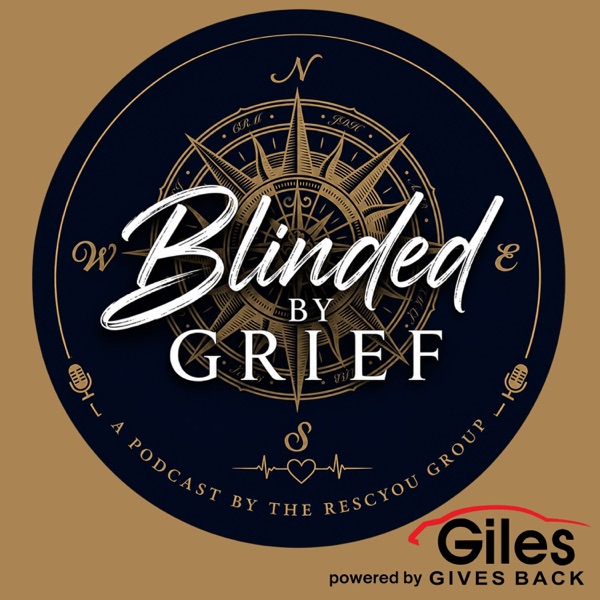
Blinded by Grief
Blinded by Grief is a raw, compassionate podcast hosted by three mothers who turned unimaginable loss into a lifeline for others navigating life after tragedy. Through honest conversations, practical guidance, and 33 years of combined grief experience, they offer the emotional compass they wish they’d had—so no family has to walk this road alone.
- Episodes
- 8
- Releases
- Weekly
- Typical length
- 51 min
- On air since
- 2026
- Latest episode
- 6 days ago
Episodes
8 episodes, newest first
-
46 min
What Siblings Carry After Sudden Loss
Season 1, Episode 8
Show notes
He was 13 when his 19-year-old brother died, and the family rules they’d lived by for years rewrote themselves in a single phone call. Cam Nelson joins us to share the perspective we rarely hear out loud: sibling grief, the kind that happens while you’re still a kid, still growing, and suddenly expected to be “the strong one.” We talk about Christian Shay Nelson’s life, their sibling bond, and the way loss can steal not just a person, but the shared history only siblings truly hold.
We also walk through the day Christian was hurt in a workplace accident and what those hospital hours felt like for a younger brother whose memories turned into a blur. Cam describes the care and reverence of the LOPA team, and why organ donation became a cornerstone of his family’s healing. Christian’s choice to be an organ donor saved four lives and helped countless others through tissue and cornea donation. Cam even shares what it was like meeting the heart recipient and hearing Christian’s heartbeat again, a moment that makes grief, legacy, and love feel painfully real all at once.
From there, we dig into what happens after the funeral: birth order changing “really quickly,” kids stuffing emotions to protect grieving parents, and why sibling support groups matter just as much as parent support. Cam opens up about finding his way back to his feelings years later through community, service, and music, including writing a song for Christian and learning guitar on Christian’s own instrument.
If you’ve lived through sibling loss, child loss, teen bereavement, or you’re looking for real conversations about grief support and organ donation awareness, this one is for you. Subscribe, share this with someone who needs it, and leave a review so more grieving families can find us.
-
53 min
How Grief Changes Shape Over Time
Season 1, Episode 7
Show notes
Grief doesn’t just break your heart. It rewires your brain, reshapes your sense of safety, and sometimes turns you into someone you barely recognize. We sit down together to talk about what happens when loss introduces “a stranger,” and that stranger is you, the new you who scans rooms, checks locks, and runs worst-case scenarios before the facts even show up.
We trace how grief can move from unmanaged to managed, not healed or finished, but more familiar. We talk about the way your body keeps score around birthdays and anniversaries, why “give it time” can feel like a dirty word, and how grief can still trip you years later through unexpected doors. Sometimes it looks like hypervigilance when your child is driving, anxiety on a long-awaited vacation, or that instant fear surge when a medical call comes in. Naming it matters. When we can say, “This is grief,” it loses some of its grip.
We also bring you inside our child loss support group approach, including a hands-on activity using everyday objects to describe grief at the beginning versus grief now. If you’re a bereaved parent, a supportive friend, or a clinician who wants a clearer view of real-world grief, this conversation offers language, tools, and a reminder that you’re not alone. Subscribe, share this with someone who needs it, and leave a review so more families can find this kind of support.
-
58 min
Remembering Benny: Aimee' Hamilton on Sudden Child Loss, Grief, and Finding Support
Season 1, Episode 6
Show notes
A healthy six-year-old goes to a play date, collapses without warning, and a family’s life splits into before and after. We sit down with Aimee' Hamilton to remember Benny, a curious, hilarious kindergartner “full of joy, wonder, and love,” and to trace the real story of what happens in the hours and months that follow sudden child loss. If you’ve ever searched for grief support, what to expect after a sudden death, or how parents survive the unthinkable, this conversation is honest, specific, and deeply human.
Aimee' shares the details that don’t fit into a headline: the missed calls that still trigger hypervigilance, the violence of CPR when you’re watching someone try to save your child, and the crushing moment medical staff can’t meet your eyes. We also talk about the protocols families often face when the cause is unknown, including police searching a home, and the intense organ donation questions that arrive when you haven’t slept and your heart is shattered.
From there, we move into what helped: immediate bereavement support, practical funeral planning, and real tools for sibling grief so kids aren’t left guessing about what they’ll see and feel. Aimee' opens up about waiting for autopsy answers, learning Benny died from cerebral lymphocytic vasculitis, and the complicated relief of finally knowing it wasn’t something she could have prevented. We also talk about marriage after child loss, “grieving languages,” and how Benny’s legacy lives on through Benny’s books, Benny’s baby stuffed animals, and comfort pillows paired with a poem called “A Hug from Benny.”
If this story brings someone to mind, share it with them, and please subscribe, rate, and review Blinded by Grief so more grieving families can find support when they need it most.
-
1 hr
Becky's Story: Grief Does Not Move In Straight Lines
Season 1, Episode 5
Show notes
Thirty seconds can change everything. We talk about that moment when a doctor says “leukemia,” and life instantly splits into before and after, with grief arriving long before loss ever does. Sitting together, we unpack how grief reshapes your mind and your faith, and why learning to walk with your head up can matter when you are desperate for meaning and you do not want to miss a later date explanation.
Becky Holsey shares the story of her daughter, Laura, diagnosed with infant leukemia at four months old. She takes us through the early symptoms that would not resolve, the blood work that came back “through the roof,” and the rapid pivot into pediatric cancer care in New Orleans. We talk about what it means to parent in a hospital room, keep a bag packed, live around blood counts and immune risk, and try to stay connected to siblings while COVID restrictions make an already isolating season even harder.
As Laura’s treatment unfolds, Becky describes remission, relapse, and the terrifying curveball of cancer changing forms in a way even specialists had not seen. We also go where many conversations avoid: the breakdown moments, the guilt, the survival-mode compartmentalizing, and the shift from praying for healing to praying for peace when hospice at home becomes the path. Along the way, we reflect on grief waves, birthdays, signs like sunflowers, and why “you are not going backward” can be the truest thing someone tells you.
If you’re navigating child loss grief, anticipatory grief, or the aftermath of a cancer journey, we hope this brings language to what you feel and reminds you that love can still guide the next step. Subscribe on Apple, Spotify, or YouTube, share this with someone who needs it, and leave a review so more families can find grief support when it matters most.
-
51 min
A Toddler’s Life, A Family’s Loss, And Three Lives Saved
Season 1, Episode 4
Show notes
The worst moments don’t arrive with a warning, they arrive with a phone call you replay for the rest of your life. Miles and Katelyn Johnson join us to share their son Walker’s story, the day he drowned while Miles was offshore, and the brutal, surreal hours that followed as family, first responders, and hospital teams fought for a miracle.
We talk honestly about what happens after the words “brain dead” enter the room, including the decision to say yes to organ donation. Katelyn and Miles explain why it was the clearest choice they could make in the middle of unimaginable pain, and how Walker went on to save three lives while also contributing to medical research. If you’ve searched for conversations about child loss grief, traumatic flashbacks, drowning tragedy, and organ donation legacy, their perspective is both heartbreaking and grounding.
The conversation also goes deeper into what people rarely name out loud: two parents can love the same child with the same intensity and still grieve in completely different ways. We unpack delayed grief, keeping a household moving for surviving children, parenting after loss, and why support groups and community care matter when your world stops but life keeps demanding answers. We end with practical hope for moms and dads who are newly grieving, including faith, communication, and learning to look up for signs instead of walking through life with your head down.
If Walker’s story moves you, subscribe, share this with someone who needs it, and leave a review so more grieving families can find support when they need it most.
-
44 min
Why Time Does Not Heal Grief
Season 1, Episode 3
Show notes
“Time heals all” sounds comforting until you’re the one living in the fog of loss. We talk honestly about why that phrase can hurt, what actually changes as days pass, and why healing has less to do with the calendar and more to do with support, language, and the work we do with our grief. We also share how early grief can feel like shock and disorientation, then shift into a deeper kind of pain as reality sets in and routines, milestones, and triggers start hitting differently.
We dig into the myths people repeat when they do not know what to say: the pressure to move on, the fear that feeling your emotions will make you lose control, and the expectation that grief should look “better” after a few months. We unpack the five stages of grief and why that framework is often misunderstood in bereavement and child loss, including why “acceptance” can feel impossible and why “acknowledgement” may be a more truthful word. Along the way, we talk about inherited grief language from family systems, how trauma responses can show up in everyday moments, and why year two can be harder than year one.
We also offer practical, human alternatives to clichés: staying present, walking forward one step at a time, and creating space where grief and joy can coexist. If you’re grieving or supporting someone who is, this conversation gives you clearer words, a more realistic map of mourning, and permission to stop performing wellness for other people’s comfort. Subscribe to Blinded by Grief, share this with someone who needs it, and leave a review with the one line you wish more people understood about grief.
-
43 min
How The RescYOU Group Supports Families After Child Loss
Season 1, Episode 2
Show notes
Nobody hands you a rulebook for the moment you have to walk out of a hospital without your child and somehow make it to your car. We start Blinded by Grief by telling the real story behind The RescYOU Group and why we built a nonprofit grief support organization in Lafayette, Louisiana for families who lose a child between ages 1 and 18. I’m Reecie Gilmore, and I share how losing my son Clint left me isolated, then eventually led me to a community of hope through organ and tissue donation advocacy and the belief that something good had to come from the worst day.
From there, we get specific about what families actually need when grief hits: help with funeral expenses like burial and cremation, plus emotional support that includes counseling, grief coaching, and sibling support. We talk about the gap that happens when resources stop at infant loss, and how COVID became a strange “pause” that pushed this mission from an idea to a fully opened lifeline.
You’ll also hear from Becky, our family advocate, as she shares the terrifying phone call of an infant cancer diagnosis, the long months of fighting infantile leukemia, and the identity question that comes after loss: Who am I now, and what do I do with this love? Shannon, our family services director, shares the shock of losing her six-year-old son Isaiah to drowning, why child loss can feel lonely even in grief groups, and how “me too” spaces help parents be honest without judgment. We end with one of the most overlooked topics: grieving and driving, and why brain fog can make the road genuinely dangerous.
If you want a podcast about child loss bereavement that’s honest, practical, faith-aware, and rooted in real community support, subscribe, share this with someone who needs it, and leave a review so more families can find us.
-
1 min
An Emotional Compass For Life After Loss: The Trailer Trailer
Season 1, Episode 1
Show notes
One phone call. A knock at the door. A doctor walking into the room. These are the moments that split life into “before” and “after,” and if you’ve found us, there’s a good chance your story includes one of them. We’re Reecie, Shannon, and Becky, and we’re not speaking about grief from theory. We’re speaking as parents who have lived child loss and had to figure out how to keep breathing when the unimaginable became real.
Reecie lost her two-year-old son, Clinton Ryan. Shannon lost her son, Isaiah. Becky lost her daughter, Laura. Between us is 33 years of combined grief experience, and what we learned the hard way is simple: there’s no manual for this. When you’re blinded by grief, the world expects you to “be strong,” make decisions, answer texts, and return to life as if you can see clearly. You can’t. So we’re building what we wish we’d had, an emotional compass for the first steps and a roadmap for the long road that follows.
Blinded by Grief, brought to you by the Rescue Group, is here to be relatable, informational, and genuinely useful. We talk about grief support that respects your reality, bereavement resources that don’t feel empty, and the promise that you don’t have to travel alone, no matter what your loss looks like. If you’re a grieving parent, a friend trying to show up well, or someone searching for language for what hurts, you belong here.
Subscribe to Blinded by Grief, share this with someone who needs it, and leave a review so more families can find support when everything changes.
Personal Journals lists
More Personal Journals shows picked out from the charts





More in Personal Journals
Placed highest on Apple Podcasts' Personal Journals chart right now