Podcast
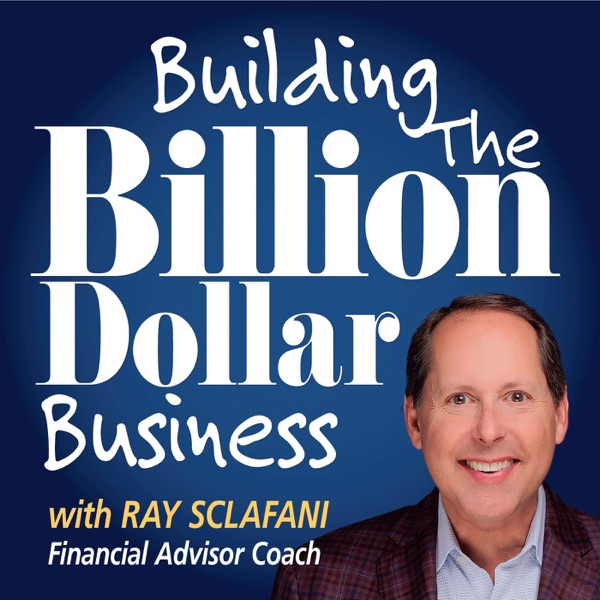
Building The Billion Dollar Business
Hosted by industry-recognized coach and thought leader Ray Sclafani, "Building The Billion Dollar Business" is the ultimate podcast for financial advisors seeking to elevate their practice. Ray, a 2026 finalist for Chief Executive Officer of the Year (Wealthies) and Thought Leader of the Year (Luminaries), brings cutting-edge insights and exclusive interviews with top professionals in financial services. Each episode features deep dives into actionable advice designed to unlock your potential and build a successful, enduring financial advisory practice.
- Episodes
- 132
- Releases
- Weekly
- Typical length
- 9 min
- On air since
- 2024
- Latest episode
- 23 hours ago
Episodes
132 episodes, newest first
-
8 min
Why Every Team Needs Guiding Principles
Episode 131
Show notes
Every team has its own way of working, and the opportunity is to write it down. In this episode of Building the Billion Dollar Business, Ray Sclafani, Founder and CEO of ClientWise, explores how guiding principles turn an invisible culture into a visible agreement that new hires, veterans, and clients can all understand.
Drawing on Korn Ferry’s research on the world’s most admired companies, Google’s Project Aristotle, Amy Edmondson’s work on psychological safety, and Patrick Lencioni’s guidance on values, Ray explains why culture is a balance sheet item and why explicit norms matter more than who is on the team. He then shares five patterns behind principles that work and six practical steps for writing your own.
Firm leaders will leave with a clear next step: bring the team together, start with real moments, and draft a How We Work list built for the team you are becoming.
WHAT YOU’LL LEARN IN THIS EPISODE
• Why culture is a genuine source of business value and enterprise value
• What Google’s Project Aristotle revealed about explicit team norms and psychological safety
• Why values that are not lived can do more harm than having none at all
• The five patterns that make guiding principles memorable and useful
• Six steps to write guiding principles your team will ownFIVE PATTERNS OF EFFECTIVE GUIDING PRINCIPLES
• They’re observable
• They settle arguments before they begin
• They hold healthy tension
• They sound like the team
• They put people firstSIX STEPS TO BUILD YOUR OWN GUIDING PRINCIPLES
• Write them together
• Start with real moments
• Keep each one short and specific
• Test for authenticity
• Wire them into daily work
• Revisit them on a scheduleREFLECTION QUESTIONS FOR YOUR LEADERSHIP TEAM
• Three years from now, what would we want a new team member to say about how we treat each other?
• What will our clients expect from us in the future that they don’t expect today, and which principle prepares us for it?
• As AI and automation take on more of our routine work, which of our principles become more important, and which need rewriting?
• Which of our current habits would we be embarrassed to see written down, and what should replace them?
• How will we know in a year whether we actually live these principles?
• What principle would help us make a hard decision faster the next time we face one?
• If our team doubled in size, which principles would protect what makes us great today?
• What is the one belief we hold now that we may need to let go of to grow?RESOURCES MENTIONED
• Korn Ferry, World’s Most Admired Companies research
• Korn Ferry executive survey on culture and values alignment
• Google, Project Aristotle
• Amy Edmondson, Harvard Business School, research on psychological safety
• Patrick Lencioni, “Make Your Values Mean Something,” Harvard Business ReviewBuilding the Billion Dollar Business is hosted by Ray Sclafani, Founder and CEO of ClientWise, the financial services industry's leading executive coaching and team development firm for elite advisors and wealth management teams. Ray Sclafani is also a Wealthies CEO of the Year Finalist (2026) and Luminaries Thought Leader of the Year Finalist (2026).
Find Ray and the ClientWise Team on the ClientWise website or LinkedIn | Twitter | Instagram | Facebook | YouTube
-
11 min
The Three Organic Growth Moves That Matter Most Right Now
Episode 130
Show notes
Advisory firms built on asset-based fees enjoy something most businesses would envy: revenue that grows even when nothing new is sold. In this episode of Building The Billion Dollar Business, Ray Sclafani, Founder and CEO of ClientWise, explores why that advantage has made organic growth feel optional for many firms, and why the leaders of the next decade will pair the fee model’s economics with the growth discipline other industries were forced to master.
Ray explains why market-driven growth and organic growth look identical on a revenue chart but behave completely differently, and what happens to valuation, client base renewal, talent development, and market exposure when firms rely on the market alone. Drawing on the system used across sectors, from a defined target client to a feedback loop, he shows that the playbook already exists and simply needs to be adopted deliberately.
Firm leaders will leave with three moves to start this quarter, including the ClientWise OG 10, a simple way to set a new client goal from the numbers you already have. It is a clear path to building recurring revenue and a repeatable engine for creating more of it.
WHAT YOU’LL LEARN IN THIS EPISODE
• Why the asset-based fee model is a genuine strategic advantage for advisory firms
• How to separate earned, repeatable growth from growth borrowed from the market
• What organic growth means for valuation, next generation talent, and client base renewal
• How the ClientWise OG 10 rule turns current assets or revenue into a new client goal
• Why naming a growth owner and choosing a segment makes growth repeatableTHE THREE ORGANIC GROWTH MOVES
• Measure organic growth separately every quarter, split into existing client wallet share and new client acquisition
• Name a growth owner with a target and a weekly review
• Choose a segment by defining the client you serve best, the problem you solve, and the channels where they can be reachedTHE FIVE ELEMENTS OF A REPEATABLE GROWTH SYSTEM
• A defined target client
• A measured funnel
• An owner and a cadence
• Investment tied to return
• A feedback loopREFLECTION QUESTIONS FOR YOUR LEADERSHIP TEAM
• If market returns were flat for the next three years, what would your firm’s growth look like, and what would you wish you had started building today?
• Which part of the growth playbook used in other industries would create the biggest change in your firm if you adopted it in the next 90 days?
• Who will own organic growth in your firm a year from now, and what would they need from you to succeed?
• What would it mean for your firm’s value and your team’s careers if organic growth became your most reliable source of new revenue?Building the Billion Dollar Business is hosted by Ray Sclafani, Founder and CEO of ClientWise, the financial services industry's leading executive coaching and team development firm for elite advisors and wealth management teams. Ray Sclafani is also a Wealthies CEO of the Year Finalist (2026) and Luminaries Thought Leader of the Year Finalist (2026).
Find Ray and the ClientWise Team on the ClientWise website or LinkedIn | Twitter | Instagram | Facebook | YouTube
-
56 min
Special Edition with Michael Kitces, Part 2
Episode 129
Show notes
In this special edition of Building the Billion Dollar Business, Ray Sclafani, Founder and CEO of ClientWise, welcomes Michael Kitces back for part two of their conversation. They cover the questions shaping the next era of advisory firms: whether AI can finally solve the industry’s integration problem, where the time AI saves actually goes, and why the CRM is positioned to remain the hub of the modern firm.
Michael shares Kitces Research findings showing that staff leverage still predicts advisor productivity more than technology spend does, and explains why the entry-level bar for future advisors is rising. He describes clients who check their advice with ChatGPT as a sign of deeper engagement, walks through the custodial economics behind Vanguard’s acquisition of Altruist, and explains why in-person marketing is outperforming digital as client acquisition costs fall.
Firm leaders will come away with a clearer picture of where to invest next: in team design, delegation, deeper client conversations, and growth strategies built to scale.
WHAT YOU’LL LEARN IN THIS EPISODE
• Why Michael Kitces believes the CRM, not the AI platform, will remain the hub of the advisory firm
• Where AI time savings actually go, and why AI is driving deeper planning rather than bigger client counts
• How staff leverage continues to predict advisor productivity, and what that means for building the next generation of talent
• The custodial economics behind Vanguard’s acquisition of Altruist and what it could mean for asset managers and advisors
• Why in-person marketing strategies are outperforming digital ones as client acquisition costs fallTHE 2027 LIGHTNING ROUND
• One tech tool to try. An AI note taker such as Jump or Zocks, valued for the client dossier it builds before your next review meeting.
• Most overhyped trend. The idea that AI will help every advisor serve 200-plus clients.
• Most underrated planning strategy. Tax-savvy tools, including tax-loss harvesting with direct indexing and tax-aware long-short strategies for concentrated positions.
• One article every advisor should read. Kitces research on what actually drives referral outcomes.Michael Kitces, MSFS, MTAX, CFP®, CLU, ChFC, RHU, REBC, CASL, is the Chief Financial Planning Nerd at Kitces.com and Head of Planning Strategy at Focus Partners Wealth, an independent RIA with more than $50 billion in assets under management. He is a co-founder of XY Planning Network, AdvicePay, New Planner Recruiting, fpPathfinder, FA BeanCounters, and NexGen, and hosts the Financial Advisor Success podcast. A recipient of the Financial Planning Association’s Heart of Financial Planning award, Michael is dedicated to helping financial advisors become better and more successful.
Building the Billion Dollar Business is hosted by Ray Sclafani, Founder and CEO of ClientWise, the financial services industry's leading executive coaching and team development firm for elite advisors and wealth management teams. Ray Sclafani is also a Wealthies CEO of the Year Finalist (2026) and Luminaries Thought Leader of the Year Finalist (2026).
Find Ray and the ClientWise Team on the ClientWise website or LinkedIn | Twitter | Instagram | Facebook | YouTube
-
24 min
Special Edition with Michael Kitces, Part 1
Episode 128
Show notes
Every growing firm reaches a point where getting bigger requires changing how the business works. In part one of this two-part special edition of Building The Billion Dollar Business, Ray Sclafani, Founder and CEO of ClientWise, flips the script with Michael Kitces. Instead of discussing the industry, they talk entrepreneur to entrepreneur about what it takes to build and lead a growing organization.
Michael has led multiple businesses from a handful of people to teams of 30, 50, and 100+, and he outlines the four stages every growing firm moves through, starting with the founder-centered “starfish org chart.” He shares the hiring roadmap that is guiding his next three key hires, explains why word of mouth eventually needs support from a deliberate growth engine, and opens up his EOS quarterly rocks, from data automation and management training to written culture statements and a careful approach to AI.
Firm leaders will come away with a clear lens for identifying their own stage of growth and the structure their next stage requires. As Michael puts it, every day you wake up, you are running the largest company you have ever run, and that is where the opportunity lives.
WHAT YOU’LL LEARN IN THIS EPISODE
• The four stages of business growth and how leadership changes at each one
• When formal career tracks become essential for attracting and retaining talent
• How a hiring roadmap helps leadership rank priorities across every department
• Why a 15 to 25 percent annual growth target balances opportunity and sustainability
• Where AI can add value in a firm, and where precision requires human controlMichael Kitces, MSFS, MTAX, CFP®, CLU, ChFC, RHU, REBC, CASL, is the Chief Financial Planning Nerd at Kitces.com and Head of Planning Strategy at Focus Partners Wealth, an independent RIA with more than $50 billion in assets under management. He is a co-founder of XY Planning Network, AdvicePay, New Planner Recruiting, fpPathfinder, FA BeanCounters, and NexGen, and hosts the Financial Advisor Success podcast. A recipient of the Financial Planning Association’s Heart of Financial Planning award, Michael is dedicated to helping financial advisors become better and more successful.
Building the Billion Dollar Business is hosted by Ray Sclafani, Founder and CEO of ClientWise, the financial services industry's leading executive coaching and team development firm for elite advisors and wealth management teams. Ray Sclafani is also a Wealthies CEO of the Year Finalist (2026) and Luminaries Thought Leader of the Year Finalist (2026).
Find Ray and the ClientWise Team on the ClientWise website or LinkedIn | Twitter | Instagram | Facebook | YouTube
-
8 min
Do You Know Your People?
Episode 127
Show notes
Before you evaluate anyone else this review season, take a moment to evaluate yourself. In this episode of Building the Billion Dollar Business, Ray Sclafani, Founder and CEO of ClientWise, explores followership: whether the people you lead believe in your vision, believe you are committed to their development, and believe you have their best interests in mind. Your title gives you authority. Followership is earned one conversation at a time.
Drawing on research from Robert Kelley, Korn Ferry, SHRM, Steven Rogelberg, and McKinsey, Ray shows why one-on-ones are the clearest window into whether you have earned it. He shares a six-question self-check that reveals how well you truly know each person on your team, along with a personal story about what happens when a leader shuts down a team member's ambition instead of supporting it.
Firm leaders will leave with a practical next step: run the self-check for every person who reports to you, turn any gaps into the agenda for your next one-on-one, and ask the hardest question of all about what you might be making harder than it needs to be.
WHAT YOU'LL LEARN IN THIS EPISODE
• What followership is and the three beliefs that define it
• Why one-on-ones are the best place to see whether you have earned your team's followership
• What the research reveals about engagement, meeting quality, and why people leave
• Six questions every leader should be able to answer about each team member
• How to support a team member who tells you who they want to becomeTHE SIX-QUESTION ONE-ON-ONE SELF-CHECK
• When their week goes really well, what happens? When a week wears them down, what's usually behind it?
• Do they know what kind of support they need from you right now, and have they asked for it?
• How do they want to be recognized when they excel, and how do they want to hear about it when something misses the mark?
• Where do they want to be in two to three years, and what skills, competencies, and experiences stand in the way?
• What matters to them outside of work right now?
• Have they completed their own professional development plan, and have you read and discussed it?REFLECTION QUESTIONS FOR YOUR LEADERSHIP TEAM
• What do you need to know about your team that would help you support them more effectively in achieving their career goals?
• What is one thing you, or your organization, do that makes your team's job harder than it needs to be?RESOURCES MENTIONED
• Robert Kelley, "In Praise of Followers," Harvard Business Review (1988)
• Korn Ferry research on leadership and followership
• SHRM (Society for Human Resource Management) research on one-on-ones and engagement
• Steven Rogelberg's research and Harvard Business Review writing on one-on-one meetings
• McKinsey research on career development, attrition, and on-the-job learning
• ClientWise Executive Coaching and Team DevelopmentBuilding the Billion Dollar Business is hosted by Ray Sclafani, Founder and CEO of ClientWise, the financial services industry's leading executive coaching and team development firm for elite advisors and wealth management teams. Ray Sclafani is also a Wealthies CEO of the Year Finalist (2026) and Luminaries Thought Leader of the Year Finalist (2026).
Find Ray and the ClientWise Team on the ClientWise website or LinkedIn | Twitter | Instagram | Facebook | YouTube
-
9 min
Capacity Is The Place Where Strategy Gets Honest
Episode 126
Show notes
Every growth plan reaches the moment where strategy meets the team that will carry it. In this episode of Building the Billion Dollar Business, Ray Sclafani, Founder and CEO of ClientWise, explores team structure and capacity planning, one of the ten interlocking areas of the ClientWise Talent Strategy Operating System. Ray shows why capacity is a strategic lever for advisory firms of every size, from multi-office regional firms to advisors concentrated in a single hub.
Drawing on Michael Kitces' 2025 research on delegating to associate advisors, Ray explains how the right support structure frees lead advisors for business development and deeper client relationships. He then walks through a practical 12-month capacity forecast that helps leaders map future work to the right roles, track measurable capacity signals, and prepare for the service models that tomorrow's more complex, multigenerational clients will require.
Firm leaders will leave with a simple next step: build a one-page capacity forecast for one advisory team and ask what will break first. It is a focused way to hire ahead of demand, protect top talent, and build a firm ready to absorb its next stage of growth.
WHAT YOU'LL LEARN IN THIS EPISODE
• Why capacity planning is a strategy issue as well as a staffing issue
• What Michael Kitces' research reveals about the time savings of delegating to associate advisors
• How to build a 12-month capacity forecast that works as an operating tool
• How mapping work to roles frees senior advisors and leaders for higher-value work
• Why the future firm builds growth on capacity, role clarity, delegation, and leadership disciplineTHE ONE-PAGE CAPACITY FORECAST
• Client segments
• Households
• Revenue
• Meeting volume
• Planning work
• Service load
• Advisor ratios
• Workload distribution
• Manager span of control
• Expected growth over the next twelve monthsCAPACITY SIGNALS
• Number of households per advisor
• Number of meetings per month
• Planning cases per team member
• Open service requests
• Turnaround time
• Overtime
• Missed follow-up
• CRM backlog
• Manager span of control
• Number of exceptionsREFLECTION QUESTIONS FOR YOUR LEADERSHIP TEAM
• What part of your growth plan does your current capacity model not support?
• Where is work being carried by the wrong person because the team design is outdated?
• Which client segments require a different service model?RESOURCES MENTIONED
• Kitces Report: What Actually Contributes To Advisor Wellbeing
• ClientWise Executive Coaching and Team DevelopmentBuilding the Billion Dollar Business is hosted by Ray Sclafani, Founder and CEO of ClientWise, the financial services industry's leading executive coaching and team development firm for elite advisors and wealth management teams. Ray Sclafani is also a Wealthies CEO of the Year Finalist (2026) and Luminaries Thought Leader of the Year Finalist (2026).
Find Ray and the ClientWise Team on the ClientWise website or LinkedIn | Twitter | Instagram | Facebook | YouTube
-
6 min
Where Real Learning Happens
Episode 125
Show notes
Most advisory firm leaders think the cost of isolation is paid in loneliness. It's not. It's paid in months of problem-solving you'd solve in nine minutes with one peer conversation. The most expensive sentence in business is "I'll figure it out myself"—it sounds like strength but costs like a mortgage. While you're quietly working through a decision, someone else already solved it, already paid the tuition, and would have handed you the answer if you'd asked. Ray Sclafani reveals why peer networks and community aren't nice-to-have luxuries for advisory leaders—they're the fastest ROI you can get on your time and attention.
WHAT YOU'LL LEARN IN THIS EPISODE
• Why the "lone founder in a garage" narrative is misleading and what actually builds remarkable advisory businesses
• How to build real community as a practice (not a membership) with one honest conversation at a time
• Why strategic planning must start with gathering, not deciding, and how to gather the three things that matter mostTHE COMMUNITY PRACTICE FRAMEWORK
• Start with one honest conversation. Not a conference, not a mastermind application. One conversation with someone who's done the thing—a former colleague, a supplier who serves firms like yours, a non-competing peer two markets over. The community builders Ray admires didn't find their room; they started it usually with two people and a standing phone call.
• Ask real questions, not polished ones. The mistake is protecting your image. Instead, ask the slightly embarrassing question: "How do you actually handle that? What did it cost you? What would you do differently?" Then do the harder part—be the one who shares your real number, your failed launch, your wrong hire. Vulnerability builds permission for everyone else to be honest.
• Tap the scar tissue you cannot buy. Five years of somebody else's hard-earned experience cannot be purchased. It can only be given to you by someone willing to share. Every successful leader Ray has studied had someone three steps ahead willing to tell them the uncomfortable true thing over lunch and save them two years of hard knocks.
• Gather before you decide. Most bad decisions aren't bad thinking—they're good thinking on bad inputs. Before your next planning cycle, collect three things: your actual numbers (not the ones you feel), the exact words your clients use to describe their problems (sitting in your inbox right now, free), and what someone slightly ahead of you did when they were standing exactly where you are. Two of these three you can start in the next hour alone.REFLECTION QUESTIONS FOR YOUR LEADERSHIP TEAM
• Who in your network is three steps ahead of you and willing to share? If that list is short, what's one honest conversation you could start this week?
• What decision are you currently "figuring out yourself" that a peer could solve in nine minutes?
• Where is your team protecting image instead of asking real questions? What permission do you need to give them to be vulnerable?
• When you plan next year, will you gather actual data from your network and clients, or will you invent the future from a blank document?
• If building a peer advisory circle became a business practice (not a nice-to-have), how would that change your firm's decision-making speed and confidence?Building the Billion Dollar Business is hosted by Ray Sclafani, Founder and CEO of ClientWise, the financial services industry's leading executive coaching and team development firm for elite advisors and wealth management teams. Ray Sclafani is also a Wealthies CEO of the Year Finalist (2026) and Luminaries Thought Leader of the Year Finalist (2026).
Find Ray and the ClientWise Team on the ClientWise website or LinkedIn | Twitter | Instagram | Facebook | YouTube
-
9 min
Career Paths are Becoming Design Work
Episode 124
Show notes
Your employees do not experience your growth plan directly. They experience whether their own future at the firm feels clear or vague. That clarity, or the lack of it, shapes retention long before compensation ever does. Many advisory firms avoid career path conversations because they fear making promises they cannot keep, so employees are left guessing at what growth actually requires. Schwab's 2025 Advisor Services research found that 77% of firms now offer career pathing and 67% offer coaching and mentorship, meaning this has moved from a nice to have to a market expectation. Ray Sclafani reveals why career pathing is really a design exercise built on skills, experience, and contribution, and why AI is quietly rewriting what every role in your firm requires next.
WHAT YOU'LL LEARN IN THIS EPISODE
• Why career paths should be built on skills, experience, and contribution rather than tenure or personality
• How AI is shifting the value of roles like associate advisor toward judgment, interpretation, and client insight
• How to build a credible one page career path for a single role using six simple sectionsTHE CAREER PATH DESIGN FRAMEWORK
• Skills- Every role needs technical skills, relational skills, judgment skills, and communication skills defined clearly. For an associate advisor that might mean planning software and tax awareness alongside listening, follow through, and knowing when to escalate.
• Experience- People grow by doing harder things with support, not by reading role descriptions. A future lead advisor needs to lead parts of a client meeting. A future manager needs to coach someone. Experience is the bridge between potential and readiness.
• Contribution- A larger role should require a larger contribution, measured through client impact, team leadership, business development, mentoring, or culture. Promotion should be based on evidence, not tenure.
• AI Fluency- As AI takes over meeting notes, drafting, and data organization, the human value in each role shifts toward better questions, judgment, tone, and interpretation. Career paths need to train toward that shift, not ignore it.REFLECTION QUESTIONS FOR YOUR LEADERSHIP TEAM
• Where do employees have a job description but no visible growth map?
• What experiences should become required before someone moves into a larger role?
• How will AI change the skills required for each career path in your firm?
• Which roles in your firm are being held together by personality and memory instead of clear structure?
• If a high performer asked you tomorrow what their next two years could look like, could you answer with specifics?Building the Billion Dollar Business is hosted by Ray Sclafani, Founder and CEO of ClientWise, the financial services industry's leading executive coaching and team development firm for elite advisors and wealth management teams. Ray Sclafani is also a Wealthies CEO of the Year Finalist (2026) and Luminaries Thought Leader of the Year Finalist (2026).
Find Ray and the ClientWise Team on the ClientWise website or LinkedIn | Twitter | Instagram | Facebook | YouTube
-
8 min
Managers Are the System
Episode 123
Show notes
Your people do not experience your strategy directly. They experience their manager. That manager sets the tone for clarity, feedback, accountability, and growth, yet most advisory firms treat management as an honorary title rather than a craft. Only 44% of managers globally have received formal training, and advisory firms routinely promote strong individual contributors into leadership roles without building management skills. The result: retention risk, performance risk, culture risk, and ultimately client experience risk. Ray Sclafani reveals why management is the delivery system for everything that matters and introduces the four-part operating rhythm that scales culture and prevents leadership fracture as your firm grows.
WHAT YOU'LL LEARN IN THIS EPISODE
• Why managers are the delivery system for strategy, culture, and employee experience, and why founders often overestimate how much strategy reaches employees directly
• How only 44% of managers have formal training, yet advisory firms promote their best individual contributors without teaching them management skills
• Why strong producers often make weak managers, and what happens when you assume management talent transfers from client work
• The four-part manager operating rhythm: monthly one-on-ones focused on development, quarterly performance calibration, documented development plans, and team health dashboards
• Why a 90-minute calibration meeting with four key questions reveals more about firm culture than most annual retreatsTHE MANAGER OPERATING RHYTHM FRAMEWORK
1. Monthly One-on-Ones
Move beyond status updates. Cover priorities, obstacles, decisions, feedback, learning, capacity, and development. Manager leaves knowing what the person needs. Employee leaves knowing what matters next.2. Quarterly Performance Calibration
Bring managers together to discuss performance consistency across roles. Define what meeting, exceeding, and far exceeding expectations look like. Reduce favoritism, vague feedback, and compensation surprises. Identify high-potential talent early.3. Documented Development Plans
Every employee gets one or two development focuses: client presence, planning skill, follow-through, leadership behavior, delegation, communication, AI fluency, business development. Plans connect to role and firm future.4. Team Health Dashboard
Managers track engagement, workload, retention risk, development progress, client pressure, meeting rhythm, and open issues. Dashboard makes invisible problems visible.THE 90-MINUTE CALIBRATION MEETING QUESTIONS
Ask your leadership team these four questions together:
• Who is performing well and ready for more?
• Who is underperforming and needs direct feedback?
• Who is overloaded?
• Who might leave if nothing changes?REFLECTION QUESTIONS FOR YOUR LEADERSHIP TEAM
• What do employees experience consistently because of your managers right now, and does it align with your stated strategy?
• Which of your managers are carrying titles without enough training, support, or clarity about their role in culture and retention?
• Where do your managers need a clearer operating rhythm, and what is the cost of that gap?
• How would performance and retention improve if feedback became normal instead of occasional or avoided?
• What should your managers be held accountable for beyond personal production, and how will you measure it?Building the Billion Dollar Business is hosted by Ray Sclafani, Founder and CEO of ClientWise, the financial services industry's leading executive coaching and team development firm for elite advisors and wealth management teams. Ray Sclafani is also a Wealthies CEO of the Year Finalist (2026) and Luminaries Thought Leader of the Year Finalist (2026).
Find Ray and the ClientWise Team on the ClientWise website or LinkedIn | Twitter | Instagram | Facebook | YouTube
-
9 min
The Next Generation Is Asking A Better Question
Episode 122
Show notes
Next generation talent isn't rejecting ambition, they're rejecting vague ambition. They want to know what they're becoming, not just what the job is. By 2030, Gen Z and millennials will comprise 74% of the global workforce, and they're clear about what they need: purpose-driven work, real development, and a visible career path. Yet most advisory firms still operate from an old bargain: work hard, wait patiently, opportunities will come. That no longer retains talent.
Ray Sclafani reveals the five-question framework that turns retention into strategy. Learn how to make the future visible, treat development as intentional leadership practice, and connect work to real meaning. The practical next step is immediate: schedule one conversation with each direct report within 60-90 days and document the next experience they need, not just the next title.
WHAT YOU'LL LEARN IN THIS EPISODE
• Why next generation talent rejects vague ambition, not ambition itself, and what question they're really asking about their future
• How to use the five-question conversation framework to clarify career paths, development plans, and professional identity
• Why making the future visible requires outlining growth, development ownership, possible career tracks, meaning, and AI impact
• How to document the next experience rather than the next title so growth happens through structured opportunities
• Why connecting younger professionals to client impact and meaningful outcomes is essential for retention in advisory firmsTHE FUTURE CONVERSATION FRAMEWORK
• What are you learning here?
• Who do you see as developing you?
• Where do you believe you can go in this firm?
• How do you believe your work matters?
• How will AI change your role and how will we help you grow with it?REFLECTION QUESTIONS FOR YOUR LEADERSHIP TEAM
• How will your next generation talent see a future in your firm that is clear enough they want to be a part of it?
• Where are you assigning them to work but not developing them?
• What leadership opportunities can your next generation leaders gain before they receive the leadership title?
• How will AI make their future role more valuable, not less?
• What visible career path can you outline this week that clarifies identity, not just compensation?Building the Billion Dollar Business is hosted by Ray Sclafani, Founder and CEO of ClientWise, the financial services industry's leading executive coaching and team development firm for elite advisors and wealth management teams. Ray Sclafani is also a Wealthies CEO of the Year Finalist (2026) and Luminaries Thought Leader of the Year Finalist (2026).
Find Ray and the ClientWise Team on the ClientWise website or LinkedIn | Twitter | Instagram | Facebook | YouTube
-
10 min
The Budget Reveals the Strategy
Episode 121
Show notes
Your budget tells the truth about your strategy. A firm can say it wants to develop next generation leaders, strengthen succession readiness, improve management capability, prepare its people for AI, and increase enterprise value. But if those priorities do not appear in the talent budget, the strategy may be more aspirational than operational. Ray Sclafani explores why the talent budget is one of the clearest ways for an advisory firm's leadership team to determine whether its stated priorities are actually being funded.
In this episode, you'll learn how to build a simple talent budget scorecard that reveals where your firm is investing in its people and what those investments are expected to produce. You'll also discover how Association for Talent Development benchmarks can provide a useful reference point, why talent development should be treated as infrastructure rather than a discretionary expense, and how to connect investments in leadership, coaching, onboarding, and AI fluency to measurable business outcomes. By the end, you'll have a practical framework to evaluate your current talent budget and identify where your spending needs to align more closely with your firm's growth priorities.
This framework is designed for advisory firm leaders who are thinking beyond today's staffing needs and building the capabilities required for future growth, succession, leadership depth, and AI readiness. The central question is simple: Does your budget reveal the firm you're building, or the firm you once were?
WHAT YOU'LL LEARN IN THIS EPISODE
• Why your talent budget may reveal more about your actual strategy than your strategic plan
• How to connect talent investments to measurable outcomes such as retention, succession readiness, manager capability, and AI adoption
• Why talent development should be treated as infrastructure in a growth-oriented advisory firm
• How to align talent spending with your firm's top three strategic priorities
• Why the goal is not simply to spend more, but to build the capabilities your firm will need in the futureTHE TALENT BUDGET SCORECARD
• Total annual talent development spend
• Talent development spend as a percentage of gross revenue
• Leadership development spend
• Coaching and professional development spend
• New employee onboarding spend
• AI fluency and tool adoption training spend
• Measurable business outcomes tied to talent investmentREFLECTION QUESTIONS FOR YOUR LEADERSHIP TEAM
• What does your current talent budget reveal about what your firm actually believes?
• Where are you expecting future growth from the people you're underinvesting in today?
• What measurable business outcome should your talent investment deliver over the next 12 months?
• How would your budget change if talent development were treated as firm infrastructure?
• What capability must your firm build now so it is not constrained three years from now?Building the Billion Dollar Business is hosted by Ray Sclafani, Founder and CEO of ClientWise, the financial services industry's leading executive coaching and team development firm for elite advisors and wealth management teams. Ray Sclafani is also a Wealthies CEO of the Year Finalist (2026) and Luminaries Thought Leader of the Year Finalist (2026).
Find Ray and the ClientWise Team on the ClientWise website or LinkedIn | Twitter | Instagram | Facebook | YouTube
-
9 min
Stop Hiring Into Confusion
Episode 120
Show notes
Bad hires cost advisory firms upwards of three times salary in direct and indirect costs. But the real issue isn't always the person, it's the system. When firms grow fast and operate under pressure, they hire quickly without clear role definition, leading new hires to navigate confusion, tribal knowledge, and conflicting expectations. Ray Sclafani explores why onboarding cannot be a first-day checklist in advisory firms where work is technical, judgment-dependent, and outcomes matter. The solution is building a better receiving system before the candidate arrives, starting with role clarity.
In this episode, you'll learn the eight-question framework, the 100-Day Role Clarity Map, that separates successful hires from failed ones. You'll also discover why structuring the first 100 days into three distinct phases dramatically improves outcomes, how to assign decision rights without confusion, and why your employee value proposition is as critical as your client value proposition. By the end, you'll have a practical template to use before your next hire and coaching questions to lead your leadership team through the design process.
This framework applies to advisory firms of all sizes and maturity levels, and it's grounded in research from Korn Ferry and SHRM that shows structured onboarding directly correlates with retention, performance, and firm growth.
WHAT YOU'LL LEARN IN THIS EPISODE
• The true cost of a bad hire and why good hires in confused systems fail faster than bad hires in clear ones
• The eight critical questions every role must answer to ensure success
• Why decision rights are non-negotiable and how to assign them
• How to structure the first 30, 60, and 100 days into measurable milestones
• The connection between employee value proposition and retentionTHE 100-DAY ROLE CLARITY MAP
• Why does this role exist? (Purpose and problem it solves)
• What outcomes define success? (Not activities, outcomes)
• What decisions can this person make? (Independent, approval, escalation)
• Who are the key relationships? (Manager, mentor, buddy, stakeholders)
• What should happen in the first 30 days? (Context-building phase)
• What should happen by day 60? (Ownership and feedback phase)
• What should happen by day 100? (Readiness and coaching phase)
• What AI tools and guardrails apply to the role? (Approved tools, data rules, review requirements)REFLECTION QUESTIONS FOR YOUR LEADERSHIP TEAM
• What would each new hire need to understand in their first hundred days to maximize their impact?
• How are you measuring the quality of hire after the employee starts?
• Which parts of your onboarding process today still rely too heavily on informal tribal knowledge?
• What changes or improvements can you make to your employee value proposition, including a presentation deck that you share with prospective and current employees?
• How will AI expectations be communicated to every new hire before habits form?Building the Billion Dollar Business is hosted by Ray Sclafani, Founder and CEO of ClientWise, the financial services industry's leading executive coaching and team development firm for elite advisors and wealth management teams. Ray Sclafani is also a Wealthies CEO of the Year Finalist (2026) and Luminaries Thought Leader of the Year Finalist (2026).
Find Ray and the ClientWise Team on the ClientWise website or LinkedIn | Twitter | Instagram | Facebook | YouTube
-
7 min
Culture is What the Firm Allows
Episode 119
Show notes
In this episode, Ray explores the uncomfortable truth: firm culture is revealed through what leaders reward, tolerate, and ignore on a typical Monday morning. For advisory firm owners, understanding your actual culture, not your aspirational values, has direct business impact.
Ray makes the connection concrete: research from SHRM shows that employee experience and engagement account for 42% of turnover intent. Regrettable attrition is expensive. More importantly, in relational advisory businesses, internal culture becomes external client experience. Clients feel when teams are aligned, communication is clear, and people are supported. They also feel when turnover disrupts continuity and people are burned out.
This episode is built around an immediately actionable framework: the culture evidence review. Rather than running another employee survey, Ray walks you through five practical questions that move culture from sentiment to evidence. You'll learn what to examine, what it means when certain behaviors are tolerated, and how to use stay interviews to listen early before exit interviews teach expensive lessons.
WHAT YOU'LL LEARN IN THIS EPISODE
• Why culture is revealed through behavior, not proclamation, and how to examine evidence instead of language
• How employee experience and engagement directly correlate with turnover intent (and the research that proves it)
• The five-question culture evidence review framework that translates culture into measurable leadership decisions
• Why tolerated behaviors become permission and what behaviors are costing your firm stability and client continuity
• How to use stay interviews to listen early and understand what your best people need to stay engagedTHE FIVE-QUESTION CULTURE EVIDENCE REVIEW
• What behaviors are rewarded around here? Look past the value statement. Who gets promoted, praised, paid, invited to important conversations? Do you reward people who develop others or only those who generate revenue? Do you reward collaboration or information control? Do you reward system improvement or crisis heroics?
• What behaviors are tolerated? Every firm tolerates something. Poor follow-through, weak meetings, avoided feedback, disrespectful communication, hoarded clients, undermining peers, not using the CRM, treating staff as support instead of colleagues. When leaders tolerate these behaviors, tolerance becomes permission.
• What do employees fear saying out loud? Your team may know where the firm is stuck before leaders admit it. They know which processes are broken, which client segments drain the team, which advisors are difficult. A healthy culture gives truth a place to go.
• What are stay interviews telling us? Ask why people stay, what might cause them to leave, where they feel underutilized or unsupported, and what would help them grow. Listen early.
• What is AI anxiety doing to the culture? Employees may not directly name AI fear. They hesitate to use tools, fear being replaced, or assume productivity gains mean more work. Leaders need to surface this conversation.COACHING QUESTIONS FOR YOUR LEADERSHIP TEAM
• What behaviors are shaping your culture more than your stated values do?
• Where is the firm tolerating behavior that undermines trust or performance?
• What would your employees say the culture rewards most in your firm?
• What are stay interviews telling you before exit interviews make the lesson costly?
• How is AI anxiety manifesting in the culture, even if people are not naming it directly?Building the Billion Dollar Business is hosted by Ray Sclafani, Founder and CEO of ClientWise, the financial services industry's leading executive coaching and team development firm for elite advisors and wealth management teams. Ray Sclafani is also a Wealthies CEO of the Year Finalist (2026) and Luminaries Thought Leader of the Year Finalist (2026).
Find Ray and the ClientWise Team on the ClientWise website or LinkedIn | Twitter | Instagram | Facebook | YouTube
-
6 min
AI Is Now a Talent Strategy Issue
Episode 118
Show notes
In this episode, Ray Sclafani makes the case that AI's biggest impact on advisory firms has nothing to do with which software you buy. Ray walks through how AI is already reshaping hiring, training, performance standards, and career development inside growing firms, and why executive teams need to treat AI as a talent conversation rather than a technology rollout.
Ray shares a simple, repeatable discipline: a standing quarterly review built around six specific questions that help leadership teams see where AI is helping, where it's hiding, and where it could create risk. He also shares five coaching questions leaders can bring directly into their next executive meeting.
For firm owners and leaders focused on building enterprise value, this episode offers a practical way to turn AI adoption into stronger judgment, better development, and a real competitive advantage.
WHAT YOU'LL LEARN IN THIS EPISODE
• Why treating AI as a pure technology decision causes firms to ask the wrong questions
• How AI is already reshaping hiring, development, performance, and career paths for advisors and staff
• Why managers need to inspect AI-enabled work more closely and elevate the role of human judgment
• Why uneven or hidden AI adoption is a bigger risk than AI adoption itself
• A practical quarterly discipline for putting AI on the executive team's talent agendaTHE SIX QUARTERLY AI TALENT QUESTIONS
• Which roles are changing most because of AI?
• Which tasks are being reduced, improved, or redesigned?
• Which skills do we need to train right now?
• Which employees are using AI well?
• Where do we have hidden AI usage?
• Where could AI adoption create client, compliance, quality, or culture risk?REFLECTION QUESTIONS FOR YOUR LEADERSHIP TEAM
• Which roles at your firm will AI reshape first?
• What skills must your people develop before the work around them changes?
• Where could hidden AI use pose risk to clients or to your firm?
• How will managers evaluate quality as output speeds up?
• What human capability must strengthen as AI becomes more capable?Building the Billion Dollar Business is hosted by Ray Sclafani, Founder and CEO of ClientWise, the financial services industry's leading executive coaching and team development firm for elite advisors and wealth management teams. Ray Sclafani is also a Wealthies CEO of the Year Finalist (2026) and Luminaries Thought Leader of the Year Finalist (2026).
Find Ray and the ClientWise Team on the ClientWise website or LinkedIn | Twitter | Instagram | Facebook | YouTube
-
10 min
A Five Step Framework for Advisor Capacity
Episode 117
Show notes
Your best advisors are stretched thin, and it is tempting to blame the calendar. In this episode, Ray Sclafani makes the case that capacity is a leadership decision, not an operations problem, and shows advisory firm leaders how unresolved choices about clients, roles, and delegation quietly push the heaviest load onto the people the firm can least afford to burn out.
Ray connects this to Michael Kitces' 2025 research on associate advisor delegation, which found that smart delegation can meaningfully speed up the return on a new hire while protecting senior advisors from unnecessary client work. He then walks through a five step framework for segmenting clients, defining service models, clarifying roles, measuring capacity objectively, and hiring ahead of the breaking point.
Firm leaders will walk away with a concrete way to diagnose where capacity is leaking in their business and a practical plan for protecting their top talent while growing enterprise value.
WHAT YOU'LL LEARN IN THIS EPISODE
• Why overloaded top performers usually signal a leadership gap rather than a staffing shortage.
• Four questions to diagnose team structure, capacity measurement, proactive hiring, and review cadence.
• How Michael Kitces' 2025 research on associate advisor delegation ties directly to firm capacity.
• How to design roles and service models so lower value work moves off the senior advisor's plate.
• Why a quarterly capacity review is the practical tool for hiring ahead of the breaking point.THE FIVE STEP CAPACITY FRAMEWORK
• Define your client segments.
• Define the service model for each segment.
• Define the roles around the service model.
• Measure capacity objectively.
• Hire ahead of the breaking point.REFLECTION QUESTIONS FOR YOUR LEADERSHIP TEAM
• Where is your firm relying on heroic effort rather than a better structure?
• Which client segments require distinct service models, roles, and staffing assumptions?
• What work should your senior advisors stop doing in the next 90 days?
• What capacity signals would tell you it's time to hire before performance starts to slip?
• How will you implement a system so that every 90 days you're evaluating the opportunity to infuse AI into your workforce?RESOURCES MENTIONED
• Kitces Report: What Actually Contributes To Advisor Wellbeing
• ClientWise Executive Coaching and Team DevelopmentBuilding the Billion Dollar Business is hosted by Ray Sclafani, Founder and CEO of ClientWise, the financial services industry's leading executive coaching and team development firm for elite advisors and wealth management teams. Ray Sclafani is also a Wealthies CEO of the Year Finalist (2026) and Luminaries Thought Leader of the Year Finalist (2026).
Find Ray and the ClientWise Team on the ClientWise website or LinkedIn | Twitter | Instagram | Facebook | YouTube
-
11 min
Career Paths Are the New Retention Strategy
Episode 116
Show notes
The next generation of financial advisors and leaders are not asking for a job, they're asking for a future. Ray Sclafani explores why career pathing has evolved from a nice-to-have benefit into the most critical retention lever advisory firms have. Drawing on Deloitte's 2025 research showing only 6% of Gen Z and Millennials prioritize reaching a leadership position, Ray unpacks what ambition actually looks like today: growth, meaning, money, well-being, and a thoughtful pace of development.
For advisory firm owners and leaders, the implications are direct. A firm with no clear development path doesn't stand still, it falls behind. This episode provides a five-part framework for building career pathways that work. Ray then shares a practical starting point: a single career conversation in the next 60 to 90 days that changes how your people feel about their future with your firm.
The firms that provide honest visibility of a future worth building will retain more top talent, develop better leaders, and build more durable businesses.
WHAT YOU'LL LEARN IN THIS EPISODE
• Why the next generation defines ambition differently and what that means for retention strategy
• How to define roles with clarity and purpose so every position has a visible pathway
• The single biggest mistake firms make when building career paths and how to avoid it
• Why addressing AI's role impact directly is now a core part of career development
• How to eliminate ambiguity around partnership so people stop guessing what it meansTHE FIVE-PART CAREER PATHING FRAMEWORK
• Define the Roles. Establish clear purpose, expectations, and required skills for each position. Map progression pathways for advisors (from client service associate to enterprise leader), operations (specialist to enterprise operator), and leadership (people manager to executive leader).
• Define the Progression. Specify what it takes to move from one role to the next: technical skills, client relationship management, leadership capabilities, business development expectations, decision rights, and cultural behaviors. Specificity builds trust.
• Connect to Actual Development. Attach real development objectives to each progression step. Identify specific competencies that need improvement, not vague hopes. The manager's job is connecting today's work to tomorrow's opportunity.
• Address AI's Impact. Clarify which skills become more valuable (empathy, judgment, planning, decision making, communication, relationship leadership) and commit to training people to use AI responsibly. Don't let people wonder alone.
• Make Ownership Expectations Clear. Define passages to partnership, distinguish between producing and nonproducing partners, clarify income versus equity partnership, and spell out what business development, client retention, leadership, and enterprise thinking mean for ownership.REFLECTION QUESTIONS FOR YOUR LEADERSHIP TEAM
• Can every high potential employee at your firm see a future worth working toward?
• Where are career paths clearly defined, and where are they implied but not yet documented?
• Which roles will AI reshape first? And how are you preparing your team for that shift?
• Who needs a development conversation before they start taking calls from another firm?RESOURCES MENTIONED
Deloitte 2025 Gen Z and Millennial Survey
Schwab 2025 Career Pathing Research
CFP Board Career Pathway Resources
ClientWise Business Builders Academy™
ClientWise Executive Coaching and Team DevelopmentBuilding the Billion Dollar Business is hosted by Ray Sclafani, Founder and CEO of ClientWise, the financial services industry's leading executive coaching and team development firm for elite advisors and wealth management teams. Ray Sclafani is also a Wealthies CEO of the Year Finalist (2026) and Luminaries Thought Leader of the Year Finalist (2026).
Find Ray and the ClientWise Team on the ClientWise website or LinkedIn | Twitter | Instagram | Facebook | YouTube
Building The Billion Dollar Business
-
10 min
Succession Is No Longer a Future Event
Episode 115
Show notes
Too many advisory firms treat succession as an event triggered by retirement, but Ray Sclafani reveals why succession must be an everyday leadership discipline. In this episode, Ray shares a practical four-part framework for building bench strength, designing intentional transfer experiences, and creating a written succession plan that reduces avoidable risk. For advisory firm owners and leaders, succession readiness directly impacts enterprise value, client retention, and your ability to scale beyond your own capacity.
The data is clear: 105,000 advisors plan to retire over the next decade, representing 37.4% of industry headcount and 41.4% of total assets. Yet many firms haven't developed the next generation needed to carry client relationships and leadership. Real succession is a series of transfers of trust built over five to seven years, not a transaction completed in months. When you implement systematic succession planning, your firm reduces avoidable risk, protects client continuity, and creates visible opportunities for emerging leaders.
What you'll take away: a simple, immediately applicable framework you can stress test against your own firm's situation this week. Whether you're early in succession planning or well prepared, this episode gives you the discipline to move forward with clarity and intention.
WHAT YOU'LL LEARN IN THIS EPISODE
• Why succession must be treated as a daily leadership discipline, not an event triggered by retirement
• The four-part framework for building a succession plan that protects client relationships and firm culture
• How to identify the roles in your firm that carry the most client trust and who depends on them
• How to design "second chair" transfer experiences that let next generation advisors build capability before they inherit client relationships
• Why reviewing bench strength every 90 days reduces avoidable risk and protects against unexpected departuresTHE FOUR-PART SUCCESSION FRAMEWORK
• Identify the Roles in Your Firm That Carry the Most Client Trust - Start with trust, not titles. Who holds important relationships? Who makes decisions clients rely on? In many firms, this is concentrated with a few people, creating risk and limiting growth.
• Name the Successor for Each Trust Bearing Role - For each key role, identify the likely successor, backup successor, and the specific readiness gap (technical skill, executive presence, business judgment, or communication maturity).
• Build Transfer Experiences Before They're Needed - Use "second chair" meetings, client events, and leadership responsibilities to let next generation advisors build capability. They can lead planning discussions, present plans, and engage clients while the founder remains present and supportive.
• Review Bench Strength Every 90 Days - A succession plan sitting in a file is not a plan. Quarterly leadership reviews should address successors, readiness gaps, client exposure, and development priorities for unexpected departures, illness, burnout, acquisitions, and growth.REFLECTION QUESTIONS FOR YOUR LEADERSHIP TEAM
• Who inside your firm is learning how to carry client trust before they're asked to inherit it?
• Which client relationships remain too dependent on one or a couple of people in your firm?
• What experiences must your next generation leaders have over the next 12 months?
• Where does your succession plan exist in writing, and where does it still live only in someone's head?Building the Billion Dollar Business is hosted by Ray Sclafani, Founder and CEO of ClientWise, the financial services industry's leading executive coaching and team development firm for elite advisors and wealth management teams. Ray Sclafani is also a Wealthies CEO of the Year Finalist (2026) and Luminaries Thought Leader of the Year Finalist (2026).
Find Ray and the ClientWise Team on the ClientWise website or LinkedIn | Twitter | Instagram | Facebook | YouTube
Building The Billion Dollar Business
-
12 min
What Does High Performance Actually Mean?
Episode 114
Show notes
Every leadership team has an unstated definition of high performance, and here's the problem: those definitions often don't align. One leader may reward independence while another rewards collaboration. One may value speed while another values precision. One may define leadership as bringing in business while another defines it as developing others. Ray Sclafani walks you through a practical framework for defining high performance in your firm, using three clear tiers applied to every critical role.
As advisory firms scale, performance expectations must evolve. Individual excellence alone built successful practices for years, but enterprise value requires a different definition: advisors who lead teams, develop others, drive organic growth, and help clients experience the firm as a team rather than a single person. Without this shift, you stay dependent on heroic individual effort instead of building a durable, transferable business.
In this episode, Ray provides role-specific examples and coaching skills that your leadership team can use immediately. You'll learn what high performance looks like for lead advisors, associate advisors, managers, and operations leaders. You'll also discover why generic performance language rarely changes behavior, and what happens when your firm says it values leadership but only measures production.
WHAT YOU'LL LEARN IN THIS EPISODE
1. Why every team has an unstated definition of high performance and why misalignment across leadership creates real consequences
2. The three-tier framework for defining high performance in any role: meeting expectations, exceeding expectations, and far exceeding expectations
3. Specific examples of what each tier looks like for lead advisors, associate advisors, managers, and operations leaders
4. How to identify gaps between what your firm says it values and what it actually measures or rewards
5. Why clear, specific performance expectations are a coaching tool that drives behavior change better than generic feedback
THE THREE-TIER DEFINITION OF HIGH PERFORMANCE
Use this framework to define high performance for each critical role in your firm:
1. Meeting Expectations: Reliable execution of the role as designed. The person does the job dependably, clients are served, commitments are met, the team can count on them, and there is consistency. This is not minor. A firm needs people who consistently meet expectations.
2. Exceeding Expectations: Contributions beyond reliable execution. The person creates leverage, improves outcomes, makes the team better, solves problems before they escalate, helps others succeed. They don't simply complete their work; they improve how the work gets done.
3. Far Exceeding Expectations: Enterprise-level contribution. The person expands firm capacity, develops others, strengthens client continuity, improves systems, raises the standard, creates value beyond their role, and makes the business more transferable by reducing dependence on one person's heroic effort.
REFLECTION QUESTIONS FOR YOUR LEADERSHIP TEAM
1. What must high performance mean for your firm over the next 12 to 18 months given where the business is headed?
2. Can you clearly define what meeting, exceeding, and far exceeding expectations looks like in your most important roles?
3. Where are current role expectations misaligned with team goals, firm goals, or your enterprise value?
4. How would performance, coaching, and development improve if every employee could clearly articulate the next level of their role?
Building the Billion Dollar Business is hosted by Ray Sclafani, Founder and CEO of ClientWise, the financial services industry's leading executive coaching and team development firm for elite advisors and wealth management teams. Ray Sclafani is also a Wealthies CEO of the Year Finalist (2026) and Luminaries Thought Leader of the Year Finalist (2026).
Find Ray and the ClientWise Team on the ClientWise website or LinkedIn | Twitter | Instagram | Facebook | YouTube
Building The Billion Dollar Business
-
1 min
Built to Endure This Fourth of July Bonus
Episode 113
Show notes
On the Fourth of July, Ray Sclafani draws a parallel between America's founders and the obligation every firm leader carries. The men and women who built this country did not fight for independence to benefit their own generation. They built institutions designed to endure. And that same principle applies to every owner, partner, advisor, and team member building a financial advisory firm today. This is a short holiday reflection on stewardship, legacy, and what it means to leave something stronger than you found it.
-
12 min
Why Talent Calibration Matters More Than Ever
Episode 112
Show notes
Talent is the most important variable in the future of wealth management, and most advisory firms are managing it on instinct rather than discipline. In this episode, Ray Sclafani introduces talent calibration as an executive imperative for financial advisory firm leaders. Drawing on research from McKinsey, Gartner, SHRM, and Deloitte, he presents a four-step framework for conducting stronger calibration conversations, and draws a sharp distinction between talent calibration and succession planning. For firm leaders building toward scale, this episode offers a practical framework for turning good intentions about people into the execution discipline that drives enterprise value.
WHAT YOU'LL LEARN IN THIS EPISODE
• Why talent calibration is an executive imperative, not a management task
• The critical difference between talent calibration and succession planning
• Why most talent reviews fail to drive development, and what to do instead
• How to separate performance, potential, and readiness to make stronger people decisions
• How to determine the right frequency for calibration conversations at your firmTHE FOUR-STEP TALENT CALIBRATION FRAMEWORK
• Start with the future work of the firm before discussing individual names
• Define the roles that carry the most execution risk as the firm grows
• Evaluate talent using evidence, not impressions
• Translate calibration into decisions, owners, and actionREFLECTION QUESTIONS FOR YOUR LEADERSHIP TEAM
• What future work will require stronger talent, sharper leadership, and greater capacity over the next 12 to 18 months?
• Where are we relying on talent assumptions rather than talent evidence?
• Which roles pose the greatest execution risk if performance, readiness, or capacity is unclear?
• Which talent decision, development action, or role clarification would most improve execution right now?RESOURCES MENTIONED
• SHRM 2026 Talent Trends Research
• Gartner talent review and leadership bench research
• McKinsey performance management research
• Deloitte 2026 Global Human Capital Trends Report
• ClientWise Executive Coaching and Team DevelopmentBuilding the Billion Dollar Business is hosted by Ray Sclafani, founder and CEO of ClientWise, the financial services industry's leading executive coaching and team development firm for elite advisors and wealth management teams.
Find Ray and the ClientWise Team on the ClientWise website or LinkedIn | Twitter | Instagram | Facebook | YouTube
Building The Billion Dollar Business
Entrepreneurship lists
More Entrepreneurship shows picked out from the charts







More in Entrepreneurship
Placed highest on Apple Podcasts' Entrepreneurship chart right now