Podcast
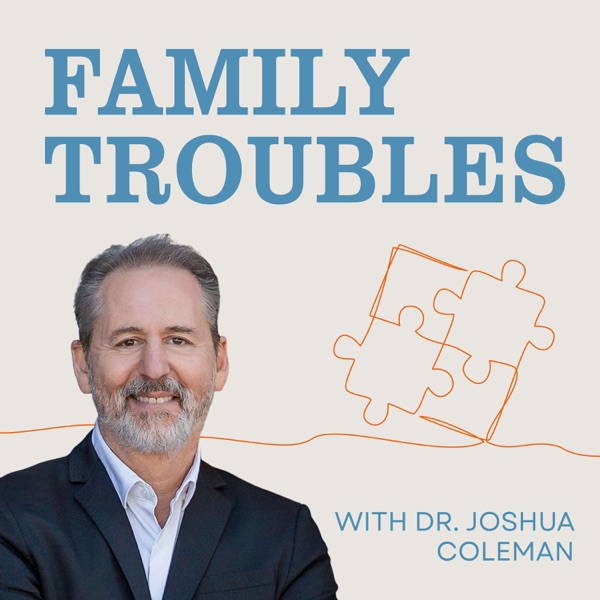
Family Troubles with Dr. Joshua Coleman
Family Troubles with Dr. Joshua Coleman is a podcast dedicated to exploring and understanding the intricate dynamics of family life through a multifaceted lens. Hosted by Dr. Joshua Coleman, a seasoned psychologist with decades of experience, this show dives deep into the complexities of modern familial relationships, along with transformative strategies to foster healthier connections and mend broken bonds.
Each episode will tackle a broad range of topics affecting families today - from estranged relationships and family conflict, to the latest research and evolving societal pressures. Discussions will be intellectually stimulating, offering a 360-degree view of the strains on family life through interviews with leading academics, psychologists, sociologists and historians.
If you’ve ever asked:
• Why do adult relationships with parents fall apart?
• When is estrangement appropriate?
• Is reconciling and healing after estrangement possible?
• Why is estrangement becoming more common today?
Then you’re in the right place. Whether you're a professional in the field or simply interested in understanding the current landscape of family dynamics, Family Troubles will provide valuable insights and thought-provoking perspectives.
Join in as we unravel the modern challenges facing families, share expert opinions, and provide a space for learning about the evolving nature of family estrangement and relationships.
- Relationships chart
- #153
- Episodes
- 22
- Releases
- Weekly
- Typical length
- 51 min
- On air since
- 2026
- Latest episode
- 1 day ago
Episodes
22 episodes, newest first
-
51 min
Peter Csathy: What 30 Years in Hollywood Taught Me About Happiness, Marriage, and Success
Episode 22
Show notes
In this episode of Family Troubles, I sit down with entertainment and media expert, entrepreneur, and author Peter Csathy to talk about his new book, Hiding in Plain Sight: Ten Secrets to a Happy Marriage and Family. Drawing on more than 30 years of marriage, Peter shares the practical lessons he's learned about building a lasting relationship, supporting each other's dreams, and finding happiness and meaning in the everyday moments we often overlook.
We talk about why strong marriages require more than love, how gratitude, friendship, and small acts of intimacy can deepen our connections, and why making time for the people we care about matters more than ever in our increasingly digital world. We also explore how taking risks, embracing failure, and what Peter calls "active serendipity" can open doors to unexpected possibilities. Most importantly, we discuss why happy families aren't necessarily free of conflict or hardship, but are built through mutual respect, shared values, and a willingness to keep showing up for one another.
Listen for more on:
• Why the secrets to a happy marriage are often hiding in plain sight
• How gratitude, friendship, and small everyday gestures can strengthen long-term relationships
• Why supporting your partner's dreams is one of the most powerful ways to show love and respect
• How our increasingly digital, frictionless lives can undermine meaningful connection and why "analog living" matters
• Why taking risks, embracing failure, and creating your own opportunities can lead to a more fulfilling life
• How couples can navigate differences, family conflict, and life's inevitable challenges without losing sight of what brings them togetherTune into this episode of Family Troubles for an uplifting and practical conversation with Peter Csathy about marriage, family, resilience, love, and the power of showing up for one another and discover how small, intentional changes can create stronger relationships and a more meaningful, connected life.
Guest Links:
Website: https://www.hidinginplainsight.info/Read Hiding In Plain Sight: https://www.amazon.com/dp/B0HLMC9HXH?ref_=cm_sw_r_ffobk_cp_ud_dp_Y8CY33YFDXB22RR5DH08&bestFormat=trueDr. Joshua Coleman’s Links:
Website:http://www.drjoshuacoleman.comInstagram:https://www.instagram.com/dr.josh.colemanSubstack:https://substack.com/@joshuacolemanphdFacebook:https://www.facebook.com/DrJoshColeman/LinkedIn:https://www.linkedin.com/in/drjoshuacoleman/?trk=opento_sprofile_topcardTwitter X:https://x.com/drjcoleman
Youtube: https://www.youtube.com/channel/UCc-olRqS_o2xJlkpxWEEErg -
52 min
Dr. Galit Atlas: Understanding Childhood Wounds
Episode 21
Show notes
In this episode of Family Troubles, I sit down with internationally renowned psychoanalyst and author Dr. Galit Atlas to talk about her new book, Come Closer: Childhood Wounds, Adult Love, and the Secrets of Emotional Intimacy. Dr. Atlas explores how the survival strategies we developed as children can become patterns we unconsciously repeat in our adult relationships and why understanding those patterns can help us create deeper, healthier connections.
We talk about the six childhood wounds Dr. Atlas identifies in her book, including the frightened, melancholic, ashamed, invisible, guilty, and chosen child. We explore why guilt can give us an illusion of control, why we’re often drawn back to familiar, even painful, relationship dynamics, and how parents and adult children can become caught in cycles of responsibility, guilt, and difficulty separating. Most importantly, we discuss how healing requires moving beyond blame, mourning what we cannot change, and recognizing the agency we have as adults to build more fulfilling relationships.
Listen for more on:
• How childhood survival strategies become patterns in our adult relationships
• Why guilt and self-blame can protect us from feelings of helplessness
• How the familiar can draw us back to painful relationship dynamics
• Why closeness can feel both deeply desired and frightening
• How parents can help adult children separate without burdening them with guilt
• Why understanding childhood wounds doesn’t require turning parents into villains
• How mourning, self-awareness, and learning to repair conflict can create greater emotional intimacyTune into this episode of Family Troubles for a hopeful and illuminating conversation with Dr. Atlas about childhood wounds, guilt, family estrangement, emotional inheritance, and adult love and how understanding the child we once were can help us take responsibility for the relationships we want to create today.
Guest Links:
WebsiteRead Her New Book: Come CloserInstagramSubstackDr. Joshua Coleman’s Links:
Website:http://www.drjoshuacoleman.comInstagram:https://www.instagram.com/dr.josh.colemanSubstack:https://substack.com/@joshuacolemanphdFacebook:https://www.facebook.com/DrJoshColeman/LinkedIn:https://www.linkedin.com/in/drjoshuacoleman/?trk=opento_sprofile_topcardTwitter X:https://x.com/drjcoleman
Youtube: https://www.youtube.com/channel/UCc-olRqS_o2xJlkpxWEEErg -
1 hr 6 min
Noelle Mering: Understanding the 'Going No Contact' Movement
Episode 20
Show notes
In this episode of Family Troubles, I sit down with author Noelle Mering to talk about her new book No Contact, and the cultural forces shaping the rise of family estrangement. Noelle explores how changing ideas about identity, autonomy, obligation, mental health, and personal fulfillment can influence the way we understand conflict with the people closest to us.
We talk about the difference between healthy separation and cutting someone off, why some estrangements are necessary while others may grow out of conflict avoidance or low differentiation, and how parents can respond when an adult child asks for no contact. We also explore the power of gratitude over grievance, why love requires both freedom and responsibility, and how curiosity can help families move away from defensiveness and toward understanding.
Listen for more on:
• Why healthy differentiation allows connection without losing yourself
• How online culture and isolation can intensify family conflict
• When no contact may be necessary and when it may become avoidance
• How estrangement can reinforce painful narratives over time
• Why parents of adult children need to shift from managing to consulting
• How gratitude can offer an alternative to grievance
• Why curiosity and accountability can open the door to healingTune into this episode for a thought-provoking and ultimately hopeful conversation with Noelle Mering about family estrangement, identity, obligation, forgiveness, and how we can protect our autonomy without losing sight of the relationships, responsibilities, and love that give our lives meaning.
Guest Links:
Read her book No Contact: https://www.amazon.ca/No-Contact-Seductive-Ideology-Friendships-ebook/dp/B0G5WZP1CLWebsite: https://www.noellemering.com/https://eppc.org/author/noelle_mering/Substack: https://noellemering.substack.com/Dr. Joshua Coleman’s Links:
Website:http://www.drjoshuacoleman.comInstagram:https://www.instagram.com/dr.josh.colemanSubstack:https://substack.com/@joshuacolemanphdFacebook:https://www.facebook.com/DrJoshColeman/LinkedIn:https://www.linkedin.com/in/drjoshuacoleman/?trk=opento_sprofile_topcardTwitter X:https://x.com/drjcoleman
Youtube: https://www.youtube.com/channel/UCc-olRqS_o2xJlkpxWEEErg -
31 min
Billy Eichner: Before Becoming "Billy on the Street"
Episode 19
Show notes
In this episode of Family Troubles, I sit down with Emmy-nominated comedian, actor, writer, and Billy on the Street creator Billy Eichner to talk about his parents, coming out, grief, creativity, resilience, and the lasting power of unconditional love. His new audio memoir, Billy on Billy, reflects on his childhood, his long road to success, and the parents he credits with helping him become fully himself.
Billy shares how his parents gave him the freedom to pursue his dreams without shame, even when they had fears and struggles of their own. We also talk about his coming-out story, the small moments of acceptance he still remembers decades later, and why a parent’s encouragement can become an emotional safety net that lasts a lifetime.
Listen for more on:
• Why Billy believes his success came because of, rather than in spite of, his parents
• How raising a child without shame can build confidence, self-respect, and resilience
• Billy’s moving and funny story about coming out to his parents at age 20
• Why the small things parents say and do can stay with children for decades
• How his parents chose encouragement over projecting their own fears or disappointments
• The childhood storytelling contest that became an unforgettable example of his father’s support
• Why believing in who your child is can shape the person they become
Tune into this episode of Family Troubles for a warm, funny, and moving conversation with Billy Eichner about parenting, identity, grief, acceptance, and the extraordinary impact of letting a child know they are loved for exactly who they are.
Guest Links:
Billy on Billy: An Audio Memoir https://us.macmillan.com/books/9781250439642/billyonbilly/Instagram: https://www.instagram.com/billyeichner/?hl=enTikTok: https://www.tiktok.com/@billyeichner?lang=enYouTube: https://www.youtube.com/user/billyonthestreettvDr. Joshua Coleman’s Links:
Website:http://www.drjoshuacoleman.comInstagram:https://www.instagram.com/dr.josh.colemanSubstack:https://substack.com/@joshuacolemanphdFacebook:https://www.facebook.com/DrJoshColeman/LinkedIn:https://www.linkedin.com/in/drjoshuacoleman/?trk=opento_sprofile_topcardTwitter X:https://x.com/drjcoleman
Youtube: https://www.youtube.com/channel/UCc-olRqS_o2xJlkpxWEEErg -
1 hr
Does Wealth Make It Harder for Parents of Adult Children? Managing Director and Head of the Merrill Center for Family Wealth, Valerie Galinskaya
Season 1, Episode 18
Show notes
In this episode of Family Troubles, I sit down with Valerie Galinskaya, Managing Director and Head of the Merrill Center for Family Wealth, to talk about wealth, inheritance, adult children, family communication, and the emotional complexity that can come with financial planning.
Valerie and her team work with families navigating some of life’s most important financial decisions, but as she explains in this conversation, wealth is rarely just about money. It can amplify trust, uncertainty, resentment, gratitude, guilt, entitlement, and family conflict. And for parents of adult children, conversations about inheritance, gifting, fairness, and future planning can quickly become emotionally charged.
We talk about why so many parents avoid discussing money with their adult children, what happens when expectations are unclear, and why disclosure does not have to be all or nothing. Valerie offers a helpful way to think about financial conversations as a “dimmer switch” rather than a light switch, where families can begin with purpose and structure before jumping straight into numbers.
Listen for more on:
• Why wealth can amplify existing family dynamics
• The biggest misconceptions about inherited wealth and family happiness
• Why many parents feel anxious about discussing money with adult children
• How unclear expectations can create resentment, anxiety, or conflict
• Why communication and prepared heirs matter so much in family wealth planning
• The difference between disclosure and understanding
• Why parents may need to clarify whether adult children have a voice or a vote
• How families can think about fairness, equality, and equity differently
• Why cutting a child out of an inheritance can have lasting emotional consequences
• How wealth can shape identity, guilt, purpose, and family relationshipsTune into this episode of Family Troubles for a thoughtful conversation about wealth, adult children, inheritance, communication, and how families can make clearer, more compassionate decisions around money.
Guest links:
Website: https://www.pbig.ml.com/Dr. Joshua Coleman’s Links:
Website:http://www.drjoshuacoleman.comInstagram:https://www.instagram.com/dr.josh.colemanSubstack:https://substack.com/@joshuacolemanphdFacebook:https://www.facebook.com/DrJoshColeman/LinkedIn:https://www.linkedin.com/in/drjoshuacoleman/?trk=opento_sprofile_topcardTwitter X:https://x.com/drjcoleman
Youtube: https://www.youtube.com/channel/UCc-olRqS_o2xJlkpxWEEErg -
47 min
Why Modern Marriage and Family Feels So Hard: Historian Stephanie Coontz Explains
Season 1, Episode 18
Show notes
In this episode of Family Troubles, I sit down with Stephanie Coontz, Director of Research and Public Education for the Council on Contemporary Families and emeritus faculty of History and Family Studies at The Evergreen State College. Stephanie is one of the most influential historians of marriage, gender, and family life, and her work has helped reshape how we understand the myths and realities of family across history.
Stephanie and I talk about her latest book, For Better and Worse: The Complicated Past and Challenging Future of Marriage, and why modern relationships can feel so difficult despite the fact that many people now have higher hopes for love, equality, and emotional connection than ever before.
We discuss nostalgia, the myth of the “traditional family,” the pressures facing modern marriages, and why so much of today’s family conflict may be tied to larger social and economic forces. Stephanie offers a powerful way of thinking about family estrangement as a kind of “referred pain,” where people may blame parents, partners, or family members for distress that is also being shaped by broader cultural and economic instability.
Listen for more on:
• Why nostalgia for the past can be both comforting and misleading
• What people often get wrong about the 1950s family
• How economic insecurity and inequality affect marriage and family life
• Why modern couples may have higher expectations, but less support
• How social and economic pressure can show up as family conflict
• Why family estrangement may sometimes reflect “referred pain” from larger cultural forces
• What the “trad wife” movement reveals about gender, work, and nostalgia
• How ideas about masculinity, femininity, and emotional expression have changed over time
• Why the history of marriage is more complicated than the myths we inherit
• How understanding family history can help us think more clearly about modern relationshipsTune into this episode of Family Troubles for a fascinating conversation about marriage, family history, gender roles, economic pressure, and why the challenges facing today’s families are rarely as simple as personal failure.
Guest links:
Website: https://www.stephaniecoontz.com/
Instagram: https://www.instagram.com/stephaniecoontzauthorDr. Joshua Coleman’s Links:
Website:http://www.drjoshuacoleman.comInstagram:https://www.instagram.com/dr.josh.colemanSubstack:https://substack.com/@joshuacolemanphdFacebook:https://www.facebook.com/DrJoshColeman/LinkedIn:https://www.linkedin.com/in/drjoshuacoleman/?trk=opento_sprofile_topcardTwitter X:https://x.com/drjcoleman
Youtube: https://www.youtube.com/channel/UCc-olRqS_o2xJlkpxWEEErg -
41 min
What's It Like for the Child Who Isn't Estranged When the Other Is? With Celia Flinn
Episode 16
Show notes
In this episode of Family Troubles, I sit down with Celia Flinn, a school-based therapist in the Bay Area who brings both clinical insight and lived experience to the topic of sibling estrangement. Celia shares what happened when her sibling became estranged from her parents, how that changed her role in the family, and what it felt like to become the child who stayed.
We talk about the often overlooked impact of estrangement on siblings. When one child cuts off contact, the sibling who remains can become the middleman, the emotional support, the “good child,” or the person expected to hold the family together. Celia describes the loneliness of that position, the pressure it can create, and the complicated grief of loving both the parents who are in pain and the sibling who has pulled away.
Celia also shares the concept of the “glass child,” a term often used for siblings of children with serious medical or developmental needs, but one that can also apply in estrangement. It is the feeling of being present, but looked through, while the family’s emotional attention is focused on the person who is absent.
Listen for more on:
• How sibling estrangement affects the child who remains connected to the family
• What it feels like to become the middleman between estranged family members
• The pressure of being the “good kid” or the child who stays
• Why siblings may feel both loyalty and resentment during family estrangement
• How the “glass child” experience can show up in estranged families
• Why parents may unintentionally overlook the pain of the child who is still present
• The importance of boundaries when a sibling relationship becomes one-sided
• Why communication requires both sharing your truth and tolerating someone else’s
• How therapists can help or hurt when they encourage cutoff without exploring repair
• Why slowing down, managing emotions, and listening can make reconnection more possibleTune into this episode of Family Troubles for a thoughtful conversation about sibling estrangement, family roles, communication, and the quiet pain carried by the child who stays.
Dr. Joshua Coleman’s Links:
Website:http://www.drjoshuacoleman.comInstagram:https://www.instagram.com/dr.josh.colemanSubstack:https://substack.com/@joshuacolemanphdFacebook:https://www.facebook.com/DrJoshColeman/LinkedIn:https://www.linkedin.com/in/drjoshuacoleman/?trk=opento_sprofile_topcardTwitter X:https://x.com/drjcoleman
Youtube: https://www.youtube.com/channel/UCc-olRqS_o2xJlkpxWEEErg -
49 min
Turning Pain into Purpose: A Conversation with Alphonso James
Season 1, Episode 15
Show notes
In this episode of Family Troubles, I sit down with Alphonso James, a speaker, advocate, author, and exoneree who spent 32 years incarcerated for a crime he did not commit. At 17 years old, Alphonso was wrongfully convicted of murder and sentenced to life in prison, but his story is not only about injustice. It is also about resilience, forgiveness, faith, and the difficult inner work of becoming free long before he was physically released.
Alphonso shares what it was like to enter prison as a teenager, how he survived solitary confinement, and the moment that began to change the course of his life. We talk about the power of being believed, the role of forgiveness, and how pain, trauma, and rage can either imprison us further or become part of a larger path toward healing.
We also discuss what Alphonso’s experience can teach families about estrangement, bitterness, listening, and the possibility of reconciliation. His perspective is deeply moving, especially when he talks about forgiving the people who wrongfully imprisoned him, the cost of holding onto anger, and why sometimes the most healing thing we can offer another person is simply to listen.
Listen for more on:
• What it was like for Alphonso to be wrongfully convicted at 17 years old
• How he survived 32 years in prison while maintaining his innocence
• The moment someone finally said, “I believe you,” and why those words changed his life
• How Alphonso taught himself to read and began his journey of self-discovery
• Why forgiveness does not mean saying that what happened was okay
• How bitterness can keep both ourselves and others emotionally imprisoned
• What estranged families can learn from Alphonso’s approach to forgiveness
• Why listening can be more powerful than advice
• How trauma continues even after freedom, healing, and public success
• Why true freedom is not only about leaving a physical prison, but breaking the prisons we carry inside ourselvesTune into this episode of Family Troubles for a powerful conversation about wrongful conviction, forgiveness, family, trauma, and what it means to turn pain into purpose.
Guest links:
Instagram: https://www.instagram.com/thealphonsojames/
LinkedIn: https://www.linkedin.com/in/the-alphonso-james/Dr. Joshua Coleman’s Links:
Website:http://www.drjoshuacoleman.comInstagram:https://www.instagram.com/dr.josh.colemanSubstack:https://substack.com/@joshuacolemanphdFacebook:https://www.facebook.com/DrJoshColeman/LinkedIn:https://www.linkedin.com/in/drjoshuacoleman/?trk=opento_sprofile_topcardTwitter X:https://x.com/drjcoleman
Youtube: https://www.youtube.com/channel/UCc-olRqS_o2xJlkpxWEEErg -
50 min
Gender Identity, Therapists and Culture as Paths to Estrangement with Sasha Ayad
Show notes
In this episode of Family Troubles, I sit down with Sasha Ayad, M.Ed., LPC, a Licensed Professional Counselor who has worked with adolescents for over 19 years and focuses on teens and young adults struggling with gender dysphoria and gender identity.
Sasha and I discuss the complicated intersection of gender identity, therapy, adolescence, culture, and family estrangement. We explore why some parents feel shut out of conversations around their child’s identity, how therapists and cultural messages can shape family dynamics, and why curiosity, caution, and emotional nuance matter when families are navigating deeply personal and often polarizing issues.
Sasha shares what she has observed through her clinical work with gender-questioning adolescents, as well as her consultations with families and parents. We talk about the importance of psychological exploration, the influence of online communities and cultural narratives, and how families can become divided when disagreement is treated as rejection or harm.
Listen for more on:
• Why adolescence can be such a complex time for identity development
• How gender dysphoria and gender identity questions can affect family relationships
• Why some parents feel excluded, blamed, or misunderstood in the therapeutic process
• Why disagreement does not always mean rejection
• How parents can stay connected when they are scared, confused, or uncertain
• How gender identity conversations can become a path to estrangement when families lose the ability to talk openlyTune into this episode of Family Troubles for a thoughtful conversation about gender identity, therapy, culture, and the challenges families face when love, fear, disagreement, and identity collide.
Guest links:
Podcast:https://open.spotify.com/show/1vAnk7bth6WuDDrW48Atce?si=597816e10e514b89Instagram:https://www.instagram.com/widerlenspod/YouTube:https://www.youtube.com/@SashaLPCDr. Joshua Coleman’s Links:
Website:http://www.drjoshuacoleman.comInstagram:https://www.instagram.com/dr.josh.colemanSubstack:https://substack.com/@joshuacolemanphdFacebook:https://www.facebook.com/DrJoshColeman/LinkedIn:https://www.linkedin.com/in/drjoshuacoleman/?trk=opento_sprofile_topcardTwitter X:https://x.com/drjcoleman
Youtube: https://www.youtube.com/channel/UCc-olRqS_o2xJlkpxWEEErg -
58 min
Lindsey and Leslie Glass: How an Estranged Mother and Daughter Reconciled
Show notes
In this episode of Family Troubles, I sit down with Lindsey and Leslie Glass, a mother-daughter author and advocacy duo, co-founders of Reach Out Recovery, and authors of The Mother-Daughter Relationship Makeover, to talk about addiction, recovery, estrangement, and what it can take for mothers and daughters to find their way back to one another.
Lindsey and Leslie bring both personal experience and professional advocacy to this conversation. Through their own story of addiction, separation, repair, and reconciliation, they offer a deeply honest look at how family relationships can go off track, and how healing can still be possible even after years of pain, conflict, or distance.
We talk about the complicated emotional terrain between mothers and daughters, the impact of addiction and recovery on family life, and why reconciliation often requires more than love alone. It also takes accountability, boundaries, honesty, and a willingness to see the other person in a new way.
Listen for more on:
• How addiction and recovery can shape mother-daughter relationships
• Why estrangement does not always mean the relationship is over forever
• What Lindsey and Leslie learned through their own experience of conflict and reconciliation
• Why accountability matters on both sides of family repair
• How shame, blame, and old family patterns can keep people stuck
• What families can do when love is still there, but the relationship feels brokenTune into this episode of Family Troubles for a moving conversation about addiction, estrangement, recovery, and the possibility of finding your way back to friendship, understanding, and love.
Guest links:
Website:https://reachoutrecovery.com/Instagram:https://www.instagram.com/reachoutrecovery/Facebook:https://www.facebook.com/ReachoutRecovery/Dr. Joshua Coleman’s Links:
Website:http://www.drjoshuacoleman.comInstagram:https://www.instagram.com/dr.josh.colemanSubstack:https://substack.com/@joshuacolemanphdFacebook:https://www.facebook.com/DrJoshColeman/LinkedIn:https://www.linkedin.com/in/drjoshuacoleman/?trk=opento_sprofile_topcardTwitter X:https://x.com/drjcoleman
Youtube: https://www.youtube.com/channel/UCc-olRqS_o2xJlkpxWEEErg -
50 min
Dating While Estranged: Revealing Personal Details in Early Romantic Involvement with E! Relationship Expert Dr. Darcy Sterling
Episode 12
Show notes
In this episode of Family Troubles, I sit down with Dr. Darcy Sterling, a NYC-based Licensed Clinical Social Worker, relationship expert, and host of E! Network’s Famously Single, to talk about what it means to date while estranged from a parent, adult child, sibling, or other family member.
Estrangement can be painful enough on its own. But when you’re beginning a new romantic relationship, it can raise a whole new set of questions: When do you share it? How much do you say? Will the other person judge you? And how do you talk about something deeply personal without making it the whole story?
Dr. Darcy and I discuss the challenges of revealing personal details early in dating, especially when those details involve family conflict, shame, grief, or unresolved relationships. We also talk about vulnerability, emotional pacing, and how to build intimacy without feeling pressured to disclose everything at once.
Listen for more on:
• When to share family estrangement in a new romantic relationship
• Why estrangement can bring up shame, fear, or anxiety in dating
• How much personal history to reveal early on
• The difference between being honest and oversharing
• Why timing matters when discussing painful family experiences
• How to protect yourself emotionally while still building trust
• What a partner’s response can tell you about their emotional maturity
• How estrangement can shape intimacy, vulnerability, and connectionTune into this episode of Family Troubles for a thoughtful conversation about dating, disclosure, and how to navigate new relationships when part of your family story feels difficult to explain.
Guest links:
Website: https://www.askdrdarcy.com/
Podcast:https://www.askdrdarcy.com/podcast/
Instagram: https://www.instagram.com/drdarcysterling/
Dr. Joshua Coleman’s Links:
Website:http://www.drjoshuacoleman.comInstagram:https://www.instagram.com/dr.josh.colemanSubstack:https://substack.com/@joshuacolemanphdFacebook:https://www.facebook.com/DrJoshColeman/LinkedIn:https://www.linkedin.com/in/drjoshuacoleman/?trk=opento_sprofile_topcardTwitter X:https://x.com/drjcoleman
Youtube: https://www.youtube.com/channel/UCc-olRqS_o2xJlkpxWEEErg -
54 min
What Does Research Tell Us About Estranged Parents, Siblings and More with Lucy Blake
Show notes
In this episode of Family Troubles, I sit down with developmental psychologist and family relationship researcher Professor Lucy Blake, whose work has helped shape our understanding of family estrangement, sibling relationships, and family dynamics across the lifespan. We explore why family relationships are often more complicated than the idealized versions we see in culture and social media, and how those expectations can impact both parents and adult children.
Lucy shares insights from her groundbreaking research on estrangement, reconciliation, therapy, and sibling relationships. We discuss the importance of context, compassion, and understanding the many factors that shape family experiences over time.
Listen for more on:
• Why unrealistic family expectations can create pressure and disappointment
• What research reveals about the cycles of estrangement and reconciliation
• The impact of loneliness, friendship, and community on family relationships
• How therapy can help people navigate estrangement without judgment
• What sibling estrangement teaches us about family dynamics and perceived favoritism
• Why family conflict is rarely as simple as right versus wrong
Tune into this episode of Family Troubles for an empowering conversation about family relationships, resilience, and finding a more compassionate way to understand ourselves and the people we love.
Guest links:
Website: https://www.drlucyblake.com/Google Scholar: https://scholar.google.com/citations?user=cUEiQNYAAAAJ&hl=enDr. Joshua Coleman’s Links:
Website:http://www.drjoshuacoleman.comInstagram:https://www.instagram.com/dr.josh.colemanSubstack:https://substack.com/@joshuacolemanphdFacebook:https://www.facebook.com/DrJoshColeman/LinkedIn:https://www.linkedin.com/in/drjoshuacoleman/?trk=opento_sprofile_topcardTwitter X:https://x.com/drjcoleman
Youtube: https://www.youtube.com/channel/UCc-olRqS_o2xJlkpxWEEErg -
59 min
Breaking the Cycle: What History Teaches Us About Today's Family Crisis with Professor Steven Mintz
Episode 10
Show notes
In this episode of Family Troubles, I sit down with Historian and University of Texas Professor, Steven Mintz to explore the challenges of modern parenting, family dynamics, and building resilience in children and adults alike. Steven shares his expertise on how family relationships evolve, the pressures parents face today, and strategies to create healthier, more connected households.
We dive into the impact of generational patterns, the role of emotional awareness, and practical communication tools that help families navigate conflict without losing connection. Steven provides insights on fostering empathy, setting boundaries, and guiding children toward independence while maintaining strong family bonds.
Listen for more on:
• Steven’s perspective on navigating modern parenting challenges
• How generational patterns affect family dynamics
• The importance of emotional awareness in parent-child relationships
• Practical communication strategies to reduce conflict and build trust
• Balancing boundaries and connection for healthier relationships
• Tools for building resilience and supporting children’s emotional growthTune into this episode of Family Troubles to hear an empowering conversation about family, parenting, and the strategies that help create stronger, more resilient relationships.
Guest Links:
Substack: https://stevenmintz.substack.com/
Books: https://www.amazon.ca/stores/author/B001IXU2N8Dr. Joshua Coleman’s Links:
Website:http://www.drjoshuacoleman.comInstagram:https://www.instagram.com/dr.josh.colemanSubstack:https://substack.com/@joshuacolemanphdFacebook:https://www.facebook.com/DrJoshColeman/LinkedIn:https://www.linkedin.com/in/drjoshuacoleman/?trk=opento_sprofile_topcardTwitter X:https://x.com/drjcoleman
Youtube: https://www.youtube.com/channel/UCc-olRqS_o2xJlkpxWEEErg -
56 min
What Does It Take to Reconcile? Why Cutoff Culture Is Growing and What Families Can Do Instead with Tania Khazaal
Episode 9
Show notes
In this episode of Family Troubles, I sit down with Tania Khazaal for a thoughtful and candid conversation about family estrangement, emotional healing, and what it really means to move forward without losing ourselves or the people we love. Tania shares her personal story of cutting off contact with her mother, what brought her back, and how changing the way she understood her mother’s story changed the way she understood herself.
We talk about the rise of what Tania calls “cutoff culture,” the growing tendency to frame distance as healing, and why both parents and adult children may need to build more resilience, compassion, and stronger communication skills to repair relationships. We also explore the role of social media, emotional language, accountability, and what reconciliation can actually look like in practice.
Listen for more on:
• Tania’s journey from estrangement to reconciliation with her mother
• Why understanding a parent’s story can shift how we see our own
• The difference between healing, boundaries, and emotional avoidance
• How social media and “cutoff culture” shape family relationships
• Communication habits that help repair trust and reduce defensiveness
• Tania’s three-stage framework for healing and rebuilding connectionTune into this episode of Family Troubles for an honest conversation about family, forgiveness, resilience, and the possibility of creating stronger relationships without losing yourself in the process.
Guest Links:
Website: https://taniakhazaal.com/
Instagram: @taniakhazaal
LinkedIn:Tania Khazaal
TikTok: @taniakhazaal
YouTube: Tania KhazaalDr. Joshua Coleman’s Links:
Website:http://www.drjoshuacoleman.comInstagram:https://www.instagram.com/dr.josh.colemanSubstack:https://substack.com/@joshuacolemanphdFacebook:https://www.facebook.com/DrJoshColeman/LinkedIn:https://www.linkedin.com/in/drjoshuacoleman/?trk=opento_sprofile_topcardTwitter X:https://x.com/drjcoleman
Youtube: https://www.youtube.com/channel/UCc-olRqS_o2xJlkpxWEEErg -
39 min
How Mothers Cope with Difficult Adult Children and Chronic Sorrow with Judith R. Smith
Show notes
In this episode of Family Troubles, I sit down with Professor Judith R. Smith to discuss her book, Difficult: Mothering Challenging Adult Children Through Conflict and Change. Drawing from years of research and interviews, Judith explores what it means to parent an adult child struggling with mental illness, addiction, unemployment, estrangement, and ongoing instability.
We talk about the emotional reality many mothers quietly carry, the chronic fear, guilt, exhaustion, ambivalence, and grief that can come with loving a child you cannot “fix.” Judith also challenges common ideas like “tough love” and highlights the larger social systems that leave families carrying impossible burdens alone.
Listen for more on:
• How mothers often tie their sense of self to their children’s wellbeing
• Why “tough love” can fail families facing mental illness or addiction
• The concept of chronic sorrow and ongoing grief in parenting
• How guilt and self blame shape difficult parent-child relationships
• Why small boundaries and self care matter for overwhelmed parents
• The importance of community, support groups, and reducing shameTune into this episode of Family Troubles for a thoughtful conversation about difficult parenting, resilience, and finding support in the middle of uncertainty.
Guest Links:
Website: https://www.difficultmothering.com/
Book: Difficult: Mothering Challenging Adult Children Through Conflict and Change
Facebook: https://www.facebook.com/difficultmothering/Dr. Joshua Coleman’s Links:
Website:http://www.drjoshuacoleman.comInstagram:https://www.instagram.com/dr.josh.colemanSubstack:https://substack.com/@joshuacolemanphdFacebook:https://www.facebook.com/DrJoshColeman/LinkedIn:https://www.linkedin.com/in/drjoshuacoleman/?trk=opento_sprofile_topcardTwitter X:https://x.com/drjcoleman
Youtube: https://www.youtube.com/channel/UCc-olRqS_o2xJlkpxWEEErg -
48 min
How Divorce Increases Estrangement Risk with Michelle Weiner-Davis
Episode 7
Show notes
In this episode of Family Troubles, I sit down with Michelle Weiner-Davis to unpack something I see far too often, how divorce can quietly evolve into long-term family estrangement. We explore how these fractures don’t just impact couples, but ripple through entire families, sometimes for decades.
We also get into the role of therapy, communication, and personal narratives in shaping these outcomes. I share insights from my own work (and life), and we talk about what actually helps families stay connected or find their way back to each other.
Listen for more on:
• How divorce can lead to lasting parent-child estrangement
• Why kids taking sides creates long-term family fractures
• The impact of therapy culture on family relationships
• How communication mistakes can block reconciliation
• Why empathy and curiosity matter more than being right
• The simple skills that can rebuild connectionIf this episode gave you a new perspective, share it with someone who needs a more hopeful path forward in their family relationships.
Guest Links:
Website: https://www.divorcebusting.com/
Email: michelle@divorcebusting.comDr. Joshua Coleman’s Links:
Website:http://www.drjoshuacoleman.comInstagram:https://www.instagram.com/dr.josh.colemanSubstack:https://substack.com/@joshuacolemanphdFacebook:https://www.facebook.com/DrJoshColeman/LinkedIn:https://www.linkedin.com/in/drjoshuacoleman/?trk=opento_sprofile_topcardTwitter X:https://x.com/drjcoleman
Youtube: https://www.youtube.com/channel/UCc-olRqS_o2xJlkpxWEEErg -
33 min
What Are Recovered Memories? How Memory Distortion Leads to Family Estrangement with Mark Pendergrast
Episode 6
Show notes
In this episode of Family Troubles, I sit down with journalist and author Mark Pendergrast to unpack one of the most complex and sensitive issues I see in my work: memory. We explore how memories are formed, how they can shift over time, and how certain therapeutic approaches have contributed to deeply painful family estrangements. Mark shares both his research and his personal story of losing contact with his daughters, offering a perspective that is both informed and deeply human.
We talk about the rise of recovered memory claims, why they became so widespread, and what science actually says about how memory works. I also share what I’m seeing in my practice today, from the influence of therapy culture and social media to the many different pathways that can lead to estrangement. This is a nuanced conversation about truth, perception, and the real-world consequences when those lines get blurred.
Listen for more on:
• Why memory is reconstructive and not a perfect recording of the past
• How suggestive therapy techniques can shape or distort memories
• The difference between forgetting something and never having experienced it
• Why some estrangements are rooted in belief, not verifiable events
• The role of modern therapy culture in shaping family narratives
• How to approach these situations with care, curiosity, and openness
• Why preserving the possibility of dialogue matters more than certaintyIf this conversation gave you something to think about, tune into the full episode and share it with someone who could benefit from a deeper understanding of family relationships.
Guest Links:
Website: https://www.markpendergrast.com/
Book: Victim of Memory: Incest Accusations and Shattered LivesDr. Joshua Coleman’s Links:
Website:http://www.drjoshuacoleman.comInstagram:https://www.instagram.com/dr.josh.colemanSubstack:https://substack.com/@joshuacolemanphdFacebook:https://www.facebook.com/DrJoshColeman/LinkedIn:https://www.linkedin.com/in/drjoshuacoleman/?trk=opento_sprofile_topcardTwitter X:https://x.com/drjcoleman
Youtube: https://www.youtube.com/channel/UCc-olRqS_o2xJlkpxWEEErg -
37 min
What Is Ambiguous Loss? Understanding Estrangement and Grief for Parents with Pauline Boss
Show notes
In this episode of Family Troubles, I sit down with renowned family therapist and sociologist Pauline Boss to explore her groundbreaking concept of ambiguous loss and its powerful relevance to family estrangement. We discuss why some of the most painful losses are the hardest to define and how learning to live with that uncertainty can open the door to healing.
We also challenge the cultural myth of closure, offering a more compassionate and empowering way to understand grief, disconnection, and the complexity of family relationships.
Listen for more on:
• What ambiguous loss is and why it’s central to understanding estrangement
• The difference between guilt and shame and why that distinction matters
• Why the idea of “closure” can be misleading (and even harmful)
• How focusing on your own growth can create the conditions for possible reconnection
• The risks of a culture that encourages cutting off relationships in pursuit of happiness
• Why meaning, not resolution, is the key to moving forwardIf this episode speaks to you, give it a listen and don’t forget to subscribe, share it with someone who might need it, and leave a review to help more families find support.
Guest Links:
Website: https://www.ambiguousloss.com/
Book: The Myth Of Closure
Dr. Joshua Coleman’s Links:
Website:http://www.drjoshuacoleman.comInstagram:https://www.instagram.com/dr.josh.colemanSubstack:https://substack.com/@joshuacolemanphdFacebook:https://www.facebook.com/DrJoshColeman/LinkedIn:https://www.linkedin.com/in/drjoshuacoleman/?trk=opento_sprofile_topcardTwitter X:https://x.com/drjcoleman
Youtube: https://www.youtube.com/channel/UCc-olRqS_o2xJlkpxWEEErg -
52 min
Changing Relations Between Parents and Adult Children with Frank Furstenberg
Episode 4
Show notes
In this episode of Family Troubles, I sit down with Frank Furstenberg, one of the most influential sociologists of family life, to unpack how modern families are evolving and why parenting today feels harder than ever. We explore how rising inequality, shifting expectations, and longer paths to adulthood are reshaping the bond between parents and children in ways that are both deeply meaningful and, at times, incredibly challenging.
We also get into the “good news, bad news” of modern family life: while many relationships are closer and more emotionally connected than ever before, the pressure, expectations, and stakes have never been higher, sometimes leading to distance, conflict, or even estrangement.
Listen for more on:
• Why parenting today is more expensive, demanding, and longer-lasting
• How inequality is increasing stress and pressure on families
• Why adulthood is delayed and how that impacts parent-child relationships
• How closer, more involved parenting can sometimes lead to tension or distance
• Why estrangement feels more intense today, even if it’s not entirely new
• A hopeful truth: families may be more emotionally connected than everIf this episode speaks to you, give it a listen and don’t forget to subscribe and leave a review to help more families find support.
Dr. Joshua Coleman’s Links:
Website:http://www.drjoshuacoleman.comInstagram:https://www.instagram.com/dr.josh.colemanSubstack:https://substack.com/@joshuacolemanphdFacebook:https://www.facebook.com/DrJoshColeman/LinkedIn:https://www.linkedin.com/in/drjoshuacoleman/?trk=opento_sprofile_topcardTwitter X:https://x.com/drjcoleman
Youtube: https://www.youtube.com/channel/UCc-olRqS_o2xJlkpxWEEErg -
52 min
Nedra Glover Tawwab On If Boundaries Are Helping or Hurting Us Today?
Episode 1
Show notes
On this first episode of Family Troubles, I sit down with Nedra Glover Tawwab, a licensed therapist, relationship expert, and bestselling author of Set Boundaries, Find Peace. Nedra has helped millions through her books, social media, and clinical work, and is widely known for making boundaries practical and accessible in everyday life.
We talk about family estrangement, setting boundaries with parents, and what it really takes to build healthier relationships. Nedra shares how growing up in a family with few boundaries shaped her work, and why learning to set limits can change the course of your life.
We explore the difference between boundaries and cutoffs, how enmeshment and overinvolvement can lead to distance, and why both parents and adult children have a role in repairing relationships. This conversation brings clarity and balance to a topic that is often framed as all or nothing.
Listen for more on:
• When family estrangement may be necessary and when boundaries can help instead
• How setting boundaries with parents can improve relationships without cutting them off
• The impact of enmeshment and why some adult children need space to feel independent
• Why parents must change how they communicate to stay connected to their adult children
• How attachment styles are flexible and can shift within different relationships
• The difference between healthy responsibility and parentification in childhoodIf this episode resonates, make sure you’re subscribed to the podcast and leave a review to help more families find support. Check out the other resources and socials below.
Guest Links
Website: https://www.nedratawwab.com/Instagram: https://www.instagram.com/nedratawwabFacebook: https://www.facebook.com/nedratawwab/Threads: https://www.threads.com/@nedratawwabDr. Joshua Coleman’s Links:
Website:http://www.drjoshuacoleman.comInstagram:https://www.instagram.com/dr.josh.colemanSubstack:https://substack.com/@joshuacolemanphdFacebook:https://www.facebook.com/DrJoshColeman/LinkedIn:https://www.linkedin.com/in/drjoshuacoleman/?trk=opento_sprofile_topcardTwitter X:https://x.com/drjcoleman
Youtube: https://www.youtube.com/channel/UCc-olRqS_o2xJlkpxWEEErg
On these lists
Family Troubles with Dr. Joshua Coleman is one of the shows picked out on this list


More in Parenting
Placed highest on Apple Podcasts' Parenting chart right now