Podcast
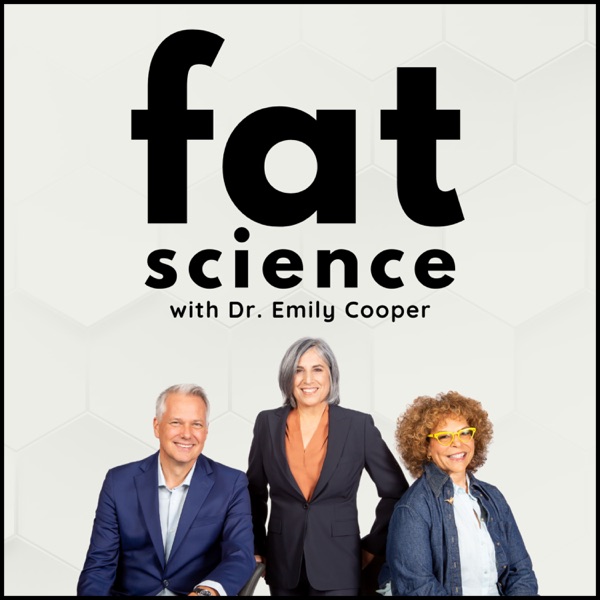
Fat Science
Fat Science is a podcast on a mission to explain where our fat really comes from and why it won’t go (and stay!) away. In each episode, we share little-known facts and personal experiences to dispel misconceptions, reduce stigma, and instill hope. Fat Science is committed to creating a world where people are empowered with accurate information about metabolism and recognize that fat isn’t a failure. This podcast is for informational purposes only and is not intended to replace professional medical advice.
- Medicine chart
- #51
- Episodes
- 162
- Releases
- Weekly
- Typical length
- 48 min
- On air since
- 2023
- Latest episode
- 1 day ago
Episodes
162 episodes, newest first
-
49 min
Maybe You Don’t Need a GLP-1
Episode 160
Show notes
Taking a GLP-1 medication when your body does not need it can actually harm your health. Dr. Emily Cooper breaks down who these drugs are truly for.
Dr. Emily Cooper, Mark Wright, and Andrea Taylor tackle the cultural assumption that everyone needs to be on a GLP-1 medication. They examine how marketing and social media trends have pushed these clinical tools into the realm of casual quick fixes, overlooking the biology of how they actually function inside the body.
The discussion centers on the medical reality that a high body weight alone does not automatically mean a person is metabolically unhealthy. Dr. Cooper explains the expanded health indications for these medications, why severe calorie restriction while taking them causes lean mass loss, and what objective health markers actually justify pharmacologic treatment.
Fat Science, Dr. Cooper, and the Diabesity Institute have no financial relationship with any pharmaceutical company. This conversation focuses on separating individualized metabolic care from commercial pressure, exploring alternative treatments like metformin, and understanding why a lack of response to these drugs is never the patient's fault.
Key Takeaways
•
GLP-1 medications are designed for specific metabolic dysfunctions, not for casual use or minor weight changes.
•
A higher body weight does not automatically indicate poor metabolic health, and up to 25% of individuals with normal weight have underlying metabolic comorbidities.
•
Severe calorie restriction on a GLP-1 leads to significant loss of lean muscle mass rather than healthy metabolic stabilization.
•
Alternative medications like metformin, Contrave, or SGLT2 inhibitors may target individual root issues more effectively than GLP-1s alone.
•
If a medication does not produce results, it reflects the limitations of current medical therapies rather than personal failure.
Resources Mentioned
Connect with Us
Podcast Home:http://fatsciencepodcast.com
Cooper Center for Metabolism:http://coopermetabolic.com
Diabesity Institute: http://diabesityinstitute.org
Resources from Dr. Cooper:http://coopermetabolic.com/resources
Join Our Community:http://patreon.com/cw/FatSciencePodcast
Submit Your Question: questions@fatsciencepodcast.com or dr.c@fatsciencepodcast.com
Fat Science is supported by the Diabesity Institute, a nonprofit dedicated to increasing access to effective, science-based metabolic care.
This podcast is for informational purposes only and is not intended as medical advice. Please consult with a qualified healthcare provider for personalized recommendations.
Produced by: Podcast Impact Studio https://podcastimpactstudio.com
-
41 min
Mailbag: Why Restriction Stalls Metabolic Health
Episode 159
Show notes
When your body holds onto weight or reacts to exercise with fatigue and headaches, restriction is rarely the fix. Fueling consistently comes first.
Dr. Emily Cooper, Mark Wright, and Andrea Taylor answer listener questions from around the world. The conversation addresses standard metabolic screenings, the risks of using weight loss medications during active eating disorders, and why disproportionate lower body fat may point to conditions like lipedema.
The team also examines HbA1c test variability, adult-onset autoimmune diabetes genetics, and why severe restriction causes the brain to raise metabolic defenses. Finally, Dr. Cooper breaks down how intense exercise acts as a physiological stressor and why adequate recovery matters more than pushing through burnout.
Key Takeaways
•
Fasting insulin is often excluded from routine panels despite providing early insight into cardiovascular and metabolic risk.
•
Active eating disorders disrupt metabolic hormones and require specialized treatment before metabolic health can be evaluated.
•
Disproportionate lower extremity fat storage that resists lifestyle interventions may signal lipedema rather than standard adipose tissue.
•
HbA1c tests can fluctuate by up to 0.2 points, making long-term patterns and mixed meal tolerance tests far more informative.
•
Exercise elevates stress hormones, and working out while sleep-deprived or under-fueled breaks the body down instead of strengthening it.
Resources Mentioned
Mechanical Eating Guide on Patreon
Connect with Us
Podcast Home:http://fatsciencepodcast.com
Cooper Center for Metabolism:http://coopermetabolic.com
Diabesity Institute: http://diabesityinstitute.org
Resources from Dr. Cooper:http://coopermetabolic.com/resources
Join Our Community:http://patreon.com/cw/FatSciencePodcast
Submit Your Question: questions@fatsciencepodcast.com or dr.c@fatsciencepodcast.com
Fat Science is supported by the Diabesity Institute, a nonprofit dedicated to increasing access to effective, science-based metabolic care.
This podcast is for informational purposes only and is not intended as medical advice. Please consult with a qualified healthcare provider for personalized recommendations.
Produced by: Podcast Impact Studio https://podcastimpactstudio.com
-
55 min
Understanding New Metabolic Medications and How They Work
Episode 158
Show notes
Metabolic medications work by mimicking natural gut hormones and brain signals, not just by slowing down the digestive tract.
Dr. Emily Cooper, Mark Wright, and Andrea Taylor break down the rapidly evolving landscape of metabolic therapies. From oral options to high-dose formulations and pipeline molecules, the conversation cuts through public confusion to focus on biological mechanisms.
The discussion explores how these therapies interact with complex melanocortin and hormonal pathways in the brain. Rather than relying on rigid protocols or escalating doses prematurely, effective metabolic care focuses on individual biological response and measurable health parameters.
Key Takeaways
•
Modern metabolic therapies are designed to mimic native hormones like GLP-1, GIP, and amylin rather than simply slowing gastric emptying.
•
Clinical trial dosing sequences are designed for regulatory approval, while individualized clinical practice prioritizes symptom stability and health markers over reaching maximum doses.
•
Health improvements such as blood pressure regulation, cholesterol shifts, and liver markers often occur independently of scale changes.
Resources Mentioned
Diabesity Institute Foundations Course
Connect with Us
Podcast Home:http://fatsciencepodcast.com
Cooper Center for Metabolism:http://coopermetabolic.com
Diabesity Institute: http://diabesityinstitute.org
Resources from Dr. Cooper:http://coopermetabolic.com/resources
Join Our Community:http://patreon.com/cw/FatSciencePodcast
Submit Your Question: questions@fatsciencepodcast.com or dr.c@fatsciencepodcast.com
Fat Science is supported by the Diabesity Institute, a nonprofit dedicated to increasing access to effective, science-based metabolic care.
This podcast is for informational purposes only and is not intended as medical advice. Please consult with a qualified healthcare provider for personalized recommendations.
Produced by: Podcast Impact Studio https://podcastimpactstudio.com
-
52 min
Mailbag: Why Calorie Deficits Stall Metabolism
Episode 157
Show notes
Wondering why weight stalls on treatment? Dr. Emily Cooper explains how the brain defends set points and why eating less stops progress.
Dr. Emily Cooper, Mark Wright, and Andrea Taylor answer listener letters from around the world. The conversation addresses why athletic men with a BMI of 27 can still show high visceral fat on a DEXA scan, how medications defend metabolic set points, and why intentional undereating triggers starvation responses.
The team also examines global access to metabolic treatments, dual incretin agonists versus single agonists, artificial sweeteners, and how to interpret two-hour insulin and glucose tolerance curves.
Key Takeaways
• Rapid weight reduction without adequate nutrition can cause lean mass loss and trigger metabolic defense mechanisms.
• Dual incretin therapies stimulate GIP receptors far more than GLP-1 receptors compared to natural human hormones, creating different patient responses.
• Intentional calorie restriction reduces natural incretin production and can impair metabolic signaling, making mechanical fueling essential.
• Fasting insulin suppression combined with pre-diabetes indicators can reflect the brain pulling glucose during periods of low carbohydrate intake.Resources Mentioned
Connect with Us
Podcast Home:http://fatsciencepodcast.com
Cooper Center for Metabolism:http://coopermetabolic.com
Diabesity Institute:http://diabesityinstitute.org
Resources from Dr. Cooper:http://coopermetabolic.com/resources
Join Our Community:http://patreon.com/cw/FatSciencePodcast
Submit Your Question: questions@fatsciencepodcast.com or dr.c@fatsciencepodcast.com
Fat Science is supported by the Diabesity Institute, a nonprofit dedicated to increasing access to effective, science-based metabolic care.
This podcast is for informational purposes only and is not intended as medical advice. Please consult with a qualified healthcare provider for personalized recommendations.
Produced by: Podcast Impact Studiohttps://podcastimpactstudio.com
-
47 min
Breaking Drug News: Combination GLP-1s, Treatment for Kids, and Lp(a)
Episode 156
Show notes
What do new drug reports really mean for your treatment?
Explore groundbreaking updates on potential diabetes and weight-loss drugs from Novo Nordisk and Eli Lilly. Dr. Emily Cooper dives into top-line results, explaining what these findings mean for those struggling with metabolic issues.
KEY TAKEAWAYS
•
Understanding the difference between efficacy estimand and treatment policy estimand.
•
Cagrisema’s potential in aiding weight loss compared to Mounjaro in patients with type 2 diabetes.
•
Semaglutide's effectiveness in children and its implications.
NOTABLE QUOTE
"Many of our patients with metabolic dysfunction have increased cardiometabolic risk." — Dr. Emily Cooper
LINKS & RESOURCES
Learn more about Diabesity Foundations: learn.https://diabesityinstitute.org
Podcast Home:https://fatsciencepodcast.com/
Cooper Center for Metabolism:https://coopermetabolic.com/
Diabesity Institute: https://diabesityinstitute.org
Resources from Dr. Cooper:https://coopermetabolic.com/resources
Join Our Community:https://patreon.com/cw/FatSciencePodcast
Submit Your Question: questions@fatsciencepodcast.com or dr.c@fatsciencepodcast.com
Fat Science is supported by the Diabesity Institute, a nonprofit dedicated to increasing access to effective, science-based metabolic care.
This podcast is for informational purposes only and is not intended as medical advice. Please consult with a qualified healthcare provider for personalized recommendations.
-
1 hr 23 min
The Fat Science Origin Story
Episode 155
Show notes
Have you ever felt that diets don't work for you?
Mark Wright, Andrea Taylor, and Dr. Emily Cooper dive deep into the science of metabolism, challenging the myths surrounding diets and weight gain. With personal stories and expert insights, they explore how metabolic function and genetics play vital roles in our health.
KEY TAKEAWAYS
•
Diets often don't address underlying metabolic issues.
•
Metabolic syndrome involves multiple health systems and requires comprehensive care.
•
GLP-1 medications have changed the treatment landscape for metabolic dysfunction.
NOTABLE QUOTE
"It's not your fault... you were dealt not the best hand genetically." — Dr. Emily Cooper
Links & Resources
Podcast Home:https://fatsciencepodcast.com/
Cooper Center for Metabolism:https://coopermetabolic.com/
Resources from Dr. Cooper:https://coopermetabolic.com/resources
Join Our Community:https://patreon.com/cw/FatSciencePodcast
Submit Your Question: questions@fatsciencepodcast.com or dr.c@fatsciencepodcast.com
Fat Science is supported by the Diabesity Institute, a nonprofit dedicated to increasing access to effective, science-based metabolic care.
This podcast is for informational purposes only and is not intended as medical advice. Please consult with a qualified healthcare provider for personalized recommendations.
-
54 min
Listener Spotlight: Alessio’s Metabolic Wake-Up Call
Episode 154
Show notes
Can metabolic dysfunction be the cause of anxiety?
Join Dr. Emily Cooper, Andrea Taylor, and guest Alessio De Martis as they explore the fascinating intersection of metabolic health, anxiety, and the struggle with traditional diet advice. Learn how under-fueling can exacerbate metabolic issues and what that means for your overall health.
KEY TAKEAWAYS
• Alessio's experience highlights the struggle of self-managing metabolic health in Europe.
• Under-fueling can worsen metabolic dysfunction, disrupting body stability.
• The body's response to hypoglycemia can mirror symptoms of anxiety.NOTABLE QUOTE
"If you have a history of hypoglycemia, you're gonna have a lot less tolerance than other people." — Dr. Emily Cooper
GUEST BIO
Alessio De Martis is a 41-year-old listener from Rome, Italy, who shares his experiences with metabolic dysfunction, hypoglycemia, and anxiety. His journey represents the challenges faced by many in understanding their metabolic health.
Links & Resources
Podcast Home: fatsciencepodcast.com
Cooper Center for Metabolism: coopermetabolic.com
Resources from Dr. Cooper: coopermetabolic.com/resources
Join Our Community: patreon.com/cw/FatSciencePodcast
Submit Your Question: questions@fatsciencepodcast.com or dr.c@fatsciencepodcast.com
Fat Science is supported by the Diabesity Institute, a nonprofit dedicated to increasing access to effective, science-based metabolic care.
This podcast is for informational purposes only and is not intended as medical advice. Please consult with a qualified healthcare provider for personalized recommendations.
-
52 min
Back to School Metabolism Tips for the Whole Family
Episode 153
Show notes
What's the back-to-school metabolism shift all about?
The return to a school routine can have surprising impacts on metabolic health. Dr. Emily Cooper explains how sleep, nutrition, and scheduling affect metabolism, and offers practical advice for parents managing these transitions.
KEY TAKEAWAYS
•
Sleep quality is crucial for kids' and parents' metabolic health.
•
Proper fueling before, during, and after exercise is essential for kids.
•
Maintaining a consistent schedule can help manage stress and metabolism.
NOTABLE QUOTE
"Fueling the workout enhances our fitness basically, and reduces our stress hormones and strengthens our metabolism." — Dr. Emily Cooper
LINKS & RESOURCES
Studies on sleep and insulin resistance
Podcast Home:https://fatsciencepodcast.com/
Cooper Center for Metabolism:https://coopermetabolic.com/http://coopermetabolic.com
Diabesity Institute: diabesityinstitute.org
Resources from Dr. Cooper:https://coopermetabolic.com/resources
Join Our Community:https://patreon.com/cw/FatSciencePodcast
Submit Your Question: questions@fatsciencepodcast.com or dr.c@fatsciencepodcast.com
Fat Science is supported by the Diabesity Institute, a nonprofit dedicated to increasing access to effective, science-based metabolic care.
This podcast is for informational purposes only and is not intended as medical advice. Please consult with a qualified healthcare provider for personalized recommendations.
-
48 min
Mailbag: Navigating Menopause and Metabolic Health
Episode 152
Show notes
Is menopause impacting your weight and health in unexpected ways?
In this episode, the hosts tackle an assortment of listener questions about weight loss, metabolic health, and menopause. They delve into the intricacies of medication tolerance, the ethics of unregulated weight loss drugs, and the physiological changes that can affect women during menopause.
KEY TAKEAWAYS
• Understanding metabolic and hormonal impacts during menopause is crucial.
• Unregulated weight loss drugs pose significant risks and ethical concerns.
• Medication tolerance and side effects can vary greatly among individuals.NOTABLE QUOTE
"It's not your fault." — Dr. Emily Cooper
Links & Resources
Podcast Home: fatsciencepodcast.com
Cooper Center for Metabolism: coopermetabolic.com
Resources from Dr. Cooper: coopermetabolic.com/resources
Join Our Community: patreon.com/cw/FatSciencePodcast
Submit Your Question: questions@fatsciencepodcast.com or dr.c@fatsciencepodcast.com
Fat Science is supported by the Diabesity Institute, a nonprofit dedicated to increasing access to effective, science-based metabolic care.
This podcast is for informational purposes only and is not intended as medical advice. Please consult with a qualified healthcare provider for personalized recommendations.
-
43 min
Top Metabolism Killers Revealed
Episode 151
Show notes
What are the top causes of metabolic disruption?
In this informative episode, Dr. Emily Cooper dives into the factors that quietly sabotage metabolic health. From the intricacies of sleep to the surprising connection between love and metabolism, listeners will learn what enhances or damages their metabolic system.
KEY TAKEAWAYS
•
Sleep is crucial for metabolic and hormonal balance.
•
Weight cycling severely impacts metabolic health.
•
Underlying stress and emotional wellbeing affect metabolism.
NOTABLE QUOTE
"Everyone has strengths and limitations, let's put it that way." — Dr. Emily Cooper
LINKS & RESOURCES
Mechanical Eating Handout: Available on our Patreon page.
Links & Resources
Podcast Home:https://fatsciencepodcast.com/
Cooper Center for Metabolism:https://coopermetabolic.com/
Resources from Dr. Cooper:https://coopermetabolic.com/resources
Join Our Community:https://patreon.com/cw/FatSciencePodcast
Submit Your Question: questions@fatsciencepodcast.com or dr.c@fatsciencepodcast.com
Fat Science is supported by the Diabesity Institute, a nonprofit dedicated to increasing access to effective, science-based metabolic care.
This podcast is for informational purposes only and is not intended as medical advice. Please consult with a qualified healthcare provider for personalized recommendations.
-
39 min
Mailbag: GLP-1 Injection Reactions
Episode 150
Show notes
Do you ever wonder how medications like Wegovy and Mounjaro influence your metabolic health?
Dr. Emily Cooper, along with Andrea Taylor and Mark Wright, dives into listener questions about maintaining metabolic health when medication coverage is lost, understanding the role of leptin after weight loss, and the effects of medications like Mounjaro. They also explore the injection site reactions and the complex interplay between thyroid, exercise, and inflammation.
KEY TAKEAWAYS
•
Loss of medication insurance coverage can significantly impact treatment, but alternative options like pills may be available.
•
Leptin levels differ by gender; they're naturally lower in men due to different body composition.
•
Fasting can disrupt hunger signals and glucose regulation, particularly following intermittent fasting.
•
Injection site reactions are common but switching medications or techniques might alleviate symptoms.
NOTABLE QUOTE
"Obesity is a physical sign of underlying metabolic dysfunction." — Dr. Emily Cooper
LINKS & RESOURCES
To register for course: https://learn.diabesityinstitute.org/products/live_events/live-virtual-update-event
Links & Resources
Podcast Home:https://fatsciencepodcast.com/
Cooper Center for Metabolism:https://coopermetabolic.com/
Resources from Dr. Cooper:https://coopermetabolic.com/resources
Join Our Community:https://patreon.com/cw/FatSciencePodcast
Submit Your Question: questions@fatsciencepodcast.com or dr.c@fatsciencepodcast.com
Fat Science is supported by the Diabesity Institute, a nonprofit dedicated to increasing access to effective, science-based metabolic care.
This podcast is for informational purposes only and is not intended as medical advice. Please consult with a qualified healthcare provider for personalized recommendations.
-
39 min
How Wildfire Smoke Affects Metabolism
Episode 149
Show notes
Is wildfire smoke affecting more than just your lungs?
Poor air quality affects not only respiratory health but also metabolic functions. Wildfire smoke can trigger inflammation, oxidative stress, and hormone release, leading to metabolic disturbances.
KEY TAKEAWAYS
•
Wildfire smoke can impact metabolism, leading to insulin resistance.
•
Stress hormones released during smoke exposure can raise blood sugar levels.
•
Air pollution is linked to increased risk of metabolic syndrome components.
NOTABLE QUOTE
"When there were wildfire events, within days, the admissions for diabetes increased." — Dr. Emily Cooper
Links & Resources
Podcast Home:https://fatsciencepodcast.com/
Cooper Center for Metabolism:https://coopermetabolic.com/
Resources from Dr. Cooper:https://coopermetabolic.com/resources
Join Our Community:https://patreon.com/cw/FatSciencePodcast
Submit Your Question: questions@fatsciencepodcast.com or dr.c@fatsciencepodcast.com
Fat Science is supported by the Diabesity Institute, a nonprofit dedicated to increasing access to effective, science-based metabolic care.
This podcast is for informational purposes only and is not intended as medical advice. Please consult with a qualified healthcare provider for personalized recommendations.
-
49 min
Inside the GLP-1 Secret Shopper Study
Episode 148
Show notes
Is it really a good idea to get medical care from online pharmacies posing as clinics?
This week on Fat Science, Dr. Emily Cooper, Mark Wright, and Andrea Taylor dig into a Yale secret shopper study that tested 49 websites selling GLP-1 medications online. The websites look and market like medical clinics, but the study found that most patients never spoke to a clinician at all before getting a prescription. Dr. Cooper, Mark, and Andrea unpack what real medical care requires, why these platforms skip it, and what that means for anyone considering this route.
KEY TAKEAWAY
•
Two-thirds of the sites in the study issued a prescription with no clinician contact of any kind — despite marketing themselves as medical clinics.
•
Fewer than 40% asked for any clinical measurement (blood pressure, labs, etc.), and only 18% asked whether the patient even had a primary care doctor.
•
Many of these sites are financially connected to compounding pharmacies and use leading questions to push add-ons that create untested drug combinations.
•
Real medical care means a full history, objective labs, and ongoing monitoring — not a five-minute questionnaire and an automatic credit card charge.
NOTABLE QUOTE
"The marketing appears to be a medical clinic or a medical company, when in fact it's really just a sale of a drug." Dr. Emily Cooper
LINKS & RESOURCES
Study published in JAMA on the secret shopper findings
Links & Resources
Podcast Home:https://fatsciencepodcast.com/
Cooper Center for Metabolism:https://coopermetabolic.com/
Resources from Dr. Cooper:https://coopermetabolic.com/resources
Join Our Community:https://patreon.com/cw/FatSciencePodcast
Submit Your Question: questions@fatsciencepodcast.com or dr.c@fatsciencepodcast.com
Fat Science is supported by the Diabesity Institute, a nonprofit dedicated to increasing access to effective, science-based metabolic care.
This podcast is for informational purposes only and is not intended as medical advice. Please consult with a qualified healthcare provider for personalized recommendations.
-
46 min
The Truth About Exercise and Metabolism
Episode 147
Show notes
Does exercise really boost metabolism, or is there a hidden truth?
In this episode, Dr. Emily Cooper uncovers the science behind why exercise isn’t just about burning calories. Dive into the fascinating world of myokines, the chemical messengers released by muscles that impact everything from mood to inflammation. Discover why it's not your fault if exercise alone isn't solving your metabolic issues.
KEY TAKEAWAYS
•
Exercise impacts more than calorie burn; it's a signaling system for the body.
•
Myokines, released during exercise, affect organs like the brain and liver.
•
Muscle contractions broadcast vital signals affecting overall health.
NOTABLE QUOTE
"Exercise is more than burning energy; it's communication throughout the body." — Dr. Emily Cooper
LINKS & RESOURCES
Cooper Center for Metabolism: https://coopermetabolic.com
Resources from Dr. Cooper: https://coopermetabolic.com/resources
To register for course: https://learn.diabesityinstitute.org/products/live_events/live-virtual-update-event
Links & Resources
Podcast Home:https://fatsciencepodcast.com/
Cooper Center for Metabolism:https://coopermetabolic.com/
Resources from Dr. Cooper:https://coopermetabolic.com/resources
Join Our Community:https://patreon.com/cw/FatSciencePodcast
Submit Your Question: questions@fatsciencepodcast.com or dr.c@fatsciencepodcast.com
Fat Science is supported by the Diabesity Institute, a nonprofit dedicated to increasing access to effective, science-based metabolic care.
This podcast is for informational purposes only and is not intended as medical advice. Please consult with a qualified healthcare provider for personalized recommendations.
-
41 min
Mailbag: Understanding Body Dysmorphia
Episode 146
Show notes
How does biology affect our perception of body size?
Dr. Emily Cooper answers listener questions about body dysmorphia and metabolic dysfunction. Mark and Andrea discuss the challenges with compounded medications and the implications of insurance-driven diet requirements.
KEY TAKEAWAYS
•
Body dysmorphia can have biological components related to metabolic dysfunction.
•
Compounded medications may lack the testing and safety guarantees of brand names.
•
Insurance requirements often lack a medical basis and can hinder proper treatment.
NOTABLE QUOTE
"The altered body image perception may be linked to metabolic signals." — Dr. Emily Cooper
LINKS & RESOURCES
None mentioned.
Links & Resources
Podcast Home:https://fatsciencepodcast.com/
Cooper Center for Metabolism:https://coopermetabolic.com/
Resources from Dr. Cooper:https://coopermetabolic.com/resources
Join Our Community:https://patreon.com/cw/FatSciencePodcast
Submit Your Question: questions@fatsciencepodcast.com or dr.c@fatsciencepodcast.com
Fat Science is supported by the Diabesity Institute, a nonprofit dedicated to increasing access to effective, science-based metabolic care.
This podcast is for informational purposes only and is not intended as medical advice. Please consult with a qualified healthcare provider for personalized recommendations.
-
51 min
Understanding Metabolism: Latest Scientific Insights
Episode 145
Show notes
Why is your fat talking to you?
In the latest solo episode, Dr. Emily Cooper, Andrea Taylor, and Mark Wright explore groundbreaking research into metabolic health. Learn why the scale doesn't always reflect metabolic risk, and discover the science behind fat's active role in the body.
KEY TAKEAWAYS
•
Metabolic dysfunction cannot be judged by scale weight alone.
•
Visceral fat is a stronger predictor of heart failure than BMI.
•
Hormonal environments profoundly affect fat storage and health risks.
NOTABLE QUOTE
"Your fat is talking to you." — Andrea Taylor
LINKS & RESOURCES
Obesity Reviews Paper
Immunological Reviews Journal Article
European Congress on Obesity Study
Links & Resources
Podcast Home:https://fatsciencepodcast.com/
Cooper Center for Metabolism:https://coopermetabolic.com/
Resources from Dr. Cooper:https://coopermetabolic.com/resources
Join Our Community:https://patreon.com/cw/FatSciencePodcast
Submit Your Question: questions@fatsciencepodcast.com or dr.c@fatsciencepodcast.com
Fat Science is supported by the Diabesity Institute, a nonprofit dedicated to increasing access to effective, science-based metabolic care.
This podcast is for informational purposes only and is not intended as medical advice. Please consult with a qualified healthcare provider for personalized recommendations.
-
50 min
Why Carbs Are Good For Your Brain
Episode 144
Show notes
Is your brain starving for glucose?
In this episode, Dr. Emily Cooper explores the critical role of the brain as a metabolic organ and its dependence on glucose and insulin. Listeners will learn why good sleep and a holistic lifestyle are vital for cognitive health.
KEY TAKEAWAYS
•
The brain uses about 20% of your body's energy at rest.
•
Insulin plays a non-fuel role in brain function, supporting neural connections and mood.
•
Sleep is essential for the brain's waste clearance system, the glymphatic system.
•
Insulin resistance in the brain is linked to cognitive decline and dementia.
•
Exercise, a balanced diet, and social engagement are key to brain health.
NOTABLE QUOTE
"The brain is the most metabolically active organ in our body." — Dr. Emily Cooper
LINKS & RESOURCES
JAMA: US POINTER Study on Cognitive Decline
Novo Nordisk: EVOKE & EVOKE Plus Trials
Links & Resources
Podcast Home:https://fatsciencepodcast.com/
Cooper Center for Metabolism:https://coopermetabolic.com/
Resources from Dr. Cooper:https://coopermetabolic.com/resources
Join Our Community:https://patreon.com/cw/FatSciencePodcast
Submit Your Question: questions@fatsciencepodcast.com or dr.c@fatsciencepodcast.com
Fat Science is supported by the Diabesity Institute, a nonprofit dedicated to increasing access to effective, science-based metabolic care.
This podcast is for informational purposes only and is not intended as medical advice. Please consult with a qualified healthcare provider for personalized recommendations.
-
45 min
Mailbag: When Weight Loss Stalls on GLP-1s
Episode 143
Show notes
Is it normal for GLP-1 medications to become less effective over time?
Dr. Emily Cooper discusses listener questions about the nuances of metabolic health and the real reasons behind weight fluctuations and food cravings. With insights into GLP-1 medications, mechanical eating, and more, the episode aims to debunk myths and provide science-based encouragement.
KEY TAKEAWAYS
•
Trusting your body's hunger signals can prevent metabolic slowdown.
•
Mechanical eating can help manage sugar cravings and maintain metabolic health.
•
Navigating pediatric metabolic issues requires understanding genetic influences and appropriate medical intervention.
NOTABLE QUOTE
"It's not your fault. Trust your body and step up to the higher end of your metabolic flexibility." — Dr. Emily Cooper
LINKS & RESOURCES
American Board of Obesity Medicine: https://obesitymedicine.org
Links & Resources
Podcast Home:https://fatsciencepodcast.com/
Cooper Center for Metabolism:https://coopermetabolic.com/
Resources from Dr. Cooper:https://coopermetabolic.com/resources
Join Our Community:https://patreon.com/cw/FatSciencePodcast
Submit Your Question: questions@fatsciencepodcast.com or dr.c@fatsciencepodcast.com
Fat Science is supported by the Diabesity Institute, a nonprofit dedicated to increasing access to effective, science-based metabolic care.
This podcast is for informational purposes only and is not intended as medical advice. Please consult with a qualified healthcare provider for personalized recommendations.
-
51 min
Plastic Chemicals in Your Blood and What Actually Works to Remove Them
Episode 142
Show notes
Have you ever wondered why your body holds onto weight despite your best efforts?
In this eye-opening episode, Dr. Cooper reveals groundbreaking research showing that 100% of healthy adults carry at least six different plastic-related chemicals in their bodies daily. These endocrine disruptors don't just affect your hormones - they may be stored in your fat tissue and could be a hidden driver of metabolic dysfunction. The good news? New Australian research proves you can dramatically reduce these chemicals in just one week with targeted changes.
KEY TAKEAWAYS
•
Every single person tested had at least 6 plastic chemicals in their urine, with food packaging being the primary source
•
Participants cut phthalate levels by 38-54% and BPA by 60% in just 7 days with adjustments in reducing plastic exposure in food and food packaging
•
Ultra-processed foods introduce plastic chemicals through multiple processing and packaging steps
•
Certain chemicals like DEHP may be stored in fat tissue and released during weight loss
•
Heat accelerates plastic migration into food - avoid microwaving in plastic and pouring hot food into plastic containers
•
Simple swaps like choosing fresh over canned foods and using glass containers make significant impacts
•
The EPA research office studying these chemicals was recently eliminated, removing key consumer protections
NOTABLE QUOTE
"People who switched to the low plastic food and kitchenware cut the phthalates excretion by 38 to 54% in one week and they cut their BPA excretion by 60% in one week." — Dr. Emily Cooper
Links & Resources
Podcast Home: https://fatsciencepodcast.com
Cooper Center for Metabolism: https://coopermetabolic.com
Resources from Dr. Cooper: https://coopermetabolic.com/resources
Join Our Community: https://patreon.com/cw/FatSciencePodcast
Submit Your Question: questions@https://fatsciencepodcast.com or dr.c@https://fatsciencepodcast.com
Fat Science is supported by the Diabesity Institute, a nonprofit dedicated to increasing access to effective, science-based metabolic care.
This podcast is for informational purposes only and is not intended as medical advice. Please consult with a qualified healthcare provider for personalized recommendations.
-
48 min
Why Weight Loss Stalls on GLP-1s — Even When You’re Doing Everything “Right
Episode 141
Show notes
What happens when GLP-1 medications stop working the way you hoped they would? In this mailbag episode, Dr. Emily Cooper answers listener questions about fasting, insulin levels, PCOS, lipedema, plateaus on Zepbound, and the complicated reality behind metabolic dysfunction. From the dangers of under-fueling to why individualized treatment matters so much, this conversation unpacks the science behind weight resistance with clarity and compassion.Key Takeaways
•
Why fasting and restrictive eating may worsen metabolic adaptation
•
The real role insulin plays in metabolic health
•
How PCOS and lipedema complicate weight loss treatment
•
Why some people plateau on GLP-1 medications over time
•
The importance of fueling, muscle preservation, and individualized care
Links & Resources
Podcast Home:https://fatsciencepodcast.com
Cooper Center for Metabolism:https://coopermetabolic.com
Resources from Dr. Cooper:https://coopermetabolic.com/resources
Join Our Community:https://patreon.com/cw/FatSciencePodcast
Submit Your Question: questions@https://fatsciencepodcast.com or dr.c@https://fatsciencepodcast.com
Fat Science is supported by the Diabesity Institute, a nonprofit dedicated to increasing access to effective, science-based metabolic care.
This podcast is for informational purposes only and is not intended as medical advice. Please consult with a qualified healthcare provider for personalized recommendations.
On these lists
Fat Science is one of the shows picked out on this list

More in Medicine
Placed highest on Apple Podcasts' Medicine chart right now