Podcast
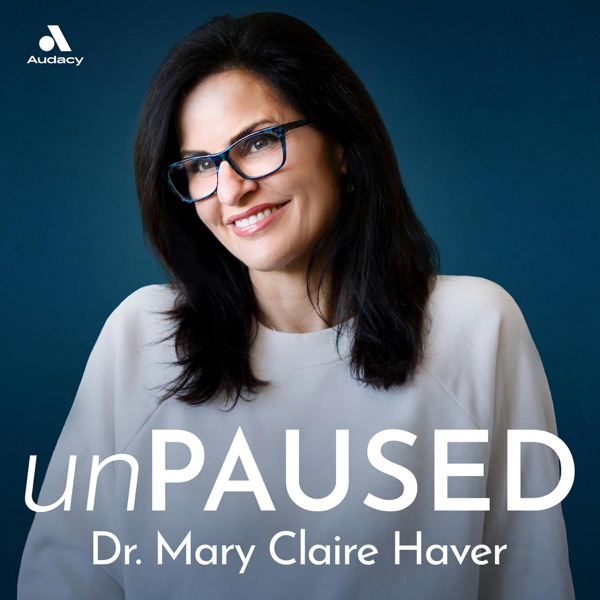
unPAUSED with Dr. Mary Claire Haver
Welcome to unPAUSED, the podcast where bold, unfiltered conversations take place about what it really takes for women to thrive in the second half of life. Every week, Dr. Mary Claire Haver, a board-certified Obstetrician-Gynecologist, Certified Menopause Practitioner, and #1 New York Times best-selling author, tackles the conversations women actually need to hear. Dr. Haver sits down with a variety of medical experts, CEOs, and risk-takers to discuss everything that matters, from hormones and identity to financial power, relationships, and the tools needed to build the life you want. unPAUSED is about reclaiming your healthspan—not just the number of years you live, but the number of years you live well. Tune in every Tuesday for new episodes of unPAUSED. Subscribe now so you don't miss it.
- Medicine chart
- #4
- Episodes
- 75
- Releases
- Twice a week
- Typical length
- 52 min
- On air since
- 2025
- Latest episode
- 17 hours ago
Episodes
75 episodes, newest first
-
45 min
Menopause Masterclass: Recurrent UTIs and the Genitourinary Syndrome of Menopause (GSM)
Show notes
Genitourinary syndrome of menopause (GSM) is the most undertreated condition of midlife — and one of the easiest to treat. In this solo episode, Dr. Mary Claire Haver breaks down the symptoms most women never connect to their hormones: vaginal dryness, painful sex, urinary urgency, getting up at night to pee, delayed orgasm, and recurrent UTIs — infections that, in older women, can lead to sepsis, falls, and hospitalization. Affecting 50–80% of postmenopausal women (and effectively all of us if we live long enough), GSM can also strike at any low-estrogen stage of life, from postpartum to breastfeeding.
Dr. Haver shares her own story of missing the diagnosis in herself, then walks through exactly how to treat it: why vaginal estrogen — not lubricants — is now the frontline treatment, how the FDA’s November 2025 removal of the black box warning changes the conversation, how to apply it (“treat the whole neighborhood, not just the block”), and the options beyond estrogen, from vaginal DHEA to pelvic floor PT. It’s never too late to start — and you never have to just live with this.
Books:
The New Perimenopause: https://thepauselife.com/pages/the-new-perimenopause-book
The New Menopause: https://www.amazon.com/dp/B0CKBZ4K1ZNever miss an episode—sign up for The ‘Pause Life Newsletter: https://thepauselife.com/pages/newsletter
Medical Disclaimer: The information, including opinions and recommendations, on this platform is meant for informational and educational purposes only. Mary Claire Media, LLC, the unPAUSED podcast, and The ‘Pause Life are not medical organizations. Medical advice or medical diagnosis cannot be provided to you through the platform, any associated website, or customer portals. Using this platform does not establish a patient-physician relationship.
-
37 min
Dense Breasts, Family History and Your Mammogram: How to Know your Real Risk
Show notes
In part two, Dr. Mary Claire Haver and breast oncologist Dr. Eleonora Teplinsky shift to breast cancer risk, prevention, and early detection: dense breasts, family history myths (only 5–10% of breast cancers are hereditary), risk assessment from age 25, who needs genetic testing, and why previvors in surgical menopause can use hormone therapy without raising their breast cancer risk. Plus life after treatment — bone density, chemo brain, heart health, fear of recurrence, and body image after mastectomy.
Guest links:
Dr. Eleonora Teplinsky (Website) https://interludecancerstories.com/
Dr. Eleonora Teplinsky (Instagram) https://www.instagram.com/drteplinsky/
Dr. Eleonora Teplinsky (Substack) https://drteplinsky.substack.com/
Dr. Eleonora Teplinsky (TikTok) https://www.tiktok.com/@drteplinsky
Dr. Eleonora Teplinsky (Facebook) https://www.facebook.com/drteplinsky/
Dr. Eleonora Teplinsky (LinkedIn) https://www.linkedin.com/in/eleonora-teplinsky-md-fasco-220aa02
Dr. Eleonora Teplinsky (YouTube) https://www.youtube.com/@drteplinsky
Dr. Eleonora Teplinsky (X) https://x.com/drteplinsky
INTERLUDE: Cancer Stories with Dr. Teplinsky (Apple Podcasts) https://podcasts.apple.com/us/podcast/interlude-cancer-stories-with-dr-teplinsky/id1451816690
Living Beyond Breast Cancer https://www.lbbc.org/Books:
“Beyond the Pink: Navigating Life, Health, and Breast Cancer,” by Dr. Eleonora Teplinsky https://www.hachettebookgroup.com/titles/dr-eleonora-teplinsky-m-d/beyond-the-pink/9781538777145/
“The New Perimenopause,” by Dr. Mary Claire Haver https://thepauselife.com/pages/the-new-perimenopause-book
“The New Menopause,” by Dr. Mary Claire Haver https://www.amazon.com/dp/B0CKBZ4K1ZNever miss an episode—sign up for The ‘Pause Life Newsletter: https://thepauselife.com/pages/newsletter
Medical Disclaimer: The information, including opinions and recommendations, on this platform is meant for informational and educational purposes only. Mary Claire Media, LLC, the unPAUSED podcast, and The ‘Pause Life are not medical organizations. Medical advice or medical diagnosis cannot be provided to you through the platform, any associated website, or customer portals. Using this platform does not establish a patient-physician relationship.
-
47 min
Told You Can Never Take Estrogen? HRT After Breast Cancer
Show notes
In this episode of unPAUSED, Dr. Mary Claire Haver sits down with breast oncologist Dr. Eleonora Teplinsky, author of Beyond the Pink, to take on the dogma that women with breast cancer — or a family history of it — can never take estrogen. They cover why estrogen does not cause breast cancer, who is and isn’t a candidate for hormones, the script for a dismissive appointment, vaginal estrogen and DHEA for survivors, and the NCCN’s shift on testosterone from “contraindicated” to “use with caution.”
Guest links:
Dr. Eleonora Teplinsky (Website) https://interludecancerstories.com/
Dr. Eleonora Teplinsky (Instagram) https://www.instagram.com/drteplinsky/
Dr. Eleonora Teplinsky (Substack) https://drteplinsky.substack.com/
Dr. Eleonora Teplinsky (TikTok) https://www.tiktok.com/@drteplinsky
Dr. Eleonora Teplinsky (Facebook) https://www.facebook.com/drteplinsky/
Dr. Eleonora Teplinsky (LinkedIn) https://www.linkedin.com/in/eleonora-teplinsky-md-fasco-220aa02
Dr. Eleonora Teplinsky (YouTube) https://www.youtube.com/@drteplinsky
Dr. Eleonora Teplinsky (X) https://x.com/drteplinsky
INTERLUDE: Cancer Stories with Dr. Teplinsky (Apple Podcasts) https://podcasts.apple.com/us/podcast/interlude-cancer-stories-with-dr-teplinsky/id1451816690
Living Beyond Breast Cancer https://www.lbbc.org/Books:
“Beyond the Pink,” by Dr. Eleonora Teplinsky https://www.hachettebookgroup.com/titles/dr-eleonora-teplinsky-m-d/beyond-the-pink/9781538777145
“The New Perimenopause,” by Dr. Mary Claire Haver https://thepauselife.com/pages/the-new-perimenopause-book
“The New Menopause,” by Dr. Mary Claire Haver https://www.amazon.com/dp/B0CKBZ4K1ZNever miss an episode—sign up for The ‘Pause Life Newsletter: https://thepauselife.com/pages/newsletter
Medical Disclaimer: The information, including opinions and recommendations, on this platform is meant for informational and educational purposes only. Mary Claire Media, LLC, the unPAUSED podcast, and The ‘Pause Life are not medical organizations. Medical advice or medical diagnosis cannot be provided to you through the platform, any associated website, or customer portals. Using this platform does not establish a patient-physician relationship.
-
43 min
Painful Sex, Dryness and Menopause with the Vagina Whisperer
Show notes
In this episode of unPAUSED, Dr. Mary Claire Haver continues her conversation with board certified pelvic floor physical therapist Dr. Sara Reardon, known on social media as The Vagina Whisperer — and this time it’s the toolkit: what you can actually do, starting today, to protect and rebuild your pelvic floor. They begin with pessaries, the internal support devices so few women are offered, why getting one fitted properly is harder than it should be, and the over-the-counter silicone supports that let women run, lift, and travel leak-free while they strengthen. From there they get into the everyday habits that quietly weaken the pelvic floor: pushing when you pee, straining on the toilet, scrolling past the five-minute mark, and holding your breath while lifting — plus hemorrhoids, what healthy stool should look like, and why a simple toilet stool changes everything.
They then take a deeper dive into genitourinary syndrome of menopause (GSM), why nearly three quarters of women with symptoms never mention them to a clinician, and why hormones alone aren’t enough — you lose urinary sphincter strength every year after age 35, so the muscle training has to happen too. Dr. Reardon covers keeping vaginal tissue healthy with or without a partner, what vaginismus is and why “just relax” fails, the woman who endured ten years of searing pain — and surgery to remove her labia — when the real culprit was a compressed pudendal nerve, the $5 billion vaginal rejuvenation industry, her five free daily pelvic floor habits, and the message she wants every woman to hear: it’s never too late, with patients in their 80s and 90s still getting better.
Guest links:
Dr. Sara Reardon (Instagram) https://www.instagram.com/the.vagina.whisperer/
Dr. Sara Reardon / The Vagina Whisperer (Website) https://thevagwhisperer.com/
NOLA Pelvic Health (Website) https://www.nolapelvichealth.com/
The V-Hive App (The Vagina Whisperer) https://thevagwhisperer.com/membership/Books:
“Floored: A Woman’s Guide to Pelvic Floor Health at Every Age and Stage,” by Dr. Sara Reardon https://thevagwhisperer.com/floored/
“The New Perimenopause,” by Dr. Mary Claire Haver https://thepauselife.com/pages/the-new-perimenopause-book
“The New Menopause,” by Dr. Mary Claire Haver https://www.amazon.com/dp/B0CKBZ4K1ZNever miss an episode—sign up for The ‘Pause Life Newsletter: https://thepauselife.com/pages/newsletter
Medical Disclaimer: The information, including opinions and recommendations, on this platform is meant for informational and educational purposes only. Mary Claire Media, LLC, the unPAUSED podcast, and The ‘Pause Life are not medical organizations. Medical advice or medical diagnosis cannot be provided to you through the platform, any associated website, or customer portals. Using this platform does not establish a patient-physician relationship.
-
49 min
Bladder Leaks, UTIs & Pelvic Floor Health with the Vagina Whisperer
Show notes
In this episode of unPAUSED, Dr. Mary Claire Haver sits down with Dr. Sara Reardon, board-certified pelvic floor physical therapist, founder of The Vagina Whisperer, and author of Floored, to talk about the muscles 68% of postmenopausal women say no one ever taught them they had. Nearly 1 in 3 women lives with a pelvic floor disorder — urinary leakage, prolapse, pain with sex — and the US spends over $20 billion a year managing it rather than fixing it, while women are offered a device, surgery, or “just live with it.” Dr. Reardon explains why leaking isn’t just part of being a woman, why diapers aren’t your destiny, and why these symptoms are treatable at every age.
Dr. Reardon walks through what happens at a pelvic floor PT appointment (you can self-refer in every US state, covered by insurance), why over 50% of women do Kegels incorrectly — and why Kegels alone were never the answer — the difference between a weak and a too-tight pelvic floor, and stress vs. urge incontinence. They dig into night-time bathroom trips and the fall-and-fracture risk nobody connects to them, why vaginal estrogen should be prescribed proactively — including the study showing it cut recurrent UTIs from 5.9 infections per patient-year to 0.5 — the truth about prolapse (half of women over 50 have some degree of it), what to ask before consenting to any prolapse repair, and the vaginal mesh scandal. Framed throughout by Mary Claire’s own mother’s story: three failed incontinence surgeries, decades of leaking, and the hip fracture after which she never walked again.
Guest links:
Dr. Sara Reardon / The Vagina Whisperer (Website) https://www.thevagwhisperer.com/
Dr. Sara Reardon (Instagram) https://www.instagram.com/the.vagina.whisperer/Books:
“Floored: A Woman’s Guide to Pelvic Floor Health at Every Age and Stage,” by Dr. Sara Reardon https://www.thevagwhisperer.com/floored
“The New Perimenopause,” by Dr. Mary Claire Haver https://thepauselife.com/pages/the-new-perimenopause-book
“The New Menopause,” by Dr. Mary Claire Haver https://www.amazon.com/dp/B0CKBZ4K1ZNever miss an episode—sign up for The ‘Pause Life Newsletter: https://thepauselife.com/pages/newsletter
Medical Disclaimer: The information, including opinions and recommendations, on this platform is meant for informational and educational purposes only. Mary Claire Media, LLC, the unPAUSED podcast, and The ‘Pause Life are not medical organizations. Medical advice or medical diagnosis cannot be provided to you through the platform, any associated website, or customer portals. Using this platform does not establish a patient-physician relationship.
-
53 min
Menopause, Hormones and Women’s Sexual Health with Dr. Rachel Rubin; Listen Again
Show notes
In this episode of unPAUSED, pulled from the archive because it’s one worth hearing again, Dr. Mary Claire Haver sits down with Dr. Rachel Rubin, board-certified urologist, nationally recognized expert in sexual medicine, assistant clinical professor of urology at Georgetown University, and a lead advocate behind the 2025 American Urological Association guidelines on genitourinary syndrome of menopause. The conversation starts with the number that explains everything: three training programs in the last three years even acknowledge women’s sexual health — men have more than 27. The reason your doctor doesn’t know how to talk to you about libido, arousal, orgasm, or pain is that no one ever taught them.
Dr. Rubin delivers the anatomy lesson medicine skipped — why the clitoris and penis are the same tissue, why the cervix is triply innervated despite being taught as nerve-free, and why “my orgasm changed after my hysterectomy” is biology, not psychology. They cover why sex should never hurt and pain always deserves a diagnosis, the vulvar vestibule tissue most doctors were never taught to examine, the hormone changes that start in your 30s — not at menopause — and the case Dr. Rubin has built her career on: vaginal estrogen and DHEA prevent more than half of UTIs and could save Medicare an estimated $6–22 billion a year. Plus the medications that quietly affect sexual function, the two FDA-approved drugs for low libido most women have never heard of, and the five hormone options every woman deserves to know are on her menu.
Guest links:
Dr. Rachel Rubin (Website) https://www.rachelrubinmd.com/
Dr. Rachel Rubin (Instagram) https://www.instagram.com/drrachelrubin/
Dr. Rachel Rubin (X) https://x.com/drrachelrubinBooks:
“The New Perimenopause,” by Dr. Mary Claire Haver https://thepauselife.com/pages/the-new-perimenopause-book
“The New Menopause,” by Dr. Mary Claire Haver https://www.amazon.com/dp/B0CKBZ4K1ZNever miss an episode—sign up for The ‘Pause Life Newsletter: https://thepauselife.com/pages/newsletter
Medical Disclaimer: The information, including opinions and recommendations, on this platform is meant for informational and educational purposes only. Mary Claire Media, LLC, the unPAUSED podcast, and The ‘Pause Life are not medical organizations. Medical advice or medical diagnosis cannot be provided to you through the platform, any associated website, or customer portals. Using this platform does not establish a patient-physician relationship
-
58 min
Estrogen Patch Shortage: Who Profits From Your Prescriptions with Mark Cuban
Show notes
In this episode of unPAUSED, Dr. Mary Claire Haver sits down with entrepreneur Mark Cuban, cofounder of the Mark Cuban Cost Plus Drug Company, to unpack the estrogen patch shortage and why so many women in perimenopause and menopause struggle to find and afford hormone therapy. Holding up her own patch, Dr. Haver asks the question her patients keep asking: why is this so hard to get? Mark explains why the shortage hit so hard — patches require specialized manufacturing that pills don't, demand surged after the black box warning was removed, and supply couldn't keep up — plus how Cost Plus Drugs has worked to buy every patch manufacturers can produce, and who gets served first when a generic drug runs short.
Then they take apart how drug prices are really set: how pharmacy benefit managers (PBMs) decide what your insurance covers, how rebates drive list prices higher, and why a handful of conglomerates now own the insurer, the pharmacy, the PBM, and the physician practice all at once. They compare what a generic estradiol patch costs to make against what many women pay at retail, cover Dr. Haver's case for vaginal estrogen as one of the most affordable treatments in menopause care, why there's still no FDA-approved testosterone for women, how untreated symptoms push women out of the workforce, and the playbook for lowering your prescription costs — from 90-day supplies to comparing cash prices with your copay.
Guest links:
Mark Cuban Companies https://markcubancompanies.com/
Cost Plus Drug Company https://www.costplusdrugs.com/
Mark Cuban (Instagram) https://www.instagram.com/mcuban/
Mark Cuban (X) https://x.com/mcubanBooks:
"The New Perimenopause," by Dr. Mary Claire Haver https://thepauselife.com/pages/the-new-perimenopause-book
"The New Menopause," by Dr. Mary Claire Haver https://www.amazon.com/dp/B0CKBZ4K1ZArticles:
Menopausal Hormone Therapy Use Among Postmenopausal Women (JAMA) https://jamanetwork.com/journals/jama-health-forum/fullarticle/2823976 -
48 min
Women’s Health Issues Doctors Too Often Miss with CNN’s Pamela Brown
Show notes
In this episode of unPAUSED, Dr. Mary Claire Haver sits down with Pamela Brown, CNN anchor and chief investigative correspondent, and host of the network's new women's health streaming series Body Language by CNN — born from an experience Pamela nearly kept hidden. In the same year she lost her mother, while covering the White House, she was blindsided by postpartum OCD: intrusive thoughts that grew louder and scarier, hidden from everyone — including her husband — while she reported live on air. Dismissed when she flagged the highest score on a postpartum screening form, she finally found her own diagnosis through an article online, and turned the experience into an eight-part series covering perimenopause, GLP-1s, egg freezing, PCOS, thyroid disease, the fourth trimester, and Alzheimer's.
Pamela and Dr. Haver dig into what the series uncovered: why intrusive thoughts are not psychosis — and why that distinction matters so much for new mothers — with Dr. Haver sharing her own postpartum intrusive thoughts as a young resident, and what the Andrea Yates case changed for her generation of OB-GYNs. They cover the "GLP-1 babies" boom and why fertility rises on these medications, the GPS protocol (GLP-1, protein, strength training), the telemedicine revolution in menopause care and its limits, the FDA hearing on testosterone for women — including both women's own experience using it — the estrogen patch shortage and the letter-writing campaign that forced the FDA to respond, and why Dr. Haver believes vaginal estrogen could prevent half of UTIs in older women, along with the falls and fractures that follow. The episode closes with why the postpartum system fails mothers — one six-week appointment — and what needs to change.
Guest links:
Pamela Brown (Instagram) https://www.instagram.com/pamelabrowncnn/
Pamela Brown (X) https://x.com/PamelaBrownCNN
Pamela Brown at CNN https://www.cnn.com/profiles/pamela-brown-profile
Body Language by CNN https://www.cnn.com/videos/title-2600886Books:
"The New Perimenopause," by Dr. Mary Claire Haver https://thepauselife.com/pages/the-new-perimenopause-book
"The New Menopause," by Dr. Mary Claire Haver https://www.amazon.com/dp/B0CKBZ4K1Z -
1 hr 26 min
How Menopause Changes Your Gut Health with a Leading Gastroenterologist
Show notes
In this episode of unPAUSED, recorded on location at the Aspen Ideas Festival, Dr. Mary Claire Haver sits down with Dr. Trisha Pasricha, neurogastroenterologist at Beth Israel Deaconess Medical Center, assistant professor of medicine at Harvard Medical School, and author of the new book You've Been Pooping All Wrong. Women in perimenopause and menopause who describe bloating, new constipation, or digestion that suddenly feels unfamiliar are often told it's stress or age — Dr. Pasricha explains the real biology, starting with the estrogen receptors inside the gut's own nervous system, and makes the case for treating the gut as a second brain rather than plumbing. She breaks down why IBS affects women about twice as often as men, and why women with gut pain are so often told it's all in their heads — in her words, it's not the stress causing the symptoms, it's the symptoms causing the stress.
They cover the less obvious causes of bloating — including pelvic floor dysfunction — accidental bowel leakage after menopause and how it's treated, the link between smartphones in the bathroom and hemorrhoids, what to expect from GLP-1s, and why women treating iron deficiency can often take oral iron every other day to ease constipation. Then it's the serious part: the four colorectal cancer red flags women should stop normalizing, which stool colors need attention, why colonoscopy is the only screening option that prevents colorectal cancer, and why new bloating after menopause should always be evaluated. The practical takeaways include daily fiber targets, the case for psyllium and fermented foods, why ramping up fiber slowly prevents gas and bloating, a realistic approach to cutting ultra-processed foods — and the habit Dr. Pasricha asks of her own patients: look at your stool every day, because knowing what's normal for you is how you notice when something changes.
Guest links:
Dr. Trisha Pasricha (Website) https://www.trishapasricha.com/
Dr. Trisha Pasricha (BIDMC Gut-Brain Institute) https://research.bidmc.org/gut-brain/people/team-member-1
Dr. Trisha Pasricha (Instagram) https://www.instagram.com/trishapasrichamd/
Dr. Trisha Pasricha (TikTok) https://www.tiktok.com/@drtrishapasricha
Gut Checker (Substack) https://gutchecker.substack.com/
Ask a Doctor (Washington Post) https://www.washingtonpost.com/people/trisha-pasricha/Books:
"You've Been Pooping All Wrong: How to Make Your Bowel Movements a Joy," by Dr. Trisha Pasricha https://www.penguinrandomhouse.com/books/776380/youve-been-pooping-all-wrong-by-trisha-pasricha-md-mph/
"The New Perimenopause," by Dr. Mary Claire Haver https://thepauselife.com/pages/the-new-perimenopause-book
"The New Menopause," by Dr. Mary Claire Haver https://www.amazon.com/New-Menopause-Navigating-Through-Hormonal/dp/B0CKBZ4K1Z -
35 min
Menopause Skin Treatments: Botox, Lasers and Lifestyle
Show notes
In this episode of unPAUSED, Dr. Mary Claire Haver continues her conversation with Dr. Erica Kelly, board-certified dermatologist, Clinical Professor at the University of Texas Medical Branch, and founder and director of UTMB's Cosmetic Dermatology Division and this time it's the practical half: sunscreen, routines, treatments, and hair. Dr. Kelly settles the questions filling everyone's feed — chemical vs. mineral sunscreen, whether the endocrine-disruption fears are backed by evidence, why some filters are banned in the US but not Europe — and explains why the best sunscreen is simply the one you'll actually wear, every day, including the spots everyone forgets: scalp, ears, and lower lip. Mary Claire also shares her own recent diagnosis: a squamous cell carcinoma on her nose — which Dr. Kelly removed.
Guest links:
- Dr. Erica Kelly at UTMB Health Aesthetics https://utmbhealth.com/aesthetics/about/erica-kelly
- Dr. Erica Kelly (UTMB Health) https://doctors.utmbhealth.com/profile/005428
Recommended Books:
- "The New Perimenopause," by Dr. Mary Claire Haver https://thepauselife.com/pages/the-new-perimenopause-book
- "The New Menopause," by Dr. Mary Claire Haver https://www.amazon.com/New-Menopause-Navigating-Through-Hormonal/dp/B0CKBZ4K1Z
00:00:00 – Mineral vs chemical sunscreen
00:02:16 – Are sunscreens endocrine disrupting?
00:04:56 – Do you need sunscreen every day?
00:06:28 – The ideal morning and evening skincare routine
00:07:19 – What a dermatologist actually uses on her skin
00:10:17 – Supplements and the evidence for collagen
00:12:43 – When professional skin treatments make sense
00:13:22 – The four approaches to cosmetic treatment
00:15:02 – How menopause changes lasers and Botox
00:17:01 – How to choose a safe cosmetic provider
00:19:18 – When to start Botox
00:22:22 – Menopause changes across the whole body
00:24:49 – Diet, sleep and skin aging
00:27:02 – Does red light therapy work?
00:28:25 – What actually helps menopausal hair loss
00:32:16 – The number one thing to do for your skin
00:32:46 – Drugstore skincare Dr. Kelly recommends
Never miss an episode—sign up for The 'Pause Life Newsletter:
https://thepauselife.com/pages/newsletter Medical Disclaimer: The information, including opinions and recommendations, on this platform is meant for informational and educational purposes only. Mary Claire Media, LLC, the unPAUSED podcast, and The 'Pause Life are not medical organizations. Medical advice or medical diagnosis cannot be provided to you through the platform, any associated website, or customer portals. Using this platform does not establish a patient-physician relationship.
-
47 min
Menopause Skin Changes and the Science of Skincare
Show notes
In this episode of unPAUSED, Dr. Mary Claire Haver sits down with Dr. Erica Kelly, board-certified dermatologist, Clinical Professor at the University of Texas Medical Branch, and founder and director of UTMB's Cosmetic Dermatology Division — and the first physician who ever connected the dots for Mary Claire between estrogen, collagen, and what happens to women's skin in midlife. Dr. Kelly explains why so many women feel their skin change almost overnight in their 40s and 50s — the sudden dryness, sensitivity, sagging, easy bruising, and acne all at once — and the mechanism behind it: women lose around 30% of their skin's collagen in the first five years after menopause, while estrogen receptors throughout the skin lose the hormone that kept the barrier, moisture, and elasticity working.
Dr. Kelly walks through what's really happening layer by layer — why skin gets rough and pores dilate, why moisturisers you've used for years suddenly cause reactions, why acne and wrinkles show up together, the truth behind itchy ears, hyperpigmentation, and rosacea — and the "your face has gotten too small for your skin" anatomy of midlife sagging. Then it's the evidence: what the research actually shows about systemic hormone therapy and skin aging, her deep dive into topical estrogen creams (including why she uses estriol on the face and how long results take), and the skincare ingredients worth your money — why retinoids and sunscreen are "light years ahead of everything else," plus the honest verdict on hyaluronic acid, ceramides, niacinamide, vitamin C, exfoliating acids, peptides, and growth factors. This is Part 1 of a two-part conversation.
Guest links:
Dr. Erica Kelly at UTMB Health Aesthetics https://utmbhealth.com/aesthetics/about/erica-kelly
Dr. Erica Kelly (UTMB Health) https://doctors.utmbhealth.com/profile/005428
Books:
"The New Perimenopause," by Dr. Mary Claire Haver https://thepauselife.com/pages/the-new-perimenopause-book
"The New Menopause," by Dr. Mary Claire Haver https://www.amazon.com/New-Menopause-Navigating-Through-Hormonal/dp/B0CKBZ4K1Z
Never miss an episode—sign up for The 'Pause Life Newsletter: https://thepauselife.com/pages/newsletter Medical Disclaimer: The information, including opinions and recommendations, on this platform is meant for informational and educational purposes only. Mary Claire Media, LLC, the unPAUSED podcast, and The 'Pause Life are not medical organizations. Medical advice or medical diagnosis cannot be provided to you through the platform, any associated website, or customer portals. Using this platform does not establish a patient-physician relationship.
-
1 hr 1 min
Building Muscle in Menopause: Protein, Creatine and Strength Training with Dr. Gabrielle Lyon
Show notes
In this episode of unPAUSED, Dr. Mary Claire Haver continues her conversation with Dr. Gabrielle Lyon, board-certified family physician, founder of the Institute for Muscle-Centric Medicine, and bestselling author of Forever Strong — this time with the practical roadmap for building muscle in your 40s, 50s, 60s and beyond. Dr. Lyon explains why your first meal of the day matters most and why 30–50 grams of protein at that meal can change your body composition on its own. She breaks down anabolic resistance — why the diet and training that worked at 20 stops working at 58 — and the research showing it's reversible: women over 60 got no muscle response from 15 grams of protein, but at 30 grams responded just like 20-year-olds.
They get specific: what a 50-gram breakfast looks like, why two eggs won't stimulate aging muscle, how essential amino acids and creatine fill the gap, why the protein RDA is a floor rather than a target, the truth about red meat and saturated fat, the honest state of the evidence on hormones and muscle, and Dr. Lyon's warning about GLP-1 medications and accelerated sarcopenia. Plus: why progressive overload should really be progressive stimulus, where a woman who has never lifted should start, and why getting bulky isn't the risk — becoming frail is.
Guest links:
Dr. Gabrielle Lyon (Website) https://drgabriellelyon.com/
Dr. Gabrielle Lyon (Instagram) https://www.instagram.com/drgabriellelyon/
Dr. Gabrielle Lyon (YouTube) https://www.youtube.com/drgabriellelyonBooks:
"Forever Strong," by Dr. Gabrielle Lyon https://www.amazon.com/dp/B0C4VSDWQ2
"The Forever Strong PLAYBOOK," by Dr. Gabrielle Lyon https://www.amazon.com/dp/B0FL32CJ81
"The New Perimenopause," by Dr. Mary Claire Haver https://thepauselife.com/pages/the-new-perimenopause-book
"The New Menopause," by Dr. Mary Claire Haver https://www.amazon.com/dp/B0CKBZ4K1ZFor full show notes, please visit: [http://BIT.LY LINK]
Never miss an episode—sign up for The 'Pause Life Newsletter: https://thepauselife.com/pages/newsletterMedical Disclaimer: The information, including opinions and recommendations, on this platform is meant for informational and educational purposes only. Mary Claire Media, LLC, the unPAUSED podcast, and The 'Pause Life are not medical organizations. Medical advice or medical diagnosis cannot be provided to you through the platform, any associated website, or customer portals. Using this platform does not establish a patient-physician relationship.
-
56 min
Muscle is the Organ for Longevity with Dr. Gabrielle Lyon
Show notes
In this episode of unPAUSED, Dr. Mary Claire Haver sits down with Dr. Gabrielle Lyon, board-certified family physician, founder of the Institute for Muscle-Centric Medicine, and bestselling author of Forever Strong, to explain why skeletal muscle — not body fat — determines how well women age. Dr. Lyon shares the case that changed her career: a patient in her mid-fifties who had done everything she was told — dieting, cardio, the food pyramid — yet showed signs of accelerated brain aging. The problem wasn't her fat. It was her muscle.
Dr. Lyon explains why muscle is the body's largest site for glucose disposal — meaning low muscle mass can cause insulin resistance and prediabetes even in lean women — and why muscle quality, not just quantity, drives the metabolic dysfunction usually blamed on obesity, yet still isn't measured in routine care. She and Dr. Haver dig into why 60–70 grams of protein a day isn't enough to protect muscle through perimenopause and menopause and why women should aim for closer to 100 grams alongside resistance training, how sedentary muscle lowers your carbohydrate tolerance before blood sugar and insulin become dysregulated, and the myokines — including BDNF — released when muscle contracts that support brain health, metabolism, and long-term independence. Dr. Lyon's takeaway: resistance training and adequate protein are the two things women actually control as they age, and no hormone therapy can make up for them if they're missing.
Guest links:
Dr. Gabrielle Lyon (Website) https://drgabriellelyon.com/
Dr. Gabrielle Lyon (Instagram) https://www.instagram.com/drgabriellelyon/
Dr. Gabrielle Lyon (Facebook) https://www.facebook.com/doctorgabriellelyon/
Dr. Gabrielle Lyon (LinkedIn) https://www.linkedin.com/in/dr-gabrielle-lyon-00175a1a8/
Dr. Gabrielle Lyon (YouTube) https://www.youtube.com/drgabriellelyon
The Dr. Gabrielle Lyon Show (Apple Podcasts) https://podcasts.apple.com/us/podcast/the-dr-gabrielle-lyon-show/id1622316426Books:
"Forever Strong: A New, Science-Based Strategy for Aging Well," by Dr. Gabrielle Lyon https://www.amazon.com/Forever-Strong-Science-Based-Strategy-Aging/dp/B0C4VSDWQ2
"The Forever Strong PLAYBOOK: A Six-Week, Science-Based Plan to Sharpen Your Mind, Strengthen Your Body, and Get Healthy at Any Age," by Dr. Gabrielle Lyon https://www.amazon.com/Forever-StrongTM-PLAYBOOK-Science-Based-Strengthen/dp/B0FL32CJ81
"The New Perimenopause," by Dr. Mary Claire Haver https://thepauselife.com/pages/the-new-perimenopause-book
"The New Menopause," by Dr. Mary Claire Haver https://www.amazon.com/New-Menopause-Navigating-Through-Hormonal/dp/B0CKBZ4K1Z -
52 min
Menopause Masterclass: Why Your Hair Is Thinning and What Works
Show notes
In this solo episode of unPAUSED, Dr. Mary Claire Haver tells the truth about hair loss in women over 40 — a medical condition with real, identifiable causes, not a vanity complaint to be dismissed as stress or aging. She breaks down the biology of the hair growth cycle and the hormonal mechanism driving midlife thinning: as estrogen declines, androgens like DHT take over at the follicle, shrinking it with every cycle. She walks through the five most common causes of hair loss in midlife women — female pattern hair loss, telogen effluvium (including the dramatic shedding triggered by illness, surgery, stress, and rapid weight loss on GLP-1 medications), iron deficiency, thyroid dysfunction, and nutrient deficiencies and medications — plus the red flags, like bald patches, a receding hairline, or scalp scarring, that need a dermatologist immediately.
Dr. Haver then details exactly how to advocate for yourself: the full lab workup to request (and why ferritin must be checked even when standard blood counts look normal), what to bring to your appointment, and the treatment options that actually work — from correcting deficiencies first, to topical and oral minoxidil, finasteride, spironolactone, PRP, microneedling, and laser therapy. She gives the honest answer on whether hormone therapy treats hair loss, which supplements have real evidence behind them, why biotin is unlikely to help without a true deficiency, and shares her own experience with both female pattern hair loss and a post-illness shed. The episode closes with a practical five-step action plan for documenting your hair loss, requesting the right tests, and getting the workup you deserve — because your hair is a vital sign.
Resources:
Download the FREE Midlife Hair Loss Guide https://thepauselife.com/pages/the-midlife-hair-loss-guide
Dr. Mary Claire Haver (Substack) https://drmaryclairehaver.substack.com/Books:
"The New Perimenopause," by Dr. Mary Claire Haver https://thepauselife.com/pages/the-new-perimenopause-book
"The New Menopause," by Dr. Mary Claire Haver https://www.amazon.com/New-Menopause-Navigating-Through-Hormonal/dp/B0CKBZ4K1Z -
46 min
Melinda French Gates Is Fighting to Close the Menopause Funding Gap
Show notes
In this episode of unPAUSED, Dr. Mary Claire Haver sits down with Melinda French Gates, philanthropist and founder of Pivotal, to talk about her call for a "menopause revolution" — including the $215 million in new funding for women's health she announced in her New York Times essay, bringing her total investment in women's health to more than $600 million in two years. Melinda opens with the numbers driving her urgency: nearly one in three women over forty has menopause symptoms severe enough to disrupt her life, only about one in four gets treated, fewer than a third of OB-GYN training programs teach menopause at all, and just five cents of every dollar spent on medical research goes to women's health.
Melinda shares her own story — how, despite what she calls unbelievable privilege and access to the best health care in the world, it took three doctors to get the right care for her symptoms, and how chronic insomnia and brain fog left her doubting herself walking into meetings with world leaders and CEOs. She and Dr. Haver trace how the Women's Health Initiative halted research, education, and hormone therapy almost overnight, why the health care system was built for men's bodies by default, the racial disparities leaving women of color to suffer most with the least treatment, and the new research she's funding through Wellcome Leap into women-specific heart disease and microvascular diagnostics. The episode closes with Melinda's concrete advice for every woman who wants change: advocate for yourself at the doctor's office, educate your friends with credible information, contact your representatives, and vote — because midlife shouldn't be an off-ramp, but one of the most vibrant chapters of a woman's life.
Guest links:
Melinda French Gates (YouTube) https://www.youtube.com/@melindagates
Melinda French Gates (Instagram) https://www.instagram.com/melindafrenchgates/
Melinda French Gates (Facebook) https://www.facebook.com/melindagates/
Melinda French Gates (LinkedIn) https://www.linkedin.com/in/melindagates/
Melinda French Gates (X) https://x.com/melindagates
Pivotal https://www.pivotal.com/founder
Moment of Lift Books https://www.momentoflift.com/
Melinda French Gates at the Gates Foundation https://www.gatesfoundation.org/about/leadership/melinda-french-gatesBooks:
"The Next Day," by Melinda French Gates https://www.melindafrenchgates.com/
"The New Perimenopause," by Dr. Mary Claire Haver https://thepauselife.com/pages/the-new-perimenopause-book
"The New Menopause," by Dr. Mary Claire Haver https://www.amazon.com/New-Menopause-Navigating-Through-Hormonal/dp/B0CKBZ4K1Z -
1 hr 13 min
Testosterone Is Not a Male Hormone: Levels, Dosing, and What It Does During Menopause
Show notes
In this episode of unPAUSED, Dr. Mary Claire Haver sits down with Dr. Mohit Khera, board-certified urologist and Professor of Urology at Baylor College of Medicine, where he holds the F. Brantley Scott Chair in Urology, to tell women the truth about testosterone — the hormone women actually make more of than estrogen, yet still cannot access in a single FDA-approved formulation.
Dr. Khera explains why testosterone is one of the most biologically active hormones in the female body, with receptors in the brain, heart, bone, muscle, and genitalia, and why the research to prove its full benefits for women has simply never been funded. He walks through what low testosterone really looks like, how to get tested properly, why women with low libido are so often handed an SSRI that makes things worse, the truth about pellets, creams, and injections, which side effects are reversible and which are not, and the red flags to watch for when looking for a prescriber. He also shares why sexual dysfunction is a couple's disease, what he calls the "hormonally dangerous decade," and the one intervention he's found that makes women feel even better than hormones.
Guest links:
Dr. Mohit Khera (Instagram) https://www.instagram.com/drmohitkhera/
Dr. Mohit Khera (X) https://twitter.com/DrMohitKhera
Dr. Mohit Khera (LinkedIn) https://www.linkedin.com/in/drmohitkhera/
Dr. Mohit Khera (Website) https://drmohitkhera.com/
Dr. Mohit Khera at Baylor College of Medicine https://www.bcm.edu/people-search/mohit-khera-24469
Books:
"The New Perimenopause," by Dr. Mary Claire Haver https://thepauselife.com/pages/the-new-perimenopause-book
"The New Menopause," by Dr. Mary Claire Haver https://www.amazon.com/New-Menopause-Navigating-Through-Hormonal/dp/B0CKBZ4K1Z
-
1 hr 14 min
Dr. Mary Claire Haver on Menopause: Recorded Live from LA with Dr. Rena Malik
Show notes
This episode of unPAUSED was recorded live at the Wiltern Theater in Los Angeles in front of an audience gathered to talk about perimenopause, menopause, hormones, sex, brain health, and bone health. Dr. Mary Claire Haver is joined on stage by Dr. Rena Malik, a board certified urologist, pelvic medicine specialist, and sexual health expert, for a wide ranging conversation about what is actually happening in women's bodies during the menopause transition, and what every woman navigating midlife health should know.
The conversation moves through the zone of chaos that is perimenopause, the hormonal unpredictability behind mood changes, sleep disruption, brain fog, and rising inflammation. Dr. Haver traces how estrogen loss drives increases in cholesterol, insulin resistance, and cardiovascular risk, and explains why the fastest rate of bone loss happens in perimenopause, two years before a woman's final period, making a bone density baseline in your forties, not your sixties, the smarter move against osteoporosis later in life.
Guest links:
Dr. Mary Claire Haver (Instagram)
Dr. Mary Claire Haver (Facebook)
Dr. Mary Claire Haver (YouTube)
Dr. Mary Claire Haver (Substack)
unPAUSED (Apple Podcasts)
Books
“The New Perimenopause,” by Dr. Mary Claire Haver
“The New Menopause" by Dr. Mary Claire Haver
“Estrogen Matters: Why Taking Hormones in Menopause Can Improve Women's Well-Being and Lengthen Their Lives -- Without Raising the Risk of Breast Cancer,” by Dr. Avrum Bluming
For full show notes, please click here.
-
1 hr 21 min
Listen Again: Build Strength, Live Longer: The Menopause Longevity Blueprint with Dr. Vonda Wright
Show notes
What if weak bones and muscle loss aren't just "normal aging" but the result of decades of misinformation? In this episode double board-certified orthopedic surgeon Dr. Vonda Wright joins Dr. Mary Claire Haver to shatter the myth that frailty, fractures, and decline are inevitable for women in midlife.
Dr. Wright explains why women can lose up to 20% of their bone mass in just five years after menopause—and more importantly, what we can do to prevent it. She reveals how stress, inadequate nutrition, and neglecting strength training and hormonal health create the very outcomes we've been taught to accept as unavoidable.
From the "musculoskeletal syndrome of menopause" that affects 70-80% of women (yet most doctors never discuss) to the science of building bones through strategic lifting, Dr. Wright provides the blueprint for aging with power instead of resignation.
Guest links:
• Dr. Vonda Wright
• Dr. Vonda Wright (Instagram)Books
• Unbreakable: A Women's Guide To Aging With Power, by Dr. Vonda Wright
• Younger in 8 Weeks, by Dr. Vonda Wright
• Fitness After 40: Your Strong Body at 40, 50, 60, and Beyond, by Dr. Vonda Wright
• Guide to THRIVE: 4 Steps to Body, Brains and Bliss, by Dr. Vonda Wright
• Masterful Care of the Aging Athlete: A Clinical Guide, by Dr. Vonda Wright
• Raising a Healthy Youth Athlete, by Dr. Vonda WrightFor full show notes, please click here.
-
1 hr 7 min
How to Get What You Need From a 15-Minute Doctor's Appointment with Dr. Lucy McBride
Show notes
In this episode of unPAUSED, Dr. Mary Claire Haver sits down with Dr. Lucy McBride, a Harvard and Johns Hopkins trained primary care physician and author of the new book Beyond the Prescription: A Doctor's Guide to Taking Charge of Your Health. Dr. McBride has spent twenty five years watching patients bounce between a rushed medical system and a wellness industry.
The conversation opens with a hard truth about modern healthcare: doctors interrupt patients within eleven seconds of them speaking, and fifteen minute appointments leave almost no room to understand the whole person behind the diagnosis codes. Dr. McBride explains why this happened, how insurance incentives reward volume over conversation, and why trust and rapport, not just lab values, are the real birthplace of health. She and Dr. Haver share stories from their own practices, including patients who were given thousands of dollars in tests but never asked a single question about their actual lives.
Guest links:
Dr. Lucy McBride (Instagram)
Dr. Lucy McBride (LinkedIn)
Dr. Lucy McBride (X)
Dr. Lucy McBride (YouTube)
Dr. Lucy McBride (Ackerly McBride Group)
Beyond the Prescription (Apple Podcasts)
Are You Okay? By Dr. Lucy McBride (Substack)
Books
“The New Perimenopause,” by Dr. Mary Claire Haver
“The New Menopause," by Dr. Mary Claire Haver
“Beyond the Prescription: A Doctor's Guide to Taking Charge of Your Health,”
by Dr. Lucy McBride
For full show notes, please click here.
-
52 min
Menopause Sleep Reset: A Recovery Plan You Can Start Tonight with Dr. Kristen Holmes
Show notes
In this episode of unPAUSED, Dr. Mary Claire Haver continues her conversation with Dr. Kristen Holmes, Vice President of Performance Science at Whoop and author of the new book Aligned, moving from the science of circadian rhythm into a practical recovery plan a woman can start using tonight.
Dr. Holmes lays out a realistic strength and cardio prescription for women who only have thirty minutes a day, and explains how sleep governs the release of growth hormone and the capacity to build and preserve muscle as we age. She introduces the idea of alignment over willpower, framing consistent habits as infrastructure built around what someone actually values rather than a matter of discipline, and connects that back to the four core psychological needs, purpose, autonomy, self efficacy, and connection, that predict anxiety and sleep quality.
The conversation turns to wearables, including what to look for in a tracker, the pitfalls of obsessing over data, and simple, no cost markers like a regular menstrual cycle, resting heart rate, energy, and mood that anyone can track without one. Dr. Holmes and Dr. Haver also cover how alcohol and marijuana affect sleep architecture, when a sedative can help short term versus when it becomes a long term problem, and which supplements, like magnesium, actually have data behind them for sleep and anxiety.
The episode closes with a rapid fire round on melatonin, mouth taping, cold plunging, weighted blankets, red light therapy, chronotypes, and napping, followed by the two changes Dr. Holmes would tell a woman to make first if she wants better sleep and recovery starting tonight.
Guest links:
Dr. Kristen Holmes (Instagram)
Dr. Kristen Holmes, PhD (LinkedIn)
The Line with Dr. Kristen Holmes (Apple Podcasts)
Books
“The New Perimenopause,” by Dr. Mary Claire Haver
“The New Menopause," by Dr. Mary Claire Haver
“Aligned: The Data-driven Guide to Performance, Recovery, and Human Potential,”
by Kristen Holmes
For full show notes, please click here.
Medicine lists
More Medicine shows picked out from the charts









More in Medicine
Placed highest on Apple Podcasts' Medicine chart right now