Podcast
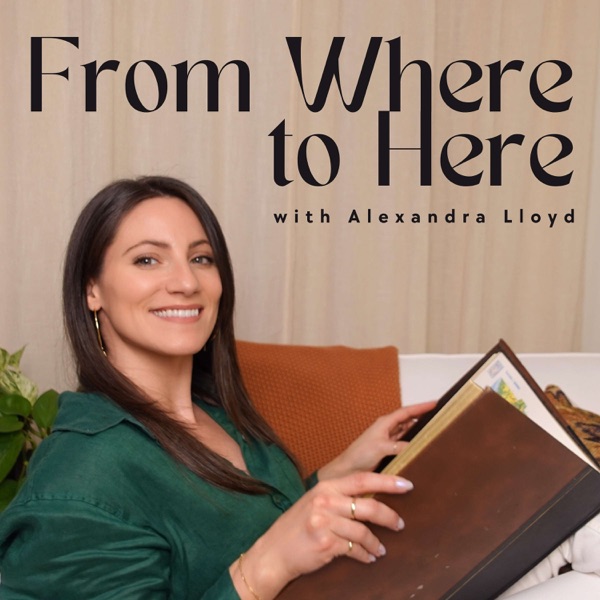
From Where to Here
From Where to Here explores cultural exchange, languages, and connection. Hosted by French Canadian Alexandra Lloyd, each episode shares heartfelt stories and inspiring journeys that bridge cultural gaps and spark understanding. 🌍🎙
- Episodes
- 38
- Releases
- Weekly
- Typical length
- 40 min
- On air since
- 2025
- Latest episode
- 6 days ago
Episodes
38 episodes, newest first
-
1 hr 20 min
E31 Suerte Muchachos: A Peruvian Nephrologist Carried Lima All the Way to Birmingham
Season 2, Episode 31
Show notes
You’ve probably moved cities once or twice. Javier has done it five times, in a country that wasn’t his, in a language that wasn’t his first, starting from scratch every single time.
He left Lima with a little money from his parents, no car, no social security number, and an uncertain place to sleep. By the time his first paycheck cleared at Henry Ford Hospital in Detroit, he had figured out lease agreements, shared an apartment with a group of strangers, and started building something real. Then he did it again. Detroit, Dallas, Lexington, Birmingham. Five cities. One throughline: a phrase he heard on a Lima street corner that followed him everywhere he went.
If you have ever started over in a place that didn’t know you yet, this one is for you.
In this conversation, you will hear:
• Where “Suerte muchachos” comes from and why Javier carried it into every new city he entered
• What arriving in the US as a medical professional actually looked like — paycheck-to-paycheck deposits, shared apartments, no bank account, no car
• Why the most rigorous hospitals he trained in were also the most diverse ones, and why he thinks that is not a coincidence
• What it means to raise a bilingual son between two cultures when you are still figuring out where you belong yourself
• The Eva Ayllón song that takes him straight back to Peru no matter where he is driving
• Why Peru is not Mexico, ceviche is not a taco, and the diversity inside Latin America can still surprise you if you have never had to learn it the hard way
• What “citizen of the world” actually means when you have had to earn it one city at a timeJavier is a nephrologist and professor at UAB, co-director of Critical Care Nephrology, and someone who has thought more carefully about identity, language, and belonging than most people ever will. This is his story.
----------
🤝 EPISODE SPONSOR
Red Cat Coffee House
This episode is brought to you by Red Cat Coffee House and their Landmark Series Coffees. You can find the coffee blends online at https://theredcatcoffeehouse.com/shop/, at your Red Cat locations, or at your local Piggly Wiggly.🏆 From Where to Here is a Signal Award Winner
Thank you to everyone who voted and supported this show. It means everything.📩 Let’s stay connected.
Join my email list list for thoughtful reflections, resources, and behind-the-scenes moments I only share there.✨ Get My Latest Free Resource
Do you live between cultures, languages, or versions of yourself? Take the free In-Between Index quiz and find out exactly where you land. →
https://quiz.fromwheretoherepod.com/🎧 Subscribe & Follow
Follow From Where to Here on YouTube, Spotify, Apple Podcasts, or wherever you listen so you don’t miss a conversation.📱 More language & culture, daily.
Find me on Instagram, TikTok, and Facebook @fromwheretoherepod🤎 If this episode meant something to you…
Leave a review or share it with someone who’d love it too. -
13 min
E30 Immigrants' Table | Some People Don’t Expect Us: A Yemeni Family’s Grill in Alabama | Makarios Kabob & Grill
Season 2, Episode 30
Show notes
Some people don't expect a Yemeni family behind a Middle Eastern grill in Birmingham, Alabama. Noor explains why his family belongs here, and why no one who walks in is ever just a customer.
Immigrants' Table is a series from From Where to Here shining a light on immigrant-owned restaurants in Birmingham, Alabama, the people behind the food, and the stories that travel with every plate.
We sit down with Noor of Makarios Kabob and Grill, a Mediterranean and Middle Eastern restaurant. Noor was born in the United States, and his family's roots are in Yemen. His father arrived in 1997, worked in Michigan, then left Detroit when the economy turned and bet on Birmingham, a city with very few Middle Eastern restaurants at the time.
Along the way, you will hear about the dish that tastes like home, the one ingredient no Arabic kitchen can live without, the truth about pouring Arabic tea from up high, and a lamb dish with a secret ingredient. You will also find out why some Yemeni dishes rarely make the menu.
If you are searching for Middle Eastern food in Birmingham, Yemeni food, or immigrant-owned restaurants in Birmingham, Alabama, this conversation is a good place to start. It is an immigrant restaurant owner story, a family business story, and a story for any Birmingham Alabama foodie who loves food and culture.
Find Makarios Kabob and Grill
940 20th Street South, Birmingham, Alabama 35205
Website: https://www.makarioskabob.com/
Instagram: @makarioskabobgrillOwn or know an immigrant-owned food business? Part 2 is coming soon, and I would love your help shaping it. Apply or nominate here: https://forms.gle/D9SQNcZ8Mw6p7F9V9
Subscribe so you don't miss the next stop at the table. Every plate has a story. Let's find the next one together.
----------
🏆 You can help From Where to Here win a Signal Award
Voting is open until October 15th and takes 30 seconds. If this show has ever made you feel a little less alone, cast your vote at https://vote.signalaward.com/PublicVoting#/
(Can't find the show? Search "From Where to Here" in the search bar)📩 Let’s stay connected.
Join my email list list for thoughtful reflections, resources, and behind-the-scenes moments I only share there.✨ Get My Latest Free Resource
Do you live between cultures, languages, or versions of yourself? Take the free In-Between Index quiz and find out exactly where you land. →
https://quiz.fromwheretoherepod.com/🎧 Subscribe & Follow
Follow From Where to Here on YouTube, Spotify, Apple Podcasts, or wherever you listen so you don’t miss a conversation.📱 More language & culture, daily.
Find me on Instagram, TikTok, and Facebook @fromwheretoherepod🤎 If this episode meant something to you…
Leave a review or share it with someone who’d love it too. -
21 min
E29 Immigrants' Table | She Grew Up Poor in the Philippines. Now She Feeds Her Whole City. | Café Baboy
Season 2, Episode 29
Show notes
She grew up poor in the Philippines, where food wasn’t always shared. Now Lea runs Café Baboy, a Filipino food truck in Birmingham, Alabama, and her one rule is: food is for everybody.
In this episode of The Immigrants’ Table, Lea takes us inside Filipino food culture, starting with adobo, a national dish born from poverty with only three ingredients. She explains malinamnam, a Tagalog word that goes deeper than “delicious.” She talks about salo salo, the Filipino tradition of eating together from shared plates, and how that became the soul of her bento box menu. She shares why she feeds the homeless community around her truck, even trading meals for help finding parking.
Lea also introduces us to turo turo, the street food tradition of pointing at what you want, balut (yes, that balut), and maali walas, the untranslatable word that perfectly describes Birmingham’s weather.
From the Philippines to Alabama, this is a story about resourcefulness, generosity, and what happens when you carry your culture’s food across the world and feed a city with it.
🎙️ From Where to Here is part of The Immigrants’ Table, a series of restaurants and immigrant stories.
Follow Café Baboy on Instagram: @cafe.baboy
----------
🏆 You can help From Where to Here win a Signal Award
Voting is open until October 15th and takes 30 seconds. If this show has ever made you feel a little less alone, cast your vote at https://vote.signalaward.com/PublicVoting#/
(Can't find the show? Search "From Where to Here" in the search bar)📩 Let’s stay connected.
Join my email list list for thoughtful reflections, resources, and behind-the-scenes moments I only share there.✨ Get My Latest Free Resource
Do you live between cultures, languages, or versions of yourself? Take the free In-Between Index quiz and find out exactly where you land. →
https://quiz.fromwheretoherepod.com/🎧 Subscribe & Follow
Follow From Where to Here on YouTube, Spotify, Apple Podcasts, or wherever you listen so you don’t miss a conversation.📱 More language & culture, daily.
Find me on Instagram, TikTok, and Facebook @fromwheretoherepod🤎 If this episode meant something to you…
Leave a review or share it with someone who’d love it too. -
2 min
From Lost to Nominated: Why I Started From Where to Here Bonus
Season 2
Show notes
From Where to Here just got nominated for a Signal Award in the culture, belonging, and inclusion category, and I needed to tell you about it.
I started this podcast selfishly. I moved from Montreal to Alabama and spent years struggling to find my footing. No community, no landmarks, no idea how to belong somewhere new. From Where to Here was my way of working through that, and eventually, a way to give other people a stage to share their own versions of that story.
A nomination like this means more visibility for every guest who trusted me with their story. It means more listeners who might hear something that makes them feel a little less alone, a little less stuck between two worlds. It means more resources to keep building the in-person community events that brought so many of you together, and that we're bringing back in spring 2027.
If this show has ever made you feel seen, I would love your vote. Voting is open until October 15th and takes 30 seconds at https://vote.signalaward.com/PublicVoting#
Thank you. I appreciate you more than I can say.
----------
🏆 You can help From Where to Here win a Signal Award
Voting is open until October 15th and takes 30 seconds. If this show has ever made you feel a little less alone, cast your vote at https://vote.signalaward.com/PublicVoting#/
(Can't find the show? Search "From Where to Here" in the search bar)📩 Let’s stay connected.
Join my email list list for thoughtful reflections, resources, and behind-the-scenes moments I only share there.✨ Get My Latest Free Resource
Do you live between cultures, languages, or versions of yourself? Take the free In-Between Index quiz and find out exactly where you land. →
https://quiz.fromwheretoherepod.com/🎧 Subscribe & Follow
Follow From Where to Here on YouTube, Spotify, Apple Podcasts, or wherever you listen so you don’t miss a conversation.📱 More language & culture, daily.
Find me on Instagram, TikTok, and Facebook @fromwheretoherepod🤎 If this episode meant something to you…
Leave a review or share it with someone who’d love it too. -
26 min
Between the Words | She Grew Up Speaking Two Languages. Then She Lost the Words for Her Own Pain.
Season 2
Show notes
What does it sound like when a language has a word for something yours has never even tried to name?
This is Between the Words — a language-focused segment clipped from Episode 27 of From Where to Here.
Sheyla from Blitar, East Java, Indonesia teaches us five words and concepts from Bahasa Indonesia and Javanese that reveal something profound about Indonesian culture.
Maaf — the word for sorry that you never say just once. You repeat it until the situation moves on, and the person across from you keeps saying it is okay until the conversation finds its way forward.
Bhinneka Tunggal Ika — Indonesia's national motto in old Javanese, meaning unity in diversity. Thousands of islands. Hundreds of tribes. One nation that found it was stronger together.
Baper — a combination of Bawa (to carry) and Perasaan (feelings). A word for someone who is too invested, too emotional, carrying too much. A word English does not have but absolutely should.
Ngabuburit — a Javanese word for the act of doing nothing while waiting to break your fast during Ramadan. One word for a very specific, very human moment.
Terima Kasih — thank you. Simple. But paired with the story of a girl who could not find the words for depression in any language she grew up with, it lands differently.
Sheyla also shares what it felt like to navigate three languages at once as a teenager in Memphis, why she eventually stopped expressing herself emotionally in Indonesian and Javanese, and what it means to lose connection to a language because the people around you could not hold what you were trying to say.
This one is about more than words. It is about what happens when the language you need does not exist in the one you were born into.
Parts 1 and 2 of Episode 27 are linked below. Listen on Spotify, Apple Podcasts, and everywhere you stream.
----------
🏆 You can help From Where to Here win a Signal Award
Voting is open until October 15th and takes 30 seconds. If this show has ever made you feel a little less alone, cast your vote at https://vote.signalaward.com/PublicVoting#/
(Can't find the show? Search "From Where to Here" in the search bar)📩 Let’s stay connected.
Join my email list list for thoughtful reflections, resources, and behind-the-scenes moments I only share there.✨ Get My Latest Free Resource
Do you live between cultures, languages, or versions of yourself? Take the free In-Between Index quiz and find out exactly where you land. →
https://quiz.fromwheretoherepod.com/🎧 Subscribe & Follow
Follow From Where to Here on YouTube, Spotify, Apple Podcasts, or wherever you listen so you don’t miss a conversation.📱 More language & culture, daily.
Find me on Instagram, TikTok, and Facebook @fromwheretoherepod🤎 If this episode meant something to you…
Leave a review or share it with someone who’d love it too. -
27 min
E28 Immigrants' Table | He Makes His Grandmother's Mistake on Purpose | Joseph's Table
Season 2, Episode 28
Show notes
He left Lebanon at 16 with a picky eater's palate and his grandmother's recipes locked in his memory. Today, Joseph Matta is the Owner, Founder, and Head Chef of Joseph's Table in Birmingham, Alabama, a Mediterranean and Lebanese restaurant where every plate carries the weight of a border crossed and a memory kept alive.
This is Immigrants' Table, a series from From Where to Here shining a light on immigrant-owned restaurants in Birmingham, Alabama, the people behind the food, and the stories that travel with every plate.
In this conversation, Joseph talks about growing up in Lebanon under French colonial influence, learning English as a third language, and landing in Alabama after coming through Houston, Texas. He talks about what it means to cook from scratch every single day, why he still puts onions in his grandmother's chicken soup even though he hates them, and how a Lebanese mother and a Cajun mother-in-law found common ground through French.
This is not a story about a restaurant. It is a story about what you carry with you when you leave, what you refuse to change, and what it feels like when a bowl of soup tastes exactly like someone you love.
Joseph's Table is located at 9340 Helena Road in Birmingham, Alabama. Order the creamy stuffed chicken rolls first.
From Where to Here is a bilingual podcast exploring cultural identity, language, and the stories of people who have built lives across borders. New episodes drop weekly on YouTube and everywhere you listen.
Subscribe so you do not miss the next table.
----------
🏆 You can help From Where to Here win a Signal Award
Voting is open until October 15th and takes 30 seconds. If this show has ever made you feel a little less alone, cast your vote at https://vote.signalaward.com/PublicVoting#/
(Can't find the show? Search "From Where to Here" in the search bar)📩 Let’s stay connected.
Join my email list list for thoughtful reflections, resources, and behind-the-scenes moments I only share there.✨ Get My Latest Free Resource
Do you live between cultures, languages, or versions of yourself? Take the free In-Between Index quiz and find out exactly where you land. →
https://quiz.fromwheretoherepod.com/🎧 Subscribe & Follow
Follow From Where to Here on YouTube, Spotify, Apple Podcasts, or wherever you listen so you don’t miss a conversation.📱 More language & culture, daily.
Find me on Instagram, TikTok, and Facebook @fromwheretoherepod🤎 If this episode meant something to you…
Leave a review or share it with someone who’d love it too. -
25 min
E27 Part 2 | She Lost Her Roots at 9. A Sourdough Starter Gave Them Back.
Season 2, Episode 27
Show notes
Part 2 of 2.
If you have not listened to Part 1 yet, start there. This conversation picks up right where we left off.In Part 1, Sheyla shared how she arrived in Memphis at 9 years old carrying two languages and spent years quietly setting them both down. In Part 2, she talks about what it looks like to find your way back.
This half of the conversation is about reclaiming. How she started looking into Indonesian history and realized she had never truly learned it. How sourdough bread became a way back to something she could not yet name. How running Breadcrumb, her micro bakery in Birmingham, Alabama, turned into more than a side project. How teaching herself Korean through K-pop over two years was never really about Korean at all. How belonging does not always look like fluency, and how making something with your hands can be its own form of coming home.
There is a moment in this episode where I ask Sheyla what she would tell that 9 year old girl who landed in Memphis scared and alone carrying two languages. Her answer stayed with me.
This is a conversation about finding your way back to yourself on your own terms, in your own time, in whatever language feels most like home that day.
If this one resonated, send it to someone who knows what it feels like to be from more than one place and still searching for where they fully belong.
Listen on Spotify, Apple Podcasts, and everywhere you stream, or watch Part 2 right here on YouTube.
#fromwheretohere #birminghamalabama #bilingualpodcast
----------
🔗 LINKS & CONNECT WITH OUR GUESTGet in Touch:
- Instagram: @bread.crumb.bhamResources:
- The Jakarta Method book----------
🏆 You can help From Where to Here win a Signal Award
Voting is open until October 15th and takes 30 seconds. If this show has ever made you feel a little less alone, cast your vote at https://vote.signalaward.com/PublicVoting#/
(Can't find the show? Search "From Where to Here" in the search bar)📩 Let’s stay connected.
Join my email list list for thoughtful reflections, resources, and behind-the-scenes moments I only share there.✨ Get My Latest Free Resource
Do you live between cultures, languages, or versions of yourself? Take the free In-Between Index quiz and find out exactly where you land. →
https://quiz.fromwheretoherepod.com/🎧 Subscribe & Follow
Follow From Where to Here on YouTube, Spotify, Apple Podcasts, or wherever you listen so you don’t miss a conversation.📱 More language & culture, daily.
Find me on Instagram, TikTok, and Facebook @fromwheretoherepod🤎 If this episode meant something to you…
Leave a review or share it with someone who’d love it too. -
1 hr 10 min
E27 She Stopped Speaking Her Language Because It Felt Safer. Now She Is Finding Her Way Back. | Part 1
Show notes
Part 1 of 2
She arrived in Memphis at 9 years old speaking two languages and spent years quietly setting them both down. Not because she forgot them. Because it felt safer.Sheyla grew up in Blitar, East Java, speaking Javanese at home and Bahasa Indonesia at school. She navigated an American childhood without a roadmap, picked up English, French, a bit of Japanese, and taught herself Korean through K-pop and sheer curiosity. She thought she might become a linguist. Life took her into tech instead. Today she lives in Birmingham, Alabama, works in banking technology by day, and runs Breadcrumb, a micro bakery where she channels that same hunger for connection into flavor fusions inspired by cultures from all over the world.
The through line of her story is not the languages she gained. It is the one she is still trying to find her way back to.
In this episode Sheyla opens up about what it felt like to land in Memphis as a scared nine year old with two languages and no roadmap, the Indonesian word Maaf and why you never say it just once, what most people get wrong about Indonesian culture, how she taught herself Korean through K-pop out of pure curiosity, and the listener question about not feeling Indonesian enough but not fully American either that stopped her in her tracks.
This is a conversation about language loss, bilingual identity, and what it means to reclaim yourself on your own terms.
If this one resonated, send it to someone who knows what it is like to be from more than one place and fully at home in neither.
*** Heads up: this one gets deep. If you or someone you know is struggling, the 988 Suicide and Crisis Lifeline is available 24 hours a day by call or text.
Listen on Spotify, Apple Podcasts, and everywhere you stream, or watch the full episode right here on YouTube.
#fromwheretohere #languageandidentity #indonesianimmigrant
----------
🏆 You can help From Where to Here win a Signal Award
Voting is open until October 15th and takes 30 seconds. If this show has ever made you feel a little less alone, cast your vote at https://vote.signalaward.com/PublicVoting#/
(Can't find the show? Search "From Where to Here" in the search bar)📩 Let’s stay connected.
Join my email list list for thoughtful reflections, resources, and behind-the-scenes moments I only share there.✨ Get My Latest Free Resource
Do you live between cultures, languages, or versions of yourself? Take the free In-Between Index quiz and find out exactly where you land. →
https://quiz.fromwheretoherepod.com/🎧 Subscribe & Follow
Follow From Where to Here on YouTube, Spotify, Apple Podcasts, or wherever you listen so you don’t miss a conversation.📱 More language & culture, daily.
Find me on Instagram, TikTok, and Facebook @fromwheretoherepod🤎 If this episode meant something to you…
Leave a review or share it with someone who’d love it too. -
14 min
E26 Immigrants' Table | He Put a Samosa Inside a Burrito. Birmingham Has Not Been the Same | Curry Up Now
Season 2, Episode 26
Show notes
Immigrants' Table is a series from From Where to Here shining a light on immigrant-owned restaurants in Birmingham, Alabama — the people behind the food, and the stories that travel with every plate.
Akash Kapoor grew up in Ranchi, India, was sent to Catholic boarding school at age 10, and built one of the most talked-about Indian street food restaurants in the country — Curry Up Now, now right here in Birmingham, Alabama. But the story behind the menu goes deeper than most people expect.
In this episode, Akash opens up about the Indian street food you simply cannot replicate outside of India, the family dinner rule he has carried from Ranchi to Birmingham, and why chicken tikka masala, according to him, was not even known in India twenty years ago.
He talks about his grandma's 4 PM snack that most people would not dare try, the Sunday dosa ritual he grew up with and still chases today, and the samosa he put inside a burrito that became one of Curry Up Now's most beloved dishes in Birmingham, Alabama.
This is also a conversation about what it means to bring your culture to a new city — not just the food, but the table, the rituals, the one word in Hindi that has no English translation, and the rule that never changed no matter where life took him: be home for dinner.
If you are curious about Indian food culture, immigrant restaurant owners in Birmingham, or the stories that travel further than the people who carry them... This one is for you.
Listen on Spotify, Apple Podcasts, and everywhere you stream, or watch the full episode right here on YouTube.
#immigrantstable #fromwheretohere #indianfoodbirmingham #birminghamalabama #foodandculture
----------
🏆 You can help From Where to Here win a Signal Award
Voting is open until October 15th and takes 30 seconds. If this show has ever made you feel a little less alone, cast your vote at https://vote.signalaward.com/PublicVoting#/
(Can't find the show? Search "From Where to Here" in the search bar)📩 Let’s stay connected.
Join my email list list for thoughtful reflections, resources, and behind-the-scenes moments I only share there.✨ Get My Latest Free Resource
Do you live between cultures, languages, or versions of yourself? Take the free In-Between Index quiz and find out exactly where you land. →
https://quiz.fromwheretoherepod.com/🎧 Subscribe & Follow
Follow From Where to Here on YouTube, Spotify, Apple Podcasts, or wherever you listen so you don’t miss a conversation.📱 More language & culture, daily.
Find me on Instagram, TikTok, and Facebook @fromwheretoherepod🤎 If this episode meant something to you…
Leave a review or share it with someone who’d love it too. -
22 min
E25 Immigrants' Table | Every Carne Asada Was a Reunion. Now Birmingham Gets a Taste | Trampled by Tacos
Season 2, Episode 25
Show notes
Immigrants' Table is a series from From Where to Here shining a light on immigrant-owned restaurants in Birmingham, Alabama — the people behind the food, and the stories that travel with every plate.
Avlo Alvaro grew up in Chihuahua, Mexico where carne asada was never just a meal. It was the reason to gather: after church, at the park, on birthdays, at every celebration that mattered. Today he co-owns Trampled by Tacos in Birmingham, Alabama, and every dish on the menu carries a piece of that history.
In this episode, Avlo opens up about the Mexican food Birmingham rarely gets to hear about beyond tacos and burritos, the family recipes he carried from Chihuahua to his Birmingham kitchen, and what it really means to feed people from a place of pride and memory.
From barbacoa slow cooked with a family seasoning nobody else has, to flank steak marinated in Modelo for 24 to 48 hours, to the caldo de camarón and ceviche that remind him of beach days back home — this is the story behind the food and the immigrant restaurant owner who brought it to Birmingham, Alabama.
If you are curious about the world, the people who carry their cultures across borders, and the food that keeps those stories alive — From Where to Here is your next favorite podcast.
#immigranttable #fromwheretohere #birminghamalabama #birminghamfood #immigrant
----------
🏆 You can help From Where to Here win a Signal Award
Voting is open until October 15th and takes 30 seconds. If this show has ever made you feel a little less alone, cast your vote at https://vote.signalaward.com/PublicVoting#/
(Can't find the show? Search "From Where to Here" in the search bar)📩 Let’s stay connected.
Join my email list list for thoughtful reflections, resources, and behind-the-scenes moments I only share there.✨ Get My Latest Free Resource
Do you live between cultures, languages, or versions of yourself? Take the free In-Between Index quiz and find out exactly where you land. →
https://quiz.fromwheretoherepod.com/🎧 Subscribe & Follow
Follow From Where to Here on YouTube, Spotify, Apple Podcasts, or wherever you listen so you don’t miss a conversation.📱 More language & culture, daily.
Find me on Instagram, TikTok, and Facebook @fromwheretoherepod🤎 If this episode meant something to you…
Leave a review or share it with someone who’d love it too. -
40 min
E24 Without My Sister, I'd Be Lost: A Deaf Woman's Story of Family & Language
Season 2, Episode 24
Show notes
In this episode: a woman diagnosed with hearing as a child, a teacher who kept turning her head away, and a kitchen conversation that dissolved into noise. That's the true story of an Alabama woman who lost her hearing as a girl and found her voice in American Sign Language.
This is the finale of the Language Legacy series on From Where to Here, where teenagers from Alabama sit down with elders from immigrant, refugee, and Deaf communities. Guest Mary Lowman, now 66, walks host Denay through losing her hearing, refusing a cochlear implant, and life before and after TTY machines.
The heart of the episode is grammar you won't find in an English class. ASL strips out helping verbs and articles, replacing them with facial expression as language itself. Mary demonstrates it live and explains why an interpreter who can't show emotion isn't really interpreting. She also shares the story of Martha's Vineyard, a real island where deaf and hearing neighbors all signed as a matter of course.
Her sister is the one person who never gave up trying to understand her. Share this with someone who's ever felt like the world wasn't built for how they communicate.
#DeafCulture #ASL #LanguageLegacy #SignLanguage #FromWhereToHere
----------
🤝 EPISODE SPONSOR
Red Cat Coffee House
This episode is brought to you by Red Cat Coffee House and their Landmark Series Coffees. You can find the coffee blends online at https://theredcatcoffeehouse.com/shop/, at your Red Cat locations, or at your local Piggly Wiggly.----------
🏆 You can help From Where to Here win a Signal Award
Voting is open until October 15th and takes 30 seconds. If this show has ever made you feel a little less alone, cast your vote at https://vote.signalaward.com/PublicVoting#/
(Can't find the show? Search "From Where to Here" in the search bar)📩 Let’s stay connected.
Join my email list list for thoughtful reflections, resources, and behind-the-scenes moments I only share there.✨ Get My Latest Free Resource
Do you live between cultures, languages, or versions of yourself? Take the free In-Between Index quiz and find out exactly where you land. →
https://quiz.fromwheretoherepod.com/🎧 Subscribe & Follow
Follow From Where to Here on YouTube, Spotify, Apple Podcasts, or wherever you listen so you don’t miss a conversation.📱 More language & culture, daily.
Find me on Instagram, TikTok, and Facebook @fromwheretoherepod🤎 If this episode meant something to you…
Leave a review or share it with someone who’d love it too. -
37 min
Beyond the Surface | Voodoo Isn't What You Think. Neither Is Africa.
Season 2
Show notes
Loulou Guedou grew up between Ivory Coast and Benin, and this deep dive pulls the moments from her full episode that go past the guidebook: why hospitality there means being treated like royalty from the moment you arrive, why voodoo in Benin is a religion and not a warning sign, and why "I'm from Africa" barely scratches the surface when there are two very different countries behind that answer.
She also gets into the unwritten rules of greeting someone (three kisses in Ivory Coast, four in Benin, and the very real adjustment to American handshakes and hugs), plus the running joke about Baoulé women and why they're known for marrying outside their culture.
This is part of Beyond the Surface, the cultural deep dives pulled from the full conversations on From Where to Here, the moments that show up once you stop being a tourist and start actually listening.
----------
🏆 You can help From Where to Here win a Signal Award
Voting is open until October 15th and takes 30 seconds. If this show has ever made you feel a little less alone, cast your vote at https://vote.signalaward.com/PublicVoting#/
(Can't find the show? Search "From Where to Here" in the search bar)📩 Let’s stay connected.
Join my email list list for thoughtful reflections, resources, and behind-the-scenes moments I only share there.✨ Get My Latest Free Resource
Do you live between cultures, languages, or versions of yourself? Take the free In-Between Index quiz and find out exactly where you land. →
https://quiz.fromwheretoherepod.com/🎧 Subscribe & Follow
Follow From Where to Here on YouTube, Spotify, Apple Podcasts, or wherever you listen so you don’t miss a conversation.📱 More language & culture, daily.
Find me on Instagram, TikTok, and Facebook @fromwheretoherepod🤎 If this episode meant something to you…
Leave a review or share it with someone who’d love it too. -
1 hr 20 min
E23 The Wedding Where the Groom Has to Guess Which Bride Is His
Season 2, Episode 23
Show notes
Louise "Loulou" Guedou grew up speaking a dialect with 63 versions in one country, got sent away from her parents at age 10 for boarding school in Benin, and later found herself standing in front of her groom while he tried to guess which veiled woman in the lineup was actually her.
In this episode of From Where to Here, Louise shares what it's really like growing up between Ivory Coast and Benin, two West African cultures with their own languages, greetings, and wedding traditions, and how she carried all of it with her when she moved to Birmingham, Alabama in 2013. She opens up about learning English through pure trial and error, the accent that made her feel completely lost her first year in America, and the moment she realized Southern English and classroom English were not the same language at all.
We get into the parts of Ivorian and Beninese culture most people never hear about, including the traditional bride price negotiations, the symbolic kola nuts that can make or break a wedding, and the widespread stereotype about Vodou that Louise sets straight once and for all. She also talks candidly about raising two bilingual toddlers with her fiancé from Burkina Faso, why her son now corrects her French, and the real reason she's raising her kids to speak "Frankish," a mix of French and English that's entirely their own.
This is a conversation about identity, marriage across cultures, immigrant hospitality, and what it actually means to build a home between two continents.
If you're raising bilingual kids, married into another culture, or just love hearing what life really looks like beyond the surface, hit play and get to know Louise "Loulou" Guedou.
Follow and connect with Loulou!
- Instagram, TikTok, Snapchat: @ms.lou8zeSubscribe to From Where to Here wherever you listen to your podcasts!
----------
🏆 You can help From Where to Here win a Signal Award
Voting is open until October 15th and takes 30 seconds. If this show has ever made you feel a little less alone, cast your vote at https://vote.signalaward.com/PublicVoting#/
(Can't find the show? Search "From Where to Here" in the search bar)📩 Let’s stay connected.
Join my email list list for thoughtful reflections, resources, and behind-the-scenes moments I only share there.✨ Get My Latest Free Resource
Do you live between cultures, languages, or versions of yourself? Take the free In-Between Index quiz and find out exactly where you land. →
https://quiz.fromwheretoherepod.com/🎧 Subscribe & Follow
Follow From Where to Here on YouTube, Spotify, Apple Podcasts, or wherever you listen so you don’t miss a conversation.📱 More language & culture, daily.
Find me on Instagram, TikTok, and Facebook @fromwheretoherepod🤎 If this episode meant something to you…
Leave a review or share it with someone who’d love it too. -
23 min
Between the Words | She Reads Arabic Dialects by Ear and Knows a Word English Will Never Have
Season 2
Show notes
She left Syria speaking only "hello" and "how are you" in English. She'd been learning French. Then the passport showed up, and within a month, everything she knew was sold, packed, and gone.
Youmna Yassin grew up in Damascus, came to the United States with her family during the Syrian conflict, and arrived at an American airport overwhelmed by a world she couldn't hear and only see. No Arabic around her. No language to hold onto. Just her eyes, trying to decode a place that moved faster than she could follow.
What happened next is what this episode is really about: how language becomes identity, how Arabic dialects carry entire cultural personalities inside them, and why Yumna can tell where any Arabic speaker is from within two sentences — Egypt, Lebanon, Morocco, Aleppo, Damascus — without asking.
In this conversation, Youmna talks about the surprising difference between Syrian Arabic, Egyptian Arabic, and Lebanese Arabic, and what each dialect reveals about the people who speak it. She explains why Arabic makes her feel emotionally "unfiltered" in a way English never does, and why her brain actually behaves differently depending on which language she's in. She shares the Syrian expressions you won't find in any textbook, phrases that translate "yes" as "you're on top of my head" and "thank you" as "bless your hand", and the proverb she reaches for when life gets hard.
This is a Between the Words episode, which means we go deep on language: how it's shaped by culture, how it shifts when people cross borders, and what happens to your sense of self when you have to build a new vocabulary from scratch.
If you're learning Arabic, curious about Arabic dialects, or you've ever wondered what it actually feels like to live inside two different languages at once, this one's for you.
If this episode resonated, share it with someone who loves language.
----------
🏆 You can help From Where to Here win a Signal Award
Voting is open until October 15th and takes 30 seconds. If this show has ever made you feel a little less alone, cast your vote at https://vote.signalaward.com/PublicVoting#/
(Can't find the show? Search "From Where to Here" in the search bar)📩 Let’s stay connected.
Join my email list list for thoughtful reflections, resources, and behind-the-scenes moments I only share there.✨ Get My Latest Free Resource
Do you live between cultures, languages, or versions of yourself? Take the free In-Between Index quiz and find out exactly where you land. →
https://quiz.fromwheretoherepod.com/🎧 Subscribe & Follow
Follow From Where to Here on YouTube, Spotify, Apple Podcasts, or wherever you listen so you don’t miss a conversation.📱 More language & culture, daily.
Find me on Instagram, TikTok, and Facebook @fromwheretoherepod🤎 If this episode meant something to you…
Leave a review or share it with someone who’d love it too. -
18 min
E22 Language Legacy | The Language Kathy Chen Refused to Let Her Daughter Forget
Season 2, Episode 22
Show notes
Kathy Chen left China in 1981 with British English in her ears and a country she wouldn't see again for 15 years. Now a PhD-holding grandmother figure in Birmingham, she still speaks Chinese at home and still corrects herself when she spells "colour" the wrong way.
This is Episode 22 of From Where to Here, and it's part of something bigger than a podcast episode. The Language Legacy series pairs Alabama teenagers with immigrant and refugee elders to capture what gets lost between generations: the lullabies, the idioms, the unspoken rules of a culture that don't translate. In this conversation, a young Vietnamese student named Minh, one year in the US, sits down with Kathy to ask the questions that most people never think to ask an elder until it's too late.
They talk about what the Chinese New Year actually means when you're 10,000 miles from home. Why dumpling-making matters more than the dumplings. What it felt like to hear your own language on a street in a foreign city. And why Kathy says Americans are more honest than they realize, because in China, "yes" doesn't always mean yes.
There's also a moment where Kathy sings. A children's song from memory. Granny, granny, granny, I love you so much. You're here like a white cloud. It's 30 seconds long and it will stay with you.
If you're learning a second language, raising bilingual kids, or just trying to understand what it costs to rebuild yourself in a new country, this one's for you.
🎙️ From Where to Here is a podcast about language, cultural identity, and what happens when home stops being just one place. New episodes drop monthly. Subscribe so you don't miss what's coming next.
📩 Grab the free guide, 5 Phrases That Unlock Any Culture, at fromwheretoherepod.com/5phrases
----------
🤝 EPISODE SPONSOR
Red Cat Coffee House
This episode is brought to you by Red Cat Coffee House and their Landmark Series Coffees. You can find the coffee blends online at https://theredcatcoffeehouse.com/shop/, at your Red Cat locations, or at your local Piggly Wiggly.
#LanguageLearning #ImmigrantStories #CulturalIdentity #BilingualLife #ChineseCulture
----------
🏆 You can help From Where to Here win a Signal Award
Voting is open until October 15th and takes 30 seconds. If this show has ever made you feel a little less alone, cast your vote at https://vote.signalaward.com/PublicVoting#/
(Can't find the show? Search "From Where to Here" in the search bar)📩 Let’s stay connected.
Join my email list list for thoughtful reflections, resources, and behind-the-scenes moments I only share there.✨ Get My Latest Free Resource
Do you live between cultures, languages, or versions of yourself? Take the free In-Between Index quiz and find out exactly where you land. →
https://quiz.fromwheretoherepod.com/🎧 Subscribe & Follow
Follow From Where to Here on YouTube, Spotify, Apple Podcasts, or wherever you listen so you don’t miss a conversation.📱 More language & culture, daily.
Find me on Instagram, TikTok, and Facebook @fromwheretoherepod🤎 If this episode meant something to you…
Leave a review or share it with someone who’d love it too. -
23 min
Between the Words | From Basque to Catalan — Why Spain Is Not One Language and Never Was Bonus
Season 2
Show notes
Spain has 17 regions. Most people know one language. What Ruben Raposo grew up knowing, and what he unpacked in his full From Where to Here conversation, is that Spanish is a family, not a single tongue. Basque has no Latin roots. No one knows where it came from. Catalan sounds like French and Italian had a baby. The phrases his father taught him, a former priest who left the church for love, are still living in the way Ruben moves through the world decades later.
This is Between the Words — a language-focused segment clipped from Episode 21 of From Where to Here.
In this cut, Ruben breaks down three Spanish expressions you won't find in a textbook: no me tiras de la lengua (the art of not saying what you know), cada maestrillo tiene su librillo (every little master has their own method), and al que madruga, Dios le ayuda — the proverb his father used to drag him out of bed at dawn to work the land outside Madrid. We also get into why Spain isn't one language, why Basque sounds nothing like any of its neighbors, and what happens to your brain when you land in Alabama at 15 with only a dictionary and no Southern accent training.
Want the full story — how he stayed, built a career, earned two master's degrees, and never really left? The complete Episode 21 is linked below.
🎧 Full episode: https://www.youtube.com/watch?v=eHW1aPOdYkM&list=PL2wpsxEP4J58CphpdDWubMtMskFnghGQ0
Subscribe so you don't miss the next one.
----------
📍 CHAPTERS
0:00 Spain Isn't One Language. Here's Proof.
1:32 The Phrase You Say When You Know Too Much
2:34 Barcelona and Why the Pronunciation Matters
2:40 Every Little Master Has Their Own Way
4:22 His Dad Taught Him This. His Dad Was a Priest.
6:19 17 Regions. Four Languages. Zero Overlap.
8:03 Why Basque Sounds Like Russian (Not Spanish)
9:56 Dictionary in One Hand. Book in the Other.
13:03 The Southern Accent Nobody Warned Him About
14:24 Was He Ever Ready to Give Up?
17:13 Then He Did It Again — This Time in German
19:03 What Three Languages Actually Taught Him----------
🏆 You can help From Where to Here win a Signal Award
Voting is open until October 15th and takes 30 seconds. If this show has ever made you feel a little less alone, cast your vote at https://vote.signalaward.com/PublicVoting#/
(Can't find the show? Search "From Where to Here" in the search bar)📩 Let’s stay connected.
Join my email list list for thoughtful reflections, resources, and behind-the-scenes moments I only share there.✨ Get My Latest Free Resource
Do you live between cultures, languages, or versions of yourself? Take the free In-Between Index quiz and find out exactly where you land. →
https://quiz.fromwheretoherepod.com/🎧 Subscribe & Follow
Follow From Where to Here on YouTube, Spotify, Apple Podcasts, or wherever you listen so you don’t miss a conversation.📱 More language & culture, daily.
Find me on Instagram, TikTok, and Facebook @fromwheretoherepod🤎 If this episode meant something to you…
Leave a review or share it with someone who’d love it too. -
1 hr 49 min
E21 The Spanish Kid Who Showed Up With a Dictionary and Ended Up Staying Forever
Season 2, Episode 21
Show notes
Ruben Raposo left Madrid at 15 with a dictionary, a host family he'd never met, and a one-year plan. Thirty years later, he's still in Alabama, and he never saw it coming.
In this episode of From Where to Here, Ruben takes us inside what it actually felt like to land in the American South with barely enough English to order breakfast, get recruited onto a high school football team within his first two weeks, and slowly realize that the life he was building here wasn't temporary anymore. He talks about growing up in Madrid with a father who left the Catholic priesthood to marry his mother, a decision that required a letter of approval from Pope John Paul II, and how that story shaped everything about the way Ruben approaches risk, commitment, and starting over.
We get into the real Spain that most people never see: the housing crisis pricing out an entire generation, the oversaturation of university graduates who can't find work in their field, and why a brain drain is quietly hollowing out the country's future. We also talk about the Spanish food distribution business Ruben built from scratch, what Amazon did to it, and how he ended up in healthcare data analytics helping kidney disease patients get better treatment faster.
But the thread running through all of it is identity — what it means to feel Spanish in Alabama, to sound American in Madrid, and to spend thirty years living between two versions of yourself without ever fully choosing one.
If you've ever moved somewhere that changed you, studied a language that opened a door you didn't expect, or wondered what home even means after you've had more than one — this one is for you.
Follow Ruben on Instagram at @spanishfoodie and connect with him on LinkedIn. Subscribe to From Where to Here wherever you listen to your podcasts!
----------
🤝 EPISODE SPONSOR
Red Cat Coffee House
This episode is brought to you by Red Cat Coffee House and their Landmark Series Coffees. You can find the coffee blends online at https://theredcatcoffeehouse.com/shop/, at your Red Cat locations, or at your local Piggly Wiggly.----------
🏆 You can help From Where to Here win a Signal Award
Voting is open until October 15th and takes 30 seconds. If this show has ever made you feel a little less alone, cast your vote at https://vote.signalaward.com/PublicVoting#/
(Can't find the show? Search "From Where to Here" in the search bar)📩 Let’s stay connected.
Join my email list list for thoughtful reflections, resources, and behind-the-scenes moments I only share there.✨ Get My Latest Free Resource
Do you live between cultures, languages, or versions of yourself? Take the free In-Between Index quiz and find out exactly where you land. →
https://quiz.fromwheretoherepod.com/🎧 Subscribe & Follow
Follow From Where to Here on YouTube, Spotify, Apple Podcasts, or wherever you listen so you don’t miss a conversation.📱 More language & culture, daily.
Find me on Instagram, TikTok, and Facebook @fromwheretoherepod🤎 If this episode meant something to you…
Leave a review or share it with someone who’d love it too. -
23 min
E20 She Wasn’t Free to Say No. The Reality of Human Trafficking Few Talk About
Season 2, Episode 20
Show notes
Espérance means Hope. And somehow, across genocide, trafficking, and 20 years in captivity on American soil, she never stopped living up to her name.
In this episode of Language Legacy, a special five-part series from From Where to Here where Alabama teenagers interview elders from immigrant and refugee communities, Espérance sits down with a young interviewer named Kirby and tells a story that most people in this country have never heard. She survived the 1994 Rwandan genocide as a young Tutsi woman, lost both parents to assassination, and was trafficked to the United States by an educated man who made her his slave. What followed was two decades of captivity across multiple US states and foreign countries, hidden in plain sight, in America.
She escaped in 2013. And she's been fighting ever since.
What makes this conversation so rare isn't just what Espérance survived — it's how she talks about it. Clear-eyed. Specific. Urgent. She draws a sharp line between sex trafficking, which dominates the public conversation, and labor trafficking and forced labor, which she argues is just as widespread and almost entirely ignored. She's pushing to change statute of limitations laws for survivors of modern-day slavery in the US — reform she believes could ripple into policy changes in countries around the world.She also talks about what kept her alive: a Rwandan proverb that carried her through decades of crisis, the memory of her mother's storytelling, grandmothers who held her in refugee camps, and a name given to her before any of it happened, a name that turned out to be a kind of prophecy.
Kirby, a teenager from Alabama, asks her questions that most adults wouldn't know how to frame, and Espérance answers every single one.
This is Language Legacy. Youth and elders. Questions that carry history forward. Stories that were almost lost, and weren't.Language Legacy is part of From Where to Here, the podcast exploring the cultures, languages, and human stories that connect us across borders. Hosted by Alexandra Lloyd, French-Canadian now based in Birmingham, Alabama.
Subscribe wherever you listen to podcasts, or watch the full series on YouTube. If this episode moved you, share it with one person who needs to hear it — that's how stories like Espérance's reach the people who need them most.
----------
🏆 You can help From Where to Here win a Signal Award
Voting is open until October 15th and takes 30 seconds. If this show has ever made you feel a little less alone, cast your vote at https://vote.signalaward.com/PublicVoting#/
(Can't find the show? Search "From Where to Here" in the search bar)📩 Let’s stay connected.
Join my email list list for thoughtful reflections, resources, and behind-the-scenes moments I only share there.✨ Get My Latest Free Resource
Do you live between cultures, languages, or versions of yourself? Take the free In-Between Index quiz and find out exactly where you land. →
https://quiz.fromwheretoherepod.com/🎧 Subscribe & Follow
Follow From Where to Here on YouTube, Spotify, Apple Podcasts, or wherever you listen so you don’t miss a conversation.📱 More language & culture, daily.
Find me on Instagram, TikTok, and Facebook @fromwheretoherepod🤎 If this episode meant something to you…
Leave a review or share it with someone who’d love it too. -
1 hr 18 min
E19 What Nobody Tells You About Japan: The Gift-Giving, the Loneliness & the Ritual That Stopped Us Cold
Season 2, Episode 19
Show notes
Japan hit different when you go not just as a tourist, but as someone visiting family who's built an entire life there, and we had no idea how much it would change us. In this episode of From Where to Here, I'm taking you inside two weeks in Japan: Hamamatsu, Kyoto, Nara, Osaka, and Tokyo — city by city, moment by moment, from the best to the worst to the ones I didn't see coming.
We visited family who've lived in Japan for over 20 years, attended a private maiko performance where I got to ask her questions face to face, stumbled into a mochi-making demonstration at night in Kyoto, and sat through a tea ceremony that made me realize how fast I move through life. We also got laughed off a bus by two Japanese women, lost a train ticket mid-exit, and navigated jet lag, wrong directions, and one very disappointing hot dog at 30,000 feet.
This isn't a travel guide. It's a reflection — on cultural contrast, on what disorientation actually feels like when you lean into it, on traveling as a couple for the *second time internationally after eight years together, and on what Japan quietly reveals about loneliness, intentionality, and the way a country can design beauty into the smallest things — including a rice wrapper.
If you're planning a trip to Japan, learning Japanese, curious about Japanese culture, or just obsessed with travel that goes deeper than the highlight reel — this one's for you. We cover Japan travel tips for first-timers, what to know before flying Japan Airlines, how to use Google Translate in Japan, the difference between a maiko and a geiko, Kyoto vs Tokyo vs Osaka, the onsen experience, and why you should never skip Nara.
I also share what I'd do completely differently and why, after saying "once is enough," I'm already thinking about going back.
[DISCLAIMER] This episode touches on the topic of suicide and mental health. If you or someone you know is struggling, please reach out for support. You are not alone.
988 Suicide & Crisis Lifeline — Call or text 988 (US) | Available 24/7
New episodes of From Where to Here drop regularly. Subscribe so you don't miss what's next and drop your Japan recommendations or your next destination suggestion in the comments. We're already planning.
----------
🏆 You can help From Where to Here win a Signal Award
Voting is open until October 15th and takes 30 seconds. If this show has ever made you feel a little less alone, cast your vote at https://vote.signalaward.com/PublicVoting#/
(Can't find the show? Search "From Where to Here" in the search bar)📩 Let’s stay connected.
Join my email list list for thoughtful reflections, resources, and behind-the-scenes moments I only share there.✨ Get My Latest Free Resource
Do you live between cultures, languages, or versions of yourself? Take the free In-Between Index quiz and find out exactly where you land. →
https://quiz.fromwheretoherepod.com/🎧 Subscribe & Follow
Follow From Where to Here on YouTube, Spotify, Apple Podcasts, or wherever you listen so you don’t miss a conversation.📱 More language & culture, daily.
Find me on Instagram, TikTok, and Facebook @fromwheretoherepod🤎 If this episode meant something to you…
Leave a review or share it with someone who’d love it too. -
1 hr 11 min
E18 She Moved to Japan for a Visit… & Stayed Half Her Life
Season 2, Episode 18
Show notes
Sarah moved to Japan, thinking it would only be temporary. Nearly half her life later, she’s still there, raising a family and navigating two cultures.
What happens when a short trip turns into an entirely new life?
In this episode of From Where to Here, Alexandra sits down with Sarah Sawane, who grew up in Alabama and moved to Japan for what was supposed to be a temporary experience… but ended up staying for nearly half her life.
What began as an opportunity to teach English became something much deeper: building a family, raising bicultural children, and learning to navigate daily life in a culture very different from the one she grew up in.
In our conversation, Sarah shares what it was really like moving to Japan, the cultural surprises that stayed with her, and how living abroad slowly reshaped her sense of home and identity.
We talk about the quiet moments of culture shock most people don’t expect, from train etiquette and removing shoes indoors to sitting on tatami floors, and the deeper questions that come with building a life between two cultures.
This episode is about more than moving abroad.
It’s about belonging, cultural curiosity, and how sometimes the places we visit end up changing the course of our lives.If you’ve ever wondered what it’s like to live in Japan as an American, or how living in another culture can transform the way you see the world, this conversation is for you.
----------
🔗 EXPLORE free resources & guides:
Visit my website for free resources that help turn curiosity about language and culture into real connection.
👉 https://fromwheretoherepod.com/5phrases----------
🏆 You can help From Where to Here win a Signal Award
Voting is open until October 15th and takes 30 seconds. If this show has ever made you feel a little less alone, cast your vote at https://vote.signalaward.com/PublicVoting#/
(Can't find the show? Search "From Where to Here" in the search bar)📩 Let’s stay connected.
Join my email list list for thoughtful reflections, resources, and behind-the-scenes moments I only share there.✨ Get My Latest Free Resource
Do you live between cultures, languages, or versions of yourself? Take the free In-Between Index quiz and find out exactly where you land. →
https://quiz.fromwheretoherepod.com/🎧 Subscribe & Follow
Follow From Where to Here on YouTube, Spotify, Apple Podcasts, or wherever you listen so you don’t miss a conversation.📱 More language & culture, daily.
Find me on Instagram, TikTok, and Facebook @fromwheretoherepod🤎 If this episode meant something to you…
Leave a review or share it with someone who’d love it too.
Personal Journals lists
More Personal Journals shows picked out from the charts




More in Personal Journals
Placed highest on Apple Podcasts' Personal Journals chart right now