Podcast
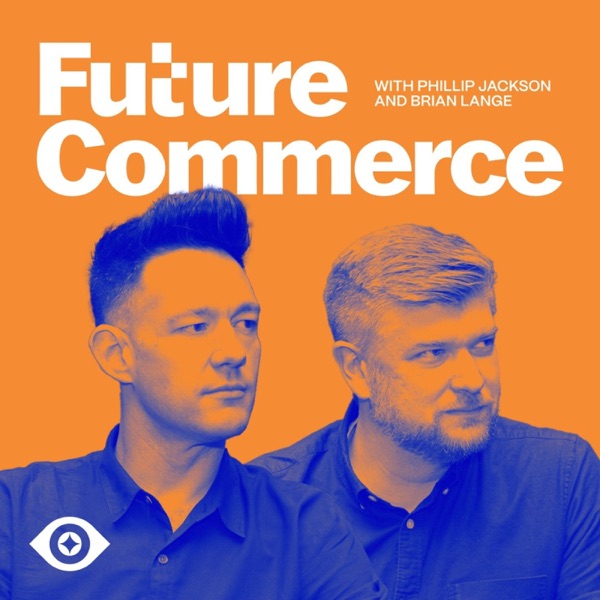
Future Commerce
Future Commerce is the culture magazine for Commerce. Hosts Phillip Jackson and Brian Lange help brand and digital marketing leaders see around the next corner by exploring the intersection of Culture and Commerce.
Trusted by the world's most recognizable brands to deliver the most insightful, entertaining, and informative weekly podcasts, Future Commerce is the leading new media brand for eCommerce merchants and retail operators.
Each week, we explore the cultural implications of what it means to sell or buy products and how commerce and media impact the culture and the world around us, through unique insights and engaging interviews with a dash of futurism.
Weekly essays, full transcripts, and quarterly market research reports are available at https://www.futurecommerce.com/plus
- Episodes
- 603
- Releases
- Weekly
- Typical length
- 37 min
- On air since
- 2018
- Latest episode
- 6 days ago
Episodes
603 episodes, newest first
-
24 min
40% Won’t Settle for A Substitute: What DoorDash’s Data Tells Us About Loyalty
Episode 487
Show notes
DoorDash shoppers come to the app with a need, not a shopping list, and that makes them unusually loyal and unusually open to discovery. Katie Daleo, General Manager of CPG Ads at DoorDash, joins Phillip and Alicia to talk about how brands can plan for moments instead of audiences, why DoorDash pursued Alliance for Audited Media incrementality certification, and what changes when commerce media is measured on orders and intent instead of impressions.
Plus, we dig into the newly launched Brand Center, which turns what Dashers see on the shelf into real-time availability and substitution data, why brand and performance marketing are converging again, and why Katie sees DoorDash as "local commerce at scale."
The Moment Is the New Demographic
Key takeaways:
• DoorDash's incremental ROAS methodology earned AAM incrementality certification, and Katie says partners are seeing 30%+ incremental sales lift on average.
• Discovery is up for grabs. In some categories, unbranded DoorDash searches (think: "beer") drive 10% of orders, so brands have to win the shopper who hasn't picked a brand yet.
• Videos under six seconds perform best, and placement matters: what works on the homepage can get in the way on a product page when someone just wants to check out.
• The funnel collapses inside the app. Awareness, consideration, and conversion can happen in a single session, so offsite creative and in-app click-through need to work as one journey.
• Brand Center turns the shelf into a data source. Brands can now see on-shelf availability, which SKUs actually make it onto DoorDash, how their product content shows up, and where shoppers go when an item is substituted.
• Out-of-stocks are a loyalty test. Roughly 40% of shoppers ask for a refund rather than accept a substitute, which tracks with the third of shoppers who arrive with a specific item in mind.
• "If you can find a solution that works for the consumer, it will work for the brand, in which case it will work for DoorDash." — Katie Daleo
• "Data is the currency we have with CPG partners." — Katie Daleo
• "You can now do the full funnel in like three minutes." — Katie Daleo
• "Any media should be showing impact, but the actual metric or the methodology may need to be different." — Katie Daleo
• "I think of DoorDash as a platform that allows you to do local commerce at scale." — Katie DaleoAssociated Links:
• Episode 474: Commerce Media's Day Two: The Agentic Shelf and the Measurement Reckoning
• The Senses: The Advertising Week Mid-Week Dispatch
• “Vertical Dramas” and the New Era of Commerce Media
• Ad Infinitum: Retail Media is The Final Boss
• Episode 452: LIVE at Shoptalk Spring: Retail Media Confessions, Hype Cycles, and the Creator Reckoning
• The Future of the Funnel (Live from K:LDN 2026)
• Insiders 224: Non-Determinism and the Death of Performance Marketing
• Insiders 238: Where Were You When the Monoculture Returned?
• The Senses: Quick Commerce's God Complex
• Even TikTok is an Ad Network Now
• Check out Future Commerce on YouTube
• Check out Future Commerce Plus for exclusive content and save on merch and print
• Subscribe to Insiders and The Senses to read more about what we are witnessing in the commerce world
• Listen to our other episodes of Future CommerceHave any questions or comments about the show? Let us know on https://www.futurecommerce.com/, or reach out to us on Twitter, Facebook, Instagram, or LinkedIn. We love hearing from our listeners!
Hosted by Simplecast, an AdsWizz company. See https://pcm.adswizz.com for information about our collection and use of personal data for advertising.
-
41 min
We Traded Family Dinners for Haunted Houses: Halloween Spending Data Shows Shoppers Want to Escape
Episode 487
Show notes
Halloween is now America’s second-largest consumer holiday, surpassing Thanksgiving and New Year’s Day in total spend, especially in categories like home decor. From the high street, the UK is catching up fast due to the rise of community-driven events, third spaces, and niche internet communities.
Melissa Minkow, Global Director of Retail Strategy & Insights at CI&T, joins Phillip and Alicia from London to share what Halloween looks like on the other side of the Atlantic. Melissa explains why UK Halloween is getting “Americanized,” how algorithms shape our real-world rituals, and why fandom keeps stretching the season.
Spooky Season Goes Global
Key takeaways:
• UK Halloween spend is expected to hit £705M, driven mostly by Gen Z and millennials. Meanwhile, US Halloween spend is projected to reach $13.5B, with households spending an average of $285.
• UK Halloween isn’t a carbon copy of America’s. In the UK, community lives in third spaces like pubs and transit, not front porches.
• The retail calendar is stretching earlier, largely driven by fandoms inflating moments into months of licensing, drops, and ticketed events.
• “People want the moment when it is the moment.” — Melissa Minkow
• “There’s no temperance in the algorithm.” — Phillip Jackson
• “I have often wondered… if I ever was actually a sneakerhead or if performance marketing and algorithms made me one.” — Phillip JacksonIn-Show Mentions:
• Catch up on Ep. 484: Aubrey Horowitz of Home Depot, “We Plan Halloween 3 Years in Advance”
• Deloitte’s 2026 Halloween survey
• Treatonomics:Morning Consult x Hershey’s research on the new Halloween calendar
• Chanté Joseph, “Is Having a Boyfriend Embarrassing Now?” (Vogue)
• Kate Berlant on Good Hang
• Shoshana Zuboff, The Age of Surveillance Capitalism
• Get tickets to VISIONS Summit, February 10, 2027 at MoMAAssociated Links:
• Spooky Commerce: What Halloween Shopping Trends Tell Us About Modern Culture
• Consumers are Overindulging on Halloween. Disney is Meeting the Moment.
• Aug-tober is Here (The Senses)
• Memory Morphing: How Media Reshapes Recall and Taints Nostalgia (Ep. 334)
• Where Were You When the Monoculture Returned?
• Check out Future Commerce on YouTube
• Check out Future Commerce Plus for exclusive content and save on merch and print
• Subscribe to Insiders and The Senses to read more about what we are witnessing in the commerce world
• Listen to our other episodes of Future CommerceHave any questions or comments about the show? Let us know on https://www.futurecommerce.com/, or reach out to us on Twitter, Facebook, Instagram, or LinkedIn. We love hearing from our listeners!
Hosted by Simplecast, an AdsWizz company. See https://pcm.adswizz.com for information about our collection and use of personal data for advertising.
-
3 min
*TEASER* You Can See Everything, If You Speak Fielder Bonus
Show notes
Get ad-free episodes and bonus content, including the full recording of this podcast, by joining Future Commerce Plus at http://futurecommerce.com/plus
• 🆕 Access to our newest analysis feature for members, Field Notes, our retail space analysis briefing. Featuring brands like Swatch, Printemps, and Skims.
• Access to our Word of Mouth Index with Fairing
• Save 15% on Future Commerce print journals and merch
• Exclusive invites to physical events, dinners, and priority invites to industry events (SXSW, Art Basel, VISIONS)
• Ad-free episodes and bonus content!Hosted by Simplecast, an AdsWizz company. See https://pcm.adswizz.com for information about our collection and use of personal data for advertising.
-
23 min
Deloitte Predicts A $1.7 Trillion Holiday Season
Episode 485
Show notes
Stretched wallets are still spending. Deloitte projects up to 4.8% growth in holiday spending this year, driven mostly by price of goods rather than volume of sales.
Shoppers say they feel stretched, yet they keep spending. Brian McCarthy, a principal in Deloitte’s strategy and analytics practice, joins Phillip and Alicia to forecast this year’s holiday spending. Brian explains why behavior outweighs sentiment, how AI shopping agents are changing the way people find products, and why physical stores still bring in most of the new holiday dollars.
The Store Stays
Key takeaways:
• Deloitte projects 4% to 4.8% holiday growth, driven mostly by price rather than volume.
• Behavior beats sentiment: anxious shoppers still spend, just more strategically.
• Value-seeking is a lasting change: shoppers now weigh durability, quality and private label.
• To show up in AI shopping agents’ picks, brands need detailed, well-structured product data.
• Digital sales are growing, but in-store sales still bring in most new holiday dollars.
• “Behavior holds stronger than sentiment when it comes to holiday.” — Brian McCarthy
• “We’re seeing that sentiment shift not towards spending less, but towards spending more strategically, more thoughtfully, more intelligently.” — Brian McCarthy
• “We hear ‘value’ and we immediately think cost savings. But… that’s not always the case.” — Alicia Esposito
• “From tradition, nostalgia – holiday spending is still dominantly in store.” — Brian McCarthyIn-Show Mentions:
• Just released: Deloitte’s 2026 Holiday Retail Survey
• Check out Deloitte’s first Halloween study
• Review Deloitte’s 2026 Back-to-School SurveyAssociated Links:
• The 2025 Holiday Reality Check (Ep. 429, with Deloitte)
• The BFCM Sprint: Last-Minute Tips and Tactics from Deloitte
• Separating Real Signals from the Noise (Ep. 480)
• BFCM 2025: We Give Thanks for Couch Commerce
• Agentic Commerce and the eCommerce Site’s New Existential Crisis
• The Concierge Economy: Understanding AI's True Role in the Shopping Experience
• The Alpha Effect: How Gen Alpha is Redefining Back-to-School Spending
• Member Brief: Return on Experience and the New KPIs of Store Design
• Check out Future Commerce on YouTube
• Check out Future Commerce Plus for exclusive content and save on merch and print
• Subscribe to Insiders and The Senses to read more about what we are witnessing in the commerce world
• Listen to our other episodes of Future CommerceHave any questions or comments about the show? Let us know on https://www.futurecommerce.com/, or reach out to us on Twitter, Facebook, Instagram, or LinkedIn. We love hearing from our listeners!
Hosted by Simplecast, an AdsWizz company. See https://pcm.adswizz.com for information about our collection and use of personal data for advertising.
-
29 min
Aubrey Horowitz of Home Depot: "We Plan Halloween 3 Years in Advance"
Episode 484
Show notes
Aubrey Horowitz, Merchant of Decorative Holiday at The Home Depot, is on the show to talk about the viral skeleton that set the Halloween decor bar 12 feet high. Aubrey shares a behind-the-curtain look at how Home Depot designs its seasonal assortment for America’s front lawns, shaped by a vocal community of haunters who shop earlier and earlier each year.
Plus, we walk through Skelly’s ground-up development with suppliers, the future of app-controlled animatronics, the moving target of nostalgia (the ’90s are vintage now, but won’t be for long), and why the best feedback loop in retail is a customer base that never stops posting.
Icons Like Skelly Market Themselves
Key takeaways:
• Halloween enthusiasts finish planning by August, pulling seasonal demand into summer.
• Haunting is a mindset more shoppers are embracing. Home Depot is meeting growing demand by building collections year over year based on public feedback.
• Nostalgia never goes out of style, but which era defines the trend keeps shifting. Skelly brought haunted-house-scale giants to retail and turned yard decor into a creative medium.
• “You can all shop at the same retailer, and then come out with a completely unique and completely different haunted yard scene.” — Aubrey Horowitz
• “How do I deliver a product that you may not know that you want yet, while also delivering the thing that you’re asking for?” — Aubrey Horowitz
• “In many ways the front yard is like the homepage of people’s lives.” — Brian Lange
• “We just had no idea that [Skelly] would take off and that people would wanna dress him up for all the holidays and leave him up year round.” — Aubrey HorowitzIn-Show Mentions:
• Skelly, The Home Depot’s 12-foot skeleton
Associated Links:
• Insiders 210: Spooky Commerce: What Halloween Shopping Trends Tell Us About Modern Culture
• Consumers are Overindulging on Halloween. Disney is Meeting the Moment.
• The Senses: Aug-tober is Here
• Insiders 239: The “Quiet Season” Fallacy: Why Waiting for Black Friday is Destroying Your Retail Business
• Field Notes: Holiday Edition: Spirit Christmas
• Insiders 040: Nostalgia as a Security Blanket
• Episode 426: The 13th Month of Revenue
• Episode 312: Barbenheimer: Nostalgia, Retail, Recall, and Relevance
• Join us at VISIONS Summit, November 3 at MoMA
• Check out Future Commerce on YouTube
• Check out Future Commerce+ for exclusive content and save on merch and print
• Subscribe to Insiders and The Senses to read more about what we are witnessing in the commerce world
• Listen to our other episodes of Future CommerceHave any questions or comments about the show? Let us know on https://www.futurecommerce.com/, or reach out to us on Twitter, Facebook, Instagram, or LinkedIn. We love hearing from our listeners!
Hosted by Simplecast, an AdsWizz company. See https://pcm.adswizz.com for information about our collection and use of personal data for advertising.
-
42 min
Former Commerce Secretary Gutierrez on Leadership, AI, and America’s Role In the World
Episode 483
Show notes
Phillip and Brian sit down with Carlos Gutierrez, former U.S. Secretary of Commerce and former chairman and CEO of Kellogg, ahead of the release of his memoir, Sheer Will. Carlos explains how the Commerce Department became one of the most powerful seats in Washington, why America should out-innovate China in the AI race, and why he thinks Americans are reluctant capitalists.
An America of Reluctant Capitalists
Key takeaways:
• With USTR now reporting to Commerce, the department holds more economic power than ever.
• Judging Mexico by the trade deficit misreads its value as a production partner.
• To win the AI race, America should out-innovate China rather than rely on sanctions.
• AI can't motivate people. Judgment and intuition will matter more for leaders.
• Global brands stay competitive when local teams share ownership of the P&L.
• "The Commerce secretary will be as powerful as the president wants him or her to be." — Carlos Gutierrez
• "I think that our [AI] strategy needs to be to out-innovate China." — Carlos Gutierrez
• "We are reluctant capitalists. We're reluctant to go too far. We're reluctant to embrace these trillion-dollar companies." — Carlos Gutierrez
• "I wanted 40, 50 people to go to sleep worrying about the P&L, not just me." — Carlos GutierrezIn-Show Mentions:
• Sheer Will: Learning to Lead When There Is No Path by Carlos Gutierrez (St. Martin's Press), available October 6
Associated Links:
• Member Brief: The First 100 Days: Reshaping a Modern Commerce Department on the World Stage
• Member Brief: Consolation Prize
• Member Brief: The Power of the Modern Commerce Department: Every Fable Has a Moral
• The Senses: The Commerce Department Is a Hedge Fund Now
• Policy Brief: The Halo Effect of the New Economy
• Tabula Rasa: Commerce in the Great Geopolitical Game
• The Senses: 100 Days Later and We're Still Tariff-ied
• Member Brief: Costco and the New American Imperialism
• Episode 414: Kunle Campbell – Is Commerce in Conflict with Idealism?
• Episode 309: AI Should Empower Your Workforce, Not Replace Them
• Check out Future Commerce on YouTube
• Check out Future Commerce Plus for exclusive content and save on merch and print
• Subscribe to Insiders and The Senses to read more about what we are witnessing in the commerce world
• Listen to our other episodes of Future CommerceHave any questions or comments about the show? Let us know on https://www.futurecommerce.com/, or reach out to us on Twitter, Facebook, Instagram, or LinkedIn. We love hearing from our listeners!
Hosted by Simplecast, an AdsWizz company. See https://pcm.adswizz.com for information about our collection and use of personal data for advertising.
-
37 min
Memorable Over Measurable: Retail’s Lost Wonders
Episode 482
Show notes
Taste can’t be manufactured, so brands are hiring the people who have it. Writer and gr8 collab founder Emma Apple Chozick returns to talk with Phillip about her creative process (sans content calendar), building ShopMy’s Signals Substack on proprietary data, and what the long-gone BEST Products showrooms can teach us about designing retail spaces worth remembering.
A Category of One
Key takeaways:
• Brands can’t manufacture taste; they’ve learned to partner with people whose judgment audiences already trust.
• Real editorial starts with an insight, question, or tension. Consumers today can sniff out a product pitch from a mile away — if a brand’s editorial isn’t valuable as standalone content, it’s not worth sharing.
• BEST Products’ SITE showrooms prove the best retail trades measurability for memory.
• Emma Apple Chozick: “Taste is obviously completely subjective. But when a brand resonates with a particular person’s taste, that’s not replicable. A brand can’t create that on their own. They can try, but it’s never gonna feel authentic.”
• Emma Apple Chozick: “I don’t know if the goal is actually ‘to grow.’ I think the goal is to work on really compelling projects that are aligned with what I’m interested in and can reach new people. But the goal isn’t always reach.”
• Phillip: “I don’t know that any of those [hot new channels] actually reflect culture. I think we bend culture to those things because that’s where we put capital, and an industry likes to talk about them because they’re new. But the people actually define what the culture is around the brand.”In-Show Mentions:
• Watch Emma’s BEST Products video
• Find Emma Apple Chozick on LinkedIn and Instagram
• Learn more about gr8 collab
• Explore the archive of SITE New York
• Read Signals: A Publication by ShopMy
• Watch Surroundings on YouTube
• Read Emma’s Dwell essay, “The Midcentury House That Raised Me”
• Listen to Emma’s first Future Commerce episode, Creating Credible Content and Community-Building CollabsAssociated Links:
• Read: Member Brief: Return on Experience and the New KPIs of Store Design
• Read: Insiders #188: Architecting Desire: How Retail-Hospitality Hybrids are Changing Consumption
• Read: Substack and Retail’s New Media Era
• Read The Senses: “That’s a Great Collab”
• Listen: Where Culture Happens, Commerce Follows
• VISIONS Summit at MoMA, New York City: Join us onNovember 3, 2026
• Watch: Future Commerce on YouTube
• Check out Future Commerce Plus for exclusive content and save on merch and print
• Subscribe to Insiders and The Senses to read more about what we are witnessing in the commerce world
• Listen to our other episodes of Future CommerceHave any questions or comments about the show? Let us know on https://www.futurecommerce.com/, or reach out to us on Twitter, Facebook, Instagram, or LinkedIn. We love hearing from our listeners!
Hosted by Simplecast, an AdsWizz company. See https://pcm.adswizz.com for information about our collection and use of personal data for advertising.
-
1 hr 48 min
Rewind: Everything, Everywhere, All at Once
Episode 481
Show notes
Welcome to Future Commerce Rewind, where we revisit our deepest and most enduring conversations. This week, we're playing back our April 2025 conversation with Andrew McLuhan, grandson of Marshall McLuhan and director of The McLuhan Institute. Andrew joins Phillip and Brian to explain why his grandfather's ideas still hold up: the side effects of a technology tend to become its main effects, and the Global Village was never as idyllic as it sounds. AI has become a companion, an advisor and a shopping assistant. McLuhan's asks the core question: what do our new tools extend, and what do they change about us?
Associated Links:
• Get your ticket to VISIONS Summit: NYC
• Check out Future Commerce on YouTube
• Check out Future Commerce Plus for exclusive content and save on merch and print
• Subscribe to Insiders and The Senses to read more about what we are witnessing in the commerce world
• Listen to our other episodes of Future CommerceHave any questions or comments about the show? Let us know on https://www.futurecommerce.com/, or reach out to us on Twitter, Facebook, Instagram, or LinkedIn. We love hearing from our listeners!
Hosted by Simplecast, an AdsWizz company. See https://pcm.adswizz.com for information about our collection and use of personal data for advertising.
-
44 min
Separating Real Signals from the Noise
Episode 480
Show notes
The in-house research team has hollowed out, and the LLMs picking up the slack are only delivering their best guesses. Merciv, the agentic brain behind Future Commerce’s Signal Reports, has set out to deliver auditable, defensible, and unified reporting solutions — and it’s redefining what brands are capable of achieving in-house in the process.
Phillip and Alicia welcome Merciv co-founder and CEO Shaia Erlbaum to the show to talk about how brands can read signals in real time, and verify their relevancy. Shaia argues that data itself is commoditizing, but verification is not. The most honest consumer signal lives too deep for surveys to reach, which is why our Signal Reports are looking deeper than stated behaviors and are telling completely new kinds of retail and culture stories.
The Toothpaste Doesn't Lie
Key takeaways:
• Insights teams keep shrinking while the C-suite depends on them more than ever.
• Surveys capture posturing. Forums, reviews, and comment sections capture behavior.
• Data is commoditizing. Proprietary brand knowledge is the durable moat.
• The first Signal Report, a collaboration between Future Commerce and Merciv, maps where GLP-1s removed cultural friction – and where friction migrated to.
• "Almost everyone answering a survey question about how many times they brush their teeth in a day will say twice. But if you actually look at those sales figures, they simply don't sell enough toothpaste." — Shaia Erlbaum
• "These models aren't built to tell you, 'Hey, I don't know.'" — Shaia Erlbaum
• "There's a world where data's already becoming a commodity… a lot of the real advantage is less rooted in which model's more intelligent, but more so in to what degree can we actually verify the information we're coming across." — Shaia Erlbaum
• "The office of the CMO is becoming more of an individual contributor role." — Phillip JacksonIn-Show Mentions:
• Merciv:https://www.merciv.com
• "Frictionless Wellness: GLP-1s and What Comes After the Age of Autonomy" – the first Future Commerce Signal Report, powered by Merciv.
• LORE, our newest book on who really writes your brand's story. Get it in theFuture Commerce shop.Associated Links:
• Read the first Signal Report,Frictionless Wellness: GLP-1s and What Comes After the Age of Autonomy
• Insiders 204:The Ozempic Effect: How GLP-1s Rewrote the Gospel of Self-Love
• Episode 435:Predictions 2026: Prepare for the Age of Autonomy
• Episode 367:AI Agents Are Here. "Brands" Might Be In Danger.
• Episode 447:The Agent Has Left the Building
• Check out Future Commerce on YouTube
• Check out Future Commerce Plus for exclusive content and save on merch and print
• Subscribe to Insiders and The Senses to read more about what we are witnessing in the commerce world
• Listen to our other episodes of Future CommerceHave any questions or comments about the show? Let us know on https://www.futurecommerce.com/, or reach out to us on Twitter, Facebook, Instagram, or LinkedIn. We love hearing from our listeners!
Hosted by Simplecast, an AdsWizz company. See https://pcm.adswizz.com for information about our collection and use of personal data for advertising.
-
22 min
Cartographies of Meaning
Episode 479
Show notes
Nikita Walia and Elliot Vredenburg of U.N.N.A.M.E.D. Studios took to the VISIONS stage at MoMA last year to enlighten a room of retail executives and brand marketers about the realities of worldbuilding. Their theory: a brand’s final form is decided by the public—and the strategist's job is to navigate that story, not control it. And they use Mercator, Buckminster Fuller, Guy Debord, free public Wi-Fi, and an acne sticker to back up their claims.
Mapping Meaning Isn’t About Being Right
Key takeaways:
• Branding isn't worldbuilding because worldbuilding just imposes another set of rules
• A three-hundred-page brand book is obsolete the day it ships, and rebrands every five to ten years are theater for stakeholders
• The public decides a brand's final form, not the guidelines deck
• Regenerative brands are always rebranding
• [00:00:25] "Counter to what you've heard today, branding is not, in fact, worldbuilding." — Nikita Walia
• [00:04:34] "This is sameness being sold to us as a form of consistency." — Nikita Walia
• [00:15:45] "It's not about being right. It's about being useful, and useful in motion." — Elliot Vredenburg
• [00:17:09] "A regenerative brand doesn't need to rebrand every five to ten years because it's always rebranding." — Elliot VredenburgIn-Show Mentions:
• The Mercator projection (1569) and Buckminster Fuller's Dymaxion Map
• Superstudio, The Continuous Monument
• Guy Debord and psychogeography
• LinkNYC
• Burberry, Daniel Lee, Demna's Balenciaga, Pierpaolo Piccioli
• StarfaceAssociated Links:
• Read Alicia Esposito's companion essay,The New Meaning of Brand Building: Cartographies of Meaning
• Watch the original session atVISIONS Summit: Cartographies of Meaning
• Hear Dami Lee's VISIONS session,The Stories Behind Our Spaces
• Listen toBuilding Culturally Intelligent Brands with Dr. Anastasia Kārkliņa Gabriel
• RevisitThe Anti-Blands, Existential Brands, and the New Dadaism
• ReadSurface Culture: When Brands Mistake Wallpaper for Authenticity
• Check out Future Commerce on YouTube
• Check out Future Commerce Plus for exclusive content and save on merch and print
• Subscribe to Insiders and The Senses to read more about what we are witnessing in the commerce world
• Listen to our other episodes of Future CommerceHave any questions or comments about the show? Let us know on https://www.futurecommerce.com/, or reach out to us on Twitter, Facebook, Instagram, or LinkedIn. We love hearing from our listeners!
Hosted by Simplecast, an AdsWizz company. See https://pcm.adswizz.com for information about our collection and use of personal data for advertising.
-
2 min
*TEASER* The Oreogate Lady Is NOT Real! Bonus
Show notes
Get ad-free episodes and bonus content, including the full recording of this podcast, by joining Future Commerce Plus at http://futurecommerce.com/plus
• 🆕 Access to our newest analysis feature for members, Field Notes, our retail space analysis briefing. Featuring brands like Swatch, Printemps, and Skims.
• Access to our Word of Mouth Index with Fairing
• Save 15% on Future Commerce print journals and merch
• Exclusive invites to physical events, dinners, and priority invites to industry events (SXSW, Art Basel, VISIONS)
• Ad-free episodes and bonus content!Hosted by Simplecast, an AdsWizz company. See https://pcm.adswizz.com for information about our collection and use of personal data for advertising.
-
40 min
Retail Media In Your Ears: Inside Dollar General's 21,000-Store Audio Network
Episode 478
Show notes
The next big advertising opportunity is here. The audio systems in Dollar General’s 21,000 stores connect shoppers with advertisers and drive loyalty. Austin Leonard, VP and GM of Dollar General Media Network (DGMN), sits down with Phillip and Alicia to explain why the retailer has doubled down on audio and the role that non-endemic advertisers play in his long-term vision.
“The Cocktail Party Effect”
Key takeaways:
• In-store audio is getting programmatic optimization so DG’s sponsors can serve ads at the best time of day and in the best-suited markets.
• Non-endemic only works in-store if it clears the near-endemic bar: shopper relevance.
• Dollar General’s 21,000 stores across suburban, urban, and rural markets are often the only stores in town, making its ad inventory a community utility.
• The Yellow Glasses Project pairs brand partners with the DG Literacy Foundation via iHeartRadio.
• [00:18:10] Phillip: "This is the power that I think audio has that nothing else has; it can catch your attention even when you're focused on something else."
• [00:32:40] Austin Leonard: "I call that the last mile of eCommerce for the last mile of America."
• [00:36:15] Austin Leonard: "The next era of retail media is really about accountability and also telling our story for our unique audiences."In-Show Mentions:
• Find Austin Leonard onLinkedIn
• More about DG Media Network
• Yellow Glasses Project
• iHeartMedia, DG Literacy Foundation partnership featuring Bobby Bones
• Listen to Future Commerce’s episode with Collin Colburn of IABAssociated Links:
• More retail media coverage on Future Commerce retail media hub
• Read: Insiders 237: “Vertical Dramas” and the New Era of Commerce Media
• Listen: LIVE from Shoptalk Spring: Retail Media Confessions, Hype Cycles, and the Creator Reckoning
• Read:Ad Infinitum: Retail Media is The Final Boss
• VISIONS Summit at MoMA, New York City: Join us on November 3
• Watch: Future Commerce on YouTube
• Join Future Commerce Plus for exclusive content and save on merch and print
• Subscribe to Insiders and The Senses to read more about what we are witnessing in the commerce world
• Listen to our other episodes of Future CommerceHave any questions or comments about the show? Let us know on https://www.futurecommerce.com/, or reach out to us on Twitter, Facebook, Instagram, or LinkedIn. We love hearing from our listeners!
Hosted by Simplecast, an AdsWizz company. See https://pcm.adswizz.com for information about our collection and use of personal data for advertising.
-
28 min
2026 Signals We’re Tracking: Commerce Evolves (Again), the Monoculture is Back, and Celebrity Prevails?
Episode 477
Show notes
Phillip sits solo to unpack conflicting economic signals: Shopify's monster quarter against a Census report showing eCommerce eating share while retail overall slows. What does this mean for brick-and-mortar? Although stores still make up most retail sales, their mission and value have shifted. The good has become secondary to the experience of acquiring it. Plus, he breaks down why the monoculture returned in a summer of shared events, and what's on the FC docket through November 3rd.
The Monoculture Isn’t Dead, It’s On Substack
Key takeaways:
• Commerce is growing (online sales grew at nearly twice retail’s pace in 2025), but it’s growing by disappearing into everything else.
• The product itself is secondary to the experience of purchasing it.
• The monoculture isn't dead; it’s been revived by sport, tours, and global events.
• "There is a monoculture now of people writing about the summer of the monoculture on their Substack."
• "You're not just communicating your vision anymore to the human capital within your business; you now have to communicate vision to machines and put it into machine language. Because increasingly, we are automating more and more of our vision, and it's going on autopilot."In-Show Mentions:
• See our Celebrity Brands Hub before the Signal Report launches
• Spotify Summer Trends Report
• Get your early bird ticket for VISIONS Summit: NYCAssociated Links:
• Check out Future Commerce on YouTube
• Check out Future Commerce Plus for exclusive content and save on merch and print
• Subscribe to Insiders and The Senses to read more about what we are witnessing in the commerce world
• Listen to our other episodes of Future CommerceHave any questions or comments about the show? Let us know on https://www.futurecommerce.com/, or reach out to us on Twitter, Facebook, Instagram, or LinkedIn. We love hearing from our listeners!
Hosted by Simplecast, an AdsWizz company. See https://pcm.adswizz.com for information about our collection and use of personal data for advertising.
-
51 min
Shopify Earnings Go Wild, and American Retail is OVER.
Episode 476
Show notes
Phillip and Alicia open the back-to-school season with a modern dichotomy: NRF data shows shoppers playing chicken, while Shopify posts a quarter where agentic traffic tripled. PLUS: After a summer abroad in London, Phillip reflects on behaviors unique to U.S. shoppers.
Get ‘Em While They’re Young
Key takeaways:
• Retailers are manufacturing visible human effort as a hedge against frictionless AI commerce.
• Play is a form of consumption. Browsing kids are already converting.
• Back-to-school splits into two camps: early movers and deal holdouts.
• Shopify's agentic traffic tripled as answer engines are becoming a back-to-school search surface.
• U.S. share of wallet favors experience, forcing a fusion of retail and hospitality.
• [00:17:11] Alicia: "When you create these spaces that are conducive to young people, you're kind of creating this magnet moment that ultimately motivates them to shop."
• [00:28:18] Phillip: "What’s really wild about the mini brands thing is…we all complain about shrinkflation, then also buy the mini of something, which is a premiumization of a per-unit cost…We are irrational by nature, and brands would do well to play at both ends of the spectrum."
• [00:40:17] Alicia: "[Søstrene Grene] almost feels like it's more high-touch because it's kind of imperfect."Associated Links:
• Check out Future Commerce on YouTube
• Check out Future Commerce Plus for exclusive content and save on merch and print
• Subscribe to Insiders and The Senses to read more about what we are witnessing in the commerce world
• Listen to our other episodes of Future CommerceHave any questions or comments about the show? Let us know on https://www.futurecommerce.com/, or reach out to us on Twitter, Facebook, Instagram, or LinkedIn. We love hearing from our listeners!
Hosted by Simplecast, an AdsWizz company. See https://pcm.adswizz.com for information about our collection and use of personal data for advertising.
-
29 min
Enter Through the Gift Shop: Inside MoMA's Retail Journey
Episode 475
Show notes
MoMA welcomes three million people to its Midtown campus in a good year. But the beloved cultural institution now has the power to reach multiples of that through a hoodie, a Lego set, and a chicken-shaped cutting board. Chief Retail Officer, Jesse Goldstine, joins the show to explain how MoMA inverted the museum retail model, how every product in the store thoughtfully ties back to MoMA’s art, and where the design institution draws the line between rolling out AI partnerships while protecting human craft.
Until the AI Overlords Say Otherwise
Key takeaways:
• Museums historically have defaulted to funneling visitors through the gift shop last. MoMA inverted the formula, shifting the museum’s point-of-entry to retail channels.
• Cutting SKUs in SoHo raised productivity per SKU and clarified brand identity.
• Licensing starts and ends with one question: why MoMA?
• Discovery and gifting resist automation in ways basic replenishment does not.
• [00:24:04] Jesse: "The DNA of our business is rooted in decisions made by humans in our curatorial department…I will continue to defer to them and put my faith in them until our AI overlords tell me that I need to behave differently."
• [00:26:43] Jesse: "There's something really special about our brand that... will sort of inoculate it against some sort of automated sock repurchase every six months."In-Show Mentions:
• Join us at VISIONS: NYC at MoMa on November 3!
• MoMA Design Stores
• MoMA licensing partners: LEGO, Mattel Creations, Uniqlo, ChampionAssociated Links:
• More on the intersection of art, culture, and commerce: Insiders #186
• Check out Future Commerce on YouTube
• Check out Future Commerce Plus for exclusive content and save on merch and print
• Subscribe to Insiders and The Senses to read more about what we are witnessing in the commerce world
• Listen to our other episodes of Future CommerceHave any questions or comments about the show? Let us know on https://www.futurecommerce.com/, or reach out to us on Twitter, Facebook, Instagram, or LinkedIn. We love hearing from our listeners!
Hosted by Simplecast, an AdsWizz company. See https://pcm.adswizz.com for information about our collection and use of personal data for advertising.
-
44 min
Commerce Media's Day Two: The Agentic Shelf and the Measurement Reckoning
Episode 474
Show notes
Retail media is now a $100 billion industry. Collin Colburn, VP of Commerce and Retail Media at the IAB, says we’ve entered commerce media's "day two" – the era where operational integration, interoperable measurement, and the arrival of the agentic shelf matter more than launching another network.
We unpack why brands started calling retail media a tax, why Collin says we should blow attribution up, and whether an ad-supported agent can stay trustworthy.
Welcome to Day Two
Key takeaways:
• Optimization and integration replace growth-at-all-costs expansion.
• Brands call retail media a “tax,” sensing the industry's referee is now incrementality.
• Agent-referred shoppers convert higher and return less.
• In-store media's ceiling is customer experience, not inventory: frequency caps beat non-endemic dollars.
• [14:05] "Agentic commerce isn't changing what consumers buy or want to buy today. It's changing their pathway to purchase." — Collin Colburn
• [19:35] “The coming reckoning is in the measurement space.” –– Collin Colburn
• [20:45] "Attribution was built for: an ad is served, it's clicked on or seen, the customer goes to the website, and they purchase. That model does not work well in this new era." — Collin Colburn
• [25:15] "AI feels objective to me for the most part… it's like your omnipotent friend that you never had. And when ads get introduced, it begs the question of, am I still gonna trust that agent?" — Collin ColburnIn-Show Mentions:
• Commerce Media Has Hit “Day Two.” Now What?
• EMarketer: IAB’s Collin Colburn on the Future of Commerce Media
• More about IABAssociated Links:
• VISIONS Summit, Nov 3 at MoMA
• Check out Future Commerce on YouTube
• Check out Future Commerce Plus for exclusive content and save on merch and print
• Subscribe to Insiders and The Senses to read more about what we are witnessing in the commerce world
• Listen to our other episodes of Future CommerceHave any questions or comments about the show? Let us know on https://www.futurecommerce.com/, or reach out to us on Twitter, Facebook, Instagram, or LinkedIn. We love hearing from our listeners!
Hosted by Simplecast, an AdsWizz company. See https://pcm.adswizz.com for information about our collection and use of personal data for advertising.
-
2 min
*TEASER* The Dire State of Consumer Trust In 2026 Bonus
Show notes
Get ad-free episodes and bonus content, including the full recording of this podcast, by joining Future Commerce+ at http://futurecommerce.com/plus
• 🆕 Access to our newest analysis feature for members, Field Notes, our retail space analysis briefing. Featuring brands like Swatch, Printemps, and Skims.
• Access to our Word of Mouth Index with Fairing
• Save 15% on Future Commerce print journals and merch
• Exclusive invites to physical events, dinners, and priority invites to industry events (SXSW, Art Basel, VISIONS)
• Ad-free episodes and bonus content!Hosted by Simplecast, an AdsWizz company. See https://pcm.adswizz.com for information about our collection and use of personal data for advertising.
-
43 min
Bedfellows: How Boll & Branch Keeps Humans and AI in the Same Sheets
Episode 473
Show notes
Boll & Branch spent 12 years doing the unfashionable thing: perfecting the product first and figuring out distribution second. Chief Commercial Officer Katia Unlu joins Phillip and Brian on today’s episode to discuss Boll & Branch’s store expansion strategy, an AI-generated damage claim that went viral, and the case for stimulation over substitution.
That’s Not How the Waffle Blanket Tears
Key takeaways:
• Brands of the DTC era that failed were distracted by over-indexing on one hero product and not focusing on customer experiences that drive retention and brand love.
• Boll & Branch opens stores where their customers and ICP already live.
• A human CX team caught an AI-generated image in a fraudulent damage claim thanks to the team’s sharp knowledge of the brand’s fabric and tear patterns. This is human expertise and technological advancement meeting in the middle.
• Boll & Branch’s AI tools aim to stimulate the customer relationship rather than flatten it.
• The 2027 playbook is boring, but it works. Focusing on the fundamentals is key.
• [00:23:12] "People might buy something they enjoy, but they will actually defend what they love." – Brian Lange
• [00:29:45] "There's no shortcut for what real-life consumer insights can give you when you just go and talk to people in stores." – Katia Unlu
• [00:43:50] "We very much don’t want to substitute. We don't have an AI bot on our website that you can even ask questions to." – Katia UnluAssociated Links:
• Boll & Branch
• Scott Tannen's LinkedIn post on AI-generated return fraud at Boll & Branch
• Read our in-store retail space analyses: Field Notes on Future Commerce
• More on human vs. agent: Episode 447: The Agent Has Left the Building
• Explore our Word of Mouth Index
• Check out Future Commerce on YouTube
• Check out Future Commerce Plus for exclusive content and save on merch and print
• Subscribe to Insiders and The Senses to read more about what we are witnessing in the commerce world
• Listen to our other episodes of Future CommerceHave any questions or comments about the show? Let us know on https://www.futurecommerce.com/, or reach out to us on Twitter, Facebook, Instagram, or LinkedIn. We love hearing from our listeners!
Hosted by Simplecast, an AdsWizz company. See https://pcm.adswizz.com for information about our collection and use of personal data for advertising.
-
50 min
VC Partner Predicts the Next Billion-Dollar Brand
Episode 472
Show notes
Maveron partner Natalie Dillon joins Brian and Alicia to challenge the consumer-collapse narrative: sentiment sits at post-9/11 lows while spending breaks records. Natalie sheds light on truths of today’s consumer, who is skeptical but continually shopping amid a cultural undertow where AI adoption stays surprisingly shallow, Gen Z turns skeptical, and analog living re-emerges as status. PLUS: Are cults the new future of commerce?
Your Gen Z Consumer Is Busy Touching Grass
Key takeaways:
• Shoppers reallocated rather than retreated. Stats show fewer purchases that are higher value and more intentional.
• AI adoption stays shallow, but health and wellness is the emerging opportunity, especially among consumers aged 35+.
• Gen Z, the presumed AI natives, skew most negative, fueling an analog revival.
• Costco remains the disciplined benchmark for marketing, merchandise, and customer experience.
• [26:30] "Gen Z spikes the most negative on AI across age groups, which was shocking." — Natalie Dillon
• [43:09] "I do think some companies still look to Costco…but I think no one has disciplined themselves to the extent that Costco has." — Natalie DillonAssociated Links:
• Learn more about Maveron
• Maveron consumer research report
• "Your Body is a Data Land" (Future Commerce, 2017)
• Check out Future Commerce on YouTube
• Check out Future Commerce Plus for exclusive content and save on merch and print
• Subscribe to Insiders and The Senses to read more about what we are witnessing in the commerce world
• Listen to our other episodes of Future CommerceHave any questions or comments about the show? Let us know on https://www.futurecommerce.com/, or reach out to us on Twitter, Facebook, Instagram, or LinkedIn. We love hearing from our listeners!
Hosted by Simplecast, an AdsWizz company. See https://pcm.adswizz.com for information about our collection and use of personal data for advertising.
-
34 min
Content, Communities and the Future of Publishing
Episode 471
Show notes
Ben Dietz convenes Casey Lewis (After School), Daisy Alioto (Dirt), and Erica Chen (Media Futures Group, WPP) on the collapse of the wall between editorial and commerce. Publishers are shipping perfume, brands are hiring writers, and the relationship forming in your inbox isn’t human-to-human anymore.
What happens when the scenic route is quicker? When “wasted” time actually is the relationship? Your total addressable market now includes agents, and those agents are trained on the taste you are curating. After all – what you buy is who you become, but what you read is how you decide.
Base Notes: Upper Lip Sweat and Hot Metal
Key takeaways:
• Publishers now make products; brands now make publications. The wall stopped mattering.
• Optimization is a process of reduction, and serendipity gets cut first.
• Brands flame out at issue two or three without a point of view.
• Taste-driven publishers have a new addressable market: agents trained on taste.
• [12:48] "The best ROI does not necessarily give you growth, because growth comes in volumes." – Erica Chen
• [21:15] "When your audience knows to expect you… you really have to stay true to that." – Casey Lewis
• [28:50] "Our total addressable market now includes agents." – Daisy Alioto
• [30:32] "Creators are the cure to the media fragmentation." – Erica ChenAssociated Links:
• Casey Lewis – After School on Substack
• Erica Chen – "In Defense of Serendipity"
• Daisy Alioto – Read Dirt @ https://dirt.fyi/
• Tasteland podcast – Daisy Alioto & Francis Zierer
• VISIONS Summit 2026 – November 3, 2026 at MoMA. Listen to today’s episode for 25% off
• Check out Future Commerce on YouTube
• Check out Future Commerce Plus for exclusive content and save on merch and print
• Subscribe to Insiders and The Senses to read more about what we are witnessing in the commerce world
• Listen to our other episodes of Future CommerceHave any questions or comments about the show? Let us know on https://www.futurecommerce.com/, or reach out to us on Twitter, Facebook, Instagram, or LinkedIn. We love hearing from our listeners!
Hosted by Simplecast, an AdsWizz company. See https://pcm.adswizz.com for information about our collection and use of personal data for advertising.
On these lists
Future Commerce is one of the shows picked out on each of these



More in Entrepreneurship
Placed highest on Apple Podcasts' Entrepreneurship chart right now