Podcast
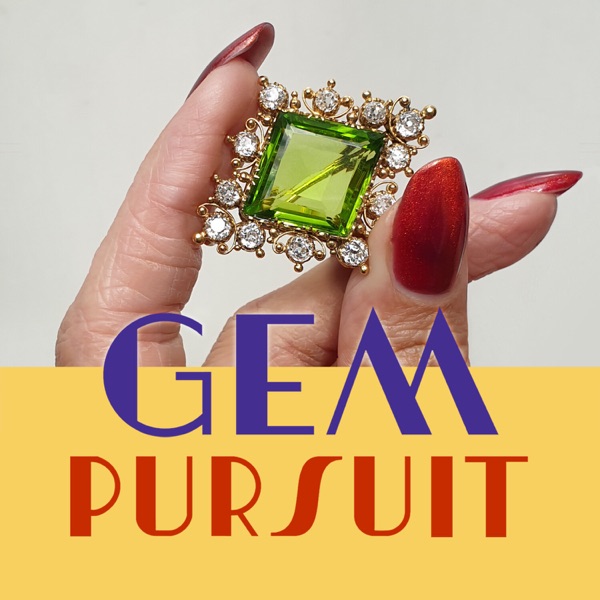
Gem Pursuit: An Antique Jewellery Podcast
Gem Pursuit dives into the world of antique and vintage jewellery, uncovering the stories behind history's most remarkable jewels, from the geological forces that created them to the designers, collectors and icons who brought them to life.
Hosted by Matthew Weldon, CEO of Courtville Antiques, each episode is your guide to the craft, characters, and intrigue behind the world's most fascinating pieces and the factors that drive their value today.
Follow us on Instagram, Facebook, and TikTok
www.courtville.ie
#jewelry #jewellery #arts #history #design #gemstones #antiquejewelry #artdeco #education #victorianera #edwardianera #vintagejewelry
- Episodes
- 130
- Releases
- Every two weeks
- Typical length
- 42 min
- On air since
- 2020
- Latest episode
- 1 day ago
Episodes
130 episodes, newest first
-
25 min
Antiques Fairs: Five Tips from a Jewellery Dealer
Episode 130
Show notes
The doors open, the first cabinets draw a crowd and a ring catches your eye. How do you make the most of an antiques fair without spending the day getting lost or using up your budget at the first stand?
Matthew Weldon shares five tips from his years attending fairs as a jewellery dealer. He explains why it pays to arrive early, check the exhibitor directory, write down booth numbers and ask about closeouts, while keeping an open mind about what you might find.
Along the way, he recalls an aquamarine ring he missed by a few minutes, a conch pearl deal that involved far too much walking, and a pair of gold earrings found among a dealer’s older stock.
COURTVILLE IN NEW YORK
Meet Courtville at the NYC Jewelry, Antique & Object Show, 19 to 22 November 2026, Metropolitan Pavilion, New York. Find us at booth 907.
Early Buying / Trade Day tickets, with the Courtville code included:
KEY TAKEAWAYS
• Arrive early and allow enough time to see the whole fair.
• Plan which dealers you want to visit, including those travelling from overseas.
• Take a business card and write down the booth number before walking away.
• Ask about closeouts: older stock may be kept away from the main display cases.
• Keep your wish list flexible enough to notice a piece you had not expected to find.
SELECTED TIMESTAMPS
00:00 Five tips for antiques fair season
01:30 Arrive early
06:38 Make a plan
11:02 Courtville in New York: ticket information
11:41 Get your bearings
17:08 Ask about closeouts
21:18 Keep an open mind
23:56 Meet Courtville at the New York show
RESOURCES
NYC show: https://nycjaos.com/
Exhibitor directory: https://nycjaos.com/pages/vendor-directory
COURTVILLE & GEM PURSUIT
Instagram: @gempursuitpod | @courtvilleantiques
TikTok: @matthew.weldon
Email: info@gempursuit.com
Host: Matthew Weldon
Producer: Ross Hannon, Tape Deck
Video: Darragh
Get social with Courtville, follow us on Instagram, Facebook, and TikTok
This podcast was produced for Courtville by Tape Deck
Runtime: 25 minutes 18 seconds
-
46 min
Garnet
Episode 129
Show notes
A deep red garnet is a familiar sight in antique jewellery. But the same mineral group also includes purple-red rhodolite, bright orange spessartine and green demantoid. Some are plentiful; others are much harder to find, particularly in larger sizes.
Matthew and Fenia look at what connects these stones, how their different compositions affect their appearance, and why garnet deserves a closer look. They trace its place in carved ancient gems and Victorian jewellery, explore the stories attached to its pomegranate-like colour, and open Fabergé’s Winter Egg to find the tiny green garnets inside.
Matthew also considers the qualities that matter when choosing a piece, from colour and cut to the size of a demantoid, before Gem Trivial Pursuit takes a pomegranate theme.
Key Takeaways
• Garnet is a group of related minerals with a shared crystal structure and different chemical compositions.
• Its colours include the familiar reds, purple-red rhodolite, orange spessartine and the greens of tsavorite and demantoid.
• Garnet has a long jewellery history, from carved ancient stones to Victorian necklaces, brooches and earrings.
• Fabergé’s 1913 Winter Egg contains a basket of white-quartz wood anemones with demantoid garnets among its materials.
• Colour, cut, clarity and the rarity of a particular variety in a given size all affect value.
Selected Timestamps
00:00 A closer look at garnet
01:52 What is garnet?
06:03 Garnet names and varieties
09:47 Where garnets are found
12:53 History and lore
22:04 Famous pieces and the Winter Egg
29:20 Looking inside demantoid
32:45 Value and what to look for
39:11 Gem Trivial Pursuit
Resources
• GIA: Garnet description, https://www.gia.edu/garnet-description
• GIA: Garnet buyer’s guide, https://www.gia.edu/garnet/buyers-guide
• GIA: Garnet history and lore, https://www.gia.edu/garnet-history-lore
• Christie’s: The Winter Egg, https://www.christies.com/en/lot/lot-6559093
• Courtville Antiques: https://www.courtville.ie
• Gem Pursuit: https://gempursuit.com
Socials & Contact
Instagram: @gempursuitpod
Instagram: @courtvilleantiques
TikTok: @matthew.weldon
Email: info@gempursuit.com
Get social with Courtville, follow us on Instagram, Facebook, and TikTok
This podcast was produced for Courtville by Tape Deck
Hosts: Matthew Weldon and Fenia Sigkoudi
Research: Veronique Goguen
Producer: Ross Hannon
Video: Darragh
-
38 min
Moonstone
Episode 128
Show notes
Why does moonstone seem to carry a moving glow beneath its surface?
Matthew and Fenia explore the feldspar gemstone known for adularescence, the soft white or blue sheen that shifts as a stone is turned. From smooth cabochons to carved Victorian faces, they discuss how jewellers work with that effect and why moonstone suited the designs of the Art Nouveau period.
Fenia shares the story of her first moonstone ring, bought in Crete, and introduces a very different love token: a Lalique bat ring given by Liane de Pougy to the writer Natalie Clifford Barney. The conversation also takes in moonstone's romantic folklore and Matthew's advice on assessing its sheen and condition.
Key Takeaways
• Adularescence is the moving glow that gives moonstone much of its appeal.
• Cut and orientation affect how well that sheen appears.
• Carved moonstones give jewellers another way to use the stone's visual character.
• Design, history and personal meaning can contribute to a piece's appeal alongside gemstone quality.
• Turn a moonstone under the light and inspect its condition before choosing a piece.
Resources
Moonstone description, GIA: https://www.gia.edu/moonstone-description
Moonstone quality factors, GIA: https://www.gia.edu/moonstone-quality-factor
Moonstone care and cleaning, GIA: https://www.gia.edu/moonstone-care-cleaning
Lalique's bat ring, Musée des Arts Décoratifs: https://collections.madparis.fr/document/bague/627a8be93edd95462247e72f?pos=4
Courtville Antiques: https://www.courtville.ie
Gem Pursuit: https://gempursuit.com
Hosted by Matthew Weldon and Fenia Sigkoudi.
Research: Veronique Goguen.
Videography: Colin Weldon.
Producer: Ross Hannon, Tape Deck.
Get social with Courtville, follow us on Instagram, Facebook, and TikTok
This podcast was produced for Courtville by Tape Deck
-
46 min
Amber
Episode 127
Show notes
Amber can preserve a moment for millions of years, hold a static charge, float in salt water and carry the remains of ancient insects. Yet despite its place in jewellery history, it is not actually a mineral or a stone.
In this episode of Gem Pursuit, Matthew Weldon is joined by gemologist Colin Weldon to explore how amber forms, why it feels warm to the touch and what separates natural amber from convincing imitations.
They follow amber’s journey along the ancient Amber Road, examine its use in Roman, medieval and Arts and Crafts jewellery, and investigate what colour, clarity, condition and unusual inclusions can do to its value. The conversation also takes in the science behind Jurassic Park, the mystery of the missing Amber Room and one of Europe’s largest surviving amber specimens.
Get social with Courtville, follow us on Instagram, Facebook, and TikTok
This podcast was produced for Courtville by Tape Deck
-
34 min
Lapis Lazuli
Episode 126
Show notes
For more than 6,000 years, lapis lazuli has connected Afghanistan, Mesopotamia, Egypt, Renaissance painting and the world of antique jewellery.
In this episode Matthew and Fenia explore the deep, violet-blue stone that shows up in the mask of King Tut, as ancient carved vessels in the Louvre, in the paintings of Vermeer and of course, has been a staple gemstone in jewellery pieces for thousands of years. Lapis Lazuli!
Get social with Courtville, follow us on Instagram, Facebook, and TikTok
This podcast was produced for Courtville by Tape Deck
-
28 min
The Lalique Museum Heist
Episode 125
Show notes
An 11 minute raid. Six smashed display cases. Twenty-seven works gone, including one of Rene Lalique's most symbolic jewels: the Woman Dragonfly With Open Wings pendant.
In episode 125 of Gem Pursuit, Matthew tells the story of the Lalique Museum Heist. This time the setting is smaller, but the loss is deeply painful for anyone who cares about jewellery history: 27 works by Rene Lalique stolen from the Musee Lalique in Wingen-sur-Moder, Alsace.
Matthew begins with the reason Lalique matters. His jewellery was not valuable only because of gold, diamonds or precious stones. Lalique used glass, enamel, horn, ivory and semi-precious stones to make jewellery whose real value sits in design, technique, cultural importance and imagination.
The episode then reconstructs the theft itself: three masked men, an early morning break-in, sledgehammers, six display cases and an alarm response that appears to have failed at the worst possible moment.
Matthew also looks at the practical problem facing the thieves afterwards. These pieces are recognisable, fragile and difficult to sell openly, while breaking them up would destroy much of what makes them valuable.
The episode closes with the wider question raised by the Lalique and Louvre thefts: how should museums protect vulnerable objects while still allowing the public to see the real thing?
Get social with Courtville, follow us on Instagram, Facebook, and TikTok
This podcast was produced for Courtville by Tape Deck
-
1 hr 2 min
Garrard & Co
Episode 124
Show notes
If you trace Princess Diana's sapphire ring, Queen Mary's crown and the Koh-i-Noor back far enough, one name keeps appearing: Garrard.
In this episode of Gem Pursuit, Matthew Weldon and Fenia Sigkoudi tell the story of Garrard & Co, Britain's oldest luxury jewellery house and the first official Crown Jeweller. The story begins in 1735 with master silversmith George Wickes, follows Robert Garrard's rise from stockkeeping assistant to owner of the firm, and explains how Queen Victoria's 1843 appointment placed Garrard at the centre of British royal ceremony.
Matthew and Fenia look at what the role of Crown Jeweller actually involved, from making jewels for the Royal Family to maintaining and securing regalia used in coronations, state openings and public ceremonies. They also explore Garrard's work on the Koh-i-Noor, the Girls of Great Britain and Ireland Tiara, Queen Alexandra's Kokoshnik Tiara, and the sapphire cluster engagement ring chosen by Princess Diana in 1981.
The episode closes by looking at Garrard's modern legacy, the end of its Crown Jeweller appointment in 2007, and the difficult balance between protecting a historic jewellery house and adapting it for a new audience.
Key Takeaways
- Garrard's story does not begin with a Garrard. The house traces its origins to George Wickes, a master silversmith working in London from 1735.
- Location mattered from the beginning. The episode connects Wickes's West End position with royal and aristocratic access, and compares that logic with Boucheron's Place Vendome move and Courtville's own position in Powerscourt Townhouse.
- Robert Garrard joined the business before giving the house the name it still carries. The transcript frames his move from stockkeeping assistant to sole owner as part of a familiar jewellery-house pattern: people, succession and trust shaping the brand.
- A royal warrant and the Crown Jeweller role are not the same thing. A warrant can be held by several firms, while the Crown Jeweller is an appointed individual responsible for the Crown Jewels.
- The Crown Jeweller role was practical as well as prestigious. The episode describes making jewels, maintaining existing pieces, resetting stones, visiting the Tower of London and guarding regalia when it appeared in public ceremonies.
- Garrard's royal importance is not limited to one jewel. The episode references Queen Mary's Crown, the Imperial Crown of India, the Imperial State Crown, the Coronation Crown of Queen Elizabeth, the Koh-i-Noor and several major tiaras.
- The Koh-i-Noor section shows Garrard's technical ambition and the changing taste around diamond cutting. After the diamond disappointed some viewers at the 1851 Great Exhibition, Garrard oversaw a high-risk recut involving Amsterdam cutters, a steam engine and 38 days of work.
- The royal tiaras show two sides of Garrard's design language: the Girls of Great Britain and Ireland Tiara as a classic western royal tiara, and Queen Alexandra's Kokoshnik Tiara as a Russian-inspired "wall of diamonds".
- Princess Diana's sapphire engagement ring gives Garrard a modern commercial legacy. Matthew connects the ring to the lasting popularity of sapphire cluster rings in the jewellery trade.
- The end of Garrard's Crown Jeweller appointment in 2007 opens the wider business question of the episode: how does a house protect its historic identity while still adapting to a modern luxury market?
Get social with Courtville, follow us on Instagram, Facebook, and TikTok
This podcast was produced for Courtville by Tape Deck
-
52 min
House of Bolin
Episode 123
Show notes
Forget Faberge for a moment. In this episode of Gem Pursuit, Matthew Weldon and Fenia Sigkoudi tell the story of Bolin, the Russian jewellery house that supplied the Imperial Court, became famous for tiaras and high jewellery, and survived the revolution through a branch that found new life in Stockholm.
The story begins not with the Bolin name, but with Andreas Roempler, a German jeweller in St Petersburg who became known as the "master of diamonds". Through marriage, succession and family ties, Carl Edvard Bolin entered the business, earned imperial recognition, and helped shape a house admired for grand parures, kokoshnik tiaras and gemstones that seemed to float in their settings.
Matthew and Fenia look at Bolin's place beside Faberge, the difference between Faberge objects and Bolin jewellery, the importance of the Moscow and Stockholm branches, the loss of so many pieces during the Russian Revolution, and surviving examples such as the Vladimir Tiara and the ruby and diamond parure. It is a story about craftsmanship, continuity, political upheaval and why one of the great jewellery names is still less famous than it deserves to be.
KEY TAKEAWAYS
- Bolin's story begins before the Bolin name, with German jeweller Andreas Roempler establishing himself in St Petersburg and becoming known in the episode as the "master of diamonds".
- Marriage and succession shaped the house. Roempler's daughters, Gottlieb Ernst Jahn and Carl Edvard Bolin all form part of the early story of how the business changed names and passed through the family.
- Imperial titles mattered. Being jeweller to the Imperial Court and an imperial appraiser did not just bring prestige, it signalled that the Tsar trusted the house with extraordinary jewels and valuations.
- Bolin's reputation was built around high jewellery: tiaras, parures, exceptional stones and settings that made gemstones appear almost as if they were floating.
- The kokoshnik became an important symbol in the episode, moving from traditional Russian headwear into court dress and creating demand for the tiaras Bolin became known for.
- The Moscow and Stockholm branches proved crucial. Because part of the family line had expanded beyond St Petersburg, the Bolin name had a path to survive outside Russia.
- The Russian Revolution explains why Bolin is less visible today. The episode describes not only confiscated stock, but client records being used to track down jewels already sold.
- Surviving pieces such as the Vladimir Tiara and parts of the ruby and diamond parure show both sides of Bolin's legacy: some jewels survived in royal collections, while others were broken up for their stones.
- The episode argues that Faberge's greater fame is not proof of greater craftsmanship. Bolin was one of the great jewellery houses of Imperial Russia, but Faberge had the eggs, the mystery and the tragic public story.
Resources
- W.A. Bolin official history: https://bolin.se/om-oss/historia/
- Sotheby's Bolin biography: https://www.sothebys.com/en/artists/bolin
- The Hermitage
- The Walters Art Museum, Baltimore
- Museum of Moscow
- National Museum in Stockholm
Get social with Courtville, follow us on Instagram, Facebook, and TikTok
This podcast was produced for Courtville by Tape Deck
-
54 min
Boucheron
Episode 122
Show notes
He was born a draper's son, apprenticed at 14, and told that he would never run his own jewellery business. In this episode of Gem Pursuit, Matthew Weldon and Fenia Sigkoudi trace how Frederic Boucheron built one of the great French jewellery houses, from his early training in Paris to the 1858 decision that changed everything.
The story begins in the Palais Royal, where Boucheron learned the trade, watched a business pass to someone else, then raised 100,000 francs and opened his own boutique. Matthew and Fenia follow the early shop, the sale-or-return model that helped him build trust, the 1866 maker's mark, and the exhibitions that gave Boucheron an international name.
They also look at what makes Boucheron feel like Boucheron: jewellery that is striking, unusual and beautifully made, but also fluid and wearable. From the Question Mark necklace and plique-a-jour enamel to diamond engraving, the Grand Mazarin, the Maharaja of Patiala commission and a client list that runs from Sarah Bernhardt to Queen Elizabeth II, this is a story about risk, taste and the power of doing things differently.
Get social with Courtville, follow us on Instagram, Facebook, and TikTok
This podcast was produced for Courtville by Tape Deck
-
41 min
Jean-Baptiste Tavernier: Part Two
Episode 121
Show notes
Matthew and Fenia continue the story of Jean-Baptiste Tavernier, following his sixth voyage to the Mughal court, his encounter with the Peacock Throne, the rough stone later known as the Hope Diamond, and the restless final chapter of one of history's most important diamond dealers.
Key Takeaways
• Tavernier's sixth voyage, dated in the transcript as 1664 to 1668, is presented as the journey that made him famous.
• At the Mughal court, Tavernier encountered extraordinary imperial jewels, including the Peacock Throne and the rough stone later known as the Hope Diamond.
• The episode frames Tavernier as both adventurer and businessman, with close attention to how he classified, priced and traded diamonds.
• Tavernier's book matters because it preserves not just travel stories, but commercial knowledge, notes and drawings from decades of journeys.
• His voyages helped feed a shift in jewellery design, with large gemstones becoming a stronger focal point in European jewellery.
• The final part of his life reinforces the central portrait of Tavernier: wealthy, celebrated and still unable to stop travelling.Quotes
00:12:18 "There was an adventure, but it was commerce driven, I think."
00:15:05 "I think it's the people at the end of the day who made history and objects worth studying."
00:16:52 "The king was aware that Tavernier was not only gathering jewels, he was also gathering knowledge."
00:31:45 "He's widely recognized as the most important diamond dealer of the 17th century."
00:37:10 "A man who was born above a map shop in Paris who spent his life making those maps for real."
00:39:15 "He wasn't at peace unless he was on an adventure."
Resources
• The Six Voyages of Jean-Baptiste Tavernier by Jean-Baptiste Tavernier
• Internet Archive
• Smithsonian MuseumGet social with Courtville, follow us on Instagram, Facebook, and TikTok
This podcast was produced for Courtville by Tape Deck
-
47 min
Jean-Baptiste Tavernier: Part One
Episode 120
Show notes
Before the Hope Diamond had a name or a curse, it passed through the hands of one remarkable Frenchman. This episode tells the story of Jean Baptiste Tavernier, a 17th-century merchant whose six voyages to the East changed the way Europeans understood gemstones forever.
Born in Paris in 1605 to a family of map-makers and engravers, Tavernier grew up surrounded by maps and the merchants who traded in them. By 22 he had already visited most of Europe and learned the languages to go with it. He was only getting started.
Matthew and Fenya trace his first five voyages from Istanbul to India, from the Golconda mines to Dutch-controlled Batavia, ending just as Tavernier is about to open the imperial jewel casket of the Mughal emperor Aurangzeb. Part 2 is on the way
Key Takeaways
• Your environment shapes your ambitions. Growing up in his father's map shop on the Ile de la Cite, surrounded by merchants talking about faraway countries, Tavernier later credited those conversations as the spark behind everything he did.
• Going against the established route can be a competitive advantage. With the Dutch and English East India Companies dominating the sea lanes, Tavernier revived the overland Silk Road instead, avoiding bigger rivals and trading along the way.
• Diplomatic skill matters as much as commercial skill. He carried European clocks and jewellery specifically as gifts for local rulers, smoothing his passage across dozens of borders without the backing of a powerful company behind him.
• His book is one of the best records we have of this era. Tavernier documented diamond mining operations, grading standards, currency exchange, and cultural customs. Historians and gemologists still reference "The Six Voyages" today.
• The Hope Diamond's curse may have been a marketing story. Tavernier never mentions where he acquired the blue diamond in his own accounts, and notably lived to around 80 with a long and successful life.Quotes
00:08:07 "If the effect of education may be linked to a second birth, I may truly say that I came into the world with a desire to travel... inspired me betimes with a design to see some part of those countries, which were represented to me in the maps from which I never could keep off my eyes." (Tavernier, read aloud from his book)
00:24:48 "The art of trading is the art of understanding men and their desires, whether they be in Paris or in the Indies." (Tavernier)
Resources
• The Six Voyages of Jean Baptiste Tavernier by Jean Baptiste Tavernier
Get social with Courtville, follow us on Instagram, Facebook, and TikTok
This podcast was produced for Courtville by Tape Deck
-
49 min
Careers in Antique Jewellery: How the Trade Works
Episode 119
Show notes
Have you ever picked up a piece of antique jewelry and wondered how it got there? Behind every brooch, ring, or sapphire in a boutique window is a network of specialists: historians, gemologists, goldsmiths, appraisers, lapidaries, and dealers, each playing a role in the journey from discovery to display case.
In this episode, Matthew Weldon of Courtville Antiques breaks down the ecosystem of the antique jewelry trade, explaining who does what, how the roles connect, and what a typical week actually looks like across the industry.
Whether you already work in the trade or are considering entering it, this episode offers a candid guide to the many career paths within antique jewelry. Drawing on his own background, from studying gemology at the GIA to running Courtville and working alongside his family’s auction house, Matthew gives an honest picture of each role’s rewards and risks. From spotting overlooked treasures to the tension of handing a six-carat Burma sapphire to a lapidary, the episode makes the case that there is a place in this business for many different skill sets.
Key Takeaways
• Antique jewelry passes through many hands before reaching a buyer, often involving researchers, gemologists, appraisers, goldsmiths, and dealers.
• Gemologists identify and assess stones scientifically, while appraisers combine those findings with market data to produce legal valuations for insurance, probate, or resale.
• Skilled lapidaries are increasingly rare, creating challenges for businesses dealing with valuable antique stones.
• Auctions and private sales operate differently: auctions are strictly “as is,” while private dealers are bound by consumer protections and guarantees.
• Content creation has become a legitimate route into the industry, with creators and journalists building careers around shows, auctions, and trade coverage.
• Matthew’s philosophy on consignment is simple: if you would not buy a piece yourself, you should not expect someone else to.
Quotes
“On average here in Courtville, I would say we would look at between three and four thousand pieces of jewelry a week... How many pieces do we buy? On average, I'd say we're buying one to two percent of the pieces that we'd see.” — 27:23
“If you lose a piece of antique jewelry, you might have to source lots of different antique stones... You'll also have to get a jeweller to hand make the piece.” — 8:38
“Never a more accurate phrase than measure twice, cut once.” — 22:54
Resources
• GIA (Gemological Institute of America)
• Gem-A, London
• Wartsky’s, London
• Courtville Antiques — http://www.courtville.ie
• Miami Beach Antique Show
• Jewelry, Objects and Antique Show, New York
• Galerie Apollon, The Louvre
• The Smithsonian
• The V&A
• Musée des Arts Modernes, Paris
• L’École Van Cleef & Arpels
Socials & Contact
Instagram: @gempursuitpod
Instagram: @courtvilleantiques
TikTok: @matthew.weldon
Email: info@gempursuit.com
Selected Timestamps
(1:56) Why careers in antique jewelry matter
(4:48) Gemologist
(8:00) Types of valuation
(14:19) Goldsmith and restoration
(18:45) Lapidary and diamond cutter
(26:50) Antique jewelry dealer
(32:05) Auctions vs private market
(40:50) Content creator and jewelry journalist
(44:10) Museum and curatorial roles
(45:16) Jewelry designer
Get social with Courtville, follow us on Instagram, Facebook, and TikTok
This podcast was produced for Courtville by Tape Deck
-
42 min
How to Get Into the Antique Jewellery Trade | Ask Me Anything
Episode 118
Show notes
In this special Ask Me Anything episode of Gem Pursuit, Matthew Weldon answers your jewellery and gemstone questions from how antique jewellery can be dated without hallmarks, to what truly makes a great emerald, and how newcomers can begin building a career in the jewellery trade.
Along the way, Matthew discusses men’s engagement rings, buying instinct versus expertise, the changing world of online jewellery selling, and some unforgettable pieces that have passed through the shop over the years.
Questions in this episode include:
💎 How do experts date jewellery without hallmarks?
💎 What makes a high-quality emerald?
💎 How have men’s engagement rings evolved over time?
💎 What’s the oldest piece Matthew has handled?
💎 How do you get started in the jewellery industry?
💎 What courses are actually worth taking?
Get social with Courtville, follow us on Instagram, Facebook, and TikTok
This podcast was produced for Courtville by Tape Deck
-
34 min
The Orlov Diamond Mystery: Theft, Power & Lost History
Episode 117
Show notes
Was the legendary Orlov Diamond once the eye of a Hindu idol before becoming part of the Russian Crown Jewels? In this episode of Gem Pursuit, Matthew Weldon and Fenis Sigkoudi unravel the extraordinary story of the 189-carat diamond tied to Mughal emperors, Catherine the Great, theft, romance, and one of history’s greatest gem mysteries.
Get social with Courtville, follow us on Instagram, Facebook, and TikTok
This podcast was produced for Courtville by Tape Deck
-
50 min
The Dresden Green: The Greatest Natural Green Diamond Ever Found
Episode 116
Show notes
The Dresden Green Diamond is one of the rarest diamonds in the world and one of the most mysterious. Its vivid green colour looks almost unnatural… but it’s entirely real.
In this episode, we explore how this extraordinary gem gets its colour from natural radiation deep within the Earth, why that makes it so exceptionally rare, and how it became one of Europe’s most treasured jewels. From royal collections to scientific fascination, the Dresden Green has captivated experts and admirers for centuries.
Is it really too green to be true? Or is it proof that nature can outdo even the most ambitious jeweller?
This is part of our ongoing diamond series.
If you enjoyed the episode, make sure you’re subscribed wherever you listen, and if you have a moment, please rate and review the show on Spotify or Apple Podcasts.
Get social with Courtville, follow us on Instagram, Facebook, and TikTok
This podcast was produced for Courtville by Tape Deck
-
55 min
A New Kind of Dealer: Antique Jewellery in a Social Media World
Episode 115
Show notes
For generations, the antique jewellery trade has been built on discretion, reputation and knowledge passed quietly from one dealer to another.
But that world is changing.
In this episode of Gem Pursuit, Matthew sits down with The Jewel Geek to explore what it means to develop an eye for antique jewellery in a more open, digital age.
From early experiences buying at auction to building a network of trusted dealers, Brinder shares how his taste has evolved and how a combination of instinct, study and building relationships has helped him build a strong reputation in his short time in the trade.
Along the way, they discuss the realities of the trade: overpaying, missing out, learning to recognise quality, and understanding what actually sells. They also reflect on the growing role of social media, the importance of educating new collectors, and why antique jewellery may be more relevant now than ever.
Get social with Courtville, follow us on Instagram, Facebook, and TikTok
This podcast was produced for Courtville by Tape Deck
-
31 min
The Florentine Diamond: The Jewel That Vanished for a Century
Episode 114
Show notes
In this episode of Gem Pursuit, we tell the extraordinary story of one of history’s greatest lost diamonds - the legendary Florentine.
A pale yellow diamond of almost 140 carats, the Florentine passed through some of Europe’s most powerful dynasties, from the Medici family to the Habsburg emperors, before disappearing in the chaos that followed the fall of the Austro-Hungarian Empire.
For more than a century, its fate remained one of the great unsolved mysteries in gem history. Was it stolen, recut, or lost forever?
Now, after over 100 years in the shadows, the Florentine has resurfaced - and its survival opens a new chapter in a story shaped by empire, exile, war and inheritance.
In this episode, Matthew Weldon and Fenia Sigkoudi explore the stone’s disputed origins, its links to the Mughal world, its place in the Habsburg treasury, and the remarkable events that led to its rediscovery.
This is part three of our ongoing diamond series.
If you enjoyed the episode, make sure you’re subscribed wherever you listen, and if you have a moment, please rate and review the show on Spotify or Apple Podcasts.
Get social with Courtville, follow us on Instagram, Facebook, and TikTok
This podcast was produced for Courtville by Tape Deck
-
38 min
Diamonds Part II: From Rough Crystal to Brilliant Cut
Episode 113
Show notes
In the second part of our diamond series, we turn from science to history.
After exploring how diamonds form and how they are cut in Part I, this episode follows the extraordinary journey of the diamond through human history. From the ancient riverbeds of India to the great discoveries in Brazil and South Africa, we trace how diamonds moved across continents, empires and centuries.
Along the way we explore how diamond cutting evolved from simple polishing of natural crystals to increasingly sophisticated faceting techniques that transformed the stone’s beauty. From the earliest point cuts and table cuts to the rose cut, old mine cut and the beginnings of the modern brilliant, each development reflects changing technology, taste and the growing desire to unlock the diamond’s brilliance.
This is the story of how a rare natural curiosity became one of the most important gemstones in jewellery history.
In the next episode of this series, we’ll turn to one of the most mysterious diamonds ever known - the legendary Florentine.
If you enjoyed the episode, make sure you’re subscribed wherever you listen to podcasts, and if you have a moment please leave us a rating or review on Spotify or Apple Podcasts.
Get social with Courtville, follow us on Instagram, Facebook, and TikTok
This podcast was produced for Courtville by Tape Deck
-
44 min
Diamonds: Nature vs Craft, Art vs Science
Episode 112
Show notes
Diamonds form over billions of years, deep within the Earth's mantle under unimaginable pressure. But what makes them truly extraordinary isn’t only what nature creates - it’s also what human hands choose to do next.
In the first episode of our diamond series, we return to the stone we haven’t properly explored since the very early days of the podcast and ask a big question: where does nature end and craft begin?
We unpack how diamonds are formed, revisit the 4 Cs, and take a close look at the one element entirely controlled by people: cut. What does a cutter actually do? How do they decide what to sacrifice and what to preserve? And why can a great cut transform a cloudy pebble into something unforgettable?
Get social with Courtville, follow us on Instagram, Facebook, and TikTok
This podcast was produced for Courtville by Tape Deck
-
27 min
The Heart Motif in Jewellery
Episode 111
Show notes
What is the most recognisable symbol in jewellery history? The heart.
In this Valentine’s special episode of Gem Pursuit, Matthew Weldon and Fenia Sigkoudi explore the enduring story of the heart motif — a symbol that has carried secret messages, sealed romantic promises, and expressed devotion for centuries.
We begin in the ancient world, where the heart was believed to be the centre of the soul, and trace how medieval courtly love helped shape the heart into a romantic emblem. From early love tokens and poetic brooches to protective witch hearts and crowned double hearts, the symbol evolved into a powerful visual language of love, loyalty, and longing.
The episode also explores the Victorian era’s obsession with sentimental heart jewellery, from Queen Victoria’s personal charm bracelets to mourning lockets containing hair and portraits. Moving into the 20th century, we look at wartime sweetheart lockets and Elsa Peretti’s revolutionary Open Heart design, which transformed the motif into a modern design icon.
Finally, we turn to some of history’s most spectacular heart-shaped jewels, including Elizabeth Taylor’s Taj Mahal diamond, the legendary Blue Heart Diamond, and the technically astonishing Graff Venus — alongside iconic heart jewels worn by figures from Wallis Simpson to Lady Gaga.
From intimate love tokens to world-famous gemstones, the heart has remained jewellery’s most timeless symbol — and it’s not going anywhere any time soon.
Get social with Courtville, follow us on Instagram, Facebook, and TikTok
This podcast was produced for Courtville by Tape Deck
Entrepreneurship lists
More Entrepreneurship shows picked out from the charts











More in Entrepreneurship
Placed highest on Apple Podcasts' Entrepreneurship chart right now