Podcast
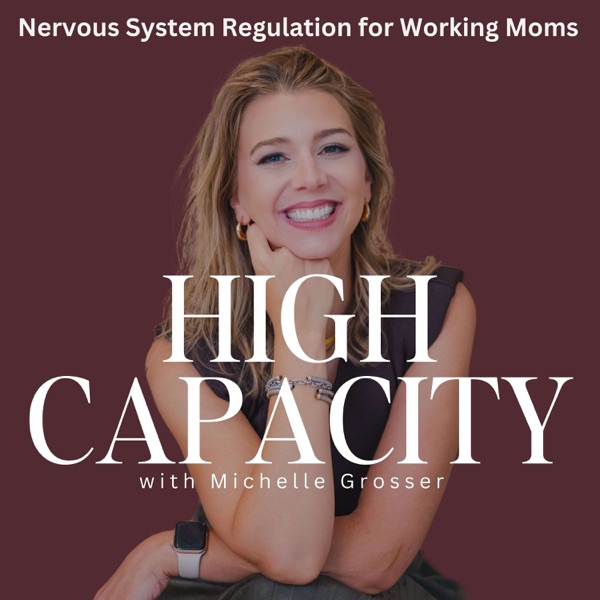
High Capacity – Nervous System Regulation, Stress Management, Burnout Recovery, Somatic Tools, Anxiety, Boundaries, Overwhe
You've built a full life. The career, the family, the responsibilities, the goals — all of it.
And the fuller it gets, the more stretched thin you feel.
Not because you lack the discipline or drive to figure it out.
But because your nervous system was never upgraded to match the life you've built.
High Capacity is the podcast for ambitious women who are done just managing their stress and are ready to actually expand what they can hold.
Hosted by trial attorney turned nervous system strategist Michelle Grosser, each episode unpacks the nervous system science behind why you feel maxed out, reactive, and depleted — and gives you real tools to expand your capacity across every area of your life.
This isn't just about doing less.
It's about becoming someone whose nervous system can hold more — more joy, more presence, more of the life you've worked hard to build, and more of the demands that come with it — without the low-grade stress that's become your new normal.
Here’s what you’ll learn:
- How to expand your emotional, stress, physical, relational, and joy capacity
- Nervous system-based tools that work in real life, in real time
- How to identify your Capacity Pattern — the specific strategy your nervous system defaults to when you're overwhelmed — and what it means for your stress, your relationships, and your daily life
New episodes every Tuesday and Friday.
Tuesdays bring the nervous system science and tools.
Hi-Cap Fridays give you one practical move to expand your capacity in the week ahead.
Take the free "What's Your Capacity Pattern?" quiz: michellegrosser.com/quiz
- Parenting chart
- #72
- Episodes
- 502
- Releases
- Weekly
- Typical length
- 32 min
- On air since
- 2022
- Latest episode
- 23 hours ago
Episodes
502 episodes, newest first
-
55 min
495 - Stop the Cycle of Busywork and Productivity Hacks: Non-Negotiable Daily Rhythms to Step Into Your Calling with Elizabeth Hartke
Show notes
You know the feeling. The day is full, you're moving the whole time, and somehow at the end of it you can't point to anything that actually moved forward.
Here's the line from this conversation I haven't stopped thinking about: busyness is the broken bridge between where you are and where you want to be.
My guest is Liz Hartke, a business and leadership advisor who's mentored thousands of entrepreneurs, founder and CEO of Luminary Leadership Co., and a homeschooling mom of six building all of it alongside her husband.
She makes a case that overwhelm and burnout aren't actually about what's on your calendar.
They're states of mind, and she's been in her most packed seasons feeling clear and light, and her emptiest seasons feeling buried.
We talk about why you'll choose the familiar pain of staying busy over the unfamiliar discomfort of change, even when busy is the thing keeping you stuck.
And she walks through her Visionary CEO Schedule, the handful of time blocks she says show up in every high-capacity leader's week.
If you've been running hard and getting nowhere, this is the one to slow down for.
What You'll Learn:
• Why burnout and overwhelm are states of mind, not a scheduling problem, and what that changes
• The "broken bridge" of busyness, and how staying busy quietly keeps you stuck
• The one time block 75 stuck-but-successful leaders were almost completely skipping (and what happened in a single week when they stopped)
• How capacity actually expands, and why it only grows by stepping into more before you feel readyResources Mentioned:
• Liz's Visionary CEO Schedule
• Luminary Leadership Co.
• Liz on Instagram: @elizhartke--
🧠 What's your capacity pattern?
Take the free 2-minute quiz and unlock The Capacity Code — a personalized private podcast episode for your specific nervous system.
-
20 min
494 - Why You're Patient With Strangers and Snap at Your Own Kids
Episode 494
Show notes
You're patient all day. With your coworkers, with the barista, with the person who takes the parking spot you were clearly waiting for.
And then you walk into your own kitchen at 6pm and snap at your kid over a cup.
The question underneath that, the one you've probably asked yourself is: what is wrong with me that I can hold it together for everyone else and lose it on the people I love most?
This week is the whole mechanism behind that snappy version of you.
And why the answer isn't a better comeback in the moment, it's something you do hours earlier.
What You'll Learn:
• Why your reaction is more about the size of how little bandwidth you had at the moment
• The reason every gentle-parenting script evaporates the second you actually need it
• Why you can stay calm for strangers all day and lose it the moment you get home--
🧠 What's your capacity pattern?
Take the free 2-minute quiz and unlock The Capacity Code — a personalized private podcast episode for your specific nervous system.
-
40 min
493 - Why Am I Like This? Sabrina Zohar on the Patterns Running Your Life
Episode 493
Show notes
You've probably caught yourself asking it. Why am I like this?!
Usually not in a kind voice. Usually at the end of a long day, after you reacted in a way you don't love and can't quite explain.
Here's what Sabrina Zohar gets at: the thing you've been calling your personality (I'm just type A, I'm just controlling, I'm just too much) is often a pattern you learned a long time ago, running on autopilot.
Sabrina is the host of The Sabrina Zohar Show and the author of a new book, Why Am I Like This? She's built a huge following teaching people to understand the patterns driving their relationships, their work, and the way they react when they're activated.
We get into two questions she says changed her life: how old do I feel, and where did I learn this. We talk about why the safe, healthy relationship can feel flat and boring (and the actual neuroscience of why). And we talk about boundaries and resentment in a way that doesn't make you the villain or the martyr.
This one is for you if you've ever watched yourself overreact and thought, I know better than this, so why do I keep doing it.
What You'll Learn:
• The two questions to ask the moment you feel yourself react, that turn a blowup into information
• Why a calm, consistent relationship can feel weirdly boring, and what your nervous system is actually doing
• What a boundary really is (it's not a rule you hand the other person), and how the lack of one turns into resentment
• How to tell your real intuition apart from an old wound wearing its clothes--
🧠 What's your capacity pattern?
Take the free 2-minute quiz and unlock The Capacity Code — a personalized private podcast episode for your specific nervous system.
-
25 min
492 - Do You Have High Cortisol? 5 Signs and What's Actually Going On
Episode 192
Show notes
You're exhausted all day, and then weirdly wide awake at 10pm.
You crash at 3, patch it with caffeine, and pay for it that night.
The weight around your middle won't shed the way it used to.
You catch every cold going around and hold onto it for weeks.
If you've been quietly collecting symptoms like these, you've probably seen the internet's answer: it's your cortisol, and here's a $10 tea to "balance" it.
Cortisol has become a villain word. But cortisol isn't the enemy.
The problem was never that you have it. The problem is the shape of the curve, and when you've been running activated for months, that curve shifts and starts showing up at the wrong hours in the wrong amounts.
This week I walk through five signs your cortisol curve is off and what that actually means.
What You'll Learn:
• Why you're tired in the morning and wired at night, and what it says about your cortisol curve
• The 3pm-crash-to-caffeine-to-bad-sleep loop, and how it quietly feeds itself
• Why "high cortisol" feels like your personality instead of a problem
• The sign that looks like calm and almost never is--
🧠 What's your capacity pattern?
Take the free 2-minute quiz and unlock The Capacity Code — a personalized private podcast episode for your specific nervous system.
-
46 min
491 - Sticky Habits: Building Routines That Actually Hold with Monica Packer
Episode 491
Show notes
You bought the planner. Printed the meal plan. Started the new morning routine strong, and by week two it had quietly fallen apart.
And somewhere in there you decided the problem was you.
Not disciplined enough, not consistent enough, not the kind of person who follows through.
Here's the reframe Monica Packer brought that I can't stop thinking about: it was never you. It was the method.
And most of the habit and self-improvement advice we've been handed was built for a life that looks nothing like yours.
Monica's back for her second time on the show, and this conversation goes deep on the thing underneath all of it, perfectionism.
Not the color-coded-calendar kind.
The quiet kind, where you pin your worth to your outcomes, and the woman grinding herself down and the woman too scared to start turn out to be running the same pattern.
We get into why habit advice keeps failing women specifically, how to build routines that actually hold in a real life full of interruptions and invisible labor, and the surprising thing that's expanded her own capacity this year.
If you've ever called yourself lazy or undisciplined, this one's going to set something down for you.
What You'll Learn:
• Why perfectionism isn't about being tidy or type A, and how to spot the version hiding as "I'm too lazy to be a perfectionist"
• The reason your habits keep falling apart, and why it's the method, not your willpower
• How to build a habit with a "baseline version" that survives your worst days, not just your best ones
• What invisible labor has to do with why habit advice built for men doesn't hold for youResources:
• Monica's book, Sticky Habits, and pre-order bonuses
• More from Monica: https://www.aboutprogress.com/--
🧠 What's your capacity pattern?
Take the free 2-minute quiz and unlock The Capacity Code — a personalized private podcast episode for your specific nervous system.
-
21 min
490 - 5 Ways to Calm Your Nervous System in the Next 90 Seconds
Episode 490
Show notes
You're feeling overwhelmed or edgy. Or maybe just depleted and exhausted.
You know you're supposed to "regulate your nervous system" but you only have a few minutes.
Here's what you do.
So this week is five ways to calm an overactive nervous system that you can actually do from anywhere in just a few minutes.
What You'll Learn:
• Why a long exhale is the fastest lever you have on your own body
• The reason humming or singing in the car actually takes the edge off
• What to reach for when you're already activated and breathing feels useless
• The one that looks like nothing and works faster than talking yourself down--
🧠 What's your capacity pattern?
Take the free 2-minute quiz and unlock The Capacity Code — a personalized private podcast episode for your specific nervous system.
-
37 min
489 - 8 Oddly Specific Signs Your Nervous System Is Dysregulated
Episode 489
Show notes
The jaw that's clenched. The 3pm brain-fog crash.
Exhausted all day, then wide awake the second your head hits the pillow.
The stomach stuff no elimination diet ever explained.
Snapping at your kids over something small and hating yourself for it an hour later.
Many of the things you've been dealing with for years, are actually your nervous system trying to tell you something.
When it's dysregulated, it can't tell you in words. So it tells you in symptoms. The jaw. The crash. The short fuse.
This week, eight oddly specific signs of a nervous system stuck in a gear it was never meant to idle in.
For each one: we'll go through what it is, why it's happening in your body, and one small thing to do about it.
What You'll Learn:
• Why your jaw, your shoulders, and shallow breathing are often the first place it shows
• The reason you're exhausted all day and wide awake at bedtime
• What causes brain fog and why you can't think your way out of it
• Why you always get sick the minute you slow down--
🧠 What's your capacity pattern?
Take the free 2-minute quiz and unlock The Capacity Code — a personalized private podcast episode for your specific nervous system.
-
36 min
488 - What It Actually Takes to Rewire a Pattern: Inside Patterned to Present
Episode 488
Show notes
You've done the work.
The books, the therapy, the podcasts, the late-night journaling. You're more self-aware than anyone else you know.
And yet you still come undone trying to put the kids to bed.
You still haven't been consistent with that new workout routine.
Maybe your perfectionism or procrastination is still holding you back.
At some point, understanding stops being the thing you're missing.
The problem was never that you didn't get it. It's that knowing a pattern and rewiring one are two completely different things.
So this episode is about what actually rewires a pattern. Not more insight. The real thing.
I walk you all the way through it, start to finish, so you can see exactly what changing a lifelong pattern actually involves. No mystery, no vagueness.
You'll see how the change is built in a clear sequence, why the order matters, and why this works in your body and your real life instead of just in your head.
And I'm honest about who this is for, and who it isn't.
If you've understood yourself for years and you're ready to finally feel different, not just know more, this is your walkthrough.
What You'll Learn:
• Why understanding your patterns is not enough to change them
• What actually rewires a lifelong pattern (and why it happens in your body, not your head)
• The six phases of the process, and why the order is the medicine
• Recognize, Examine, Witness, Interrupt, Rewire, Embody: what each one actually involves--
🧠 What's your capacity pattern?
Take the free 2-minute quiz and unlock The Capacity Code — a personalized private podcast episode for your specific nervous system.
-
32 min
487 - Too Old, Too Busy, Tried Everything: Is Changing Your Patterns Possible?
Episode 487
Show notes
So if you've been considering joining Patterned to Present (we start Sept. 16!) and are wondering whether it's really for you, this episode is the one you need to listen to.
Because you've probably recognized yourself in Pattern.
And right underneath that recognition, there's a voice that chimes in: I've been this way too long. I don't have the time. I've already tried everything.
That voice is the only thing between you and this work. So I'm not going to give it a pep talk. I'm going to give it a real answer.
There are three versions of it, and each one has a piece of actual science that takes it apart. Too old. Too busy. Tried everything.
I walk through all three. Then I name the thing they secretly share, and the uncomfortable possibility that the "not for me" voice isn't your wisdom at all. It's the pattern protecting itself.
If you're on the fence about joining, start here.
What You'll Learn:
• Why "it's too late" is wrong, and what the age of a pattern actually measures
• The brain science that says you stay changeable your whole life (and what change actually requires)
• Why the pattern, not the program, is the most expensive thing on your calendar
• Why "I've tried everything" is true, and the exact reason none of it reached the pattern
• The one assumption all three objections quietly share
• How to tell the difference between your wisdom and your pattern talking in your voice--
🧠 What's your capacity pattern?
Take the free 2-minute quiz and unlock The Capacity Code — a personalized private podcast episode for your specific nervous system.
-
32 min
486 - You Know What to Do. Here's Why You Don't, and the 3 Things That Change It.
Episode 486
Show notes
You know exactly what you should do.
You know what a boundary sounds like.
You know you need 8 hours of sleep.
You know how you want to respond when your kid asks the same thing for the fourth time.
And then the moment comes, and you do the other thing.
That distance between what you know and what you actually do is the knowing-doing gap.
And it's why you've stayed stuck in a pattern you completely understand.
In this episode, I'll teach you what the gap actually is, why more information has never once closed it, and the specific science-backed way it does close.
Then the hopeful part: how a wired-in pattern actually gets rewritten. It's a real process called reconsolidation, and the conditions it needs are the whole key.
If you've ever known better and still not been different, this episode finally explains why, and points at what actually works.
What You'll Learn:
• Why "just try harder" is wrong, and what's really going on
• Why your knowing and your doing live in two different brains (and why the wise one clocks out under stress)
• The heart-rate threshold where your thinking brain literally loses the wheel
• What memory reconsolidation is, and the three conditions that let a pattern be rewritten
• Why you can't read, journal, or podcast your way across this gap
• Why being activated, not calm, turns out to be a requirement for real change--
🧠 What's your capacity pattern?
Take the free 2-minute quiz and unlock The Capacity Code — a personalized private podcast episode for your specific nervous system.
-
26 min
485 - How to Reclaim the Fun, Lighthearted Version of Yourself
Episode 485
Show notes
There's a version of you that laughs easily. That's light, playful, present, not managing anything.
You remember her. Maybe she still shows up on day three of a vacation, once your body finally believed nothing was on fire.
And you probably miss her. It can feel like she left somewhere back there, under all the responsibility and the bracing and the holding it together.
Here's the good news: she didn't leave and she's not gone.
That lightness isn't your old self. It's your real self, underneath the pattern you've been running to keep everything going.
And she surfaces whenever your nervous system feels safe enough to let her.
This week I show you where she's been, why she only seems to show up on vacation, and what it actually takes to feel like her more than once a year.
I also clear up the biggest myth about this work: that changing means becoming a calmer, smaller, less ambitious version of you. It's the opposite. You keep everything that makes you you. You just set down the cost of it.
If you've been quietly wondering where the fun version of you went, start here.
What You'll Learn:
• Where the lighthearted version of you actually went (she didn't leave)
• Why real change isn't becoming calmer or smaller, it's becoming more you
• The difference between glimpsing that version of yourself and actually living as her
• What it takes to make "light and present" your default instead of your exception--
🧠 What's your capacity pattern?
Take the free 2-minute quiz and unlock The Capacity Code — a personalized private podcast episode for your specific nervous system.
-
27 min
484 - Why You Overreact to Small Things (and Stay Calm for Big Ones)
Episode 484
Show notes
Think about the last time you lost it over something relatively minor.
The spilled drink. The shoes left in the hallway. The question you'd been asked one too many times.
Some part of you knew, even in the moment, that it wasn't that big of a deal. And you came apart anyway.
But here's the truth: the small thing was never the size of your reaction. It was just the thing that landed on a system that was already completely full.
In this episode, we unpack why the small stuff sets you off, when the genuinely big stuff somehow doesn't.
I walk all five Capacity Patterns through it, so you can see how your pattern reaches capacity and then overflows.
And why the fix isn't a better breathing technique for the moment you snap. It's building a bigger container, so the small stuff stops being the thing that overflows you.
If your reactions have ever felt "too big" for what set them off, this one's for you.
What You'll Learn:
• The frame that finally explains why small things feel huge
• Why most stress advice fails you: it manages the moment, not the fullness underneath it
• Why the moment you snap is the wrong place to intervene
• The first skill: catching yourself filling up before you spill over--
🧠 What's your capacity pattern?
Take the free 2-minute quiz and unlock The Capacity Code — a personalized private podcast episode for your specific nervous system.
-
46 min
483 - 5 Things Your Kids Are Learning From Your Nervous System
Episode 483
Show notes
Your kids aren't learning emotional regulation from what you tell them about it.
They're learning it from what your body does when you're stressed.
They read your nervous system all day and quietly calibrate their own to match - it's co-regulation in action.
In this episode, I walk all five Capacity Patterns through parenting. What each one passes on when you're stressed, and what each kid actually needs from you.
So the single most powerful thing you can do for your kids' regulation isn't a new script or a gentle-parenting phrase. It's regulating your own.
If you've ever sworn you'd never pass on the thing your parent handed you, start here.
What You'll Learn:
• Why your kids learn regulation from your body, not your words
• What each of the five capacity patterns quietly passes on to our kids
• The one shift that changes what your kids actually learn from you--
🧠 What's your capacity pattern?
Take the free 2-minute quiz and unlock The Capacity Code — a personalized private podcast episode for your specific nervous system.
-
31 min
482 - This Is Why You Struggle With Boundaries (It's Not Willpower)
Episode 482
Show notes
There's a boundary you've set more than once.
You had the conversation, you were clear, you felt good walking away.
And a week later, a month later, you're right back in the exact dynamic you thought you'd resolved.
You know the scripts. You could teach a workshop on healthy boundaries.
And you still keep over-committing, over-explaining, saying yes when everything in you meant no.
The problem isn't that you don't know how to set a boundary.
The problem is what happens in your nervous system the instant someone pushes against one.
I'm walking all five Capacity Patterns through the exact moment a boundary collapses, and it's super specific to how your system learned to stay safe.
What You'll Learn:
• The five pattern-specific ways a boundary collapses
• Why you can feel resentment building for weeks and still not say the thing
• The knowing-doing gap, lived out in boundaries
• What it actually takes to hold a boundary while someone else is unhappy about it--
🧠 What's your capacity pattern?
Take the free 2-minute quiz and unlock The Capacity Code — a personalized private podcast episode for your specific nervous system.
-
37 min
481 - The Real Reason You Snap, Shut Down, or Cave in Conflict
Episode 481
Show notes
Picture the last real conflict you were in. Chest tight, face hot, some part of you already gone.
Did you snap? Shut down? Cave and agree to something you didn't mean?
Whatever you did, it probably wasn't how you'd have told a friend to handle it. Some other version of you took the wheel.
Here's the real reason: that version isn't a character flaw. She's a pattern, and she has a signature move the second things get tense.
This week I break down what happens in your body in the first two seconds of a conflict. Spoiler: your reaction fires before your wisdom can get a word in.
Then I run all five Capacity Patterns through conflict. The one who leaves, the one who caves, the one who digs in, the one who dominates, and the one who goes cold and correct.
If you've ever felt hijacked in a hard conversation and wondered why you can't just stay calm, this one names exactly what's happening. And why understanding it isn't quite enough to stop it.
What You'll Learn:
• Why you snap, shut down, or cave the moment conflict starts (and why it's not a willpower problem)
• What happens in your brain in the first 74 milliseconds of a conflict
• The five distinct ways people handle conflict
• The reason knowing your reaction won't, by itself, stop you from repeating it--
🧠 What's your capacity pattern?
Take the free 2-minute quiz and unlock The Capacity Code — a personalized private podcast episode for your specific nervous system.
-
27 min
480 - You Don't Need More Information. You Need a New Default
Episode 480
Show notes
Hot take: you don’t need more information.
If information were the thing standing between you and the life you want to feel like you're living, you'd have crossed the finish line years ago.
So why are you still snappy at 6pm, still saying yes when you mean no, still lying awake replaying the thing you already understand completely?
It’s because you don't have an information problem. You have a default problem.
And you cannot fix a default pattern with more information.
In today’s episode, I'm breaking down what a "default" actually is, why your defaults run hardest exactly when you have the least capacity to override them, and why willpower and "just remember to pause" keep failing you, not because you're weak, but because of how the whole system is built.
What You'll Learn:
• The difference between managing a pattern and actually changing your default
• Why your information and your default live in two different systems
• The reason the harder a moment gets, the less access you have to everything you know--
🧠 What's your capacity pattern?
Take the free 2-minute quiz and unlock The Capacity Code — a personalized private podcast episode for your specific nervous system.
-
35 min
479 - Old Patterns Die Hard (Why You Know Better and Still Don't Do It)
Episode 479
Show notes
You know what you “should” do.
You've read the books, heard the experts, listened to the podcasts.
And you still get to the end of the day and come completely undone.
So what is actually going on?
It's not a knowledge problem. It's not a discipline problem. It's a pattern, and it lives somewhere your good intentions can't reach it.
I'm walking you through what a "pattern" actually is at the level of your nervous system, why the reaction fires before your wisdom can get a word in, and why old patterns die so hard even when you understand them completely.
If you've ever asked yourself "why can't I just figure this out?" while doing all the right things, start here.
By the end you'll understand why insight alone has never been enough, and what actually changes a pattern that's been running since before you can remember.
What You'll Learn:
• Why you can know exactly what to do and still do the opposite when it counts
• What a "pattern" actually is, and why it's a nervous-system adaptation
• The three reasons old patterns are so stubborn--
🧠 What's your capacity pattern?
Take the free 2-minute quiz and unlock The Capacity Code — a personalized private podcast episode for your specific nervous system.
-
45 min
478 - Breathwork for Real Life: No 45-Minute Morning Routine Required with MJ Renshaw
Episode 478
Show notes
You tell yourself you’re easygoing.
You don’t yell, you rarely cry, you keep it together when everyone else falls apart.
But what looks like calm is often something else entirely: a lifetime of suppressing anything uncomfortable, and a body quietly paying the bill for it.
MJ Renshaw, author of How to Cry and founder of the Being Method, joins me to explain the real science of what suppressed emotion does to your body, and how to actually let it move through, whether that’s learning to cry again, releasing anger without spilling it onto the people you love, or using your breath as a remote control for your nervous system.
If you’ve spent years being the composed one and can feel the cost of it, this conversation will show you the way back into your own body.
What You’ll Learn
• What actually happens physiologically when you cry, and why suppressing it drives cortisol up
• How chronically suppressed emotions show up as tension, symptoms, and even disease over time
• Why anger needs to move through the body, and specific somatic ways to release it without harming anyone
• How to teach kids that all emotions are okay while still holding clear limits on behavior
• Breathwork as the built-in remote control for your nervous system, and how to weave it into ordinary momentsA note: this episode includes candid discussion of trauma, including abuse, loss, and suicide. Please take care of yourself as you listen. If you’re struggling, reach out to a licensed professional or a trusted person in your life.
--
🧠 What's your capacity pattern?
Take the free 2-minute quiz and unlock The Capacity Code — a personalized private podcast episode for your specific nervous system.
-
16 min
477 - Hi-Cap Friday: Why Your Morning Sets Your Nervous System’s Baseline for the Whole Day
Episode 477
Show notes
You wake up already reactive, responding to someone else’s needs before you’ve taken a single conscious breath.
And by 8am you’re somehow already spent, already behind.
That’s not a discipline problem.
The first thirty to sixty minutes of your day quietly set the cortisol curve and stress baseline you’ll run on for the next twelve hours, whether you choose it or not.
This week’s Hi-Cap Move reframes the morning routine as nervous system strategy, not a productivity hack, and gives you five simple principles (no rigid 5am protocol) to start the day in regulation instead of survival.
If your mornings currently belong to chaos and you’re tired of being along for the ride, this is where you take that window back.
--
🧠 What's your capacity pattern?
Take the free 2-minute quiz and unlock The Capacity Code — a personalized private podcast episode for your specific nervous system.
-
38 min
476 - Everything’s Fine, But You Don’t Feel Okay. Here’s What That Actually Means with Dr. Anne Walsh
Episode 476
Show notes
You’re capable, devoted, doing everything right on paper.
And you still feel like you’re failing, guilty when you work, restless with your kids, exhausted and not sure why.
That’s not a personal failing. It’s a bind you were handed, and once you can see it, you can start to climb out of it.
Dr. Anne Walsh, clinician, coach, and author of a new book on what she calls the ambition paradox, joins me to name the trap that keeps high-achieving women invisible in their own lives.
Then she gets deeply practical, the closet clean-out for your identity, the breadcrumbs of joy, and the three patterns quietly running everything.
If you’ve been telling yourself you should be grateful while wondering why you feel so empty, this conversation is the deep exhale you’ve needed.
What You’ll Learn
• The ambition paradox: why women are allowed to be ambitious only if they’re also endlessly available, regulated, and grateful, and what that bind costs you
• The closet clean-out for your identity: a concrete exercise to sort which expectations are actually yours and which you can finally set down
• Breadcrumbs of joy: how to find what you actually want when that muscle has completely atrophied
• The three P’s (perfectionism, people-pleasing, and pretending)Dr. Welsh's book Ambitious Mother
Connect with Dr. Welsh on Instagram
--
🧠 What's your capacity pattern?
Take the free 2-minute quiz and unlock The Capacity Code — a personalized private podcast episode for your specific nervous system.
Parenting lists
More Parenting shows picked out from the charts










More in Parenting
Placed highest on Apple Podcasts' Parenting chart right now