Podcast
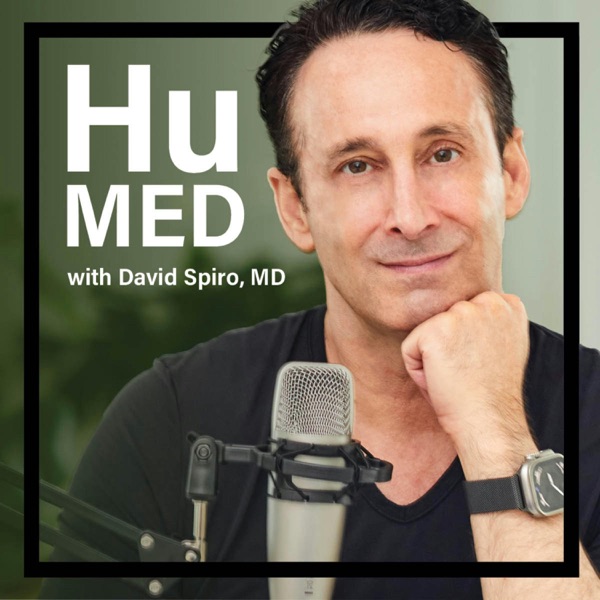
HuMed with David Spiro, MD
HuMed goes beyond diagnoses and procedures to explore the profound human experiences of medical professionals. Join Dr. Spiro as he engages in deep, candid conversations with fellow doctors, nurses, and other healthcare providers. They share the often-unseen realities of their work in the demanding hospital environment – the challenging cases, the emotional toll, and the ethical dilemmas they navigate daily.
- Medicine chart
- #53
- Episodes
- 73
- Releases
- Twice a week
- Typical length
- 47 min
- On air since
- 2025
- Latest episode
- 21 hours ago
Episodes
73 episodes, newest first
-
50 min
Pediatric ER Doctor Josh Belfer: At 14, He Worked for a Radio Star
Show notes
At 14, Josh Belfer was working for a radio star: Philadelphia talk-radio host Michael Smerconish. Today he is a pediatric emergency medicine attending at Children's Hospital of Philadelphia (CHOP) and Assistant Professor of Clinical Pediatrics at Penn, and he joins Dr. David Spiro on HuMed to tell how that mentorship shaped the physician he is today.
It started on a 45-minute bus ride to school in 2004, when his dad suggested he switch his Discman to AM talk radio. One visit to the studio led to news tips, then research for a book chapter, then a one-line email, "This is fantastic. Great work.", and years as an intern and researcher, including an elevator interview with Jose Canseco. Josh explains how the pace of live radio taught him to turn on a dime in the ER, and why he feels what his patients' families feel more now that he is a father himself. He and David also talk about surviving overnights, noticing when a colleague isn't OK, hot and cold debriefs after hard cases, and the mentors he watched lead through COVID during his chief residency year. It's a warm conversation about mentorship, resilience, and the human side of pediatric emergency medicine.
In this episode:
– A Discman, AM radio, and a 14-year-old's first studio visit
– The one-line email that launched years as a researcher
– An elevator interview with Jose Canseco
– How live radio trains you to turn on a dime
– "I feel what my patients feel more now that I'm a father"
– "If it was your child, what would you do?"
– Overnights, sleep, and a two-physician household
– Who notices when a colleague isn't OK?
– Hot and cold debriefs, and letting residents step away
– Mentorship, grit, and working like you could get cutChapters
00:00 "The parents are hearing that noise"
00:16 Meet Dr. Josh Belfer
01:39 The story he chose to tell
02:39 2004: a freshman on a 45-minute bus ride
04:12 A Discman, his dad, and Philly talk radio
05:58 Election night and an invitation to the studio
06:49 First morning in a shoebox studio
08:47 Research for a book chapter at 14
09:41 "This is fantastic. Great work."
10:52 Reporting from the field
12:11 An elevator interview with Jose Canseco
14:56 Radio's pace, and the road to the ER
15:15 Breaking news at 6:45 a.m.
16:44 No script in the pediatric ER
18:09 Focus, hard work, and staying humble
20:21 Fatherhood and a career at CHOP
22:38 "I feel what my patients feel"
23:35 "Is this something to be worried about?"
24:45 Overnights, sleep, and emotional reserve
26:30 How he gets through overnights
29:13 Who notices when a colleague isn't OK?
30:47 "Weren't you just here yesterday?"
31:34 Starting over as a new attending
35:02 When residents see something hard
35:54 Hot and cold debriefs, explained
37:20 Letting a resident step away
39:18 The check-in, days later
40:24 The power of "Are you okay?"
41:16 Grit, resilience, and working like you could get cut
43:56 Mentors, then and now
45:05 Chief resident when COVID hit Long Island
46:31 Rapid fire: Sixers or Knicks?
47:35 HipPEMcrates and the PEM Podcast
49:20 Closing reflectionsJosh earned his BA at the University of Pennsylvania and his MD at Rutgers Robert Wood Johnson Medical School, completed pediatric residency and a chief residency year at Cohen Children's Medical Center, and trained in pediatric emergency medicine at Columbia University. He created HipPEMcrates, a pediatric emergency medicine education blog (hippemcrates.com), and works behind the scenes on the PEM Podcast with his father, Dr. Robert Belfer.
HuMed unveils the human side of medicine, hosted by Dr. David Spiro, MD.
New episodes on Apple Podcasts, Spotify, and YouTube — please follow and leave a rating, it helps other listeners find the show.
-
34 min
Clinical Lipid Specialist Dr. Josh Wageman: "He Was a Ticking Time Bomb"
Show notes
What if your cholesterol looks normal, your 10-year risk score is just 2.3%, and you're still a ticking time bomb? Josh Wageman, PhD, DPT, a clinical lipid specialist, physician assistant and author of The Home Security System and the Lipid Neighborhood, joins Dr. David Spiro on HuMed to tell the story of a fit, running friend whose Lp(a) and coronary artery calcium score revealed heart disease his routine labs had missed.
His friend's family history was riddled with heart attacks, yet his blood pressure, blood sugar and LDL were all normal. One conversation on a 5:30 a.m. run led to two extra tests: an Lp(a) of 128 mg/dL and a calcium score of 2,814. He needed a five-vessel bypass, and a year later he finished a half Ironman. Dr. Wageman explains why he calls Lp(a) "the felon of the lipid neighborhood," what a low-dose coronary calcium (CAC) scan shows and what it costs, and how statins, ezetimibe and PCSK9 inhibitors work, told through his mailman metaphor. It's a warm, often funny conversation about prevention, friendship, and using what you know to help the people you love.
In this episode:
– Normal cholesterol, a 2.3% risk score, and a calcium score of 2,814
– "Got plaque? Get a CAC": what a coronary calcium scan shows
– Why Lp(a) is "the felon of the lipid neighborhood"
– A five-vessel bypass, then a half Ironman a year later
– The four pillars of your heart's home security system
– Why Lp(a) is worth checking at least once in a lifetime
– Menopause, statins and rising Lp(a)
– Statins, ezetimibe and PCSK9 inhibitors, explained with mailmen
– "Prioritize protein and eat real food"Chapters
00:00 "He was a ticking time bomb"
00:18 Meet Josh Wageman, clinical lipid specialist
01:38 Why stories stick better than textbooks
02:13 "Beyond the 10-year risk calculator"
02:41 A runner friend with a worrying family history
03:40 "Got plaque? Get a CAC"
04:01 Normal labs and a 2.3% risk score
05:05 "He picked the wrong parents": an Lp(a) of 128
05:35 A coronary calcium score of 2,814
06:20 A ticking time bomb and a five-vessel bypass
07:08 A half Ironman one year after surgery
07:57 What a calcium scan is, and what it costs
09:28 From reactive to preventive medicine
10:01 Does a calcium score show narrowing?
11:07 "You're fine till you're not"
11:58 The four pillars of your home security system
12:58 Lp(a): the felons of the lipid neighborhood
14:18 The genetic piece: one in five people
16:06 Checking Lp(a) at least once in a lifetime
17:10 Menopause, statins and rising Lp(a)
18:02 The patient whose Lp(a) jumped on a statin
19:02 Statins, plaque and the art of medicine
21:30 Beyond "HDL good, LDL bad": the mailman metaphor
22:34 Statins, ezetimibe and PCSK9, in plain English
24:18 Why metaphors and stories matter
25:30 Ultra-processed food and the fat-free era
26:28 "Prioritize protein and eat real food"
28:05 What "real food" means, and what about eggs?
30:18 Glucose "dollar bills" and your fat "savings account"
32:36 Where to find his book
33:23 Closing reflectionsJosh's book, The Home Security System and the Lipid Neighborhood, is on Amazon, with links at lifelovelipids.com.
This episode is education and storytelling, not individual medical advice. Talk with your own clinician about testing and treatment.
HuMed unveils the human side of medicine, hosted by Dr. David Spiro, MD.
New episodes on Apple Podcasts, Spotify, and YouTube — please follow and leave a rating, it helps other listeners find the show.
-
42 min
Dr. Peter Crane: Reading His Own Tumor Report Mid-ER Shift - Why He'd Still Choose Family Medicine
Show notes
What happens when a rural doctor opens a scan report in the middle of his ER shift, and it's his own? Dr. Peter Crane — a board-certified family physician in full-time rural practice in Idaho and host of the podcast Doctors Making a Difference — joins Dr. David Spiro on HuMed to talk about the night he read "26 centimeter, likely sarcoma" with patients still waiting, and the long road from radiation and major surgery back to full-time practice.
Dr. Crane took over the practice of the doctor who delivered him, in the town where he grew up, caring for patients "from the cradle to the grave." He describes finding the mass himself at 4 a.m., finishing his shift after reading the report, and feeling almost ashamed to be sick. He talks about the surgeon, his own medical school preceptor, who made him promise six weeks off, the two residency friends who took over his entire practice, and the moment of clarity that convinced him he would choose medicine all over again. It's a candid, hopeful conversation about compartmentalization, burnout, life without anonymity in a small town, and being the kind of doctor you'd want for your own family.
In this episode:
– Reading his own "likely sarcoma" report mid-shift
– Compartmentalization: survival skill or harm?
– The surgeon who made him promise six weeks off
– Two friends who took over his whole practice
– What really matters, and why he'd still choose medicine
– No anonymity: doctoring in a small town
– How a rural family doctor stays current in everything
– Fixing burnout with sleep, staffing, and better schedules
– "I don't trust doctors, but I trust you": trust and misinformationChapters
00:00 "26 centimeter, likely sarcoma"
00:17 Meet Dr. Peter Crane
01:54 Taking over for the doctor who delivered him
02:50 Jet-lagged at 4 a.m.: a mass in his own abdomen
04:09 When your practice partner is your doctor
06:41 What a doctor feels when it's his own mass
08:20 Reading his own CT report mid-ER shift
09:42 Is compartmentalization healthy?
11:56 Warning signs he missed, and feeling ashamed to be sick
13:07 Biopsy, waiting, and a rare diagnosis
14:41 His surgeon: his own medical school preceptor
15:43 What really matters in life
16:42 "If I got to do it again, I'd be a doctor"
18:36 How being a patient changed the way he practices
19:17 Nerve damage and the long road back
20:49 Doctor and patient in the same small hospital
21:55 A rash check on aisle 13: life without anonymity
23:29 Why every doctor should practice rural for a while
26:16 How a rural family doctor stays current in everything
28:02 Six weeks off, and the friends who covered his practice
30:36 "I just do everything every day"
31:31 When helicopters can't fly: tele-critical care
33:45 Burnout before the tumor, and what fixed it
36:58 Misinformation and vaccine hesitancy
38:19 "I don't trust doctors, but I trust you"
39:19 Why we need more doctors making content
40:36 Closing reflectionsHuMed unveils the human side of medicine, hosted by Dr. David Spiro, MD.
New episodes on Apple Podcasts, Spotify, and YouTube — please follow and leave a rating, it helps other listeners find the show.
-
55 min
Chiropractor Dr. Stephen Hussey: "I Had a Widowmaker Heart Attack at 34"
Show notes
He looked fit, ate well, exercised, and had a calcium score of zero six months earlier. Then, at 34, Dr. Stephen Hussey had a widowmaker heart attack.
Diagnosed with type 1 diabetes at age nine, Dr. Hussey, a doctor of chiropractic with a master's in functional medicine and author of Understanding the Heart, spent his adult life trying to do everything right. In this episode, pediatric ER physician Dr. David Spiro talks with him about the heart attack he suffered alone during COVID, the frustration of feeling unheard in the hospital and being labeled noncompliant, his decision to depart from the standard medication plan, and the stress he believes set the stage for it all. David also presses him on the hard question: how can he know what actually drove his recovery? The episode ends with what nearly dying at 34 changed about his life and purpose.
CHAPTERS
0:00 "I had a widowmaker heart attack at 34"
0:16 Meet Dr. Stephen Hussey
1:39 Asthma, allergies and type 1 diabetes at age nine
2:53 "I felt like a pincushion" and the nurse with the magic kit
4:19 Giving bad news to children and families
7:25 From patient to health practitioner
9:17 What "avoiding toxins" means to him
10:33 Sauna, sweat and microplastics
14:13 A heart attack despite a zero calcium score
17:53 What a widowmaker heart attack felt like
21:28 Alone in the hospital during COVID
23:30 Labeled "noncompliant"
25:23 Why he declined the standard medications
27:00 A new blockage in his leg
29:04 Light, sauna and circadian rhythm
33:58 Semmelweis and challenging medical dogma
35:17 How does he know what worked?
37:43 Stress and the nervous system
41:38 The 36 hours before the heart attack
43:28 Heart attacks without blocked arteries
45:44 "Stay in your lane": answering his critics
47:55 Heart disease, obesity and insulin resistance
51:43 What nearly dying at 34 changed
54:44 Closing
Watch the full video on YouTube: HuMed with David Spiro, MD
Follow HuMed on Instagram: @humedpod
HuMed unveils the human side of medicine through real stories from clinicians. Guests share their personal experiences and views, which are their own. This episode is for storytelling and education, not medical advice. Talk with your own doctor before changing any treatment.
-
1 hr
Longevity Physician Dr. Vassily Eliopoulos: "He Looked Exactly Like Me"
Show notes
After years in emergency medicine, Dr. Vassily Eliopoulos (Dr. Vass) coded a man in a rural Wyoming ER who was his age, had no other risk factors, and looked exactly like him. That night pushed him from the ER toward longevity medicine and cardiovascular prevention.
In this episode of HuMed, pediatric ER physician Dr. David Spiro talks with Dr. Vass about why doctors neglect their own health, the "golden handcuffs" that kept him stuck, how therapy and CBT-I helped him heal from years of night shifts, and why he believes disease care and true health care are two different systems. He also walks through his longevity pyramid, built on community, purpose and sleep, not supplements and saunas.
CHAPTERS
0:00 He coded a man who looked exactly like him
0:28 Meet Dr. Vass: ER doctor turned longevity physician
2:05 The code in Rock Springs, Wyoming
4:48 Why doctors neglect their own health
8:13 The lost art of healing
11:03 "We're training technicians, not physicians"
15:07 Trapped in a broken system
18:18 The golden handcuffs
20:44 Healing from decades of night shifts
28:30 Disease care vs. true health care
35:37 Why no one told Dr. James Wittig he was sick
39:04 Advice to his younger self: don't let fear decide
42:32 Dr. Vass's longevity pyramid
44:55 What dying patients talk about
47:51 Purpose: the old dog and the rabbit
51:21 A quarterly "board meeting" with his kids
53:16 Fasting, thermal springs and community
57:54 Closing thoughts
Watch the full video on YouTube: HuMed with David Spiro, MD
Follow HuMed on Instagram: @humedpod
humedpod.com
HuMed unveils the human side of medicine through real stories from physicians. This episode is for education and storytelling, not individual medical advice.
-
55 min
Lifestyle Medicine Physician Dr. Melissa Mondala: "I Did Healing for Myself First"
Show notes
"I did healing for myself first, so I could become a better healer."
Before Dr. Melissa Mondala treated patients with lifestyle medicine, she needed it herself. She lived with IBS and reflux from her teens, and during her training at Loma Linda she was diagnosed with an atypical breast cancer. Changing how she ate, moved, slept and handled stress changed her health, and her husband's, and it reshaped how she practices medicine.
On this episode of HuMed, Dr. David Spiro talks with Dr. Mondala, a double-boarded family and lifestyle medicine physician, fellowship-trained in integrative psychiatry and integrative medicine, about the patients who shaped her: a young single mother of three with pancreatic cancer who kept running for her kids, and a fashion designer with an autoimmune disease who got her life back layer by layer.
They also discuss:
• Lifestyle medicine vs. integrative medicine, and where they overlap
• Why ferritin matters even when hemoglobin looks normal
• Her approach to adult behavior change: one habit, SMART goals and habit stacking
• What medical training leaves out about nutrition and sleep
• Advice for frustrated, burned-out physicians who feel stuck practicing reactive medicineDr. Mondala earned her MD at Chicago Medical School at Rosalind Franklin University. She is co-founder of the Doctor Lifestyle Clinic, a direct care practice, and author of Embody Lifestyle Medicine: How to Build a Successful Direct Care Startup.
HuMed unveils the human side of medicine through honest conversations with physicians. Follow the show so you never miss an episode.
Chapters
00:00 Cold open
00:22 Introducing Dr. Melissa Mondala
02:25 Her own health story: IBS, reflux and food as poison
04:21 Loma Linda and the Blue Zones
05:30 A breast cancer diagnosis during training
07:00 The pillars of lifestyle medicine and her husband's autoimmune disease
08:49 The young mother with pancreatic cancer
13:53 Lifestyle medicine vs. integrative medicine
18:50 A patient with autoimmune disease and a difficult cycle
27:36 Why ferritin matters
31:45 What standard medical training leaves out
36:48 Night shifts, sleep and processed food
40:09 How to change adult behavior
44:12 Accountability, SMART goals and habit stacking
47:05 Lifestyle medicine and autism spectrum disorder
50:54 Advice for frustrated, burned-out physicians
53:31 Closing
-
50 min
ER Physician Dr. Rick Pescatore: "Nobody Could Solve Her Mystery Illness"
Show notes
Dr. Rick Pescatore was driving to Pittsburgh with a woman he had met on Hinge, describing a kind of patient he sees every ER shift: pain, nausea, vomiting, and tests that all come back normal. She said the person he was describing "sounds exactly like my mom." A few weeks later her mother was dying in an ICU, and nobody could solve her mystery illness. The missing piece turned out to be vitamin B1 (thiamine). The woman from that drive is now his wife, Katie.
Dr. Pescatore is a board-certified emergency physician. He went through the U.S. Naval Academy, studied aerospace engineering, and served in the Navy's submarine force before medical school. He trained at Cooper University Hospital, served as Delaware's chief physician during the COVID-19 pandemic, is editor-in-chief of Emergency Medicine News, still works shifts in a community ER, and co-founded Belly MD.
In this conversation with Dr. David Spiro, he talks about helping diagnose his future mother-in-law, why so many ER patients are told they are normal when their lives are not, and how that pattern helped burn him out of full-time emergency medicine. They also get into what night shifts cost physicians, his Navy call sign, his time leading Delaware's pandemic response, and why an ER doctor who used to roll his eyes at supplements now sells them.
In this episode:
– The drive to Pittsburgh: "sounds exactly like my mom"
– An ICU stay nobody could explain, and the vitamin B1 answer
– "We tell them that they're normal, but their lives aren't"
– Disorders of gut-brain interaction and the ER
– Why he calls GLP-1 drugs some of the most revolutionary in history
– Burning out of emergency medicine, and the night-shift toll at every age
– F-18s, submarines, and the call sign "Aquaman"
– Chief physician for Delaware during COVID-19
– An ER doctor selling supplements: his answer to the eye-rolls
Chapters
(00:00) Cold Open: "Met a Girl on Hinge"
(01:05) Welcome & Meet Dr. Rick Pescatore
(03:16) The Drive to Pittsburgh: "Sounds Exactly Like My Mom"
(04:30) Decades of Symptoms, Then the ICU
(06:19) Vitamin B1 and Gastrointestinal Beriberi
(07:03) "We Tell Them That They're Normal"
(08:12) Saving Her Mom's Life With a Vitamin
(10:03) Belly Pain: What the ER Can't Fix
(11:27) Disorders of Gut-Brain Interaction
(13:09) Should Emergency Medicine Change?
(14:21) Diet and the American Food System
(16:47) Sulfite Preservatives and Vitamin B1
(19:31) GLP-1s, Falls, and the Toenail Question
(22:50) The Naval Academy, F-18s, and the Call Sign "Aquaman"
(27:24) "I Burned Out of Emergency Medicine"
(29:26) The 3 a.m. Problem: Night Shifts and Physician Health
(30:40) Dr. Spiro on Night-Shift Anxiety
(33:04) Chief Physician for Delaware During COVID-19
(35:57) Building Belly MD
(40:33) Supplements: "I Used to Be That Guy"
(44:12) An ER Doctor Selling Supplements?
(45:43) Testing for Vitamin Deficiencies
(47:47) Closing
Learn more about Dr. Pescatore's work: bellymd.com
Check out the Inside HuMed Newsletter: https://www.humedpod.com/inside-humed
This episode is one physician's personal story and is not medical advice. Dr. Pescatore co-founded Belly MD, which sells supplements, as he discusses in the episode.
If this episode meant something to you, follow HuMed on Apple Podcasts and send it to one colleague who needs to hear it.
-
37 min
Neuro-Ophthalmologist Dr. Kim Blankshain: "What Is Happening?" Her Husband's Brain Surgery
Show notes
A Monday morning, 6:45. Dr. Kim Blankshain is changing her infant son when she hears a crash in the next room. Her husband is sitting on the edge of the bed, bleeding from a gash in his forehead. She expects a few stitches. Hours later an ER physician says the CT scan came back and he is being sent downtown to see neurosurgery right away. "What is happening?"
Dr. Blankshain is a neuro-ophthalmologist in the Chicago suburbs, a specialist in vision problems that begin in the brain and nervous system. She was in fellowship, trained to read MRIs and CTs, when the scan on the screen was her husband's: an epidermoid cyst pressing on his brainstem, and brain surgery set for the next morning. She joins Dr. David Spiro to talk about being the doctor in the waiting room, and how it changed the way she delivers bad news to her own patients.
In this episode:
- Why knowing the medicine made it harder, and the moment the neurosurgeon asked, "What do you do for a living?"
- The waiting-room buzzer three hours into a four-to-six-hour surgery: "That can't be good"
- Receiving bad news as a physician: "I wasn't really hearing what he was saying"
- How she gives hard news now: slow down, say it more than once, and sit in the silence
- Going back to work the day after her husband came home, with her time off for the year already used on six weeks of maternity leave
- Parental leave in medical training, and why she calls the culture "cruel"
- Working-mom guilt and the "have it all" lie: "Something has to give on any given day"
- Marriage after a baby: feeling like roommates, a year of couples therapy, and TV-free Thursdays
- What she tells pre-med students: "It's still just a job"Dr. Spiro also shares how he gives bad news to families in the pediatric ER.
Chapters
00:00:00 "What is happening?"
00:00:20 Meet Dr. Kim Blankshain
00:01:50 What a neuro-ophthalmologist does
00:02:22 A crash in the next room
00:04:10 The ER and the CT scan
00:06:08 Rush University: the MRI and the neurosurgeon
00:07:27 "What do you do for a living?"
00:08:14 Brain surgery, tomorrow
00:08:53 The waiting room: "That can't be good"
00:09:43 Six weeks of recovery
00:10:13 How it changed the way she sees patients
00:11:45 On the other side of bad news
00:13:04 Slow down, repeat it, sit in silence
00:14:17 Dr. Spiro: bad news in the pediatric ER
00:15:25 "You are so lucky that you came to me"
00:16:36 Back to work the next day
00:19:41 Parental leave in medical training
00:22:43 Balance with a five-year-old
00:23:58 The "have it all" lie
00:24:39 On call on the Fourth of July
00:26:37 "It's still just a job"
00:27:50 Marriage after a baby
00:29:23 Couples therapy and TV-free Thursdays
00:32:33 Why she believes in therapy for physicians
00:33:44 "Nobody says that to a mechanic"
00:34:08 Why she reached out to HuMed
00:35:31 ClosingCheck out the Inside HuMed Newsletter: https://www.humedpod.com/inside-humed
This episode is one physician's personal story and is not medical advice.
If this episode meant something to you, follow HuMed on Apple Podcasts and send it to one colleague who needs to hear it.
-
42 min
Kidney Transplant Physician Dr. Aditya Pawar: "It Started From a Mistake"
Show notes
A resident on night call writes one word in a chart to describe his patient's husband, a man in his 90s: "senile." He thinks it means "very old." The note gets corrected, but the word stays in the edit trail, and a few days later the record shows the patient has read it. Every instinct tells him to leave it alone. He calls the family to apologize anyway.
Dr. Aditya Pawar is a transplant nephrologist at Beth Israel Deaconess Medical Center and Harvard Medical School. That phone call became "Safe Space," his essay in The New England Journal of Medicine. He joins Dr. David Spiro to talk about what the couple said to him on that call, why it took him years to understand it, and who a clinician's "safe space" really protects.
In this episode:
- The apology he almost didn't make, and why he says it would be just as hard tomorrow
- Why "safe space" in medicine often protects the doctor, and what a "brave space" with patients looks like
- Telling a patient you don't yet know the best approach
- Practicing in India versus the U.S.: five-minute visits that never really end, and seeing your patients at the grocery store
- Why he calls paternalism "a protective mechanism"
- What he says to kidney patients who won't let their own child donate
- What he tells first-year medical students about the 20-minute visit that needs an hour and twenty
- His uncle's lesson from Sunday evenings seeing patients in a village in India: "As a physician, we've always lost"
- Six hugs from a grieving family after one of his first codesDr. Spiro also shares what it was like to lead his team's debrief after a child died in his pediatric ER.
Read the essay: "Safe Space," N Engl J Med 2026;395:840-843. https://doi.org/10.1056/NEJMp2518528
Chapters
00:00:00 "As a physician, we've always lost"
00:00:20 Meet Dr. Aditya Pawar
00:02:03 "It started from a mistake"
00:02:33 Night call, a couple in their 90s, and one word
00:04:27 The phone call he almost didn't make
00:05:11 What the couple meant by "safe space"
00:06:37 Parents in the room during a resuscitation
00:08:20 Who is the safe space for?
00:10:03 From safe spaces to brave spaces
00:12:55 Medicine in India versus the U.S.
00:15:11 Sharp boundaries, and crossing the line
00:17:43 "Every single cell of my body is telling me don't do it"
00:21:14 What safe space meant as a child in India
00:23:10 Family, elder care, and what gets lost
00:28:16 Organ donation: "Do not take away that decision from me"
00:30:00 Teaching first-year medical students
00:34:26 Dr. Spiro: the debrief after a child dies
00:38:06 His uncle, Dr. S.S. Jamwal
00:39:49 One of his first codes as a resident
00:41:11 "This concept of death, you have to get comfortable with it"
00:42:11 Six hugs from a grieving family
00:42:44 ClosingIf this episode meant something to you, follow HuMed on Apple Podcasts and send it to one colleague who needs to hear it.
-
46 min
Cancer Surgeon Dr. James Wittig: "I Was Hanging On by a Thread"
Show notes
Dr. James Wittig built his career saving children's limbs from cancer. Then a heart scan he asked for himself led to a catheterization that found a 99% blockage in his left anterior descending artery. "I was hanging on by a thread."
Dr. Wittig is an orthopedic oncologist and sarcoma surgeon with more than 25 years in limb-sparing surgery for bone and soft tissue tumors in children and adults. In this conversation with Dr. David Spiro, he traces his path from Paterson, New Jersey, where his father was a police officer and his mother a hairdresser, to the mentor who drew him into limb-sparing surgery for childhood bone cancer.
He describes chairing a department of 120 orthopedic surgeons while starting a residency program, sleeping about five hours a night for 30 years, and the blood pressure and cholesterol numbers that kept getting explained away. He talks about the stretch of roughly 180 hours of surgery in two weeks that ended in kidney failure, his decision to resign, the chest pain on the treadmill, and the procedure where he went into ventricular tachycardia before three stents opened the artery. He also shares what he would tell his younger self, why doctors treating doctors can be a trap, how he rebuilt his sleep, and why he is now studying hypnosis and mind-body medicine for cancer patients.
(00:00) Cold Open: "Hanging On by a Thread"
(00:18) Welcome & Meet Dr. James Wittig
(02:03) Growing Up in Paterson, New Jersey
(04:28) The Mentor Behind Limb-Sparing Surgery
(06:01) From Amputation to Saving the Limb
(08:53) Why Bone Cancer in Kids Gets Missed
(10:22) The Heart Scan He Asked For
(11:48) 80-Hour Weeks and Five Hours of Sleep
(14:11) A 70% Blockage
(15:06) 180 Hours of Surgery, Then Kidney Failure
(16:30) Chest Pain on the Treadmill
(18:28) 99% Blocked
(19:25) V-Tach on the Table and Three Stents
(20:53) What He'd Tell Himself 20 Years Ago
(23:48) Solo Practice, On Call 24/7
(25:40) Purpose, Prayer, and Learning to Say No
(27:34) Why Nobody Said "This Is Too Much"
(29:27) The Trap of Doctors Treating Doctors
(31:47) Finding a Mentor Who Advocates for You
(32:42) "It Wasn't Human"
(33:40) Life After the OR: Hypnosis and Mind-Body Medicine
(37:00) How He Rebuilt His Sleep
(42:10) Getting the Phone Out of the Bedroom
(44:09) His Advice for Physicians in Their 50s
(45:08) New York vs. New Jersey & GoodbyeContact Dr. Wittig:
JamesCWittigMD.com
TumorSurgery.org
MandalaMedicalGroup.com
Check out the Inside HuMed Newsletter: https://www.humedpod.com/inside-humed
This episode is one physician's personal story and is not medical advice.
It is also available on video on Apple Podcasts. Follow HuMed so you never miss an episode.
-
47 min
Allergist Dr. Lauren Fine: "Stop Asking for Permission"
Show notes
Dr. Lauren Fine had a thriving allergy practice, a faculty position and patients lined up at the door, and she still felt she needed someone's permission to change. Her answer now: "Stop asking other people for permission."
Dr. Fine is an allergist and immunologist, a teacher, a clinician at the VA in the Fort Lauderdale area, and a life coach. In this conversation with Dr. David Spiro, she tells the story of a patient who casually asked her to check a biopsy result that wasn't hers to deliver, and what happened when she opened his chart. She talks about why she prefers shared decision-making to "doctor knows best," how she delivers bad news by letting patients say it first, and why, for her, burnout comes down to losing connection with patients. She also explains why reinventing yourself is "like erasing a chalkboard," what a life coach actually does (hint: it isn't giving advice), and why nobody hands out awards for answering a portal message at 9 p.m. She closes with her view on rising food allergies, how she introduced peanuts to her own kids early, and why community matters more than balance.
(00:00) Cold Open: "My Heart Just Sunk"
(00:27) Welcome & Meet Dr. Lauren Fine
(02:13) The Biopsy Result She Wasn't Supposed to Read
(05:00) A Road Trip Across America
(05:50) Paternalism vs. Shared Decision-Making
(09:31) Why She Chose to Tell Him
(10:34) How She Delivers Bad News
(13:38) Getting to Know Patients as People
(16:10) Burnout Is About Connection
(18:04) Why Life Coaching?
(19:23) Stop Asking for Permission
(20:30) Reinvention Is Like Erasing a Chalkboard
(23:07) What a Life Coach Actually Does
(26:40) Why We All Need to Slow Down
(29:03) Phones, Boundaries, and the 9 PM Email
(33:49) Diet, Processed Food, and Disease
(36:22) Are Food Allergies Really Rising?
(39:03) Peanuts and Early Introduction
(41:55) Allergist, Teacher, Coach, Mom: How She Does It
(43:59) Community and Giving and Receiving Love
(46:18) Closing ThoughtsThis episode is also available on video on Apple Podcasts. Follow HuMed so you never miss an episode.
-
56 min
ER Physician Dr. Mark Pappadakis: "Medical School Rejected Me Three Times"
Show notes
Rejected from medical school. Failed anatomy. Failed his emergency medicine boards by two points, then by one. Today Dr. Mark Pappadakis teaches at the medical school that turned him down three times.
Emergency physician Dr. Mark Pappadakis joins Dr. David Spiro, MD for an honest conversation about failure, resilience, and the human side of medicine. He shares:
- Why he applied to only three medical schools, and what failing a post-bacc year taught him
- How five years as an ER tech made him fall in love with emergency medicine
- Getting off a waitlist three weeks before classes started
- Failing his boards twice by a total of three points, and passing on the third try
- Why he tells patients "I don't know," and why a bounce-back can be a success
- A mentor's line that stayed with him: "All of us carry a graveyard"
- Imposter syndrome, self-doubt, and being the doctor to his own parents during COVID
- Why he started his own podcast to fight medical misinformation
Dr. Pappadakis trained at Touro College of Osteopathic Medicine and completed his emergency medicine residency at Metropolitan Hospital in New York City, where he served as chief resident. He is a clinical assistant professor of emergency medicine, serves on the board of the Bucks County Medical Society, and hosts the JAFERD Cast podcast.
Chapters
0:00 The school that rejected him three times
1:47 A story about failure
3:55 The post-bacc year and failing anatomy
5:50 Five years as an ER tech
10:15 Off the waitlist three weeks before classes
16:21 Failing the boards by two points, then one
18:28 Passing the boards and going full circle
20:09 MD vs DO and the Caribbean option
24:16 How failure made him a better doctor
29:06 Telling patients "I don't know"
33:54 "All of us carry a graveyard"
42:40 Failure, marriage, and family
46:04 Imposter syndrome and self-doubt
47:15 Why he started the JAFERD Cast
If this episode meant something to you, follow HuMed here on Spotify or Apple Podcasts and leave a rating. It helps other clinicians find the show.
-
51 min
Cardiologist Dr. Jaya Mallidi: "The Trust I Had With the Universe Lay Broken"
Show notes
"How can a child be taken away from the mother?" When cardiologist Dr. Jaya Mallidi lost her daughter, Saachi, at 19 weeks, the trust she'd always had with the universe "lay broken like a vase in an empty room."
In this deeply honest conversation, Dr. Jaya Mallidi joins host Dr. David Spiro to explore the human side of medicine from the other side of the bed. She shares surviving a rare, life-threatening hemothorax from thoracic endometriosis, leaving the interventional cardiology she loved, enduring nine cycles of IVF, and grieving a pregnancy loss while a profession built on duty pulled her back to work a week later. She also shares how she slowly rebuilt her faith — through the Japanese image of Jizo, a practice of "forgiving the universe," and a hard-won belief that in medicine, presence matters more than any prescription.
A conversation about grief, resilience, womanhood in medicine, and learning that it's okay to take up space.
Dr. Jaya Mallidi is a Professor of Clinical Medicine and cardiologist at Zuckerberg San Francisco General Hospital, where she serves as Director of Clinical Cardiology and Site Director for the UCSF Cardiology Fellowship. Her JAMA "A Piece of My Mind" essay reflects on the loss of her daughter and how medicine and society recognize — or fail to recognize — the grief of pregnancy loss.
In this episode:
00:00 "My trust with the universe lay broken"
03:40 Becoming the patient: a rare, dangerous hemothorax
06:10 Thoracic endometriosis and two lung surgeries
08:54 Leaving interventional cardiology and finding new purpose
11:11 Losing Saachi at 19 weeks
16:09 Why doctors return to work too soon
19:14 Medicine's missing backup system
22:24 The IVF journey: hope, failure, and nine cycles
28:36 When social media makes grief worse
30:48 A spiritual reckoning: finding a mental model
37:03 Jizo: the image that finally gave her peace
39:00 "Forgiving the universe"
41:09 How grief changed her as a teacher and clinician
45:07 A marathon, not a sprint
47:47 Presence over prescriptions in the age of AIHuMed unveils the human side of medicine — new conversations every week. If this episode moved you, share it with a colleague, and please follow and leave a rating on Apple Podcasts. It genuinely helps other clinicians find the show.
-
38 min
Psychiatrist Dr. Paniz Johari: When a Patient Dies — Grief, Guilt & Radical Acceptance
Show notes
"One of our social workers knocked on the door and said, so-and-so killed himself. I was just in shock."
What do you do with the rest of your day after that? Psychiatrist Dr. Paniz Johari joins Dr. David Spiro to talk about one of the least-discussed parts of medicine — losing a patient, and carrying it afterward.
Dr. Johari, an attending psychiatrist at Mather Hospital / Northwell Health, wrote a JAMA "A Piece of My Mind" essay called "On Losing a Patient" that moved David enough to reach out. Together they trace its thread: the shock and disbelief, replaying an encounter that felt "ordinary," the guilt of wondering what you missed, and the long work of separating confidence from certainty — what she calls "radical acceptance," and why accepting the limits of our control "is not surrendering."
They also get into how psychiatrists weigh whether a patient is safe to go home, why she chose the field, what's happened to mental health since COVID, the roles of sleep, exercise, and diet, and the stigma that still surrounds psychiatric care.
▶ Follow HuMed on Apple Podcasts so you never miss an episode — it's the single best way to support the show.
Chapters:
0:00 Intro — Dr. Paniz Johari and her essay
1:37 Losing a patient: the story
3:12 Writing as catharsis
4:36 Hearing the news
7:41 Assessing who's safe to go home
11:09 "How ordinary it felt"
14:34 Why she chose psychiatry
17:25 Mental health since COVID
21:13 Sleep, wearables, and mood
25:58 The stigma around psychiatric care
27:49 Therapy, exercise, and self-care
34:04 "Accepting is not surrendering"If you or someone you know is struggling, call or text 988 — the Suicide & Crisis Lifeline, available 24/7 in the US.
HuMed with David Spiro, MD — unveiling the human side of medicine. New episodes weekly on Apple Podcasts, Spotify, and YouTube.
podscan_rLPAXfcJVELgUhwcd66rLVyErpUcGFTV
-
38 min
Dr. Lois Lee: Protecting Kids from Gun Violence, and the Fight for Their Health
Show notes
What if the biggest threats to a child's life are also the most preventable? Dr. Lois Lee — pediatric emergency medicine physician and researcher at Boston Children's Hospital, professor of clinical pediatrics at Harvard Medical School, and a candidate for AAP president-elect — joins Dr. David Spiro on HuMed to talk about the work of keeping kids safe: from gun violence and injury prevention to vaccines, Medicaid, and the advocacy that changes policy.
Dr. Lee opens with the residency moment that shaped her career — a family forced to choose between buying food and their child's asthma inhaler — and traces how that experience led to decades of research and legislation. She explains why she frames firearm safety the way pediatricians approach drowning prevention, why most firearm deaths are suicides rather than homicides, the "agree to agree" approach to finding common ground, and what worries her most about children's health today. It's a candid, hopeful conversation about how one physician decided to change the system — and how anyone can start.
In this episode:
– The story that started it all: "food or medicine"
– How universal child health insurance changed outcomes
– Passing booster-seat and ATV-safety laws
– Firearm safety framed as injury and suicide prevention
– Why local data changes the conversation on guns
– Medicaid, CHIP, and the fallout she fears from HR1
– Vaccines and the return of preventable disease
– Advice for physicians who want to make changeChapters
00:00 "Food or medicine": the moment that shaped a career
00:23 Meet Dr. Lois Lee
01:44 A family forced to choose between food and medicine
03:33 How universal child health insurance changed outcomes
06:13 The mentor, airbags, and kids in the front seat
07:35 Passing booster-seat and ATV laws in Massachusetts
09:35 Did the ATV law actually reduce injuries?
10:42 Staying human: balance and boundaries
12:07 Music, and returning to the piano at Emory
15:15 How music makes a better physician and leader
16:27 Firearms: the #1 cause of death for U.S. children
17:16 Is it uncomfortable to talk about gun violence?
18:41 Firearm safety framed like drowning prevention
20:06 "Agree to agree": finding common ground
21:14 Secure storage and hunting culture
22:56 Advice for doctors who want to change the system
25:09 Why most firearm deaths are suicides, not homicides
26:33 Mental health in the pediatric ER
27:14 What keeps her up at night: Medicaid, CHIP & HR1
30:04 Vaccines and the return of preventable disease
30:49 Telling the truth in an age of misinformation
33:56 Should the ER discuss vaccines? Teachable moments
36:16 Closing reflections & why she still loves the workHuMed unveils the human side of medicine, hosted by Dr. David Spiro, MD.
New episodes on Apple Podcasts, Spotify, and YouTube — please follow and leave a rating, it helps other listeners find the show.
If you or someone you know is struggling, call or text the 988 Suicide & Crisis Lifeline (U.S.).
-
42 min
Navy Anesthesiologist Dr. Zachary Meade: From Childhood Trauma to Becoming a Doctor
Show notes
Dr. Zachary Meade watched his grandfather shoot his father to save his mother's life. He was a child. He thought it was normal. "Apparently it's not normal."
Dr. Meade is a Navy anesthesiologist based in San Diego who took one of the least conventional roads into medicine you will ever hear. Before medical school he was an Army bomb squad technician, a firefighter, an EMT, and an electrical engineer, and he served in the Army, the Air Force, and the Navy.
Before any of that he was a kid in Indiana and Florida moving between homes and foster care, failing freshman English, with nobody in his family who had ever done any of this.
Today he reaches over 400,000 people online debunking medical misinformation. In this conversation with Dr. David Spiro, he talks about the grandparents who rebuilt his foundation, what the bomb squad taught him about attention to detail ("an 84 essentially meant you died"), the faith that gave him purpose, and the hardest question of the episode: has he forgiven his parents? He shares the phone call that ended contact with his father, the rule that helped his mother get sober, and the "cultural divide" that opens up when you become the first physician in your family. He closes with what he would say to 10-year-old Zach, and
Dr. Spiro responds with a story from his own pediatric ER that he says will change how he practices.
Chapters:
(00:00) Cold Open: "My Dad Was a Very Violent Man"
(00:16) Welcome & Meet Dr. Zachary Meade
(01:20) "I Never Saw Me Being a Physician"
(02:18) Indiana, Florida, and a Childhood That Wasn't Normal
(04:55) Foster Care and a Greyhound Bus Through Fort Benning
(06:13) Joining the Army at 17: Bomb Squad, Not Chaplain
(07:11) The Grandparents Who Rebuilt His Foundation
(08:53) Bill Henson: Forgiveness, Hard Work, and the Balance Between
(10:05) What the Bomb Squad Taught Him: "An 84 Meant You Died"
(11:50) Wounded Veterans and the Pivot to Engineering
(12:26) Carle Illinois College of Medicine: Building Physician Innovators
(13:18) Landmines in the Woods: The Stateside EOD Mission
(15:08) Why He Chose the Navy
(16:43) How Childhood Trauma Shaped Him as a Physician
(17:44) A Steeper Hill Than His Peers
(18:24) How Faith Shaped Him
(19:39) What It Means to Serve
(21:37) "Have You Forgiven Them?"
(22:12) Married at 20 and Realizing What Normal Was
(23:22) His Father's Relapse and the Phone Call From the NICU
(24:18) "I Can Love Him. I Can Even Forgive Him."
(25:39) The Rule That Helped His Mother Get Sober
(26:59) The Cultural Divide: "I Concur, Doctor"
(28:45) Reaching 400,000 People Online
(29:59) Fighting Misinformation That Can Kill
(33:12) Tommy Martin and Doing Good on Social Media
(34:21) What Would You Tell 10-Year-Old Zach?
(36:20) "This Is Just the Intro Scene to Your Life"
(36:58) Dr. Spiro's Story: "I'm Here Because No One Loves Me"
(39:44) Closing Thoughts and Zach's Question for DavidFollow HuMed so you never miss an episode.
-
53 min
Internist Dr. Robert Beck: "He Wasn't Worthy of the Care"
Show notes
Two attending physicians declared medical futility on a man in his
late 40s. He was awake. He was begging for the ICU. He was begging
for his mother. And the only doctor at his bedside that night was
an intern on his second call shift.
Dr. Robert Beck has carried that night for nineteen years.
In his second appearance on HuMed, Dr. Beck tells the story of a
patient at New Orleans' Charity Hospital in July 2007 — and what it
taught him about paternalism, about abandoning learners, and about
the difference between a clinical judgment and a judgment about
whose life is worth saving. David asks him directly whether race
changed the outcome, and Dr. Beck's pause before answering is the
turning point of the episode.
The second half is a practical masterclass: how to deliver bad
news, the four questions every patient is actually asking, and how
end-of-life care and medical assistance in dying work in the
Canadian system where Dr. Beck now practices.
ABOUT THE GUEST
Dr. Robert Beck is an internist. He completed medical school,
internal medicine residency, and a chief residency at Tulane, spent
ten years in private practice in Tennessee, and moved to the
Pacific Northwest of Canada in 2020. He hosts The Interesting MD
podcast.
IN THIS EPISODE
00:00 "He wasn't worthy of the care"
00:24 Welcome back, Dr. Robert Beck
02:03 What counts as a difficult conversation?
02:46 July 2007: second call night at Charity Hospital
05:13 The patient nobody wanted to touch
06:08 Two attendings declare medical futility
07:40 "His die is cast"
10:02 Alone at the bedside until 4:30am
12:28 How it changed the way he supervises residents
13:11 "Do you think if he were white it would have been different?"
14:04 A pattern of practice
15:32 Paternalism vs. shared decision-making
19:03 Two white physicians talk about privilege
21:10 White flight on his childhood street
23:11 "Society was never going to allow him"
26:10 How to give bad news: the four questions
31:19 Sit down. Eye level. Every time.
33:03 Giving bad news in the pediatric ER
36:30 Teaching residents to deliver the worst news
39:09 When a patient chooses not to treat
40:09 Medical assistance in dying in Canada
43:14 The four pathways of end-of-life care
47:52 How the MAID assessment actually works
51:26 How a society treats its most vulnerable
A note on content: this episode includes frank clinical description
of sepsis, wound infection, and a patient's death.
Dr. Beck's podcast, The Interesting MD
HuMed is hosted by David Spiro, MD. New episodes weekly. If this
one resonated, the most useful thing you can do is leave a rating
on Apple Podcasts or Spotify — it's how other clinicians find us!
-
51 min
Pediatric Oncologist Dr. Joana Mack: "I'm Not Bossy, I'm the Boss"
Show notes
Dr. Joana Mack has been called "bossy" her whole career — in training, at work, even by her own mom. Now, she just says it back differently: "I'm not bossy, I'm the boss."
Dr. Mack is a board-certified pediatric hematologist-oncologist, NIH-funded researcher, and mother of five daughters, practicing at Arkansas Children's Hospital and UAMS. In this conversation with Dr. David Spiro, she opens up about the everyday bias she still encounters as a woman in medicine, how artificial intelligence is reshaping (and sometimes eroding) communication between doctors, why she's stopped chasing "work-life balance" in favor of "work-life integration," and the rituals — prayer, permission to cry, a trampoline park at midnight — that get her through the hardest days of treating children with cancer. She also shares a story from Dr. Todd Maxson's Grand Rounds that changed how she trains the next generation of physicians, and reflects on how far childhood leukemia survival has come in her lifetime, from a near-certain death sentence to roughly 90% remission today.
(00:00) Cold Open: "I Went to the Trampoline Park"
(00:16) Welcome & Meet Dr. Joana Mack
(01:51) Called "Bossy" Her Whole Life
(02:44) "I'm Not Bossy, I'm the Boss"
(03:59) Balancing 4 Jobs and 5 Daughters
(07:06) Staying Present as a Working Mom
(08:51) The Email That Calls Everyone "Doctor" Except Her
(10:47) Naming Unconscious Bias at Work
(13:26) Being a Role Model for the Next Generation
(16:08) AI in Medicine: Efficiency vs. Connection
(19:14) From "Google Parents" to AI-Informed Parents
(20:28) Prioritizing Herself and Her Marriage
(25:16) Phones, Sleep, and Circadian Disruption
(29:19) Why She Pours Into Medical Students
(30:42) Dr. Todd Maxson's Grand Rounds Story
(36:22) From a Death Sentence to 90% Survival
(38:49) How She Copes: Prayer, Tears, and the Trampoline Park
(42:08) A Prayer Circle in the ER
(47:00) The Village That Makes It Possible
(49:54) Closing ThoughtsThis episode is also available on video on YouTube and Apple Podcasts. Follow HuMed so you never miss an episode.
-
44 min
The Science of Stem Cells, Exosomes, and Healthy Aging with Dr. Mari Mitrani
Show notes
Can regenerative medicine help us live healthier for longer?
Physician-scientist and biotech entrepreneur Dr. Mari Mitrani joins Dr. David Spiro to explain the evolving science of stem cells and exosomes—including how these therapies work, where the evidence stands, and why responsible research and regulation are essential.
They also explore the foundations of healthy aging that are available to nearly everyone: nutrition, sleep, movement, strength training, hydration, community, and purpose.
Dr. Mitrani shares the life-changing experience that led her to medicine, her journey into biotechnology, and her vision for a more compassionate future in healthcare.
This conversation is for educational purposes only and does not constitute medical advice.
00:00 Meet Dr. Mari Mitrani 02:03 The night that inspired her 07:21 Entering biotechnology 11:11 How stem cells work 18:25 Healthspan versus lifespan 20:38 Foundations of healthy aging 23:15 Community and longevity 27:15 The future of stem cells 30:00 Why exosomes matter 34:02 Could humans live to 125? 35:30 Strength, bones and women’s health 38:07 Veganism and compassionate innovation
-
39 min
When the Doctor Becomes the Patient: Dr. Adam Bitterman On His Open-Heart Surgery
Show notes
What happens when a surgeon suddenly finds himself on the other side of the patient–doctor relationship?
Dr. Adam Bitterman—orthopedic surgeon, educator, and chair of orthopedic surgery at Huntington Hospital—joins Dr. David Spiro to discuss being diagnosed with an aortic aneurysm and undergoing urgent open-heart surgery.
Dr. Bitterman shares the fear of preparing for a seven-hour operation, the atrial fibrillation that required a second procedure, and the challenge of stepping away from his patients, colleagues, and family responsibilities. He also explains how becoming a patient transformed his approach to clinical care, physician health, work-life boundaries, and after-hours calls from frightened patients.
This candid conversation explores physician vulnerability, returning to medicine after serious illness, and why health, family, and a trusted support system must come first.
HuMed: Human Medicine reveals the human side of healthcare through honest conversations with physicians, patients, and healthcare leaders.
On these lists
HuMed with David Spiro, MD is one of the shows picked out on this list
More in Medicine
Placed highest on Apple Podcasts' Medicine chart right now