Podcast
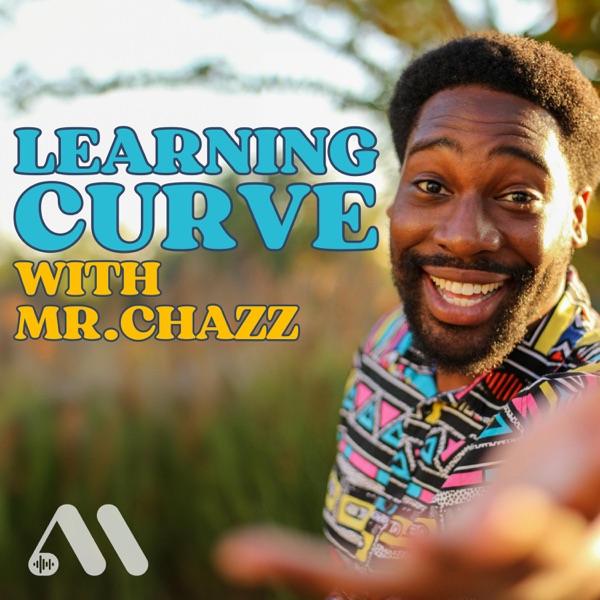
Learning Curve with Mr. Chazz
Join America’s favorite teacher, Mr. Chazz, as he helps parents and teachers navigate the challenges and triumphs of raising and teaching children. Featuring insightful conversations and practical advice delivered with Mr. Chazz’s signature compassion and wit - Learning Curve with Mr. Chazz gives listeners tips for fostering patience and empathy for both themselves and the kids in their lives. Learning Curve with Mr. Chazz is the most supportive space in podcasting for parenting tips and teaching wisdom, as Mr. Chazz says, “avoid being a perfectionist, become an improvenist, the goal isn’t to be perfect every day, the goal is to just be a little bit better every day”.
- Episodes
- 144
- Releases
- Weekly
- Typical length
- 54 min
- On air since
- 2020
- Latest episode
- 6 days ago
Episodes
144 episodes, newest first
-
1 hr 4 min
Hire for Heart, Train for Skill : Building a Healthy School Culture
Show notes
Building a healthy culture with Noreen
Wed, 30 Sept 26
• Head of School at Little Village School in Missouri City, Texas
• Runs whole-school transformations for ECE, childcare, and Montessori schools via Trainbright
• Montessori practitioner for 18 years, started as a receptionist at a boutique school
• Mother of two college-bound sons; credits Montessori with improving her parenting• Core hiring philosophy: find people with heart, train the skill
• Structured onboarding with clear probationary stages
• Experienced hires can be harder to mold than newcomers
• “Fire fast” when fit is clearly wrong
• State-funded apprenticeship programs worth exploring for pipeline (New York likely has equivalents)• “The leader brings the weather”: team mirrors the leader’s behavior exactly
• Reframing negative language in real time
• Core value: child first, then growth mindset
• Feedback is gold: someone giving feedback is investing in you• Goal of conflict is not to eliminate it but to keep it from turning personal
• Conflict as communication: frustration or pushback means “work with me here”
• Preparing leaders for difficult conversations• Core values are what you already are, not aspirational statements
• Values must be visible in how hard decisions get made, not just on the wall
• Little Village screens parent community, not just staff
• Parent education as a core part of childcare• For leaders: “You can’t teach fire safety during a fire.” Observe, bring calm, wait until everyone is ready to receive the message
• For parents: “It’s not that deep.” Reactive behavior is brain-body mechanics, not a verdict on your parenting. Apologize quickly; ego weakens relationships
• For teachers: Observe before you act. 80% of classroom problems stem from lack of observationLearn more about your ad choices. Visit https://podcastchoices.com/adchoices
-
46 min
How to Disrupt R*pe Culture and Create a Culture of Consent with Rosalia Rivera
Show notes
The Six-Part Prevention Framework (Mr. Chazz’s Synthesis of the conversation)
• Consent culture and checking in, embedded from toddlerhood
• Safe adults: regulated, non-punitive, curious, able to repair
• Safe peer communities, fostered by connected parents and teachers
• Sexual health values: adults clarify what they want to model before conversations arrive
• Advocacy and reporting: teaching kids to speak up, with language and practice
• Identifying safe relationships and groups: the foundation for navigating fraternities, group chats, and beyond• All six are interdependent; none works without the others
• Guest’s closing note: these lessons happen in small daily moments, not just formal book readingsLearn more about your ad choices. Visit https://podcastchoices.com/adchoices
-
46 min
Understanding R*pe Culture vs Consent Culture with Rosalia Rivera from Consent Parenting
Show notes
Why Children Stay Silent
Belonging need overrides safety rules
Kids will violate known rules to preserve a friendship or peer connection
Fear of losing the group is neurologically equivalent to exile
Tattling vs. reporting distinction never taught
Tattling: getting someone in trouble for non-safety issues
Reporting: telling a trusted adult about something unsafe, to or from anyone
Kids fear getting a friend in trouble, not just themselves
Fear of consequences compounds silence
Losing devices, games, or friendships if they disclose
Punishment-based parenting makes disclosure feel risky
90% of abuse is by someone the child knows and trusts
Child often wants the behavior to stop, not the person removed
Fear of the unknown outcome keeps them quiet
Consent Culture in Early Childhood
Birdhouse (Chazz’s Brooklyn school) models consent from ages 2-5
Adults prompt: “Do you like that?” then shift to peer-to-peer checking in
Mixed-age groups create natural power dynamic teaching moments
Goal: children eventually check in without adult prompting
Checking in changes the receiver’s experience too
Being asked “do you like this?” opens kids to genuine self-reflection
Same behavior lands differently when consent is sought vs. assumed
Tickling example: don’t remove the experience, teach the check-in
Sensory-seeking kids may want touch; the lesson is voice, not avoidance
Intervention, Redirection, and Education
Three-part framework when boundary crossing occurs:
a. Intervention: name what’s not okay
b. Redirection: offer an alternative way to play
c. Education: explain why, without shaming either child
Root cause matters: was it curiosity, desire for connection, or coercion?
Coercive behavior (knowing it’s wrong and continuing) is a red flag requiring escalation
Most peer sexual play is exploratory, not predatory
Chazz’s preschool story illustrates the dynamic
Friend used “I won’t be your best friend” as leverage, a learned threat pattern
Adult intervention happened but education was incomplete
Threat behavior in a 3-year-old reflects what she absorbed from her own environment
Learn more about your ad choices. Visit https://podcastchoices.com/adchoices
-
30 min
How to Regulate and Respond to Children (Quick Notes)
Show notes
I go through the 5 steps of Self Regulation with a specific parenting example
Learn more about your ad choices. Visit https://podcastchoices.com/adchoices
-
27 min
Assessing Assertiveness and Building Community (Look at the description for a community event in Brooklyn)
Show notes
In this podcast episode I share about a $35 Brooklyn Parenting and Teaching Q&A event with Dr. Shefali. However, I can get you into the even for FREE, if you reach out to me with you name and email through instagram or email.
This is the event link
I also discuss how to assess if you or someone else is improving their skill of assertiveness
Learn more about your ad choices. Visit https://podcastchoices.com/adchoices
-
58 min
The Continuous Process of Improving Teacher Benefits
Show notes
In this episode I talk about the unique benefits we provide to our Teachers/Safekeepers and the process of continuing to improve benefits for Safekeepers in a Conscious Discipline way.
Learn more about your ad choices. Visit https://podcastchoices.com/adchoices
-
22 min
Start of the School Year Pep Talk
Show notes
Learn more about your ad choices. Visit https://podcastchoices.com/adchoices
-
43 min
The Beginning of Birdhouse Part 2
Show notes
Learn more about your ad choices. Visit https://podcastchoices.com/adchoices
-
50 min
The Beginning of birdhouse
Show notes
Mr. Chazz and Sydney reflect on how birdhouse was started. We reflect on some of the adult skills that were needed to even start birdhouse. The same skills we open this school to teach children, were the same skills we needed to just start the school.
Learn more about your ad choices. Visit https://podcastchoices.com/adchoices
-
46 min
Mr Chazz Is Back!
Show notes
This is a reintroduction podcast.
Learn more about your ad choices. Visit https://podcastchoices.com/adchoices
-
59 min
Practical Potty Parent Practice with Joan Morgenstern
Show notes
Child readiness for toilet learning
Toilet Learning Philosophy & Readiness
Adult readiness more critical than child readiness
• Adults must have bandwidth to support child through incompetence-to-competence phase
• Adult anxiety transfers to child, reducing learning capacity
• Key question: Can adult maintain calm during transitional space?
Child readiness indicators
• Natural curiosity about potty (wanting to sit, try, emulate adults)
• Curiosity wanes when effort feels challenging
• Can child tolerate discomfort when effort > reward?
Three learning stages
1 Effort much greater than reward (hardest phase)
2 Effort equals reward
3 Effort becomes easier, reward greater (integrated/automatic)
Direct vs Indirect Learning Strategy
Maximize indirect learning before potty expectations
• Healthy adult modeling and body talk outside bathroom
• Play props and toys around potty concepts (not in bathroom)
• Books, songs, visuals about body processes
• Reduces performance anxiety in actual bathroom moments
Formal learning begins with underwear transition
• Children learn by doing, not just observing (swimming pool analogy)
• Must wear underwear before mastering skills (expect accidents initially)
• Keeping diapers while expecting consistent potty requests is unrealistic
• Children understand: diapers = pee/poop, underwear = different expectation
Body Boss Language Framework
Replace “big kid” language with “body boss”
• Avoids developmental struggle of wanting to be big vs baby
• Emphasizes empowerment and body ownership
• “You have an important job” vs “you’re a big kid”
• Normalize “listening to your body” and “taking care of your body” across all activities
Key phrases to use
• “Missing the signal” instead of asking “did you poop?”
• “Your body’s figuring out how to feel comfortable” vs “you should be able to…”
• “It’s not happening yet” vs “it’s not happening”
• Tag words: yet, soon, just a matter of time
Handling Poop Resistance
Treat peeing and pooping as separate skills
• Different body parts, consistency, pressure
• Give permission to ask for pull-up when feeling poop urge
• Celebrate progress: “toilet bowl is half full”
Prevent withholding behaviors
• Getting poop out of body trumps potty success
• Withholding causes constipation, behavioral issues, reduced bandwidth
• Offer dignified alternatives (pull-up, permission to soil underwear)
Response approach
• Reduce adult energy/focus around the struggle area
• Slow things down, reduce urgency
• Continue indirect learning without performance pressure
Practical Implementation
Potty equipment choices
• Offer both little potty and toilet seat attachment
• Let child choose which feels safer
• Feet firmly planted important for bowel movements
Nighttime readiness
• 5 consecutive nights of dry pull-ups
• Check earlier than usual wake time to distinguish holding vs morning release
Launching process
• Start at home, not school
• Long weekend good for formal launch
• Don’t go back and forth between diapers/underwear (confusing)
• Reset to diapers okay if stress becomes excessive
Resources & Support
Diaper Doggy book
• Creates ritual for transition (like Tooth Fairy)
• Uses body boss language throughout
• Available at Barnes & Noble (not Amazon)
Joan’s consultation services
• Virtual coaching: $25/30min, $50/hour through medical practice
• Personalized social stories available
• Works with families nationwide
Learn more about your ad choices. Visit https://podcastchoices.com/adchoices
-
56 min
Toddlers to Teens with Mindy Becky
Season 6, Episode 134
Show notes
Join her Teen Parenting Series here! https://forms.office.com/pages/responsepage.aspx?id=DQSIkWdsW0yxEjajBLZtrQAAAAAAAAAAAANAATFIR4xURU9NQkc4WUVOSklLMURaVlJNUkdCWjZXMC4u&route=shorturl
Mindy's Website
https://growwithusacademy.com/
Learn more about your ad choices. Visit https://podcastchoices.com/adchoices
-
56 min
How to Motivate Children with Laura Markham
Season 6, Episode 133
Show notes
Learn more about your ad choices. Visit https://podcastchoices.com/adchoices
-
1 hr 9 min
HELLO BROOKLYN with Mindy Becker
Season 6, Episode 131
Show notes
Learn more about your ad choices. Visit https://podcastchoices.com/adchoices
-
54 min
The Power of Music with Laurie Berkner
Season 6, Episode 130
Show notes
Learn more about your ad choices. Visit https://podcastchoices.com/adchoices
-
50 min
Human Tracking with Erin Williamson
Season 6
Show notes
www.patreon.com/mrchazz
Learn more about your ad choices. Visit https://podcastchoices.com/adchoices
-
58 min
The Journey of the Magical Teacher
Season 6, Episode 129
Show notes
Learn more about your ad choices. Visit https://podcastchoices.com/adchoices
-
45 min
Reparenting with Crystal
Season 6, Episode 127
Show notes
Learn more about your ad choices. Visit https://podcastchoices.com/adchoices
-
54 min
Conscious Stories with Andrew Newman
Season 6, Episode 126
Show notes
Learn more about your ad choices. Visit https://podcastchoices.com/adchoices
-
52 min
Parenting, Education, and Neurodivergence with Emily King
Season 6, Episode 125
Show notes
www.patreon.com/mrchazz
Learn more about your ad choices. Visit https://podcastchoices.com/adchoices
Parenting lists
More Parenting shows picked out from the charts









More in Parenting
Placed highest on Apple Podcasts' Parenting chart right now