Podcast
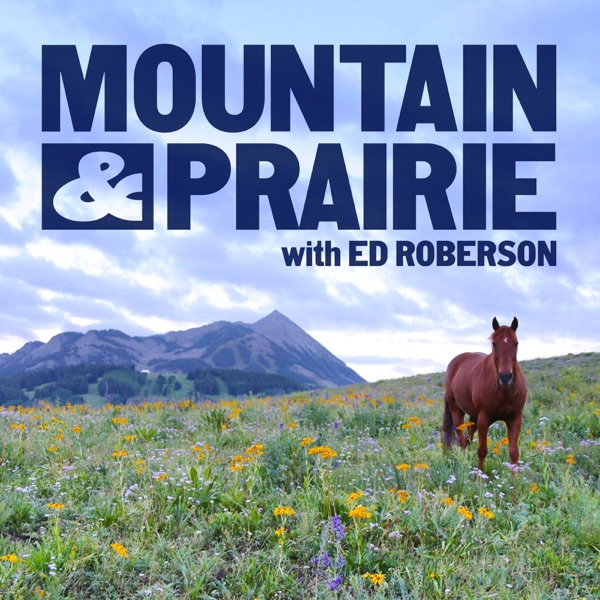
Mountain & Prairie with Ed Roberson
Long-form conversations with remarkable people connected to the land, communities, and culture of the American West.
•
For 10+ years, host Ed Roberson has talked with writers, ranchers, scientists, artists, historians, and adventurers. Every episode is substantive, relaxed, and rich with wisdom — offering listeners fresh perspectives and a deeper connection to one of the world's most compelling places.
•
Past guests include Yvon Chouinard, Kris Tompkins, Nick Offerman, and Sebastian Junger.
•
Top 0.5% of all podcasts globally. Featured by Patagonia, The Aspen Institute, SXSW, and MeatEater.
- Places & Travel chart
- #103
- Episodes
- 322
- Releases
- Weekly
- Typical length
- 1 hr 8 min
- On air since
- 2016
- Latest episode
- 6 days ago
Episodes
322 episodes, newest first
-
1 hr 20 min
Carrie Besnette Hauser – Lessons from a Life Serving People and Places
Show notes
Dr. Carrie Besnette Hauser is President and CEO of the Trust for Public Land, a national nonprofit that does everything from massive landscape protection projects to pocket parks in big cities, all built around a simple idea: land for people. I've wanted to have Carrie on the podcast for a long time, and we finally made it happen in person at El Pomar's Penrose House here in Colorado Springs. She's one of the most accomplished, grounded, and genuinely fun people I've talked to in a while, and her résumé is so packed I honestly don't know how she's fit it all into one career.
Carrie grew up in Flagstaff, Arizona, hiking into the Grand Canyon with her dad, which eventually led to summers working for one of the canyon's most storied river companies. She planned on law school but instead earned a PhD in higher education public policy at UCLA. From there, she was one of the first employees to help build the Daniels Fund from scratch, served in leadership at Metropolitan State University of Denver, and spent nearly 11 years as President and CEO of Colorado Mountain College. Along the way, she chaired the Colorado Parks and Wildlife Commission during wolf reintroduction planning and somehow found time to climb all of Colorado's 14ers.
Carrie and I talked about growing up in Flagstaff, the lessons she learned helping build one of the largest foundations in the Rockies, and how she stays grounded in roles that come with real influence. We dug into what makes Colorado Mountain College so unique, what she learned about the urban/rural divide while chairing CPW, TPL's goal of putting every American within a 10-minute walk of a park, its incredible schoolyard transformation work, and Colorado's Proposition 137, which voters will decide on in just a few days. We wrapped up with some great book recommendations, including a couple from Ken Salazar and Kevin Fedarko. I really enjoyed this one, and I think you will too. Enjoy!
---
• Dr. Carrie Besnette Hauser
• Trust for Public Land
• Prop 137
• Full episode notes and links: https://mountainandprairie.com/carrie-hauser---
THANK YOU TO OUR SPONSORS:
Mountain & Prairie is listener supported via Patreon, and brought to you with support from the Colorado Cattlemen's Agricultural Land Trust, Patagonia Books, the Mighty Arrow Family Foundation for their generous sponsorship.
---
TOPICS DISCUSSED:
• 0:00 - Introducing Dr. Carrie Besnette Hauser
• 3:27 - Growing up in Flagstaff
• 9:33 - College plan
• 18:53 - What Carrie learned
• 25:57 - Staying grounded
• 30:21 - Colorado Mountain College
• 36:01 - Making mountain communities run
• 42:49 - Being there for the community
• 46:15 - Leaving the college
• 51:11 - The value of a park
• 59:01 - The benefits of a schoolyard
• 1:02:37 - Prop 137
• 1:08:05 - It just makes sense
• 1:10:06 - Book recs
• 1:17:03 - Wrapping up---
ABOUT MOUNTAIN & PRAIRIE:
• Mountain & Prairie - All Episodes
• Mountain & Prairie Shop
• Mountain & Prairie on Instagram
• Upcoming Events
• About Ed Roberson
• Leave a Review on Apple Podcasts -
1 hr 21 min
Riverhorse Nakadate: Love Is All That Matters (M&P READS episode!)
Show notes
Riverhorse Nakadate is a writer, Patagonia ambassador, conservationist, and canoe-paddling, fly-fishing, bird-loving, self-described tree hugger. He's also the author of the book "Water Lines: A Life on Marshes, Rivers, Seas and in the Rain." Riverhorse and I have been trading emails for years, so it was a real treat to finally meet in person when he came through Boulder on his book tour. He's one of the warmest people I've met in a long time; and I felt like I was chatting with an old friend. This conversation also marks the launch of something new: M&P Reads, the Mountain & Prairie book club. The idea is simple: I sit down with the author of a book I love, we have our normal podcast conversation, and then I ask them a few questions sent in by readers like you. I couldn't think of a better guest to kick things off.
Riverhorse was born in Texas to a teenage mom who went on to practice medicine, become a mountain climber, and live as an off-the-grid wild woman. At age five he was adopted by his father, a Stanford literature PhD who took classes from Wallace Stegner. Summers at the family's fishing cabin on the Oregon coast turned him into a surfer, and his writing eventually took him to the University of Iowa, then to a decade as a staff writer for Surfing magazine, and later to the pages of The Flyfish Journal. His films Love and Water and Northern Light, which documents his 200-mile paddle to fight a proposed copper mine in Minnesota's Boundary Waters and later aired on PBS, brought his voice to a much wider audience. Water Lines gathers stories from a lifetime spent on Texas salt marshes, rivers, oceans, and wilderness lakes, illustrated with 24 beautiful paintings based on Riverhorse's own photos. Fly fishing runs through the book, but as Riverhorse says, it's just the vehicle. "Water Lines" is really about love, community, family, and standing up for the wild places and people you care about.
Riverhorse and I talked about how the book came together, from his stacks of journals to the art to the long and winding editing process with Patagonia. We talked about his time at the University of Iowa playing water polo, how he stays calm when a flood is barreling down the Black Canyon of the Gunnison, and how being a lifelong pacifist fits together with being willing to fight for what you love. We discussed his mom, his take on news and social media, his work to protect the Boundary Waters, the dangerous shark-finning story he reported along the Rio Grande, and his friendships with Andrew Luck, JT Van Zandt, and Alvin Dedeaux. We also talked a lot about books, including John Muir's lesser-known "A Thousand-Mile Walk to the Gulf." Then we turned to your questions, covering which river Riverhorse would paddle to recreate Goodbye to a River, whether he wrote the book with the fly fishing crowd in mind, and how everyday people can treat wilderness as a necessity rather than a luxury.
This was such a fun one, and be sure to click through to the episode notes to grab a copy of "Water Lines." Enjoy!
---
• Riverhorse Nakadate
• Water Lines: A Life on Marshes, Rivers, Seas and in the Rain
• Full episode notes and links: https://mountainandprairie.com/riverhorse-nakadate---
THANK YOU TO OUR SPONSORS:
Mountain & Prairie is listener supported via Patreon, and brought to you with support from the Colorado Cattlemen's Agricultural Land Trust, Patagonia Books, the Mighty Arrow Family Foundation for their generous sponsorship.
---
TOPICS DISCUSSED:
• 0:00 - Introducing Riverhorse Nakadate and highlighting M&P's new book club
• 7:07 - A deep love for books (and for Ed!)
• 9:02 - The book's artwork
• 10:59 - Journaling and Iowa
• 12:51 - Surfing phase
• 16:07 - Chill in the flood
• 18:01 - A wild woman
• 20:31 - Pranks
• 22:29 - Mindfulness
• 26:53 - Locals only
• 28:45 - Holding your ground
• 29:53 - News sources
• 32:26 - Yvon admiration
• 35:40 - Boundary Waters
• 37:11 - Tony
• 40:56 - Not a fly fishing book
• 44:43 - No fear (or maybe a little)
• 48:10 - Andrew Locke
• 50:41 - Kind humans
• 55:56 - Book club questions
• 1:02:37 - Book talk
• 1:04:52 - Opening a gift on-air
• 1:09:14 - The (long) path to the book
• 1:14:57 - Book club Q's (from Italy!)
• 1:18:12 - Wrapping up---
ABOUT MOUNTAIN & PRAIRIE:
• Mountain & Prairie - All Episodes
• Mountain & Prairie Shop
• Mountain & Prairie on Instagram
• Upcoming Events
• About Ed Roberson
• Leave a Review on Apple Podcasts -
1 hr 8 min
Olivia Amber – On Chosen and Unchosen Suffering
Show notes
Olivia Amber is a professional ultrarunner, climber, and adventurer, and a North Face sponsored athlete based in Bishop, California. I met Olivia at The Rut Mountain Runs in Big Sky, where she was on a public lands panel I moderated. She was also there to talk about her biggest project to date: Norman's 13. Norman's 13 is a route, a link-up of all thirteen of the Sierra's 14,000-foot peaks. It's more than 100 miles with over 40,000 feet of climbing, much of it exposed, off-trail, fifth-class scrambling. Last September, Olivia did the whole thing in one non-stop push, finishing in about 89 hours and becoming the first woman to complete it. The North Face made a short film about that effort, also called "Norman's 13," and I'll link to it in the show notes. And earlier this summer, Olivia and her friend and fellow North Face athlete Erika Flowers set the fastest known time on Granite Peak, the highest point in Montana.
Olivia grew up in a tiny village in the woods of northern Wisconsin, the daughter of two schoolteachers who spent their summers road-tripping around the country with Olivia and her older sister. She went on to become an All-American Nordic skier at Colby College, and after graduation she made the hard decision to not pursue pro skiing. Instead, she began working in the corporate world in San Francisco, where the Bay Area trail running community pulled her in and she began to make a name for herself in the world of ultrarunning. Along the way she has dealt with serious health challenges, including a diagnosis of stage four endometriosis, which she speaks about openly and honestly.
In this conversation, we talk about her upbringing and her college years, and about her idea that choosing to suffer is a privilege, because she has become acquainted with the kind of suffering you don't choose. We get into how she thinks about risk and ego on technical terrain, what she looks for in a mountain adventure partner, her upcoming trip to Bhutan for the Snowman Race, and the Wallace Stegner book she has reread more than any other. As you can probably tell by now Olivia is a hardcore athlete, but she's also incredibly humble, down-to-earth and funny– the exact kind of person I love talking to on the podcast. There's a link to "Norman's 13" in the show notes, and you should absolutely watch it.
---
• Olivia Amber
• "Norman's 13" film
• Full episode notes and links: https://mountainandprairie.com/olivia-amber---
THANK YOU TO OUR SPONSORS:
Mountain & Prairie is listener supported via Patreon, and brought to you with support from the Colorado Cattlemen's Agricultural Land Trust, MIRASOL: Looking at the Sun, Patagonia Books, the Rye Resurgence Project for their generous sponsorship.
---
TOPICS DISCUSSED:
• 0:00 - Introducing Olivia Amber and highlighting MIRASOL
• 6:42 - Growing up in Wisconsin
• 8:40 - Congregating at the local school
• 11:20 - Endurance sports activated
• 13:39 - Finding passion in difficulty
• 15:30 - Olivia in high school and college
• 20:21 - D1
• 22:13 - All-American designation
• 25:13 - Moving away from professional skiing
• 27:34 - Athletics + corporate world
• 29:48 - San Francisco running community
• 32:58 - Going hard core
• 35:06 - Health scares
• 39:39 - The privilege of elective suffering
• 45:07 - The North Face and Norman's 13
• 51:26 - Not afraid
• 57:24 - Credit roll
• 59:50 - What to look for in an adventure partner
• 1:02:47 - Upcoming projects
• 1:03:56 - Book recs
• 1:05:37 - Wrapping up---
ABOUT MOUNTAIN & PRAIRIE:
• Mountain & Prairie - All Episodes
• Mountain & Prairie Shop
• Mountain & Prairie on Instagram
• Upcoming Events
• About Ed Roberson
• Leave a Review on Apple Podcasts -
1 hr 31 min
Dan Flores – A Deep Dive into the History of the Natural West
Show notes
Dan Flores is back for another visit on the podcast. If you're a fan of the history of the American West, then Dan is no stranger—he's the author of many of my favorite books, including American Serengeti, Coyote America, and Wild New World. Most recently, he wrapped up a 42-episode series with the MeatEater network called The American West with Dan Flores, covering everything from bison and wolves to the origins of our public lands and what it means to belong to a place. It's the closest most of us will get to sitting in one of Dan's university classes, and I can't recommend it highly enough.
Dan is Professor spent much of his academic career at the University of Montana, but he's always been less interested in the Old West of cattle drives and gunfights than in what he calls the natural West—the landscapes, animals, Native people, and ideas that make this region unlike anywhere else. He grew up in Louisiana, a place with almost no public land, and spent the 1970s looking for a foothold in the real West. He found three: the canyon country outside Lubbock, Montana's Bitterroot Valley, and the Galisteo Valley south of Santa Fe, where he and his wife, Dr. Sara Dant, live today. In each place, he dug in, learned the country, and went to work restoring it.
As expected, we covered a ton in this episode: We started with the story behind The American West series and how a decades-long friendship with Steven Rinella finally turned into 42 episodes. We discussed the biggest epiphany Dan had while making it—that for those of us living here now, the public lands matter far more than the frontier ever did. Dan traces the origins of public lands back to George Perkins Marsh, a wildly influential public intellectual most of us have never heard of, and forward through John Wesley Powell, the first forest reserves, and the end of homesteading in the 1930s. We dug into Theodore Roosevelt's transformation from a young man who rushed to Dakota Territory to kill a buffalo before they were all gone into a president willing to break with his own Gilded Age class to protect the landscapes and wildlife he loved. We also talked about repeat photography and the staggering disappearance of the glaciers in Glacier National Park, the willful destruction of Western wildlife, bioregionalism and rewilding on a scale that any of us can manage, and a few book recommendations to round it out.
Be sure to check the episode notes for links to everything we discussed, including the full American West series and the new 2026 edition of Coyote America. Dan is as generous with his time and wisdom as anyone I know, and I always come away from these conversations with a longer reading list and a better understanding of this place.
---
• The American West with Dan Flores podcast
• Dan's Books
• Full episode notes and links: https://mountainandprairie.com/dan-flores-2---
THANK YOU TO OUR SPONSORS:
Mountain & Prairie is listener supported via Patreon, and brought to you with support from the Colorado Cattlemen's Agricultural Land Trust, MIRASOL: Looking at the Sun, Patagonia Books, the Rye Resurgence Project for their generous sponsorship.
---
TOPICS DISCUSSED:
• 0:00 - Introducing Dan Flores and highlighting the Rye Resurgence Project
• 7:24 - From writing to audio
• 13:10 - The natural West
• 20:01 - Aha! moments
• 28:41 - George Perkins Marsh
• 44:43 - Animal eradication
• 52:31 - Teddy Roosevelt deep-dive
• 1:05:18 - Place
• 1:13:56 - Rewilding the Bitterroot
• 1:20:12 - Rewilding on your own scale
• 1:23:06 - Book recs and wrapping up---
ABOUT MOUNTAIN & PRAIRIE:
• Mountain & Prairie - All Episodes
• Mountain & Prairie Shop
• Mountain & Prairie on Instagram
• Upcoming Events
• About Ed Roberson
• Leave a Review on Apple Podcasts -
1 hr 3 min
Fitz Cahall - Going on the Offense for Public Lands
Show notes
Fitz Cahall is the creator of the legendary outdoor podcast The Dirtbag Diaries, co-founder of the creative agency Duct Tape Then Beer, and author of the excellent book States of Adventure. But most recently, he's gone from prolific creative mind to public lands advocate with the launch of Save Public Lands, a campaign that gives public land lovers of all stripes, from climbers to hunters, a way to go on the offense against the ongoing attacks on our public lands. The goal is a million signatures on a short letter with three clear demands: no more sell-offs, no more giveaways to foreign companies and billionaires, and no more backroom deals. Those signatures get delivered to DC and statehouses around Public Lands Day on September 26th. Partners include Outdoor Alliance, Backcountry Hunters & Anglers, MeatEater, The Conservation Alliance, and The Wilderness Society.
Fitz got his start in the mid-2000s scraping by as a freelance journalist, a job he refers to as "naked subsistence hunting." In 2007, he took a few stories that hadn't sold and turned them into a podcast. He emailed it to 30 friends. The next day 30 people had listened, then 300, then 3,000. Nearly 20 years later, he and his wife and creative partner Becca have built Duct Tape Then Beer into a story studio behind award-winning films and podcasts, all guided by one rule: the work has to strengthen people's connections to the natural world and to each other.
We talked about how Save Public Lands came together, why Fitz chose offense over defense, and how a coalition this politically diverse—hunters, climbers, skiers, veterans, and legacy conservation groups—managed to find common ground and rally around a shared goal. Then we lightened it up and got into his creative life, including why he treats creative work like a band rather than a solo act, how he and Becca avoided chasing money for its own sake, what he does when his enthusiasm dips, and why he believes doubt and optimism are far more powerful together than either one alone.
It's worth noting I consider Fitz a role model in a lot of ways, and I don't think Mountain & Prairie would exist without his example. I've been listening to The Dirtbag Diaries since the days when you had to download podcasts onto your computer, load them onto your iPod, then plug the iPod into the tape deck in your truck to listen. That's exactly what I was doing back then, driving around trying to sell real estate, and those stories cracked open a whole way of living and working that I didn't know was available to me. So thank you, Fitz, for all of it.
There's a link below to sign the letter. It takes about 20 seconds, so there's no excuse not to do it. I loved this conversation, and I hope you enjoy.
---
• SAVE PUBLIC LANDS – Sign the Letter!
• The Dirtbag Diaries
• Duct Tape Then Beer
• Full episode notes and links: https://mountainandprairie.com/fitz-cahall---
THANK YOU TO OUR SPONSORS:
Mountain & Prairie is listener supported via Patreon, and brought to you with support from the Colorado Cattlemen's Agricultural Land Trust, MIRASOL: Looking at the Sun, Patagonia Books, the Rye Resurgence Project for their generous sponsorship.
---
TOPICS DISCUSSED:
• 0:00 - Introducing Fitz Cahall and highlighting Patagonia books
• 7:45 - Jumping right into Save Public Lands
• 13:22 - Going on the offense
• 18:05 - Partnerships for public lands
• 22:30 - The money
• 29:32 - How people can help
• 32:40 - And how orgs can help
• 33:56 - Fitz's creative life
• 39:42 - Evolving as a collaborator
• 43:12 - States of Adventure
• 46:26 - Keeping values intact
• 50:22 - Dealing with the dips
• 54:32 - Book recs
• 59:48 - Wrapping up---
ABOUT MOUNTAIN & PRAIRIE:
• Mountain & Prairie - All Episodes
• Mountain & Prairie Shop
• Mountain & Prairie on Instagram
• Upcoming Events
• About Ed Roberson
• Leave a Review on Apple Podcasts -
1 hr 21 min
T.A. Barron - Naming Nature, Choosing Optimism, and Using Our Time Well
Show notes
T.A. Barron—known as Tom to his friends—is a renowned author, a lifelong conservationist, and someone whose work sits at the intersection of two subjects that are near and dear to my heart: books and the natural world. Tom has written more than 30 books, including the internationally bestselling Merlin Saga, and his newest book, "Naming Nature: A Cabinet of Natural Curiosities for Word Lovers," gave us the perfect excuse to finally sit down together. It's a beautiful, fascinating exploration of the stories behind the names we give to plants, animals, and other parts of the natural world, and I think it's a must-read for anyone who loves nature and loves words—which probably describes most people listening to this podcast. Tom is also a deeply committed conservationist who has spent decades supporting and leading conservation efforts, so as you can imagine, we had plenty to talk about.
Tom grew up first in New England and then on a ranch north of Colorado Springs, where watching the surrounding landscape disappear to development helped shape his conservation ethic at an early age. After Princeton and a Rhodes Scholarship at Oxford, he initially pursued a career in business in New York City, while waking up at four or four-thirty every morning to write before work. Eventually he realized that those early-morning hours were the happiest part of his day, so despite having already endured plenty of rejection as a young writer, he left a successful business career, moved back to Colorado, and gave writing another shot. More than 30 books later, I think it's safe to say that gamble worked out. Along the way, conservation has remained a central part of his life, including his longtime involvement with The Wilderness Society and many other conservation organizations and initiatives.
Tom and I talked about his adventurous parents, his childhood in Colorado, his spectacular early failures as a writer, and the decision to walk away from a successful career to pursue the work that made him feel most alive. We talked about mortality and the importance of using our limited time well; managing the constant barrage of news and social media; optimism, wonder, and our shared love of the natural world; and how Tom became so deeply involved in conservation. And, of course, we dug into "Naming Nature" and some of the wonderfully strange stories behind names like hellbender, sarcastic fringehead, narwhal, praying mantis, elephant, and even the Yeti. We also talked about why names matter, how paying closer attention can lead to caring, and how caring can ultimately lead to conservation. This was a fun, wide-ranging conversation with a thoughtful and endlessly curious guy, and I think you'll really enjoy it.
---
• T.A. Barron
• Naming Nature: A Cabinet of Natural Curiosities for Word Lovers
• Full episode notes and links: https://mountainandprairie.com/ta-barron---
THANK YOU TO OUR SPONSORS:
Mountain & Prairie is listener supported via Patreon, and brought to you with support from the Colorado Cattlemen's Agricultural Land Trust, MIRASOL: Looking at the Sun, Patagonia Books, the Rye Resurgence Project for their generous sponsorship.
---
TOPICS DISCUSSED:
• 0:00 - Introducing T.A. Barron and highlighting the Rye Resurgence Project
• 6:49 - Growing up
• 12:47 - Tom's early writing career
• 16:46 - Oxford days to first novel
• 21:53 - The work that goes into rejection
• 24:56 - Plan B, 10 years later
• 29:18 - Keeping mortality in mind
• 35:10 - Good and bad tools
• 37:51 - His first book on the shelf
• 41:21 - Getting into conservation
• 48:02 - The new book
• 53:52 - Where the word "sarcastic" came from
• 56:31 - And a few more fun word examples
• 1:02:52 - The capacity to name
• 1:04:19 - The Yeti
• 1:07:38 - Cultivating stewardship
• 1:11:11 - Book recs
• 1:15:33 - Wrapping up (and a reading of Elephant)---
ABOUT MOUNTAIN & PRAIRIE:
• Mountain & Prairie - All Episodes
• Mountain & Prairie Shop
• Mountain & Prairie on Instagram
• Upcoming Events
• About Ed Roberson
• Leave a Review on Apple Podcasts -
1 hr 20 min
Kim Wiggins – The Courage to Be Original
Show notes
Kim Wiggins is a world-renowned painter from New Mexico, and one of the most recognizable artists working in the American West today. His bold, swirling canvases have made him one of the leading artistic voices of what's come to be called the New West. His work hangs in the Autry, the Booth, and the American Museum of Western Art in Denver, and this past year he won Best in Show at the Prix de West, the most prestigious award in Western art, becoming the first modernist ever to take it home.
Kim comes by all of this honestly. Both sides of his family came west in covered wagons in the late 1800s and settled into ranching along the Pecos River. His mother was running two ranches and a nightclub in Arizona by her mid-twenties; his father was a photojournalist for Life and Sports Illustrated, and a bush pilot who once had to sprint back to his plane in the Amazon and count the arrows in the side of the fuselage. Kim grew up surrounded by creativity– Thomas Hart Benton paged through his sketchbook and he ate lunch with Georgia O'Keeffe at Ghost Ranch. He began focusing seriously on painting while stationed in Europe with the military and soon became the youngest member of the Society of American Impressionists — a career most artists would give an arm for, and one he walked away from completely.
We talk about why he walked away, which starts with a moment at a show in St. Louis when he spotted one of his paintings across the room, hurried over, and discovered it wasn't his. We cover the lean years that followed, including knocking on doors in Lubbock in the summer heat with a car full of paintings. And we get into the ideas behind the work: why a loss of innovation is the death knell of a civilization, why he watches children in galleries instead of collectors, the paintings he made for the NAACP after his son asked him a question he couldn't answer, and his conviction that a gift, by definition, belongs to someone else. I first met Kim back in 2022 at Maxwell Alexander Gallery's ten-year show, where he was on a panel I moderated, and I've wanted a longer conversation ever since. Hope you enjoy.
---
• Kim Wiggins
• Prix de West
• Maxwell Alexander panel discussion (2022)
• Full episode notes and links: https://mountainandprairie.com/kim-wiggins---
THANK YOU TO OUR SPONSORS:
Mountain & Prairie is listener supported via Patreon, and brought to you with support from the Colorado Cattlemen's Agricultural Land Trust, MIRASOL: Looking at the Sun, Patagonia Books, the Rye Resurgence Project for their generous sponsorship.
---
TOPICS DISCUSSED:
• 0:00 - Introducing Kim Wiggins
• 3:44 - Wiggins' family history
• 9:49 - Kim's dad's photojournalism travels
• 12:44 - Parental pressure?
• 17:07 - Military education
• 20:36 - Money v. creativity
• 28:36 - Making the decision to change course
• 34:52 - When things started to work
• 38:42 - It's never about Kim
• 43:47 - Continuous evolution
• 49:44 - How Kim's paintings come together
• 53:10 - Inspiration from his son
• 58:45 - Collaborative projects
• 1:04:26 - Blood and Thunder
• 1:06:21 - All the circles aligning
• 1:11:03 - How art has changed in the West
• 1:14:00 - Book recs
• 1:17:47 - Wrapping up---
ABOUT MOUNTAIN & PRAIRIE:
• Mountain & Prairie - All Episodes
• Mountain & Prairie Shop
• Mountain & Prairie on Instagram
• Upcoming Events
• About Ed Roberson
• Leave a Review on Apple Podcasts -
13 min
Announcing MOUNTAIN & PRAIRE READS! Featuring "Water Lines" by Riverhorse Nakadate
Show notes
Introducing Mountain & Prairie Reads—a book club for people who don't want to sit through another Zoom call.
Every other month or so, I'll recommend a book I think is worth your time. Read it, send me your questions, and then I'll sit down with the author and ask as many of your best questions as I can.
Our first selection is Water Lines: A Life on Marshes, Rivers, Seas and in the Rain by Riverhorse Nakadate. I'll be interviewing Riverhorse on September 30, so grab a copy, start reading, and submit your questions by September 29.
Read a great book. Ask the author a question. Listen to the answer.
---
• MOUNTAIN & PRAIRIE READS
• Water Lines: A Life on Marshes, Rivers, Seas and in the Rain by Riverhorse Nakadate
• Submit your questions!---
THANK YOU TO OUR SPONSORS: Mountain & Prairie is listener supported via Patreon, and brought to you with support from the Colorado Cattlemen's Agricultural Land Trust, MIRASOL: Looking at the Sun, Patagonia Books, the Rye Resurgence Project for their generous sponsorship.
-
1 hr 21 min
Romey Swanson — The Work of Finding Common Ground
Show notes
Romey Swanson is the Executive Director of the Devils River Conservancy, and he wears a lot of other hats too—wildlife biologist, naturalist, writer, photographer, and a leader in just about every corner of the Texas conservation world. The Devils River is generally considered the most pristine stream in Texas, and maybe in the entire Southwest—remote, spring-fed, and held together entirely by private landowners. The county it runs through leads all 254 counties in Texas in privately conserved acres, and none of it was required by regulation. If you've ever wondered how conservation gets done in a place with almost no public land, Romey and his community have built a model worth paying attention to.
Romey grew up in rural West Virginia as part of what he calls the last generation of feral children—turned loose outside with instructions to be home before dark, with the creek behind the house as his best friend. His family moved to Texas when he was in junior high, and like most teenagers, he traded all of that for sports and a social life. He was a first-generation college student headed toward sports medicine when he walked past a flyer at Texas State advertising a Wildlife Society meeting—free pizza and live animals. He went for the pizza, met a faculty advisor, and changed his major that week.
I've known Romey for six or seven years, and we cover a lot of ground here—his early days filling deer feeders and checking bird nest boxes, why he says waiting tables taught him as much about this work as his degrees, and whether leadership can actually be taught. We get into the threats facing the Devils River—data centers, transmission lines, and energy projects that can undo decades of voluntary conservation—and his work with the mountain lion stakeholder group in Texas, which has some obvious parallels to the wolf situation here in Colorado. There's also a good stretch on his passion projects, including his owl research in the mountains of far West Texas, and why he decided to use social media to push out something positive instead of more conflict. We wrap up with a few book recommendations and his encouragement to all of us to just pay attention. I loved this conversation... Enjoy!
---
• Romey Swanson
• Devils River Conservancy
• Full episode notes and links: https://mountainandprairie.com/romey-swanson---
THANK YOU TO OUR SPONSORS:
Mountain & Prairie is listener supported via Patreon, and brought to you with support from the Colorado Cattlemen's Agricultural Land Trust, MIRASOL: Looking at the Sun, Patagonia Books, the Rye Resurgence Project for their generous sponsorship.
---
TOPICS DISCUSSED:
• 0:00 - Introducing Romey Swanson and highlighting Cattlemen's
• 6:30 - Romey describes his work
• 10:16 - How he got into his work
• 14:42 - Texas pride
• 17:37 - Early Romey
• 21:30 - First leadership opportunity
• 29:34 - Devils River Conservancy
• 35:07 - Keeping the land magical
• 39:14 - Devils River moving forward
• 42:25 - Mountain lions in Texas and wolves in CO
• 56:26 - Ways to keep track
• 1:01:15 - Sending folks to Romey's podcast
• 1:08:40 - Romey's Instagram
• 1:12:27 - Book recs
• 1:17:23 - Wrapping up---
ABOUT MOUNTAIN & PRAIRIE:
• Mountain & Prairie - All Episodes
• Mountain & Prairie Shop
• Mountain & Prairie on Instagram
• Upcoming Events
• About Ed Roberson
• Leave a Review on Apple Podcasts -
1 hr 8 min
Mike Bartolo — Soil, Science, and Selflessness
Show notes
Dr. Mike Bartolo is a third-generation farmer from Pueblo County, Colorado, and a retired research scientist and vegetable crops specialist at Colorado State University. Mike's grandparents immigrated from Italy in the early 1900s to work in the mines around Pueblo, and after years of backbreaking labor, they saved enough to buy a small farm on the St. Charles Mesa—the beginning of a family legacy on the land that continues to this day. Mike went on to spend more than three decades at CSU serving the farmers of the Arkansas Valley, and while he'd never claim the title himself, many consider him the developer of the legendary Pueblo Chile.
I first met Mike back in 2018 through our mutual work with Palmer Land Conservancy, and ever since, I've seen him as a mentor when it comes to matters of water, farmland conservation, long-term thinking, and kindness. His combination of scientific expertise, tireless work ethic, deep humility, and fierce devotion to his family and community is something I've rarely encountered. Mike is also one of the main characters profiled in the poignant and powerful Ben Knight documentary MIRASOL: Looking at the Sun, which chronicles Pueblo County's farming community and its fight to protect its land and water—so it was an honor to finally sit down with him for this long-overdue conversation.
We started with the remarkable story of his grandparents—including his grandfather Rocco, who survived being a prisoner of war in World War I before returning to Colorado to break rocks for the steel industry—and how that generation's sacrifice continues to guide Mike today. We talked about his childhood on the family farm, where he and his five siblings turned every chore into an Olympic competition, and his path to becoming a plant scientist at CSU. We discussed what makes Pueblo County's farmland world-class, the cautionary tale of Crowley County's devastating water sales, and why Mike believes educating and mobilizing the public is the key to protecting the Arkansas Valley's water. We also dug into the history of the Pueblo Chile, as well as the making of "MIRASOL," his approach to passionate-but-respectful advocacy, the spiritual connection he feels to the soil, his advice for the next generation of farmers, and much more.
This was such a meaningful conversation for me, and I know you'll enjoy getting to know Mike as much as I have. Enjoy!
---
• Dr. Michael Bartolo
• MIRASOL: Looking at the Sun
• Palmer Land Conservancy
• Mike's Innovation in Conservation Award film
• Full episode notes and links: https://mountainandprairie.com/mike-bartolo---
THANK YOU TO OUR SPONSORS:
Mountain & Prairie is listener supported via Patreon, and brought to you with support from the Colorado Cattlemen's Agricultural Land Trust, MIRASOL: Looking at the Sun, Patagonia Books, the Rye Resurgence Project for their generous sponsorship.
---
TOPICS DISCUSSED:
• 0:00 - Introducing Mike Bartolo and highlighting MIRASOL
• 7:03 - Reconnecting with Mike
• 8:16 - Mike's grandparents
• 12:14 - A particular kind of work ethic
• 17:28 - Growing up competitive
• 20:01 - Developing expertise
• 23:30 - Farmland development
• 28:33 - Pueblo County
• 30:56 - Colorado water
• 36:27 - Solutions?
• 40:57 - MIRASOL
• 45:20 - The Pueblo Chile
• 51:06 - Being an advocate
• 55:58 - Mike's advice to younger folks
• 59:03 - Time spent now
• 1:00:51 - Book (or video) recs and anthropology inspo
• 1:06:07 - Wrapping up---
ABOUT MOUNTAIN & PRAIRIE:
• Mountain & Prairie - All Episodes
• Mountain & Prairie Shop
• Mountain & Prairie on Instagram
• Upcoming Events
• About Ed Roberson
• Leave a Review on Apple Podcasts -
1 hr 6 min
Heather Hansman — The Untold Stories of Three Fierce Women
Show notes
This is Heather Hansman's third appearance on the podcast, and if you've been listening for a while, you know how much her work has shaped my own understanding of the West. Heather is an award-winning journalist and the author of "Downriver" and "Powder Days"—two books I reference constantly—and she's back today to talk about her brand-new book, Fierce Country: The Untold Story of Three Women Who Ignited America's Love for the Wild, which hits shelves the same day this episode is released.
"Fierce Country" tells the stories of three women who were pivotal in shaping how we think about recreation and conservation today, yet whose stories have largely gone untold: Georgie White, one of the first Grand Canyon river guides; Anne LaBastille, an off-the-grid Adirondack guide and pioneering climate scientist; and Dolores LaChapelle, a legendary powder skier and environmental philosopher whose ideas helped launch the deep ecology movement. These are three complicated, larger-than-life characters, and Heather weaves their wild adventures together with her own personal story in a way that makes the book resonate no matter who you are. As always with Heather's work, it introduced me to ideas I didn't even know I needed to be thinking about.
Heather and I talked about how she chose these three women and why their stories were left out of the history most of us learned, and we dug into some of the big ideas woven throughout the book—the heroine's journey versus the hero's journey, the superwoman myth, and the surprising research on men and women in outdoor sports. We discussed the double standards that outdoorswomen face, especially as parents, and the culture of harassment that unfortunately still exists in the outdoor world. We also chatted about Heather's recent investigative reporting on bots gaming the recreation.gov permit system, the importance of journalism and speaking truth to power, and how five years of living with these women's stories has changed the way Heather moves through the world.
I loved this conversation, and I can't recommend "Fierce Country" highly enough—the book is out today, so be sure to click through to the episode notes and grab a copy.
---
• Heather Hansman
• Fierce Country: The Untold Story of Three Women Who Ignited America's Love for the Wild
• Heather's First and Second M&P episodes
• Full episode notes and links: https://mountainandprairie.com/heather-hansman-3---
THANK YOU TO OUR SPONSORS:
Mountain & Prairie is listener supported via Patreon, and brought to you with support from the Colorado Cattlemen's Agricultural Land Trust, MIRASOL: Looking at the Sun, Patagonia Books, the Rye Resurgence Project for their generous sponsorship.
---
TOPICS DISCUSSED:
• 0:00 - Introducing Heather Hansman (again) and highlighting Patagonia books
• 7:00 - Book number three
• 8:08 - Overview of Fierce Country
• 12:05 - Why these women
• 16:22 - Georgie and Anne on the wild
• 19:31 - Anne vs. Thoreau
• 23:08 - Constraint drives creativity
• 26:12 - Driven by hardships
• 28:58 - The heroine's journey
• 30:45 - Female and male differences
• 35:40- To scold or not to scold
• 41:41 - Pitching the book
• 44:08 - Outward Bound
• 46:56 - Recreation.gov
• 50:07 - Slowing down
• 56:48 - Bad feminism
• 1:04:50 - What's next for Heather---
ABOUT MOUNTAIN & PRAIRIE:
• Mountain & Prairie - All Episodes
• Mountain & Prairie Shop
• Mountain & Prairie on Instagram
• Upcoming Events
• About Ed Roberson
• Leave a Review on Apple Podcasts -
1 hr 13 min
Elif Koyutürk — Filmmaking, Resilience, and a Vanishing Way of Life
Show notes
Elif Koyutürk is a filmmaker, photographer, and all-around artist originally from Istanbul, now based in Bend, Oregon. Elif works across many mediums—photography, poetry, film, and more—but the throughline in everything she does is a drive to make people feel a story, not just read the facts of it. She brings a rare kind of power and passion to her work, and it's clear that her connection to land and place isn't just a subject for her, it's personal.
Like so many fascinating people I talk to on this podcast, her path wasn't a straight line. She grew up between the massive city of Istanbul and her family's farm, raised by journalist parents and a house full of grandmothers steeped in Anatolian tradition. She taught herself photography using a camera with a moldy, secondhand 23-euro lens and won international awards with it before she ever touched professional, high-dollar gear. From there she talked her way onto a Red Bull film crew in a hotel lobby, worked in Austria, and eventually landed in Los Angeles with one suitcase and no contacts, on an "Extraordinary Ability" visa.
In this conversation, we get into all of it—her childhood in Istanbul, her creative process and her synesthesia, and how she built a career from nothing through sheer resourcefulness and energy. We also spend a lot of time on her new film, Guardians of Anatolia, which premiered at Telluride Mountainfilm and follows a female-led nomadic tribe in Turkey's Taurus Mountains as they fight to hold onto a 9,000-year-old matriarchal way of life against modern water and land pressures.
I hope you enjoy this one, as it hits on so many of the topics I enjoy– art, conservation, agriculture, creativity, and hard work– but with an international perspective that is now rooted here in the West.
---
• Elif Koyutürk
• Guardians of Anatolia
• Elif on Instagram
• Episode notes and links: https://mountainandprairie.com/elif-koyuturk---
THANK YOU TO OUR SPONSORS:
Mountain & Prairie is listener supported via Patreon, and brought to you with support from the Freeflow Institute, The Nature Conservancy in Colorado, and the Well Done Foundation for their generous sponsorship.
---
TOPICS DISCUSSED:
• 0:00 - Introducing Elif Koyutürk
• 2:49 - Early Elif
• 7:36 - Artistic inclinations
• 11:33 - To the U.S.
• 18:34 - Off the plane in L.A.
• 22:20 - Making money
• 24:57 - Connections to friendships
• 28:50 - Being raw and clumsy
• 30:49 - Guardians of Anatolia origin story
• 37:49 - A vanishing way of life
• 40:23 - Emerging filmmaker
• 43:40 - Path forward for the film
• 45:54 - What's next
• 51:39 - Old Salt takeaways
• 57:15 - Plot twist: jiu jitsu!
• 1:02:52 - Rivers in Bend, OR
• 1:05:35 - Book recs
• 1:08:16 - Wrapping up---
ABOUT MOUNTAIN & PRAIRIE:
• Mountain & Prairie - All Episodes
• Mountain & Prairie Shop
• Mountain & Prairie on Instagram
• Upcoming Events
• About Ed Roberson
• Leave a Review on Apple Podcasts -
1 hr 8 min
A Public Lands Update + Ways to TAKE ACTION, with Adam Cramer
Show notes
This is my second episode with Adam Cramer, CEO of the Outdoor Alliance, a coalition of ten national organizations representing the human-powered outdoor community—mountain biking, backcountry skiing, kayaking, climbing, trail running, and more. The Outdoor Alliance works to protect public lands and the places these communities love, getting deeply involved in conservation policy and empowering people to take action on behalf of the landscapes that matter to them. The last year has been a relentless one for public lands, with threats coming from every direction, and Adam and his team have been in the thick of it.
Normally my episodes are "evergreen," but given everything happening right now, I wanted to bring Adam back to give us an update on the current threats—as well as some genuine bright spots. This is such a moving target with so many moving pieces that it can be really hard to keep up with everything and, most importantly, to know how to stop talking and take action. So I brought Adam in to help us make sense of it all and give us some instruction on how we can go on the offense to keep public lands public.
We cover a lot of ground: the public lands sell-off that arose out of last summer's reconciliation bill and the massive, cross-partisan public blowback that killed it; the fight over the Roadless Rule; the rescinding of the BLM's Public Lands Rule; proposed changes to travel management and motorized vehicle rules; and the reorganization happening inside the land management agencies. But it's not all grim—Adam walks us through the real reasons for hope, including bipartisan efforts like the Public Lands in Public Hands Act, the EXPLORE Act, and the Legacy Restoration Fund, which is moving through Congress right now and is one of the most important places listeners can weigh in today.
We also get into Adam's pragmatic, calm approach to all of this—why he refuses to be hysterical even when the stakes are high, what he's learned about strategy and compassion across the table, and how everyday people with jobs and families can stay informed and actually take action without drowning in the noise. He closes with some great book recommendations and a reminder to embrace and bask in the joy of place.
And just for some context, we recorded this on June 22, 2026. I hope you enjoy it and learn as much as I did. And most importantly, I hope you'll TAKE ACTION!
---
• Adam Cramer
• Outdoor Alliance (Scroll down on the home page to sign up for their email list.)
• Adam's first M&P episode
• Full episode notes and links: https://mountainandprairie.com/public-lands-update/---
THANK YOU TO OUR SPONSORS:
Mountain & Prairie is listener supported via Patreon, and brought to you with support from the Freeflow Institute, The Nature Conservancy in Colorado, and the Well Done Foundation for their generous sponsorship.
---
TOPICS DISCUSSED:
• 0:00 - Introducing Adam Cramer and highlighting the Well Done Foundation
• 6:05 - Outdoor Alliance reminder
• 10:02 - One Big Beautiful Bill post-mortem
• 14:18 - The Roadless Rule
• 17:47 - What's the point of rescission?
• 19:51 - Following the herd
• 20:01 - Deferred maintenance
• 22:47 - Taking action: Roadless Rule
• 25:24 - Forest Service moves West
• 31:18 - A plethora of land types
• 33:34 - Just trying to protect the land
• 35:29 - BLM Public Lands Rule
• 39:36 - Swings
• 43:06 - Staying calm (alert: a jiu jitsu reference)
• 49:42 - Legacy Restoration Fund
• 56:08 - How to stay informed
• 58:54 - Motorized use
• 1:04:30 - Book recs
• 1:05:54 - Parting words---
ABOUT MOUNTAIN & PRAIRIE:
• Mountain & Prairie - All Episodes
• Mountain & Prairie Shop
• Mountain & Prairie on Instagram
• Upcoming Events
• About Ed Roberson
• Leave a Review on Apple Podcasts -
38 min
Five Foundational Conservation Books That Shaped How I See the West
Show notes
In this solo episode, I share five books that fundamentally shaped my understanding of conservation, public lands, water, ranching, and the American West. These are the books that helped transform me from a ranch broker with a growing curiosity about conservation into someone who eventually devoted much of his career – and this podcast – to exploring the people and ideas shaping the landscapes of the West.
Along the way, I discuss Theodore Roosevelt, wildfire policy, regenerative grazing, Western water, and the history of conservation, while highlighting conversations from the Mountain & Prairie archive that connect to each book. Whether you're new to these topics or looking to deepen your understanding on anything from water to ranching to history, these books provide an excellent foundation. Enjoy!!
THE BOOKS:
• Losing Eden: An Environmental History of the American West by Sarah Dant
• The Big Burn: Teddy Roosevelt and the Fire That Saved America by Timothy Egan
• For the Love of Land: Global Case Studies of Grazing in Nature's Image by Jim Howell
• Downriver: Into the Future of Water in the West by Heather Hansman
• The Wilderness Warrior: Theodore Roosevelt and the Crusade for America by Douglas BrinkleyTHE RELATED EPISODES:
• Sara Dant - First and Second
• Rob Addington
• Good Fire, Bad Fire
• Jim Howell - First and Second
• Heather Hansman - First and Second
• Douglas Brinkley---
THANK YOU TO OUR SPONSORS:
Mountain & Prairie is listener supported via Patreon, and brought to you with support from the Freeflow Institute, The Nature Conservancy in Colorado, and the Well Done Foundation for their generous sponsorship.
---
TOPICS DISCUSSED:
• 00:00 – Introduction & why these books matter
• 03:05 – Losing Eden by Sarah Dant
• 09:25 – The Big Burn by Timothy Egan
• 16:05 – For the Love of Land by Jim Howell
• 23:35 – Downriver by Heather Hansman
• 29:05 – The Wilderness Warrior by Douglas Brinkley
• 35:25 – Final thoughts & closing remarks---
ABOUT MOUNTAIN & PRAIRIE:
• Mountain & Prairie - All Episodes
• Mountain & Prairie Shop
• Mountain & Prairie on Instagram
• Upcoming Events
• About Ed Roberson
• Leave a Review on Apple Podcasts -
1 hr 11 min
Dillon Osleger - Trails, Maps, and the Hidden Stories of Our Public Lands
Show notes
Dillon Osleger wears a lot of hats: geologist, professional mountain biker for Specialized, trail builder, public lands policy analyst and advocate, and now first-time author. His debut book, "Trail Work: Restoring the Paths and Stories of America's Public Lands," blends science, history, and personal reflection into a look at our relationship with the places we love. It's already earned praise from the likes of Bill McKibben, Robert Moor, and former M&P guest Rick Ridgeway. And for whatever it's worth, I loved it as well. I've read a ton of books on public lands, and this one filled in many of the gaps in my knowledge on this super-important and timely issue.
Raised by two geologists who moved the family from Riverside to Austin to Northern California, Dillon grew up idolizing mountain legends like Rick Ridgeway and Jeremy Jones, and he wanted nothing more than to spend his life outside. He was, by his own account, a poor student—right up until a NOLS course at fifteen showed him he could learn through the things he was passionate about. That realization helped transform him from a 2.9-GPA high school student all the way to a scientist who holds a master's in Earth Science, with a lot of biking, skiing, surfing, and fishing along the way.
We recorded this at Mountainfilm in Telluride, the morning after Dillon shared a stage with literary heroes like Kevin Fedarko. We cover his mountain upbringing, how mountain biking became his way of finding clarity, why he thinks the traditional classroom can be challenging for many curious and energetic kids, and the deep connections between public lands and the rural communities around them. We also get into the writers who shaped him—John McPhee, Wendell Berry, James Rebanks—and his belief that the world is far more purple than the red-and-blue map suggests. We also talk a lot about the process of writing his book and some of the biggest lessons learned from tackling such an ambitious project. More than anything, this is a conversation about loving a place enough to do the work for it.
I loved this one. Enjoy!
---
• Dillon Osleger
• Trail Work: Restoring the Paths and Stories of America's Public Lands
• Full episode notes and links: https://mountainandprairie.com/dillon-osleger---
THANK YOU TO OUR SPONSORS:
Mountain & Prairie is listener supported via Patreon, and brought to you with support from the Freeflow Institute, The Nature Conservancy in Colorado, and the Well Done Foundation for their generous sponsorship.
---
TOPICS DISCUSSED:
• 0:00 - Introducing Dillon Osleger and highlighting TNC Colorado
• 6:12 - A nervous morning
• 8:39 - How Dillon got people interested in his book
• 11:12 - Growing up moving around
• 14:34 - Path to college
• 16:28 - Finding the right academia
• 19:16 - Mountain biking
• 23:30 - The question Dillon was trying to answer
• 28:12 - An overview of maps
• 34:04 - The Thomas Fire
• 37:12 - Public lands threats
• 42:30 - Real names
• 47:39 - Finding your why
• 51:13 - Bringing in jujitsu
• 53:16 - How writing the book changed Dillon
• 56:38 - The response to the book
• 1:02:29 - Book recs
• 1:09:13 - A purple world---
ABOUT MOUNTAIN & PRAIRIE:
• Mountain & Prairie - All Episodes
• Mountain & Prairie Shop
• Mountain & Prairie on Instagram
• Upcoming Events
• About Ed Roberson
• Leave a Review on Apple Podcasts -
1 hr 18 min
Distance Champions – TNC's "On the Move" Podcast (M&P Special Episode)
Show notes
My longtime partners and collaborators at The Nature Conservancy recently launched a great podcast series called "On the Move," hosted by TNC storyteller Leah Palmer. It's all about wild animals, their migrations, and the people working to keep those journeys wild and free. If you're a longtime Mountain & Prairie listener, then many of these people, places, and conservation issues will be familiar to you. In fact, a few of the experts you'll hear over the course of the full series are past M&P guests, including Sammy Matsaw Jr., Kelsey Molloy, and Nancy Fishbein.
So I'm excited to share one of my favorite episodes today: Episode 4, "Distance Champions." This episode is about creatures of the sky—sandhill cranes, Greater Sage-Grouse, Wilson's phalaropes—and it digs into why these birds migrate, how new tracking tech reveals where they actually go, and what stands in their way. You'll also hear from Ted Floyd of the American Birding Association, a good friend of TNC here in Colorado.
Big thanks to The Nature Conservancy for creating such an interesting and engaging podcast series. If you enjoy it, go subscribe to "On the Move" and listen to the whole series.
And as always, thanks to everyone who supports the Mountain & Prairie via Patreon, and the additional podcast support from the Freeflow Institute, The Nature Conservancy in Colorado, and the Well Done Foundation.
Here's Leah Palmer and "Distance Champions." Enjoy!!
---
• ON THE MOVE podcast
• Subscribe on Apple Podcasts
• Subscribe on Spotify---
THANK YOU TO OUR SPONSORS:
Mountain & Prairie is listener supported via Patreon, and brought to you with support from the Freeflow Institute, The Nature Conservancy in Colorado, and the Well Done Foundation for their generous sponsorship.
---
ABOUT MOUNTAIN & PRAIRIE:
• Mountain & Prairie - All Episodes
• Mountain & Prairie Shop
• Mountain & Prairie on Instagram
• Upcoming Events
• About Ed Roberson
• Leave a Review on Apple Podcasts -
54 min
Holly Bamford & Marshall Johnson - A 30-Year Vision for North America's Grasslands
Show notes
This is a live episode recorded at the 2026 Great Plains Stakeholder Workshop, hosted by the National Fish and Wildlife Foundation. The workshop brought together many of the country's leading grasslands conservationists, scientists, funders, and policy experts to tackle a huge question: what would it look like to create a bold, practical, long-term plan for conserving North America's grasslands over the next 30 years?
My guests are two people helping to lead that effort: Dr. Holly Bamford, Chief Conservation Officer at the National Fish and Wildlife Foundation (known as NFWF for short), and Marshall Johnson, Chief Conservation Officer for the National Audubon Society. Both have spent years working at the intersection of science, conservation, agriculture, and partnership-building, and both bring a realistic but hopeful perspective to the future of the Great Plains.
In this conversation, we dig into the current state of the Great Plains and grasslands conservation more broadly– from grassland loss and declining bird populations to the creative partnerships helping ranchers, nonprofits, businesses, and government agencies work together toward solutions. We discuss the importance of voluntary conservation, the complicated economics facing ranching communities, the role of programs like the Farm Bill, and why grass-based agriculture and healthy wildlife habitat are far more interconnected than many people realize. Holly and Marshall also share stories from their own lives that explain how they each became so deeply connected to these landscapes– from prairie chicken blinds in Minnesota to the wide-open grasslands of the American West.
More than anything, this conversation is about long-term thinking. What does it look like to create a 30-year vision for one of the most ecologically important and underappreciated landscapes in North America? What gives these conservation leaders hope? And what keeps them up at night? There's a lot of realism in this discussion, but there's also a surprising amount of optimism, practicality, and momentum. I learned a ton from this conversation, and I think you will too. Be sure to check out the episode notes for links to the organizations, initiatives, and resources we discuss throughout the episode.
Thank you again to the amazing team at the National Fish and Wildlife Foundation for inviting me to moderate this discussion.
---
• National Fish and Wildlife Foundation
• National Audubon Society
• Dr. Holly Bamford
• Marshall Johnson
• Full episode notes and links: https://mountainandprairie.com/great-plains---
THANK YOU TO OUR SPONSORS:
Mountain & Prairie is listener supported via Patreon, and brought to you with support from the Freeflow Institute, The Nature Conservancy in Colorado, and the Well Done Foundation for their generous sponsorship.
---
TOPICS DISCUSSED:
• 0:00 - Introducing a live convo
• 3:25 - Looking behind instead of ahead
• 5:40 - Why grasslands
• 6:57 - The state of grasslands today
• 10:22 - The meadowlark
• 12:47 - Rancher relationships
• 22:41 - Money is the key
• 25:20 - Farm Bill feelings
• 29:15 - Prairie potholes
• 36:20 - Voluntary conservation easements
• 39:24 - Accounting for change
• 43:41 - Data collection
• 48:40 - The next 30 years---
ABOUT MOUNTAIN & PRAIRIE:
• Mountain & Prairie - All Episodes
• Mountain & Prairie Shop
• Mountain & Prairie on Instagram
• Upcoming Events
• About Ed Roberson
• Leave a Review on Apple Podcasts -
1 hr 3 min
Hillary Rosner - Why Wildlife Needs Room to Roam
Show notes
Hillary Rosner is an award-winning journalist and author whose work combines science, storytelling, and the natural world. She's been writing about environmental issues for decades, with bylines in publications like The New York Times, The Atlantic, and National Geographic. Her new book, "Roam: Wild Animals and the Race to Repair Our Fractured World," explores one of the most urgent—and often overlooked—challenges in conservation: the loss of connectivity across the landscape, and what that means for the movement and survival of wildlife.
Like so many fascinating people, Hillary's path into this work wasn't a straight line. She grew up in New York City, far from the wide-open spaces she now writes about, but spent formative summers in the Adirondacks and Berkshires that quietly shaped her connection to nature. After getting her start in fast-paced daily journalism at places like the New York Post and The Village Voice, she realized she wanted something deeper—slower, more immersive storytelling. That shift eventually led her west to Boulder, where she pursued environmental studies and built a career focused on long-form environmental journalism.
In this conversation, Hillary and I dig into the big ideas behind "Roam," including why movement is so essential to life on Earth and how human infrastructure—from highways to fences—has fractured the natural world. We talk about surprising barriers to wildlife, like roads that even birds won't cross, and explore solutions ranging from wildlife corridors to collaborative conservation efforts with local communities. We also get into the realities of modern journalism, the importance of "bearing witness" in difficult times, and why curiosity, empathy, and action are still the most powerful tools we have for building a more connected and hopeful future.
I loved the book, and I loved this conversation. Hope you enjoy both as much as I did!
---
• Hillary Rosner
• Roam: Wild Animals and the Race to Repair Our Fractured World
• Full episode notes and links: https://mountainandprairie.com/hillary-rosner---
THANK YOU TO OUR SPONSORS:
Mountain & Prairie is listener supported via Patreon, and brought to you with support from the Freeflow Institute, The Nature Conservancy in Colorado, and the Well Done Foundation for their generous sponsorship.
---
TOPICS DISCUSSED:
• 0:00 - Introducing Hillary Rosner and highlighting TNC Colorado
• 6:09 - Book congrats and growing up in NYC
• 9:03 - The heading West bug
• 11:20 - More long-form journalism
• 13:36 - Making money in journalism
• 16:41 - Ted Scripps fellowship
• 19:01 - Patagonia publishing
• 21:20 - Roads are only good for people
• 28:20 - Why this should matter to you
• 35:23- SLOSS
• 38:39 - Doing everything you can
• 40:52 - Fence removal project
• 43:50 - Virtual fencing
• 44:57 - Author's note
• 49:47 - Poignant
• 53:16 - Out of the box thinkers
• 58:15 - Book recs
• 1:00:36 - Wrapping up---
ABOUT MOUNTAIN & PRAIRIE:
• Mountain & Prairie - All Episodes
• Mountain & Prairie Shop
• Mountain & Prairie on Instagram
• Upcoming Events
• About Ed Roberson
• Leave a Review on Apple Podcasts -
1 hr 9 min
Miriam Horn - George Schaller and the Transformation of Wildlife Biology
Show notes
Miriam Horn is an award-winning journalist and author whose work lives at the intersection of conservation, food production, and the people working—often quietly and pragmatically—to hold those worlds together. Many listeners will recognize her from her excellent book "Rancher, Farmer, Fisherman," a title that's come up repeatedly on this podcast for its nuanced look at how working lands and conservation can coexist. But her new book, "Homesick for a World Unknown: The Life of George B. Schaller," zooms out to tell the story of a man whose influence touches nearly every corner of modern wildlife biology.
If you're like I was before reading this book, you may not fully appreciate the importance of George Schaller and his work—but it's hard to overstate his impact. If you're working in wildlife science today—whether studying elk in Wyoming or snow leopards in Central Asia—you're building on a foundation he helped create. He helped shift wildlife biology away from specimen collection and distant population management toward long-term, immersive observation rooted in patience and deep respect for animals in their natural environments. And beyond his own research, his legacy lives on through the countless scientists he mentored around the world, many of whom went on to lead conservation efforts in their home countries.
In this conversation, Miriam and I explore Schaller's remarkable life and the long arc of his influence—from his early days in Alaska to his groundbreaking work with gorillas, big cats, and high-altitude species across the globe. We talk about the tension between conservation and human needs, the role of humility and local knowledge in effective wildlife protection, and what Miriam learned after nearly a decade spent researching and writing this biography. It's a wide-ranging conversation about one man's life, but also about the bigger question of how humans can live responsibly within the natural world.
"Homesick for a World Unknown" is available at your favorite bookseller now. I hope you enjoy this conversation and the book!
---
• Miriam Horn
• Homesick for a World Unknown: The Life of George B. Schaller
• Full episode notes and links: https://mountainandprairie.com/miriam-horn---
THANK YOU TO OUR SPONSORS:
Mountain & Prairie is listener supported via Patreon, and brought to you with support from the Freeflow Institute, The Nature Conservancy in Colorado, and the Well Done Foundation for their generous sponsorship.
---
TOPICS DISCUSSED:
• 0:00 - Introducing Miriam Horn and highlighting the Well Done Foundation
• 6:17 - Feedback from George
• 10:00 - Beginning a decade of work
• 15:52 - Getting George to open up
• 19:52 - A bit of George's biography
• 24:39 - Becoming a charismatic megafauna
• 26:53 - Putting the gun down
• 31:03 - Humility and hard-headedness
• 33:29 - Seeking the full picture
• 36:57 - Husband and wife team
• 41:00 - Not protective parents
• 47:30 - George and Kay to the modern-day
• 52:39 - How George changed Miriam
• 59:11 - The writers Miriam admires
• 1:04:54 - Words of wisdom---
ABOUT MOUNTAIN & PRAIRIE:
• Mountain & Prairie - All Episodes
• Mountain & Prairie Shop
• Mountain & Prairie on Instagram
• Upcoming Events
• About Ed Roberson
• Leave a Review on Apple Podcasts -
1 hr 31 min
Meriwether Hardie - What You Learn Riding Across the West
Show notes
Meriwether Hardie has built a life around long, ambitious horseback journeys through remote landscapes, and she uses those adventures as a way to better understand land, food, and the people who depend on both. In her early twenties, she rode for a year through South America, and this past summer, she spent five months traveling solo across the American West with two horses and a dog. Along the way, she's not just covering ground, she's asking questions, listening closely, and connecting with agricultural producers and rural communities. That combination of adventure, inquiry, and agriculture is also at the core of her professional work, which has spanned everything from small-scale producers to global supply chains, including time with Rainforest Alliance, all focused on building more resilient, equitable food systems.
She grew up in Vermont, splitting time between her parents' farms—one centered around horses, the other around commercial beekeeping—which gave her both independence and a deep love of working landscapes. As a teenager, she attended a NOLS course in the Wind River Range, which cemented her love for wild places and outdoor education. That foundation eventually led her west to Colorado College, where she studied environmental science and journalism. After college, she received a competitive environmental journalism fellowship that funded her first major horseback expedition through Argentina—an experience that helped define her path and solidified her belief that storytelling can be a powerful tool for understanding complex issues.
In this conversation, we talk about all of that, with a special focus on her most recent ride across the West—what it actually takes to pull off a trip like that, the risks and realities of traveling solo on horseback, and the incredible generosity she encountered along the way. We also talk about what she learned from the farmers and ranchers she met, from the challenges they face to the unexpected pockets of hope she discovered. This is a conversation about big, wild adventures, but it's also about the act of showing up, moving slowly through landscape, asking good questions, and listening to people who don't usually get heard.
Enjoy!
---
• Meriwether Hardie
• Full episode notes and links: https://mountainandprairie.com/meriwether-hardie---
THANK YOU TO OUR SPONSORS:
Mountain & Prairie is listener supported via Patreon, and brought to you with support from the Freeflow Institute, The Nature Conservancy in Colorado, and the Well Done Foundation for their generous sponsorship.
---
TOPICS DISCUSSED:
• 0:00 - Introducing Meriwether Hardie and highlighting the Freeflow Institute
• 5:36 - Growing up between two Vermont farms
• 8:15 - Bee stings
• 9:42 - An old, free pony
• 13:25 - Being a different kind of kid
• 15:23 - Colorado College
• 18:12 - NOLS in the family
• 21:58 - The badge of honor that is being a NOLS instructor
• 25:36 - First horse trip
• 30:04 - Asking for help
• 32:34 - Post-Bill McKibben grant
• 34:34 - Meriwether's journey across South America
• 40:24 - How the journey changed her
• 43:22 - Her current adventure
• 47:40 - Burnout
• 49:08 - Injury and change
• 53:55 - Navigating vast landscapes
• 1:00:29 - The best of humanity
• 1:07:04 - Celebrating generational knowledge
• 1:08:38 - The book process
• 1:17:26 - Expectations vs. reality
• 1:22:05 - Book recs
• 1:28:00 - Wrapping up---
ABOUT MOUNTAIN & PRAIRIE:
• Mountain & Prairie - All Episodes
• Mountain & Prairie Shop
• Mountain & Prairie on Instagram
• Upcoming Events
• About Ed Roberson
• Leave a Review on Apple Podcasts
Personal Journals lists
More Personal Journals shows picked out from the charts







More in Personal Journals
Placed highest on Apple Podcasts' Personal Journals chart right now