Podcast
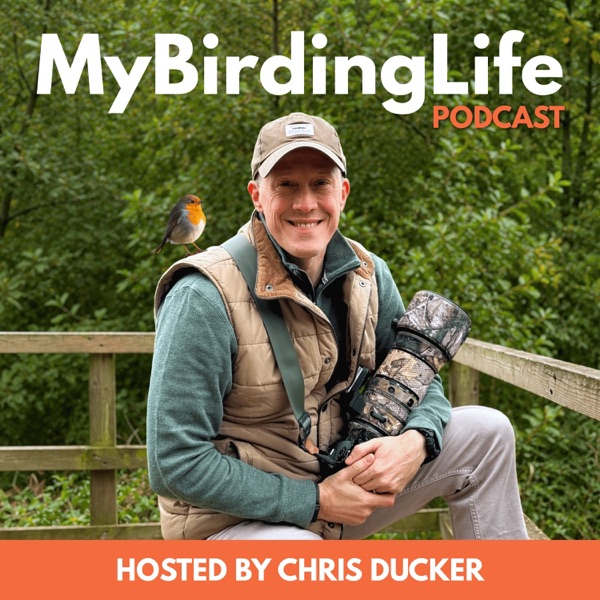
My Birding Life
My Birding Life is the podcast for anyone who's ever been stopped in their tracks by a bird.
Every episode, host Chris Ducker sits down with a passionate birder for an honest, warm conversation about the hobby we love. From conservationists dedicating their lives to protecting species and habitats, to lifelong birders with decades of stories to tell, to everyday birders who found birds at just the right moment in their lives — every guest brings something different, but they all share one thing: a genuine love for the natural world.
We go deep into the stories behind their journeys. The first sightings that sparked a lifelong obsession. The wild places that shaped them. The birds they'll never forget. The hard-earned tips that only come from real time in the field. And the conservation work being done to protect the birds that matter most.
Whether you've been birding for fifty years or you've just started noticing the birds in your garden, My Birding Life is your show. Warm, personal, and full of the kind of conversations that make you want to grab your binoculars — this is birding through the eyes of the people who live it.
Real birders, real stories, real advice!
- Episodes
- 23
- Releases
- Weekly
- Typical length
- 44 min
- On air since
- 2026
- Latest episode
- 6 days ago
Episodes
23 episodes, newest first
-
42 min
Birding as a Father and Son Duo with Paul and Joe Scorey
Episode 23
Show notes
Paul and Joe Scorey are a father and son birding duo. Chris first met them at the Global Bird Fair, then went birding with them at MigFest in Spurn. Paul’s birding goes back to the 1970s. Joe, now 16, has been at it since toddlerhood, and the pair are deep into their second Big Year in a row.
In this chat, they share how the hobby has shaped their relationship, why they keep (mostly) friendly competition in check, and what it takes to make birding feel welcoming for younger people.
Episode Takeaways:
• Spark Birds: Paul’s was a great spotted woodpecker spotted in tall grass as a kid in the 1970s. Joe’s obsession took hold at 11, when a great tit photo at WWT Welney turned a break from birding into a full-blown passion.
• Nemesis Birds: Paul spent about four decades missing the great grey shrike before finally getting one in Norfolk, after circling a golf course to find it.
• Welcome the Next Generation: Joe makes the case for making younger birders (and everyone else) feel welcome, from primary school nature education to kinder behaviour in the hide.
• Keep It Simple: Paul has kept a handwritten year list since 1995. Both of them believe that notebooks, a calm approach to binoculars, and a bit of time outside are all you really need.Episode Timestamps:
• 03:48 - Paul Spark Bird
• 04:50 - Joe Reignites Birding
• 06:19 - Early Birding Memories
• 07:07 - The Missed Albatross
• 08:16 - Birding Bonds and Talk
• 12:59 - Big Year Numbers
• 15:43 - Travel Plans and Endemics
• 17:16 - Beginner Tips and Binoculars
• 20:03 - Analog Lists Matter
• 21:26 - Tech Versus Nature
• 22:29 - Welcoming Young Birders
• 29:41 - Why Birding Endures
• 32:35 - Rapid Fire QuestionsImportant Links & Resources:
• Follow My Birding Life on Instagram
• Subscribe to My Birding Life on YouTube
• Follow Paul and Joe on Instagram
• My Birding Life 'The Wagtail' Field Journal -
43 min
Creating a Wildlife Habitat on Three Acres with Wildlife Kate
Episode 22
Show notes
Kate MacRae, better known as Wildlife Kate, is one of the best people out there at bridging the gap between birds and the rest of the world. She does it with livestreams and a network of cameras across her wet woodland in Carmarthenshire, South West Wales. Her setup has been featured on BBC Springwatch and Countryfile.
In this episode, Kate takes us from a black-and-white nest box camera hooked up to an old portable TV to a wicker basket, a handmade Clay Cavern and a Springwatch call. She also tells the story of selling up in Lichfield to chase a dream of real acreage, and what it’s like making habitat on your own.
Episode Takeaways:
• Think Like a Photographer: A livestream should look as good as it works. Kate keeps the background well away from the perches so it blurs into soft, diffuse colour, and she uses mossy props from her own land to make every shot feel like a painting.
• Experiment, Then Experiment Again: Kate’s brand started with a spare nest box camera, a wicker basket and some seed. Mistakes are part of the process, and she’s never formally trained.
• Habitat Takes Time and Hard Graft: Her three acres hold a meadow, a quarry, hazel woodland and a copse. Three years in she has built ponds, owl boxes and a hide from an old caravan, learning skills from other people along the way.
• Share the Joy: Kate wants to get people who don’t normally watch birds watching birds. Her grandchildren and a new generation of young birders keep her optimistic.Episode Timestamps:
• 04:54 - Early Birding Roots
• 06:45 - Birding as a Lifelong Habit
• 10:25 - How the Cameras Began
• 11:31 - Nest Box Tech Breakthrough
• 14:49 - Clay Cavern and Springwatch
• 18:58 - Perfecting the Stream Look
• 23:30 - Finding Her Dream Land
• 27:50 - Nonstop Habitat Projects
• 28:45 - Managing Land Solo
• 29:45 - Life is Not a Rehearsal
• 31:55 - Finding My Tribe
• 35:58 - Next Gen Birding Boom
• 37:10 - Rapid Fire Birding QsImportant Links & Resources:
• Follow My Birding Life on Instagram
• Subscribe to My Birding Life on YouTube
• Follow Wildlife Kate on Instagram
• Wildlife Kate's YouTube Channel -
46 min
Nashville Birding, Hokkaido and Fish Owls with Graham Gerdeman
Episode 21
Show notes
Short on time in a new place and want to see as many birds as possible? Hire a local guide! That’s how a long morning of lifers in Nashville Tennessee turned into this conversation with Graham Gerdeman, a volunteer eBird regional reviewer and working wildlife photographer.
You’ll hear how backyard birds and an embarrassing sapsucker mis-ID sparked a lifelong obsession, what it takes to document a rare bird properly, and the story of a sleepless night in the Hokkaido cold with Blakiston’s fish owls.
Episode Takeaways:
• Embrace Your Mis-IDs: Get one wrong and you’ll never forget the bird. Go birding with someone more experienced and let the mistakes teach you.
• Document Your Rarities: Back up rare sightings with field marks, photos or audio so your eBird records hold up. Your life list is yours either way.
• Hire a Local Guide: Short on time somewhere new? A local guide gets you to the hotspots and the lifers. Travelling with friends on a custom trip gives you more flexibility than a set-departure tour.
• Appreciate Your Local Patch: You don’t need a far-flung destination to be happy birding. Leave the camera behind now and then to build your field notes and soak up the moment.Episode Timestamps:
• 04:02 - Nashville Birding
• 05:13 - Becoming a Birder
• 07:42 - Spark Bird MisID
• 08:25 - Learning From Mistakes
• 16:50 - Dream Birding Trips
• 17:40 - Japan Tour Highlights
• 20:45 - Photography Career Path
• 26:05 - Steller's and Sea Eagles
• 27:08 - Fish Owl Night Watch
• 30:48 - Cranes and Trip Wrap
• 32:09 -Rapid Fire Q&A
• 36:59 - Dream Destinations Antarctica
• 38:32 - Birding Beyond ContentImportant Links & Resources:
• Follow My Birding Life on Instagram
• Subscribe to My Birding Life on YouTube
• Nashville Vlog with Chris and Graham
• Follow Graham on Instagram -
46 min
Life on the Marsh… and in Flight with Simon Barnes
Episode 20
Show notes
Simon Barnes spent over 30 years as chief sportswriter at The Times. His books on birding, including How to Be a Bad Birdwatcher and On the Marsh, have introduced more people to the joy of birds than almost anyone's in recent years. Now in the high 30s to mid-40s for books published, he's just released his latest, How to Fly.
Simon joins Chris from his hut on the edge of his Norfolk marsh, where a marsh harrier, a pair of visiting cranes and a newly singing reed bunting have all been keeping him company. We talk about the Cetti's warbler that helped sell him the house, what he learned from a year at Minsmere, and evenings on the marsh with his son Eddie. We also get into why he believes sound is every bit as important as sight, and what he learned about swifts, bumblebees and pterosaurs while researching a book dedicated to flight.
Episode Takeaways:
• Two sides of birding: Simon describes the daily "soap opera" of small, predictable moments that give you a sense of belonging, alongside the peak moments that leave you barely able to believe what you're seeing. It's the combination that brings you back.
• Let the land lead: A reed bunting singing on the marsh told Simon it's slowly turning into a reed bed. The lesson from Minsmere and the World Land Trust is that if you look after the habitat, the birds follow.
• Ears count too: Simon argues that sound is every bit as important as sight, and he learned it from a Zambian birder who recorded around 500 species. Now Eddie calls out the Cetti's warblers from the canoe.
• Watch with more intent: Researching How to Fly changed how Simon watches swifts, from ambient birds to a real show of speed, gliding and manoeuvrability. Ordinary birds become extraordinary when you slow down and look properly.Episode Timestamps:
• 00:38 - Meet Simon Barnes
• 02:40 - Books and Writing Life
• 04:01 - Buying the Norfolk Marsh
• 05:54 - Marsh Magic Moments
• 09:23 - Why Birding Moves Us
• 11:44 - Marsh Changes and New Birds
• 14:24 - Conservation Lessons Learned
• 21:44 - Eddie and Nature Connection
• 24:37 - Learning Birds by Ear
• 26:11 - New Book How to Fly
• 33:55 - Swifts and Watching Differently
• 39:10 - Rapid Fire Birding Q&AImportant Links & Resources:
• Follow My Birding Life on Instagram
• Subscribe to My Birding Life on YouTube
• Pick Up Your Copy of How to Fly
• Simon's Website -
43 min
From Childhood Spark to Conservation Career with Mya Bambrick
Episode 19
Show notes
Mya Bambrick has been birding since she was eight. She's now a BTO Youth Ambassador, winner of the BTO's Young Ornithologist of the Year Award and a familiar voice on Radio 4's Tweet of the Day. She works full time in conservation with Birds of Poole Harbour, and she's on a mission to get young people hooked on the hobby we all love.
In this episode, Mya takes us from a street dance academy in Crawley to a hide at Warnham Local Nature Reserve, where an osprey and a kingfisher changed everything. We talk about the bird camp that shaped her path, ringing nightjars for a group of young birders, why birding is booming among young people, and how to keep the joy in birding when the camera and the phone keep pulling you away.
Episode Takeaways:
• Find your people: A free BTO bird camp at 13 gave Mya the community she couldn't find at school. Ten years later, she's helping run one.
• Representation matters: Growing up in a single-parent household, with no birding role models who looked like her, drove Mya to make birding more accessible and inclusive, especially for young girls.
• You're a birder if you love birds: Sofa birder or seasoned twitcher, there's no right way to do it. Binoculars around your neck, and you're in.
• Protect the moment: Mya keeps camera days and content days separate from binoculars-only days, and she saves her eBird list until she's finished birding.Episode Timestamps:
• 01:46 - Meet Mya Bambrick
• 03:08 - How It All Began
• 07:27 - Kingfisher Chase Story
• 10:31 - Finding Young Birders
• 13:09 - BTO Youth Engagement
• 19:46 - Making Birding Inclusive
• 25:46 - Birding For Everyone
• 27:50 - Sofa Birders And Twitchers
• 28:28 - Camera Versus Birding
• 31:25 - Balancing Tech And Presence
• 32:11 - Apps Versus Pen And Paper
• 33:46 - Young Ornithologist Award
• 37:35 - Rapid Fire Birding PicksImportant Links & Resources:
• Follow My Birding Life on Instagram
• Subscribe to My Birding Life on YouTube
• Follow Mya on Instagram -
39 min
The Creator Life of a Birdwatching Baddie with Tamerra Jones
Episode 18
Show notes
Tamerra Jones, aka the Birdwatching Baddie, picked up birding almost by accident during lockdown, looking for something slower-paced to get her outside. Three years on, the Central Florida-based birder has racked up hundreds of species, built a joyful, unapologetically fun Instagram following, and become a genuine advocate for making the hobby feel accessible to everyone.
In this episode, Chris and Tamerra dig into how she went from lockdown curiosity to serious lister, why field experience and mentorship beat any app or book, and what it means to bring her full self into a hobby that hasn't always felt built for people who look like her. They also swap camera gear notes, geek out over each other's "boring" local birds, and talk through her next big trip!
Episode Takeaways:
• From Lockdown Curiosity to Serious Birder — How a search for something slow-paced and accessible during COVID turned into three years of increasingly serious birding, out three times a week even with a full-time job
• Becoming a Lister — Why she tracks every sighting in real time on eBird and Merlin, needs eyes on a bird before it counts, and still considers herself very much a student
• A Community That Takes You Under Its Wing — The value of learning in the field from other birders over apps or books, and why the birding community has a rare, generous "fireside chat" feel
• The Birdwatching Baddie Identity — Reclaiming "baddie," refusing to fit a mould, and using her platform to show that birdwatching is for everyoneEpisode Timestamps:
• 05:01 - How Birding Began
• 06:35 - Weekly Birding Routine
• 07:24 - Traveling For Birds
• 10:47 - Getting Into Listing
• 13:44 - Apps And Logging Style
• 15:34 - Learning From Birders
• 21:52 - Birding For Everyone
• 23:35 - Safety And Representation
• 25:09 - Birder First Camera Second
• 26:10 - Gear Talk And Nikon Debate
• 27:41 - Trips Goals And Community
• 29:46 - Florida Scrub Jay And Bird GeekingImportant Links & Resources:
• Follow My Birding Life on Instagram
• Subscribe to My Birding Life on YouTube
• Follow Tamerra on Instagram -
38 min
Living the Life of a Wetland Ranger with Ajay Tegala
Episode 17
Show notes
Ajay Tegala started volunteering on a nature reserve at 15 years old and never really left. Now the ranger at Wicken Fen, one of the National Trust's most historic reserves, Ajay has spent his career on the front line of British conservation, from seabird colonies on Blakeney Point to reed bed management on the fens. He's also a familiar face from Countryfile and Springwatch, and the author of two books, The Unique Life of a Ranger and, most recently, Wetland Diaries.
In this episode, Chris sits down with Ajay for a wide-ranging chat about childhood ducks and grey herons, the long, unglamorous road into ranger work, and what it actually takes to keep a wetland reserve wet. They cover the return of breeding cranes after 500 years, the tidal surge that upended his first winter on the Norfolk coast, and the challenge of turning a life's work into a book without losing what makes it personal.
Episode Takeaways:
• Volunteer, volunteer, volunteer — The unglamorous but essential path into ranger work: a year of unpaid volunteering on the Norfolk coast, working bar jobs to get by, before a seasonal role finally opened up
• Life on Blakeney Point — Six months living on a remote shingle spit working with seals and seabirds, a kingfisher moment that confirmed he'd found the right path, and a tidal surge that smashed up the reserve just as things were going well
• Managing a wetland for wildlife — The grazing livestock, winter scrub clearance, and the moment each November when a tap is turned and the water and the wigeon, arrive almost overnight
• The return of the cranes — Cranes began nesting at Wicken for the first time in over 500 years, five years in the making before the first chick finally fledgedEpisode Timestamps:
• 04:50 - Ajay’s Early Birding
• 09:47 - Breaking Into Ranger Work
• 10:50 - Blakeney Point Breakthrough
• 14:31 - Kingfisher Sign and Storm
• 15:29 - Returning to Wicken Fen
• 17:36 - Changes at the Reserve
• 19:18 - Why Wicken Works
• 20:39 - Accessible Fen Experiences
• 21:12 - Ranger Life Explained
• 22:01 - Habitat Management Basics
• 23:16 - Birds Reedbeds and Cranes
• 26:47 - Water Challenges and Solutions
• 28:32 - Writing Wetland DiariesImportant Links & Resources:
• Follow My Birding Life on Instagram
• Subscribe to My Birding Life on YouTube
• Follow Ajay on Instagram
• Ajay's Website -
44 min
Birding, Lifers, Travel & Restrooms with Hannah Buschert
Episode 16
Show notes
Chris is joined by Hannah Buschert of Hannah & Erik Go Birding, one of the biggest names in the birding podcast world! Hannah's story starts almost by accident — a required biology of birds course in college, taught with the help of David Attenborough's Life of Birds, was all it took to hook her for good. From there she worked as a park ranger at Bentsen-Rio Grande Valley State Park, picked up a serious taste for far-flung birding destinations, and eventually settled on the Oregon coast.
Hannah and Chris dig into how Hannah & Erik Go Birding got started back in 2018 on long drives through Florida, why she went on to launch Women Birders Happy Hour and Bird Nerd Book Club, and what it's really like building an audience and a business around a shared love of birds.
Episode Takeaways:
• The Podcast Was Born on Long Florida Drives: Hannah and her husband Eric started Hannah & Eric Go Birding in 2018 because the birding podcasts they listened to on road trips were too technical and didn't capture the fun of actually going out and birding.
• Three Podcasts, Three Purposes: Beyond the flagship show, Hannah runs Women Birders Happy Hour and Bird Nerd Book Club.
• Travel and Logistics Matter as Much as the Birds: Hannah has a master's degree in tourism management, and the show deliberately covers the practical side of birding trips — guides, hotels, restaurants, and yes, bathrooms, not just the birds themselves.
• Online Criticism Comes With the Territory: Hannah's learned to shrug off the odd bit of negativity by remembering how much effort goes into putting anything out publicly.Episode Timestamps:
• 03:46 - Go Birding Origins
• 07:49 - Birding Beginnings
• 11:06 - Early Struggles Community
• 14:12 - Building Podcast Network
• 18:17 - Puffin Walks Costa Rica
• 20:45 - Budgeting Big Trips
• 22:53 - Monetising Go Birding
• 24:42 - Birding Books Picks
• 29:16 - Audience Fame Feedback
• 38:04 - Bird That Got Away
• 39:35 - Dream Destinations
• 41:31 - Forever Birding PlaceImportant Links & Resources:
• Follow My Birding Life on Instagram
• Subscribe to My Birding Life on YouTube
• Follow Hannah on Instagram
• Go Birding Podcast -
57 min
Life on the Road, Chasing Rare Birds with Nigel & Kayleigh
Episode 15
Show notes
This week Chris sits down with Nigel and Kayleigh Cheetham, the couple behind Backyard Aviary Adventures.
What started as a lockdown project, building an aviary and filming the golden pheasants, doves, and finches they raised in it, has since morphed into car camping, then a van conversion, and now full-blown twitching trips all over the UK chasing rare, scarce, and unusual visitors to our shores!
The conversation covers how each of them found birding, the highs and hazards of the twitching community, and where they stand on their second consecutive UK big year.
Episode Takeaways:
• How They Each Found Birding: Nigel rediscovered it in his late 20s after losing his dad to cancer and inheriting his camera; Kayleigh caught the bug on their honeymoon in Gambia, spotting a woodland kingfisher before he did.
• The Van Was Bought With Grief: After losing his sister to cancer at 44, Nigel and Kayleigh used money she left them to buy the van that now takes them all over the UK on rare bird chases.
• Why Twitching Feels Like a Countrywide Game of Where's Wally: For Nigel and Kayleigh, the pull of twitching isn't just the bird itself, it's the addictive thrill of the hunt, and the privilege of seeing something that isn't supposed to be there at all.
• 276 Species in a Single UK Year: Their 2025 big year total landed them at number eight nationally and this year, every rare bird they tick off doubles as a donation to Birds on the Brink Conservation Charity.Episode Timestamps:
• 06:38 - Lockdown Aviary Origins
• 11:23 - How Birding Began
• 15:53 - Life Filming Together
• 17:56 - Channel Shift Twitching
• 29:27 - Big Twitch Experiences
• 30:58 - Big Year Reality Check
• 32:15 - Couple Rivalry and Solo Ticks
• 39:49 - Strategy for the Rest of Year
• 41:33 - YouTube Changes the Chase
• 43:13 - eBird Rankings vs Enjoyment
• 49:55 - Gambia Happy Place and KingfishersImportant Links & Resources:
• Follow My Birding Life on Instagram
• Subscribe to My Birding Life on YouTube
• Follow Nigel and Kayleigh on Instagram
• Subscribe to Backyard Aviary Adventures on YouTube -
48 min
Low-Carbon Birding and No Binoculars with Sara Humphrey
Episode 14
Show notes
This week Chris sits down with Sara Humphrey, aka Sussex Sara, a wildlife photographer, low-carbon birder, and one of the most distinctive voices in UK birdwatching right now. Sara doesn't drive. Every birding trip she takes, from the Cairngorms to the Lake District, is done by train, bus, or on foot, which means her whole approach to finding wildlife has had to become far more strategic than most birders ever need it to be.
Sara and Chris talk through what low-carbon birding actually looks like day to day, her mission to see and photograph some of Britain's hardest and most threatened species: turtle doves, ring ouzels, nightingales and why she doesn't carry binoculars at all. It's a conversation about patience, close observation, and choosing depth over ticking boxes.
Episode Takeaways:
• Life Without a Car: The Low-Carbon Birding Rule: Sara's approach to reducing her footprint without making the hobby unmanageable. Trains, buses, and long walks by default, with the occasional taxi when safety calls for it.
• What Turtle Doves Actually Need to Recover: Shallow water, the right seed in field margins, and thick hedgerow nesting habitat plus why logging sightings via BirdTrack for Operation Turtle Dove matters.
• Why Sara Never Carries Binoculars: As a photographer first, she found swapping between binoculars and camera cost her the shot every time, so she trained herself to read movement, body language, and calls instead.
• Letting the Animal Lead the Shot: Sara doesn't plan a composition and wait for wildlife to walk into it, she watches behaviour first and lets the animal dictate the photo.Episode Timestamps:
• 03:45 - Low Carbon Birding
• 07:53 - Planning Car Free Trips
• 12:54 - Why Turtle Doves Declined
• 18:05 - Ring Ouzels And Hides
• 20:23 - No Binocular Birding
• 23:45 - Learning Calls And Nightingales
• 26:58 - Territory And Displays
• 30:35 - Behaviour Led Photography
• 34:35 - Wild Boar Close Call
• 36:05 - Terns And FlybysImportant Links & Resources:
• Follow My Birding Life on Instagram
• Subscribe to My Birding Life on YouTube
• Follow Sara on Instagram -
32 min
Making the Ordinary Extraordinary with Andy Green
Episode 13
Show notes
Recorded live on the Whinchat stage at Global Bird Fair, this is the second episode we're publishing from that day, bringing Chris together with wildlife photographer Andy Green, a Kent-based creative known for his ultra-detailed close-up bird photography, co-host of The WildX Podcast alongside Adam Jukes and Mike Phelps, and founder of The Wild Den, an online community built around nature, creativity, and mental wellbeing. After turning 40, Andy set out to make wildlife his full-time work, and he's never looked back.
In this conversation, Chris and Andy dig into the New Forest moment that started it all, the "still point" theory behind Andy's most memorable wildlife encounters, the ongoing blur between birding and bird photography, and why Andy built The Wild Den to bring community and joy back into sharing creative work online. They round things off with a rapid-fire audience segment covering spark birds, dream destinations, and crucially, the best birding snacks.
Episode Takeaways:
• The New Forest Robin That Started It All: Andy's very first proper wildlife shoot in 2000, where a robin, a brambling, and a jay all landed within reach and hooked him for good.
• The "Still Point": The idea of a moment where everything goes quiet except you and the animal in front of you, illustrated by Andy's first encounter with an otter on Mull.
• Why The Wild Den Exists: Andy's answer to social media negativity and algorithm fatigue: a community space for chat, challenges, and in-person meetups, built to make birding and photography fun again.
• Content Creation Without the Pressure: Andy's advice for anyone hesitant to start posting: do it because you enjoy it, ignore the comparison trap, and expect it to take years, not overnight.Episode Timestamps:
• 03:03 - Origin Story
• 03:55 - Making Ordinary Pop
• 06:25 - Hide Versus Wild
• 09:33 - Nature as Reset
• 10:48 - Still Point Moments
• 12:35 - Birding Meets Cameras
• 15:00 - Why The Wild Den
• 18:27 - Group Walk Dynamics
• 19:41 - Building a Safe Community
• 24:26 - Memories Over Metrics
• 28:29 - Dream Trips and LifersImportant Links & Resources:
• Follow My Birding Life on Instagram
• Subscribe to My Birding Life on YouTube
• Follow Andy on Instagram
• The Wild Den -
33 min
Dreaming Wild for 100 Years with Nick Acheson
Episode 12
Show notes
Recorded live from the Whinchat Podcasting Stage at Global Bird Fair 2026, sponsored by Swarovski Optik, this episode is the first of two shows Chris recorded in front of an audience at the fair.
His guest is Nick Acheson, naturalist, writer, broadcaster, and a regular contributor to BBC Springwatch, known for pairing sharp field knowledge with a genuine gift for storytelling. Nick is based in North Norfolk, where he's a passionate advocate for conservation, and is the author of two books: The Meaning of Geese (2023 East Anglian Book of the Year) and This Wild Dream.
The conversation centres on Norfolk Wildlife Trust's 100th anniversary, from its founding in 1926 to the ice-age ponds of Thompson Common, before turning to Nick's own birding life: a childhood that never really had a "before," a daily 5am ritual that's more about healing than ticking species, and a closing reflection on why birds should never be treated as a currency.
Episode Takeaways:
• 100 years of Norfolk Wildlife Trust: The story starts in 1926, when Dr Sidney Long and 11 friends raised the money to buy Cley Marshes for around £5,000. Nick traces how the trust grew from a small, land-holding organisation into one managing more than 50 nature reserves across 5,500 hectares of Norfolk today.
• The pingos of Thompson Common: Nick explains these ice-age ponds, formed as the Devensian glaciation retreated 12,000 years ago, and how Norfolk Wildlife Trust has used LiDAR to find pingos filled in by farmers and restore them, with rare wetland seeds still viable in the silt and springing straight back to life.
• A Birding Life with No Beginning: Nick can't remember a time before birds. Growing up in North Norfolk, three school biology teachers filled his head with species and normalised birding trips that most people would consider extraordinary.
• The 5am Ritual: Nick walks the same route every morning in spring, summer, and autumn, not to chase species but to connect. He describes crying at the first willow warbler of the year and knowing exactly which week each returning bird will start singing.Episode Timestamps:
• 04:04 - Norfolk Trust Origins
• 06:49 - Land Advice And Habitats
• 09:05 - Reserve Success Stories
• 10:07 - 1976 Royal Milestone
• 12:26 - Nick Birding Beginnings
• 16:32 - Thompson Common Pingos
• 19:12 - Pond Restoration Wins
• 21:11 - Norfolk Roots and World Travel
• 21:55 - Stories Behind This Wild Dream
• 24:19 - Birding as a Doorway
• 26:39 - Finding Nature AgainImportant Links & Resources:
• Follow My Birding Life on Instagram
• Subscribe to My Birding Life on YouTube
• Follow Nick on Instagram
• Nick's Website -
39 min
How the Wildest Ones are Living Life with Simon Owen
Episode 11
Show notes
Simon Owen is a Manchester-based filmmaker and photographer, the founder of Standby Productions, and the creative force behind Wildest Ones, a YouTube series that interviews people whose lives have been shaped by wildlife and the natural world. In this episode, Simon talks Chris through a childhood spent on RSPB stopovers with his dad, a detour through skateboard filmmaking that quietly taught him the patience wildlife photography demands, and the string of hard years, a business hit hard by COVID, a breakup, that sent him back outdoors and, eventually, into making Wildest Ones.
The conversation covers the three-chapter structure behind every Wildest Ones episode, the moments that have caught Simon off guard while filming other people's stories, turning half an acre of garden into a nesting site for goldfinches and great tits, keeping a balcony bird list in the middle of Manchester, and how a business decision to give back during COVID turned into becoming Lancashire Wildlife Trust's first-ever ambassador.
Episode Takeaways:
• Why Wildest Ones Exists: The series is built around three chapters for every guest: connection to the wild, mental wellbeing, and conservation, and it's deliberately open to anyone with that connection, not just birders.
• A Masterclass in a Hide From a Stranger: While struggling to find a little stint at Abberton Reservoir, Simon was helped by a birder in his 70s who found the bird in five minutes and stayed to chat for an hour, one of many reminders, Simon says, that he's never met an unfriendly birder.
• Building a Darden for Goldfinches: After moving to a half-acre plot eight years ago and noticing an odd lack of birdsong, Simon and his family deliberately built up feeders, boxes, and water, finally getting goldfinches to nest three years in, with great tits and great spotted woodpeckers nesting there for the first time this year.
• From Peatland Film to First-Ever Ambassador: A post-COVID decision to give back through Standby Productions led to a Save the Peatlands film for Lancashire Wildlife Trust that helped shift compost retail legislation, and two years later Simon became the Trust's first ambassador.Episode Timestamps:
• 02:21 - Photography Style Origins
• 03:22 - Childhood Birding Roots
• 09:38 - Wildest Ones
• 18:04 - Birding Passion and Raptors
• 20:26 - Garden Birds and Feeders
• 22:13 - Balcony Bird List
• 24:27 - What Makes a Great Outing
• 24:44 - Chasing the Perfect Shot
• 26:42 - Surprise Wildlife Encounters
• 28:40 - Wildlife Trust Ambassador
• 35:03 - Birding With the KidsImportant Links & Resources:
• Follow My Birding Life on Instagram
• Subscribe to My Birding Life on YouTube
• Follow Simon on Instagram -
46 min
Embarking Upon a Great British Bird Quest with Beth Sheils
Episode 10
Show notes
Beth Sheils has built a brilliant corner of the birding world on Instagram under the name Beth The Bird Nerd, helping people, whatever their experience level, get outside and fall in love with what's around them. In this episode, her first ever podcast interview, Beth talks Chris through a birding life that started on canal walks with her dad in Bootle, the British Bird Quest she's steadily working through, and why she'd rather watch the pigeons in her garden than chase something flashy.
The conversation covers her Instagram journey, the mental health lift she gets from getting outside with a camera, her honest take on twitching and crowds at popular sites, her role as Northwest ambassador for Birds and the Belles, and how a pair of binoculars bought on Mull turned into a Viking Optical ambassadorship.
Episode Takeaways:
• A birding life she can't remember starting: Beth grew up walking the canal from Bootle to the Dock Road in Liverpool with her dad, and was correcting classmates on mute swans by infant school.
• The British Bird Quest: An open-ended hunt for 256 regularly occurring British species, currently at 169, with a return to Mull in August for the eagles.
• Why she's not a twitcher: Beth explains her clear line on rarities: if it's not on her list, she's happy to leave it be, even when a rare bird turns up close to home.
• Birds and the Belles: Her role as Northwest ambassador for the all-female birding network and why it exists.Episode Timestamps:
• 03:47 - How Birding Began
• 05:51 - Teaching and Not Knowing
• 07:52 - Birding for Mental Health
• 11:37 - Learning Through Mistakes
• 15:19 - British Bird Quest Explained
• 23:48 - Favorite Birds and Raptors
• 25:44 - Quest Strategy Talk
• 26:15 - Seabird Trips Plans
• 27:21 - Not a Twitcher
• 30:32 - Birds and The BellesImportant Links & Resources:
• Follow My Birding Life on Instagram
• Subscribe to My Birding Life on YouTube
• Follow Beth on Instagram
• Birds and the Belles -
44 min
One Family and a Lifetime of Birding with Becca Heywood
Episode 9
Show notes
Becca Heywood is a third-generation birder. She learned to watch birds alongside both her father and her grandfather and today she's turning that inheritance into something new, sharing South London's urban wildlife with the world. By day she works in inclusion and equity at WWF-UK, and that same lens shows up throughout this conversation with Chris.
Chris and Becca trace her path from childhood trips down the M5 spotting buzzards, through a teenage stretch of quietly shelving the hobby for fear of not being "cool," to relaunching her passion at the very end of 2025 as a way to build community after moving to London.
From there they dig into the parts of birding culture that don't always get talked about — the "all or nothing" mentality, the stereotype of who a birdwatcher is supposed to be, and why nobody is born knowing how to ID a gull.
They also swap notes on why kingfishers still feel mythical no matter how many you've seen, Becca's love affair with analog Field Notes notebooks and a pocket photo printer over yet another listing app, and a rapid-fire round that surfaces a proper nemesis bird.
Episode Takeaways:
• A Third-Generation Birder: Buzzards spotted from the back seat with her dad and grandad, birding as shared curiosity, not expertise.
• Birds With Becca, Built for Belonging: Launched 30 December 2025 to build community after a move to London, no gear or right answers required.
• Knocking Down Birding's Barriers: On the "hardcore twitcher" stereotype and why "I don't have the kit" is the easiest barrier to knock down.
• Notebooks Over Apps: Why Becca traded digital life-lists for handwritten Field Notes notebooks, plus the WWT Barnes bittern that's become her nemesis!Episode Timestamps:
• 03:21 - Third Generation Birder
• 04:42 - Birding Shame to Joy
• 06:42 - Birding Gatekeeping
• 11:37 - Changing Birding Culture
• 15:55 - Kingfisher Magic Bird
• 23:44 - Analog Bird Notes
• 25:37 - Scrapbook Ritual
• 27:26 - eBird Backup System
• 28:04 - Keep Birding Fun
• 28:38 - Comfort and Inclusion
• 31:18 - Breaking BarriersImportant Links & Resources:
• Follow My Birding Life on Instagram
• Subscribe to My Birding Life on YouTube
• Follow Becca on Instagram -
43 min
Living a Life in the Wild World with Simon McCabe
Episode 8
Show notes
This week Chris is joined by wildlife filmmaker, presenter and storyteller Simon McCabe, who has spent over 30 years behind the camera bringing the natural world to life — from the British countryside to the wilds of Botswana. Simon writes, shoots, edits and narrates all of his own films, and his YouTube channel has become a go-to for anyone who wants their birding served up with genuine warmth and a great voice for it.
Chris and Simon trace Simon's path from childhood fishing trips and watercolour painting, through photography and into filmmaking, before diving into stories from the field — a patient wait for a bullfinch at Lackford Lakes, a puffin-hunting boat trip under the cliffs at Bempton, luxury hide life while filming goshawks in the Estonian snow, and a documentary shoot in Taiwan that picked up a couple of awards along the way.
They also swap notes on Botswana's Big Five, an unexpectedly brilliant morning of birding in Las Vegas, and what it's like attending the Global Bird Fair as a fan rather than a filmmaker!
Episode Takeaways:
• From Fishing to Film: How a childhood love of fishing and watercolour painting — including being mentored by the illustrator behind the Collins guide books — set Simon on the path to photography and, eventually, filmmaking
• Botswana's Big Five (and a Lot of Birds): Filming alongside guides, getting IDs right roughly a third of the time at first, and coming home with 99.96% accuracy after review
• Goshawks and Luxury Hides in Estonia: Filming from a heated "Wildlife Dreams" hide complete with coffee, bacon sandwiches and a timely snowstorm
• Global Bird Fair, From the Other Side of the Camera: Why Simon would attend even if he weren't filming, and what struck him most about the passion of the speakers and exhibitorsEpisode Timestamps:
• 04:07 - Origins in Nature
• 04:41 - From Art to Film
• 09:27 - Bullfinch at Lackford
• 13:12 - Bempton Cliffs Tips
• 21:04 - Vegas Birding Story
• 24:53 - Next Birding Destinations
• 25:47 - Snowy Estonia Highlights
• 36:27 - Shot That Got Away
• 37:35 - Dream Spots And LifersImportant Links & Resources:
• Follow My Birding Life on Instagram
• Subscribe to My Birding Life on YouTube
• Follow Simon on Instagram
• Simon's Website -
46 min
How the Weekend Birder was Born with Kirsty Costa
Episode 7
Show notes
Kirsty Costa didn't grow up with binoculars around her neck. Her birding life began in the first week of Melbourne's pandemic lockdown, on a dawn walk with her dog when a strange, wide-eyed shorebird appeared in the reeds of her local wetland. It turned out to be a Latham's snipe, a species that migrates every year between Japan and Australia, and something about that discovery, a bird she'd never known was living on her doorstep, changed how she saw the world around her.
That single sighting became Weekend Birder, now one of the most-listened-to science and nature podcasts in Australia, built around the idea that you don't need to be an expert, or even call yourself a birdwatcher, to fall in love with the birds already sharing your neighbourhood.
In this episode, Kirsty joins Chris as the show's first Australian and first non-British guest, to talk about the difference between birders, birdwatchers, and twitchers, why she gets more joy from a surprise garden visitor than a guaranteed rare bird, the mental health science behind why birdwatching works as informal mindfulness, and what a two-week birding trip through Australia would actually look like.
Episode Takeaways:
• Kirsty's spark bird story: how a Latham's snipe on a Melbourne dawn walk during lockdown turned into Weekend Birder
• Birder vs. birdwatcher vs. twitcher, and why Kirsty calls herself a "bird noticer" at heart
• Why the surprise of an unplanned sighting means more to her than the guarantee of a rare bird everyone's chasing
• A rapid-fire tour through Australian birding: where to start, what to see, and the best-kept regional secrets
• The neuroscience of birdwatching as mindfulness, and why it can leave you "a totally different person" after one walkEpisode Timestamps:
• 03:44 Pandemic Spark Bird
• 06:48 Birder vs Birdwatcher
• 08:34 Twitching Ethics Debate
• 14:25 Melbourne Birding Boom
• 17:38 Two Week Australia Plan
• 25:02 Digital Bird Lists
• 25:45 Backyard Birds With Names
• 27:05 Tawny Frogmouth Devotion
• 29:25 Why Weekend Birder
• 35:49 Birding As MindfulnessImportant Links & Resources:
• Follow My Birding Life on Instagram
• Subscribe to My Birding Life on YouTube
• Weekend Birder Website
• Listen to Kirsty's Podcast
• Follow Kirsty on Instagram -
50 min
Celebrating 20 Years of the Urban Birder with David Lindo
Episode 6
Show notes
He's one of the most recognisable names in birding and he's spent 20 years making the case that you don't need to travel to wild, remote places to find birds worth watching. You just need to look up.
Born and raised in Wembley, North London, David Lindo taught himself to bird as a child with no mentor and no one around him who shared the interest. That self-taught curiosity became a mission: get people living in urban areas connected to nature through birds, wherever they are in the world.
Along the way he's been named one of the seven most influential people in wildlife by BBC Wildlife Magazine, written books from The Urban Birder to Tales from Concrete Jungles, and birded in over 400 cities across the globe.
In this episode, recorded to mark the 20th anniversary of The Urban Birder brand, David joins Chris to talk about how a chance BBC Springwatch screen test in 2006 turned a marketing idea into a life's mission, why he thinks the biggest barrier to birding is the myth that you need expertise first, his own experience with depression and a more recent vestibular migraine diagnosis, and why nature, even just outside your window, has the power to change how you feel.
Episode Takeaways:
• How The Urban Birder was born the night before a BBC Springwatch screen test in 2006
• Why David believes the biggest stumbling block for new birders is thinking they need knowledge before they start
• Birding, burnout, and his 2024 vestibular migraine diagnosis
• Birding in 400+ cities and why the ones with nothing written about them online excite him mostEpisode Timestamps:
• 03:16 — Urban Birder Origins
• 06:30 — Springwatch Breakthrough
• 09:33 — Urban Birding Goes Global
• 10:33 — Changing Views on City Birding
• 15:00 — Getting People Started
• 21:57 — Doorstep Birding Surprises
• 25:27 — Birding and Mental Health
• 27:28 — Health Crash and Recovery
• 29:28 — Nature as Therapy
• 30:12 — 400 Cities of Birding
• 32:49 — Why Urban Birding Works
• 35:09 — New Birders New Voices
• 42:43 — Books and What’s NextImportant Links & Resources:
• Follow My Birding Life on Instagram
• Subscribe to My Birding Life on YouTube
• The Urban Birder
• Follow David on Instagram -
53 min
How to Plan a Big Year of Birding with Branwen Munn
Episode 5
Show notes
What happens when someone who listens for a living turns their ears to the natural world? Branwen Munn is a professional DJ, music producer, and multi-instrumentalist based in West Wales and a birder with an infectious passion for the outdoors. In 2024, she embarked on a Big Year alongside her parents, travelling the length and breadth of the UK in search of as many species as possible. In 2026, the National Trust chose her to front their year of community birding events across West Wales, leading walks, spotlighting a Bird of the Month, and building something genuinely special along the way.
In this episode, Chris sits down with Branwen to dig into the highs, the logistical headaches, and the beautiful messiness of planning a UK Big Year, plus her refreshingly honest take on what kind of birder she really is.
Episode Takeaways:
• How to plan a UK Big Year — Branwen breaks down her approach: start with habitats, cross-reference with the seasons, build a spreadsheet (or several), and don't underestimate the logistics of fitting it around real life
• The numbers game — She ended 2024 on 176 species, aiming for 200. Why the early months gave her almost half her total — and why motivation gets harder as the year goes on
• The Skye Christmas that wasn't — A week on the Isle of Skye in December to chase white-tailed eagles, a full week of rain, and a single beautiful day on the Sleat Peninsula that almost made it worth it
• Apps and tools for tracking your year — Why Branwen landed on BTO BirdTrack to log sightings, and how having the data in one place changed her relationship with the records
• The ethics of the tick — When does a bird count? Branwen talks through her decision to remove a snow goose from the list, the Pallid Harrier that keeps returning to Llanelli Wetlands, and why she's firmly not a twitcher
• Birding as a trans person — Branwen reflects candidly and warmly on her experience in the birding community, and why it's one of the most welcoming spaces she's found
• The National Trust project — How a talk about her Big Year at Dinefwr turned into a full year of community birding events across Pembrokeshire, Carmarthenshire, and Ceredigion — complete with walks, crafts, a community species log, and a celebration disco in DecemberEpisode Timestamps:
• 02:08 - What Is A Big Year
• 04:25 - Results And Birding Style
• 07:01 - Vlogging Origins
• 08:54 - Mindful Birding Moment
• 10:31 - Planning The Big Year
• 12:11 - Budget And Family Team
• 14:35 - Skye Setback Story
• 17:18 - Birding Then and Now
• 22:03 - Staying Motivated Midyear
• 25:03 - Tracking With BirdTrack
• 27:34 - Local Lifer Highlights
• 29:39 - Birding Community
• 32:30 - Identity and Inclusion
• 34:47 - Counting Questionable Ticks
• 38:45 - Fair Weather Birder Reflections
• 41:24 - National Trust Big YearImportant Links & Resources:
• Follow My Birding Life on Instagram
• Subscribe to My Birding Life on YouTube
• Follow Branwen on Instagram -
49 min
The Early Birder Catches the Worm with Jon Mason
Episode 4
Show notes
Jon Mason has spent almost four decades as a geography teacher, an Opticron ambassador, and to a growing audience on Instagram, sharing early morning birding moments from Otmoor and beyond.
In this episode, Chris sits down with John to talk about a fascination with birds that started before he could walk, why he calls himself a birder rather than a birdwatcher, and how a heart attack a decade ago changed the way he spends his time. From spider's webs at sunrise to a nightingale nobody could see, this is a conversation about noticing more, rushing less, and why the simplest birds are often the best ones.
Episode Takeaways:
• A lifetime with birds — Jon traces his love of birds back to a highchair full of sparrows, and explains why for him birding has never been a hobby, it's just always been there.
• Birder, not birdwatcher — Why Jon relies on his ears as much as his eyes, and how an old LP called Bird Sounds in Close Up trained him to recognise calls as a boy.
• You are the lesson — Forty years of teaching geography taught John that you can't fake passion in front of students — you have to live it, out loud, on a chalk hillside with a telescope.
• The heart attack that changed everything — How a health scare ten years ago led Jon to step back from work, invest in time outdoors, and discover that nature does more for his blood pressure than medication.Episode Timestamps:
• 03:00 — A lifetime of loving birds, starting with sparrows on a highchair
• 07:00 — Where "The Early Birder" name comes from, and a body clock tuned to the dawn chorus
• 11:00 — Sharing birding in the moment on Instagram, and the firecrest that stopped a photograph
• 13:00 — Forty years of teaching: "you are the lesson," not the one delivering it
• 24:00 — Titchwell RSPB and why it has everything
• 33:00 — Quality over quantity: spider's webs, nightingales, and not losing the point of the day
• 40:00 — The heart attack, the wake-up call, and why nature is better than medicationImportant Links & Resources:
• Follow My Birding Life on Instagram
• Subscribe to My Birding Life on YouTube
• The Early Birder
• Follow Jon on Instagram
Hobbies lists
More Hobbies shows picked out from the charts








More in Hobbies
Placed highest on Apple Podcasts' Hobbies chart right now