Podcast
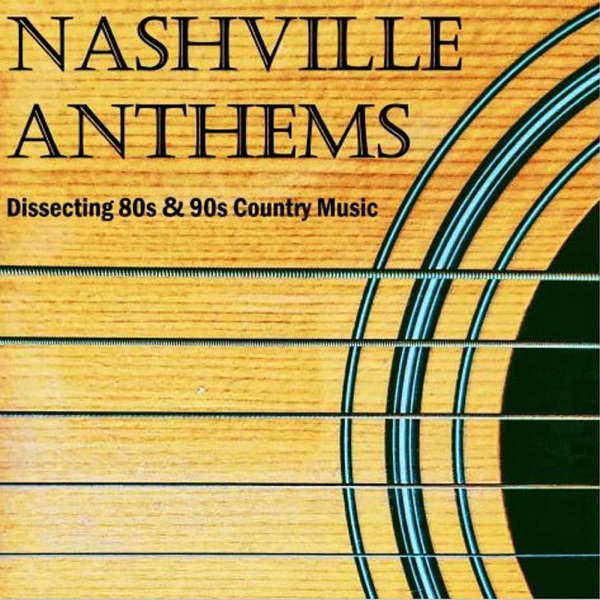
Nashville Anthems: Dissecting 80s & 90s Country Music
Have you always thought there was something special about 80s and 90s country music that you've never been able to put your finger on? Why does this music stand out? Well, let's don our cowboy hats, adjust our oversized belt buckles, tease that hair, and see if we can get the bottom of it, by picking apart one song at a time.
- Episodes
- 127
- Releases
- Every two weeks
- Typical length
- 26 min
- On air since
- 2022
- Latest episode
- 3 weeks ago
Episodes
127 episodes, newest first
-
45 min
Finale
Show notes
We wrap up this podcast with as tidy a bow as we can muster, with our ultimate answer to our ultimate question of what makes 80s & 90s country music particularly work. We also tackle some listener questions, indulge in some personal divulgences, and try to send you away with some ideas on where to go from here.
Thanks so much for listening to Nashville Anthems: Dissecting 80s & 90s Country Music.
-
32 min
Dissecting "Cowboy Take Me Away" by the (Dixie) Chicks - 1999
Show notes
We round out the 90s, and round out this podcast, by filling the most glaring hole in our back catalogue, with a signature song by the artist that dominated the end of the decade: the Dixie Chicks' (as we knew them then) 1999 hit, "Cowboy Take Me Away". The trio seem to re-channel some of the sentiment of their earlier hit "Wide Open Spaces" in this whimsical follow-up. But how have the protagonist's feelings changed since she left home in 1998, and how do the Chicks use theiir perfect blend of late 90s neo-(neo-)traditionalism and traditional bluegrass on this cut to lift us ever higher, and into the next decade?
-
20 min
Dissecting "I'll Think of a Reason Later" by Lee Ann Womack - 1998
Show notes
We start to round out the 90s with a lighthearted, neotraditional turn from a pre-I-Hope-You-Dance Lee Ann Womack. It's her hilarious late-1998/early-1999 hit: "I'll Think of a Reason Later". The slightly tongue-in-cheek lyrics set the stage, but how does Womack charm us with her down-to-earth delivery of them? And what does the Dolly Parton have to do with it?
-
49 min
Dissecting "How Do I Live" by Trisha Yearwood & by LeAnn Rimes - 1997
Show notes
1997 takes us back to a moment in time when it made sense for a Nicholas Cage movie to have two different divas record the same Diane Warren song for it. And we're taking advantage of the opportunity for a two-fer, as we look at both Trisha Yearwood's & LeAnn Rimes's parallel hits: 1997's "How Do I Live". Though the different renditions seemed like a big deal at the time, we admit that in hindsight, the two are nearly interchangeable, and neither is particularly "country" in any meaningful sense. But what does that fact tell us about Diane Warren's composition? And if this song doesn't follow many of the typical distinctives we've found in country music, what does it do that made it work at the time?
-
4 min
Mini-Episode: Dissecting "A Thousand Miles from Nowhere" by Dwight Yoakam
Show notes
Here's a bonus mini-episode on Dwight Yoakam's haunting 1993 hit "A Thousand Miles from Nowhere," by request from A Symposium of Popular Songs. Enjoy!
-
26 min
Dissecting "Strawberry Wine" - by Deana Carter - 1996
Show notes
We take on anthem of feminine coming-of-age in Deana Carter's debut single, 1996's "Strawberry Wine". I bet you still remember all the words to this karaoke-friendly chorus, but how does this song use sensory imagery to support its strong atmosphere of rural innocence? And why was Deana Carter perfect for it?
-
21 min
Dissecting "I Can Love You Like That" by John Michael Montgomery - 1995
Show notes
John Michael Montgomery ushers in the mid-90s by perhaps sticking to the formula, with his 1995 hit "I Can Love You Like That". But can he? Despite the MOTR leanings, where do we see some nuanced relatability in this post-Cyrus-pre-Shania artifact that's pure country?
-
20 min
Dissecting "Wink" by Neal McCoy - 1994
Show notes
We move toward the mid-90s with a song at which I defy you not to smile: Neal McCoy's 1994 hit "Wink". McCoy's down-to-earth charisma meets its perfect vehicle in this quintessential product of Nashville. But just why do we find this cut so irresistible? And with all those forces in the mix, who's really winking at whom here?
-
20 min
Dissecting "Should've Been a Cowboy" by Toby Keith - 1993
Show notes
We return to a country music icon by taking on his debut single and (at least for the 90s) his signature song: Toby Keith's "Should've Been a Cowboy". Keith struck a chord in 1993 with the mid-20th-century western nostalgia that permeates the lyrics, but how does his specific take on this theme depart from some others we've covered that trod similar ground? And how does that take bring some needed nuance to our understanding of Toby Keith the man and persona, before "How Do You Like Me Now"?
-
29 min
Dissecting "Achy Breaky Heart" by Billy Ray Cyrus - 1992
Show notes
We celebrate our freedom by revisiting a song, dance, and mullet that exploded onto the country music scene like none has before or since: Billy Ray Cyrus's unforgetable 1992 smash "Achy Breaky Heart". This one falls into the "Where were you when...?" category, but what exactly is there instrinsic in this song that made us all collectively stand up and start line dancing seemingly overnight? And is it okay to want to again?
-
31 min
Dissecting "Aces" by Suzy Bogguss - 1992
Show notes
Our first selection from a standout year takes us to another standout voice from the early 90s: this time it's 1992 CMA Horizon Award winner Suzy Bogguss, with her 1992 hit "Aces". Melton makes no bones about his deep appreciation for this piece of music, but how do Bogguss's singing and her and Jimmy Bowen's production give appropriate life to Cheryl Wheeler's composition about the precise tipping point of a failing relationship?
-
29 min
Dissecting "We Both Walk" by Lorrie Morgan - 1991
Show notes
It's vintage Lorrie Morgan in her 1991 hit: "We Both Walk". This is a song that sounds "off" for all the best reasons. But how does the unsettling tone combine with Loretta Lynn-style attitude to give us a nuanced perspective on a classic country trope? And what does Tammy Wynette have to do with it?
-
34 min
Dissecting "Maybe It Was Memphis" by Pam Tillis - 1991
Show notes
One of the best voices of her generation delivers one of the best vocals you'll ever hear, in Pam Tillis's signature song: 1991's "Maybe It Was Memphis". We can't say enough about these spectacular vocals, but how do the vocals, lyrics, and music all work together to develop the thick, sensual tension of this southeastern summer evening? And whom did Melton mistakenly think the "Williams' play" line was about back in the day?
Here's a link to the Tillis quote about the production that we referenced in this episode.
-
22 min
Dissecting "I'd Be Better Off (in a Pine Box)" by Doug Stone - 1990
Show notes
Doug Stone takes us down the pit with him in this monument to country self-pity: 1990's "I'd Be Better Off (in a Pine Box)". Stone showcases his vocals in this all-time classic downer, but how specifically do his phrasing and range augment the supremely depressing mood, and just what was in the look that, once received, shattered the glass for this protagonist with such finality?
-
48 min
Dissecting "Friends in Low Places" by Garth Brooks - 1990
Show notes
What better way to usher in the 90s than with the signature song by the 90s' signature artist? With his 1990 hit Friends in Low Places, Garth Brooks did nothing less than usher country music into the wider cultural conscience. But why? What is it about this song, and Brooks's interpretation of it, that resonated so strongly that it essentially set the tone for country music in the 90s? And why didn't Mark Chesnutt's version have a similar effect?
-
33 min
Dissecting "Timber, I'm Falling in Love" by Patty Loveless (with Vince Gill) - 1989
Show notes
We finish out the 80s by returning to the artist who kicked us off. It's Patty Loveless, and her first number one hit: 1989's high-octane "Timber, I'm Falling in Love". This one is a total bluegrass romp, with some honky-tonk attitude, and crowned by two of the best voices country music has ever seen. Everything about this gem works, but is that enough? Why is this song not just fun, but special? All these years later, why is it still sweeping us off of our feet?
-
16 min
Dissecting "The Church on the Cumberland Road" by Shenandoah - 1989
Show notes
We take a frantic ride with classic 80s & 90s country band Shenandoah, in their first number one single: 1989's "The Church on the Cumberland Road". Our old pal the Lovable Loser shows up again, but how does his social position within this motley crew give us a hint of creeping maturity? And how do lead singer Marty Raybon's vocals convey the plaintive urgency of someone who's racing to leave his old life behind?
-
26 min
Dissecting "The Bluest Eyes in Texas" by Restless Heart - 1988
Show notes
We stay in 1988 for a classic by a band who wasn't afraid to skew pop: vocal clinicians Restless Heart. It's their signature hit: "The Bluest Eyes in Texas". Come for the syncopated harmony, stay for the driving percussion. But how does the overlay of those two elements illustrate the haunted tedium of this song's message?
-
25 min
Dissecting "I'm No Stranger to the Rain" by Keith Whitley - 1988
Show notes
It's 1988(-ish), and we're finally getting to the ultimate Gone-Too-Soon artist of our era. It's always a little sad to listen to Keith Whitley, and that's especially true on the last of his singles to be released in his lifetime: "I'm No Stranger to the Rain". Or is it? Reality and fiction blend in this classic of 80s neotraditionalism, but how does this song manage to tackle its heavy subject matter with a distinct lightness of touch? And what does that combination of light and dark portray about the complexity of this singer's struggles?
-
21 min
Dissecting "18 Wheels and a Dozen Roses" by Kathea Mattea - 1987
Show notes
We stay in 1987 for one more episode, stopping for some flowers along the way, because it's Valentine's Day 2026, and thus just the right time to take on Kathy Mattea's signature hit, "18 Wheels and a Dozen Roses". You already know how this song tugs at the heartstrings, but how does it manage to keep itself rolling so deliberately toward its near-term goal, while constantly looking in the rearview mirror toward the more distant past?
Music Commentary lists
More Music Commentary shows picked out from the charts






More in Music Commentary
Placed highest on Apple Podcasts' Music Commentary chart right now