Podcast
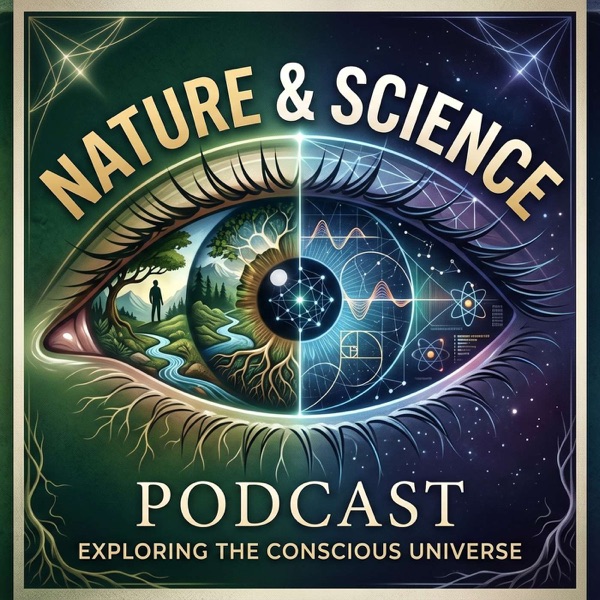
Nature and Science Podcast
Our podcast explores nature and science by following the personal journeys of individuals who have dedicated their lives to nature and science. We talk with theoretical physicists, park rangers, conservation biologists and anyone who loves nature and science.
- Episodes
- 92
- Releases
- Weekly
- Typical length
- 48 min
- On air since
- 2020
- Latest episode
- 2 weeks ago
Episodes
92 episodes, newest first
-
1 hr 1 min
Your Doctor Says You're Obese, Your Mirror Says Nonsense. What Does Science Say?
Season 7, Episode 5
Show notes
For over six decades, conventional medical advice has treated weight management as a simple accounting problem: calories in versus calories out. Yet traditional diet and exercise programs consistently fail to stop rising obesity rates. Why? Because that simple equation ignores millions of years of human evolution and the complex biological mechanisms the body uses to actively defend its weight.
In this episode of the Nature and Science Podcast, host Donald Murphy sits down with renowned pediatric surgeon and researcher Dr. Evan Nadler to challenge how we define, diagnose, and treat obesity.
Together, they explore:
• Why calories in vs. calories out fails to explain cellular weight defense
• The role of epigenetics and the in-utero environment in shaping long-term metabolic health
• How fat cells function as an active biological organ
• Why obesity must be understood as a biological disease rather than a lifestyle or willpower failure
• The systemic barriers facing families today and the critical need for expanded access to pediatric careWhether you are a healthcare professional, parent, or simply interested in the biological frontiers of human health, this conversation offers a fresh, evidence-based paradigm shift on metabolic science.
--------------------------------------------------
RESOURCES & LINKS MENTIONED:
• Learn more about the Nature and Science Podcast: https://natureandsciencepodcast.com
• Submit a guest pitch or proposal: https://natureandsciencepodcast.com/guest-proposalsCONNECT & FOLLOW:
• Subscribe on Apple Podcasts, Spotify, or your favorite podcast player.
• Leave us a rating and review to help others discover the show!Full Transcript Available At:
https:/natureandsciencepodcast.com
-
58 min
The Thanksgiving Table Physics of Persuasion | Dr. JonRobert Tartaglione
Season 7, Episode 4
Show notes
With the holidays approaching, millions of families are preparing to gather around the Thanksgiving table—and inevitably fall into the same political, social, and ideological debates. But why is it almost impossible to change a family member's mind over dinner? On this episode of the Nature and Science Podcast, host Donald Murphy sits down with behavioral scientist Dr. JonRobert Tartaglione to explore the deep cognitive psychology behind persuasion, why logical arguments fail, and how to communicate effectively when the stakes feel deeply personal.
For over a decade, Dr. Tartaglione has been driven by a singular question: what moves people? Educated at the University of Chicago, University College London, and the University of Cambridge, Dr. Tartaglione acts as a translator for complex concepts in cognitive neuroscience, social psychology, and behavioral economics. Together, they unpack why the human brain functions less like a computer and more like a complex biological filter, why treating someone else's mind like "private property" changes how we communicate, and how understanding the underlying physics of persuasion allows us to build messages that truly resonate.
SHOW NOTES & KEY TOPICS:
• The Thanksgiving Table Debates: Why holiday dinner arguments get so heated and why logical "facts" rarely change a family member's mind.
• The "Private Property" Principle: Why approaching another person's mind as private property changes the ethics and mechanics of influence.
• The Brain Is Not a Computer: Why treating human minds as purely rational data processors leads to messaging breakdowns.
• The Five Principles of Influence: Core insights drawn from social psychology and behavioral economics that drive human choices.
• The Physics of Persuasion: Why signs like "Do Not Touch The Art" reveal our fundamental misconceptions about changing someone’s behavior.
• Evolutionary Neuroscience of Connection: Exploring the deep evolutionary reasons why social pain is processed similarly to physical pain in the brain.Full Transcript Available At:
https:/natureandsciencepodcast.com
-
1 hr 5 min
The Bridge From Science to God: Mathematics, Faith, and the Search for Meaning
Season 7, Episode 3
Show notes
Summary / Description
What if modern scientific discovery hasn't pushed us away from God, but has actually brought us closer than we realize? Can the fine-tuning of natural law, the digital elegance of DNA, and the mathematical symmetry of the cosmos point toward an underlying Mind?
In this special feature episode of the Nature and Science Podcast, we bridge the worlds of higher mathematics, physical law, and existential faith. We are joined by Richard Krauland—author of The Bridge From Science to God, former CEO of a billion-dollar enterprise, and a lifelong scholar of mathematics and philosophy who spent the first forty-one years of his life as a spiritual skeptic and atheist.
After surviving temporary paralysis and managing lifelong health challenges, Richard’s trajectory shifted, leading him to explore the deep intersections between scientific evidence and spiritual truth. In this conversation, we engage with arguments from prominent materialist thinkers like Richard Dawkins, challenging assumptions on both sides of the aisle.
Together, we unpack:• Faith vs. Science: Why operating on scientific principles requires a foundational trust in rational order, and why faith isn't an evasion of evidence.
• DNA and Biological Code: How the digital complexity of genetic information mirrors computer engineering and points to an intelligent origin.
• The Limits of Materialism: Where physical law reaches its boundary when attempting to explain consciousness, purpose, and moral truth.
• The Problem of Suffering: How personal encounters with severe illness, paralysis, and loss shape an understanding of divine presence rather than cynicism.
• Radical Love and Agreement: Why Jesus’s command to love those with whom we deeply disagree remains the hardest—and most vital—teaching to live out today.Key Timestamps & Chapters
• **** – Introduction: Bridging mathematics, physical law, and faith
• **** – From Atheism to Belief: The pivot point in 1994
• **** – Responding to Richard Dawkins: Is faith a cop-out or a rational commitment?
• **** – DNA, digital code, and the signature of intelligence
• **** – Consciousness and fine-tuning: Where material explanations reach their limits
• **** – Facing adversity: How paralysis and grief refine belief
• **** – Beyond belief: Practicing radical love across ideological dividesGuest Information & Resources Mentioned
• Guest: Richard J. Krauland
• Book: The Bridge From Science to GodConnect & Support the Podcast
• Great Pods Feature Page: Nature and Science Podcast on Great Pods
• Subscribe & Review: If you enjoyed today’s conversation, please leave a 5-star rating and review on Apple Podcasts or Spotify to help others discover the show!Full Transcript Available At:
https:/natureandsciencepodcast.com
-
1 hr 7 min
Edges of the Mind: Science, Humanity, and Schizophrenia
Season 7, Episode 2
Show notes
About the Episode
For more than fifty years, Dr. David Pickar has stood at the absolute forefront of psychiatric research and neuroscientific discovery. As the former Chief of the Experimental Therapeutics Branch at the National Institute of Mental Health (NIMH) and a long-standing member of the FDA’s Psychopharmacologic Drugs Advisory Committee, Dr. Pickar has not only witnessed the evolution of modern psychiatry—he helped shape it.In this episode of the Nature and Science Podcast, host Donald Murphy engages in a warm, wide-ranging, and deeply human conversation with Dr. Pickar about his life's work and new book, Edges of the Mind: Treating Schizophrenia as Psychiatry Evolves.Moving effortlessly between high-level neuroscience and intimate bedside stories, Dr. Pickar sheds light on the biological realities of schizophrenia, the triumphs and pitfalls of psychopharmacology, and what severe mental illness reveals about human perception, consciousness, and the mind itself.Whether reflecting on five decades of breakthrough research at Yale and NIMH or discussing the essential role of physician empathy in modern medicine, Dr. Pickar delivers a masterclass in science, ethics, and humanity.Key Topics Covered
• Five Decades on the Front Lines: The transformation of psychiatry from mid-century theories to modern neurobiology.
• Understanding Schizophrenia: Moving past societal stigma to examine the true neurological and human realities of serious mental illness.
• The Limits & Promise of Medication: A nuanced look at psychiatric drug development, the FDA advisory process, and emerging therapeutic frontiers.
• The Power of Clinical Observation: Why close, compassionate observation of the patient remains medicine's most indispensable tool.
• Stories from Edges of the Mind: Behind-the-scenes insights from laboratories, courtrooms, and psychiatric wards.About the GuestDavid Pickar, M.D., is a psychiatrist, neuroscientist, and author. He spent more than 20 years leading research at the National Institute of Mental Health (NIMH) as Chief of the Experimental Therapeutics Branch. An Adjunct Professor at the Johns Hopkins University School of Medicine and the Uniformed Services University, Dr. Pickar is a Distinguished Life Fellow of the American Psychiatric Association and Fellow Emeritus of the American College of Neuropsychopharmacology. He is the author of Edges of the Mind: Treating Schizophrenia as Psychiatry Evolves.
Full Transcript Available At:
https:/natureandsciencepodcast.com
-
48 min
Volcanoes, Plate Tectonics, and Deep Time with Dr. Jo
Season 7, Episode 1
Show notes
“Pretty landscapes become spectacular when you know what you’re looking at. I’ve spent my career visiting volcanoes—first drawn by their natural beauty, and then compelled to understand the structure, processes, and time that shape them.”— Dr. Tamie J. Jovanelly
Overview
With over 1,350 active volcanoes worldwide and up to 70 eruptions occurring annually, understanding the geological machinery beneath our feet is vital to interpreting Earth's past and future.
In this episode, host Donald Wayne Murphy sits down with Dr. Tamie J. Jovanelly—distinguished geologist, GSA Fellow, two-time Fulbright Research Scholar, and host on The Weather Channel. Dr. Jovanelly breaks down complex planetary forces into accessible insights, discussing her book Volcanoes: What Everyone Needs to Know (Oxford University Press) and her fieldwork across Iceland's tectonic rifts.
From the historic destruction of Mount Vesuvius to the colossal threat of the Yellowstone Supervolcano, discover how magma, plate tectonics, and climate intersect—and how volcanism behaves on worlds far beyond Earth.
Key Takeaways from the Discussion
• Inside the Magma Chamber: How and where volcanoes form, the structural dynamics of eruptions, and how scientists deploy modern tools to predict activity.
• Iceland’s Tectonic Rift: What happens when an island is actively pulled apart by plate boundary motion, and how volcanic and glacial forces constantly rebuild the landscape.
• Eruptions & Human History: The profound influence of historical volcanic eruptions on global climate patterns, civilization shifts, and ecological rejuvenation.
• Extraterrestrial Volcanism: Exploring active volcanic processes on other planets and moons across our solar system.About Dr. Tamie J. Jovanelly
Dr. Tamie J. Jovanelly is an award-winning geologist, science writer, and international researcher based in Atlanta, Georgia. A Fellow of the Geological Society of America (GSA) and a two-time Fulbright Scholar, she holds a Ph.D. from Kent State University and has spent over two decades researching global water quality, climate change, and volcanism.
She is the author of Iceland: Tectonics, Volcanics, and Glacial Features (Wiley) and Volcanoes: What Everyone Needs to Know (Oxford University Press), creator of the "Lessons in Geology" series, and founder of Adventure Geology Tours. Follow her fieldwork on Instagram at @drjovanelly.
Full Transcript Available At:
https:/natureandsciencepodcast.com
-
39 min
Rewards and Dangers of Cave Diving Exploration
Season 6, Episode 9
Show notes
Originally Published Under: Life Is A Story We Tell Ourselves 2023 **Cave Diving Journey and Techniques**
CAVE DIVING JOURNEY AND TECHNIQUES
Brian Starnes, a cave diver, shares his exciting journey from open water diving to the more challenging world of cave diving. Starnes became captivated by diving after exploring the island of Utilla in El Salvador, where he discovered the thrill and comfort of underwater exploration. His upbringing, which emphasized exploration and a free-spirited lifestyle, influenced his decision to pursue cave diving.
**Motivation and Lifestyle**
Starnes was drawn to the adventure and freedom of diving, which allowed him to live in a cool place and engage in a thrilling activity. He appreciated the minimalistic lifestyle of diving, which included wearing minimal clothing and focusing on the present moment. This lifestyle, combined with his love for exploration, made cave diving an appealing choice for him.
**Psychological Transition**
Starnes' mindset played a crucial role in his transition from open-water diving to technical diving. He believed he could pursue any lifestyle he desired, and this mindset translated to his diving pursuits. He embraced the challenges and complexities of cave diving, which required mastering equipment, becoming a better diver, and teaching others.
**Personal Experience**
Starnes' interest in cave diving was sparked by the allure of exploring the underwater world and the unique experiences it offered. He recalls discovering a unique underwater cave, highlighting the sense of wonder and accomplishment that comes from finding something new. He emphasizes the importance of preserving cave environments, as human activity can alter the delicate ecosystems within.
**Technical Diving and Safety**
Starnes discusses the different terms used for technical diving, including depth and cave diving. He explains the theoretical ceiling of cave diving and the decompression obligations of deeper diving. Technical diving requires planning and carrying additional equipment to ensure safety. Starnes emphasizes the importance of following proper courses and safety guidelines to reduce the risk of accidents.
**Future Plans**
Starnes plans to become a full cave instructor and teach courses in Sardinia. He also wants to become competent in rebreather training. He mentions new theories and techniques in diving, such as habitats for decompression. Starnes recommends learning to swim before diving and finding a local diving club. He also highlights popular places for open-water certification, such as Thailand and Honduras.
Overall, the transcript is a fascinating exploration of cave diving and the techniques involved. Brian Starnes' journey from open-water diving to cave diving is inspiring, and his insights into the challenges and rewards of technical diving are valuable for both experienced divers and newcomers to the underwater world.
Full Transcript Available At:
https:/natureandsciencepodcast.com
-
2 min
Welcome to The Nature and Science Podcast Trailer
Show notes
What does a 46-million-year-old blood-engorged mosquito tell us about deep time? How do planetary forces inside giant magma chambers shape the future of human civilization?What are the latest discoveries in the bio medical sciences.
On this show, we go beyond surface summaries to explore extraordinary scientific discoveries, Earth history, and environmental stewardship. We sit down with world-class geologists, paleobiologists, theoretical physicists, and authors seeking verifiable truth and a clearer view of objective reality.
Whether we’re decoding ancient biomolecules with Smithsonian researchers or exploring the future of Artificial intelligence, every episode brings complex science to life through in depth discussions.
We are launching a brand new season of weekly conversations. Hit subscribe or follow wherever you listen to podcasts so you never miss an episode, and visit us at https://natureandsciencepodcast.com/ to read full transcripts, view field visuals, and explore deep-time science.
New episodes drop every [Monday]. Let’s explore the world of nature and science together.
As always, stay safe, share happiness, and remember, never stop questioning, curiosity has its own reason for existing.
Full Transcript Available At:
https:/natureandsciencepodcast.com
-
59 min
Unravelling The Secret Of Life With Ancient Biomolecules
Season 6, Episode 10
Show notes
Originally Published Under: Life Is A Story We Tell Ourselves
“When I first saw the fossil of a blood-engorged mosquito, it was one of the most interesting, amazing moments in my life—because I realized this was something that no one on the planet had ever seen before. I was the first human being to ever look upon a fossil of a blood-engorged mosquito.”— Dr. Dale GreenwaltWe long believed fossils were composed strictly of rock and minerals, all original molecular traces of life erased by millions of years of heat and pressure. We were wrong.In this episode, paleobiologist Dr. Dale Greenwalt guides us through the revolutionary science of ancient biomolecules—pigments, proteins, and DNA preserved in the fossil record across tens of millions of years. From decoding how mammoths survived extreme Arctic cold to uncovering the true colors of dinosaur feathers, analyzing surviving biomolecules allows us to reconstruct the physiology, behavior, and evolutionary trajectories of extinct organisms like never before.Key Takeaways from the Discussion
• Beyond Stone and Bone: Fossils are not merely mineralized casts; fragile organic molecules can persist under unique geological conditions for tens of millions of years.
• Paleogenomics & Proteomics: Analyzing fossilized proteins and pigments offers deep insights into physiological adaptations—such as cold-tolerance in prehistoric mammals and pigment-based mating displays in dinosaurs.
• The Jurassic Park Parallels: Dr. Greenwalt shares his discovery of the first-ever blood-engorged mosquito fossil, demonstrating how ancient blood and molecular remnants can survive across geological deep time.
• Evolutionary Deep Time: Tracing ancient viral genomes and molecular structures helps us understand how modern pathogens evolved and adapted over millions of years.#Paleontology
#SciencePodcast
#Fossils
#STEM
#ScienceCommunication
#Geology
#DeepTime
#EvolutionaryBiology
Full Transcript Available At:
https:/natureandsciencepodcast.com
-
57 min
Are We Conscious Of The Life We Should Live
Season 6, Episode 9
Show notes
We like to believe that we navigate our lives as fully conscious, rational architects of our own destinies. But how much of the life you are living right now is a result of deliberate, conscious choice—and how much is dictated by unseen cognitive shortcuts, subtle societal defaults, and hidden behavioral biases?
In this episode of Journey Through Nature and Science, host Donald Murphy sits down with renowned behavioral economist and best-selling author Dan Ariely for a profound conversation at the intersection of psychology, choice, and human awareness.
Together, they explore the boundary between automatic habit and intentional living. From the subtle forces that steer our decision-making to the deep alignment required to live a truly conscious life, this discussion challenges us to pause, look beneath the surface of our daily routines, and ask: Are we truly conscious of the life we should live?
Key Topics Covered
• The Illusion of Rational Control: Why human beings consistently act against their own best intentions—and why intellect alone doesn't guarantee conscious choices.
• The Architecture of Choice: How small, unexamined environmental cues shape our major life decisions without our awareness.
• Bridging Behavioral Science & Consciousness: Merging the empirical study of human irrationality with the deeper search for personal meaning and alignment.
• Awakening to Intentionality: Practical insights for stepping out of automatic default patterns and reclaiming agency over your path.Dan Ariely Website
https://www.google.com/url?q=http://danariely.com&source=gmail&ust=1786465629511000&sa=E -A Satirical Take On Bureaucracy
https://www.google.com/url?q=http://centerforbureaucracy.com&source=gmail&ust=1786465629511000&sa=E -
How We Should Live Out Our Lives
https://www.google.com/url?q=http://thelifeweshouldlive.com&source=gmail&ust=1786465629511000&sa=E -Full Transcript Available At:
https:/natureandsciencepodcast.com
-
13 min
Looking Back at AI Scaling with Anthropic Co-Founder Jared Kaplan
Season 6, Episode 8
Show notes
"An archival 2023 interview with Anthropic co-founder Jared Kaplan discussing scaling laws, large language models, and the trajectory of artificial intelligence."
"What is the universe? What is intelligence? What is the mind?"
When theoretical physicist turned AI researcher Jared Kaplan shifted his focus to artificial intelligence, he wasn't just looking to build software—he was trying to answer fundamental questions about reality, perception, and thought itself.
In this episode, we’re revisiting a 2023 conversation with Jared, co-founder of Anthropic, recorded just as he was joining the company.
At the time, we sat down to discuss the physics of intelligence, scaling laws, large language models (LLMs), and where machine intelligence was heading. Looking back three years later, with tools like Claude and ChatGPT transforming the global landscape, listening to this snapshot offers an incredible look at how fast the field has evolved—and how much of today's reality was already taking shape in those early research models.
We begin with Jared sharing the story of what first drew him from physics into the world of AI, driven by the ultimate quest to understand how mind and universe intersect.
In This Episode, We Cover:
• From Theoretical Physics to AI: How foundational questions about the universe and human cognition led Jared from fundamental physics to machine intelligence.
• The Physics of Scaling Laws: Understanding the empirical patterns that predict how language models improve as computing power, data, and parameters expand.
• Large Language Models & Emergent Abilities: Early insights into how LLMs acquire complex reasoning behaviors.
• The Trajectory of AI Safety & Alignment: Why Anthropic was formed and the core challenges of building safe, cooperative frontier models.Full Transcript Available At:
https:/natureandsciencepodcast.com
-
13 min
Looking Back at AI Scaling with Anthropic Co-Founder Jared Kaplan
Season 6, Episode 8
Show notes
"An archival 2023 interview with Anthropic co-founder Jared Kaplan discussing scaling laws, large language models, and the trajectory of artificial intelligence."
"What is the universe? What is intelligence? What is the mind?"
When theoretical physicist turned AI researcher Jared Kaplan shifted his focus to artificial intelligence, he wasn't just looking to build software—he was trying to answer fundamental questions about reality, perception, and thought itself.
In this episode, we’re revisiting a 2023 conversation with Jared, co-founder of Anthropic, recorded just as he was joining the company.
At the time, we sat down to discuss the physics of intelligence, scaling laws, large language models (LLMs), and where machine intelligence was heading. Looking back three years later, with tools like Claude and ChatGPT transforming the global landscape, listening to this snapshot offers an incredible look at how fast the field has evolved—and how much of today's reality was already taking shape in those early research models.
We begin with Jared sharing the story of what first drew him from physics into the world of AI, driven by the ultimate quest to understand how mind and universe intersect.
In This Episode, We Cover:
• From Theoretical Physics to AI: How foundational questions about the universe and human cognition led Jared from fundamental physics to machine intelligence.
• The Physics of Scaling Laws: Understanding the empirical patterns that predict how language models improve as computing power, data, and parameters expand.
• Large Language Models & Emergent Abilities: Early insights into how LLMs acquire complex reasoning behaviors.
• The Trajectory of AI Safety & Alignment: Why Anthropic was formed and the core challenges of building safe, cooperative frontier models.https:/natureandsciencepodcast.com
Full Transcript Available At:
https:/natureandsciencepodcast.com
-
33 min
Is The Earth Losing Its Balance?
Season 6, Episode 7
Show notes
Is The Earth Losing Its Balance and beginning to turn against us?
Author Dominic Nessi explores that terrifying possibility in The Source, a gripping new science thriller that combines geophysics, political suspense and human survival in a story where Earth’s very stability begins to unravel.
The first installment in a planned trilogy, The Source follows a team of brilliant women scientists racing to understand a growing series of magnetic disturbances, seismic irregularities and atmospheric anomalies that suggest the planet’s rotational balance may be shifting — with potentially catastrophic consequences for civilization.
At the center of the story is Christina Whiting, a NASA geospace specialist whose discoveries challenge humanity’s understanding of the world beneath its feet. As governments react with denial, fear and escalating desperation, the race for answers becomes a global struggle defined as much by politics and survival as by science itself.
The Source
“The Source is ultimately about people,” Nessi says. “It’s about how ordinary individuals respond when systems fail, certainty disappears, and science collides with fear. I wanted the story to feel intellectually grounded, emotionally personal and frighteningly plausible.”
Drawing inspiration from real scientific theories, archaeological mysteries and modern geopolitical tensions, The Source has been described by early readers as “Michael Crichton meets Hidden Figures,” combining large-scale disaster storytelling with a distinctly modern, female-centered perspective.
The book is expected to resonate strongly with readers of speculative thrillers, science-driven fiction, and book club audiences looking for stories that blend suspense with deeper philosophical questions about humanity’s future.
www.sourcematrix.info
Full Transcript Available At:
https:/natureandsciencepodcast.com
-
20 min
The Progenitor Field - A Pre Big Bang SciFI Novel
Season 6, Episode 6
Show notes
Host and Executive Producer of the podcast will discuss his latest science fiction novel, The Progenitor Field. The novel tells the story of the experiment to reunite the seventeen known fields of physics and prove that the universe is conscious. The experiment fails and plunges the world back into primordial DARKNESS. Ethiopian twins, endowed from birth with an enhanced genetic ability to connect to the Progenitor Field must act as a bridge between the fractured world of reality and the DARKNESS.
You can now access excerpts of The Progenitor Field at our publisher's website: https://theprogenitorfield.com/home
Full Transcript Available At:
https:/natureandsciencepodcast.com
-
47 min
DC Golf Course Restoration Threatens Affordable Access
Season 6, Episode 5
Show notes
Michael Williams joins us to discuss the proposed restoration of the golf courses in DC including Langston Golf Course and East Potomac. We will explore the effects of the proposed restoration on future affordability and the restorations relation to the Act of 1897 and the history of public golf course development in the 20th century.
In 2005, Mr. Williams launched his first radio show on FOX News Radio, "Sticks and Stones", a critically acclaimed show that covered golf, business and politics. Since that launch, Mr. Williams has established a reputation as a savvy broadcaster and as an incisive interviewer and writer. An avid golfer himself, Michael has covered the game of golf and the golf lifestyle including courses, restaurants, business, travel and sports marketing for publications all over the world. In his first year as host of The 19th Hole Golf Radio Show on CBS Radio in Washington, D.C., Mr. Williams led the show to becoming the top-rated golf show in the 7th largest market in the United States and was named the recipient of the 2014 Middle Atlantic PGA Earle Hellen Award for the Outstanding Media Person of the Year.
Full Transcript Available At:
https:/natureandsciencepodcast.com
-
53 min
The First Women Lifeguards: How Perseverance and Skill Overcame Obstacles
Season 6, Episode 4
Show notes
“Debbie Friedman adds a bouyant new element to history, introducing the strong and brave women who battled ocean waves and stinging sexism to become the first ocean lifeguards on the California coast. GUARDED combines tender memoir and heart-pounding rescue scenes. Friedman captures the salty grit of her fellow guards as they smash through boundaries and risk their lives.” —Elaine Weiss New York Times bestselling author of The Woman’s Hour: The Great Fight to Win the Vote
The book is available hereon Tower One Press and here on amazon.
Full Transcript Available At:
https:/natureandsciencepodcast.com
-
1 hr
Sustainable Farming Brings Healthy Food To Your Table
Season 6, Episode 3
Show notes
Sustainable Farming Brings Healthy Food To Your Table is what this podcast is all about. Shawn and Lindsay and their three children work to provide you with healthy food through practicing permaculture and raising their farm animals in a humane way. Their pigs are pastured raised meaning they are allowed to roam free and forage on the land. They will tell the story of how they built their farm and business through a love for the land, a passion for farming and just plain hard work. They now provide their products throughout the country of Ecuador while managing a large farmers market on Thursdays.
Full Transcript Available At:
https:/natureandsciencepodcast.com
-
27 min
One Ranger's Quest To Save His Beloved Desert
Season 6, Episode 2
Show notes
This is the story of how a young man fell in love with the beauty and mystery of the desert and translated that love into a career as ranger protecting that desert.
Vic Maris began his career with California State Parks, working at Red Rock Canyon in 1974. He served throughout the State during his 30-year career working as a park ranger, supervising ranger, and superintendent. His favorite job was working as Superintendent of the Mojave Sector, protecting seven parks including Red Rock Canyon State Park. Vic has always been fascinated by the night sky. When he retired from State Parks, he founded Stellarvue, a telescope company that has been making world-class refractors for 27 years. In his spare time, Vic has been writing a book about his 60-year love affair with Red Rock Canyon State Park.
Full Transcript Available At:
https:/natureandsciencepodcast.com
-
50 min
Cured vs. Healed: A Doctor's Near-Death Journey to a New Kind of Medicine
Season 6, Episode 1
Show notes
Welcome to my third memoir about my unusual trajectory in the world of medicine. In my first memoir, “Medicine and Miracles in the High Desert,” I shared with readers my profoundly life-changing and eye-opening time on the Navajo Reservation as a young schoolteacher in the early 1970s. Many years later, I returned to the Navajo people to serve them as a medical doctor in Cuba, New Mexico. The second memoir, “From Mountains to Medicine,” takes the reader on a spellbinding, ten-year odyssey in search of my life’s purpose.
This memoir begins with my wide-eyed excitement upon entering medical school. I had an unquenchable eagerness to learn information and skills that would help others. I held no pre-conceived ideas about the kind of education I would receive. Gradually, as time passed, I began suspecting that something wasn’t right about some of the information that the professors and mentors taught the medical students. Long after I completed my training, I discovered why some of the information I learned didn’t make sense, and the conflicts of interest involved in many of the studies that were done that influenced what the medical students were taught.
Full Transcript Available At:
https:/natureandsciencepodcast.com
-
17 min
Two Time Loser To Revolution: The Birth of Ky’Orda
Season 5, Episode 27
Show notes
Hello everyone, I'm your host of Nature and Science Podcast, Don Murphy. In the episode I am interviewed by our producer, Anna Murphy to discuss, how my two time failure in chemistry ultimately led to the founding of Ky'Orda. The mission of Ky'Orda is to eliminate the fear and failure in learning complex subjects for everyone by creating an education app with a personal guide that uses behavioral science and adaptive technology. I think many of you out there can identify with failing a subject and feeling like you didn't measure up or at the worse you were not smart. You may have even abandoned a subject before you even got a chance to explore its adventures and discoveries. The guided app I will talk about is creating an entirely new world and may ultimately change the way education in done worldwide. So join us this next episode and be amazed.
Full Transcript Available At:
https:/natureandsciencepodcast.com
-
40 min
How A Love Science Helped Save Our National Parks
Season 5, Episode 27
Show notes
Scientific research at Yellowstone and other National Park has yielded many useful discoveries benefiting humanity. One of the most important was the discovery of the thermophilic bacterium, Thermus aquaticus. Later an enzyme was purified by a team led by Dr. Henry Erlich, which led to the practical use of the PCR test in covid detection and many other uses.
Science in parks is a crucial tool for the advancement of humanity.
However, if it were not for the early efforts of George Menendez Wright, science may have never taken hold in our national parks. Today, the George Wright Society continues that effort by supporting parks, protected/conserved areas, cultural sites, and other kinds of place-based conservation by encouraging communication among and convenings of researchers, managers, educators, practitioners, and the public to facilitate informed decisions and actions that embrace our values.
Joining me to talk science in our national parks is Dave Harmon, executive director of the George Wright Society. Dave is responsible for overseeing the George Wright Society’s operations, including co-editing Parks Stewardship Forum and helping plan workshops and other meetings. A member of the GWS since 1985, Dave began working for the organization in 1990 and served as executive director from 1998 to 2017 before returning that role in 2019. He is active in IUCN's World Commission on Protected Areas. He also maintains a research interest in the relationship between biological and cultural diversity, having co-founded the NGO Terralingua, which is devoted to that subject. Dave has co-edited several volumes on protected area conservation, including The Antiquities Act: A Century of American Archaeology, Historic Preservation, and Nature Conservation (with Francis P. McManamon and Dwight T. Pitcaithley), The Full Value of Parks: From Economics to the Intangible (with Allen D. Putney), and A Thinking Person's Guide to America's National Parks (with Robert Manning, Rolf Diamant, and Nora Mitchell).
Full Transcript Available At:
https:/natureandsciencepodcast.com
Nature lists
More Nature shows picked out from the charts






More in Nature
Placed highest on Apple Podcasts' Nature chart right now