Podcast
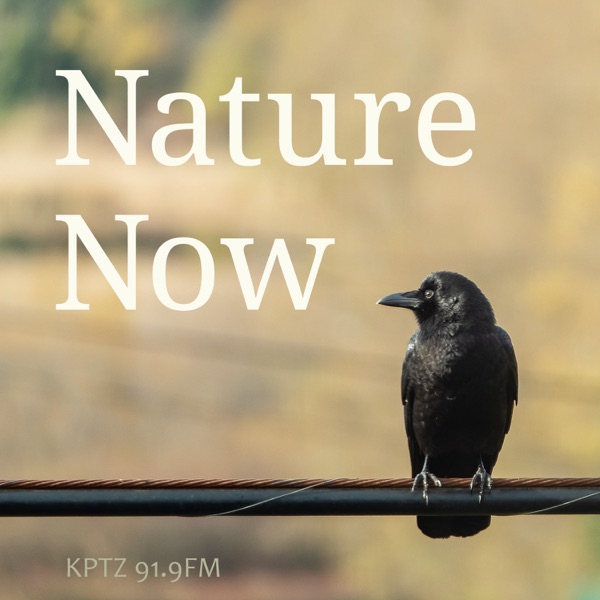
Nature Now
Nature Now presents eclectic Pacific Northwest-focused news, insights and observations about the natural world around us. Anything that grabs the attention of the Nature Now team can be heard on these episodes: birds and bees, flowers and trees, the weather and the stars – everything from microscopic Salish Sea plankton to ecosystem dynamics in a changing world. Every member of the Nature Now team is fascinated by the wonders of the natural world around us, is endlessly curious, hungry for new knowledge, and loves to share these passions with our listeners.
- Episodes
- 196
- Releases
- Weekly
- Typical length
- 28 min
- On air since
- 2023
- Latest episode
- 2 weeks ago
Episodes
196 episodes, newest first
-
29 min
Meet the Small Mammals (Part 1)
Show notes
Debaran Kelso is joined by small mammal expert Nick Moore, of the WA Department of Fish and Wildlife, as we wander about the Chimacum Ridge Community Forest talking about our abundant and diverse small mammal community (part 1 of a two-part program). (KPTZ airdate: October 14, 2026)
Learn more:
Chimacum Ridge Community Forest
Original music for Nature Now by Rick BauerNature Now is created by a dedicated team of volunteers. If you enjoy this episode and can support the work that goes into making Nature Now, we invite you to go to https://kptz.org/donate to make a contribution. Thank you for your support!
-
28 min
Stewardship of the Salish Sea through the Beauty of Film and the Actions of Communities
Show notes
Nan Evans talks with Florian Graner, marine scientist, renowned videographer, and community activist for the environment. Together they explore educating for greater understanding, inspiring people to care, and taking positive actions in the world of our changing oceans and coasts. (KPTZ airdate: October 7, 2026)
Learn more:
Florian Graner Sealife Productions
Beneath the Salish Sea documentary
Blue Planet from BBC Earth
Kelp Lifeways
Sound Water Stewards of Island County, WA
Sound Waters University
Under The (Salish) Sea video playlist
Mystery sound recording: Dave Slager, ML64992261, courtesy of Cornell Lab of Ornithology | Macaulay Library
Original music for Nature Now by Rick BauerNature Now is created by a dedicated team of volunteers. If you enjoy this episode and can support the work that goes into making Nature Now, we invite you to go to https://kptz.org/donate to make a contribution. Thank you for your support!
-
28 min
From Bunkers to Bird Watching – Fort Flagler State Park
Show notes
Jackie Canterbury talks with Deisy Bach, the new president of the Friends of Fort Flagler. Fort Flagler State Park encompasses 1,451 acres on Marrowstone Island. It is a remarkable place with a rich military history, diverse habitats, forests, shoreline, and opportunities for recreation and wildlife observation. We’ll learn more about Fort Flagler, the mission of the park, and the important work of the Friends of Fort Flagler. (KPTZ airdate: September 30, 2026)
Learn more:
Friends of Fort Flagler
Fort Flagler Historical State Park
Mystery sound recording: Gerrit Vyn, ML132149, courtesy of Cornell Lab of Ornithology | Macaulay Library
Original music for Nature Now by Rick BauerNature Now is created by a dedicated team of volunteers. If you enjoy this episode and can support the work that goes into making Nature Now, we invite you to go to https://kptz.org/donate to make a contribution. Thank you for your support!
-
29 min
Survival of Kelp Forests in Our Changing World
Show notes
Dive into the iconic kelp forests of our coastal oceans with host Nan Evans and oceanographer Dr. Ed Parnell. Ponder what makes them so critical to the health of marine ecosystems and so vulnerable to changes due to atmospheric and ocean warming. Did you know that kelp are among the fastest growing organisms on our planet - two feet per day, to heights of over 100 feet above the ocean floor. Yet, shockingly, kelp forests are vanishing world-wide. Off the Oregon coast: about 70% of the kelp canopy vanished between 2010 and 2022; nearly 90% of the bull kelp beds vanished in parts of the South Puget Sound and the San Juan Islands in recent decades. (KPTZ airdate: September 23, 2026)
Learn more:
Ed's upcoming lecture "Marine Heat Waves and the Ecology of Southern California Kelp Forests"
The response of giant kelp (Macrocystis pyrifera) in southern California to low-frequency climate forcing
Demography and dynamics of giant kelp cohorts across four decades: Lessons for conservation and resilience planning
Video of dive from Mia's Reef to Quast Rock in north La Jolla
Researchers Create A Family History of San Diego Kelp Over More Than Four Decades
50 years of data reveals true extent of climate change impacts on kelp forests
Monterey Bay Aquarium: Kelp Forest Ecosystem
NOAA: Kelp Forest Ecosystem
Extreme warming challenges sentinel status of kelp forests as indicators of climate change
Mystery sound recording: California Sea Grant
Original music for Nature Now by Rick BauerNature Now is created by a dedicated team of volunteers. If you enjoy this episode and can support the work that goes into making Nature Now, we invite you to go to https://kptz.org/donate to make a contribution. Thank you for your support!
-
28 min
Our Changing Coasts – Sea Level Change and Dam Removal
Show notes
Nan Evans talks with Washington Sea Grant's Coastal Hazard Specialist, Dr. Ian Miller, about the intersections of coastal science, hazard and risk assessments, and planning for changes in our coastal ecosystems. Specific examples include visualizations for rising and falling sea levels in coastal Washington and the impacts that the removal of the Elwha dams had on the shoreline. (KPTZ airdate: August 19, 2026)
Learn more:
Ian Miller @ Washington Sea Grant
Ian Miller's blog, The Coast Nerd Gazette
The River & Ocean Film Festival
The University of Washington Climate Impacts Group
Sea Level Rise Data Visualizations
Washington Coastal Hazards Resilience Network
Port Townsend Sea Level Rise Risk Assessment
Mystery sound recording: Parande at English Wikipedia
Original music for Nature Now by Rick BauerNature Now is created by a dedicated team of volunteers. If you enjoy this episode and can support the work that goes into making Nature Now, we invite you to go to https://kptz.org/donate to make a contribution. Thank you for your support!
-
29 min
It's Learning, It's Fun, It's Solid Science... It's iNaturalist
Show notes
Nan Evans and her guest Wendy Feltham explore fun and enriching ways to expand and enrich your nature observation experiences. iNaturalist is a free, non-profit, and community-powered forum where every observation tells a story. And every observation has the potential to advance research and scientific understanding of the natural world. (KPTZ airdate: August 5, 2026)
Learn more:
iNaturalist
iNaturalist newsletter
Wendy's activities on iNaturalist
Wendy's Crabs of the World project
Jefferson Land Trust’s Quimper Wildlife Corridor project
Two of Wendy’s articles from the Rainshadow Journal: Songbirds of Port Townsend and Becoming a Citizen Scientist
Wendy's "Making A Difference" profile in bioGraphic (scroll way down past RhymeTime)
Mystery sound recording: Kim Nelson, ML84225, courtesy of Cornell Lab of Ornithology | Macaulay Library
Original music for Nature Now by Rick BauerNature Now is created by a dedicated team of volunteers. If you enjoy this episode and can support the work that goes into making Nature Now, we invite you to go to https://kptz.org/donate to make a contribution. Thank you for your support!
-
28 min
Our Seabirds As Sentinels
Show notes
Jackie Canterbury speaks with Dr. Eric Wagner about his book, Seabirds as Sentinels. The Pacific coast — often called the "Blue Serengeti" — is a major center for seabird research. The central idea is that seabirds function as sentinels, or early-warning indicators, of changes in marine ecosystems. Because they depend on fish and other marine life for food, shifts in seabird behavior, breeding success, migration patterns, or population numbers can reveal broader environmental changes occurring in the ocean before the changes are obvious to us. (KPTZ airdate: July 29, 2026)
Learn more:
Seabirds as Sentinels by Eric Wagner
Dr. Eric Wagner
Seabirds as Sentinels: A Conversation with Science Writer Eric Wagner
Sound recording: Matthew L. Brady, XC842483, accessible at https://xeno-canto.org/842483. License CC BY-NC-SA 4.0Nature Now is created by a dedicated team of volunteers. If you enjoy this episode and can support the work that goes into making Nature Now, we invite you to go to https://kptz.org/donate to make a contribution. Thank you for your support!
-
29 min
Getting Rid of Noxious Weeds (Part 2)
Show notes
Debaran Kelso talks with Sophie DeGroot, Noxious Weed Coordinator for Jefferson County, for the second part of our program on invasive weeds. We get down and dirty out in the field, focusing on how to remove a couple of our arch enemies, English ivy and holly, along with discussing removal strategies for other invasive species in our area (part 2 of a two-part program). (KPTZ airdate: July 15, 2026)
Learn more:
Jefferson County Noxious Weed Control Board
Washington State Noxious Weed Control Board
Buckthorn Blaster for cut-stump herbicide application
Possible herbicide for holly/ivy: Brush and Vine Killer or other similar products (triclopyr as active ingredient)
Weed Wrench
Pacific Northwest Weed Management Handbook
English Holly (Ilex aquifolium) Herbicide Treatment Study
Original music for Nature Now by Rick BauerNature Now is created by a dedicated team of volunteers. If you enjoy this episode and can support the work that goes into making Nature Now, we invite you to go to https://kptz.org/donate to make a contribution. Thank you for your support!
-
27 min
Getting Rid of Noxious Weeds (Part 1)
Show notes
Tired of those pesky weeds?!? Debaran Kelso talks with Sophie DeGroot, Noxious Weed Coordinator for Jefferson County, about the problem of invasive plants and the role of the Noxious Weed Board in our county (part 1 of a two-part program). (KPTZ airdate: July 8, 2026)
Learn more:
Jefferson County Noxious Weed Control Board
Washington State Noxious Weed Control BoardNature Now is created by a dedicated team of volunteers. If you enjoy this episode and can support the work that goes into making Nature Now, we invite you to go to https://kptz.org/donate to make a contribution. Thank you for your support!
-
29 min
Medical Care for Marine Mammals of the Salish Sea
Show notes
Are you charmed by the antics of Harbor Seals? Awed by the power of California Sea Lions? Endeared by marine mammals in general? What happens when they are injured, sickened, or endangered by other health conditions? Nan Evans talks with Casey McLean, Executive Director of SR3, the only organization in the Pacific Northwest fully dedicated to the protection of the health and welfare of marine wildlife. SR3 "Responds" to animals injured in the wild, "Rehabiltates" injured and sick animals at their hospital and care facility in Des Moines, Washington, and conducts field and laboratory "Research" on marine mammal health. (KPTZ airdate: June 24, 2026)
Learn more:
SR3: SeaLife Response, Rehabilitation, & Research
SR3 Virtual Tours + Look at Surgery
X-ray at SR3
The Marine Mammal Center in Sausalito, CA
Marine Mammal Rehabilitation
Is It a Seal or a Sea Lion?
Marine Mammal Protection
Marine Mammal Ecology in the Pacific Northwest
Marine Mammals as Indicators of Ocean Health
Mystery sound recordings: Phoca vitulina and Zalophus californianus by the University of Rhode Island's Graduate School of Oceanography in partnership with Inspire Environmental of Newport, RI
Original music for Nature Now by Rick BauerNature Now is created by a dedicated team of volunteers. If you enjoy this episode and can support the work that goes into making Nature Now, we invite you to go to https://kptz.org/donate to make a contribution. Thank you for your support!
-
29 min
Mysteries of the Deep Ocean (Part 3)
Show notes
Imagine life in the very deep sea – eternal darkness, no plant photosynthesis to form the base of the food webs, water temperatures hovering around freezing, pressures 1000 times greater than at the surface. Yet complex and diverse ecosystems exist; weird and sometimes very large creatures float and swim; and around 80% of this world remains unexplored. Join Nan Evans and her guest, oceanographer Chris Kelley, as they consider life in deep ocean (part 3 of a three-part program). (KPTZ airdate: June 3, 2026)
Learn more:
NOAA Deep Sea Coral Research and Technology Program
NOAA Office of Ocean Exploration Benthic Deepwater Animal Identification Guide
Ocean Exploration Trust
University of Hawaii Undersea Research Laboratory Archive
Monterrey Bay Aquarium Research Institute
Schmidt Ocean Institute
Chris Kelley at Ocean Exploration Trust
Chris Kelley at Schmidt Ocean Institute
Chris Kelley's lecture: In Deeper Waters: Exploring Earth’s Largest, Yet Least Understood, Biome
The Mysterious Deep Sea
Animals of the Deep
Mysteries of the Deep
BBC Earth: The Strangest Creatures of the Ocean
News from NOAA Ocean Exploration
Inside the Quest to Mine the Bottom of the SeaNature Now is created by a dedicated team of volunteers. If you enjoy this episode and can support the work that goes into making Nature Now, we invite you to go to https://kptz.org/donate to make a contribution. Thank you for your support!
-
28 min
Fort Worden BioBlitz
Show notes
A BioBlitz? What is that? Nan Evans talks with Kelsey Lang, Fort Worden State Park's Interpretive Specialist and Naturalist. Think about the importance of biodiversity in our own local park. And, see how communities and scientists have joined efforts across the world to learn more about ecosystems near and far. The 2026 BioBlitz at Fort Worden State Park is June 6 and 7. Come learn and have fun with like minded folks exploring our natural world. (KPTZ airdate: May 27, 2026)
Learn more:
Fort Worden Spring BioBlitz 2026 on iNaturalist
Tracking Fort Worden's Biodiversity
Fort Worden BioBlitz
Music by Rick BauerNature Now is created by a dedicated team of volunteers. If you enjoy this episode and can support the work that goes into making Nature Now, we invite you to go to https://kptz.org/donate to make a contribution. Thank you for your support!
-
29 min
Mysteries of the Deep Ocean (Part 2)
Show notes
Imagine life in the very deep sea – eternal darkness, no plant photosynthesis to form the base of the food webs, water temperatures hovering around freezing, pressures 1000 times greater than at the surface. Yet complex and diverse ecosystems exist; weird and sometimes very large creatures float and swim; and around 80% of this world remains unexplored. Join Nan Evans and her guest, oceanographer Chris Kelley, as they consider life in deep ocean (part 2 of a three-part program). (KPTZ airdate: May 20, 2026)
Learn more:
NOAA Deep Sea Coral Research and Technology Program
NOAA Office of Ocean Exploration Benthic Deepwater Animal Identification Guide
Ocean Exploration Trust
University of Hawaii Undersea Research Laboratory Archive
Monterrey Bay Aquarium Research Institute
Schmidt Ocean Institute
Chris Kelley at Ocean Exploration Trust
Chris Kelley at Schmidt Ocean Institute
Chris Kelley's lecture: In Deeper Waters: Exploring Earth’s Largest, Yet Least Understood, Biome
The Mysterious Deep Sea
Animals of the Deep
Mysteries of the Deep
BBC Earth: The Strangest Creatures of the Ocean
Mystery sound recording: NOAA National Ocean ServiceNature Now is created by a dedicated team of volunteers. If you enjoy this episode and can support the work that goes into making Nature Now, we invite you to go to https://kptz.org/donate to make a contribution. Thank you for your support!
-
28 min
A Naturalist's Eye: Seeing the Hidden Lives of Native Bees
Show notes
Jackie Canterbury recently explored honey bees and became familiar with their remarkable social behavior and complex colonies. Today, she turns to Washington's native bees with photographer and bee advocate Kris Ethington. Kris will share insights into the diversity of native bees and the intricate relationships that sustain them. Join us as we explore the fascinating world of Washington's native bees and the important roles they play in our ecosystems. (KPTZ airdate: May 13, 2026)
Learn more:
Kris Ethington on iNaturalist
Kris Ethington's blogs for the Washington Native Bee Society
Washington Native Bee Society
Project Ground-Nesting Bee
Washington Bee Atlas
Meet Our Native Bees
The Xerces Society for Invertebrate ConservationNature Now is created by a dedicated team of volunteers. If you enjoy this episode and can support the work that goes into making Nature Now, we invite you to go to https://kptz.org/donate to make a contribution. Thank you for your support!
-
28 min
Wetland Delineation (Part 2)
Show notes
Debaran Kelso continues her field exploration of our local Winona Wetland with wetland biologist Donna Frostholm, learning about digging soil pits and determining soil type, as well as learning about the other key features that define a wetland habitat type (part 2 of a two-part program). (KPTZ airdate: April 29, 2026)
Learn more:
Quimper Wildlife Corridor
What Is A Wetland?
Functions and values of wetlands
Classification and Types of Wetlands
Music by Rick BauerNature Now is created by a dedicated team of volunteers. If you enjoy this episode and can support the work that goes into making Nature Now, we invite you to go to https://kptz.org/donate to make a contribution. Thank you for your support!
-
28 min
Mysteries of the Deep Ocean (Part 1)
Show notes
Imagine life in the very deep sea – eternal darkness, no plant photosynthesis to form the base of the food webs, water temperatures hovering around freezing, pressures 1000 times greater than at the surface. Yet complex and diverse ecosystems exist; weird and sometimes very large creatures float and swim; and around 80% of this world remains unexplored. Join Nan Evans and her guest, oceanographer Chris Kelley, as they consider life in deep ocean (part 1 of a three-part program). (KPTZ airdate: April 22, 2026)
Learn more:
NOAA Deep Sea Coral Research and Technology Program
NOAA Office of Ocean Exploration Benthic Deepwater Animal Identification Guide
Ocean Exploration Trust
University of Hawaii Undersea Research Laboratory Archive
Monterey Bay Aquarium Research Institute
Schmidt Ocean Institute
Chris Kelley at Ocean Exploration Trust
Chris Kelley at Schmidt Ocean Institute
Chris Kelley's lecture: In Deeper Waters: Exploring Earth’s Largest, Yet Least Understood, Biome
The Mysterious Deep Sea
Animals of the Deep
Mysteries of the Deep
BBC Earth: The Strangest Creatures of the Ocean
Mystery sound recording: SciNews
Music by Rick BauerNature Now is created by a dedicated team of volunteers. If you enjoy this episode and can support the work that goes into making Nature Now, we invite you to go to https://kptz.org/donate to make a contribution. Thank you for your support!
-
28 min
Wonders of the Deep Abyss
Show notes
Imagine the deep ocean with Nan Evans and her guest, oceanographer and deep sea ecologist Dr. Christopher Kelley. What is life like in the deep ocean and how do scientists even explore those vast regions? (KPTZ airdate: November 4, 2020)
Nature Now is created by a dedicated team of volunteers. If you enjoy this episode and can support the work that goes into making Nature Now, we invite you to go to https://kptz.org/donate to make a contribution. Thank you for your support!
-
28 min
What The Wild Still Has To Teach Us
Show notes
Jackie Canterbury talks with Kurt Hoelting about his new book, Apprentice to the Wild. Kurt's work asks a timely question: what might the wild still have to teach us? Today we reflect on his life from early encounters with wildness to his embrace of Zen practice. At a moment when many of us feel increasingly disconnected from nature, from country, even from ourselves, wildness is a poignant topic. (KPTZ airdate: April 15, 2026)
Learn more:
Apprentice to the Wild by Kurt Hoelting
Kurt Hoelting
Virtual Conversation: Apprenticing to the Wild with Kurt Hoelting and Stephen PosnerNature Now is created by a dedicated team of volunteers. If you enjoy this episode and can support the work that goes into making Nature Now, we invite you to go to https://kptz.org/donate to make a contribution. Thank you for your support!
-
27 min
Nighttime Tide Pooling
Show notes
Come with Nan Evans and Carolyn Woods, from the Port Townsend Marine Science Center, on an audio winter tide pooling trip at NIGHT. In the winter why are the really low tides at night and during the daytime in summer? Why can we see different animals at different tide levels? What might we see during a winter nighttime low tide that we wouldn't see during a summer low tide? Would an ultraviolet or black light be a cool thing to have? Get excited about tide pooling! (KPTZ airdate: April 1, 2026)
Learn more:
Puget Sound Tide Pooling Guide
Marine Shoreline Ecosystem
NOAA Tide Chart for Port Townsend
Field Guide Brochures to take with you
Between the Tides in Washington and Oregon: Exploring Beaches and Tidepools by Ryan P. Kelly, Terrie Klinger, and John J. Meyer
The New Beachcomber’s Guide to the Pacific Northwest by J. Duane SeptNature Now is created by a dedicated team of volunteers. If you enjoy this episode and can support the work that goes into making Nature Now, we invite you to go to https://kptz.org/donate to make a contribution. Thank you for your support!
-
27 min
Wetland Delineation (Part 1)
Show notes
Debaran Kelso speaks about the importance of wetlands with wetland biologist Donna Frostholm while they wander through the Winona Wetland just west of Port Townsend on a beautiful Spring afternoon (part 1 of a two-part program). (KPTZ airdate: March 25, 2026)
We dedicate this program to our dear friend Dixie Llewellin, a tireless advocate for wetlands, and prairies, and all things of beauty. She died suddenly, and much too soon, in November 2025.
Learn more:
Quimper Wildlife Corridor
What Is A Wetland?
Washington Native Plant Society
Mystery sound recording: Dave Herr, ML130725, courtesy of Cornell Lab of Ornithology | Macaulay Library
Music by Rick BauerNature Now is created by a dedicated team of volunteers. If you enjoy this episode and can support the work that goes into making Nature Now, we invite you to go to https://kptz.org/donate to make a contribution. Thank you for your support!
On these lists
Nature Now is one of the shows picked out on this list
More in Nature
Placed highest on Apple Podcasts' Nature chart right now