Podcast
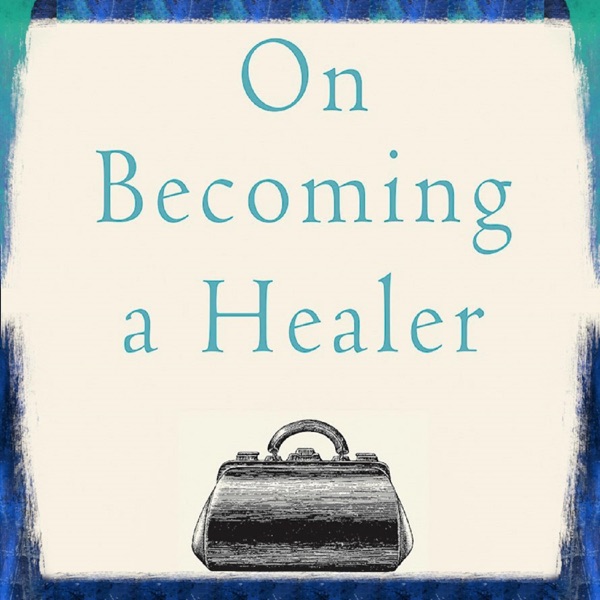
On Becoming a Healer
Doctors and other health care professionals are too often socialized and pressured to become "efficient task completers" rather than healers, which leads to unengaged and unimaginative medical practice, burnout, and diminished quality of care. It doesn't have to be that way.
With a range of thoughtful guests, co-hosts Saul Weiner MD and Stefan Kertesz MD MS, interrogate the culture and context in which clinicians are trained and practice for their implications for patient care and clinician well-being. The podcast builds on Dr. Weiner's 2020 book, On Becoming a Healer: The Journey from Patient Care to Caring about Your Patients (Johns Hopkins University Press).
- On air since
- 2020
- Episodes
- 81
- Releases · typical length
- Monthly · 50 min
- Latest episode
- 1 week ago
Episodes
81 episodes, newest first
-
49 min
Assessing Future Doctors: Are We Doing It Badly—and for the Wrong Reasons?
Season 7, Episode 80
Show notes
Medical educators have spent decades developing sophisticated frameworks for assessing clinical competence, including competencies, Milestones, and Entrustable Professional Activities (EPAs). In this episode, we ask two provocative questions: How reliable are these frameworks if the physicians expected to use them have little time, training, or opportunity to observe the learners they're evaluating? Faculty routinely rate medical students and residents on skills they may barely have observed. Research suggests that who does the evaluating can account for far more variation in scores than the learners themselves. Grades cluster at the top, and faculty hesitate to give negative ratings. Why are medical schools so invested in ranking students from best to worst, rather than rigorously establishing that every graduate is competent to enter the next phase of training? The pressure to earn high ratings can discourage students from revealing weaknesses and asking for help. And when evaluations rely heavily on subjective impressions, the distinctions between students may not even be valid.
We invited Yoon Soo Park, PhD, a leading researcher in medical education assessment, to help us understand what the evidence shows, where current approaches fall short, and how they might be improved.
There's also a troubling assumption behind these rankings: that the most competitive specialties need the "best" students, while family medicine and pediatrics can make do with the rest. But where is the evidence that one specialty requires better doctors than another? Different specialties may require different abilities, but that's not the same as needing a globally superior physician. What if medical education made its central assessment priority not ranking learners by distinctions of questionable validity and relevance to their future careers, but rigorously demonstrating that every graduate has mastered the competencies needed to enter the next phase of training?
-
57 min
Medicine's Missing Center: The Failure to Engage
Season 7, Episode 79
Show notes
As On Becoming a Healer begins its seventh year, Stefan turns the questions on Saul: What does it actually mean to "become a healer"—and why does that idea remain at the center of both the podcast and Saul's 2020 book, On Becoming a Healer: The Journey from Patient Care to Caring About Your Patients?
Beginning with an encounter in which a patient's worsening back pain could not be understood apart from a devastating recent trauma, Stefan and Saul explore the difference between treating a clinical problem and engaging with the person experiencing it. They consider why genuine engagement is not friendship, forced intimacy, "good bedside manner," or additional emotional labor; how boundary clarity makes openness safer; and why medical education has such difficulty teaching something that cannot be reduced to a script or competency.
In a profession increasingly shaped by financialization, bureaucracy, and the efficient-task-completer mindset, it is not enough to ask what physicians are against. We must also ask what they are for. This episode argues that engagement is not an optional grace note in medical care. It is medicine's missing center—and the foundation of a healing interaction.
-
34 min
Moral Injury, Moral Courage, and the Business of Medicine
Season 7, Episode 78
Show notes
What happens when a healthcare system organized around profit repeatedly gets in the way of doing what is right for patients? Physicians for a National Health Program (PNHP) calls one consequence moral injury: the distress physicians experience when the system prevents them from providing the care they believe patients need.
PNHP president Diljeet Singh, MD, DrPH, joins Stefan and Saul to discuss the organization's recent report on moral injury and the financialization of American medicine. Saul strongly shares PNHP's commitment to universal health care—but challenges whether the language of moral injury puts too much emphasis on what the system does to physicians and too little on physicians' own agency and responsibility within that system.
What follows is a candid and provocative exchange that begins with substantial agreement about what is wrong with American health care and the need for universal coverage, but moves into harder questions about moral distress, physician complicity, professional responsibility—and how much courage we should expect from doctors when doing the right thing comes at a personal cost.
-
42 min
From East Pakistan to West Texas: What One Immigrant Doctor Gave America
Season 6, Episode 7
Show notes
Fazlur Rahman, a retired oncologist, is the author of The Temple Road, a richly evocative memoir about growing up in what was then East Pakistan, before it became Bangladesh.
His second book, Our Connected Lives, chronicles several patients he cared for during his 35 years as a cancer doctor in West Texas – and his relationships with them in the rural region where he was the only oncologist. Fazlur is a gifted writer who became a beloved physician in a community that needed him.
Fazlur also faced prejudice along the way, and his story is a reminder of how much America gains from those who come from seemingly far-off lands. It is an inspiration and illustration of humility, presence, compassion and joy in patient care.
-
58 min
The Clinician in the Difficult Encounter
Season 6, Episode 76
Show notes
Most of us who care for patients can remember seeing a name on the schedule and feeling our heart sink.
What makes some clinical relationships so difficult? Is it something about the patient—or something about the interaction itself?
Dr Jeffrey Jackson has spent more than two decades studying this question. His research has shown that difficult encounters are associated not only with patient characteristics but also with physician factors, including the clinician's approach to psychosocial issues. In this conversation, we explore what his work can teach us about why encounters become difficult, how trust can gradually emerge, and why some of the patients that physicians initially dread eventually become among the most meaningful to care for.
Along the way, we discuss chronic pain, personality disorders, longitudinal relationships in primary care, the role of physician self-awareness, and the difference between caring for patients and trying to control them. This episode asks what it means to remain present with patients whose suffering—and whose behavior—challenge us the most.
On these lists
On Becoming a Healer is one of the shows picked out on this list