Podcast
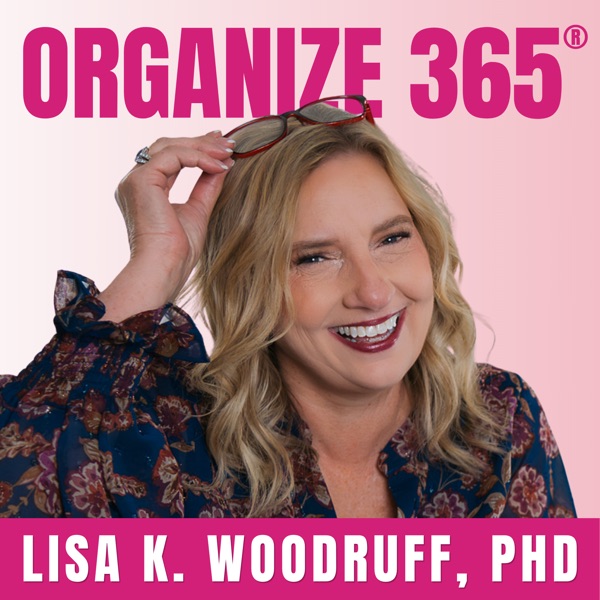
Organize 365 Podcast
Lisa Woodruff is a home organization expert, productivity specialist, and author of multiple books including The Paper Solution.
Lisa's research-based teaching shines a light on the invisible work being done at home and in the workplace. Lisa's sensible and doable organizing tasks appeal to multiple generations. Her candor and relatable style make you feel she is right there beside you, helping you get organized as you laugh and cry together.
Lisa believes organization is not a skill you are born with. It is a skill that is developed over time and changes with each season of life. Lisa has helped thousands of women reclaim their homes and finally get organized with her practical tips, encouragement, and humor through her blog and podcast at Organize365.com.
- Self-Improvement chart
- #136
- Episodes
- 857
- Releases
- Weekly
- Typical length
- 38 min
- On air since
- 2014
- Latest episode
- 4 days ago
Episodes
857 episodes, newest first
-
37 min
734 - Organize 365 Annual Holiday Blitz - IDENTIFY the Holiday Tasks - Level 3 - Household Manager
Show notes
The Holiday Blitz® is designed to help you, the Magic Maker, to enjoy the season and activities too. How? Why the family survey? I'm here to explain it all in this episode.
Delegate
Why is delegation a common theme with me and my systems? Delegation takes things off your plate. If it's something you want to do, keep doing it. But the things you don't enjoy or sincerely need help with, delegate. Think of your family member's strengths and ask them to help in those areas. If someone is a great cook, ask them to start helping with the cooking of the holiday meals. If you are having a lot of company, there's no reason they can't bring their own beverages. I know at my house I try to buy all the things to accommodate everyone's drink preference and when they all go home I have half of the beverage aisle from the grocery store.
I say, "Just have the awkward conversations." It's not comfortable to ask guests to bring something when they haven't years past but this year is a new year and there's no reason they can't lighten your financial and preparation burden. They are there to enjoy it too. And of course, you could order out the whole meal. Caveat; everyone attending can split the price of that meal too. People know it's expensive to host and you might be surprised how willing everyone is to pitch in for a great get together.
Just Data
Keep in mind that the Holiday Blitz® survey is just data. It is not you new to do list every season. Find out what everyone remembers. And keep it mind if you do it every three to five years, you will get new responses. Kids grow up and other family members may change what they like. You certainly aren't expected to do all of it so don't put that pressure on yourself.
Good Better Best
One way I think about my holiday expectations is in three levels. No one sees these lists. No one knows what you have planned. And no one knows if you bail on everything. What can you do with your time, talent, and treasures to put on the best holiday experience you can that leaves you as a human available energy to the experience you are creating?
My good list is the essentials that must get done. People need to eat and maybe gifts are being exchanged. Especially consider this level if it's just a low energy season for you. Now my better list may include activities leading up to and the big day. When my kids were little I planned all their days that they had off of school. Now that I am working full time, not so much. And Best. This is a fun dreamy list. This list for me includes one grand outing for our family. Remember you can graduate to the better list or you can simply do the good list and enjoy yourself. And before you set your sights on the Best level, evaluate, do you have enough time, capacity,and money to go to that best level.
No
And for the love, people, just say no! If it's not on the list after Planning Day, say no. It's worth the relief you will feel. Once you are in the holidays is not the time to add things to your expectations. You'll see a great idea on social media and think "Should I?" No, no you shouldn't! Just say No! Just like I started to say no to holiday cards, there may be a whole category of work you are ready to just start saying no to. Or that traditional family chili day, yeah, simplify it or just say no. If you find something to be more stressful than joyful find a way to make it less stressful by delegating part or just say not this year. Who knows, someone else may want the opportunity to host it this year. Stay tuned to the end to hear what I am saying no to these days.
EPISODE RESOURCES:
•
•
•
•
•
Sign Up for the Organize 365® Newsletter
Did you enjoy this episode? Please leave a rating and review in your favorite podcast app. Share this episode with a friend and be sure to tag Organize 365® when you share on social media.
-
38 min
733 - Holiday Energy & Time Management - Level 3 - Household Manager
Show notes
When one starts to plan for the holidays, why doesn't one check in with themself first and plan for the outcome in mind? I'm looking at the holidays through many lenses in this episode. In January, I don't want you exhausted and dreading next year. This year I want you to look back over the merry holiday magic that you made happen and feel excited to do it again next year.
Energy
The first thing you need to think about is your current overall energy. Has 2026 been a rough year so far or are you running on all cylinders? When I held the self care retreat that was a result of my book last year, Escaping Quicksand, I really needed it. As the PhD came to an end, I was really exhausted. How is your energy going into the holidays? Permission to plan accordingly. You are where the holiday comes from and you are in control of what you plan.
Also, check in with yourself and identify when your energy is the highest throughout the day and week. I know that I am a morning afternoon person. I may tell others that we need to celebrate early because of kids' bedtimes, but really? It's me! I am done when the sun goes down. I'm ready for my hot bath and some down time. Then there's my husband who works hard all week and does not wanna go out on a Friday night but Saturdays are great. When you know this about yourself you can enjoy celebrations much more!
Sleep can definitely affect your energy levels too. Not sure I have much advice on sleep - just get as much as you can. Because no one is really getting a lot of sleep in our house we have mandatory rest time after presents. Does your family need a mandatory rest time to recharge and reset? Think about your rest for the entire break. There is a lot of time after the holidays have been celebrated. What does that home time look like? Will you be entertaining? Traveling? Are there projects you want to plan for?
And what you eat to fuel your body matters. Carol who used to organize with me could tackle a garage or basement everyday of the week, she worked out. But me with my fast food and coke diet didn't have the physical or mental stamina to. I have really worked hard on my nutrition and now have added exercise. How else am I gonna keep you with my giant little grandkids?
Family/Celebration Time
Another important thing to know about yourself is how long can you "family?" I love being with my family, it energizes me. But not everyone feels this way. And some family or traditional gatherings are easier to get along with the people there than others. If you need to create space or deflect attention I would recommend bringing a game to switch up the conversations or a handheld activity like cross stitch or crochet or maybe even a puzzle. If people choose to join you great and if not maybe even better? I know, I said it LOL
I had a spur of the moment idea in the middle of recording this episode but you could consider hard day task stacking sandwiched with positivity. Treat yourself with a coffee, commit to short visits to the hard stuff, and finish the day with a beautiful meal or something else you enjoy.
Questions to Ask Yourself
In anticipation of those hard events there are some questions I encourage you to ask yourself.
•
Can you change it?
•
Do you want to do it?
•
Can you avoid it, limit it or stack it?
EPISODE RESOURCES:
•
•
•
•
•
Sign Up for the Organize 365® Newsletter
Did you enjoy this episode? Please leave a rating and review in your favorite podcast app. Share this episode with a friend and be sure to tag Organize 365® when you share on social media.
-
43 min
732 - Why We Feel Like There Are Not Enough Adults to Complete All the Household Tasks - Level 5 - Household CEO
Show notes
This is the state of the American Home. I've been thinking "Where have all the leaders in the workforce gone?" Then I was like "Wait, where have all the Gen Xer's gone?" They haven't gone anywhere! There are just fewer of us than the previous generation. Now the question is, what changes will Gen X create to accommodate the increasing cognitive load?
Generational Patterns
So where the Gen Xer's are now, is in overload. I feel like I'm planning everything and there is more to focus on and I feel overwhelmed. I don't remember my mom having these struggles. Why do I feel overwhelmed? I found out it's because there are fewer people carrying the same load. Gen Xer's are caregiving for their children, maybe a parent, and possibly a grandparent. What I have learned about Gen X is there are considerably less of us than there are Baby Boomers and about the same amount as the Millenials. Other countries have been reporting a decrease in newer generations populations too. We are living longer which is resulting in stacking of generations. And the birth rate is lower due to an increase in infertility, people waiting longer to get married, and high divorce rate. So we are not "replenishing" ourselves in abundance.
Each generation has their own patterns that impact the economy. And this change in reproduction is having an impact on the main care giver. During COVID we saw many women take a step back from work to take care of their families and that is often the case. This too affects where all the Gen Xer's are…taking care of their families. And due to the state of the population we are at a 1:1 rate of caretaking. There aren't extra people/relatives to help. There are fewer people carrying the same load.
Systems Are Essential
All that to put a spotlight on the fact that it used to be a luxury to automate, delegate, and delete. But, now, it's becoming essential. We need these systems in place. Because when an unexpected event comes up and you are in a caregiving role, you are only as stable as the systems you have in place and there isn't time to improve those systems in that time period.
The change we can make in our generation is to embrace AI and figure out how to automate some tasks. Appreciate your home as your refuge. I know during COVID we upgraded a few things in the house and I really love just being in my house. I also have really been wanting a home office. It dawned on me that we have had the perfect space for this all long. I will finally have the storage space and command central space I have wanted to run our home. Make your house support you so you have more capacity to support others. When you are in a caregiver role, come up with ways to still care for yourself. Don't worry about what your house was designed for, make it functional for you. And planning. I have planned more in my 50's to make sure I get time with my friends, family, work, and self care than I ever have. Value self care. The healthier that you are in every way, the more you are able to support those that are in need around you.
EPISODE RESOURCES:
•
•
•
Sign Up for the Organize 365® Newsletter
Did you enjoy this episode? Please leave a rating and review in your favorite podcast app. Share this episode with a friend and be sure to tag Organize 365® when you share on social media.
-
33 min
731 - Housework: What We Love and What We Loathe - Level 1
Show notes
I normally gloss over level one because there are so many resources for laundry, housework, and food preparation. I thought it would be helpful to offer how I deal with the work I love, feel "meh" about, and that work which I loathe. I know we all understand the concept of outsourcing but how do you power through when you are the laborer that needs to complete the tasks of level one of the Productive Home CEO Theoretical Framework Pyramid. You have options!
Love
Let me start with my love of laundry. I love at the end you have a visible representation of what you have worked at all day. After documenting how much time it took me one day to do 8 loads of laundry, I had documented only 90 minutes of actual work. You may not like remembering to switch the laundry or putting it away. So here are a few ideas to maybe enjoy it more. One idea I saw was all the family's laundry was hung in the laundry room because their house had space for that. I'm a fan of helping your kids to help you. I knew looking at that beautiful stack of freshly laundered clothes in one pile was like over load for my kids' brains. So I would put individual stacks in a laundry basket with clothes that need hung laid across the top. Then they would take them to their room and put them away. Figure out what will make it easier and cause less resistance in them helping you.
Meh
I fell "meh" about cleaning. I've done it for others. I can do it for myself. I'm indifferent. But you may loathe it. If that's the case, decide if you would rather do it all in one day (that's what I like) or a little bit each day and then plan for that. Honestly, when I get to the end of my cleaning, which is my toilets, I start to bribe myself. I think once I'm done, I can have a bagel, work on a puzzle, or whatever I've been wanting to do. The other thing that I found to be helpful is to do something while you clean. You can listen to a podcast, music, or call someone and just start cleaning.
Loathe
I loathe all things food related. I mean think about it, conservatively speaking, you spend 3 hours a week planning the meals, getting the food, putting it away. And about an hour a day prepping, cooking, and cleaning up. I do not do anything food related in my house. When my kids were younger I traded with another mom. She made two meals for my family and I did her laundry. Now that my family is in a different phase of life I prep everything on Sunday. Then I grab, go, eat, rinse the container, and go on my merry way. After talking to my friend who is making a hot breakfast every morning, EVERY MORNING, I had a suggestion. I said why don't you make all the breakfast meat on Sundays and then you don't have that clean up everyday before work. She noticed the kids ate it faster. So then I said make enough on Sunday to get you to Wednesday. Then on Wednesday make enough to get you to Saturday. Then you can have a lazy morning. Or if you are a married person they could cook on that day.
EPISODE RESOURCES:
•
•
Sign Up for the Organize 365® Newsletter
Did you enjoy this episode? Please leave a rating and review in your favorite podcast app. Share this episode with a friend and be sure to tag Organize 365® when you share on social media.
-
37 min
730 - Time Blocking Household Tasks - Level 3 - Household Manager
Show notes
It is so important to know the kind of tasks you have, how much time they take you, and where you need to be to complete them! Then when you look at your calendar you know where you can plug them in. After a couple weeks of this repeated activity, your brain will start to anticipate these activities and you'll be in your Pro Era.
Blue Orange Purple
If you are anything like I was, you have very long lists with not enough time or money to complete them all. I started with the Sunday Basket®, identifying and categorizing with the slash pockets. Then I had to figure out where and when I could get them done. I have my blue work which is all my weekly invisible work like calendaring, budgeting, getting ready for the next week of school (when my kids were younger), mail, you get the idea. Then I have Orange work which is my house work like food, laundry, and cleaning. And then I have my purple work which is a larger project, in this case errands. In order to time block your tasks, start by identifying which tasks fit into those three categories; invisible work, housework, and errands.
How Much Time Do They Take & Where Do You Need To Be
As I budgeted my time, I got really good at knowing how long each task would take. This made it easier for me to know how many tasks I could fit into any open block of time. I was always in the car, at a doctor's appointment, or working so I had to make the most of any "free time," once I discovered blocks of time I would write in the tasks I would do. Keep in mind that not all tasks are created equally; they require different amounts of time and different kinds of energy from you. Calendaring these blocks of time became a visual representation of the invisible work I was doing and it gave boundaries for these tasks to get completed. Once you have claimed these time blocks, protect them so you can actually get your tasks done.
Obviously my orange work had to be done at my house. Pretty hard to vacuum from the soccer field. And there is a reason that there is a portable Sunday Basket® because then you can bring your blue work with you. You can go through slash pockets in your car, at the pool, or at a doctor's office. I know, because I did! And when it came to errand day (purple work) I knew where the farthest away stops were and I started there. That way, if my kids needed to go home the remaining stops were closer to my home when I did them later. Some of you really have no free time like me when my kids were younger. I found a way to make it work and I want to encourage you that you can too.
Going Pro
You need to be aware of your highest productivity energy during the day. I realized my energy is highest for physical tasks in the morning. My body knows on Saturday morning I'm going to get a cup of coffee and soon after I almost look forward to getting all of my machines going. Your body starts to expect these "work times." It's a cadence you have gotten your body used to, almost like muscle memory. And I know I have more cognitive energy later in the day so I used to do my Sunday Basket® in the afternoon but I have changed that to late morning now. You have to adjust your tasks and time blocking to your phase of life. And this task stacking acts as scaffolding to our brains. Our brains love structure. The Sunday Basket® creates a weekly cycle that can evolve into a yearly cycle when you add in Planning Day and the Productive Home CEO Sessions.
EPISODE RESOURCES:
•
•
•
•
Sign Up for the Organize 365® Newsletter
Did you enjoy this episode? Please leave a rating and review in your favorite podcast app. Share this episode with a friend and be sure to tag Organize 365® when you share on social media.
-
33 min
729 - Thinking Time Unlocks Your Uniqueness
Show notes
Thought leaders have thinking time. There is a difference between remembering and thinking. Thinking is that time when you mull through all your thoughts and plans. Maybe you merge them to find a solution to a problem or see where one decision could benefit your family or home. A visionary, a thought leader takes time to think to better plan the trajectory of their organization even if it's just for their home.
Mission Vision Values
In 2012, after I'd been in business for 5 years, I took advantage of a 5 hour flight to CA and the returning flight to think. It was on those plane rides that I solidified Organize 365®'s mission statement which is: Organize 365® helps you get functionally organized in one calendar year so that you can do what you are uniquely gifted and created to do. Then I identified our values being positivity, abundance, proactivity, and that everything is easier in community.
The old theory was that it took 10,000 hours to become an expert at something. And if we use a 40 hour work week, it takes roughly 5 years to accomplish said 10,000 hours. And I've observed that, generally speaking, every 5 year cycle we use our experiences and lessons learned and apply them to our lives. When I wrote "Escaping Quicksand", I shared all of my lived experiences to help others escape their own quicksand with the lesson and mindset shifts I've made along the way.
Ain't Nobody Got Time to Think
In your 20's and 30's you are so busy doing that you never really take time to stop and think. Then you hit 40 and life has gotten away from you. You put your foot down and decide to simplify life and start saying no to stuff. No to projects you don't have time for, no to people that are energy vampires, no to requests on your time. And in my 40's is when I took my life back. I wrote all about it in "Organization is a Learnable Skill". I shared all of the emotions I was going through at the time. I needed thinking time. But first I had to get my house in order.
When All Is Accounted for I Can Think
I started with the Sunday Basket®. A safe place to store all my thoughts till Sunday or till life demanded I addressed them. I hate admin work just as much as the next. But it has to get done so I can keep my car and the lights on in my house, ya know? And the Sunday Basket® helps me to exhibit delayed neglect of requests. Often, the request will take care of itself or the circumstances have changed so the request has changed. And each minute before completion of whatever the task is, is more time to think about the answer and listen to my intuition. So why do we resist the Sunday Basket®?
You may say the Sunday Basket® is too regimented or like another thing you have to do. And I hear you BUT, I'd rather have time set aside to do those things once a week than those piddly tasks taking up any of my project time or thinking time. Because I don't like that even more! So the Sunday Basket® holds everything safely for me and gives my brain peace so I can think. I know everything is completed or accounted for due to the Sunday Basket® and now I can think expansively. I love my time with me. No input from family or my team, just me, myself, and I… thinking.
EPISODE RESOURCES:
•
•
•
Sign Up for the Organize 365® Newsletter
Did you enjoy this episode? Please leave a rating and review in your favorite podcast app. Share this episode with a friend and be sure to tag Organize 365® when you share on social media.
-
26 min
728 - Project Management: Deep work for Household Project Managers
Show notes
I want you to be able to set your sights on a few projects and actually complete them each trimester. So here's the way I get my projects identified, scheduled, and completed. I love a good project, always have.
What Are The Projects?
First, let's define "project" in Organize 365® terms. It's a massive to do list that gets done in a short amount of time. So, for Labor Day, I shared all the things that had ended up on index cards that I wanted done on Labor Day weekend. I had garage tasks like clean off the garage counter, make room for a potential Christmas gift, drop off donations, fix the front door situation plus a few other things. Then Joey needed me to look at some stuff in his condo that I wanted to check off my list. Abby and I planned on redoing Grayson's room. And wanted to transition one of the storage areas to Abby. Those tasks were grouped into my four projects.
Be Prepared
Once all of the projects were identified, I needed to make sure I had all the supplies I needed to tackle each one. Leading up to Labor Day I mentioned this too, you need to be prepared before Project Day. So for redoing Grayson's room, I thought through all of the supplies I needed and how I would get them to the house. I needed to check current supplies at the house, coordinate Greg picking up items from the office, order some pictures for the walls and bedding, and schedule the electrician to change the light fixture. It can really rob time away from your project day if you plan that day to get what you need and depending on store hours, it can really delay the project start time. Also, a friendly reminder to start that housework early so you don't have to do that too on project day.
Make Room on the Calendar
It's time for calendaring!! It's important to identify chunks of time that you will have for your projects and it's equally important to consider your usual energy at the time of those chunks. There was one I was explaining and said "Actually I'll push that to Sunday so I can spend time with my family on Saturday." It's a good idea to mentally walk through project day and make sure it's right for you and your family. And don't double book yourself. Don't just think you'll do the project in that chunk of time, schedule it. Write in the project on that day so you don't accidentally commit to something else at that time. You gotta budget your time like you do your finances because you really can't spend your money in two ways. This is your way to be proactive with your time.
I say you basically get 8 hours extra, not three days, when it comes to these long weekends? Here's how I broke down of the 8 hours I anticipated from Labor Day:
•
Garage & Front Door 3.5 hrs
•
Joey 2 hrs
•
Grayson's Room 1.5 hrs
•
Storage Area 1.5 hrs
This is how you get deep work or projects done as a household project manager.
EPISODE RESOURCES:
•
•
Sign Up for the Organize 365® Newsletter
Did you enjoy this episode? Please leave a rating and review in your favorite podcast app. Share this episode with a friend and be sure to tag Organize 365® when you share on social media.
-
20 min
727 - Task Stacking: Get More Done in Less Time
Show notes
So how do you get project time? You must write all "I need to remember to do that" tasks down and have a scheduled time, routinely, to do them. Your brain will trust you and you, my friend, will have project time.
Capture Everything
First you must capture everything you need to remember to do. I do this by a good brain dump putting one item per index card. Break up any to do lists, again writing one item on an index card. I go through my email and text messages. This is cognitive offloading, taking the thing you need to remember and placing it in your environment. You could do this digitally or email yourself or something but index cards work the best for me.
Plan of Attack
I was vulnerable and read all of the to do's I need to do in this episode. And then I shared how I plan to complete them. There were a few things I needed to put in my google calendar, a few things I needed to print, and a few financial tasks. All on the computer and I estimated roughly 40-60 minutes for those tasks during my Sunday Basket time. That is task stacking. Do like tasks at one time, to save time. There are somethings that need to be done before Sunday and they will live on my counter like talking to Abby, my daughter, about a class for my grandson. Joey, my son, has some stuff we need to look at, at his house. So I will do that the same day we go to Verizon to get him a new phone and talk to them about my bill. Because I have clumped like tasks together, some get addressed and some get placed in my Sunday Basket, I am unlocking small pocket of time that when added up are project time.
Gain the Trust of Your Brain
The reason you are always in panic of forgetting to do something is because you do not have a designated time set aside for all the tasks you are trying to remember. First write them all down to free up cognitive capacity for new things that come your way. And second, commit to your Sunday time so you can gain the trust of your brain and quiet the chaos of your braining panicking trying to remember everything. Because even if you write the tasks down but do not do them, the brain will continue to not trust you knowing you will not actually address all of the items you wrote down. Learn the habit of task stacking so you can enjoy project time.
EPISODE RESOURCES:
•
•
Sign Up for the Organize 365® Newsletter
Did you enjoy this episode? Please leave a rating and review in your favorite podcast app. Share this episode with a friend and be sure to tag Organize 365® when you share on social media.
-
25 min
726 - Time, Money, and the $300 Million Impact of Household Productivity
Show notes
You understand the value of money but do you concretely understand the value of your time? I'm breaking down how much your time is worth and the value of the time you are saving managing your house with the Sunday Basket®.
The Value of Your Home in the American Economy
As consumers, home small businesses, we contribute roughly 19-21 trillion dollars to the American GDP. That's 68% of 32 trillion dollars!!! Bet you thought it was all the big companies on the stock market - wrong! Where we spend our money matters. Having a plan in place matters too. But do you prioritize making the plan of that spending?
The Value of You in Your Home
Let's say in your 20's you can get a job for roughly $20/hr. And in your 50's for roughly $50/hr. This is just for example sake. Ok and it's been said many times that an hour spent planning is five hours saved in execution. So then I say, ok, you take one hour to process your Sunday Basket® which equals 5 hours of time saved due to planning and batching all the small administrative and managerial tasks into one chunk of time. So, if you put yourself making $20/hr. You save $100 worth of time each week or if you like the $50/hr. better (or you give yourself a raise for improvement of implementation of the Sunday Basket over time), it's like $250 worth of time saved each week. $400-$1000/ mo.!! You are valuable!
Six Weeks after you purchase your Sunday Basket® we start a clock. We estimate five hours saved per week per Sunday Basket® owner which over time has accumulated to 15.5 MILLION hours of time saved since the Sunday Basket® has been available. I was like what is that in monetary value? It's $310,000,000 at $20/hr. Can you believe that? When you know how much your time is worth and the value of the Sunday Basket, you will make the time, 90 min on Sunday, to save time, 5 hours each week.
One more component to the effectiveness of the Sunday Basket® is making the way you are spending your time visible. You won't write down on your schedule to be in two places at once just like you can only spend money one time. It helps you to prioritize what goes in each time block and helps you to see if you need to reschedule in the event you verbally double book yourself.
Community Feedback
A community member wrote in with her "ah-ha" about the Organize 365® Systems. She noted that each system has periodic review maintenance. Like when we do prep for Planning Day. She pointed out how your brain gets little reminders of what you have and where it is during these maintenance activities. Your brain doesn't have to worry because there's a weekly review with the Sunday Basket® and a review each trimester for the long term archiving of paper work and projects. So your mind stays soothed. Next week we'll continue in this 4 week series about task stacking.
EPISODE RESOURCES:
•
•
•
•
Sign Up for the Organize 365® Newsletter
Did you enjoy this episode? Please leave a rating and review in your favorite podcast app. Share this episode with a friend and be sure to tag Organize 365® when you share on social media.
-
33 min
725 - How Planning Magically Multiplies Your Labor Day Weekend Project Time
Show notes
Labor day is next weekend, what projects will you be tackling? I'm sharing 4 steps to complete projects during these long weekends. Get ready to start planning what you will be doing next weekend.
It's Really Only One Extra Day
You are really only getting one extra day, not a long weekend. Because you still have the normal tasks you do each weekend. Once you understand how much actual time you have then you can start to manipulate it. And a plan will help you to maximize your high energy times of the day. If I'm being generous, this long weekend will realistically result in 12 hours of time to complete projects.
4 Steps to Planning Your Long Weekend
So the first thing you need to do is make a list. Start at your front door, walk through your house, and write down all the things you would do around your house if you were going to put it on the market next week. I always encourage painting projects because historically paint is on sale for Labor Day. I'll be doing yard work and garage work as I shared in this episode to see how I am applying these 4 steps in my planning.
Then narrow down that list to what you will actually try to accomplish Labor Day weekend. Two stars next to the thing that you want to complete no matter what and one star next to the next thing you would like to accomplish. Simultaneously as you narrow down your list you will start making decisions. You may realize you need to clear out your car to transport something and you can decide where the things in your car, currently, will go so you can do this project. You will decide the colors you want to paint before you go to the store to buy it. Or maybe you need to ask someone else some questions to complete the project. Because I am looking at yard and garage work I am also considering the time of day and when it will be hot.
Now that you have narrowed down the list and mentally prepped for the projects, you need to get the supplies you will need. Don't wait till the long weekend hits to get the supplies. You will use your high energy times at the store and take away time from completing the project.
And lastly, eliminate normal weekend tasks. When I think about my yard work and garage work I want to get done Labor Day weekend, I think about my laundry and food related responsibilities. I will plan pizza for Friday night as I watch Grayson play in the kiddie pool while I pick up sticks and weeds from the yard. We will use paper plates this weekend, what planned neglect can you implore? I will start my laundry Thursday night so I am not trying to switch the laundry on Saturday with my dirty hands from yard work. I want you to even think about your Sunday Basket time. This weekend maybe you can do double work to reduce your Sunday Basket time Labor Day weekend.
These four steps help you to realize the time you actually have. Reduce responsibilities eating up this extra day that you want for a project. And reduce friction on project day. Plan your time and maximize your capacity.
EPISODE RESOURCES:
•
•
•
Sign Up for the Organize 365® Newsletter
Did you enjoy this episode? Please leave a rating and review in your favorite podcast app. Share this episode with a friend and be sure to tag Organize 365® when you share on social media
-
45 min
724 - From Manager to Home CEO: How to Run Your Household Without a Team
Show notes
The past 5 episodes have identified all the invisible and visible work, and all of the thinking and strategic planning that needs to happen in the home CEO role. How do you get it all done without a team? Listen up!
How Do We Balance Our Roles?
Now that we know all the roles and hats we are wearing, I'm explaining how to balance your manager role (Sunday Basket hat) and your CEO role of strategic thinking without a team. Your team is your Sunday Basket, Planning Day, and the Monthly CEO planning days. You make a ridiculous amount of decisions during Planning Day and then you run that plan. The balance comes from knowing your priorities and planning accordingly. AND knowing the energy of the year and your energy. If your energy is high in the mornings and you have free time for projects at night, that won't work. So knowing your project energy time can help you to move projects around and manipulate time to accomplish them. I caution you, you can't be everything to everyone all the time, so you need to decide your primary role and projects for each trimester and keep that focus.
Fun revelation I had recently. I have always said the pink slash pocket is for the Sunday Basket, keeper of projects and managerial work. Then purple is for Planning Day, long range goals and getting deadlines in place. When I was thinking about The Productive Home CEO, blue kept coming to mind. Why? Well, pink leads to purple and purple leads to blue. Pink and purple lay the foundation to create the productivity that allows us to reach level 5, The Productive Home CEO level. Blue is a people or team. This level you are employing your Sunday Basket, Planning Days, and CEO Planning Days to get to green, the productivity and completed projects
You Still Have To Do the Sunday Basket as a CEO?
Yes, as the CEO you still process your Sunday Basket weekly. As the CEO you are overseeing your entire ecosystem and monitoring if the projects are still the right ones, if you have room for more or if you need to put a project back in the Sunday Basket®, do you still have enough finances to cover all the current projects, confirm the project is still relevant, and how does all of that affect all the people in your home? Because you can't do 342 projects well, you just can't. The CEO identifies the projects then has to communicate, inspire,and monitor all the projects.
This is How Organize 365® and I Are Using AI
The long and short of it is we aren't. Or not in the way the rest of the world is. I was so excited to offer this Lisa AI "hotline" to the community. But after exploring what's out there now and coming back to what we created, I have realized it'll serve as a database for everyone. At first I was a little disappointed but then it dawned on me that I want to be a teaching company. I'm ok with our AI not being generative because I don't want it to tell you what to do. I want to teach and I want you to learn these skills.
Please listen to this episode if for no other reason than to listen to an AI reply from someone who is part of the Organize 365® community. I may not understand AI but it sure understands what this lady has been learning from Organize 365®. She inputted what she wanted to think through in preparation for Planning Day. AI told her she's trying to create a home manager manual, a dashboard. Yes, AI, Yes! I read the actual AI reply in this episode. You gotta hear it. It was spot on.
EPISODE RESOURCES:
•
•
•
Sign Up for the Organize 365® Newsletter
Did you enjoy this episode? Please leave a rating and review in your favorite podcast app. Share this episode with a friend and be sure to tag Organize 365® when you share on social media
-
1 hr 8 min
723 - Level 5 - The Strategic CEO - The Productive Home CEO Theoretical Framework
Show notes
It's time to start planning, strategizing, and thinking like a CEO. The CEO has the bird's eye view of all the moving pieces of the home. The Productive Home CEO leads the management and the work of her home through strategic planning and goal setting.
No Business Can Grow If The Leader Isn't Growing
Level 5 pulls you as the leader up to goals instead of pulling you down to tasks. As you get these systems in place you get lighter and have more capacity. That capacity allows for strategic thinking. This level allows you to self actualize instead of being stuck in Groundhog's Day just doing it more effectively and efficiently. The first way to grow in your leadership is in Planning Day. Strategically planning home maintenance, upcoming family events like birthdays, anniversaries, or any Golden Windows. You know your family's celebrations and upcoming events but now to look at them as a CEO. Have children grown out of a tradition? How are the household finances? What's going on in e-commerce? What is the overall landscape of society and how does it impact your family? Thinking about these questions helps you to adjust and plan to make sure you meet their expectations. I brought up the Holiday Blitz that you could apply to any annual celebration. Ask family members key questions to understand the expectations. You may be surprised with their answers and how much work you can take off your plate just by asking questions. The you fill in your calendar and identify small pockets of time to complete a Sunday Basket system, complete The Productive Home Solution, and with those systems in place use all that earned capacity to dream up possibilities for your home.
A Perfect business example I gave is AI. Everyone is using Chat GPT like their best friend, consulting it all day long. As the CEO, I pondered "How could I incorporate something like that for Organize 365®?" Solution? We will be launching the Lisa Hotline. There will be one for community members that have the products that support levels 1-4 and one for members who attend the live events that support The Home CEO, level 5. And I found solutions for keeping the hotlines proprietary to Organize 365® as to not let other AI large language models be able to use the information. Home CEO's need to do the same, consider how to stay relevant and move the home forward. They need to consider the best use of human resources, finances, and the best ways to protect what they own.
How Organize 365® Can Support You
The tricky thing about being the Home CEO is that you have to manage yourself to manage projects, have clear priorities, and know yourself enough to know what you have the capacity to complete. All the work done at this level is supported by Organize 365® in live events because you manage A LOT!! Organize 365® wants to support you in your visionary role for the good of all the people in your home. We offer Planning Day which actually takes me 10 days because I start with a deep dive into my Sunday Basket, get all prepped, instruct you in Planning Day Prep for 2 hours, and finish with instructing Planning Day for 4 hours in webinar format. Then you are planned for the next 120 days. After you attend your first one, you can set up a subscription so you never miss one in the future.
And if that wasn't enough, I decided to offer a Home CEO day. This is a day mostly to make sure you, your administrative work and finances are being taken care of! This is a Monday in the middle of the month, from 9-11am EST, where you will have accountability on the progress of projects you planned in Planning Day, make sure you have all the supplies for those project, make calls or complete other to-do's that you can't on Sunday, make sure finances are on track, and confirm you are in fact taking care of yourself. A home can't thrive if the leader isn't running on all cylinders. You take care of everyone else, you deserve to be taken care of too.
EPISODE RESOURCES:
•
•
•
Monthly Home CEO Planning Sessions
•
•
Sign Up for the Organize 365® Newsletter
Did you enjoy this episode? Please leave a rating and review in your favorite podcast app. Share this episode with a friend and be sure to tag Organize 365® when you share on social media
-
57 min
722 - Level 4 - The Chief Information Officer - The Productive Home CEO Theoretical Framework
Show notes
Level 4 is going to free you from being your family google or siri. "Hey mom (or dad or you) what's the password for…?" This level frees you from being tethered to your house and instead empowers your family to know where to find the answers. We are breaking down all the invisible work we do with information management in this second and final level of invisible work you do as the Home CEO.
Paper Is Powerful, Universal, and Essential
We all have different ways of doing things. But I explained why paper is powerful. Yes, I know we are of the digital age but paper substantiates what you tell people. They see the print on the paper and all of the sudden believe you. OR it's that paper that helps you to more easily settle an estate. It's also paper in any of the binders (I'm getting to those) that you can drop off to a friend that may be caring for you or to a CPA or lawyer when you need to have them work on something for you. And it's the paper you bring with you when you suddenly need to evacuate your home. And that's where the binders come in, in 2017, people were asking what to do with their filing cabinets and I was having to say leave them. I didn't like that. This way you can take all your important information with you when a natural disaster forces you to evacuate.
Binders
All those papers with all the pertinent information can't all go in one binder right? Right! The whole idea is to take information out of your brain and combine it with all of the archival papers. The Paper Solution® is a series of binders that replaces your file cabinet and digital storage in many ways to get information to your family.
There are 4 binders you get in The Paper Solution.
•
Household Reference Binder - this is basically a manual for how your home is cared for. The routine maintenance you keep. If someone bought your house, you could hand this to them and they could pick up where you take off after the sale.
•
Household Operation Binder - This binder is a fun one full of all the holiday and vacation information. It's also the information for things like travel and big celebrations that happen annually. If you were sick or something, your loved ones could still successfully have that celebration.
•
Finance Binder - Peace of mind binder because all the information someone would need to care for your finances if you were sick or settle your estate is in this binder. All your investments, bank accounts, credit cards, subscriptions, passwords, all of it is in this binder. If you are a digital person, there are digital editable forms too. You still need to print off a copy and place it in the binder, just in case.
•
Medical Binder - This is the binder people have the most resistance towards. It can be exhausting explaining each visit what is going on and treatments that have failed. This binder helps the doctor get up to speed quickly so that you can use the office visit time to look at solutions instead of answering #allthequestions. If it is a long term condition I encourage you to write up an explanation. It's the cliff notes of what has been going on and what you are looking for as far as treatment or behaviors you have noticed. Don't be fooled thinking all of the digital systems share information. And much to my surprise, medical records only have to be kept for 7 years, so there's not much history either. This puts you in control of your medical care and information about YOU.
**Also available are the Warrior Mama Binder and the Launch Binder.
You will know you are fully organized when your family goes to ask you for information and you can direct them to the binder that has the information.
EPISODE RESOURCES:
•
•
•
Sign Up for the Organize 365® Newsletter
Did you enjoy this episode? Please leave a rating and review in your favorite podcast app. Share this episode with a friend and be sure to tag Organize 365® when you share on social media
-
1 hr 2 min
721 - Level 3 - The Household Manager- The Productive Home CEO Theoretical Framework
Show notes
On to level 3, the household manager! We are building in guardrails to pause, reflect, and think, without interruptions, about all the invisible work and get it all planned. For years I have stressed the importance of the Sunday Basket® and often say it's the first thing you should do in your organization journey. EXCEPT when we are talking about building these levels. For this framework you must first identify the housework you need to do and establish a cadence. Then organize your home in order for the household management in the Sunday Basket® to stick!
The Sunday Basket®
There are two options for the Sunday Basket®. You may get the Classic or Complete Sunday Basket®. I explained what is included with each option and I will give you the cliff notes that if you are more digital go with the Classic. Each week you can expect to spend roughly 90 minutes - 2 hours weekly after you have it set up and have established the routine. I can't make more people to help you with your household management and you can't make the people in your household do their "fair share." This safe holding place for your actionable papers and projects will free up about 5 hours for you to get more done! When you delay decision making till Sunday a few things will happen. You will schedule your time better because you can think through your week and decide what you actually have time for. AND, the details may change or the task may just go away. While you are delaying someone else is still filling requests on demand and may say yes before you do on Sunday or "next week" AND they may start to realize you aren't the "go to" person anymore and there will be less pressure to always say yes. And don't tell me you can't. You have so much more say than you think you do. It may be overwhelming in the beginning but then it turns into a rewarding behavior.
Deconstruct Your To Do List
This is all the invisible work you do and don't really recognize will you hear these episodes or implement the Sunday Basket®. As the household manager you are constantly calendaring, weekly planning, coordinating, planning for learning, delegating, making returns then reordering, managing insurance, care for your cars, making sure you children have what the need for school, strategizing, buying, tracking, remembering, monitoring who's been to the dentist, doctor, had their annual eye exams, the invisible work list goes on and on. In your 20's it's like "This is easy!" because maybe you are only managing yourself and one car. But as your life grows in complexity so do your responsibilities. Now, as you remember you need to do all these mind numbing things, you should be writing them down on index cards. This is how you deconstruct your to do list. One thing on each card. You can move them around or delay each task based on importance. No need to keep rewriting your to-do list. This prevents your ship from sinking!
What Do You Want?
You need to keep asking yourself, what do you want? When you delay your decision making you care in control of what you will spend your time on. I remember someone saying "Everytime you say yes to someone else, you say no to your family." And the other thing to remember when you are planning, strategically set time aside to accomplish the projects that are important to you. It's almost back to school time and the Sunday Basket® will help you really think about what you want and then you can plan how to get there. The Sunday Basket helps you to have a much more realistic allocation of your time, your talent, and your treasure.
EPISODE RESOURCES:
•
•
Sign Up for the Organize 365® Newsletter
Did you enjoy this episode? Please leave a rating and review in your favorite podcast app. Share this episode with a friend and be sure to tag Organize 365® when you share on social media
-
1 hr 8 min
720 - Level 2 - The Professional Organizer - The Productive Home CEO Theoretical Framework
Show notes
Level two is the second and final level of visible work that you do as The Productive Home CEO Theoretical Framework. At this level, you learn the skill of functional home organization. It is the organizing of your physical spaces to support the phase of life you are in.
Functional Organization
The world has taught us that a bunch of cute storage bins perfectly labeled is organized. No, I teach functional organization. I explained parts of The Productive Home Solution exercises in this episode. The lunch making station. Wouldn't it make more sense to have all the dishes to make the kids' lunches in one spot? When I looked around one morning, I realized how many cabinets I had to open just to make the lunches. I changed that to having everything in one cabinet. It takes less time to make the lunches and fewer steps.
Then I thought about the rest of the things I do in my kitchen. How is your kitchen set up? Does it support you in the phase of life the people in your life are in? I'd encourage you to catch the full episode to hear how I store cereal, the beverage cabinet and many more organizational solutions I explained. I will empower you, at the end of the day, this organization isn't pretty but it will save you time and free up cognitive space in your brain to reach level three. Organization is not an aesthetic rather it's a productivity marker and a feeling.
It Takes Time
I wish with all my heart that I could give everyone magic wands and wa-la! Your house is organized. But don't be discouraged. I will show you how to eat this elephant one bite at a time. And that there is an order to get organized. The Productive Home Solution is the foundational system and cadence for which we organize and maintain our households throughout our lifetime. And it follows the energy of the year. Not sure what I mean? Listen to the part about organizing your storage areas. Your storage area actually becomes a prepaid store! There's a rhyme and reason as to why I designed the program to do certain spaces at certain times of the year.
And it's in this program that little by little, 15 minute chunk by 15 min chunk, your whole home will get organized. Treat it like your job. Intentionally look at your time and decide when you will do the work. When you have completed the program you will have organized your personal, family, storage spaces, and paper but that's part of level 4, so we'll talk about it later. It takes 1-3 years. But here's the beauty. You get to decide what done looks like for you. And once you've deemed it done…it's done. Listen to yourself say it's done otherwise you will fall into the trap of "oh just 5 more minutes in this area" And before you know it, the time you gave back to yourself will be gone. You have other levels to get to my friend. Let's go!
YOU Are A Professional Organizer
And just like that, you are a professional organizer! It's important to remember that. You cannot control anyone but yourself. However, most times I see the families follow the Household CEO's lead. Once you get organized you will really feel supported. You will be going to bed in an organized space and waking up in an organized space. The time you invest in your home's organization today will pay off 10 fold in the future! Some spaces you may never have to organize again, some you will touch up every trimester, and very few other spaces may require more regular maintenance. But now you have a system in place. Once you get systems in place from level 1 and your level of organization is done from level 2, you're done. This is the end of your visible organization foundation.
EPISODE RESOURCES:
•
•
•
Sign Up for the Organize 365® Newsletter
Did you enjoy this episode? Please leave a rating and review in your favorite podcast app. Share this episode with a friend and be sure to tag Organize 365® when you share on social media
-
1 hr 2 min
719 - Level 1 - The Maid - The Productive Home CEO Theoretical Framework
Show notes
I asked what is the basic essential housework that is necessary for life? Level one is the foundation of The Productive Home CEO Theoretical Framework that starts with essential house work. I did my own study and I am sharing my findings. You might be as surprised as I was.
What is Essential Housework?
How is housework defined? Housework is something you do for yourself or you pay for someone to do it. And how much time are you spending on it? On average about 23 hours per week; 3 hours for laundry, 6 hours for cleaning, and 11 hours for food preparation. I know it's hard to believe.
I surveyed a panel of 1000 people, ages 16 - 65. I divided up the panel to closely reflect the US Census ethnicities to account for all different household types. I bet you would think that there would be a stark difference in what men and women determined was housework and taking it one step further, what was essential. Nope, 90% of the panel (men and women of all ethnicities) agreed on 19 of the 78 items as housework and that they were essential. Now, I say essential because I want to point out that not everyone owns a home or a car. And I wanted to ask people from all walks of life because essential housework needed to universally apply to everyone. All19 items fit into either laundry, cleaning, or food preparation.
The Goal
I'm sure this has you curious about how much time you spend on these essential housework. Do a time study. Then review, the calendar does not lie! And information is power. The amount of time each household dedicates to these tasks will vary depending on their caregiving responsibilities, whether looking after children, just themselves, or a loved one. I gave a lot of examples of how your time may be getting used and ways you can manipulate time and tasks to free up your time. And once again, I want to encourage you to outsource if you have the means to or you find yourself in a high demand season.
When we know what the work is, how much time it takes us, and we reduce our expectations, we can set the foundation to put systems in place so you can reach the higher levels of this pyramid. At some point, I want you to get to a done point. The goal is to reduce your expectations and time spent on housework so you can get done for the day or done for the week.
Then comes the fun part where you get to ask yourself what are you uniquely gifted and created to do? Exploring you, through Embrace. It's a 2 day self guided retreat where you think about where your expectations came from. How much housework are you doing? Why? And what do you want to be doing? You'll use critical thinking to dream about what you want to do next. What are you uniquely gifted and created to do? That's the goal!
EPISODE RESOURCES:
•
•
•
•
Sign Up for the Organize 365® Newsletter
Did you enjoy this episode? Please leave a rating and review in your favorite podcast app. Share this episode with a friend and be sure to tag Organize 365® when you share on social media
-
51 min
718 - The Productive Home CEO Theoretical Framework - Overview
Show notes
I'm very excited to start rolling out The Productive Home CEO Theoretical framework. Ewww does that feel weird to call yourself a CEO? Well you are! Our homes contribute to 68% of the GDP! You are running a little business right inside your home that greatly impacts the economy. So as the CEO, I want you to have a foundation in place that allows for planning, completing projects, and managing your household information (owned or not) for your business AKA your home..
Maid Work
What I refer to as maid work is visible work. It's also what I call working IN your business. You clean your house, wash the laundry, vacuum the house, dust, and all the other things. The people in your house can see you doing it. And it's this visible work that couples are asking who is doing what and when. This is like the organizing we do in the home. Our organization leads to productivity that leads to time.
CEO Work
Then there is CEO work which is that invisible strategic planning. It's also what I call working ON your business. The CEO is a focused leadership agent inside the house for the purpose of change. This person isn't always the one who makes the most money. They don't get to dictate every decision. And they aren't better than anyone else in the home.
Every good CEO has a pulse on what's happening in the world, is strategic, sets goals, and maximizes the resources like the people and capital. The Productive Home CEO is doing the same and asking how those factors impact their home, their budget, and what will the house need due to those things and for the future. And those considerations are for all of the people in the home, not just the kids. Our kids are living their best lives these days but I want everyone to be in a place that they are taking into account self care for all.
My Work
I am looking forward to testing my proposed interventions in an effort to reduce housework overall so we can all be asking ourselves what am I uniquely gifted and created to do? You cannot get to that place until your basic needs are met. You cannot start to get organized when you don't feel safe. When you are cognitively bogged down with cleaning your house, you never get to the organizing part. We know organizing (working on the business) leads to the next level which is planning (working on the business.)
Very few get to experience the last level of this pyramid of The Productive Home CEO and that is self actualization. This is where we have that leisure time to wrestle with what am I uniquely gifted and created to do? The first thing in place to help you get to this level are the Planning Days. Where you set aside time to think and plan. I've started to offer these monthly CEO Planning Days to really think about finances and self care. And lastly the Self Care Retreat. You guys life is exhausting. What are you doing to care for yourself? Self care are those basic things like clothing, bathing, food, and medical care. But we need to take that another step further thinking about your educational, recreational, spiritual, and relational needs. Remember our kids are living their best lives because we as the adults are thinking about those things and want our kids to explore all opportunities. And then we become adults and lose sight of our self care needs and this is if you have children or not. Embrace is always available so you can explore what are you uniquely gifted and created to do. And I'd love for you to take advantage of our time study. I'd love for you to participate for your own knowledge of where you are spending your time and any adjustments you may want to make. And I'll use that information for some of my research! In the upcoming episodes I'll be diving into each level in much more depth!
EPISODE RESOURCES:
•
•
•
Escaping Quicksand Self Care Retreat
•
•
Sign Up for the Organize 365® Newsletter
Did you enjoy this episode? Please leave a rating and review in your favorite podcast app. Share this episode with a friend and be sure to tag Organize 365® when you share on social media
-
55 min
717 - The Productive Home CEO Theoretical Framework - Backstory
Show notes
I want to take a moment to provide the backstory to how I got to where I am today. And where we are with studying the American Home. You'll see why now is the time to start new research that will apply to all compositions of families, for the extent of their lives, to help household managers in their CEO roles.
Evolution of Study
As far back as the 30's and 40's, the psychologist Lillian Gilbreth studied the efficiencies of the home. We have her to thank for the kitchen triangle and so much more. Then came the book the Secret History of Home Economics. Home economics focused on the science of the home. And then my favorite which was manufactured entity of the stay at home mom. The war was over and marketing turned its aim to women at home; how they should look and what they should be doing. Finally, our most up to date research is from the 70's-80's! Shocked? I was too! This is the time the gender shift was identified. Basically women began to do less housework because some women were starting to work outside the home, the man started doing more work, and overall as a household unit less needed to be done. All of these studies were completed with couples with children under the age of 18. At that time, a good educated guess would say that was only 40% of the population. As of today that number has declined to only 17.9% of homes have a couple with children under the age of 18! So how is the other roughly 80% of Americans running their homes and what are their challenges?
"Current" Day
I acknowledge that due to my upbringing, I had some blind spots. As I started Organize 365® I assumed everyone's lives looked like mine. Over time, due to my babysitting years, years of raising kids and being in my friend's homes, doing home visits when I was a teacher, and organizing other's homes, I realized that there are a lot of different compositions of families, not everyone has kids, and not everyone owns their homes. But we all need an effective productivity system so the household CEO can run their homes smoothly.
My Reference Point
It's time to create household theories from a leadership stance. I love John C. Maxwell's quote "Leadership is influence. Nothing less. Nothing more." Remember, you can only change and control yourself. I want to be an agent of change. I'm going to be introducing the Productive Home CEO. I'll research efficiencies and look at planning to reduce the work for everyone in the house, to maximize the economic impact we have and to be productive. This system will challenge you to to think "How can I be the best version of me and support the people in my house?" I want this theoretical framework to be applicable to all. I want to encourage you to reach out to me if I appear to have a blind spot. Please continue to provide resources and research you may find that supports the work we are doing at Organize 365®.
EPISODE RESOURCES:
•
•
Sign Up for the Organize 365® Newsletter
Did you enjoy this episode? Please leave a rating and review in your favorite podcast app. Share this episode with a friend and be sure to tag Organize 365® when you share on social media
-
25 min
716 - Lisa's Dissertation Presentation
Show notes
I did it! We did it! Did you hear in the intro when I introduced myself as DOCTOR Lisa Woodruff? I have completed the dissertation for my PhD in Applied Psychology and feel compelled to share it with all of you. I cannot say Thank You enough for all the emails, suggestions, and encouragement.
The Dissertation
Here is the dissertation I delivered celebrating the work I have completed. I proposed the question "How do prospective memory and invisible family load interact with worry in women?" Prospective memory is remembering anything that you need to do in the future. I had three hypotheses to dissect this question further. There were 379 panelists. In this episode, I shared what my hypothesis was and the results.
The future
I just see everyone so overwhelmed with either poor systems or no systems to support the invisible load of the household manager. At work and school there are systems in place that keep those organizations running smoothly. I wanted to get this PhD to have a seat at the academic table and do more research to create systems for the household manager that will live long beyond my presence on Earth. This study was a great starting point. Just like other studies, it has brought up more questions. I plan to use those questions to create more studies. Again, than you for all of you support and I look forward to all the research to come!
EPISODE RESOURCES:
•
•
Lisa's Dissertation Presentation
•
Sign Up for the Organize 365® Newsletter
Did you enjoy this episode? Please leave a rating and review in your favorite podcast app. Share this episode with a friend and be sure to tag Organize 365® when you share on social media
-
25 min
715 - Perspectives. He Said. She Said. Happy Father's Day
Show notes
Hear Ye, Hear Ye! I declare a table for all people to have conversations about what housework is, what needs to be done, who needs to do it, and consider all life factors into those definitions and roles. I have just found myself a little frustrated that men get a bad wrap when it comes to helping in the house. Before you show up with torches to take me down, hear me out.
Men
There is clearly a discrepancy between what men think house work is, how it should be done, and who should be doing it. I take Grayson to swim lessons every week. I have been watching the female and male life guards and observing how they teach differently. Neither is right or wrong, just different approaches. Nonetheless, there are discrepancies in how the skills are taught and the priority on which skills get focus.
My husband was always great at bathing the kids. Honestly his way was better. But if I had insisted on my way, I probably would have just done it myself in frustration. He enjoyed it and I didn't have to. When the grandkids came along he once again got excited to help with bath time. But to be clear, even if his way wasn't better, I would have kept having him do it just so I didn't. And that's just it. Who is willing to help even if it's not your way.
We Are All Doing the Best We Can
I took the time to read an excerpt from Sunshine Girl by Julianna Margulies (pp. 208-209). It's a delicate apology from her dad to her. It's a perspective she had not considered. Some men are going to a job they don't like everyday just to continue to provide. They love seeing their families happy and taken care of. That job they endure provides that lifestyle. And then on top of that their partner is saying they don't do enough around the house. They are constantly being put on the defensive about "doing enough." And I get it about the invisible load and anxiety over our homes ladies. But if he says "Just tell me what to do." Just tell him. He's in his own minutiae and may not see what needs to be done around the house.
I want to see spouses working together to take care of their home. I believe both parties need to give 100%. Based on your careers and life circumstances it will likely not be 50/50. I want to see us seeking and valuing their perspective, their methods, and trying to learn from them too. Only have this expectation for yourself. You are only in control of you. Cherish the men in your life while you have them and Happy Father's Day!!
EPISODE RESOURCES:
•
•
Sign Up for the Organize 365® Newsletter
Did you enjoy this episode? Please leave a rating and review in your favorite podcast app. Share this episode with a friend and be sure to tag Organize 365® when you share on social media.
Entrepreneurship lists
More Entrepreneurship shows picked out from the charts











More in Entrepreneurship
Placed highest on Apple Podcasts' Entrepreneurship chart right now