Podcast
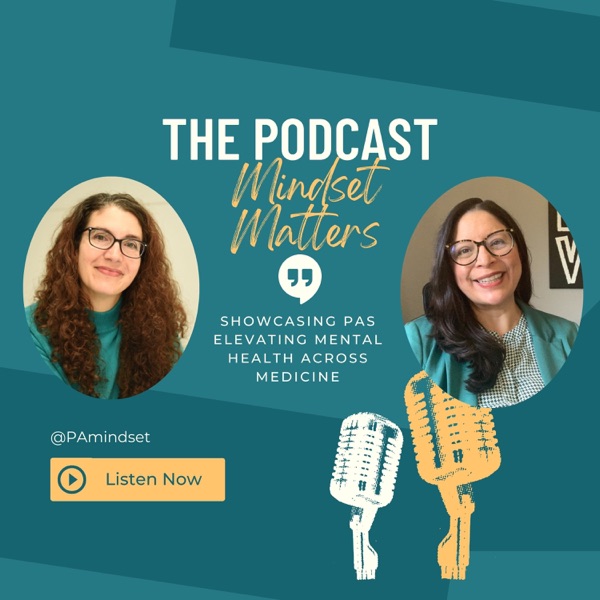
PA Mindset Matters
At PA Mindset Matters, we shine a spotlight on exceptional PAs who are making a difference in mental health across all specialties. Our podcast and webinars are designed to connect and inspire the PA workforce—whether you’re a psych PA or a PA in primary care, emergency medicine, or any specialty—by providing practical insights and resources to integrate behavioral health into your practice. Together, we’re building a stronger, more connected community to raise each other up and deliver better patient care.
- Episodes
- 43
- Releases
- Weekly
- Typical length
- 20 min
- On air since
- 2025
- Latest episode
- 21 hours ago
Episodes
43 episodes, newest first
-
33 min
Beyond the Clinic Walls: Street Medicine, Addiction Care & the Power of Trust
Episode 43
Show notes
What happens when healthcare goes directly to the people who need it most?
In this episode of PA Mindset Matters, hosts Mercedes Dodge and Jessica Spissinger welcome Tara Amini, DMSc, PA-C, a physician associate whose work spans street medicine, mobile healthcare, primary care, addiction medicine, and psychiatry in California's Central Valley.
With more than 20 years of clinical experience, Tara shares her journey from emergency and correctional medicine to developing mobile healthcare services for people experiencing homelessness and other underserved populations.
Through her experiences, we explore how building trust, showing up consistently, and adapting care to patients' circumstances can make a meaningful difference in healthcare access and outcomes.
In this episode, we discuss:
•
Street medicine vs. mobile clinics: Bringing comprehensive healthcare beyond traditional clinic walls.
•
Trust and connection: Why consistency, compassion, and relationships matter when caring for vulnerable populations.
•
Integrated care: Addressing addiction, mental health, HIV, chronic illness, and preventive healthcare together.
•
Barriers to treatment: Navigating transportation, housing instability, medication access, and continuity of care.
•
The evolving PA role: Lifelong learning, advocacy, leadership, and clinician resilience.
From connecting with patients through their pets to expanding clinical services based on community needs, Tara reminds us that meaningful healthcare often begins with listening and building relationships.
Whether you practice in primary care, psychiatry, emergency medicine, addiction medicine, or another specialty, this conversation offers lessons for meeting patients where they are.
-
25 min
Mini Mindset: Opioid Use Disorder in the Fentanyl Era
Episode 42
Show notes
Opioid use disorder looks different in the fentanyl era—and clinicians across healthcare need to understand what has changed.
In this Mini Mindset episode of PA Mindset Matters, Mercedes Dodge and Jessica Spissinger break down practical, evidence-based approaches to opioid use disorder for clinicians working in psychiatry, primary care, emergency medicine, hospital medicine, pain management, and beyond.
In this episode, we discuss:
• How fentanyl has changed overdose risk and the clinical landscape
• Why detox is not the same as treatment for opioid use disorder
• The roles of buprenorphine, methadone, and naltrexone
• Why precipitated withdrawal can occur and how COWS can help guide assessment
• Why clinicians should treat the patient—not just the clock—when initiating buprenorphine
• Naloxone, harm reduction, and overdose prevention
• Using PDMP data and urine drug testing as clinical information rather than punishment
• How motivational interviewing can start with just one open-ended question
• Matching patients to the appropriate level of care and recovery supportOne of the biggest takeaways: opioid use disorder is a chronic, treatable medical condition, and medications for opioid use disorder are evidence-based treatment.
You do not have to be an addiction medicine specialist to make a difference. Sometimes the first step is simply starting the conversation, reducing stigma, offering naloxone, or connecting a patient with evidence-based treatment.
-
41 min
Compassionate Care in Addiction Medicine: A Conversation with Karen Haessler PA-C
Episode 41
Show notes
What does compassionate, stigma-free addiction care look like in clinical practice?
In this episode of PA Mindset Matters, hosts Jessica Spissinger and Mercedes Dodge welcome Karen Haessler, PA-C, an addiction medicine PA who shares her journey from paramedicine to building a hospital-wide addiction consult service.
Karen offers practical insights into managing alcohol withdrawal, treating opioid use disorder, initiating medications for opioid use disorder (MOUD), and navigating emerging substance use trends, including kratom and fentanyl adulterants.
The conversation explores addiction care during pregnancy, perioperative buprenorphine management, harm reduction, and the importance of nonjudgmental language in building therapeutic relationships.
Packed with clinical pearls and resources for PAs across specialties, this episode reminds us that compassionate addiction care starts with how we approach our patients.
-
24 min
Mini Mindset: Alcohol Use Disorder—Screening, Withdrawal, Complications & Treatment Basics
Episode 40
Show notes
Alcohol use disorder (AUD) is common, complex, and often under recognized. In this Mini Mindset episode of PA Mindset Matters, hosts Jessica Spissinger and Mercedes Dodge deliver a focused, practical overview of AUD and the essential clinical knowledge every PA should have.
From screening tools and risk factors to recognizing intoxication, managing withdrawal, and identifying life-threatening complications, this episode covers the fundamentals of AUD. We also explore CIWA-Ar, thiamine, SBIRT, and medication options, including naltrexone, acamprosate, and disulfiram.
Whether you practice in primary care, emergency medicine, psychiatry, or another specialty, this episode offers practical insights to help you recognize AUD and provide compassionate, evidence-based care.
-
39 min
From Understanding to Action: Catie Hodson's Approach to Medicine and Addiction
Episode 39
Show notes
In this episode of The PA Mindset Matters podcast, hosts PA Mercedes Dodge and PA Jessica Spissinger speak with Katie Hodson, PA, an outpatient psychiatry clinician in Wilmington, North Carolina, who focuses on opioid use disorder and co-occurring conditions such as PTSD, stimulant use disorder, anxiety, depression, and bipolar disorder. Katie discusses integrating addiction treatment with psychiatric care, using a collaborative, nonjudgmental approach that sets expectations, avoids punitive responses, and emphasizes meeting patients where they are. She reflects on her path to become a PA and her current clinical work focusing on psychosocial rehabilitation, addresses stigma from families and misconceptions about buprenorphine (including perioperative concerns), and highlights how public policy, housing, food insecurity, and insurance instability drive mental health and substance use outcomes. She also describes close collaboration with therapists, setting boundaries to prevent burnout, and self-care through family, exercise, faith, and grace.
-
24 min
Mini Mindset: The Dual-Diagnosis Trap in Substance Use Disorders
Episode 38
Show notes
When depression, anxiety, insomnia, inattention, or mood instability shows up alongside substance use, the clinical picture can get complicated fast.
In this Mini Mindset episode of PA Mindset Matters, we explore how intoxication, withdrawal, rebound symptoms, and neuroadaptation can mimic psychiatric illness—and why good clinical reasoning requires more than matching symptoms to a diagnosis.
We discuss:
• How substance use can act as a clinical chameleon
• Why building a timeline matters before assigning a psychiatric diagnosis
• How withdrawal and neuroadaptation can resemble depression, anxiety, ADHD, or bipolar-spectrum symptoms
• Why the medication may not be the mistake—missing the driver may be
• Why true co-occurring substance use and psychiatric disorders often require integrated careThe clinical question we keep coming back to:
What is the substance doing to the clinical picture?
And before treating the symptom, ask:
What is driving these symptoms—and what does this patient need treated today?
Listen for practical, clinician-to-clinician insights you can bring back to primary care, psychiatry, and everyday mental health practice.
Follow PA Mindset Matters for more Mini Mindsets and conversations on practical psychiatry, behavioral health, and the reminder that Every PA is a Psych PA.
-
45 min
Addiction Medicine, Motivational Interviewing, and the Power of Connection with Kerith Hartmann, PA
Episode 35
Show notes
Addiction medicine touches nearly every area of healthcare, yet many clinicians receive limited training in recognizing and treating substance use disorders.
In this episode of PA Mindset Matters, Jessica Spissinger, PA-C, LICSW, CAQ-Psych, and Mercedes Dodge, MPAS, PA-C, CAQ-Psych, sit down with Kerith Hartmann, MPAS, PA-C, an addiction medicine PA at Oregon Health & Science University.
Kerith works across inpatient addiction medicine consultation and outpatient care for patients with substance use disorders, complex chronic illness, and overlapping pain concerns. She is also a board member of the Society for Addiction Medicine of PAs and a member of the Motivational Interviewing Network of Trainers.
One of her strongest messages:
“Learn motivational interviewing—really learn it. Not the concept, the practice.”
In this conversation, we discuss:
• opioid, alcohol, and stimulant use disorders
• medications for addiction treatment
• motivational interviewing in real clinical practice
• contingency management
• harm reduction and reducing stigma
• addiction and chronic pain overlap
• trauma-informed care
• clinician resilience and burnout
• building a career in addiction medicineKerith also shares the personal and professional experiences that led her into this field and reminds us that clinicians do not have to identify as addiction specialists to make a meaningful difference for patients with substance use disorders.
Listen to the full conversation on PA Mindset Matters and share it with a colleague who cares for patients affected by substance use.
Also available on Apple Podcasts, Spotify, and YouTube.
#PAMindsetMatters #AddictionMedicine #MotivationalInterviewing #SubstanceUseDisorder #PhysicianAssociate
-
29 min
Mini Mindset: Substance Use Disorder — Opening the Door to Better Care
Episode 37
Show notes
You don’t have to work in addiction medicine to care for patients with substance use disorders.
Substance use shows up across healthcare—from psychiatry and primary care to emergency medicine, pediatrics, and hospital settings—and it often intersects with anxiety, insomnia, trauma, depression, chronic pain, and relationship stress.
In this Mini Mindset episode, Jessica Spissinger and Mercedes Dodge break down practical ways clinicians can recognize substance use disorder, reduce stigma, and feel more confident starting the conversation.
In this episode, we discuss:
• Why shifting from “Why won’t you stop?” to “What is this substance doing for you?” can change the clinical encounter
• The 4 Cs of substance use disorder: control, craving, compulsion, and consequences
• How SBIRT can help clinicians screen, intervene, and connect patients with treatment
• Using motivational interviewing to move from judgment to curiosity
• Evidence-based treatment options for alcohol and opioid use disorders
• Harm reduction and the importance of meeting patients where they are
• Why alcohol and sedative withdrawal require careful safety assessment
• The role of therapy, contingency management, peer support, and other recovery resourcesSubstance use disorder is not a failure of willpower. It is a treatable medical condition influenced by biology, environment, learning, trauma, relationships, and the brain’s reward system.
And treatment does not always begin in an addiction clinic.
Sometimes it begins with one clinician asking the right question and creating a safe space for an honest conversation.
Listen now and follow PA Mindset Matters for more Mini Mindset episodes translating psychiatry, behavioral health, and neuroscience into practical clinical care.
-
40 min
Bridging the Gap in Addiction Medicine with Arianna Campbell
Episode 36
Show notes
What happens when we identify opioid use disorder—but the patient still can’t access treatment?
In this episode of PA Mindset Matters, Mercedes Dodge and Jessica Spissinger sit down with Arianna Campbell, DMSc, MPH, PA-C, CAQ-EM, DFAAPA, a PA with more than 25 years of emergency medicine experience and nearly a decade working in addiction medicine and healthcare systems change.
Arianna shares how a simple question in the emergency department—What are we actually going to do when we identify opioid use disorder?—helped launch work that eventually grew into California Bridge and expanded addiction treatment access across hospitals and communities.
We discuss:
• Buprenorphine and evidence-based opioid use disorder treatment
• Why opioid withdrawal should be treated as a time-sensitive condition
• CA Bridge Connect and making treatment easier to find
• Stigma, harm reduction, and changing healthcare culture
• The role of PAs in addiction medicine
• The developing Addiction Medicine CAQ pathway
• Why systems change starts with following the patient’s actual journey
• Clinician wellness, resilience, and staying groundedArianna reminds us that improving addiction care is not only about knowing the evidence—it is about creating systems where patients can actually access it.
“We need to make it easier for people to get care.”
Listen now on PA Mindset Matters.
-
14 min
Season 2 Reflection: Highlights from Psych PA Institute, Guest Stories, and What’s Next
Episode 34
Show notes
Hosts Mercedes Dodge and Jessica Spissinger of PA Mindset Matters reflect on wrapping their second season, highlighting interviews largely recorded at the inaugural PA Institute collaboration between Psych Congress and AAPA and previewing its return in early December in Orlando. They discuss their mission to connect psychiatric PAs and share standout guest takeaways. They note psych PA presence at AAPA, announce next season starting fall 2026 focusing on substance use, invite guests via pamindset.com, and thank APAP and supporters while sharing slide access through membership.
-
28 min
Caring Beyond Diagnosis: Humanity, Intellectual Disability, and the Heart of Psychiatry I Jo A. Hughes DMSc, PA-C, CAQ-Psychiatry
Episode 33
Show notes
In medicine, it’s easy to focus on diagnoses, treatment plans, and checklists.
But some of the most meaningful moments in care happen when we pause long enough to see the person beyond them.
In this episode of Mindset Matters, we sit down with a leader in psychiatry to explore what it truly means to care for patients with intellectual and developmental differences—and how these experiences reshape the way we practice medicine as a whole.
This conversation goes beyond career paths. It’s about humanity in care—and the responsibility we carry as clinicians to approach patients with curiosity, compassion, and respect for their lived experience.
We explore:
• Caring for patients with intellectual disabilities in a system not always built for them
• Shifting from a diagnosis-driven model to a person-centered approach
• How psychiatry deepens our understanding of behavior, communication, and connection
• What these patients teach us about presence, patience, and meaning in medicineThis episode is a reminder that some of the most impactful care we provide doesn’t come from having the right answer—
It comes from being willing to see, listen, and understand more deeply.
Whether you work in psychiatry or another specialty, this conversation will challenge you to think differently about what it means to truly care for your patients.
-
21 min
Mini Mindset: Menopause & Mental Health—Recognizing Hormonal Drivers Behind Mood Symptoms
Episode 32
Show notes
In this Mini Mindset episode, we explore the often-overlooked connection between menopause, perimenopause, and mental health.
Many women present with symptoms that look like depression or anxiety—but what if the underlying driver is hormonal?
We discuss:
• The clinical overlap between mood disorders and perimenopause
• Why some patients experience partial response to SSRIs
• The role of sleep disruption, vasomotor symptoms, and estrogen fluctuations
• How to differentiate brain fog vs ADHD vs mood disorders
• Practical treatment considerations, including SNRIs and collaborative care with OB-GYNWe also highlight insights from the Study of Women's Health Across the Nation (SWAN) and why clinicians need a broader lens when treating midlife patients.
This is a conversation about curiosity, validation, and better care for women in transition.
-
17 min
From Life to Lessons: Ava Smith's Path in Psychiatry
Episode 30
Show notes
In this episode of The Mindset Matters, psychiatric PAs Mercedes Dodge and Jessica Spissinger interview Ava, a psych PA and clinical assistant professor at Texas A&M, about her transition from emergency psychiatry to outpatient academic practice. She reflects on working across 13 Houston-area hospitals, the lack of continuity in emergency care, and how her mother’s mental illness shaped her path into psychiatry later in life. Ava discusses her current role—primarily adult outpatient care with teaching responsibilities—along with PA advocacy, job-search strategies, and prescribing challenges in Texas. She also shares favorite resources and wellness habits like puzzles and Peloton.
-
17 min
Embracing Summertime Mood Challenges: Reverse SAD Explained
Episode 31
Show notes
In this episode of PA Mindset Matters Mini Mindset, hosts Jessica Spissinger and Mercedes Dodge review the third and final seasonal onset mood disorder discussing “reverse seasonal affective disorder,” or summer-onset depression. They note it’s less common than winter-onset SAD (about 0.5–2.5% vs. 5–10%) and can be missed because summer is assumed to be a season which most people enjoy. However, for those who struggle with summer depression, it may present atypically with agitation, irritability, restlessness, insomnia, appetite loss, and weight loss, sometimes resembling anxiety or manic irritability, and is linked to prolonged daylight, humidity, heat, and circadian disruption (including spring time change). They emphasize planning ahead, screening for seasonal patterns over at least two years, and prioritizing environmental management (dimming evening light, reducing screens, blue-light blockers, blackout curtains, temperature control, avoiding the “indoor trap,” and timing outdoor activity). We review psychotropic, lifestyle and treatment planning approaches.
-
17 min
More Than the Patient: How Psychiatry PAs Impact Entire Families
Episode 29
Show notes
In this episode of PA Mindset Matters, hosts Mercedes Dodge, PA-C and Jessica Spissinger, PA-C connect with psychiatric physician assistant Jasprina Ming, DMS, MPAS, PA-C at Psych Congress to discuss pathways into psychiatry, the mental health workforce shortage, and the broader impact of psychiatric care.
Jasprina shares how growing up with a mother with mental illness shaped her perspective, emphasizing that treating one patient often means supporting an entire family and community while helping reduce stigma around mental health.
She also discusses her clinical approach to depression, anxiety, and ADHD, highlighting the importance of both psychopharmacology and psychotherapy in outpatient care.
Her career journey includes transitioning from a registered vascular technologist (RVT), where she performed vascular ultrasounds, to becoming a PA to be more involved in the full continuum of patient care. Despite being told that opportunities for PAs in psychiatry were limited in her area, she pursued the field through dedicated training and mentorship.
The conversation also explores the realities of practicing psychiatry, including maintaining boundaries, avoiding burnout, and staying present outside of work. She shares practical strategies such as completing documentation during the workday and intentionally disconnecting after clinic to be fully present with family.
This episode highlights the human side of psychiatric care and reinforces that mental health is health, and that every clinician plays a role in recognizing and supporting it.
-
16 min
The Collaborative Shift: Breaking Down Healthcare Barriers | Mini Mindset Series
Episode 28
Show notes
Mental health doesn’t live in one clinic—it shows up everywhere.
In this Mini Mindset episode of PA Mindset Matters, Mercedes Dodge, PA-C and Jessica Spissinger, PA-C take a closer look at collaborative care and why integrating behavioral health across specialties is essential for improving patient outcomes and reducing provider burnout.
From primary care to pediatrics to specialty clinics, behavioral health is already present—but too often, care is delivered in silos. In this episode, we explore how shifting toward a team-based, integrated model can help close gaps in care, reduce fragmentation, and support more comprehensive, patient-centered treatment.
Whether you’re in psychiatry, primary care, or any specialty managing complex patients, this episode offers practical insight into how collaborative care can be applied in real-world settings.
-
19 min
From Military Service to Mental Health Advocacy: Edward Traverso's Story
Episode 27
Show notes
In this episode of The PA Mindset Matters, hosts Mercedes Dodge and Jessica Spissinger interview Edward Traverso about how his military deployment shaped his commitment to mental health. Edward describes discovering the PA profession, working on an adult inpatient involuntary unit, and completing a one-year psychiatry PA residency at the VA in Houston partnered with Baylor. Now practicing addiction psychiatry at New Start Clinic in Washington and Oregon, he emphasizes the role of substances in mental health, the importance of empathy and motivational interviewing, and building a non-paternalistic therapeutic alliance. He shares resources like The Carlat Report, NEI, and PCSS training, discusses diversifying roles to reduce burnout, and highlights interests including correctional psychiatry and interventional psychiatry. Edward’s path is a story of service, purpose, and redefining what it means to practice patient-centered care.
-
19 min
Mini-Mindset: Spring-Onset Mania--Understanding Seasonal Patterns in Bipolar Disorder
Episode 26
Show notes
In this Mini Mindset episode of PA Mindset Matters, Jessica Spissinger and Mercedes Dodge discuss spring-onset mania as a seasonal pattern in bipolar disorder. Seasonal patterns require a consistent relationship with a specific time of year for at least two years, with manic episodes most often peaking in spring and autumn. They review manic symptoms using the DIGFAST mnemonic and distinguish hypomania from mania by duration, functional impairment, and possible psychosis.
The episode explores potential mechanisms including increased light exposure, circadian rhythm disruption, melatonin changes, dopamine variation, and genetic clock-gene vulnerability.
Treatment emphasizes acuity-based management, including mood stabilizers and antipsychotics for acute mania, with ECT for severe cases, and prevention strategies such as consistent sleep schedules, reduced evening light exposure, dark therapy, and blue-light–blocking glasses. The hosts also discuss a calendar-based prevention approach around the spring daylight-saving time change and share additional resources at pamindset.com.
-
20 min
How One Psychiatric PA Combines AI, Psychiatry & Music to Help Patients
Episode 25
Show notes
Psychiatric PA Serah Sulaiman, MPAS, PA-C joins PA Mindset Matters to discuss pediatric mental health, emotional dysregulation, and Partial Hospitalization (PHP) and Intensive Outpatient (IOP) treatment programs.
In this episode, hosts Mercedes Dodge, PA-C and Jessica Spissinger, PA-C explore Serah’s path from teaching to psychiatry and her work supporting high-acuity youth transitioning from inpatient care, residential programs, or periods of school disruption back into daily life.
We discuss emotional dysregulation, interdisciplinary collaboration in behavioral health, and the role of creative outlets—like music and art—in helping patients develop healthier coping skills.
Serah also completed the CLINAQ Fellowship through Morehouse School of Medicine, where she explored innovative approaches to emotional dysregulation.
Outside of clinical practice, she creates music under the name Xyla (on TikTok), using songwriting to connect with others around mental health.
🎧 Listen now on Spotify, Apple Podcasts, or your favorite podcast platform.
🌐 Read the blog recap at http://www.PAMindset.com -
14 min
Mini Mindset: Prescribing Movement — Exercise as a Powerful Tool in Lifestyle Psychiatry
Episode 24
Show notes
Exercise is not just a lifestyle recommendation. It’s neurobiology.
In this Mini Mindset episode of PA Mindset Matters, we take a clinical deep dive into exercise as a prescriptive tool in psychiatric care.
We review:
• Moderate to large effect sizes in depression
• The Duke SMILE study (8% relapse with exercise vs 38% with medication alone)
• Muscle–brain crosstalk and BDNF upregulation
• Neuroplasticity, inflammation, and dopamine signaling
• The F.I.T.T. framework for clinical prescription
• Red flags and motivational interviewing strategiesThis isn’t anti-medication. It’s physiology-informed psychiatry.
If we believe in neuroplasticity, we have to believe in movement.
Courses lists
More Courses shows picked out from the charts










More in Courses
Placed highest on Apple Podcasts' Courses chart right now