Podcast
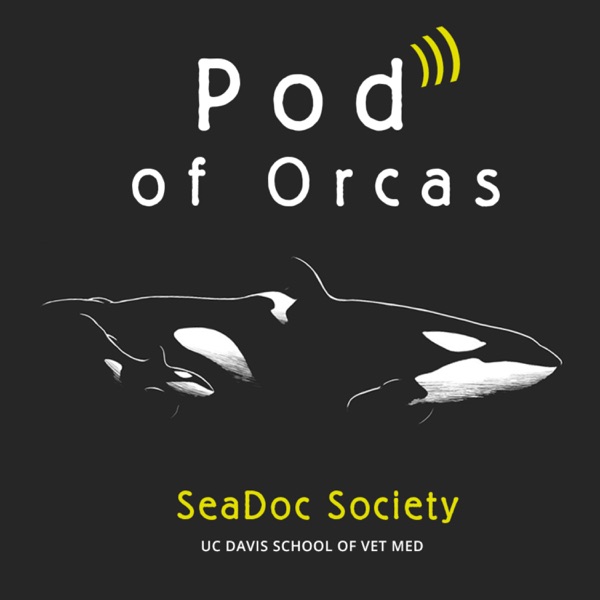
Pod of Orcas
Only around 70 Southern Resident Killer Whales remain in the wild and they’re looking directly at extinction if things don’t change. Season 1 of this podcast is a deep dive on this endangered population of orcas. All episodes after that tell stories of the Salish Sea ecosystem and the planet. Click subscribe and spread the word!
- Episodes
- 22
- Releases
- Every few months
- Typical length
- 42 min
- On air since
- 2021
- Latest episode
- 2 months ago
Episodes
22 episodes, newest first
-
32 min
The Power of Playful Online Communications (Non-Taylor's Version), w/ Rachel Terlep of Washington State DNR/WSDOT
Show notes
This episode originally aired back in 2022 but it recently got taken down because of a short clip of the Tayl*r Sw*ft song "Lavender Haze." This is that original episode, sans Taylor.
On this episode we cover social media at the intersection of science, nature, conservation, and nonprofit work. More specifically it’s about Twitter, Instagram and Facebook, and a state agency that has leveraged social media beautifully as a way to get their word out. Our guest is Rachel Terlep was Social Media Manager for the Washington State Department of Natural Resources when we spoke, but now runs social media for Washington State Department of Transportation.
Note: We had this conversation about four hours before Twitter, now called X, entered a state of crazy flux on November 17, 2022.
SUPPORT THE CREATION OF THIS SHOW: http://seadocsociety.org/donate
-
1 min
This Saturday: Expanding Science, Expanding Hope. Bonus
Show notes
Our big summer auction event will take place Saturday July 18th, from 4-7 pm, on Orcas Island. The event is near but we have a handful of tickets left if you'd like to join. It will be held at Slanted Apple Farm, not far from the ferry landing.
Get tickets an learn more at https://www.seadocsociety.org/auction
-
40 min
Interview with Michelle Barbieri Lino, New SeaDoc Scientist
Show notes
Today’s guest is SeaDoc Society’s new Veterinary Translational Scientist, Michelle Barbieri Lino.
In a moment where researching funding is tenuous on both the state and federal level, SeaDoc Society is expanding its impact. Michelle (who goes by Shell) is joining Joe Gaydos, Deborah Giles and Cat Lo on SeaDoc’s esteemed team of scientists.
This casual conversation is a good chance to learn about her life and career, whether you’re a SeaDoc supporter of a budding scientist yourself. Learn more or support our work at seadocsociety.org.
Follow SeaDoc on most social media sites at @seadocsociety
-
1 hr 1 min
Dr. Deborah Giles on Killer Whales, Poop-Sniffing Dogs, and the Superpod that Changed Her Life
Show notes
Early in 2025, the amazing killer whale research organization Wild Orca merged with SeaDoc Society, adding Giles to our growing team of scientists, alongside Joe Gaydos and Cat Lo.
In today's episode we talk with Giles about her time on the water this field season, having her life changed by a Superpod on her 18th birthday, Eba the poop-sniffing dog, and the future of Southern Resident Killer Whale science and conservation.
You can support this work at seadocsociety.org
-
52 min
17. Science, Storytelling, and Salish Sea Wild, with Bob Friel
Season 2
Show notes
Bob Friel is the producer of SeaDoc Society's EMMY-nominated web series, Salish Sea Wild, hosted by Joe Gaydos. He's also an award-winning writer, photographer, documentary filmmaker, and author of the true-crime bestseller The Barefoot Bandit.
In this episode we talk about how to get folks to care about vital science in a chaotic and unreliable media environment—more specifically how he and Joe make their own brand of magic with Salish Sea Wild.
Salish Sea Wild: https://www.youtube.com/seadocsociety
Get our newsletter: https://www.seadocsociety.org/newsletter
-
36 min
16. A Rockfish Baby Boom, with Adam Obaza and Olivia Carmack
Show notes
Rockfish are very vulnerable to overfishing and don't have babies every year. Very rarely a "jackpot recruitment" happens and tons of rockfish babies are born (they give birth to live young, meaning no eggs!). The last time it happened in the San Juan Islands was decades ago.
Our guest today are Adam Obaza and Olivia Carmack of Paua Marine Research Group. We work with Paua to collect data on young rockfish to aid in the recovery plan for the species. Check it out!
--
www.pauamarineresearch.com
-
58 min
15. Why are human feet washing up on beaches in the Salish Sea?
Show notes
Human feet have been washing up on beaches in the Pacific Northwest's Salish Sea since at least 2007. But why? Turns out there are scientific explanations for "why feet?" and "why here?"
The answer sheds light on why the ecosystem's name—The Salish Sea—is important, and why place names matter in general.
Support the creation of this show: seadocsociety.org/tidepoolers
--
GUESTS:
Erika Engelhaupt, author of Gory Details
- https://erikaengelhaupt.com/gory-details-book/
David Trimbach, Conservation Social Scientist at the Washington Department of Fish and Wildlife
-
39 min
14. Our team reflects on 2023
Show notes
Join the whole SeaDoc Society team as we reflect on 2023 and look ahead to 2024. Thanks for listening to the show and for supporting our work.
All gifts will be doubled thanks for two generous donor families: seadocsociety.org
Thank you!
-
1 hr 2 min
13. A 250-pound Bluefin tuna mysteriously washed up on Orcas Island. Why?
Season 1, Episode 13
Show notes
This is the story of a mysterious fish that washed up on Orcas Island on July 11, 2023. That fish was a six-foot long Pacific bluefin tuna—a species that had never in history been documented in the inland waters of the Salish Sea. Bluefin are a delicacy that can sell for millions of dollars. Why was it here?
Support the creation of this show: seadocsociety.org/donate
Follow on social for visuals:
- facebook.com/seadocsociety - instagram.com/seadocsociety
- tiktok.com/seadocsociety - twitter.com/seadocsociety
-
42 min
12. Searching for the rarest whale in the world, w/ Kevin Campion
Season 2, Episode 12
Show notes
Our guest today is Kevin Campion, founder of Deep Green Wilderness and a board member for the SeaDoc Society.
In this episode we talk about the North Pacific Right Whale. Kevin and his crew have made an excellent new film called Right Over the Edge—all about their search for this elusive and severely endangered species, which used to number in the 10s of thousands and now is down to about 30.
The SeaDoc Society will be hosting a free screening of the movie on Orcas Island on the evening of Thursday May 18th at the SeaView Theatre. That event marks the in-person return of our popular Ocean Night series. Put it on your calendar and join us!
Become a Tidepooler and help support this show's creation: https://www.seadocsociety.org/donate
RIGHT WHALE RESOURCES
• Right Over the Edge film - https://www.rightwhalefilm.com/
• Right Whale Website - https://www.northpacificrightwhale.org/
• Deep Green Wilderness - https://www.deepgreenwilderness.com/Rate, review and share the podcast to spread the word. Get our free monthly newsletter at seadocsociety.org/newsletter.
• Facebook: facebook.com/seadocsociety
• Instagram: Instagram.com/seadocsociety
• Twitter: twitter.com/seadocsocietySCREENINGS
May 18 at 7pm at the SeaView Theatre on Orcas Island Ocean Night: https://www.facebook.com/events/558844049702732/
May 20 at 7:30pm at the San Juan Island Yacht Club, San Juan Island
-
42 min
11. Is it safe to eat seaweed and kelp? w/ Jennifer Hahn
Episode 11
Show notes
This episode is about kelp and seaweed in the Salish Sea, and more specifically whether it is safe for human consumption. Our guest is Jennifer Hahn, who has a unique and adventurous childhood story, and in adulthood kayaked solo through Alaska’s Inside Passage. She’s the author of Pacific Feast: A Cook’s Guide to West Coast Foraging and Cuisine, in which kelp is featured heavily.
When Jenny started teaching classes about kelp throughout the region, she’d often get asked if it was safe to eat. Eventually that brought her into contact with SeaDoc Society Science Director Joe Gaydos. That sets in motion the scientific study you’ll hear about in this episode! In addition to Jenny’s wildlife adventures, we’ll unpack the findings of the study and her close collaboration with Tribes and First Nations from start to finish on the project.
Please rate, review and share the podcast!
• SUPPORT THE SHOW: seadocsociety.org/donate
• FREE NEWSLETTER: seadocsociety.org/newsletter
• READ THE STUDY: https://static1.squarespace.com/static/5b071ddea2772cebc1662831/t/6331e0c85242a25e111622b8/1674754603298/hahn-kelp.pdf
• PACIFIC FEAST: http://www.pacificfeast.net/ -
26 min
9. Climate fatalism vs. climate hope, w/ Elin Kelsey (PART TWO)
Season 2, Episode 2
Show notes
Welcome to Part 2 of our episode about Hope with Elin Kelsey. In this episode we talk about Southern Resident Killer Whales, why we shouldn't put our climate responsibility on young children, environmental fatalism, and individuals vs. corporations as it relates to a healthy planet and Salish Sea.
Register for our virtual event at https://www.seadocsociety.org/event.
Elin Kelsey is the author of Hope Matters: Why Changing the Way We Think is Critical to Solving the Environmental Crisis. The whole SeaDoc staff has read the book, and to say it has inspired us would be a huge understatement. Kelsey, PhD, is a leading spokesperson, scholar and educator in the area of evidence-based hope.
Support our work: https://seadocsociety.org/donate
Rate, review and share the podcast to spread the word. Get our free monthly newsletter at https://seadocsociety.org/newsletter.
• Facebook:https://facebook.com/seadocsociety
• Instagram:http://instagram.com/seadocsociety
• Twitter:http://twitter.com/seadocsociety -
38 min
8. Hope Matters in our doom-and-gloom climate, with Elin Kelsey (PART ONE)
Season 2, Episode 1
Show notes
We're back for Season 2, and we’re kicking things off with a conversation about Hope! The doom-and-gloom of the endless news cycle can convince you that our planet is as good as dead. This conversation with Elin Kelsey, author of Hope Matters: Why Changing the Way We Think is Critical to Solving the Environmental Crisis, will make you rethink that. The whole SeaDoc staff has read the book, and to say it has inspired us would be a huge understatement. Kelsey, PhD, is a leading spokesperson, scholar and educator in the area of evidence-based hope.
Support our work: seadocsociety.org/donate
Rate, review and share the podcast to spread the word. Get our free monthly newsletter athttps://seadocsociety.org/newsletter.
• Facebook:https://facebook.com/seadocsociety
• Instagram:http://instagram.com/seadocsociety
• Twitter:http://twitter.com/seadocsociety -
1 min
Trailer: Pod of Orcas Season Two Trailer
Season 2
Show notes
Welcome to Pod of Orcas! Last season, we dove deep with an endangered population of killer whales, and we met some brilliant scientists and storytellers along the way. This season, we’re zooming out. We’re gonna look at the place they call home, which is also the place we call home. And by that I do mean the Salish Sea and its 8 million people and two large cities with bustling ports and shipping routes, but I also mean the Pacific Ocean, the planet, all of it.
We’ll look at everything from dire stories of near extinction to inspirational stories of recovery to stories that are just cool or downright weird.
How do we maintain hope amid so much grim climate news? Could Chinook salmon go extinct in our lifetime? What makes poop so crucial to marine mammal research? And why do human feet keep washing up on Salish Sea shores?
Subscribe to Pod of Orcas wherever you listen to podcasts!
-
59 min
7. Our Shared Home, with Lynda Mapes & Joe Gaydos (Season One Finale)
Season 1, Episode 7
Show notes
In our finale episode, we look at Southern Resident Killer Whales through the eyes of the Seattle Times environment reporter, Lynda Mapes. Lynda has been locked into their story since Tahlequah carried her dead calf for 17 days and more than a thousand miles in the summer of 2018. That story captured the world and Mapes’ articles for the Times are some of the most popular in the paper’s online history. Tahlequah’s story is also how she introduces her beautiful new book, Orca: Shared Waters, Shared Home, which comes out June 1, but you can preorder now: https://www.mountaineers.org/books/books/orca-shared-waters-shared-home
Rate, review and share the podcast to spread the word. You can email me at justin@seadocsociety.org. Get our free monthly newsletter athttps://seadocsociety.org/newsletter.
• Facebook:https://facebook.com/seadocsociety
• Instagram:http://instagram.com/seadocsociety
• Twitter:http://twitter.com/seadocsocietyThanks to our sponsors:
• Shearwater Kayak Tours
• Rainshadow Solar
• Two Beers Brewing Company
• Deer Harbor Charters and The Averna Family
• Betsy Wareham and West Sound Marina
• The San Juan County Marine Resources Committee
• Apple State Vinegar
• Logo: FLOAT.org
• Music: Podington Bear
• Whale sound: The Whale Museum -
34 min
6. Toxic blubber, with Peter Ross
Season 1, Episode 6
Show notes
In Ep. 6, we look at how human-made contaminants in the ocean are compromising killer whales and compounding the other problems they face. Fat soluble toxins move up the foot chain and accumulate in killer whales, who metabolize it in their blubber. Mothers also pass those contaminants down to their babies when nursing. Our guest is the excellent Peter Ross, who takes this complex subject and artfully breaks it down. Next week is the finale and it's a good one. See you then!
Rate, review and share the podcast to spread the word. You can email me at justin@seadocsociety.org.
Get our free monthly newsletter athttps://seadocsociety.org/newsletter
• Facebook:https://facebook.com/seadocsociety
• Instagram: http://instagram.com/seadocsociety
• Twitter: http://twitter.com/seadocsocietyThanks to our sponsors:
• Shearwater Kayak Tours
• Rainshadow Solar
• Two Beers Brewing Company
• Deer Harbor Charters and The Averna Family
• Betsy Wareham and West Sound Marina
• The San Juan County Marine Resources Committee
• Apple State Vinegar
• Logo: FLOAT.org
• Music: Podington Bear
• Whale sound: The Whale Museum -
43 min
5. Looking to gorillas to save killer whales, with Kirsten Gilardi
Season 1, Episode 5
Show notes
In Ep. 5, we look at a conservation success story that could help map out the future for Southern Resident Killer Whales. The similarities between mountain gorillas and Southern Residents are plenty: Both can be individually identified and monitored by researchers. Both are massive tourist attractions--which on one hand comes with threats, but also brings enthusiasm, support, and the potential for funding to ensure protection. Both also regularly cross the imaginary borders humans have drawn to carve up our countries, meaning international collaboration is crucial. Our guest is Dr. Kirsten Gilardi, Director of Gorilla Doctors and Executive Director of the Karen C. Drayer Wildlife Health Center at UC Davis School of Veterinary Medicine.
Rate, review and share the podcast to spread the word. You can email me at justin@seadocsociety.org.
Support our work through GiveBIG this week!
Get our free monthly newsletter athttps://seadocsociety.org/newsletter
• Facebook:https://facebook.com/seadocsociety
• Instagram:http://instagram.com/seadocsociety
• Twitter:http://twitter.com/seadocsocietyThanks to our sponsors:
• Shearwater Kayak Tours
• Rainshadow Solar
• Two Beers Brewing Company
• Deer Harbor Charters and The Averna Family
• Betsy Wareham and West Sound Marina
• The San Juan County Marine Resources Committee
• Apple State Vinegar
• Logo: FLOAT.org
• Music: Podington Bear -
48 min
4. Orca sound & human noise, with Rob Williams
Season 1, Episode 4
Show notes
In Ep. 4, we enter the acoustic world of killer whales, and what that means for how they talk with their families, hunt for salmon, navigate the sounds of boats, and so much more. Our guest is Rob Williams, who is Chief Scientist and Co-Founder of Oceans Initiative with Erin Asche.
Acoustic communication is fundamental to the survival of killer whales and their uniqe culture, so don’t miss this one. Rate, review and share the podcast to spread the word. You can email our host at justin@seadocsociety.org.
Support our work through GiveBIG this week!
Get our free monthly newsletter at seadocsociety.org/newsletterFacebook: facebook.com/seadocsociety
Instagram: instagram.com/seadocsociety
Twitter: twitter.com/seadocsocietyThanks to our sponsors:
Shearwater Kayak Tours
Rainshadow Solar
Two Beers Brewing Company
Deer Harbor Charters and The Averna Family
Betsy Wareham and West Sound Marina
The San Juan County Marine Resources Committee
Apple State Vinegar
Logo: FLOAT.org
Music: Podington Bear
Whale sound: The Whale Museum -
52 min
3. How captivity changed everything, with Jason M. Colby
Season 1, Episode 3
Show notes
In Ep. 3, we look at how humans have viewed and treated killer whales throughout history, especially in the Salish Sea. It starts with slaughter by fishermen, followed by captivity for entertainment, all the way up to our present moment, in which wild Southern Resident Killer Whales are endangered, but beloved. We look at portrayal in media (Free Willy, Blackfish and more) and get into how captivity shifted scientific study and shaped perception of orcas in ways that would ultimately lead to a ban on their capture in the Salish Sea.
Our guest is Jason Colby, author of the book Orca: How We Came to Know and Love the Ocean’s Greatest Predator. This is a moving and at times sad conversation that explores hard truths. But it ultimately offers hope. Rate, review and share the podcast to help spread the word.
Get our free monthly newsletter athttps://seadocsociety.org/newsletter
• Facebook:https://facebook.com/seadocsociety
• Instagram:http://instagram.com/seadocsociety
• Twitter:http://twitter.com/seadocsocietyThanks to our sponsors:
• Shearwater Kayak Tours
• Rainshadow Solar
• Two Beers Brewing Company
• Deer Harbor Charters and The Averna Family
• Betsy Wareham and West Sound Marina
• The San Juan County Marine Resources Committee
• Apple State Vinegar
• Logo: FLOAT.org
• Music: Podington Bear -
37 min
2. Could we lose salmon in our lifetime?, with Cecilia Gobin
Season 1, Episode 2
Show notes
In Ep. 2, we talk about salmon—the sole food source for Southern Resident Killer Whales. Our guest is Cecilia Gobin—a Tulalip tribal member who is on staff at the Northwest Indian Fisheries Commission. She's incredibly thoughtful and and exactly the kind of voice you want speaking on this topic.
How did we create such a bleak situation for this amazing species of fish? Could we lose salmon in our lifetime? What happens if the status-quo continues? Listen to find out. Subscribe to follow along.
Get our free monthly newsletter at seadocsociety.org/newsletter
• Facebook: facebook.com/seadocsociety
• Instagram: Instagram.com/seadocsociety
• Twitter: twitter.com/seadocsociety
Thanks to our sponsors:
• Shearwater Kayak Tours
• Rainshadow Solar
• Two Beers Brewing Company
• Deer Harbor Charters and The Averna Family
• Betsy Wareham and West Sound Marina
• The San Juan County Marine Resources Committee
• Apple State Vinegar
• Logo: FLOAT.org
• Music: Podington Bear
Nature lists
More Nature shows picked out from the charts







More in Nature
Placed highest on Apple Podcasts' Nature chart right now