Podcast
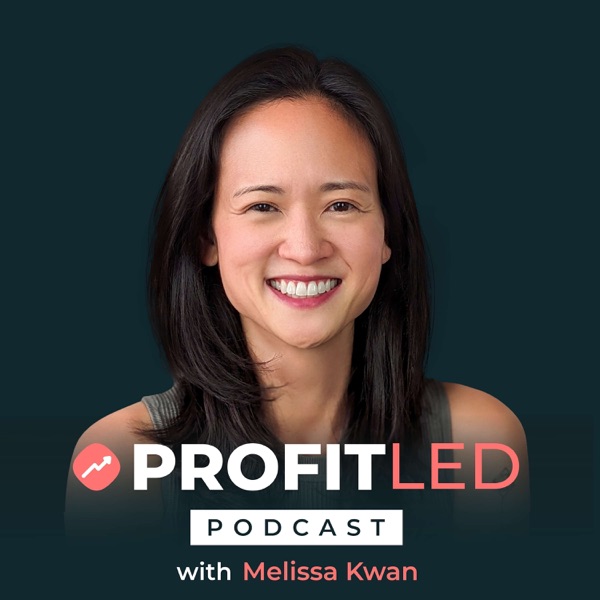
ProfitLed Podcast
Most startup advice is built around venture capital, hypergrowth, and unicorn exits. ProfitLed is for the rest of us. Hosted by Melissa Kwan, 3x bootstrapped founder and CEO of eWebinar, ProfitLed explores what it's really like to build a company on your own terms, without an abundance of resources and friends in high places.
Season Three goes beyond strategy as we explore the intersection of Passion, Profit, and Purpose and what happens when founders evolve and come into financial success.If you're building something real, this one's for you.
*Connect with Melissa at http://melissakwan.com*
*Brought to you by eWebinar.com**
- Entrepreneurship chart
- #164
- Episodes
- 57
- Releases
- Every two weeks
- Typical length
- 47 min
- On air since
- 2022
- Latest episode
- 2 weeks ago
Episodes
57 episodes, newest first
-
40 min
Bootstrapped to $5M with 17,000 Paying Customers | Marie Martens, S3E13
Show notes
Marie Martens and her partner Filip bootstrapped Tally from zero to $5M ARR with a team of 10. They have 17,000 paying customers with over 2M free users, Not one dollar of outside capital.
Originally, they were on their way to Bali to chase the digital nomad life and launch a travel startup when the world shut down in early 2020. They got as far as Bangkok, flew home 8 days later, lost their customers, and built Tally instead.
In this episode, Marie and I get into what happens when you build a company on your own terms. We talk about the milestone she celebrated most, which was far smaller than you’d think, the 3 years her and Filip personally answered every support message until they had to stop for their own mental health. Why she kept saying no to investors while wondering if that meant she wasn’t ambitious enough, and how her relationship with money changed once there was finally enough of it.
We also get into the deals she turns down on purpose, why she thinks being small is her biggest advantage, and what she’s building towards now that she’s already successful by any traditional measure.
If you’ve ever wanted a business that answers to nobody, this one’s for you.
_______
(01:18) What success looked like in corporate
(03:08) The Mexico beach digital nomad dream
(04:26) Stranded in Bangkok, home in eight days
(09:29) Ten thousand MRR was the whole dream
(09:51) The fancy dinner where they made it
(10:32) Three years answering every support message
(11:47) Closing the Slack for their mental health
(14:15) Why saying no to investors felt weird
(18:45) They never paid themselves big salaries
(19:59) When the exit question stopped mattering
(20:24) The example she wants to set
(23:01) Not a good mom or a good founder
(23:44) Morning shifts, evening shifts, structured days
(24:23) Optionality means no board calling the shots
(27:16) Saying no to governments and big corporates
(29:19) What she pays for to buy back time
(30:54) Being small is the biggest superpower
(33:18) Why fully remote didn’t work out
(36:14) Building a company, not a product
(37:46) How she defines success todayShow notes:
• Find show notes of each episode on https://profitled.fm/.
Connect with our host:
• Follow Melissa on LinkedIn where she shares stories & lessons from her founder journey weekly.
• Connect with Melissa at https://www.melissakwan.com/ and subscribe to 'your founder next door', Melissa's weekly newsletter on what it's like to build a company without an abundance of resources and friends in high places.
• Follow @themelissakwan on Instagram and YouTube where she shares short videos of business advice and other truth-bomb sound bites.This podcast was brought to you by eWebinar:
Find out how you can turn pre-recorded videos into interactive experiences with chat so you can run your demos, onboarding calls, and training sessions on autopilot, 24/7, without being there. Hop into a demo at https://ewebinar.com/, no salesperson required.
-
49 min
Bootstrapped to $3M After 20 Startup Attempts | Luliia Shnai, S3E12
Season 3, Episode 12
Show notes
Iuliia Shnai and cofounder/husband, Marc Seitz, bootstrapped Papermark to $3 million in ARR in 28 months, with a team of two. Three years before that, she was making $2 an hour and posting publicly to ask strangers whether she should keep going.
In this episode, Iuliia and I get into the years before any of it worked. A funded company that died after three pivots, a team of ten she let go one person at a time, and more than twenty attempts at building something that stuck.
We also get into the tweet that forced Papermark into existence over a single weekend, how they run a $3M company with two people and a few agencies, and why she still thinks plenty of founders should raise venture capital even though she never will again.
This is a conversation about what it takes to keep going when nothing is working, and what happens to you when it finally does.
________
(01:04) What success looked like during her PhD
(02:10) The vending machine and her father's condition
(03:45) Why she walked away from academia
(05:38) Living on $1,500 a month for years
(07:40) "I suck at raising money"
(07:54) Why confidence decides who gets funded
(10:44) Raising money after she stopped caring
(11:32) Asked for 30% for $300K
(14:08) Letting go of a team of ten
(15:55) Why she never took a break
(17:22) Ten products in a single year
(18:50) Two weeks of work, ten likes
(23:19) What kept her going through it
(25:01) The $2 an hour post
(26:18) The tweet that forced Papermark out
(28:53) What it feels like when something works
(30:03) No line between work and home
(31:44) Running $3M with two people
(33:46) You never stop living like before
(37:05) What drives her now versus then
(41:09) The next milestone, and getting there
(43:59) "Success doesn't interest me anymore"Show notes:
• Find show notes of each episode on https://profitled.fm/.
Connect with our host:
• Follow Melissa on LinkedIn where she shares stories & lessons from her founder journey weekly.
• Connect with Melissa at https://www.melissakwan.com/ and subscribe to 'your founder next door', Melissa's weekly newsletter on what it's like to build a company without an abundance of resources and friends in high places.
• Follow @themelissakwan on Instagram and YouTube where she shares short videos of business advice and other truth-bomb sound bites.This podcast was brought to you by eWebinar:
Find out how you can turn pre-recorded videos into interactive experiences with chat so you can run your demos, onboarding calls, and training sessions on autopilot, 24/7, without being there. Hop into a demo at https://ewebinar.com/, no salesperson required.
-
51 min
$60M Exit, 5 Years, Complete Burn Out | Xaver Lehmann, S3E11
Season 3, Episode 11
Show notes
Xaver Lehmann co-founded e-bot7 from a university dorm after seeing a Facebook post about chatbots on a train ride home from King's Day in Amsterdam. Five years later, the company had 130 employees, five European offices, and a $60 million acquisition offer from a Nasdaq company. He was 28. From the outside, it was the whole checklist.
In this episode, Xaver and I get into what it was like building with investor money as a first-time founder, the clauses in VC contracts nobody warns you about, and why he walked away from a $25 million Series B to chase the acquisition with only weeks of cash left.
We talk about the moment the deal fell apart, why he and his cofounder declined the revised terms anyway, and how the buyer came back on a Saturday and restored the original offer. Then we get into what happened after the money landed: months of depression so deep he couldn't even drive, two years working for the company that acquired him while completely burnt out, and being asked to fire 85 of his own people when the acquirer's stock collapsed.
We also talk about his relationship with money as he came into financial success and what he's building now with The Honest Founder.
If you've ever thought hitting a number would be the solution to all your problems, this one's for you.
______
(01:23) How he defined success as a kid
(05:53) A Facebook post on a train that started a $60M company
(08:23) Cold-emailing corporates with no product, no website, no name
(10:19) Forbes 30 Under 30, 130 employees, but did any of it land?
(13:14) What building with VC money is actually like
(15:42) Would he raise from VCs again?
(17:08) Walking away from a $25M Series B to chase an acquisition
(19:36) Declining the revised deal with weeks of cash left
(22:54) Why he wanted to sell
(24:47) The buyer came back on a Saturday
(27:50) What having money actually felt like vs. the fantasy
(28:44) Not checking prices for the first time in his life
(30:19) Showing up burnt out for a company that wasn't his anymore
(34:00) Every Slack message felt like the end of the world
(37:11) Purpose then vs. purpose now
(39:42) Investing, coaching, and The Honest Founder
(41:23) Would he build again?
(45:58) What he'd tell founders chasing the dream he livedShow notes:
• Find show notes of each episode on https://profitled.fm/.
Connect with our host:
• Follow Melissa on LinkedIn where she shares stories & lessons from her founder journey weekly.
• Connect with Melissa at https://www.melissakwan.com/ and subscribe to 'your founder next door', Melissa's weekly newsletter on what it's like to build a company without an abundance of resources and friends in high places.
• Follow @themelissakwan on Instagram and YouTube where she shares short videos of business advice and other truth-bomb sound bites.This podcast was brought to you by eWebinar:
Find out how you can turn pre-recorded videos into interactive experiences with chat so you can run your demos, onboarding calls, and training sessions on autopilot, 24/7, without being there. Hop into a demo at https://ewebinar.com/, no salesperson required.
-
55 min
Living the Dream at $35M ARR, 32 people | Adam Robinson, S3E10
Season 3, Episode 10
Show notes
Adam Robinson spent a decade on Wall Street trading credit default swaps, then walked away to build a company out of his own apartment. Today he runs a $35 million business with 32 people and lives in Aspen with his family. Getting there was no easy feat.
In this episode, Adam and I go back in time to where he first learned what success looked like watching a neighborhood orthopedic surgeon to how his father, an oil trader, shaped what he expected from work-life. We talk about brute-forcing his first company into revenue by running a call center out of his own apartment, the two in-person mass layoffs he had to deliver years apart, and the identity crisis that hit after he left Wall Street, one he describes as the closest he's come to depression. We trace how his relationship with money changed over time, from the trading floor's need to always make more, to a point today where he says he's no longer attached to any number at all.
Adam opens up about what it felt like the day his first company sold, why it didn't feel like real success at the time, how Retention.com was born as a result, and what he's building now with his fourth company, MoltSets.
This is a conversation about what happens on the inside as a founder finally makes real money and starts living the dream. If you've ever wondered what happens after you make it, this one's for you.
_______
(01:38) The neighborhood doctor who defined success
(04:18) The phrase that changed how he saw work
(07:19) Talking his way into Lehman Brothers
(10:22) Watching his roommates build Vimeo
(11:50) Why he finally left finance behind
(23:39) Why the first seven years were terrible
(25:30) Running a boiler room from his apartment
(26:17) The loophole that built his first company
(27:52) Brute forcing his way to revenue
(30:56) The layoff he still calls the worst
(32:29) How Retention.com was actually born
(34:41) Was selling Robly his first real success?
(35:37) $35 million ARR with 32 people
(36:44) How his relationship with money began
(37:41) The identity crisis he calls indescribable
(39:41) When money stopped being the point
(41:35) No longer attached to a number
(42:00) Moving to Aspen and living without lack
(46:51) Why he's starting a fourth company
(52:20) How he defines success todayShow notes:
• Find show notes of each episode on https://profitled.fm/.
Connect with our host:
• Follow Melissa on LinkedIn where she shares stories & lessons from her founder journey weekly.
• Connect with Melissa at https://www.melissakwan.com/ and subscribe to 'your founder next door', Melissa's weekly newsletter on what it's like to build a company without an abundance of resources and friends in high places.
• Follow @themelissakwan on Instagram and YouTube where she shares short videos of business advice and other truth-bomb sound bites.This podcast was brought to you by eWebinar:
Find out how you can turn pre-recorded videos into interactive experiences with chat so you can run your demos, onboarding calls, and training sessions on autopilot, 24/7, without being there. Hop into a demo at https://ewebinar.com/, no salesperson required.
-
50 min
€4M ARR to Surfpreneur in Costa Rica | Ilias Contreas, S3E9
Season 3, Episode 9
Show notes
Ilias Contreas bootstrapped Mixology Academy from a garage in Rome into the leading bartending training school in Italy. €4 million in annual revenue, 10,000 students, half the Italian market. Then he moved to Costa Rica, kept the business growing at startup speed from 10,000 kilometers away, and by every external measure was living the dream. And then one morning he opened his email and found a letter. After 18 years, he had lost control of the company he founded.
In this episode, Ilias and I go into what it actually feels like to build a life you designed and then discover the thing that funds it is no longer yours to decide on.
We talk about the 100-hour weeks in the beginning and what was really driving him back then, why he chose Costa Rica for a month and never left, the stimuli he was missing while the business was growing 43% a year without him in the building, and why after the shock of the lockout his dominant feeling was relief.
We also get into how his sense of purpose shifted from being the face of an industry to being useful without being indispensable, why he started building again within six months even though he didn't need to, and what he's chasing now that money is no longer the goal.
If you've ever built the dream and wondered what comes after because something was missing, this one's for you.
_______
(01:35) The son of a doctor who wanted to be a writer
(03:06) Why he went to London at 20
(05:37) His first 18 minutes behind a bar
(07:04) The 100-hour weeks he doesn't wish on anyone
(10:32) Working 24 hours straight without knowing why
(14:28) The garage where Mixology Academy started
(17:34) Why entrepreneurs aren't heroes in Italy
(19:53) The moment he burned out
(20:23) One month in Costa Rica, and never the same
(26:08) Eight days after moving, the pandemic hit
(27:41) Turning a physical school into a virtual one overnight
(30:24) What €4M did to how he saw himself
(31:03) Ragione sociale: what a company owes the community
(34:00) The stimuli he was missing while living the dream
(36:42) When the purpose stopped matching the work
(38:12) The morning he couldn't log in
(41:04) Why he was relieved before he was angry
(42:14) Selling his shares, and starting over in six months
(45:10) What he's chasing now that money isn't the goal
(47:38) The one thing he would do differentlyShow notes:
• Find show notes of each episode on https://profitled.fm/.
Connect with our host:
• Follow Melissa on LinkedIn where she shares stories & lessons from her founder journey weekly.
• Connect with Melissa at https://www.melissakwan.com/ and subscribe to 'your founder next door', Melissa's weekly newsletter on what it's like to build a company without an abundance of resources and friends in high places.
• Follow @themelissakwan on Instagram and YouTube where she shares short videos of business advice and other truth-bomb sound bites.This podcast was brought to you by eWebinar:
Find out how you can turn pre-recorded videos into interactive experiences with chat so you can run your demos, onboarding calls, and training sessions on autopilot, 24/7, without being there. Hop into a demo at https://ewebinar.com/, no salesperson required.
-
41 min
Zero to $150M Exit at 29 | Matt Watson, S3E8
Season 3, Episode 8
Show notes
Matt Watson grew up in a trailer park in Oklahoma and worked flea markets with his dad from the age of five. At 22, he founded VinSolutions, a CRM for car dealerships. Eight years later, he sold it to AutoTrader for $150 million. He was 29 and the largest shareholder.
Then he kept building. Stackify. At Capacity. And now Full Scale, a 350-person software company he chose to keep instead of sell.
In this episode, Matt and I go deep on what actually happens after you go from nothing to generational wealth in your 20s. We talk about how the day the $150 million wire hit felt like, what surprised him most about having that kind of money, why more money more problems is absolutely the case, and why he started Stackify two months after his exit even though he could have stopped.
We also get into the hard lessons he learned as a solo CEO in his 30s, why he's simplifying his life at 45 after buying Ferraris and part of a private jet, and what he'd tell someone who thinks money is the answer to everything hard in their life.
This is a conversation about what happens after you make it. If you've ever wondered what's on the other side of the number you're chasing, this one's for you.
___________
(01:19) Trailer park to flea markets at 5 years old
(03:37) Did he ever dream big
(04:57) When it felt like a real business
(07:45) Selling for $150 million at 29
(07:59) Off the rollercoaster
(08:46) Why the exit made life worse
(11:32) What surprised him about money
(12:28) Why friends stop inviting you over
(13:03) Starting again two months later
(13:51) Solo CEO, hard lessons
(15:36) Being his own VC
(16:42) Diagnosing ADHD at 40
(20:02) His most important company
(23:27) Startups are brain damage
(28:21) Ferraris, a jet, letting go
(30:03) The key to happinessShow notes:
• Find show notes of each episode on https://profitled.fm/.
Connect with our host:
• Follow Melissa on LinkedIn where she shares stories & lessons from her founder journey weekly.
• Connect with Melissa at https://www.melissakwan.com/ and subscribe to 'your founder next door', Melissa's weekly newsletter on what it's like to build a company without an abundance of resources and friends in high places.
• Follow @themelissakwan on Instagram and YouTube where she shares short videos of business advice and other truth-bomb sound bites.This podcast was brought to you by eWebinar:
Find out how you can turn pre-recorded videos into interactive experiences with chat so you can run your demos, onboarding calls, and training sessions on autopilot, 24/7, without being there. Hop into a demo at https://ewebinar.com/, no salesperson required.
-
58 min
18 years 6 months and 18 days to Exit | Alejandro Perez, S3E7
Season 3, Episode 7
Show notes
Alejandro Pérez bootstrapped Komet Sales, a cloud-based ERP and e-commerce platform for the floral industry, from his parents' house to a successful private equity exit, 18 years, 6 months, and 18 days later. No VC, no hype, no shortcuts. Just a guy who fell in love with an "unsexy industry" and built something real by creating value.
In this episode, Alejandro and I go deep on what it takes to build a business the right way and walk away from it without losing yourself in the process. We talk about the six years he spent running an agency making no money, chasing money, before realizing money was the wrong goal. We get into the years bootstrapping Komet, the moment an acquirer told him his company was undervalued because he wasn't paying himself a real salary, and why he hired a banker for the sale when he didn't need to. We also talk about how he handed over his CEO title to an outside operator without feeling attached, why he put the majority of his exit into Bitcoin, and how two heart attacks reshaped his relationship with time and success.
Alejandro has a pure abundance mindset. He's the most positive person I've ever met, and by the end of the conversation, you'll understand where that comes from.
This is a conversation about building something quietly, selling it well, and staying unshaken no matter what happens. If you've ever wondered what a clean, grounded founder journey actually looks like, this one's for you.
_______
(01:31) How he priced his classmates' papers at 14
(06:29) At 21, he just wanted to build, not monetize
(07:35) Six years of chasing money before the reframe
(08:35) How Komet Sales almost got named after a cleanser
(15:00) Starting Komet after his divorce, at his parents' house
(19:48) How long it took to find product-market fit
(22:14) The acquirer call that changed how he paid himself
(25:07) The dream number he never expected to get
(27:04) The Vistage moment that changed how he saw his company
(31:36) Deciding to sell during a mushroom trip in the Amazon
(35:14) Why he hired a banker instead of selling directly
(38:00) 18 years, 6 months, 18 days to sell
(38:58) The Sunday test for loving your job
(39:46) Life-changing money, then straight into Bitcoin
(42:11) Why an abundance mindset made him more money
(46:06) A year traveling the world with his son
(48:22) The Bitcoin inheritance platform he's building next
(50:38) Building for fun vs building to make payroll
(53:04) The CEO lab coat and letting go of identity
(54:44) Two heart attacks, converted into rocket fuelShow notes:
• Find show notes of each episode on https://profitled.fm/.
Connect with our host:
• Follow Melissa on LinkedIn where she shares stories & lessons from her founder journey weekly.
• Connect with Melissa at https://www.melissakwan.com/ and subscribe to 'your founder next door', Melissa's weekly newsletter on what it's like to build a company without an abundance of resources and friends in high places.
• Follow @themelissakwan on Instagram and YouTube where she shares short videos of business advice and other truth-bomb sound bites.This podcast was brought to you by eWebinar:
Find out how you can turn pre-recorded videos into interactive experiences with chat so you can run your demos, onboarding calls, and training sessions on autopilot, 24/7, without being there. Hop into a demo at https://ewebinar.com/, no salesperson required.
-
57 min
Two Life Changing Exits in 14 Months | Peter Hwang, S3E6
Season 3, Episode 6
Show notes
Peter Hwang spent 28 years building six companies across six completely different industries. He survived the 2008 financial crisis, which wiped out a near-IPO a month before closing and left him with $3M in debt and a wife six months pregnant with their third child. He rebuilt from that. Then built again.
In 2018 and 2019, two of his companies sold within 14 months of each other, an 8-figure and a 9-figure exit. He was 45. Technically retired, but then everything stopped.
In this episode, Peter and I get into what was driving him through 28 years of building, the fear, the proving, the scarcity model he carried his whole life without naming it. We talk about what it felt like when the emails stopped and the urgency disappeared, why achieving everything he worked for left him feeling lonely and depressed, and how he eventually found his way back to building for a completely different reason.
We also get into what separates founders who make it from those who get stuck, how his passion and purpose shifted across three distinct chapters of his life, and what his dad said when Peter finally gave him the one thing he actually wanted.
This is a conversation about what happens when the outcome arrives and it doesn't feel the way you thought it would. If you've ever felt like you were chasing an external feeling of success and needed to rediscover your internal purpose, this one's for you.
_______
(01:25) Growing up watching his parents' Baskin-Robbins
(04:47) Why he knew he had to work for himself
(06:07) What actually drove his early ambition
(07:42) Starting Extreme Pita and his first exit at 24
(10:43) Why he keeps building in completely different industries
(12:53) Enwise: the near-IPO that collapsed in 2008
(15:03) The email that changed everything
(16:22) Who showed up when things fell apart
(18:28) What Cindy said when he told her
(20:32) What kept him going through two years of rebuilding
(23:37) How Enwise led directly to Globalfaces
(24:09) Running two companies simultaneously for seven years
(32:01) What separates founders who make it from those who get stuck
(37:07) Two exits in 14 months and the arrival fallacy
(39:53) From 100 emails a day to three
(41:52) How he found his way back to purpose
(45:07) How passion and purpose shifted across three chapters
(46:18) What his dad actually wanted
(47:40) How building businesses built him as a person
(53:47) What he hopes his kids take from watching himShow notes:
• Find show notes of each episode on https://profitled.fm/.
Connect with our host:
• Follow Melissa on LinkedIn where she shares stories & lessons from her founder journey weekly.
• Connect with Melissa at https://www.melissakwan.com/ and subscribe to 'your founder next door', Melissa's weekly newsletter on what it's like to build a company without an abundance of resources and friends in high places.
• Follow @themelissakwan on Instagram and YouTube where she shares short videos of business advice and other truth-bomb sound bites.This podcast was brought to you by eWebinar:
Find out how you can turn pre-recorded videos into interactive experiences with chat so you can run your demos, onboarding calls, and training sessions on autopilot, 24/7, without being there. Hop into a demo at https://ewebinar.com/, no salesperson required.
-
40 min
3 People, $4.6m Revenue, $60m Exit | Esben Friis-Jensen, S3E5
Season 3, Episode 5
Show notes
Esben Friis-Jensen spent seven years building Cobalt, a VC-backed cybersecurity company with four co-founders, $37 million raised, and over 200 employees. He left without a financial outcome. Then he built Userflow, a no-code onboarding tool, as the complete opposite: bootstrapped, three people, no meetings, no VC. It grew to $4.6 million in revenue and sold in a deal reported to be over $60 million.
In this episode, Esben and I get into what those years at Cobalt taught him about the relationship between effort and reward, why he and his co-founder chose to pay themselves first instead of reinvesting everything back into the company, and how he kept his ambition alive when there was no financial pressure to keep going.
We also talk about what happened when the wire hit the bank, why it didn't change his life as much as you'd think, and what life looks like now that he's retired in his early 40s with two kids, no obligations, and no plans (yet) to start another company.
This is a conversation about designing a business around the life you want instead of the other way around, and what happens when you finally get there.
_______
(01:17) "I wanted to be the CEO of a large company"
(05:16) "I didn't even know that world existed"
(07:01) What 200 employees actually felt like
(08:35) "You can build this amazing company and get very little"
(10:56) Building the complete opposite of Cobalt
(14:24) From wanting to run Accenture to a two-person company
(14:49) Where $1.5 million per employee actually went
(20:58) What kept them going with no financial pressure
(22:16) Saying no to sales calls and hiding the demo button
(24:11) "Were there moments it almost didn't work?"
(27:24) Why most acquisition offers went straight to trash
(29:10) Handing over a product he dreamed about every day
(30:31) When the wire hit the bank
(31:55) "I don't need to work to be happy"
(36:12) Financial freedom as a sub-goal, not the end
(38:03) Same definition of success, completely different pathShow notes:
• Find show notes of each episode on https://profitled.fm/.
Connect with our host:
• Follow Melissa on LinkedIn where she shares stories & lessons from her founder journey weekly.
• Connect with Melissa at https://www.melissakwan.com/ and subscribe to 'your founder next door', Melissa's weekly newsletter on what it's like to build a company without an abundance of resources and friends in high places.
• Follow @themelissakwan on Instagram and YouTube where she shares short videos of business advice and other truth-bomb sound bites.This podcast was brought to you by eWebinar:
Find out how you can turn pre-recorded videos into interactive experiences with chat so you can run your demos, onboarding calls, and training sessions on autopilot, 24/7, without being there. Hop into a demo at https://ewebinar.com/, no salesperson required.
-
36 min
The Price for €20M in 4 Years | Chris Erler, S3E4
Season 3, Episode 4
Show notes
Chris Erler bootstrapped ComX from €10,000 and unemployment benefits to €20 million in revenue in four years, becoming a first mover in B2B digital sales in Europe. He sold to private equity at multiples he never imagined. Then the company went through insolvency, and he walked away with nothing the second time around.
In this episode, Chris and I get into what it feels like when your first company works on the first try, and what that kind of velocity does to you as a person. We talk about how his ego shifted as the money came in, what it was like to go from founder to employee inside a PE structure, and how his body literally broke down from stress he didn't even register. His spine was deteriorating for a year and he was answering Slack messages in a hospital at 11pm before he even acknowledged something was wrong.
We also talk about what the insolvency felt like, how failure carries a completely different stigma in Europe than it does in the US, and why he's now building Erler Ventures to help founders scale without burning out along the way.
This is a conversation about the full ride: the highs, the exit, the unraveling, and what success actually means after you've been through all of it. If you've ever built something that started taking more from you than it gave, this one is for you.
_______
(01:05) What "doing things differently" meant growing up in Austria
(02:30) What drove him to start his first company
(05:00) The goal was financial freedom, not a big idea
(07:30) It worked on the first try: €20M in four years
(10:15) What that velocity felt like emotionally
(12:15) "I tried to spend money. I didn't like it."
(14:15) The dopamine kick and the ego trap
(15:45) The body breaks: hospital at 11pm, answering Slack
(18:15) The PE deal changed everything
(19:30) "My why was not there, and that crushed me"
(22:30) What the exit money actually felt like
(24:30) The shift from founder to employee
(25:45) Watching ComX go from acquisition to insolvency
(28:30) Why failure carries shame in Europe but not the US
(32:00) Building Erler Ventures: helping founders not burn out
(35:00) "If your body doesn't work, nothing is fun"Show notes:
• Find show notes of each episode on https://profitled.fm/.
Connect with our host:
• Follow Melissa on LinkedIn where she shares stories & lessons from her founder journey weekly.
• Connect with Melissa at https://www.melissakwan.com/ and subscribe to 'your founder next door', Melissa's weekly newsletter on what it's like to build a company without an abundance of resources and friends in high places.
• Follow @themelissakwan on Instagram and YouTube where she shares short videos of business advice and other truth-bomb sound bites.This podcast was brought to you by eWebinar:
Find out how you can turn pre-recorded videos into interactive experiences with chat so you can run your demos, onboarding calls, and training sessions on autopilot, 24/7, without being there. Hop into a demo at https://ewebinar.com/, no salesperson required.
-
53 min
Bootstrapped 20 Years to Life Changing Exit | Simon Swords, S3E3
Season 3, Episode 3
Show notes
Simon Swords bootstrapped Fundipedia for nearly 20 years before selling to FE fundinfo in May 2025. He started in a garden shed with an Ethernet cable and a VoIP phone, ran three businesses at once for years, and eventually landed clients like HSBC, Barclays, and Legal & General. He negotiated the entire life-changing exit himself with his chairman and a ChatGPT subscription, without a corporate broker.
In this episode, Simon and I go deep on what it actually costs to play the long game. We talk about the childhood that wired him to push through anything, why he says he would rather have died than given up, and why he cried the day the deal closed.
We also get into why he sought therapy after the business was successful, not during the struggle. And why he thinks once you have the money, you're no longer allowed to be sad.
This is a conversation about whether the exit actually sets you free, or whether the real work starts after. If you're playing the long game, this one's for you.
_______
(02:00) Why bootstrapping for 20 years was the making of him
(07:31) Cumulative childhood trauma and growing up in Dagenham
(11:30) Anxiety as a superpower in business
(12:59) "I would have rather died than given up"
(15:38) Thinking he was having a heart attack on an onboarding call
(18:30) His chairman buying him out for a million pounds
(20:12) Waking up with the money and the anxiety still there
(21:52) The dragon he was chasing for 30 years
(23:30) Why most of his therapy came after success, not during
(28:30) Running the exit himself with ChatGPT
(32:31) What the cry on closing day was really about
(34:56) Why once you have money, you're not allowed to be sad
(38:30) The friends who anchor him to reality
(42:23) The panic attack that made him stop
(45:30) His 2026 plan to fill the space the business used to occupy
(48:05) What he's most proud ofShow notes:
• Find show notes of each episode on https://profitled.fm/.
Connect with our host:
• Follow Melissa on LinkedIn where she shares stories & lessons from her founder journey weekly.
• Connect with Melissa at https://www.melissakwan.com/ and subscribe to 'your founder next door', Melissa's weekly newsletter on what it's like to build a company without an abundance of resources and friends in high places.
• Follow @themelissakwan on Instagram and YouTube where she shares short videos of business advice and other truth-bomb sound bites.This podcast was brought to you by eWebinar:
Find out how you can turn pre-recorded videos into interactive experiences with chat so you can run your demos, onboarding calls, and training sessions on autopilot, 24/7, without being there. Hop into a demo at https://ewebinar.com/, no salesperson required.
-
8 min
The Intersection of Passion, Profit, and Purpose - Intro to Season Three | S3E1
Season 3, Episode 1
Show notes
Hey, it's me again, Melissa, back for Season Three. I'm the cofounder and CEO of eWebinar, and your host here at ProfitLed. This episode is the backstory behind this season's theme: Passion, Profit, and Purpose, and how those three things shift as founders come into financial success.
About a year and a half ago, after 14 years as a 3x bootstrapped founder, I hit a wall. I lost my inspiration, my motivation, and somewhere along the way, myself. From the outside, everything looked great. Profitable company, loving partner, life on my own terms. But inside, I was unraveling.
What I went through forced me to look at a part of the founder journey we almost never talk about. We spend so much time on growth strategies, marketing hacks, and the numbers, and almost no time on the person running the company. But the most important variable in any startup's success is you. And what you want, what drives you, and what success even means to you doesn't stay fixed. It shifts as you evolve. Your business stays constant and demanding, but you don't.
That's what Season Three is about. The conversations we don't have enough of. The ones about what happens after you've built the thing, found some financial security, and look up and ask, now what?
If this resonates, and you're curious how other founders have navigated this human journey, this season is for you.
Show notes:
• Find show notes of each episode on https://profitled.fm/.
Connect with our host:
• Follow Melissa on LinkedIn where she shares stories & lessons from her founder journey weekly.
• Connect with Melissa at https://www.melissakwan.com/ and subscribe to 'your founder next door', Melissa's weekly newsletter on what it's like to build a company without an abundance of resources and friends in high places.
• Follow @themelissakwan on Instagram and YouTube where she shares short videos of business advice and other truth-bomb sound bites.This podcast was brought to you by eWebinar:
Find out how you can turn pre-recorded videos into interactive experiences with chat so you can run your demos, onboarding calls, and training sessions on autopilot, 24/7, without being there. Hop into a demo at https://ewebinar.com/, no salesperson required.
-
52 min
In Pursuit of Freedom | Chris Walker, S3E2
Season 3, Episode 2
Show notes
Chris Walker bootstrapped Refine Labs from $3,000 to over $20 million in revenue in three years, becoming one of the most influential voices in B2B marketing. He had the audience, the recognition, and the revenue. Then he walked away from all of it.
In this episode, Chris and I go deep on what happens when you do everything you're supposed to do and it still doesn't feel the way you thought it would. We talk about how he rated himself a 2 out of 10 on mental and time freedom while his business was thriving, the self-doubt he carried for 33 years behind a confident public persona, how his sense of identity and purpose shifted as he came into financial success, and why he sold two companies for a fraction of what they were worth to buy back his freedom.
We also get into his 10 Dimensions of Freedom framework and how he uses it to make decisions that protect all ten, and what he's building now with http://encoded.ai.
This is a conversation about the gap between achievement and fulfillment, and what Chris did to close it. If freedom is a priority for you, this one's for you.
_____
(01:08) What success looked like in Chris's corporate years
(04:32) Starting Refine Labs with $3,000 and $62K in student debt
(06:30) The freest he ever felt
(07:42) When passion turned into proving he was smarter than everyone
(09:32) The Success Game: the six-step hamster wheel
(14:00) Why believing success requires suffering creates it
(17:14) A 2 out of 10 on mental and time freedom
(18:35) Realizing $100M in B2B marketing was purposeless
(20:42) "This is just who I am"
(22:11) The biggest breakthrough of his life
(27:30) How self-doubt and public confidence coexist
(28:30) Frequency: identity, beliefs, and intentions
(31:55) Money as the goal vs. the byproduct
(34:30) Why $100 million would never be enough
(39:00) Selling Refine Labs equity at 20% of its worth
(40:38) Selling his Passetto shares for $18
(43:12) The mission behind ENCODED
(45:30) Frequency training as a daily practice
(47:50) The 10 Dimensions of Freedom
(49:42) Isn't life about trade-offs?Show notes:
• Find show notes of each episode on https://profitled.fm/.
Connect with our host:
• Follow Melissa on LinkedIn where she shares stories & lessons from her founder journey weekly.
• Connect with Melissa at https://www.melissakwan.com/ and subscribe to 'your founder next door', Melissa's weekly newsletter on what it's like to build a company without an abundance of resources and friends in high places.
• Follow @themelissakwan on Instagram and YouTube where she shares short videos of business advice and other truth-bomb sound bites.This podcast was brought to you by eWebinar:
Find out how you can turn pre-recorded videos into interactive experiences with chat so you can run your demos, onboarding calls, and training sessions on autopilot, 24/7, without being there. Hop into a demo at https://ewebinar.com/, no salesperson required.
-
47 min
The 12 Most Shocking Surprises on Our Way to $1M ARR | S2E27
Season 2, Episode 27
Show notes
It took eWebinar 16 months to go from idea to product launch, then another 36 months to hit $1M ARR; this is the core theme of this season. That's a total of 52 months from incorporation date.
You might have read about companies that get to $1M in a year, much less now with AI startups and the world riding that wave. Those are outliers and not the norm. 36 months to $1M is actually the median, even for funded companies.
“Normal” is not newsworthy and doesn’t get the media spotlight it deserves so you might feel like you’re moving too slow even when you’re in the right place.
On this season finale episode, Melissa and Todd dive into the 12 most shocking surprises on their way to $1M ARR after everything they tried, learned, and failed, which formed the foundation by which they continued to iterate on the business and product.
Thank you for tuning into Season 2 of ProfitLed!! Your support is deeply appreciated.
If you enjoy this podcast, please consider leaving us a review as that will help us continue to make episodes for you.
Takeaways:
• Things they thought would have a huge impact, but didn’t
• Assumptions that made them think they’d get to $1M faster
• Things that took a lot more effort and time than anticipated
• Why you don’t need fancy metrics to prioritize roadmap
• Why $1M is not the magic number even though it seems like it isShow notes:
• Find show notes of each episode on https://profitled.fm/.
Connect with our host:
• Follow Melissa on LinkedIn where she shares stories & lessons from her founder journey weekly.
• Connect with Melissa at https://www.melissakwan.com/ and subscribe to 'your founder next door', Melissa's weekly newsletter on what it's like to build a company without an abundance of resources and friends in high places.
• Follow @themelissakwan on Instagram and YouTube where she shares short videos of business advice and other truth-bomb sound bites.This podcast was brought to you by eWebinar:
Find out how you can turn pre-recorded videos into interactive experiences with chat so you can run your demos, onboarding calls, and training sessions on autopilot, 24/7, without being there. Hop into a demo at https://ewebinar.com/, no salesperson required.
-
45 min
9 Most Important PLG Lessons Learned | S2E26
Season 2, Episode 26
Show notes
When Melissa cofounded eWebinar, she had no idea it was going to be “product-led”. Before becoming an entrepreneur, she had always been in B2B sales and biz dev roles. She was always a sales-led founder as both her previous startups were enterprise SaaS. The word “product-led growth” didn’t even exist in her vocabulary!
When she ran out of leads to sell to in her network 9 months after launching eWebinar, she asked other founders for help. You can imagine her surprise when she learned that low cost, self-serve SaaS products were sold in a completely different way. Turns out, people don’t pick up the phone for $99/month products; they prefer to do their own research and sign up at their own pace.
On this episode, Melissa and Todd dive into the 9 most important PLG (product-led growth) lessons learned as they powered through and figured things out by trying everything under the sun from playbooks, experts, and friends.
Takeaways:
• Marketing strategies that worked, and ones that didn’t
• Why you should invest in high quality, engaging content
• Why customers aren’t always your greatest source of info
• Hardships and beauty of making a self-serve SaaS startup workShow notes:
• Find show notes of each episode on https://profitled.fm/.
Connect with our host:
• Follow Melissa on LinkedIn where she shares stories & lessons from her founder journey weekly.
• Connect with Melissa at https://www.melissakwan.com/ and subscribe to 'your founder next door', Melissa's weekly newsletter on what it's like to build a company without an abundance of resources and friends in high places.
• Follow @themelissakwan on Instagram and YouTube where she shares short videos of business advice and other truth-bomb sound bites.This podcast was brought to you by eWebinar:
Find out how you can turn pre-recorded videos into interactive experiences with chat so you can run your demos, onboarding calls, and training sessions on autopilot, 24/7, without being there. Hop into a demo at https://ewebinar.com/, no salesperson required.
-
45 min
What Lifestyle Business Means | S2E25
Season 2, Episode 25
Show notes
“This is fine as a lifestyle business.” Says every VC with a slight look of disdain after you pitch them your brilliant idea they don’t want to invest in.
The industry has given “lifestyle business” such a bad reputation by commonly using it to describe non-venture scalable businesses with less ambitious founders. Only 1% of startups are venture funded, which means the other 99% are bootstrapped and by industry standard, lifestyle businesses. If anything between zero and unicorn is “lifestyle”, I’d happily take it.
eWebinar was founded intentionally as a lifestyle business, and that means choosing happiness over revenue for all decisions as it relates to the wellbeing of every team member, product, pricing, customer support, operations…
On this episode, Melissa and Todd discuss what a “lifestyle business” is for them, and the things they do to achieve the dream company that gives everyone involved (not just the founders) a great lifestyle.
Takeaways:
• How the industry and VCs (negatively) perceive lifestyle businesses
• Melissa’s 10 non-negotiables to happiness that led her to found eWebinar
• Intentional decisions we make to achieve our dream lifestyle business
• How choosing happiness over revenue impact product, operations and team
• The culture we try to create at eWebinar and what it’s like to work hereShow notes:
• Find show notes of each episode on https://profitled.fm/.
Connect with our host:
• Follow Melissa on LinkedIn where she shares stories & lessons from her founder journey weekly.
• Connect with Melissa at https://www.melissakwan.com/ and subscribe to 'your founder next door', Melissa's weekly newsletter on what it's like to build a company without an abundance of resources and friends in high places.
• Follow @themelissakwan on Instagram and YouTube where she shares short videos of business advice and other truth-bomb sound bites.This podcast was brought to you by eWebinar:
Find out how you can turn pre-recorded videos into interactive experiences with chat so you can run your demos, onboarding calls, and training sessions on autopilot, 24/7, without being there. Hop into a demo at https://ewebinar.com/, no salesperson required.
-
46 min
5 Pricing Decisions that Turned Out to be Costly Mistakes | S2E24
Season 2, Episode 24
Show notes
Should you “do right by your customers” at the expense of the company, your team, and your own wellbeing?
Your answer might be “yes”, until you realize a small change that customers would barely feel could mean instant profitability for your bootstrapped startup.
Having said that, hindsight is always 20/20. There are some mistakes that you just have to make yourself, no matter how many warnings you get.
On this episode, Melissa and Todd share the five pricing mistakes they made, why they were so costly (including one that would’ve given them $30k/month overnight), and what they could have done differently.
Takeaways:
• The pros and cons of not offering annual plans
• Why you need to put usage limits on your trial period
• Why “being fair” has little to no impact for your customers
• Why you shouldn’t grandfather and increase pricing across the board
• The importance of understanding every cost that drives your platformShow notes:
• Find show notes of each episode on https://profitled.fm/.
Connect with our host:
• Follow Melissa on LinkedIn where she shares stories & lessons from her founder journey weekly.
• Connect with Melissa at https://www.melissakwan.com/ and subscribe to 'your founder next door', Melissa's weekly newsletter on what it's like to build a company without an abundance of resources and friends in high places.
• Follow @themelissakwan on Instagram and YouTube where she shares short videos of business advice and other truth-bomb sound bites.This podcast was brought to you by eWebinar:
Find out how you can turn pre-recorded videos into interactive experiences with chat so you can run your demos, onboarding calls, and training sessions on autopilot, 24/7, without being there. Hop into a demo at https://ewebinar.com/, no salesperson required.
-
57 min
Why We Stayed Away from Enterprise | S2E23
Season 2, Episode 23
Show notes
Most companies think the answer to more revenue is to sell enterprise, but they aren't aware of the massive hassle and costs that come with going upmarket.
There's no such thing as free money. The bigger the deal, the more attention you need to give your customer. The more customizations you offer, the more versions of your product you have to maintain.
Many founders think the air is better up there because they think it'll solve their money problems. Spoiler alert: It won’t.
On this episode, Melissa and Todd discuss all things enterprise sales and why they stayed away from it, and why they think you should too if you have a good thing going with self-serve SaaS
Takeaways:
• What we learned from spending a decade selling to big companies
• The not-so-hidden costs of enterprise: sales, operations, product
• Why going upmarket is not always a path to more revenue
• Things you should consider before going upmarketShow notes:
• Find show notes of each episode on https://profitled.fm/.
Connect with our host:
• Follow Melissa on LinkedIn where she shares stories & lessons from her founder journey weekly.
• Connect with Melissa at https://www.melissakwan.com/ and subscribe to 'your founder next door', Melissa's weekly newsletter on what it's like to build a company without an abundance of resources and friends in high places.
• Follow @themelissakwan on Instagram and YouTube where she shares short videos of business advice and other truth-bomb sound bites.This podcast was brought to you by eWebinar:
Find out how you can turn pre-recorded videos into interactive experiences with chat so you can run your demos, onboarding calls, and training sessions on autopilot, 24/7, without being there. Hop into a demo at https://ewebinar.com/, no salesperson required.
-
58 min
5 Wrong Hires that Ended Up Costing $450k | S2E22
Season 2, Episode 22
Show notes
Hiring is one of the biggest challenges every company faces. For bootstrapped startups, this challenge is even bigger as we have to compete against funded companies and tech giants.
Part of building a startup is trial and error, throwing things against the wall to see what sticks. Hiring is no different - it’s a learning process that can sometimes get expensive if you don’t “fire fast”.
On this episode, Melissa and Todd dives into their 5 most costly hiring mistakes, what happened, and what they learned from each experience that helps them better define job requirements and run interviews in the future.
Takeaways:
• The profile of people startups should never hire
• Why marketing agencies can’t take a company from 0-to-1
• When dev shops make sense (and when they don’t)
• What “firing fast” means and why it matters for startups
• Hard lessons we learned about hiring and firingShow notes:
• Find show notes of each episode on https://profitled.fm/.
Connect with our host:
• Follow Melissa on LinkedIn where she shares stories & lessons from her founder journey weekly.
• Connect with Melissa at https://www.melissakwan.com/ and subscribe to 'your founder next door', Melissa's weekly newsletter on what it's like to build a company without an abundance of resources and friends in high places.
• Follow @themelissakwan on Instagram and YouTube where she shares short videos of business advice and other truth-bomb sound bites.This podcast was brought to you by eWebinar:
Find out how you can turn pre-recorded videos into interactive experiences with chat so you can run your demos, onboarding calls, and training sessions on autopilot, 24/7, without being there. Hop into a demo at https://ewebinar.com/, no salesperson required.
-
43 min
When Our Startup Became a Real Business | S2E21
Season 2, Episode 21
Show notes
eWebinar was built in a silo for 18 months before the first person signed up for a trial. Melissa and her team had no idea if this business would become “real”, and if people were going to pay for the service.
On this episode, Melissa and Todd recount stories of when they knew they were onto something, through customer interactions and feedback, outgrowing their marketing website, and hitting scaling issues from increased usage.
Takeaways:
• Signs of our business business becoming “real” post launch
• How customers, marketing, and pricing changed as business grew
• Product enhancements we had to do as a result of scaling issues
• How growth changed the way we approached the businessShow notes:
• Find show notes of each episode on https://profitled.fm/.
Connect with our host:
• Follow Melissa on LinkedIn where she shares stories & lessons from her founder journey weekly.
• Connect with Melissa at https://www.melissakwan.com/ and subscribe to 'your founder next door', Melissa's weekly newsletter on what it's like to build a company without an abundance of resources and friends in high places.
• Follow @themelissakwan on Instagram and YouTube where she shares short videos of business advice and other truth-bomb sound bites.This podcast was brought to you by eWebinar:
Find out how you can turn pre-recorded videos into interactive experiences with chat so you can run your demos, onboarding calls, and training sessions on autopilot, 24/7, without being there. Hop into a demo at https://ewebinar.com/, no salesperson required.
On these lists
ProfitLed Podcast is one of the shows picked out on this list

More in Entrepreneurship
Placed highest on Apple Podcasts' Entrepreneurship chart right now