Podcast
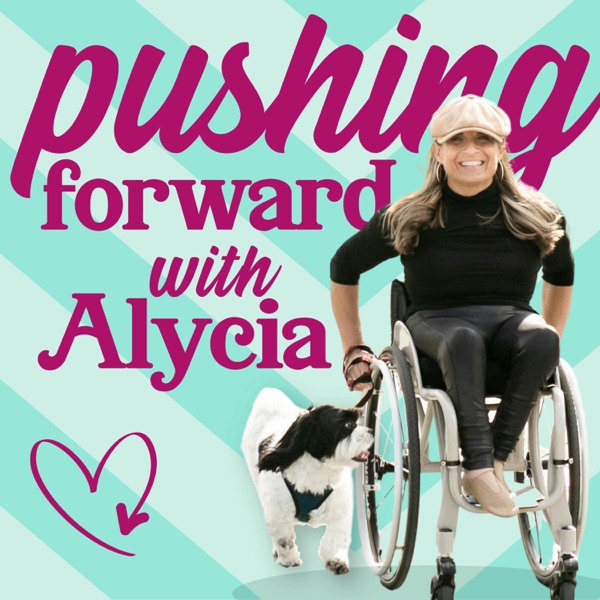
Pushing Forward with Alycia | A Disability Podcast
Pushing Forward with Alycia | A Disability Podcast
Pushing Forward with Alycia is the weekly podcast that gives disability a voice and welcomes everyone—disabled people, allies, families, and inclusive employers—into a courageous, judgment‑free space to learn, ask questions, and advance access together. Launched June 29, 2023 and dropping new episodes every Thursday, host Alycia Anderson—disabled motivational speaker, DEI educator, entrepreneur, athlete, and storyteller—shares lived experience and amplifies voices across the global disability community. The show began as a safe, respectful space to talk honestly about difference, ableism, and belonging; that welcoming spirit remains its heartbeat today.
What You’ll Hear
From headline issues to everyday wins, we dig into DEI + disability, digital accessibility, workplace inclusion, disabling ableism, Disability Pride Month, intersectionality, airlines & disability discrimination, and so much more. If it shapes how disabled people live, learn, work, travel, play, create, love, and lead—we’re talking about it.
Nearly 100 Episodes (and Counting!)
In just two years we’ve published 98 full episodes (as of July 16, 2025) and are racing toward our 100th celebration. Recent conversations feature boundary‑breaking guests like Marsha Elle (bionic model, Billboard artist), Tiffany Yu (Diversability & The Anti‑Ableist Manifesto), Gigi Robinson (chronic illness creator & strategist), Kristen Anderson (global inclusive leadership champion), Isaac Harvey MBE (East London influencer & entrepreneur), and many more advocates, athletes, artists, policy shapers, siblings, caregivers, and allies you’ll love meeting.
Who It’s For
Whether you identify as disabled, are new to advocacy, support a disabled loved one, or lead teams striving to build a more inclusive workplace, you’ll leave each episode with insight, language, and actionable takeaways you can bring to classrooms, boardrooms, events, and everyday life. Our mission is to be a safe place to learn, share, ask “no wrong” questions, and transform awkwardness into connection.
Listen & Support
Follow, subscribe, share, rate, and review to help amplify disability inclusion. Sign up for release alerts, suggest a guest, and bring Alycia to speak or train your organization in disabling ableism. However you engage, you’re helping open hearts and clear paths for all of us. Open hearts, clear paths. Let’s go.
- Episodes
- 164
- Releases
- Weekly
- Typical length
- 35 min
- On air since
- 2023
- Latest episode
- 5 days ago
Episodes
164 episodes, newest first
-
39 min
Pivot With Purpose: Invisible Disabilities, Survival & Self-Advocacy with Kelly Still
Episode 163
Show notes
What happens when surviving life's hardest moments becomes the beginning of your greatest purpose?
This week on Pushing Forward with Alycia, Alycia Anderson welcomes Kelly Still, an HR leader, disability advocate, mother, and domestic violence survivor whose extraordinary journey is a testament to resilience, self-advocacy, and the power of finding your voice.
Living with lupus, PTSD, and bipolar I disorder, Kelly knows firsthand what it means to navigate invisible disabilities while building a career, raising a daughter, and rebuilding after trauma.
But her story doesn't end with survival.
Inspired by a conversation with Alycia years earlier at Victoria's Secret, Kelly began turning her lived experiences into action, helping employees understand workplace accommodations, encouraging open conversations about disability, and educating university students about their rights under the Americans with Disabilities Act (ADA).
Together, Alycia and Kelly explore:
•
Living and working with invisible disabilities and chronic illness
•
Surviving domestic violence and finding a path toward healing
•
Understanding ADA accommodations, FMLA, and employee rights
•
Building psychologically safe workplaces where people feel supported
•
The importance of therapy, community, and self-advocacy
•
How one conversation can inspire lasting change
Episode Chapters 00:00 Welcome to Pushing Forward with Alycia
00:26 Meet Kelly Still: From Connection to Advocacy
03:27 Understanding ADA Accommodations and Employee Rights
07:00 Bringing Disability Advocacy Into HR
11:00 Living With Lupus, PTSD, and Invisible Disabilities
12:48 Surviving Domestic Violence and Rebuilding
14:09 The Importance of Therapy and Community
16:38 EMDR and Healing From Trauma
18:19 Pivot With Purpose
22:37 Navigating Chronic Illness in the Workplace
25:48 Disability Disclosure and Self-Advocacy
30:05 Educating the Next Generation at the University of Michigan
33:00 Psychological Safety and Supporting Survivors
37:00 Resources, Support, and Kelly's Message
38:00 Kelly's Pushing Forward Moment Kelly leaves listeners with a powerful reminder: It's okay to panic for a moment, but pivot with purpose.This is a conversation about reclaiming your voice, discovering your strength, and creating change that reaches far beyond your own story.
🎧 Listen, follow, and share Pushing Forward with Alycia. Your share could help someone who needs to hear this conversation today.
Content note: This episode includes personal discussions of domestic violence, trauma, pregnancy loss, and mental health.
Need support? The National Domestic Violence Hotline is available at 800-799-SAFE (7233), by texting START to 88788, or at thehotline.org.
Learn more about your ad choices. Visit https://megaphone.fm/adchoices
-
30 min
Down Syndrome, Hollywood & Big Dreams with Dashiell Meier
Episode 162
Show notes
What happens when a filmmaker with Down syndrome sets his sights on Hollywood, Pixar, and changing the world?
Meet Dashiell Meier, actor, filmmaker, disability advocate, and a creative force with a vision that goes far beyond the big screen.
In this inspiring episode of Pushing Forward with Alycia, host Alycia Anderson welcomes Dashiell for a joyful, candid conversation celebrating Down Syndrome Awareness Month, disability pride, and the power of telling our own stories.
Dashiell takes us behind the scenes of the upcoming feature film 21 Down, where he portrays college football player Caden Cox alongside Ashley Judd. He shares what it was like landing the role, spending two months on set, and even getting the opportunity to direct a scene.
But his creativity doesn't stop there.
From making his own films through the Easterseals Disability Film Challenge to speaking at the United Nations about health equity, Dashiell is using storytelling and advocacy to challenge stereotypes and create meaningful change.
Together, Alycia and Dashiell explore:
•
Breaking barriers and building authentic disability representation in Hollywood.
•
Working alongside Ashley Judd on 21 Down.
•
Creating Day 21, a post-apocalyptic thriller featuring actors with Down syndrome.
•
Why diagnostic overshadowing can put disabled patients at risk.
•
Celebrating Down syndrome, community, identity, and disability pride.
•
Dashiell's upcoming documentary, Worthy: A History of Down Syndrome.
•
His ultimate dream of becoming a director at Pixar.
"One person can't change the world, but when communities come together, we can move both heaven and earth." — Dashiell Meier
This conversation is a reminder that our stories matter, our dreams deserve space, and representation is about more than being seen. It's about having the opportunity to create.
🎧 Listen, share, and subscribe to Pushing Forward with Alycia. Let's keep challenging perceptions and creating a world where everyone has the opportunity to shine.
Pushing Forward with Alycia | Episode 162
Learn more about your ad choices. Visit https://megaphone.fm/adchoices
-
38 min
The Dog Treat Company Changing Lives: Inside Wigglewow
Episode 161
Show notes
What if a dog treat could change someone's life? 🐾
At Wigglewow, that question has become a mission that's creating jobs, building confidence, and showing the world what adults with disabilities CAN do.
This week on Pushing Forward with Alycia, Alycia and Marty Anderson welcome Mark Peifer, Founder, and Amie Schindler, Vice President of Wigglewow, a gourmet dog treat company with one extraordinary ingredient: opportunity.
Inside their Kentucky-based kitchen, affectionately called The Doghouse, 31 employees known as Epic Chefs are doing far more than baking treats. They're developing skills, discovering talents, earning paychecks, finding community, and building futures.
And the vision doesn't stop there.
Mark and Amie share how Wigglewow grew from a family-inspired idea into a mission reaching dozens of families, why traditional hiring practices overlook incredible talent, and how they're dreaming bigger with employment opportunities, entrepreneurship, and innovative housing and community plans.
In this episode, discover:
•
🐶 How a dog treat recipe became a disability employment movement
•
💼 Why employers should build opportunities around abilities, not assumptions
•
💪 How Wigglewow turns "can'ts into cans"
•
❤️ The incredible confidence and creativity of the Epic Chefs
•
🏡 A bold vision for employment, independent living, and community
•
🌟 What businesses everywhere can learn from the Wigglewow model
Plus, hear how their first major fundraiser raised more than $115,000 and how their mission is helping families imagine new possibilities for the future.
Because sometimes changing the world starts with giving someone a chance.
🎧 Listen now, share this conversation with a dog lover or business leader, and come along with us as we keep learning, growing, and pushing forward together!
00:00 Welcome to Pushing Forward with Alycia
00:50 Can a dog treat change how we view disability?
01:52 How Wigglewow began
04:51 Amie's personal connection to the mission
07:11 Turning can'ts into cans
09:32 Adapting jobs to employees' strengths
10:30 Inside The Doghouse and the Epic Chef experience
13:43 31 Epic Chefs and the need for expansion
15:19 Wigglewow's vision beyond dog treats
17:10 Planning a nonprofit for long-term opportunity
20:00 Fundraising, partnerships, and community engagement
22:20 Creating a different kind of fundraiser
25:02 Raising over $115,000
25:28 How listeners can support Wigglewow
27:18 Advice for disability-inclusive employers
29:24 Disability benefits and employment considerations
31:49 Employee benefits and future plans
33:15 Helping families create small businesses
35:04 Pushing Forward Moment: Be EPIC!
🐾 Explore Wigglewow: https://wigglewow.com/
🎙️ More episodes: https://alyciaanderson.com/podcast/
Follow, subscribe, and leave a review to help us bring more disability stories and voices into the conversation.
Learn more about your ad choices. Visit https://megaphone.fm/adchoices
-
35 min
Access Before Ask: Rethinking Disability Inclusion at Work
Episode 160
Show notes
What if accessibility was already there before anyone had to ask for it?
Pushing Forward with Alycia is back, and for Episode 160, Alycia Anderson is joined by her husband and business partner, Marty Anderson, for a timely National Disability Employment Awareness Month conversation about what disability inclusion actually looks like in today's workplace.
The 2026 NDEAM theme is Celebrating Value and Talent, but Alycia and Marty want organizations to go one step further: move from awareness to action.
At the center of the conversation is an idea they're bringing into workplaces around the country: Access Before Ask.
Instead of waiting for an employee to disclose a disability, navigate a process and request access, what if organizations intentionally removed barriers from the beginning?
Alycia and Marty unpack:
• Why NDEAM matters, and why disability inclusion cannot end October 31
• What Access Before Ask looks like in everyday workplace practice
• Captions, accessible documents, flexible participation and other ways to reduce unnecessary barriers
• How AI could become a powerful accessibility accelerator
• The danger of building yesterday's disability bias into tomorrow's technology
• Why AI-powered hiring and employee tools need disability representation and human oversight
• The role leaders play in hiring, retaining and advancing disabled talent
• Why accessibility belongs in planning, procurement, technology and leadership
• Practical actions organizations can carry into November and beyondAnd yes, Alycia puts Marty through another rapid-fire round, including remote vs. office work, the accessibility feature he wants everywhere, meeting habits that need to disappear and the one thing he believes every CEO should experience.
The takeaway?
“Access before ask means belonging.”
NDEAM may open the conversation. It shouldn't be the only time we have it.
🎧 Listen, subscribe, follow, review and share Pushing Forward with Alycia wherever you get your podcasts.
♿ Looking for practical ways to make your workplace, meetings, marketing and digital experiences more accessible? Explore The Accessibility Check™ resources from The Alycia Anderson Company.
🎤 Planning an NDEAM event, leadership program or workplace accessibility experience? Connect with Alycia and bring the conversation to your organization.
Pushing Forward with Alycia gives disability a voice through candid conversations about accessibility, employment, leadership, representation and what's possible when we create a world where more people can fully participate.
Learn more about your ad choices. Visit https://megaphone.fm/adchoices
-
32 min
Rock & Roll Against Epilepsy: Mike Gomoll, Joey’s Song & the Power of Showing Up
Episode 159
Show notes
What can happen when one little boy’s love of music becomes a movement?
Mike Gomoll never expected epilepsy advocacy to become his life’s work.
Mike and his wife adopted their son Joey from Guatemala as an infant. About a month after Joey came home, he experienced his first seizure. Eventually, Joey was diagnosed with Dravet syndrome, a rare form of epilepsy. Joey was non-speaking, but music became one of his greatest connections to the world. When music started playing, Joey wanted everyone around him dancing.
After Joey died just before his fifth birthday, Mike took an idea he had already begun imagining and created Joey’s Song, an organization built around one goal: helping the next family.
What began with CDs and small acoustic release parties grew into an annual rock-and-roll event bringing together artists connected to the Goo Goo Dolls, Garbage, The Bangles, The Go-Go’s, Tears for Fears and many more. The musicians donate their time, audiences come for the music, and along the way thousands of people learn about epilepsy. Joey’s Song has now raised more than $2 million for epilepsy research.
Mike and Alycia also dig into an important reality: epilepsy is often invisible until a seizure occurs. Seizures can also take many different forms, from convulsive seizures to brief lapses in awareness. Around 50 million people worldwide live with epilepsy, and stigma and discrimination remain significant challenges.
This conversation is about epilepsy education, research and advocacy, but it is also about community.
As Mike says, sometimes we simply need to give people the chance to be good.
From a child who loved to dance to rock stars volunteering their time in the middle of a Wisconsin winter, Joey’s story continues to bring people together and help the next family.
Main Episode Themes
🎵 Music as Connection
💜 Understanding Epilepsy
👨👩👦 Helping the Next Family
🔬 Research Matters
🤝 Community Can Be Powerful
🎸 Advocacy Can Look Different
Three Big Takeaways
1. Epilepsy does not look one way.
Seizures vary widely, and epilepsy can be largely invisible outside those moments. WHO describes epilepsy as a chronic brain disease characterized by recurrent seizures, which can range from brief lapses of attention to prolonged convulsions.2. Awareness can reduce isolation.
Mike describes how people living with epilepsy can feel alone or embarrassed. Joey’s Song deliberately puts epilepsy in front of thousands of people and creates a visible community around it.3. You do not need to be personally affected by something to show up.
One of Mike’s most memorable ideas is simply giving people an opportunity to be good and bringing them together around something bigger than themselves.A Couple of Mike’s Quotes from the Episode
“You need to give everybody the chance to be good.” ~ Mike Gomoll
“We all do better when we all do better.” ~ Mike Gomoll
Episode Timeline
00:00 Podcast Welcome
01:25 Meet Mike Gomoll
02:03 Life Before Joeys Song
05:04 Joeys Diagnosis Journey
08:10 Music Was His Voice
09:59 From CDs to Concerts
11:16 All Star Jam Origins
12:36 How Artists Say Yes
15:54 The Next Family Mission
16:14 Epilepsy Risks And Stigma
19:48 Research First Nonprofit Model
23:02 How To Support And Attend
25:38 Rapid Fire Backstage Stories
28:42 Final Takeaways And Goodbye
Connect with Mike Gomoll
Learn more, follow Joey’s Song, support epilepsy research, watch the livestream or explore tickets and sponsorship opportunities at JoeysSong.org.
Support Joey’s Song by following the organization, subscribing to its YouTube channel, watching the free livestream, attending the event or by donating and corporate sponsorships.
Website:https://joeyssong.org
LinkedIn:Joey’s Song
Instagram:@joeyssong
YouTube:@joeys-song
TikTok:@joeyssong
Facebook:Joey’s Song
Connect with Alycia
•
Alycia Anderson — Explore Alycia’s speaking, advocacy, accessibility work, podcast, resources, and latest projects.
•
Book Alycia to Speak — Bring Alycia’s keynotes and disability inclusion programs to your organization, conference, or event.
•
Pushing Forward with Alycia — Listen to more conversations about disability, accessibility, inclusion, identity, leadership, and belonging.
•
LinkedIn — Follow Alycia’s work in disability inclusion, accessibility, leadership, speaking, and advocacy.
•
Instagram — Follow along for disability advocacy, speaking, lifestyle, travel, and behind-the-scenes moments.
•
YouTube — Watch podcast episodes, keynote clips, accessibility conversations, and disability inclusion content.
•
The Accessibility Check™ — Explore practical accessibility resources designed to help organizations build more inclusive workplaces, experiences, and systems.
Listen. Subscribe. Review. Share.
Find Pushing Forward with Alycia wherever you get your podcasts, and watch the full conversation on YouTube.
If this episode made you think differently about disability, identity or belonging, share it with someone in your community.
Open hearts. Clear paths. Let's go.
Learn more about your ad choices. Visit https://megaphone.fm/adchoices
-
34 min
Stop Hiding It. Start Celebrating It. with Lachi
Episode 158
Show notes
What happens when a musician stops trying to fit into an industry and starts changing the culture instead?
This week on Pushing Forward with Alycia, Alycia Anderson welcomes award-winning recording artist, author, media personality and disability culture leader Lachi for a joyful, candid and wildly entertaining conversation about music, disability pride, representation, identity and liberation.
Lachi is the founder of RAMPD, a UN-recognized organization advancing disability inclusion across the music industry, author of I Identify as Blind, host of PBS Renegades and creator of Glam Canes. Her work uses music, fashion, humor, storytelling and pop culture to challenge the way disability has traditionally been represented.
But Lachi’s path into disability advocacy began with something deeply personal.
Growing up with low vision, she often avoided using the cane and glasses she needed because she feared being treated differently or losing opportunities in the music industry. When her vision changed dramatically, something unexpected happened: instead of making her life smaller, it pushed her to start living bigger.
Lachi began checking experiences off her bucket list, pursuing music more intentionally and eventually embracing the disability identity she had once tried to hide.
And something else changed.
Once she started asking for the access she needed, she discovered that accommodations did not make her less competitive. They helped her perform better.
That realization became part of a much larger mission.
Today, Lachi is helping bring disability culture into music, fashion, entertainment and mainstream pop culture while opening doors for other disabled creators along the way.
Alycia and Lachi talk about everything from sparkling mobility devices and disability fashion to performing with legendary musicians, meeting Stevie Wonder and unexpectedly jamming with Wynton Marsalis and the White House band.
They also dive into Lachi’s new children’s music album, Magnificent, a collaborative project featuring dozens of artists and disability community members. The album celebrates different ways of moving, thinking and communicating without watering down disability language or infantilizing young listeners.
At the center of the conversation is a message that applies far beyond disability:
The parts of ourselves we are taught to hide can become some of our greatest sources of creativity, connection and power.
Lachi reminds listeners that disability culture is not simply about overcoming barriers. It is art. Music. Perspective. Adaptation. Innovation. Community. Pride.
And it deserves a much bigger stage.
In this episode, Alycia and Lachi explore:
🎭 Disability culture and what it means to celebrate it
🌟 Moving from hiding disability to living visibly and proudly
♿ Why accommodations can improve performance and opportunity
✨ Disability pride, identity and unmasking
🎤 Using pop culture to challenge disability stigma and erasure
💎 Fashion, Glam Canes and mobility devices as expressions of identity
🎬 Why disability representation belongs in mainstream entertainment
🎶 Lachi’s work through RAMPD and disability inclusion in the music industry
🤝 Collaborating with disabled artists and creators
🎺 Meeting Stevie Wonder and performing with Wynton Marsalis
👑 The creation of Lachi’s album Magnificent
🧒 Teaching children disability pride without infantilizing disability
🚀 Creating larger stages and bringing the disability community along
❤️ Why belonging does not have to be earned
🔥 And the power of celebrating the parts of yourself society tells you to reject
In Lachi’s Words “Don't just embrace the parts society rejects. Celebrate them.” ~ Lachi Music “Disability culture belongs center stage.” ~ Lachi Music 🎧 Episode 158 Timestamps 00:00 – Welcome to Pushing Forward with Alycia
00:33 – What happens when a musician stops trying to fit in and starts changing the industry?
02:48 – What is disability culture?
03:39 – Celebrating disability through fashion, identity and Glam Canes
08:04 – From hiding blindness to living visibly and proudly
09:07 – The day Lachi woke up blind
10:42 – Choosing to take the wheel of your own life
11:03 – How accommodations actually led to more opportunities
12:08 – “It’s not the condition. It’s the conditioning.”
15:46 – Why Lachi builds everything in community
16:51 – Creating Magnificent with disabled artists and collaborators
18:35 – Performing with Wynton Marsalis at the White House
19:44 – The unforgettable Stevie Wonder story
21:27 – Creating music around different ways we communicate
22:41 – Why Magnificent is children’s music that doesn’t infantilize disability 24:03 – What Lachi wants today’s eight-year-olds to know 25:22 – “You belong just because you are.” 25:59 – What’s next for Lachi? Bigger stages and bigger impact 26:51 – Bringing the disability community onto the stage with her 28:18 – How to connect, collaborate and work with Lachi 30:41 – Glam Canes, wheelchair bling and one future collaboration 👀 31:14 – Lachi’s Pushing Forward Moment 32:34 – Closing 🔗 Connect with Lachi• Lachi Music — Explore Lachi’s music, speaking, advocacy, media work, upcoming appearances, and latest projects.
• Listen to Magnificent — Stream Lachi’s children’s album celebrating disability pride, identity, belonging, self-expression, and difference.
• LinkedIn — Follow Lachi’s work in disability inclusion, entertainment, advocacy, leadership, and culture.
• Instagram — Follow Lachi for music, fashion, disability culture, behind-the-scenes moments, and advocacy.
• YouTube — Watch Lachi’s music, interviews, performances, advocacy content, and media appearances.
• TikTok — Catch short-form videos featuring Lachi’s music, personality, disability pride, and cultural commentary.
• Facebook — Keep up with Lachi’s latest news, performances, releases, and community updates.
• RAMPD — Learn more about the organization Lachi founded to advance disability inclusion and opportunity across the music industry.
• Glam Canes — Discover Lachi’s fashion-forward approach to mobility devices, turning canes into bold expressions of style, independence, and disability pride.🔗 Connect with Alycia
• Alycia Anderson — Explore Alycia’s speaking, advocacy, accessibility work, podcast, resources, and latest projects.
• Book Alycia to Speak — Bring Alycia’s keynotes and disability inclusion programs to your organization, conference, or event.
• Pushing Forward with Alycia — Listen to more conversations about disability, accessibility, inclusion, identity, leadership, and belonging.
• LinkedIn — Follow Alycia’s work in disability inclusion, accessibility, leadership, speaking, and advocacy.
• Instagram — Follow along for disability advocacy, speaking, lifestyle, travel, and behind-the-scenes moments.
• YouTube — Watch podcast episodes, keynote clips, accessibility conversations, and disability inclusion content.
• Accessibility Check™ — Explore practical accessibility resources designed to help organizations build more inclusive workplaces, experiences, and systems.Listen. Subscribe. Review. Share.
Find Pushing Forward with Alycia wherever you get your podcasts, and watch the full conversation on YouTube.
If this episode made you think differently about disability, identity or belonging, share it with someone in your community.
Open hearts. Clear paths. Let's go.
Learn more about your ad choices. Visit https://megaphone.fm/adchoices
-
35 min
Deafness, Captions & Accessibility with Meryl Evans
Episode 157
Show notes
Deafness, Captions & Accessibility: Progress Over Perfection with Meryl Evans
What does accessibility look like when you have depended on it your entire life?
This week on Pushing Forward with Alycia, Alycia Anderson welcomes respected accessibility advocate, speaker, content creator, consultant and CPACC-certified professional Meryl K. Evans for a candid conversation about deafness, captions, communication, advocacy and why lived experience matters when we design more accessible experiences.
Born profoundly deaf, Meryl grew up lip-reading, using hearing aids and learning how to navigate a hearing world long before today's accessibility technology existed. She remembers hunting through the TV Guide for the tiny closed-captioning symbol and the moment captions finally gave her access to the conversations everyone else was already having.
Today, Meryl helps organizations better understand accessibility through training, workshops, accessible content, user experience testing and speaking. And she brings an important reminder to the work: accessibility does not require instant perfection. It requires a willingness to listen, learn and keep moving forward.
Alycia and Meryl explore everything from growing up disabled and finding confidence through sports to the evolution of captioning, accessible social media, reading friction, disability language and the importance of hiring people with lived experience.
Meryl also challenges a growing social media trend: captions designed primarily to entertain rather than communicate.
As she explains, captions are information first. When words bounce, flash, change colors or appear one at a time, the very accessibility feature intended to provide access can instead become another barrier.
The conversation closes with a message that applies far beyond accessibility: progress over perfection.
We do not need to know everything before we begin. We need to remain curious, keep learning and continue making progress.
And sometimes progress includes knowing when to rest.
As Meryl reminds us:
“There’s a difference between taking a break and quitting.”
In This Episode
🐝 Growing Up Deaf
Meryl shares what it was like being born profoundly deaf, learning to lip-read and recognizing at an early age that she communicated differently.
🏆 Sports, Confidence & Disability
From softball to basketball, soccer, volleyball and half-marathons, Meryl reflects on how sports helped build confidence, competitiveness and resilience.
💬 The Evolution of Captions
From searching TV Guide for captioned programming to today's built-in captioning tools, Meryl shares how dramatically access has changed during her lifetime.
📱 Captions Are Information, Not Entertainment
Why animated, colorful or one-word-at-a-time captions may look engaging but create cognitive overload for people who rely on them.
♿ Lived Experience Matters
If you want to know whether an accessibility feature truly works, include people who depend on that feature in the testing and design process.
👀 Reducing Reading Friction
Small choices including alignment, capitalization, font size and formatting can dramatically change how easy content is to consume.
🗣️ Language & Disability Advocacy
Alycia and Meryl discuss terminology, education and why people sometimes need the opportunity to learn rather than being expected to already know everything.
🌱 Progress Over Perfection
Organizations are complex. Accessibility is ongoing. Sustainable inclusion happens when people continue learning and improving rather than waiting until everything is perfect.
❤️ Rest Is Not Quitting
Meryl's Pushing Forward Moment reminds us to understand our energy, take care of ourselves and recognize the difference between taking a needed break and giving up.
Key Takeaways
•
Accessibility often benefits far more people than the population it was originally designed to support.
•
Hearing aids do not create the same experience as hearing for every deaf or hard-of-hearing person.
•
Good captioning prioritizes comprehension and communication.
•
Accessibility testing should include people who actually depend on the accessibility feature being evaluated.
•
Small design choices can create significant cognitive and reading friction.
•
Disability language evolves, and education can be more productive than expecting perfection.
•
Large organizations may be making accessibility progress even when that progress has not reached every department.
•
Inclusion requires consistency, curiosity and continued learning.
•
Rest can be part of progress.
•
Accessibility is not about getting everything perfect today. It is about continuing to move forward.
Episode Chapters
00:00 Podcast Intro
00:25 Meet Meryl Evans
01:52 Growing Up Deaf
03:39 Sports And Confidence
06:38 How Meryl Communicates
10:10 Captions Change Everything
13:28 Captions For Everyone
15:14 What Makes Captions Bad
18:12 Becoming An Advocate
21:38 Work With Companies Today
24:25 UX Testing And Reading Friction
26:38 Language Matters In Disability
27:45 Hope For The Future
29:33 Progress Over Perfection
31:31 Pushing Forward Moment
32:27 Final Thanks And Sign Off
The Pushing Forward Moment
“There’s a difference between taking a break and quitting.”
Meryl reminds us that taking care of ourselves is part of doing meaningful work. Pay attention to your energy. Rest when you need to. Then keep going.
Connect with Meryl Evans
Continue learning from and connecting with Meryl K. Evans, CPACC, accessibility consultant, speaker, inclusion advocate and UX tester. Meryl works with organizations through accessibility consulting, speaking engagements, training, workshops and user experience testing.
•
Website: https://meryl.net
•
LinkedIn: https://www.linkedin.com/in/meryl/
•
Instagram: https://www.instagram.com/merylke/
•
YouTube: https://www.youtube.com/merylkevans
•
X / Twitter: https://x.com/merylkevans
•
Facebook: https://www.facebook.com/merylnet
Connect with Alycia
🌐 Website: https://alyciaanderson.com/
🎙️ Podcast: https://alyciaanderson.com/podcast
💼 LinkedIn: https://www.linkedin.com/in/alyciaanderson/
📸 Instagram: https://www.instagram.com/alyciaanderson/
About Pushing Forward with Alycia
Pushing Forward with Alycia gives disability a voice through conversations about accessibility, inclusion, ambition, resilience, leadership, advocacy, and creating a more inclusive world for all people.
Subscribe, like, share, and send this episode to someone who needs the reminder that there is no finish line when it comes to possibility, purpose, and pushing forward.
Open hearts. Clear paths. Let’s go.
Learn more about your ad choices. Visit https://megaphone.fm/adchoices
-
30 min
Two Wheelchairs, One Marriage: The Questions People Actually Ask Us
Episode 156
Show notes
What happens when two wheelchair users fall in love, get married, build careers, travel the world and navigate life together?
Apparently, people have questions.
After sharing more of their life as a disabled couple online and seeing an overwhelming response, Alycia Anderson brings her husband, Marty Anderson, back to Pushing Forward with Alycia for a lighter, candid and often hilarious Q&A about their nearly 15 years of marriage.
Who is more stubborn?
Who notices an accessibility problem first?
Who takes longer to get ready?
Who carries more disability-related gear?
And when the world is not designed for two wheelchair users, how do they figure it out?
As Alycia and Marty quickly discover, the answers lead to much bigger conversations about disabled relationships, wheelchair accessibility, accessible travel, independence, interdependence, ableism and belonging.
Two Disabled People. One Very Normal Marriage.
One of the biggest misconceptions Alycia and Marty encounter is the assumption that when disability exists in a relationship, one person must automatically become the caregiver.
Their reality is much different.
They help each other.
Sometimes that means Marty holding Alycia's wheelchair during a transfer or Alycia grabbing onto Marty's chair for a tow.
Sometimes it means reviewing an email, figuring out a business decision or helping each other navigate a difficult moment.
And sometimes it simply means knowing somebody is standing beside you.
As Alycia puts it, having Marty on her team makes her feel braver in the actions she takes in her life.
Their partnership illustrates something much bigger: support in a relationship does not always move in one direction.
When Accessibility Assumes Disabled People Are Alone
Some of the funniest stories in the episode expose something decidedly less funny: much of the world is still designed around the assumption that a wheelchair user will be accompanied by a nondisabled caregiver.
Movie theaters may provide one wheelchair space and one companion chair.
Venues may offer accessible seating without considering that two wheelchair users might actually want to sit beside each other.
Transportation systems may have accessibility policies but still create frustrating or alienating customer experiences.
Hotels may technically meet accessibility standards while still making everyday tasks difficult.
Alycia and Marty have spent years navigating those gaps together.
Their solution is often the same:
Figure it out.
For Alycia, that mindset is deeply connected to disability itself.
When the world is not designed for you, creativity and adaptation become part of everyday life.
The Airport Shuttle Stress Is Real
Accessible travel gets its own unofficial therapy session in this episode.
Alycia and Marty talk about one of their biggest travel stressors: getting from the airport to the rental car facility.
Wheelchair-accessible shuttle experiences can be unpredictable. Ramps may not work. Drivers may approach wheelchair passengers differently. Other travelers may board while wheelchair users are still waiting. Policies can sometimes override a simple conversation about what actually works best for the individual passenger.
The frustration is not always about the equipment.
It is about the experience.
Marty describes accessibility as something that should create a feeling of being invited rather than treated like an exception.
That distinction between technical access and true belonging sits at the center of much of Alycia's work.
Accessible Parking Is More Complicated Than It Looks
Alycia and Marty also tackle one of disability culture's perennial hot topics: accessible parking.
They are quick to point out that disability does not have one appearance. Someone using an accessible parking space may have a completely legitimate non-apparent disability.
But they also raise an important distinction around van-accessible spaces and access aisles.
Those striped areas next to certain spaces are not extra parking. They provide the room someone may need to deploy a wheelchair ramp, transfer from a vehicle, use a walker or maneuver mobility equipment.
It is another example of how accessibility education can make systems work better for everyone.
What Do Nondisabled Couples Take for Granted?
Their answer?
Sometimes, spontaneity.
Traveling without researching accessibility.
Accepting an invitation to someone's house without wondering whether you can enter.
Booking a rideshare without thinking about whether a wheelchair will fit or whether the driver will refuse the trip.
Checking into a hotel without wondering whether the mirror can actually be seen from a wheelchair.
These may seem like tiny details individually.
Collectively, they shape whether people can participate fully and independently in everyday life.
Disabled Relationship Myth Busting
Perhaps the biggest misconception Alycia and Marty challenge is the belief that two disabled people somehow live a fundamentally different kind of relationship.
Their marriage has accessibility logistics and mobility adaptations, yes.
It also has careers.
Finances.
Intimacy.
Arguments.
Love.
Partnership.
Medical challenges.
Travel.
Laughter.
And almost fifteen years of figuring life out together.
Disability is part of their relationship.
It is not the entirety of it.
Marriage Is Still Marriage
Near the end of the episode, Marty asks Alycia what nearly fifteen years together has taught her that has nothing to do with disability.
Her answer becomes one of the episode's most beautiful moments.
Marriage, she says, is one of the hardest things she has ever committed to, but also one of the very best.
Creating a life with another person remains one of the accomplishments she treasures most.
And after several heavy weeks for the Anderson household, their final Pushing Forward Moments are wonderfully simple.
Marty's:
Take life a little lighter. Have some fun. Everything does not have to be serious.
Alycia's:
All you need is love.
Sometimes pushing forward means solving the accessibility problem.
Sometimes it means advocating for change.
And sometimes it means laughing with the person sitting beside you while you figure everything else out.
IN THIS EPISODE
Alycia and Marty discuss:
•
What life is actually like for two married wheelchair users
•
Who is more stubborn about asking for help
•
Why asking for help can be difficult when independence has been ingrained in you
•
Who notices accessibility barriers first
•
Wheelchair travel and airport shuttle frustrations
•
Accessibility versus genuine hospitality and belonging
•
Why Alycia carries more disability-related supplies while traveling
•
When they speak up about inaccessible environments
•
How two disabled partners physically and emotionally support each other
•
The assumption that every disabled person has a nondisabled caregiver
•
Why theaters and entertainment venues often fail wheelchair-using couples
•
Disability, marriage and intimacy
•
Accessible parking and non-apparent disabilities
•
Why van-accessible spaces serve a specific purpose
•
Rideshare and transportation discrimination
•
Why accessible hotel rooms should not have thick carpet
•
How disability creates everyday problem-solving skills
•
Automatic doors and universal access
•
Spontaneity and the hidden planning involved in disability
•
What nearly fifteen years of marriage has taught them
•
Finding more fun, light and love in everyday life
KEY THEMES
💞 Disabled Love
Disabled people date, marry, build families and experience the same complex layers of partnership as anyone else.
♿ Accessibility vs. Belonging
Compliance can create access. Human-centered design creates belonging.
🤝 Interdependence
Independence does not mean doing everything alone. Healthy relationships involve giving and receiving support.
✈️ Accessible Travel
Transportation, hotels, shuttles and rideshares remain major areas where accessibility can break down.
👀 Disability Representation
Systems often reveal an underlying assumption that disabled people will be accompanied by nondisabled caregivers.
💡 Problem Solving
Adaptation is not an occasional disability skill. It can become an everyday way of navigating environments not designed with you in mind.
❤️ Marriage
Underneath all of the disability-specific logistics, Alycia and Marty are simply two people who have spent almost fifteen years building a life together.
UNFORGETTABLE QUOTES
“Being disabled and a couple is not nearly as complicated or ‘tragic’ as some people imagine.” ~ Alycia Anderson
“How do two people help each other? It’s just a natural thing to do when you love each other.” ~ Marty Anderson
“The world’s not built for us, so we figure it out.” ~ Alycia Anderson
CHAPTERS / TIMESTAMPS
00:00 Podcast Welcome
00:25 Why This Q&A
02:59 Stubbornness And Help
04:35 Travel Shuttle Stress
07:45 Getting Ready Routines
09:19 Parking Spot Etiquette
12:27 Speaking Up Access
14:13 How We Help
17:24 Myths And Assumptions
20:35 Non Disabled Privilege
23:08 Hot Takes Debate
27:05 Marriage Lessons Wrap
27:50 Pushing Forward Moments
Connect with Alycia Anderson
Visit AlyciaAnderson.com to learn more about Alycia’s keynotes, disability inclusion programs, accessibility resources, and consulting services.
Explore more episodes of Pushing Forward with Alycia.
Pushing Forward is how we roll.
Learn more about your ad choices. Visit https://megaphone.fm/adchoices
-
29 min
When Disability Changes Again
Episode 155
Show notes
Sometimes pushing forward looks like going faster.
And sometimes it looks like recording a podcast from bed.
In Episode 155 of Pushing Forward with Alycia, Alycia Anderson welcomes her husband, Marty Anderson, back to the microphone for one of their most personal conversations yet.
Over the past several months, Alycia and Marty have found themselves navigating an unexpected medical journey that has included multiple hospitalizations, a bowel obstruction, a uterine embolization and the placement of a nephrostomy tube to protect Alycia’s functioning kidney while her body heals.
But this episode is not simply a medical update.
It is a conversation about aging with disability, something Alycia and Marty are discovering requires continuously getting reacquainted with bodies that change over time.
Both are wheelchair users. Both live with different disabilities. And after nearly fifteen years of marriage, the couple is experiencing one of those seasons when the vows “in sickness and in health” become very real.
When the Body Changes the Plan
Alycia has spent a lifetime adapting.
Born with a congenital disability, she describes herself in the episode as a “science project that’s gone right.” From the outside, people may simply see a wheelchair user. Internally, however, her anatomy and health are far more complex.
Now, aging, disability and perimenopause are colliding in ways she could not have predicted.
The physical challenges have also introduced something emotionally difficult for a lifelong achiever: being forced to slow down.
Alycia admits that one of her greatest fears has not simply been the medical uncertainty.
It has been losing momentum.
After an incredibly successful Disability Pride Month, nine events, the company’s first live webinar and Alycia's Pitch Perfect competition win at Disability:IN, suddenly the body demanded something completely different.
Rest.
Running a Business When Life Says Stop
Being self employed might seem like it would make dealing with illness easier.
Alycia and Marty explain why the opposite can be true.
There is no traditional medical leave. No department waiting to absorb the workload. No manager to tell that you will be unavailable for the month.
When one partner becomes sick, the other is balancing caregiving, household responsibilities, client needs and the business itself.
It has forced Marty into an even larger role while simultaneously asking Alycia to release control over work she deeply cares about.
And for a self described Type A personality, that surrender has not come easily.
When Both Partners Have Disabilities
One of the most compelling parts of the conversation explores a question people have asked Alycia and Marty throughout their relationship:
How will two disabled people take care of each other?
Their answer is beautifully simple.
They adapt.
When Alycia became unable to transfer as easily after her hospitalization, Marty drew from years of disability experience and ordered a transfer board.
They modified routines.
They used equipment differently.
They accepted home healthcare.
They figured it out together.
And while their disabilities can create additional logistical complications, Alycia says they also create something extraordinarily valuable within their relationship: understanding.
Marty does not need an explanation of what it feels like when the body suddenly stops cooperating.
Alycia does not need to translate disability for him.
That shared understanding creates an intimacy rooted in lived experience.
“I Don’t Have to Be the Strongest Person in the Room Every Day”
Perhaps the most vulnerable moment comes when Marty asks Alycia what this season is teaching her.
She does not manufacture an inspirational answer.
Instead, she admits that she does not know yet.
She is still inside it.
But she is beginning to understand something important.
It is okay to rest.
It is okay to say she is too tired.
It is okay to receive help.
And it is okay not to be the strongest person in the room every single day.
For someone whose career has been built around resilience, achievement and pushing forward, that may be one of the biggest adaptations of all.
Love as an Accessibility Tool
There is also a love story woven quietly through this episode.
Alycia talks about lying in bed while recovering, looking over at Marty and feeling safe.
She describes this medical season as a reminder of the depth their marriage has developed over time.
Not because everything has been easy.
Because it has not.
But because when things become difficult, they know how to turn toward one another.
Their marriage becomes another form of adaptation.
Another form of access.
Another reminder that independence does not have to mean doing everything alone.
Episode Themes
♿ The Things Disability Keeps Teaching Us
♿ Aging with disability and adapting as bodies and needs change
❤️ Disabled love and marriage through unexpected medical challenges
🫶 Caregiving when both partners have disabilities
🩺 Navigating complex medical care and repeated hospitalizations
🛏️ Learning to rest without feeling like you are giving up
💼 Running a business during a health crisis
🧠 The emotional weight of losing independence and momentum
🔄 Adaptation as a lifelong disability skill
🤝 Letting other people show up for you
💛 Receiving care instead of always being the strong one
🦽 Accessible caregiving, transfers and changing mobility needs
🌱 Aging, disability and reengaging with your body
🙏 Surrendering control and trusting your support system
💡 Finding light while you are still inside the difficult season
Unforgettable Quotes
“There’s no other way for me to get better or to find what I am to learn and where I’m to grow from here than going straight through it.” ~ Alycia Anderson
“Things can get complicated. Things can get severe. Things can get critical. But it’s how we carry ourselves.” ~ Marty Anderson
Episode Chapters
00:00 Podcast Welcome
00:25 Medical Journey Update
03:32 Aging With Disability
05:47 Self Employed Stress
08:41 Procedures And Setbacks
11:49 New Normal Adapting
14:05 Lessons And Rest
15:50 Dual Disability Care
22:53 Pushing Forward Moments
26:58 Closing And Gratitude
Connect with Alycia Anderson
Visit AlyciaAnderson.com to learn more about Alycia’s keynotes, disability inclusion programs, accessibility resources, and consulting services.
Explore more episodes of Pushing Forward with Alycia.
Pushing Forward is how we roll.
Learn more about your ad choices. Visit https://megaphone.fm/adchoices
-
42 min
The World Is More Accessible Than You Think | Karen Morales on Disability and Travel
Episode 154
Show notes
What if the trip you thought was impossible was simply waiting for the right access?
For many disabled travelers, dreaming about a destination comes with an immediate second thought:
But can I actually go there?
In Episode 154 of Pushing Forward with Alycia, Alycia Anderson sits down with Karen Morales, luxury travel advisor, speaker, wheelchair user, disability travel advocate, and leader within Fora Travel's accessibility initiative, for a conversation that may completely change the way you think about accessible travel.
Karen lives with limb girdle muscular dystrophy and began using a wheelchair full time in 2020. But losing mobility did not mean losing her identity as a traveler. Instead, it pushed her to rethink what independence, adventure, and possibility could look like.
And she went exploring.
Japan. Morocco. Sicily. Costa Rica. France. Canada. Africa.
Karen discovered that some of the destinations disabled travelers assume will be impossible can deliver extraordinary experiences when the right people, information, creativity, and hospitality come together.
Her work is also proving something the travel industry cannot ignore. Fora's accessibility initiative has been associated with $75 million in accessible travel sales, showing that accessible hospitality is not merely about regulations or checking an ADA box. It represents a significant and underserved business opportunity.
Karen's philosophy is refreshingly simple: Travel is travel. Hospitality is hospitality.
Whether someone needs a roll in shower, a specific bed height, allergy accommodations, a medical refrigerator, sensory support, a service animal accommodation, or simply a different pillow, great hospitality begins by understanding what that traveler needs before they arrive.
This conversation goes far beyond accessible hotel rooms.
Alycia and Karen talk about accepting mobility devices, reclaiming independence, traveling with progressive disability, universal design, raising expectations, the power of lived experience, and why disabled people should not have to beg to participate in life's most beautiful experiences.
And Karen leaves us with one invitation:
Stop assuming the world is closed to you before you explore what might actually be possible.
🌎 Passport to Possibility: What We Explore
♿ Wheelchair Travel and Independence
How Karen's wheelchair ultimately restored independence that declining mobility had taken away.
🌎 Accessible Travel Around the World
Why destinations including Sicily, Morocco, Japan, and Canada may be far more possible than disabled travelers assume.
🏨 Accessibility as Hospitality
Why access should be viewed as part of exceptional guest service rather than simply legal compliance.
💰 The Business Case for Accessibility
How accessible travel became connected to $75 million in sales through Fora's initiative.
❤️ Leading With Heart
How small acts of awareness can make disabled travelers feel genuinely welcomed.
🛏️ Accessible Hotel Design
Roll in showers, reachable toiletries, mirrors, balconies, room configuration, bed heights, and the details hotels often overlook.
🧳 Planning Reduces Travel Anxiety
Why photos, measurements, advance communication, and knowledgeable travel advisors can transform the experience.
🦽 Accepting a Mobility Device
Karen's emotional journey from resisting wheelchair use to realizing the wheelchair gave her freedom back.
🧠 Lived Experience Matters
Why advisors who understand disability firsthand can ask questions that technology alone cannot anticipate.
👨👩👧👦 Multigenerational Accessibility
Disability access also benefits older adults, children, caregivers, people with allergies, chronic illness, sensory needs, and families.
🏖️ Adventure Without Assumptions
Beach wheelchairs, adaptive zip lining, accessible safaris, glamping, hiking, and other experiences many disabled travelers may never have considered possible.
🤝 Assuming Best Intentions
Karen's Pushing Forward Moment about meeting differences and barriers with curiosity, empathy, and an assumption of positive intent.
✈️ Your Accessible Travel Itinerary
00:00 Podcast Welcome
00:28 Meet Karen Morales
01:46 Why Travel Matters
02:57 Luxury Access Gap
04:37 Accessible Travel Market
05:53 Hospitality Not Compliance
07:26 Japan Hotel Done Right
10:55 Small Fixes Big Impact
14:00 Shower Design Reality
16:22 Culture of Inclusion Abroad
19:33 Sicily Beach Magic
21:20 Alycia Wants In
21:50 Accessible Transport Options
23:02 Morocco Accessibility Myths
24:49 Living With Progression
25:49 Wheelchairs And Independence
30:05 Fora Accessibility Initiative
34:26 Wheelchair Zip Lining
35:11 Accessible Canada Road Trip
37:54 How To Work With Karen
39:10 Assume Best Intentions
💬 Postcards Worth Keeping
“I don't want people to feel like a burden. I don't want people to feel like they're begging for access.” ~ Karen Morales
“Travel is travel, and travel should be inclusive of anyone.” ~ Karen Morales
“We can usually find greater peace when we assume the best intentions.” ~ Karen Morales
Key Takeaways
Accessibility and luxury belong together. Disabled travelers should not have to sacrifice quality, beauty, service, or adventure to receive accommodations.
Information itself is an accessibility feature. Photos, measurements, room details, shower configurations, and proactive communication reduce uncertainty before a traveler ever arrives.
Mobility devices can expand freedom. Karen's wheelchair initially represented something she resisted, but eventually became the tool that restored independence.
Accessible travel is a major market opportunity. Fora's initiative demonstrates meaningful consumer demand for better accessible travel planning and hospitality.
Do not eliminate destinations based on assumptions. Karen's experiences in Morocco, Sicily, Japan, and elsewhere demonstrate that infrastructure tells only part of the accessibility story.
Connect With Karen Morales
Ready to stop wondering “Can I go?” and start asking “Where next?”
Karen Morales combines extensive personal travel experience with the lived perspective of navigating the world as a wheelchair user. Through Joyward Travel and Fora Travel, she helps individuals and families plan trips around their actual needs, preferences, abilities, and dreams.
Karen's Links
Joyward Travel (https://www.gojoyward.com/)
Karen's Fora Travel Advisor Page (https://www.foratravel.com/advisor/karen-morales)
Instagram (https://www.instagram.com/gojoyward/)
LinkedIn (https://www.linkedin.com/in/karen-morales-157b412/z)
Fora Travel (https://www.foratravel.com/)
Connect with Alycia Anderson
VisitAlyciaAnderson.com to learn more about Alycia’s keynotes, disability inclusion programs, accessibility resources, and consulting services.
Explore more episodes ofPushing Forward with Alycia.
Pushing Forward is how we roll.
Learn more about your ad choices. Visit https://megaphone.fm/adchoices
-
38 min
Turning Disability Stigma Into Love and Inclusion with Cynthia Bauer
Episode 153
Show notes
There are an estimated 580 million children with disabilities worldwide, and approximately 80 percent of people with disabilities live in developing nations. Too many children are still hidden, neglected, denied access to inclusive education and equitable healthcare, or excluded from community life because of fear, misinformation, and deeply rooted disability stigma.
In this powerful episode of Pushing Forward with Alycia, disability inclusion advocate and host Alycia Anderson welcomes Cynthia Bauer, US CEO and cofounder of Kupenda for the Children, for a conversation about transforming harmful disability beliefs into dignity, opportunity, and lasting inclusion.
Kupenda trains thousands of families, young people, faith leaders, educators, healthcare providers, and government leaders to become disability advocates. These community advocates help children with disabilities gain access to education, medical care, protection, and meaningful inclusion in family and community life.
Cynthia shares how her unexpected journey into advocacy began while she was studying wildlife biology in Kenya. Born without her left hand, Cynthia learned that harmful cultural beliefs about disability could have placed her own life at risk had she been born in a different community. That realization changed the direction of her life and eventually led her and Kenyan special education teacher Leonard Mbonani to create Kupenda.
Together, Alycia and Cynthia explore why societal perceptions and attitudinal barriers often create greater limitations than physical disabilities themselves. They discuss the damage caused by faith healing claims, misinformation, segregated education, inaccessible environments, and charitable approaches that treat disabled people as objects rather than leaders.
Cynthia also explains why Kupenda does not enter communities by condemning local leaders or simply telling people they are wrong. Instead, its community led disability inclusion workshops encourage honest discussion, respectful questioning, lived experience, and practical education. Pastors, traditional healers, parents, disabled advocates, and government leaders are invited to examine the consequences of their beliefs and discover better ways to support disabled children and their families.
At the center of the conversation is a simple but powerful message: people with disabilities are fully human. They deserve the same love, freedom, opportunity, dignity, equality, and full participation in community life as everyone else.
The word Kupenda means “to love” in Swahili. Cynthia describes it not simply as an emotion, but as a constant action of loving. That meaning reflects the organization’s mission to replace fear and exclusion with understanding, advocacy, dignity, and belonging.
Love in Action: What We Explore in This Episode
🌍 The global realities facing children with disabilities
💛 Why Kupenda means a constant action of loving
♿ How disability stigma can become more limiting than disability itself
🧠 The difference between physical barriers and societal perceptions
📖 Why lived experience and storytelling change minds
🙏 The role faith leaders can play in either reinforcing or dismantling stigma
🗣️ How respectful conversations can transform harmful beliefs
👧 Why inclusive childhood experiences create more accepting adults
🏫 The damage caused when adults separate disabled and nondisabled children
🤝 Why disability can unite people across cultural differences
🌱 How community led advocacy creates lasting change
💼 Why disability must be included in education, healthcare, gender equity, poverty reduction, and global development
💰 Why disability funding must move beyond charity and medical models
✨ How personal challenges can become tools for helping others
Rolling Through the Conversation
00:00 Podcast Welcome
00:29 Disability By Numbers
01:03 Meet Cynthia Bauer
02:57 From Wildlife To Advocacy
06:57 Stigma And Faith Healing
08:56 Workshops Changing Minds
13:45 Disability Across Cultures
18:15 Kids Lead Inclusion
20:55 One Day Workshop Model
22:45 Defining Disability
25:53 Why Kupenda Means Love
27:28 How To Support Kupenda
31:59 Funding And Human Rights
33:53 Pushing Forward Moment
35:50 Closing Thanks
Words That Keep Pushing Us Forward
“The disability unites us more than the cultures divide us.” ~ Cynthia Bauer
“At the end of the day, what does every person want but to be loved and included?” ~ Cynthia Bauer
CONNECT WITH CYNTHIA BAUER AND KUPENDA
Learn more about Cynthia Bauer and the work Kupenda is doing to transform disability stigma into dignity, opportunity, and inclusion.
About Cynthia Bauer
Cynthia Bauer is the US CEO and cofounder of Kupenda for the Children. Born without her left hand, Cynthia first traveled to Kenya as a wildlife biology student. Her encounters with disabled people who faced extreme stigma and exclusion inspired her to help create an organization focused on disability justice and community transformation.
For more than 25 years, Cynthia has worked alongside local leaders, disabled advocates, families, educators, faith communities, and nonprofit organizations to reduce disability stigma and develop sustainable, locally led solutions. Kupenda’s workshop model is now being replicated by organizations in multiple communities around the world.
Kupenda for the Children https://kupenda.org/
Cynthia Bauer and Kupenda Leadership https://kupenda.org/our-team/our-team/
The Story of Kupenda https://kupenda.org/our-story/
Donate or Support a Child https://give.kupenda.org/
Kupenda Resources https://kupenda.org/resources/
Unlikely Gifts Podcast https://kupenda.org/podcast/
Cynthia Bauer on LinkedIn https://www.linkedin.com/in/cynthia-bauer-5246463/
Email kupenda@kupenda.org
Kupenda also offers opportunities to volunteer, host events, arrange documentary screenings, invite speakers, and access disability advocacy resources.
Connect with Alycia Anderson
Visit AlyciaAnderson.com to learn more about Alycia’s keynotes, disability inclusion programs, accessibility resources, and consulting services.
Explore more episodes of Pushing Forward with Alycia.
Pushing Forward is how we roll.
Learn more about your ad choices. Visit https://megaphone.fm/adchoices
-
29 min
Breaking Free from Expectations with Spencer West
Episode 152
Show notes
What happens when you stop trying to become the person the world expects and finally begin choosing who you want to be?
In Episode 152 of Pushing Forward with Alycia, host Alycia Anderson welcomes global speaker, bestselling author, disability advocate, activist, and content creator Spencer West for a powerful conversation about disability identity, autonomy, interdependence, and breaking free from expectations.
Spencer is the author of Breaking Free: Stop Following Expectations and Start Following Yourself, a new book that invites readers to question the expectations shaping their lives and begin choosing a more authentic path.
Born with a genetic condition that prevented the muscles in his legs from functioning, Spencer underwent surgeries that resulted in the amputation of both legs just below his pelvis. Growing up, he was repeatedly told that he was “just like everyone else” and that every child wanted to walk.
But prosthetic legs were not the best mobility choice for Spencer.
By sixth grade, his parents and therapist gave him the opportunity to decide for himself how he wanted to navigate the world. Choosing to stop using prosthetic legs became one of his earliest lessons in bodily autonomy.
“The moment I realized I could choose how I wanted to navigate the world, everything started to change.”
That decision did not eliminate the pressure to fit in. Spencer shares how he continued confronting internalized ableism, social expectations, and the confusing message that disability should be ignored rather than embraced as part of his identity.
The Life Changing Power of Autonomy
Spencer and Alycia discuss why disabled children deserve the opportunity to participate in decisions about their own bodies, mobility, healthcare, and lives.
Spencer credits his parents with giving him choices instead of assuming they always knew what was best for him. Looking back, he recognizes that this early experience helped him understand that he could make other meaningful choices too.
For parents, educators, medical professionals, and leaders, his story offers an important reminder: supporting disabled people does not mean controlling every decision. It means creating space for autonomy, self discovery, and informed choice.
Climbing Kilimanjaro and Redefining Help
Spencer also shares the story behind climbing Mount Kilimanjaro.
He was not motivated by a desire to prove that “anything is possible.” In fact, Spencer openly admits that he does not like camping and had never dreamed of becoming a mountain climber.
The climb became part of a larger campaign called Redefine Possible, which raised more than its original $500,000 goal for clean water initiatives in East Africa.
Spencer trained for a year alongside two of his closest friends. Although the original plan was to use both his wheelchair and his hands to climb, the terrain required him to navigate much more of the mountain on his hands than expected.
Throughout the expedition, Spencer relied on his friends for physical support. But on summit day, both friends became sick from the altitude.
Suddenly, the person who assumed he would need the most assistance became the person helping them continue.
Spencer could not physically carry his friends, but he could stay beside them, encourage them, and keep moving forward with them.
That experience transformed how he viewed strength.
“We all need help. We all need to ask for help, and we all need to offer help.”
Rather than celebrating the myth of the self made person, Spencer encourages people to embrace interdependence, the understanding that every person depends on support, relationships, community, and collaboration.
Moving Beyond Inspiration Porn
Spencer and Alycia examine the harmful narratives that often surround disabled people who accomplish highly visible goals.
Spencer never wanted his Kilimanjaro climb reduced to a message suggesting that if a disabled person can climb a mountain, everyone should be able to overcome every barrier.
That framing ignores systemic ableism, access needs, privilege, support, and the reality that every disabled person has a different body and experience.
Spencer shares how disability justice advocate Naomi Ortiz challenged him to reconsider the way he talked about the climb. The true story was not that he overcame disability alone. It was that he reached the summit through community and interdependence.
That conversation led Spencer to study disability history, disability justice, and the advocates who have shaped the movement. Today, much of his content reflects what he continues to learn and unlearn in real time.
What Does It Mean to Break Free?
Spencer’s new book, Breaking Free: Stop Following Expectations and Start Following Yourself, examines the expectations people absorb from the moment they enter the world.
For Spencer, those expectations included:
• Do not think of yourself as disabled
• Overcome your disability
• Use prosthetic legs
• Follow a traditional career path
• Marry a woman
• Measure success through productivity
• Live according to society’s definition of a successful lifeAs a disabled gay man growing up in a conservative Wyoming community, Spencer gradually realized that many of those expectations did not reflect who he was or what he wanted.
Breaking free became the process of identifying which expectations belonged to him and which ones had been placed upon him by others.
“My value and success are not tied up in what my body can produce.”
Spencer explains that breaking free does not always require climbing a mountain or completely changing your career. It can begin with one small decision, such as leaving an unhealthy relationship, exploring a new passion, moving to another city, or making room for something that brings joy.
Disability as Identity
During a volunteer trip to Kenya, Spencer spoke with students about his disability. A young girl told him she had not realized that the loss of limbs could happen to a white person too.
Her observation sparked a major realization.
Until that moment, Spencer had viewed disability primarily as something that happened to him. He had not yet embraced it as part of his identity.
That experience helped him begin connecting disability with the other layers of who he is, including being queer, a speaker, a creator, and an advocate.
Spencer and Alycia reflect on how long it can take to fully embrace disability identity after growing up in environments that treated disability as something negative, shameful, or separate from the self.
A Book Designed to Become a Tool
Breaking Free is more than a memoir.
Spencer designed the book as a practical guide for readers who are questioning the expectations shaping their lives. Each chapter includes exercises, reflection questions, key concepts, and opportunities for readers to begin their own process of change.
The book also gives Spencer an opportunity to share parts of his life that he had not discussed publicly before, including the pressure he experienced to hide his queer identity while working within an organization concerned about conservative donors and religious partners.
After years of advocacy from Spencer, queer colleagues, and allies, he eventually shared his coming out story publicly on June 26, 2015, the day marriage equality became law across the United States.
For Spencer, that moment represented years of persistence, truth telling, and breaking free.
Spencer West’s North Star
Today, Spencer continues speaking, creating digital content, and helping organizations understand the value of hiring disabled talent.
His work challenges myths about disabled employees and highlights the unnecessary ableism many disabled people face while trying to find meaningful employment.
His current North Star is clear: get Breaking Free into the hands of people who need permission to question expectations, embrace their identities, and begin choosing themselves.
In This Episode
• Why bodily autonomy matters for disabled children and adults
• Spencer’s decision to stop using prosthetic legs
• Unlearning internalized ableism
• The deeper story behind climbing Mount Kilimanjaro
• Why no one is truly self made
• Interdependence and the courage to ask for help
• How inspiration porn harms disabled people
• Learning from disability justice advocates
• Disability and queer identity
• Breaking free from society’s expectations
• Separating personal value from productivity
• Why Spencer wrote Breaking Free
• Disability inclusion and employmentMemorable Quotes from Spencer West
“The moment I realized I could choose how I wanted to navigate the world, everything started to change.”
“The story was not that I reached the top alone. The story was interdependence.”
The Pushing Forward Moment
“Maybe our job is not to become anything. Maybe our job is to unbecome all the things that do not belong to us so we can become the person we were meant to be.”
Spencer explains that this idea, inspired by a passage associated with Paulo Coelho’s The Alchemist, became the guiding thesis behind Breaking Free.
Connect with Spencer West
Visit https://spencer2thewest.com/ to learn more about Spencer, book him to speak, and find his new book.
Follow Spencer on Instagram, TikTok, and YouTube at @spencer2thewest.
Book: Breaking Free: Stop Following Expectations and Start Following Yourself
Available wherever books are sold.
Connect with Alycia Anderson
Visit https://alyciaanderson.com/ to learn more about Alycia’s keynotes, disability inclusion programs, accessibility resources, and consulting services.
Explore more episodes of Pushing Forward with Alycia.
Pushing Forward is how we roll.
Learn more about your ad choices. Visit https://megaphone.fm/adchoices
-
41 min
Rare Disability, Powerful Sisterhood | Karen Tamley
Episode 151
Show notes
What happens when you finally meet someone who understands how your body works?
For Alycia Anderson and Karen Tamley, a LinkedIn introduction became the beginning of a powerful disability sisterhood.
Both women were born with sacral agenesis, a rare congenital disability affecting the lower spine. They grew up using wheelchairs during a time when disabled children were routinely underestimated, accessibility was rare, and doctors placed devastating limitations on their futures.
Then they met and immediately began comparing notes:
“Wait, your body does that? Mine does too.”
In Episode 151 of Pushing Forward with Alycia, Karen Tamley, President and CEO of Access Living, joins Alycia for an honest conversation about rare disability, peer support, leadership, aging, Disability Pride, and the urgent fight to protect disability rights.
Finding Someone Who Understands
Karen did not meet another person with sacral agenesis until her twenties. Before social media, finding others with the same disability was incredibly difficult.
Meeting Alycia gave both women a rare opportunity to talk openly about their bodies, mobility, health, childhoods, and aging without having to explain every detail first.
Karen describes that connection as a security blanket and safety net. Their friendship reflects the importance of peer support within the independent living movement. Disabled people hold knowledge that cannot always be found in medical offices or textbooks, and that lived experience can help others navigate healthcare, access, identity, and everyday life.
Growing Up Before Accessibility
Alycia and Karen remember life before the Americans with Disabilities Act.
They recall inaccessible buses, oversized wheelchairs, buildings with stairs, restaurants without accessible bathrooms, and being carried into spaces.
Karen shares that her mother carried her up four stairs every morning to reach a summer job in an inaccessible building. She also remembers putting flip flops on her hands so she could crawl across public restroom floors.
Alycia had done the same thing.
Their stories reveal how exclusion becomes normalized when disabled people are not protected by enforceable civil rights.
Community Living Is a Disability Right
Karen explains the importance of the 1999 Olmstead decision, which affirmed that unnecessary institutionalization and segregation can be discrimination under the Americans with Disabilities Act.
The decision helped establish that disabled people have the right to receive services and live within their communities.
Through Access Living and partner organizations, disabled people are supported as they transition from nursing facilities and institutions into their own homes.
Karen warns that Medicaid reductions, weakened enforcement, and renewed conversations about institutionalization threaten decades of progress.
Disabled people are asking for the right to live in their own homes, make decisions about their lives, and participate fully in their communities.
Advocacy Belongs to Everyone
Karen reminds listeners that advocacy is not limited to policy experts.
People can make a difference by learning from trusted disability led organizations, sharing accurate information, contacting elected officials, submitting public comments, telling personal stories, amplifying disabled advocates, and connecting with a local Center for Independent Living.
Her message is clear:
Do not assume your voice will not be heard. Speak up anyway.
Leadership Begins in the Deep End
Karen credits her parents and mentors with encouraging her to take risks.
Her mother often said they were going to throw Karen into the deep end of the pool and let her figure out how to swim. That mindset followed her throughout her career.
Mentors including Judy Heumann, Ed Roberts, Wade Blank, and Marca Bristo recognized Karen’s potential and placed her in leadership roles before she always felt ready.
Karen later served as Commissioner of the Chicago Mayor’s Office for People with Disabilities, was appointed to the U.S. Access Board, and became President and CEO of Access Living.
Her journey demonstrates the power of leaders who believe in someone before that person fully believes in themselves.
Disability Pride and Aging
For Karen, Disability Pride means community, visibility, self worth, and being okay with who we are.
It does not mean loving every part of disability every day. Pride can exist alongside pain, fear, frustration, internalized ableism, and uncertainty.
Alycia and Karen also discuss the realities of aging with a rare disability, including concerns about mobility, transfers, travel, health, and future independence.
Both women were given frightening medical predictions as children. Decades later, they are still here, leading, traveling, advocating, creating community, and celebrating every year they were told they might never have.
Aging with disability can be uncertain.
It is also a privilege.
You Deserve to Be in the Space
Karen’s Pushing Forward moment is a challenge to step outside your comfort zone.
Attend the event. Accept the opportunity. Enter the room, even when you do not know anyone.
Leadership does not eliminate fear or imposter syndrome.
You deserve to be there. You deserve to be in that space.
Two Women, One Rare Disability, and a Movement to Protect
🧬 Rare disability connection: Discovering someone else who lives with sacral agenesis
🤝 Disability sisterhood: The emotional and practical value of finding someone who understands
♿ Peer support: Why lived experience is a core part of independent living
🚌 Life before the ADA: Growing up without accessible buses, bathrooms, buildings, and mobility equipment
🚻 Normalized inaccessibility: Crawling, being carried, and adapting to spaces that excluded disabled people
⚖️ Disability civil rights: Protecting the laws and legal decisions that support integration and access
🏠 Community living: The right of disabled people to live outside institutions
💰 Medicaid and support services: How funding decisions affect independence and personal choice
📣 Everyday advocacy: Public comments, storytelling, education, organizing, and contacting representatives
👩💼 Disabled women in leadership: Karen’s path from advocacy roles to executive leadership
🔥 Mentorship: Being encouraged to enter roles before feeling completely ready
🎉 Disability Pride: Visibility, community, self worth, and accepting the full reality of disability
🧓 Aging with disability: Facing uncertainty while celebrating the privilege of growing older
💡 Imposter syndrome: Claiming your place even when confidence has not caught up yet
From Rare Disability Sisterhood to Disability Rights Action
TIMESTAMPS
Words That Demand Visibility, Action, and Pride
“There’s an inherent value in people with disabilities connecting with individuals with disabilities and sharing those lived experiences.”
Karen Tamley
“We have seen life before we had any rights.”
Karen Tamley
“Institutionalization and segregation is a form of discrimination.”
Karen Tamley
CONNECT WITH KAREN TAMLEY
Stay Informed. Get Involved. Protect Disability Rights.
Karen Tamley is President and CEO of Access Living, a Chicago based Center for Independent Living led by and for people with disabilities.
♿Learn more about Karen Tamley
📣Subscribe to the Access Living Advocacy Newsletter
💗Support Access Living’s work
🤝Get involved with Access Living
📍Find a Center for Independent Living near you
Connect with Alycia
🌐 Website:https://alyciaanderson.com/
🎙️ Podcast:https://alyciaanderson.com/podcast
💼 LinkedIn:https://www.linkedin.com/in/alyciaanderson/
📸 Instagram:https://www.instagram.com/alyciaanderson/
About Pushing Forward with Alycia
Pushing Forward with Alycia gives disability a voice through conversations about accessibility, inclusion, ambition, resilience, leadership, advocacy, and creating a more inclusive world for all people.
Subscribe, like, share, and send this episode to someone who needs the reminder that there is no finish line when it comes to possibility, purpose, and pushing forward.
Learn more about your ad choices. Visit https://megaphone.fm/adchoices
-
38 min
No Finish Line: IndyCar Champion Sam Schmidt on Life After Paralysis
Episode 150
Show notes
“If you do nothing, you will get nothing.”
Former IndyCar champion Sam Schmidt joins host Alycia Anderson for a powerful conversation about spinal cord injury recovery, quadriplegia, adaptive technology, disability advocacy, neurorehabilitation, resilience, and life after paralysis. After a 180-mile-per-hour crash changed his life in an instant, Sam transformed an unimaginable diagnosis into a mission rooted in recovery, innovation, and purpose.
“If you don’t try, you won’t know.”
Sam shares how he went from winning his first IndyCar race in 1999 to surviving a devastating high-level spinal cord injury and waking up dependent on a ventilator. When doctors predicted a short life in a nursing home, his family refused to accept that prognosis. Their relentless advocacy connected Sam with intensive spinal cord injury rehabilitation that helped him breathe independently, rebuild his health, and begin creating a future with no finish line.
Two important themes emerge from Sam’s story: never accept one person’s prognosis as the final answer, and learn how to advocate for the rehabilitation, equipment, and healthcare support you need.
Sam and Alycia explore the realities of insurance advocacy, accessible healthcare, caregiver support, mental health, aging with disability, and long-term spinal cord injury rehabilitation. Sam explains how he negotiated for the equipment, therapy, and resources that supported his independence while challenging a healthcare system that too often limits recovery before it has truly begun.
“Racing is my passion. DRIVEN Neuro is my purpose.”
The conversation also explores Sam’s memoir, No Finish Line: A Racer’s Journey of Passion, Perseverance, and Purpose, his championship-winning racing career, and the growth of DRIVEN Neuro, a nonprofit expanding access to activity-based neurorecovery, adaptive fitness, neurological rehabilitation, wellness programs, and disability community support for people living with spinal cord injuries and other neurological conditions.
Sam’s story is more than a comeback. It is a call to action about self-advocacy, perseverance, accessible innovation, teamwork, and finding purpose after a life-changing injury. As Sam reminds us, progress may look different for every person, but possibility begins when we choose to take action.
Racing, Recovery, Advocacy, and Purpose: The Big Takeaways from Sam Schmidt
🏁 Growing up in a family built around racing and competition
🏆 Achieving a lifelong dream with an IndyCar victory
♿ Adjusting to life after a high-level spinal cord injury
🫁 Fighting to recover independent breathing after ventilator dependence
❤️ The power of family advocacy after a life-changing diagnosis
🏥 Challenging medical assumptions and seeking additional opinions
📣 Learning to advocate for more time, care, equipment, and rehabilitation
💵 Understanding the economics behind insurance decisions
🧠 Supporting mental health alongside physical neurorecovery
💪 Why activity-based rehabilitation can remain important long after discharge
👨👩👧👦 Recognizing how spinal cord injury affects the entire family
🤝 Relying on caregivers, colleagues, clinicians, and community
🏎️ Moving from professional driver to championship-winning team owner
📖 Finding meaning in Sam’s memoir, No Finish Line
🔥 Understanding the difference between passion and purpose
🧑🦽 Aging with quadriplegia and protecting long-term health
🚗 Using adaptive and semi-autonomous technology to drive again
⚙️ Creating customized solutions that help disabled people return to what they love
🌱 Expanding affordable access to neurorecovery and adaptive wellness
✨ Making the most of life without waiting for perfect circumstances
Unforgettable Quotes from Sam Schmidt
“It’s whatever it takes to get you out of bed. That’s what you’ve got to do.” ~ Sam Schmidt
“I’ve accomplished so much more the last 26 years being paralyzed than the previous 35 because I learned to rely on other people.” ~ Sam Schmidt
Where to Listen: Sam Schmidt’s Most Powerful Moments 00:00 Podcast Welcome
00:25 Meet Sam Schmidt
02:04 Racing Roots and Dreams
03:37 IndyCar Victory in Vegas
05:33 Crash and Diagnosis
07:16 Finding the Right Rehab
09:42 Advocacy and Insurance Hacks
15:34 Family Resilience Lessons
17:37 Disability Pride Invite
18:12 Work Ethic and Recovery
20:01 Aging With Disability
22:37 No Finish Line Book
24:07 Driven Neuro Mission
27:56 Purpose Over Passion
32:25 How to Get Involved
34:20 Future Tech and Mobility
35:12 Driving and Adventure Again
36:43 Make Schmidt Happen
37:31 Final Thanks and Wrap
Connect with Sam Schmidt
Sam’s official website shares more about his racing career, memoir, speaking, adaptive technology, and work with DRIVEN Neuro. DRIVEN Neuro serves people living with spinal cord injuries and other neurological conditions through neurorecovery, adaptive wellness, research, resources, and community support.
🌐 Sam Schmidt’s Website: https://www.samschmidt.com/
📖 Buy No Finish Line: A Racer’s Journey of Passion, Perseverance, and Purpose: https://www.simonandschuster.com/books/No-Finish-Line/Sam-Schmidt/9798895151617
🧠 Learn More About DRIVEN Neuro: https://drivenneuro.org/
💛 Support DRIVEN Neuro: https://drivenneuro.org/
Connect with Alycia
🌐 Website: https://alyciaanderson.com/
🎙️ Podcast: https://alyciaanderson.com/podcast
💼 LinkedIn: https://www.linkedin.com/in/alyciaanderson/
📸 Instagram: https://www.instagram.com/alyciaanderson/
About Pushing Forward with Alycia
Pushing Forward with Alycia gives disability a voice through conversations about accessibility, inclusion, ambition, resilience, leadership, advocacy, and creating a more inclusive world for all people.
Subscribe, like, share, and send this episode to someone who needs the reminder that there is no finish line when it comes to possibility, purpose, and pushing forward.
Learn more about your ad choices. Visit https://megaphone.fm/adchoices
-
39 min
Disability Pride, Digital Accessibility & the Power of “Why Not Me?” with Jessica Lopez
Episode 149
Show notes
Host Alycia Anderson welcomes Jessica Lopez, a disability rights advocate, keynote speaker, marketing strategist, and digital accessibility consultant working at the intersection of inclusive marketing, brand strategy, disability inclusion, accessible technology, and corporate accessibility. A recent Arizona State University graduate and Obama-Chesky Voyager Scholar, Jessica brings lived experience, business insight, and bold advocacy to conversations about accessible education, disability pride, inclusive hiring, digital accessibility, SEO, workplace inclusion, and why building accessibility from the start creates stronger brands, better customer experiences, and measurable business impact.
Jessica shares her lived experience as a woman born without hands and feet, a hearing aid user, and someone who later developed a chronic illness that changed the course of her education. From growing up in performing arts school, riding horses through adaptive recreation, and learning confidence on stage, to navigating inaccessible education systems and eventually graduating after gaining access to online learning, Jessica’s story is a powerful reminder that disabled people are not limited by their bodies, but by systems that fail to adapt.
In this episode, Alycia and Jessica explore disability pride, accessible education, corporate inclusion, digital accessibility, inclusive marketing, career confidence, the ROI of accessibility, and what happens when companies stop assuming and start asking disabled people what they need.
Confidence, Access, Advocacy, and “Why Not Me?”: The Big Takeaways from Jessica Lopez
♿ Disability identity, pride, and being born without hands and feet
🎤 Performing arts, confidence, and learning to take up space
🐎 Adaptive horseback riding as freedom, movement, and possibility
🦻 Navigating hearing loss, hearing aids, and visible disability
🏫 Inclusive education, school accommodations, and the power of the right support
💻 Online learning as accessibility, not convenience
⚖️ Systemic barriers in education and why access changes life trajectories
🌎 Travel, fellowships, and expanding what disabled ambition can look like
💼 Disability rights advocacy as a career path
🏢 Corporate accessibility, inclusive hiring, and leadership representation📲 Digital accessibility, accessible websites, alt text, SEO, and ROI
📣 Inclusive marketing and why disability must be built into brand strategy
👗 Accessible fashion, style, independence, and showing up polished
💛 Confidence for young disabled women chasing big dreams
✨ “Why not me?” as a mindset for opportunities, scholarships, speaking, and leadership
📈 Accessibility as a business advantage, not an extra cost
🤝 The power of asking disabled people directly what works for them
Unforgettable Quotes from Jessica Lopez
“My body was not the reason why I wasn’t able to do the things that I was hoping to do. It was really a result of a systemic barrier.” ~ Jessica Lopez
“I don’t feel like I’m missing anything. All of my limbs are the way they are.” ~ Jessica Lopez
“Accessibility is a bunch of small practices and small little things, and they add up to a massive turnaround on a big scale.” ~ Jessica Lopez
Where to Listen: Jessica Lopez’s Most Powerful Moments
00:00 Podcast Welcome
00:25 Meet Jessica Lopez
02:55 Horses And Freedom
06:44 Born Different Early Life
07:43 Performing Arts Confidence
13:00 Aides And Accommodations
14:16 Prosthetics And Identity
16:35 Chronic Illness School Barriers
19:53 Disability Pride Keynote Invite
21:34 Advocacy Career Path
23:31 How Corporations Can Partner
26:35 Accessibility ROI In Marketing
29:25 Style And Stage Presence
31:19 Advice Why Not Me
35:16 Accessibility In 2026
37:23 Pushing Forward Moment
38:27 Closing Thanks And Subscribe
Connect with Jessica Lopez
🌐 Website: https://jessical.me
💼 LinkedIn: https://www.linkedin.com/in/realjessl
📸 Instagram: https://www.instagram.com/realjessl
𝕏 Twitter/X:https://x.com/RealJessL
📘 Facebook:https://www.facebook.com/RealJessL
Connect with Alycia 🌐 Website:https://alyciaanderson.com/
🎙️ Podcast:https://alyciaanderson.com/podcast
💼 LinkedIn:https://www.linkedin.com/in/alyciaanderson/
📸 Instagram:https://www.instagram.com/alyciaanderson/
About Pushing Forward with Alycia
Pushing Forward with Alycia gives disability a voice through conversations about accessibility, inclusion, ambition, resilience, leadership, and creating a more inclusive world for all people.
Subscribe, like, and share to help push the conversation forward.
Learn more about your ad choices. Visit https://megaphone.fm/adchoices
-
50 min
Jay & Pamela: Disability Love, Reality TV & Becoming Unapologetically Seen on TLC
Episode 148
Show notes
Host Alycia welcomes Jay and Pamela, stars ofTLC’sGLAAD nominated series Jay & Pamela, returning June 30 for season two, and discusses theirdual disability relationship as full timewheelchair users withosteogenesis imperfecta type III. They reflect on Pamela’s quote about reaching dreams alongside the one you love, describe personal and relationship growth from being on TV, and explain how they set boundaries around sharing intimate topics like access, sex, marriage, and fears. Jay addresses misconceptions about two wheelchair users as partners and the dehumanization ofdisabled people, while both emphasizedisability representation in fashion, travel, and everyday life, including a New York runway. Jay shares his work in music production, voice acting, modeling, andneurodivergence through autism and ADHD. They outline OI’s impacts and shareDisability Pride mantras about self worth and not letting the world define you.
Love, Access, Fashion, and Pride: The Big Takeaways from Jay & Pamela
⭐ Disability representation on reality TV
❤️ Disabled love, marriage, and partnership
♿ Dual disability relationships and shared lived experience
🎬 TLC’s role in expanding disability visibility
🌈 Disability Pride and unapologetic self acceptance
💬 Breaking assumptions about intimacy, dating, and disabled relationships
🏡 Independent living, accessibility, and building a life together
👗 Adaptive fashion, modeling, and body confidence
📺 Vulnerability, boundaries, and sharing real life on camera
🦴 Understanding osteogenesis imperfecta and rare disability experiences
🚗 Accessible transportation and the need for inclusive mobility options
🏢 Universal design, accessible housing, and beauty beyond ADA minimums
✨ Dreaming bigger than the world expects
🧠 Neurodivergence, confidence, and navigating life authentically
💛 Self worth beyond achievement or external validation
Unforgettable Quotes from TLC’s Jay & Pamela
“Your value is not by the things that you do. You have value just because you are you.” ~ Jay Thomas Manuel
“Don’t let the world identify you.” ~ Pamela Chavez Manuel
Where to Listen: Jay & Pamela’s Most Powerful Moments
00:00 Podcast Welcome
00:37 Meet Jay and Pamela
02:12 Dreams and Love Quote
04:31 Season Two Growth
06:53 Vulnerability and Impact
08:44 Sharing Boundaries
11:17 Dual Disability Bias
17:23 New York Runway Moment
20:09 Body Confidence Breakthroughs
21:39 Jay Creative Mission
23:24 Asking for Help
25:47 Overthinking And Neurodivergence
26:49 Explaining Osteogenesis Imperfecta
28:39 Surgeries Hearing And Health Risks
30:09 Season Two Highlights And Pride
32:12 Hopes For Unity And Accessibility
35:48 Future Dreams Modeling Acting Brands
40:40 Big Asks Vans And Accessible Housing
42:17 Disability Pride Mantras
46:51 Final Thanks And Where To Watch
Connect with Jay & Pamela
Jay & Pamela on TLC.com | Jay & Pamela Season 2 Official Trailer | Jay on Instagram | Pamela on Instagram | TLC on Instagram
Connect with Alycia
🌐 Website: https://alyciaanderson.com/
🎙️ Podcast: https://alyciaanderson.com/podcast
💼 LinkedIn: https://www.linkedin.com/in/alyciaanderson/
📸 Instagram: https://www.instagram.com/alyciaanderson/
Pushing Forward with Alycia gives disability a voice through conversations about accessibility, inclusion, ambition, resilience, leadership, and creating a more inclusive world for all people.
Subscribe, like, and share to help push the conversation forward.
About Pushing Forward with Alycia
Learn more about your ad choices. Visit https://megaphone.fm/adchoices
-
29 min
The Book Every Disabled Child Deserves: Angelea Yoder on Let Them Stare
Episode 147
Show notes
Alycia Anderson welcomes back Nashville photographer, disability advocate, and Let Them Stare creator Angelea Yoder to discuss her advocacy, her VACTERL Association diagnosis, and the liberation of moving from hiding invisible medical differences to sharing them publicly, including a Good Morning America segment that shifted her fears into feelings of acceptance. Angelea explains VACTERL and how it has impacted her life through multiple anomalies and more than 20 surgeries, and Alycia shares they have the same VACTERL-related experiences. They focus on Angelea’s first Let Them Stare phase, the photography-based children’s book Look at Me: Look What I Can Do, now on Kickstarter to raise $40,000 for self-publishing and printing, with tiers for preorders and donating books to schools and hospitals. They also discuss consent and privacy for disabled kids on social media, and Angelea previews future plans including an adult coffee-table book, a disability-focused modeling agency, and a community hub. The episode’s mantra is simple and powerful: “Let them stare.”
The Big Ideas Behind the Brave Moments
📸 Disability representation through real photography and storytelling
👀 Let Them Stare as a movement for visibility and pride
🧒 Helping disabled kids feel seen, celebrated, and less alone
💬 Moving from hidden medical differences to public advocacy
🧬 Understanding VACTERL Association and invisible disability
❤️ Finding liberation through vulnerability and shared lived experience
📚 Creating children’s books that reflect real disabled kids
🛡️ Consent, privacy, and dignity in disability storytelling
🏥 Navigating medical complexity, childhood surgeries, and self advocacy
🌎 Changing how the world sees disability, difference, and possibility
👗 Expanding disability representation in fashion, media, and modeling
✨ Building community around visibility, belonging, and the mantra “Let them stare”
The Quotes We’re Carrying Forward
“I want to start doing something that can help people and change the world.” ~ Angelea Yoder
“Even if it changes one child’s perspective of, ‘Oh, I’m not alone anymore,’ then this whole thing was worth it.” ~ Angelea Yoder
“I would love to see disfigurement and disabilities in so many more media campaigns and PR campaigns.” ~ Angelea Yoder
“Let them stare.” ~ Angelea Yoder
From Hidden to Seen, One Moment at a Time
00:00 Podcast Welcome
00:25 Meet Angelea Yoder
02:39 From Radio to Purpose
04:44 Hidden to Heard
06:34 Understanding VACTERL
09:52 Shared Diagnosis Bond
13:19 Kids Book Let Them Stare
16:48 Kickstarter Funding Goals
17:35 Kids Privacy Online
22:09 How to Support and Tiers
23:54 Whats Next for Project
26:56 Final Links and Farewell
28:16 Pushing Forward Mantra
Connect with Angelea Yoder
Keep up with Angelea Yoder, photographer, storyteller, disability advocate, and creator of LET THEM STARE, as she works to change the way the world sees disability, visible and invisible differences, and childhood representation. Her upcoming children’s photo book, Look At Me, Look What I Can Do!, celebrates the strength, joy, and ability of every child.
Back the Book on Kickstarter:
Look At Me, Look What I Can Do! Children’s Book
Website:https://www.letthemstare.org
LinkedIn:Angelea Yoder
Instagram:@angeleaphoto
Facebook:Angelea Photo
Connect with Alycia
🌐 Website: https://alyciaanderson.com/
🎙️ Podcast: https://alyciaanderson.com/podcast
💼 LinkedIn: https://www.linkedin.com/in/alyciaanderson/
📸 Instagram: https://www.instagram.com/alyciaanderson/
Pushing Forward with Alycia gives disability a voice through conversations about accessibility, inclusion, ambition, resilience, leadership, and creating a more inclusive world for all people.
Subscribe, like, and share to help push the conversation forward.
About Pushing Forward with Alycia
Learn more about your ad choices. Visit https://megaphone.fm/adchoices
-
35 min
Who Is Hospitality Still Leaving Out?
Episode 146
Show notes
Host Alycia Anderson welcomes Meaghan Walls, CEO of the Center for Disability Inclusion and president/CEO of Assistology, to discuss how hospitality and events still leave disabled people out and why the upcoming World Cup in Kansas City makes accessibility and disability inclusion urgent across infrastructure, transportation, hotels, and short-term rentals. They explore shortcomings like limited and segregated accessible seating, inaccessible restrooms, and ticketing systems that create major barriers, and Meaghan shares a venue that renovated after losing CDI’s summit due to restroom inaccessibility. Meaghan explains CDI’s beyond-compliance approach, covering AV, counters, wayfinding, information and communication access, and operational practices, and cites disability travel and entertainment spending. She describes the DineAble white paper research on restaurant experiences and dignity, then connects inclusion to hiring by challenging exclusionary job descriptions. They close by promoting the hybrid CDI Disability Inclusion Summit on September 24 and Meaghan’s guiding question: “Who does this not work for?”
Big Ideas for Better Welcome
🌍 Global events must be accessible from the start
🏨 Hospitality should mean welcome for everyone
♿ Accessibility is more than ADA compliance
🎟️ Disabled guests deserve choice, dignity, and equal access to fun
🚻 Restrooms, seating, ticketing, and wayfinding can make or break the experience
💡 Access is a business opportunity, not a burden
🍽️ Restaurant design impacts dignity, independence, and belonging
💬 The question every business should ask: “Who does this not work for?”
👥 Inclusive hospitality includes both customers and employees
🧠 Mindset, policy, and operations matter just as much as physical design
📣 Disability inclusion creates better experiences for all visitors
🤝 Sustainable inclusion requires collaboration, community, and lived experience
Quotes from Meaghan - Small Lines, Big Access Energy
“There’s been such a long history of perception that creating access is a financial burden versus an opportunity.” ~ Meaghan Walls
“Every first-time visitor to a space is disabled by the limits of the information that they’re provided when they get there.” ~ Meaghan Walls
“If your employees can’t access the systems, the environments, the processes, or the technology, you’re also missing out on a huge talent pool.” ~ Meaghan Walls
Jump Into the Moments That Matter
00:00 Podcast Welcome
00:25 Meet Meaghan Walls
02:31 World Cup Accessibility Urgency
05:53 Seating Choice And Dignity
11:23 Beyond ADA Compliance
16:24 Tech Barriers And Spending Power
18:56 DineAble Restaurant Stories
24:06 Hospitality Hiring Inclusion
28:44 CDI And Summit Details
33:52 Pushing Forward Moment
34:48 Final Thanks And Sign Off
Connect with Meaghan Walls Keep learning from Meaghan Walls and explore her work in accessibility, universal design, and disability inclusion:
Assistology
Visit https://assistologyomaha.com/ to learn more about Meaghan’s accessibility consulting work focused on inclusive environments, assistive technology, and removing barriers to participation.
Center for Disability Inclusion
Explore https://centerfordisabilityinclusion.org/ to discover CDI’s resources, business solutions, events, and the upcoming Disability Inclusion Summit.
Connect with Meaghan on LinkedIn
Follow and connect with Meaghan Walls on LinkedIn for more insights on disability inclusion, accessibility, hospitality, and inclusive design.
Connect with Meaghan WallsConnect with Alycia
🌐 Website: https://alyciaanderson.com/
🎙️ Podcast: https://alyciaanderson.com/podcast
💼 LinkedIn: https://www.linkedin.com/in/alyciaanderson/
📸 Instagram:https://www.instagram.com/alyciaanderson/
Pushing Forward with Alycia gives disability a voice through conversations about accessibility, inclusion, ambition, resilience, leadership, and creating a more inclusive world for all people.
Subscribe, like, and share to help push the conversation forward.
About Pushing Forward with Alycia
Learn more about your ad choices. Visit https://megaphone.fm/adchoices
-
37 min
She Was Rescued by SEAL Team Six. Then She Had to Rescue Herself.
Episode 145
Show notes
On Pushing Forward with Alycia, host Alycia Anderson welcomes guest Jessica Buchanan, a New York Times bestselling author, speaker, podcast host, and kidnapping survivor, to discuss resilience, mental health, and purpose after trauma. Buchanan recounts how a teacher from Ohio came to work in Somalia in mine risk education for the Danish Demining Group, ignored her intuition after feeling pressured to travel, and was kidnapped at gunpoint with a Danish colleague, held hostage outdoors for 93 days, threatened with being sold to Al-Shabaab, starved, isolated, and fearful of losing her mind. She describes the January 25, 2012 rescue by SEAL Team Six ordered by President Obama and the call Obama made to her father. Buchanan shares her PTSD recovery, therapy and medication, her concept of “surviving survival,” how writing and speaking evolved from her first book Impossible Odds to How to Survive Survival, and her mission to help others turn pain into purpose.
Moment by Moment Through Survival
00:00 Podcast Welcome
00:25 Meet Jessica Buchanan
03:13 From Ohio to Somalia
05:47 The Kidnapping
09:18 93 Days Captive
12:55 SEAL Team Rescue
17:09 Accessibility Check Break
20:15 Aftermath and PTSD
24:15 Reclaiming Her Story
30:39 Building a Platform
34:46 Mission and Legacy
36:25 Pushing Forward Mantra
Quotes from Jessica
“Listen to my intuition, trust my intuition, and stop deferring to other people to make decisions about my safety and my life.” ~ Jessica Buchanan
“The rescue was only part of it. There’s a second survival phase that comes in the aftermath of your trauma experience.” ~ Jessica Buchanan
“There can be more than one hero in a story.” ~ Jessica Buchanan
The Heartbeats of This Conversation
💛 Trusting your intuition even when the world pressures you to ignore it
🌵 Surviving the unimaginable one minute at a time
🧠 Protecting your mental health when your body and mind are under extreme stress
🛟 Understanding that rescue is not the end of the survival story
🌱 Healing from trauma through time, therapy, writing, and support
👑 Reclaiming your role as the hero of your own story
📖 Turning lived experience into purpose, memoir, and thought leadership
🤍 Learning that pain does not have to be wasted
🗣️ Telling the truth of your story without shrinking to make others comfortable
🔥 Moving from damsel in distress to empowered survivor
🕊️ Choosing hope when nothing makes sense
👣 Taking the next step forward when life changes everything
💪 Owning your courage after years of survival and recovery
🌍 Using your story to serve others who are navigating their own hard seasons
✨ Living by the mantra: “I don’t understand, but I choose to trust”
Connect with Jessica Buchanan
Jessica’s Instagram | Jessica’s YouTube PlayList | Jessica’s Website
Follow Up with Alycia
Share Feedback with Alycia About the Podcast | Follow Alycia on Instagram | Connect with Alycia on LinkedIn | Book Alycia for a Speaking Event | Inquire on How Alycia Can Train Your Employees in Disabling Ableism | Buy Alycia’s Disability Inclusion Micro Learning Video Series
Learn more about your ad choices. Visit https://megaphone.fm/adchoices
-
39 min
When My Body Made Me Stop
Episode 144
Show notes
Alycia Anderson shares an update after a recent medical scare and is interviewed by her sister Corinna from the Slay & Pray podcast. After years without major interventions but with extensive internal reconstruction from her disability, Alycia developed severe abdominal pain and vomiting after eating a large carrot and went to the ER, where a CT scan showed an intestinal obstruction. She was admitted for four days with an NG tube to decompress her stomach, hoping to avoid risky surgery due to prior abdominal operations and scar tissue; her bowels eventually resumed function and the tube was removed. The conversation covers fear, family trauma, accepting support from Marty, Regina, and niece Ella, vulnerability about “invisible” disability issues, postponing work as an entrepreneur, and committing to slower living, dietary changes, and prioritizing health and family.
From ER Scare to Healing Victory: The Moments That Made This Story Unforgettable
00:00 Podcast Welcome
00:27 Medical Scare Update
01:08 Meet The Sister Host
02:26 Health History Context
06:00 Carrot Triggered Pain
07:50 ER Diagnosis Obstruction
10:01 Family Panic Support
14:21 Hospital Tube Ordeal
15:27 Motivation Goals Board
17:19 Vulnerability With Ella
21:12 Hospital Humor Breakthrough
22:23 Let People Show Up
24:00 Marty The Rock
25:12 Colorado Sepsis Warning
26:31 Business Forced Pause
27:35 Community Love Online
29:23 Vulnerability And Stigma
31:17 Tube Out Victory
33:28 Recovery Reset Mindset
34:51 Slow Down And Prioritize
37:01 Pushing Forward Farewell
Best Quotes
“The invisible stuff that goes on is the harder part of my disability.” ~ Alycia Anderson
“That does not make me think any other way about you. Never, not one time.” ~ Corinna
The Real Life Lessons Hidden Inside a Five Day Hospital Stay
🏥 When life stops you in your tracks
🦽 The invisible side of disability
🧡 Letting people in when you want to shut down
👯♀️ Sisterhood as medicine
👩👧 Teaching the next generation through vulnerability
💪 The body’s quiet resilience
🧠 Medical trauma that resurfaces
😂 Finding humor in the hard stuff
🌊 Slowing down is part of pushing forward
❤️ Family as a support system
📱 The power of community showing up
🗣️ Talking about the things we are taught to hide
🙏 Gratitude after fear
🌹 Choosing joy while you can
🎙️ A different kind of advocacy
Follow Up with Alycia
Share Feedback with Alycia About the Podcast | Follow Alycia on Instagram | Connect with Alycia on LinkedIn | Book Alycia for a Speaking Event | Inquire on How Alycia Can Train Your Employees in Disabling Ableism | Buy Alycia’s Disability Inclusion Micro Learning Video Series
Learn more about your ad choices. Visit https://megaphone.fm/adchoices
Personal Journals lists
More Personal Journals shows picked out from the charts


More in Personal Journals
Placed highest on Apple Podcasts' Personal Journals chart right now